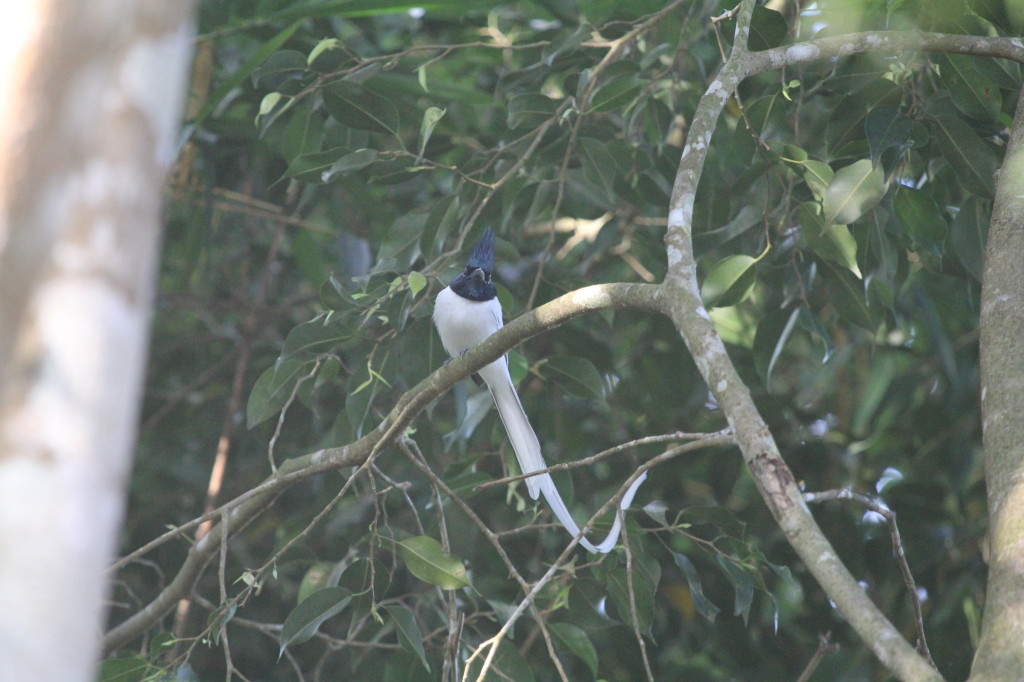
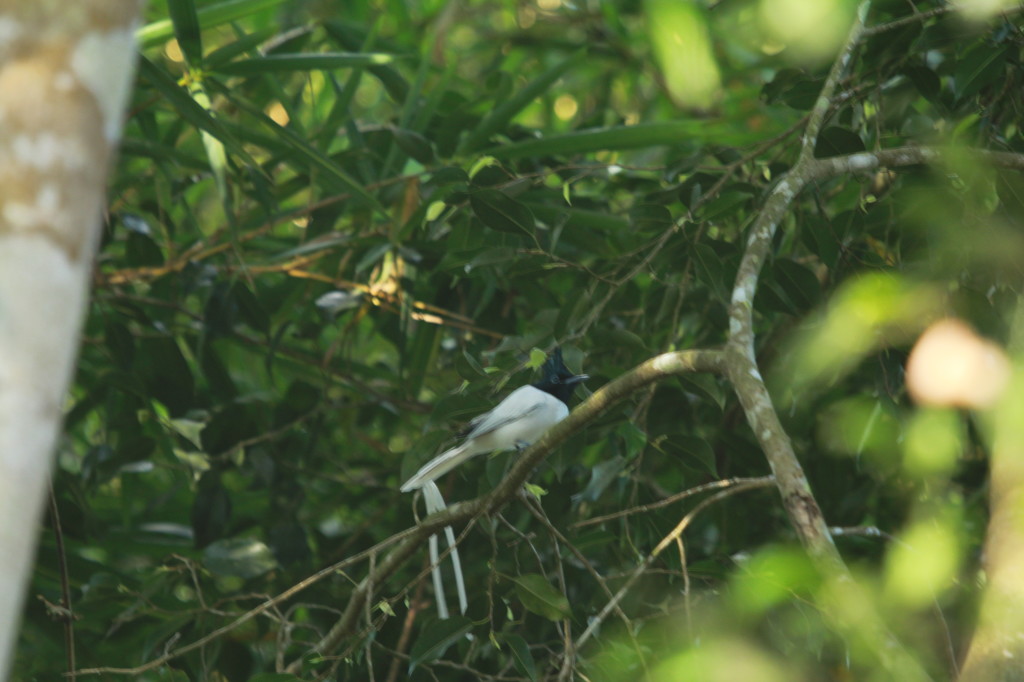
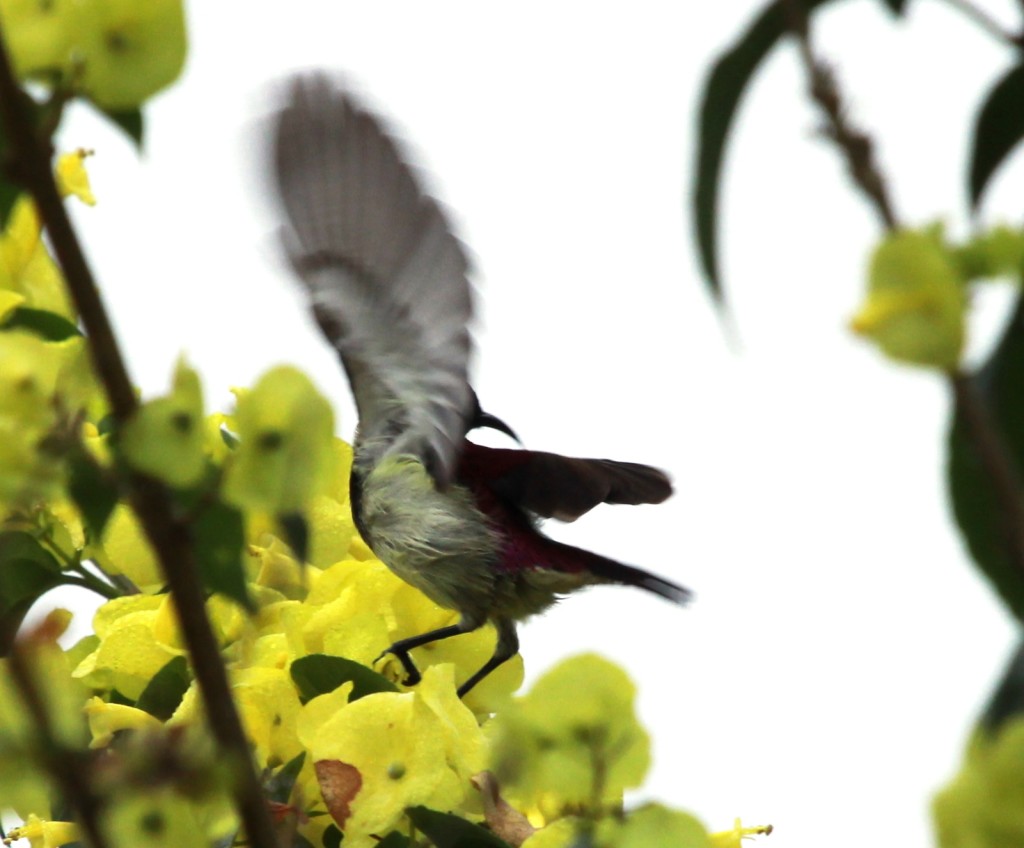
Asian Paradise Flycatcher (Terpsiphone paradisi)

The Asian Paradise Flycatcher (Terpsiphone paradisi) is a medium-sized passerine bird native to Asia. Males have elongated central tail feathers, and in some populations a black and rufous plumage while others have white plumage. Females are short-tailed with rufous wings and a black head. They feed on insects, which they capture in the air often below a densely canopied tree.  This one I saw at Gouri Farms in Gudalur is a mature male.

IMG_2932 IMG_2942With an extremely large range and a large population that appears to be stable, they have been evaluated as Least Concern by IUCN since 2004.  This is great news for birders as we have a lot of opportunites to see this stunning bird.  Get your award ticket to Central Asia or South-east Asia and try any of the national parks.  Southern India is a great place to start, especially Mudumalai National Park.

.

LEARN MORE ABOUT THIS BIRD

Wikipedia

Birdlife

FES

VIDEOS

This bird is poetry in motion!

 And a good parent (though I wouldn’t want to eat that bug either)!

Scarlet Minivet (Pericrocotus speciosus)

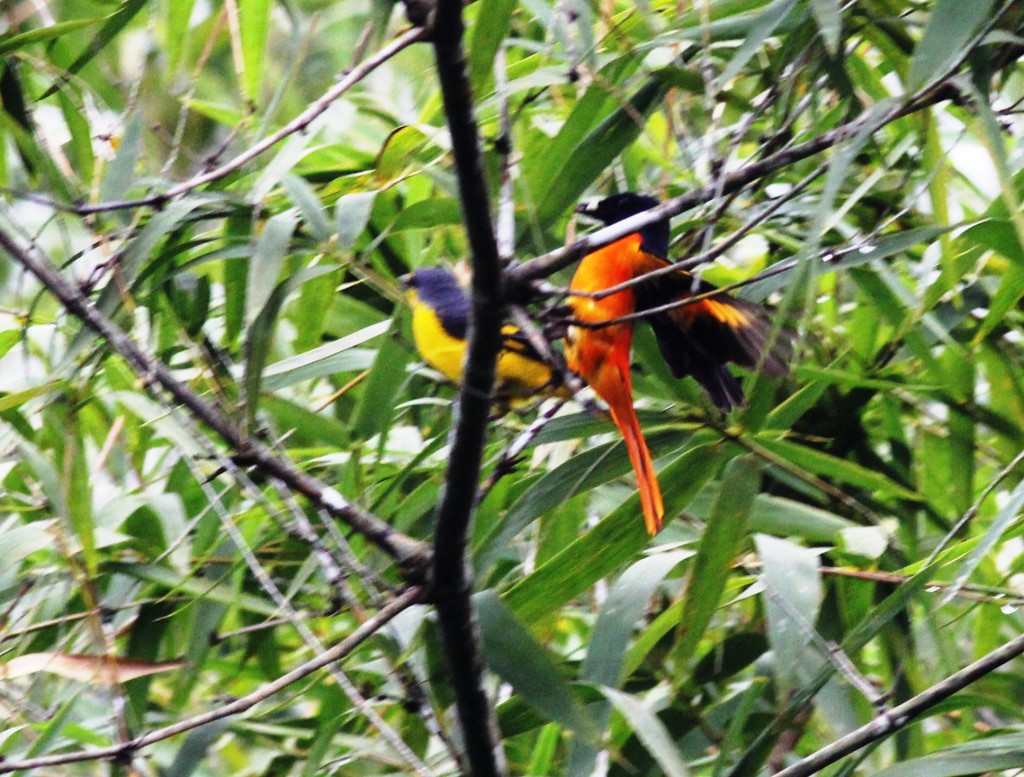
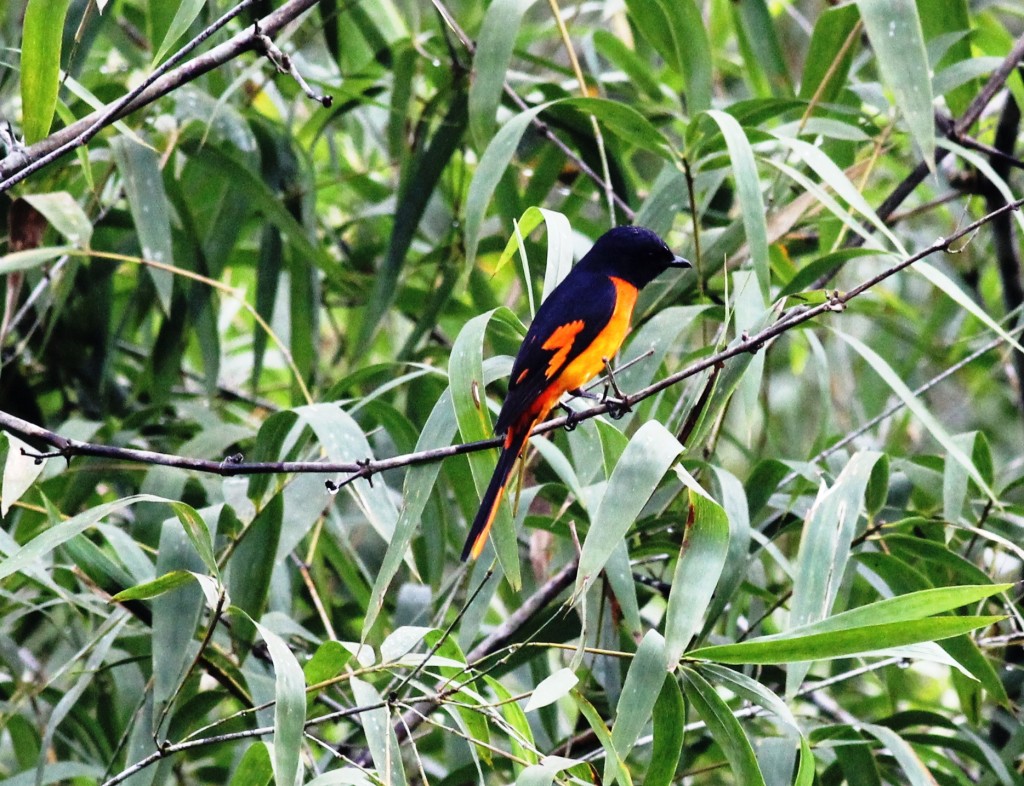
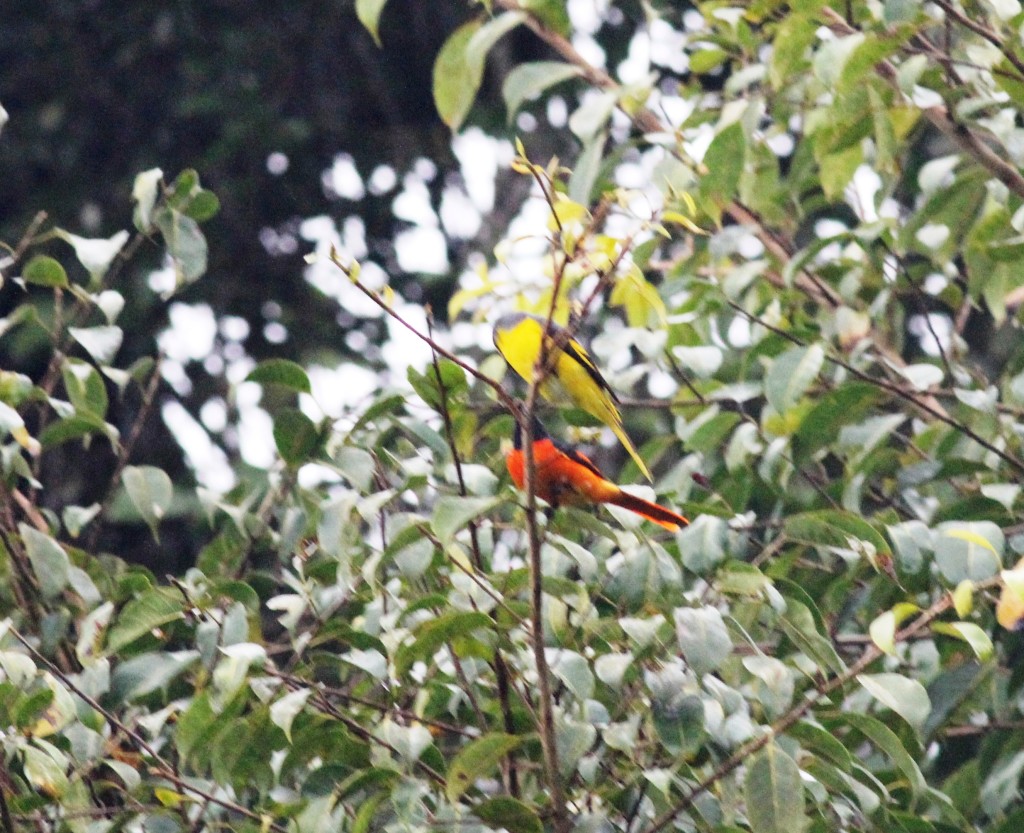
The Scarlet Minivet (Pericrocotus speciosus) is a very brightly coloured small bird you are very likely to see in South-east Asia.

IMG_1322aThey are small birds – 20–22 cm (7.9–8.7 in) long with a strong dark beak and long wings. The male has black upperparts and head, and scarlet underparts, tail edges, rump and wing patches. The shape and colour of the wing patches and the shade or orange in the male varies across populations. In the subspecies nigroluteus and marchesae from south Philippines the scarlet/orange is entirely replaced by yellow.

IMG_1323aThe female is grey above, with yellow underparts (including the face), tail edges, rump and wing patches.

Coorg Scarlet MinivetsI saw these birds in Coorg and Wayanad in several locations.  They have an extremely large range so you are likely to see them on any birding trip in the Western Ghats of India (Central Asia) or all over South-east Asia.

.

LEARN MORE ABOUT THIS BIRD

Wikipedia

Birdlife

Birds of the World

India Nature Watch

VIDEO

Check out this gorgeous Scarlet Minivet couple with their chicks!

SAI Sanctuary: The Birds & Animals

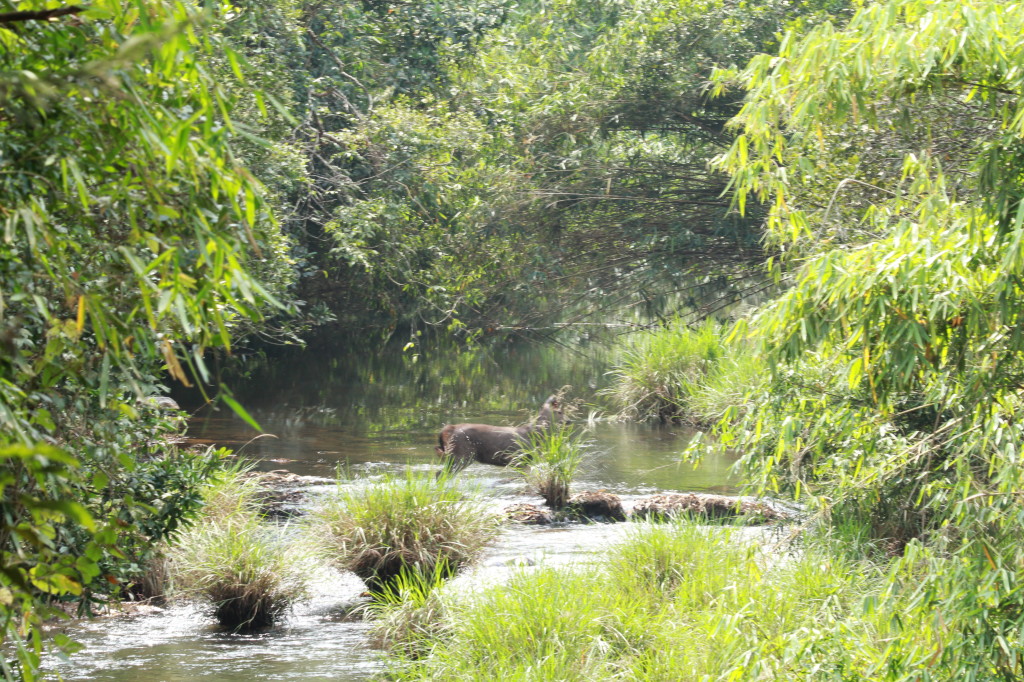
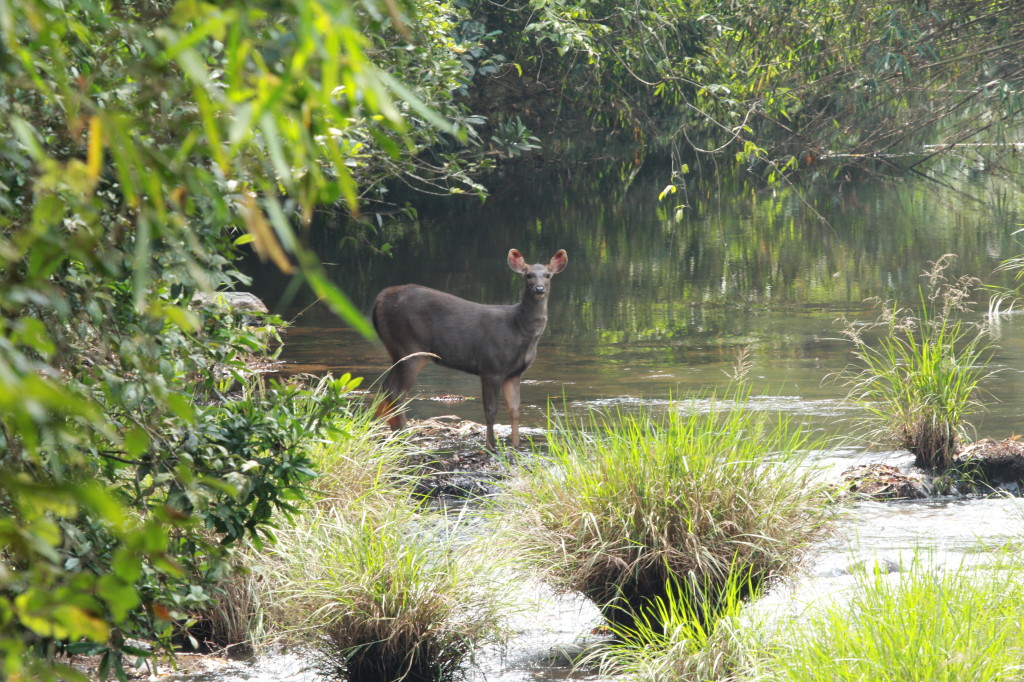
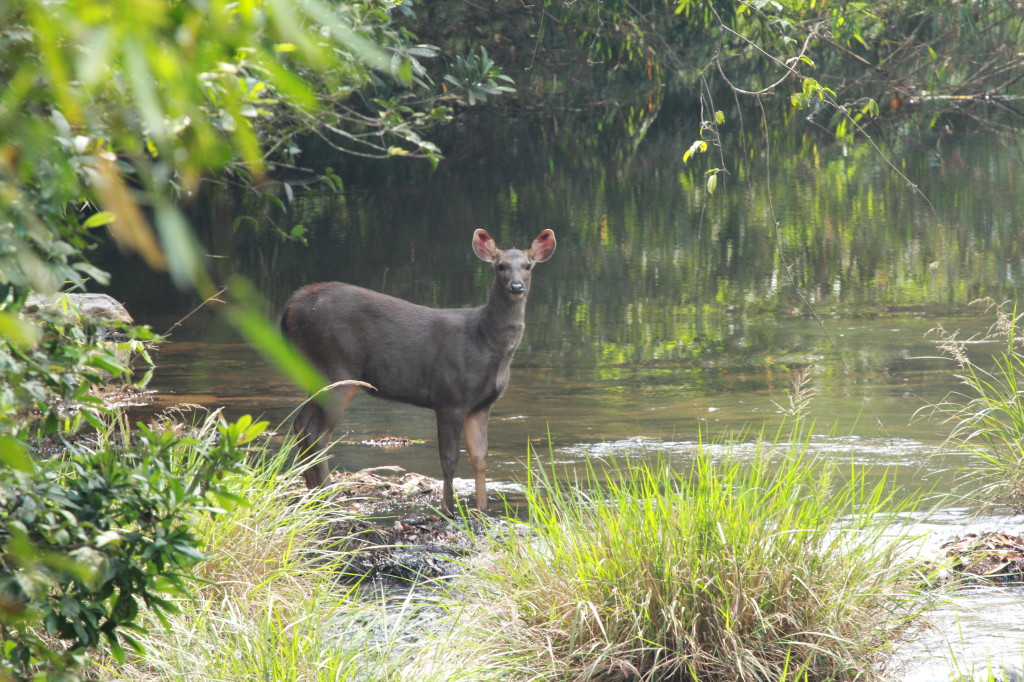
SAI Sanctuary is one of the most relaxing places ever to just kick back and watch the birds and animals.  One very pleasant surprise is the usually elusive and shy Sambar Deer.

IMG_2550 IMG_2548 IMG_2549

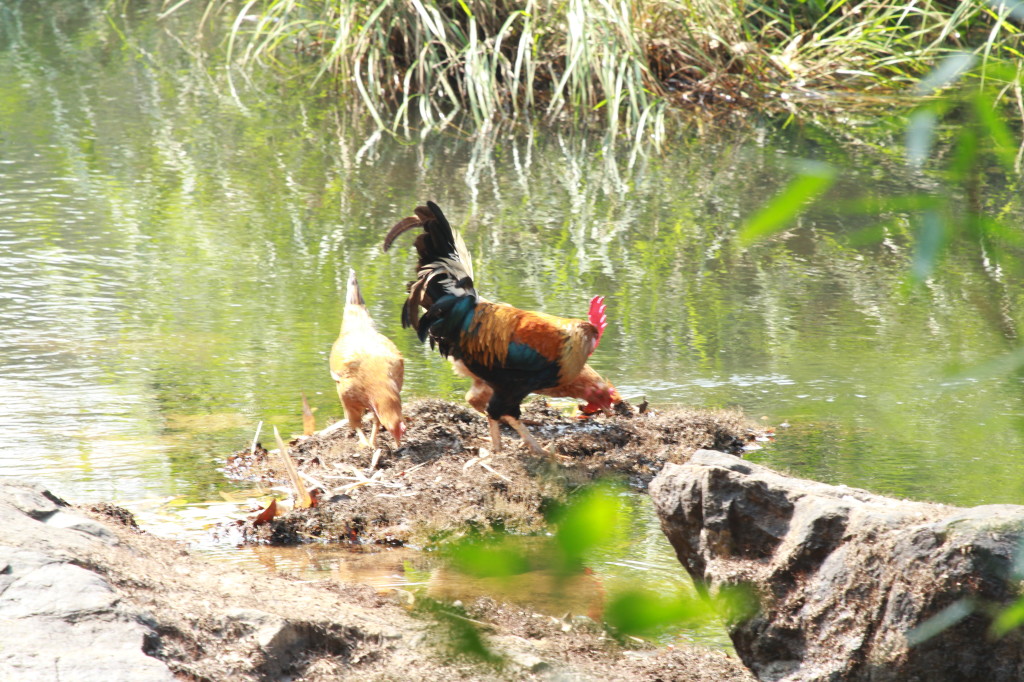
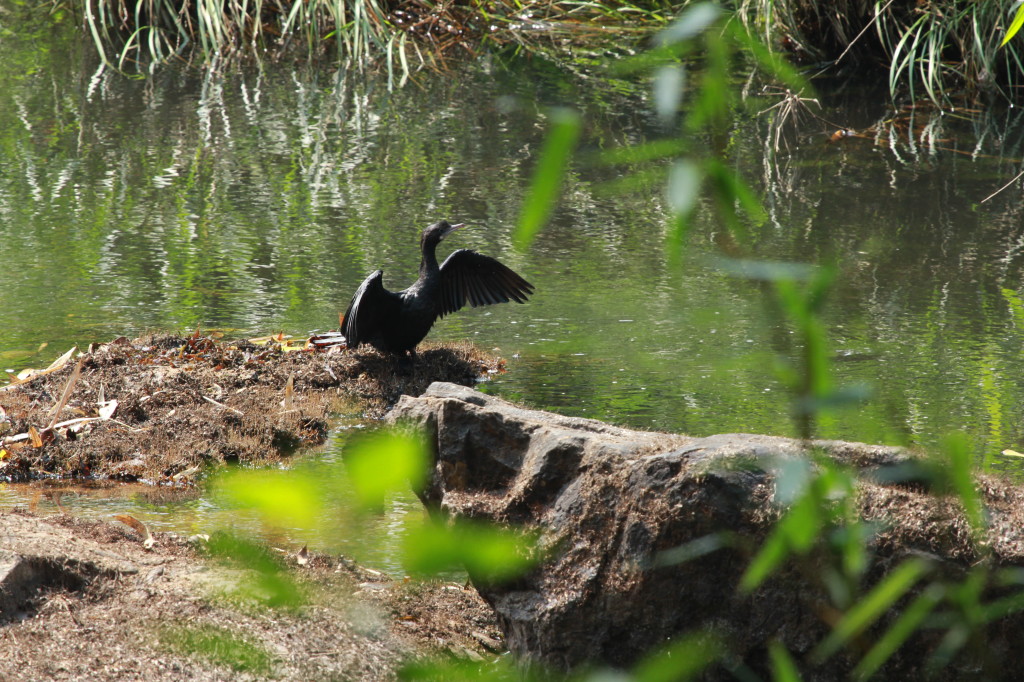
IMG_1656 IMG_1662Many different bird species frequent the stream, even the local chickens!

IMG_2506 IMG_2507 IMG_2509 IMG_2511 IMG_2514 IMG_2515 IMG_2516 IMG_2572

Even the insects can be interesting!

IMG_2574 IMG_2513They have a rooftop deck which is a superb place to see the birdlife for miles around.  We were all up there when the heavens opened with a torrential downpour.  We had to retreat inside and wait it out.  While we were chatting under the roof, Anil heard a flock of Malabar Parakeets.  I grabbed my camera and ran as fast as I could and followed him to the rear deck,  but they were too fast and disappeared into the forest.  When the rain stopped, we went back out on the deck and I got a few shots of some other birds.

IMG_2575 IMG_2576 IMG_2578 IMG_2579 IMG_2581Another flock of Malabar Parakeets decided to surprise us, approaching from the rear without the usual parakeet squawking and flew over our heads.  Once again, I was too slow with the camera but at least I got to see a small flock of them!

Coorg – Garden Variety Birds

As promised, here are some shots of the birds we saw in the garden of Jungle Side.  We had heavy fog in the mornings so didn’t get reasonably clear shots until at least 8am.  I haven’t been able to identify all of them, just the ones with distinctive colour patterns so if anyone can help me out, I’d appreciate it!

Common Kingfisher in the mist

IMG_2482 IMG_2483a IMG_2487a

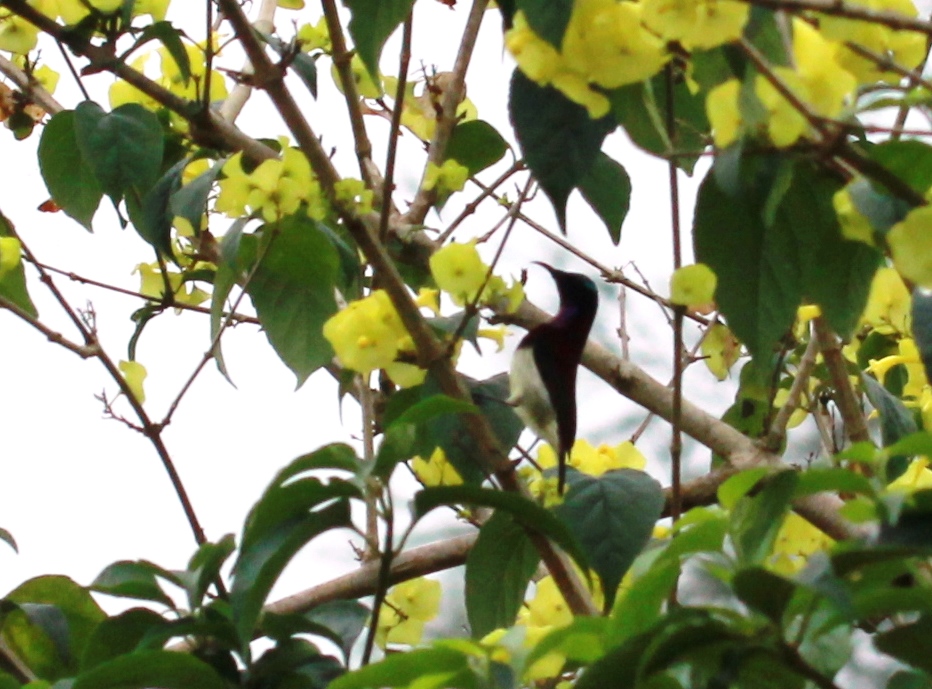
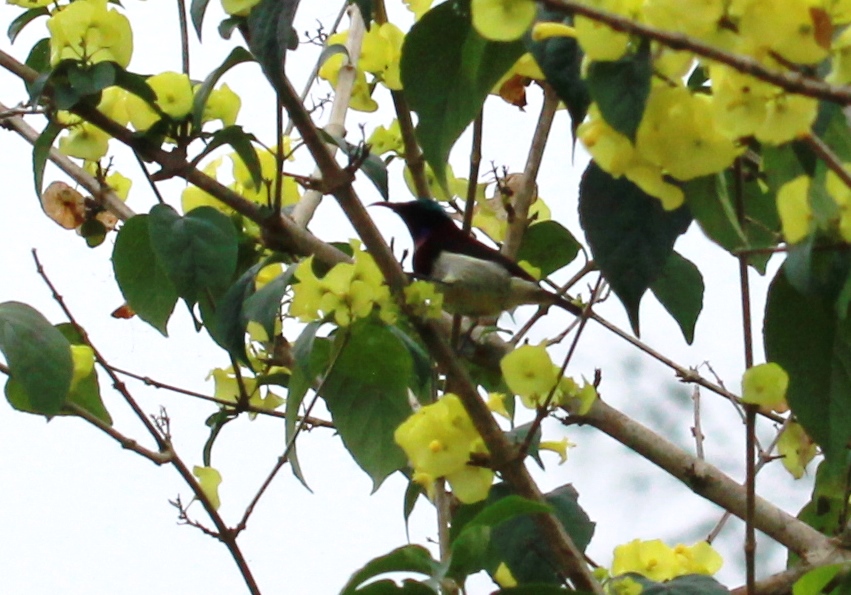
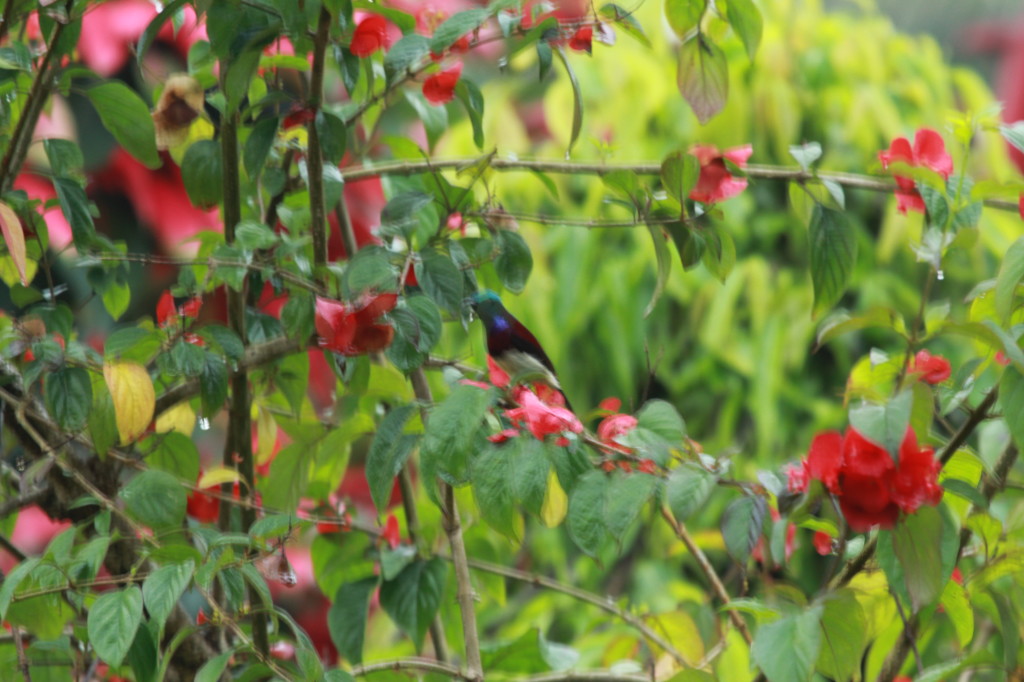
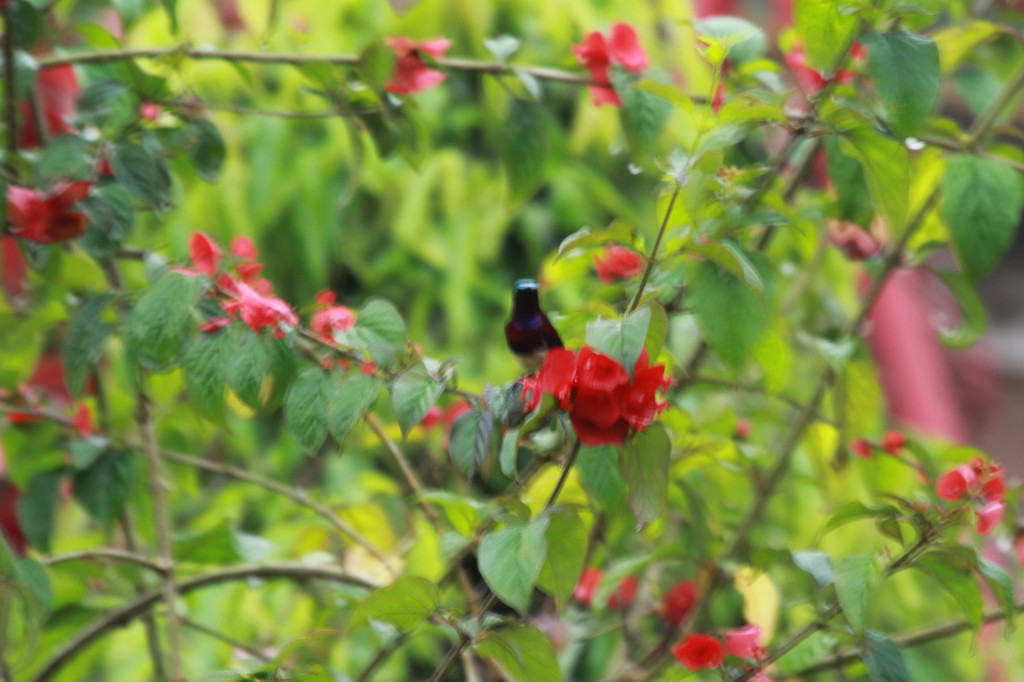
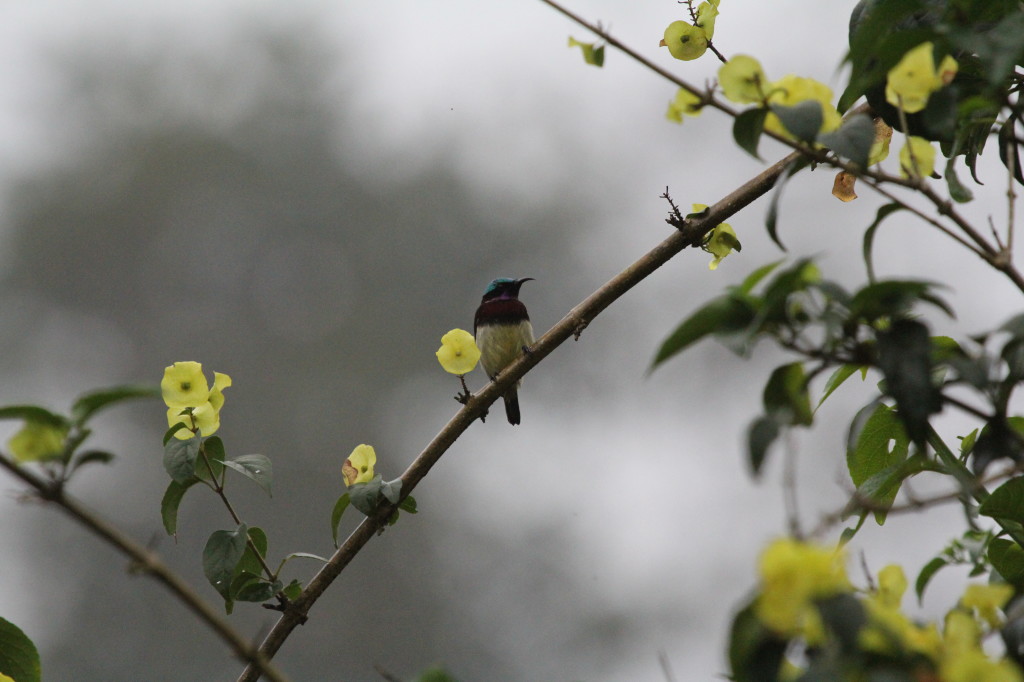
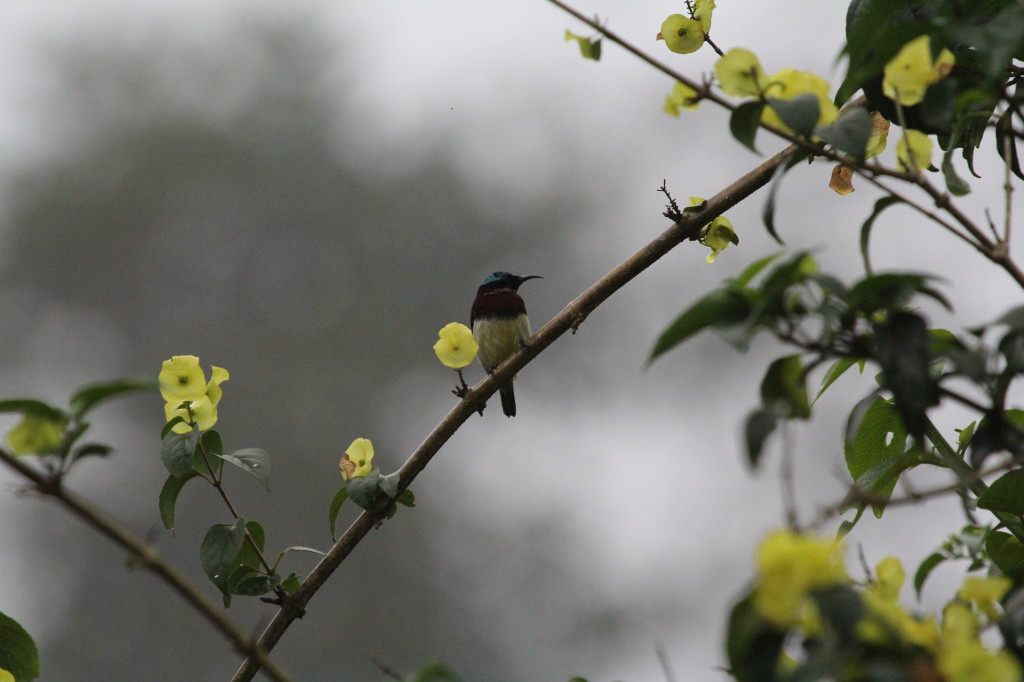
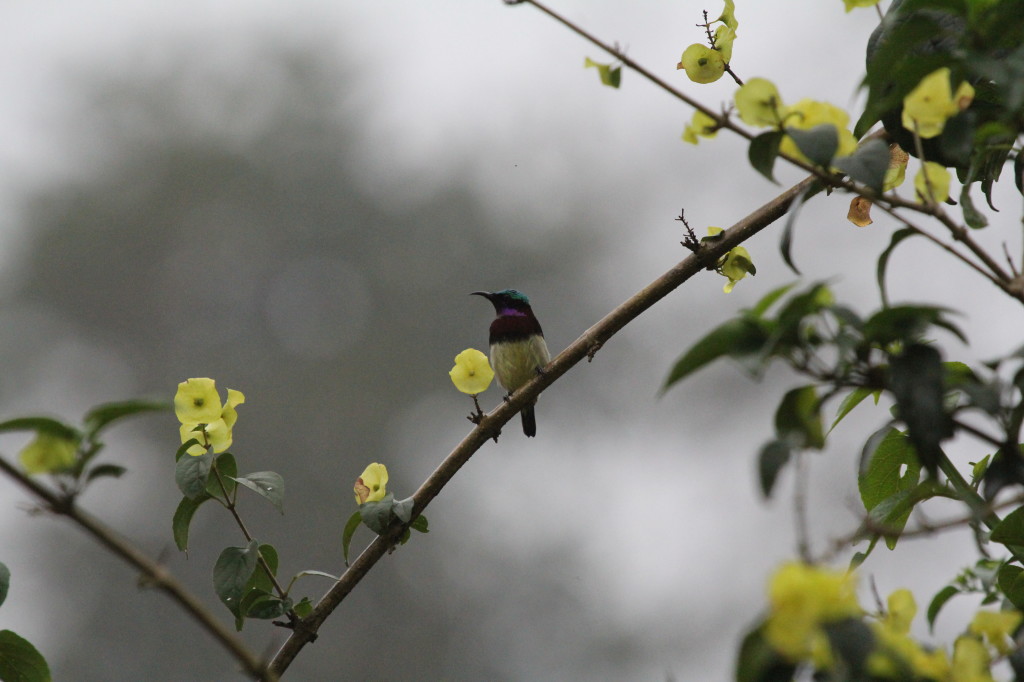
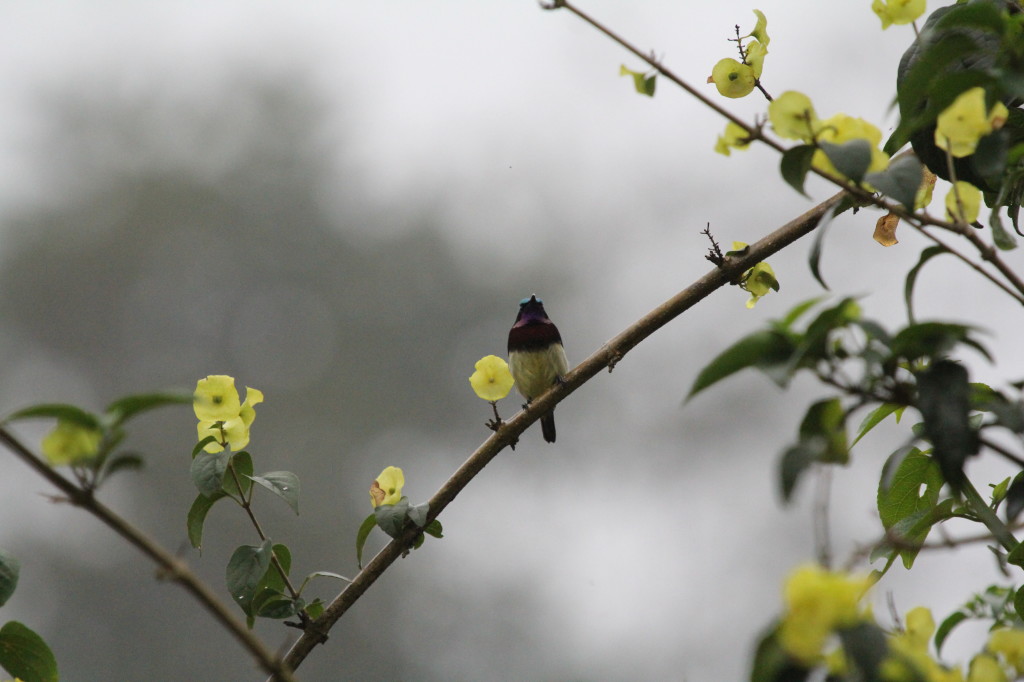
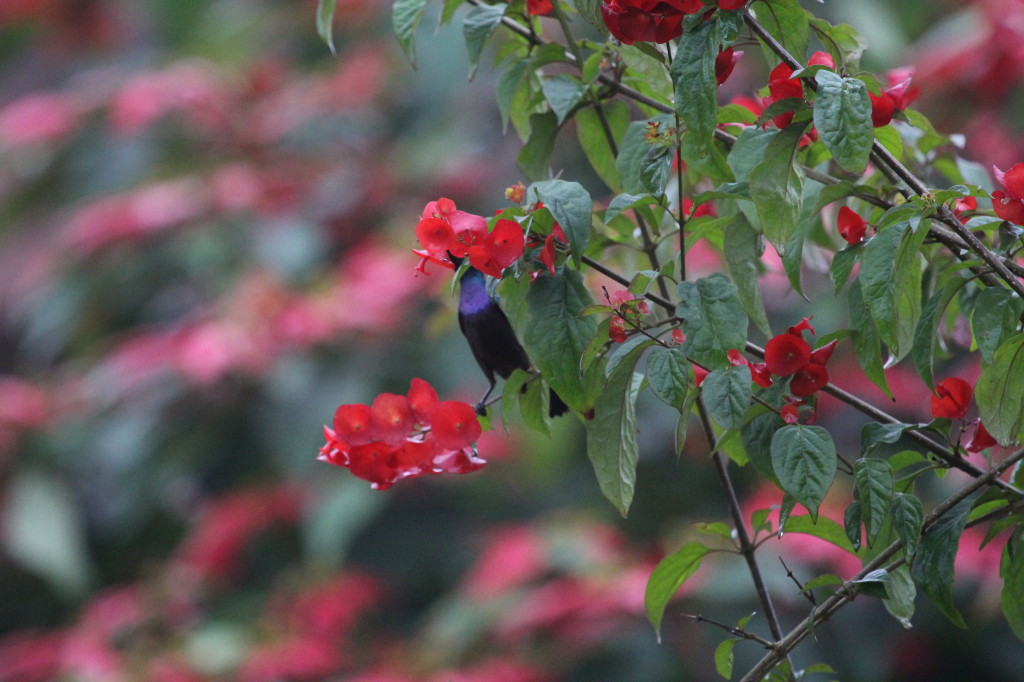
Crimson-backed Sunbird

IMG_2496a IMG_2497a IMG_2501a IMG_2502a IMG_2588 IMG_2591 IMG_2597 IMG_2598 IMG_2600 IMG_2602

Asian Fairy Bluebird

IMG_2603Loten’s Sunbird

IMG_2604

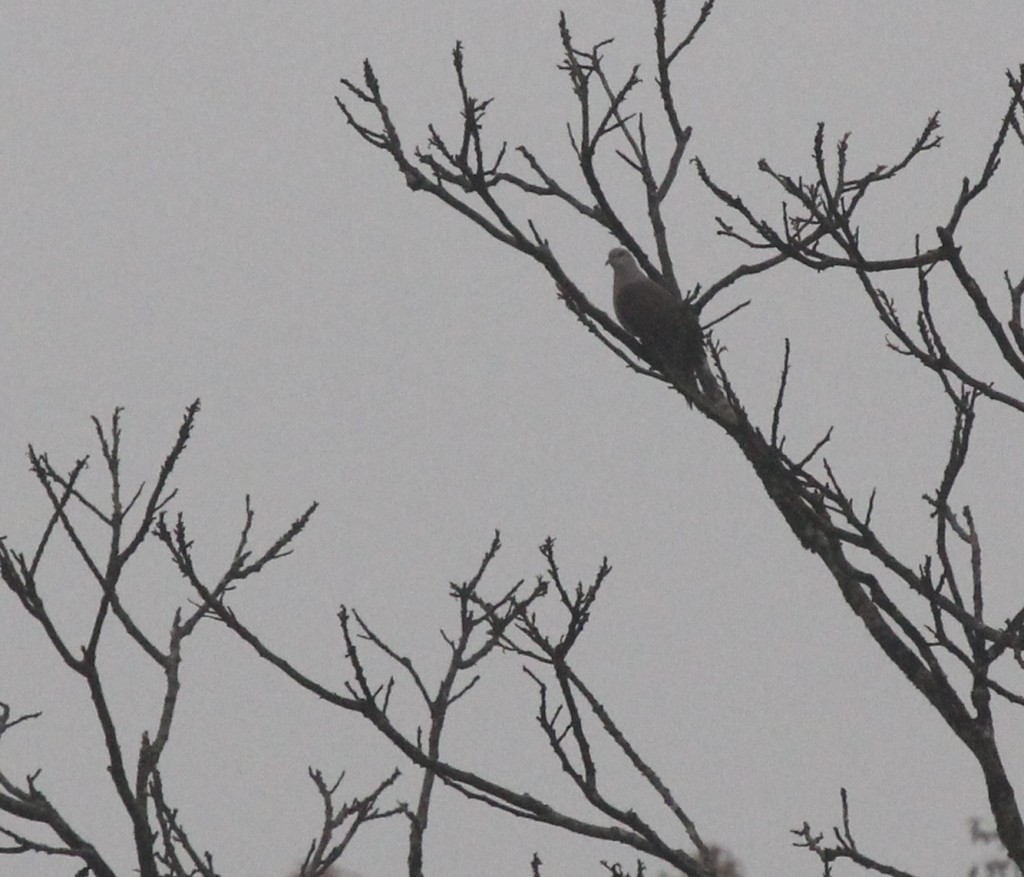
Imperial Green Pigeon (I think, the colours didn’t come out with the poor lighting).

IMG_2620a


The last one might be some kind of Ground Thrush.  I couldn’t figure these ones out for sure.  My Indian bird field guide is pretty old 1995 and the pictures are drawn, not photos.


IMG_2494 IMG_2494a IMG_2499a IMG_2500a IMG_2605 IMG_2608 IMG_2610 IMG_2613 IMG_2615 IMG_2618 IMG_2619a IMG_2491

My Top Twenty-Five Bird Sightings Of 2013

Following on from last year’s post in which I highlighted only parrot sightings, this year I have expanded to all bird species.  There were just so many birds who made a major impression on me!  I have also increased the number to 25 since we did 3 birding trips this year.  I didn’t always get good shots so I will put my own photo when I got one.  Some of them were pretty quick!  They are being presented in chronological order.

1.  Palm Cockatoo (Probosciger aterrimus) – seen at Nimbokrang & Waigeo, Indonesia; March 2013

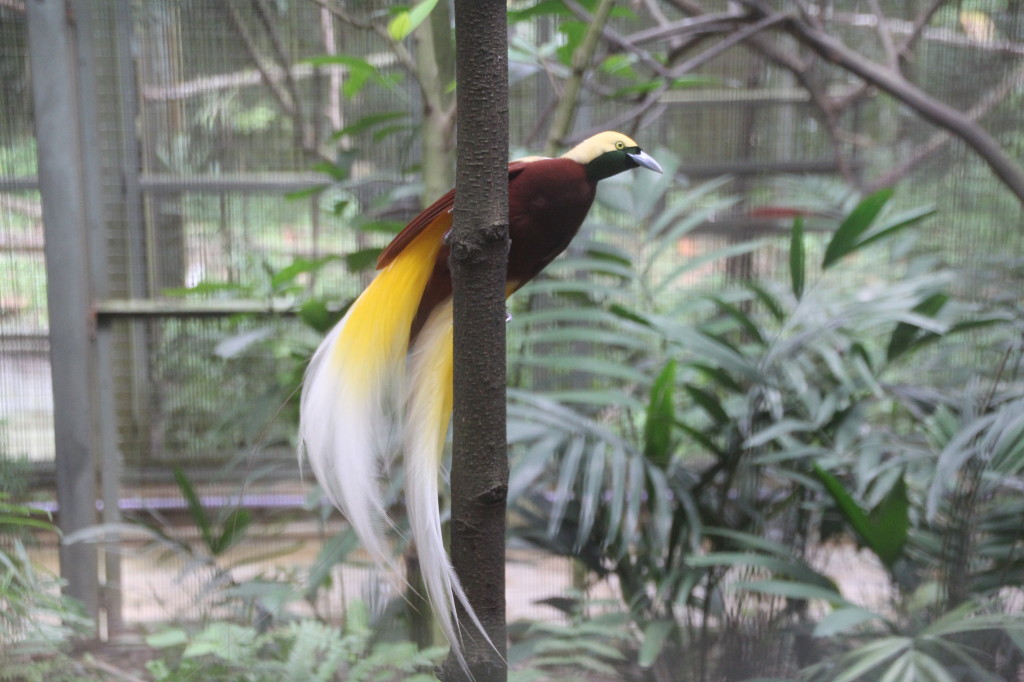
Palm Cockatoo2.  Lesser Bird-of-paradise, (Paradisaea minor) – seen at Nimbokrang, Indonesia; March 2013

I couldn’t get a photo as he stayed in the trees so here’s one taken in Jurong Bird park, Singapore.

IMG_3977


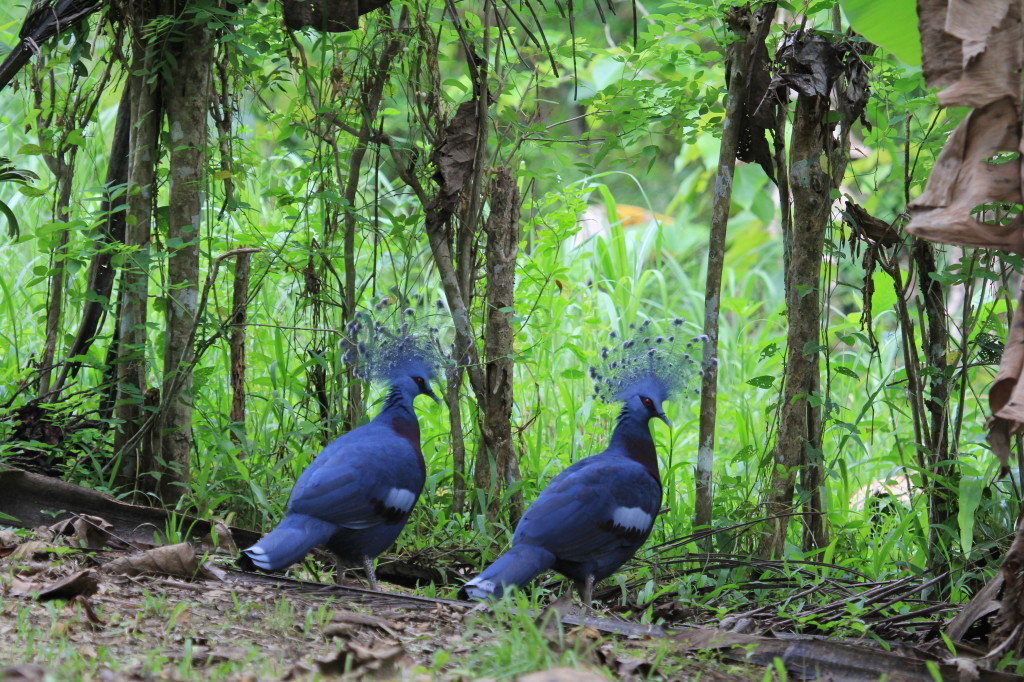
3.  Victoria Crowned Pigeon (Goura victoria) – seen at Nimbokrang, Indonesia; March 2013

Victoria Crowned Pigeons, Nimbokrang

Victoria Crowned Pigeons, Nimbokrang

4.  Western or Arfak Parotia (Parotia sefilata) – seen at Siyoubring, Indonesia, March 2013  I’ll never forget this feathered Lord of the Dance trying so hard to woo 3 aloof females!

One female Western Parotia comes in for a closer look while the male shows his best moves.  There were a couple other females higher up in the branches.

One female Western Parotia comes in for a closer look while the male shows his best moves. There were a couple other females higher up in the branches.

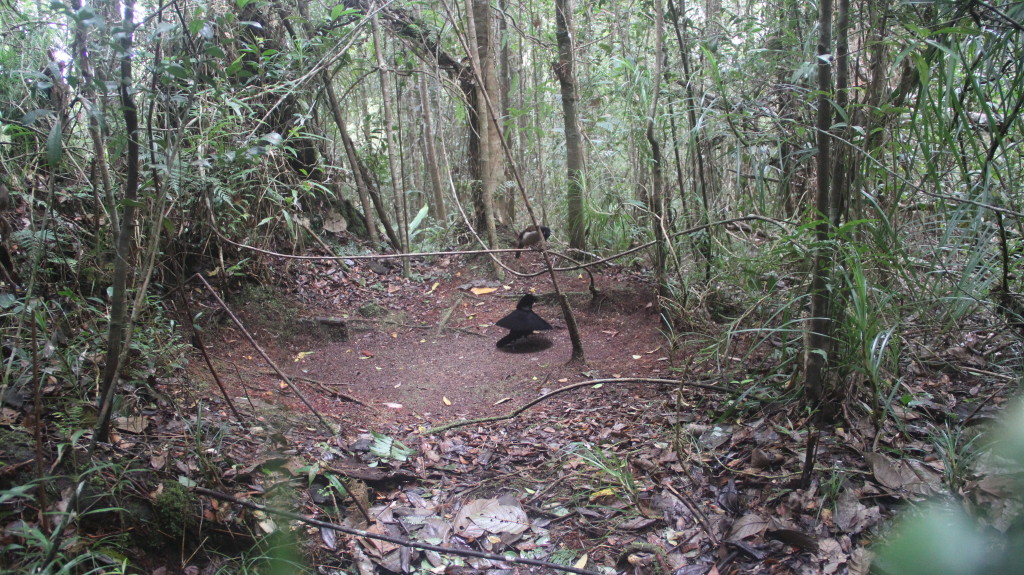
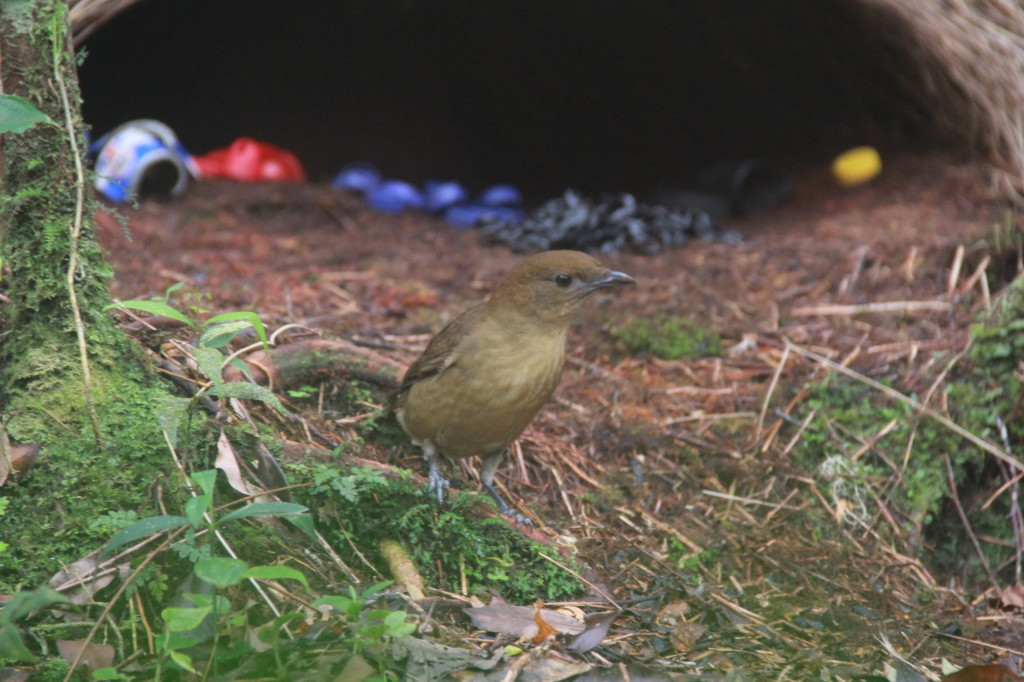
5.  Vogelkop Bowerbird (Amblyornis inornata) – seen at Siyoubring, Indonesia, March 2013

OK lady Bowerbirds, come and check out my awesome bower!

OK lady Bowerbirds, come and check out my awesome bower!

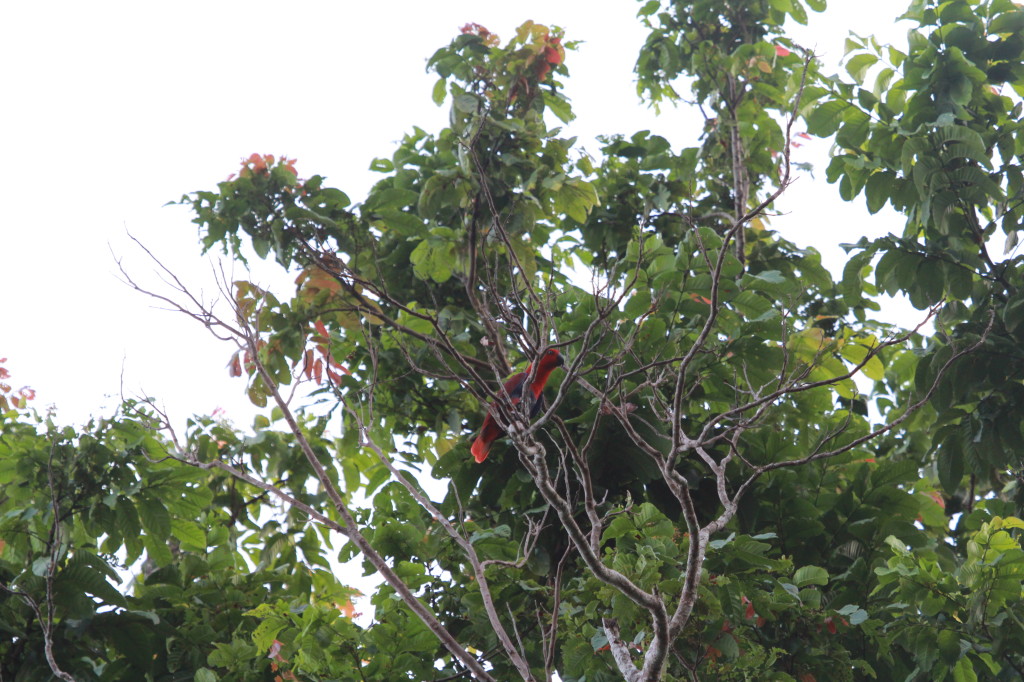
6.  Eclectus Parrot (Eclectus roratus) – seen near Nimbokrang and on Waigeo Island, Indonesia, March 2013

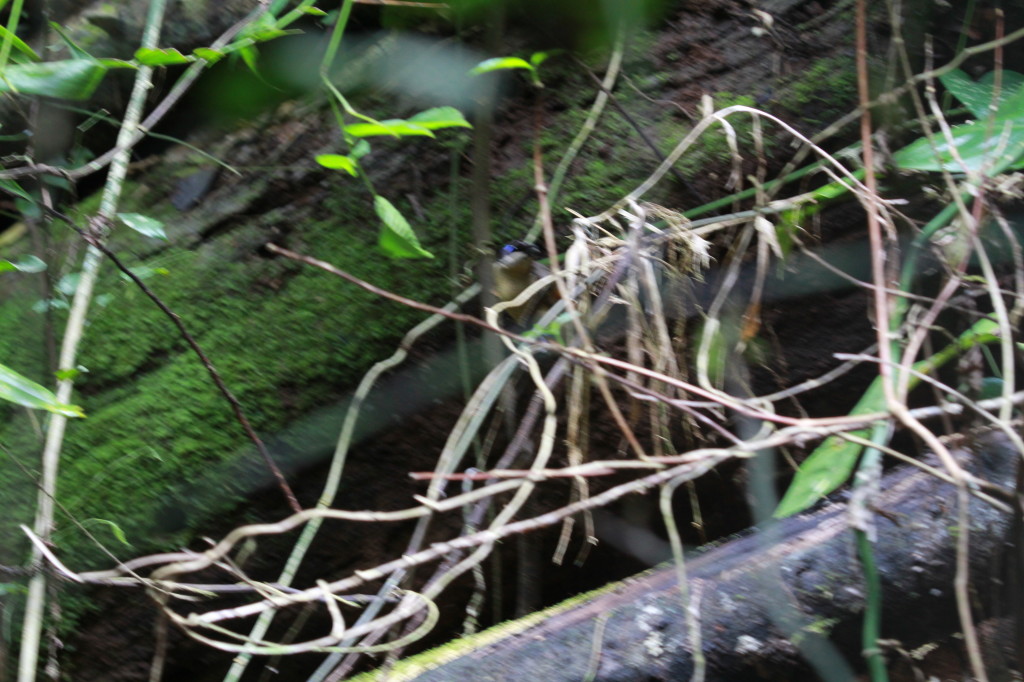
IMG_78677.  Wilson’s Bird-of-paradise, (Cicinnurus respublica) – seen on Waigeo Island, Indonesia in March 2013.   This little guy played hard-to-get with the camera.
Wilson's Bird-of-paradise, Cicinnurus respublica

Wilson’s Bird-of-paradise, Cicinnurus respublica

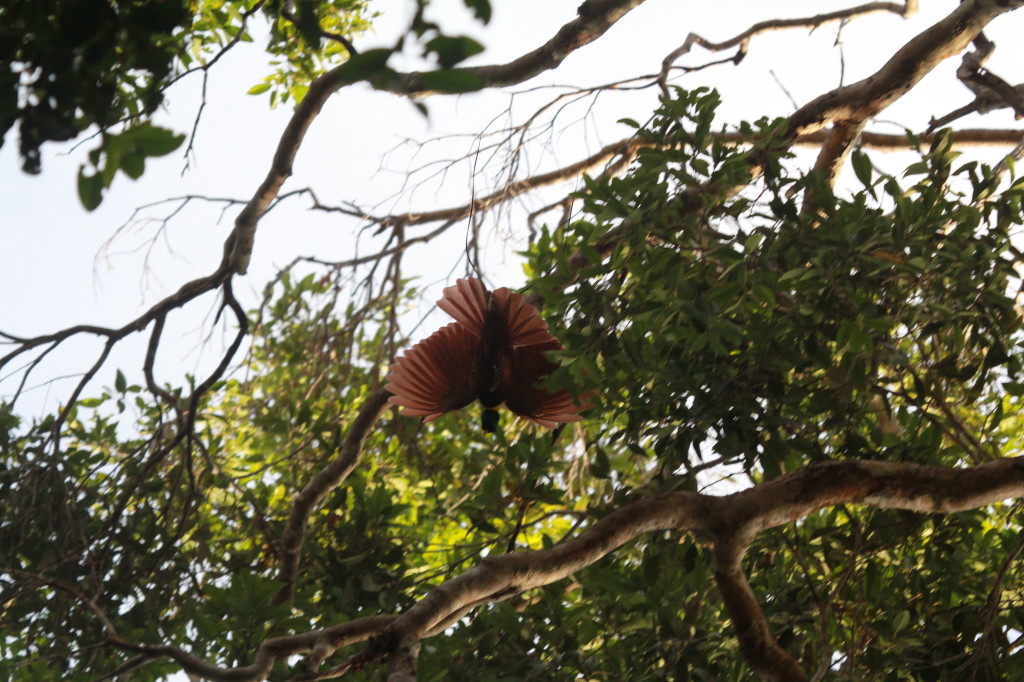
8.  Red Bird-of-paradise (Paradisaea rubra) – seen on Waigeo Island, Indonesia , March 2013.

Red Bird of Paradise (Paradisaea rubra), Waigeo- dancing in the trees

Red Bird of Paradise (Paradisaea rubra), Waigeo- dancing in the trees

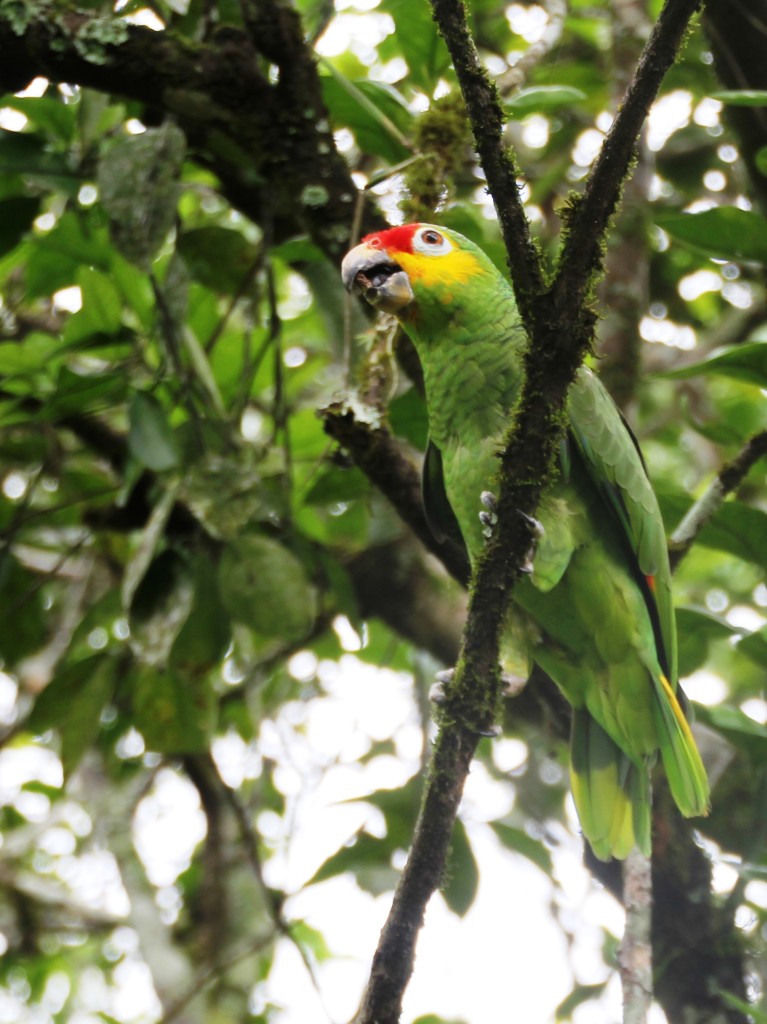
9.  Red-lored Parrot (Amazona autumnalis) – seen at Crooked Tree, Belize, Tikal, Laguna del Lagarto, Carara, Soberania, August 2013.  This was the first parrot we saw after arriving in Central America so I chose him to represent all the Amazon species seen all over Central America.

Red-lored Amazon or Red-lored Parrot (Amazona autumnalis)

Red-lored Amazon or Red-lored Parrot (Amazona autumnalis)

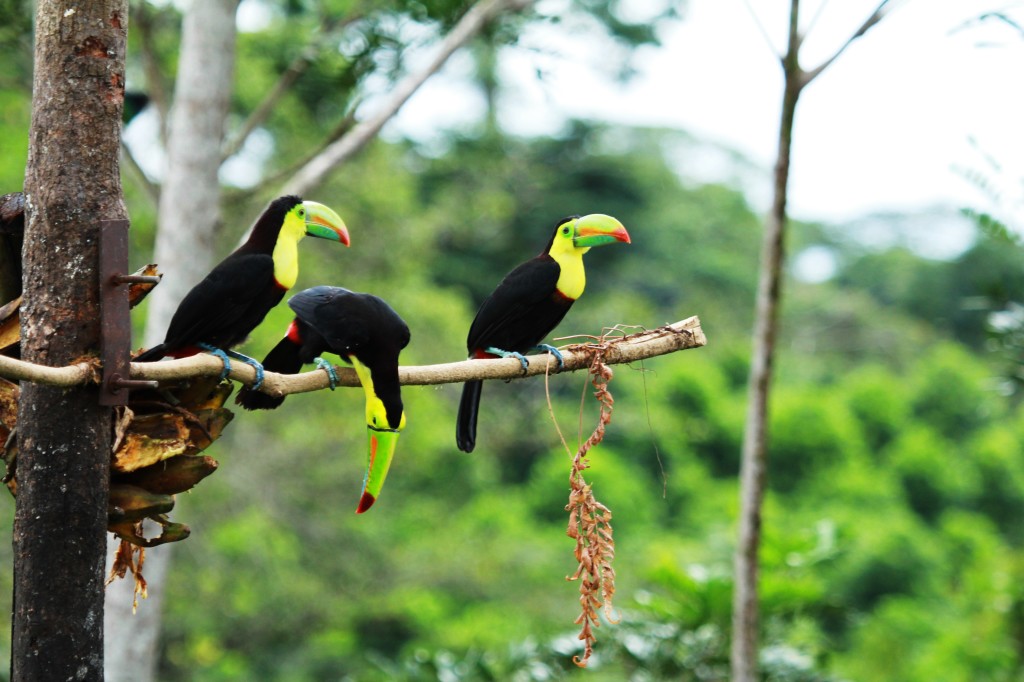
10.  Keel-billed Toucan (Ramphastos sulfuratus) – seen at Crooked Tree, Belize, Tikal, Selva Verde, Laguna del Lagarto, Soberania, August 2013

IMG_0211

11.  Great Green Macaw (Ara ambiguus) – seen at Selva Verde & Laguna del Lagarto, Costa Rica, August 2013

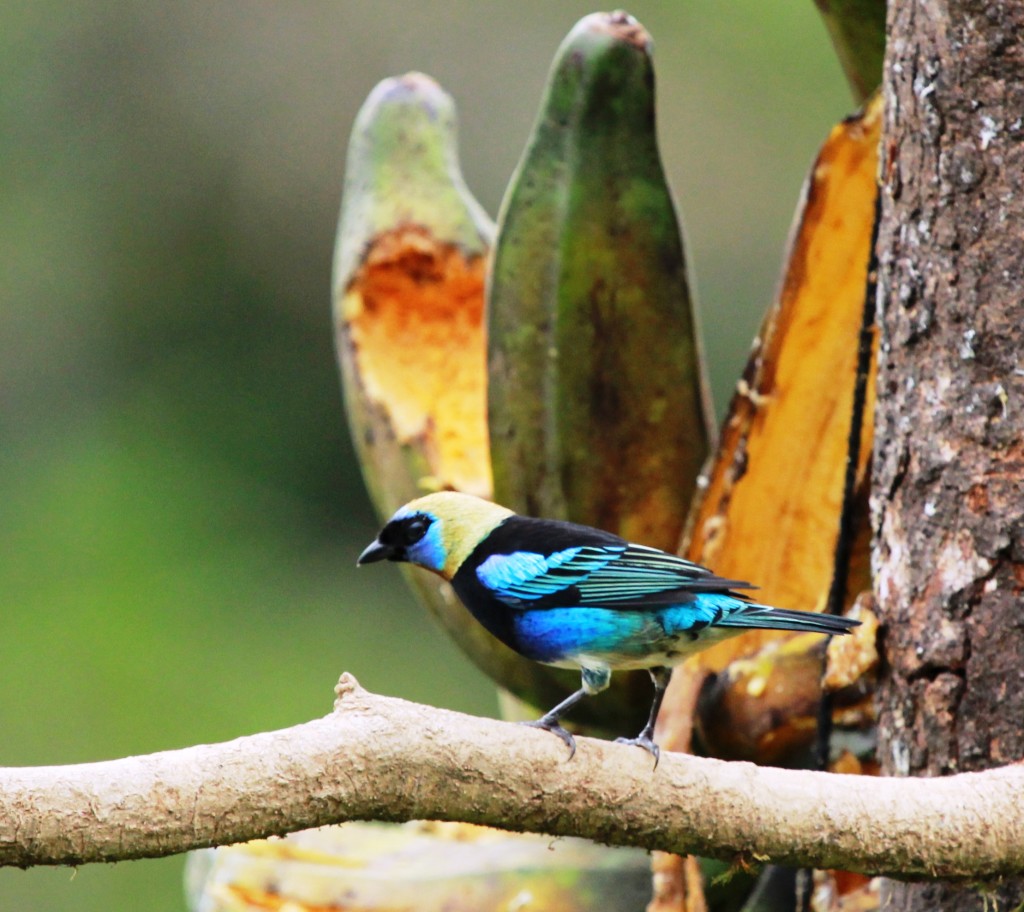
IMG_951112. Golden-hooded Tanager (Tangara larvata) – seen at Laguna del Lagarto, Costa Rica, August 2013.

IMG_9691a

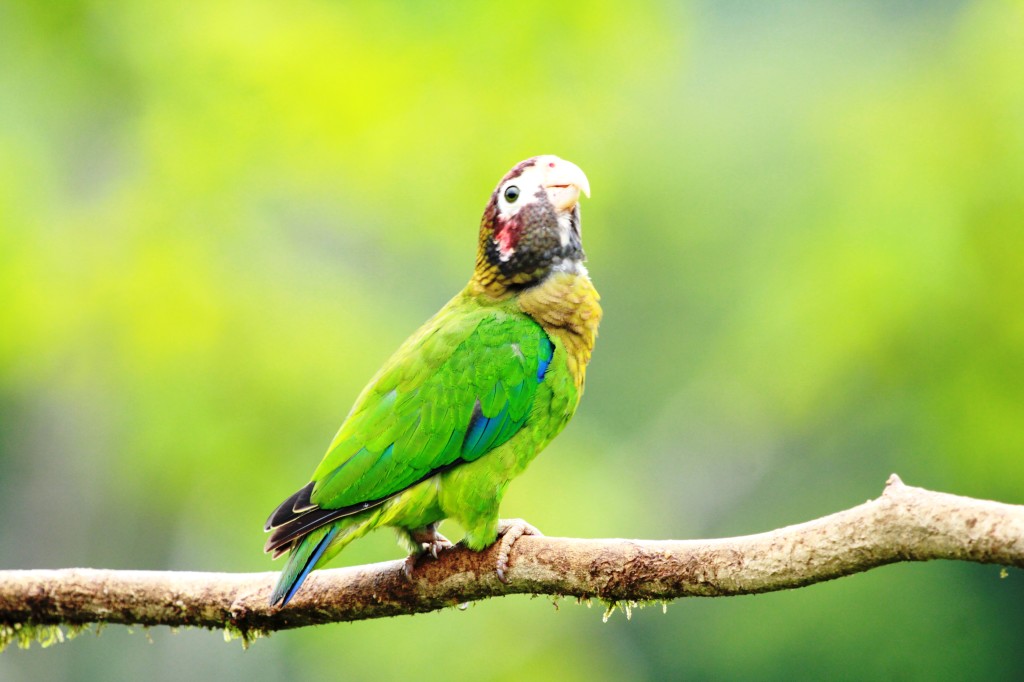
13.  Brown-hooded Parrot (Pyrilia haematotis)  – seen at Laguna del Lagarto, Costa Rica, August 2013.

IMG_0053

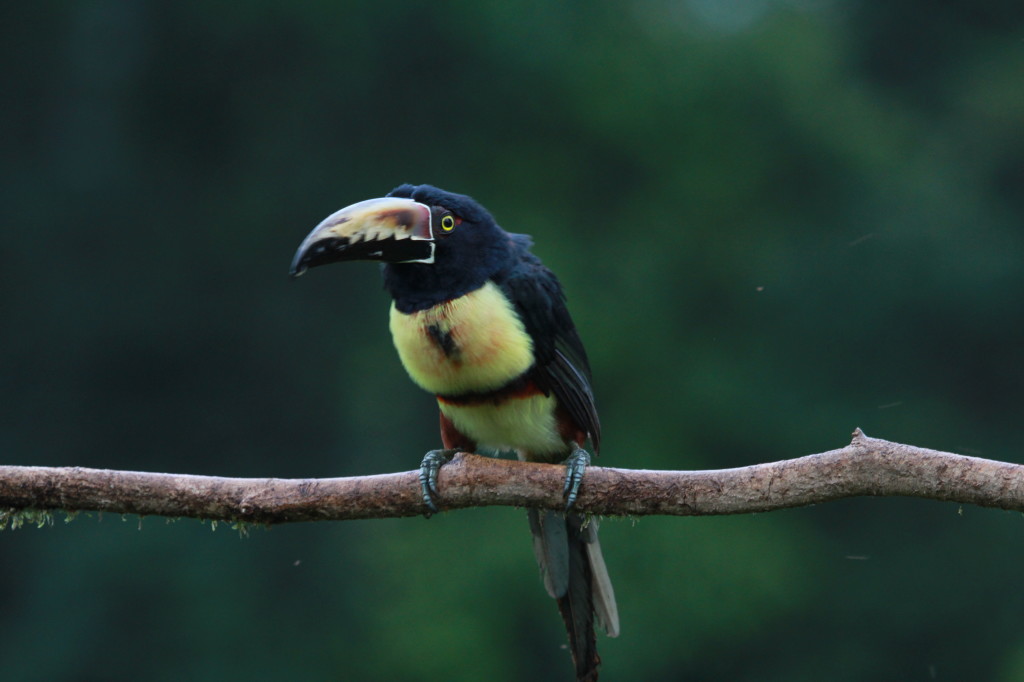
14.  Collared Araçari (Pteroglossus torquatus) – seen at Selva Verde, Laguna del Lagarto, Costa Rica, Soberania.  August 2013.

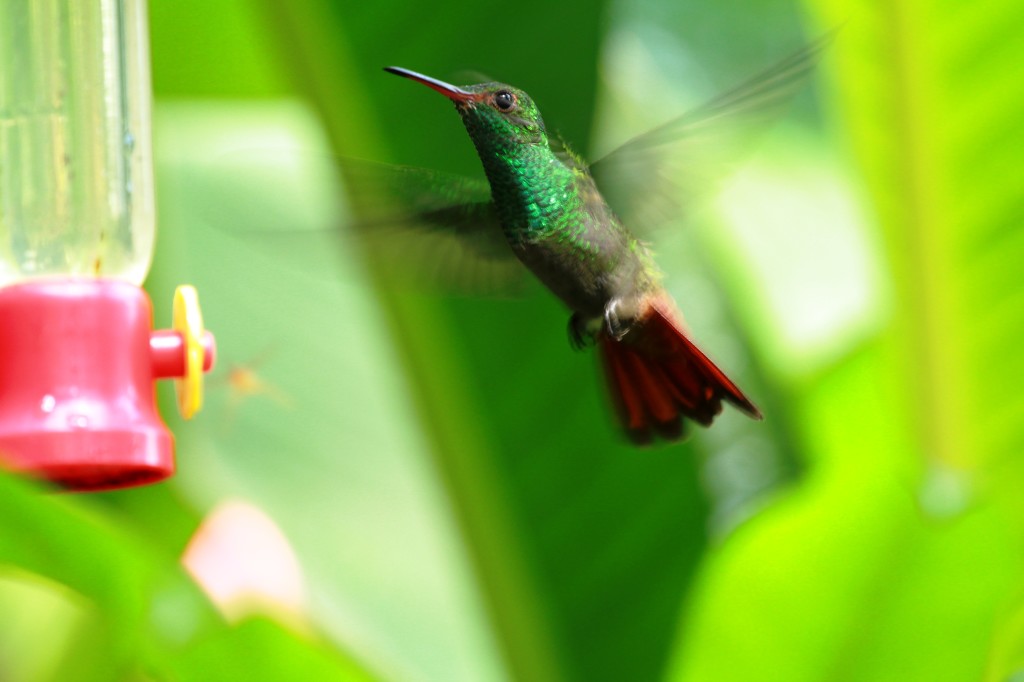
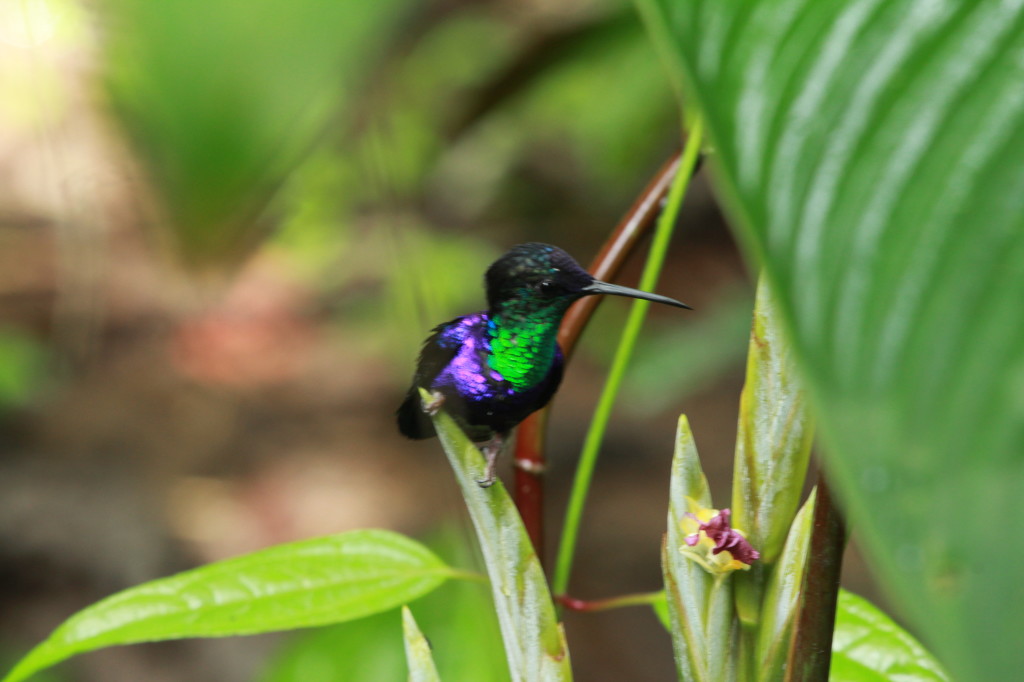
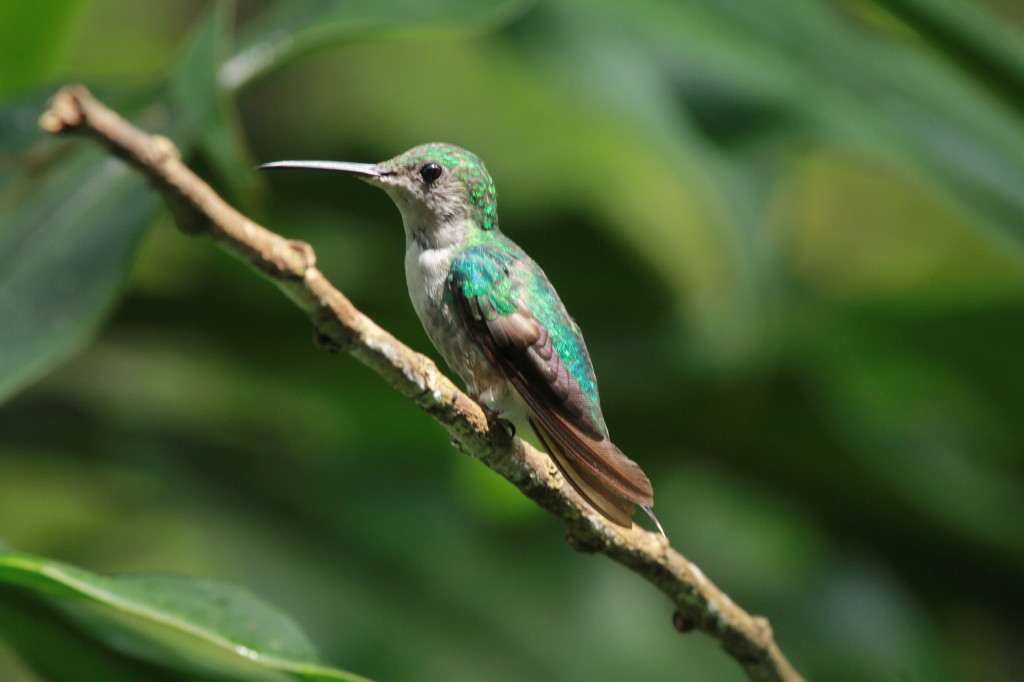
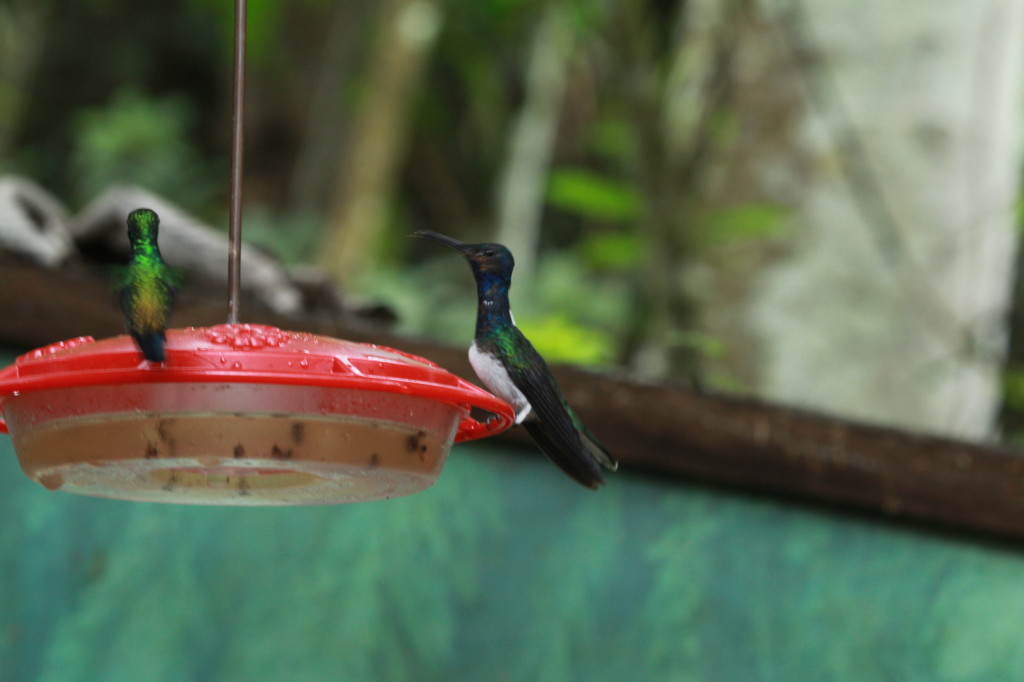
IMG_982415.  Hummingbirds (all of them) – seen at Laguna del Lagarto, Monteverde, Savegre, Soberania.  There is no way I can single out one species, they are all spectacular!

IMG_0371

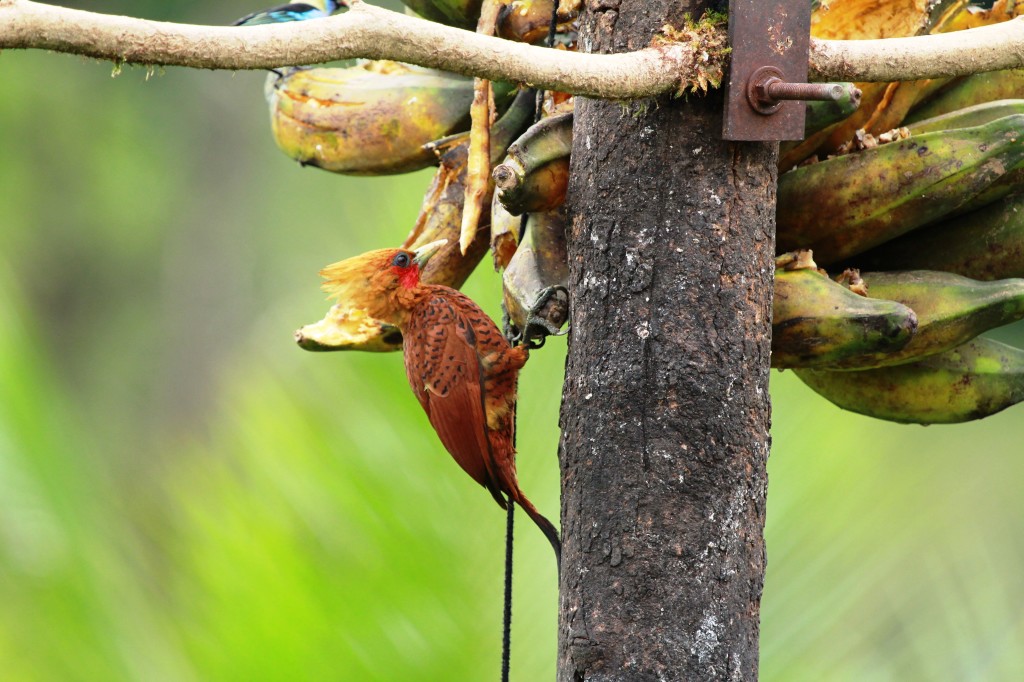
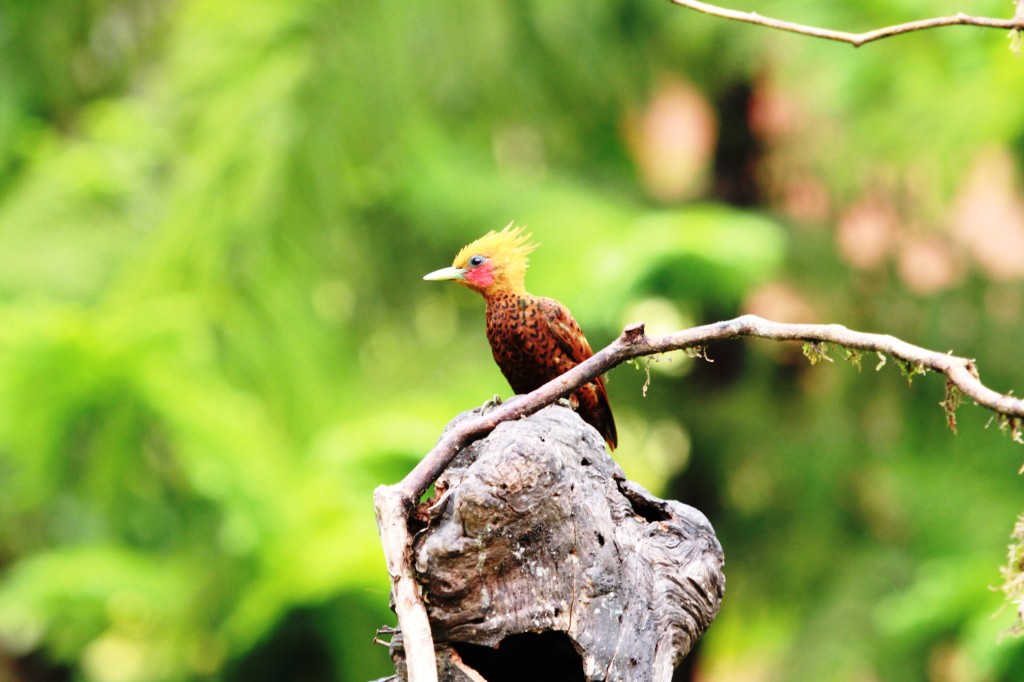
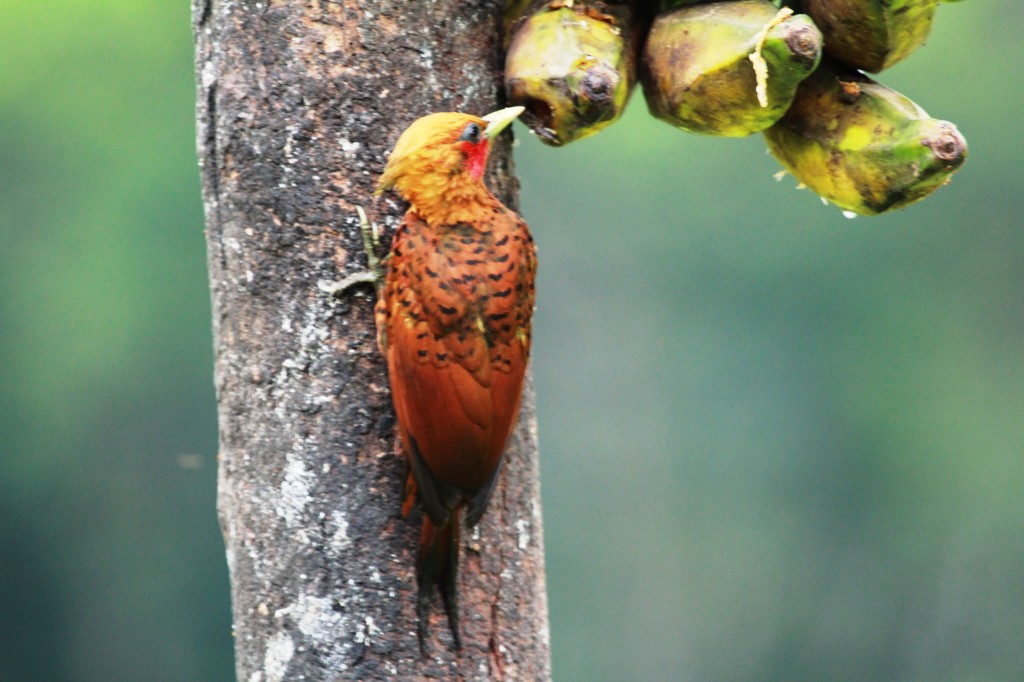
IMG_1486 IMG_1483 IMG_149616.  Chestnut-coloured Woodpecker (Celeus castaneus) – seen at Laguna del Lagarto, Costa Rica, August 2013

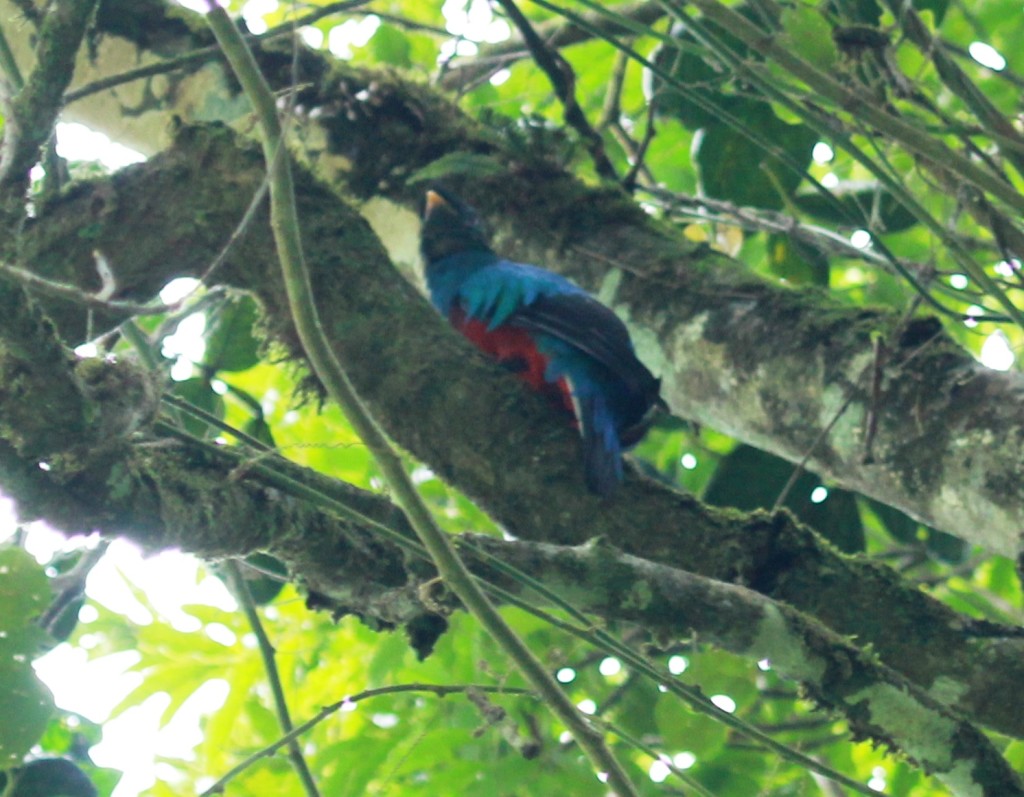
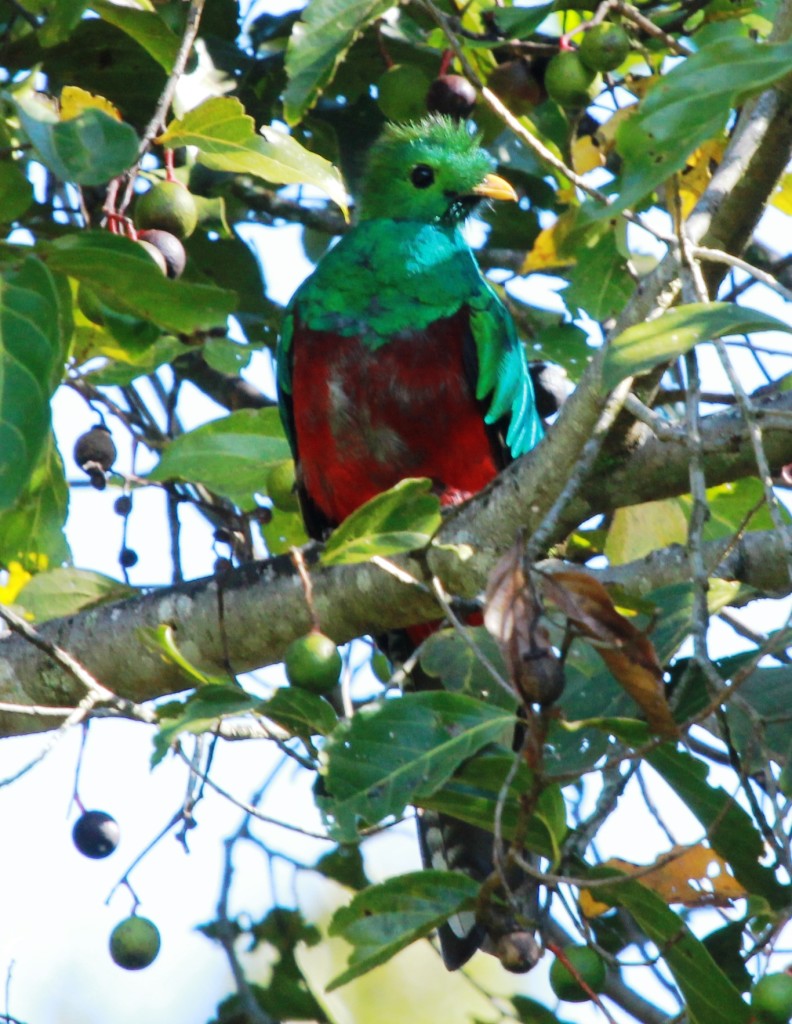
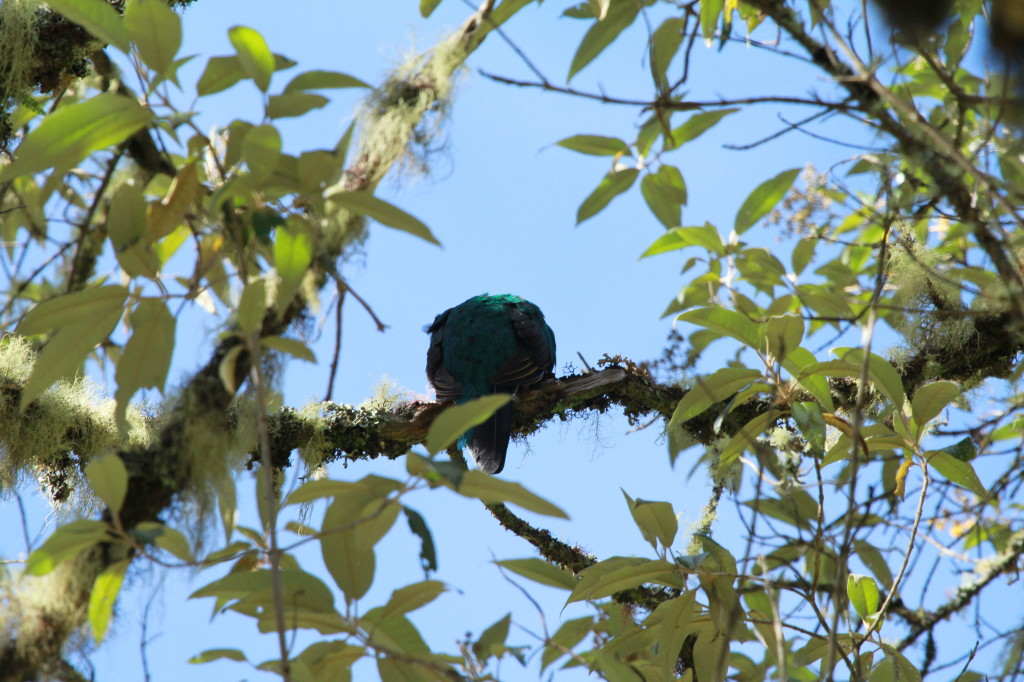
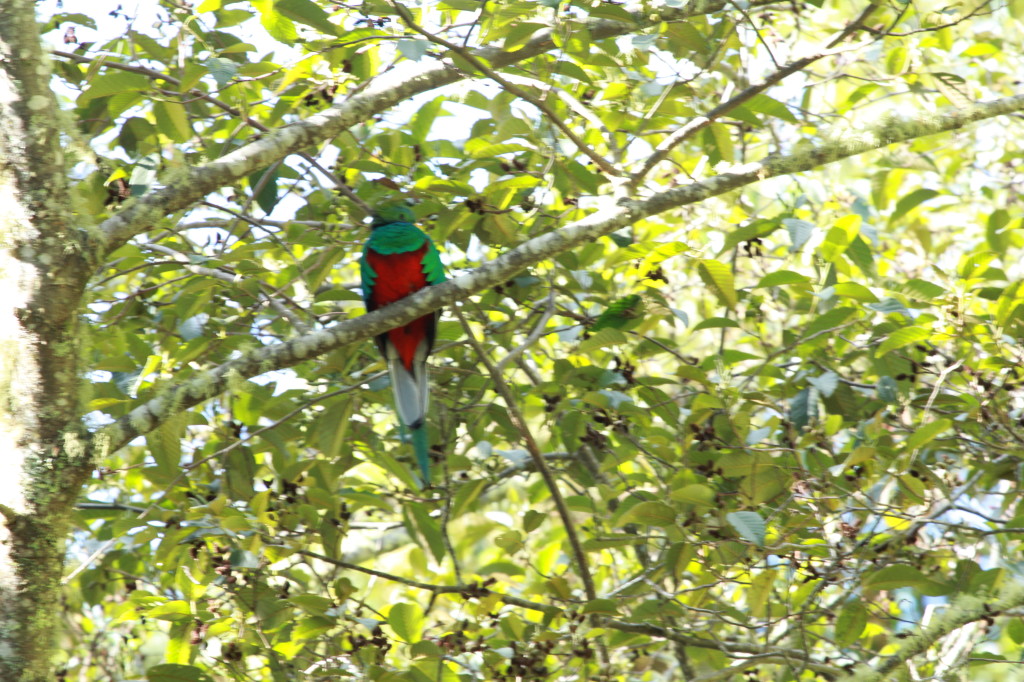
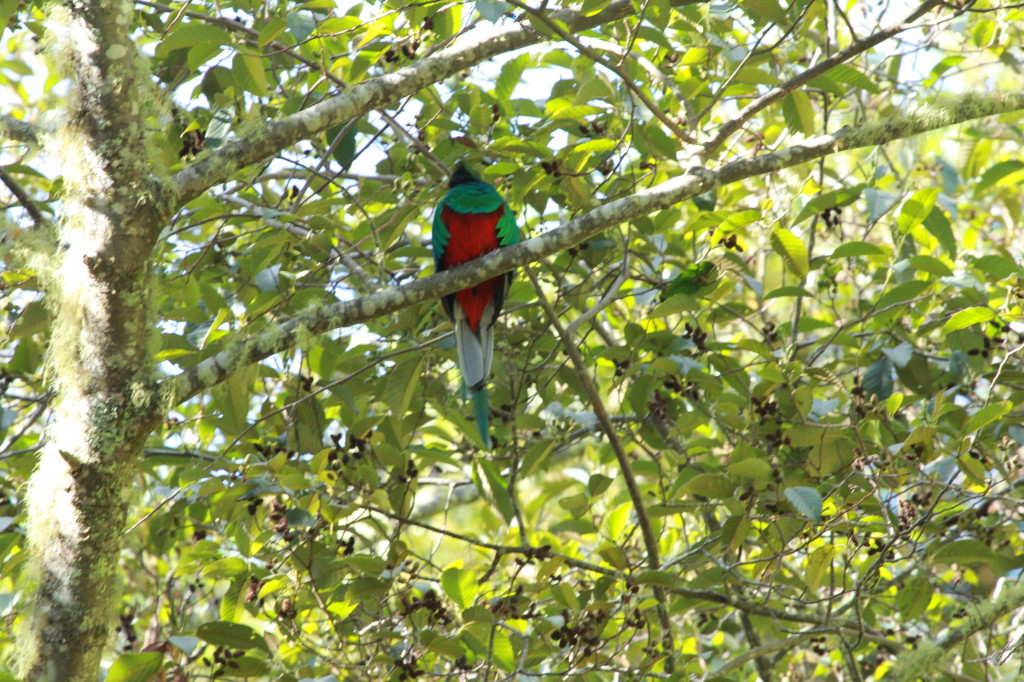
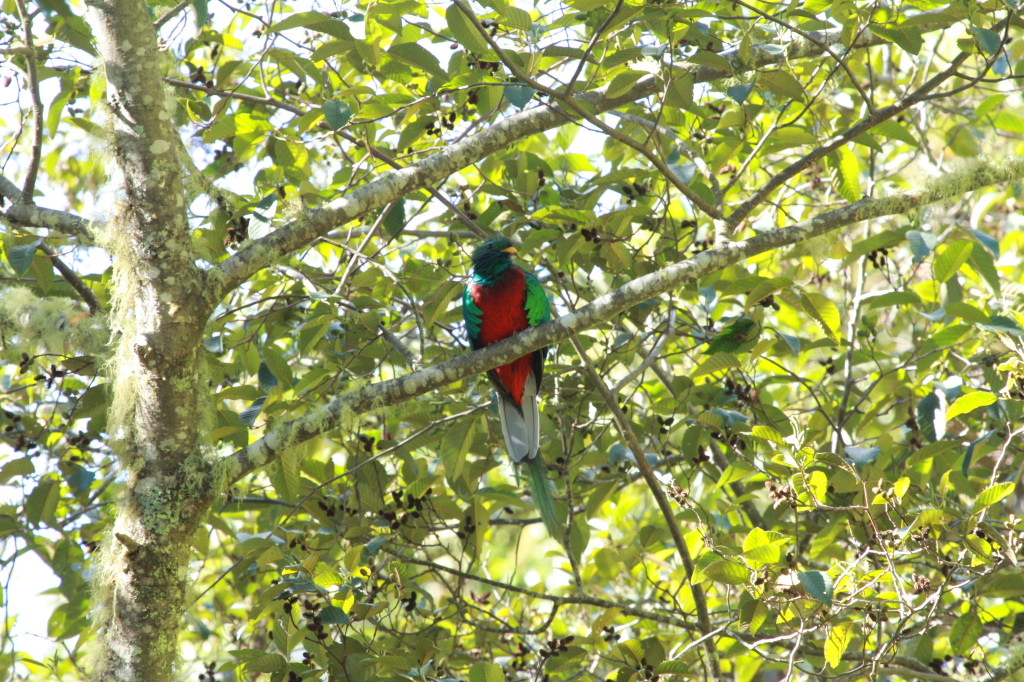
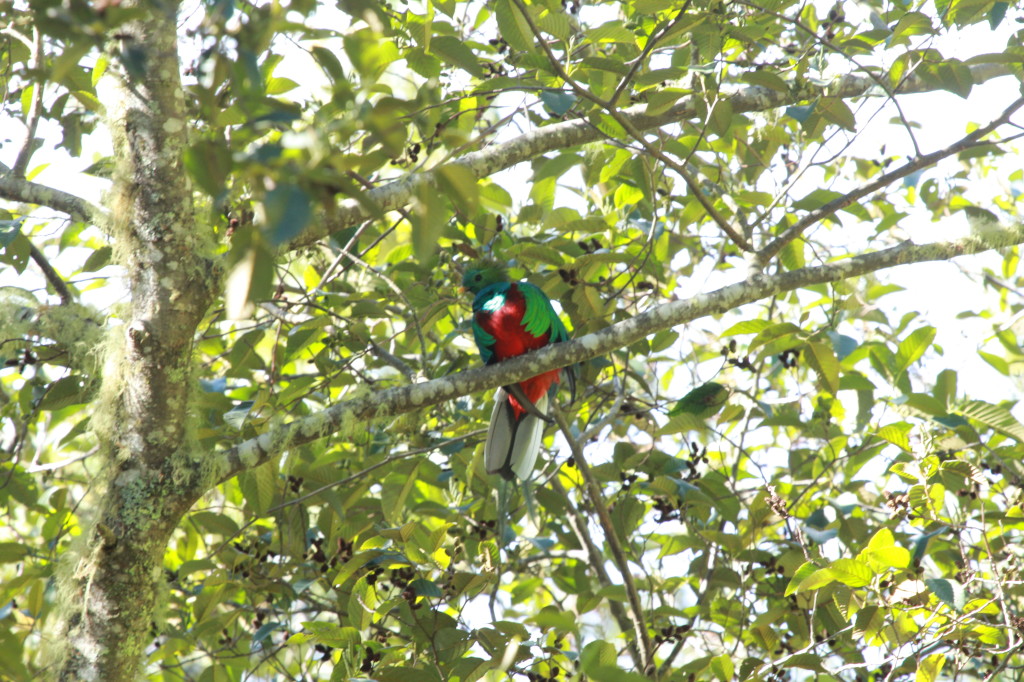
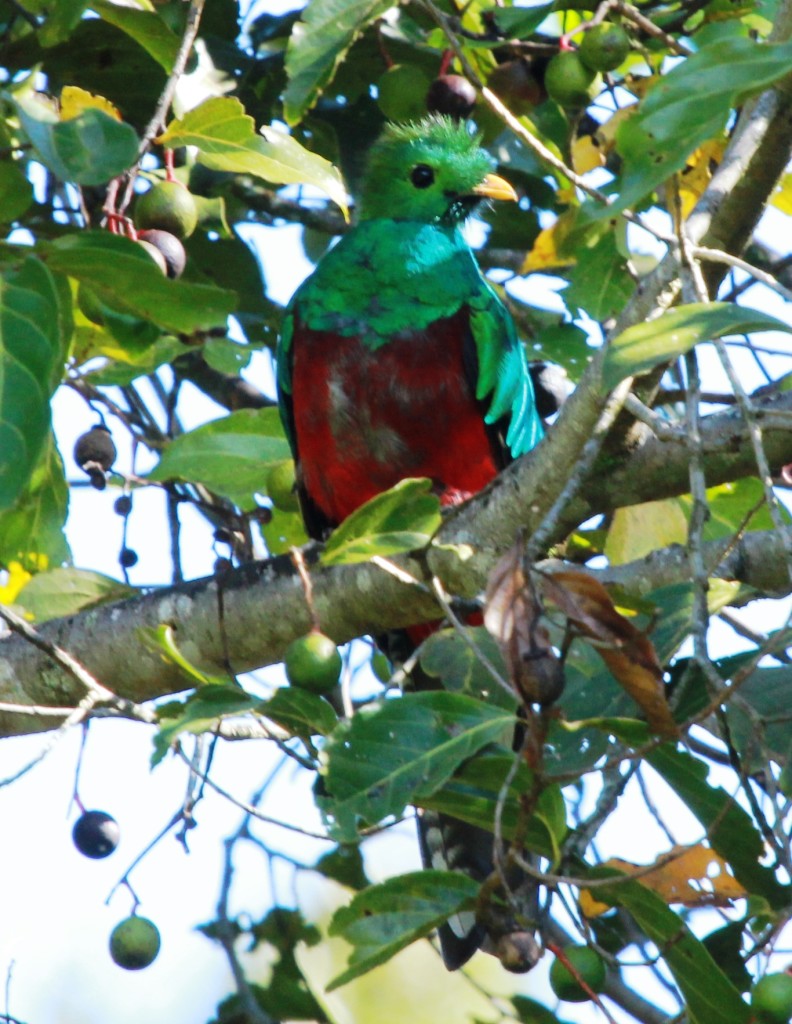
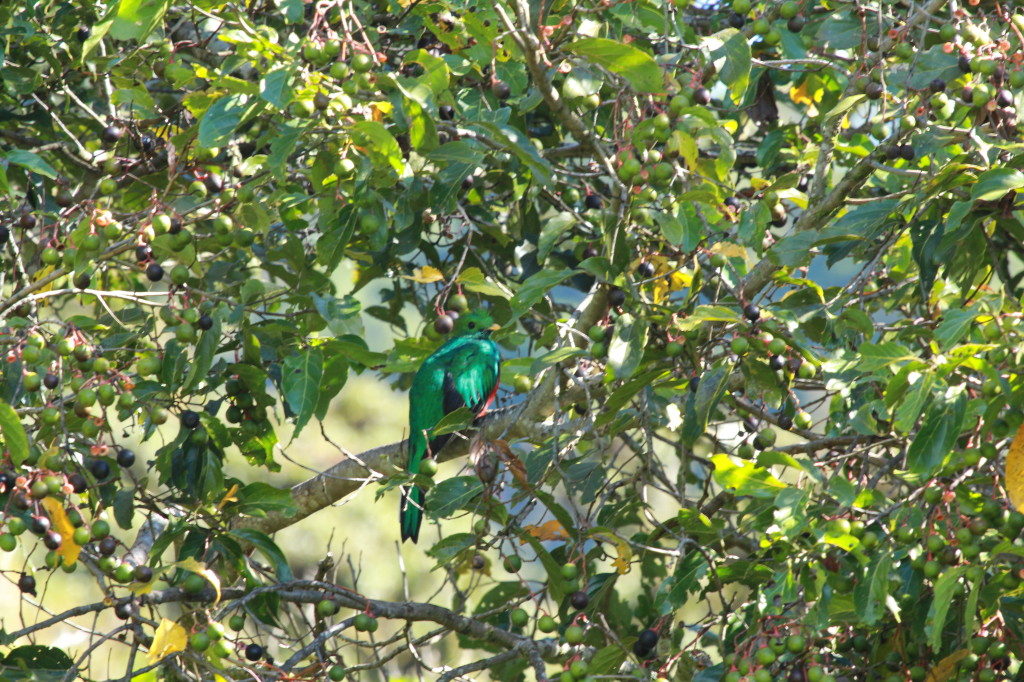
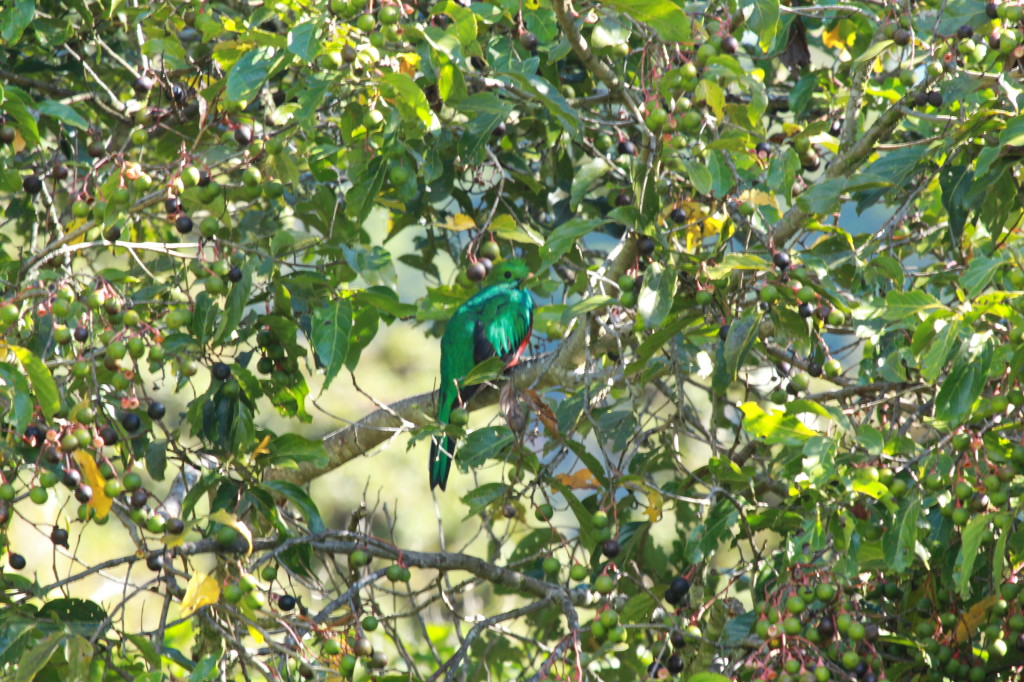
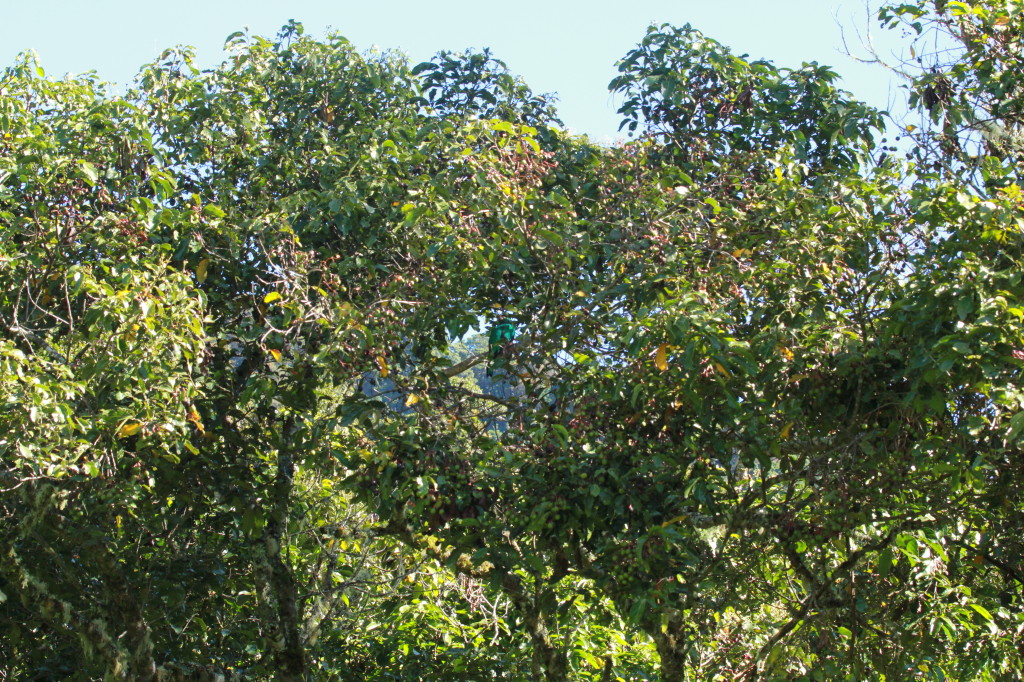
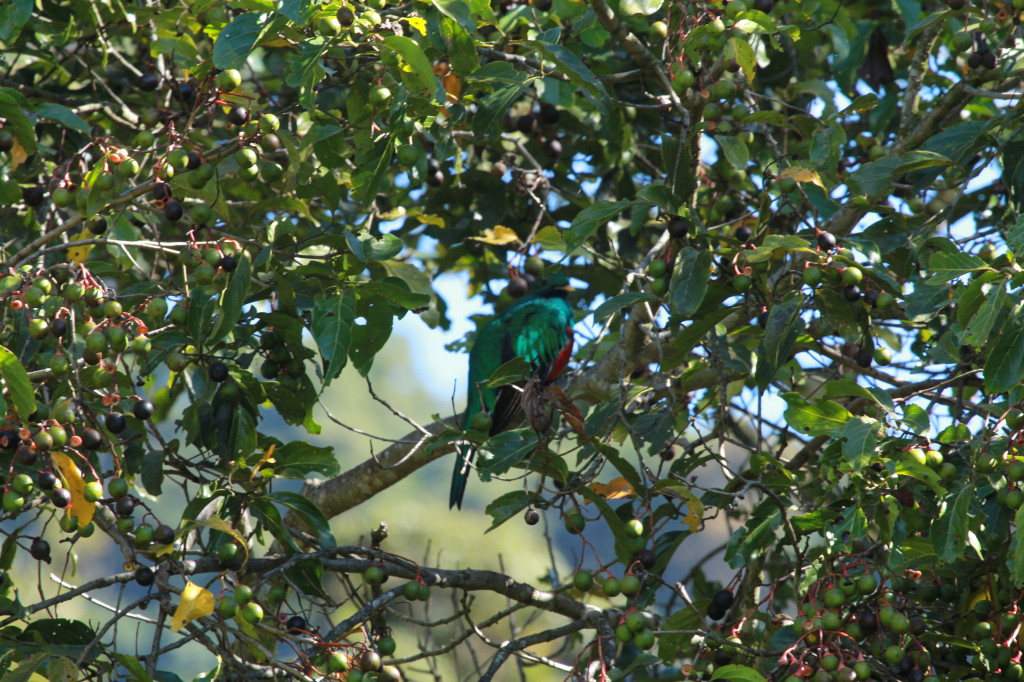
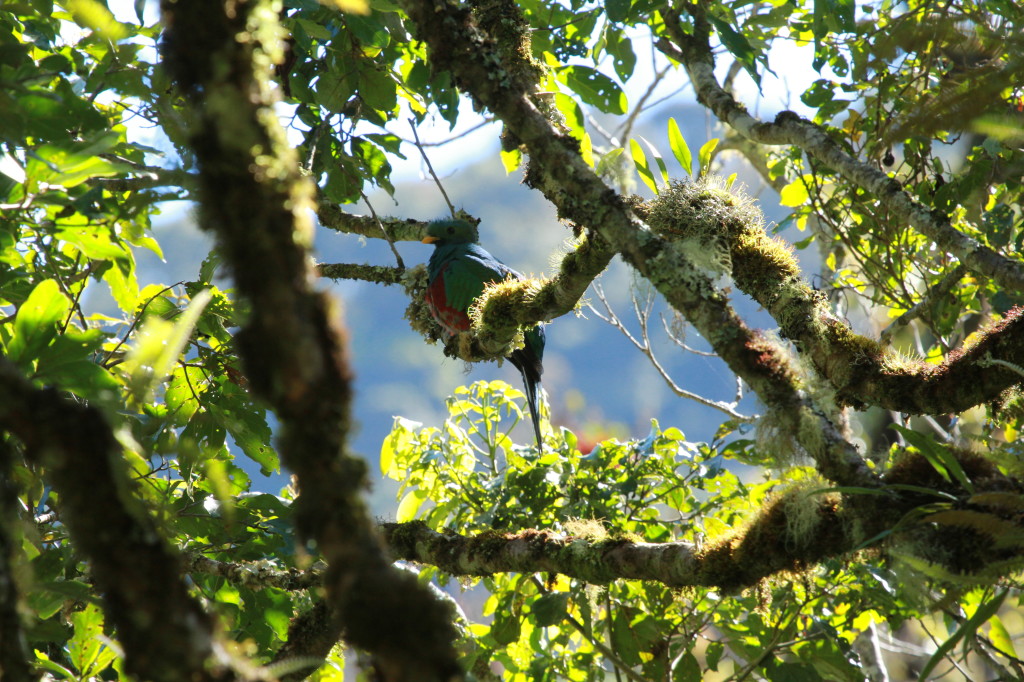
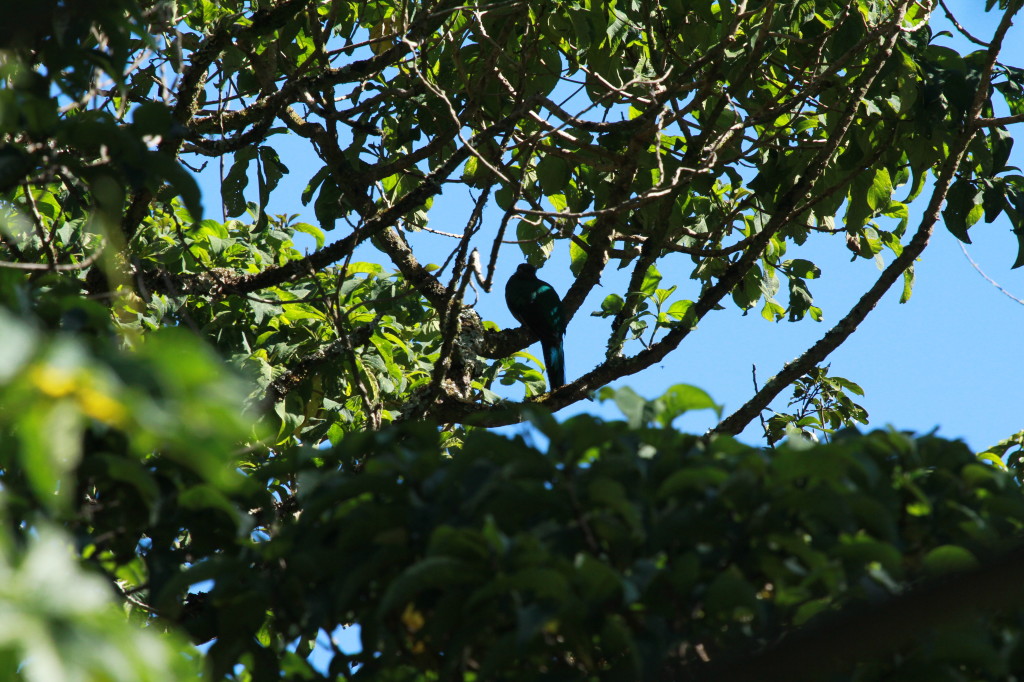
IMG_969917.  Resplendent Quetzal (Pharomachrus mocinno) – seen at Monteverde (Curi Cancha) & Savegre.  I will never forget both sightings of this stunning bird!  The first one because I found him by myself and the 2nd one because there were several of them and they hung around a while so I could watch them.

IMG_0676a

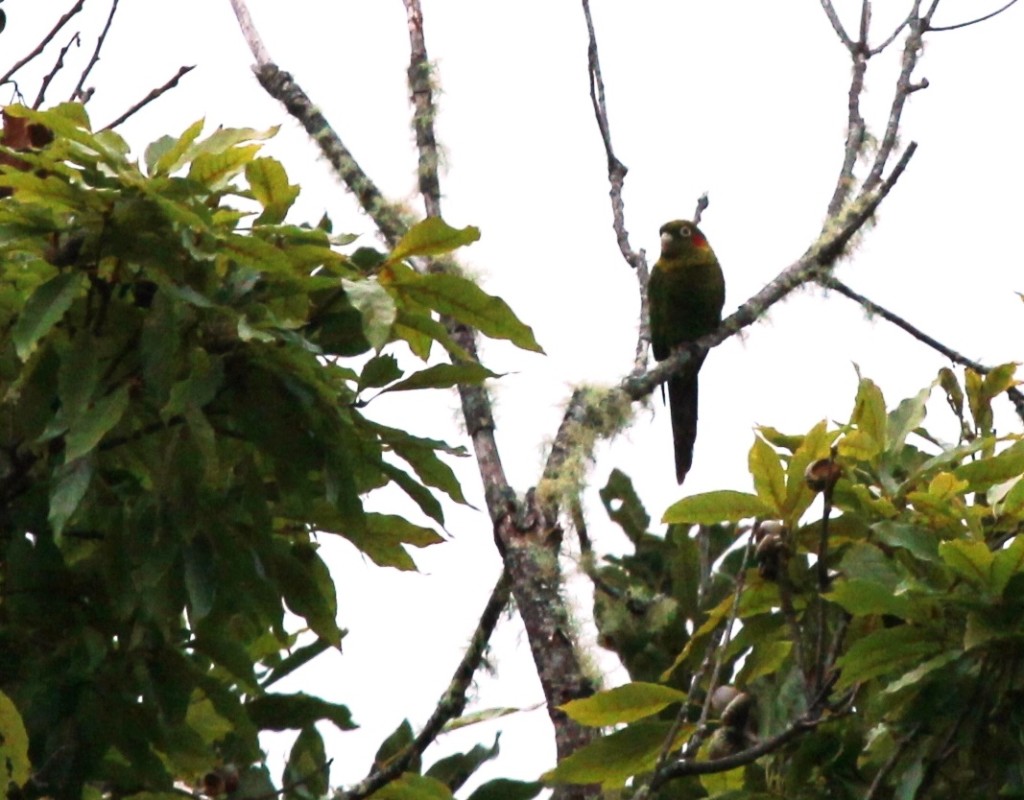
IMG_1092a18.  Sulphur-winged Parakeet (Pyrrhura hoffmanni) – seen at Savegre, Costa Rica, August 2013

IMG_1245b

I haven’t started the India & Sri Lanka series yet, we only got back a few weeks ago and I have been playing catch-up.  These birds will be covered first thing in the New Year.  The photos are a sneak-peek!

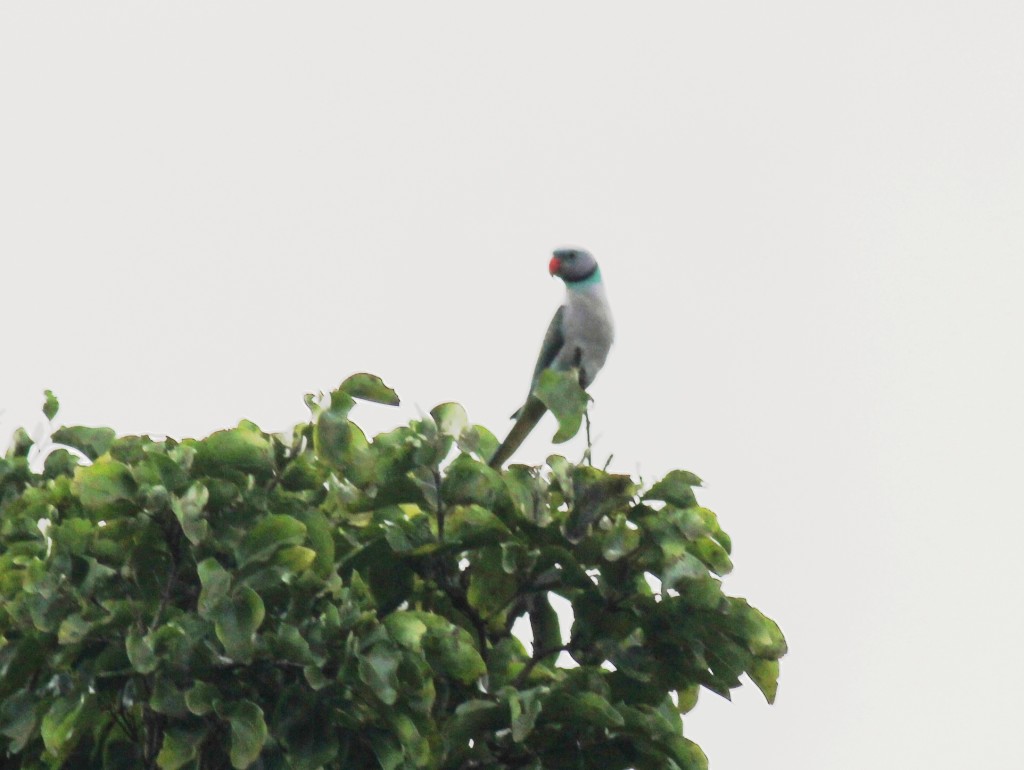
19. Malabar Parakeet (Psittacula columboides) – seen in Coorg, India; Nov. 2013.  This time there were only fleeting glimpses of a flock flying overhead so the photo is one I took in 2011 in Kerala.

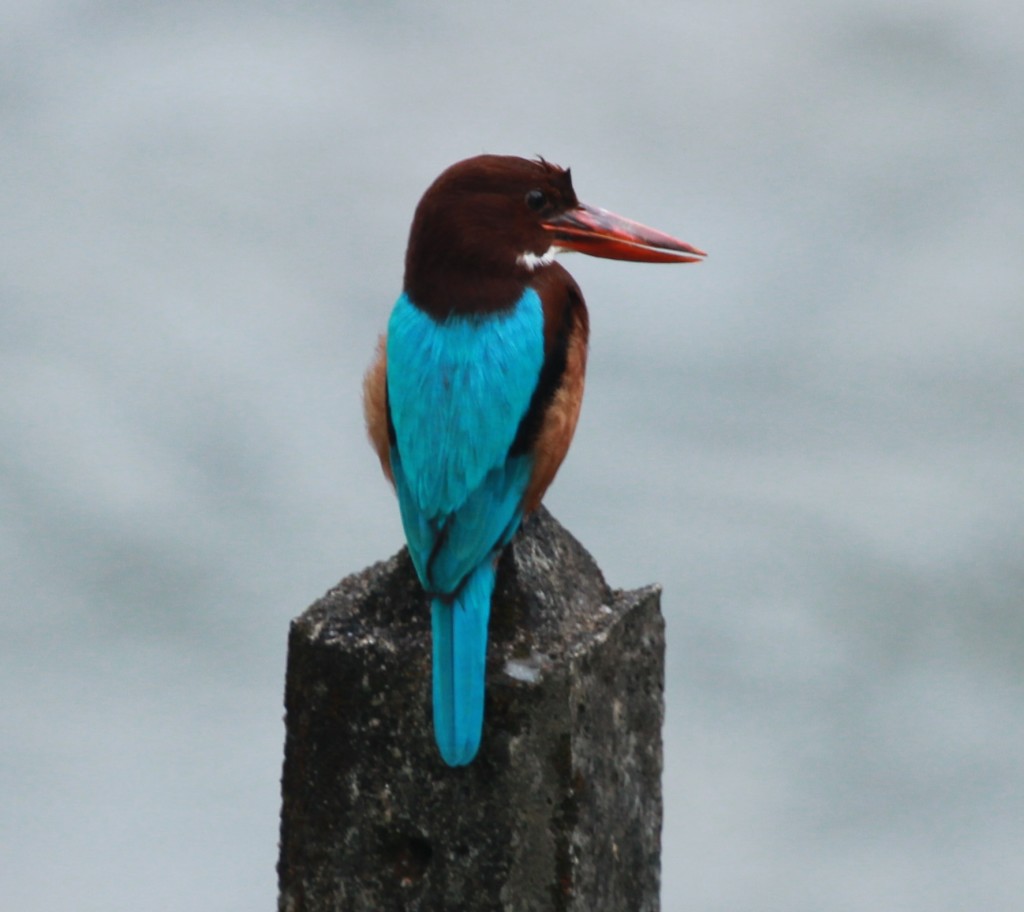
Malabar Parakeet A20.  White-throated Kingfisher (Halcyon smyrnensis) – seen at Kithulgala, Sri Lanka. Dec 2013.

IMG_3184a

21.  Layard’s Parakeet (Psittacula calthropae) – seen at Kithulgala & Sinharaja, Sri Lanka. Dec 2013.  They were swift flyers and refused to perch & pose.

IMG_3148a

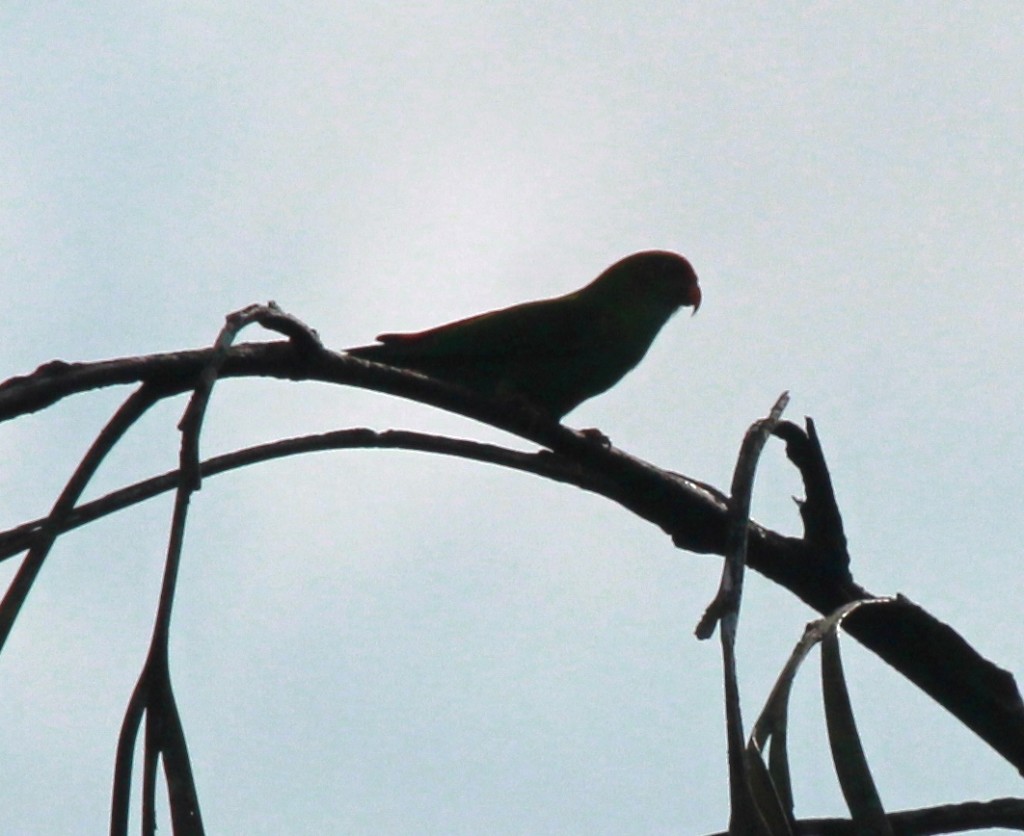
22.  Sri Lanka Hanging Parrot (Loriculus beryllinus) – seen at Kithulgala, Sri Lanka. Dec 2013.  At least he posed, albeit with the sun behind him!

IMG_3349a


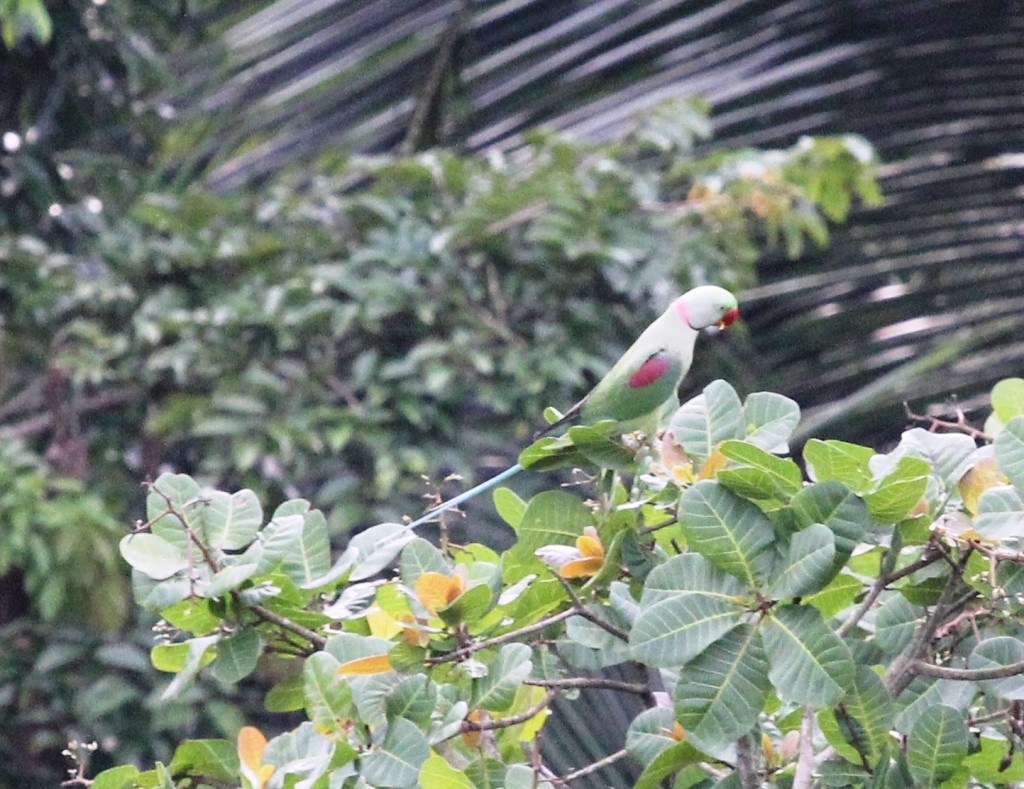
23.  Alexandrine Parakeet – (Psittacula eupatria) – seen at Kithulgala & Sinharaja, Sri Lanka. Dec 2013.

IMG_3650a

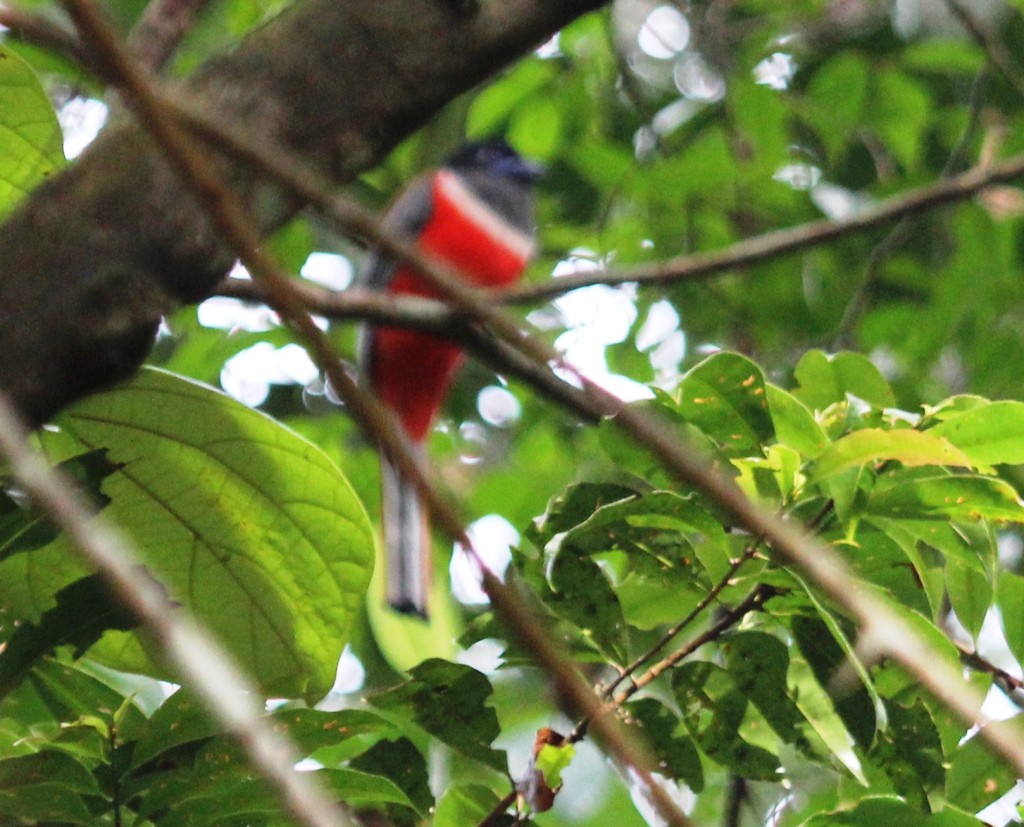
24.  Malabar Trogon (Harpactes fasciatus) – seen at Sinharaja, Sri Lanka. Dec 2013.  He only let me get one shot before turning his back.

IMG_3508a

25.  Sri Lanka Blue Magpie or Ceylon Magpie (Urocissa ornata) – seen at Sinharaja, Sri Lanka. Dec 2013.

I didn’t get a photo of them since they stayed in the trees so here’s one from Wikipedia.

.


Chestnut-coloured Woodpecker (Celeus castaneus)

The Chestnut-colored Woodpecker is one of the fanciest of the woodpeckers in Central America. It is a member of the genus Celeus, which is composed of numerous “chestnut” colored woodpeckers, all of which also have a characteristic “hammer-head” crest. The Chestnut-colored occurs farther north than any of its congeners, ranging from southern Mexico south to extreme northwestern Panama. Overall the bird is bright chestnut-brown. The crest is a paler light rufous-brown, the underparts and back have extensive black chevron-shaped scaling, it has a red “mustache” stripe, and the bill is light yellow.

IMG_9699 IMG_0042 IMG_0048It is found in Belize, Costa Rica, Guatemala, Honduras, Mexico, Nicaragua, and Panama, so you will need a Central American award to get within their range.  My best sightings were at Laguna del Lagarto Lodge in Costa Rica.

.

LEARN MORE ABOUT THIS BIRD

Wikipedia

Birdlife

Cornell Lab of Ornithology

VIDEO

Foraging and “woodpecking” for food.


Part 1: Birding At Savegre, Costa Rica – Resplendant Quetzals

Yesterday, I reviewed the Savegre Hotel & Spa.  Today I will tell you about the birding experiences and the guide.  Our guide was Marino Chacon, a member of the founding family of Savegre Hotel.  You can read the history of his family here.  Marino knows the local birds well and has a scope to help you see them better.

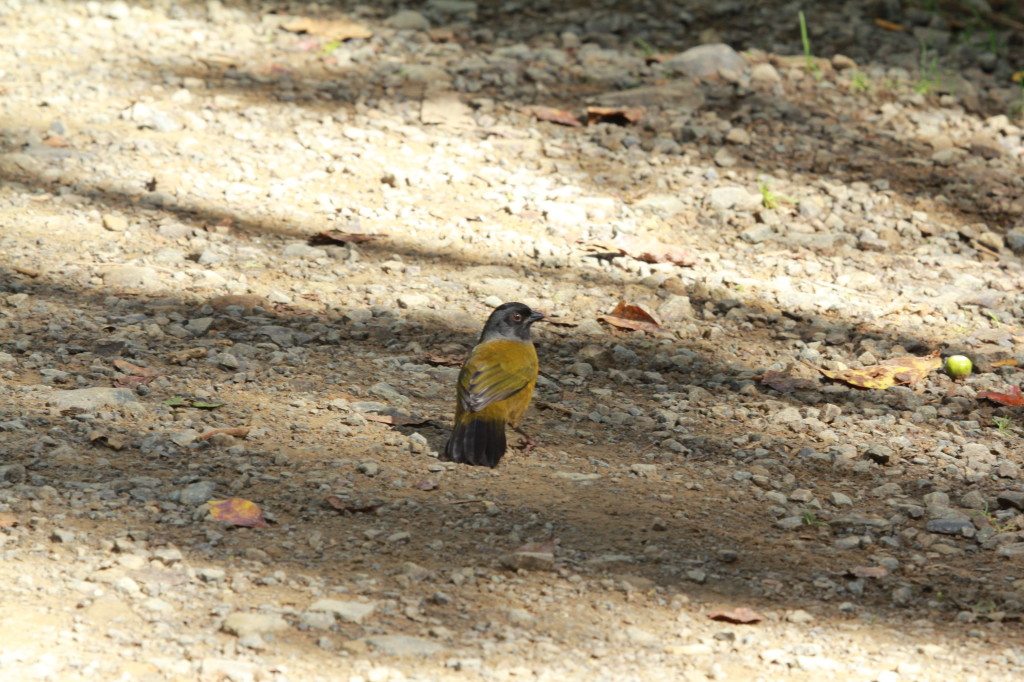
As with most birding excursions, you start early in the morning.  You can either book a visit to the Resplendent Quetzal area or a 5 hour tour which includes a birding hike in the forest behind the lodge which is your best chance to see Sulphur-winged Conures.

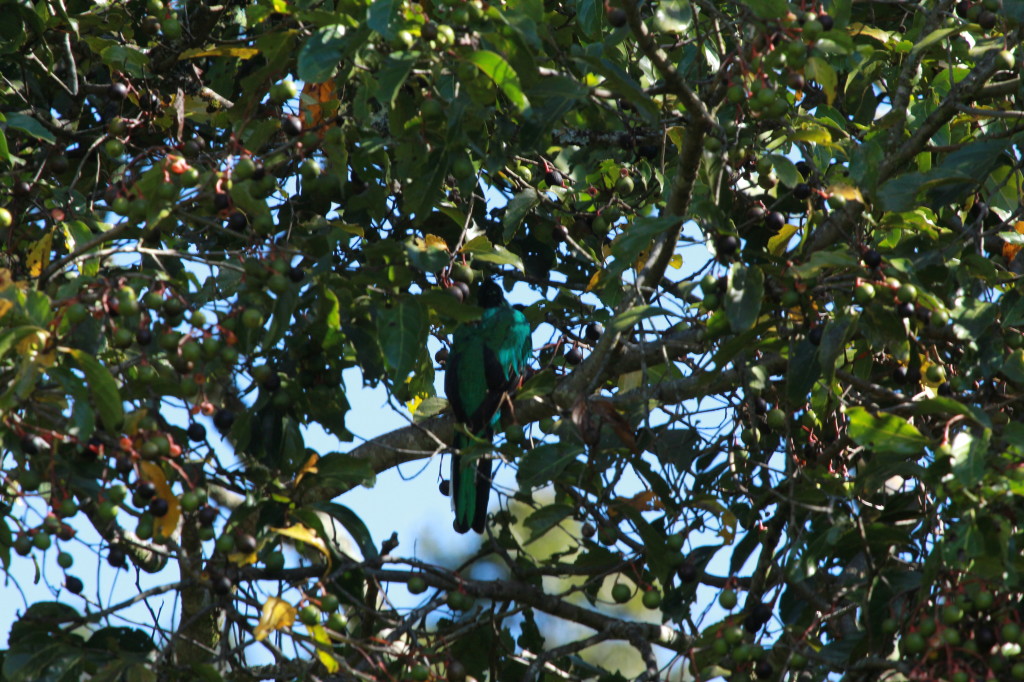
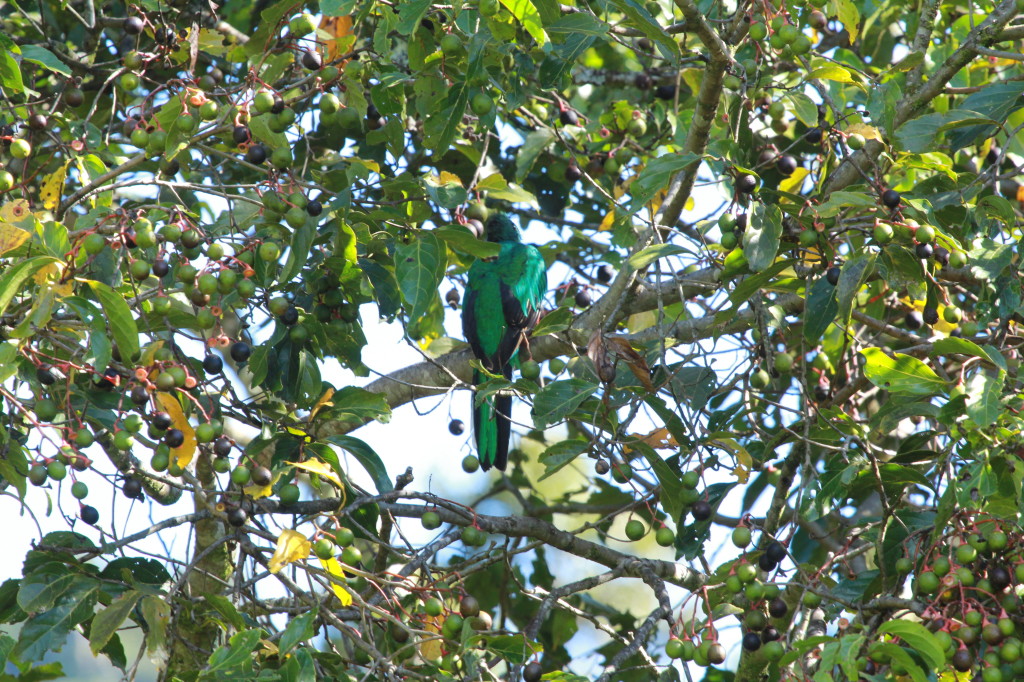
By the time we got to the Quetzal area, another group of birders had beat us there so it was easy to find them.  We saw 6 in all which is not bad for the slow season.  There were 2 adult males, 2 adult females and 2 juvenile males.  Here are a  few pics of the Quetzals and some other birds in their habitat.

IMG_1035 IMG_1036 IMG_1041 IMG_1053 IMG_1060 IMG_1064 IMG_1071 IMG_1073 IMG_1076 IMG_1082 IMG_1083 IMG_1092a IMG_1095 IMG_1097 IMG_1102 IMG_1107 IMG_1109 IMG_1110 IMG_1111 IMG_1126 IMG_1127 IMG_1129 IMG_1134 IMG_1150

Resplendent Quetzal (Pharomachrus mocinno)

All birds are beautiful in one way or another but the Resplendent Quetzal (Pharomachrus mocinno) is spectacularly gorgeous!   They look like little gods come down to earth and when you see one, you will wonder if you should be worshiping it or photographing it.
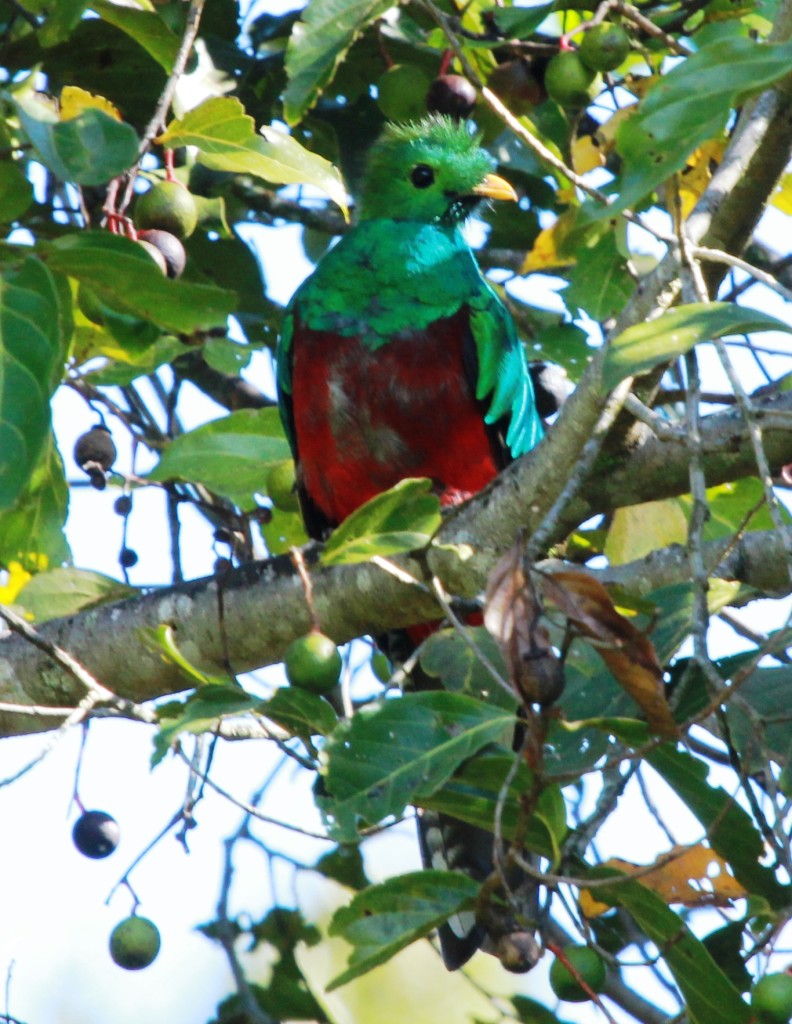
IMG_1092aThe Resplendent Quetzal (Pharomachrus mocinno) is a bird in the trogon family. It is found from southern Mexico to western Panama (unlike the other quetzals of the genus Pharomachrus, which are found in South America and eastern Panama). It is well known for its colorful plumage. There are two subspecies, P. m. mocinno and P. m. costaricensis.

This quetzal plays an important role in Mesoamerican mythologies. The Resplendent Quetzal is Guatemala’s national bird, and an image of it is on the flag and coat of arms of Guatemala. It is also the name of the local currency (abbreviation GTQ).

In ancient Mayan culture, the quetzal bird’s tail feathers were used as currency.  The Resplendent Quetzal was considered divine, associated with the “snake god”, Quetzalcoatl by Pre-Columbian Mesoamerican civilizations. Its iridescent green tail feathers, symbols for spring plant growth, were venerated by the ancient Aztecs and Maya, who viewed the quetzal as the “god of the air” and as a symbol of goodness and light. Mesoamerican rulers and some nobility of other ranks wore headdresses made from quetzal feathers, symbolically connecting them to Quetzalcoatl. Since it was a crime to kill a quetzal, the bird was simply captured, its long tail feathers plucked, and was set free. Quetzalcoatl was the creator god and god of wind, often depicted with grey hair. In several Mesoamerican languages, the term for quetzal can also mean precious, sacred, or erected.

WHERE TO SEE THEM IN THE WILD

Their habitat is montane cloud forest from Southern Mexico to Panama.  I was lucky enough to see them in 2 locations in Costa Rica – Monteverde & Savegre/San Gerardo de Dota.  Use your airline miles to get to Central America, then use shuttles or public transport to get to these locations.

Red dots are Monteverde & Savegre in Costa Rica

Mature male with fully grown tail feathers

.

Females are less spectacular but still beautiful.

INTERESTING LEGENDS OF RESPLENDENT QUETZALS

From Wikipedia:

Until recently, it was thought that the Resplendent Quetzal could not be bred or held for any long time in captivity, and indeed it was noted for usually killing itself soon after being captured or caged. For this reason it is a traditional symbol of liberty. However, a zoo in Mexico has kept this species since 1992, and in 2004 breeding in captivity was announced (Orellana, 2004).

The bird is of great relevance to Guatemalan culture, being a character in the widely popular legend of the local hero Tecún Umán, a prince and warrior of the Quiché (K’iche’) Maya during the latter stages of the Spanish conquest of the region. This quetzal was his nahual (spirit guide). The Quiché repelled several attacks from the Spanish army, even though outmatched in weaponry (guns, armor and cavalry against spears and arrows).

Legend has it that on the day the conquistador Pedro de Alvarado fought against Tecún Umán, there was a quetzal flying overhead. On the first strike Tecún Umán, on foot, managed to disable Pedro de Alvarado’s horse. Alvarado was then given another horse and on the second strike ran through Tecún Umán’s chest with a spear. The quetzal flew down and landed on Tecún Umán, dipping its chest in the warrior prince’s blood. It is there that the bird acquired its distinctive red chest feathers.

It is debatable whether these events happened, but the Maya fought fiercely for their land and freedom during the conquest. One Mayan legend claims that the quetzal used to sing beautifully before the Spanish conquest, but has been silent ever since; it will sing once again only when the land is truly free.

LEARN MORE ABOUT THIS BIRD

Wikipedia

Birdlife

Cornell Lab of Ornithology

TED Case Studies

VIDEOS


See how this Quetzal’s tail flicks every time he calls!

Violet Sabrewing (Campylopterus hemileucurus)

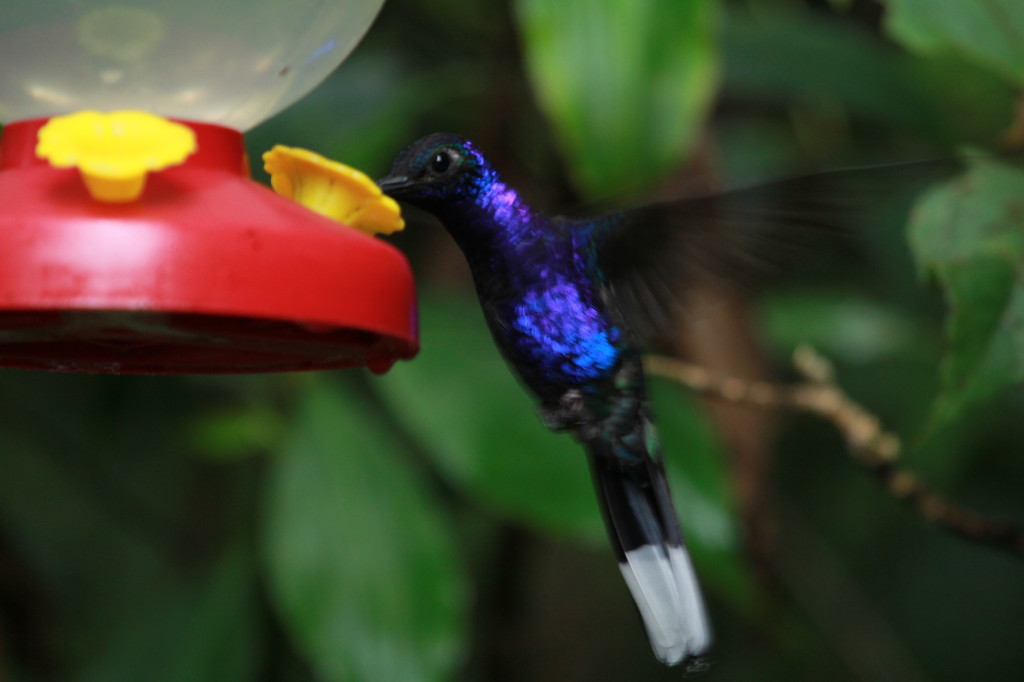
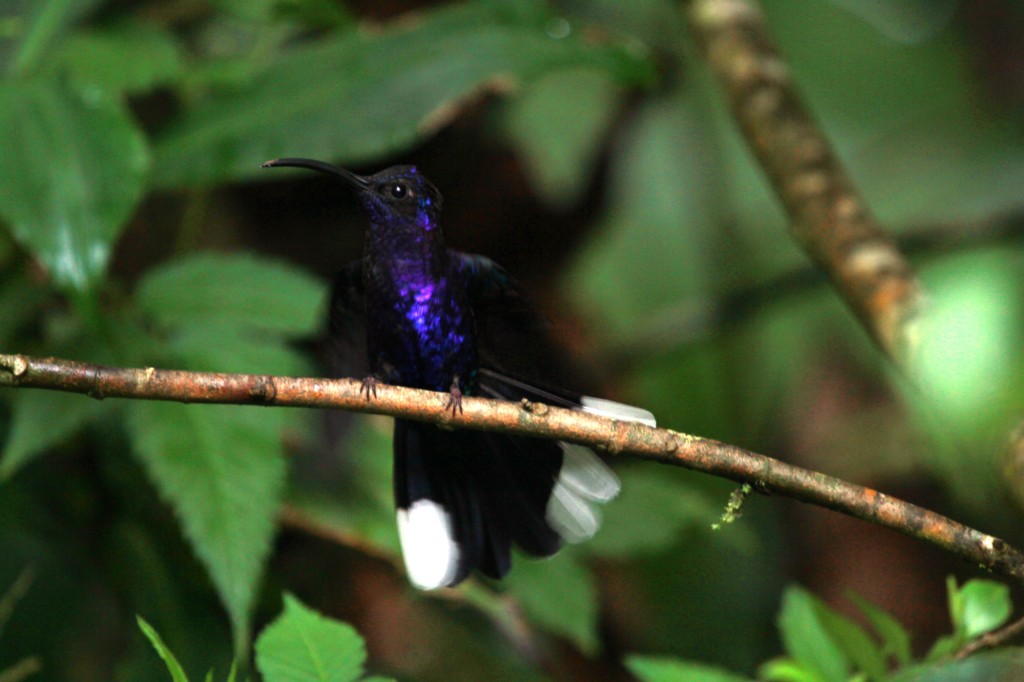
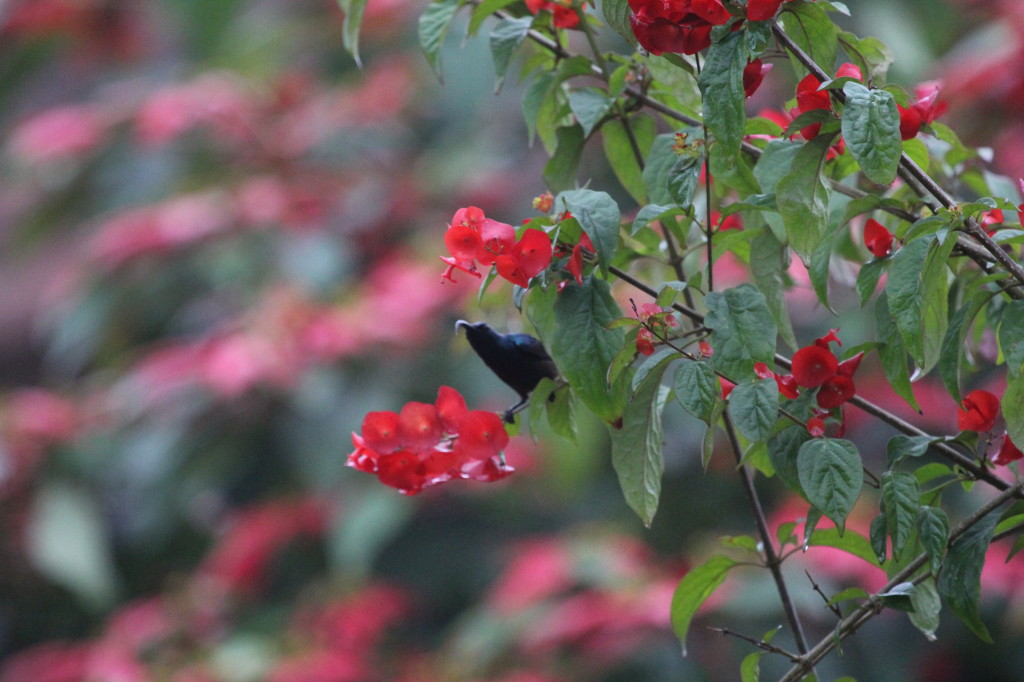
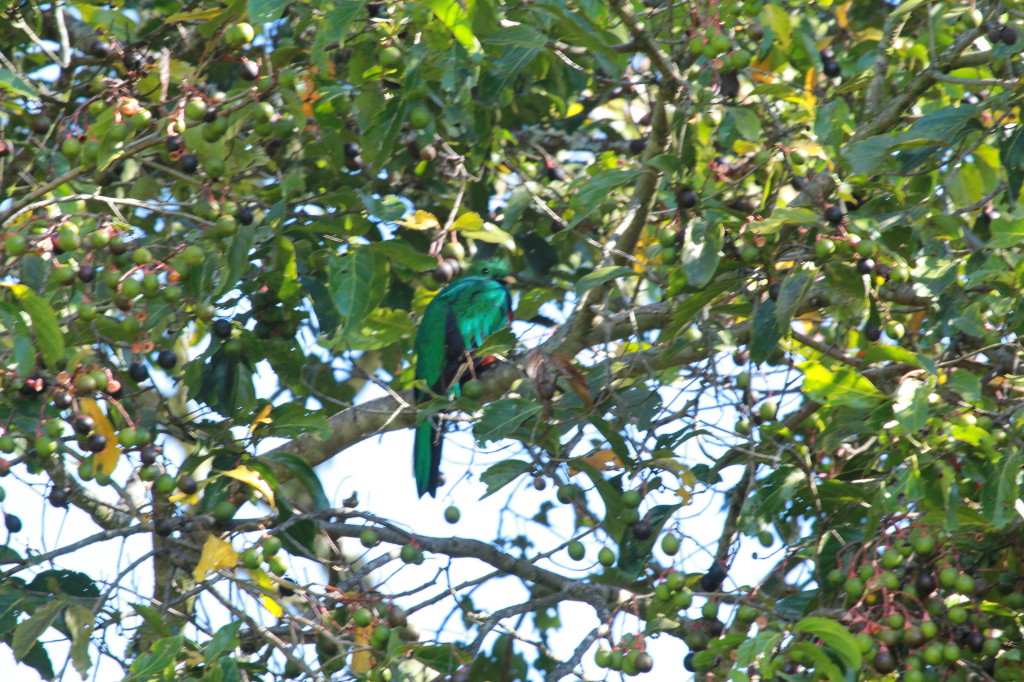
IMG_0731 IMG_0726The Violet Sabrewing is the largest species of hummingbird in Middle America. It occurs in montane forests from southern Mexico south to western Panama, and also is found at forest edges, in second growth forests, banana plantations, and flower gardens.
.

I saw this gorgeous hummingbird at the Monteverde Cloud Forest where they have feeders.  The photos don’t do them justice, they glow with iridescence that catches the sun.  A Central America award will get you to Costa Rica where you can travel to Monteverde and other great birding locations.

The food of this species is nectar, taken mainly from undergrowth flowers with Heliconias and bananas as favourites. The males are less aggressive and territorial at flowers than their size would suggest.

The call of the Violet Sabrewing is a sharp twitter, and the song of the male, given at leks of up to ten males, is a high-pitched piercing cheep tsew cheep tik-tik tsew.

LEARN MORE ABOUT THIS BIRD

Wikipedia

Birdlife

Cornell Lab of Ornithology (also has recording of this bird’s call)

VIDEO

Look fast, it’s only a short clip!


Golden-hooded Tanager (Tangara larvata)

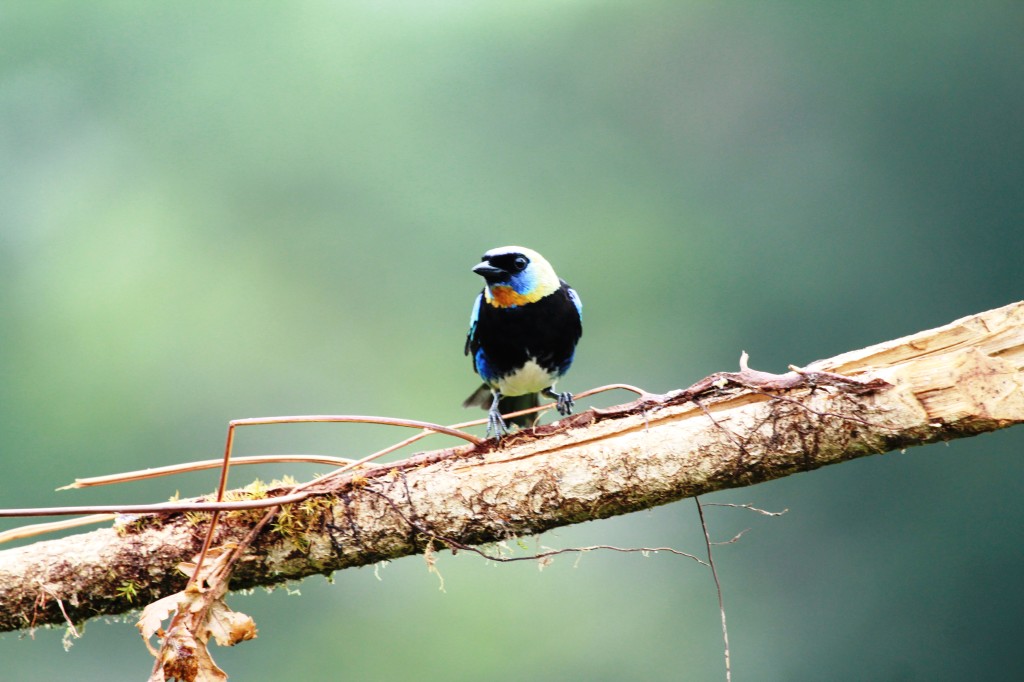
IMG_9691a IMG_9798The Golden-hooded Tanager (Tangara larvata) is a neotropical species that inhabits humid forest and forest edges. It belongs to the speciose genus Tangara and is often considered to belong to a superspecies with the Masked Tanager (Tangara nigrocincta) and Blue-necked Tanager (Tangara cyanicollis).

This tanager is a resident breeder from southern Mexico south to western Ecuador.  Some of the easiest places to see this beautiful little tanager is at Selva Verde Lodge & Laguna del Lagarto Lodge in Costa Rica.  Use an award to Central America to get to San Jose.  The lodges can organize a private shuttle or you can use the local buses to get there.  They are also frequently seen in Soberania National Park in Panama as the video clips below show.

.

LEARN MORE ABOUT THIS BIRD

Wikipedia

Birdlife

Cornell Lab of Ornithology

Selva Verde

VIDEOS

This is an adorable video of a baby Golden-hooded Tanager fledging.  I love how he works up his courage, then takes off!

This adult is preening, perhaps getting ready for his close-up!

Here’s a hungry little guy!