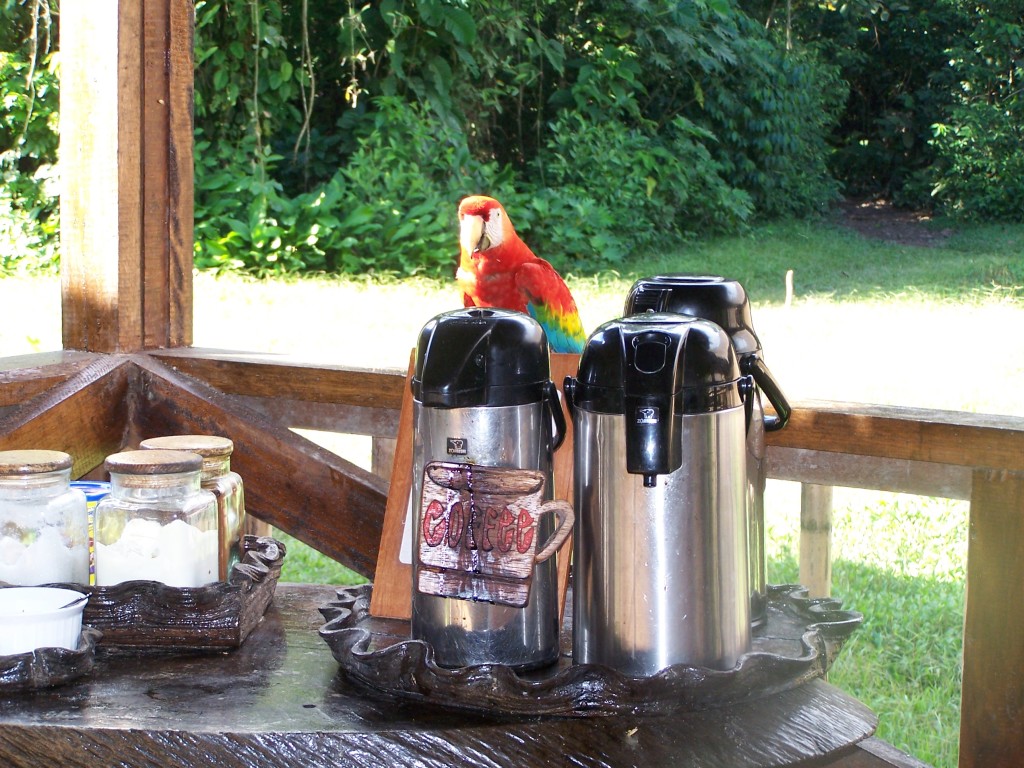
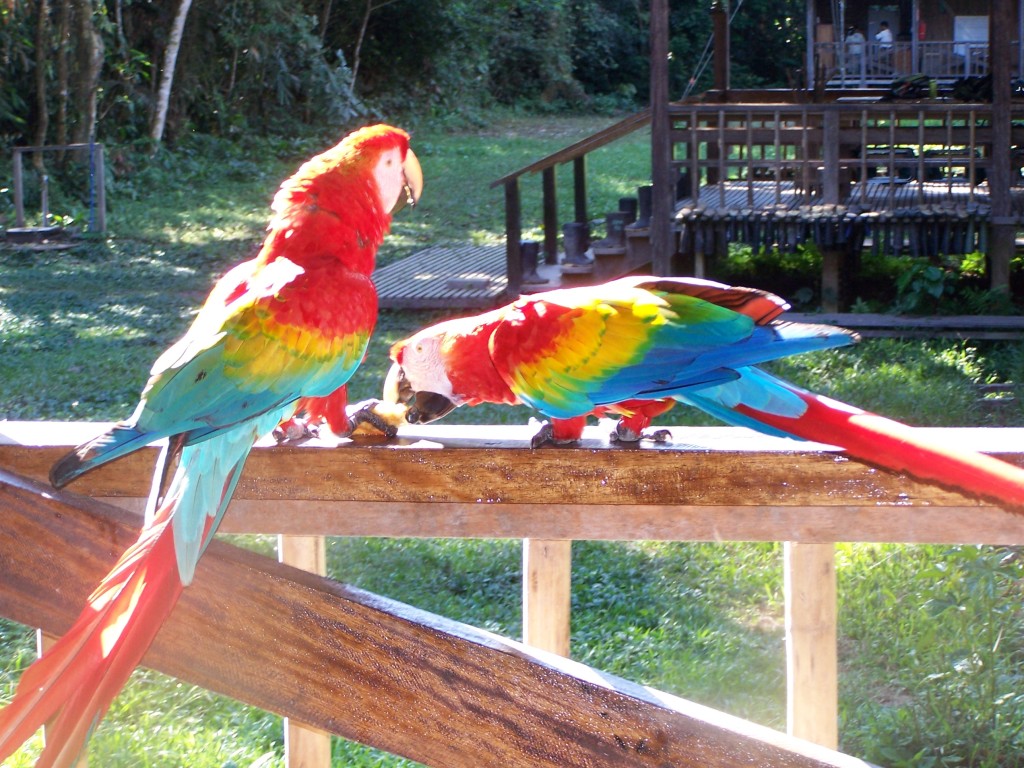
Last week, I did a comprehensive post on all the lodges that are available in Tambopata National Reserve. I have only been to two lodges so in the other post, I was only able to assess the lodges by their websites and what other had said about them on Trip Advisor. Now I can give a more personal review. I am reviewing these two lodges together as they are part of the same group and if you visit Tambopata Research Center (TRC), you will have one night at either Refugio Amazonas or Posada Amazonas before and after the TRC trip because it is a LONG way down the river!
Refugio Amazonas
The journey to get there is half the fun and the birding begins right away! I have a full account on my main website Feathered and Free which actually reads more like a blog post so I won’t copy everything again. The service was amazing from the moment we were picked up at the airport in Puerto Maldonado, given our safety gear and leaf lunches to the nature walks and birding. Our guide, William was well trained, knew all the species and had a good eye for spotting them.
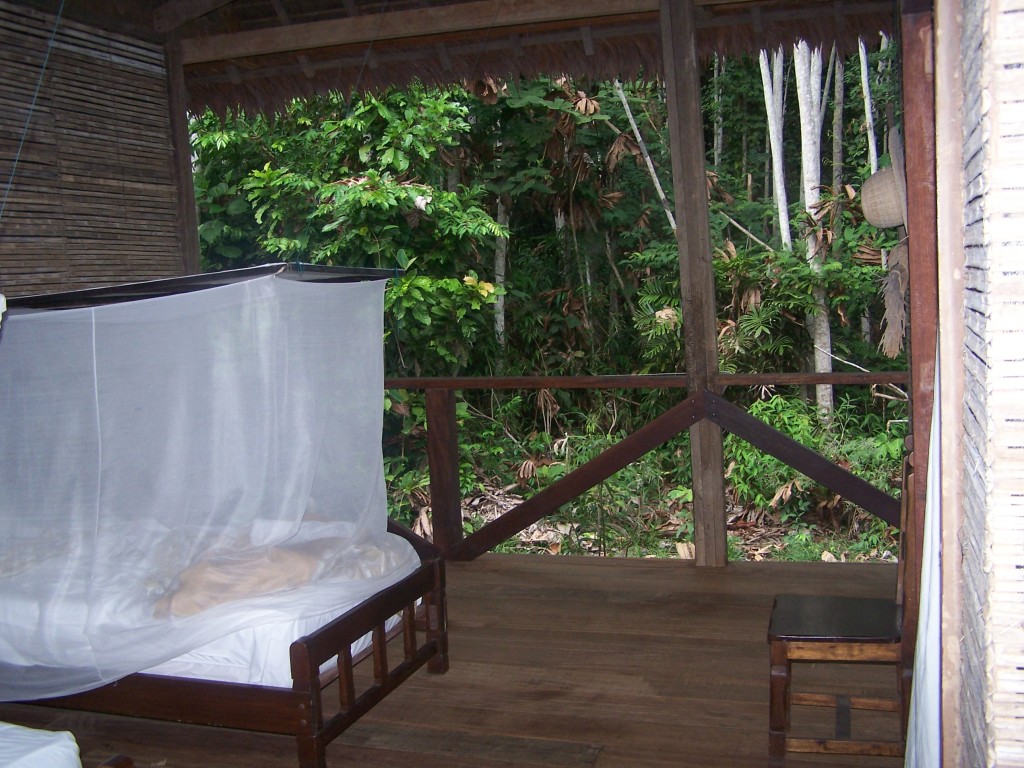
Refugio Amazonas Room
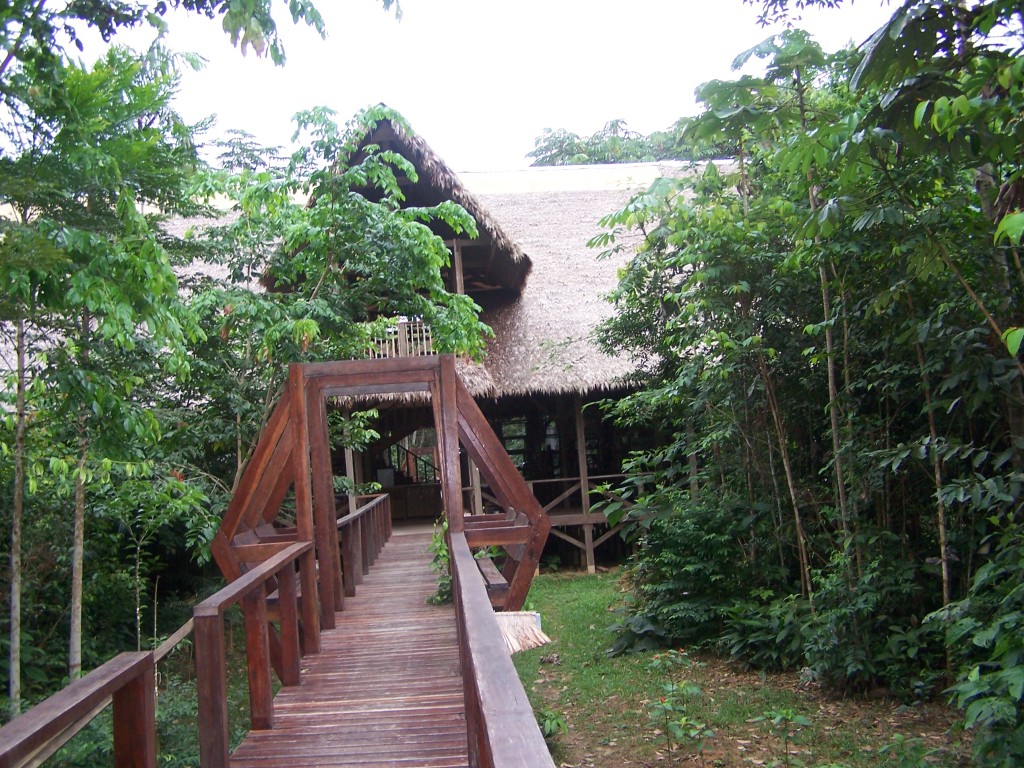
The lodges were both beautifully laid out and in harmony with the rain forest. What I really love is how the rooms are open to the jungle and you can see and hear everything that goes on 24 hours a day! Mosquito nets are provided and we found the beds very comfortable. People are warned not to leave personal effects and food out as macaws and monkeys can and will take anything they find. Meals are done buffet style and the food was excellent! We were amazed at how they could cook the variety of dishes they did out in the middle of the rainforest! There is a well-stocked bar and library where you could take a book and relax in a hammock during the siesta time.
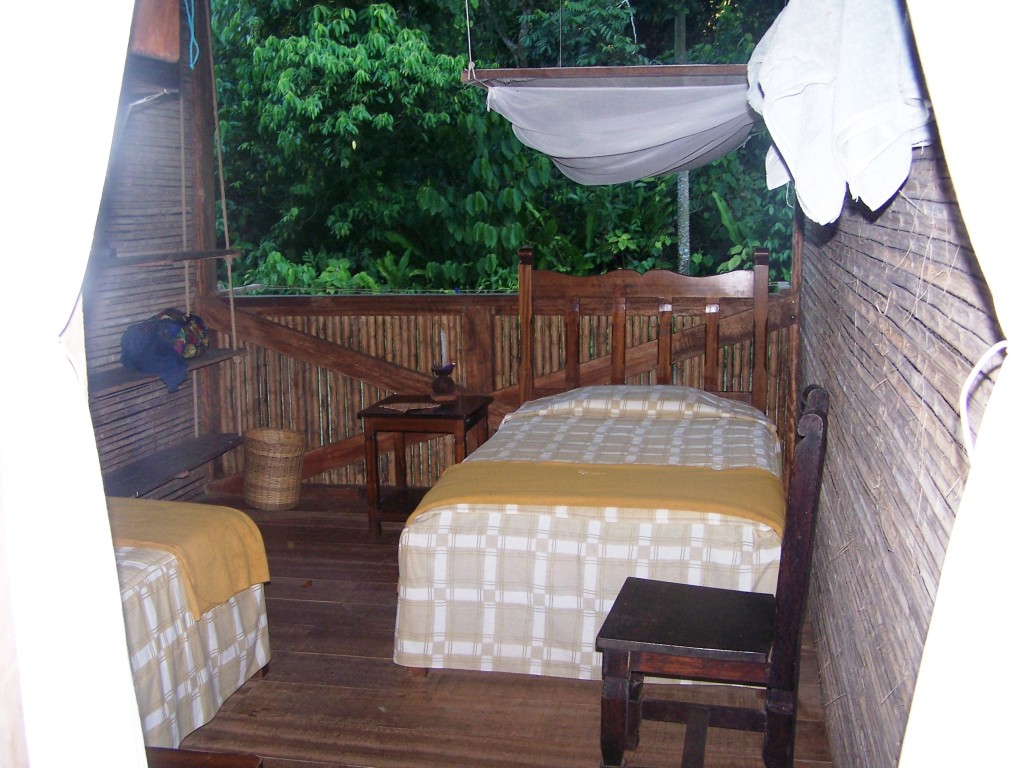
TRC Room
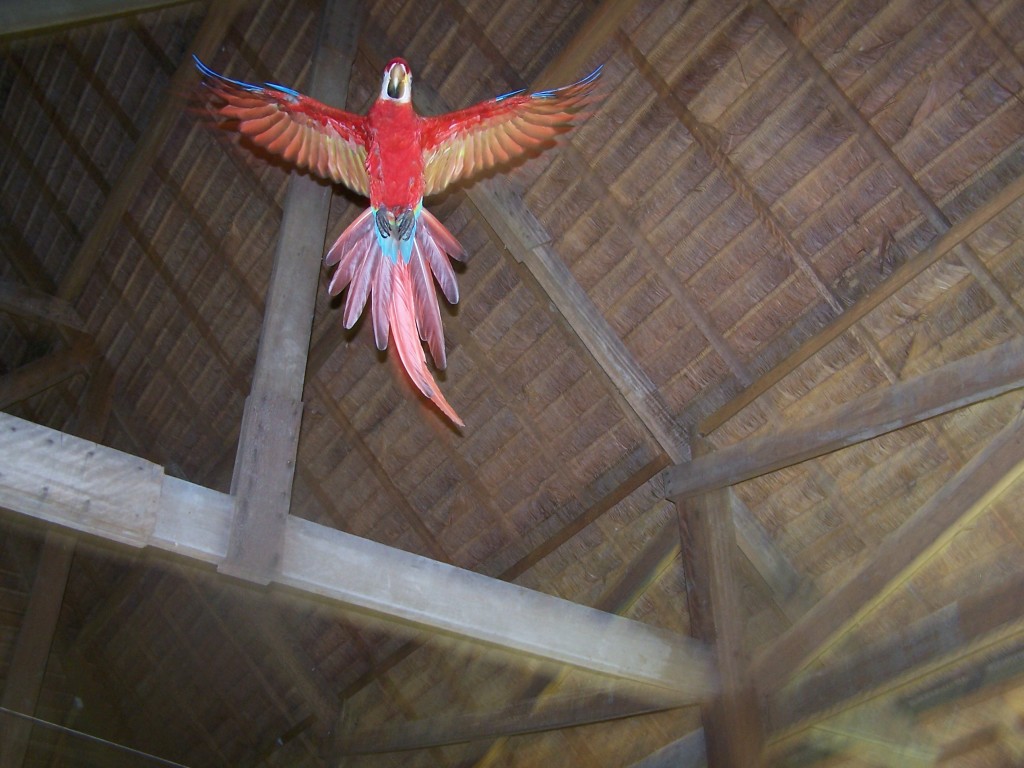
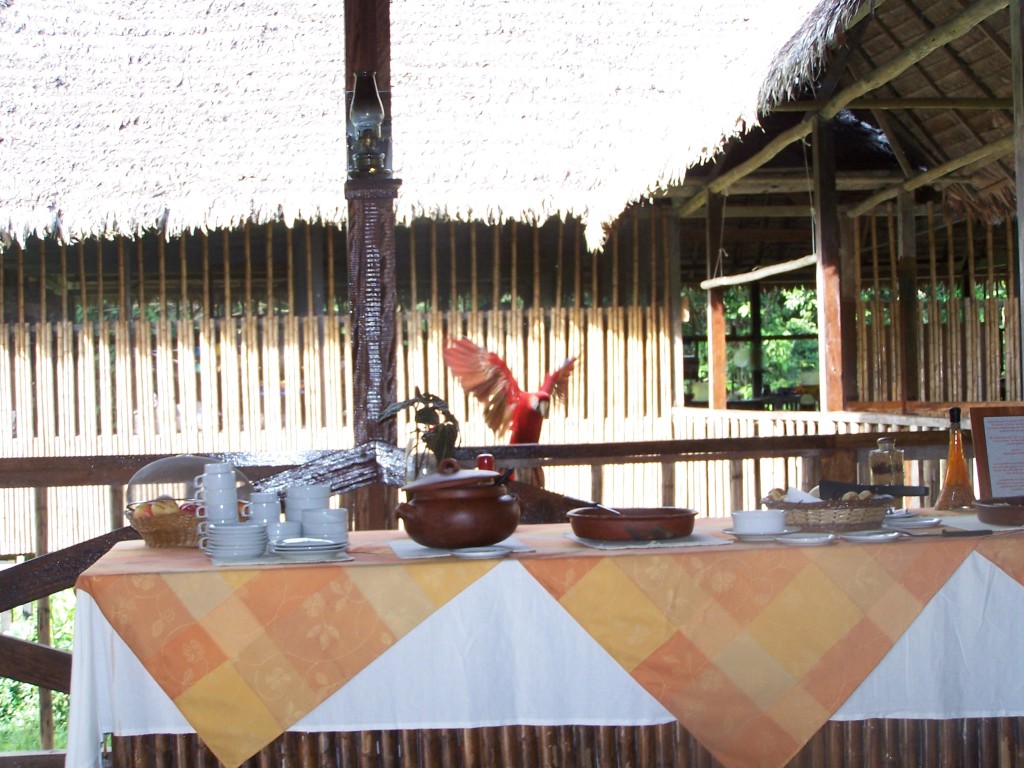
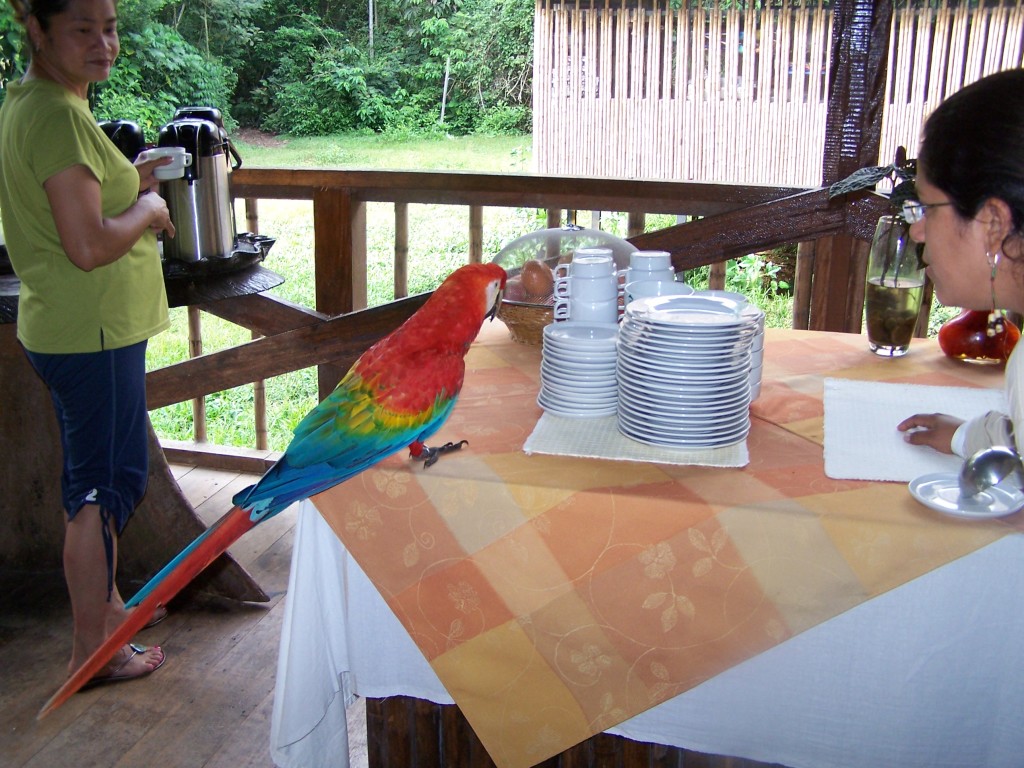
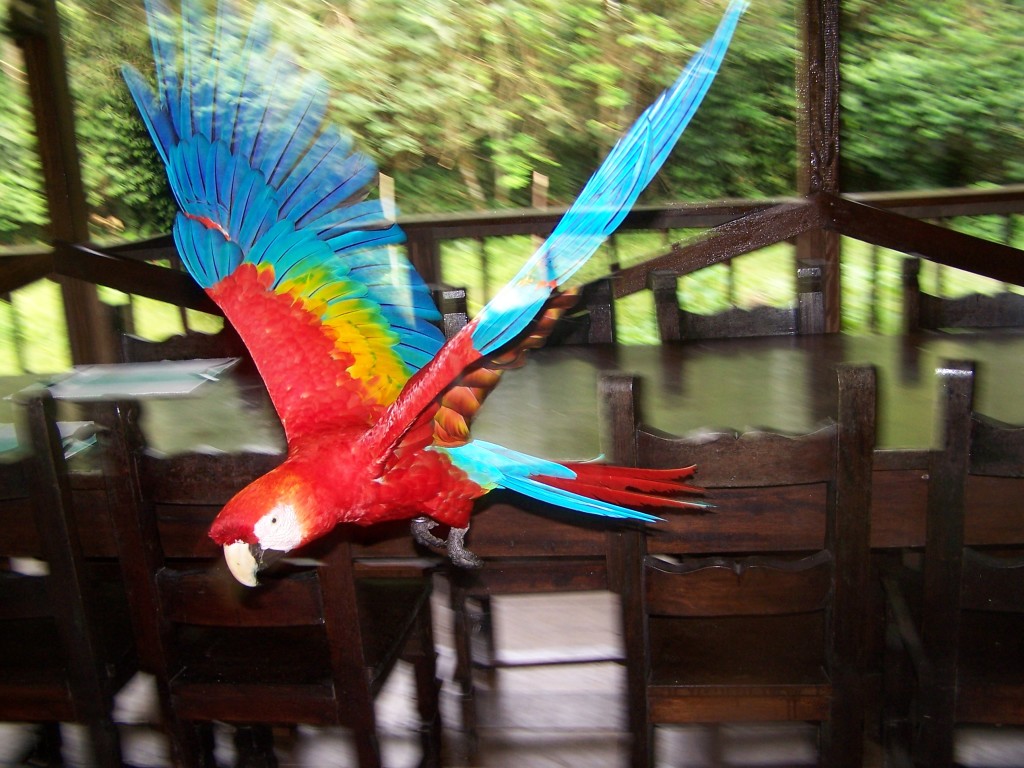
Macaws can and do come into the rooms!
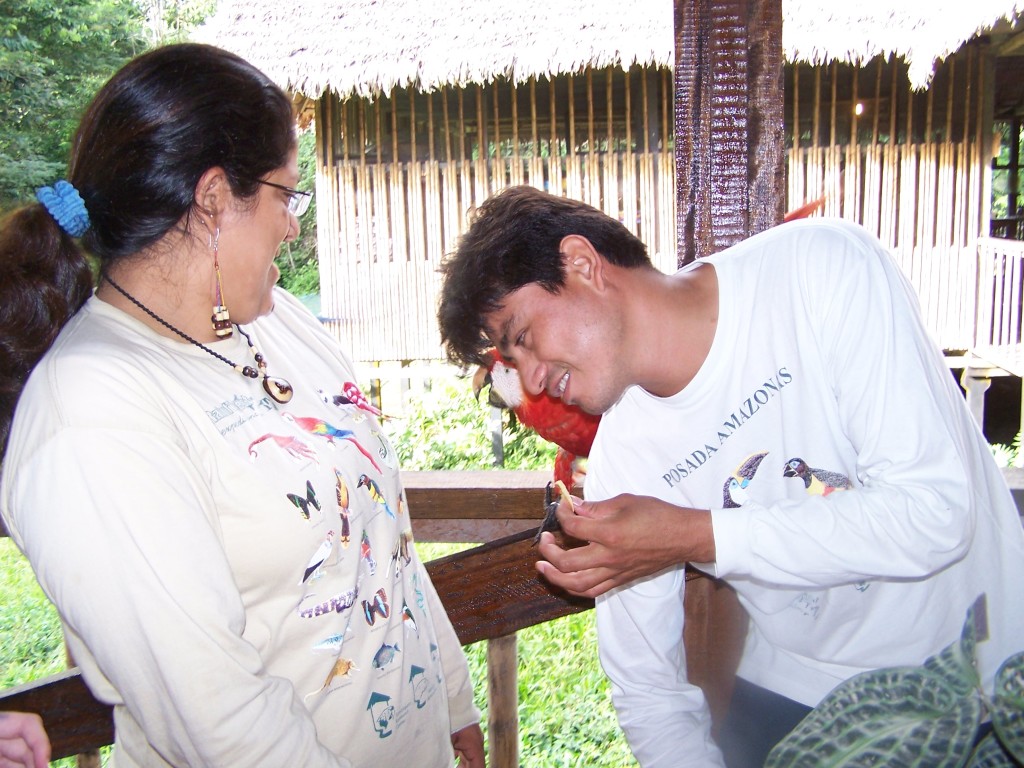
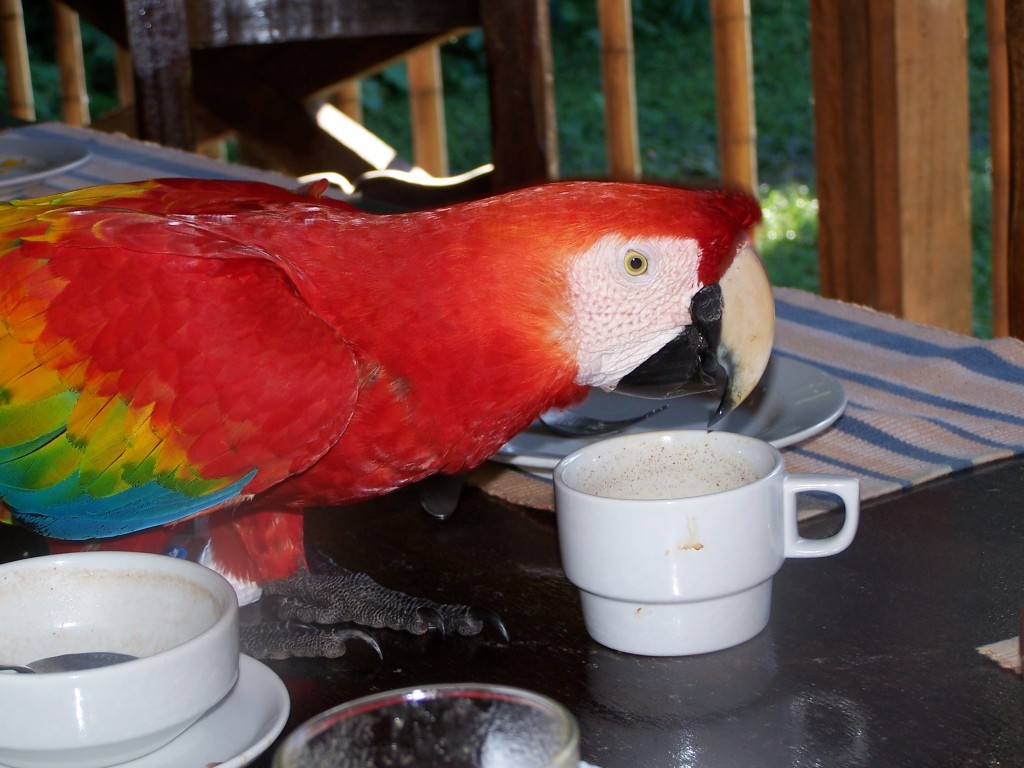
At TRC, there are several semi-tame Scarlet Macaws that were rescued from nests in cases where the parents weren’t feeding them. This often happens with a 2nd chick, the parents sometimes neglect the younger in favor of the elder one. These semi-tame macaws are called “Chicos”, and they would not be alive today if they hadn’t beed rescued and fed by researchers. Although they are totally wild and free, they have come to realize that free food is a good thing, so they usually come around at breakfast time hoping to steal as much from the buffet and people’s plates left unattended as possible. It’s quite hilarious as they are experts at faking out the lodge staff and work in teams to distract the staff while their mate swoops in to steal something!
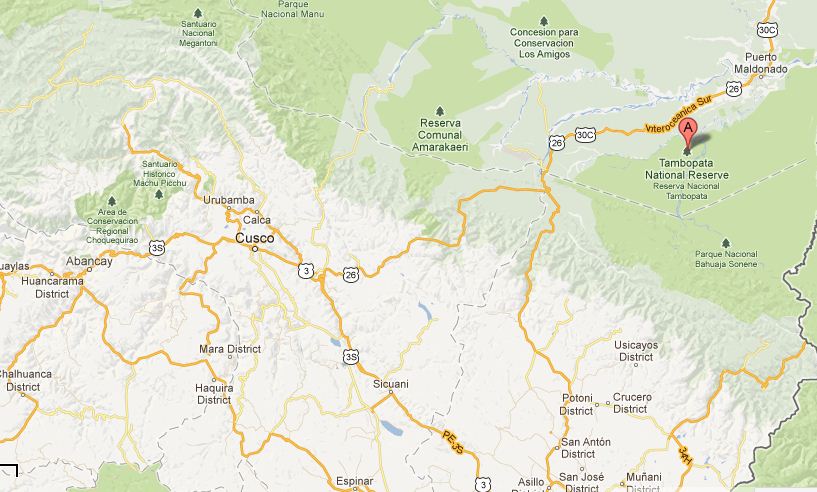
In the previous post of this series, we have used miles and points to get from your hometown to Lima, Peru and have an overnight stay to get you refreshed before you arrive in our destination, the Tambopata National Reserve aka Tambopata-Candamo National Reserve. So where exactly is the Tambopata National Reserve? As the crow, Macaw flies, it’s not really that far from Cuzco, and it’s close to the border with Bolivia.
HOW DO YOU GET THERE?
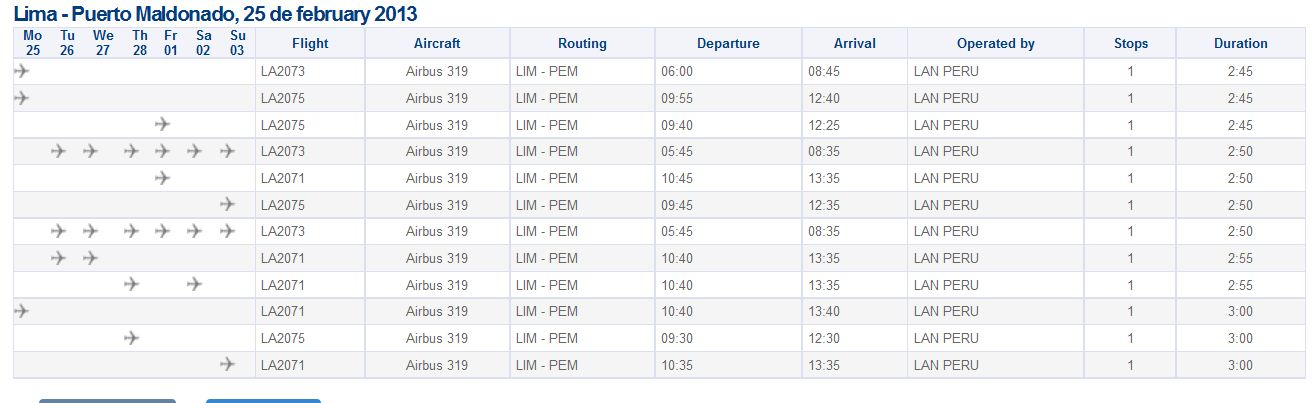
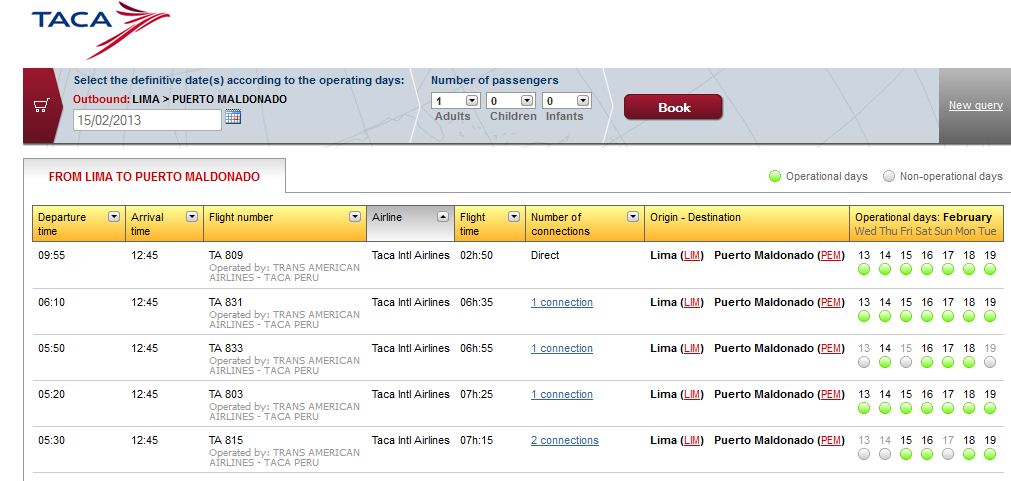
To get here from Lima, most people will fly in from Lima or Cuzco. If you are going to do a stopover in Cuzco, I advise you do it on the return. Cuzco is at very high altitude and unless you are already acclimated to high altitudes, you may suffer from altitude sickness which can leave you feeling lethargic and ill for days. There are medicines to combat that, but I prefer to err of the side of caution as I know that I personally don’t deal well with high altitudes. Here are the flight schedules on LAN Peru (One World) and Avianca/Taca (Star Alliance). If you used One World or Star Alliance miles, these flights will have been included in your ticket. If they weren’t, this is a typical situation when it is nice to have some BA Avios on hand for a cheap 4500 Avios redemption. Later on, I will go into more detail about this but you can always ask in the comments if you need info urgently. Depending on the rules of your airline’s FF program, you may be able to book the whole trip as a RT from your home to Puerto Maldonado with a stop in Cuzco or as an open jaw Home-Puerto Maldonado /-Cuzco-Home and buy a separate ticket between Puerto Maldonado and Cuzco. As you can see, most flights are very early in the morning, making it well worth getting those Wyndham points so you can use the airport hotel. I won’t show fares here as they vary widely but be aware that the cheapest fares are usually for Peruvians only. Use miles!
BUT IT’S SO CLOSE TO CUZCO, CAN’T I TAKE A BUS?
Yes, you can take a bus between the two and many backpackers do choose this option because buying flights can be very expensive. The trip will take between 12-20 hours depending on if you go in the rainy season or not. Just be grateful you have miles! 😀
WHAT PARROTS CAN I SEE IN THE TAMBOPATA NATIONAL RESERVE?.
Blue-and-yellow Macaw(Ara ararauna)
Scarlet Macaw (Ara macao)
Red-and-green Macaw (Ara chloroptera)
Chestnut-fronted Macaw(Ara severa)
Red-bellied Macaw(Orthopsittaca manilata)
Red-shouldered Macaw(Diopsittaca nobilis)
White-eyed Parakeet (Aratinga leucophthalmus)
Dusky-headed Parakeet(Aratinga weddellii)
Peach-fronted Parakeet(Aratinga aurea)
Black-capped Parakeet(Pyrrhura rupicola)
Blue-winged Parrotlet (Forpus xanthopterygius)
Dusky-billed Parrotlet (Forpus sclateri)
Cobalt-winged Parakeet(Brotogeris cyanoptera)
Tui Parakeet (Brotogeris sanctithomae)
Amazonian Parrotlet (Nannopsittaca dachilleae)
Scarlet-shouldered Parrotlet (Touit huetii)
White-bellied Parrot(Pionites leucogaster)
Orange-cheeked Parrot (Pionopsitta barrabandi)
Blue-headed Parrot(Pionus menstruus)
Yellow-crowned Parrot (Amazona ochrocephala)
Orange-winged Parrot (Amazona amazonica)
Mealy Parrot (Amazona farinose)
Orange-cheeked Parrot
WHAT ABOUT OTHER BIRDS?
WAY too many to copy here, but I found a good comprehensive list online. Some of the most highly sought-after birds are the toucan species: Channel-billed and White-throated Toucans, Chestnut-eared Aracari, Curl-crested Aracari, Emerald Toucanet and the Golden-collared Toucanet. Raptors include: Harpy Eagle, Bat Falcon, Gray-lined Hawk, Great Black-Hawk and Roadside Hawk. And there there are numerous species of Tinamou, Caracara, Owls, Nightjar, Kingfishers, Tanagers, Mot-Mots, Trogons and the enigmatic Hoatzin (Opisthocomus hoazin) just to name a few!
Hoatzin
MAMMALS
Monkeys are always popular and fun to watch. Tambopata has several species: Brown Capuchin, Dusky Titi Monkeys, Red Howler Monkeys and White-bellied Spider Monkey. If you are REALLY lucky, you may see a Jaguar! You are much more likely to see Giant River Otter, Capybara, Brown Agouti, Armadillos, Peccaries and Brown-throated three-toed sloth. A more comprehensive list can be found here.
Brown-throated three-toed sloth
In the next post, I will show you what kinds of lodges are in the Tambopata National Reserve, how to choose one and show options for all budgets.
As I mentioned in yesterday’s post, we are going to build a sample trip step by step that will ultimately get us to the birder’s paradise of the Tambopata Research Centre.
In most cases, you will arrive in the gateway city after a long, tiring flight. Maybe a little less tired if you were in business class! If you are lucky, you may be able to connect straight through to your destination, Puerto Maldonado; but more often then not you will have an overnight layover either before or after the trip. Here’s how to find an overnight hotel and pay for it with your hotel points so you have more to spend on ecotourism.
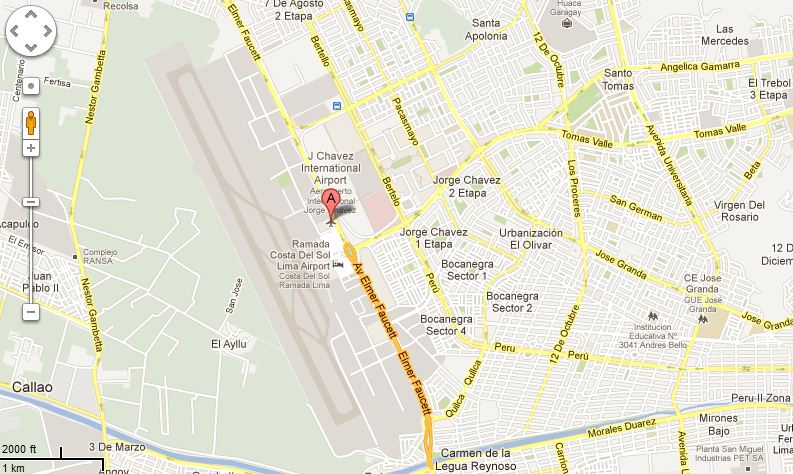
First, get familiar with the major hotel chains as some of them have more than one brand. I have a chart to help you out. Then go to Google maps and type in Lima Airport. Look for hotels in the immediate vicinity of the airport.
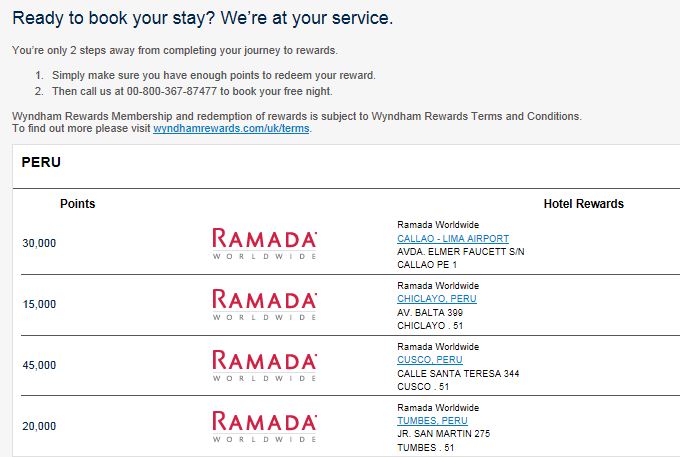
BINGO! There’s a Ramada right there at the airport! So how many points do you need? I plugged in some random dates. Wyndham is unusual in that you can’t book the reward night online, you have to call them but if you have 30,000 points you’re sorted for the night and only a short walk to the airport the next morning.
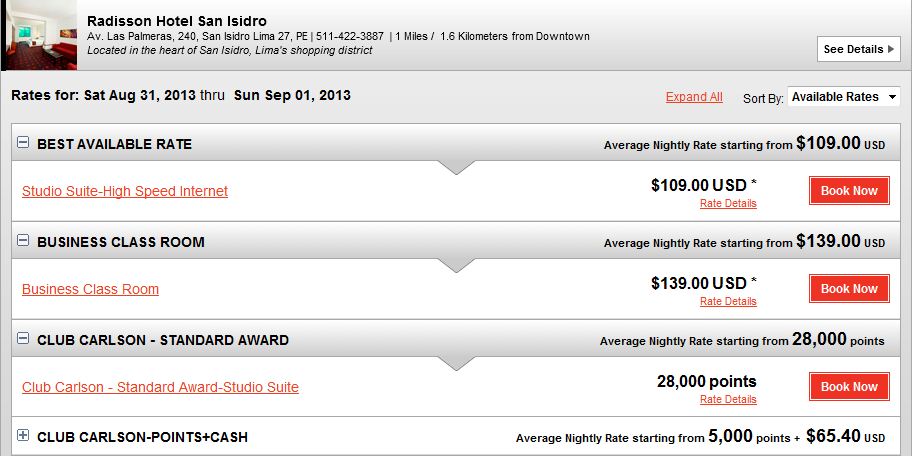
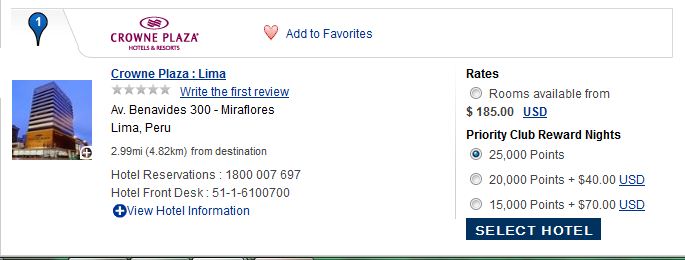
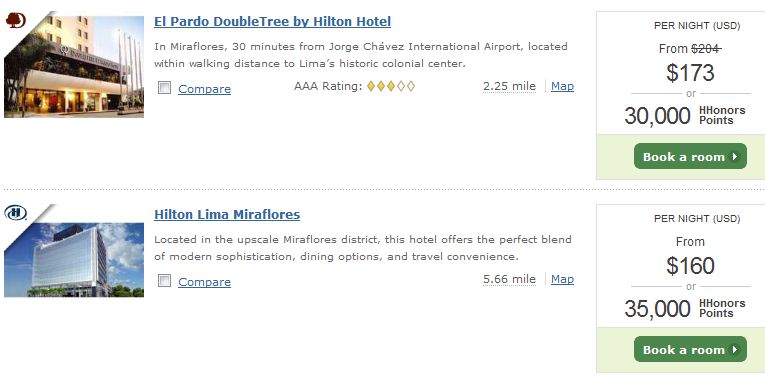
So what if you don’t have Wyndham points? Try some different chain websites for hotel programs you do have points in. Since we are planning pretty far in advance, you would also have time to build up your points account. These hotels aren’t near the airport but luckily taxis are pretty cheap in Lima.
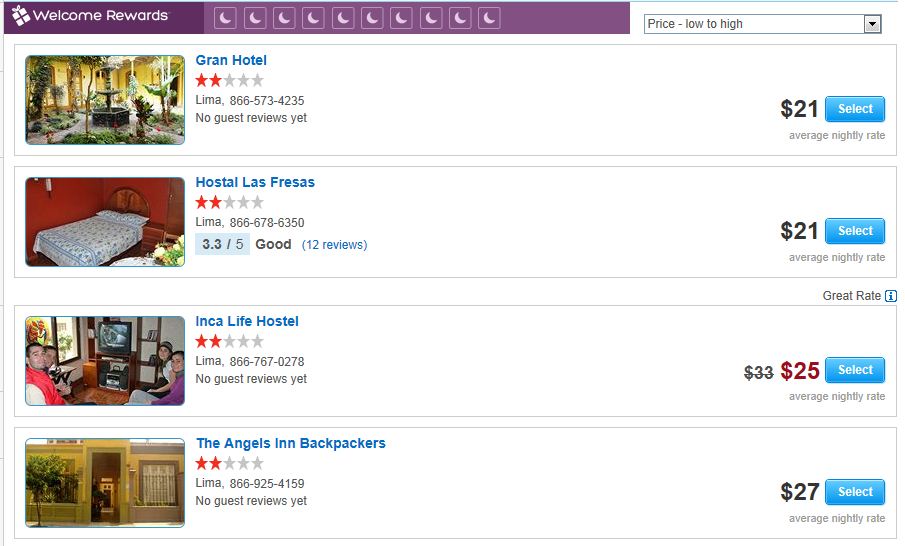
What’s that? You don’t have any hotel points at all? You can still participate in a rewards program such as Hotels.com’s Welcome Rewards. 10 paid nights gets you a free night based on the average cost of the 10 nights you booked to earn it. So go to www.hotels.com, type in any random date and look at the results. Use the map view to see which options are close to the airport, for our purposes we just need somewhere safe and convenient. You will find a variety of accommodation ranging from backpacker cheapies at $20ish up to 5 star hotels.
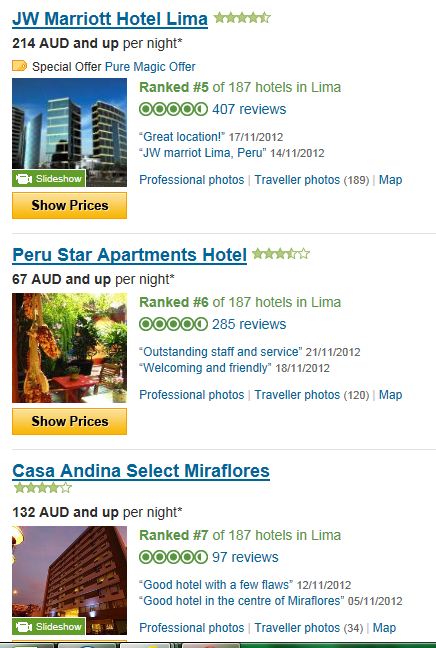
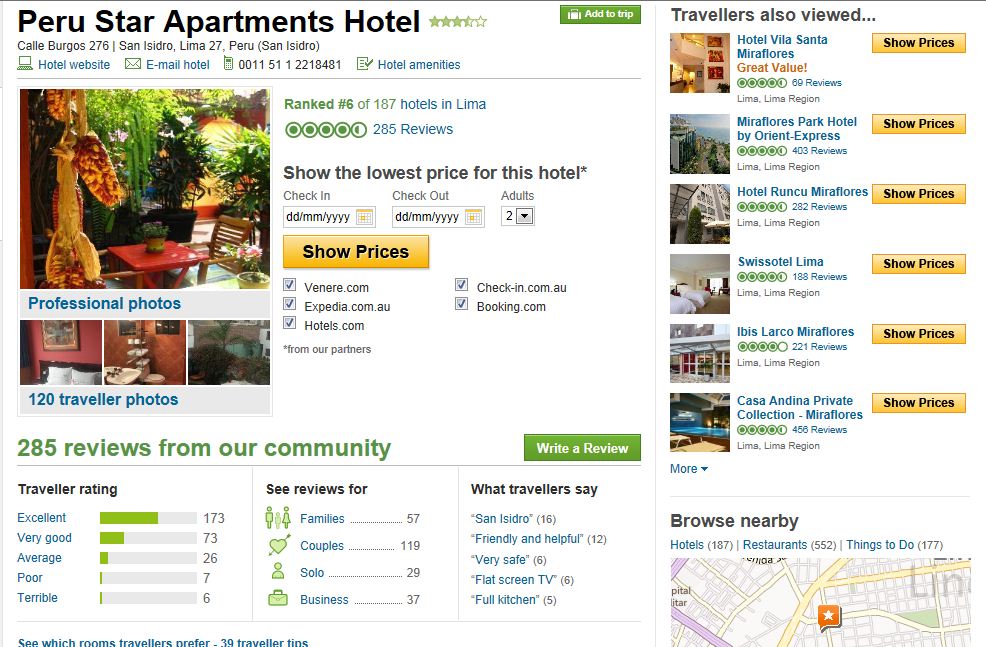
It’s actually a pretty long list so I can’t put it all here but have a look for yourself. What I do is use the map to get as close as possible to the airport or if I have to stay downtown, I will go middle of the range. I also make use of Trip Advisor to check out the hotel reviews by other people who have stayed there. Start at the top with the top-rated hotels and scroll down until you see something in your price range. $67? Looks promising, let’s have a closer look.
It looks pretty good. I read a few reviews and most people seemed to like it. It’s not near the airport but like I said, taxis are cheap. I’d feel comfortable staying here.
That’s it for today. Get a good night’s sleep because tomorrow we will finally reach the lodge we’ve chosen and the adventure begins!
One of the first things you need to know about to get you to your destination as cheaply as possible is how to work with airline alliances. Yesterday, I showed you how to use a guidebook to identify possible locations to see the targeted species, Scarlet Macaws. There are several places in South and Central America where they can be seen so I will just pick the famous clay licks of Peru and show you how to build a trip.
The gateway city is Lima (LIM) and you need to get to Puerto Maldonado (PEM) where you can be transferred to one of the outstanding lodges in the area. Once you have been in the miles and points game for awhile, you will get a feel for which airline to use where but if you are just starting out, Wikipedia will show you a list of all airlines that fly into a given airport. So we can see that Lima is served by a nice choice of airlines, but Puerto Maldonado is only served by 3 airlines. If you want to use miles to get all the way to Puerto Maldonado, you have two choices-One World or Star Alliance. Sky Team can get you to Lima, but you would have to use a separate ticket to get to Puerto Maldonado.
From North America you can use Avianca, Copa or United.
From South America you can use Avianca.
From Australia and New Zealand, Europe, Asia and Africa there are no direct flights, you will need to travel via the USA. Depending on which program’s miles you have, this may require one or two awards.
In all cases, once you get to Lima, you will be connecting on Taca to Puerto Maldonado.
There are no options all the way to Puerto Maldonado so in all cases you will need to get to Lima and buy a separate ticket to Puerto Maldonado.
From North America you can use Aerolineas Argentinas, AeroMexico or Delta.
From Europe you can use Air Europa, Air France or KLM, or you can connect in the USA or Buenos Aires on Aerolineas Argentinas.
From Australia you can use Aerolineas Argentinas, from New Zealand possibly Qantas to Sydney and then Aerolineas Argentinas.
From Asia and Africa there are no direct flights, you will need to travel via the USA or Europe.
HOW MANY MILES WILL IT COST?
Every airline member of the 3 main alliances has it’s own frequent flier program. They often have alliances with other airlines outside the program. I have made some reference charts for the airline alliances and I strongly recommend that you check out the program of the airline in your country and the USA based partners of each program as the USA airlines tend to have the most lucrative bonuses. Americans can get very generous credit card bonuses. Details of credit card partners (and other partners) will be on each airline’s website, however often there are more lucrative sign up bonuses. Details are usually posted in the Flyer Talk thread so I strongly suggest you read this thread and the Miles Buzz forum before you apply for any cards just in case a better bonus has been offered. I don’t have any affiliate links and I recommend you do extensive research on your own when applying for airline credit cards.
USING ONE WORLD
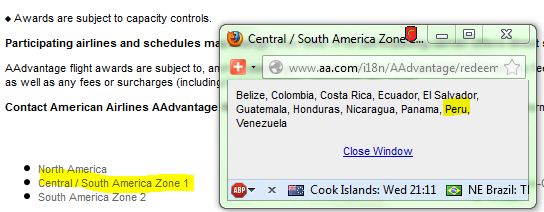
So how do I go about booking an award for myself? Lots of advance planning! I have a pretty good idea of where I want to go and which airline alliance is the best option. To get to Peru, I would use AAdvantage miles and take a route similar to BNE-AKL/SYD-SCL-LIM-PEM using Qantas or LAN between Australia and Santiago, then LAN Peru to Puerto Maldonado. Looking at AA’s award chart, we can see that Peru is in Central/South America Zone 1.
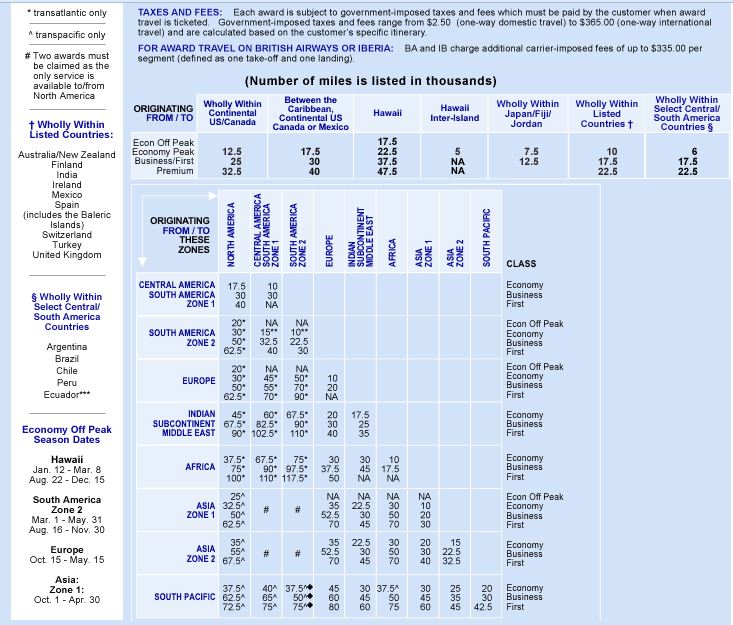
So let’s look at the chart. You will notice there are taxes and fees with certain routes and that the awards are prices as one way trips.
We can see that a South Pacific to Central/South America award will cost 40,000 miles each way (80,000 round trip) in economy, 65,000 (130,000 round trip) in business class and 75,000 each way (150,000 round trip in first class. AA doesn’t allow you to transit the USA on this award so you must fly on the only carriers that operate between Australia and South America-Qantas and LAN.
If you are based in North America, economy will cost 17.500 each way (35,000 round trip), business class is 30,000 each way (60,000 round trip) and first is 40,000 each way or 80,000 round trip. You would be flying on AA or LAN.
If you are based somewhere else, leave a comment if you don’t understand this part and I will help you out. Meanwhile, here is a reference list for other One World carriers.
USING STAR ALLIANCE
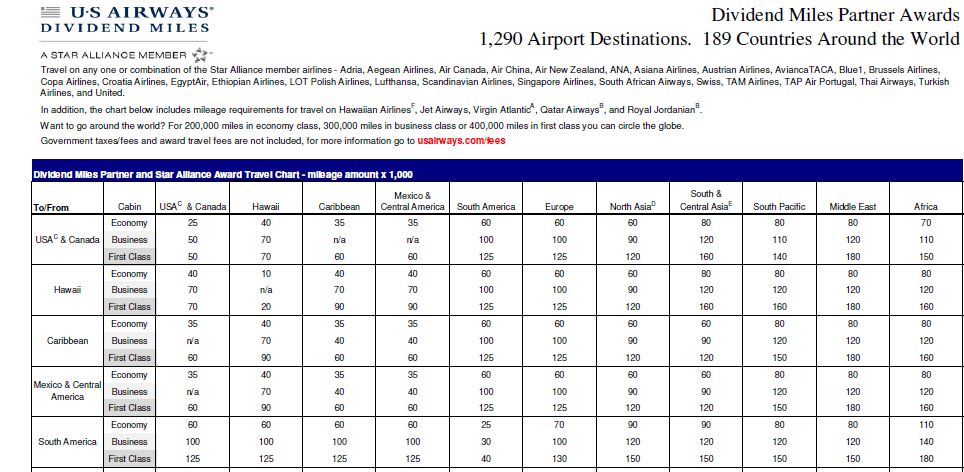
Star Alliance can also get you to Peru. Let’s use US Airways as an example. US does not offer one way awards so these are round trips. Peru is obviously in South America so it is pretty easy to just follow the line across to see how many miles it would cost from your region. You can use any Star Alliance carrier so if you are in North America, you could use a combination of United, US Airways, Avianca/Taca and Air Canada to get there. For Aussies and Kiwis it gets a bit more complicated. Theoretically you should be able to use Air New Zealand to LAX and then pick up Avianca/Taca which is probably fine in economy but availability is scarce in business. US Airways has recently been enforcing MPM (maximum permitted mileage) so while in the past we could route through Asian airports such as Singapore, Bangkok, Tokyo and Seoul; this may no longer be possible.
United Airlines is a USA based carrier that offers one way awards and so do some of the other Star Alliance carriers. I have made up a reference list of all the airlines with links to their websites so check them out to see if any of them are better suited to your needs. Bear in mind that the tickets are not completely free, there is usually a booking fee of $25-50 and various taxes, but you have to pay the taxes whether you pay cash or miles for the ticket.
Well, that’s Step 1! We have now used our miles to get to Peru. Next step is to get to the lodge where you can start your adventure but enroute you will probably need a night to transit in Lima. Tomorrow we will look at the gateway city of Lima.
Sky Team is the youngest of the 3 alliances but the second largest. They are very strong in Europe and Asia but weaker in the Americas and they have no member at all in Australia or New Zealand. Most people who are interested in Sky Team join Delta Airlines but some people who get Ultimate Rewards via their Chase credit cards will join Korean to transfer their points to. I am not a member of any of the Sky Team partners because they don’t serve the places I want to go very well. Since I expect people from all over the world to be reading this blog, I would recommend you check out the program of the Sky Team member in your country or join Delta as they do have promos from time to time.
These links are also good if you want to check out an airline’s route map to see where they fly, join their frequent flyer program and see what you can do to earn miles by flying on partners, staying in hotel partners and patronizing their other partners such as credit cards, shopping malls, phone companies and survey companies.
This is a just a very brief overview of Sky Team and there is so much more to learn. The best source of information is on FlyerTalk where each airline has its own forum, most forums have wikis or “read this first” posts to get you started. I will be going into some programs more in depth as the subject relates to building your ecotourism dream trip
As you can see, Star Alliance is the largest of the 3 alliances and is very strong in the Americas, Europe and Asia but has no domestic service in Australia. Most people are members of several Star Alliance programs so they can take advantage of local credit cards and promos and also the more lucrative promos with United. Avianca/Taca has several 100% buy miles bonuses throughout the year and less frequently an even more lucrative share miles promo. I am a member of United, Singapore and Avianca/Taca. The main reason for joining Singapore Krisflyer is because my Aussie Amex MR points can transfer 1:1 and they are good for redemptions on NZ, but on most of their Asian and European partners will attract a very high fuel surcharge. Buying miles on Avianca/Taca is a great way to get cheap business class or economy awards when they have a double miles bonus promo. United is a partner for Chase’s Ultimate Rewards programs with several credit cards that can accrue miles for sign up bonuses.
These links are also good if you want to check out an airline’s route map to see where they fly, join their frequent flyer program and see what you can do to earn miles by flying on partners, staying in hotel partners and patronizing their other partners such as credit cards, shopping malls, phone companies and survey companies.
This is a just a very brief overview of Star Alliance and there is so much more to learn. The best source of information is on FlyerTalk where each airline has its own forum, most forums have wikis or “read this first” posts to get you started. I will be going into some programs more in depth as the subject relates to building your ecotourism dream trip
If you are new to miles and points, the best thing is to figure out which one of these programs will offer the best redemptions at the lowest cost in both miles and taxes. Some airlines have fuel surcharges which can add a substantial cost to your award ticket. From the One World airlines, I use American Airlines, Qantas, British Airways and Iberia. No matter where you live in the world, it will probably work out best for you to use American’s AAdvantage program to accumulate your miles unless you are seeking status with an airline you frequently fly on. I am expecting that people attracted to this blog will be the sort who travel for leisure and are saving up for an aspirational trip to one of the great ecotourism spots in the world. If you are based in the USA (or even an expat American like me) it’s pretty easy to get huge credit card sign up bonuses and if you are based elsewhere, you can use American Express Membership Rewards to transfer to AA via Starwood’s SPG program.
Since I live in Australia, I also have Qantas because I get points simply for shopping at Woolworths and linking my phone and internet with Optus to them. Gotta love free points that just come from day to day living!
British Airways and Iberia both use Avios which can be excellent value for short hop awards such as domestic awards in the USA on American and Alaska Airways, Australia on Qantas and South America on LAN.
These links are also good if you want to check out an airline’s route map to see where they fly, join their frequent flyer program and see what you can do to earn miles by flying on partners, staying in hotel partners and patronizing their other partners such as credit cards, shopping malls, phone companies and survey companies.
This is a just a very brief overview of the One World alliance and there is so much more to learn. The best source of information is on FlyerTalk where each airline has its own forum, most forums have wikis or “read this first” posts to get you started. I will be going into some programs more in depth as the subject relates to building your ecotourism dream trip.
The first thing you need to start your eco-adventure is the right destination. Since I especially want to see parrots in the wild, I need to know where they naturally occur. Most wild parrots will be in South America, Central America, Australia, Africa and Asia. They like warmer climates. You do see wild parrots in North America and Europe but these are generally escaped pet birds who somehow found each other and formed a flock.
So let’s say you have a Scarlet Macaw at home and you want to see his wild cousins. You have a lot of options, they can be seen in Peru, Brazil, Costa Rica and other countries in this area. I use a variety of resources to locate a parrot species. There is an excellent guide book called “Parrots of the World” by Joseph M. Forshaw which has maps and names localities you can use to plan a trip. Amazon.com has a Kindle version, but in the field where electricity may be limited or non-existant, you really need the actual book. Take a look at the sample pages and get familiar with the layout. Use the “search inside this book” function and type in “Scarlet Macaw”. It will show you a preview of page 178 which has the map of where this species is found. You will also find in the text the names of some of the places you can specifically visit in the localities section.
Does anyone have any specific birds they either have at home or would just like to see in the wild? Tell me in the comments!