Extreme Photography Conditions – Birds Of Paradise

As I continue through my series covering my trip to West Papua, I starting feeling more and more inadequate as a photographer and went searching for better footage I could show on this blog.  I found this stunning documentary filmed by a National Geographic crew in Papua New Guinea.  Although a different political entity, the geography was familiar and I was amazed at the extremes these professional photographers had to go through to get those amazing shots!  These techniques will be well outside the scope of a normal eco-traveler, in one case they had to wait 80 days to get 90 seconds of footage!  The muddy trails, slipping in the mud and agile locals who make you look like a clumsy oaf by comparison were familiar!  Rather than feeling inadequate, I now feel extremely lucky to have gotten the shots and footage I did in the few days I was there which will be revealed throughout this blog series.   For now, enjoy this documentary done by top professionals and the beauty of the birds they filmed.

Caution:  there are some distressing clips of birds and feathers mounted on hats which upset me and may upset you too.
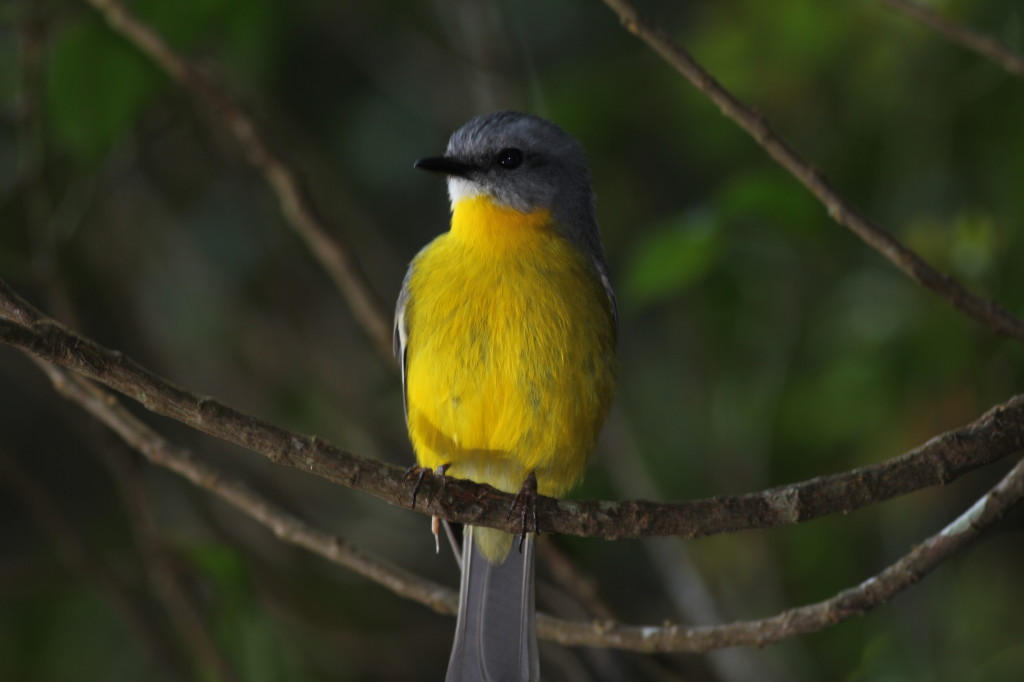
Eastern Yellow Robin (Eopsaltria australis)

The Eastern Yellow Robin was first described by ornithologist George Shaw in 1790. Two subspecies are recognised; the Northern Yellow Robin (subsp. chrysorrhoa) and the nominate or Eastern (subsp. australis). The former was previously regarded as a separate species and called the Southern Yellow Robin.

Eastern Yellow Robin

Eastern Yellow Robin

I got this shot while doing the Photography Workshop with Michael Snedic last year.  Just goes to show you what a difference some proper instruction can make!

The Eastern Yellow Robin (Eopsaltria australis) is an Australasian robin of coastal and sub-coastal eastern Australia. The extent of the Eastern Yellow Robin’s residence is from the extreme southeast corner of South Australia through most of Victoria and the western half of New South Wales and north as far as Cooktown. Tropical Northern Queensland birds are mainly restricted to the warm heights of the Great Dividing Range.

Eastern Yellow Robin Range

These little guys sure are quick bathers………….but cute!

Southern Double-Collared Sunbird (Cinnyris chalbeus)

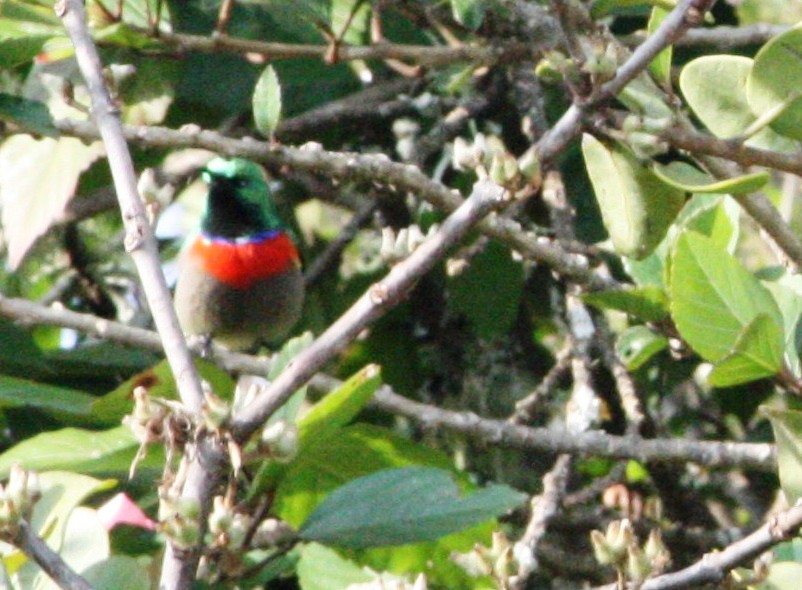
Not my greatest shot but this pic of a Southern Double-collared Sunbird Cinnyris chalbeus was taken on the grounds of Kurisa Moya during our expedition to see the Cape Parrots in Magoebaskloof.  It was back in 2009, before I got my Canon 60D.

Southern Double-collared Sunbird Cinnyris chalbeus

Southern Double-collared Sunbird Cinnyris chalbeus

This is what they are supposed to look like!

Southern Double-collared Sunbird

The Southern Double-collared Sunbird is usually seen singly or in small groups. Its flight is fast and direct on short wings. It lives mainly on nectar from flowers, but takes some fruit, and, especially when feeding young, insects and spiders. It can take nectar by hovering like a hummingbird, but usually perches to feed most of the time.

They are widespread over South Africa and thankfully not endangered.

Southern Double-collared Sunbird

They do enjoy the birdbaths that many people put out in their backyards!


Sri Lankan Frogmouth (Batrachostomus moniliger)

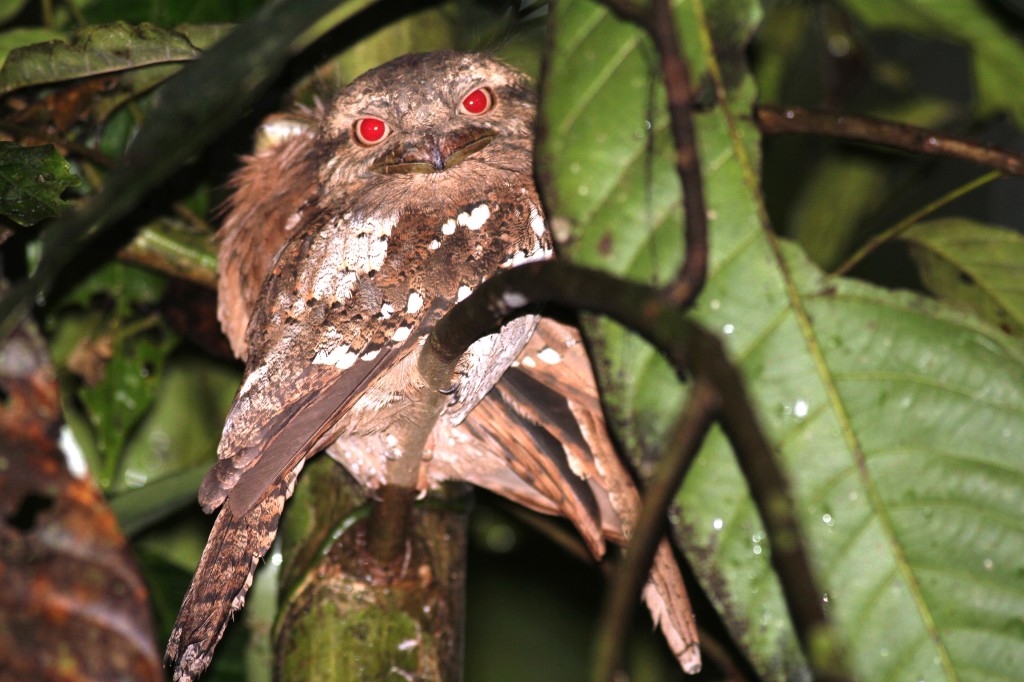
The Sri Lanka Frogmouth, Sri Lankan Frogmouth or Ceylon Frogmouth (Batrachostomus moniliger) is a small frogmouth found in the Western Ghats of south India and Sri Lanka. Related to the nightjars, they are nocturnal and are found in forest habitats. The plumage resembles that of dried leaves and the birds roost on branches, sitting still and appearing like a dry branch, making them extremely difficult to locate. They however have favourite roosts that they use regularly unless disturbed. They have a distinctive call that is usually heard at dawn and dusk. The sexes differ slightly in plumage.

Sri Lankan Frogmouth

Sri Lankan Frogmouth

You can see how well camouflaged they can be but luckily my guide at Thattekad knew where these two (one is behind) normally roost.  They weren’t the least bit bothered about our presence.

Sri Lankan Frogmouth Range

This species is found in the Western Ghats of southwest India and Sri Lanka. Its habitat is dense tropical forest usually with dense undergrowthbut sometimes found in more disturbed habitats including plantations.  Use my guide to Getting to Central Asia to plan your trip there to see them and many other birds.

This bird has very interesing brooding behaviour, I’ll let the video speak for itself!

Birding Adventures TV Jamaica 28 Endemics

I’ve been blogging about Puerto Rico this past week, so since we are in the “neighborhood”  lets’ check out Jamaica!    There are 28 endemic species, 2 of which are parrots.  There are some really beautiful bird species here and Jamaica is one of the most popular birding destinations in the Caribbean.  Take some time out to count down these 28 species.

San Pedrito (“Little Saint Peter”) – A Puerto Rican Jewel

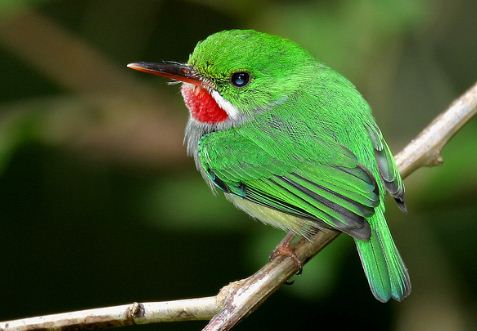
The Puerto Rican Tody is a tody endemic to the archipelago of Puerto Rico. Despite is scientific name, Todus mexicanus, it is endemic to Puerto Rico. It is commonly known locally as “San Pedrito” (“Little Saint Peter”).  They are an attractive little bird and commonly found in forested regions around Puerto Rico.

Puerto Rican Tody

Puerto Rican Tody

El Yunque rainforest is a good place to see them.  They are very small with an average body length of 11 cm and weight of 5 to 6 g.  Although they look like they are related to hummingbirds, they are actually closer related to the kingfisher family.  More information about Puerto Rican Todies here.

Birding Adventures In Botswana

Another spectacular video from Birding Adventures TV!   There are no parrot species in this video, though Botswana does have a few parrots species.   They have some amazing footage of feeding lions along with some classic Botswanan birds such as Secretary Bird, Wattled Crane, Lilac Breasted Rollers and several Bee-Eaters.  Enjoy!

Lazuli Kingfisher (Todiramphus Lazuli)

Todiramphus lazuli occurs in Indonesia, where it is restricted to the island of Seram, as well as small adjacent islands of Ambon and Haruku (BirdLife International 2001). Although it is common in some areas, it is sparsely distributed and absent from many sites with apparently suitable habitat (Poulsen 2004). It occurs largely on the coast, and is apparently absent from much of the interior of Seram.

This species is recorded from forest edges, secondary growth and cleared areas with scattered trees (habitat that is gradually increasing in extent). Many recent records also come from open farmland, and there are apparently no records from the interior of primary forest (Poulsen 2004). It nests in arboreal termite nests, many of which are now found in coconut plantations (Poulsen 2004).

You can hear some sound recordings of this beautiful bird here.

Birding In Peru Inkaterra Video

I need a break after all the resource pages I did in the last couple days, so today let’s enjoy this video posted by Birding Adventurers TV on YouTube.

“In this episode we feature the birds and wildlife of the Peruvian amazon and Machu Picchu. Hosted by the Inkaterra family of hotels, we came face to face with sunbitterns, spectacled bears, Andean Cock-of-the-rocks, Andean Motmots, Giant River Otters and many more.”

If you have been inspired to visit Inkaterra’s beautiful eco-lodges, check their website for more info.

If you want to know how to get to Peru cheaply on frequent flyer miles, I have a series to help you!  Start here.

If you don’t have enough miles and want to get some more, check my Resource pages.

The Enigmatic Macaws Of Tambopata

If a picture is worth a thousand words, how many words is this video worth?  Sorry, they don’t allow embedding but click on the link below to watch it on Vimeo.

The enigmatic Macaws of Tambopata from Christian Declercq on Vimeo.

Every time I watch this I want to book the next flight back to Peru.  If you are inspired, check out the other posts I have on how to see the Enigmatic Macaws of Tambopata for yourself!

Getting to Peru

Gateway Lima

Getting to Tambopata

Choosing an Eco-Lodge

Tambopata Eco-Lodges

Review of Refugio Amazonas and Tambopata Research Center