Red-Tailed Tropicbird, (Phaethon Rubricauda)

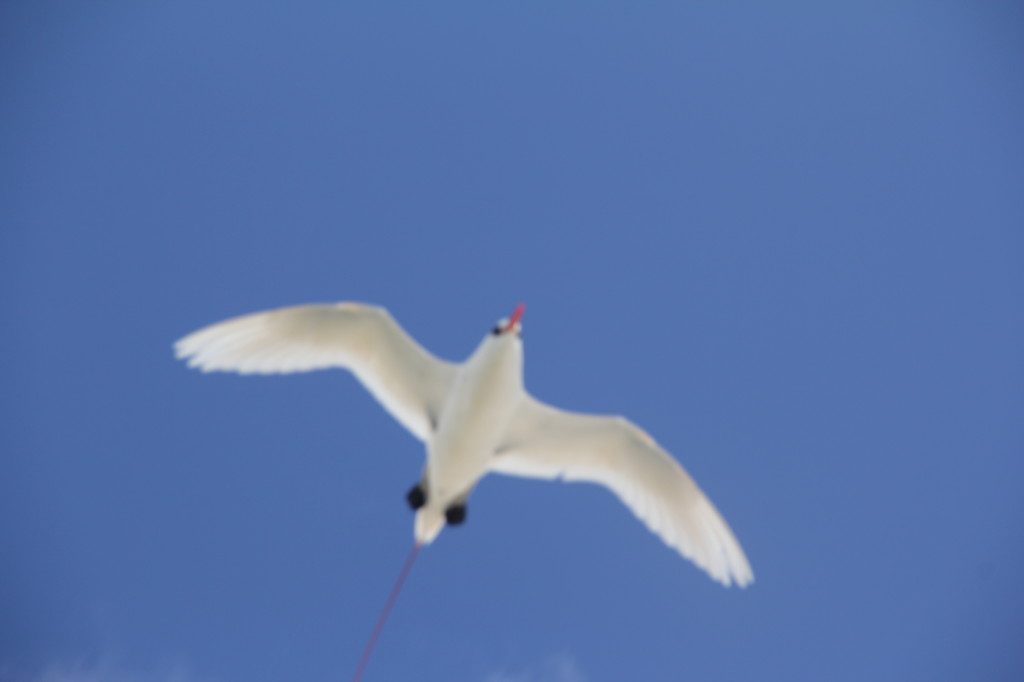
The Red-tailed Tropicbird, Phaethon rubricauda is a beautiful but somewhat rare bird that can be seen pretty easily on Aitutaki.

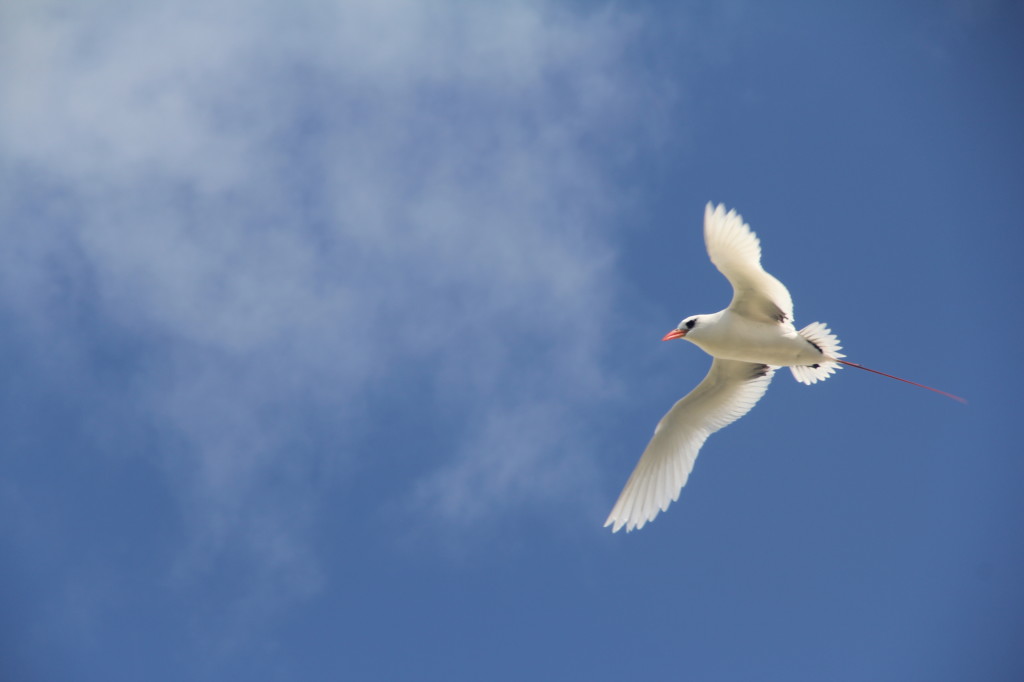
Red-tailed Tropicbird in flight

Red-tailed Tropicbird in flight

The Red-tailed Tropicbird nests on oceanic islands in large colonies from the Hawaiian Islands to Easter Island and across to Mauritius and the Reunion Island. In Australia, they nest on Queensland’s coral islands (including Lady Elliott Island) and islands off Western Australia. They disperse widely after breeding, birds ringed in Hawaii have been recovered as far away as Japan and the Philippines. They range from the Red Sea to New Zealand and Chile.

When breeding, they mainly choose coral atolls with low shrubs, nesting underneath them (or occasionally in limestone cavities). They feed offshore away from land, singly rather than in flocks. They are plunge-divers that feed on fish, mostly flying fish, and squid.

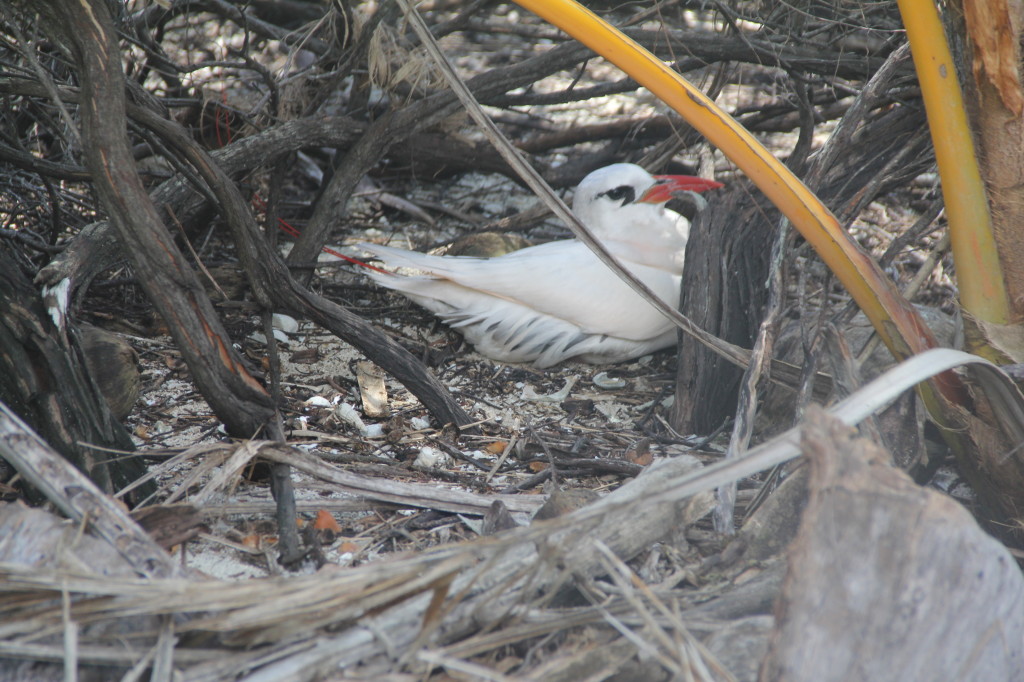
Red-tailed Tropicbird on nest

Red-tailed Tropicbird on nest

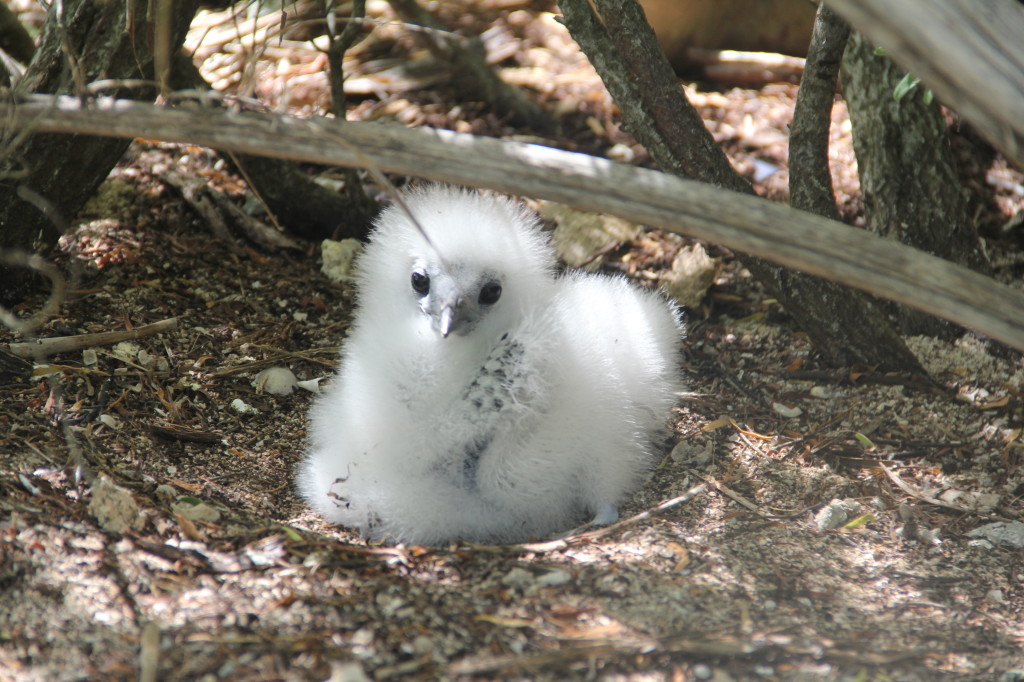
Chicks hatch out covered in long, whitish to gray down, which moults to a juvenile plumage of white with heavy black barring on the head, back, and uppersides of the wings, before they develop the adult plumage

Red-tailed Tropicbird Chick

Red-tailed Tropicbird Chick

You can read more about this elegant seabird here.

IMG_2958

For more information about Aitutaki, please read this post.


Purple-Crowned Fairy-Wren (Malurus Coronatus)

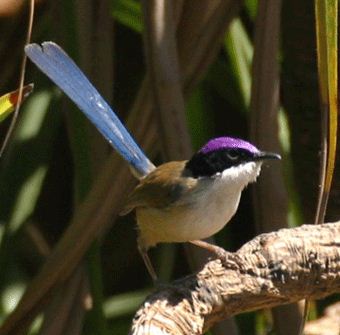
You may see the lovely little Purple-crowned Fairy-wren (Malurus coronatus) if you are birding in the Northern Territory.

Purple-crowned Fairy Wren


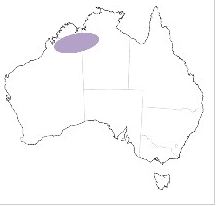
Purple-crowned Fairy Wren Habitat


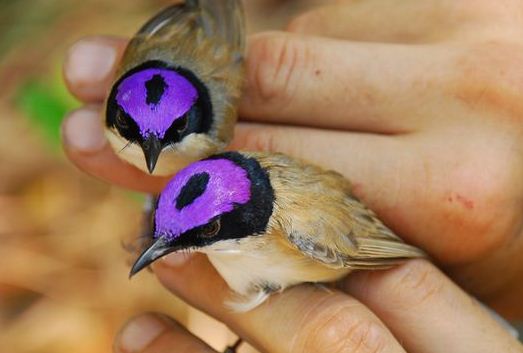
Although they are very pretty little birds when viewed from the side, they become really spectacular when viewed from above in pairs.  Predators will think the eyes belong to some large creature instead of a fragile little bird that might otherwise make a tasty snack.

Purple-crowned Fairy Wren


Purple-crowned Fairy-wrens are divided into two races: – an eastern race (M. c. macgillivaryi) that occurs in the sub-coastal region from the Roper River in the Northern Territory to the Flinders River in Queensland; and – a western race (M. c. coronatus) that occurs throughout the Kimberley region of Western Autralia and the Northern Territory. The two races of Purple-crowned Fairy-wrens never mix and more than 400 km separates them geographically. Sadly, Purple-crowned Fairy-wren populations are disappearing. It is estimated that only about 12,000 breeding birds remain of the western race in the Kimberley.

For more information about this bird, please visit this website.

Tambopata National Reserve

WHERE IS IT EXACTLY?

In the previous post of this series, we have used miles and points to get from your hometown to Lima, Peru and have an overnight stay to get you refreshed before you arrive in our destination, the Tambopata National Reserve aka Tambopata-Candamo National Reserve.  So where exactly is the Tambopata National Reserve?  As the crow, Macaw flies, it’s not really that far from Cuzco, and it’s close to the border with Bolivia.
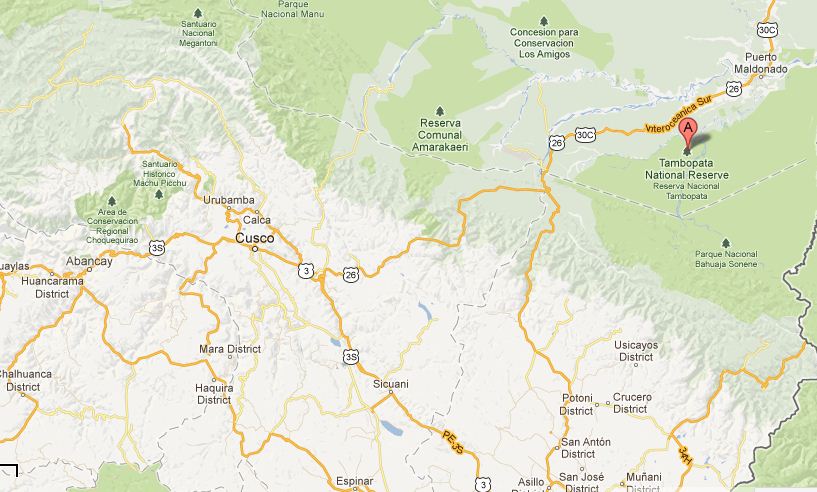
 

HOW DO YOU GET THERE?

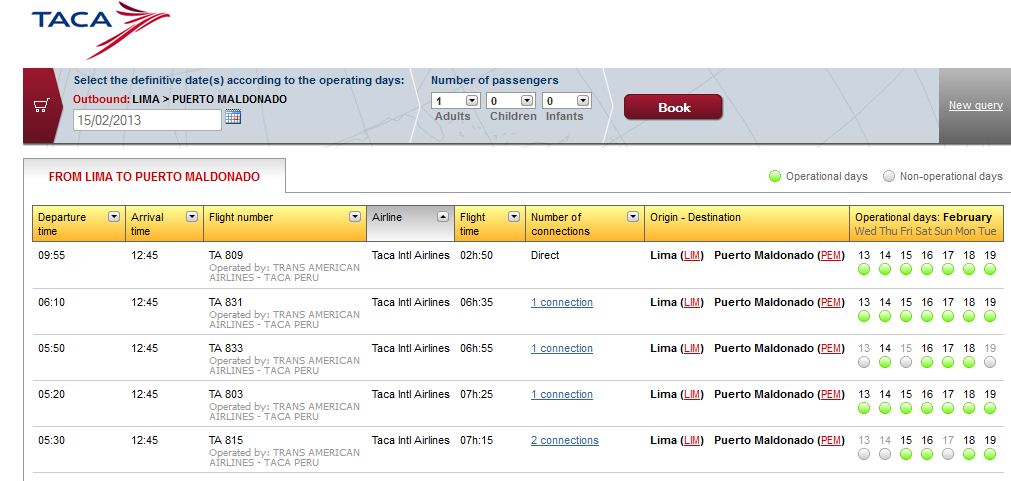
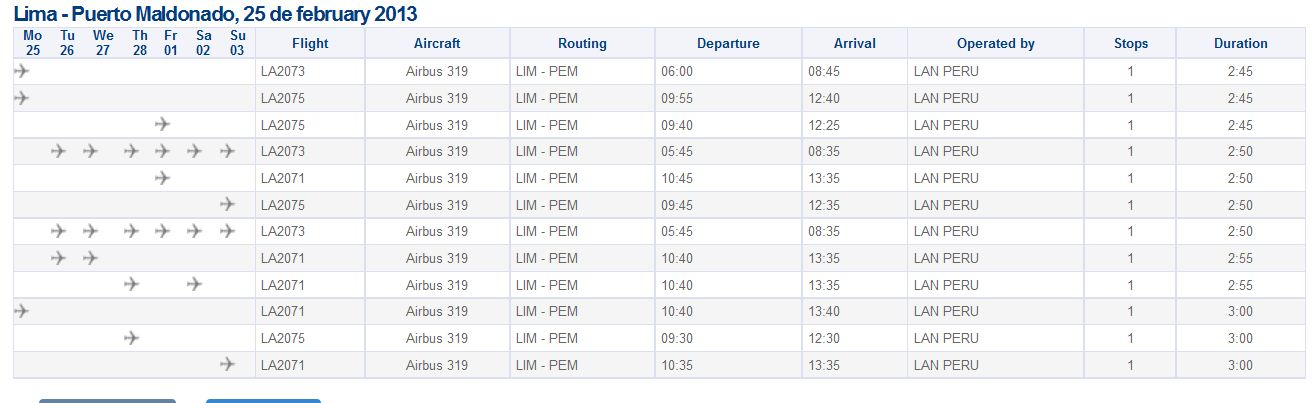
To get here from Lima, most people will fly in from Lima or Cuzco.  If you are going to do a stopover in Cuzco, I advise you do it on the return.  Cuzco is at very high altitude and unless you are already acclimated to high altitudes, you may suffer from altitude sickness which can leave you feeling lethargic and ill for days.  There are medicines to combat that, but I prefer to err of the side of caution as I know that I personally don’t deal well with high altitudes.  Here are the flight schedules on LAN Peru (One World) and Avianca/Taca (Star Alliance).  If you used One World or Star Alliance miles, these flights will have been included in your ticket.  If they weren’t, this is a typical situation when it is nice to have some BA Avios on hand for a cheap 4500 Avios redemption.  Later on, I will go into more detail about this but you can always ask in the comments if you need info urgently.  Depending on the rules of your airline’s FF program, you may be able to book the whole trip as a RT from your home to Puerto Maldonado with a stop in Cuzco or as an open jaw Home-Puerto Maldonado /-Cuzco-Home and buy a separate ticket between Puerto Maldonado and Cuzco.  As you can see, most flights are very early in the morning, making it well worth getting those Wyndham points so you can use the airport hotel.  I won’t show fares here as they vary widely but be aware that the cheapest fares are usually for Peruvians only.  Use miles!
BUT IT’S SO CLOSE TO CUZCO, CAN’T I TAKE A BUS?

Yes, you can take a bus between the two and many backpackers do choose this option because buying flights can be very expensive.  The trip will take between 12-20 hours depending on if you go in the rainy season or not.  Just be grateful you have miles! 😀

WHAT PARROTS CAN I SEE IN THE TAMBOPATA NATIONAL RESERVE?.

Blue-and-yellow Macaw  (Ara ararauna)

Scarlet Macaw   (Ara macao)

Red-and-green Macaw                 (Ara chloroptera)

Chestnut-fronted Macaw  (Ara severa)

Red-bellied Macaw  (Orthopsittaca manilata)

Red-shouldered Macaw  (Diopsittaca nobilis)

White-eyed Parakeet    (Aratinga leucophthalmus)

Dusky-headed Parakeet   (Aratinga weddellii)

Peach-fronted Parakeet  (Aratinga aurea)

Black-capped Parakeet(Pyrrhura rupicola)

Blue-winged Parrotlet   (Forpus xanthopterygius)

Dusky-billed Parrotlet    (Forpus sclateri)

Cobalt-winged Parakeet  (Brotogeris cyanoptera)

Tui Parakeet       (Brotogeris sanctithomae)

Amazonian Parrotlet      (Nannopsittaca dachilleae)

Scarlet-shouldered Parrotlet      (Touit huetii)

White-bellied Parrot   (Pionites leucogaster)

Orange-cheeked Parrot      (Pionopsitta barrabandi)

Blue-headed Parrot   (Pionus menstruus)

Yellow-crowned Parrot     (Amazona ochrocephala)

Orange-winged Parrot   (Amazona amazonica)

Mealy Parrot      (Amazona farinose)
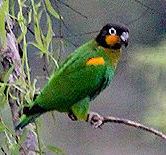
Orange-cheeked Parrot

WHAT ABOUT OTHER BIRDS?

WAY too many to copy here, but I found a good comprehensive list online.  Some of the most highly sought-after birds are the toucan species:  Channel-billed and White-throated Toucans, Chestnut-eared Aracari, Curl-crested Aracari, Emerald Toucanet and the Golden-collared Toucanet.  Raptors include:  Harpy Eagle, Bat Falcon, Gray-lined Hawk, Great Black-Hawk and Roadside Hawk.  And there there are numerous species of Tinamou, Caracara, Owls, Nightjar, Kingfishers, Tanagers, Mot-Mots, Trogons and the enigmatic Hoatzin (Opisthocomus hoazin) just to name a few!
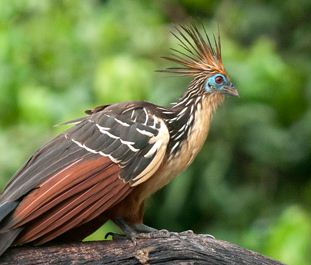
Hoatzin

MAMMALS

Monkeys are always popular and fun to watch.  Tambopata has several species:  Brown Capuchin, Dusky Titi Monkeys, Red Howler Monkeys and White-bellied Spider Monkey.  If you are REALLY lucky, you may see a Jaguar!  You are much more likely to see Giant River Otter, Capybara, Brown Agouti, Armadillos, Peccaries and Brown-throated three-toed sloth.  A more comprehensive list can be found here.
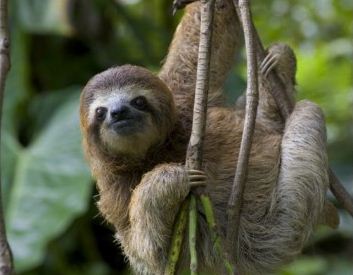
Brown-throated three-toed sloth

In the next post, I will show you what kinds of lodges are in the Tambopata National Reserve, how to choose one and show options for all budgets.

OTHER POSTS IN THIS SERIES

Getting to Peru

Gateway Lima

Getting to Tambopata

Choosing an Eco-Lodge

Tambopata Eco-Lodges

Review of Refugio Amazonas and Tambopata Research Center

Bluebird

Ecotourism isn’t always about exotic,  far-away destinations.  There are many wonderful bird species practically on your doorstep or no further than a typical Sunday outing.  Since many readers will probably live in North America, let’s get to know the beautiful little Bluebird.  There are 3 species of Bluebirds.  Many people are lucky enough to have them visit their backyards and some people like to put out feeder trays to attract them.

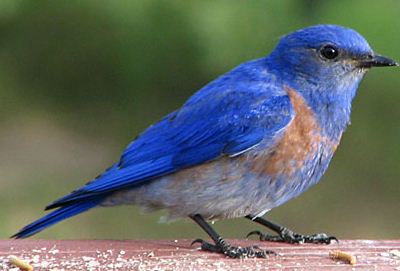
Western Bluebird (Sialia mexicana)

Western Bluebirds have a range that extends from British Columbia to the north as far south as Oaxaca, Mexico and includes the western states of the USA.  They nest in cavities and generally lay 2-8 eggs; which average 20.8 x 16.2mm. Eggs are oval shape with a smooth and glossy shell. They are pale blue to bluish white and sometimes white in color. Nestlings remain in a nest about 19–22 days before fledging.  They mainly eat insects and berries.

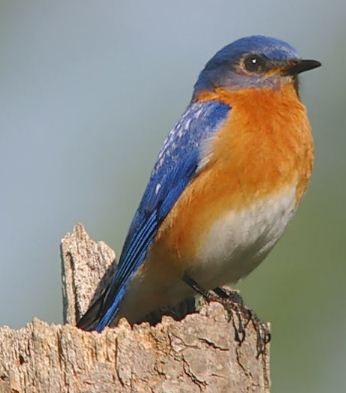
Eastern Bluebird (Sialia sialis)

Eastern Bluebirds can be found in the eastern part of the USA and Canada and as far south as Nicaragua.  They prefer to nest in woodlands where cavity holes excavated by a previous species will serve as their home. These woodlands must be near clearings or meadows because this is the preferred hunting ground of the species.  Approximately two-thirds of the diet of an adult eastern bluebird consists of insects and other invertebrates. The remainder of the bird’s diet is made up of wild fruits. Favored insect foods include grasshoppers, crickets, katydids, and beetles. Other food items include earthworms, spiders, millipedes, centipedes, sow bugs and snails

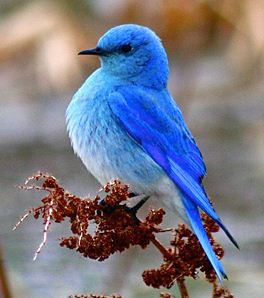
Mountain Bluebird (Sialia currucoides)

Mountain Bluebirds are migratory. Their range varies from Mexico in the winter to as far north as Alaska, throughout the western U.S. and Canada. Northern birds migrate to the southern parts of the range; southern birds are often permanent residents.  They nest in cavities and lay 4-5 eggs. Young are naked and helpless at hatching and may have some down. Incubation normally last 14 days and the young will take about 21 days before they leave the nest. Both males and females fiercely protect the nest.  They mainly eat insects and berries.  They may forage in flocks in winter, when they mainly eat grasshoppers.