Planning A Birding Safari In Tanzania

First of all, everything I write here works for a normal “Big 5” type safari so if you are not particularly into birding you will still find value in this post.  Of course if you ARE into birding, you will find even more value!

East Africa has so much to offer and is easily accessed by airline miles.  If you have limited time and finances you will really have to make some tough decisions on how many parks to visit.  It really helps if you know what species are your priority.  For some people this may be raptors or trying to check off all the endemics.  For me it’s always parrots first, then songbirds, then other birds and mammals.  Don’t get me wrong, I’m not going to bypass lions or cheetahs though!

DO YOUR HOMEWORK

With so much on offer, you have to do lots of research online to find out your best chances of seeing the species you really want to see.  I always check trip reports on Surfbirds and more recently added Cloudbirders to that.  Xeno-canto has mapped locations where birders took sound clips of many species so that can pinpoint them even more.

I also look through trip reports by major birding companies such as Birdquest, VENT, Naturetrek, Rockjumper and more.  The trip reports will show you which parks you need to concentrate on.  Once you have this, you can start contacting birding tour operators or safari companies that are well-recommended for quotes.

HOW I CHOSE MY ITINERARY

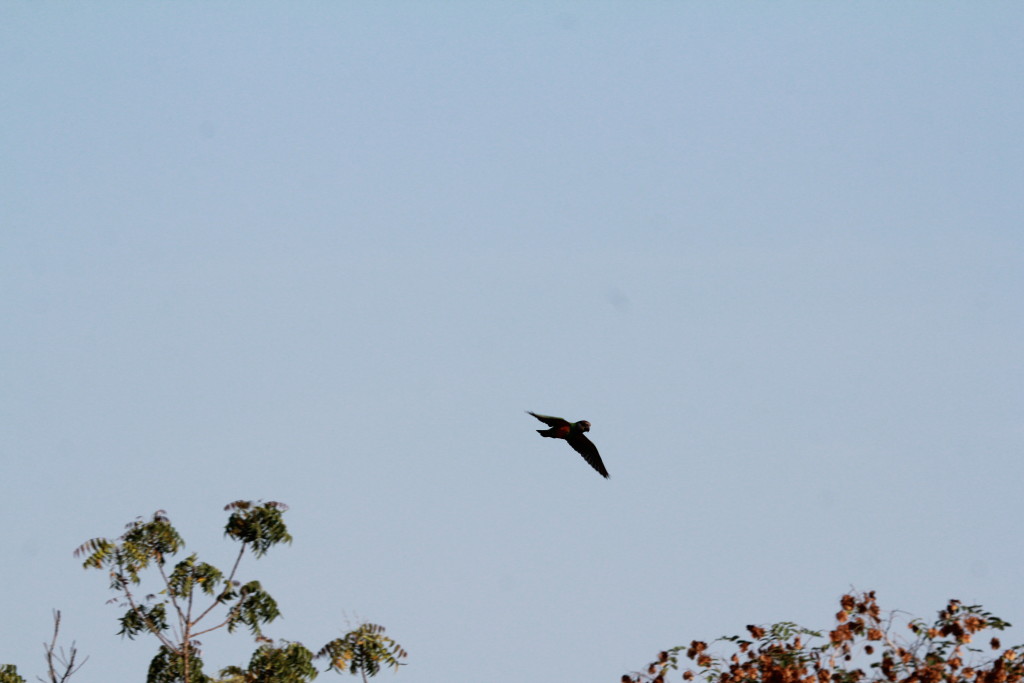
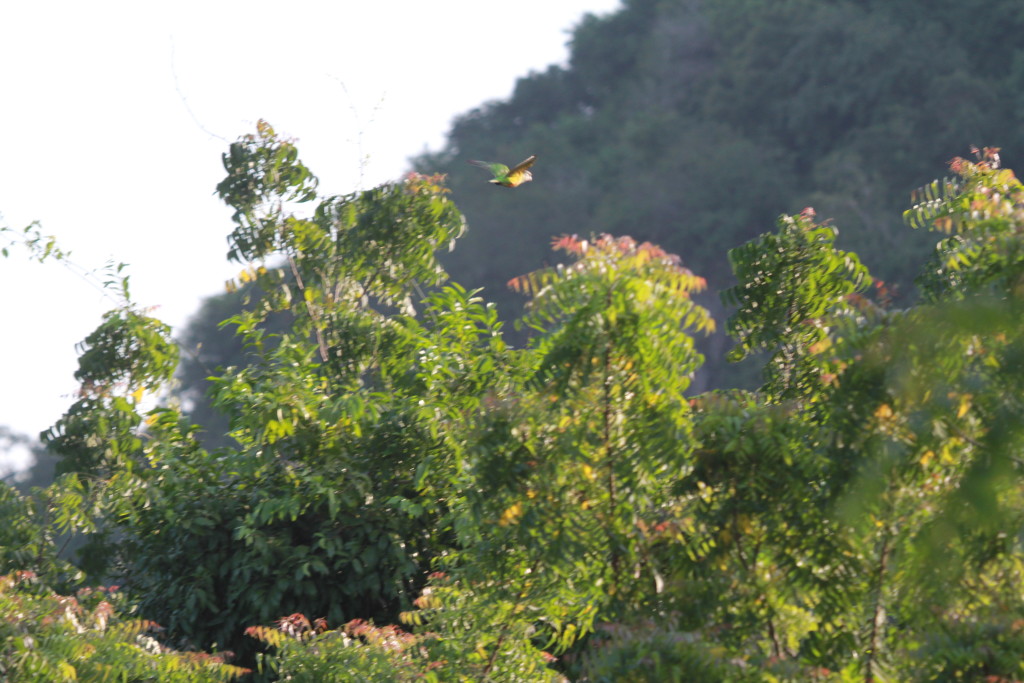
I was prioritizing parrots.  There are 6 parrot species in Tanzania that can be found in the northern safari circuit.  The African Grey Parrot isn’t in the northern safari circuit, it is found in a small area near the border with Rwanda & Uganda.

TARANGIRE

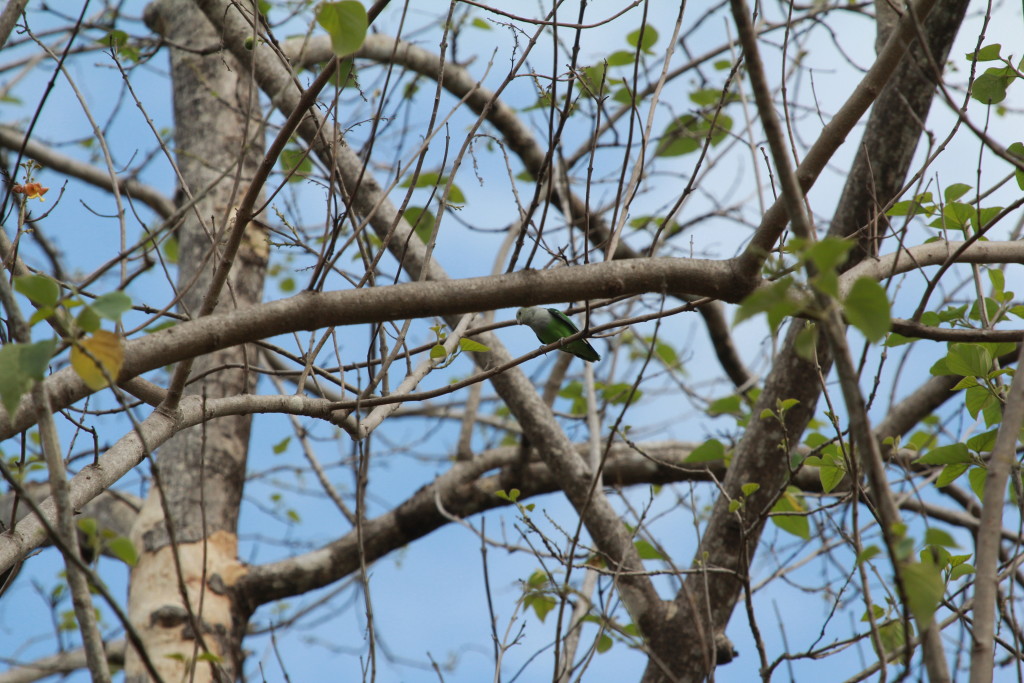
Yellow-collared Lovebirds – Agapornis personatus

Red-bellied Parrots – Poicephalus rufiventris

Meyer’s (Brown) Parrots – Poicephalus meyeri

NDUTU (BETWEEN NGORONGORO & SERENGETI)

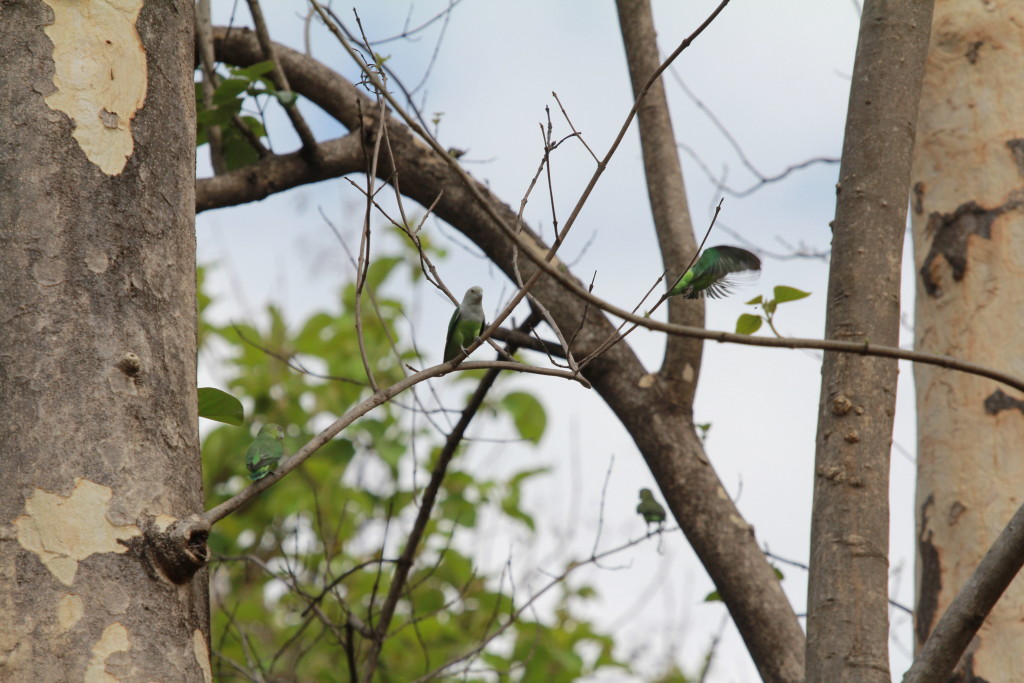
Fischer’s Lovebirds – Agapornis fischeri

ARUSHA NATIONAL PARK

Jardine’s (Red-fronted Parrot) – Poicephalus gulielmi

Red-headed Lovebird – Agapornis pullarius (longshot)

Fischer’s Lovebirds – Agapornis fischeri (longshot)
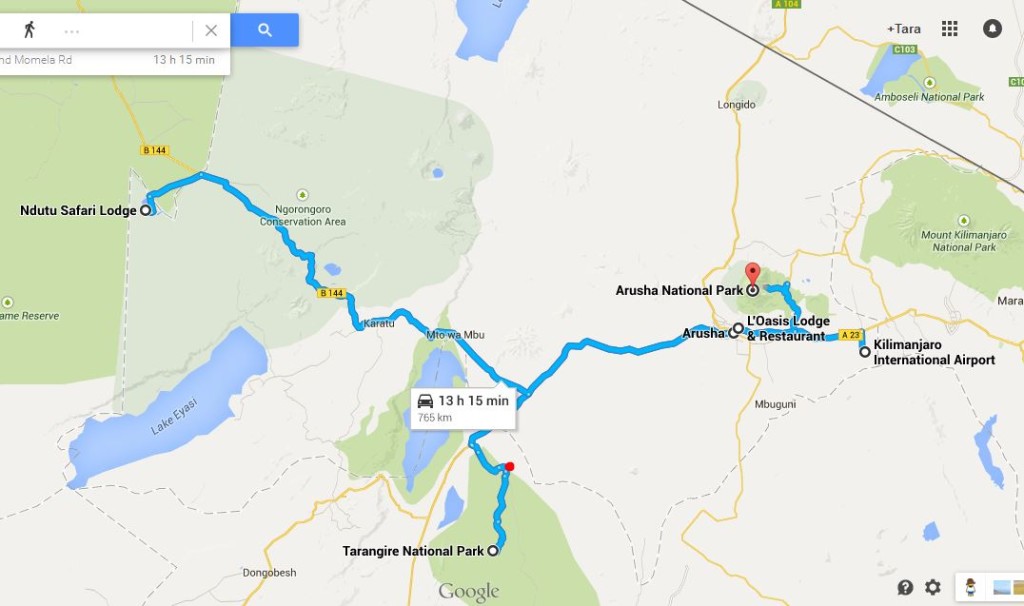
Northern TanzaniaSo here is the map of the 3 parks I chose and other key points such as the airport, the town of Arusha and the hotel we stayed at in Arusha – L’Oasis.  Ignore the 13 hours thing, Google doesn’t know how to drive in Africa!  You will not only be driving from park to park but a lot of safari driving within the park.

HOW TO ORGANIZE YOUR OWN BIRDING SAFARI

In East Africa, where you can’t access the parks by public transport and it’s very rare for tourists to self-drive cars you will have to use some kind of transport with a driver included.  These drivers usually double as safari guides.  You may decide that it’s more convenient to just join an organized tour such as those whom I mentioned above if you can afford it.  Or you can start contacting safari companies in Arusha to see if you can either join an existing tour or make one just for yourselves. These safari companies vary widely in reliability and service so check reviews on Trip Advisor (ignore reviewers with 1 or 2 reviews).  You are looking for reliable vehicles that don’t have trouble, driver guides who have good wildlife knowledge and show an ability to fix problems such as flat tires with minimal disruption to the safari.  You also want quick communication from the head office to your emails and for them to readily answer any questions you have without being evasive or making you feel like you are being placated.

While I was researching the options I found 2 main problems.

1.  Safari companies based outside Arusha were out of my budget.

2.  Safari companies inside Arusha didn’t accept credit cards and wanted money transferred by bank wire in advance of the trip.  Bank wires are the WORST option for miles & points collectors.  You can’t use a credit card and earn points.  You have to have the full amount already in your account, can’t pay it off by installments and you have to pay fees to make the transfer.

So what can you do when you want to pay by credit card or at least cash on arrival?  My answer was to book everything separately.

  1.  Book car hire with driver guide from car hire company, not safari company.  After doing tons of research online, I found Fortes Car Hire.  They actually do have self-drive cars but I wasn’t up to the liability & insurance hassles or to fix our own flat tires and such.  So after several emails back & forth, they agreed to supply a car with driver and to allow me to pay cash on arrival since they didn’t have to front any money to lodges on our behalf.
  2.  Hotels in Arusha and a few pricy safari lodges can be booked online.  Pointshound has a few options or try Hotels.com or Expedia for more options.  The obvious advantage here is instant confirmation and secure credit card payment.  Or contact lodges by direct email and ask if they take credit cards online.  Here’s what I booked.

Whistling Thorn Camp, just outside Tarangire National Park – booked by direct email to parent company Moivaro.

Ndutu Safari Lodge, booked by direct email though they said it wouldn’t be confirmed until it was paid.  Since we went in the off season, there was plenty of room.

L’Oasis Hotel, in outskirts of Arusha as a base for Arusha NP day trip – booked with Hotels.com.

VISA FOR TANZANIA

Most nationalities can get a visa on arrival at Kilimanjaro International Airport.  It’s pretty straightforward, just one form and $50 cash per person for Australians.  Americans pay $100 per person.  The fee varies by your nationality, you can check here.

BEST SEASON TO TRAVEL

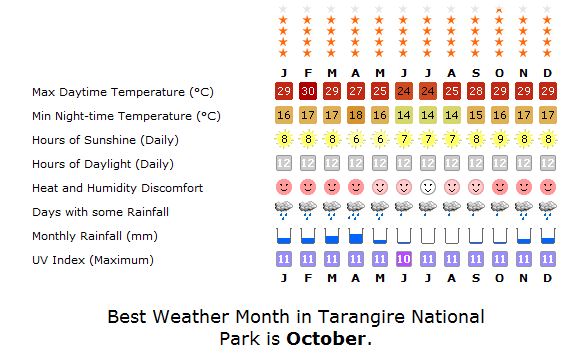
It’s a double-edged sword, you can avoid the crowds by going in off season and avoiding the Great Migration (Jan-March & prices skyrocket) but you may run into the rainy season which is really bad news for birders.  Dry weather forces animals to stay closer to watering holes so they are easier to find.  Generally speaking, the dry season is June to October, the rainy season is November to May.  We were there in late November which is shoulder season and it hadn’t started raining yet.  If you have a choice, I would go for Sept-Oct for the best weather, still not high season and good birding.  Regardless of the weather, I would also avoid school holidays in the USA & Europe so that means June, July & August.  Crowds are even worse for birding!
Tarangire WeatherBOTTOM LINE

Obviously a lot of thought and preparation needs to go into a birding safari to Africa.  The lower your budget, the more you have to do yourself.  For most people, this will be a once in a lifetime experience so take your time and get it right!
The World’s Shyest Lovebirds In Accra

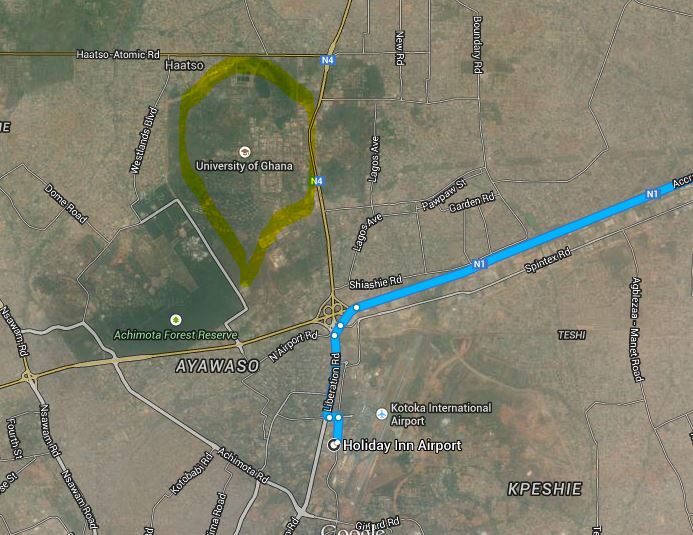
After leaving Shai Hills, we still had a couple hours to kill and the Ashanti Tour people in Cape Coast had recommended a couple places in Accra near our hotel where we might find Red-headed Lovebirds – Legon University & Achimota Forest.

Uni GhanaBy this time we were hitting traffic so it took longer to get back.  We had brought some breakfast so decided to head to the campus, have a picnic and look for the birds.

IMG_6214

Ghana is very concerned with keeping Ebola out of the country.

IMG_6218

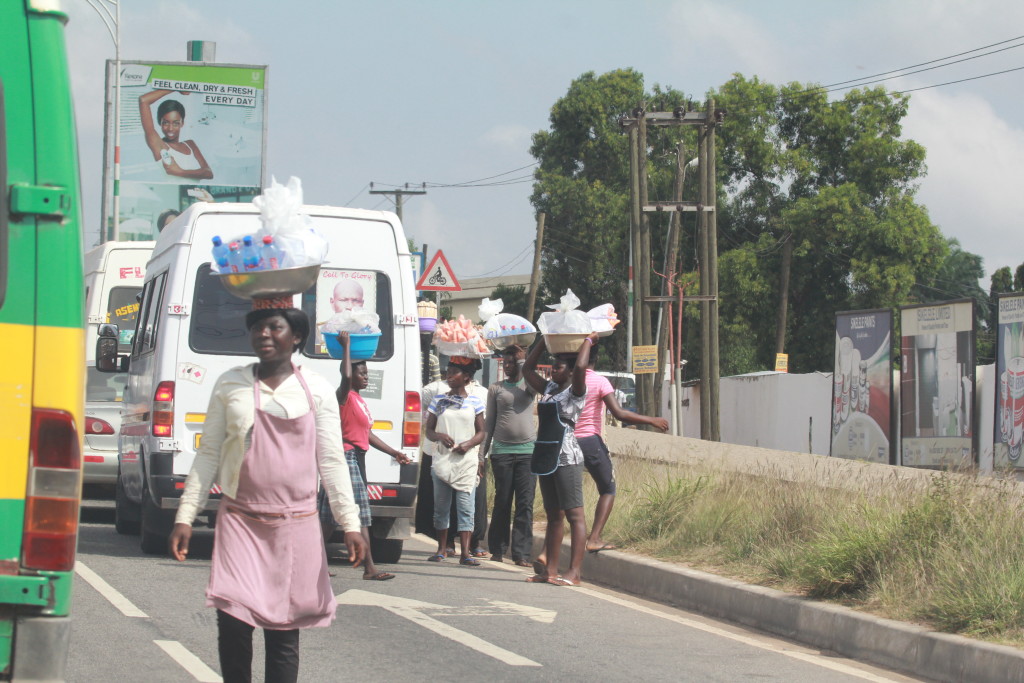
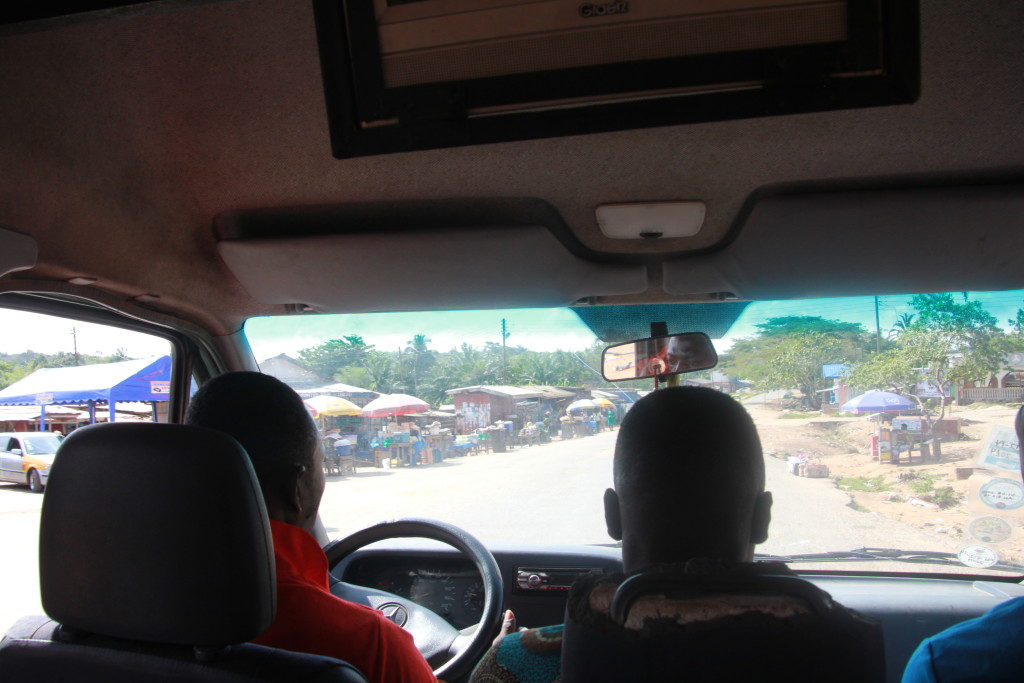
Vendors in the traffic

IMG_6219

We finally arrived at Legon University and were running out of time.  I showed the photos in my bird book of the Lovebirds to some students and they said to try the trees in a certain area which they explained to the driver.

The lovebirds were indeed in the trees but by now it was around 10:30am and they weren’t interested in coming down.  I could hear them squawking and see them furtively moving around in the highest branches but they just refused to give a good showing.  It would have been better to come early in the morning when they were feeding but we couldn’t be 2 places at once!

IMG_6220

A few other birds weren’t quite so bashful so I snapped a few pics.

IMG_6222 IMG_6224 IMG_6225

This tree had a whole flock of Lovebirds in the top branches!

IMG_6227

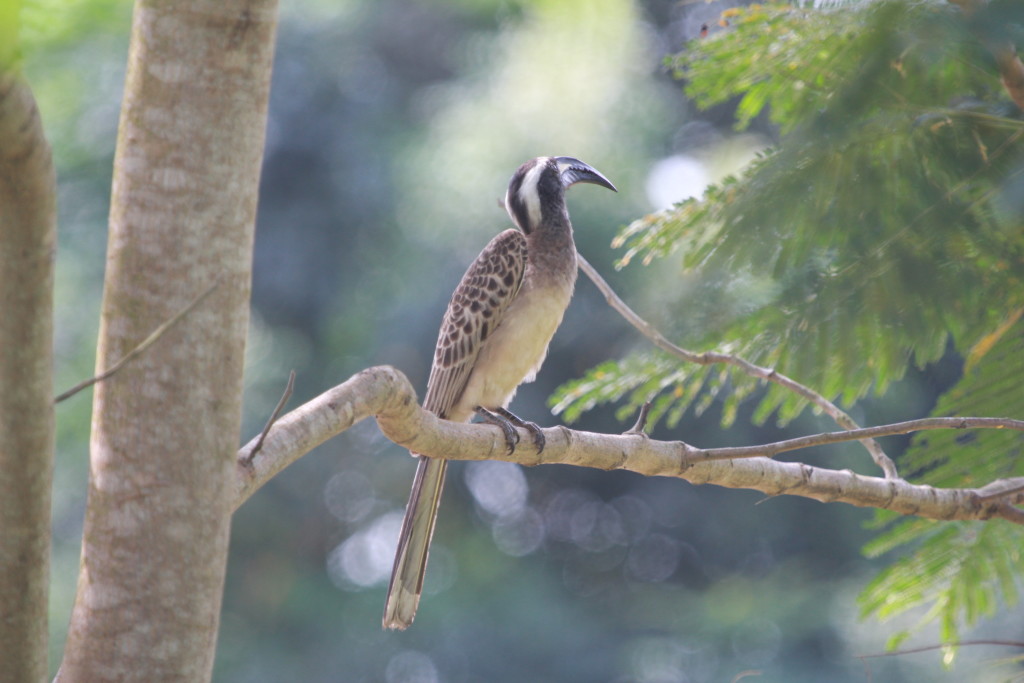
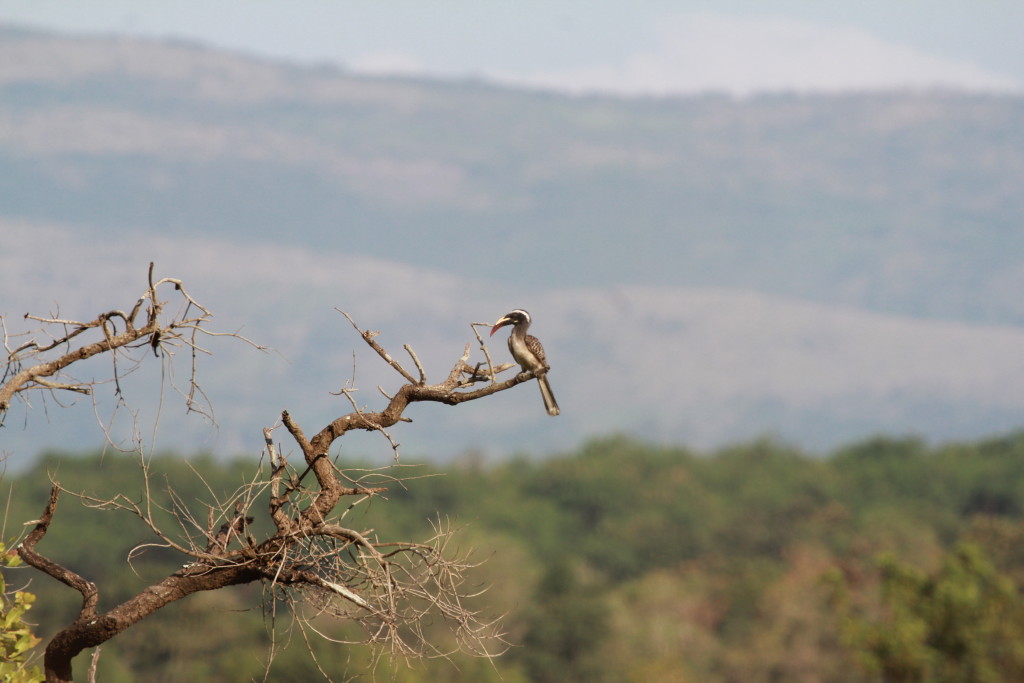
African Grey Hornbill

IMG_6229

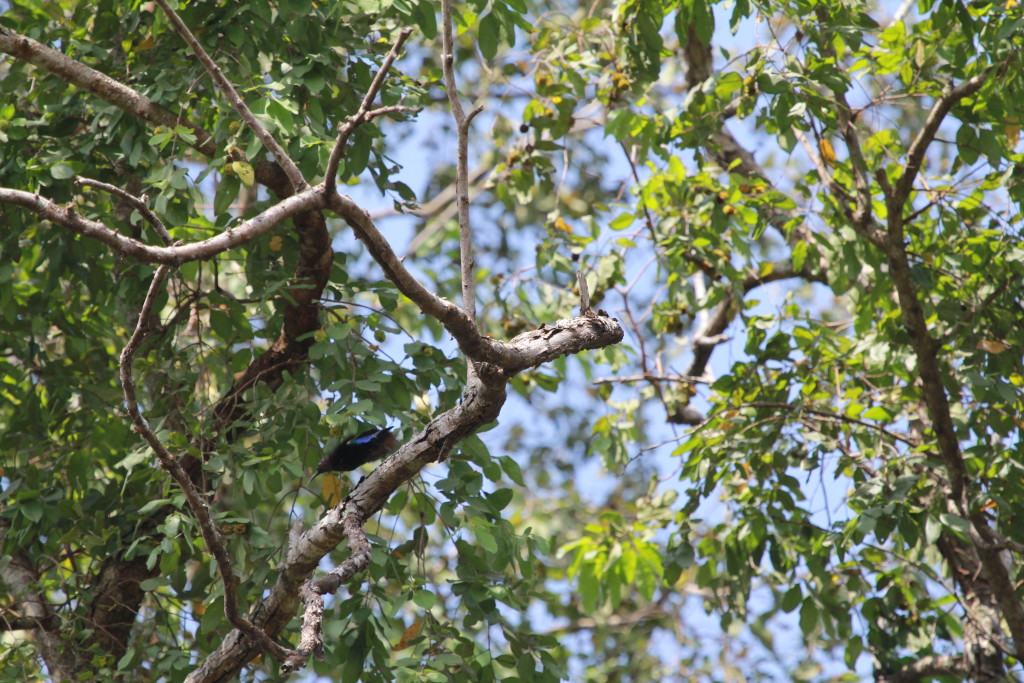
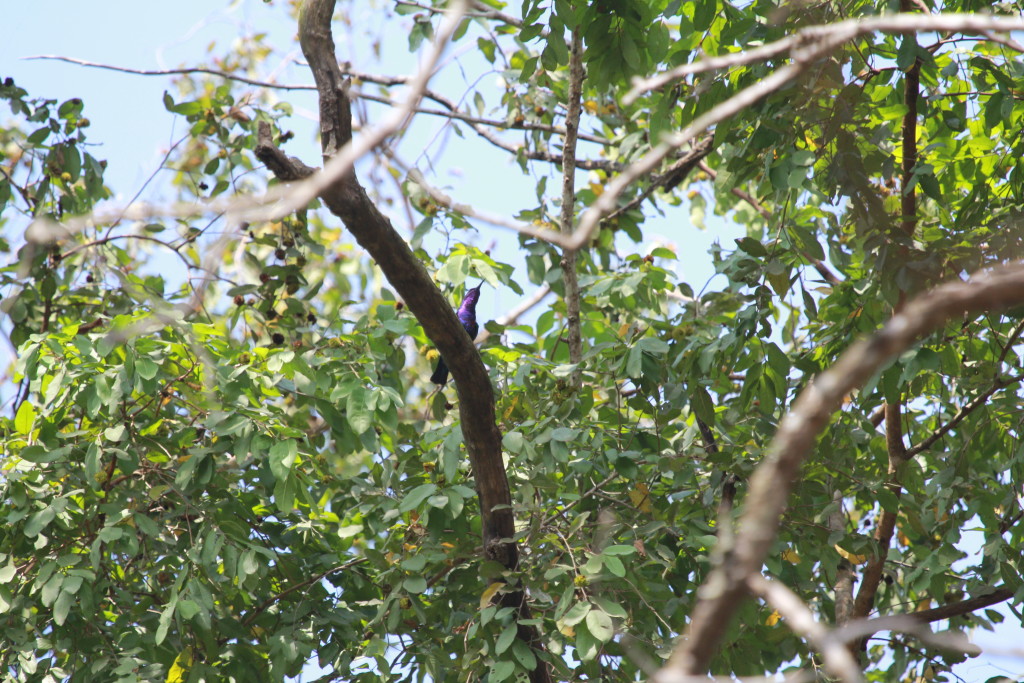
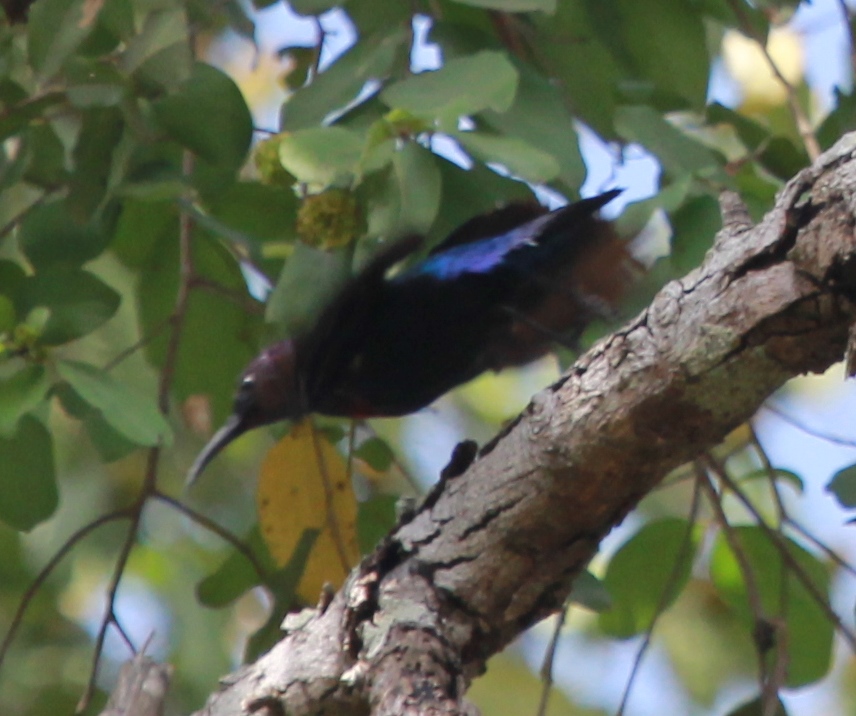
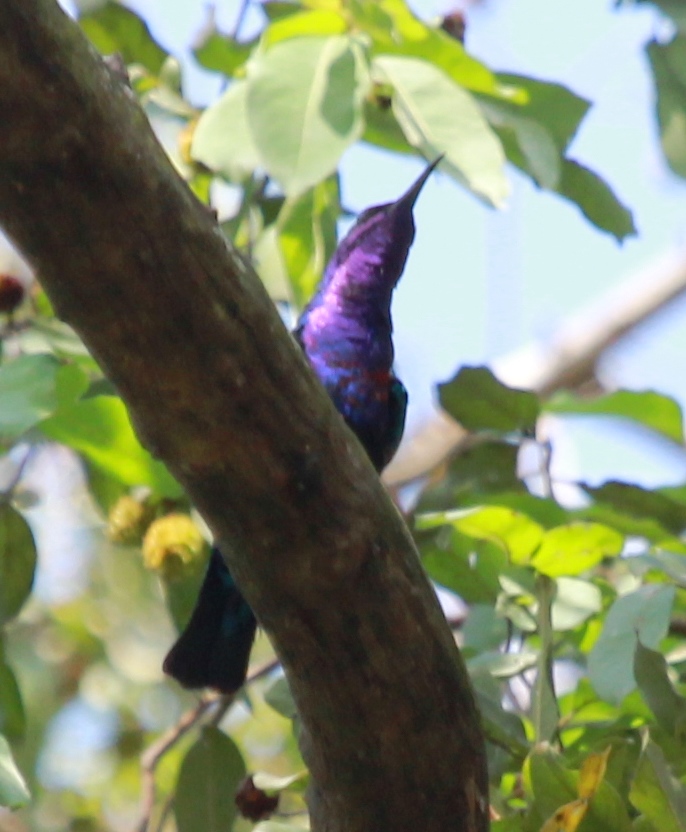
Seeing a Splendid Sunbird who was the coolest bird I managed to photograph at this location.

IMG_6230 IMG_6231 Sunbird1 Sunbird2

This is our driver whose name I did write down but I can’t find the paper.  He was a really nice guy although not a bird guide.  Once our time was up, we had to full up the petrol and couldn’t find a station that took credit cards so used the last bit of cash we had.

IMG_6233He dropped us back at the Holiday Inn.  Now that we were officially broke, we wandered over to the shopping centre next door and found a cafe that took credit cards and had lunch there.  And so goes our last day in Ghana………………..now looking forward to Tanzania!

Day Trip From Accra To Shai Hills Reserve

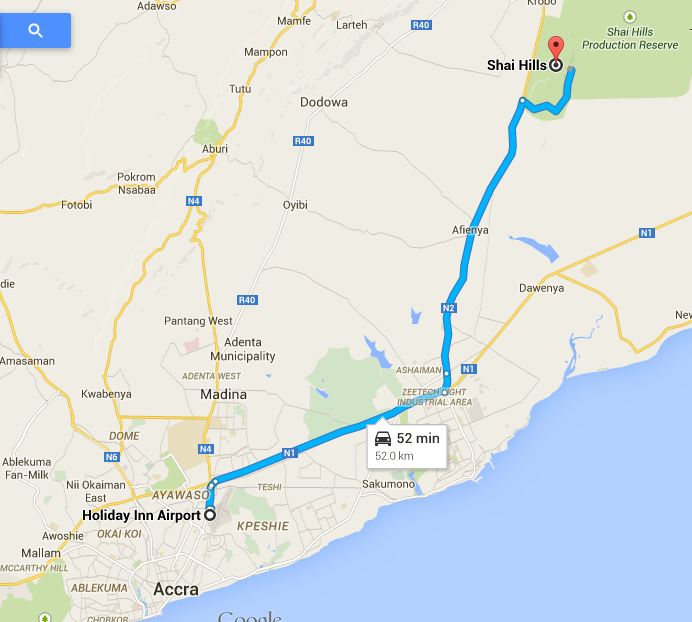
Since we made our home base in Accra at the Accra Airport Holiday Inn, it was easiest to use the car hire service in the lobby.  In Ghana, most car hires include the driver.  I don’t remember offhand the exact prices but since we only needed the car for the morning, we negotiated a 6 hour rate and had to have the car back by noon.  I also agreed to pay the petrol as we wouldn’t be using too much just to get to Shai Hills and back.

Shai Hills

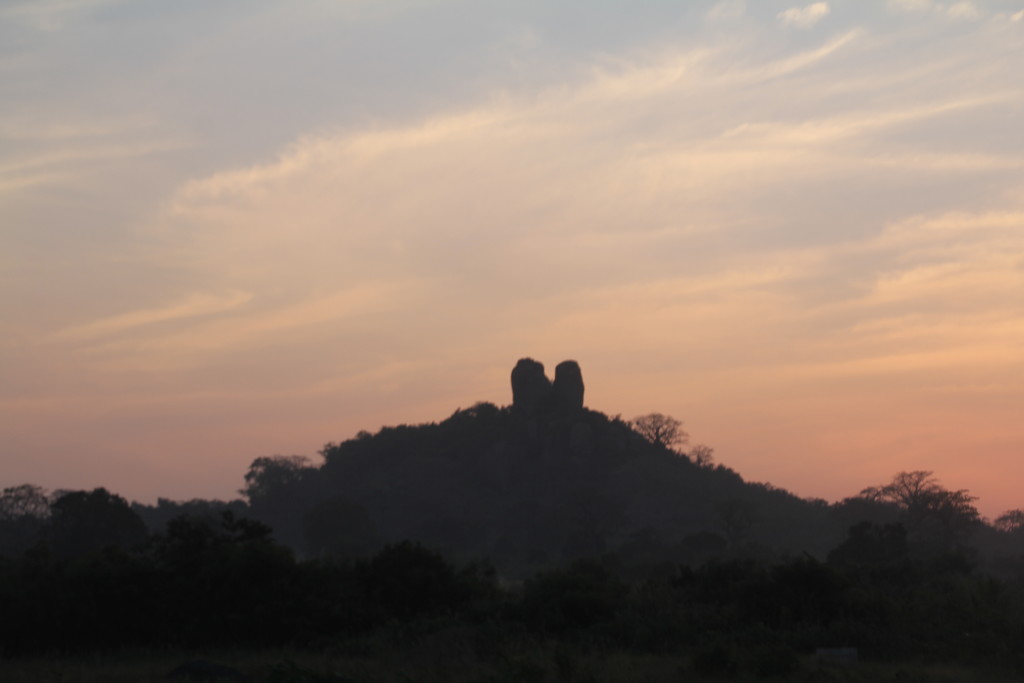
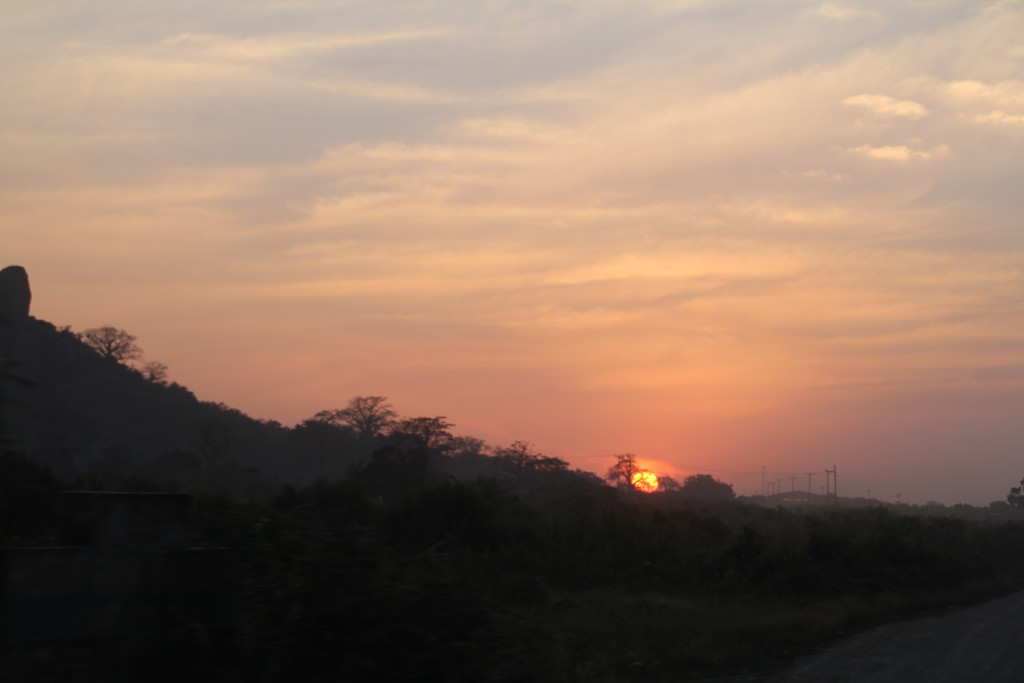
We started out early and by the time we got to Shai Hills we were treated to a beautiful sunrise over the rock formations.

IMG_6149 IMG_6150 IMG_6151

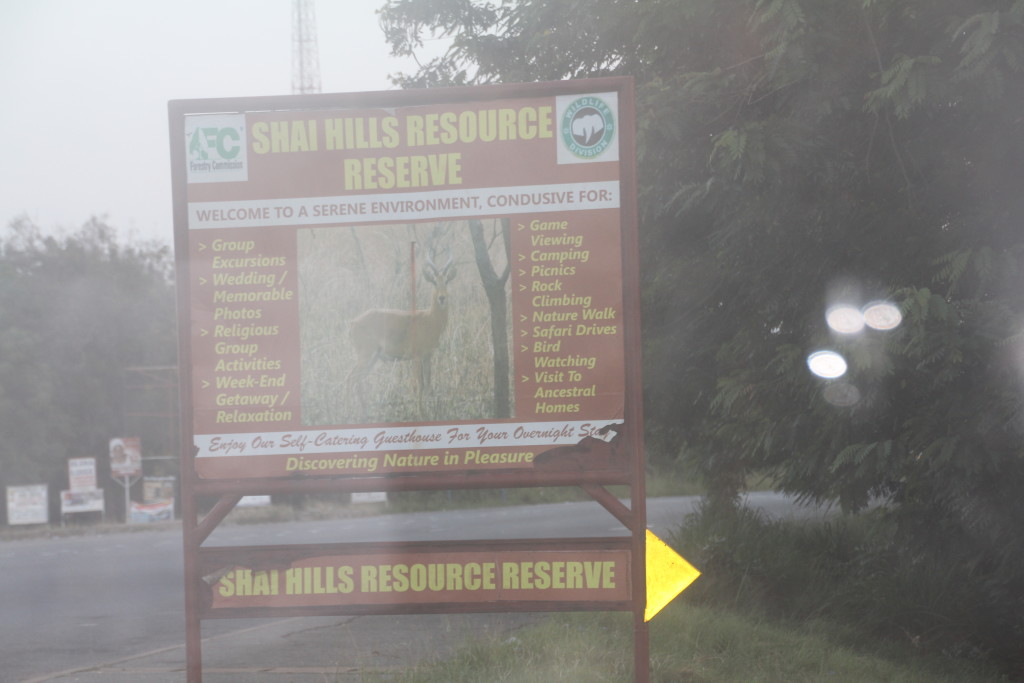
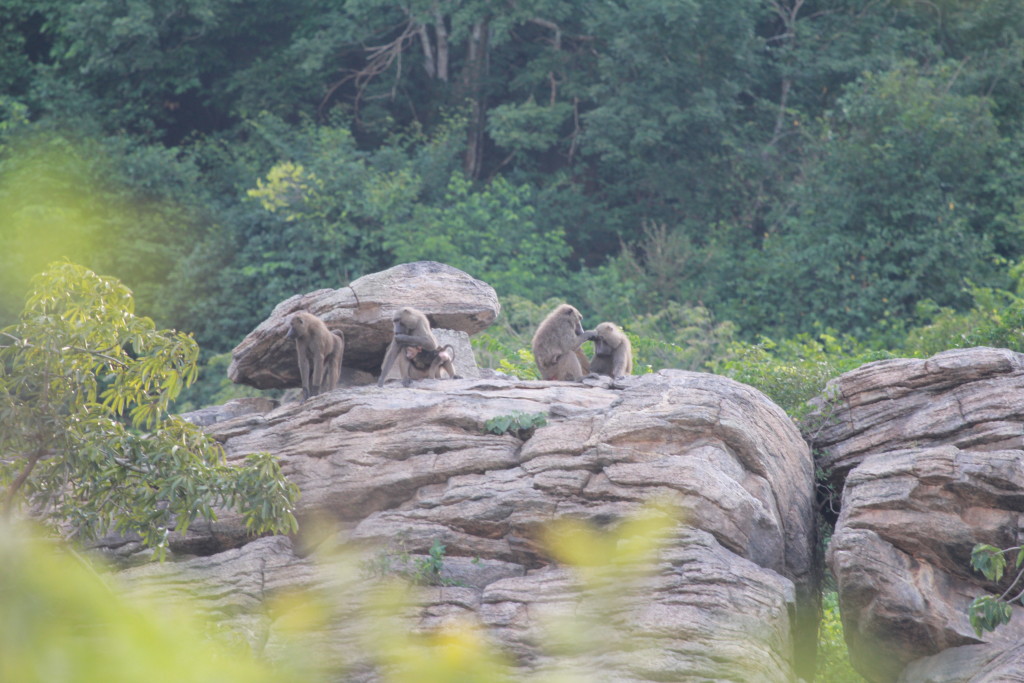
Once again they had a rate for “bird watching” that was double the cost of general entry with no apparent extra service provided.  Since they only took cash, no credit cards and we only had a fixed amount until the next day when we were leaving, we could only afford 2 hours.  I paid the normal fee for us both while talking about baboons and wildlife.  We took one of their guides who turned out to be good a bird spotting and paid for 2 hours since I figured by 9am the birds would be resting.  I really hate the way they charge by the hour.  Once you are in the park, why not just let people stay as long as they want?  This is the first time I have seen this (meaning Ghana in general as Kakum also had it) and I think it’s ridiculous!  To be honest, if they had credit card facilities I wouldn’t have cared so much about the cost but being our last day, we were just low on cash and also had to pay for the car and petrol.

IMG_6152 IMG_6153

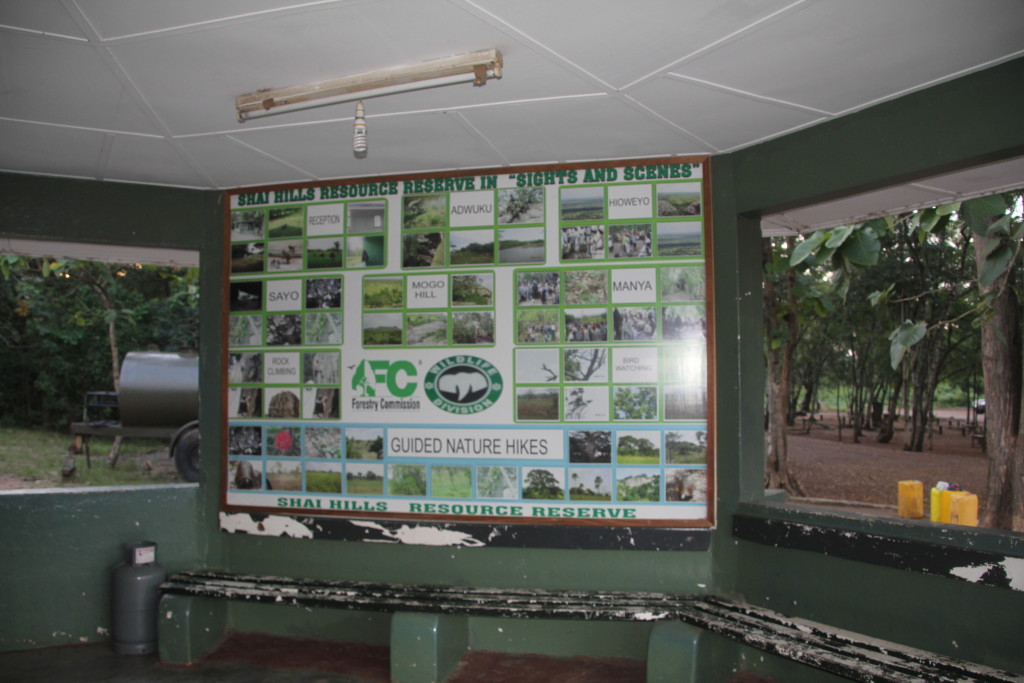
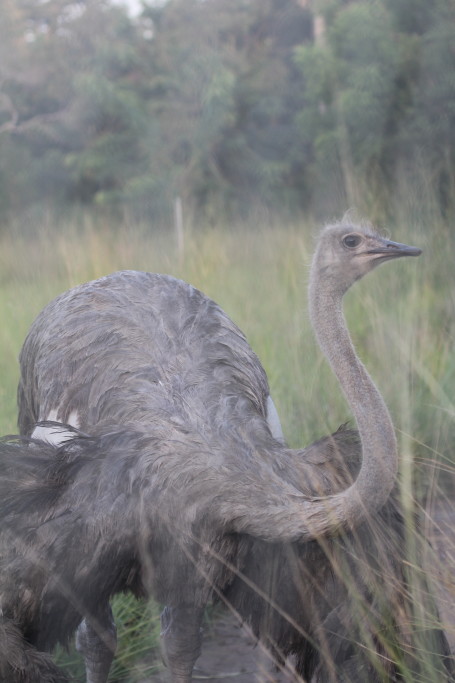
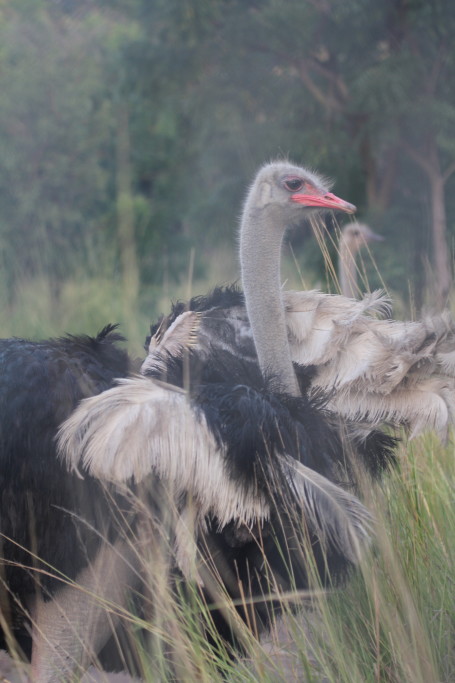
There is a small display as you enter, then the first birds we saw were these ostriches.

IMG_6157 IMG_6158

There weren’t a whole lot of birds around.  I had one mission – to find and hopefully photograph Senegal Parrots.  But that didn’t mean I wasn’t going to look for as many birds as possible!  This little guy was sunning himself on a rock.

IMG_6161 IMG_6163

African Grey Hornbill

IMG_6169 IMG_6171 IMG_6172 IMG_6174

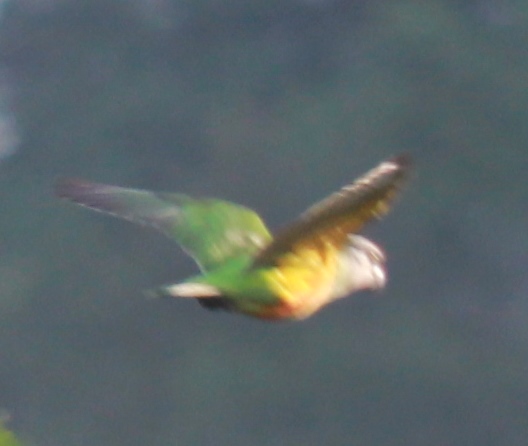
After driving around and spotting mostly LBJs (little brown jobs) and pigeons, I finally got my Senegal Parrots!  They were flying swiftly overhead as parrots tend to do but because it was open terrain, not thick forest I had time to grab a few shots.

IMG_6178 IMG_6179 IMG_6180


Sennie2

White-bellied EgyptAir bird!

IMG_6181 IMG_6185

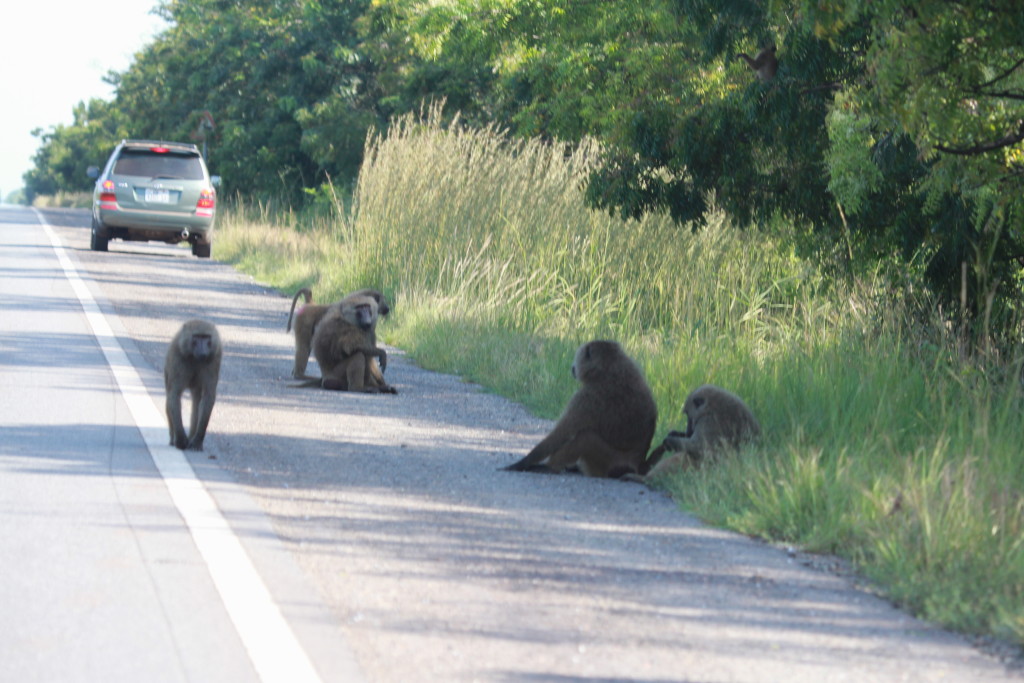
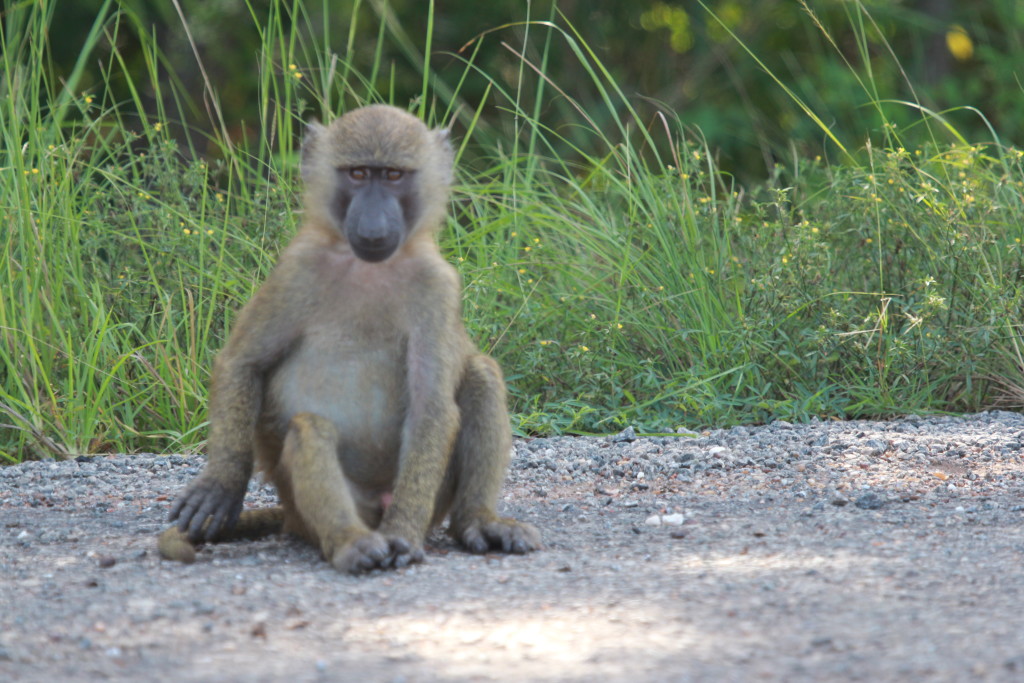
We also saw lots of Baboons, more Hornbills and more LBJs.

IMG_6191 IMG_6194 IMG_6195 IMG_6201

SH1

IMG_6207

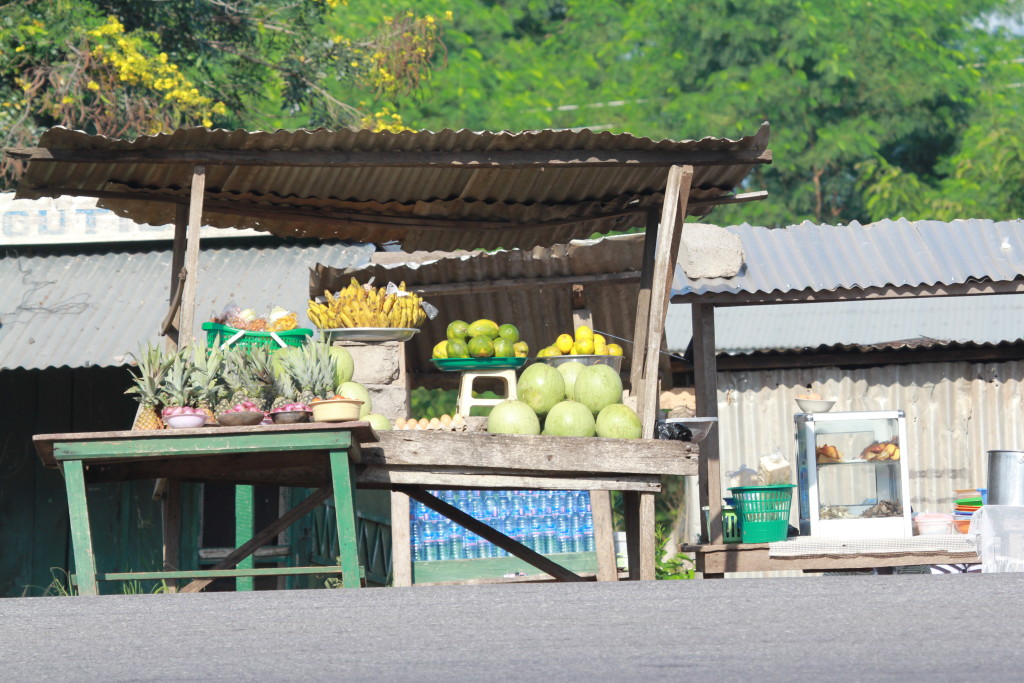
Fruit & veggie stall just outside the park.

IMG_6209

Hitchhikers?

IMG_6212 IMG_6213

Whirlwind Visit Of Cape Coast

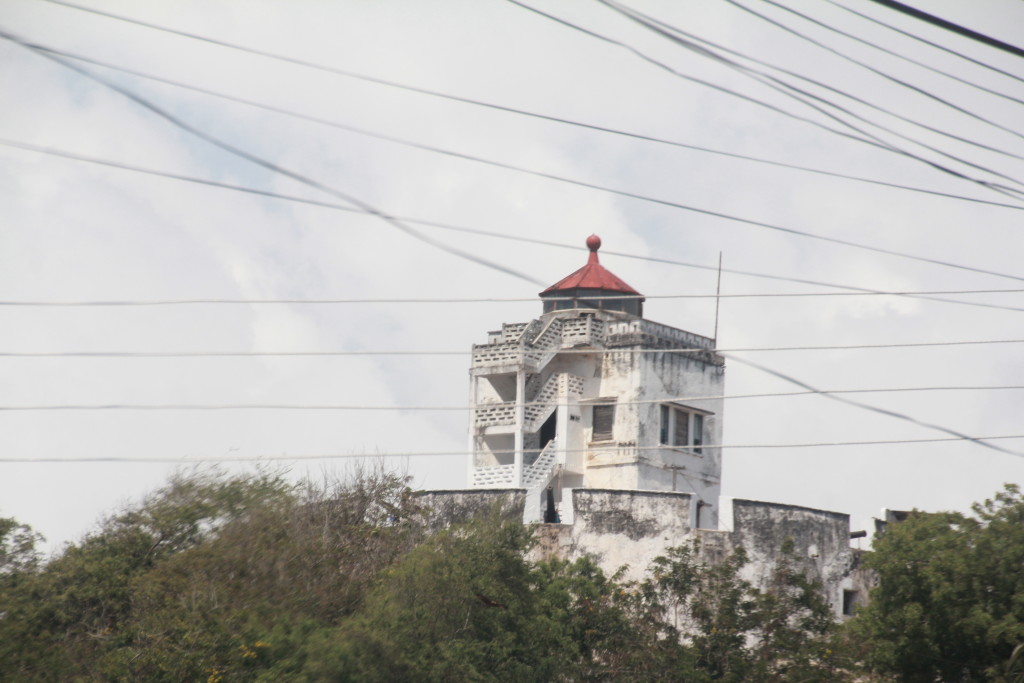
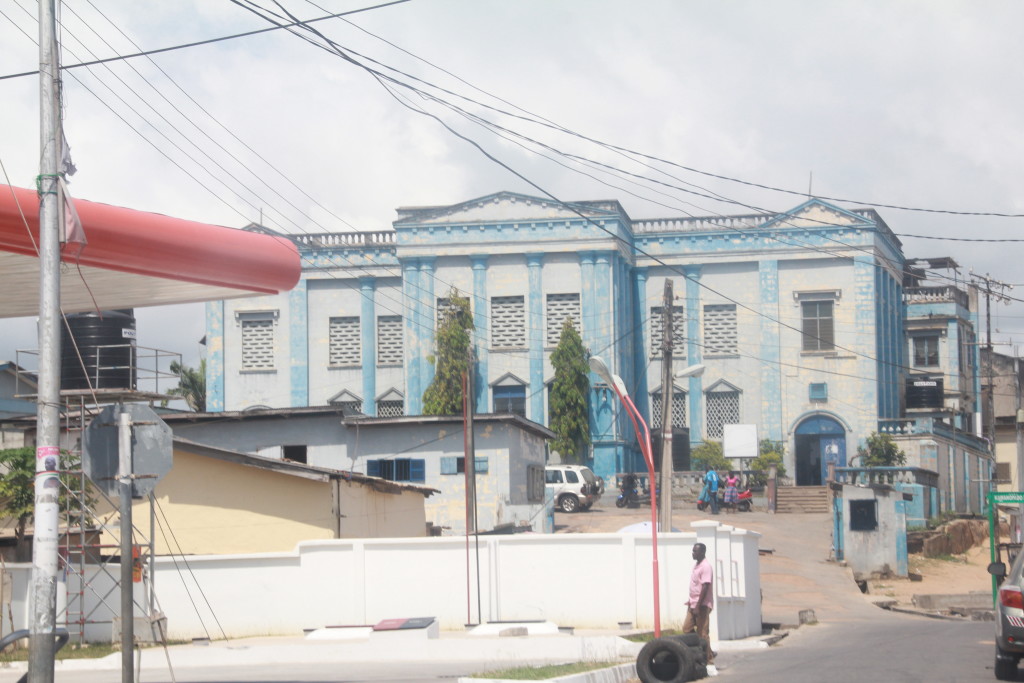
After leaving Kakum for the journey back to Accra, we had to get a tro-tro back to Cape Coast.  We didn’t have much time as I wanted to have enough time to shop in Accra before going back to the hotel so we just hired a taxi to drive us around.  Here’s a pictorial of some of Cape Coast’s sights.

IMG_6100

Some villages enroute

IMG_6101 IMG_6102 IMG_6103

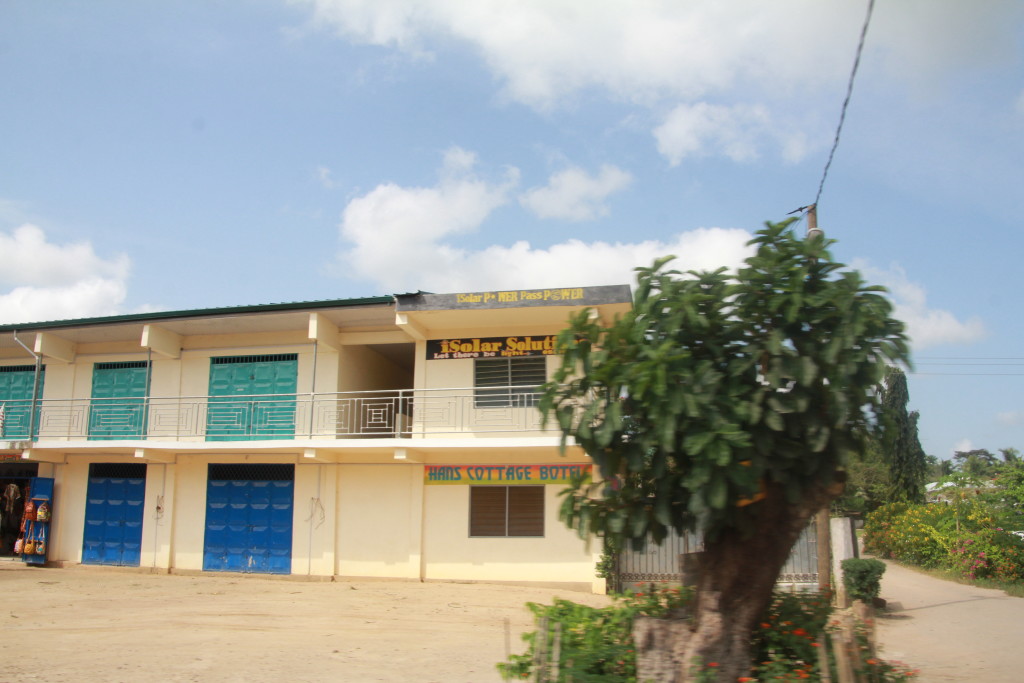
Hans Botel is another lodge people use for Kakum visits but it’s further away.

IMG_6104 IMG_6106

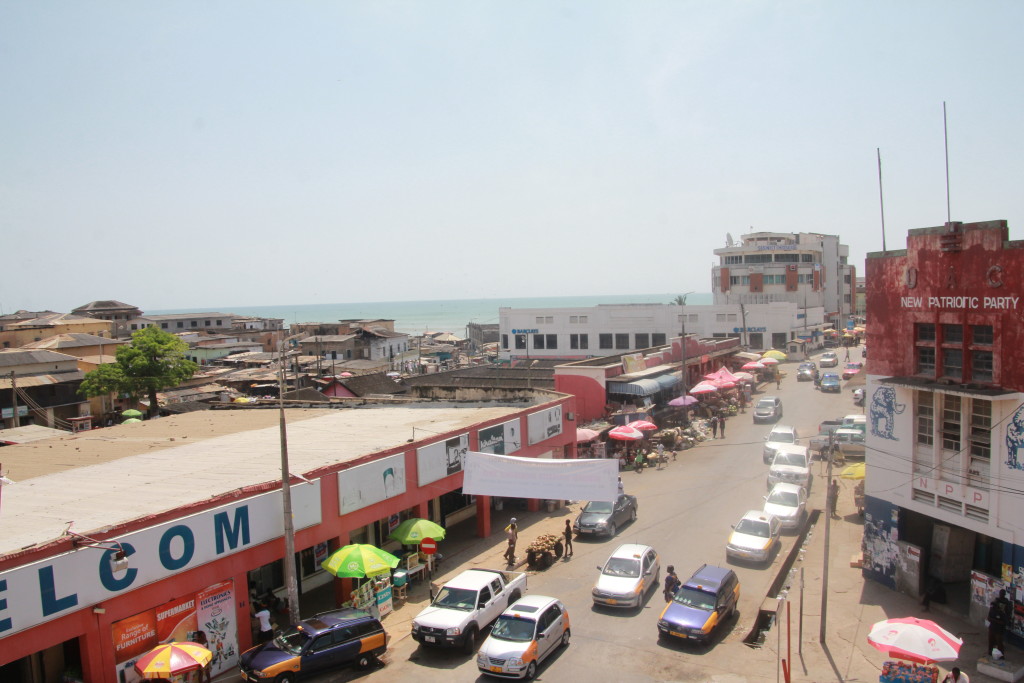
Main shopping street in Cape Coast

IMG_6109 IMG_6114

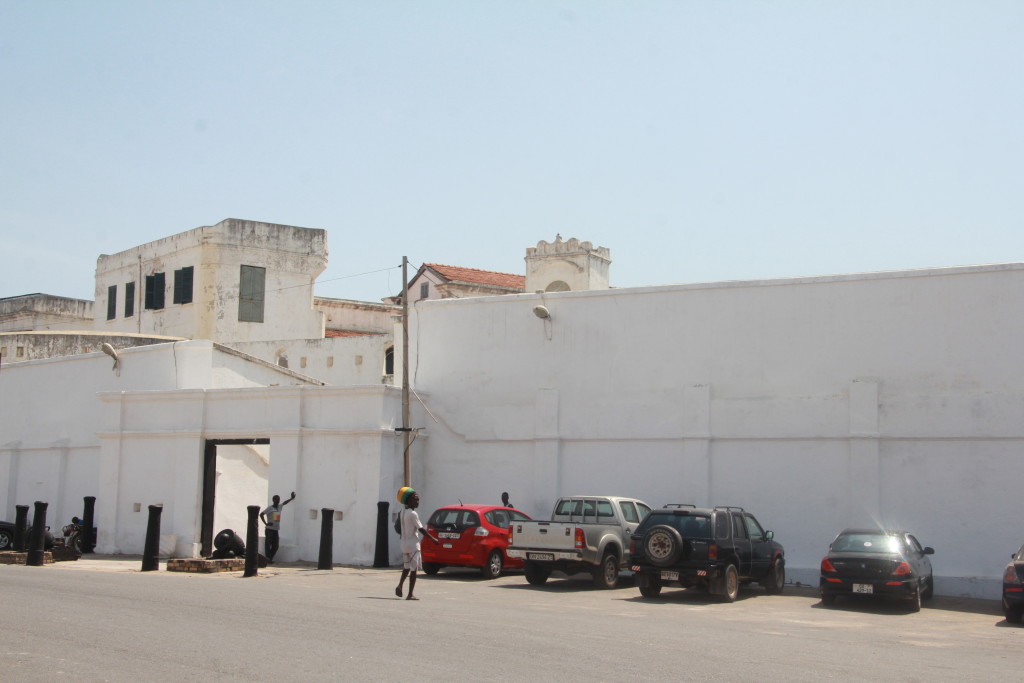
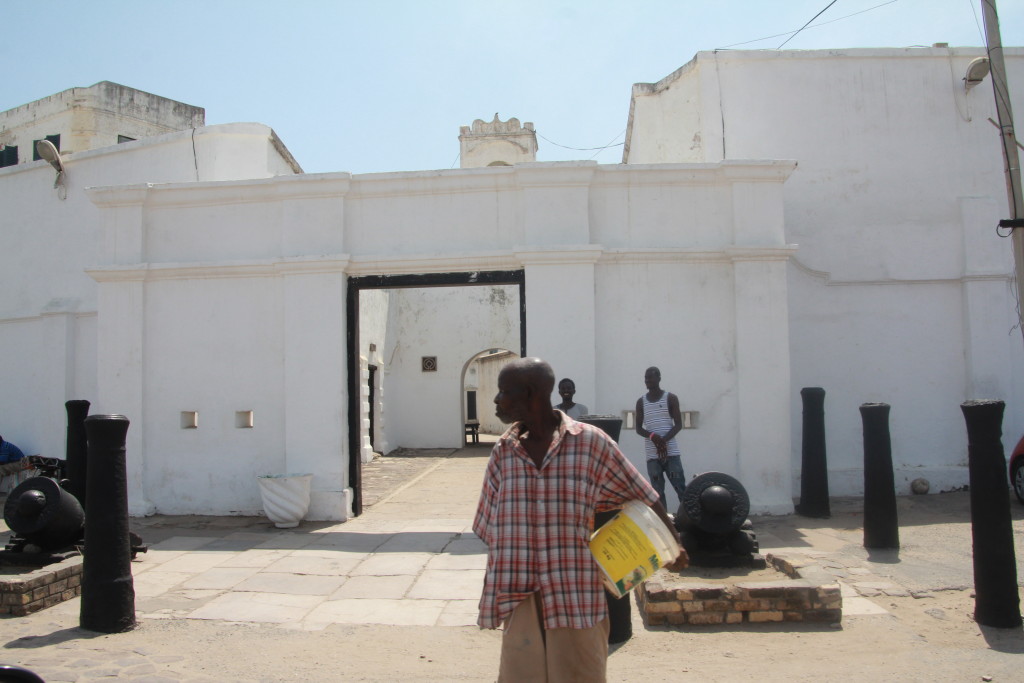
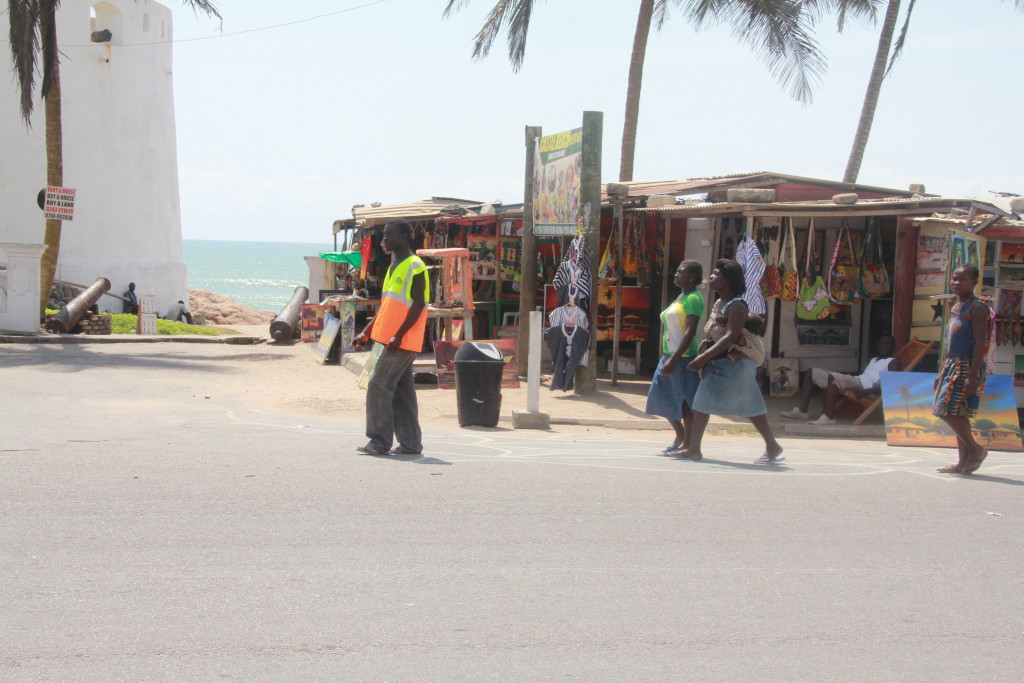
Cape Coast Castle, unfortunately no time to go inside and we didn’t have anywhere to leave our bags.

IMG_6113 IMG_6115 IMG_6118 IMG_6116

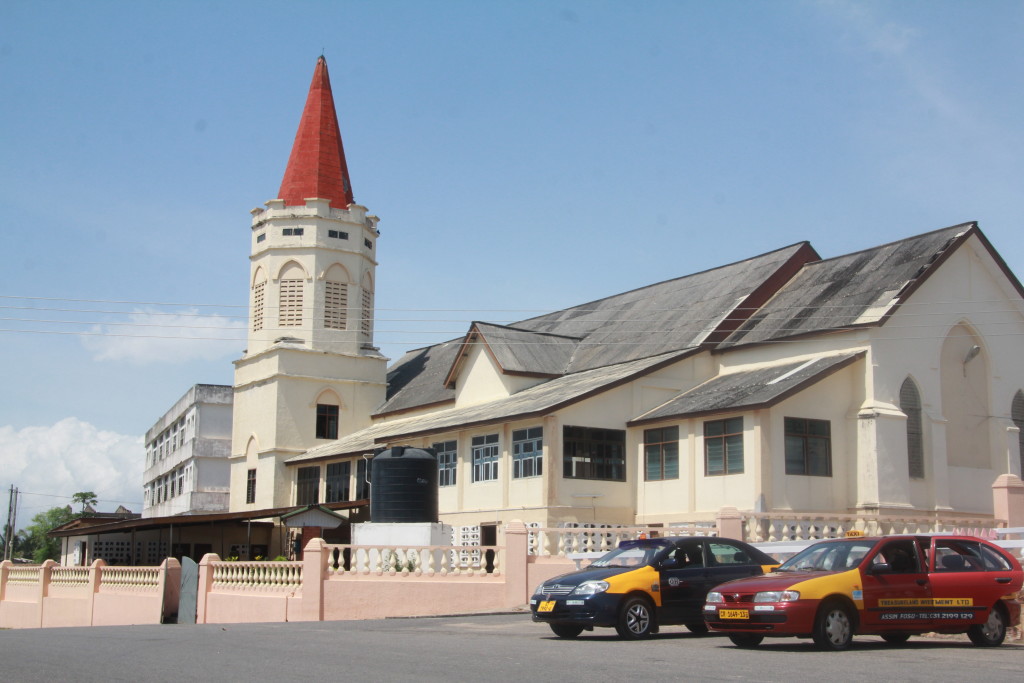
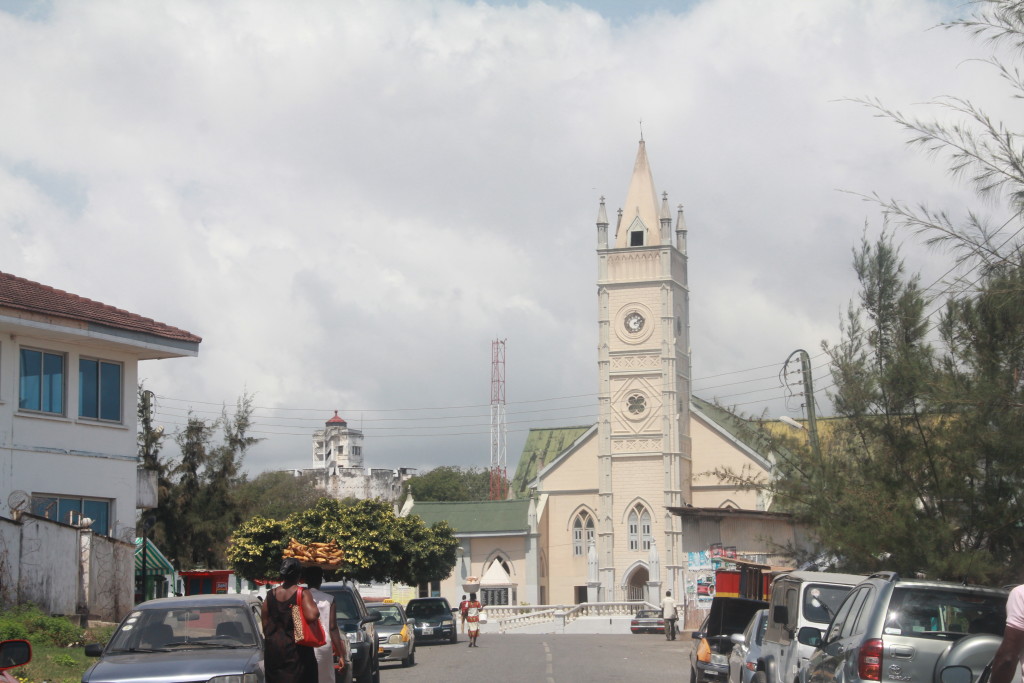
Churches and forts

IMG_6120 IMG_6121 IMG_6122

Bus back to Accra drops you back at the Kaneshie Market from where we got a taxi to the craft market.

IMG_6123 IMG_6125

Kakum’s Car Park – Yes You Can See Birds Here

In Africa, even car parks have interesting birds to see!  Kakum National Park in Ghana is no different.  It was here that I got my only glimpse of 2 African Grey Parrots in flight.  I also saw some other birds much closer!

PART 1 – AFTER LUNCH, SAME DAY AS CANOPY FOREST WALK

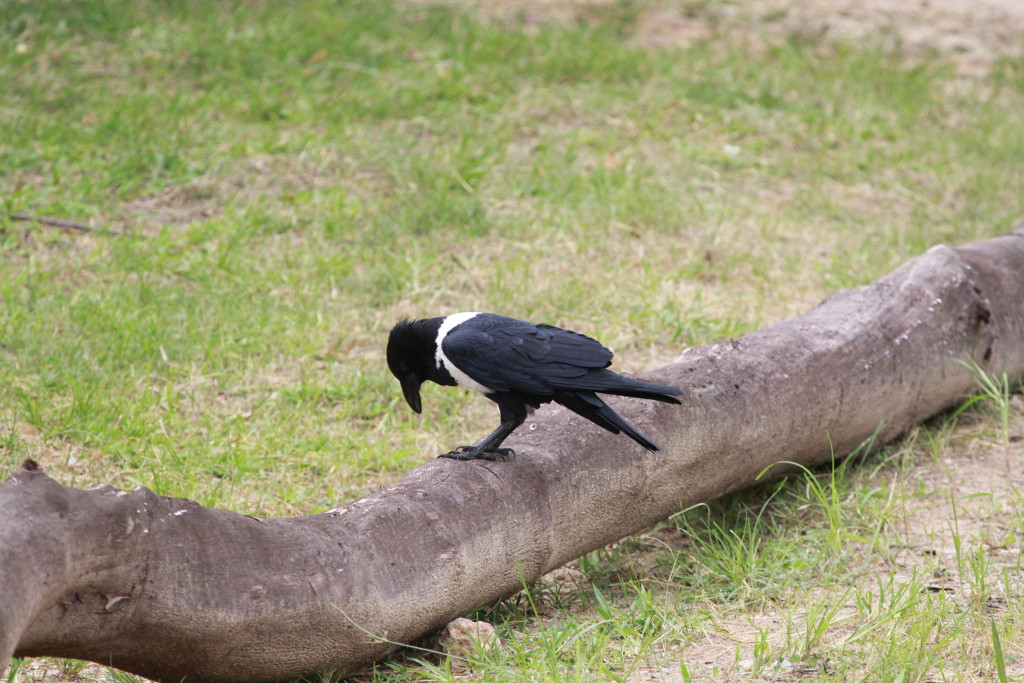
African Pied Crow

IMG_6029 IMG_6031

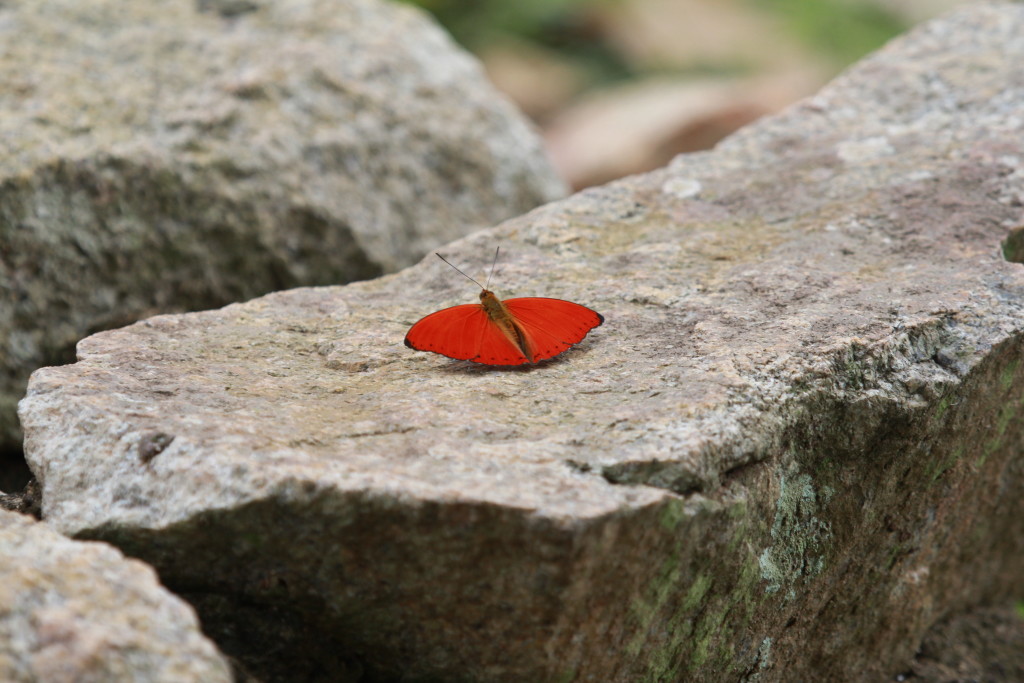
Grogeous butterfly in the sun

IMG_6032 IMG_6033

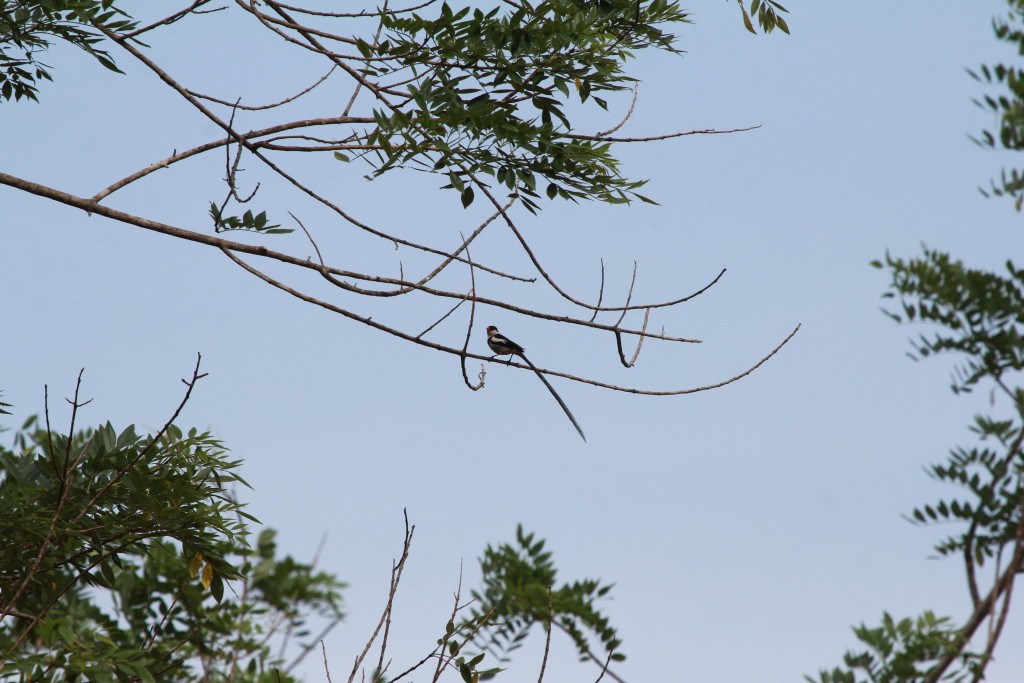
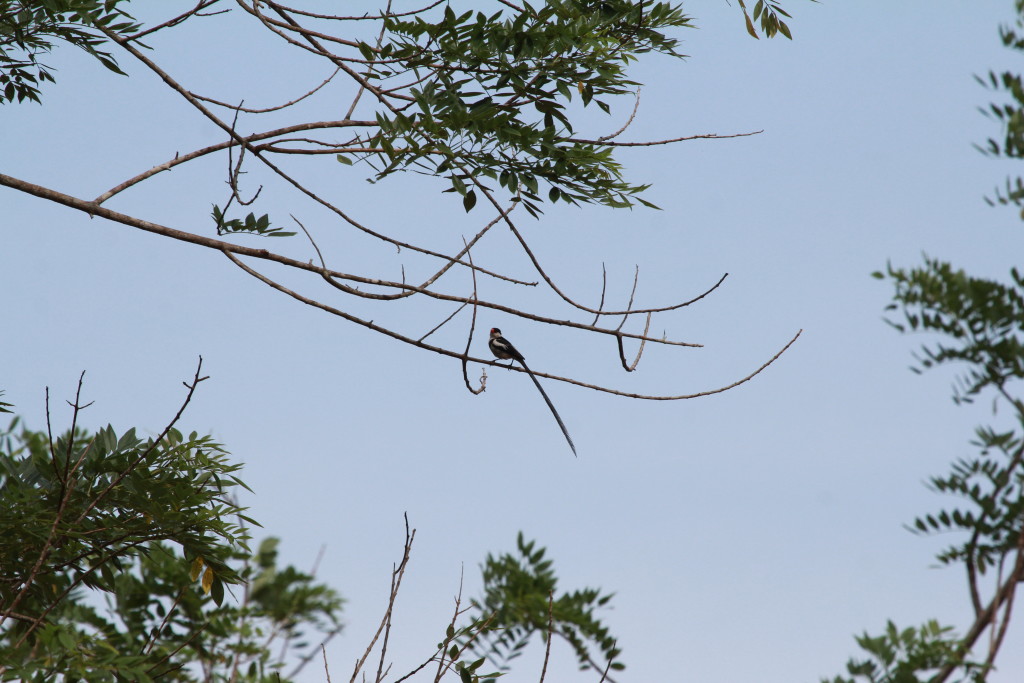
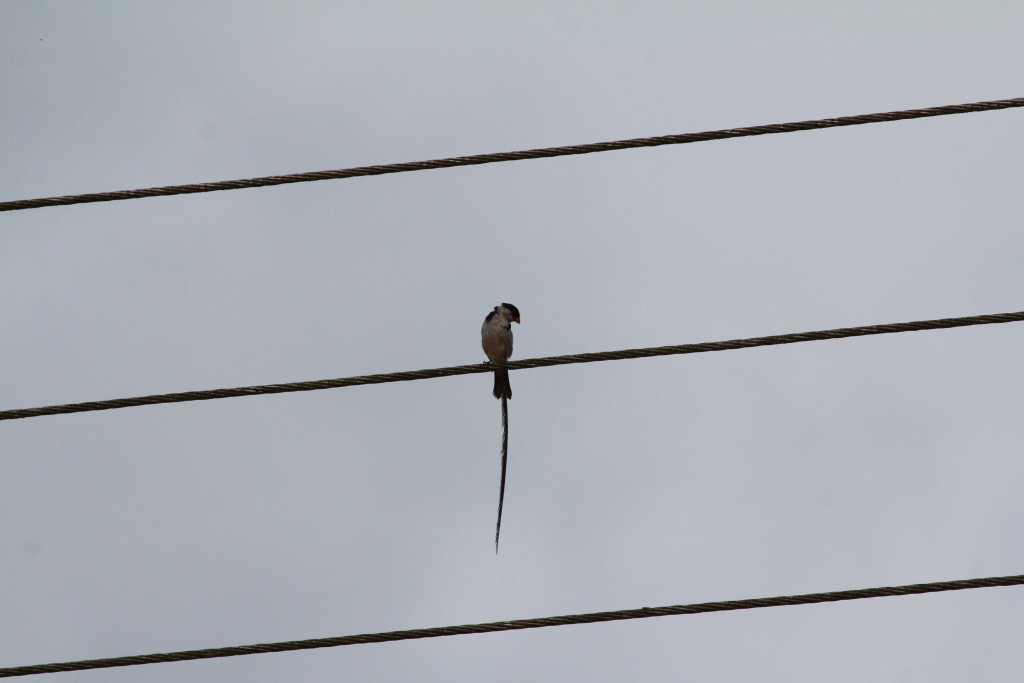
Pin-tailed Whydah

IMG_6036 IMG_6037 IMG_6044

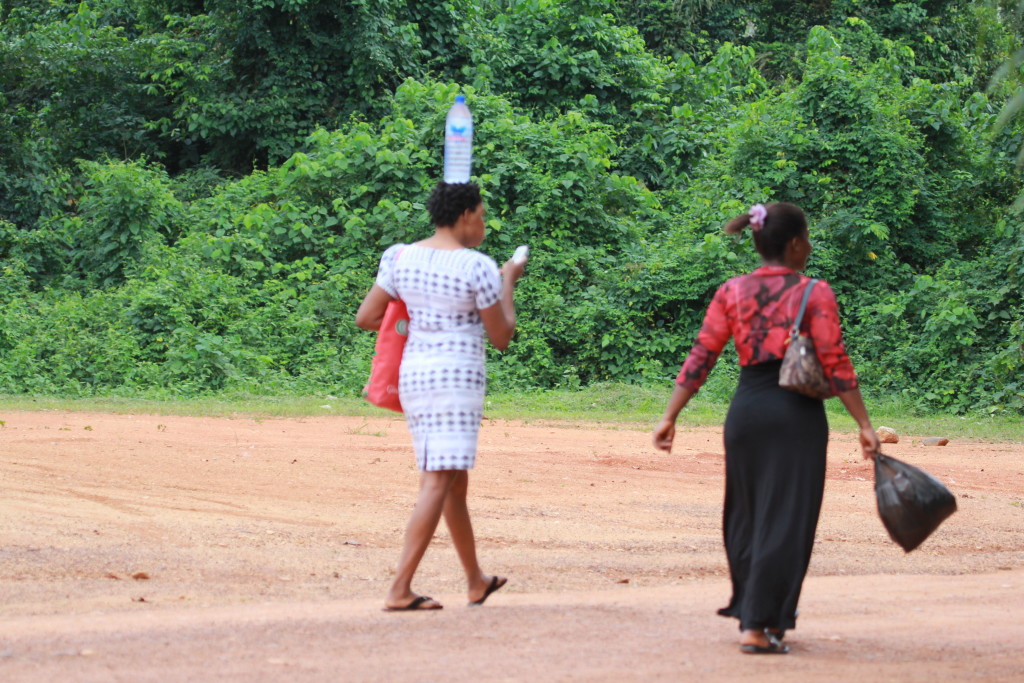
Ladies headed home, I love how she balances the water on her head!

IMG_6047

Weaverbird Colony at the front gate.

IMG_6053 IMG_6054 IMG_6058

PART 2 – EARLY MORNING, AROUND 6AM – 7:45 THE NEXT MORNING

Hornbill Central, they were everywhere!

IMG_6063 IMG_6066 IMG_6073 IMG_6079 IMG_6083

Vieillot’s Black Weaver

IMG_6085 IMG_6087

Little Bee-eater

IMG_6088

Back to the Weaver Colony

IMG_6092 IMG_6094 IMG_6095 IMG_6096 IMG_6098

Visiting Kakum National Park, Ghana

Ghana’s Kakum National Park rates highly amongst birders for it’s impressive bird list and ease to access.  For people staying independently at the Rainforest Lodge, you can get there in a 15 minute ride in a tro-tro.  You don’t need to organize anything in advance, there are guides available at the gate.  If you want early access (before 8am) you do need to arrange it in advance.  Credit cards are not accepted for either entry or guide fees so be prepared with cash – Ghanaian Cedis.

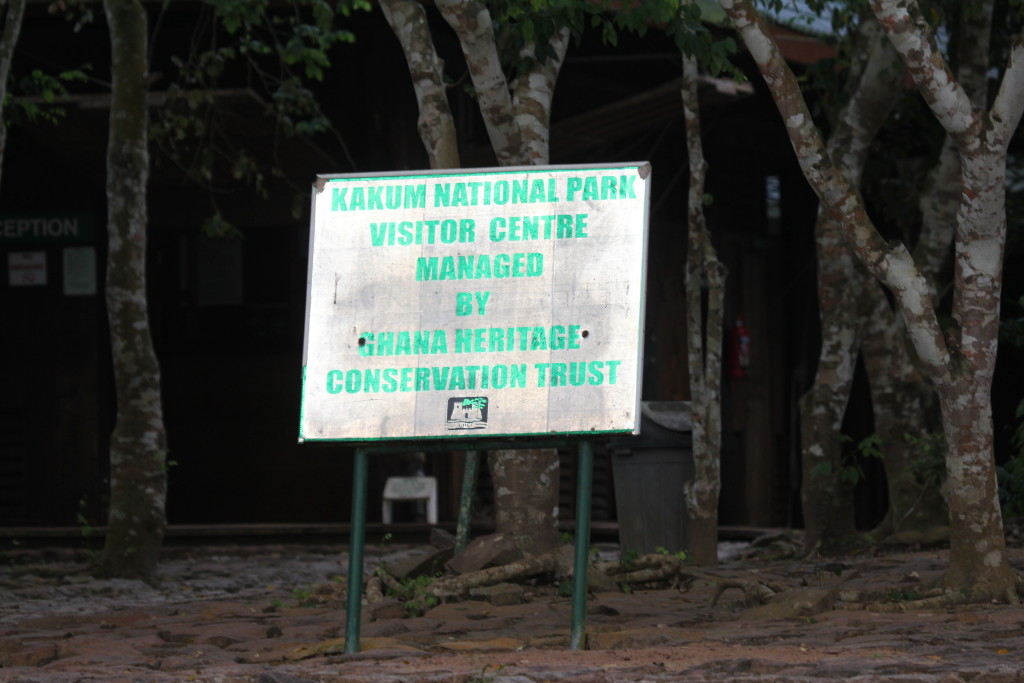
The mini-bus/tro-tro will let you out by this sign and the one below.  Walk up the path to the guard and pay 1 Cedi per person entry.

IMG_6059 IMG_6060

The first time we took a taxi not knowing how close the park actually was.  It cost 10 Cedis.

IMG_5922

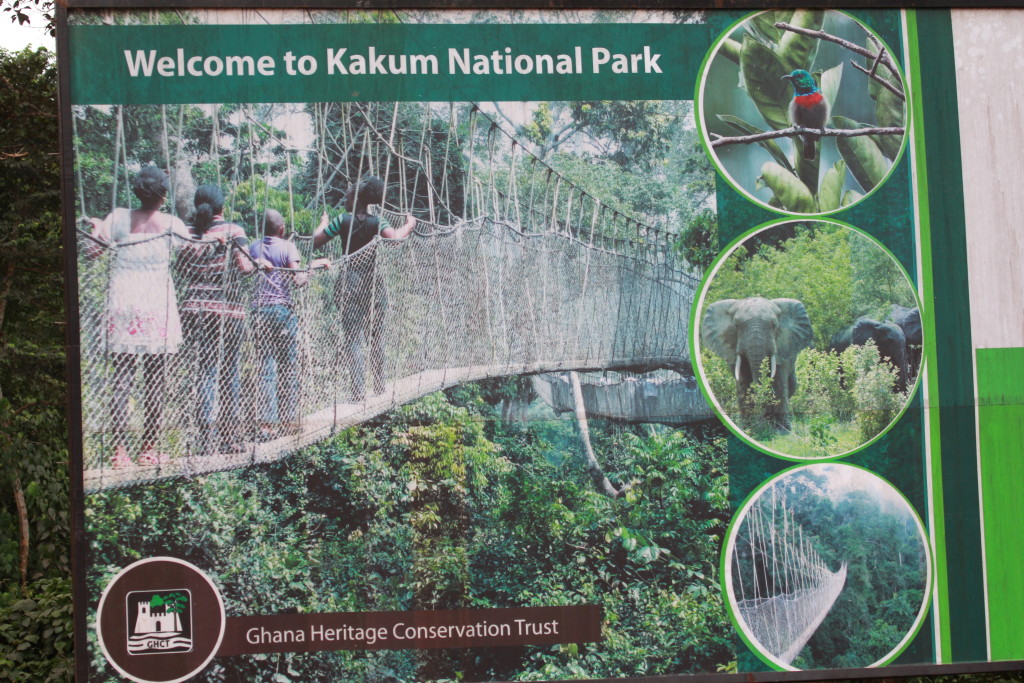
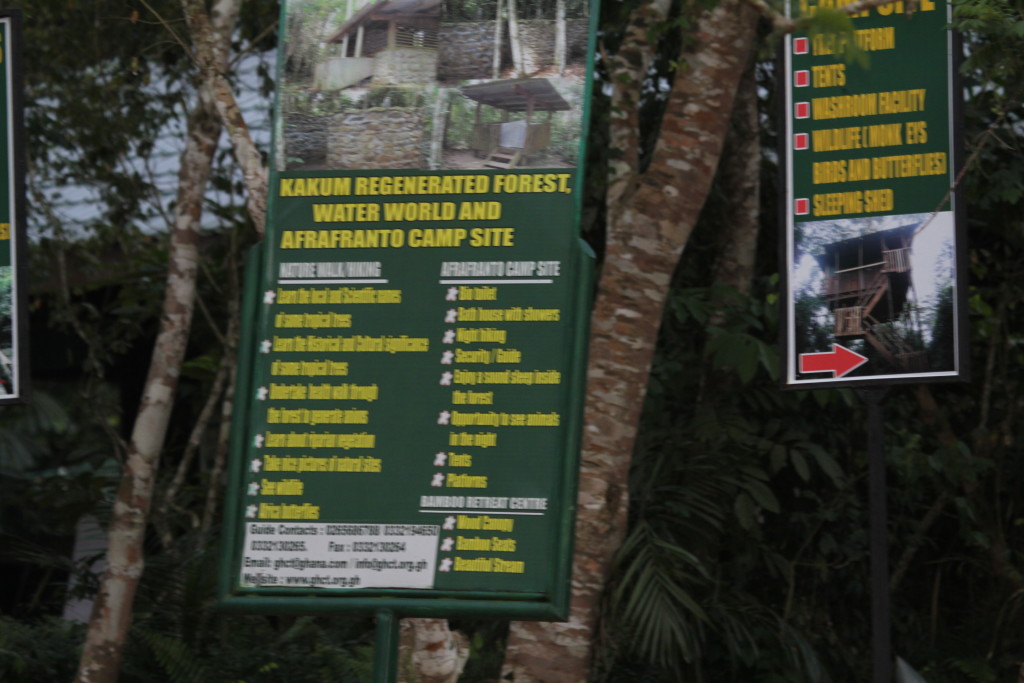
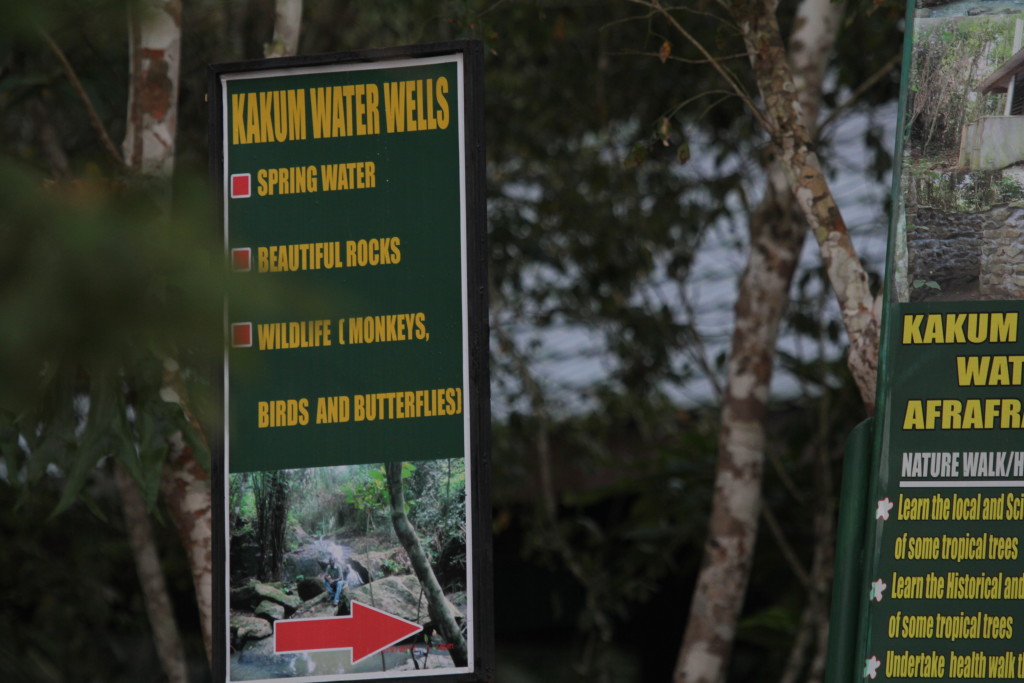
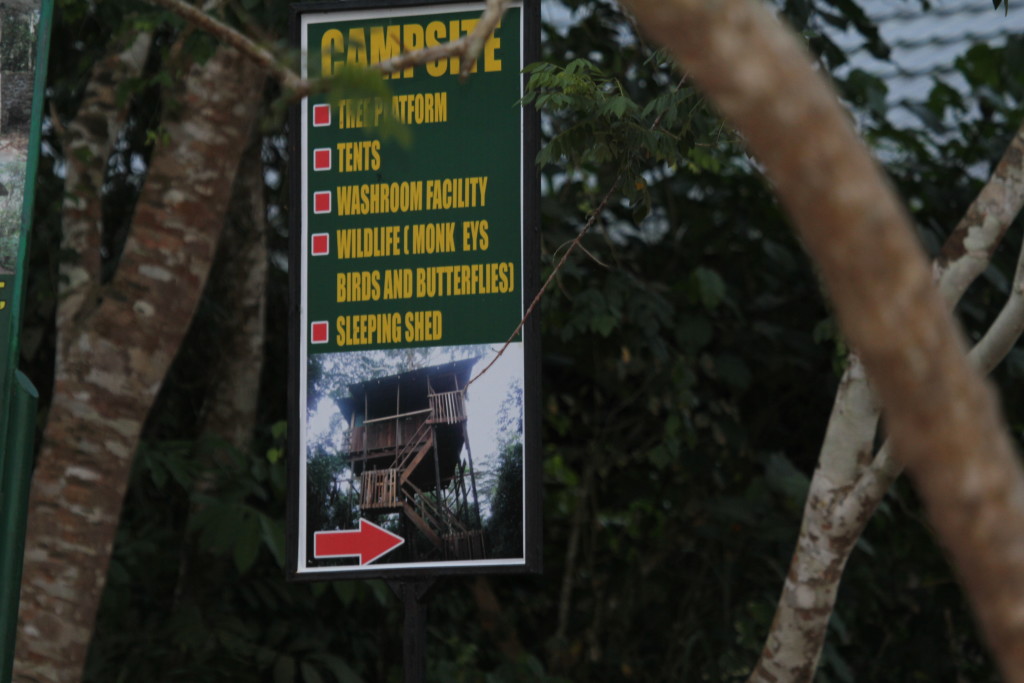
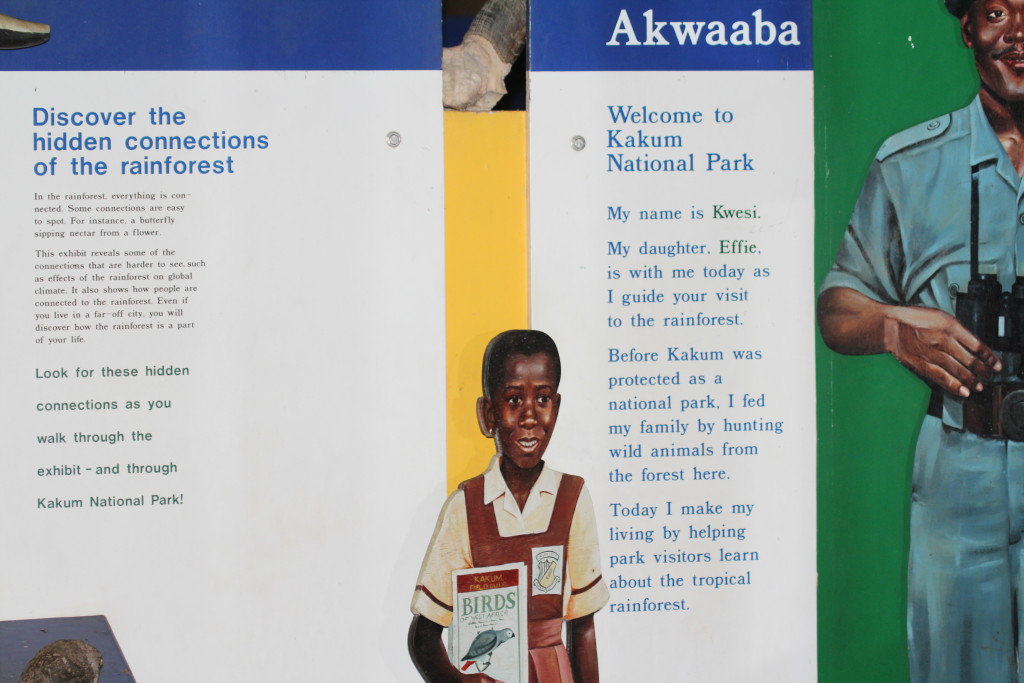
As you enter, there are signs telling you what the park has to offer.  I didn’t really look at the camping side of things as at my age I want a roof over my head!

IMG_5923 IMG_5924 IMG_5925

The reception is where you pay your entry fee.

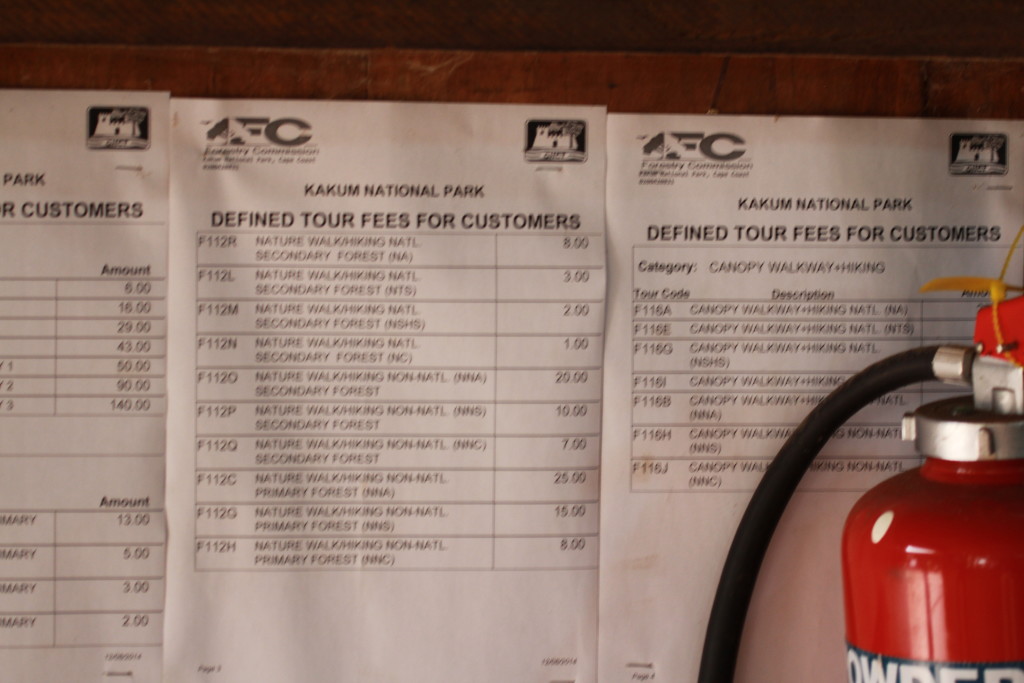
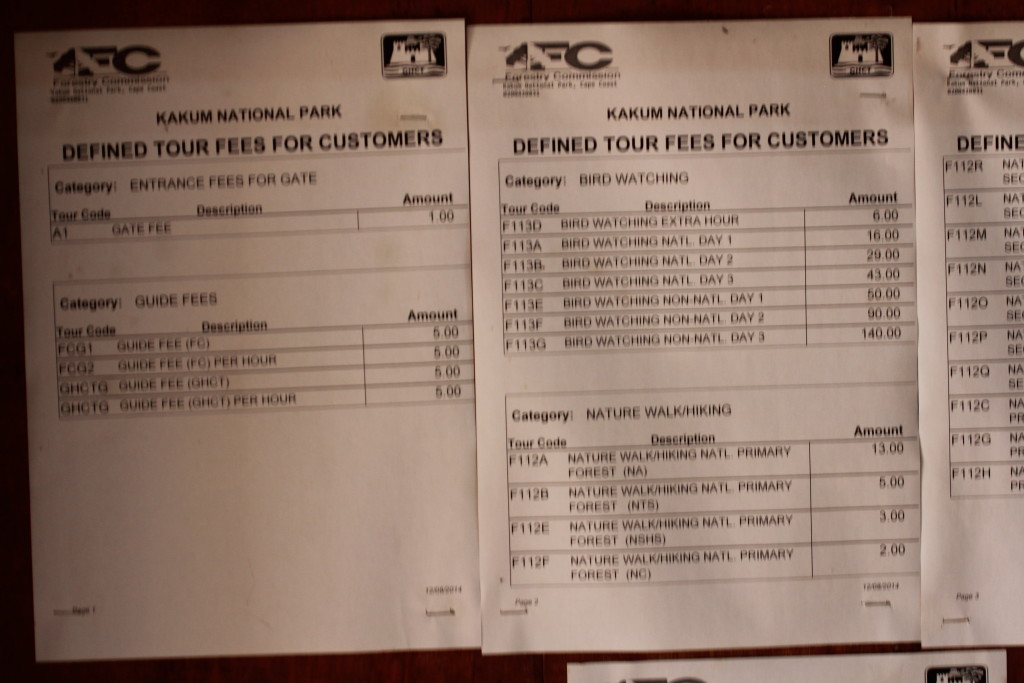
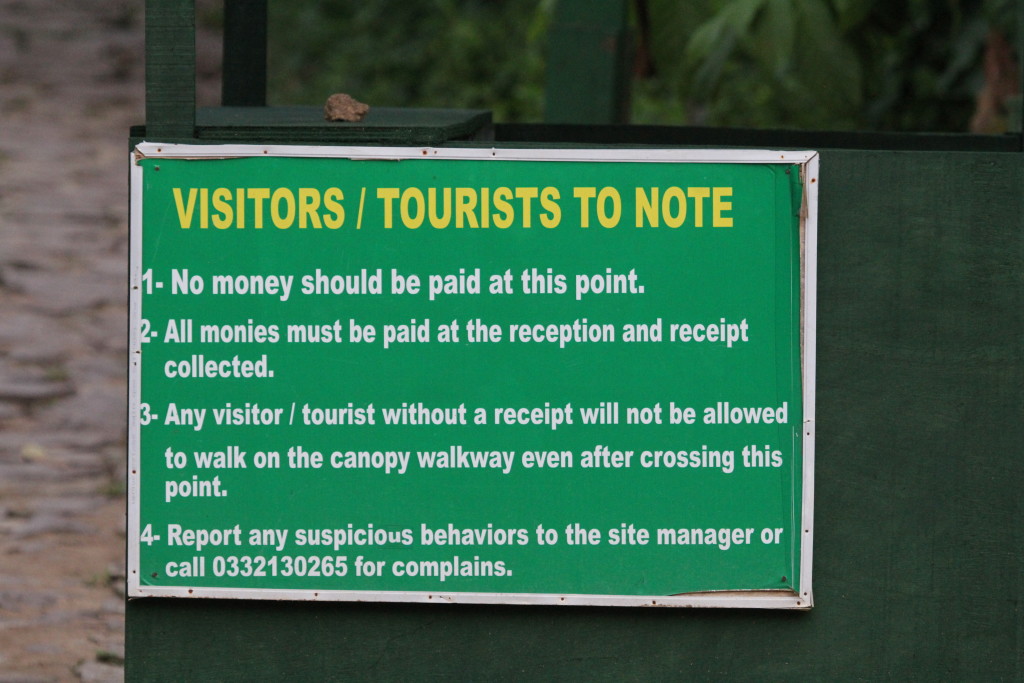
IMG_5926Here are the fees as of November 2014.  Take note that there are higher fees for birdwatching as opposed to just visiting the canopy walkway.  I can’t figure that one out.  Everyone walks up the same path.  Everyone enters the same canopy walkway and has access to the same platforms.  So I have no idea why “birdwatching” costs more!  These fees don’t include the guide, you can see the guide fees below.

In our situation, we arrived around 6:30 and the office hadn’t opened yet.  A couple of guides arrived around 7am and they arranged with the guard to let us in with the promise to pay all the fees after we came back so we could enter right away.  An international birding tour group was already inside, they had left the lodge around 5:30 and pre-arranged tickets and a guide.  When we got back, the guide told the reception we were birdwatchers and they charged accordingly.

While we were there, a few local tour groups came through, judging by their small cameras and lack of binoculars, they weren’t bird watchers but they walked the exact same bridges we did.  So it’s just strange they have higher prices, what do they do if you pay as a normal tourist and happen to see birds while you are up there?  The regular tourists were looking at the same birds we were looking at.  Other than lizards and scenic views, there is nothing to see BUT birds!

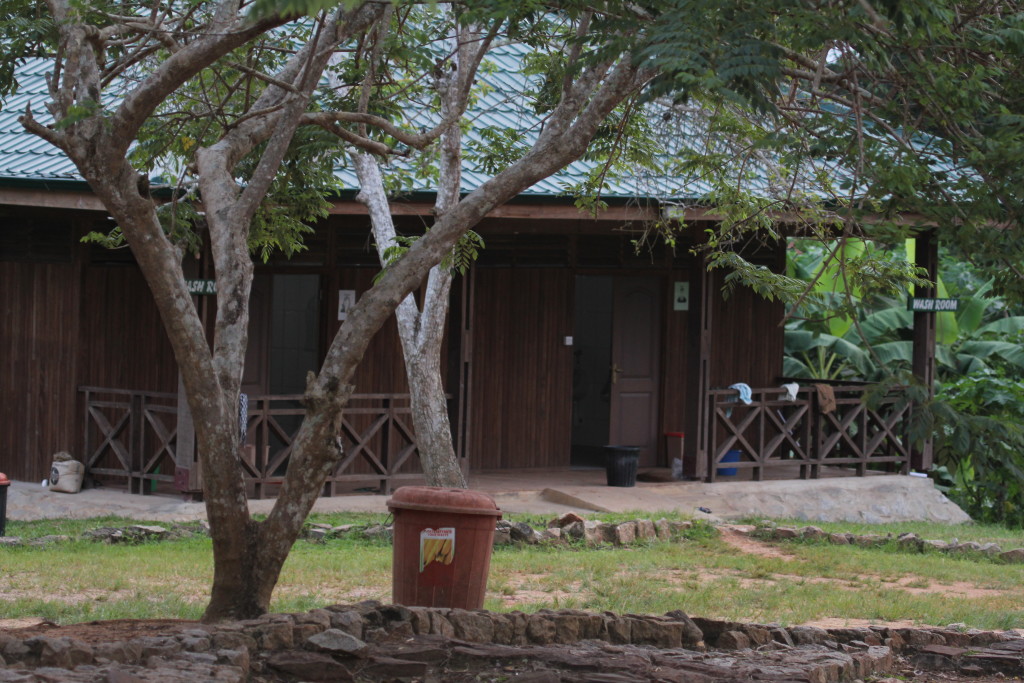
IMG_6016 IMG_6015The restrooms

IMG_5927

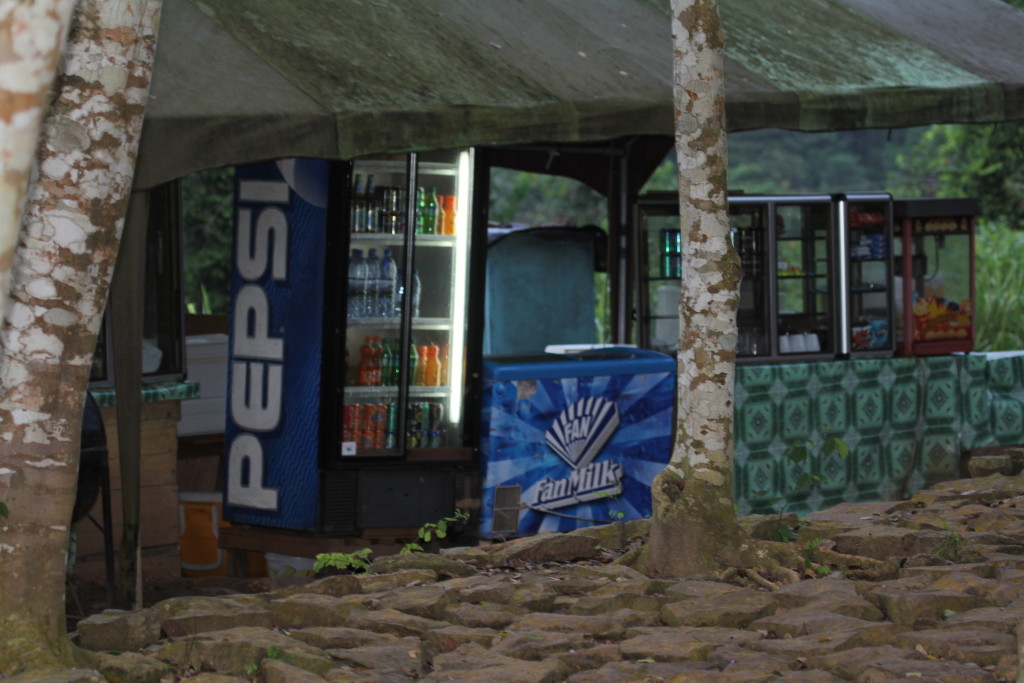
A snack bar

IMG_5928

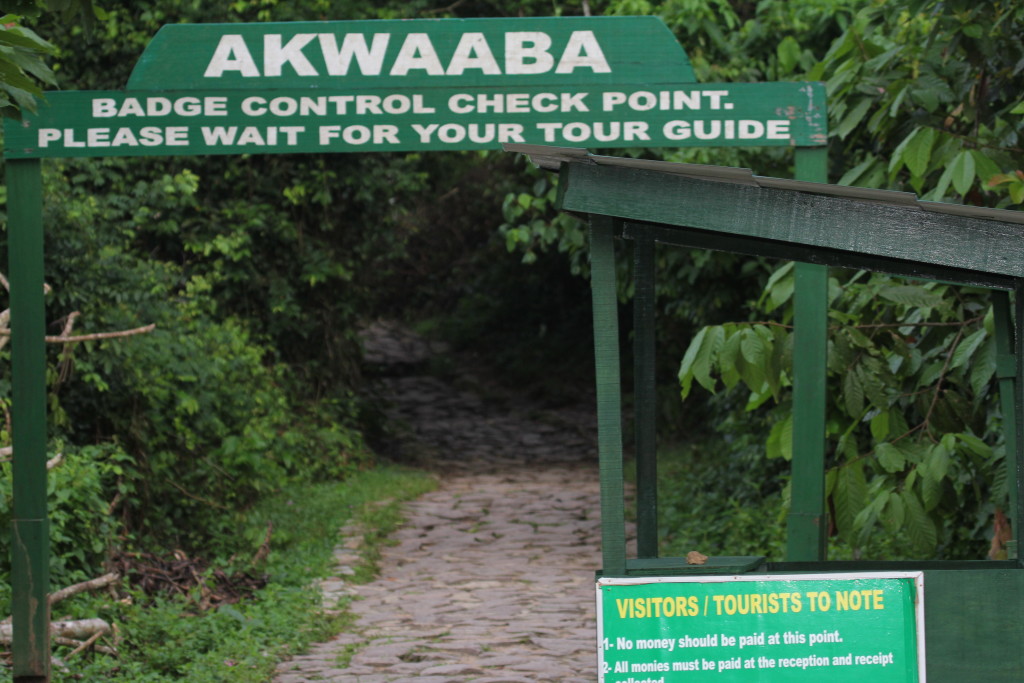
Welcome sign

IMG_5929

Entry gate where you show your ticket and head off to the canopy walkway.

IMG_5930 IMG_5931And this is where I will leave you for now, bird pics to follow!


The Ankoririka Circuit, Ankarafantsika

I’m going to qualify this post with a caution that I think this is the circuit we did the 2nd morning.  It could also have been the Retendrika Circuit as that one seems to be in the same area.   I am going from the description of the birds we saw there and the one from the website.  If you tell them you want to see the Schlegel’s Asity, they will take you to this place.

Duration : 3h
Distance : 9 km  (Don’t panic, you won’t have to walk that far if you are only after the Schlegel’s Asity)!

Guidance :
Ar 25,000 for 1 to 5 persons/day
Ar 37,000 for more than 7 persons / day

IMG_5366

IMG_5688

Another birding group was also looking for the bird.  That was a good thing as their guide found the Asity first and alerted our guide.  It’s nice how they work together!

IMG_5692

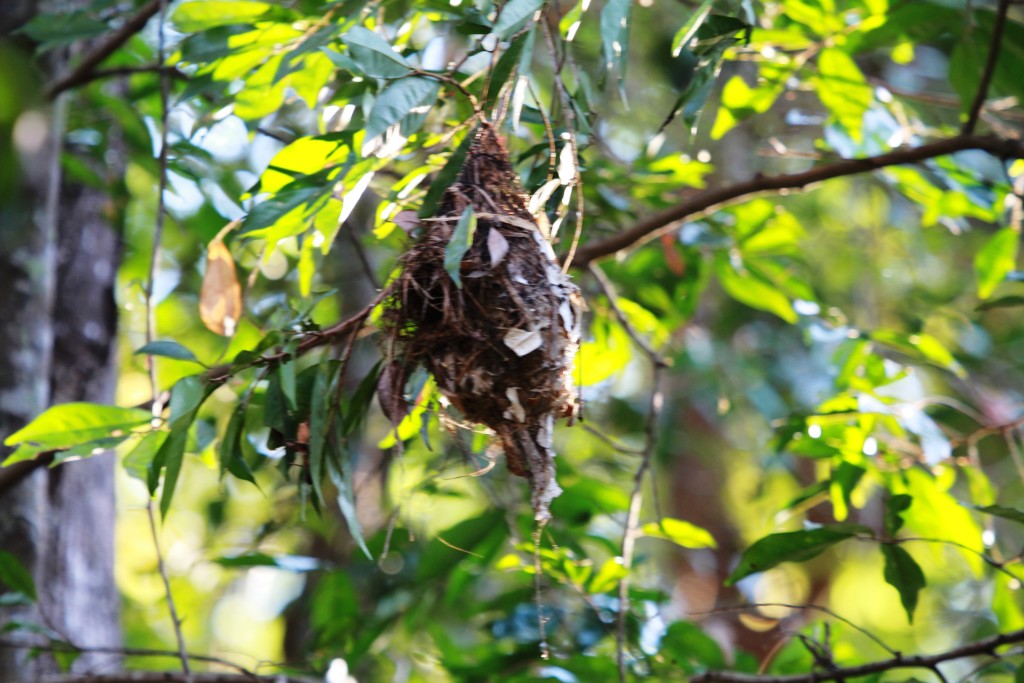
The nest of the Schlegel’s Asity

IMG_5693

And there he is, in all his glory!  This Schlegel’s Asity was super-cool and he knew it!  He posed for the whole group, turning his profile both ways and just showing off!
IMG_5697 IMG_5700 IMG_5702 IMG_5707 IMG_5709

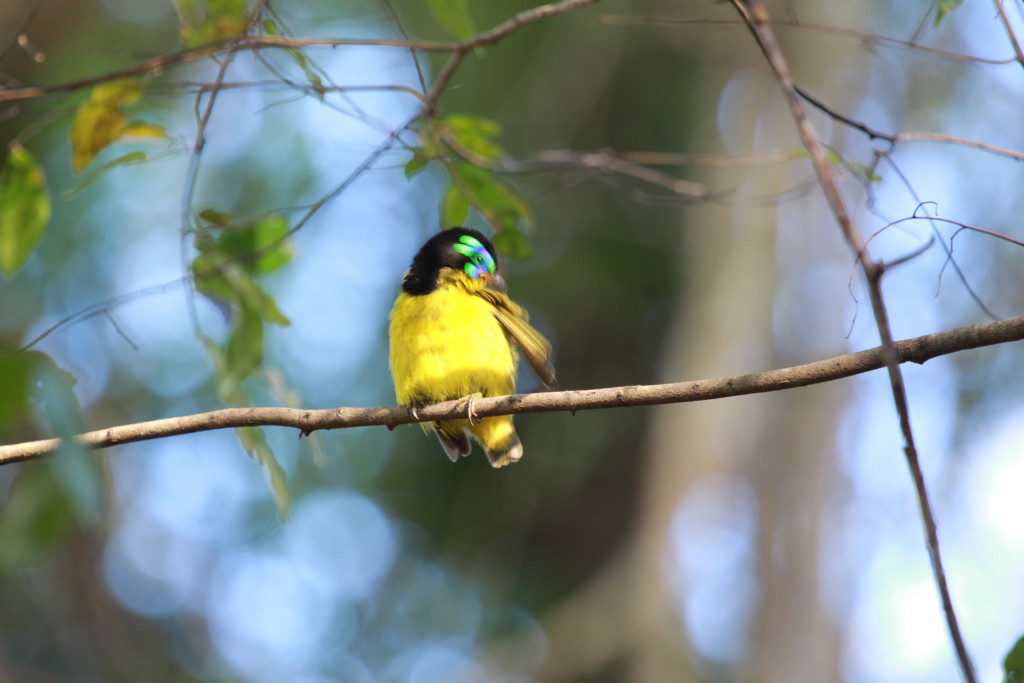
The group moved off through the bush, the next target would be a White-breasted Mesite.

IMG_5715

We did eventually find one in the bush but he scurried off before I could get a decent shot.  You can’t win ’em all!

IMG_5719 IMG_5722

Malagasy Bulbul

IMG_5723

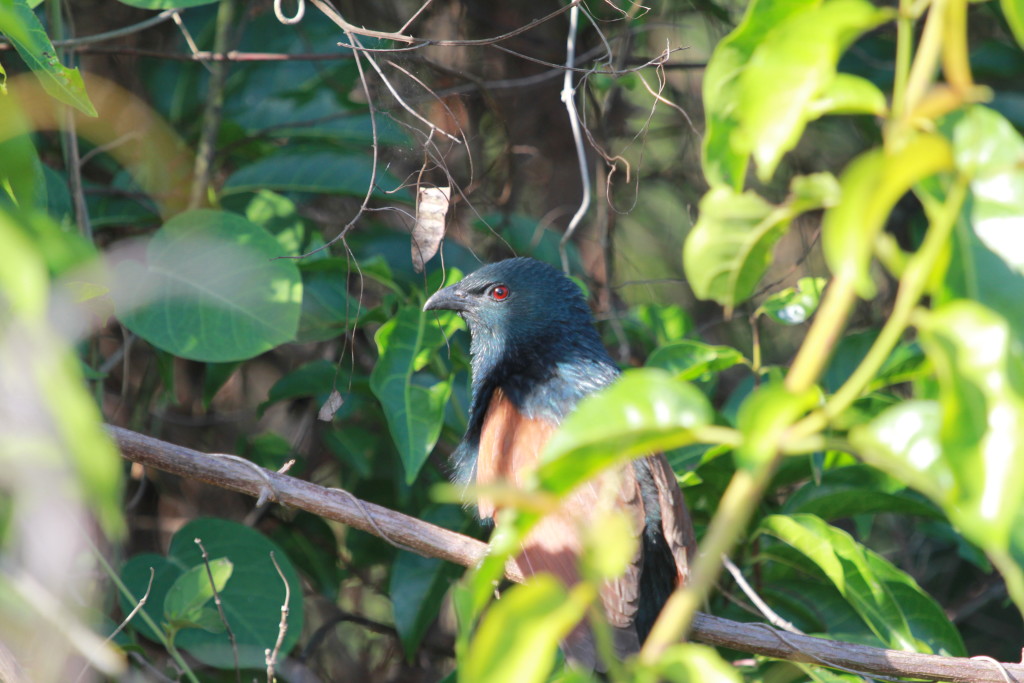
Malagasy Coucal

IMG_5726 IMG_5727 IMG_5728 IMG_5729

The World’s Most Interesting Car Park – Ankarafantsika NP, Madagascar

How many people come to an eco-tourism blog and expect to have a car park recommended as a birding hotspot?  Now what if I told you that you could see not only several endemic species of birds but several species of lemur?  Yes please, drive on in to the Ankarafantsika NP’s car park!

Let’s start with the birds.  These photos were taken over two days, some in the morning, some around lunch time and some in the evening, just whenever we weren’t in the actual park.

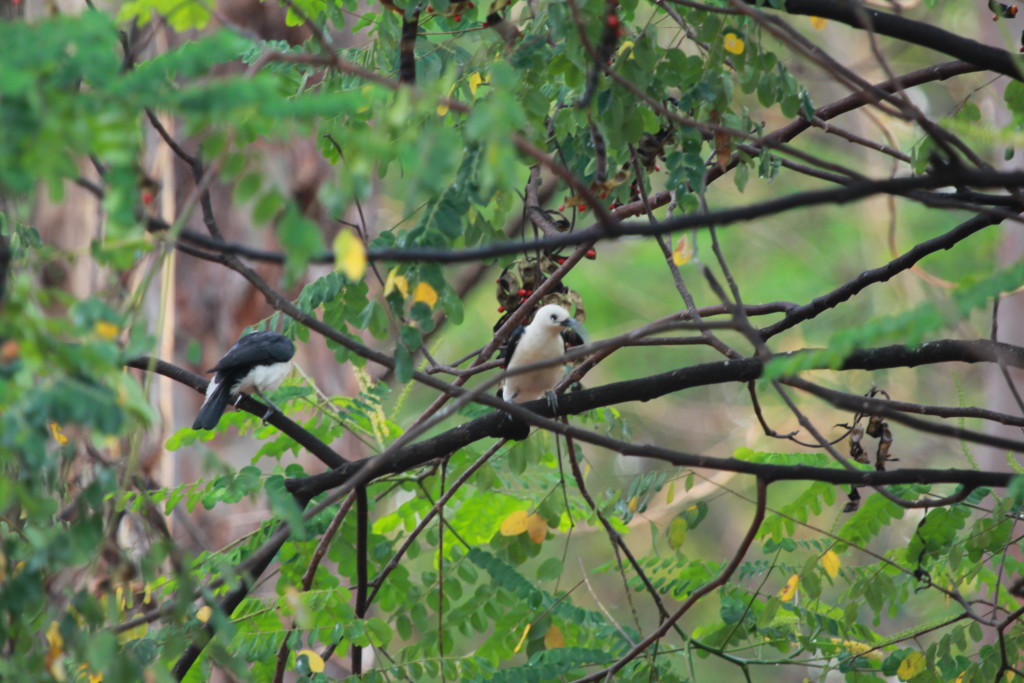
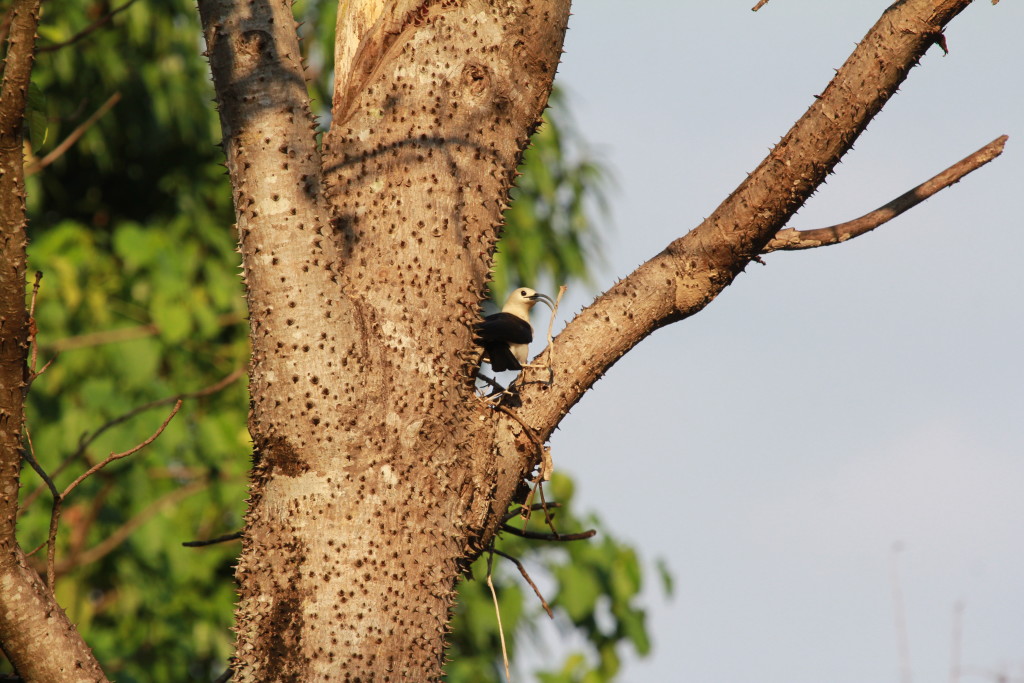
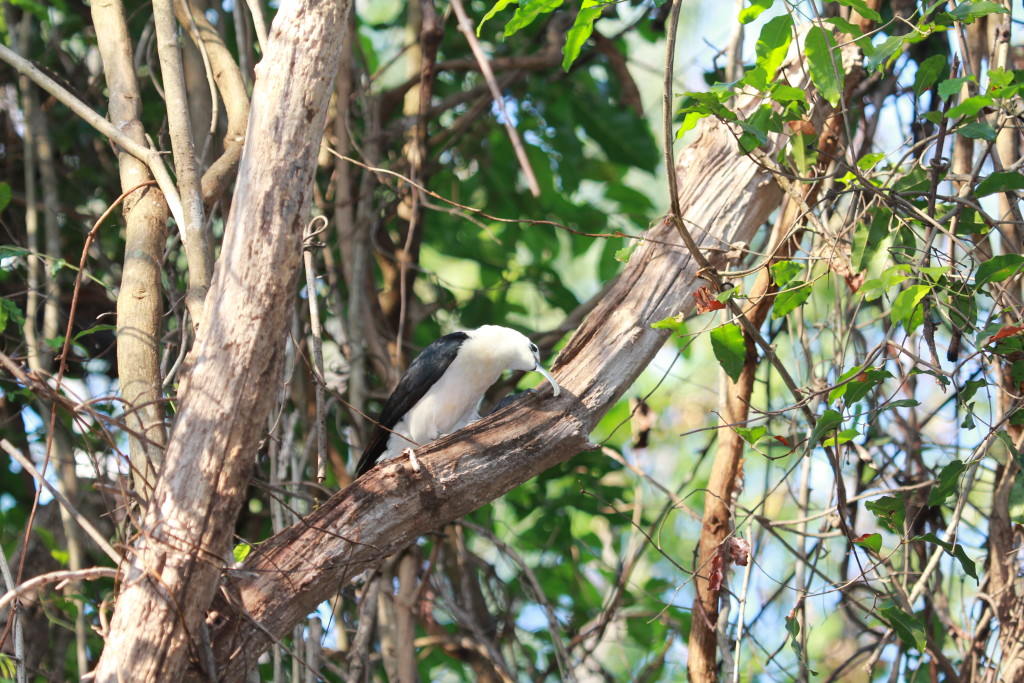
White-headed Vanga

IMG_5296

Sickle-billed Vanga

IMG_5344

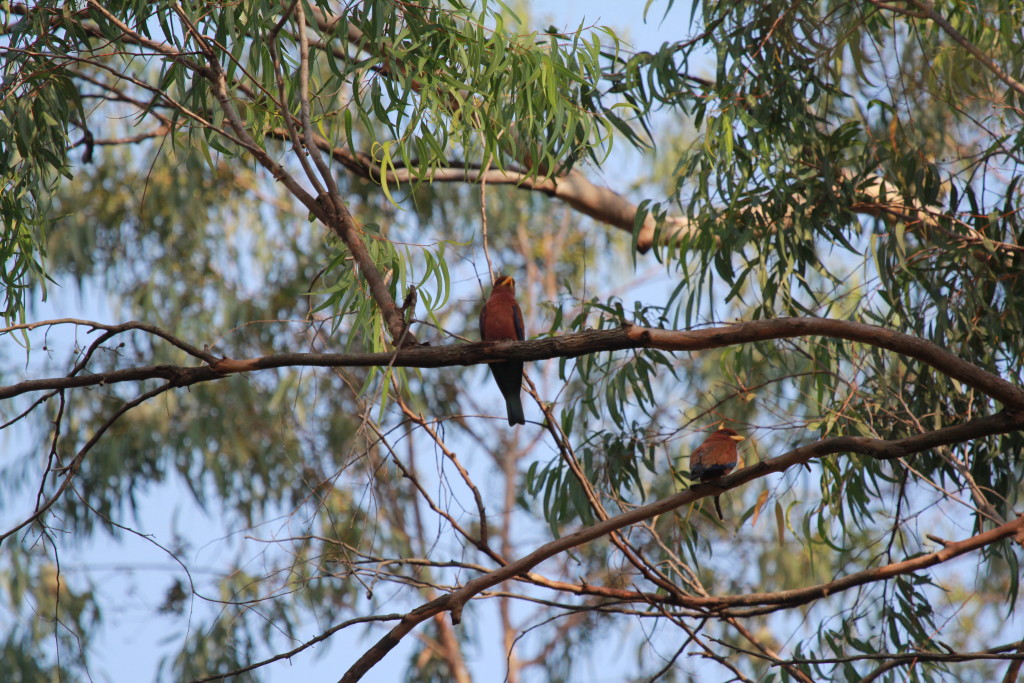
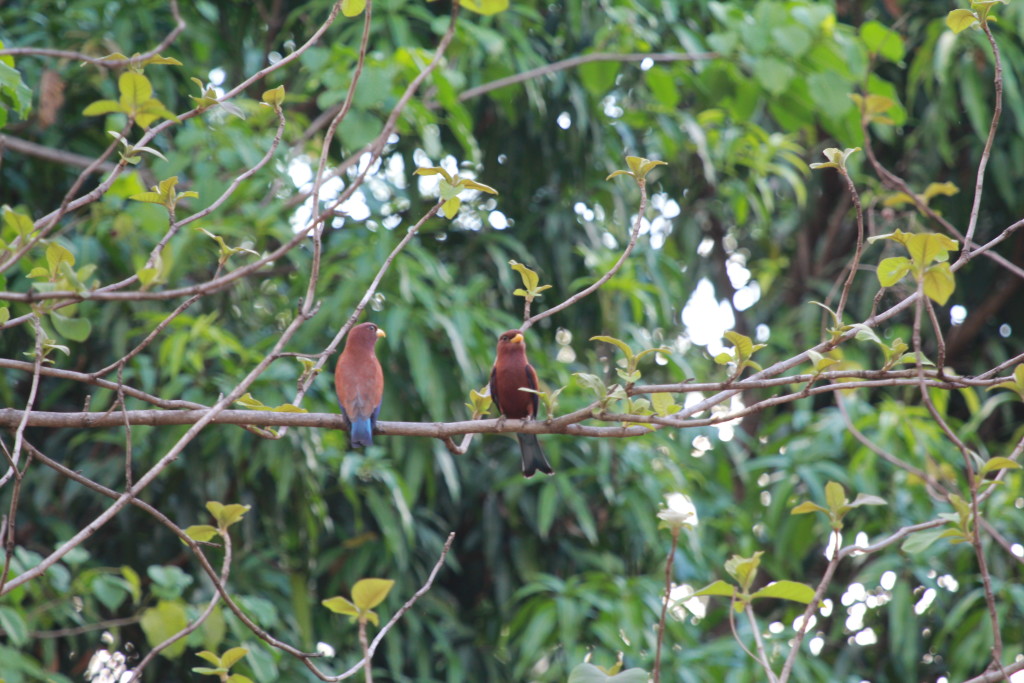
Broad-billed Rollers

IMG_5355 IMG_5356

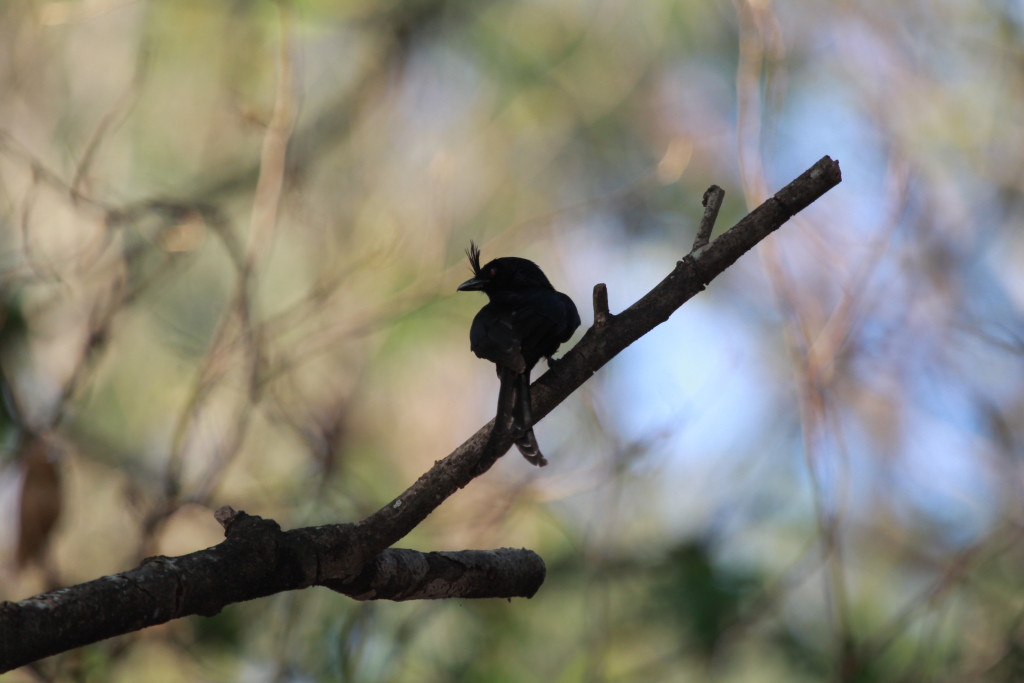
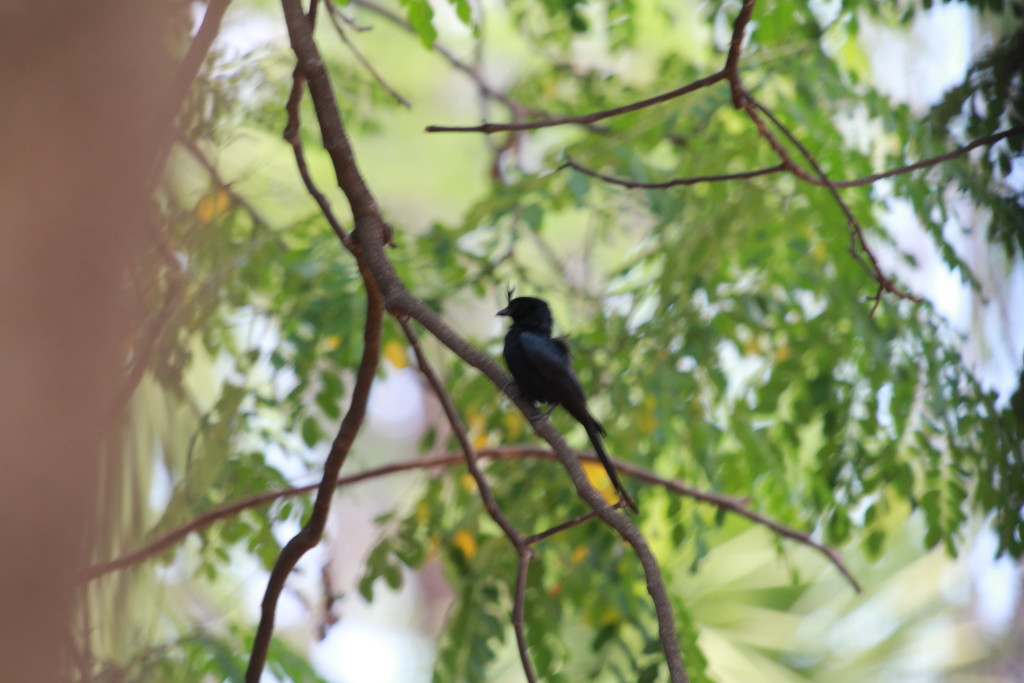
Crested Drongo

IMG_5364 IMG_5373

Sickle-billed Vanga

IMG_5375 IMG_5376

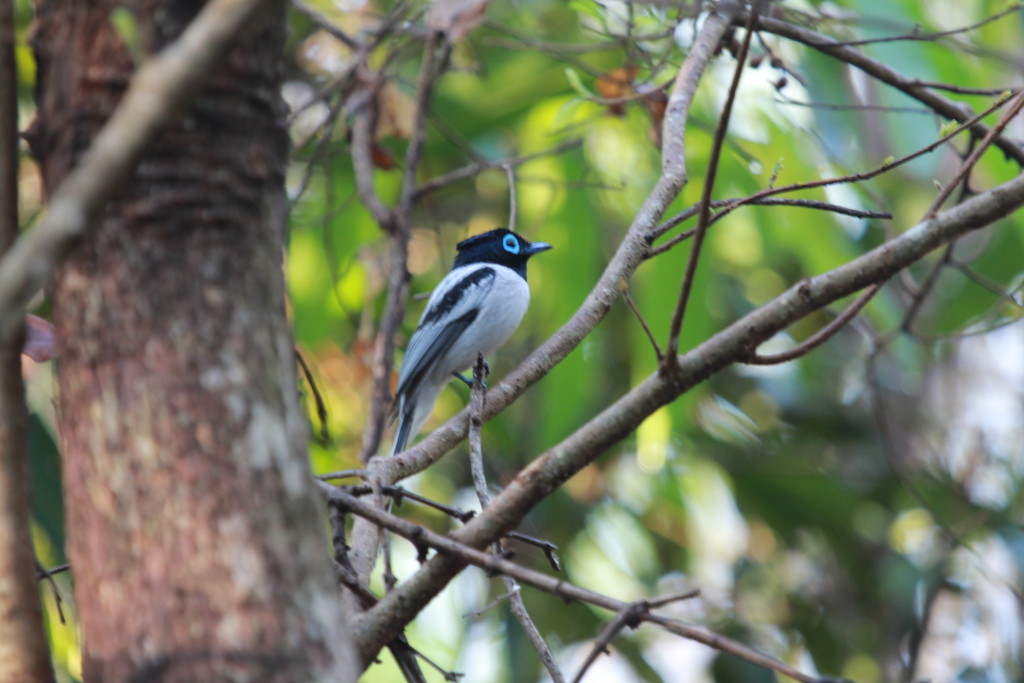
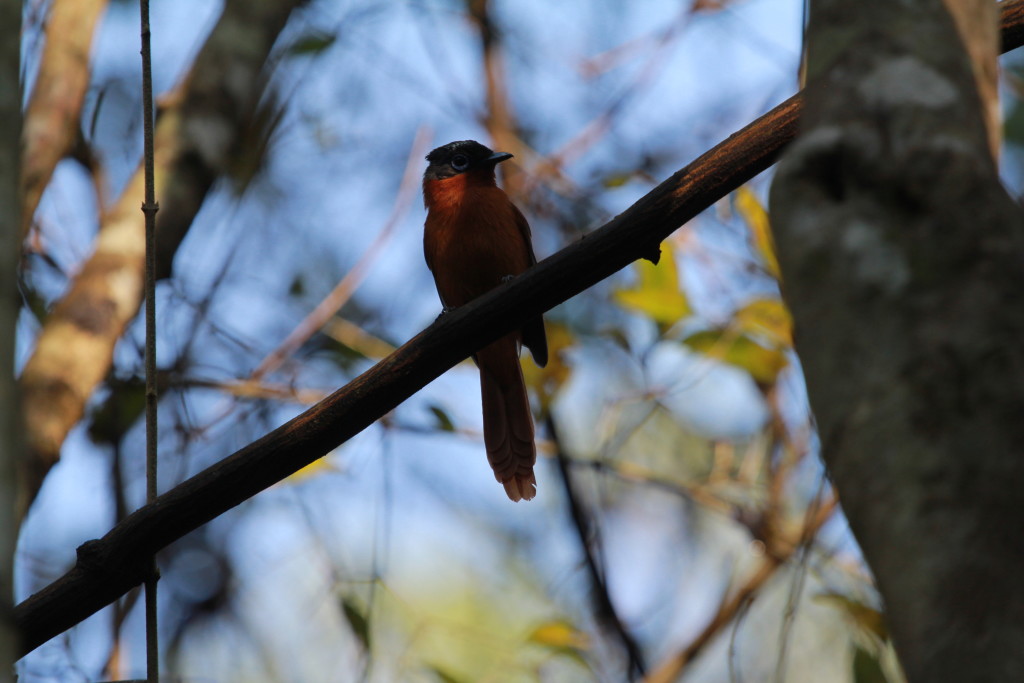
Malagasy Paradise Flycatcher

IMG_5381

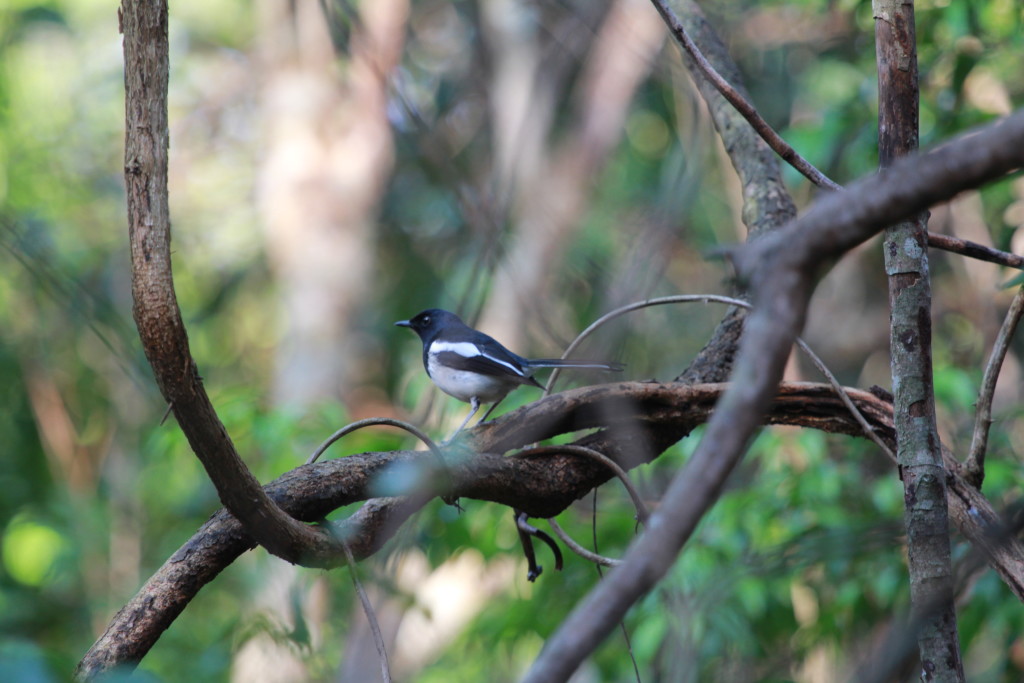
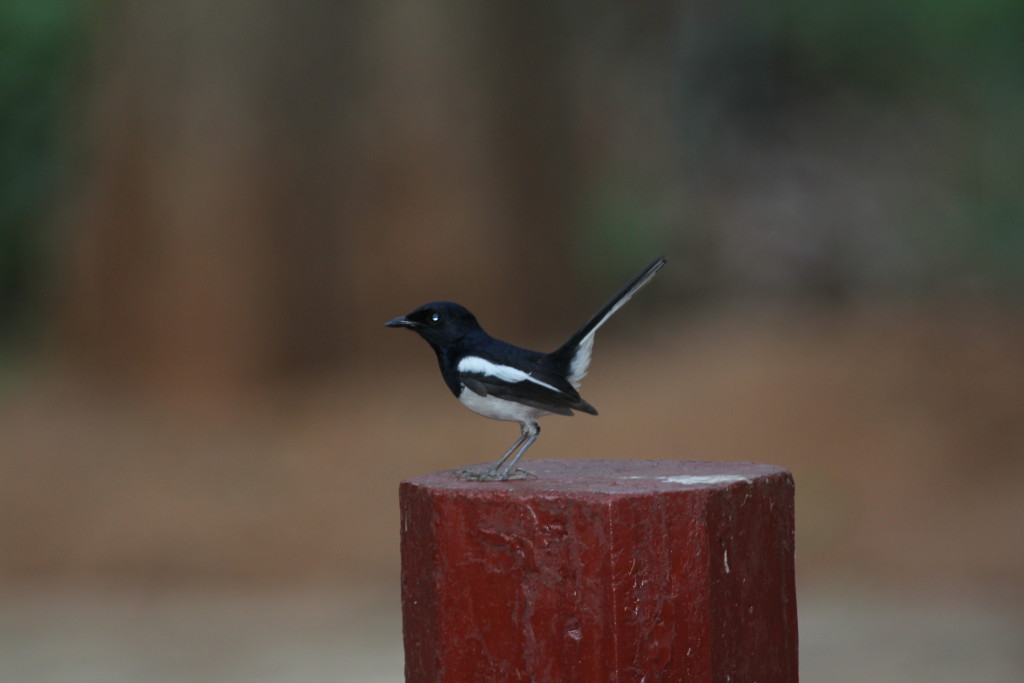
Magpie-robin

IMG_5384

Malagasy Coucal

IMG_5386

Madagascar Turtle-dove

IMG_5519 IMG_5533

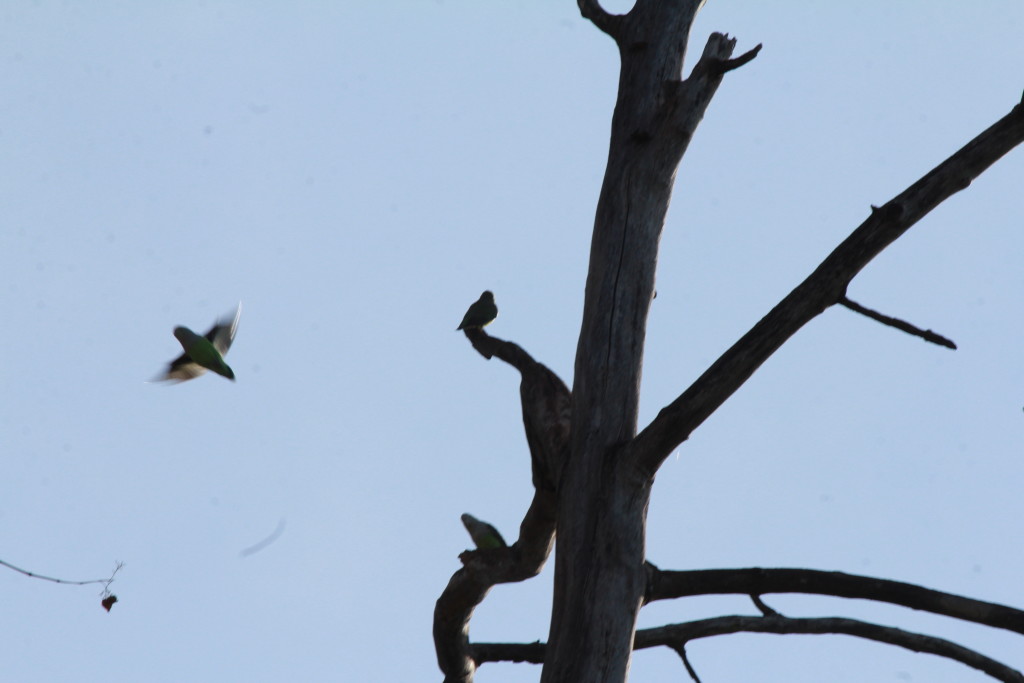
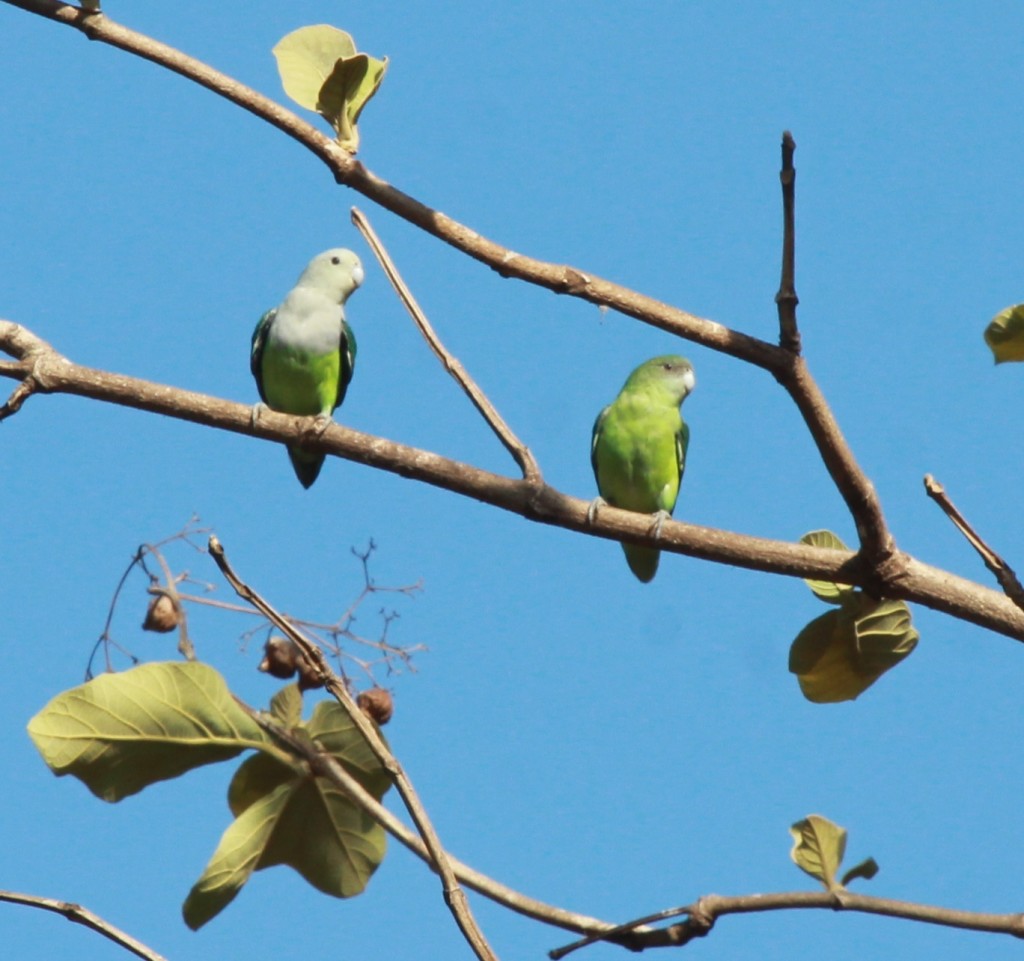
Grey-headed Lovebirds

IMG_5539 IMG_5543 IMG_5546 IMG_5562

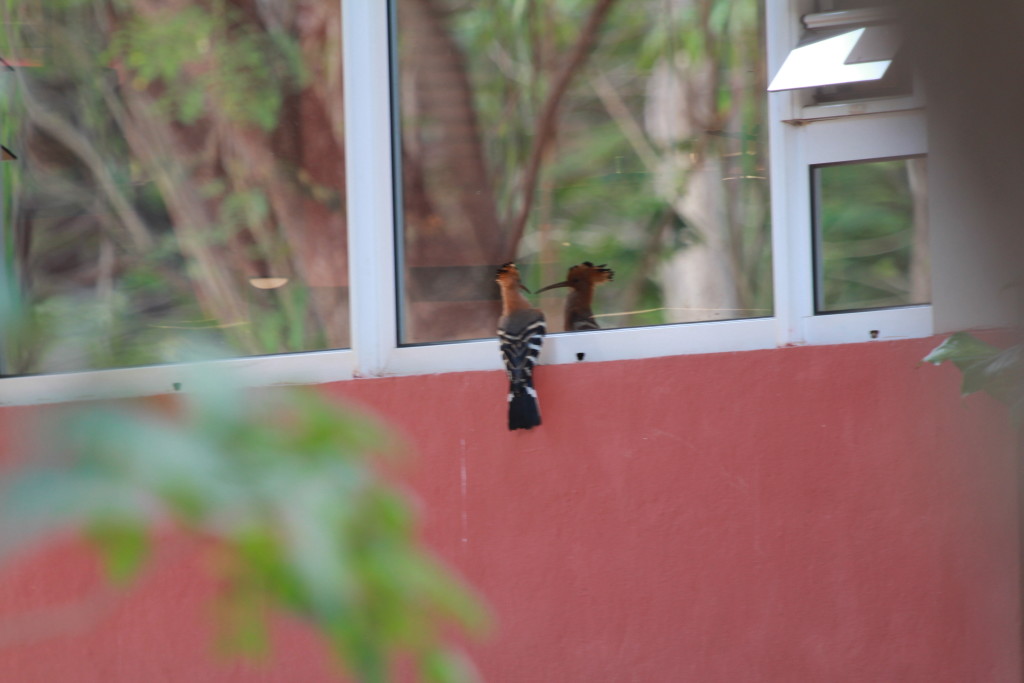
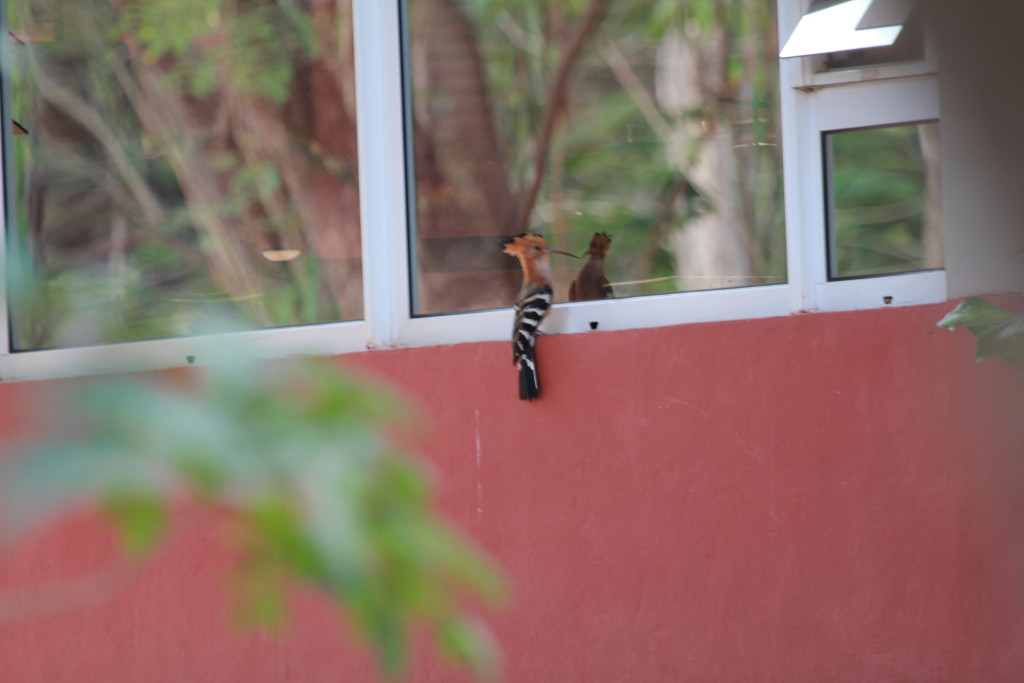
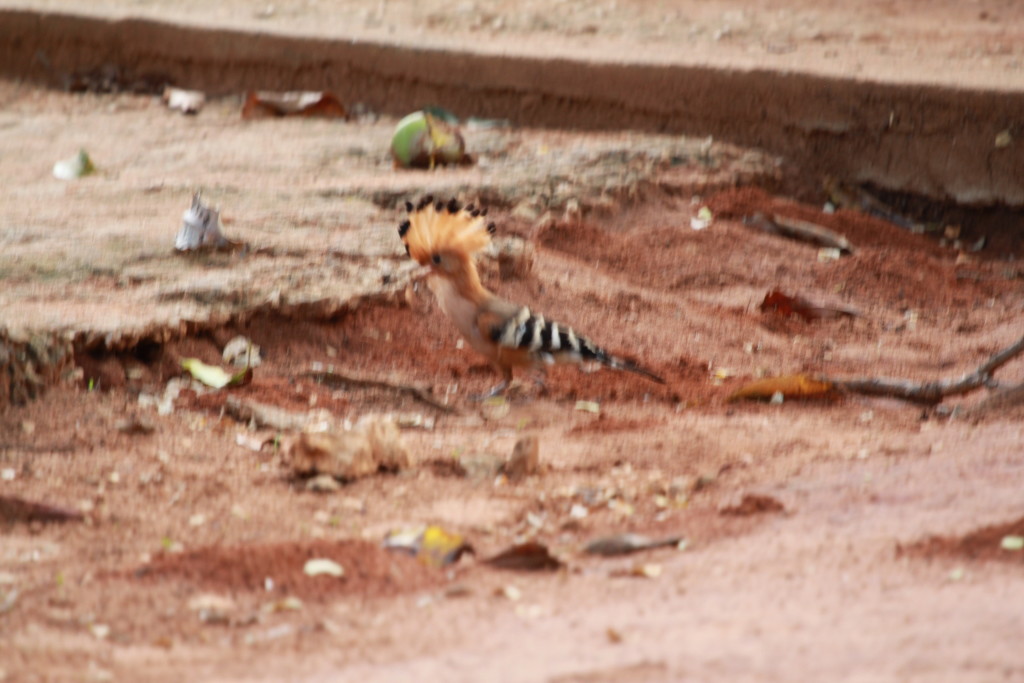
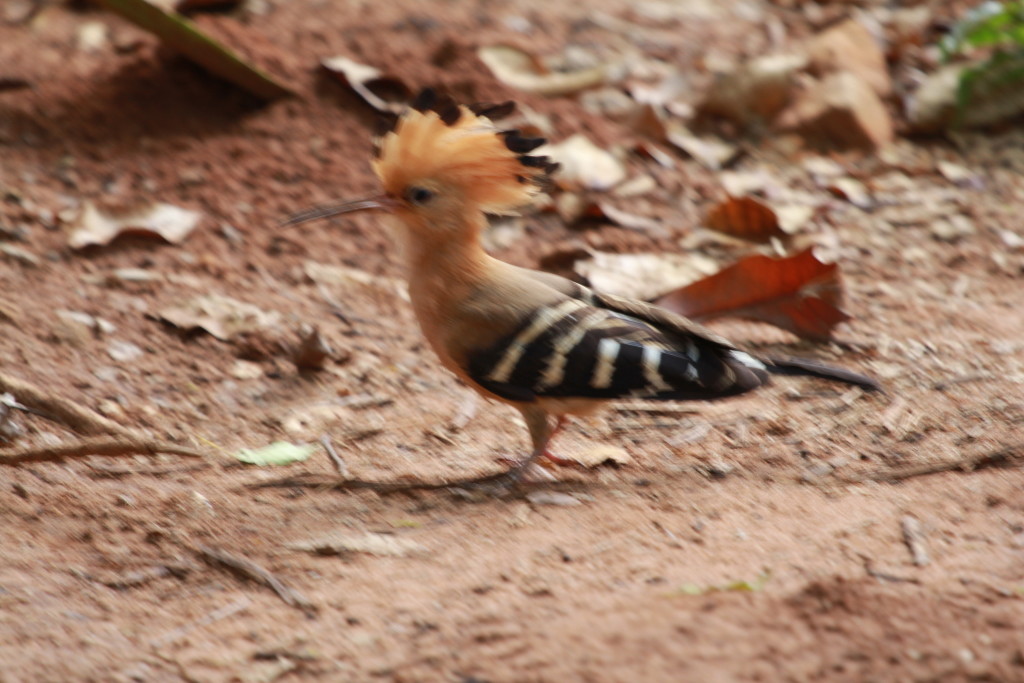
A Madagascar Hoopoe checks out his appearance, maybe he has a hot date?

IMG_5649 IMG_5651

Satisfied he is looking his best, he’s off and running.

IMG_5652

Broad-billed Rollers


IMG_5654

Meanwhile, has the Hoopoe been stood up?

IMG_5659

A Crested Drongo looks on

IMG_5661

A Magpie-robin on a post

IMG_5666

The Grey-headed Lovebirds are there throughout the day.


IMG_5730 IMG_5732 IMG_5735

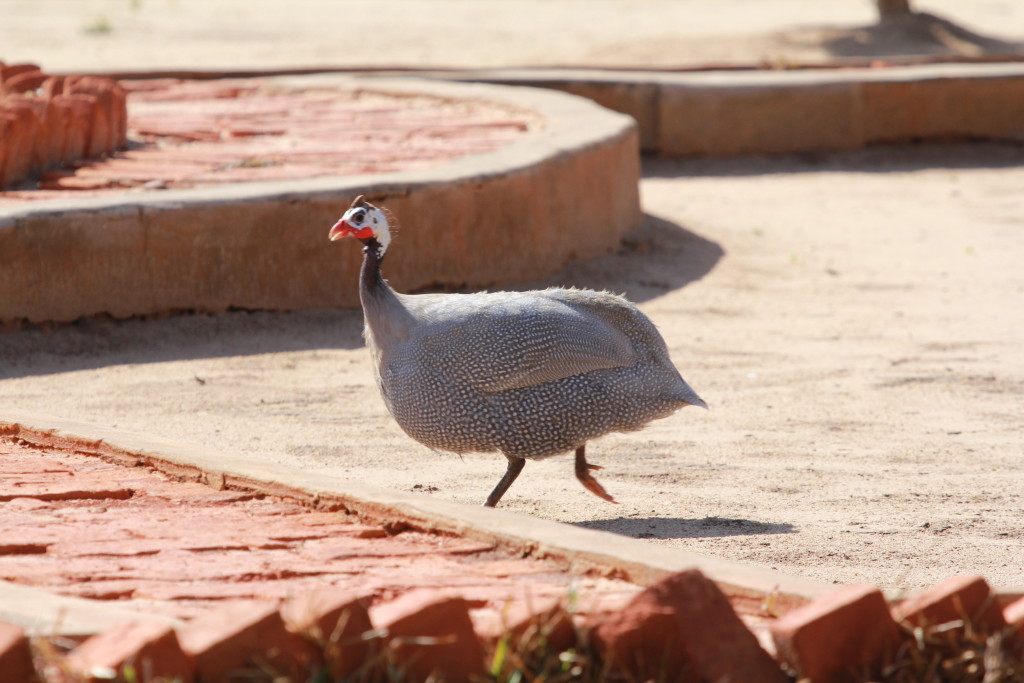
Helmeted Guineafowl

IMG_5743

Across the street, an amorous and shameless pair of Vasa Parrots.

IMG_5756 IMG_5760

Another Crested Drongo

IMG_5764

Finally the Hoopoe’s date shows up – fashionably late!

IMG_5765

The Sickle-billed Vanga can’t help but be a sticky beak!

IMG_5768

And the Hoopoe is alone again, but at least he looks great!
IMG_5769 IMG_5770 IMG_5772 IMG_5773

In tomorrow’s post, we meet the lemurs!
Ankarafantsika – Boat Circuit

After doing a 3 hour hike on the Coquereli Circuit in the morning, we decided to do a more relaxing tour of Lac Ravelobe in Ankarafantsika in the afternoon.

IMG_5366

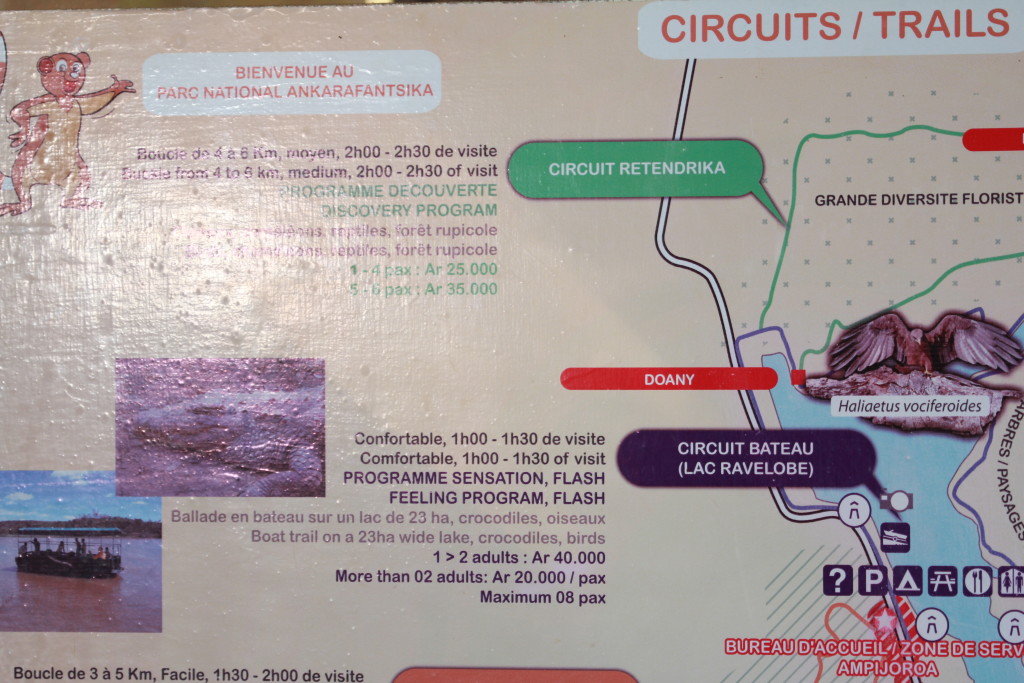
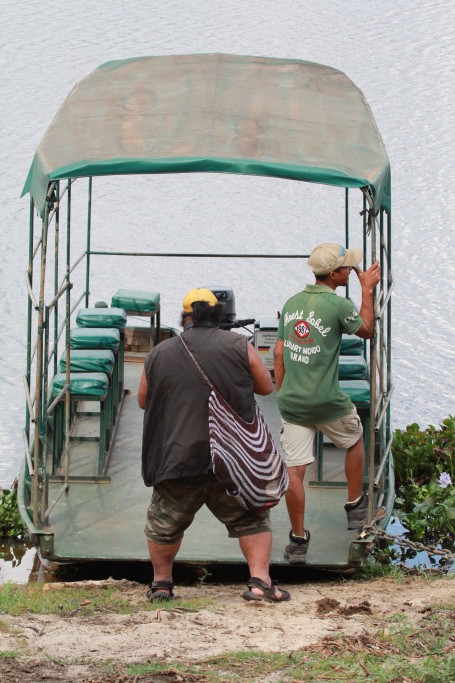
As you can see, the Circuit Bateau on Lac Ravelobe is 20,000 Ariary per person with a 2 person minimum.  As it happened, my husband and I were the only ones on the boat besides the boat driver and the guide.

IMG_5602

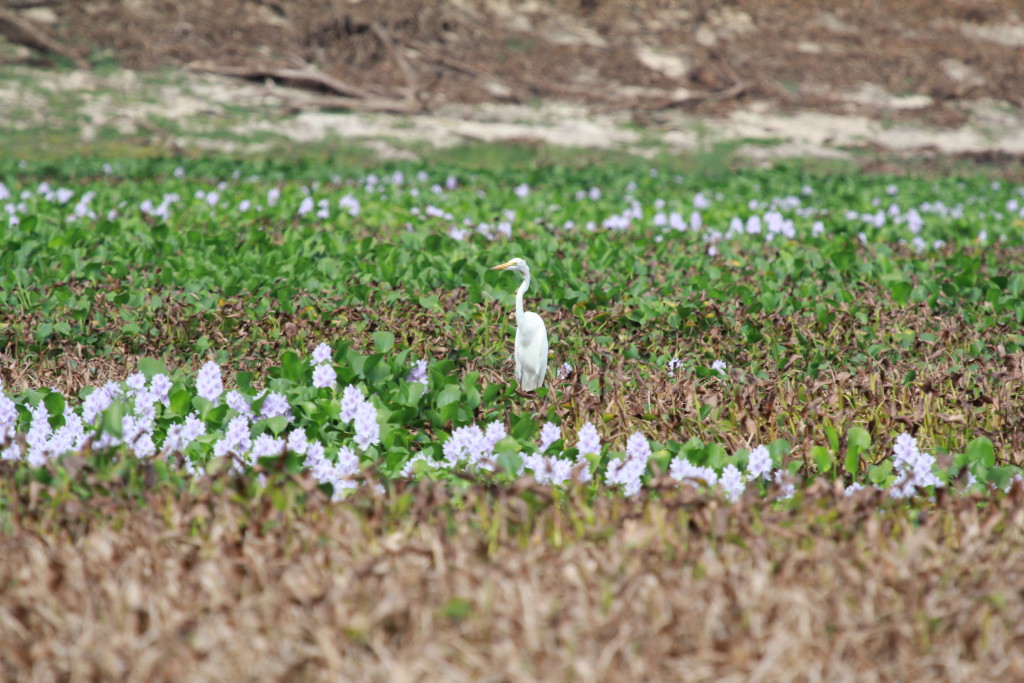
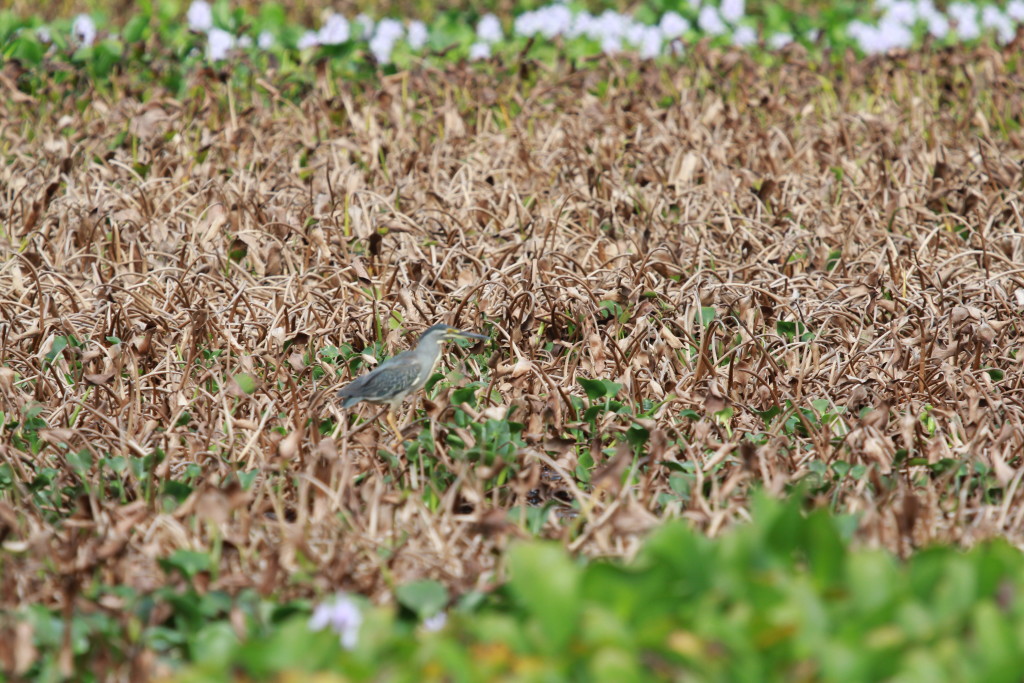
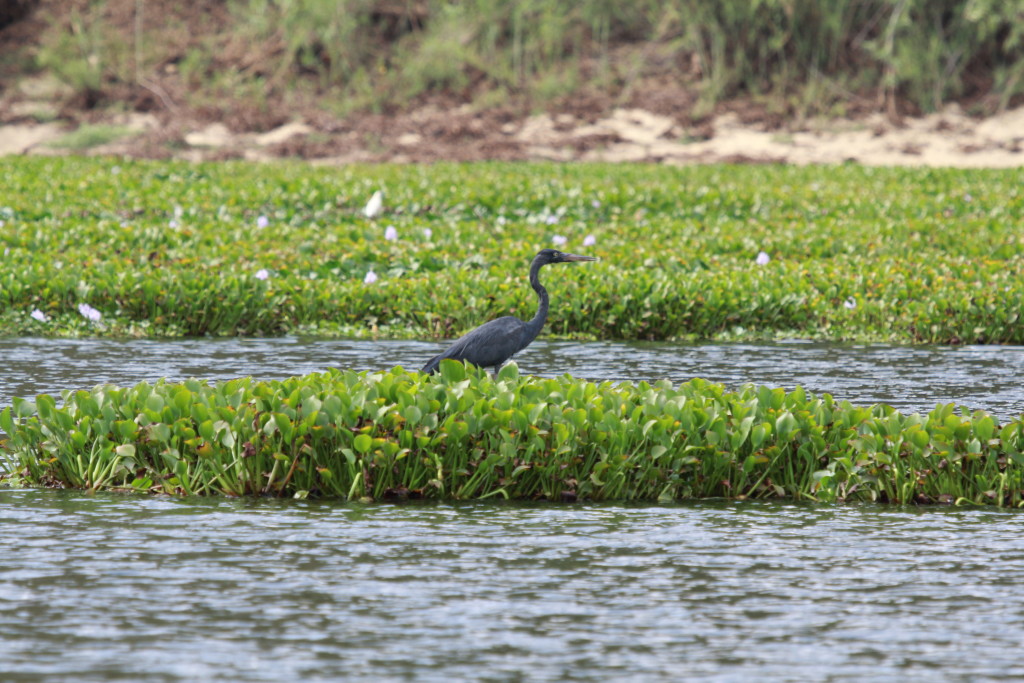
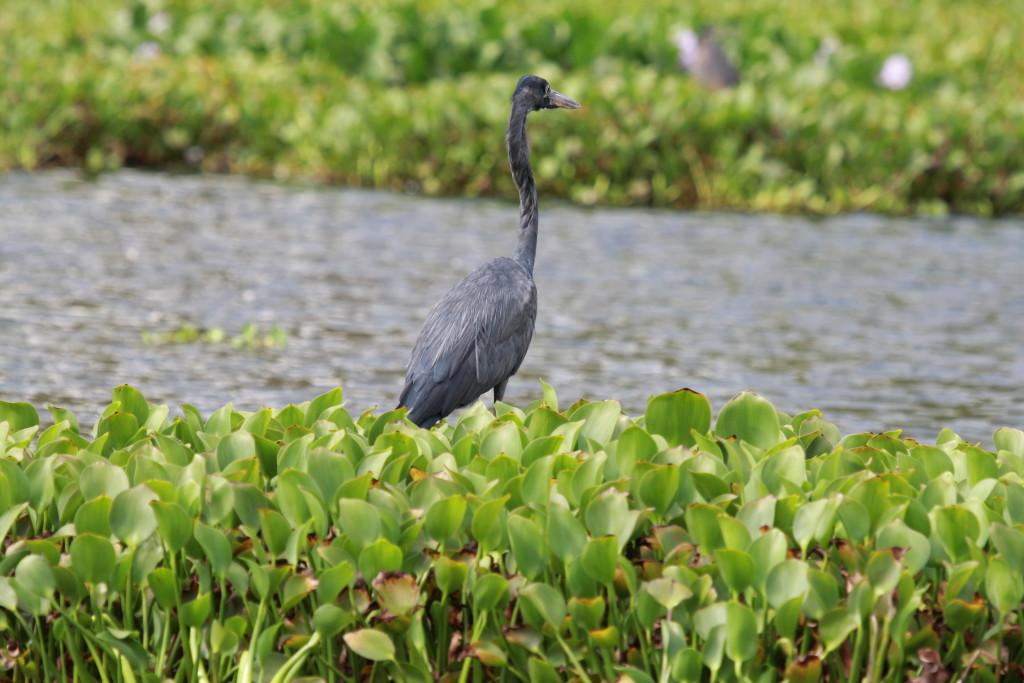
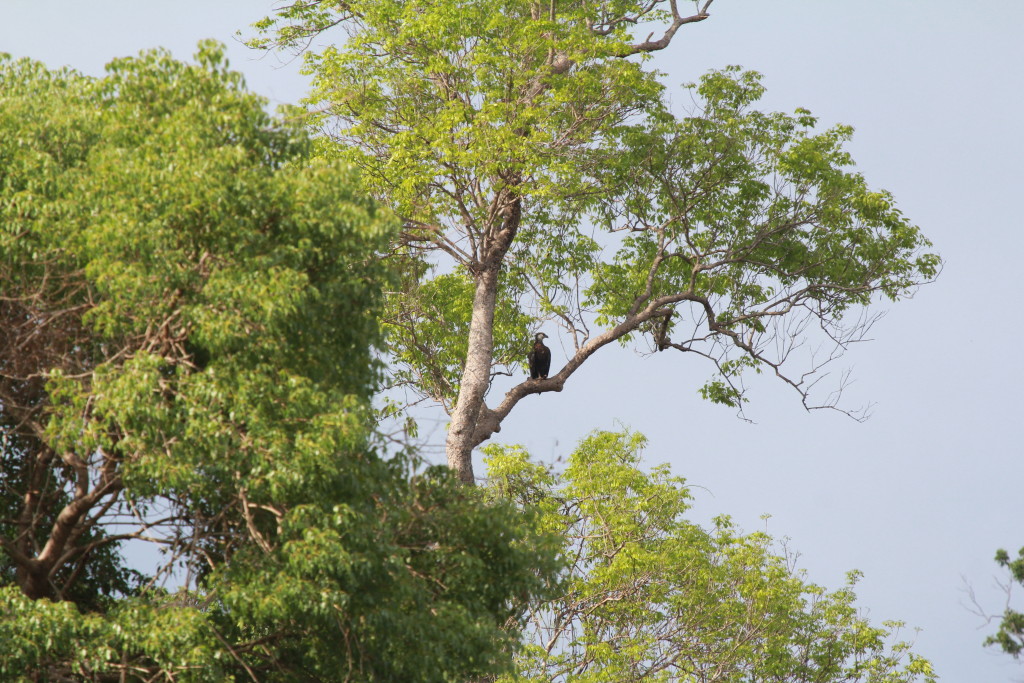
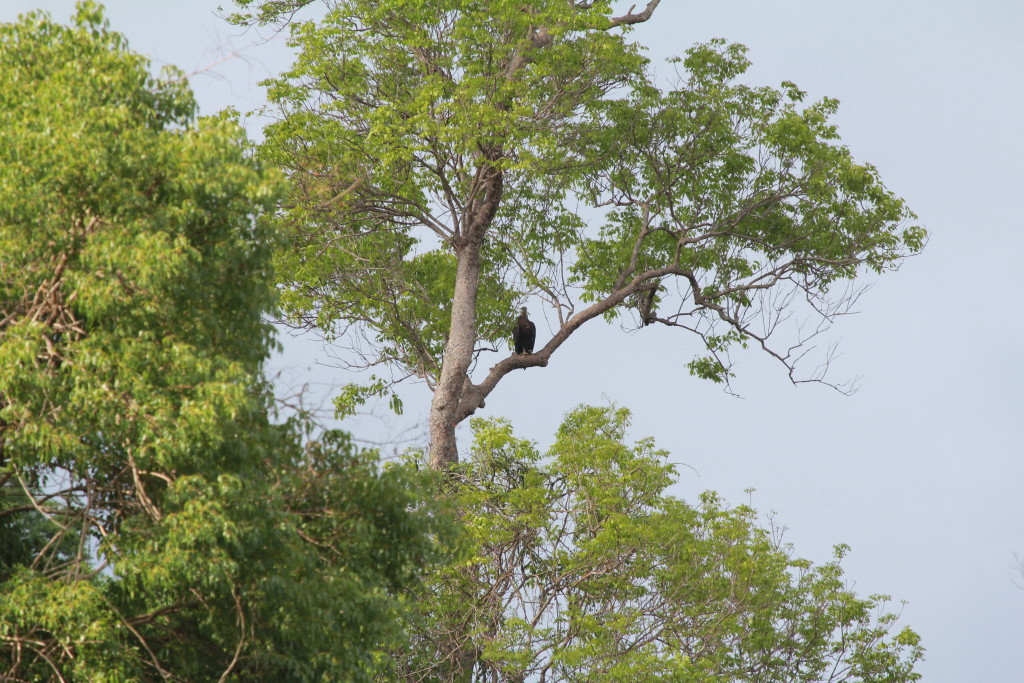
It’s a beautiful, relaxing trip during which we saw lots of water birds – herons, egrets and even a fish eagle!  The trip lasts only an hour which was a bit disappointing, I would have preferred to stay out a couple hours.  I was hoping for Kingfishers but struck out.

IMG_5603 IMG_5605 IMG_5606 IMG_5607 IMG_5608 IMG_5610

Humblot’s Heron

IMG_5612 IMG_5614

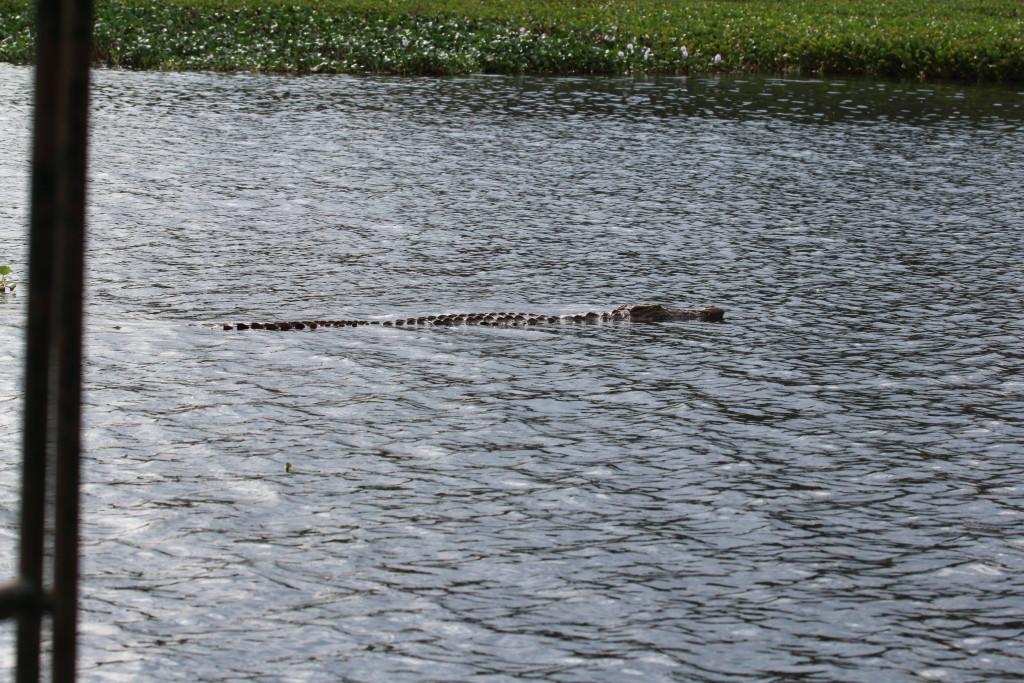
A crocodile gives us they eye!

IMG_5615

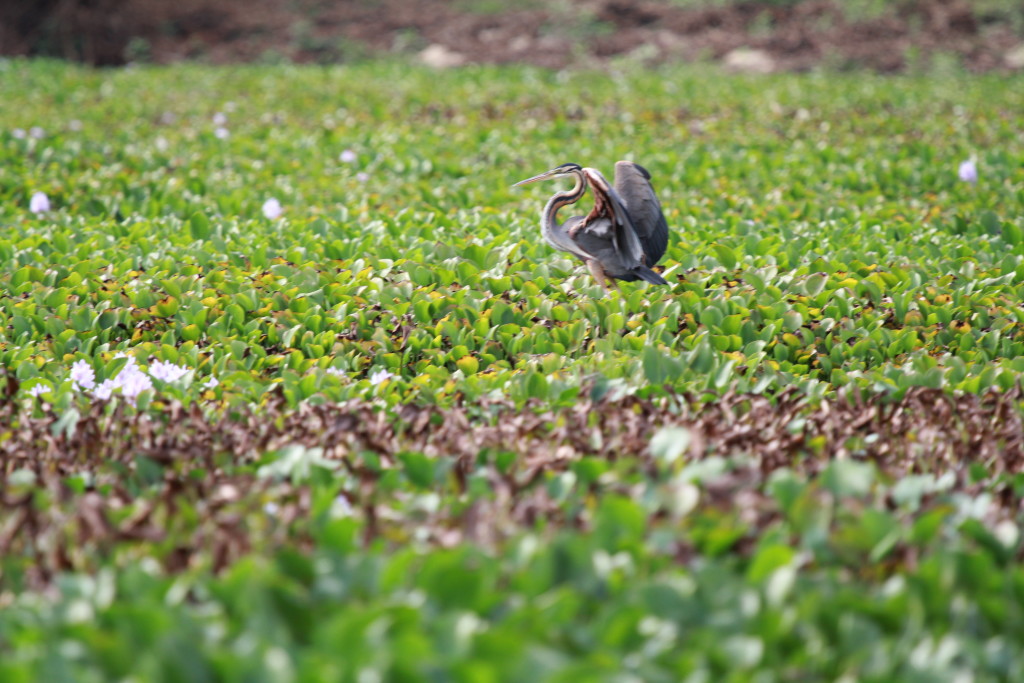
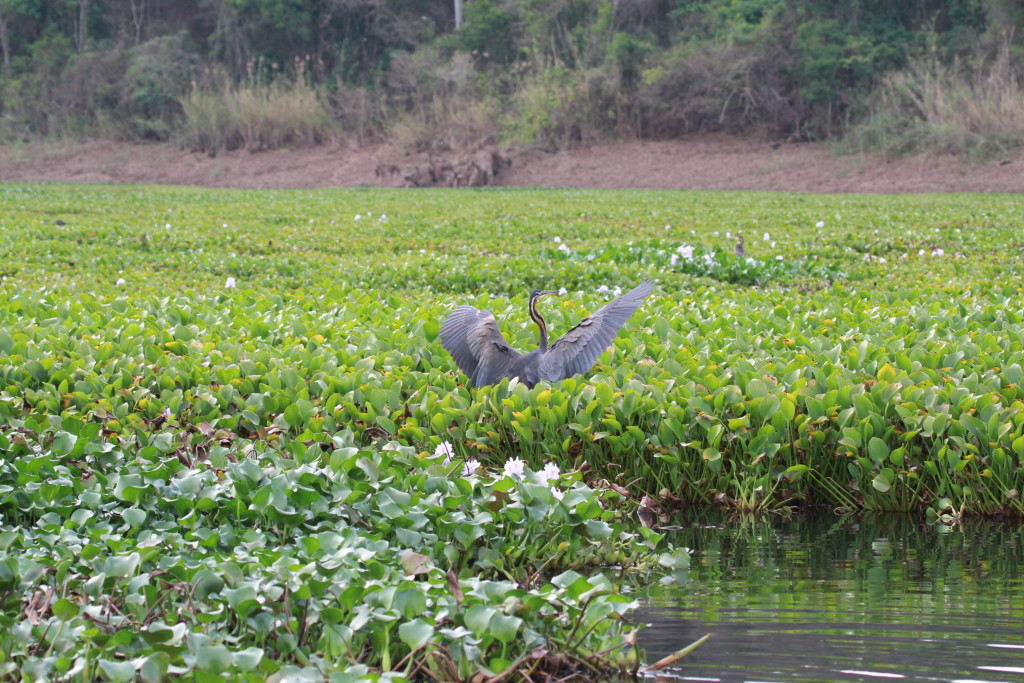
Madagascar Purple Heron

IMG_5616 IMG_5617

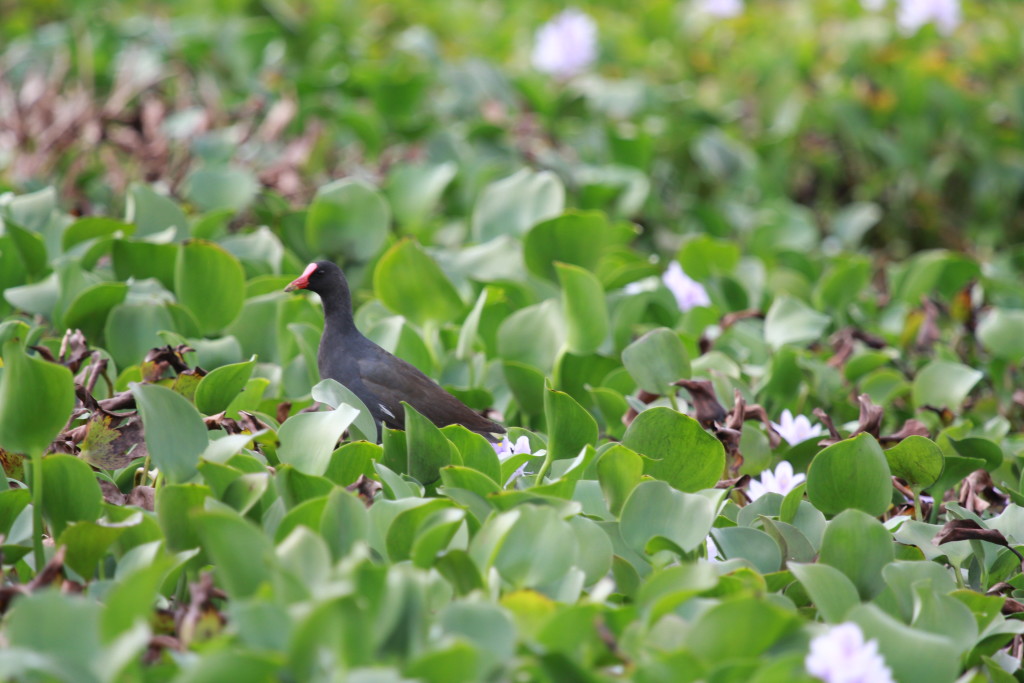
Allen’s Gallinule

IMG_5618 IMG_5619 IMG_5620

We had to get out and walk a bit to see the Fish Eagle.  He remained far away so I couldn’t get a good shot.

IMG_5623 IMG_5624 IMG_5625 IMG_5626

Malagasy Pond Heron

IMG_5630 IMG_5632 IMG_5633

Local fishing, apparently he isn’t afraid of the crocodile!

IMG_5635 IMG_5638

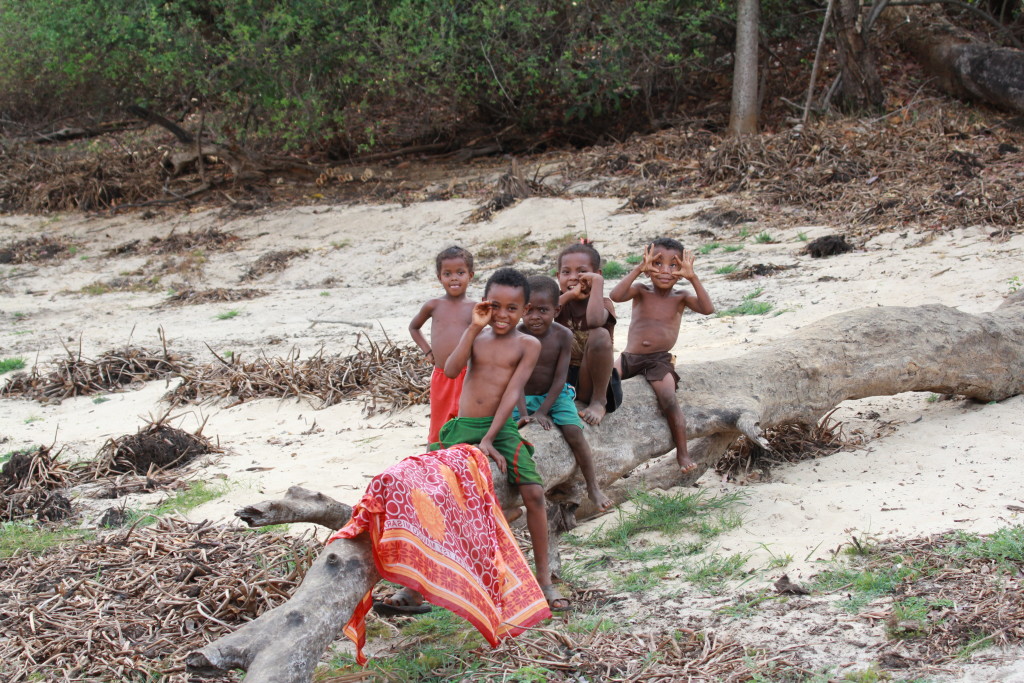
Local kids checking us out!

IMG_5642

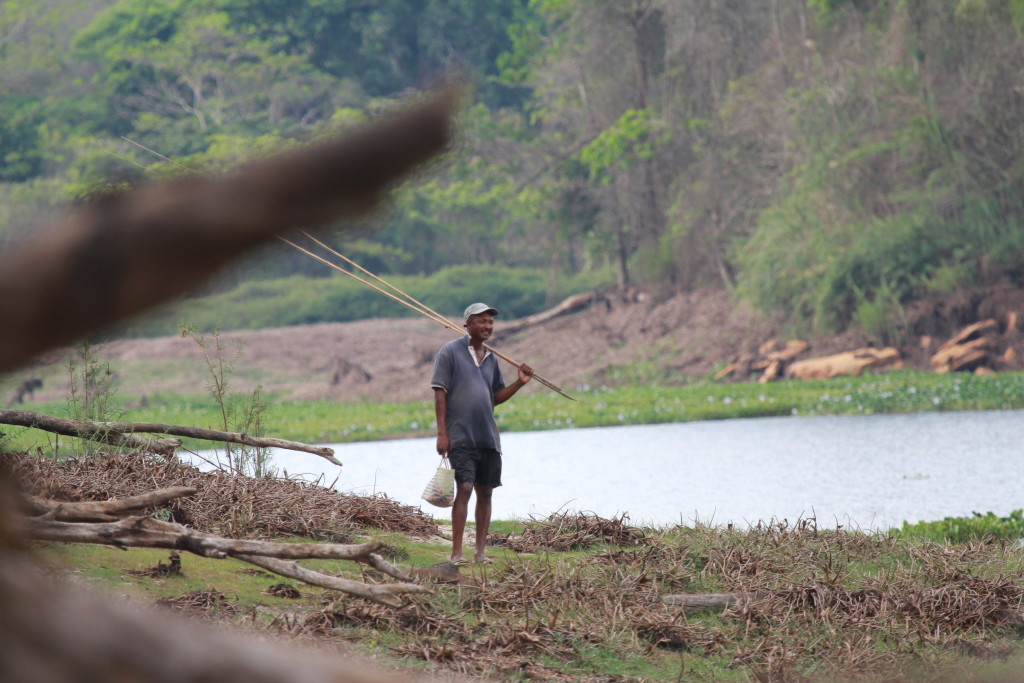
Another fisherman

IMG_5647