Rock Parrot (Neophema petrophila)

What comes to mind when you imagine a “Rock Parrot”?  Maybe this?

.

Or this?

.

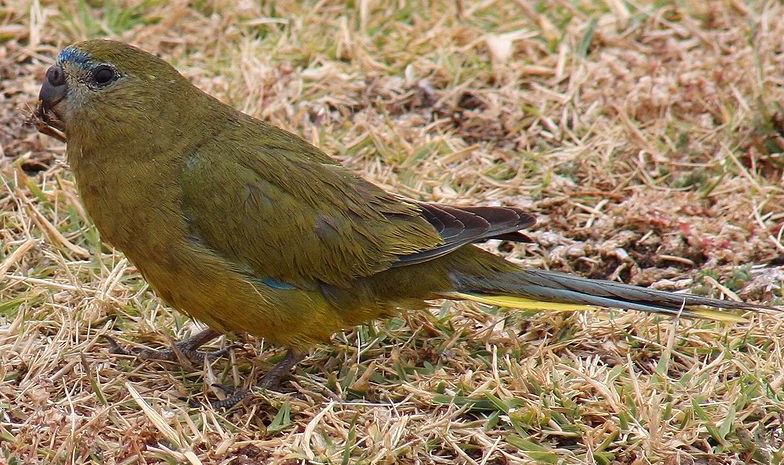
Then it may come as a surprise to you that the actual Rock Parrot (Neophema petrophila) is a very subtle and small parrot.

Rock parrot

Rock parrot

They are endemic to Australia and found along the western and southern coastal regions.  Some of the best places to go to see this bird in the wild are Rottnest Island near Perth, Eyre Bird Observatory, Cape Leeuwin and the coast of Esperance.

Rock Parrot Range

MORE INFORMATION

World Parrot Trust

Birdlife Australia

They aren’t very noisy parrots so you will need luck and good local advice to see them.  I found one video of them near Esperance.

Eco-Lite: Rottnest Island, Western Australia

OVERVIEW

Rottnest Island is Perth’s premier Island destination and offers a smorgasbord of coastal activities including boating, fishing, swimming, surfing, diving and snorkelling so there is something to interest everyone in the family.  But for eco-tourists,  Rottnest Island is a haven for Western Australian flora and fauna. It is a protected A-Class Reserve which is home to many unusual animals and plants, particularly a small marsupial called the quokka (Setonix brachyurus). The quokka looks like a pint-sized kangaroo and is very popular with the tourists.  It is also home to many birds.  Coastal birds around Rottnest Island include the pied cormorant, osprey, pied oystercatcher, silver gulls, crested tern, fairy tern, bridled tern, rock parrot and reef heron.

Quokka

Detailed information is available on the Rottnest Island website.

HOW DO YOU GET THERE?

Coming from overseas, you can easily get to Australia using frequent flyer miles and base yourself in Perth.

Location of Rottnest Island

Rottnest Island is an easy day trip from Perth or Fremantle using the Rottnest Express.  Bookings are easily made online and you can choose between simply the round-trip ferry or day trips that include various guided excursions around the island.  This is an example of fares for adults, concession (pensioners) and children.

Rottnest Ferry

If you would prefer a tour, you can simply choose one from their tour page.  If this is your first trip to Rottnest Island, I would advise getting one of the 90 minute tours to get orientated to the island, then spend more time in the areas of most interest to you.  But don’t miss your ferry back!

HOW MUCH IS IT?

It varies based on which tour package you get.  Here is an example of the Discovery Tour.  Other tours are available and you can stay overnight if you wish.  More information is available on the tour page.

Discovery Tour

HOW LONG SHOULD YOU SPEND THERE AND WHAT SHOULD YOU SEE?

How long you spend is largely determined from the ferry schedules so plan on dedicating a full day to your Rottnest Island adventure.  Since I am blogging for eco-travelers, I’ll concentrate on the wildlife.  The quokka is possibly the most well known animal on Rottnest Island.  A marsupial the size of a hare or domestic cat, the quokka is the sole representative of the genus Setonix. As with other marsupials, such as the kangaroo, wallaby, wallaroo, bettong and potoroo, the females suckle their young in a pouch. Quokkas congregate under dense shrubs for shelter, and are less active during the day. They give birth in late summer, after a gestation period of twenty-seven days, and the young quokka remains in the pouch until August or September, and is then suckled for a further two months. The quokka reaches maturity at about one-and-a-half to two years of age, and lives to be ten years old.

Rottnest Island is home to many birds. Coastal birds around Rottnest Island include the pied cormorant, osprey, pied oystercatcher, silver gulls, crested tern, fairy tern, bridled tern, rock parrot and reef heron.

About ten percent of the eastern end of Rottnest Island is made up of salt lakes, containing brine shrimp. Brine Shrimp support a large number of birds such as the red-necked avocet, banded stilts, ruddy turnstone, curlew sandpiper, red-capped dotterel, Australian mountain duck, red-necked stint, grey plover, white-fronted chat, caspian terns and crested terns.

Red-necked Stint

The red-necked stint (which weighs only 30 grams) – as well as the grey plover, ruddy turnstone, grey-tailed tattler and curlew sandpiper – is a transequitoral migrant which breeds in the Arctic Circle and flies to the southern hemisphere during the non-breeding season.

There are many sea birds around Rottnest Island, including the yellow-nosed albatross, the cape petrel, Wilson’s storm petrel, Australian gannet, great skua and wedge-tailed shearwater. Of these only the wedge-tailed shearwater lands on the Island to breed in colonies of burrows at Cape Vlamingh and Radar Reef.

The birds of the Melaleuca and Acacia woodlands include the tree martin, welcome swallow, silvereye, spotted turtledove, laughing turtledove, fan-tailed cuckoo, red-capped robin, golden whistler, western warbler, singing honey eater and Australian raven.

Birds commonly found around the settlement area include the silver gull, Australian raven, sacred kingfisher and the banded plover (or lapwing). Peafowl, an introduced species released onto the Island in about 1915, can also be seen around the Settlement.
The osprey, nakeen kestrel and ring-necked pheasant favour the heath on Rottnest Island. The two to four pairs of osprey resident on Rottnest Island breed there every year, returning to their nests which are among the most durable structures in the world – one located at Salmon Point is estimated to be approximately 70 years old. The osprey nests are located at the highest point of a stack or headland, giving the birds a great vantage point.

The brackish swamps are home to the black duck and grey teal duck.

When Should You Use A Promo To Buy Miles & Points?

The holy grail is free travel by manipulating your spending or business travel paid for by your employer in such a way that you get free miles and points for your personal use.  If you are a business traveler, you are probably already doing this so this post will be more useful to non-frequent travelers who want to travel someplace they otherwise wouldn’t be able to afford to go.  Many of the places I have been writing about for eco-travel such as Brazil, Peru, Australia, India, the Cook Islands would be only a distant dream if not for miles and points.

Some non-frequently flying people will have better opportunities than others.  Currently people in the USA are the luckiest with all the credit card sign up bonuses and manufactured spending (using a miles/points credit card to buy gift cards that can be liquidated or used to pay the same credit card’s bill).  I have some very basic guides on this but my style is more “teaching you how to fish” rather than spoon-feeding so you need to be able to take the basics and apply them yourself and be proactive about seeking out the best sign-up bonuses.  These can change daily so always check around before getting a new credit card.  Credit card sign-up bonuses are the closest thing to free miles if you use the cards only for things you have to buy anyway and pay the bills off each month.  I suppose Facebook contests and sweepstakes would be true FREE miles but the odds of winning those are so slim.  It’s worth a try if you are active on Facebook.

Some promos such as the Daily Getaways are directed at Americans only and recent reports show that non-US credit cards have been rejected.  Last year, I was able to buy a package from Daily Getaways with an Aussie Amex but haven’t tried yet this year.  Other promos such as the 100% bonus miles when you buy miles are available to anyone.  US Airways and Avianca-Taca are famous for this type of promo.  Then there are shopping promos where you use an airline’s shopping portal to get miles or do a certain number of transactions with partners to get bonus miles.  The US Airways Grand Slam was the best by far of this sort of promo but hasn’t been seen since Sept 2011 and won’t be back because they are merging with American Airlines later this year.  2008-2011 were the golden years for people who wanted to get LOTS of cheap miles with partners if they weren’t true FREQUENT fliers.  My husband and I still have a couple trips left for next year we earned with Grand Slam from previous years.

The thing with promos are that in most cases, you aren’t getting FREE miles/points anymore.  You are paying for them at a reduced rate.  Take Daily Getaways for example.  Next week, there are point purchases available for Best Western, Choice and IHG Priority Club.

.

The following week, IHG Priority Club and Wyndham points are on offer.

.

So how do you know if they represent a good deal for you?

You need to have a good idea of what your future travel plans are.  What airlines can you use, what hotel chains are at the cities you will visit or transit?

Compare the cost of buying points through this promo vs other options.  Can you use a discount code (Expedia, Hotels.com) to book any hotel, not just a chain hotel for a better price?  Can you earn airline miles for your hotel booking via Pointshound?  Can you get free points from getting the hotel’s credit card or transferring points from Amex Membership Rewards (most countries) or Ultimate Rewards (USA only)?  Do you really want to stay in a chain hotel vs a local independant hotel?

Look at what the hotel chain’s reward program allows you to redeem your points for.  Would buying one of these package get you a better value on the hotel chain’s partners?  Here are the pages for the hotel chains to help you determine this, you will have to do your own math though!

Best Western

Choice

IHG (Priority Club)

Wyndham

Converting to airline miles

You will notice that most hotel chains have airlines as their partners so you can redeem hotel points for airline miles.  In past years, this has been extremely lucrative when using Daily Getaways.  This year, the promo has been so over-exposed, the prices have gone up on the point packages so they may or may not represent a good value to you.  Pull out your calculator and start doing the math.  The things you need to consider when buying airline miles in this way.

  • Is it cheaper to just buy the flight and earn miles for it?
  • Can you get a better deal on Priceline, Groupon or similar?
  • Will you be traveling within the next couple of years? (Airlines can depreciate their programs in the meanwhile)
  • Is the hotel program likely to depreciate the redemption rate before you can swap them for airline miles?
  • Is your personal situation likely to change before you have a chance to use the miles (new job, moving, health, fitness, marriage, baby, etc)?
  • Will the points or miles expire before you can use them?
  • Can you afford to outlay the cash now for a possible savings in the future?

If you read a lot of miles and points type travel blogs or forums such as Flyertalk, you will see some people praising these deals as the greatest thing since sliced bread.  For many people, these deals may be the best value, for others they may not be.   Don’t let anyone (blogger or otherwise) whip you into a competitive frenzy over this or any other promo.  They don’t know you, they only know their own situation and what is good for them.  Everyone is an individual and has their own personal circumstances so I would encourage everyone to do their own research and their own math.

Club Carlson Flash Sale, Less Than An Hour Left

Club Carlson has been running these flash sales all week where you get a bonus of 75% when you buy points.  The sales are announced on their Facebook page so you need to be liking the page to see it come up in your feed.

Time for another Gold Points Flash Sale! Buy points with a 75% bonus from now until 10:15 p.m. EDT: http://bit.ly/1488d5j

Club Carlson can be useful to eco-travelers in Panama.

Eyre Bird Observatory, Western Australia

WHERE IS IT?

The Eyre Bird Observatory is a loooong way from anywhere!  First you have to get to Perth which can be done with frequent flyer miles.  You could also take a domestic flight to Esperance, then hire a 4WD.  The drive can be half the fun if you are after a full-on Aussie Outback experience.  It’s about 643km or 7 hours from Esperance across the Nullarbor.

The red dot is the approximate location of the Eyre Bird Observatory

You can actually get as far as Cocklebiddy on the Eyre Highway with a normal car but then you would have to get the caretakers to pick you up and leave your car in Cocklebiddy which would be risky with a rental car.

.

BACKGROUND INFORMATION

The Eyre Bird Observatory lies within the Nuytsland Nature Reserve and was established as Australia’s first bird observatory by Birds Australia (formerly the RAOU) in 1977.


The observatory is a lovely old stone building within walking distance of the beach. It was built in 1897, near the site where explorer Edward John Eyre found water during his overland journey Adelaide to Albany in 1841, to serve as the Eyre Telegraph Station. The station was deserted in 1930 and remained so until its restoration in 1977.


The building incorporates a fine natural history library and a small museum, which provides some history of the Eyre Telegraph Station and the telegraph line between South Australia and Western Australia. It also contains information and displays on the coastal environments, including past activities such as whaling.

STAYING THERE

Information and bookings by Birdlife Australia.

The Observatory accommodates up to eight overnight guests. Because of our limited facilities, to avoid disappointment, advance bookings for overnight stays and meals are essential.


Overnight Guests


Accommodation in the historic Old Telegraph Building is basic with shared bathroom and toilet facilities. There are three bedrooms, one with a double bed and bunks, one with a double bed and two singles, and one with two singles and bunks.


Acacia room sleeps 4Guests should note:


  • Bookings are essential. Please contact the caretakers
  • Up to a total eight guests can stay on any one night
  • You will need to bring your own bed linen—Sleeping bag, sheets, pillowslip, towel—to reduce water used for laundry purposes
  • Three meals per day are included in the cost of the booking


Bunk room sleeps 4Prices for Accommodation


All prices include GST (Effective January 2012)
Adults      $90  per person
Children (4-14 years)     $45  per person
Courses (6 nights)  $560  per person


10% discount for Seniors Card, YHA and BirdLife Australia members


Payments


Payments can be made by credit card (Visa/MasterCard) or cheque made out to Eyre Bird Observatory.


Eyre Bird Observatory is a not-for-profit facility, with the fees directed to cover our running cost. Fees for courses cover transport within the nature reserve for course outings, tuition by experienced leaders, accommodation in shared rooms, and hearty meals!

Eyre Bird Observatory
PMB 32, Cocklebiddy via Norseman WA 6443

T 08 9039 3450
F 08 9039 3440
E eyre@birdlife.org.au

WHAT BIRDS CAN YOU SEE?

Major Mitchell Cockatoos

Check Eremaea for the latest bird list.  If you’re a parrot lover, you can usually find Major Mitchell Cockatoos, Purple Crowned Lorikeets and Port Lincoln Parrots.

MORE INFORMATION

Birdlife Australia

Nullarbor.net

DEC

This video gives an idea of what it’s like to visit this remote Australian outback region.


Final Results Of Birding Rally Challenge 2013

The results are in and very impressive indeed!  A jaw-dropping total of 864 bird species were seen which represents around 10% of all the bird species on earth!  Hopefully they will post the exact tally soon.  There is supposed to be a checklist here but I can’t get it to load completely or even scroll.  In the meanwhile, have a look at the Peruvian guides that accompanied each group.  They have very impressive credentials and are passionate about eco-tourism as a means to conserve wildlife, especially birds!  If you have a birding trip to Peru planned it would be worthwhile trying to get one of them as your guide.

.

Final Results of Birding Rally Challenge 2013


  1. Tigrisomas (US) : 636

  2. Forest Falcons (UK): 601

  3. Zululanders (SA.) : 570

  4. Ararajubas (Brasil): 508

  5. E Birders (US) : 495

  6. Tramuntana (Spain) : 482

TOTAL SPECIES: 864 (10% of all bird species in the world.)
Endemics birds: 34 (almost 1/3 of all endemics in Peru)

Total Computarized Registers 5852

Total distance 1503 km.

Bonus For Chase Ink Cards – And What You Could Do With It

If you are from the miles and points community, this is old hat.  If you are from the bird watching/eco-tourism community, keep reading to see how you can get an almost free flight if you qualify.  This is a limited time offer.  You normally get 50,000 Ultimate Rewards points for this card but for 1 week you can get 60,000.  This links directly to Chase and is not an affiliate link.  I am just sharing because maybe someone can get some use from this.

Chase Ink Special

The catch is that you have to be able to spend $5000 within the first 3 months of being approved for the card.

.

Bear in mind that this is a small business card and you must answer questions about your business on the application.  If you are a sole proprietor, you will use your own social security number.

.

The most important thing to remember is that you shouldn’t apply for credit cards if you can’t pay the bill in full each month.  You don’t want to be paying interest!

So what can you do with the minimum of 65,000 Ultimate Rewards points?  (5000 minimum from your $5000 minimum spend)  Remember that trip I was blogging about to see Golden Conures in Brazil?  If you transfer your Ultimate Rewards points to United Mileage Plus, you would have enough for a free round-trip from the USA to Manaus or anywhere else in Brazil or South America!  For more information on using credit cards to earn frequent flyer miles, see my other posts (USA edition).

Sample outbound segment of a round trip award to Brazil


Taken In The Jungle

This story aired last night on Channel 7’s Sunday Night program.   I am in total awe of this young lady’s bravery.  What happened to her was horrible but she somehow found the courage to go back and testify against the kidnapers.  Fiona and her friends were eco-tourists in Ecuador and it could have happened to anyone, they were just in the wrong place at the wrong time. You can read the whole story and watch the video of the segment.  You can also read the story of her traveling companion Katie Cox.

Since their ordeal, the FCO has updated its advice to inform travellers that there is a 20km exclusion zone in place along the entire northern-border with Colombia, which is under army control.

It states: ‘Guerrilla groups, narcotraffickers and criminal gangs are active in these areas and there is a risk of kidnapping and a high risk of crime.’

The Cuyabeno Wildlife Reserve has one of the highest concentrations of flora and fauna in the world and is famed for its biodiversity.

The park grew in popularity in the 1990s and there are still eco lodges based around Laguna Grande, offering tours to visit rivers, lagoons and floated forests.


This doesn’t mean that all eco-tourism in Ecuador is unsafe, many thousands of people travel there safely each year.  I do think it’s worth a reminder to check the local conditions before you visit an area and if you are going somewhere remote, use an established tour operator.  It’s really a shame that this is happening in these areas which are rich in wildlife.  The locals who are trying to earn a living from eco-tourism are losing out because of these guerilla groups.  I hope they can restore peace and safety to this otherwise beautiful area.

Approximate area of kidnapping

This kidnapping took place near the Colombian border by a group called the Black Eagles.

Australian Ringneck Parrots

Australian Ringneck Parrots have been divided in to 4 subspecies.  The best way to tell them apart in the wild is by the colour of the hood and where you are in Australia.  Port Lincoln Parrots and Twenty-eight Parrots both have the darker blue hood but the Port Lincoln has more yellow on their bellies whereas the Twenty-eight’s belly is green.  You are most likely to see them in Western Australia where they are very common, you can even see them in King’s Park, Perth!   The Mallee & Cloncurry Ringnecks have the light blue-ish green hoods and the Cloncurry’s belly is yellow and they don’t have a red band over their beak.

Port Lincoln Parrot

Port Lincoln Parrot (Barnardius z. zonarius) – Found from Port Lincoln in the south east to Alice Springs in the north east, and from the Karri and Tingle forests of South Western Australia up to the Pilbara district.

Mallee Ringneck Parrot

Mallee Ringneck (Barnardius zonarius barnardi) – Found in New South Wales, Queensland, South Australia and Victoria

Twenty Eight Parrot

Twenty-eight Parrot (Barnardius zonarius semitorquatus) – Found in the south western forests of coastal and subcoastal Western Australia.

Cloncurry Parrot

Cloncurry Parrot (Barnardius zonarius macgillivrayi) – Found from the Lake Eyre basin in the Northern Territory to the North gulf of Queensland.

Range Australian Ringneck Parrots

 OTHER SOURCES FOR AUSTRALIAN RINGNECK PARROTS

Birdlife Australia

Birds in Backyards

World Parrot Trust Mallee Ringneck

World Parrot Trust Port Lincoln Parrot

Wikipedia

AUSTRALIAN RINGNECKS IN ACTION

Adopt A Little Penguin At Phillip Island And AAT Kings Will Pay Half

This is a very clever way to get “normal” tourists in a more eco-tourism frame of mind.  I got this email yesterday.  Visiting the penguins at Philip Island is a very popular day trip for anyone visiting Melbourne, Australia so it’s nice that this tour operator – AAT Kings is helping to conserve them!

Adopt a Little Penguin
at Phillip Island and AAT Kings will pay half of the adoption fee*
AAT Kings, along with our sustainable tourism partner The TreadRight Foundation are proud to work with Phillip Island Nature Parks to aid the protection and preservation of Victoria’s coastal wildlife. With a grant of $95,000 over two years, AAT Kings will contribute to continued research and management of Australia’s most famous colony of Little Penguins.

When you book an AAT Kings Phillip Island Day Tour, you too can contribute to the Penguin Foundation’s work in research and conservation by adopting a Little Penguin.

 Read more about TreadRight,
our sustainable tourism partner.
$75 Adopt a Penguin Package

Pay only $37.50* AAT Kings Pays half

Includes

Bullet point Penguin Foundation membership
Bullet point Plush penguin toy
Bullet point Penguin Foundation adoption certificate
Bullet point Amazing Penguin fact sheet
Bullet point Personalised thank you card and photo
Bullet point Penguin Foundation’s e-newsletter
Bullet point Complimentary Penguin Parade ticket
Bullet point An exclusive invitation to the
Penguin Foundation Members’ Open Day
Phillip Island

Full Day Phillip Island Tour
+ Adoption Package
Adult $176.50
Child $107.50
Tour code: K10A
*Conditions apply. Read More