Getting To The Cook Islands Using Frequent Flier Miles

STAR ALLIANCE IS THE BEST OPTION

The Cook Islands has only one international airport (RAR) and only 3 airlines that serve this airport.  Air New Zealand, a member of the Star Alliance has the most flights, most of which originate in Auckland (AKL) and a few flights to LAX and SYD (Sydney).  You can use any of the Star Alliance partners to book these flights but depending on where you live and what your profile is, some programs will be better than others.

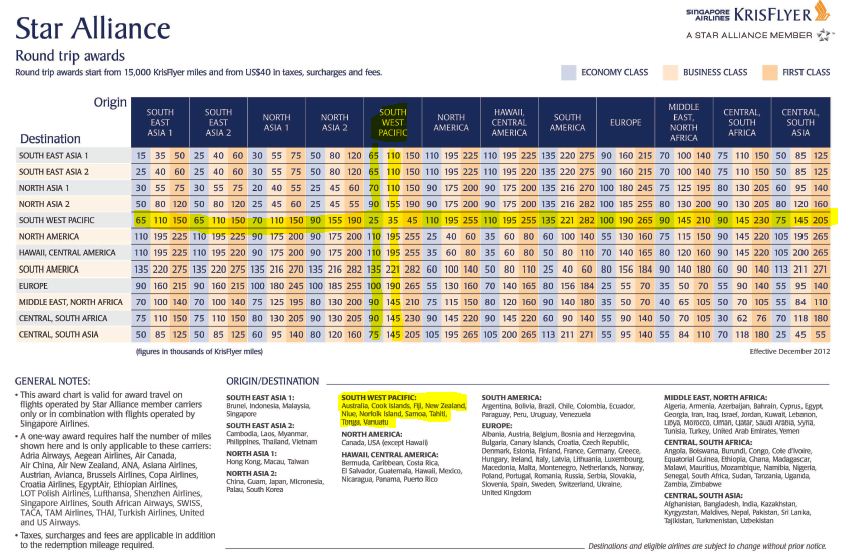
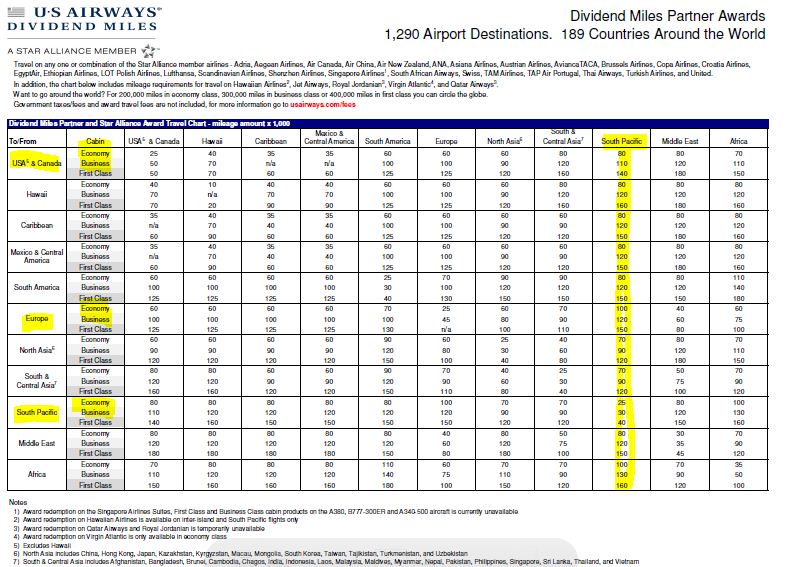
If you live in Australia or New Zealand, your best bet is probably going to be the Singapore Airline’s Krisflyer.  As you can see by the chart below, Australia, New Zealand and the Cook Islands are all in the South-West Pacific category.  Round trip awards are only 25,000 miles in economy and 35,000 in business class.  Air New Zealand does not have a first class cabin.  This is the ONLY award I use SQ miles for and I keep my Amex points in Amex and transfer them just when I am ready to redeem because SQ miles expire after 3 years whether you have any activity or not.  I don’t use SQ for any other routings than Pacific awards because they have tremendous fuel surcharges on just about all their other routes.SQ RAR
If you are traveling from North America, Asia, Europe or South America, you will find much easier awards using one of 3 Star Alliance partners:  US Airways Dividend Miles, United Airlines Mileage Plus or Avianca Taca Lifemiles.  There are pros and cons to each program and from the USA especially business class is hard to get so you will most likely end up in economy.  Air New Zealand does release business class within a couple months of departure but by that time, the economy seats will be gone so if you like to plan in advance, I wouldn’t risk it.  On the other hand, it can be good news for more spontaneous travelers who have more flexibility.

Anyone from anywhere in the world can join these 3 programs.  Americans will usually be better off with United if they plan on using any of the Chase Ultimate Reward cards to acquire miles with both personal and business cards available and gift card churning.  This is way too complicated to go into here but if anyone is interested, start with Flyer Talk or ask me to personally recommend a blogger who specializes in this sort of thing in the comment section below.

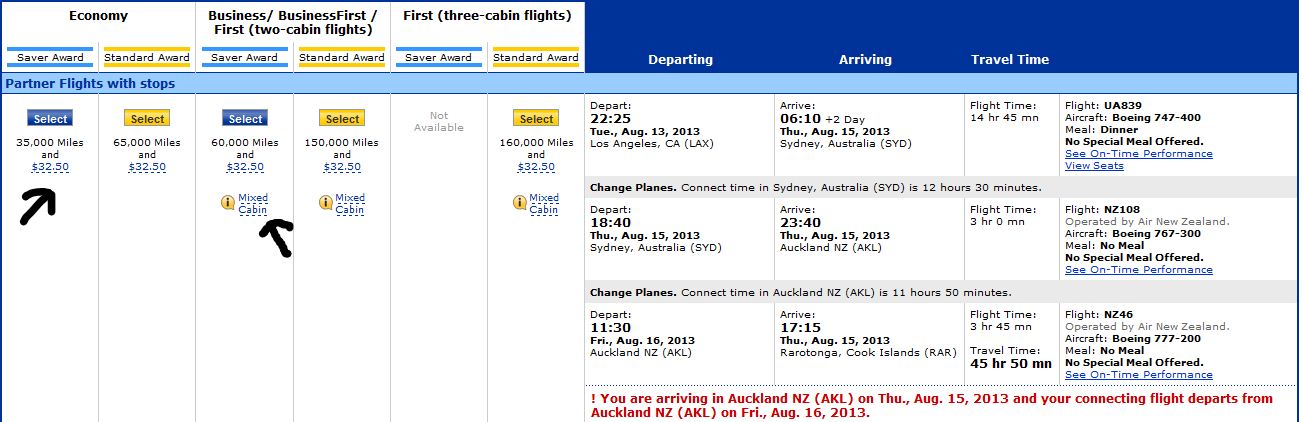
No matter which Star Alliance partner I am booking on, I find the UA award search tool is the easiest to use because of the colour-coded calendar.  Obviously the miles needed for the redemption are valid only on UA.  If you are after business class awards, beware of the Mixed Class warning as shown in the second screenshot.UA RAR1UA RAR2
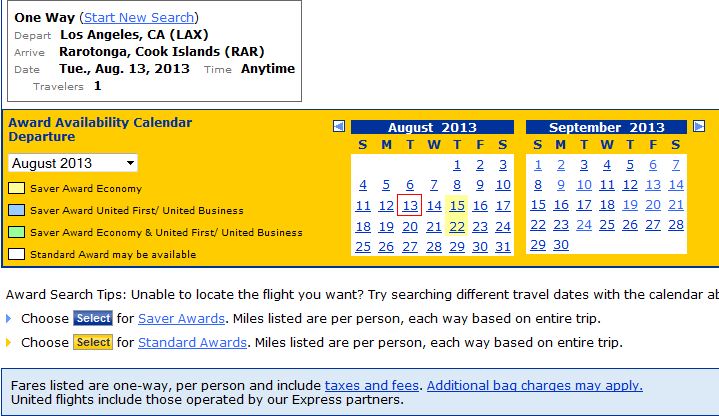
You are probably wondering why they are routing you through Sydney instead of the direct flight LAX-AKL, then AKL RAR.   Let’s see if there is any availability.  Scroll down to the bottom, do a LAX AKL search, choose your date and tick the Nonstop flights only box.UA RAR3

There are no non-stop flights available so it gives a warning and shows connecting flights.UA RAR4
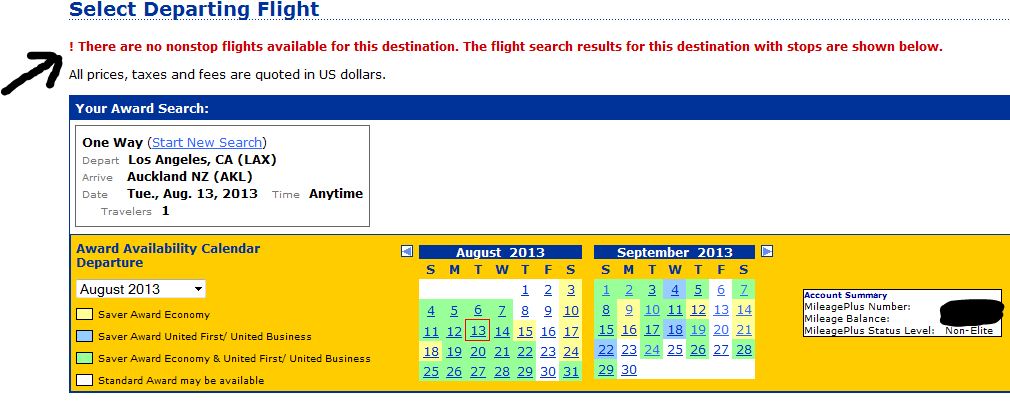
At this point, depending on how much flexibility you have, you can keep plugging in dates hoping for the non-stop LAX-AKL (I did a few random dates and couldn’t find anything) or just take what they offer.

Bear in mind that this availability display will be much the same for any of the Star Alliance airlines but not all airlines have the facility to search partner awards.  The ANA tool can also be used.  It’s complicated but I will do a more comprehensive post on how to use it later.

For people who can’t get the Chase credit cards from the USA, your best bets will be either US Dividend Miles or Avianca Taca Lifemiles.  Both these airlines have frequent 100% bonuses on purchase miles throughout the year.  I’ll go into more detail later, because both programs have their pros and cons so I will just show you how many miles it takes to go from LAX to RAR.

Let’s start with US Airways Dividend Miles.  From the USA and the rest of North America, you will need 80k in economy, 110k in business.  From UK and Europe, you will need 100k economy, 120k business and from Australia or New Zealand you will need 25k economy and 30k business-all round trip and no one-way options available.

Using a 100% bonus on purchase miles, an American would pay $1505 USD including tax for 40k miles purchased and 40k given free with the promo.USDM RAR
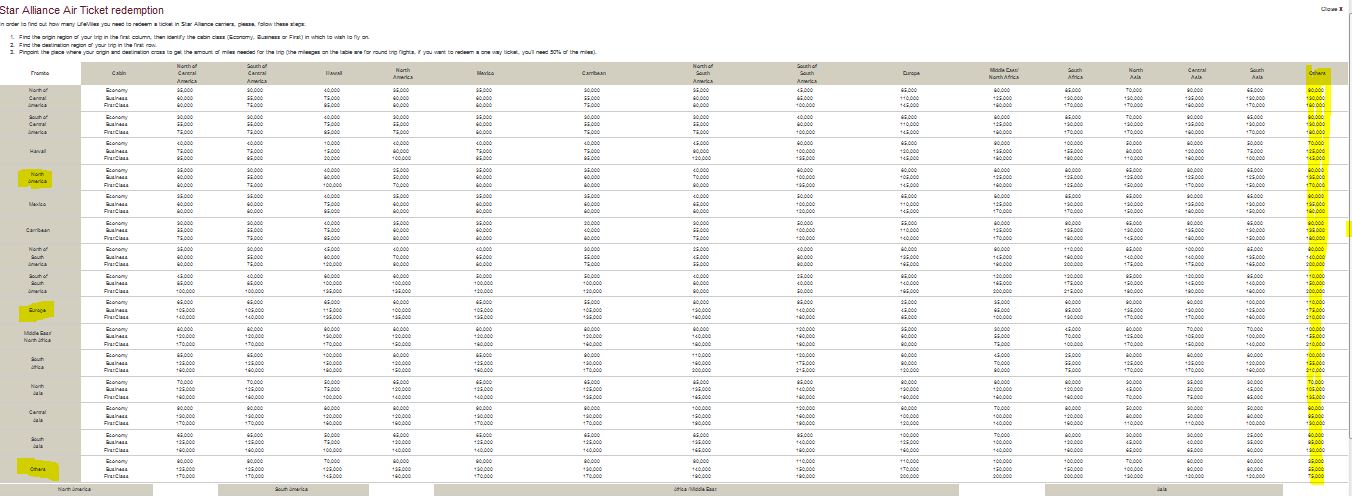
Avianca Taca Lifemiles offers one-way awards and online booking of partner awards, but people on Flyertalk report it is difficult to deal with the call centres for non-Spanish speakers and you can’t mix classes (economy and business/first) on an award.  I’ll post their award chart and do a more comprehensive post on them later.  Sorry this is going to post very small so I would suggest clicking on the link on their website to see it better.   All the Pacific countries:  Australia, New Zealand, Cook Islands, Tahiti and others fall into the “Others” category.  Don’t ask me why they didn’t just call it “South Pacific” like all the other airlines!  From the USA and the rest of North America, you will need 90k economy and 130k business.  From Europe, you will need 110k economy, 175k business and from Australia/New Zealand you will need 35k economy, 55k business.

Using the 100% bonus purchase miles promo, an American would have to buy 45k for $1350 and get 45k free from the promo.  The website states that there is a tax payable but when I bought a smaller amount of miles earlier, I was not charged a tax.  AviancaTaca RAR
ALWAYS COMPARE FULL COSTS WHEN PURCHASING MILES TO JUST PURCHASING THE TICKET.

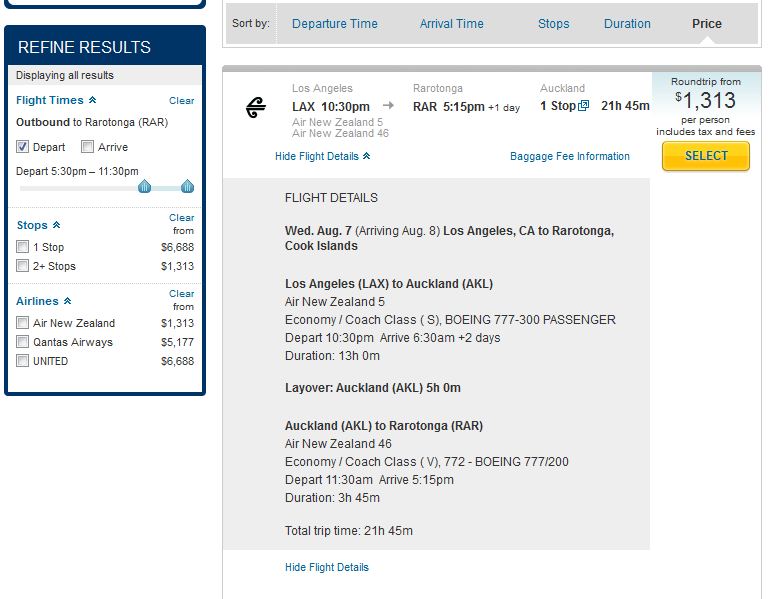
Using the examples above, an American would spend $1505 to use USDM, $1350 to use Avianca Taca Lifemiles (need to add tax on top of that) or a quick look at Expedia shows tickets available for $1313 and you will EARN miles!   So in this case, only use miles if you got them free from a credit card or earned while flying on other paid Star Alliance flights.  Don’t buy miles in this case when the paid ticket is cheaper!!!  Expedia RAR
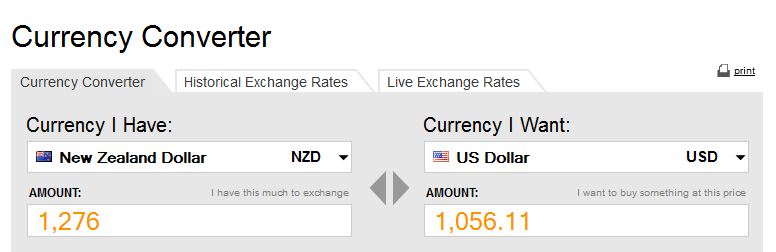
An Australian would pay $490 to get 13k USDM plus 13k free.  On Avianca Taca Lifemiles, it would cost $540 to get 18k miles plus 18k free.  A quick look at Air New Zealand’s site shows a fare of $1276 NZD which is around $1056 USD so for the Aussie, the better option is to buy the US Airways miles after making sure there is availability on the desired dates.
NZ RAR2


FLIGHTS USING VIRGIN AUSTRALIA’S VELOCITY

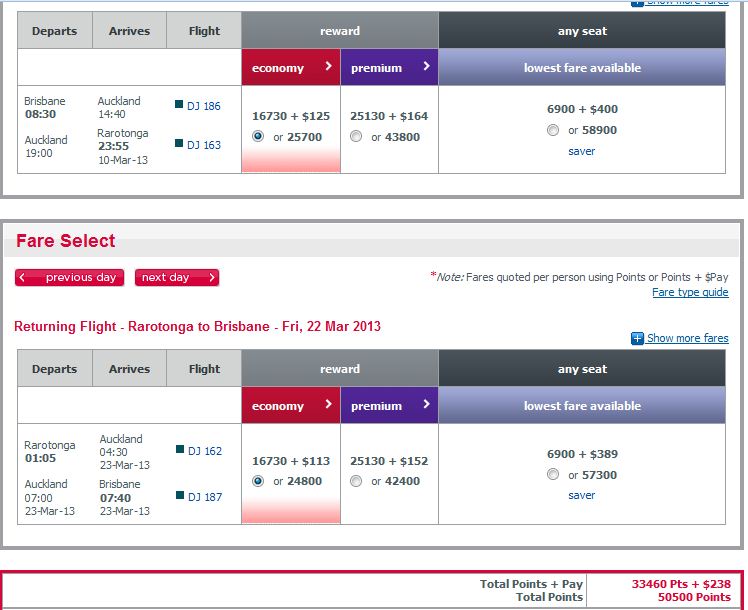
Virgin Australia serves RAR from AKL with onward connections to Australia.  This program is likely to be useful only to Australians who are using credit cards or every day life techniques to get Velocity points so here is a sample of award levels.   See their website for more information.  Aussies who are using Amex Membership Rewards would be better off transferring to Singapore’s Krisflyer where 50k Amex = 50k SQ which can be redeemed for 2 x Australia to RAR in Y as noted above.
Velocity RAR

FLIGHTS TO/FROM TAHITI

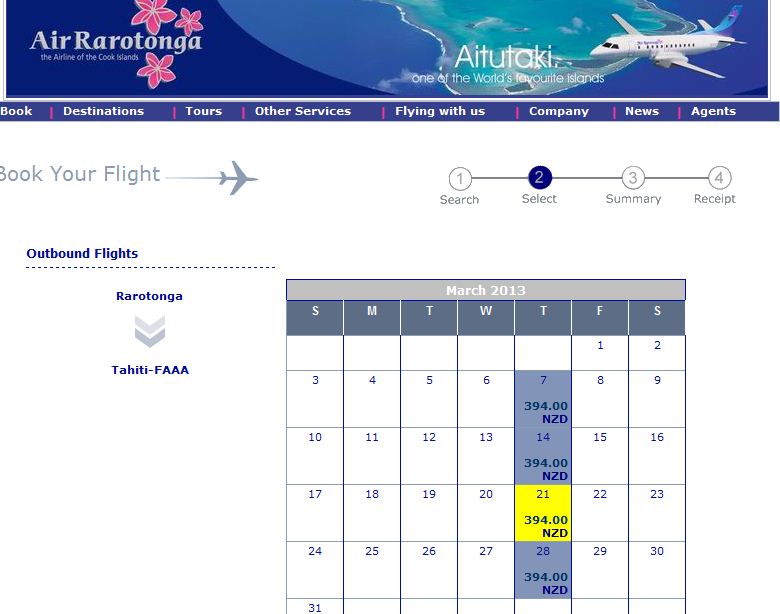
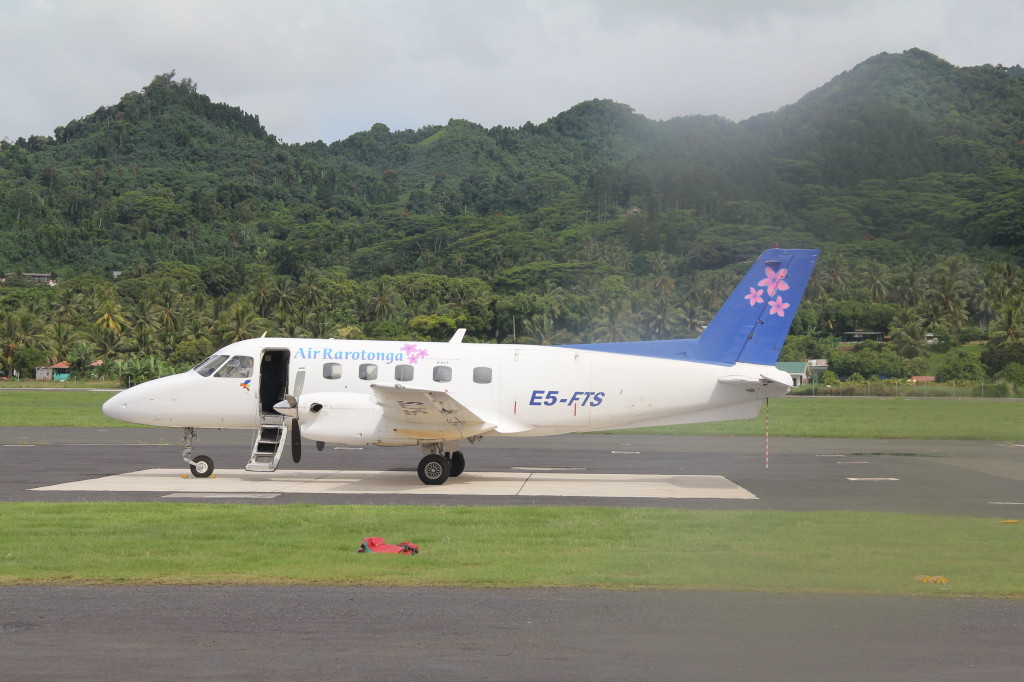
Air Raro and Air Tahiti share the route between RAR and PPT (Papeete, Tahiti).  There are no frequent flyer options here, you will have to pay cash for this flight but it could be a useful option if you want to redeem a Star Alliance open jaw award Australia-Raro /- Tahiti-Australia and need to get between Raro and Tahiti.  The flight only operates once a week but does save a lot of backtracking.Air RaroPPT
WHEW, that was confusing!  If you have any questions, please ask in the comments below and I will be happy to clarify anything.  Once you get to the Cook Islands, you will want to organize your neighbor island visits to Aitutaki and Atiu so please check those posts too!

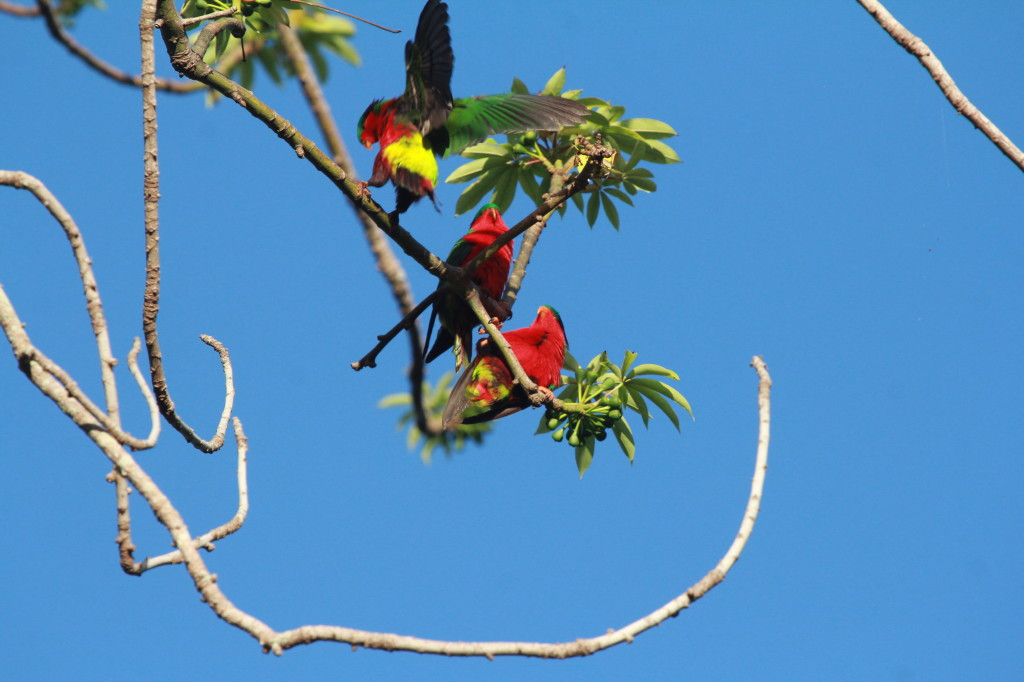
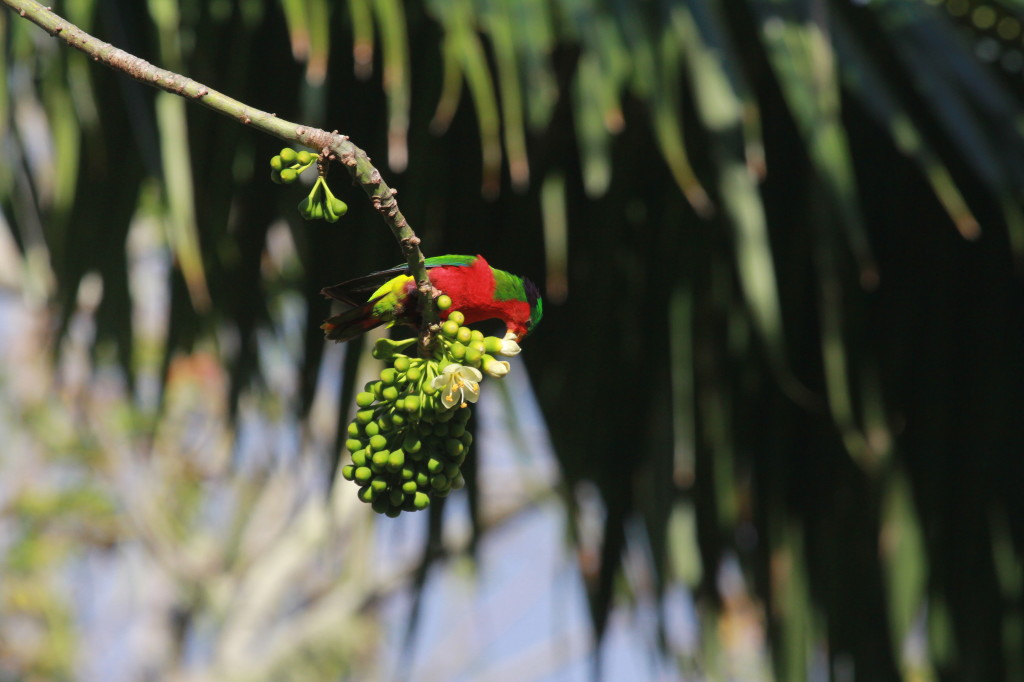
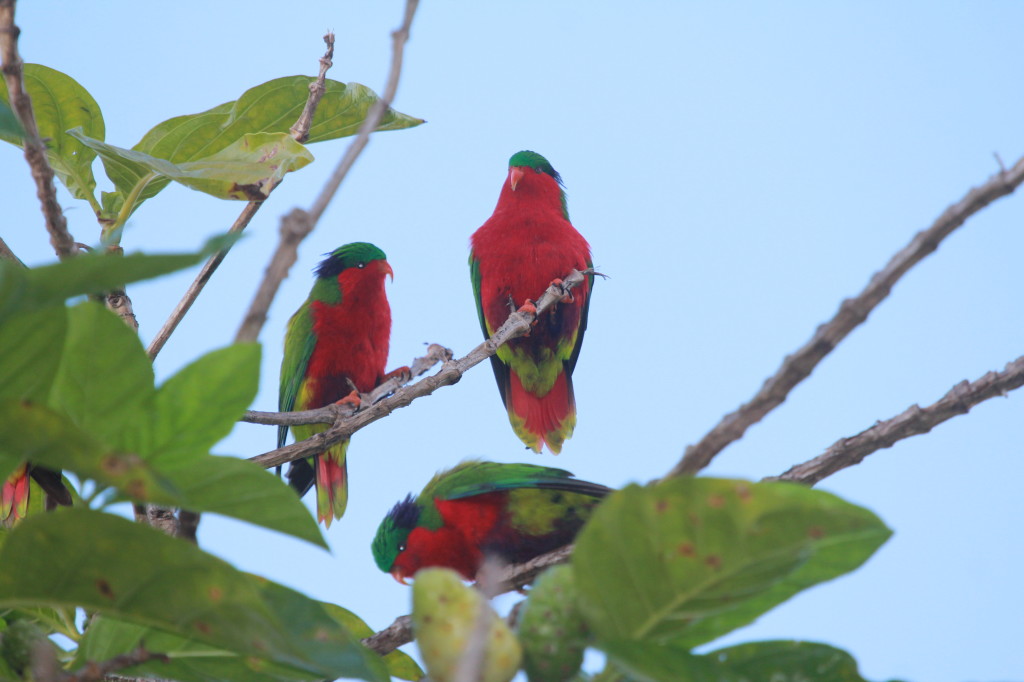
LIST OF PARROTS IN THE COOK ISLANDS

Aitutaki – It’s Not Just A Beautiful Lagoon

GETTING TO AITUTAKI

Aitutaki is the quintessential Pacific island.  Swaying palms, stunning sunsets, crystal clear water and friendly people draw many normal tourists here each year.  IMG_3192

To get to the Cook Islands main airport, Rarotonga, please see this post.  Many people make a day trip here from Rarotonga, but I think you need to spend a few days here as there is just so much to do and see!  The best value is combining Aitutaki with Atiu so you get to see both the Tahitian Blue Lorikeet and the Rimatara Lorikeet.  I have pretty well covered how to do this on the Atiu post here.IMG_2872

BEST LAGOON CRUISE FOR BIRDERS

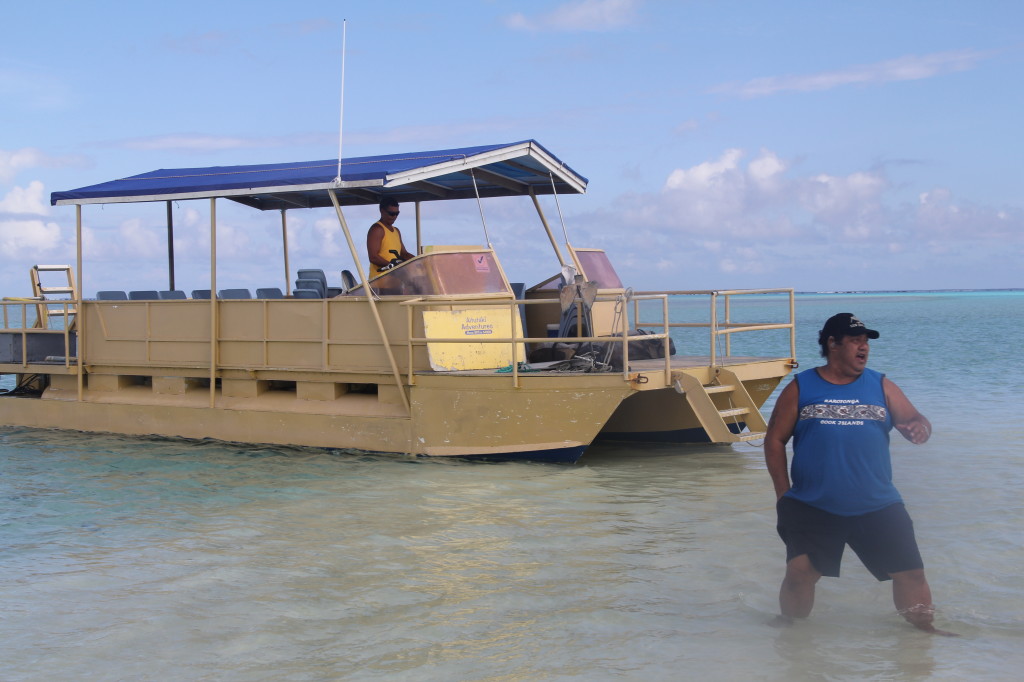
Although most tourists are attracted to the lagoon and fantastic snorkelling and scuba diving, there are also attractions for birders.  In fact, Aitutaki offers some of the easiest birding in the world!  If you want to see the stunning Red-tailed Tropicbirds, you can take one of the lagoon cruises that visit the island where they breed.  We did the “Yellow Boat” cruise which I felt was the most comfortable boat.  Not too big and crowded, not too small that it was hard to get in and out of it after snorkelling.  IMG_2925

WHERE TO STAY FOR BIRDING

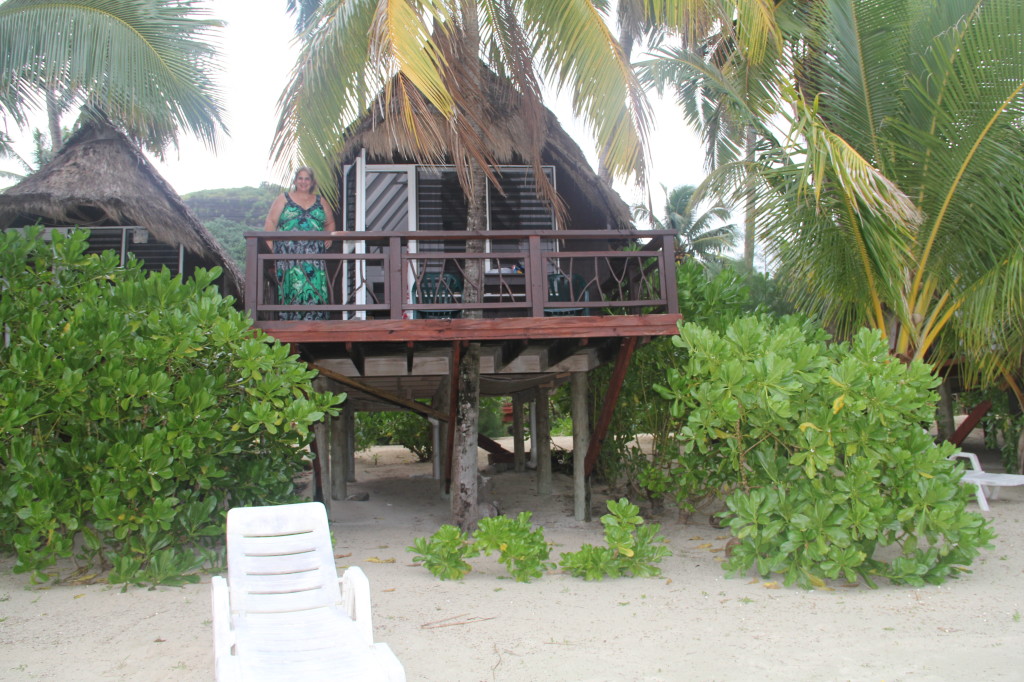
After doing a lot of research, I discovered that the “Kuramoo” Tahitian Blue Lorikeets can be easily seen at the banana plantation across the street from Paradise Cove Lodges.  It was pretty cool to have the coconut tree through the deck!

IMG_3216We loved this place!  I knew we would based on research and it is also in the right location for the activities we had planned.  I really got a sense of the value being offered here when the Yellow Boat folks dropped us all back at our hotels after the cruise, I got a peek at other hotels and what people were paying for bungalows that weren’t even on the beach! The sunsets here are postcard spectacular!


IMG_2888

IMG_2899

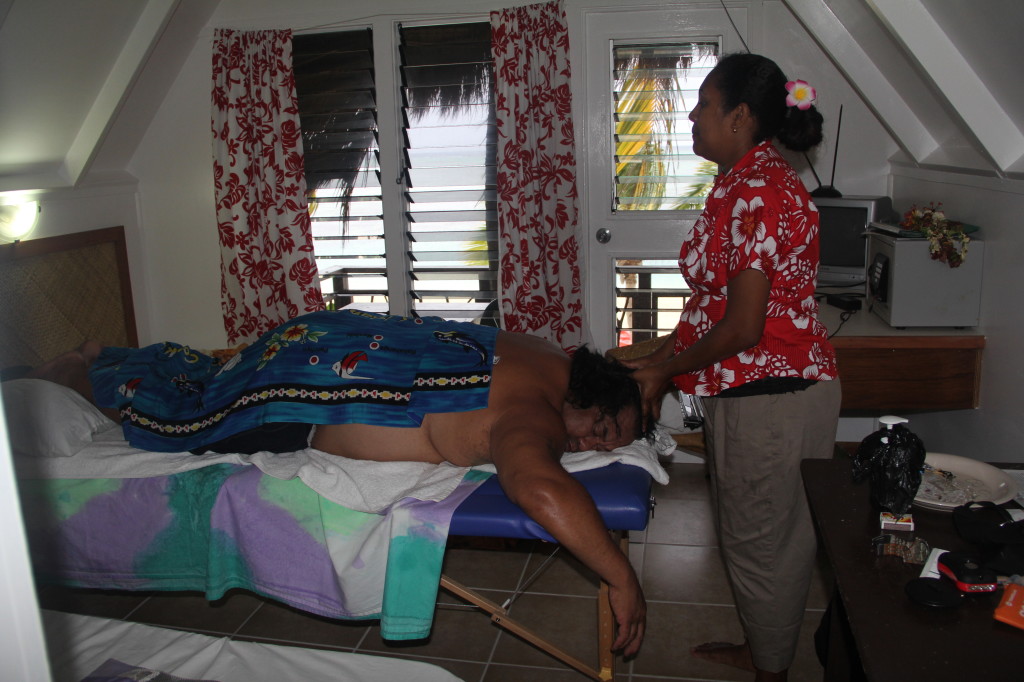
Joe is a lovely host and booked everything we wanted, even got a masseuse to come to our rooms for a special treat! IMG_3218 As a birder, I really appreciated having banana trees across the street where Blue Lorikeets (Kuramoo) could be easily seen.
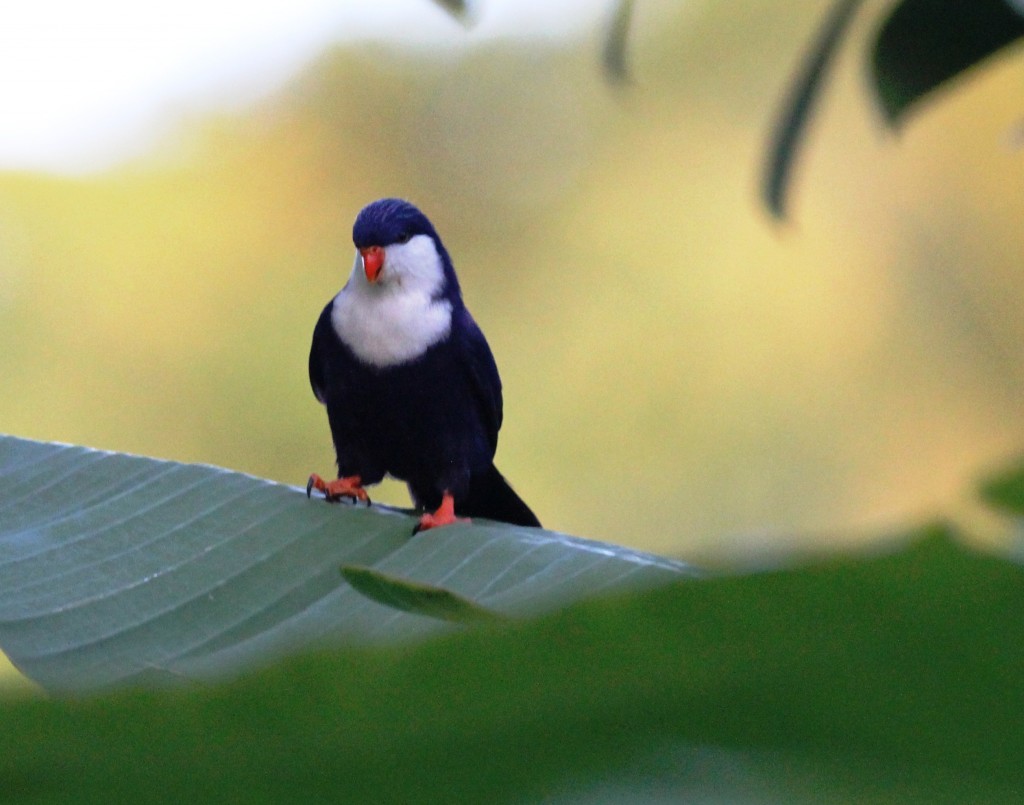
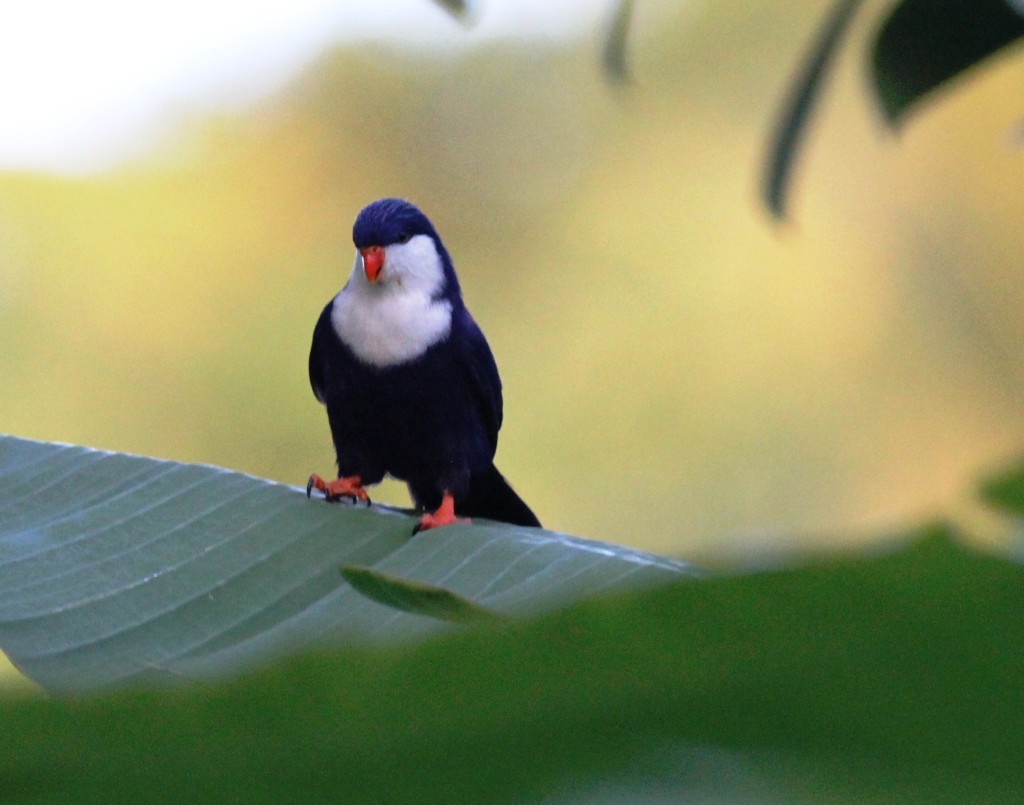
Blue Lorikeet (Vini peruviana) checking me out!

Blue Lorikeet (Vini peruviana) checking me out!

ISLAND NIGHTS ON AITUTAKI

Cook Island dancing is amazing and no one should leave without experiencing an island night!  The dance groups are true family affairs with the older folks teaching the youngsters and sharing their culture.  We really enjoyed the island night at Tamanu, which was just 5 minutes down the road from Paradise Cove.IMG_3252

IMG_3258a

IMG_3273

Red-Tailed Tropicbird, (Phaethon Rubricauda)

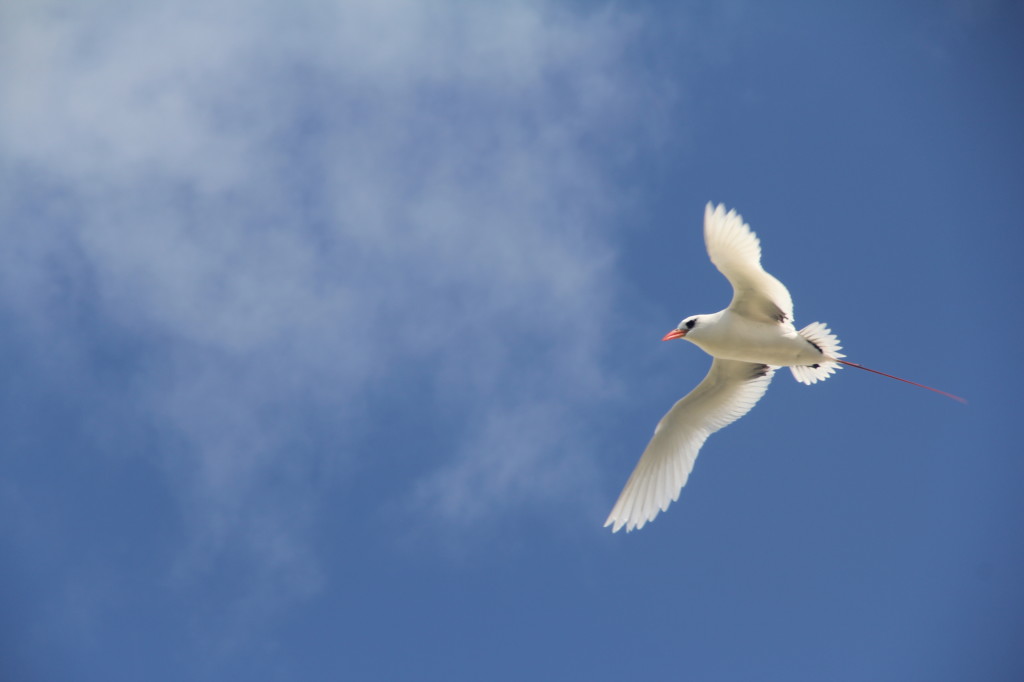
The Red-tailed Tropicbird, Phaethon rubricauda is a beautiful but somewhat rare bird that can be seen pretty easily on Aitutaki.

Red-tailed Tropicbird in flight

Red-tailed Tropicbird in flight

The Red-tailed Tropicbird nests on oceanic islands in large colonies from the Hawaiian Islands to Easter Island and across to Mauritius and the Reunion Island. In Australia, they nest on Queensland’s coral islands (including Lady Elliott Island) and islands off Western Australia. They disperse widely after breeding, birds ringed in Hawaii have been recovered as far away as Japan and the Philippines. They range from the Red Sea to New Zealand and Chile.

When breeding, they mainly choose coral atolls with low shrubs, nesting underneath them (or occasionally in limestone cavities). They feed offshore away from land, singly rather than in flocks. They are plunge-divers that feed on fish, mostly flying fish, and squid.

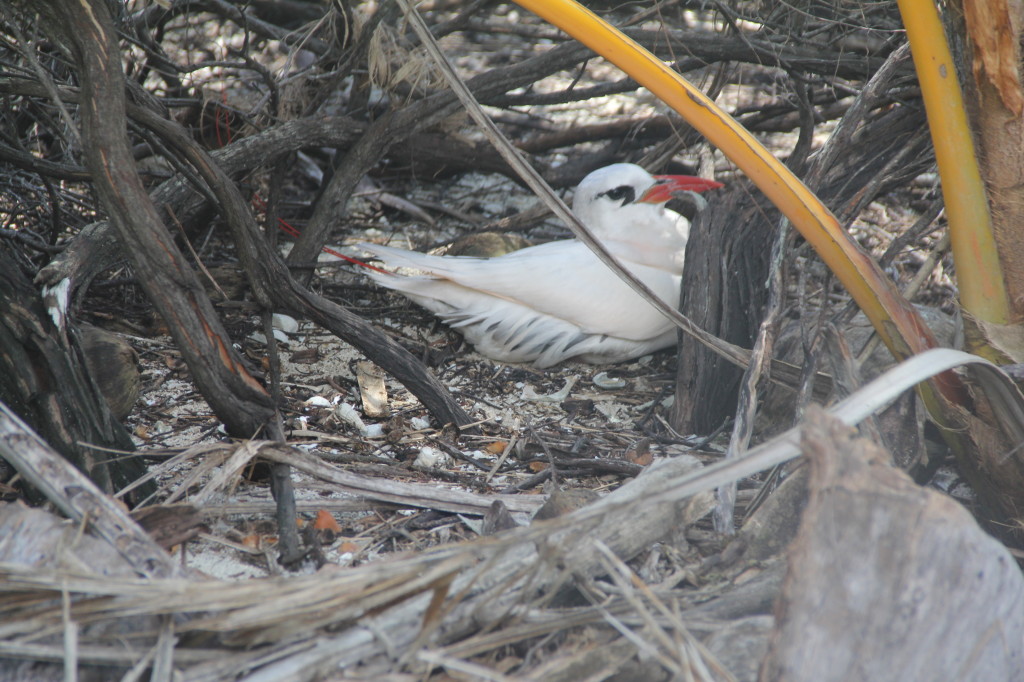
Red-tailed Tropicbird on nest

Red-tailed Tropicbird on nest

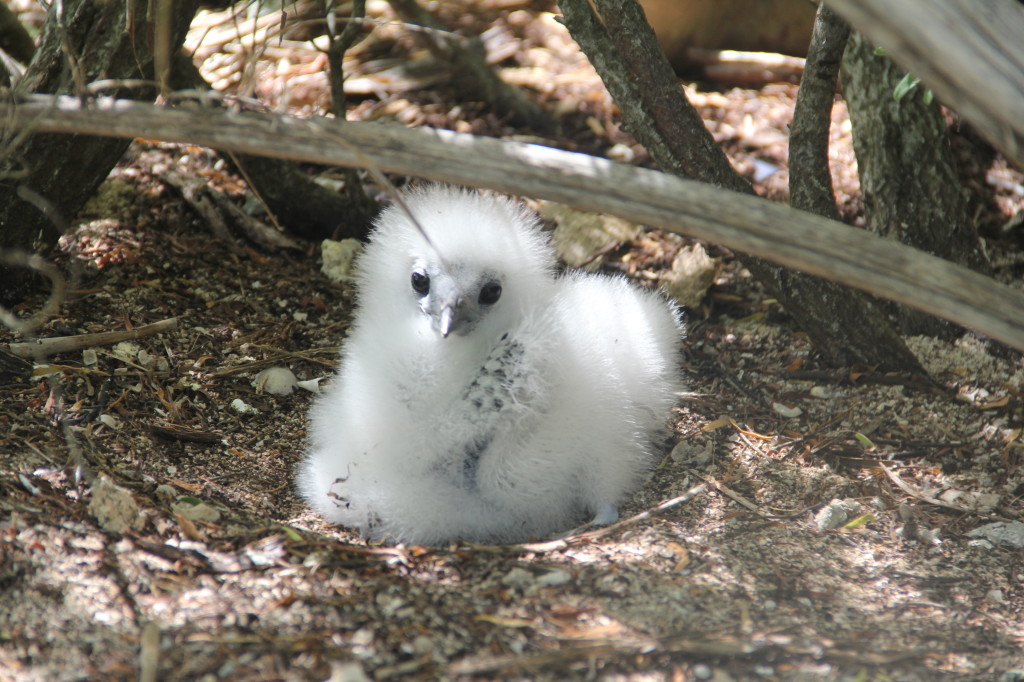
Chicks hatch out covered in long, whitish to gray down, which moults to a juvenile plumage of white with heavy black barring on the head, back, and uppersides of the wings, before they develop the adult plumage

Red-tailed Tropicbird Chick

Red-tailed Tropicbird Chick

You can read more about this elegant seabird here.

IMG_2958

For more information about Aitutaki, please read this post.


Animal Of The Week – Pacific Flying Fox

If you are on your way to Aitutaki to see the Tahitian Blue Lorikeet or Atiu to see the Rimatara Lorikeet, you will be passing through Rarotonga and have a chance to see one of the few native mammals in the Cook Islands, the Pacific Flying Fox.

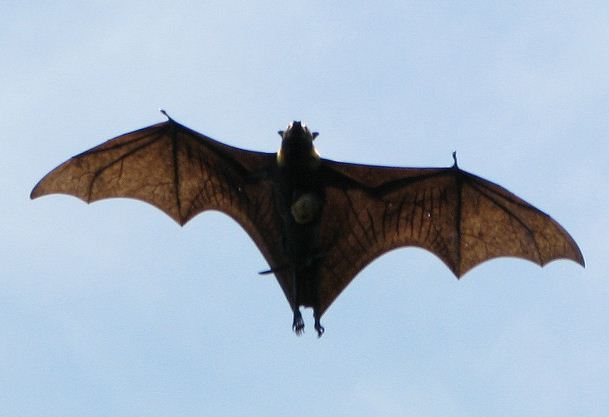
Pacific Flying Fox

This species is the most widespread of the Pacific fruit bats. It ranges from Karkar and Koil islands of Papua New Guinea, southeastwards into the Solomon Islands (Malaita, Makira, Rennell, and Santa Cruz islands), and from here ranges to Vanuatu, New Caledonia (New Caledonia Island and Ouvéa Island), Fiji (widespread), Wallis and Futuna (few old records), Tonga, Samoa, American Samoa, Niué, and the Cook Islands (Mangaia and Rarotonga) (Mickleburgh et al. 1992; Flannery 1995; Bonaccorso 1998). It is possible that this species has been introduced to some islands by humans (Flannery 1995).

Pteropus tonganus is an important as pollinator and seed disperser in Pacific island ecosystems. Without them, it would be difficult to maintain community diversity, because of the disturbances by storms. These animals are needed to affect the regeneration of dominant forest trees. They are also necessary to maintain genetic flow between islands. The loss of flying foxes may affect plants that have coevolved with them. About 30 per cent of plant species on Samoa are totally dependent on flying foxes for pollination or seed dispersal. This is remarkably high compared with forests in continental areas. Flying foxes like P. tonganus are keystone pollinators and seed dispersers, and disruptions of their populations would result in chain reaction of other extinctions–of plants and other animals that are dependent upon them.

For more information, please visit this site and this site.

Nikon Monarch 8 x 42 Binoculars

A great pair of binoculars is essential to any birder.  You need to be able to see the birds up close without actually GETTING up close!  I spent a lot of time researching them and decided on the Nikon Monarch 8 x 42 as being the best quality I could afford and lightweight as I just can’t carry a larger pair together with my camera and lenses.  I was just going through Amazon and noticed they are half price through one of their stores.  There are a lot of specs on the page so please click on the image below to see all the details. I hope someone can take advantage of this sale!

J&R Music and Computer World Rebates:
Price Reflects $65 Instant Rebate thru 01/20/13
(Offer details included in J&R Music and Computer World shipment)


  • High Reflective Silver Alloy Phase corrected prisms – helps eliminate the degradation of the image caused by different light phases reflecting in the binocular.
  • Fully Multicoated – all lens surfaces are multicoated with anti-reflective coatings
  • Polycarbonate Body – designed to be rugged and durable
  • Multi-click Turn and Slide Eyecups with generous eye relief – great for eyeglass wearers
  • Unmatched Warranty – 25 year No Fault repair or replace warranty
  • Product Dimensions: 5.7 x 5.1 x 3 inches ; 1.3 pounds

Atiu – Enua Manu, The Land Of Birds

GETTING TO ATIU

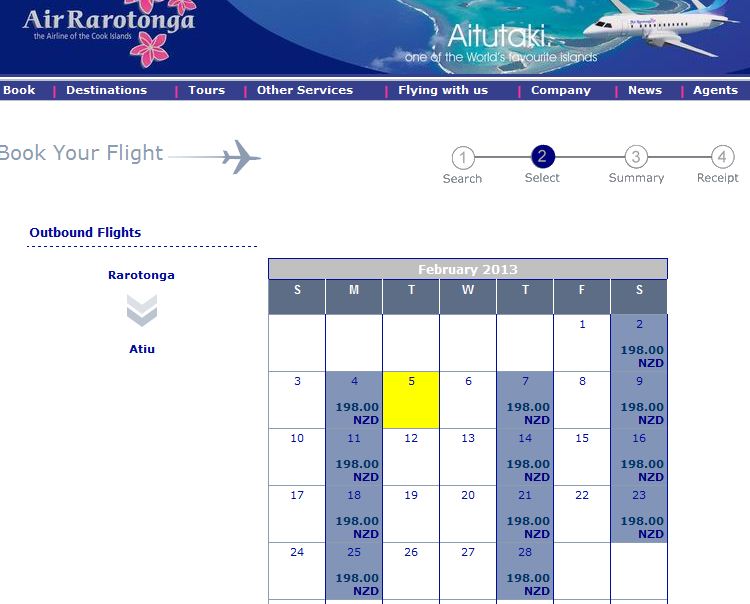
A few days ago, I wrote about the beautiful Rimatara Lorikeet and that the easiest way to see them is to travel to Atiu in the Cook Islands.  I will save the “how to get to the Cook Islands on miles” for a separate post as there is a lot to cover just on Atiu.  You have to start from Rarotonga (RAR) and pay for a ticket on Air Raro as they don’t have any frequent flyer alliances.  It’s pretty much the same price year round though could go higher in peak travel periods.

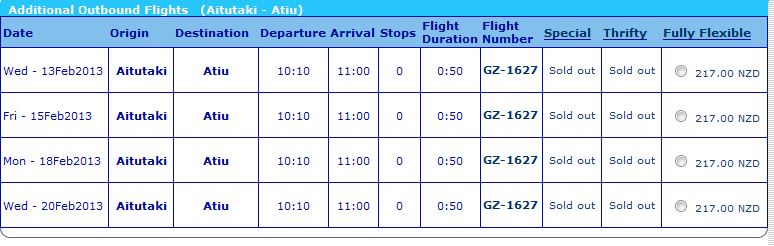
There are only 3 flights a week from RAR but there are also weekly direct flights from Aitutaki so you can do a two island trip without having to return to Raro in between.

There is an excellent tourist information website about Atiu so I will link it here but would like to point out the following excerpt which is of great interest to eco-travelers.

The makatea is clad with jungle and riddled with caves. The dark of one cave, called Anataketake, is the home of the indigenous bird called the Kopeka. An excursion to this cave is conducted frequently and provides a real experience to nature lovers and bush walkers. There are many other caves and in fact you could spend a week exploring underground caves and find even more caves to explore. The raised central plateau is where we all live. It is cooler and breezier. Outside the central populated plateau are many nature walks through the lush tropical jungle. Being the land of the birds we also specialise in guided bird tours where Birdman George explains the fauna and flora on Atiu as well as Atiu’s part in the recovery programme for a back from the brink Rarotongan bird called the Kakerori and for the colourful and endangered Rimatara lorikeet called the kura.


BEST BIRDING GUIDE

There are a handful of small family run guest houses on Atiu but the one I prefer as a birder is Atiu Villas.  The owner, Roger Malcolm and his wife Kura are very involved in the conservation project of the Rimatara Lorikeets and the birds can often be found on the lodge’s premises or in the banana plantation down the road.  Roger can also book a tour with the island’s top birding guide Birdman George.  Here is an interview I did with him a few years ago.

George is actively involved with monitoring the habits and breeding results of the Lorikeets so he always knows where they can be found, where their nests are and if there are any juveniles around.  George has a regular full day tour he does which also takes in the Kopeka Cave and some island sights which is a great introduction to the island and it’s native flora and fauna.  He is also happy to tailor a tour if you want to concentrate on the lorikeets.  The first time we visited Atiu, we did the full day tour, the second time, we had him concentrate on the lorikeets and we got to see quite a few, including some very cute youngters!   George doesn’t have a website or email but you can book him via Roger at Atiu Villas.

BEST LODGING FOR BIRDERS

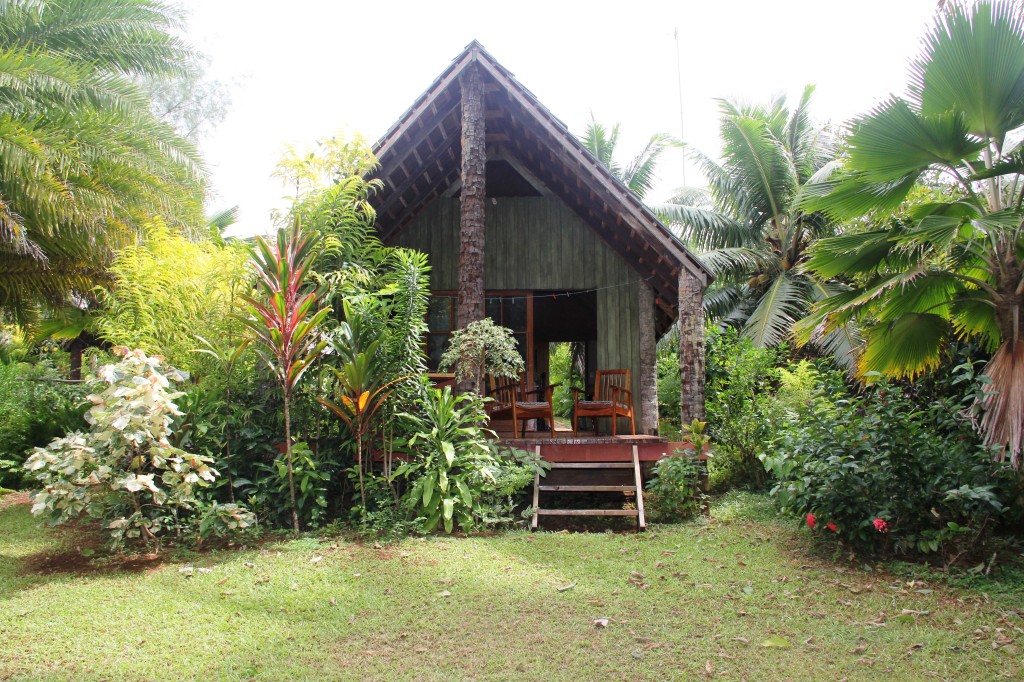
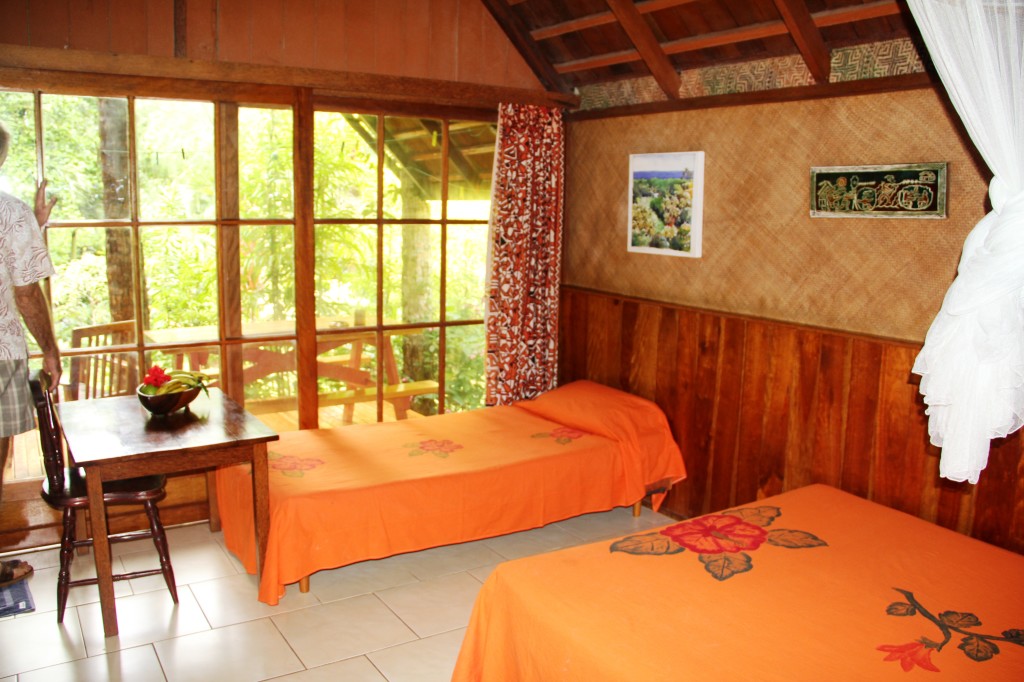
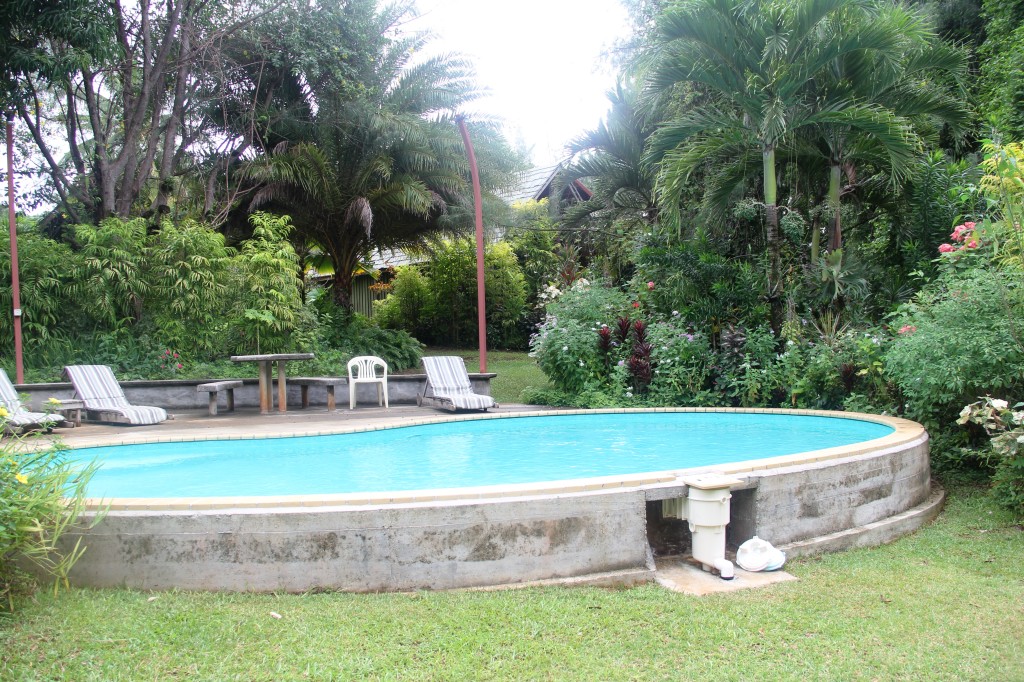
Atiu Villas is a really charming lodge, well situated in lush tropical gardens and is the only accommodation in Atiu that has a swimming pool.  Kura is a fantastic cook and makes delicious evening meals that you must book in advance.  They have a special where by booking on-line you could qualify for either our early booking more than 12 weeks out) or late booking (within 7 days of arrival) discount. This can save you 15% or 40% of the cost of accommodation.

Atiu Villas

Atiu Villas Room

Atiu Villas Pool

But don’t just take my word for it, Atiu Villas gets rave reviews from everyone on Trip Advisor!


Free Points For Everyday Living – Australian Edition

Did you know that you can get free frequent flyer miles and points just for your basic every day living expenses?  Over the last couple of weeks, I wrote about credit card options for Australians so right there if you can route all your expenses for groceries, petrol, utilities via the card (and pay it in full each month) you will accumulate a LOT of points.

There are also ways to earn points that don’t require a credit card.

QANTAS FREQUENT FLYER

1.  Join Everyday Rewards.  Then swipe your card when you shop at Woolworths, Big W, Caltex Woolworths Petrol, Dick Smith and BWS you will earn points.  They sometimes email you special offers such as “Spend $25 on pet food and get 300 bonus points”.  They have more recently been giving fuel vouchers as bonuses but hopefully they will return to bonus Qantas points soon but you always earn the base points, so why not turn your groceries, petrol and other shopping into free points?

2.  Link your Optus phone and internet account and get 2 points per dollar for your normal phone and internet expenses.  You can do this whether you are new to Optus or been using them for years.  You pay the same bill you have always paid but now you are getting points for them!

3.  Use Rental Rewards to pay your rent!  In the example here, they show you how you can get 20,000 points per year!

4.  Life Insurance can earn you 10,000 points.  Check here for details.

5.  Restaurants – if you like to eat out, check here to see if your favourite restaurant will give you points with your meal!

VIRGIN VELOCITY

1.  Virgin Mobile – if you switch to Virgin Mobile, you will get a bonus of 4000 points plus $3 per dollar on every monthly bill thereafter.

2.  On the same page, you will see bonuses for getting Foxtel, Quickflix, and tickets for events.

3.  Online shopping – Velocity partners with Westfield and most of us do shop at Westfields pretty often so check to see if you can get points for it.  They also have their own online shopping mall and partner with Ebay, the Iconic, Booktopia and more!

4.  Insurance and Financial – maybe not an everyday expense but if these are services you are shopping for anyway, why not get points by using the click-thru link?

5.  Wining and Dining – once again, if you like going out or joining a wine club you can get points!


I know if you are just starting out, this seems kind of daunting, but once you get started, it becomes second nature.  If I get a bonus for pet food, I stock up on bird seed.  I plan my grocery shopping for days when bonuses are on offer and fill my car with the maximum petrol voucher as those also get me points.  It all adds up-it has only taken me a year to get over 16,000 Qantas points just from groceries, petrol and Optus!  Purely free travel!

DOUBLE DIPPING

Oh and if you have a miles/points earning credit card you get to double-dip!  That means you earn the points from the card and from the retail partner.  For example, I spend $150 on groceries at Woolies.  I pay for it with my Amex.  I just got 130 Qantas points and 150 Amex Membership Rewards for stuff I had to buy anyways!


Blue Lorikeet (Vini peruviana) Aka Tahitian Lorikeet

Today is my day to blog about Vini Lorikeets!  It just didn’t seem right to do such a comprehensive post about Rimatara Lorikeets without doing one about their cousins, the Tahitian Blue Lorikeets.

Tahitian Blue Lorikeet

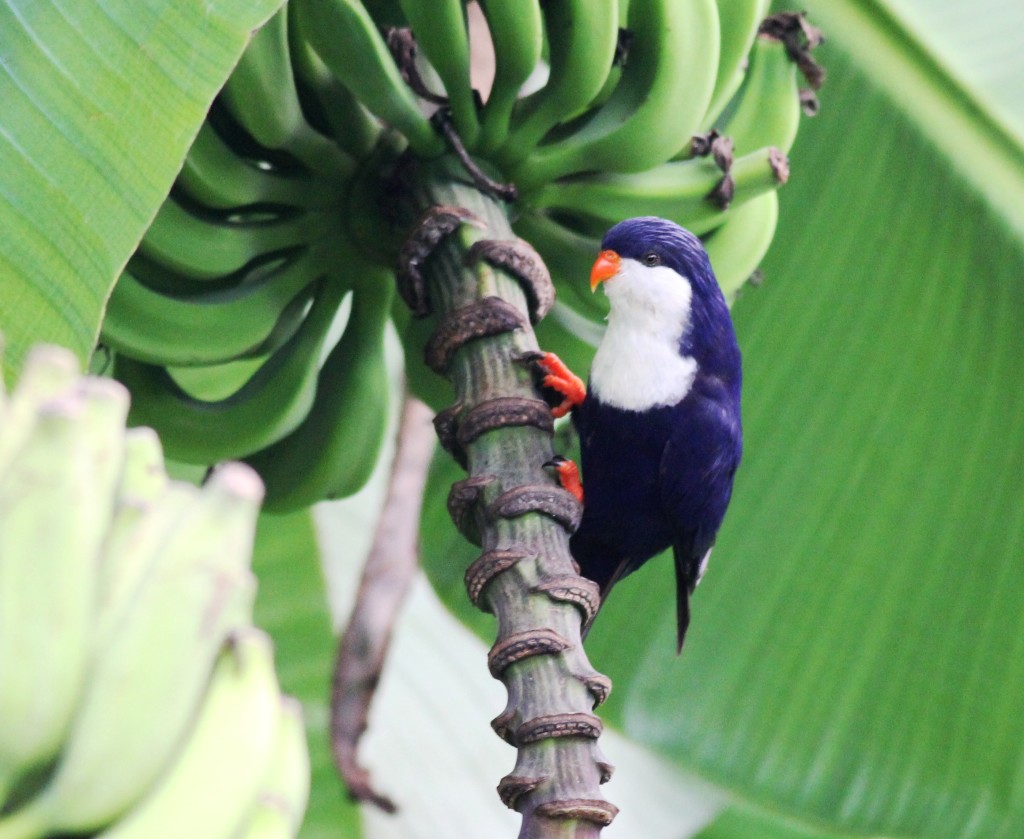
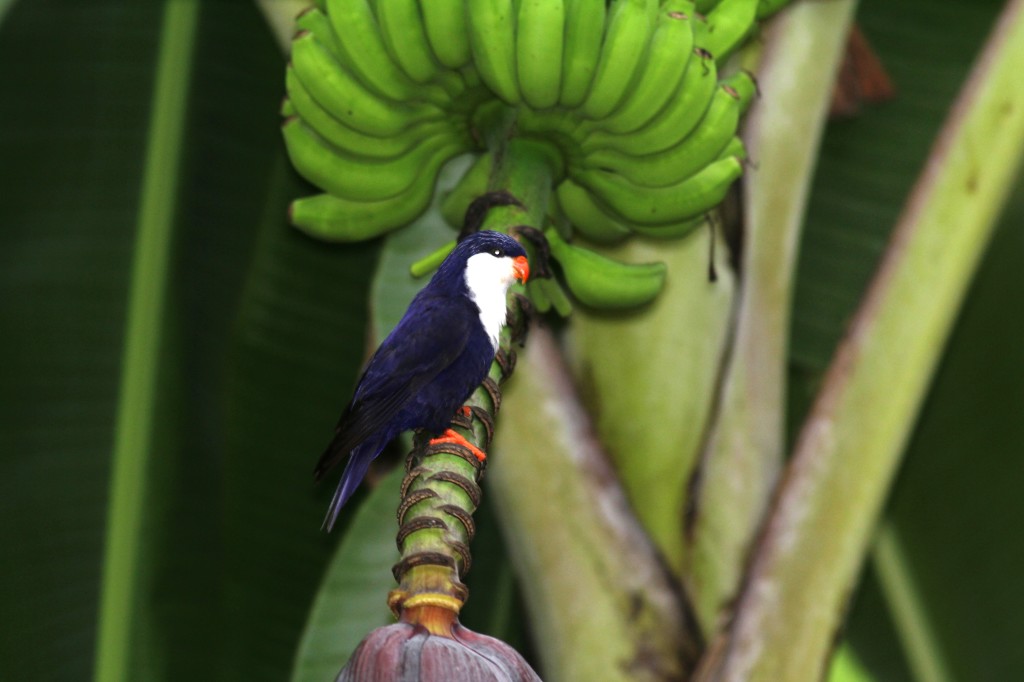
These birds have a somewhat larger distribution area and can be found in around 8 islands: Motu, Manuae, Tikehau, Rangiroa, Aratua, Kaukura, Apataki, Aitutaki, and possibly Harvey Island and Manihi. Its plumage is mainly dark blue and it has a white area over its upper chest, throat and face.

This species qualifies as Vulnerable (rather than endangered) because it has a small and fragmented island distribution and is likely to continue to decline owing to ongoing predation by black rats and, to a lesser extent, cats.

The easiest place to see them in the wild is on Aitutaki in the Cook Islands where the locals affectionately call them “Kuramoo”.

Blue Lorikeet (Vini peruviana)


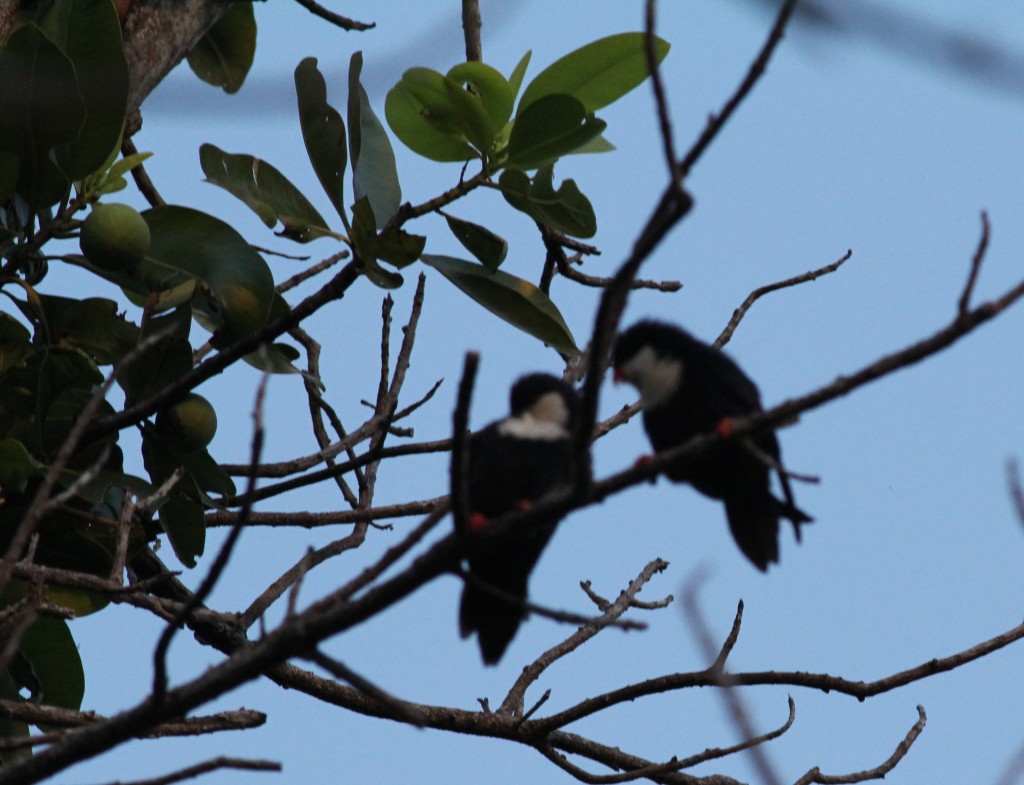
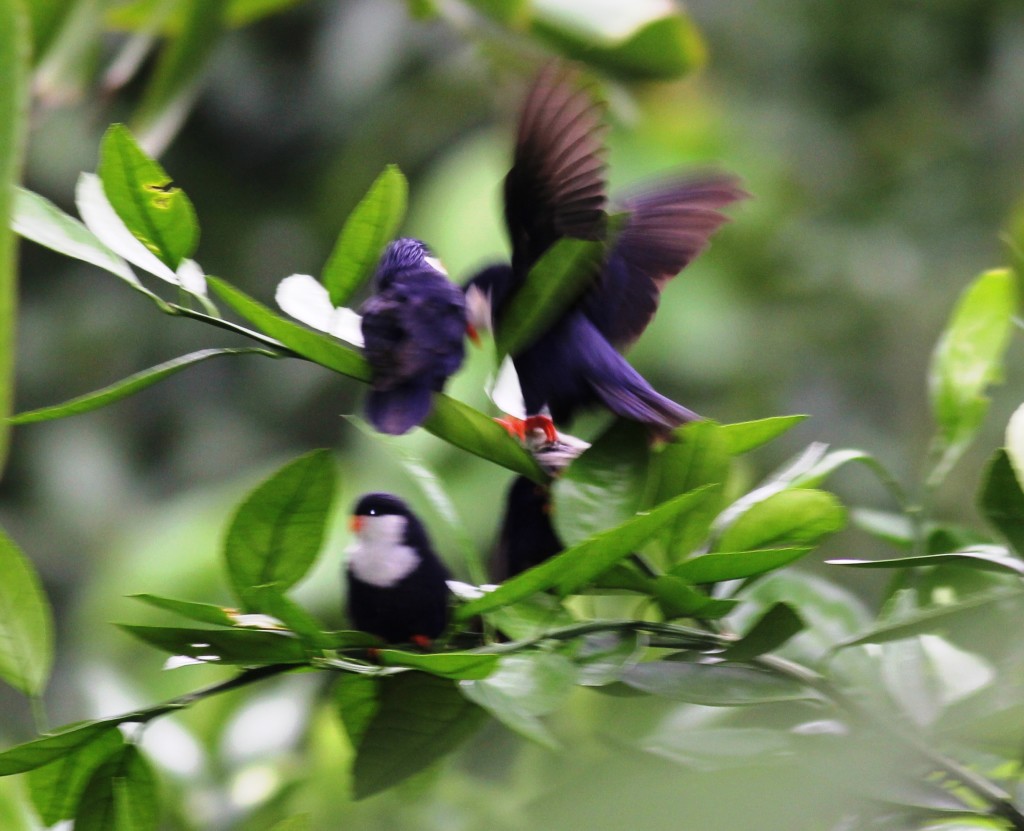
Blue Lorikeet (Vini peruviana) bonded pair


Blue Lorikeet (Vini peruviana) checking me out!


Tahitian Lorikeets

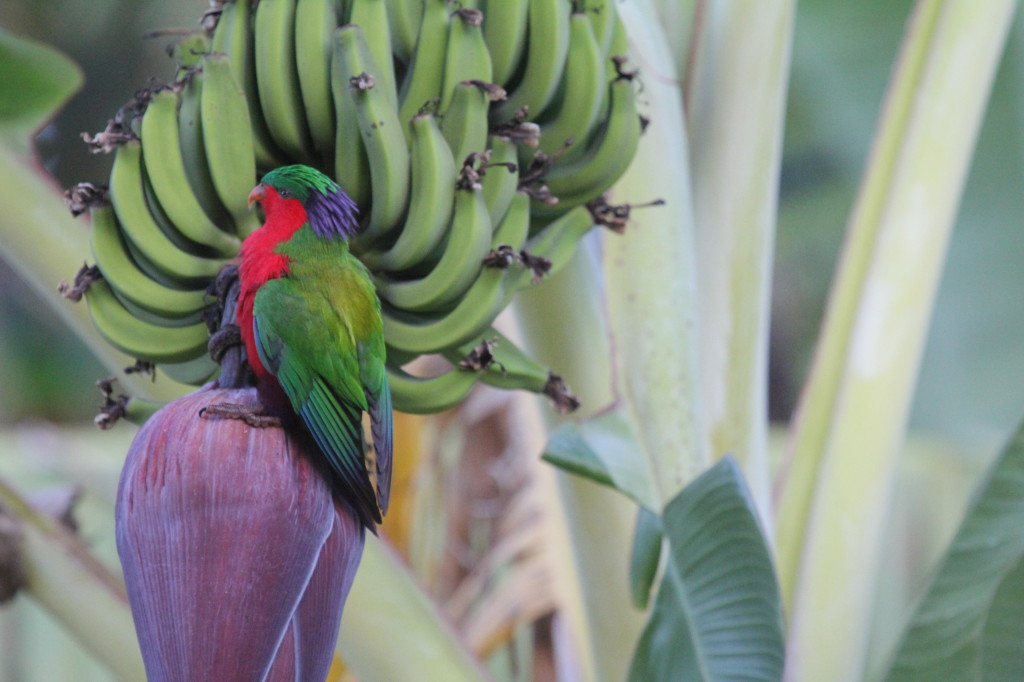
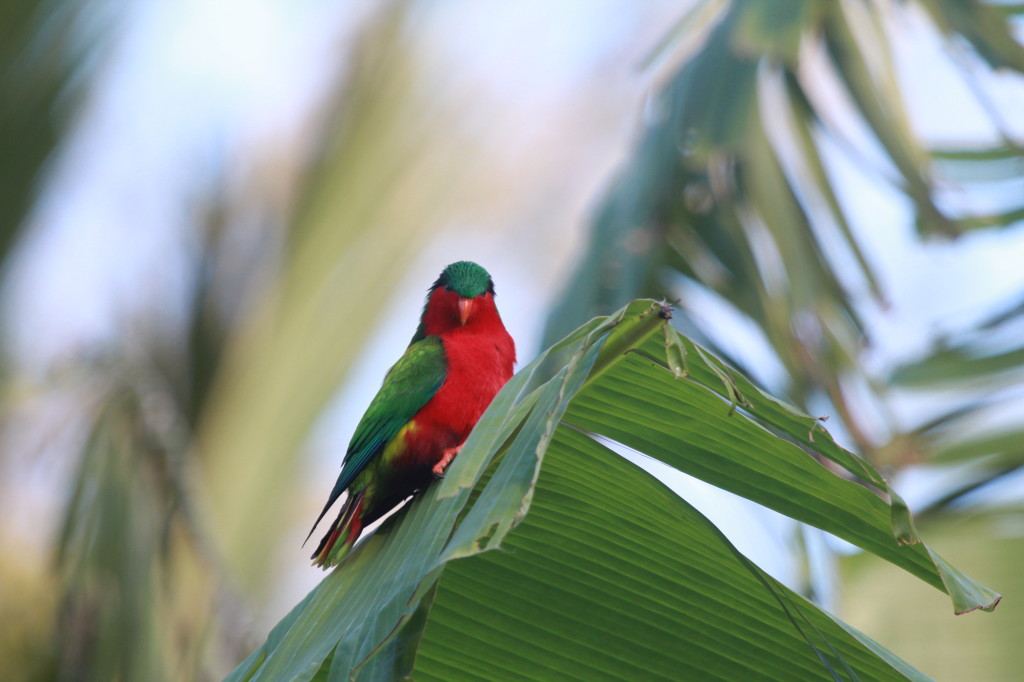
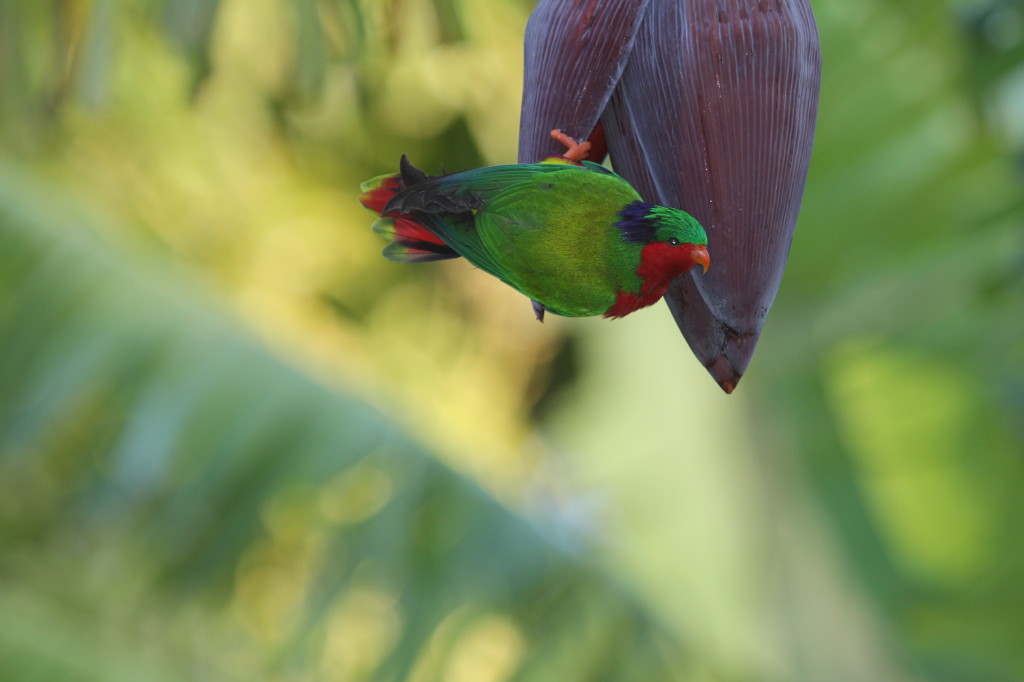
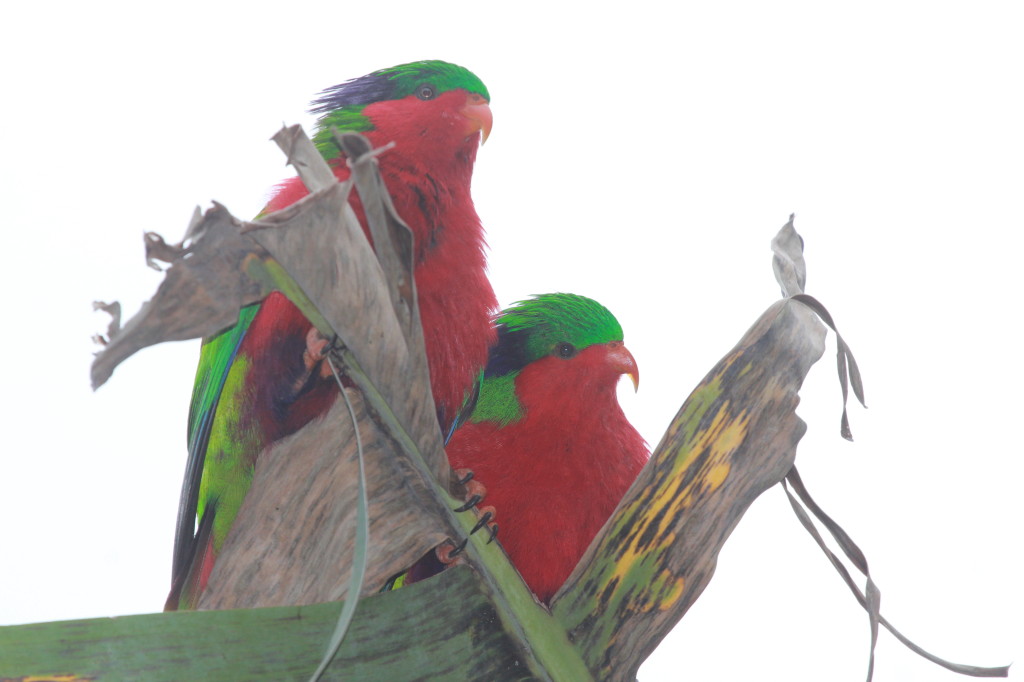
Kuhl’s Lorikeet (Vini kuhlii), Aka Rimatara Lorikeet

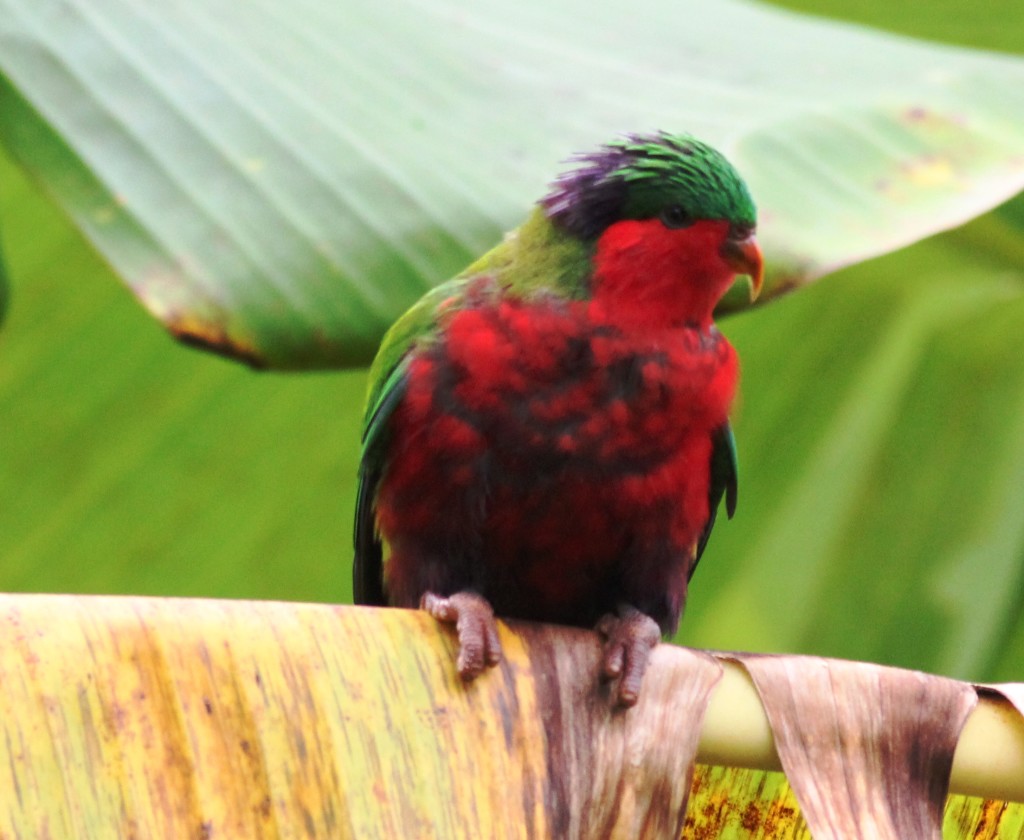
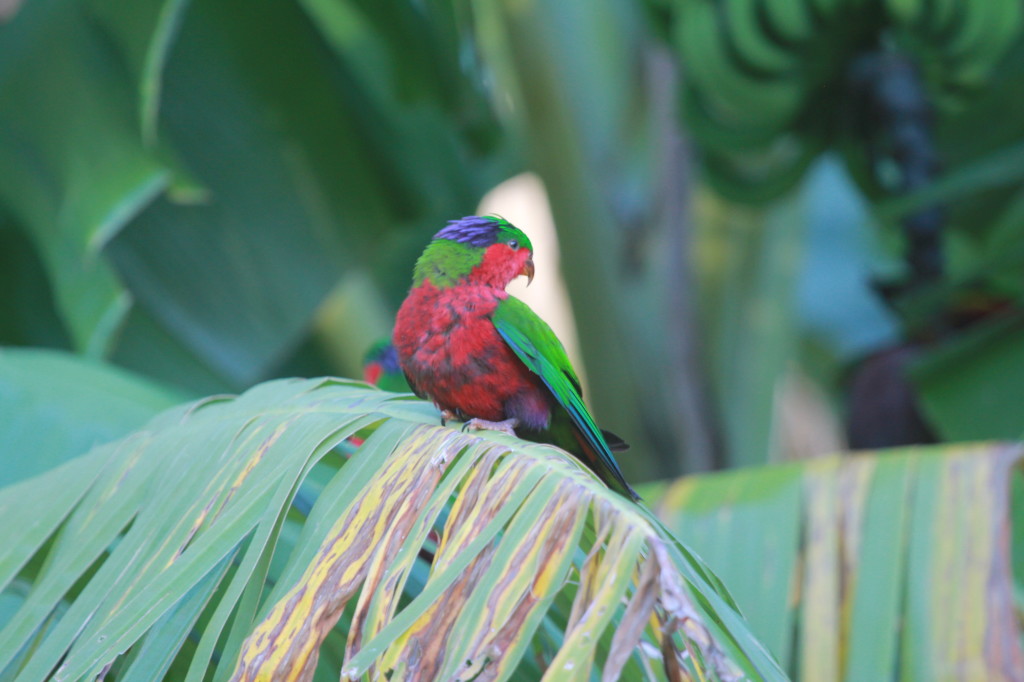
This is one of my favourite parrot species and I have made two trips to see them in the wild in Atiu, Cook Islands.  The first time was in 2008 and they had only been released less than a year and everyone was caught up in the excitement about having the beautiful little birds back on the island after so many years.  The actual name of the species is Kuhl’s Lorikeet or Kuhl’s Lory but they are much better known as Rimatara Lorikeets.  In their native lands, they are called “Ura in French Polynesia and Kura in the Cook Islands.

UPDATE:  I have also been to see them in their original native land, Rimatara!  I have been blogging about this trip taken in June 2014.

Young Rimatara Lorikeet

New photos taken in Rimatara.

IMG_1412 IMG_1345 IMG_1333 IMG_1353 IMG_1230 IMG_1005 IMG_1159 IMG_0844

There are only four places where these highly endangered little parrots can be seen in the wild.  Of course one is their original homeland of Rimatara, French Polynesia and there are a few in Kritimati Island.  Then there is their new home of Atiu, Cook Islands and a few of the Atiu lorikeets flew off to Mitiaro, Cook Islands and have been breeding so there is a small population there.  Out of all these places, the easiest to get to on airline miles is the Cook Islands, then you need to fly on Air Rarotonga to Atiu.  You can also fly from Papeete to Rimatara on Air Tahiti.

LEARN MORE ABOUT RIMATARA LORIKEETS

Wikipedia

Word Parrot Trust & Magazine Article

Birdlife

Birdguides

Manu

Cook Islands Bishop Museum

VIDEOS

This is where I get to sit back and take it easy because to tell you the background of the Rimatara Lorikeets and their story is much easier to do with a collection of videos.  So sit back, relax and enjoy!

A much less professional production is my own visit to see them in 2008.  It does give an idea of what to expect from your own eco-tourism experience if you go to see these birds in the wild!

Best Marriott Hotels For Eco-Travelers And 2000 Free Points

Using hotel points strategically can save you a lot of money in gateway cities so it’s a good idea to study them carefully to see which programs can best suit your travel plans.  This week, let’s look at the Marriott chain.  They have 3840 hotels around the world.  If you are a business traveler, you may already be getting free points from you employer-paid trips.  Lucky Americans can get a LOT of free points with the Chase Marriott Visa Card (not an affiliate link, just information) and meeting planners can get 50,000 points by planning a meeting at a Marriott Hotel.

Award nights start at 6000 points for a “Pointsaver” at a Category 1 hotel (which are pretty rare).  Marriott has a referral program by which members can earn up to 50,000 points per year by referring others to the program.  You can only do this 5 times per year so only give your referrals to people whom you know are going to stay at a Marriott within a year.  I still have my 5 referrals for this year so I would be glad to refer new members,  just use the Contact Form to send me your email and I will send you an invitation.  Once you are a member, you will then be able to invite 5 people on your own account!

OK, so how do we find the best options for eco-travelers?  Let’s have a look at the hotel directory and see what places have a Marriott property.  Most birders will be drawn to tropical places in the Americas, Asia, Africa and Australia.


AFRICA – Out of these 4 countries, Rwanda would possibly have some birding including a couple Poicephalus species but it’s much better known for the mountain gorillas……but keep an eye on the safety issues in Rwanda.

ASIA – India has some good possibilities.  From Bangalore you can get to Coorg where there are Malabar Parakeets and others, same goes for Kochi which is near Thattekad.   From Jaipur, you can get to Bharatpur Bird Sanctuary which has both endemic and migrating birds.  Indonesia is mostly resorts in Bali or city hotels that would do for gateway cities to other birding hot spots like West Papua and Seram.  You would pass through Manila to get to Palawan for Red-Vented Cockatoos or Subic Bay for Philippine Hanging Parrots.  Singapore has good birding in the Botanical Gardens which makes a nice detour from a shopping or business trip.  There are also good birding spots in Thailand and Malaysia.

AUSTRALIA AND PACIFIC ISLANDS – From Brisbane, you could make the long but worthwhile drive to Bowra Station or Lamington National Park which could also be accessed from Surfers Paradise.  From Melbourne, you could head up into the Dandenongs.

CARIBBEAN – Of these places, Aruba, Cayman Islands, Domincan Republic, Jamaica, Mexico, Puerto Rico and Venezuela all have good birding.

CENTRAL AMERICA – there are 6 Marriotts in Costa Rica and 5 in Panama.  As I wrote in the Carlson Hotel, Panama post, there is the Soberania NP and Metropolitan NP both in less than an hour’s drive from the city.  In Costa Rica, San Jose is the gateway to great birding destinations like Selva Verde, Arenal, Monteverde and Savegre.  Herradura is not too far from Carara NP, famous for Scarlet Macaws and Guanacaste also has great birding!

SOUTH AMERICA – all the Marriotts are in large gateway cities which will come in handy as the birding and ecotourism destinations are pretty far flung, requiring domestic flights or buses to reach.

The one thing for sure is that you can save a bundle if you use hotel points in the right places but you do have to be a good planner and maximize any other hotel stays you may have with business or family trips to save points for your big eco-adventure!