Parrot Lover’s Cruise Shore Excursions

The Parrot Lovers Cruise which I blogged about a couple of months ago have posted details of two of their shore excursions but I was unable to post while I was in West Papua due to poor internet so better late than never!

PUERTO RICO

October 26 – Discover how scientists and aviculturists are working together to save the critically endangered Puerto Rican Amazon Parrot with this exclusive tour available only to guests aboard the Parrot Lover’s Cruise. Departing at 8:30am local time, attendees will get a chance to visit the Vivaldi (or Rio Abajo) Aviary, a research station which is closed to the general public and located in the 5,000 acre Rio Abajo Forest Reserve.

While on site, you will meet with members of the PR Amazon Recovery team. During a tour of facilities and surrounding area, you will learn about the captive breeding and release program and may be able to glimpse one of the parrots that have recently been returned to the wild. A small donation is included in your excursion price and will assist with efforts to save this critically endangered species. With a stop at the mall for some lunch and shopping, then back to the cruiseship to find your luggage awaiting your arrival, there’s no better way to start your trip!

Ticket Price: USD $110 per guest (excludes lunch.) Each ticket includes a $36 donation to aid parrot conservation. Contact Carol to book your spot »

ST THOMAS

November 1 – Departing at 10:00 am local time, you’ll be met at the cruise ship pier and taken to the famous Coral World, where you’ll be fascinated by the many species of underwater life represented here. You’ll experience what may be a once-in-a-lifetime opportunity to touch a shark, hand-feed a stingray, or watch newborn seahorses learn to swim! As you explore Coral World, you’ll be surrounded by native trees and plants, as well as fabulous views of the ocean, the shoreline of St. Thomas, and neighboring islands. Enjoy the Caribbean reef encounter, shark shallows, lagoon, turtle pool, nature trail, touch pool, stingrays, and much more! You’ll stay dry while watching non-captive fish and other marine life from the Undersea Observatory, which takes you 100 feet offshore and 15 feet beneath the sea in the middle of a living coral reef. You’ll also visit the Lorikeet Aviary, where you’ll have the opportunity to feed the many exotic birds and observe them playing. In addition to all of this, Coral World also has shops, bars, restaurants, restrooms, and a nature trail. We will then head over to the Butterfly Farm, where Daily bird shows are offered on The Butterfly Garden entrance porch. Let Troy, Miss Priss, Coral, Elvis & Ginger entertain you with their antics and skills. They are great showoffs!

This tour includes:

      • Round trip transportation from the cruise ship pier
      • Coral World
      • Lorikeet Aviary
      • Undersea Observatory
      • Closeup views of aquatic life
      • Bird feeding
      • Shop/snack/restroom opportunities
             • Butterfly Farm and Bird Show

Ticket Price: USD $87.00 per guest (excludes lunch.)
Contact Carol to book your spot »

Excursion schedule subject to change.

.

Remember that although this cruise is on sale to the general public, in order to participate in the parrot lover’s programs, you must book through

CAROL CIPRIANO

Carol’s Travel Time
570.470.0034

carolstraveltime@gmail.com

And it’s all for a good cause as the funds raised go to the World Parrot Trust!

Preparing To Visit West Papua, Indonesia

West Papua is one of the world’s most dazzling locations for eco-tourism and birding.   The Indonesian state shares the island with the nation of Papua New Guinea and both are in the top 12 countries to see wild parrots.  There are endemic species to both countries and some which can only be found in each individual country, but the crime problem in Papua New Guinea has scared off a lot of potential tourists.  Here’s a few facts to know before you go.

  • West Papua is safe to travel in.  There may be petty pickpocketing in markets but violent crime and robberies are extremely rare.
  • Communication is difficult.  Internet speed in the cities, usually accessed from your hotel make dial-up look fast.  Most West Papuans communicate with text messages via their cell phones but many remote areas such as the Arfak Mountains don’t even have cell phone coverage.
  • Getting around can be expensive.  There are special deals from time to time like the one on Sriwijaya Airlines but you need to keep looking for them.  There are no international airports (except Jayapura to/from PNG) so you need to enter Indonesia via Bali, Jakarta, Manado or Makassar.  You can see how to do that with frequent flier miles or shop around for the best fares.   I strongly recommend adding a few days in Bali at the end of the trip for R&R and cheap massages because you WILL have sore muscles.
  • Some of the birding locations are among the most physically challenging you will ever do, especially if you are targeting parrot-rich countries.  Trails are non-existant in Arfak and the Nimbokrang swamp forest trail consists of slippery planks.  You will be walking through primary rainforest with your guides hacking away bushes as you go.  You will get filthier and muddier than you have ever been in your life!
  • Although West Papua is considered a destination for advanced birders, I would say if it’s on your bucket list just do it!  You won’t get any younger and the fitter you are for this destination, the better!  I am still amazed that I made it up to the Garden Hut at the Arfaks, took me 4 hours with me collapsing every 20 metres!   The guides and porters happily run up and down the same distance in about 30 minutes!
  • High season is roughly June-August.  There will be several large groups there at this time so you will need to have everything booked in advance.  If you go outside this time, you should still try to make contact with the guides in advance but in cases like Zeth Wonggor in Mokwam, you can’t contact him directly but if you just show up he will take care of you and assign you a guide if he happens to be busy.  If you aren’t with a group, try to avoid going at the same time they will be there as hides to see BOPs are limited.
  • There are some small home-stays and lodges, but in many other cases you will be camping in the bush with no bathroom facilities.
  • You will experience extremes of temperatures from the hot, humid lowlands to the chilly nights in Arfak.
  • Photography is very difficult.  The birds blend in well with the trees, many are small like the Pygmy Parrots and Fig Parrots so it will be difficult to focus on them.  Expect to get a lot of beautiful shots of leaves!  There will be some clearings where you can get good shots of birds flying overhead but you will need to be quick and shoot handheld with at least a 400mm lens.  Start working out so you can balance 3kgs of camera/lens and focus that little red dot on the bird flying rapidly overhead!
  • Don’t bother trying to do laundry.  Bring old clothes in muted natural or dark shades as they are going to get trashed anyways and discard them when you can’t stand them anymore.  You can always buy new clothes in Bali-cheap!  Consider giving your shoes/boots to your guide or porter at your last birding stop, many of them work in thongs and you aren’t going to want to clean them up anyway.  The more experienced guides prefer gumboots as they are best for the muddy conditions you will be trekking in so buy a cheap pair and give them away at the end.  If you wear large shoes, you won’t be able to buy them in West Papua.

These are the 5 main destinations for birders in West Papua.

West Papua Birding Destinations

A — Raja Ampat (Sorong)

B — Arfak Mountains (Manokwari)

C — Biak/Numfor (Biak)

D — Nimbokrang (Jayapura)

E — Habema Lake (Wamena)

Having said all that-the rewards are great!  You will see some of the most spectacular birds in the world like the Birds of Paradise (BOPs), Parotias, Bowerbirds and of course the dazzling array of Parrots!

Over the next several installments of this series I will go into more detail for each location, recommend guides and how to contact them and show you where to stay.

I Have A Confession To Make

Over the past 3 weeks, it looks like MTTW has been “business as usual” with a post every day.  In reality, I have been off on the birding adventure of a lifetime in West Papua, Indonesia!  I prepared 3 weeks of posts in advance and scheduled one everyday as I didn’t want the blog to look like no one is home and also for my personal home security I don’t like to publish online that I will be away from home.  Now that I’m back, I am planning a whole series on West Papua and how to organize a birding trip there.  It’s without a doubt the most difficult and physically demanding trip I have ever been on and one I wish I had done when I was much younger and more physically fit but you can’t turn back the hands of time and no one gets younger!  What makes birding in West Papua so rewarding is the beauty and uniqueness of the birds such as the Birds of Paradise and the Parrots…………and that the guides are so highly skilled at finding them.  These skills come from their roots as bird trappers and poachers so thankfully they have seen the value in keeping their native birds wild and free and earning an honest living helping eco-tourists to see them in the wild.

I am still pretty worn out and came home with the flu so for now I will just outline the chapters in this series which will be forthcoming over the next few days.

1.  Preparing for a trip to West Papua, Indonesia

2.  Getting to West Papua using miles and getting around

3.  Birding in Biak

4.  Birding in Nimbokrang

5.  Birding in the Arfak Mountains

6.  Birding in Raja Ampat – Waigeo Island and Sorong

7.  Bali for Birders

8.  Shopping in Indonesia – Bird Related Souvenirs

9.  Review Sriwijaya Airlines Business Class

10.  Bird Species Profiles (various species we saw, will be interspersed with the above)

Puerto Rico Travel Guide Books

Here’s some suggestions for guidebooks to help you get the most from your trip to Puerto Rico.  If you click through to the Amazon page, you will see reader reviews and also other suggestions for similar books.  They come in both Kindle and Paper versions.  Please note that these are my affiliate links and you do not pay any more using my links than if you went direct to Amazon.  Thank you for your support!

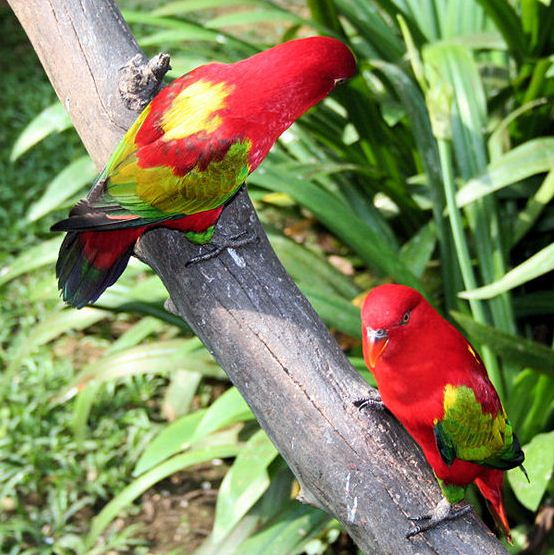
Chattering Lory (Lorius garrulus)

The Chattering Lory, Lorius garrulus is a forest-dwelling parrot endemic to North Maluku, Indonesia. It is considered vulnerable, the main threat being from trapping for the cage-bird trade.

Chattering Lory (Lorius garrulus)

There aren’t any pics of them in the wild that I could find but there are a few good shots of them in bird parks.


Chattering Lories

Chattering Lories

One of the reasons they are so hard to find is because they inhabit a remote area of Northern Sulawesi near Halmahera.  You can get to South East Asia and get a domestic flight to Halmahera.

Chattering Lory Habitat

This little guy seemed happy to leave the chattering to his neighbors the Rainbow Lorikeets!


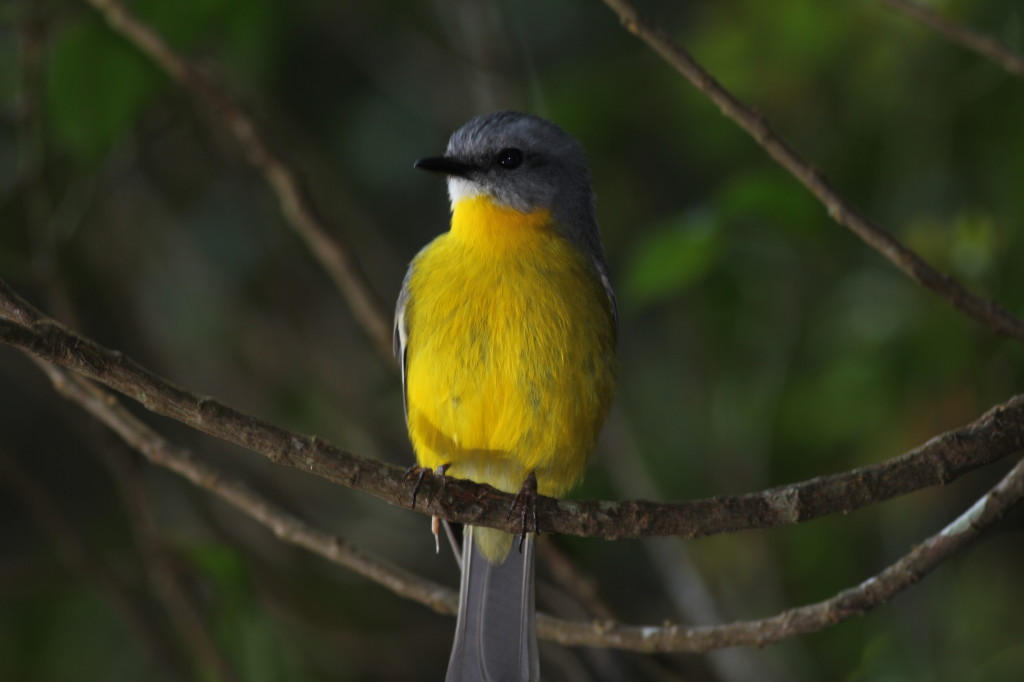
Eastern Yellow Robin (Eopsaltria australis)

The Eastern Yellow Robin was first described by ornithologist George Shaw in 1790. Two subspecies are recognised; the Northern Yellow Robin (subsp. chrysorrhoa) and the nominate or Eastern (subsp. australis). The former was previously regarded as a separate species and called the Southern Yellow Robin.

Eastern Yellow Robin

Eastern Yellow Robin

I got this shot while doing the Photography Workshop with Michael Snedic last year.  Just goes to show you what a difference some proper instruction can make!

The Eastern Yellow Robin (Eopsaltria australis) is an Australasian robin of coastal and sub-coastal eastern Australia. The extent of the Eastern Yellow Robin’s residence is from the extreme southeast corner of South Australia through most of Victoria and the western half of New South Wales and north as far as Cooktown. Tropical Northern Queensland birds are mainly restricted to the warm heights of the Great Dividing Range.

Eastern Yellow Robin Range

These little guys sure are quick bathers………….but cute!

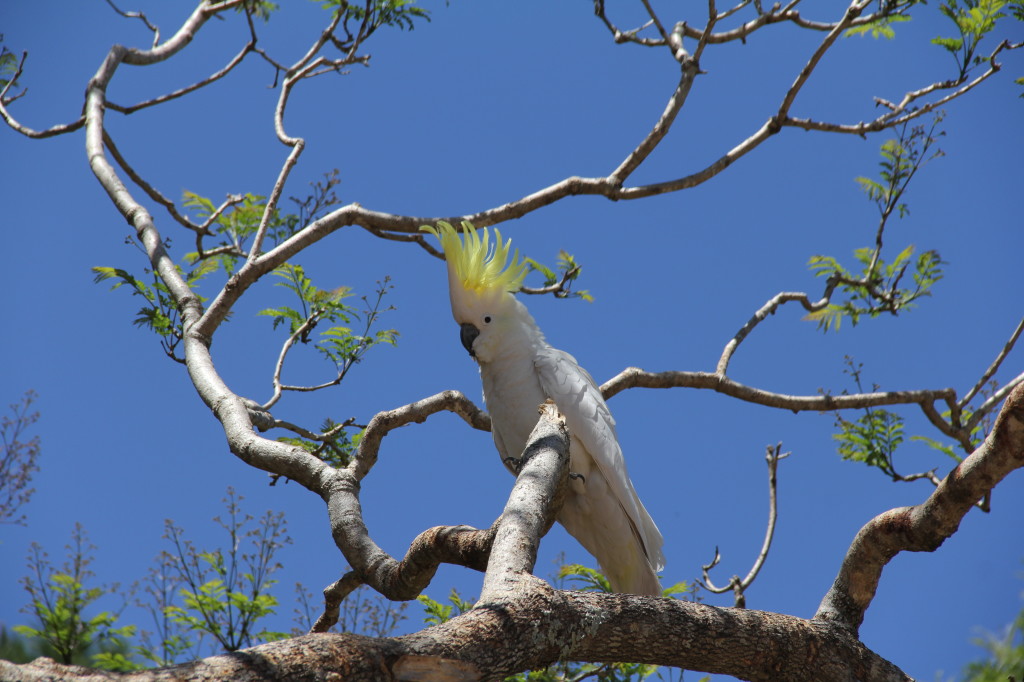
Sulphur-Crested Cockatoo (Cacatua galerita)

Just about every morning, I have the pleasure of listening to various cockatoo species flying over my house enroute to the city parks where they can find gum nuts and other delicacies.  The Sulphur-crested Cockatoo (Cacatua galerita) is one of Australia‘s most famous birds and very easy to see in the wild…………and sometimes you don’t have to get any more “wild” than your backyard!

Sulphur-crested Cockatoo (Cacatua galerita)

Sulphur-crested Cockatoo (Cacatua galerita)

In Australia, Sulphur-crested Cockatoos can be found widely in the north and east, ranging as far south as Tasmania, but avoiding arid inland areas with few trees. They are numerous in suburban habitats in cities such as Adelaide, Melbourne, Canberra, Sydney and Brisbane. Except for highland areas, they occur throughout most of New Guinea and on nearby smaller islands such as Waigeo, Misool and Aru, and various islands in the Cenderawasih Bay and Milne Bay.  Why not plan a trip to Australia and see them for yourself?

There are four recognised subspecies;

  1. C. g. triton (Temminck, 1849) is found in New Guinea and the surrounding islands,
  2. C. g. elenora (Finsch, 1867) is restricted to the Aru Islands between Australia and New Guinea,
  3. C. g. fitzroyi (Mathews, 1912) in northern Australia from West Australia to the Gulf of Carpentaria
  4. and the nominate subspecies C. g. galerita which is found from Cape York to Tasmania.

C. g. fitzroyi (Mathews, 1912) in northern Australia from West Australia to the Gulf of Carpentaria
and the nominate subspecies C. g. galerita which is found from Cape York to Tasmania.

Here, a flock of wild Sulphur-crested Cockatoos forages in a park, unafraid of the filming humans!

 Let’s just say that some of them like to live dangerously!

Tasmania Guide Books

Here’s some suggestions for guidebooks to help you get the most from your trip to Tasmania.  If you click through to the Amazon page, you will see reader reviews and also other suggestions for similar books.  They come in both Kindle and Paper versions.  Please note that these are my affiliate links and you do not pay any more using my links than if you went direct to Amazon.  Thank you for your support!


Photographer Of The Week – Stephen Burch

This week we are featuring a British photographer, Stephen Burch. Here’s an excerpt from his home page:

Much of my birding (and bird photography) is done in my home county of Oxfordshire. After birding in this county for many years, I first acquired a digital camera in 2003 for digiscoping. In 2006, in search of higher quality results, I upgraded to a DSLR & 400mm lens, with some further upgrades more recently.

Farmoor Reservoir is probably the best place locally for birds and bird photography, where waders and other species can often be quite confiding, especially on the causeway. Visits to Port Meadow, if it has any water, can also been quite productive, with the added benefit of more natural surroundings – no concrete! Various other sites in the county including Otmoor can be reasonable at times, but getting close enough for good pics is a continuing issue (especially with the DSLR).

I also venture further afield from time to time, including both elsewhere in the UK and overseas. Holidays can provide good opportunities, and I often try to make the most of various business trips if at all promising in terms of locality and time of year.

Not only does he have some amazing bird images, he also has some general photography tips.  As always, to protect his copyright, I will only provide the link to his gallery.  Enjoy!

Miles For Surveys – E-Miles

Last week, we looked at E-Rewards as a means of earning free miles.  E-Miles is another such survey company but their surveys are much quicker and usually involve simply looking at an advertisement or video, then answering a few questions about it.  Unlike E-Rewards, you don’t have to wait for an invitation to join but you do have to nominate your sponsor when you join.  Here is a list of their sponsors.

E-Miles Sponsors

Once you are registered, they will send you emails when you have an earning opportunity with a link to click on.  You will then see a page something like this.

Earn miles now


Click on the button to see just exactly what you have to do to earn the miles and how much you have to donate to get the larger bonuses.  Most of these will be monthly donations so pay attention to the T&Cs.

E-MIles Charity Screen

If you do not wish to make a donation, you will still get 5 miles for viewing the ad and answering a few questions.

E-Miles Survey

Tick the boxes you want and then click the Submit button and you will instantly get 5 miles for just a minute or two of your time.  If you regularly donate to charities, this is a good portal to use to get some free miles for doing what you normally do.