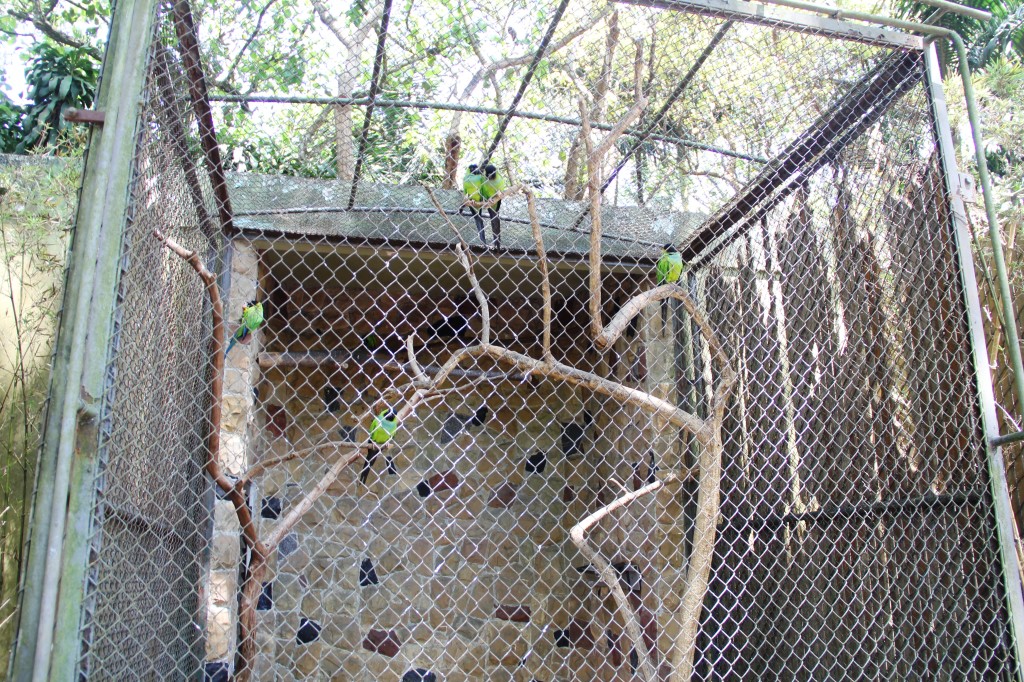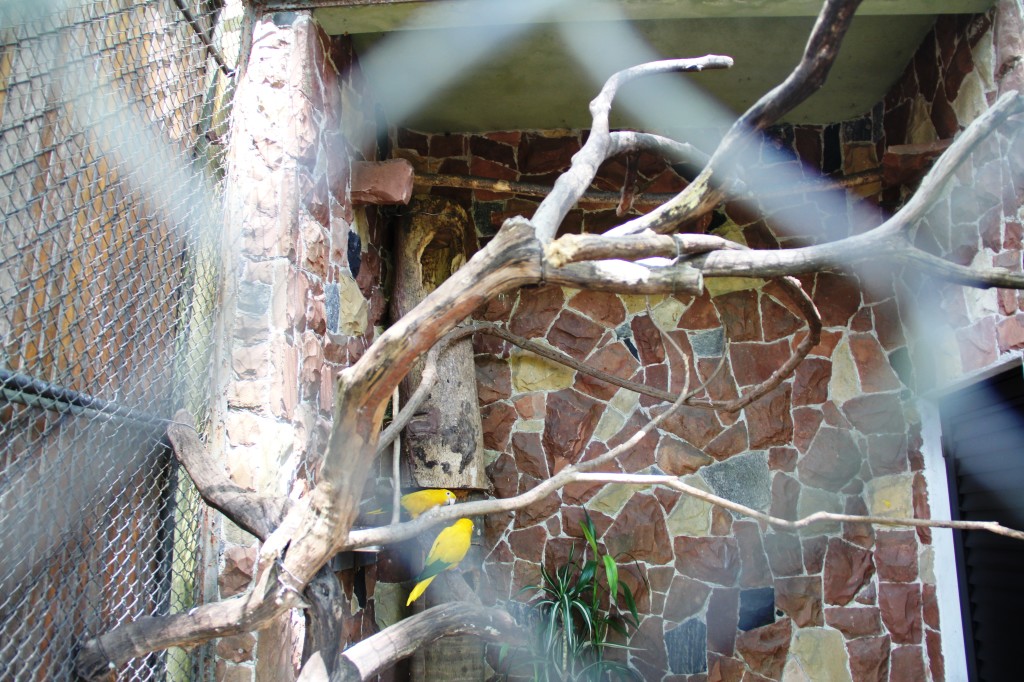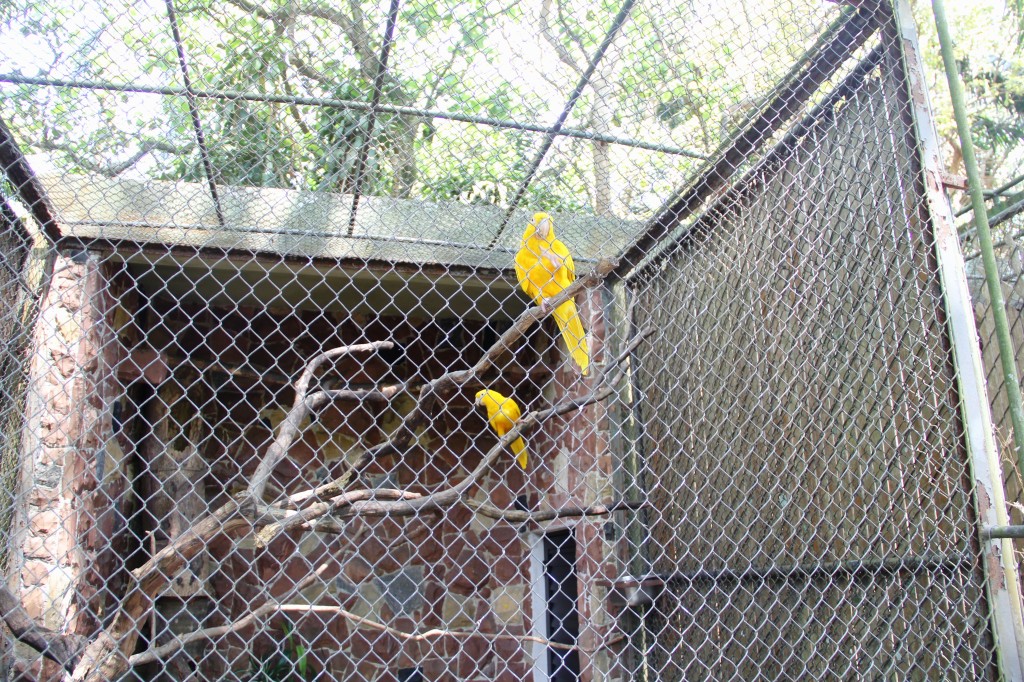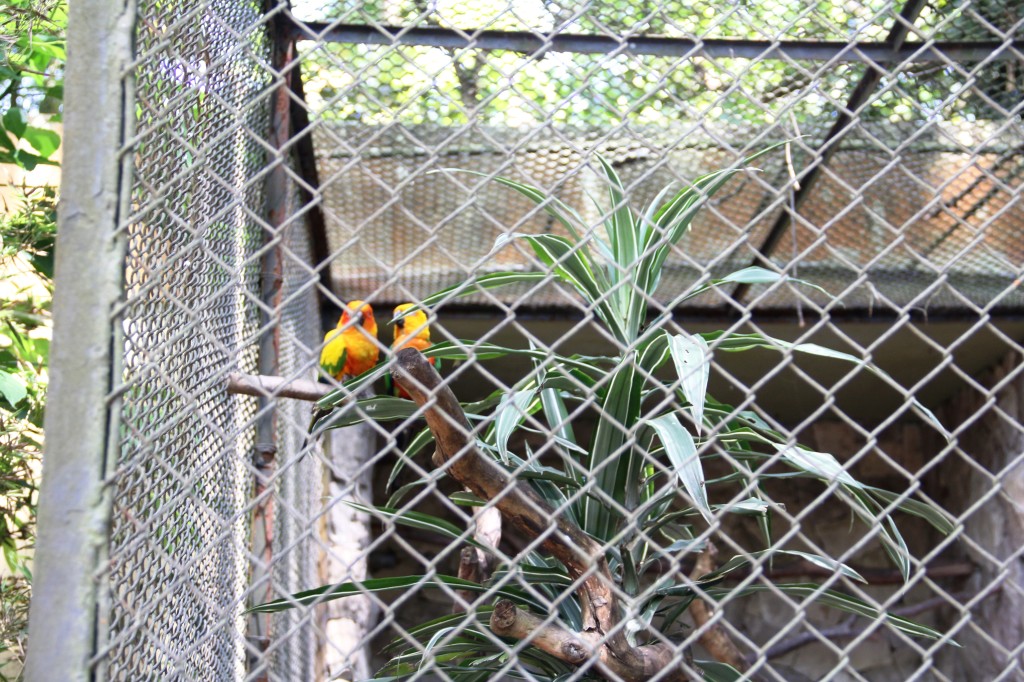
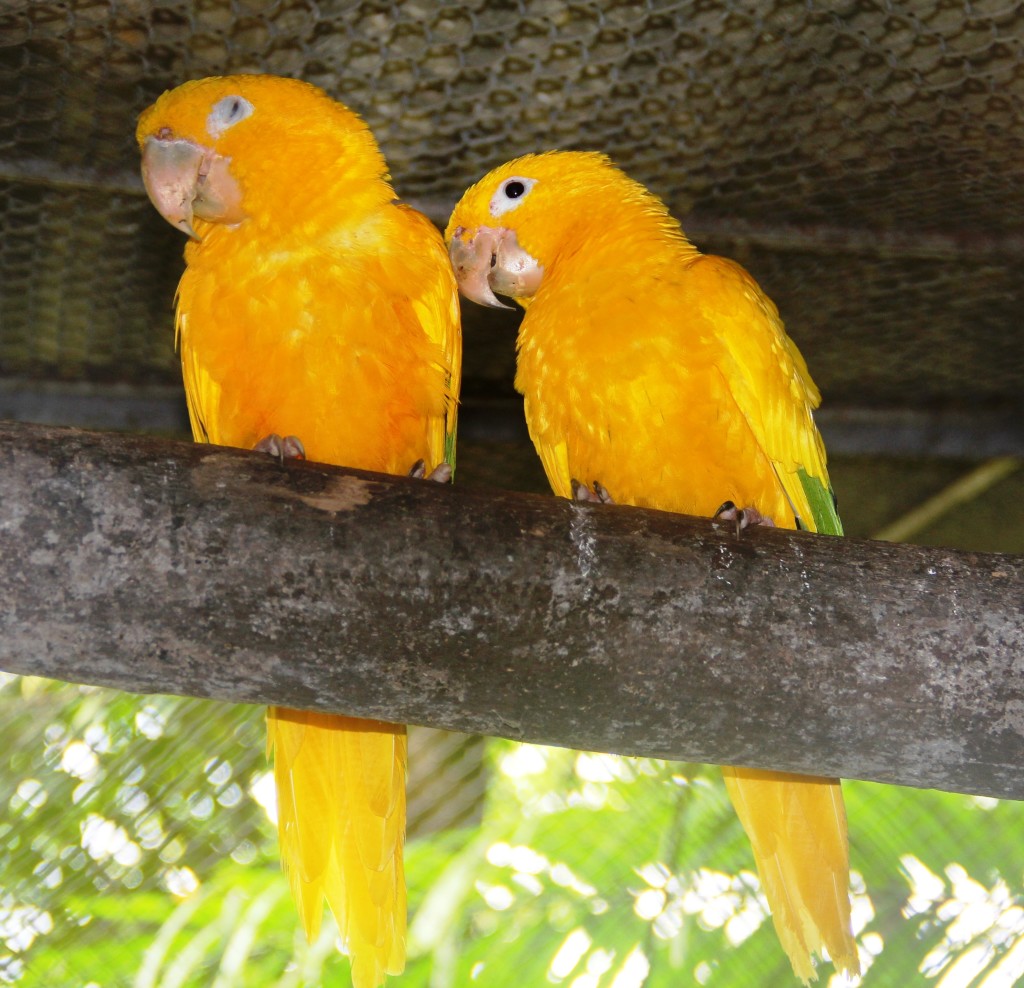
Golden Conure AKA Queen Of Bavaria Conure AKA Ararajuba (Guaruba guarouba)

This week, I would like to introduce you to my all-time favourite bird.   In their native land, Brazil; they are known as Ararajuba.  The Golden Parakeet or Golden Conure, (Guaruba guarouba), formerly classified as (Aratinga guarouba),is a species of Neotropical parrot. Sometimes known as the Queen of Bavaria Conure, it is the only species (monotypic) in the genus Guaruba.

Its plumage is mostly bright yellow, hence its common name, but it also possesses green remiges.  It lives in the drier, upland rainforests in Amazonian Brazil, and is threatened by deforestation and flooding, and also by the now-illegal trapping of wild individuals for the pet trade.  It is an endangered species listed on CITES appendix I.
B68

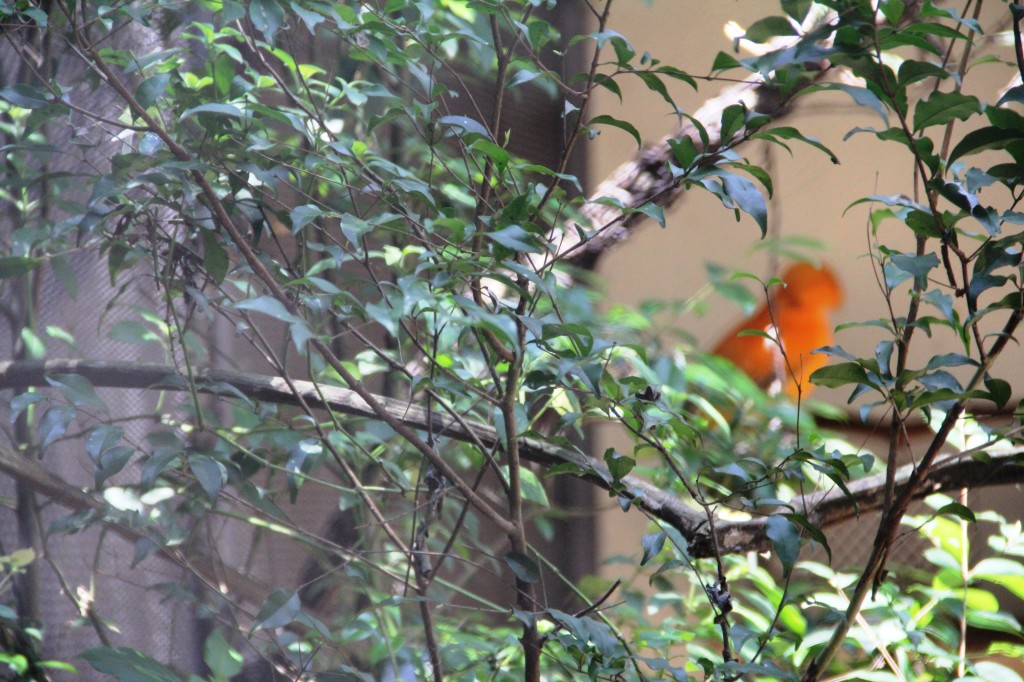
Mature pair of Golden Conures at the Emilio Goeldi Zoo in Belem
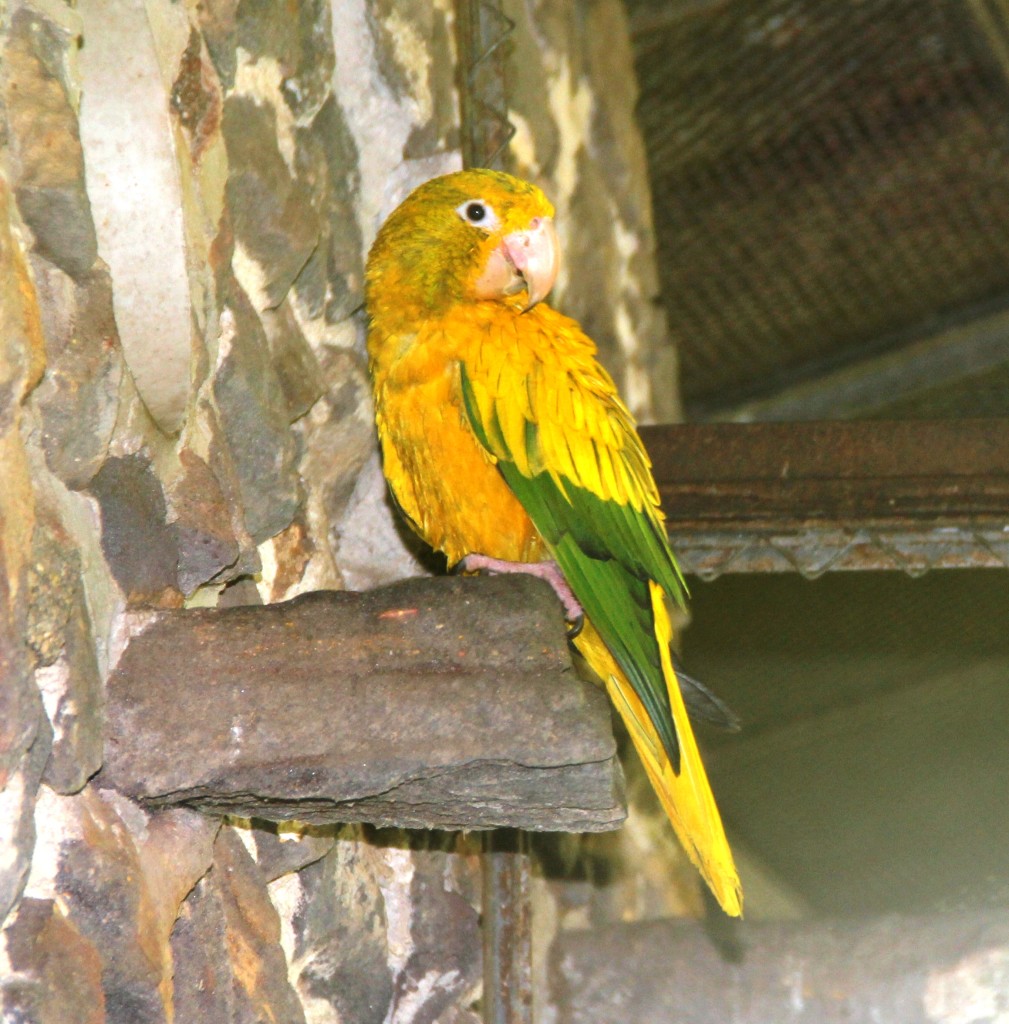
Juvenile Golden Conure at the Emilio Goeldi Zoo in Belem
Juvenile Golden Conure at the Emilio Goeldi Zoo in Belem

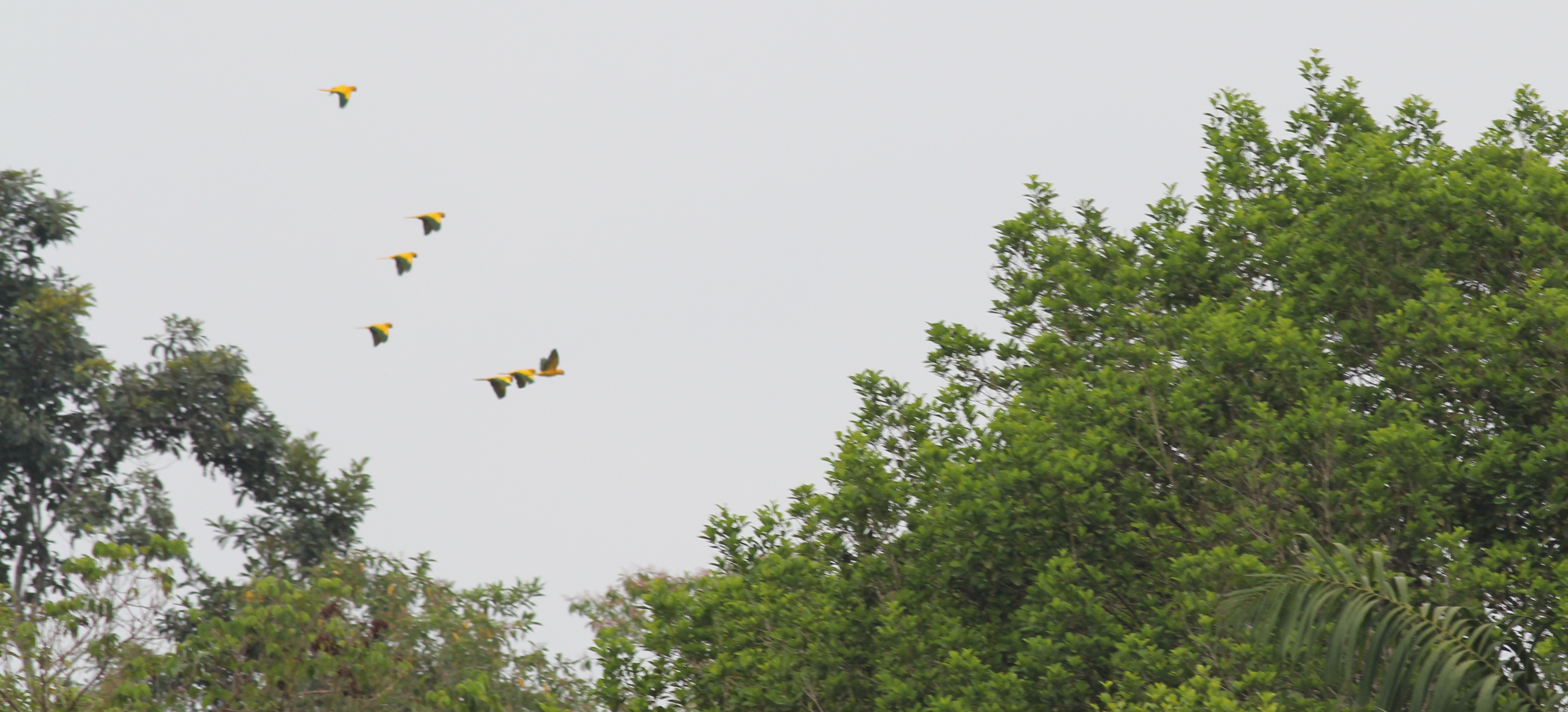
Flock of wild Golden Conures in Amazonia National Park

Flock of wild Golden Conures in Amazonia National Park

Getting to see them in the wild is no easy feat!  Their range is in a very remote area of Brazil and there are no eco-lodges or established eco-tourism in the area.  The full story of my journey to see them can be seen in the April 2013 issue of Flock Talk by the World Parrot Trust.  Scroll down and click on the PDF.  The World Parrot Trust also has a species profile on this beautiful bird.  At the end of this series, I will upload the text from this article written by myself with more photos and hyperlinks to all the posts I am doing to show you how to do this trip for yourself.

This is the range of Golden Conures as shown on Golden Conure Survival Fund. (For those who are curious, I did get a glimpse of a Hawkheaded Parrot at Cristalino).

Range of Golden Conures

The range of Golden Conures extends far westward into the Amazon basin reaching all the way to the right bank of the Madeira Rio in Amazonas state; the bird reaches as far east as the Gurupi in Maranhâo state. It is found in much higher density (almost ten times) within the confines of the current study area. This coincides almost directly with the heaviest deforestation zones (Hartley 8).

The Golden Conures are distributed in pockets strewn across northeastern Brazil, south of the Amazon River, in eastern Pará and northern Maranhâo to the western edge of Tapajós (Low 183). Their range has been reduced by as much as 30% in the last 2 to 3 decades.

In the map below, the red dots represent the airports (L-R:  Manaus, Itaituba, Santarem, Belem) that are relevant to the journey.  The yellow highlighted areas represent areas in which I found documented sightings of Golden Conures during my research.  The highlighted area south of Itaituba is the Amazonia National Park where I ultimately got to see them.  The yellow area between Santarem and Itaituba marked “CR” is roughly the location of the Cupari River in which the birds have been sighted by Gil Serique, a famous Brazilian guide.  The yellow area marked “CX” is roughly the location of Caxiuanã National Forest.  Finally, the other yellow area near the Tucurui Dam has had sightings of Golden Conures, though they may have been driven out by the deforestation in the area.

When I first started planning my trip, I had originally hoped to go to Caxiuana.  At one point, they did have tourist accommodation but they stopped this several years ago.  They still host groups of scientists, biologists and researchers.  It seemed like it would be easy enough to get there from Belem and once there, there would be guides to help us find the birds.  Directions to get there (in case they start accepting tourists again):  The scientific station is located in the municipality of Melgaço, 350 km west of Belém, the capital city of the state of Pará.  The trip to the scientific station has to be made in two stages. The first stage can be made by flying or traveling by commercial ship (12 hours) from Belém to the interior city of Breves along the south of the island of Marajó. For the second stage, one boards a motor launch in Breves run by the Goeldi Museum. The launch continues for 9 hours through the Melgaço Bay, located in the Rio Anapú basin, passes the villages of Melgaço and Portel, and up to Caxiuanã Bay. This last leg of the journey can also be made by speed boat, reducing the time of the journey to only 4 hours.

Gil Serique who lives in Alter do Chão – a beautiful beach town near Santarem can lead tourists to the Cupari River area and he knows a lot about these birds.  My husband and I couldn’t afford to hire a charter boat and hire him for several days but anyone who has a group would be well advised to do so.  There are no accommodations in this area so most people would be sleeping in hammocks either on the boat or ashore.

I finally chose Amazonia National Park since it was accessible by public transport and they have a bunkhouse at the Urua guard station.  This is the trip I will be blogging about in hopes that others who care about these birds can see them before it’s too late.

Although I managed to get some photos of the wild Golden Conures, I didn’t have time to get video as it all happened so fast.  Luckily there is a professional clip on YouTube (Portuguese language) with some amazing footage of these stunning birds.  You also get a glimpse of my guide, Gilberto da Silva. Even as I watch this 8 months after my trip, my heart still skips a beat as I remember my brief but unforgettable encounter with the Ararajubas of Brazil!

Guest Post: A Real Vacation – The Call Of The Wild

Today I would like to bring you a guest post from a reader who is clearly devoted to supporting eco-tourism!
.

Ernie Allison is a bird watcher and nature writer, both hobbies second to his status as a grandfather. He hopes to inspire families to spend time outdoors through hiking, camping, and even watching the back yard bird feeder.

The family vacation is a tradition that is changing with the evolution of technology. Where it used to be an opportunity to get out into the world and experience new things, the temptation is now there to spend a week in a hotel glued to the same screens you have at home.

But there are a lot of great opportunities to experience a vacation that will hold unique and dear memories. If you live in the city, consider going on a wilderness adventure. Whether it is a camping or hiking trip, in your area or far away, you can make the most of your vacation so that your family gets a real break from their everyday lives.

Wildlife refuges are great for outdoor vacations. Not only do you get away from the hustle and bustle of the city, but you get the chance to see some of nature’s beautiful creatures. Seeing wild animals strikes a chord with many people. Maybe it appeals to our primal instincts; we know the animals have something we have lost.

Whatever the reason, seeing wildlife in their natural habitat is much more exciting and powerful than going to a zoo. You get to experience the real order of the world, where things seem simpler, if not necessarily easier or fair.

Wildlife Refuges come in all shapes and sizes. Some are protected plots of land in the middle of nowhere. Others are surprisingly close to civilization. Wildlife refuges are categorized by what type of animals they are meant to protect: large game, small game, and waterfowl. Some refuges allow limited hunting on their grounds.

The whole point of wildlife refuges is to preserve some of the natural world. Many refuges have informational pamphlets and the like available about the wildlife that inhabits the land. You can drive around, watching for birds on your checklist or animals that your kids don’t see every day. Pack a picnic and make it a full day trip. Do some hiking, but be sure not to disturb the land.

Refuges often have organized events, whether it be tours, informational sessions, or volunteer opportunities. These are great chances to introduce children to the wonders of nature in a meaningful way.

Since refuges are meant to preserve the natural order of things, they are intentionally very different from everyday life. There are no crowds, little attention paid to the clock. It is a great opportunity to center yourself, to have a true vacation from the binds of society.

There is a reason so much great art is inspired by nature. It speaks to something within us. Even just observing empty plains or a flock of birds eating allows us to consider things that we normally wouldn’t stop to notice.

It is also worth visiting wildlife reserves because the more visitors (and donations) they get, the more successful they can be in their mission to offset humanity’s impact on the environment. Whether your motivations are educational, environmental, or personal, there are plenty of reasons to start searching for wildlife refuges to visit during your vacation.

AviancaTaca LifeMiles Award Chart Changes

HT:  Loyalty Lobby.  He already has charts up on his blog.  The changes mostly affect Star Alliance awards and they will upset the majority of people on FlyerTalk who have been collecting miles for this purpose.  So far the changes seem to affect Europe, Asia, South Africa, the Middle East/Africa and Others.  For eco-travelers, I have recommended collecting LifeMiles to use on intra South/Central American awards and these have not been affected.  See my main post for more about best uses of AviancaTaca Lifemiles.

Domestic Flights Within Brazil-GOL Airlines

Brazil is a huge country and odds are that you will be needing domestic flights to get from your international gateway, perhaps Rio, Sao Paulo or Manaus to the nearest airport to your ultimate destination.  These flights can often be bought in advance for good prices or in some cases redeemed with miles in partner programs.

IMG_6880

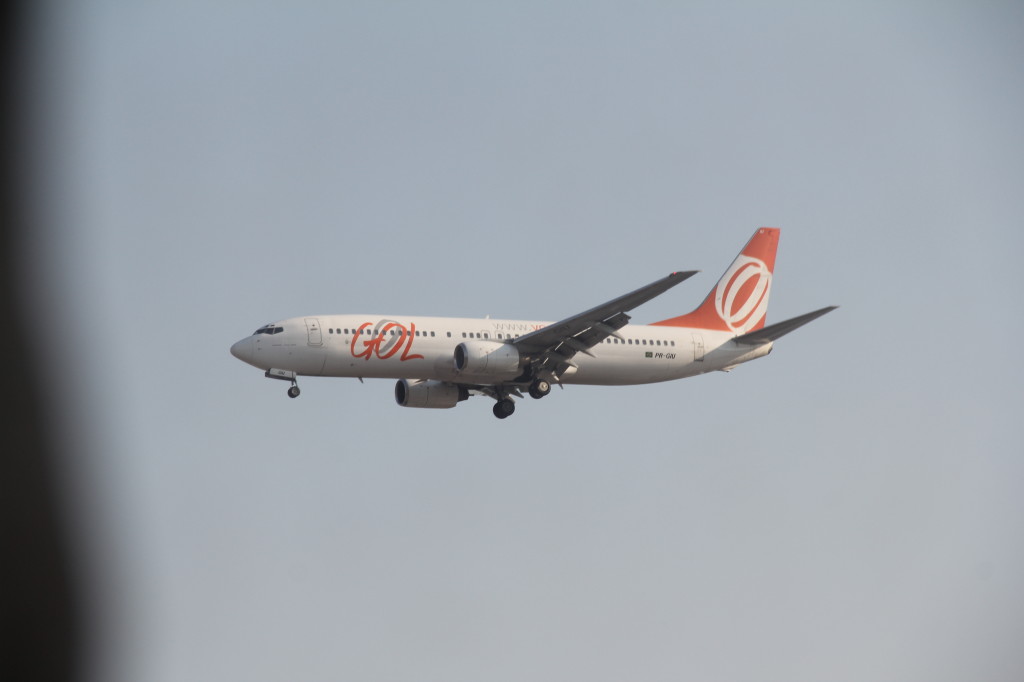
GOL

This airline is a great option for international travelers because they accept payments with foreign credit cards and you don’t need a Brazilian CPF (Brazilian tax ID like a Social Security or Tax File Number).  I also recommend GOL because as you will see in the last part of this post they will step up and look after you in case of IRROPS.  In the opening screen, be sure you select the country where you have your credit card.  I had planned to paste the route map here but for some reason the links aren’t working on the GOL site so here’s the link anyways.  I have highlighted below some airports that will be of interest to eco-tourists.

GOL Destinations

GOL has their own frequent flyer program called Smiles.  When we did our trip in Sept 2012, we had booked domestic segments as part of our international flights using AAdvantage but GOL no longer partners with them.  Currently, they partner with Delta, Air France, KLM and Qatar Airways.  From these programs, the one most people would be using is Delta.  They charge 10,000 miles each way for a domestic trip in Brazil with a round-trip required.

BOOKING A FLIGHT

If you have selected the USA or OTHER as your base country, you will have an English display.  Let’s take the popular route of Sao Paulo – Cuiaba (gateway to the Pantanal) as an example.

.

If you are lucky, there will be some promotional fares in the display at very attractive rates.  In this case, there is a promo for $49 but the catch is that you have to make a connection and arrive at a very inconvenient hour.  The cheapest non-stop is $63 but still an inconvenient arrival time but might be worth it if you stay near the airport.

.

To continue with our example, let’s go with the cheapest non-stop.  Now we see they added the tax on and are trying to upsell you to a flexible flight.

.

Scroll down, accept the rules and click continue.  In the next screen unless you want to set up an account, scroll down, click on “I want to make a purchase without registering” and fill it out with your passport number in “Laissez Passer”.  You can also add a frequent flyer number if you are in any program GOL partners with.

.

I filled out some fake info for the passenger name, address and passport details to get to the next screen.  Select your seat here.

.

After choosing the best seat they offer you, continue to the payment screen.  They seem to be offering only Visa and Mastercard.  I know they had Amex in the past since I used Amex for my domestic flights so they may bring that option back.

Enter your card details, click Confirm and it will give you a confirmation number.  At this point, I will X out of the tab since I am not really buying a ticket now.  If you are on a budget, keep checking back as they change the promos every week.  Be sure to read the restrictions on the promo fares and make sure they are acceptable, otherwise you may want to use a flexible fare.

GOL SERVICE

On some flights, we were given a snack free and on others they had Buy-On-Board menus.  The planes on the domestic routes are all 3 x 3 seating which is not my preference since it means couples have to sit with a stranger on a full flight but most domestic Brazilian carriers are the same.  They won’t let you sit in an exit row if you don’t speak Portuguese.

We had IRROPS (irregular operations) twice on our trip and both times GOL stepped up and made it right for us.  This is one of the most important things I look at when choosing an airline.  I like to see ground staff who are empowered to solve problems.

When we first arrived in Sao Paulo on the GOL flight from Buenos Aires, we had a 5 hour layover in the wee hours of the morning.  Not enough time to go to a hotel but long enough to be uncomfortable.  We were connecting to Vitoria where we planned to rent a car and drive to Sooretama/Linhares for birding.  The flight was routed GRU-GIG-VIX.  Terrible, I know but it was tagged onto the main international redemption so at least it was free!  The GRU-GIG flight was cancelled and they had rebooked us on another one that would have gotten us to Vitoria closer to noon and we would have missed an evening of birding by the time we drove out there.  I asked them if they could get us on any better connection.  They ended up rebooking us on a direct flight from Sao Paulo’s other airport CGH and giving us a free taxi to the other airport.  We arrived around the same time we had originally booked.
The second IRROPS was on the return flight as we had finished our visit to Brazil and were headed home.  It was a pretty bad routing because AA wouldn’t let us have more than 24 hours in GRU even if they had to tag on an extra connection.  The routing home was BEL (Belem) –  GIG (on a flight that stopped in GRU before heading onwards to GIG) – GRU-SCL.  The flight from Belem to GRU had a mechanical problem and we were forced to land in Brasilia while they got us a new plane.  We were waiting just over an hour and I was panicking over missing that ridiculous connection in GIG and having the rest of our itinerary cancelled.  I explained this to the flight crew.  They passed it on to the ground staff.  The new plane was going only to GRU with people going on to GIG given overnight accommodations and rebooked to GIG the next morning.  I explained that we really didn’t want to go to GIG and our ultimate destination with GOL was SCL where we had a connection to SYD on QF (in business class!).  The Brasilia ground staff took my printout and said they would sort it out.

Sort it out, they did!  When we landed in GRU, there were ground staff passing out hotel vouchers and new tickets to the normal GIG passengers and they were expecting us.  Since the ticket was originally issued by AA, they couldn’t change it on their own and has to call AA for permission to change it.  By the time we got there, they had cancelled the unwanted GRU-GIG-GRU and kept the GRU-SCL intact.  They also gave us a hotel voucher for the nearby Hotel Matiz with meals up to the departure time of our flight to SCL.  The hotel has its own shuttle bus.  This turned out to be a lucky chance for us as we avoided some unnecessary flights, got a free room and a place to relax and shower after visiting the Sao Paulo Zoo!  Major kudos to GOL for looking after its customer, highly recommended!

Big Sale On PDF Versions Of Lonely Planet Guidebooks

.

2 Day only sale on the Lonely Planet website.  $10 gets you the FULL version of the book not just the chapters!  Eco-friendly way to carry around travel information from the king of budget travel guides.  Although for birding field guides I prefer a real book, for travel information I much prefer PDFs in my laptop with maybe just a few maps printed out to carry around while walking.  Check the publishing schedule, some books won’t be updated until 2015 or 2016.  If you are an advance planner, you can buy the books now and just keep up to date with prices online.  Please note this in not an affiliate link, I’ve been using Lonely Planet since the 80’s and love the products!

Eco-Lite: Sao Paulo Zoo

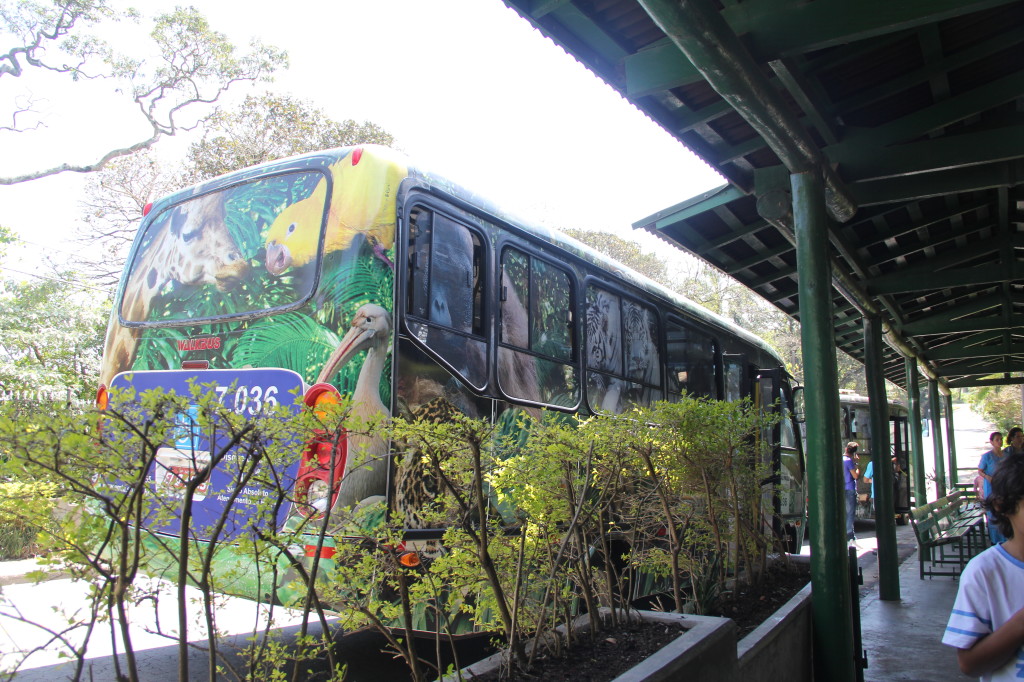
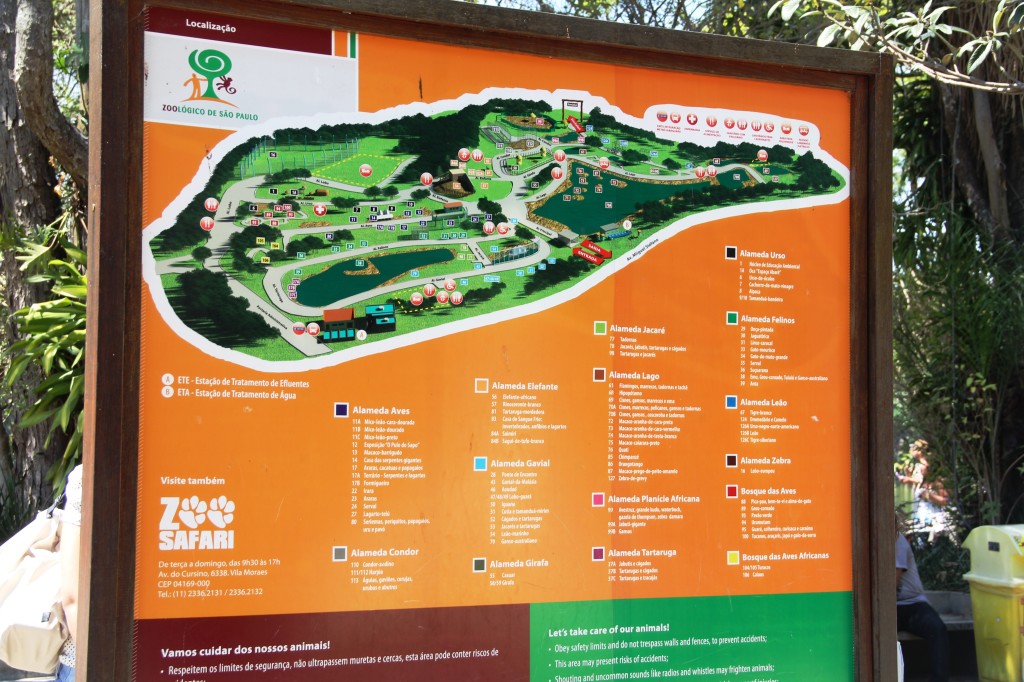
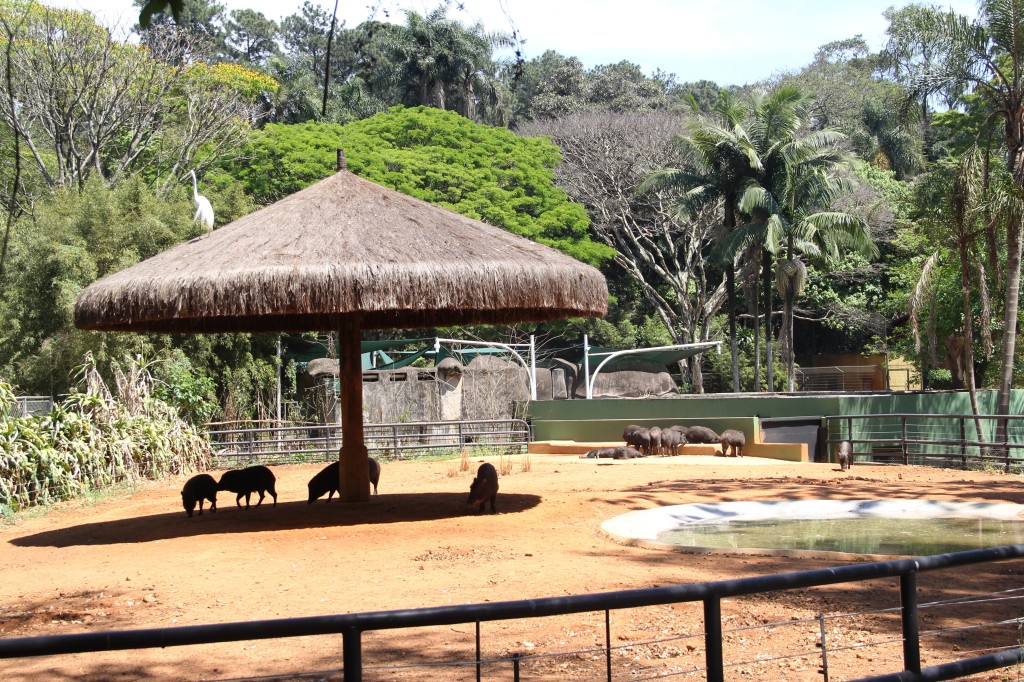
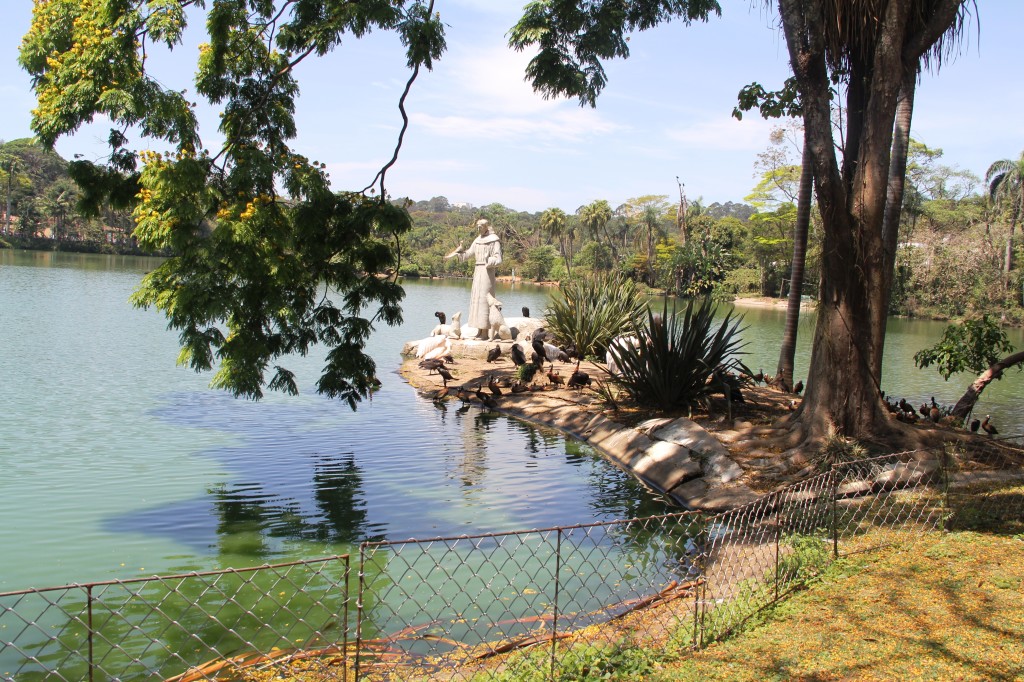
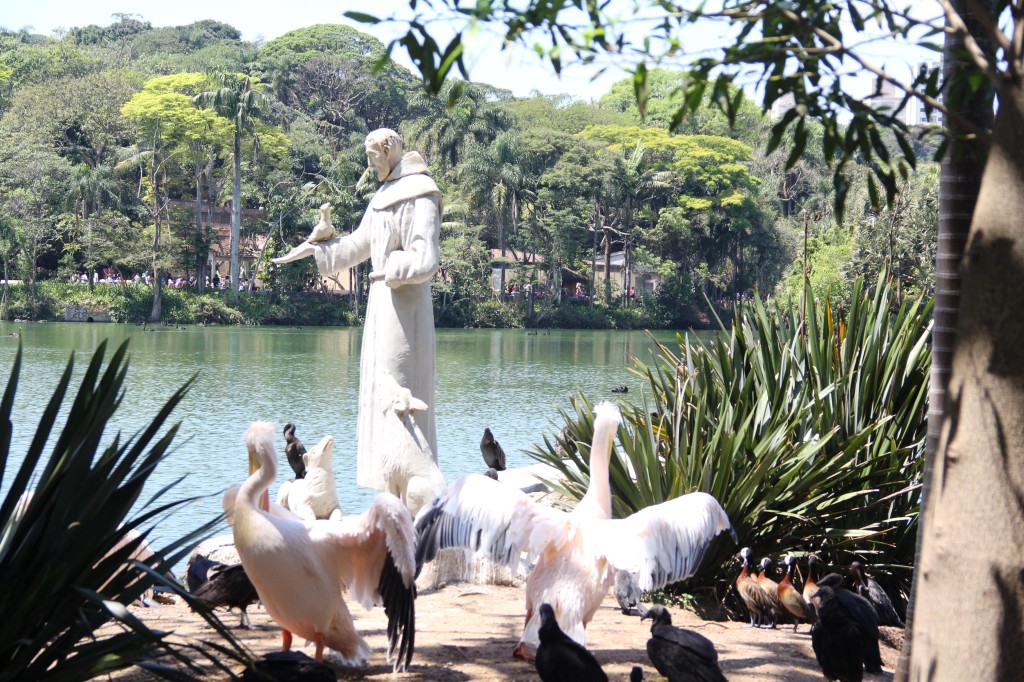
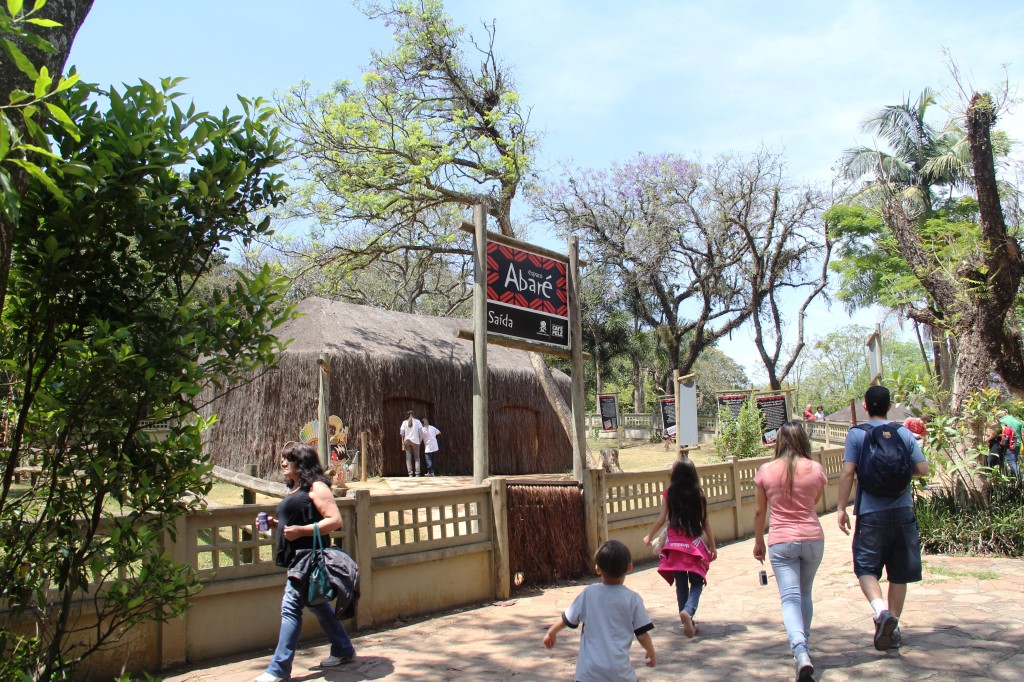
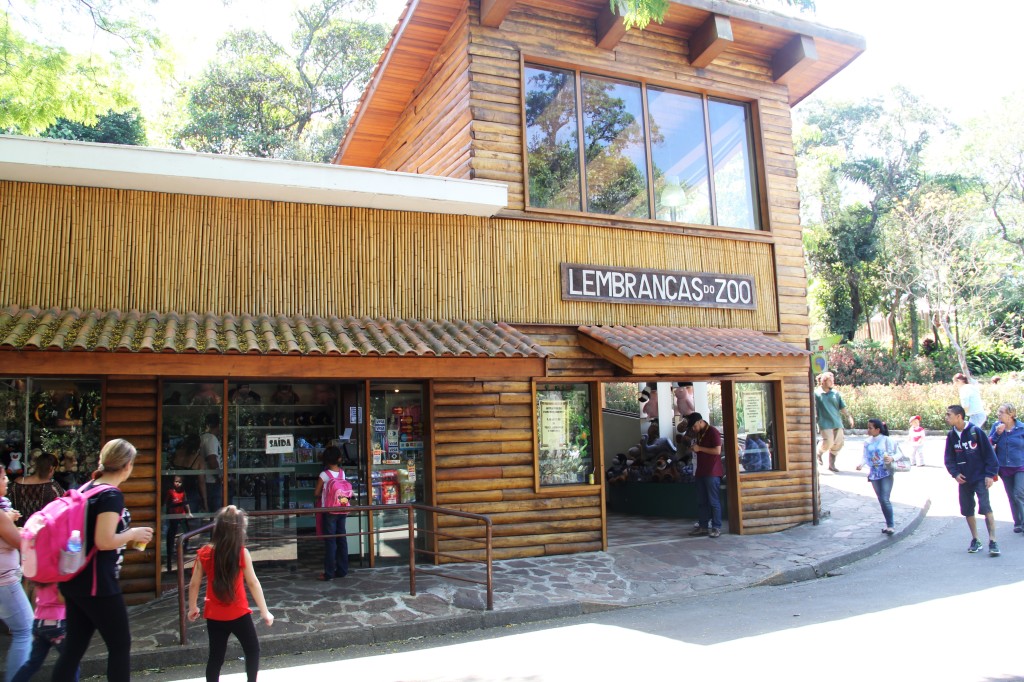
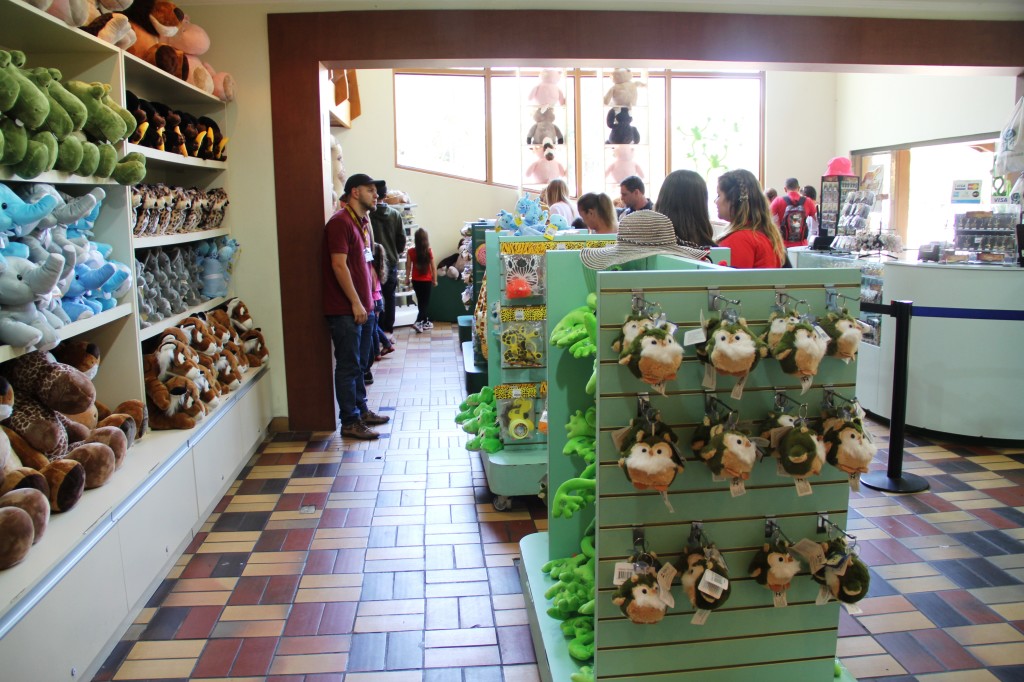
Welcome to this week’s Eco-Lite mini-trip, Sao Paulo Zoo!  Brazil is a hotspot for eco-tourism but most people will spend a night or two in Sao Paulo when transferring back and forth between more interesting places such as the Pantanal, Iguacu Falls, the Amazon, the Cerrado, Chapada, Atlantic Rainforest, Cristalino, etc.  Or you may find yourself here on a business trip and have time to spare.  So why not get a close up view of some beautiful Brazilian birds and animals?

S01

OVERVIEW

Translated from their website which is only in Portuguese:  Few experiences are as significant for adults and children as well as a visit to the Zoo. Appreciate the diversity of fauna creates a powerful bond and universal nature. Approximately 10% of the world population visit a zoo or aquarium each year. Since opening in 1958, the São Paulo Zoo has received over 85 million visitors.

Located in an area of ​​824.529 m² of Atlantic Forest, the park houses the headwaters of the historic stream of Ipiranga, whose waters form a lake that receives copies of birds of various species, and migratory birds. As the lake, the forest shelters native animals living free, forming parallel wonderful wildlife.

Through the display of more than 3,000 animals, represented by species of mammals, birds, reptiles, amphibians and invertebrates, the São Paulo Zoo promotes public awareness of the various forms of life on Earth.

HOW DO YOU GET THERE?

Zoológico de São Paulo
Avenida Miguel Estéfano, 4241
Água Funda – São Paulo – SP – CEP 04301-905
Fone: (11) 5073-0811 / Fax: (11) 5058-0564

For tourists the best way is by taxi if you can afford it or by bus if you are on a budget.  Being a budget traveler, we took the metro to Jabaquara Station, then took their bus direct to the zoo.  When you exit the metro, look for a kiosk selling bus/entry combo tickets.  They take credit cards.

Location Sao Paulo Zoo

HOW MUCH IS IT?

FROM 01/01/2013:   Ticket Zoo  (add around R $ 10.00 if you use their bus)

  •      Adults and children over 12 years – R $ 18.00
  •      Children 5 to 12 years – R $ 7.00
  •      Children under 4 years – Free
  •      People with disabilities – Free
  •      Seniors (Over 60 years), students and teachers of the State Public Networks and Municipal Education – £ 9.00 (half price)

HOW LONG SHOULD YOU SPEND THERE AND WHAT SHOULD YOU SEE?

It’s quite a large zoo and you could easily spend a day there.  We were there on the last day of our trip before we left to fly home and wanted to have time for shopping so just stayed a couple hours and concentrated on the birds.  They have a full list of animals on their website (in Portuguese).  This zoo is an excellent place to bring children to help them learn more about Brazil’s birds and animals!

VALUE TO CONSERVATION

Until recently, the Sao Paulo Zoo was involved with the conservation of the rare and endangered Spix’s Macaw but this program has now been transferred up in the state of Bahia.  Here is what their website says about conservation (I used Google Translate).

Conservation of Threatened Animals

Brazil is the 5th largest country in the world, with an approximate area of ​​8.5 million km ² dispute with Indonesia and the title of first place in the world’s biodiversity. It is estimated that Brazil should have around 1.8 million species, but unfortunately only 10% know that. Considering the species that we have identified, according to the Ministry of Environment, 618 animals are listed in a category of threat (critically endangered, endangered or vulnerable) and nine other extinct or extinct in the wild. In the case of vertebrates, it is estimated that 7% of Brazilian species are under some extinction.

The increase in deforestation, fragmentation of our forests and the wildlife trade have very high number of species under severe threat of extinction. It is estimated that soon many may disappear altogether, especially endemic (those species that only live in a small and specific region of the planet). Because of this, the extinction is one of the most dramatic environmental problems of this new century, becoming a priority issue in national and international political agendas, such as the Convention on Biological Diversity (CBD) and Guidelines for the Conservation Project and Restoration of Biodiversity in the State of São Paulo (BIOTA / FAPESP). More than ever, we need to know the existing biodiversity, to identify the main factors that threaten and establish priorities for action.

The Zoological Park of São Paulo’s mission is to keep in captivity a collection of live animals from different parts of the world not only for education and recreation of the public, as well as for carrying out scientific research to better understand the animals. The institution now performs work focused on the reproduction of some endangered species, and plays an important role in the conservation of these species, the dissemination of knowledge through scientific papers and conferences and environmental education projects.

The conservation of species in captivity, also called ex-situ, ie outside of the natural environment is one of the strategies to help preserve the animals that are threatened with extinction. Individuals bred in captivity can be released into the wild to increase conservation efforts of the species in its natural environment. Captive populations can reduce the need to remove individuals from nature to serve as pets (pets), and also for purposes of scientific research. These animals can also be placed on display as a strong strategy for educating the public about the need to conserve the species.

You want to help get these animals the sad list of endangered species? So help us take care of them, do not buy animals at fairs or roads – surely they were taken from nature. Report it to the police if you find someone selling them. Go to parks and ecological stations, where there are many animals in the wild and are very easy to be observed, or may know a little about the rich fauna of our Brazil in Sao Paulo Zoo.

Angelica Midori Sugieda – SP ZOO

WHERE TO STAY NEARBY ON POINTS

Sao Paulo is one of the world’s major cities and attracts many business travelers so as you would expect, all major hotel chains are represented here.  You should have no trouble using points from any of your favourite programs such as Priority Club, Club Carlson, Marriott, SPG, Wyndham, Hyatt, Hilton.  If you are just passing through enroute to the great outdoors, I would recommend staying near the airport for convenience.

PHOTOS

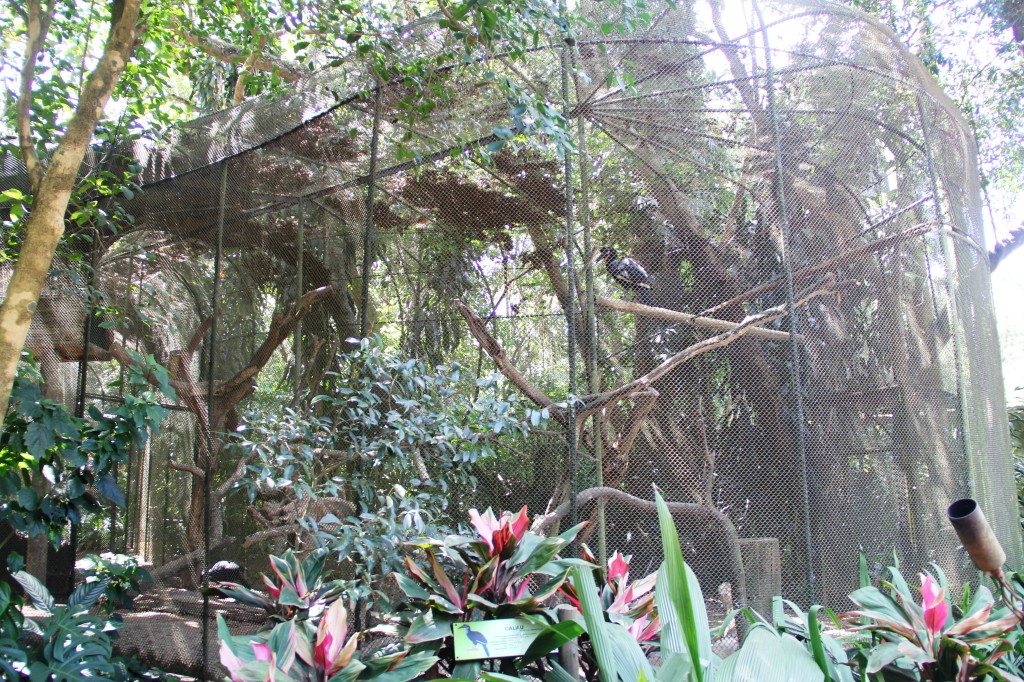
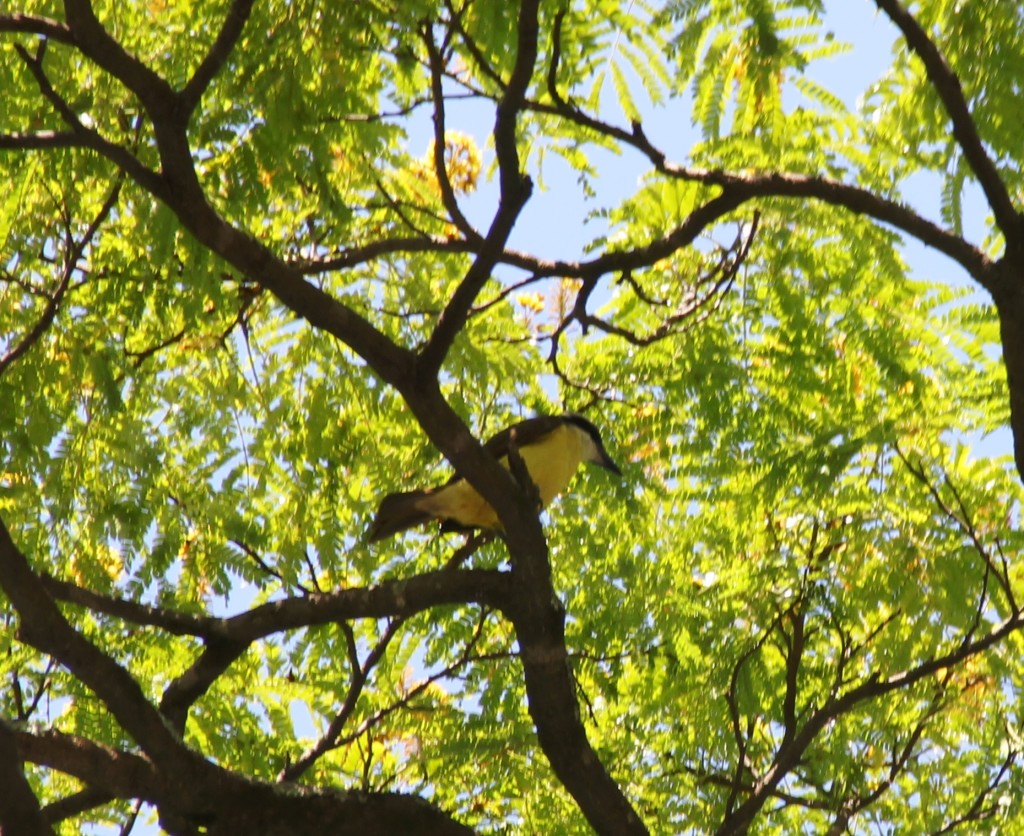
Although this zoo has a wide range of animals, I was mostly interested in the birds.  I got to see a lot of birds close up that I had seen while birding in the wild.  It’s way more exciting to see wild birds but seeing them close up can help you later identify them in the wild and get familiar with their calls.  These photos will take a while to load so please be patient!

S00 S02 S03 S04 S05 S06 S07 S08 S09 S10 S11 S12 S13 S14 S15 S18 S19 S20 S21 S22 S23 S24 S25 S26 S27 S28 S29 S31 S30 S16 S17

Getting To Brazil & Southern South America Using Airline Miles

Southern South America

Most frequent flier programs divide the continent of South America into northern and southern regions.  Brazil, which is one of the best destinations for eco-tourism falls into the southern region.  I already have a blog with my recommendations for which programs to join if you are new to the world of miles and points.

The gateway cities for Brazil include Sao Paulo (GRU), Rio de Janieiro (GIG), Manaus (MAO) and Recife (REC).  Other airports in Southern South America are Santiago (SCL), Buenos Aires (EZE), La Paz (LPB) and Santa Cruz Bolivia (VVI).     Once you have been in the miles and points game for awhile, you will get a feel for which airline to use where but if you are just starting out, Wikipedia will show you a list of all airlines that fly into a given airport.

Let’s take Manaus for our first example.  So we can see that  Manaus is served by a few international airlines.  AA flies from Miami, Copa flies from Panama City which has good connection to the USA and TAM flies from Miami as well.   In most cases you will have to transit through the USA even if you are coming from Australia, Europe or Asia direct to Manaus or you could fly to one of the larger airports such as GRU or GIG and get a connecting domestic flight.  If Manaus and the Amazon region are your destination, you have two choices-One World or Star AllianceSky Team can get you to GRU or GIG and then you would have to use domestic flights on GOL which is a partner of Delta.

ONE WORLD OPTIONS

From North America you can use American Airlines or  LATAM.

From South America you can use LATAM.

From Australia and New Zealand you can use Qantas or LATAM via Santiago.

From UK and Europe you can travel via the USA using BA or IB to get to the USA, then AA, LATAM to South America.

From Asia or Africa there are no direct flights so you will need to travel via the USA or Europe.

STAR ALLIANCE OPTIONS

From North America you can use United, Avianca-Taca or Copa

From South America you can use Avianca-Taca

From Australia and New Zealand, Europe, Asia and Africa there are no direct flights, you will need to travel via the USA.  Depending on which program’s miles you have, this may require one or two awards.

SKYTEAM OPTIONS

From North America you can use Aerolineas Argentinas, AeroMexico or Delta.

From Europe you can use Air Europa, Air France or KLM, or you can connect in the USA or Buenos Aires on Aerolineas Argentinas.

From Australia you can use Aerolineas Argentinas, from New Zealand possibly Qantas to Sydney and then Aerolineas Argentinas.

From Asia and Africa there are no direct flights, you will need to travel via the USA or Europe.

Delta partners with GOL which has extensive coverage of Brazil and connections to neighboring countries.

HOW MANY MILES WILL IT COST?

Every airline member of the 3 main alliances has it’s own frequent flier program.  They often have alliances with other airlines outside the program.  I have made some reference charts for the airline alliances and I strongly recommend that you check out the program of the airline in your country and the USA based partners of each program as the USA airlines tend to have the most lucrative bonuses.  Americans can get very generous credit card bonuses.  Details of credit card partners (and other partners) will be on each airline’s website, however often there are more lucrative sign up bonuses.  Details are usually posted in the Flyer Talk thread so I strongly suggest you read this thread and the Miles Buzz forum before you apply for any cards just in case a better bonus has been offered.  I don’t have any affiliate links and I recommend you do extensive research on your own when applying for airline credit cards.

USING ONE WORLD

AMERICAN AIRLINES

No matter where you live, frequent flyer programs based in the USA usually offer the best deals but it’s still a good idea to look at other members of the alliance.  Try to avoid carriers that charge a fuel surcharge.  Looking at AA’s award chart, we can see that Brazil is in South America Zone 2 except for Manaus which is in South America Zone 1.

South America Zone 2

So let’s look at the chart.  AA no longer has all zones on one convenient chart so you need to look at the website for the region you are departing from.  You will notice there are taxes and fees with certain routes and that the awards are prices as one way trips.

We can see that a South Pacific to Central/South America award will cost 45,000 miles each way (90,000 round trip) in economy, 82,500 (160,000 round trip) in business class and 112,500 each way (225,000 round trip in first class.  AA doesn’t allow you to transit the USA on this award so you must fly on the only carriers that operate between Australia and South America-Qantas and LAN.

If you are based in North America, economy will cost 30,000  each way (60,000 round trip), business class  is 57,500 each way (115,000 round trip) and first is 85,000 each way or 170,000 round trip.  You would be flying on AA or LAN.

AVIOS (BA OR IB)

Avios can be a great bargain for shorter flights.  The awards are priced by distance flown per segment rather than zone to zone.

Avios chart

Using the Great Circle Mapper, we can see that a direct flight from Miami to Manaus would cost 12,500 Avios each way, a direct flight from LAX to Sao Paulo would cost 30,000 Avios and a direct flight from NYC to GIG would cost 25,000 Avios.  If you are using credit card miles, transferring them to Avios rather than UA or AA could save you some points.  If you need a connection from elsewhere in the USA to the gateway city, you need to pay for that segment separately with the Avios cost for the distance flown.  Example OKC-MIA is 1222 miles so you need to add 10,000 Avios to the total price of the ticket.

Great Circle Mapper

QANTAS FREQUENT FLYER

For Qantas, it is easiest to use their points calculator to see how many points you need, then look for availability.  Here is an example of SYD-SCL-GRU in economy class.  For the record, business class (if you can get it) would cost 112,000 each way.

QF Award

Awards are distance based, look what happens when we quote on Perth-Rio de Janiero!  Price for economy goes up to 76,000 each way in economy!

.

If you are based somewhere else, leave a comment if you don’t understand this part and I will help you out.  Meanwhile, here is a reference list for other One World carriers.

USING STAR ALLIANCE

Most people will have United or Singapore Airlines miles via credit cards or be buying Avianca Lifemiles during a 100% bonus promo.

UNITED AIRLINES

United Airlines is a USA based carrier that offers one way awards on its own flights and other Star Alliance carriers.  Due to the size of their award chart, I can’t paste it here so will link to it and give examples.  Seattle to Manaus has availability on several dates which I picked at random.  They are colour coded for economy, business/first or all three classes.

.

Here is the best routing that came up.  Beware of the “mixed cabin” in business class, that means you will have to be in economy for one or more segments.

.


Another random search on LAX-GRU has good availablilty for saver awards in economy but nothing in business or first on United’s own flights.

.

But scroll down to the partner airline awards and suddenly there is tons of availability in business but not in economy!

.

AVIANCA TACA LIFEMILES

Lifemiles has some very attractive promos to buy and share miles.  While this doesn’t give you a free trip, it can greatly reduce the cost of a trip especially if you are after business or first class awards.  You need to be an existing member of Lifemiles when they announce  a promo so join now if you haven’t already.  Use their calculator to get an idea of award costs.  This will be a range which depends on class and any promos.

Lifemiles Calculator

Click on View Availability to see the exact breakdown.

They have a Star Alliance Award chart and you can see that they divide the continent of South America into northern and southern regions.

.

I have snipped the section that includes southern South America.  Australia and New Zealand are in the “Others” category.  The chart shows round trip awards but you can redeem one ways for half the price shown.  For Aussies, it’s much cheaper to use US miles while they last or United for Star Alliance awards.  I prefer to keep my Lifemiles for intra-South/Central America awards which can get pricy but are bargains using awards.

Lifemiles Awards to/from Southern South America

SINGAPORE AIRLINES

While there are no bargains here, if you are flush with Amex Membership Rewards you want to transfer to SQ, you can also book flights to South America using Krisflyer.

.

For those who want to use other programs, I have made up a reference list of all the airlines with links to their websites so check them out to see if any of them are better suited to your needs. Bear in mind that the tickets are not completely free, there is usually a booking fee of $25-50 and various taxes, but you would have to pay the taxes whether you pay cash or miles for the ticket in any case.

Don’t Leave Home Without Travel Insurance

We’ve all heard the horror stories.  People who travel overseas and experience some mishap such as a broken leg, stolen luggage, cancelled flights or even death of a traveling companion.  This is why it is important to make sure you have the correct travel insurance for your situation.  Eco-tourists are even more vulnerable as we tend to go to remote areas where there won’t be any qualified doctors let alone hospitals and you may need to be evacuated.

Most people will be deciding between travel insurance provided by a credit card or travel insurance you pay for yourself.  If you are relying on a credit card, check to make sure you have fulfilled whatever requirements they have to activate the insurance.  This could include paying for the airline tickets, cruise, hotels or whatever on the credit card.  Are you covered if you use frequent flier miles?   If you used more than one credit card, see which one (if any) would cover you.  Also find out who runs their travel assistance hotline-the number you call if you need them.

TYPICAL TRAVEL INSURANCE COVERAGE

1.  Medical, Hospitalization, Evacuation to suitable facility if treatment is not available.  Don’t skimp on this one, especially if you are traveling to remote areas or very expensive countries.  Most policies will have an option for unlimited coverage.

2.  Trip interruption or cancellation.  If you have non-refundable prepaid travel expenses, you will probably want this.  Check to see what events are covered.  Common ones will be strikes, natural disasters, weather delays, cancelled flights, late flight casuing you to miss your connection.  Check what coverage they offer if you booked your flight with miles and points.

3.  Baggage and Personal Effects.  You will want this if you have expensive cameras or electronic gear.  If you are not bringing anything valuable, you may not need it.

4.  Cash and Travel Documents.  This covers replacement of your lost or stolen cash and the cost of replacing your passport and other documents.

5.  Personal Liability.  This covers you if someone sues you for some injury or loss.  It may not include liability for car accidents so check the policy documents.

6.  Rental Car Excess.  This is not the same as collision damage waiver, you will still need to have that covered by a credit card or the car company’s CDW.  Excess is the amount excluded from the CDW.  In many countries, the CDW will cover damage over a specified amount like $2000 or $3000, more for luxury cars or SUVs.  You are responsible for the first $2000 or $3000, this is known as “excess” or “deductable”.

7.  Dangerous Sports.  You usually need to add this on to a normal travel insurance policy and would cover sports such as skiing, scuba diving, mountain climbing, parasailing, etc.

COMMON TRAVEL INSURANCE POLICY EXCLUSIONS

1.  Pre-existing Conditions.  This is the biggie.  Whatever you do, don’t lie when you are purchasing your policy and say you don’t have any if you do.  Insurance companies will gladly use this as an excuse to deny your claim.  Most pre-existing conditions can be covered with an extra payment, some non-threatening conditions such as gout, high-cholesterol, asthma, etc.  Each company will have different conditions they automatically cover.  For example my husband has gout.  Gout is included in some polices but not all, especially not the ones underwritten by Allianz.  If we didn’t disclose it or get it pre-authorized and he had some accident that could be tied back to gout (maybe falling down a staircase), a claim would probably be denied.  If he was sitting in a bus that got into an accident and was taken to the hospital, then this would not be caused by the gout so he would be covered.  You also need to be aware that pre-existing conditions of your traveling companions or relatives at home can affect you if you need to cancel your trip or come home early.

2.  Traveling to a country that is on your home country’s “Do Not Travel List”.  See below for links.

3.  Engaging in illegal activities.  Gambling, prostitution, fighting, taking drugs, smuggling to name a few.  It could also include getting kicked out of a country for not having the correct visa.

4.  Participating in dangerous sports or activities.  Check your policy to see what they consider dangerous.  The most common ones are skiing, scuba diving, mountain climbing, sky diving, parasailing, sometimes white water rafting.

5.  Injuries that occur as a result of you being intoxicated or taking non-prescription medications.  Not just drinking and driving, it could also include you getting into a fight, injuring someone and being sued or not taking care of you possessions and they get stolen.

6.  Acts of Terrorism.

7.  Traveling to a country engaged in war, invasion or civil war, whether declared or not.

8.  Losses that occur as a result of a travel provider going bankrupt and shutting down.  People on package tours are especially vulnerable here.

9.  Losses that occur as a result of your negligence.  Examples of this would be leaving your bag unattended or with someone you don’t know like the person sitting next to you at the airport while you go to the restroom or someone you meet in a bar.  Or it could be asking a stranger to take a photo of you posing in front of something.  There is a reason my husband and I rarely get photos together, I am very fussy who I trust with my camera!

The above are only a few of the more common exclusions that may affect eco-travelers.  Every policy will have different ones so you need to read those Product Disclosure Statements even if they are insanely long.

 HOW TO CHOOSE THE RIGHT TRAVEL INSURANCE POLICY FOR YOU

1.  Recommendations from friends and family…………..if they have ever had to claim and have first hand knowledge of how the company handles claims.  Was the company easy to deal with and pay the claim promptly?

2.  Review and Consumer Websites.  Once again, make sure you read reviews from people who have made claims.  Ignore good ratings from people who simply bought a policy and were happy with how easy and cheap it was.  Also make sure the person isn’t just angry because they lost the claim for something that was their fault.  You will see a lot of reviews like this from people who didn’t disclose a pre-existing condition and got sick.  The insurance company will check with your family doctor at home so you won’t be able to hide them.

3.  The Insurance Company’s Travel Assistance Line.  I like to give them a call and run through some “what if” scenarios with them to see how they would handle a situation.  How do they handle it if you are unconscious in hospital and the doctor/staff calls them for payment?  Do they pay the hospital direct or make you pay and get reimbursed?  How would they handle a situation if your flight is delayed and you miss your connection?  Ask about recent events, like how did they handle the volcano eruptions in Chile, earthquake in Japan, strikes in Spain, etc.  Is the call centre worker empowered to handle any situation or do they have to get a supervisor.

4.  Insurance Comparison Websites.  These are mostly good for comparing prices and estimates of basic coverages.  You will still need to read the individual policies to see what is covered, what isn’t and who handles their travel assistance lines.

RESOURCES AND HELPFUL WEBSITES

AUSTRALIA

Canstar – for star ratings of all the main travel insurance companies in Australia.

Product Review – Consumer reviews of travel insurance companies.

Choice – Professional reviews of travel insurance companies. You have to pay for this one.

Compare Insurance – Instantly get quotes for many different companies.

Smart Traveler – Find out which countries are on the “Do Not Travel” list for Australia.

USA

Top Ten Reviews – Professional reviews of travel insurance companies.

Travel Insurance Reviews – Both professional and consumer reviews.

Trip Advisor – Basic advice.

Insure My Trip – Compare travel insurance from major providers and get quotes.

US State Dept Travel Advisories – Which countries are you advised to avoid?

UK

Money Supermarket – General Advice.

Money Supermarket Quotes – Get quotes from major insurance providers.

Which? – Rates travel insurance companies.

Review Centre – Consumer reviews of travel insurance companies.

Foreign Travel Advice – Countries on “Do not travel” list.


If anyone has any other helpful links please put them in the comments and I will add them to the text.  I have never had to claim on travel insurance so I can’t recommend any companies from personal experience.  I would love to hear your stories and recommendations!


Indonesia Travel Tips

Over the past few weeks, I have been blogging about our big West Papua adventure and the relaxing stay in Bali afterwards.  Here are some general tips to make your trip in Indonesia more rewarding and some tips especially for eco-tourists.

BEFORE YOU GO

1.  Get in touch with all the birding guides by email or text message and make sure they are available at the time of your visit.  You may be able to wing it in low season but in high season (May-Aug)  the best guides will be booked up by birding tour operators.

2.  If you don’t like carrying a lot of cash, prebook as many hotels as possible online and pay by credit card, preferably one that earns miles.  In our trip, we were able to prebook Aerotel in Biak, Aston Niu Manokwari, Cendana Resort and Holiday Inn Baruna Bali (points).  It is not possible at time of writing to prebook the hotels in Sentani and Sorong, though this could change at any time as more hotels get savvy to online booking.  We booked HamuEco Resort by Facebook and paid cash when we got there.

3.  Very few places take credit cards in West Papua but some hotels and large stores do.  Notify your issuers that you will be using your cards in Indonesia and especially West Papua so they don’t cut you off.  Credit cards are widely accepted in Bali.  Use a credit card with no forex fee.

4.  Scan your documents such as passport, driver’s license, travel insurance, etc and email it to yourself.

5.  Join Trip It and send your flight and hotel bookings.  You can use it from a smart phone even if you aren’t online at the time to track your confirmation and PNR numbers.

6.  Make a few photocopies of your passport and bring some extra passport photos.  You will need them for your Surat Jalan.

7.  Start collecting old clothes that you can wear for birding and then discard later.  Trust me, they will be tattered even more while birding and you don’t want to be doing laundry.  Plan on treating yourself to new clothes in Bali, local t-shirts are also available in the alrger cities of Papua.

8.  Order a copy of the Photographic Guide to Birds of Indonesia, I really wish I had done this before leaving although to be fair it was only published a few weeks before we left.  It’s an excellent book!

9.  Use an Indonesian travel agent such as Mau Ke Mana to book the flights you can’t book since you are a foreigner.  Don’t risk being stranded with full flights.

10.  Don’t forget to buy travel insurance.  If my usually hardy husband can get malaria and dengue; anyone can, don’t think it won’t happen to you.  We were lucky that it didn’t hit him until we were back in Australia, it would have been a disaster if it had hit him in West Papua.

11. Visit your doctor to get malaria pills and any other vaccinations you need.  If you have a long flight, ask your doctor if you are a suitable candidate for mild sleeping pills such as Ambien/Zolpidem.

12.  The day before you go, make sure all your batteries are charged-cameras, laptops, phones, tablets.

WHILE YOU ARE THERE

1.  Most people reading this blog will be able to get a visa on arrival at Bali or Jakarta.  Check the list of countries which qualify.  Make sure you have $25 cash for each person ready.  It is OK to give a $50 bill for 2 people.  If your passport expires in less than 6 months, get a new one before you travel.

2.  You will need a lot of cash as the birding guides I have been blogging about don’t take credit cards.  Once you land in your gateway airport, go to one of the international bank ATMs such as Citibank or HBSC as they will let you withdraw more money at one go.  I’m not sure but I think $500 or $600 is the max.  Once you are in West Papua, the local bank ATMs will only give you a max of $200 in rupiahs.  You can do more than one transaction at a time up to your home bank’s limits but you will pay your usual ATM fee each time.  This was a major annoyance to me.

IMG_8716

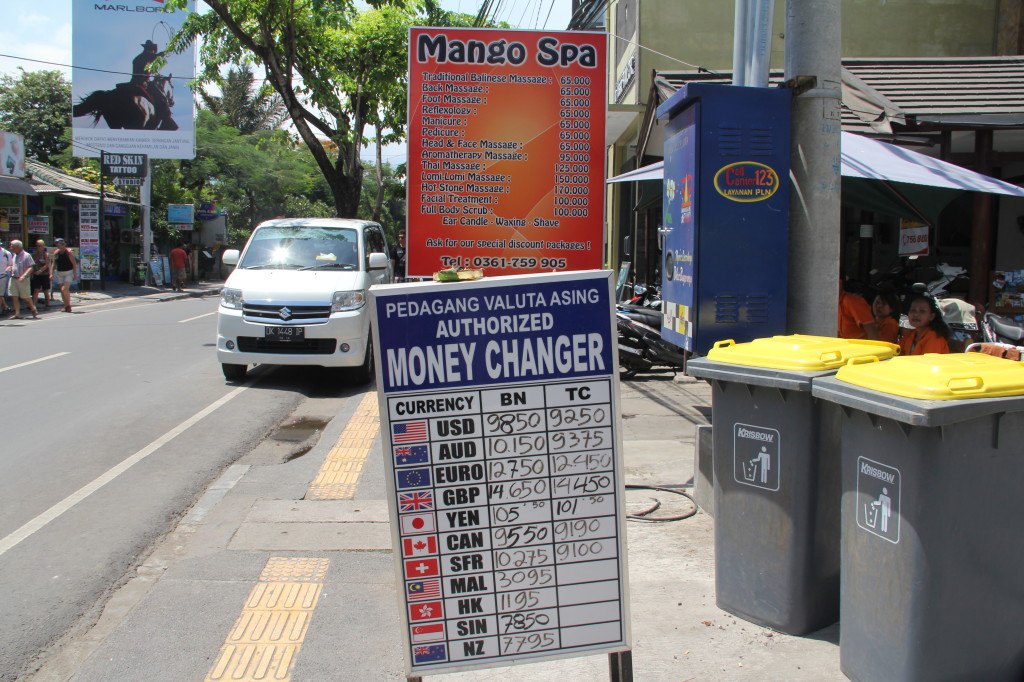
3.  If you use Bali as a gateway, there are money changers everywhere but be careful.  Many of them are scammers and will quote you a very good rate, then try to stick you with a wad of small bills.  They will short change you a few hundred thousand rupiah on purpose.  Then when you complain, they will take the wad back from you, hold it near the edge of their desk/kiosk and while they top it up with bills, they will slide a few bills out the bottom so you end up short changed even worse.  I knew about this scam so I insisted on pinching the corner of the wad of bills at a few money changers and once they realized I was holding it too tight for them to slide bills out the bottom, they refused to do business with me.  I finally found a travel agent who was giving a good rate and let me count the money on a table in front of him and didn’t try to sneak any of it back.

4.  Most hotels in Bali will pick you up free at the airport, if yours does, take advantage of it.  If you are going direct to Ubud or your hotel doesn’t provide transfers, use the prepaid taxi service at the airport.  These drivers are honest and will take you where you want to go with no mucking around.

5.  In Bali, use metered taxis such as Bluebird.  Elsewhere, you will have to negotiate with taxis, bemos or ojeks (motorcycle taxis).  Ask your hotel what the going rate is, then confirm it with the driver.

6.  If Bali is your gateway, this is a great chance to have clothes tailor-made.  Order them the day you arrive, then take off on your trip to West Papua or elsewhere in Indonesia.  They will be ready when you return (and you will probably be a bit slimmer as well)!

7.  Schedule a few days R&R in Bali after your birding trip and plan to do your shopping then so you aren’t lugging stuff all over Papua.

8.  If you have special birds you want to see, tell your guide so he knows which places to take you to.

9. If you travel in high season, be prepared to share the hides for Birds of Paradise and even take turns.  If you go in low season and there aren’t any other tourists, you can take your time and stay in the hide as long as you want.

10.  Your shoes will probably get all muddy and yucky and you won’t want to take them home.  Consider leaving them behind for your guide, if he doesn’t want them someone in the village will.

11.  In some remote places, you will be expected to bring enough food from town for both yourselves and your guides.  Make sure you know of any religious restrictions (Muslims don’t eat pork) and shop accordingly.

12.  Don’t bargain with birding guides.  Their rates are very reasonable and they will earn them.  If you deal direct with the guide, just pay what he asks.  If you are on a tour, ask the tour leader if you are expected to tip, most of them will have already built this into the price they charge you.  Remember, you are supporting them so they don’t have to earn a living trapping birds.

Bali As An Eco-Tourism Gateway

Bali is a major world tourist destination and there are many forums and blogs dedicated to making the most of your trip to Bali.  I am just going to briefly describe some activities which may interest eco-tourists and bird lovers in general.  I have already done reviews on the two hotels we stayed in:  Cendana Resort and Holiday Inn Resort Baruna Beach and I can recommend them for a stay in Ubud and Kuta respectively.  Trip Advisor has hundreds of reviews so I would advise taking a look there to find something that suits you.

SIGHTSEEING

I had originally planned to do Bali Bird Walks but we got rained out.  Not to worry as I know we will be back in Bali someday.

I would also like to visit Bali Barat National Park sometime when we aren’t totally exhausted.

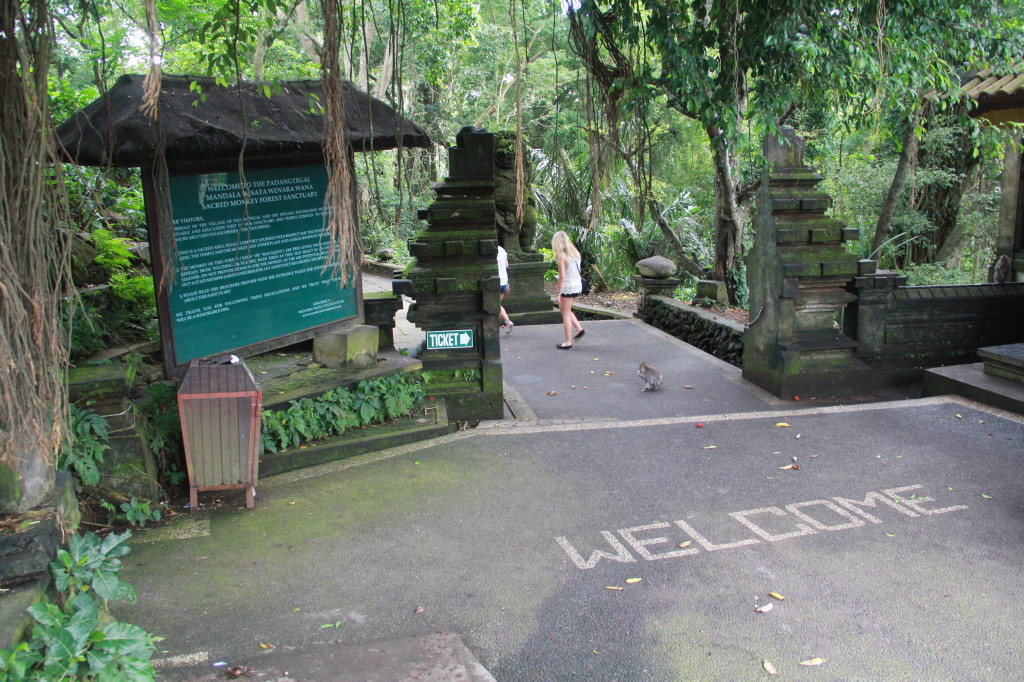
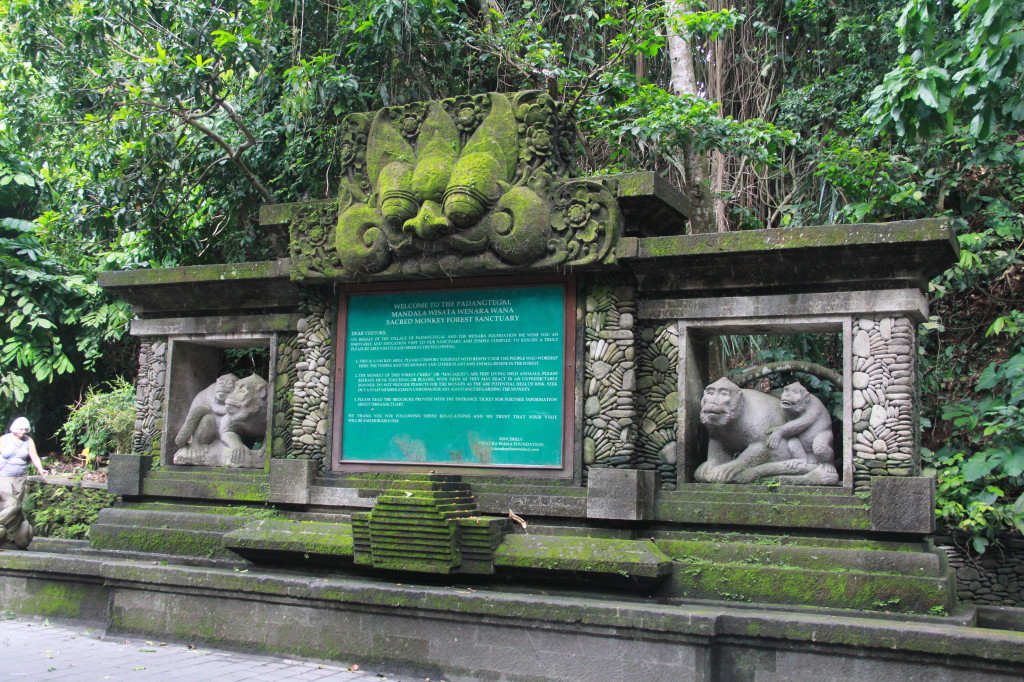
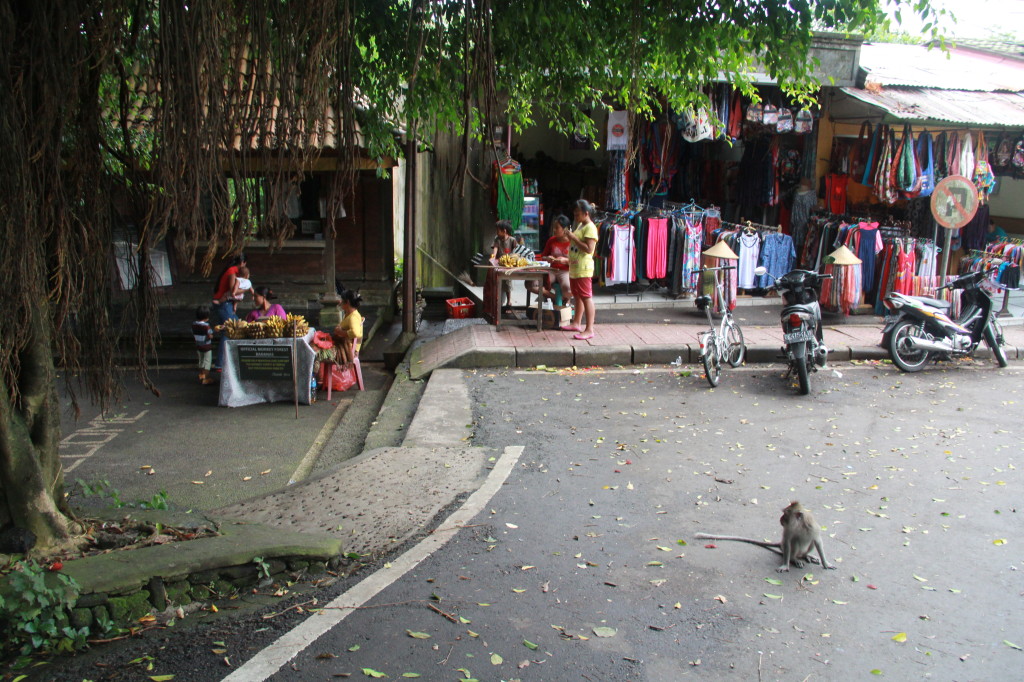
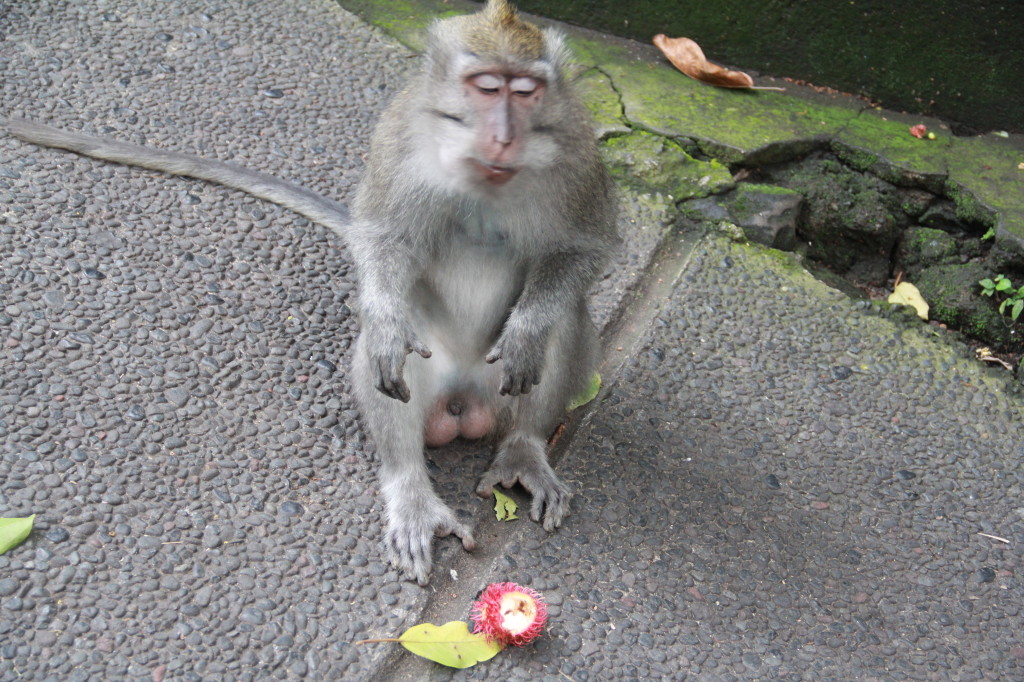
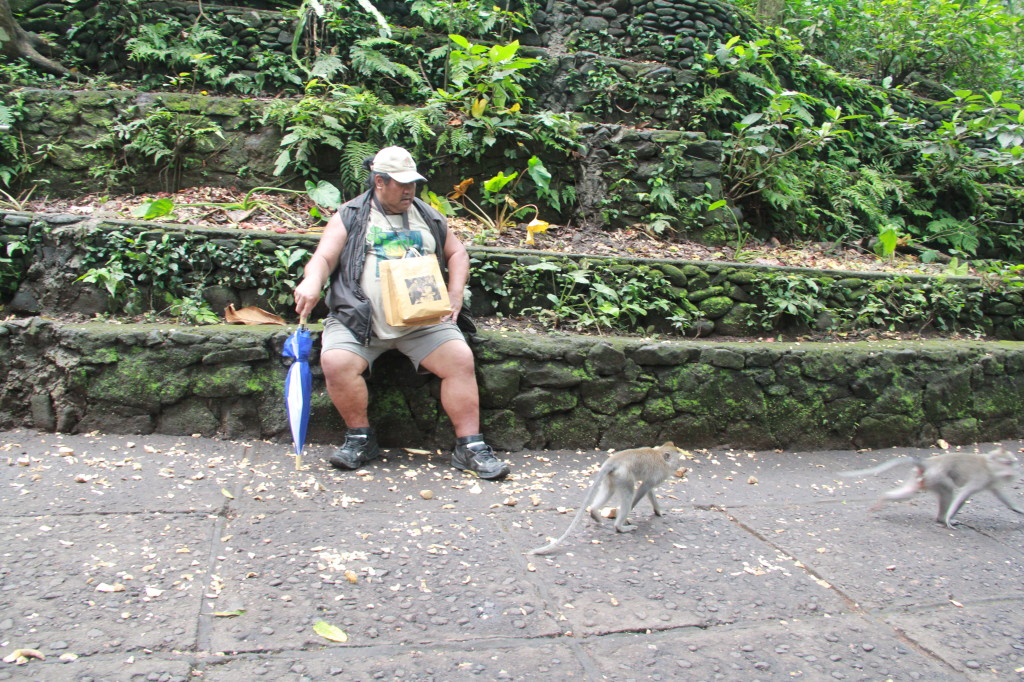
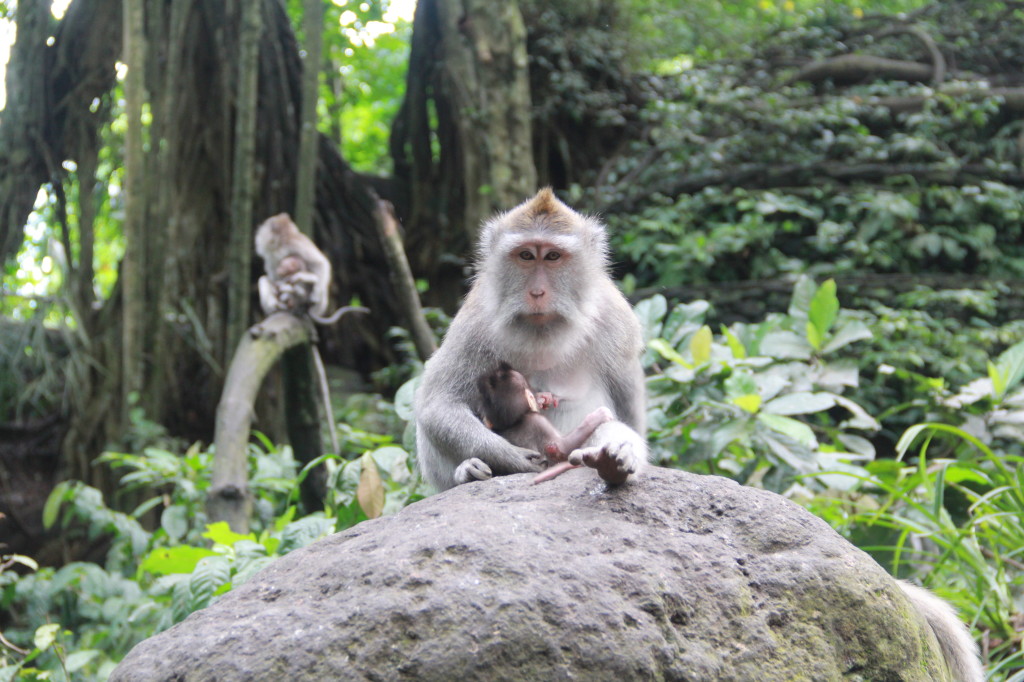
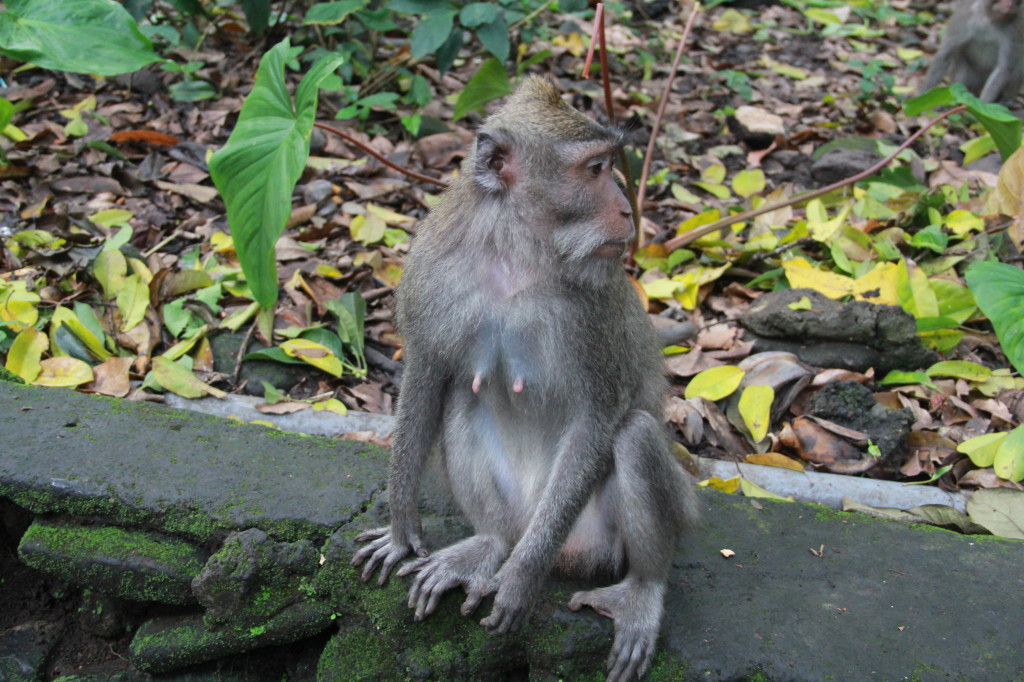
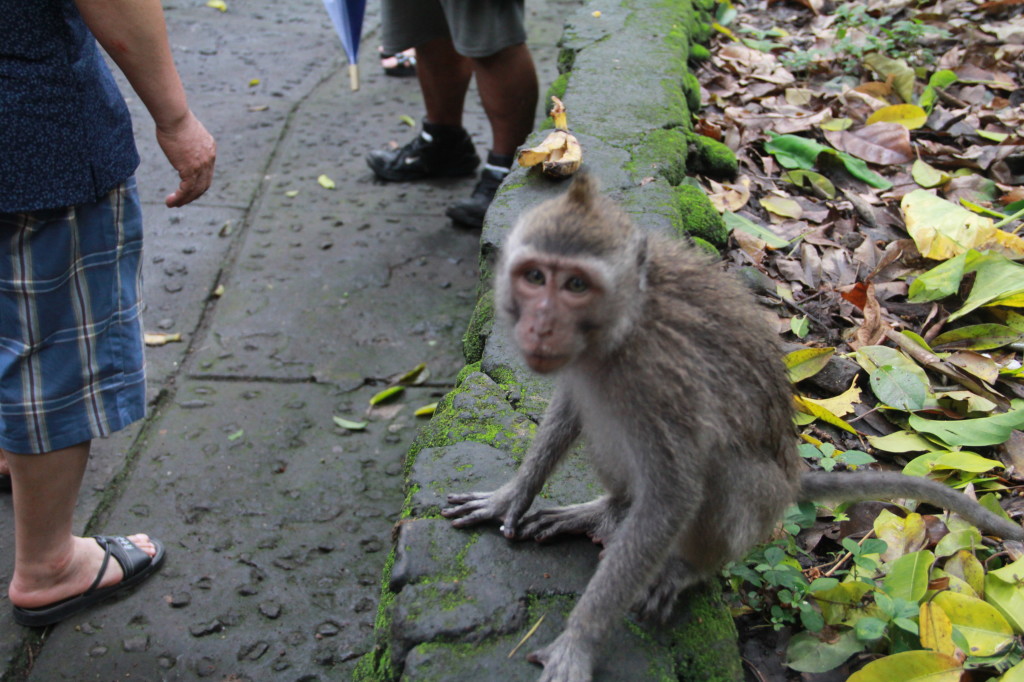
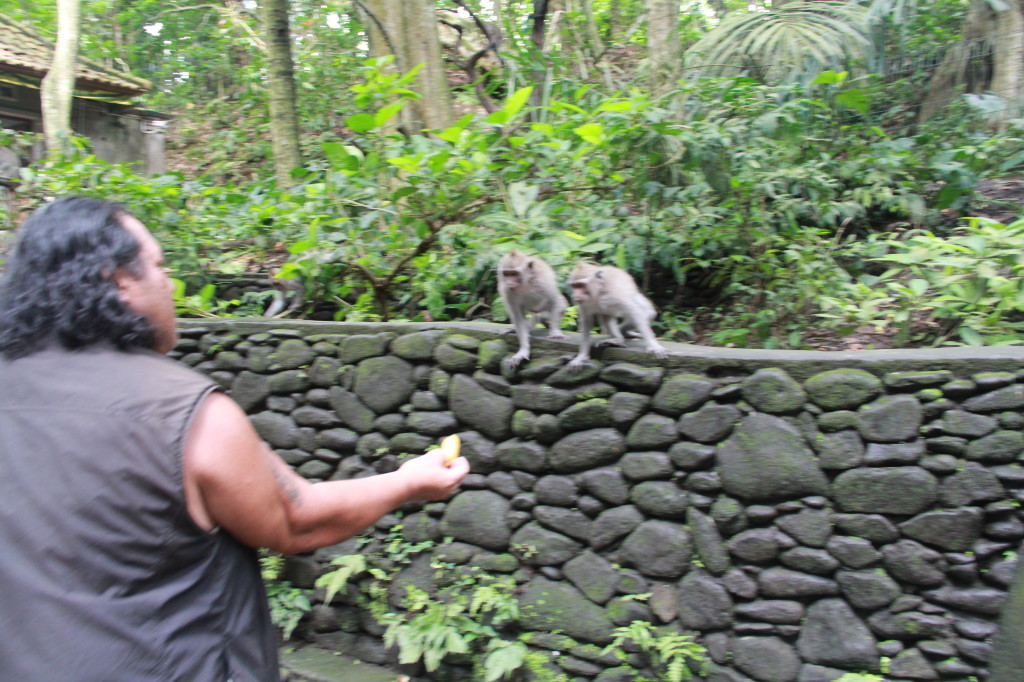
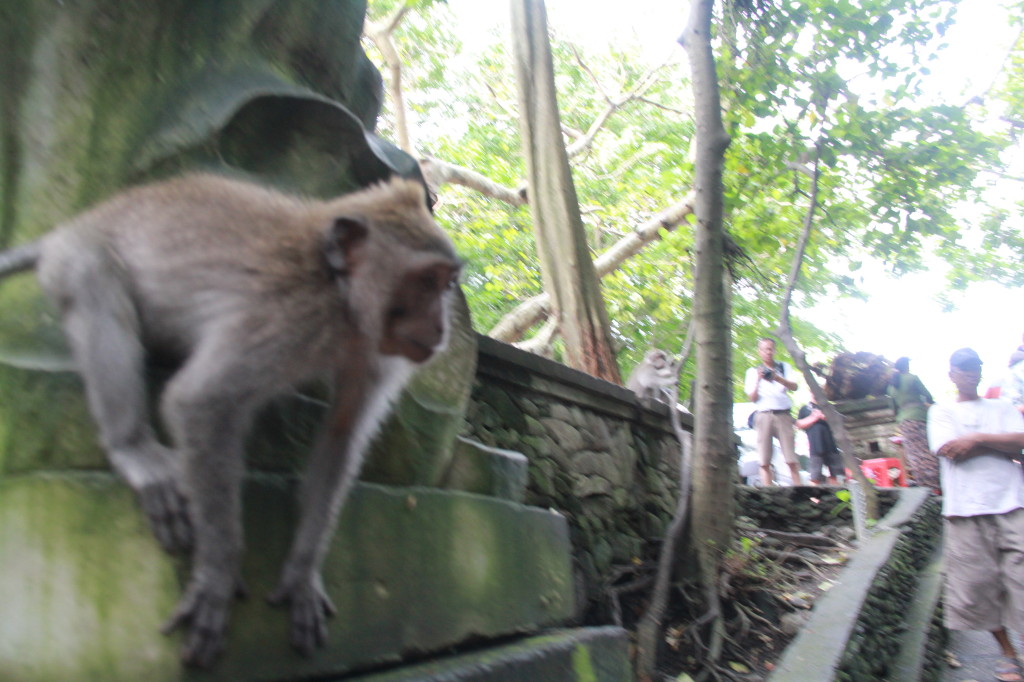
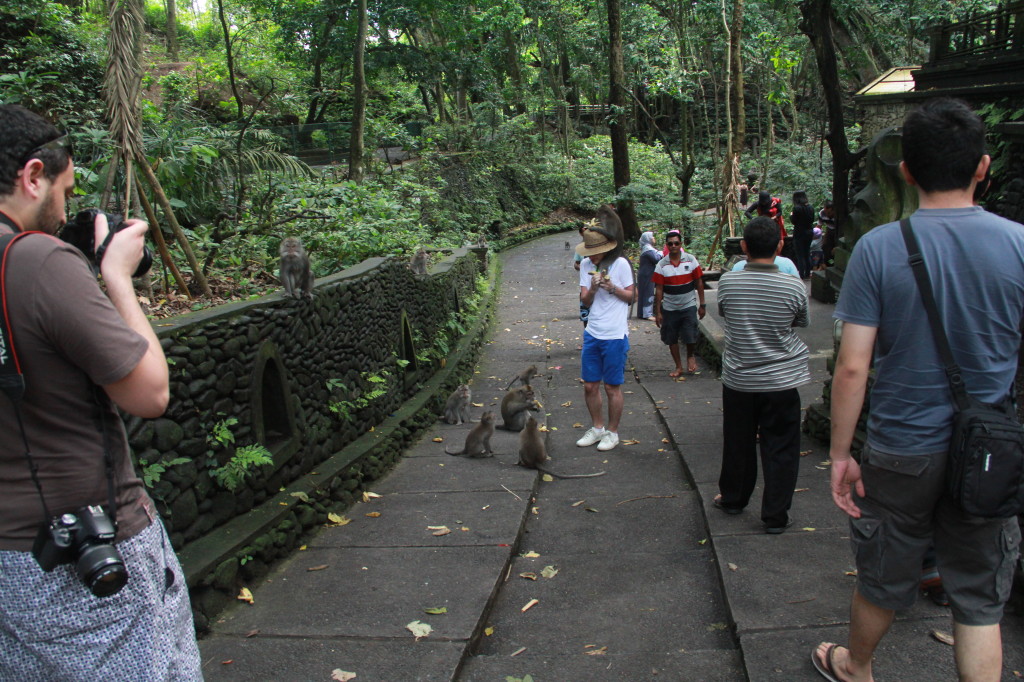
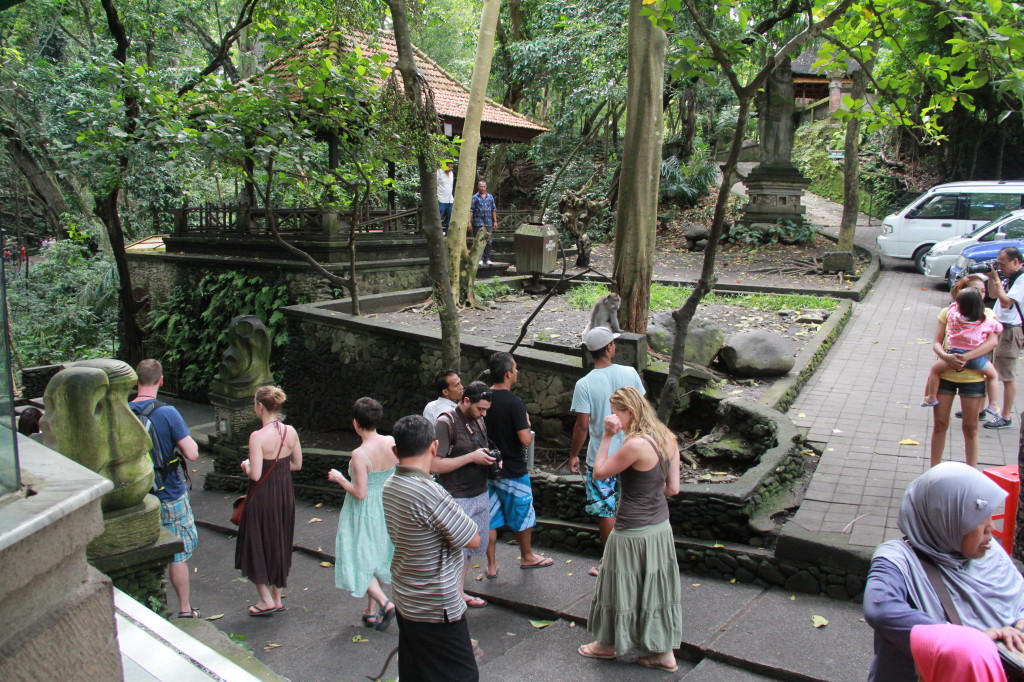
The Monkey Forest in Ubud is extremely popular and very touristy but it’s still a lot of fun!  There is a nominal charge of around $4 to enter and you can buy bananas outside to tempt the monkeys.  They don’t require much tempting, they are more like New York muggers and will aggressively jump on you and rummage through your pockets if they see anything banana-shaped (men take care)!  Don’t wear glasses or jewelry as they have been known to snatch them off tourists.  Here’s some pics.

IMG_8651 IMG_8649 IMG_8650 IMG_8648 IMG_8633 IMG_8629 IMG_8626 IMG_8625 IMG_8618 IMG_8612 IMG_8610 IMG_8609

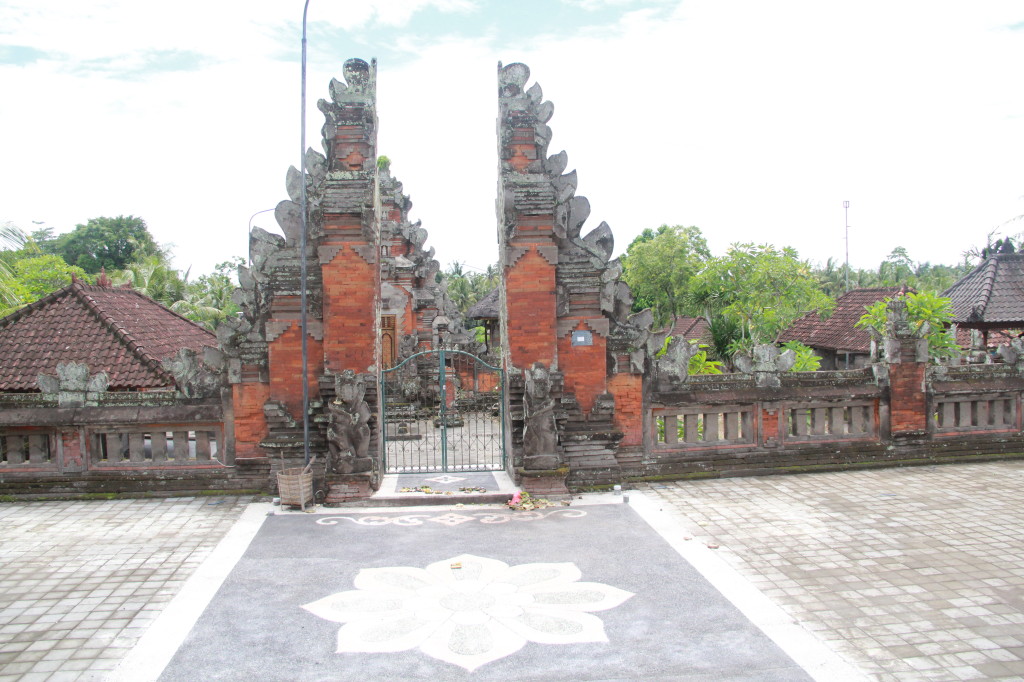
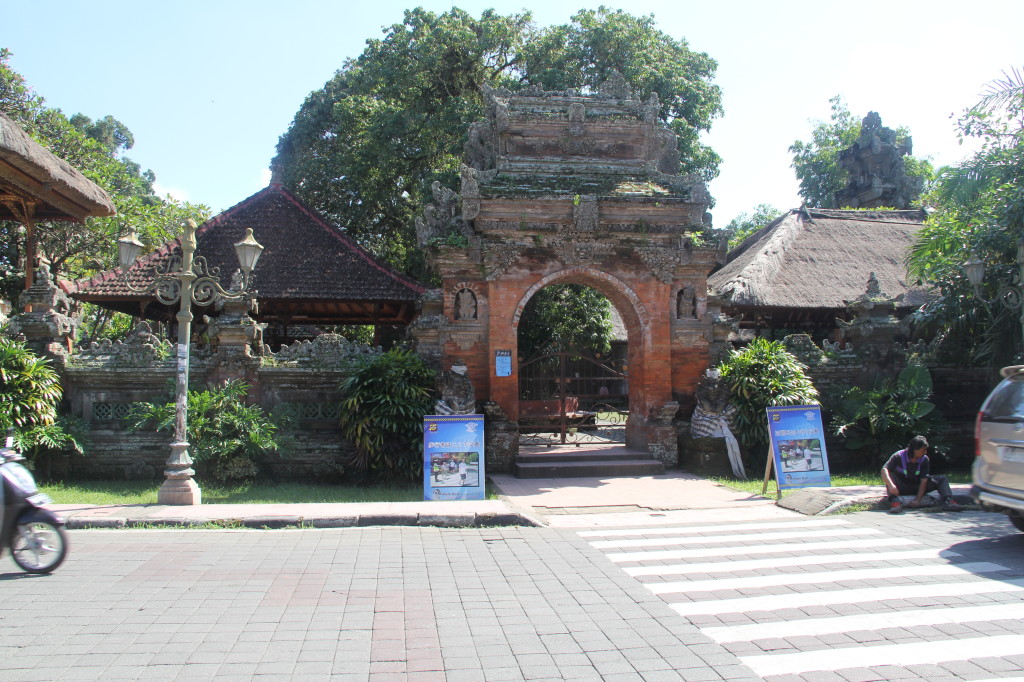
Balinese Temples are everywhere and some will allow tourists inside if they are properly dressed in a sarong (no shorts or beachy outfits).  Otherwise you can still admire them from the outside.

IMG_8592 IMG_8691

SHOPPING

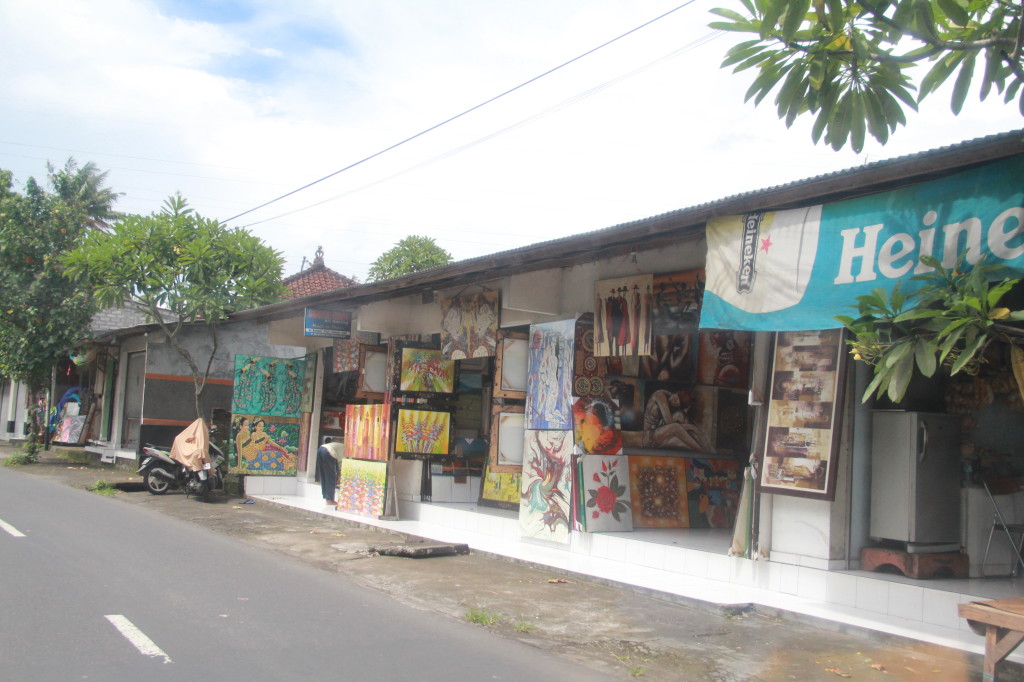
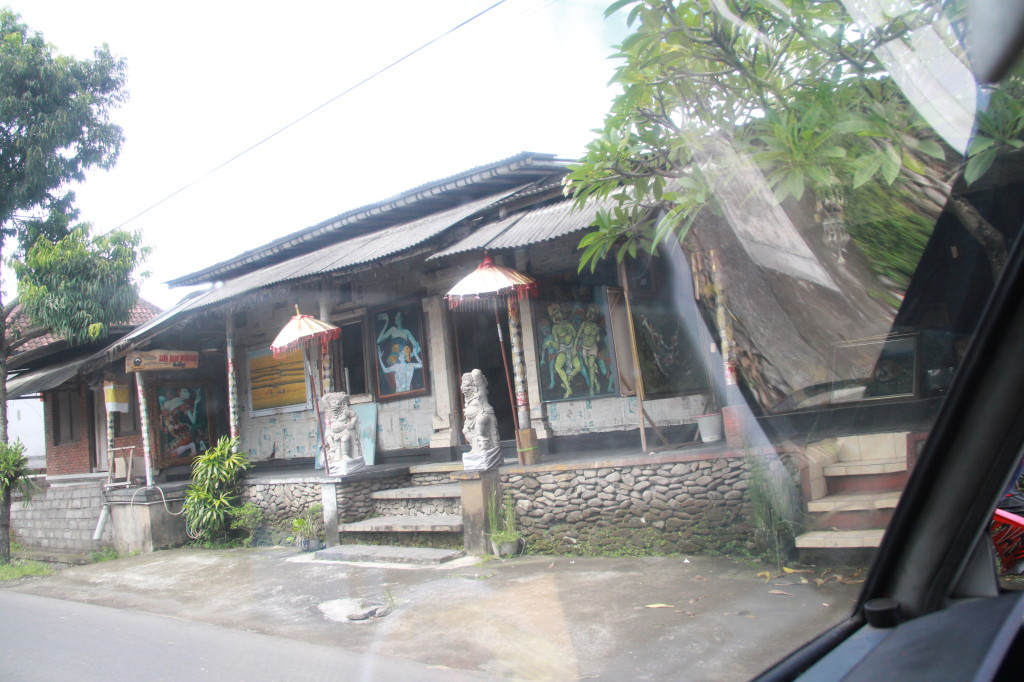
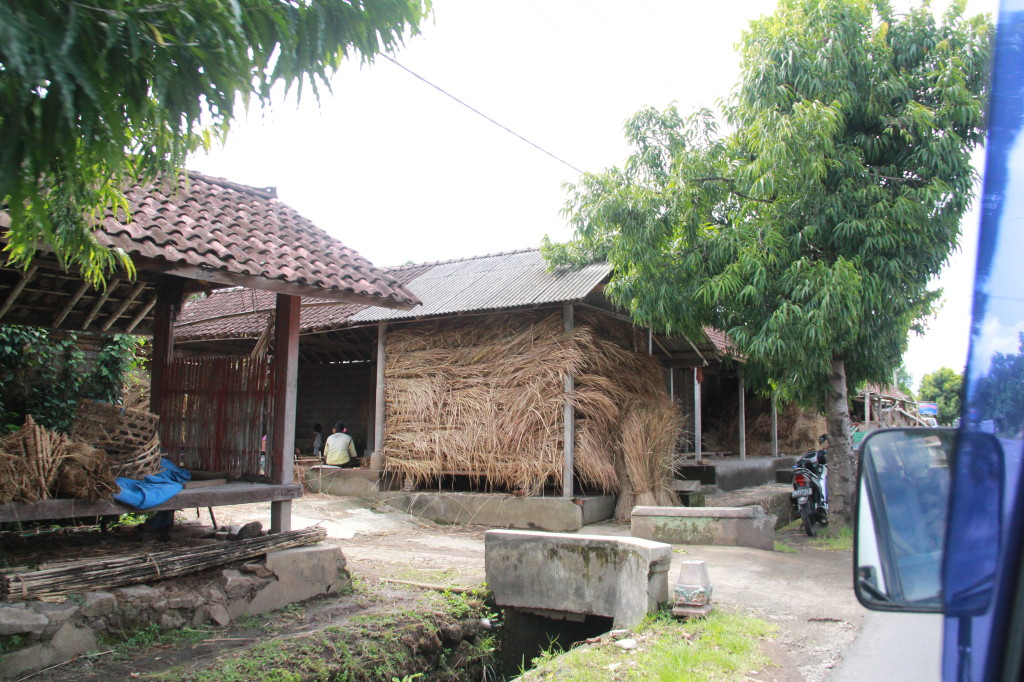
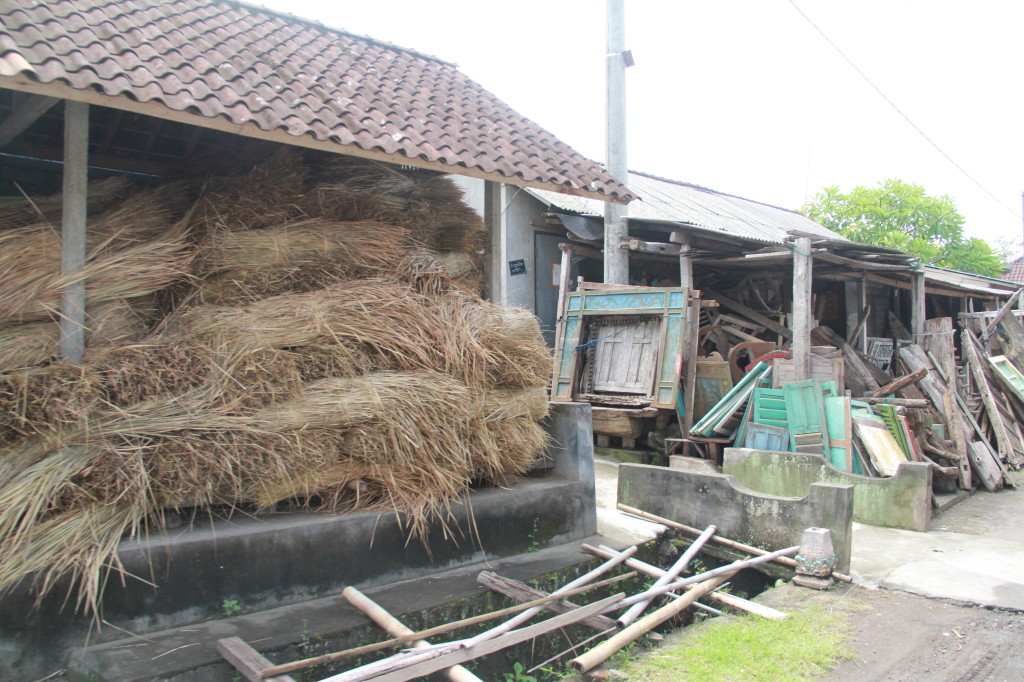
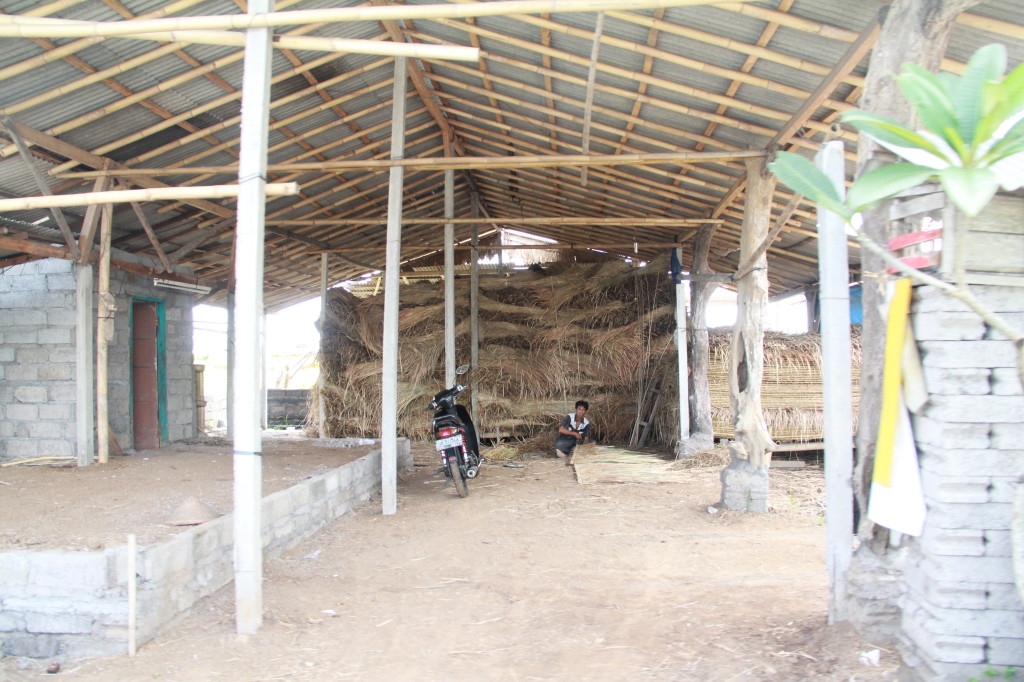
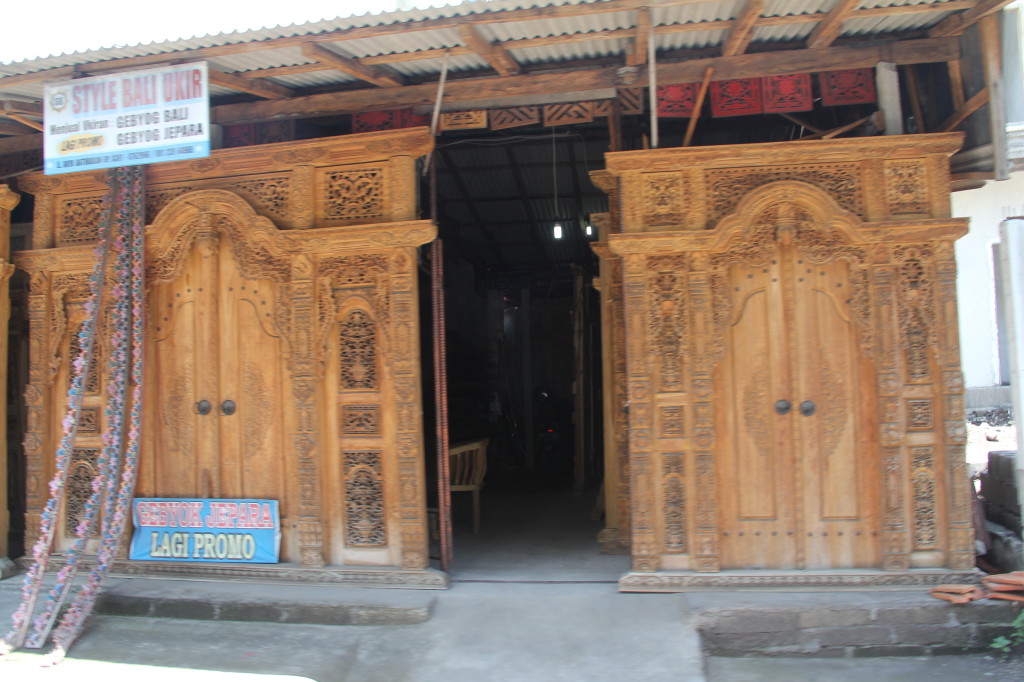
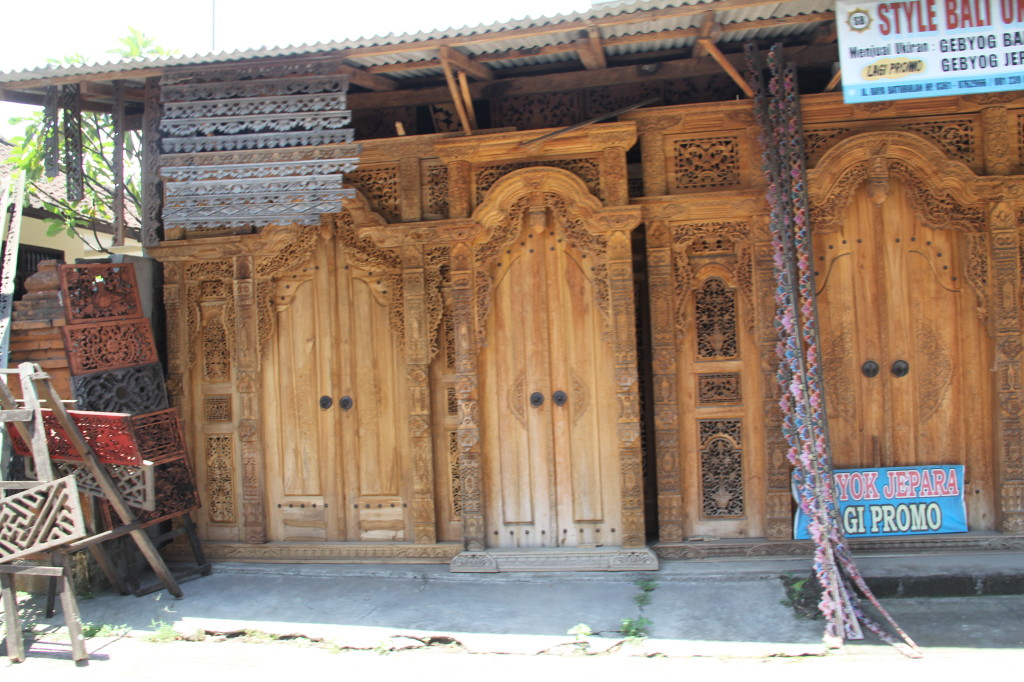
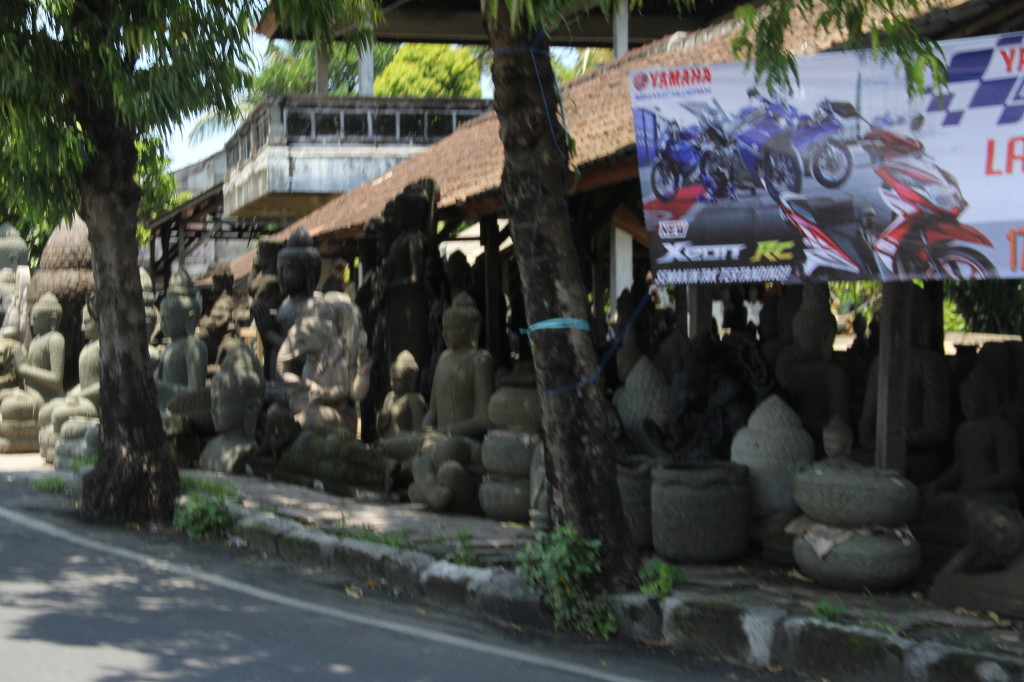
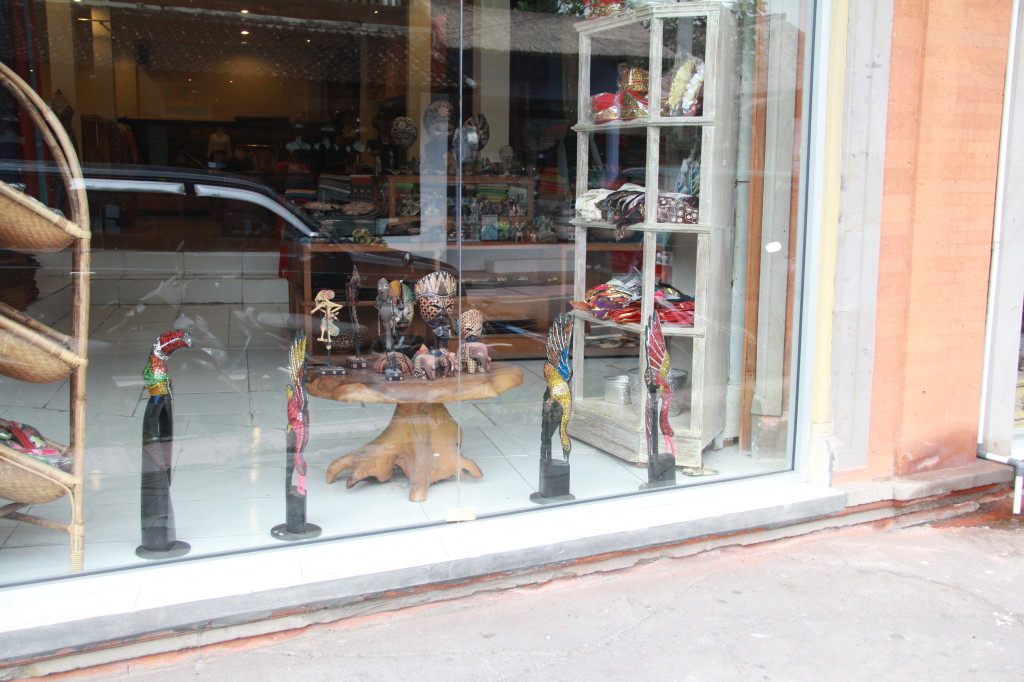
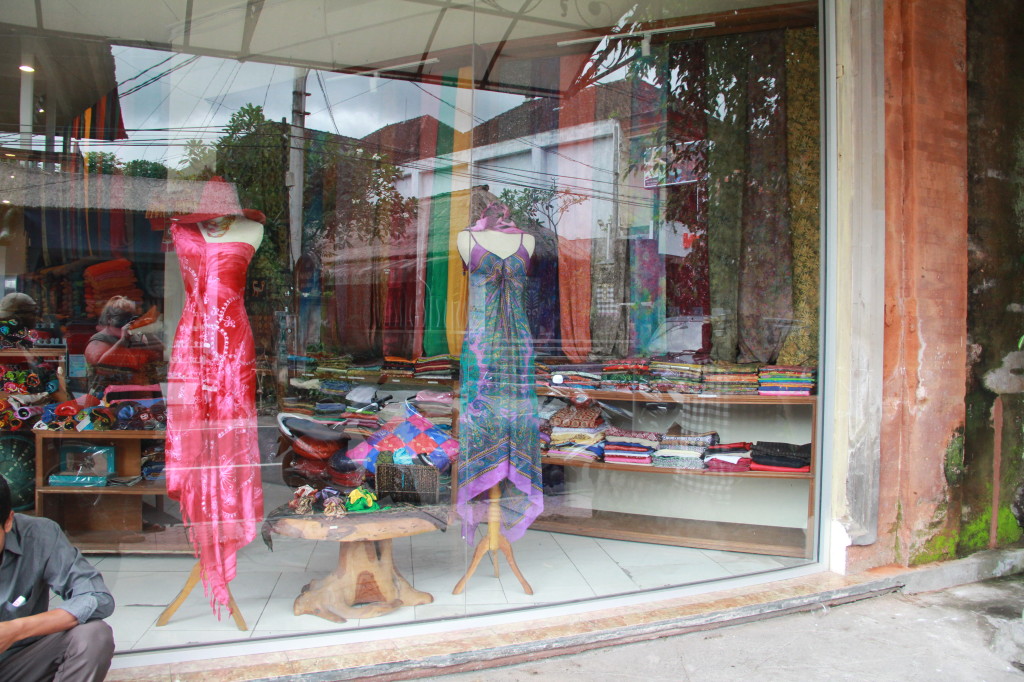
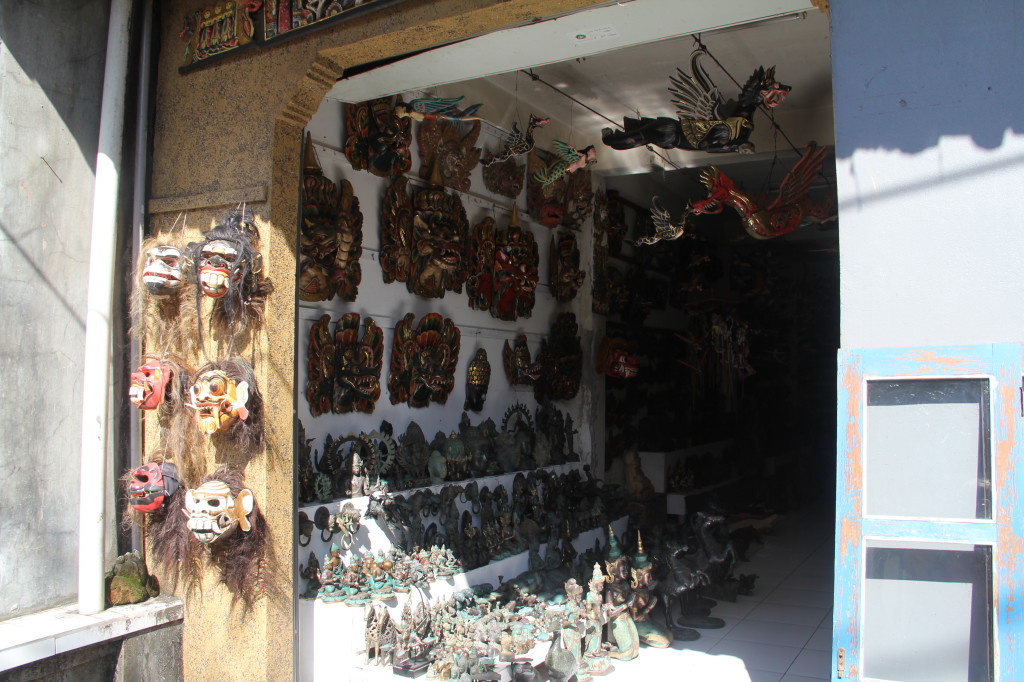
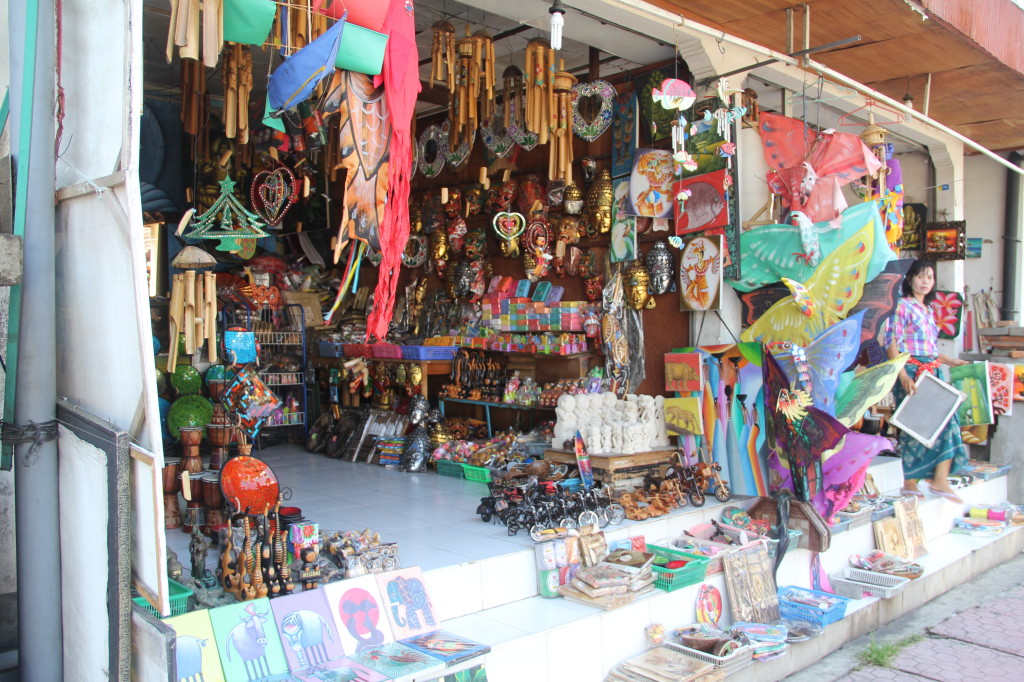
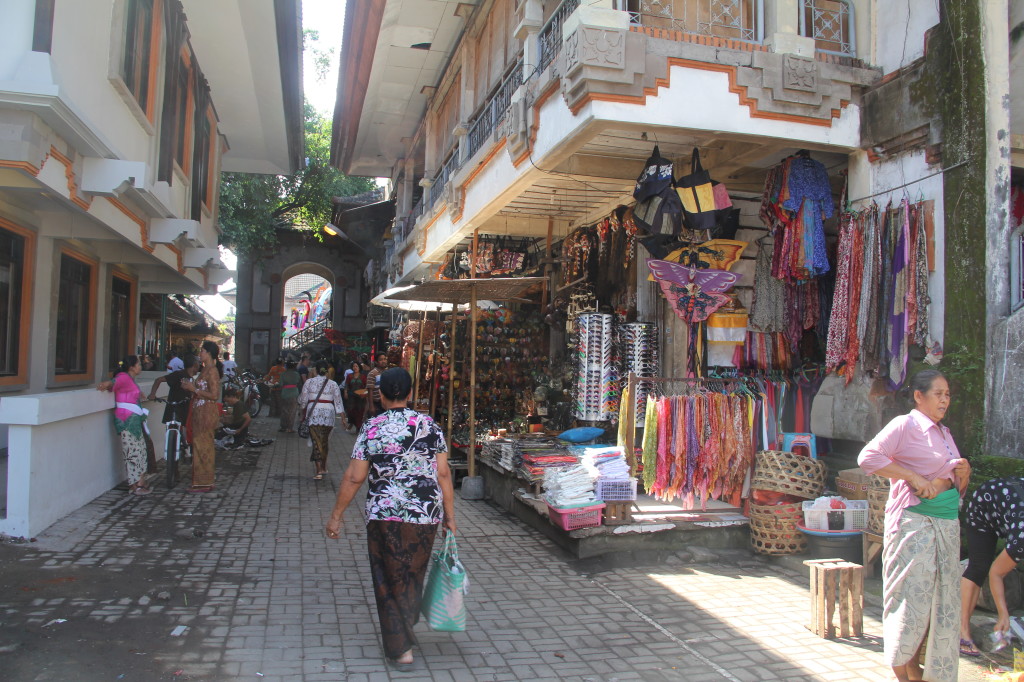
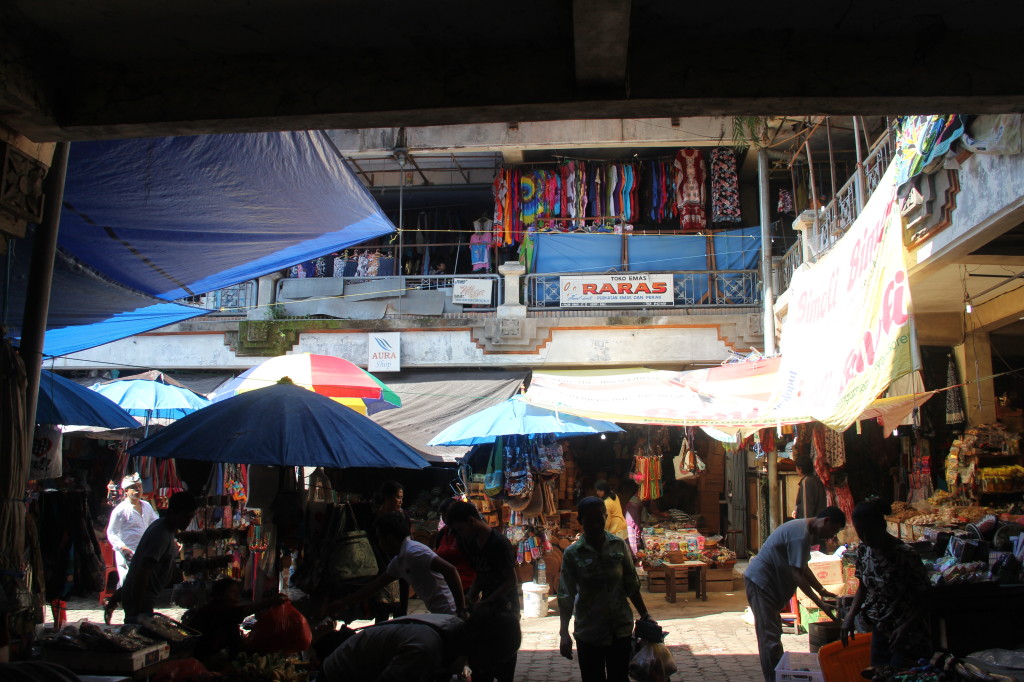
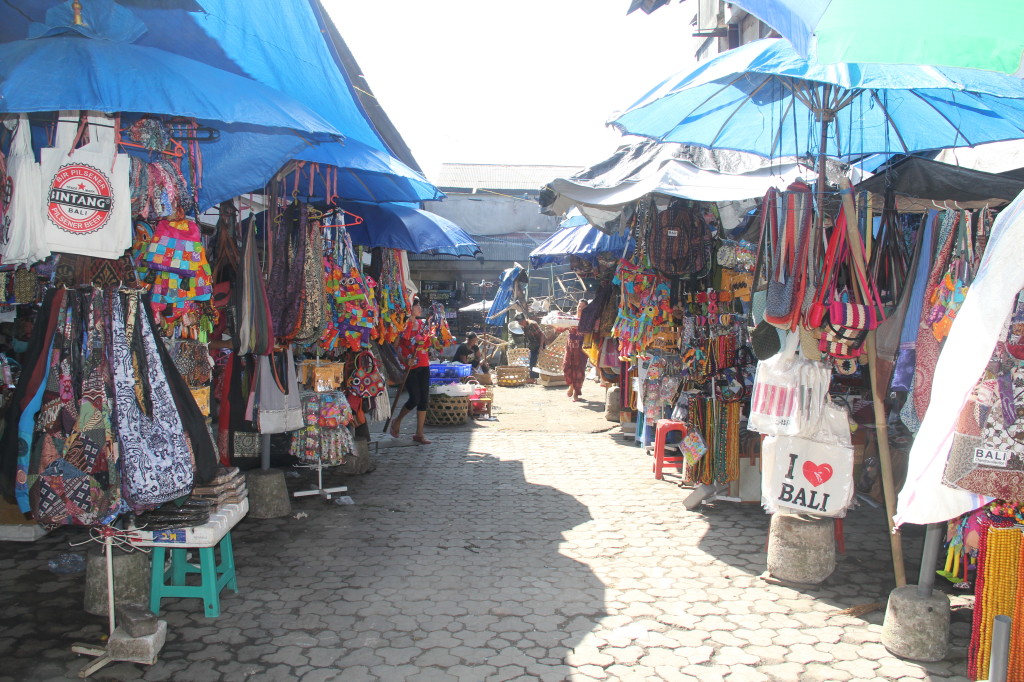
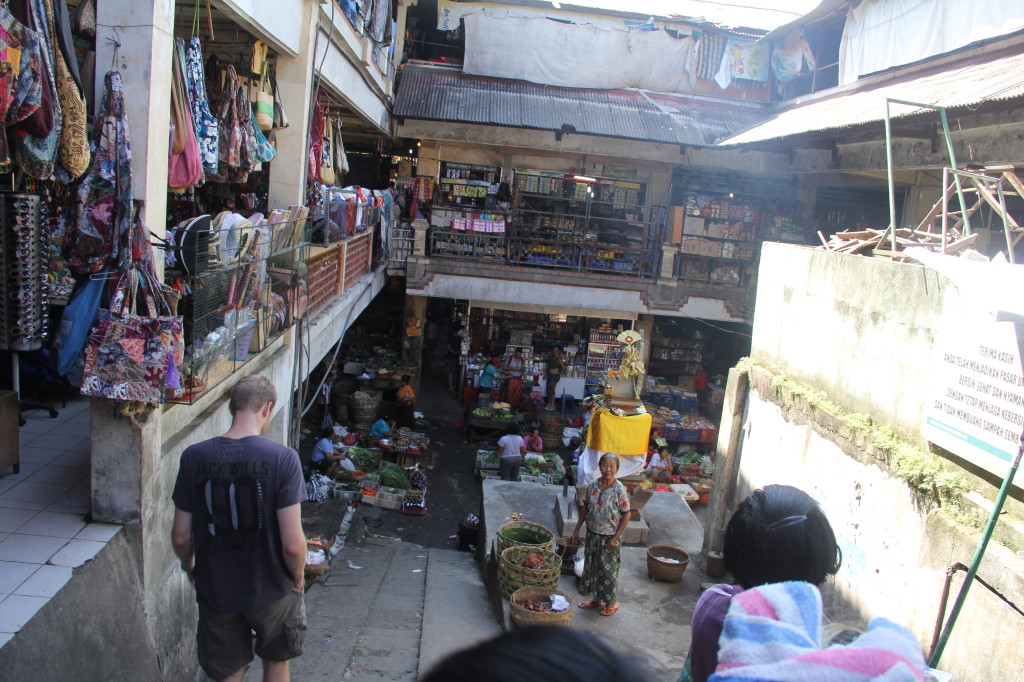
Ubud Area Arts, Crafts and Furniture Markets are on the road between Ubud and Bali Bird Park and a major stop for tourist groups as well.  If you go with a guide or driver, they will get a commission on whatever you buy so try to go alone or get dropped off if you are after the best prices.  You can even buy thatching to bring home and make a cabana in your backyard!  I loved those fancy doors but didn’t want to try shipping one.

IMG_8593 IMG_8594 IMG_8595 IMG_8596 IMG_8597 IMG_8598 IMG_8599

IMG_8705 IMG_8704 IMG_8703

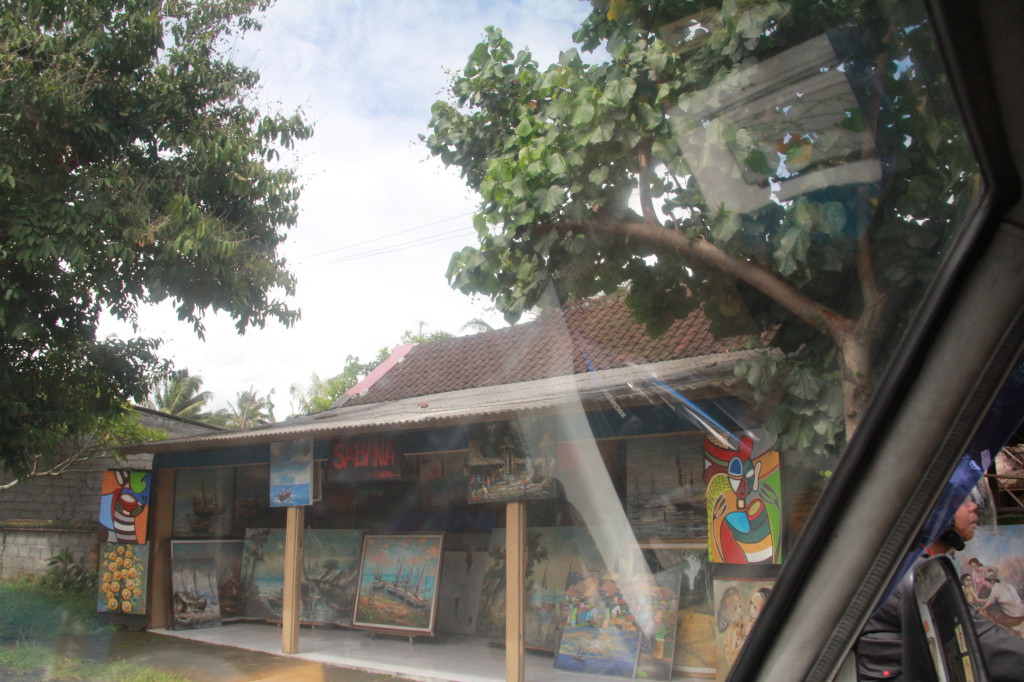
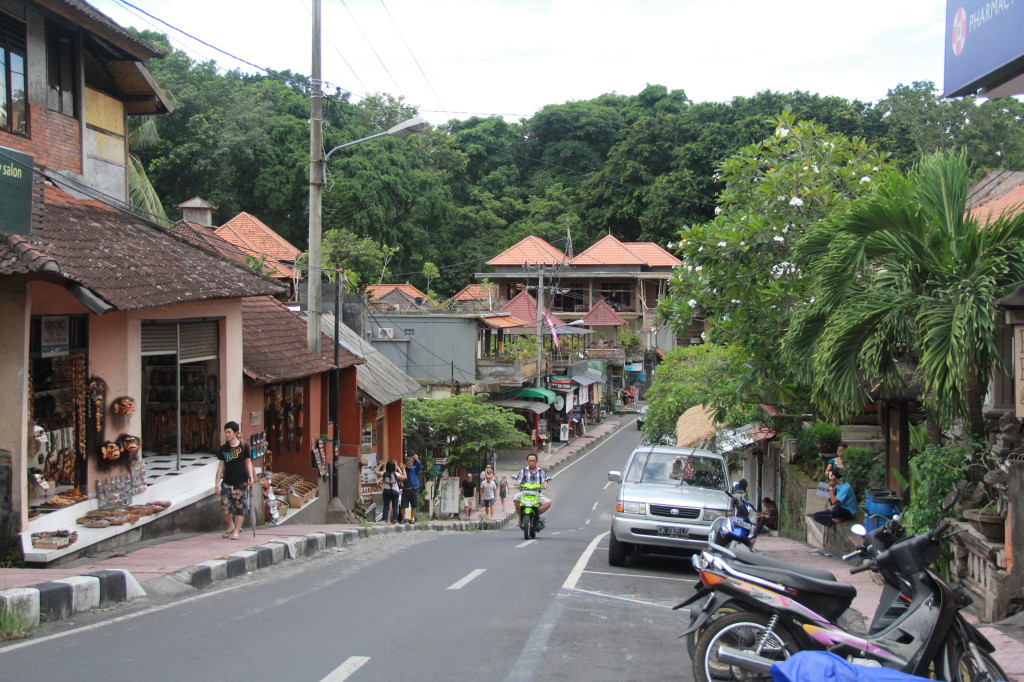
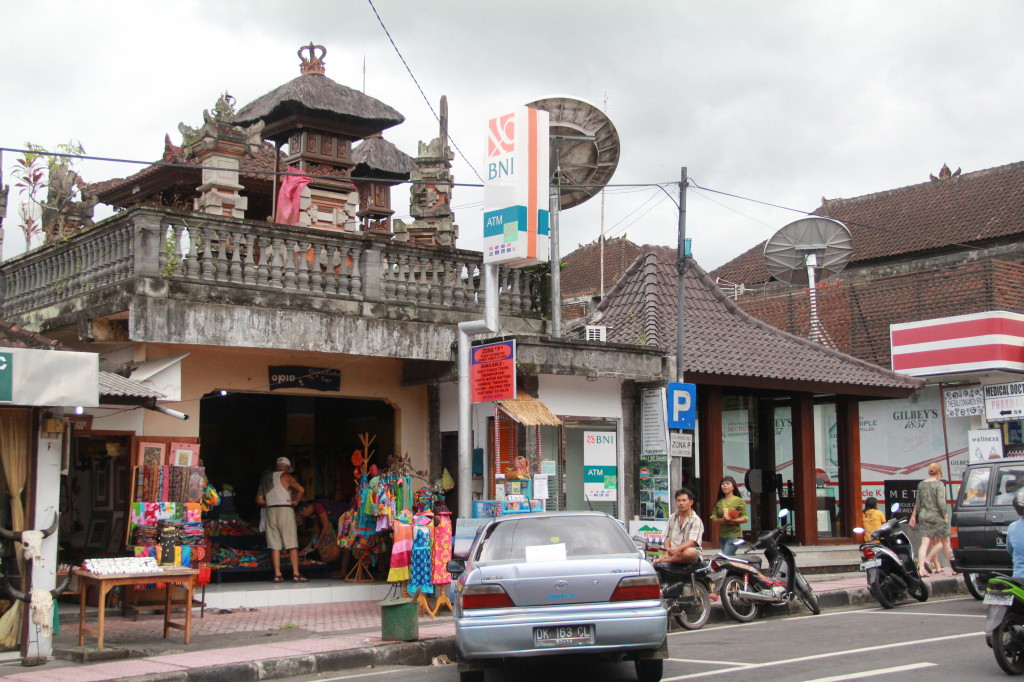
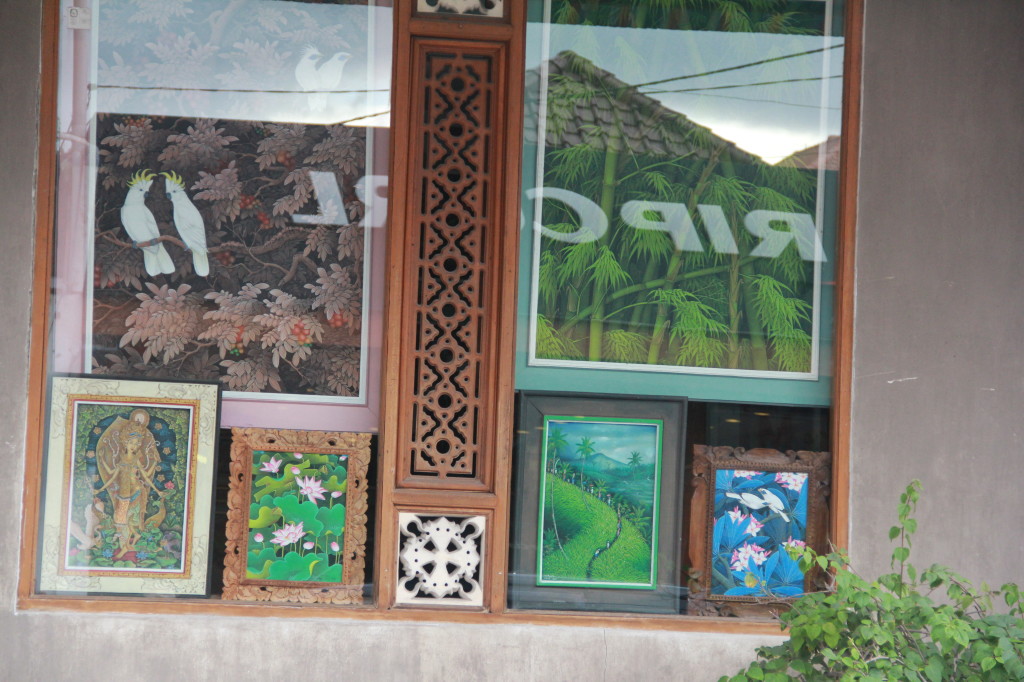
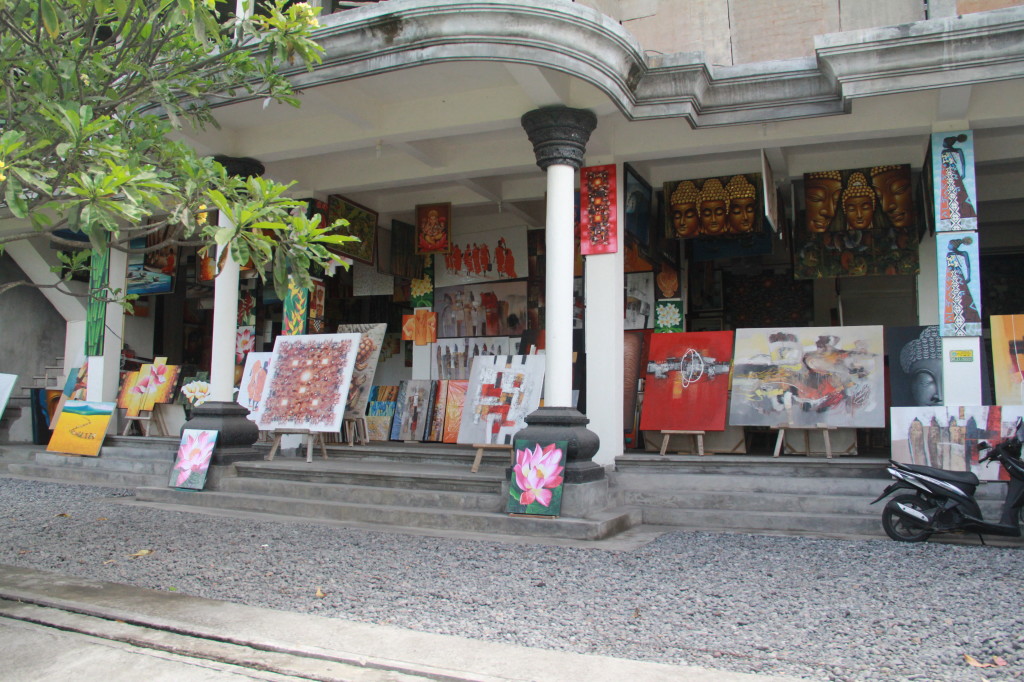
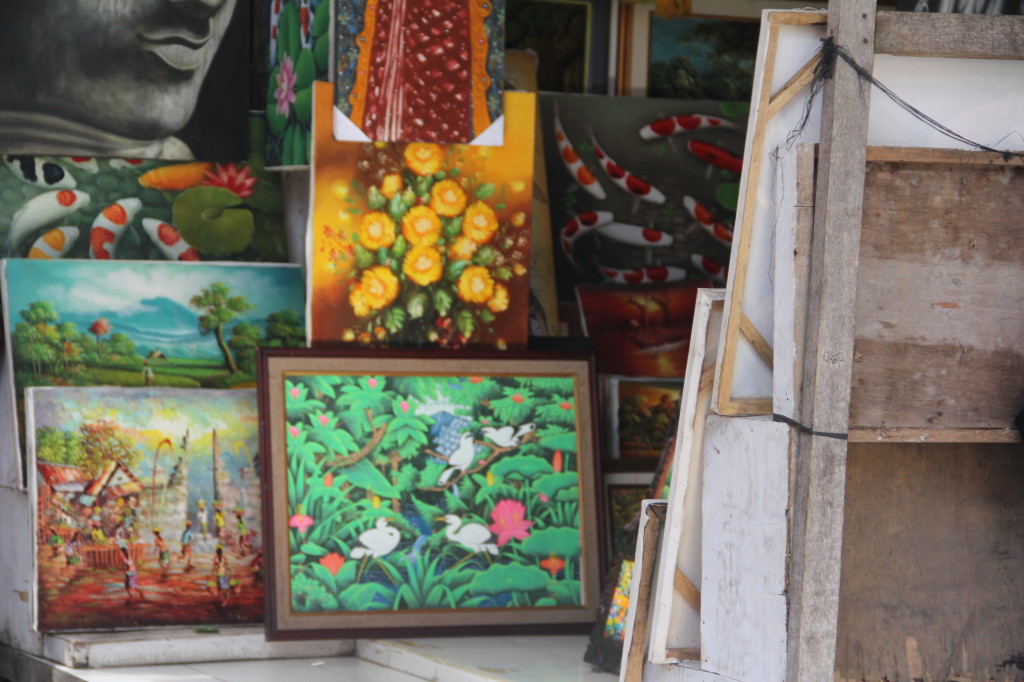
Back in Ubud town, there are shops along the main tourist drag-Monkey Forest Road and a small art market at the top of the road near the palace.  I loved the paintings of birds and really wanted that one with the cockatoos but it cost over $100 and was huge!  I asked for smaller ones but they didn’t have small cockatoo paintings.

IMG_8652 IMG_8653 IMG_8655 IMG_8656 IMG_8657 IMG_8687 IMG_8688 IMG_8689 IMG_8690 IMG_8692 IMG_8693 IMG_8694 IMG_8695 IMG_8696 IMG_8697 IMG_8698 IMG_8605 IMG_8603 IMG_8602 IMG_8601

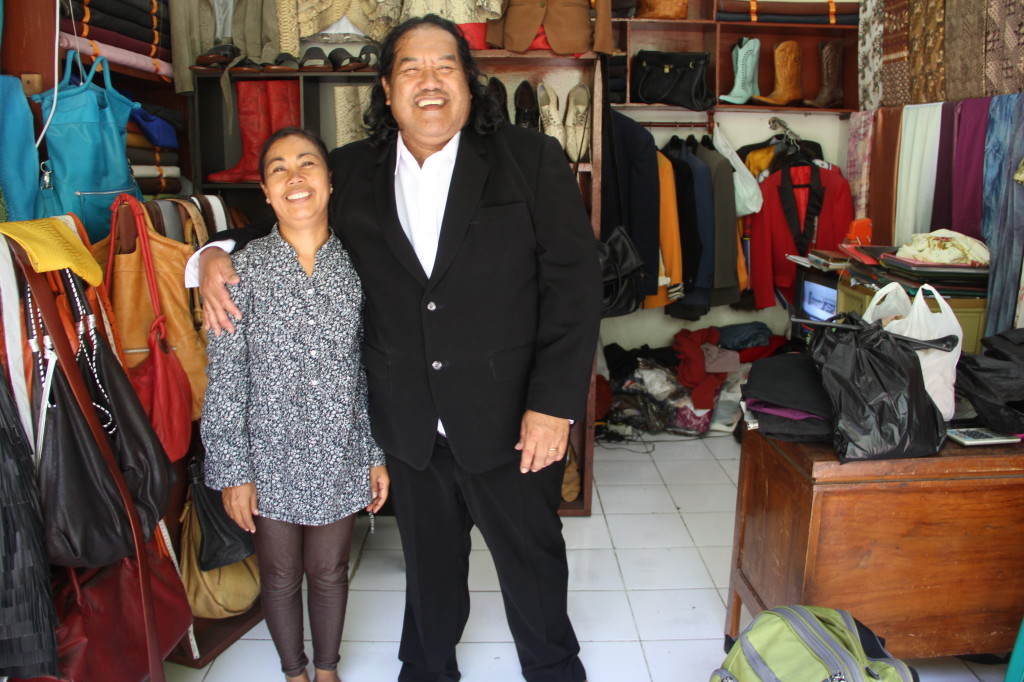
There are tailors everywhere and we both had some outfits made.  My husband got a suit and I got an evening dress and a few tops for a cruise we have planned next year.  This is Sanggar Tailoring in Kuta near the Kuta Art Market.  This suit (first fitting shown here) cost $135 including fabric.

IMG_8717

RESTAURANTS

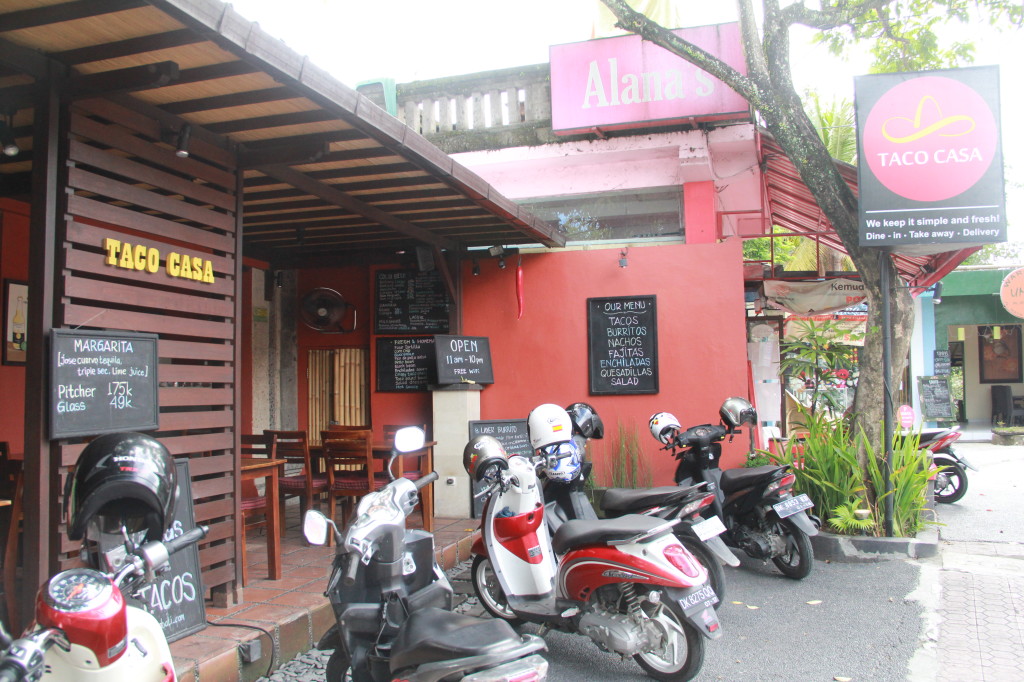
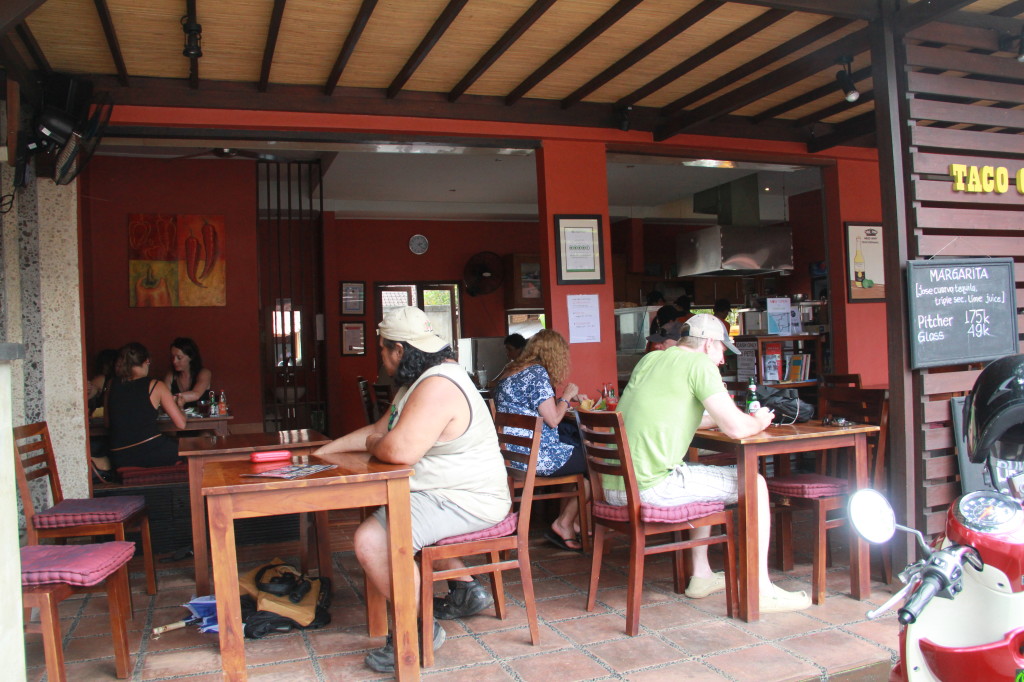
Needless to say, there are hundreds of restaurants with all kinds of cuisines.  We had pretty much OD’d on nasi goreng and satay in West Papua so by the time we got to Bali we wanted a change.  We did get a bit lazy and took several meals in our hotels for most breakfasts and dinners but went out for lunch.  Ubud has a great Mexican place-Taco Casa.

IMG_8606 IMG_8607

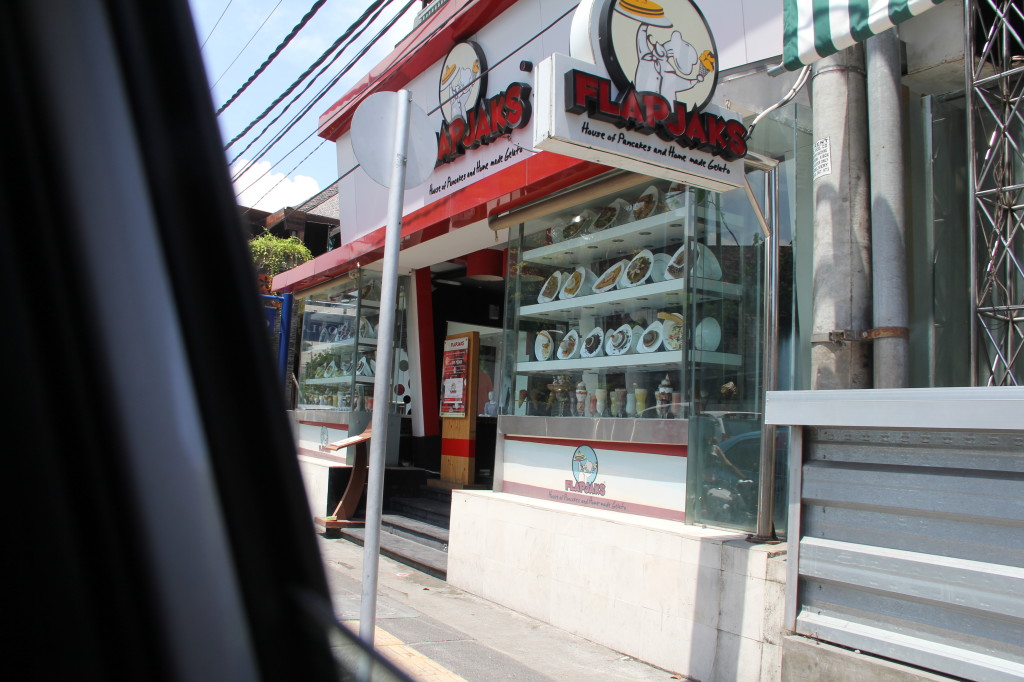
And being an expat American, I was craving typical diner type food such as Flapjaks in Kuta and Johnny Rockets in the Beachwalk Mall.

IMG_8713

RELAXATION

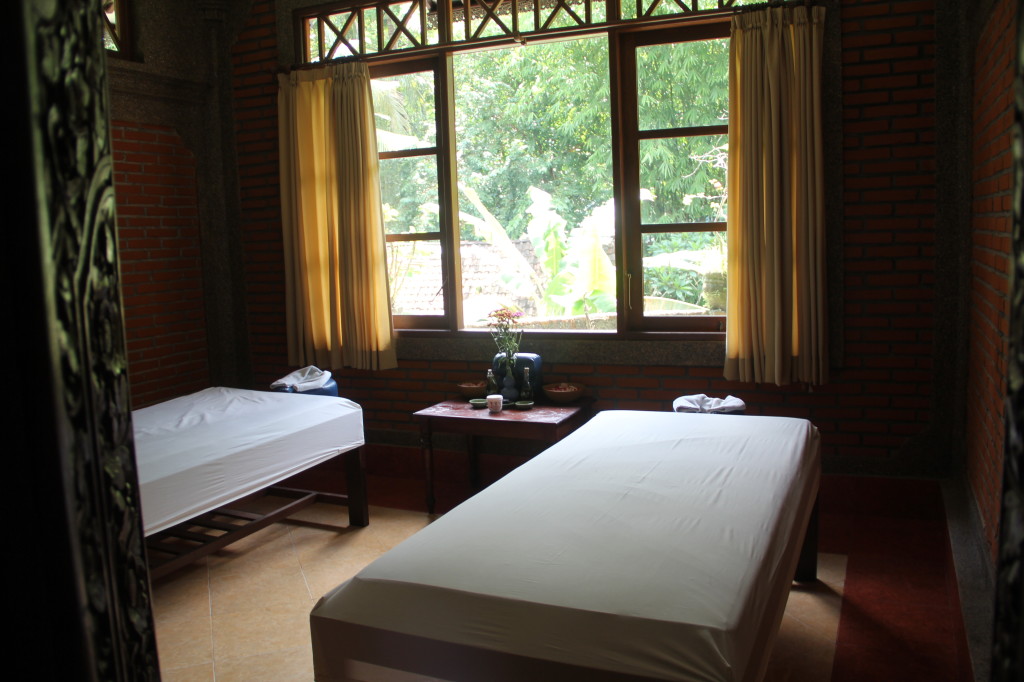
Massage parlours and day spas are everywhere and very cheap!  This spa pictured is in Cendana Resort and it was really good.  We were getting massages every day and I got a facial, body scrub, hair treaments and French braiding.  Great way to spoil our aching muscles after the birding expedition!

IMG_8699

There are modern shopping malls such as Discovery Centre and Beachwalk which are air conditioned fi you want to escape the afternoon heat.  We saw “Oz the Great and Powerful” for only $5 each at the Beachwalk cinema and it was cool and comfy inside!