Birds of Paradise are found in Papua New Guinea and Western Papua, Indonesia. It’s not easy to get there but well worth the effort! Let this video documentary inspire you, then learn how I organized my trip to Western Papua!
Category Archives: Birds
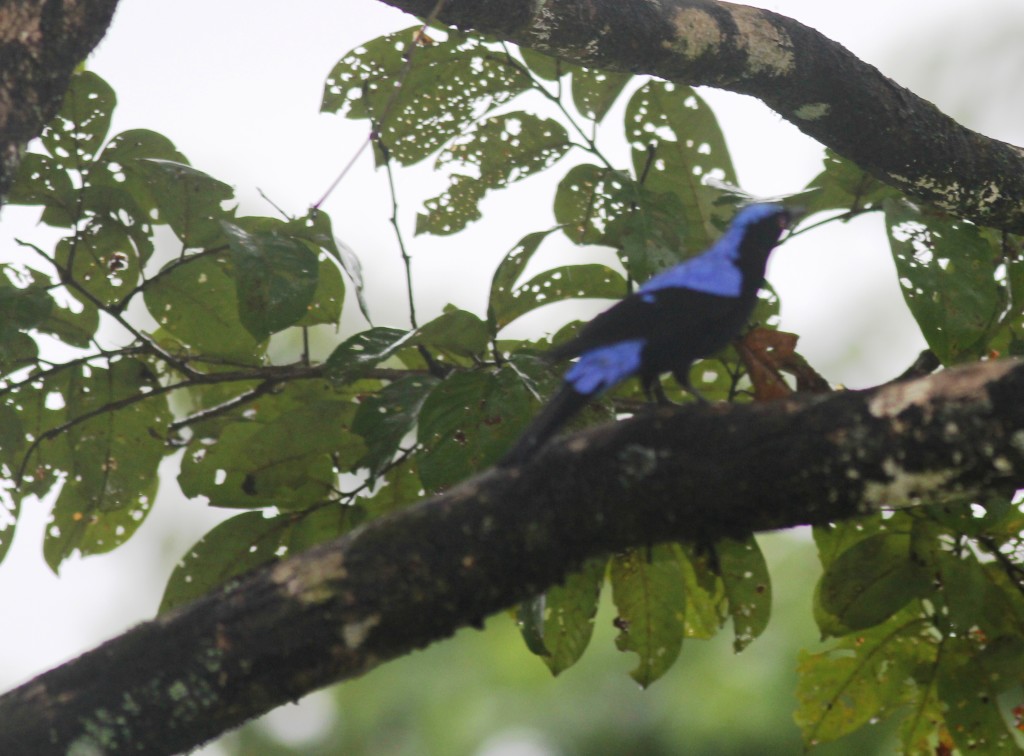
Asian Fairy-bluebird (Irena puella)
The Asian Fairy-bluebird (Irena puella) is a medium-sized, arboreal passerine bird. This fairy-bluebird is found in forests across tropical southern Asia from the Himalayan foothills, India and Sri Lanka east through Indochina, the Greater Sundas and Palawan (Philippines). Two or three eggs are laid in a small cup nest in a tree. It was described by British ornithologist John Latham in 1790. The only other member of the genus and family is the Philippine Fairy-bluebird, I. cyanogastra, which replaces the Asian Fairy-bluebird in most of the Philippines.
I saw this one in Thattekad Bird Sanctuary in Kerala, India. It’s quite easy to get there using airline miles as you can see by my detailed blog post on “Getting to Central Asia“.
Asian Fairy-bluebird range with red dot indicating Thattekad Bird Sanctuary
Thankfully this beautiful bird is not endangered as it is quite widespread. This also makes it more likely you will be lucky enough to see one in the wild. Places to visit include Sri Lanka; the western coast of India from Travancore up to the latitude of Belgaum and Sawantwadi; Sikkim and the lower ranges of the Himalayas to Dibrugarh in Assam; the Khasi Hills; Cachar; Manipur; Arrakan; Bago and Taninthayi Division in Burma; the Andaman and Nicobar Islands. In southeast Asia it occurs throughout most of Indochina (including Peninsular Malaysia), Sumatra, Borneo, Java, Palawan, and on smaller nearby islands. In the Indian part of its range this species is confined to the evergreen forests of the hills and plains, but elsewhere it is regular in various types of humid and deciduous forests from lowlands up to about 1,600 metres (5,200 ft).
LEARN MORE ABOUT THIS BIRD
VIDEO
Dusky Starfrontlet (Coeligena orina)
The Dusky Starfrontlet (Coeligena orina) is a hummingbird species in the subfamily Trochilinae. It is found only at high altitudes in the Cordillera Occidental of Colombia, and was first discovered on Páramo de Frontino. Its status was mysterious for a long time as it was only known from a few museum specimens; it was often held to be a mutant or color morph of some other species of Coeligena. When it was rediscovered in 2004, in what is now the Colibri del Sol Bird Reserve, its status as a distinct species was confirmed.
This species has a very restricted range, being known from two tiny forest fragments at Páramo Frontino and Farallones del Citará in north-west Colombia. There are only five other localities in the entire western Andes that retain suitable habitat. The combined area of all potentially suitable sites is thought to be less than 25 km2. Therefore, the species’s global population is unlikely to exceed 250 individuals.
Getting to Colombia is easy with airline miles. Since Colombia is in the northern South America region with Peru, please see this post for details on how many miles you would need. The main airport, Bogota is well served by both Star Alliance (Avianca, Copa, United, Lufthansa, Air Canada) and One World (American, LAN, Iberia).
LEARN MORE ABOUT THIS BIRD
ECO-TOUR OPERATORS
MINI-DOCUMENTARY VIDEO
This video has a fund raising campaign where you can buy 1 acre of land to donate to bird conservation for $100.
Yellow Wattlebird (Anthochaera paradoxa)
The Yellow Wattlebird is the largest of the honeyeaters,and is endemic to Tasmania. They are usually 375–450 millimetres (15–18 in) long. They are named for the wattles in the corners of their mouths. Yellow Wattlebirds are slim birds with a short, strong bill. They are dark-coloured forest birds that somewhat resemble Slandering Grackles. They have a white face and black-streaked crown. They also have a long, pendulous yellow-orange wattle. The wattle becomes brighter during the breeding season. They have dark wings and a yellow belly, whereas the upperparts are grey to dusky brown. The female Yellow Wattlebird is much smaller than the male. The young Yellow Wattlebirds have much smaller wattles, a paler head and a browner underbelly than the adult birds. Yellow Wattlebirds are active and acrobatic with a strong flight. They are fairly tame birds and often enter gardens looking for food.
.
If you would like to see this little bird in the wild, first you need to fly to Hobart in Tasmania. You can use your airline miles to get to Australia. Once there, hire a car and drive to one of these national parks. More information about Freycinet, Mole Creek, Cradle Mountain and all of Tasmania’s national parks can be found on the Parks & Wildlife website. Freycinet has a very impressive bird list!
LEARN MORE ABOUT THIS BIRD
VIDEO
This little guy seems to have been filmed in someone’s backyard but it’s a great close up video which clearly shows his wattles. Nice to see him enjoying his bath!
Banded Cotinga (Cotinga maculata)
Some birds just have so much “wow” factor you wonder how they can even be real! The stunning Banded Cotinga is one of these “wow” birds.
.
If you are from Australia, especially Queensland or New South Wales you could be forgiven for thinking this bird would be a perfect mascot for State of Origin.
.
Unfortunately for us Aussies, this beautiful bird is not found in our country but in Brazil. They are known locally as “Crejoa”.
Cotinga maculata occurs in south-east Bahia and north Espírito Santo, with two recent records from northeast Minas Gerais (Santa Maria do Salto and Bandeira municipalities) (Ribon et al. 2004, Ribon et al. 2005) and none since the 19th century in Rio de Janeiro, south-east Brazil. It has declined significantly in abundance and distribution and is confined to a few protected areas, notably Sooretama, RPPN Estação Veracruz (formerly Porto Seguro) and Linhares Forest Reserve. It was not common even in the early 20th century and, given its fragmented distribution, overall numbers cannot be high.
Brazil is very easy to get to with frequent flyer miles. I would suggest you fly to Rio De Janeiro or Sao Paulo, then get a connecting flight to Vitoria, rent a car and drive to Sooretama or Linhares. We were there in Sept 2012 but weren’t lucky enough to see this stunning bird. Maybe next time!
LEARN MORE ABOUT THIS BIRD
VIDEO
Chestnut Antpitta (Grallaria blakei)
The Chestnut Antpitta is a small, plump bird that usually stays well-hidden in dense vegetation. At least two widely-disjunct populations occur; these differ in voice, and may prove to be separate species once the genetics of the Chestnut Antpitta and the closely-related Rufous Antpitta are further studied. This species has a small range, and numbers are likely to be declining as a result of continuing habitat loss. However, the range is not yet severely fragmented or restricted to few locations. For these reasons, the species is classified as Near Threatened.
.
Grallaria blakei is very patchily distributed in the Andes of north and central Peru where it is generally uncommon (Ridgely and Tudor 1994). Disjunct populations occur in San Martín, Amazonas, Huánuco and Pasco (Ridgely and Tudor 1994, Hornbuckle 1999b). If this bird is on your life list, fly to Peru on miles, then head off to one of these areas.
LEARN MORE ABOUT THIS BIRD
VIDEO
Esmeraldas Woodstar (Chaetocerus berlepschi)
With its striking colors and straight black bill, this 3-inch hummingbird makes up in vividness what it lacks in size — and recognition. Considered rare and uncommon, the Esmeraldas woodstar, whose call is a rapid-fire chit-cheet and chit-chit-cheet, became “range restricted” to two or three disjointed sites in western Ecuador, on the western slope of the Andes.
.
If you would like to see this little beauty in the wild, you need to fly to Ecuador which is in the northern South America zone for most frequent flier programs, the same as Peru. Quito is served by LAN from the One World Alliance and Copa & TACA from Star Alliance.
LEARN MORE ABOUT THIS BIRD
Center for Biological Diversity
VIDEO
Sorry, I couldn’t find one! Check back with this page periodically as they sometimes add new ones.
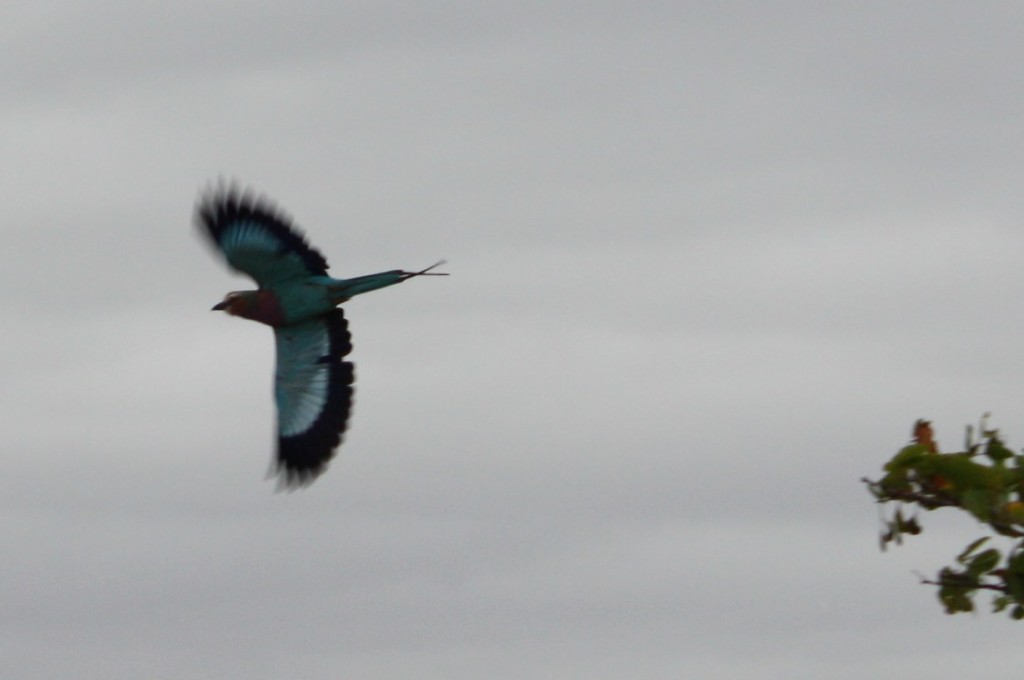
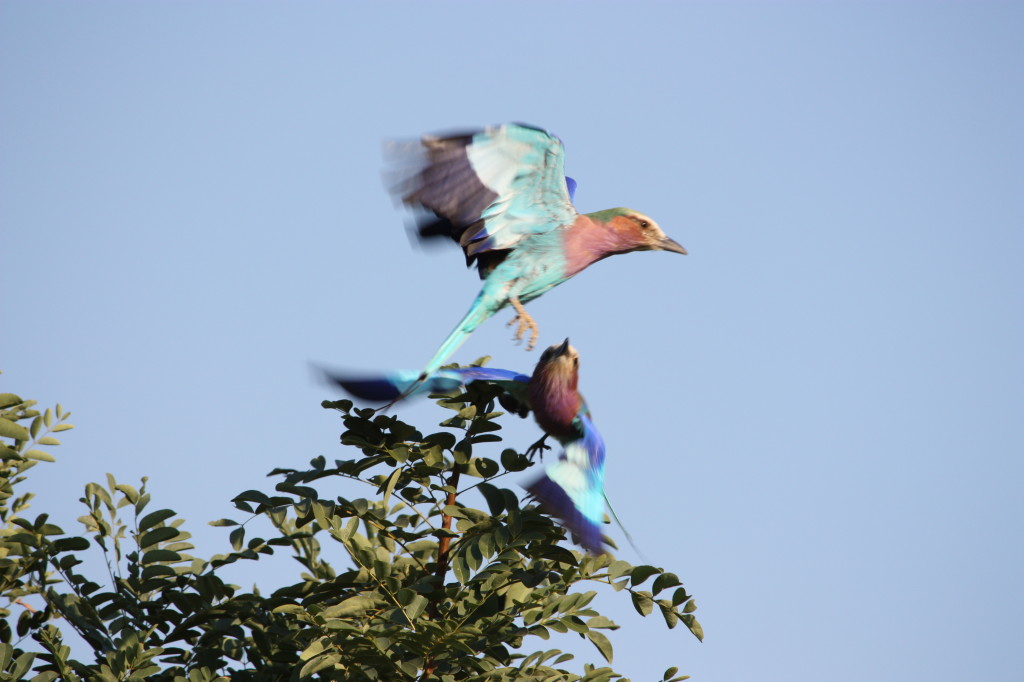
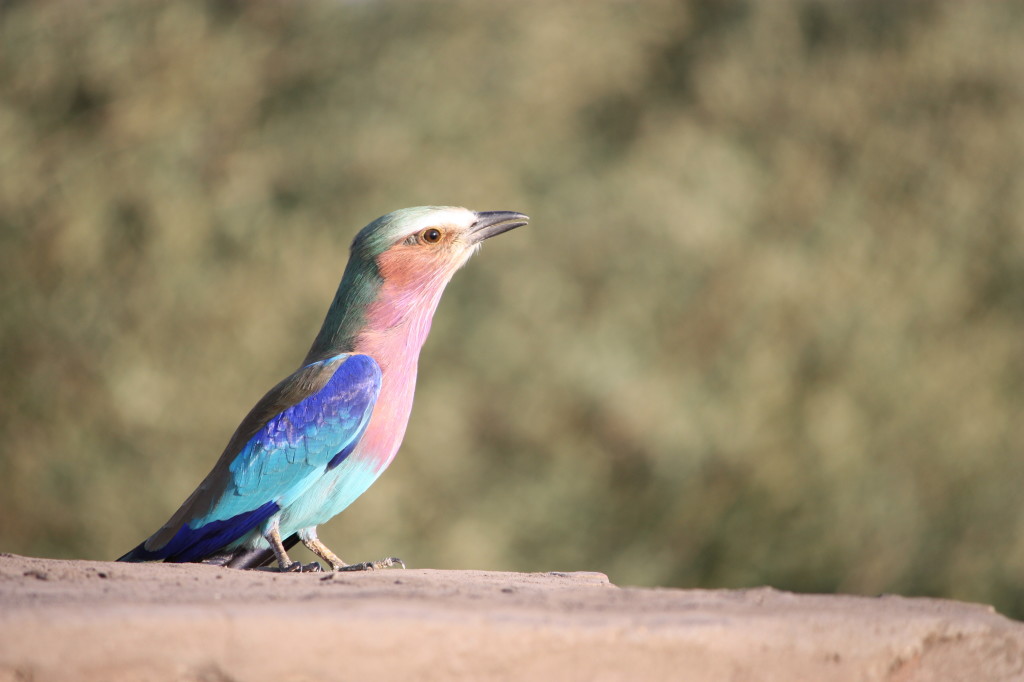
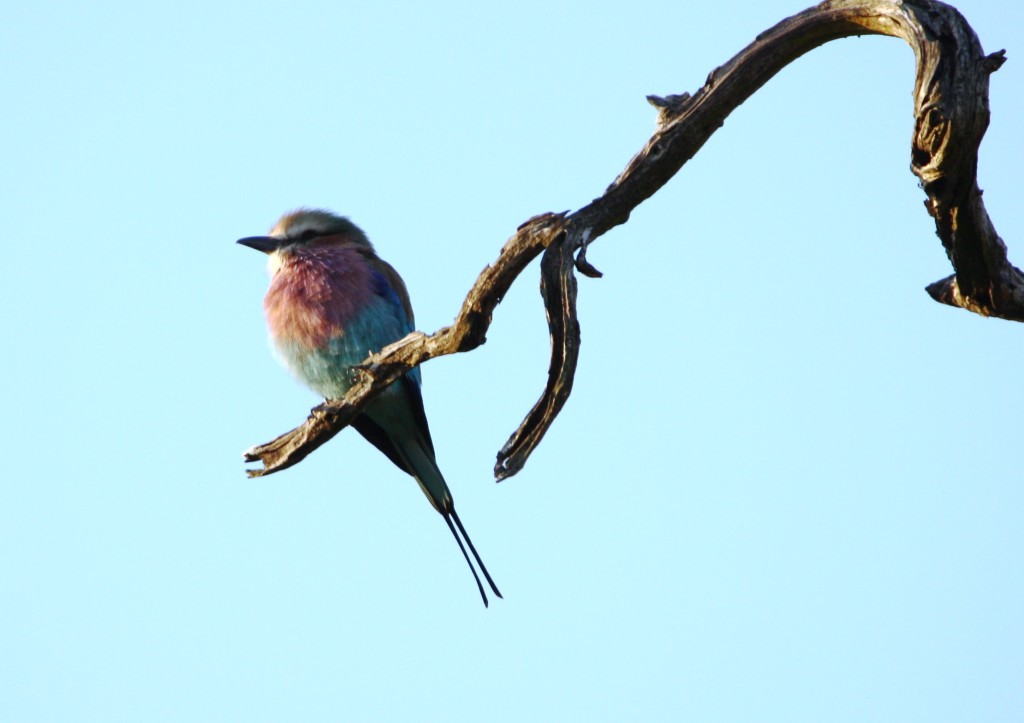
Lilac-breasted Roller (Coracias caudatus) – An African Beauty
Today I am going to share some more about one of my favourite birds, the Lilac-breasted Roller.
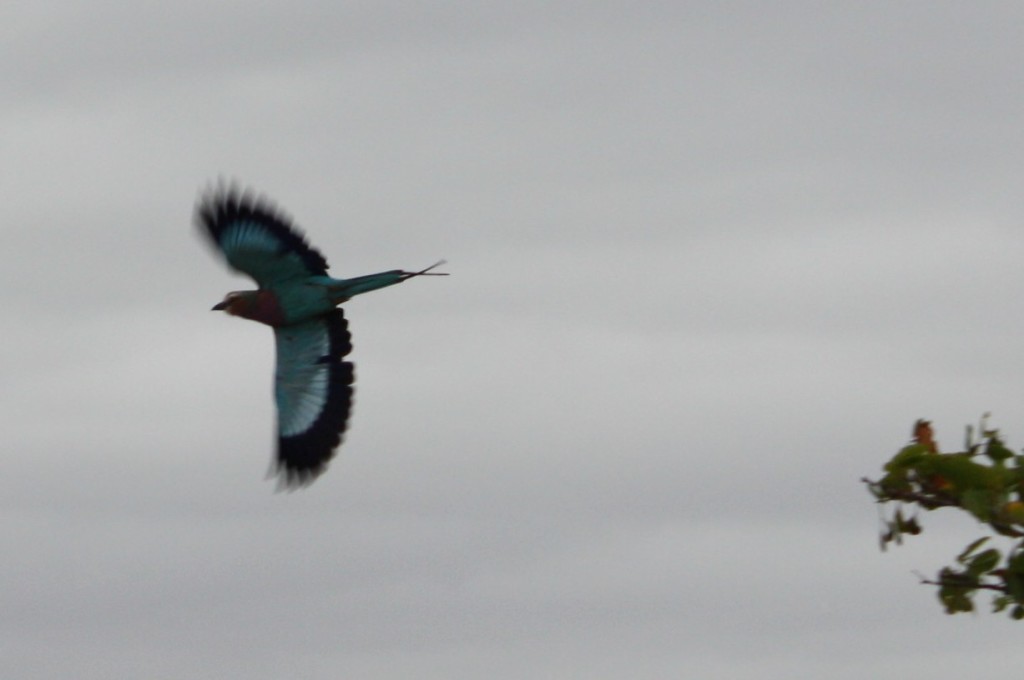
The Lilac-breasted Roller (Coracias caudatus) is a member of the roller family of birds. It is widely distributed in sub-Saharan Africa and the southern Arabian Peninsula, preferring open woodland and savanna; it is largely absent from treeless places. Usually found alone or in pairs, it perches conspicuously at the tops of trees, poles or other high vantage points from where it can spot insects, lizards, scorpions, snails, small birds and rodents moving about at ground level.
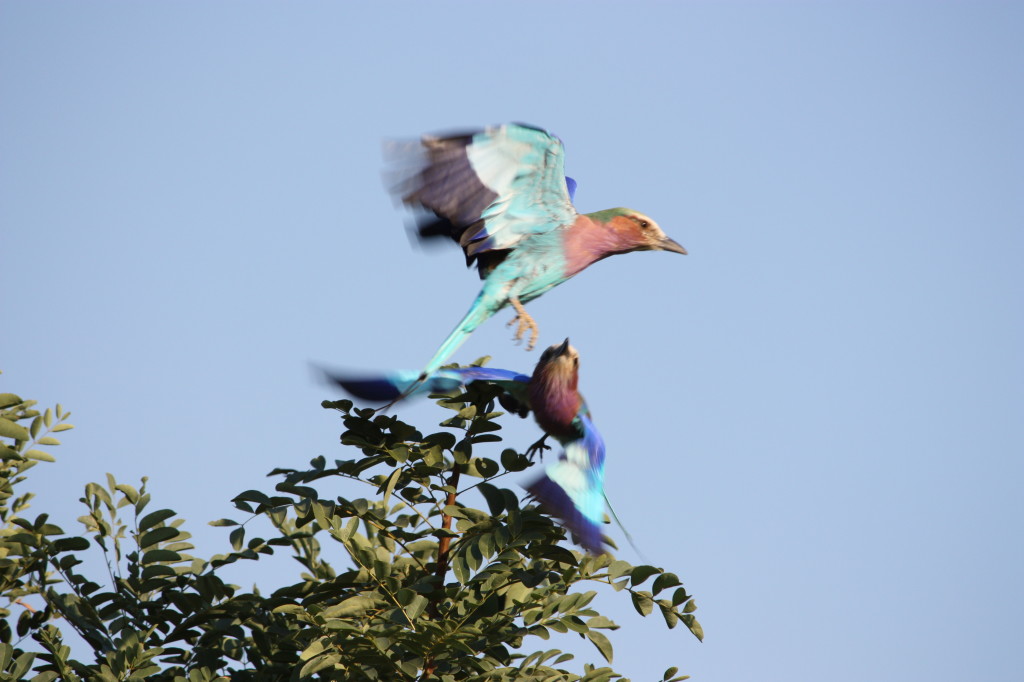
Nesting takes place in a natural hole in a tree where a clutch of 2–4 eggs is laid, and incubated by both parents, who are extremely aggressive in defence of their nest, taking on raptors and other birds. During the breeding season the male will rise to great heights, descending in swoops and dives, while uttering harsh, discordant cries.
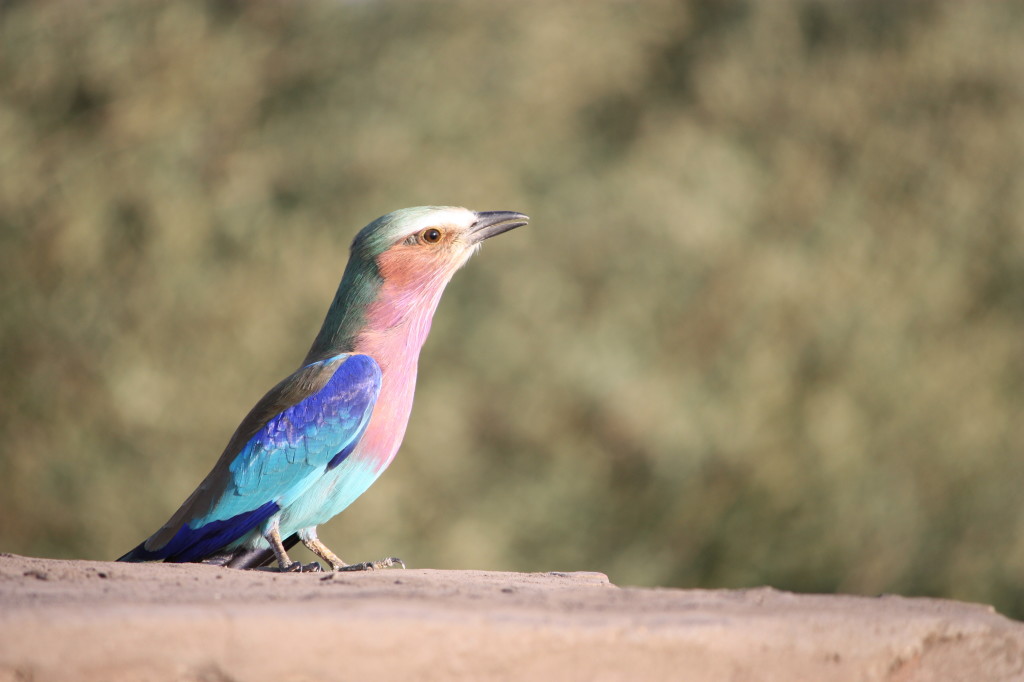
The sexes are alike in coloration. Juveniles do not have the long tail feathers that adults do.
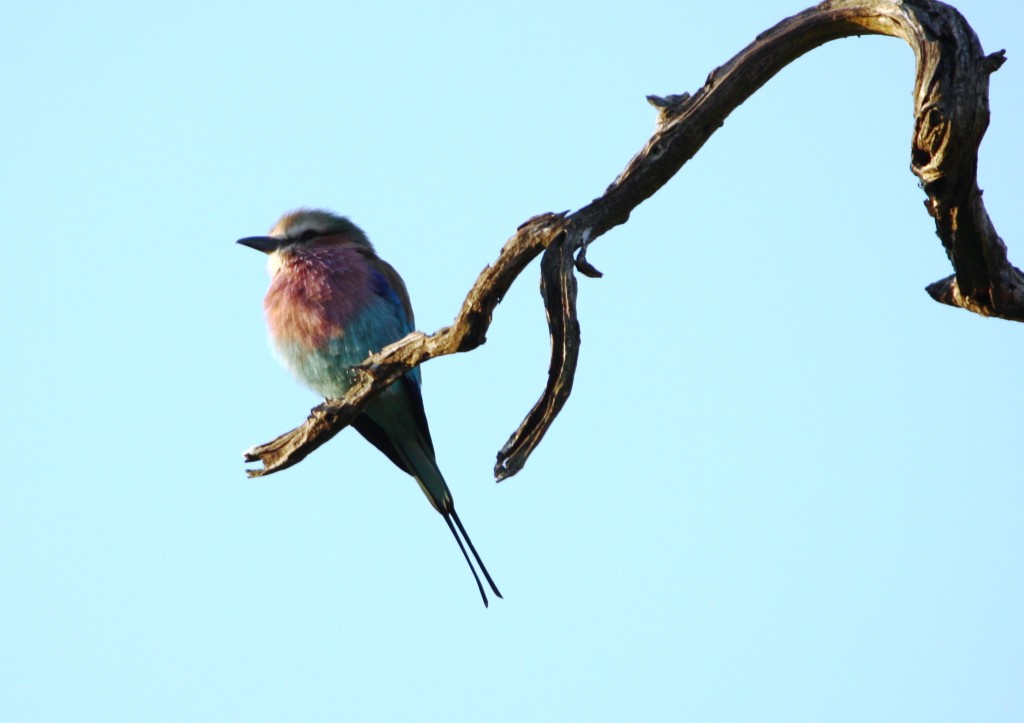
This species is the national bird of Botswana and Kenya.
Lilac Breasted Roller Range
Since they are so widespread, you have great odds of seeing them on any safari in the southern half of Africa. Kruger National Park is one of the easiest places to find them, also any of the national parks in Kenya, Tanzania, Botswana and Zimbabwe would be a good bet. Even though they aren’t a rare species, their beauty makes them firm favourites with birders and artists alike. Just have a look at the variety of images on Google of this stunning bird!
Here’s a few videos to further enjoy them.

Mousebirds
These birds are way too pretty to be named after rodents! Although they are a plain, soft grey color, they have elegant crests and long, graceful tails. The Mousebirds are a small group of (possibly near passerine) birds, which have no known close affinities to other groups, though might be close to trogons and owls.The Mousebirds are therefore given order status as Coliiformes. This group is confined to sub-Saharan Africa, and is the only bird order confined entirely to that continent. They had a wider range in prehistoric times and apparently evolved in Europe. You can see the differences between varies species of Mousebird on this website.
.
They are widely spread in Africa so you are very likely to see them no matter where you are going on safari. Kruger Park, easily accessed from Johannesburg is a great place to start.
Mousebird Range
We saw them easily in northern Kruger Park in April 2009. We saw them in other areas of Kruger too. I’ve seen a few good videos of them at Pete’s Pond in Botswana too.
Video of Mousebirds at Pete’s Pond, Botswana.
The Critically Endangered Araripe Manakin
Araripe Manakin
The Araripe Manakin (Antilophia bokermanni) is a critically endangered bird from the family of Manakins (Pipridae). It was discovered in 1996 and scientifically described in 1998. The species epithet commemorates Brazilian zoologist and wildlife filmmaker Werner Bokermann, who died in 1995. Because of its helmet-like crown it has received the Portuguese name soldadinho-do-araripe which means “Little soldier of Araripe“. This name also associates it with the related, but more widespread, Helmeted Manakin (Antilophia galeata), which is known simply as the soldadinho. The discovery of this striking red, white, and black black in 1996 stunned bird enthusiasts all over the world.
Location of the Araripe Manakin’s habitat
The bird’s habitat, the Chapada do Araripe occupies a tiny area fifty kilometres long and one kilometre wide. If you want to try to see them, you must fly into Brazil to either Recife or Fortaleza. With only an assumed 800 individuals left, it won’t be easy to find them. According to Wikipedia, the pure breeding range has a size of only 1 km² and lays in a theme park with swimming pools and asphalted roads which destroyed most of this bird’s habitat.
In 2009, a Brazilian fashion designer, Maria Elvira Crosara was inspired by this gorgeous bird to create her spring collection.
A percentage of sales of selected T-shirts featuring the manakin, and the Blue-crowned Motmot Momotus momota, will go to support the work of BirdLife Partner SAVE Brasil.
“This is our first cause-related marketing campaign and we are very excited about it”, said Priscila Napoli, SAVE Brasil’s Manager of Institutional Development. “As well as raising money, each garment will come with a tag describing the species, and another tag with information about SAVE Brasil, so this will raise awareness both about our work, and about the importance of Brazilian birds.”
.
I found a couple of video clips. In this one, you can hear the bird’s song.
This one looks like it would be really interesting if only it was translated into English! It is only available in Portuguese. At least you can see more footage of the bird, and the song by the kids at the end is pretty cool!