Interesting Podcast – Drawing Room: Twitchers

I really enjoyed this interview with a couple of Australian Twitchers (keen bird watchers).   Unlike Mr Dooley, I don’t have a life list.  I am trying to see as many parrots as possible and also any interesting birds in the area but I can’t afford to take off at at the drop of a hat when someone reports a rare bird someplace.  I like to spend as much time as possible observing the birds but sometimes a quick fly-over is all you get!   I do have to work within my limitations on time and especially money and just be grateful for the birding travel I get to do with frequent flyer miles.

There were some parts I could really relate to like when he talks about nature being in our lives no matter where we are.  I could also relate to when he said he saw a rare bird in the Roman Forum, something most tourists wouldn’t notice.  When I was at the Taj Mahal and Agra Fort, I think I paid more attention to the Rose-Ringed Parakeets than the architecture!

I have to agree with the “Holy Grail” bird – the Night Parrot.  I would just be happy to know they are alive and well and are not extinct!

Broadcast:
Tuesday 16 April 2013 7:40PM (view full episode)

Tonight in the Drawing Room, you’re joined by a couple of twitchers. Not people who twitch, but people who are rather fond of birds.

Sean Dooley once broke the Australian record for spotting the most species of birds in one year, and he has just written the forward to the re-issue of one of our most loved bird books, Mateship With Birds by A.H. Chisholm.

You’ll also be joined by Michael Veitch, actor, comedian, author and birdwatcher.

Extreme Birding 2 – The Awesome Arfak Mountains

This is the second installment (first installment was Nimbokrang) of my series on “Extreme Birding”, meaning places that are very challenging in one way or another.  With the Arfaks, there are many challenges.  It’s not the easiest place in the world to get to, you will need to hire a 4WD truck to the village of Mokwam and an area of town called Syoubri where Zeth lives, which I discussed in my post on Manokwari.  There are public vehicles but they are unpredictable so you may want to try your luck at Terminal Wosi first but be prepared to spend the 1,500,000 rupiah each way.

COMMUNICATION (LACK THEREOF)

Communication is another challenge.  There are no phones either land or mobile based and no wifi.  If you want to travel in high season (May-August) and be assured of getting the fabulous Zeth Wonggar or his partner Eliakim as a guide, you will have to join a group or get Papua Bird Club to make the arrangements for you.  If you go in off season, you can probably just show up and get a good guide and room in the guesthouse.

ACCOMMODATION IN MOKWAM/SYOUBRI

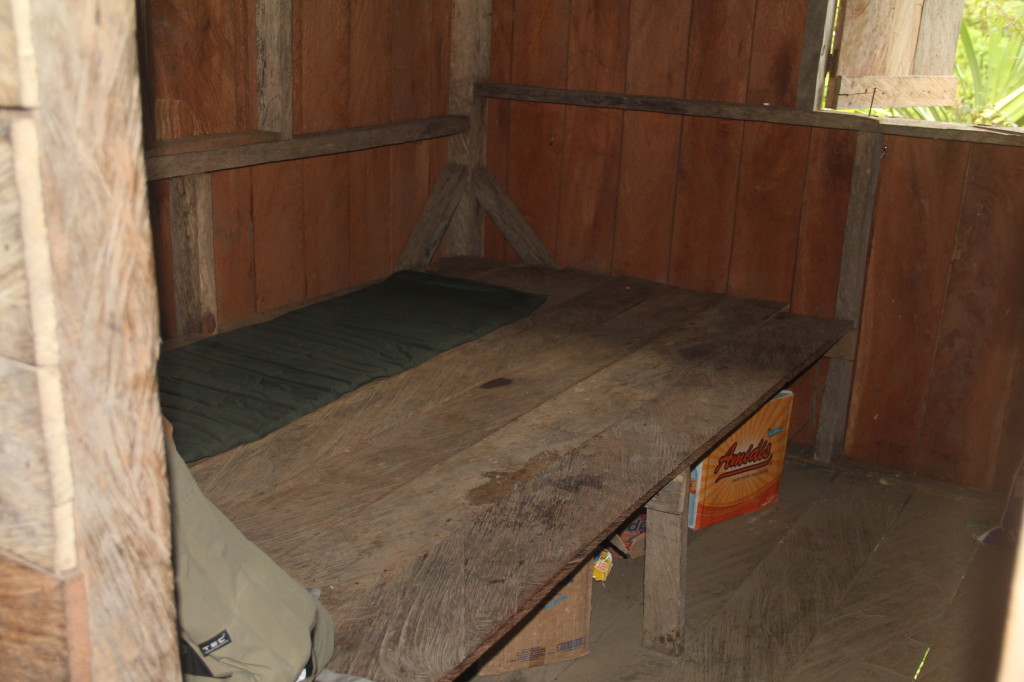
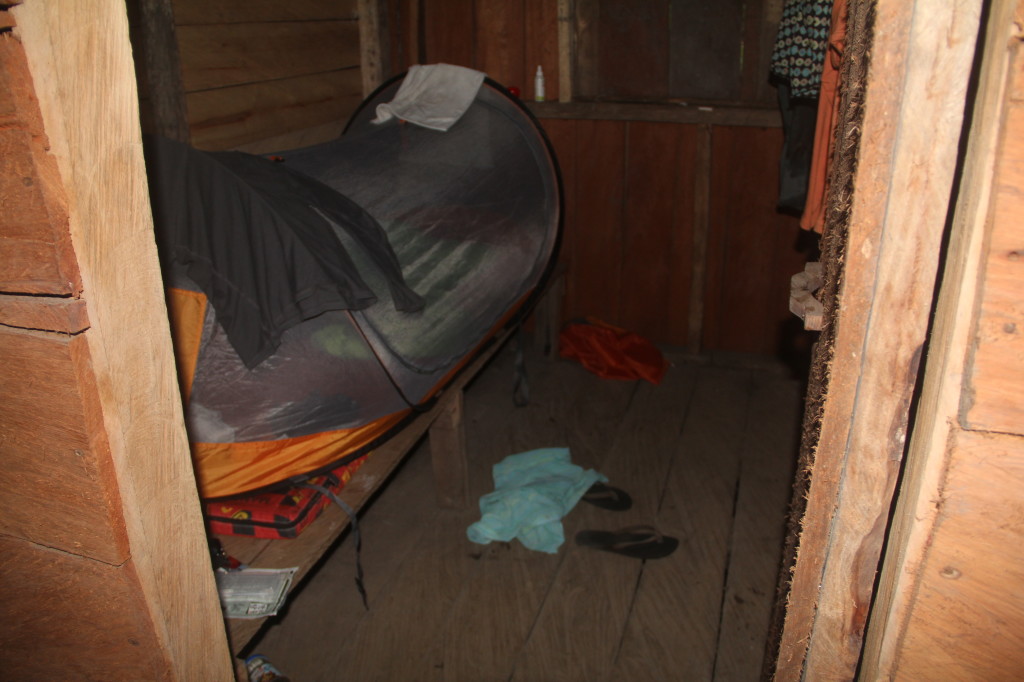
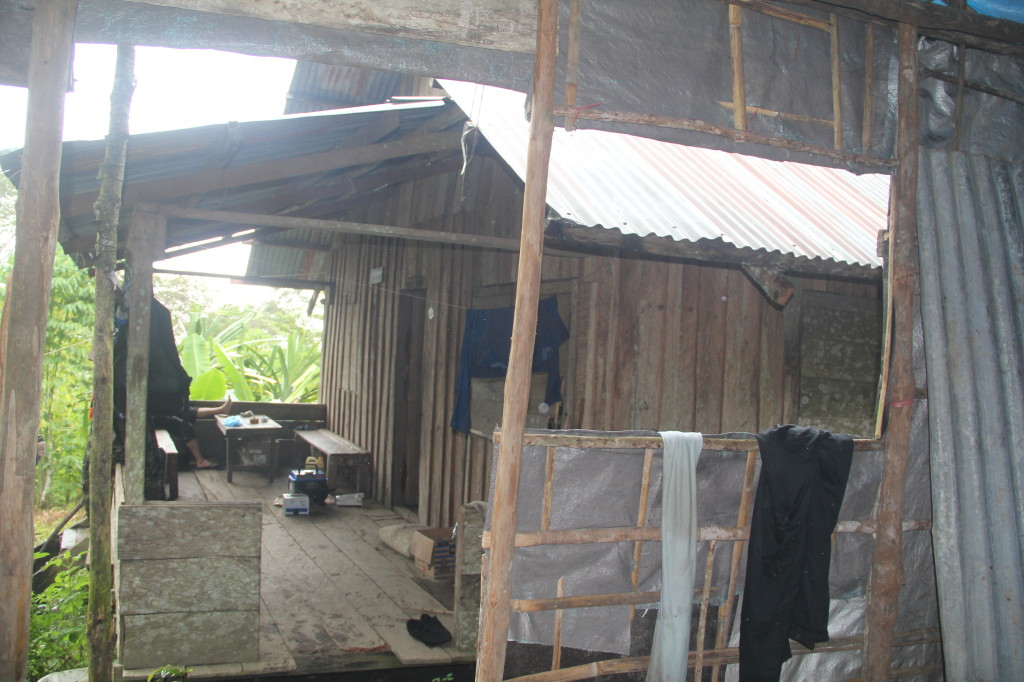
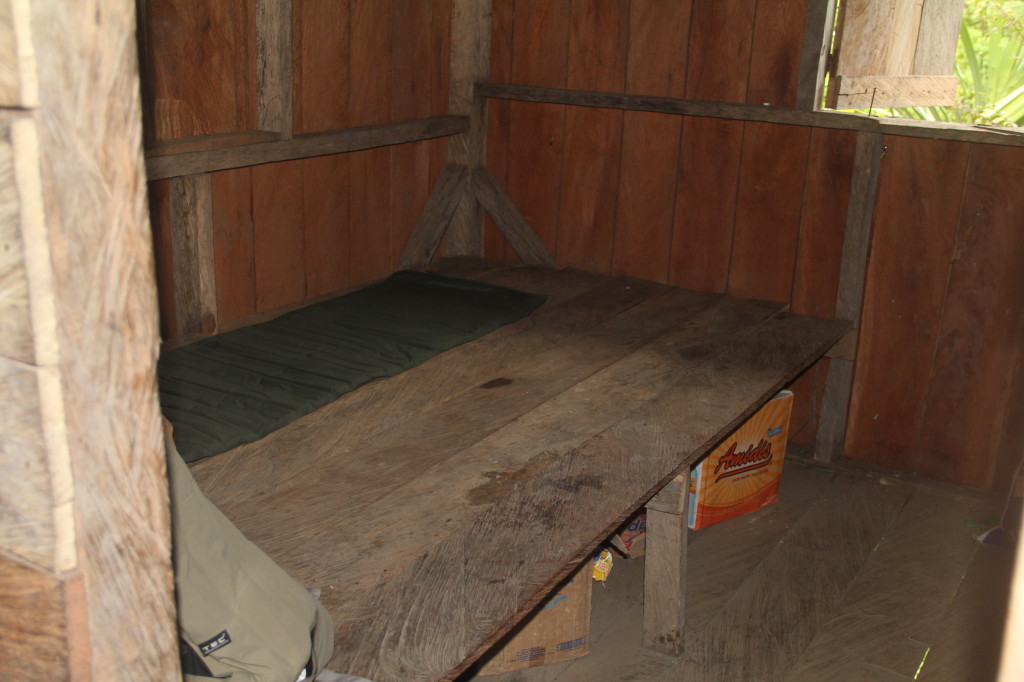
If you are a backpacker or used to camping the accommodation will not be so challenging.  If you are used to elite treatment at the Hyatt Regency, Intercontinental or Four Seasons, you will be in for a shock!  Let’s take a look at the guesthouse first.  If you are with a group tour, they will probably provide you with a sleeping bag and blankets.  If you are traveling ultra-light like we were, Zeth does have a couple of spare blankets and a thin pad.  The guesthouse was full when we arrived by a group of Korean TV producers/filmers.  The 4 of them took all the space in a guesthouse that can usually sleep 8 on wooden platforms.  In the photos below, the swag belonged to one of them, the one with the wooden plank is our room on the last day.  Zeth persuaded them to clear their stuff out of a room so we could sleep inside rather than a tent.
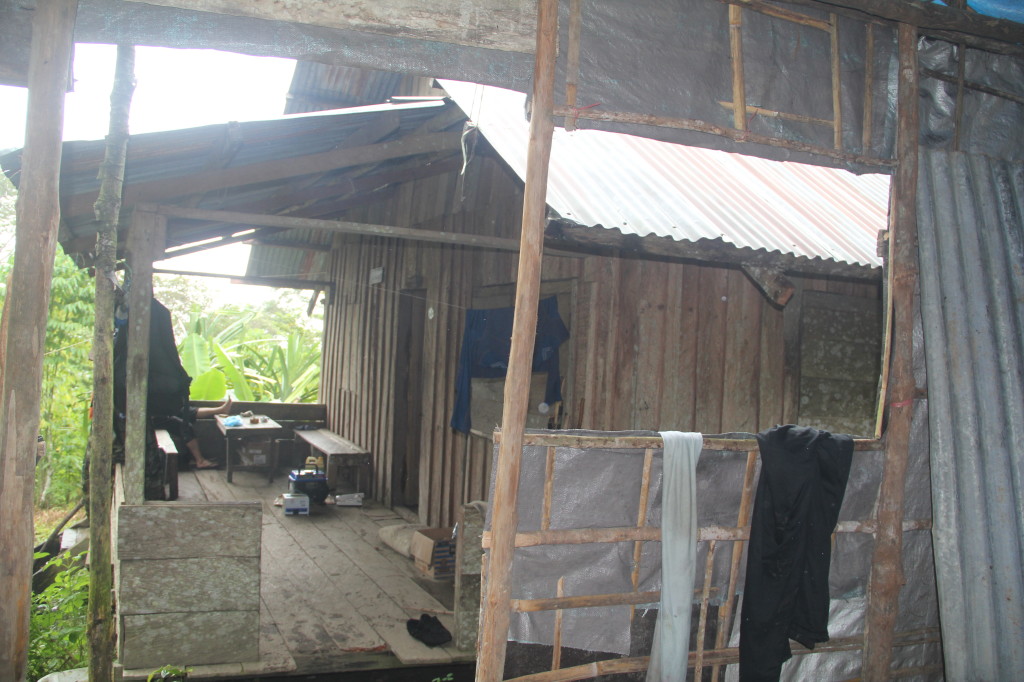
Front of Zeth's Guesthouse, Mokwam

Front of Zeth’s Guesthouse, Mokwam

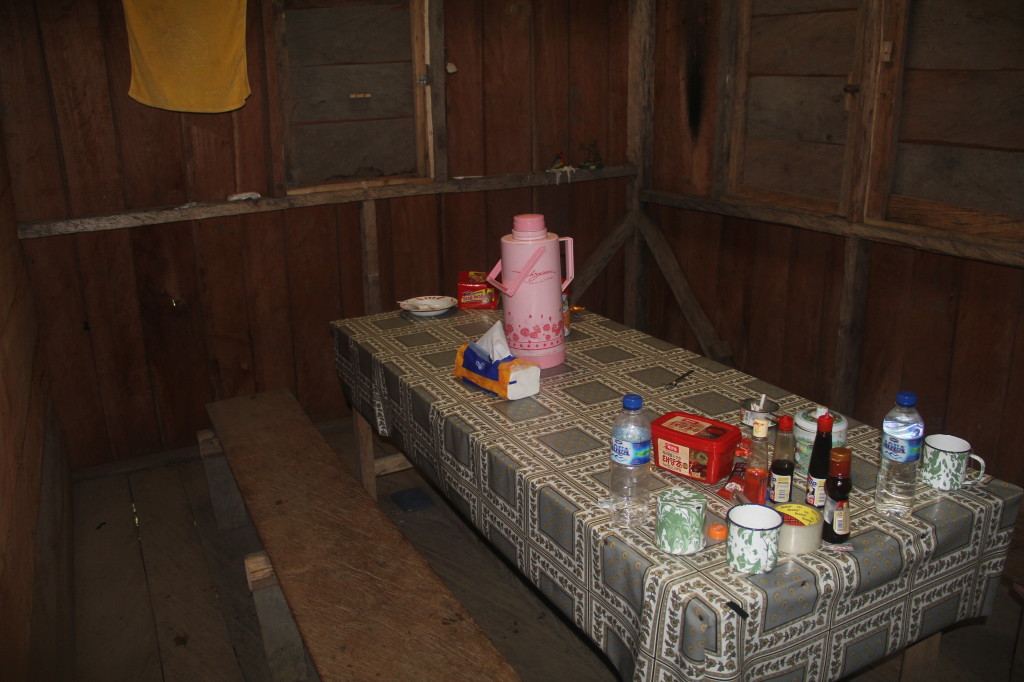
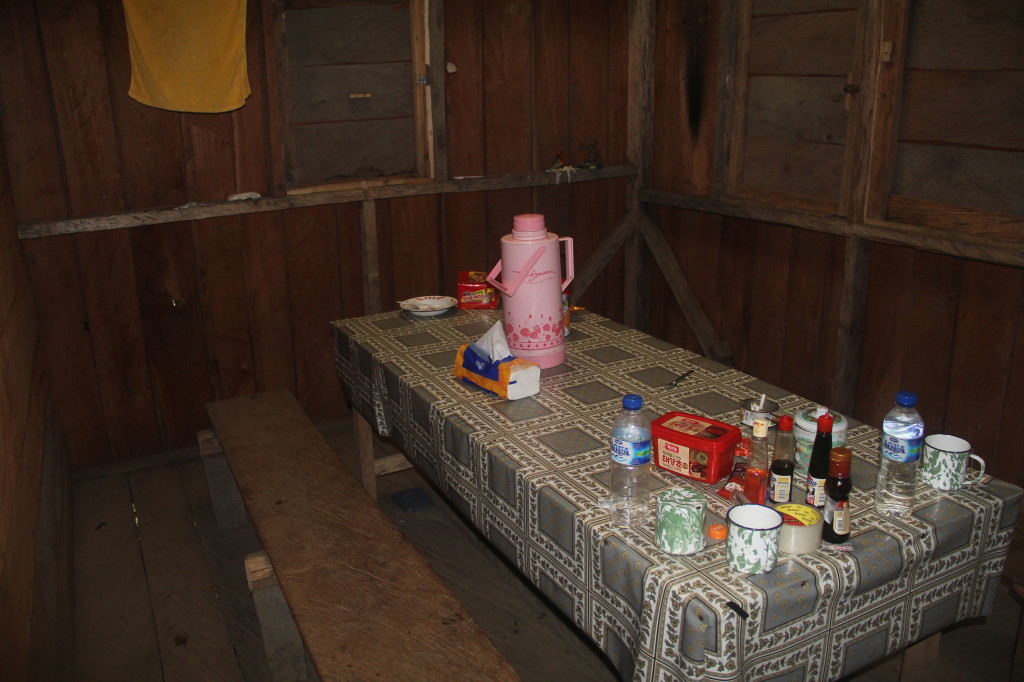
Dining table in Zeth's Guesthouse, Mokwam

Dining table in Zeth’s Guesthouse, Mokwam
 

Zeth's Guesthouse, Mokwam - sleeping platform

Zeth’s Guesthouse, Mokwam – sleeping platform
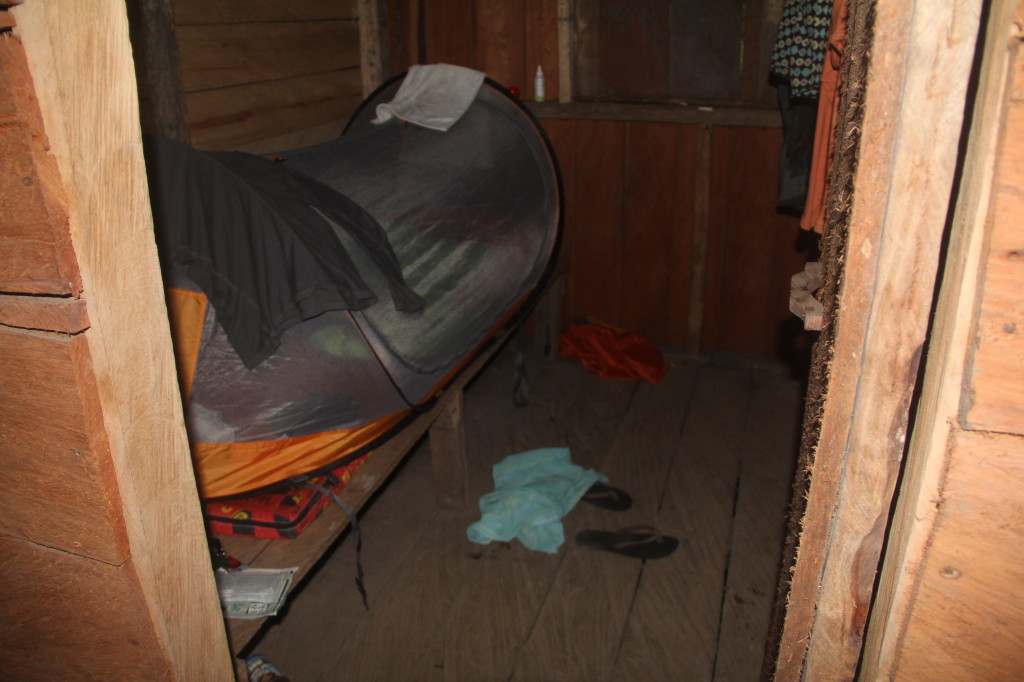
Another room with a swag belonging to the Korean TV crew
Another room with a swag belonging to the Korean TV crew

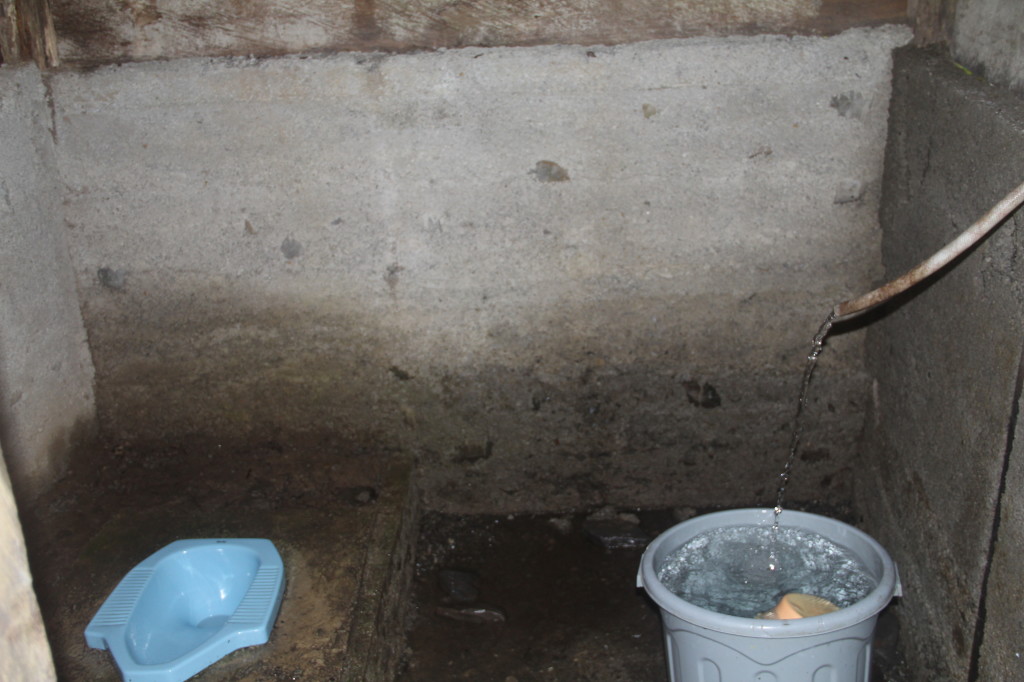
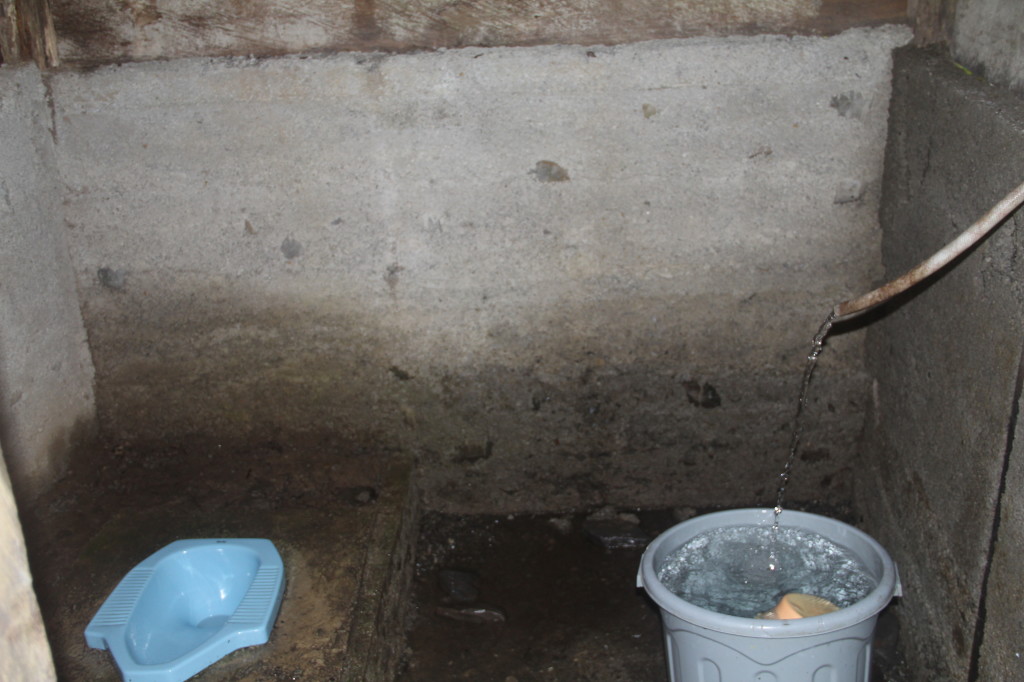
Toilet and Indonesian style bath, also called a "mandi".

Toilet and Indonesian style bath, also called a “mandi”.
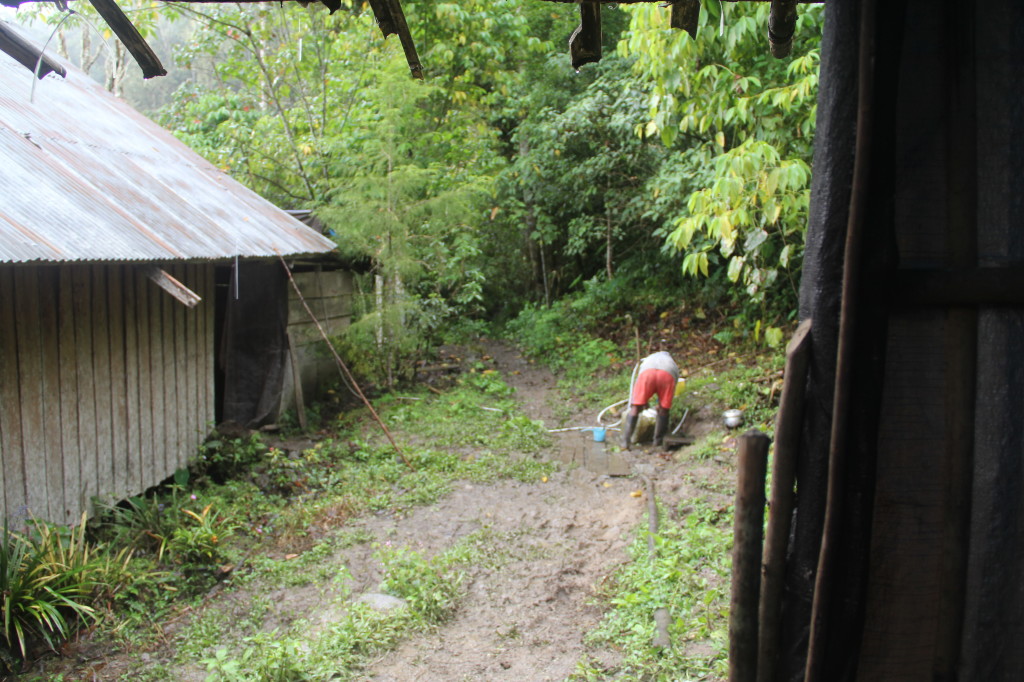
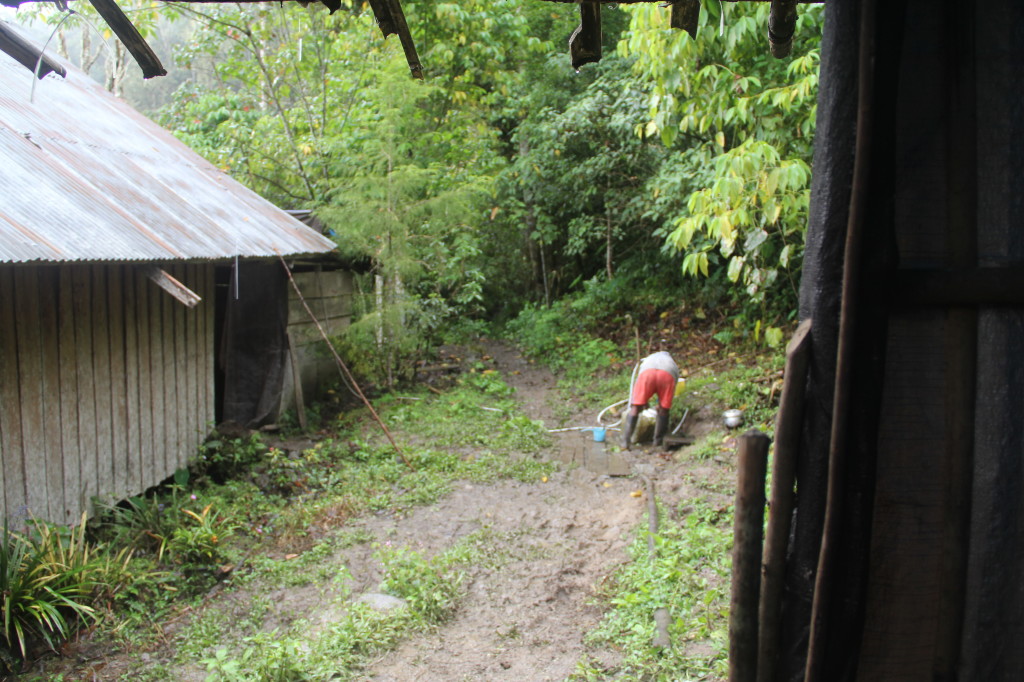
Fresh spring water, it's drinkable and good for brushing teeth and light washing up.
Fresh spring water, it’s drinkable and good for brushing teeth and light washing up.

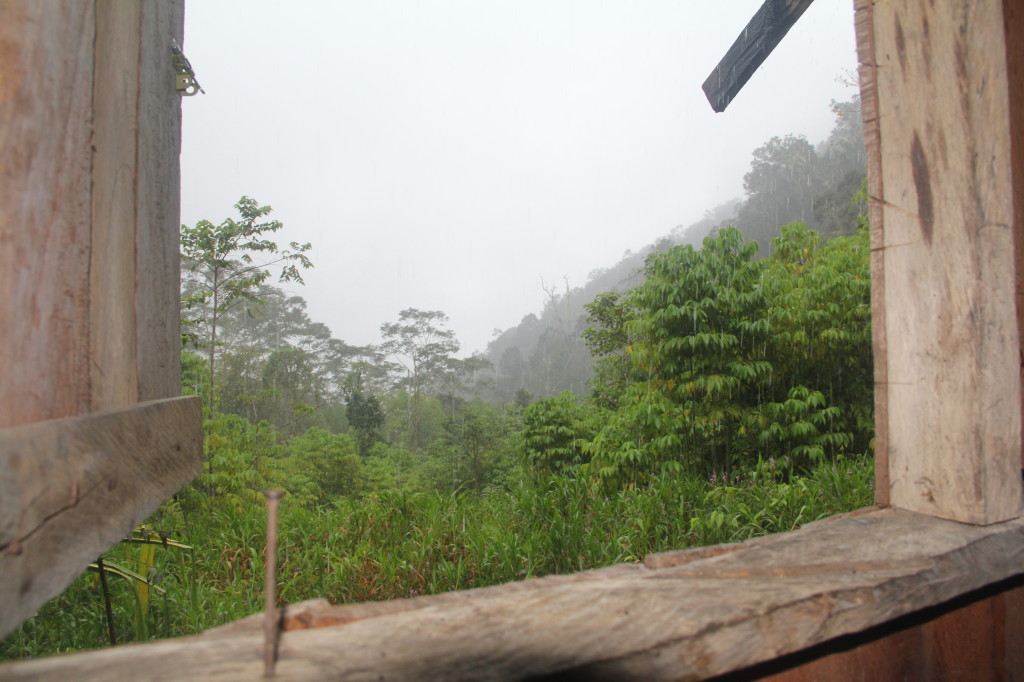
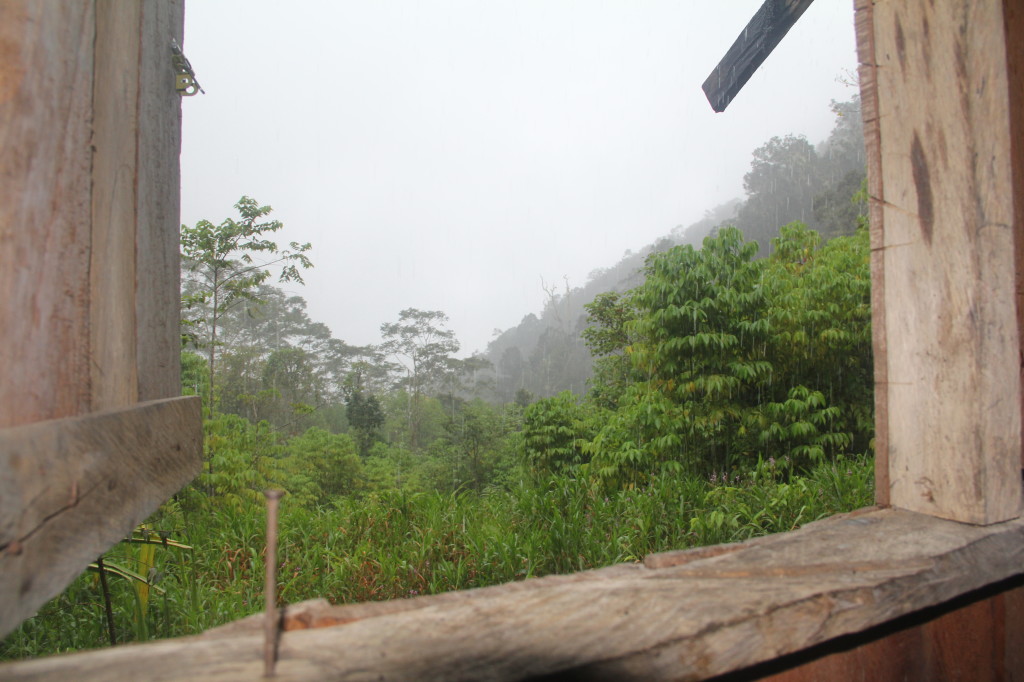
Room with a view, you can see birds flying around these trees
Room with a view, you can see birds flying around these trees

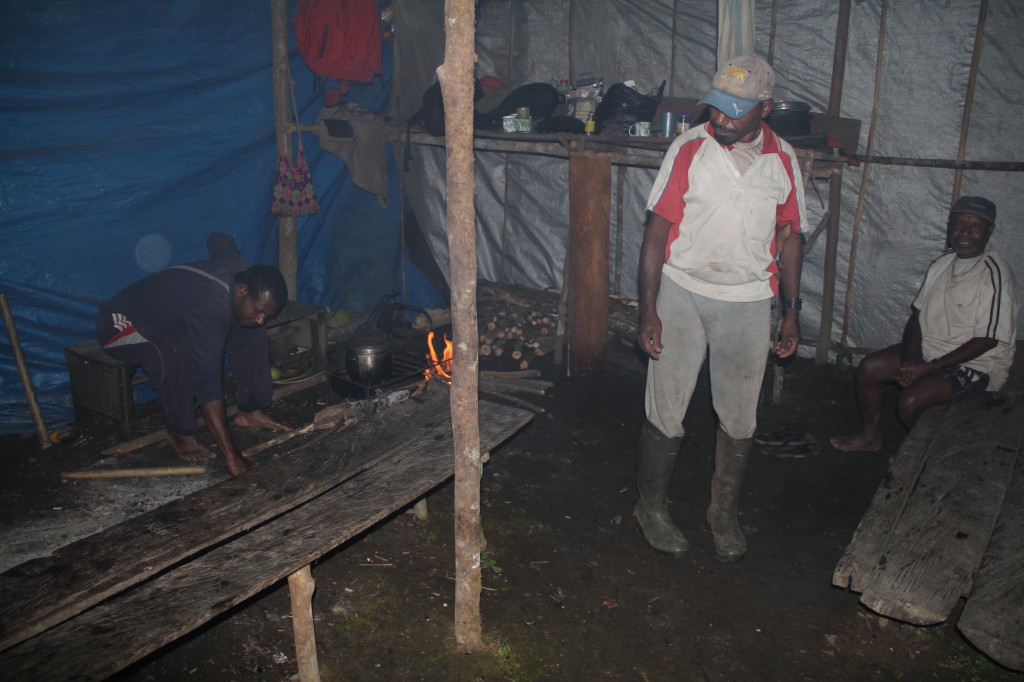
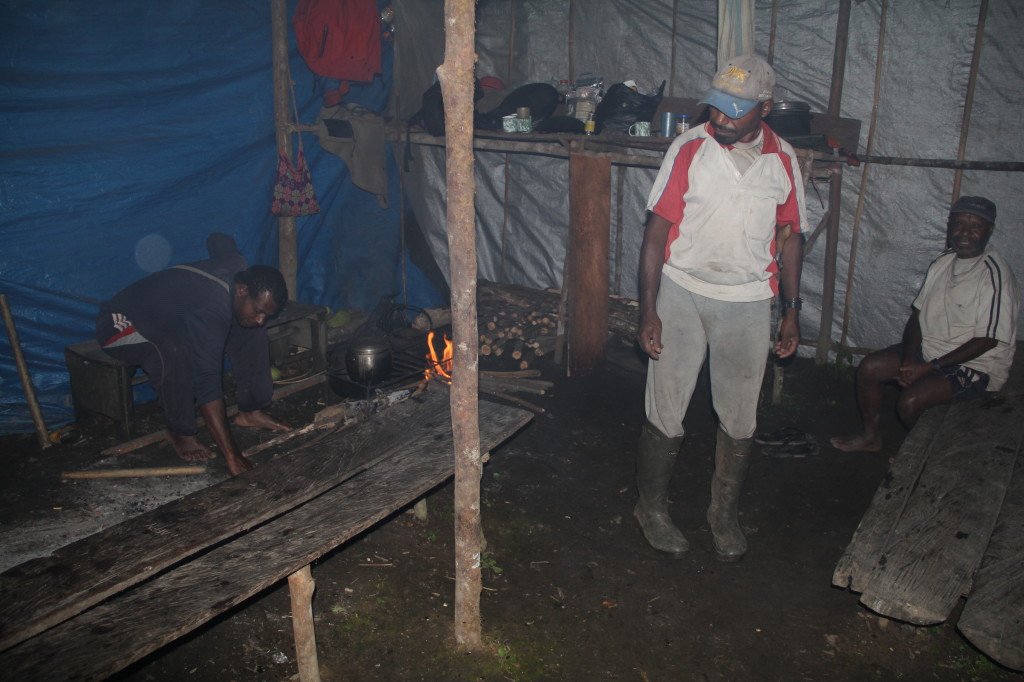
Kitchen where a cook assigned to you by Zeth will cook your food.
Kitchen where a cook assigned to you by Zeth will cook your food.

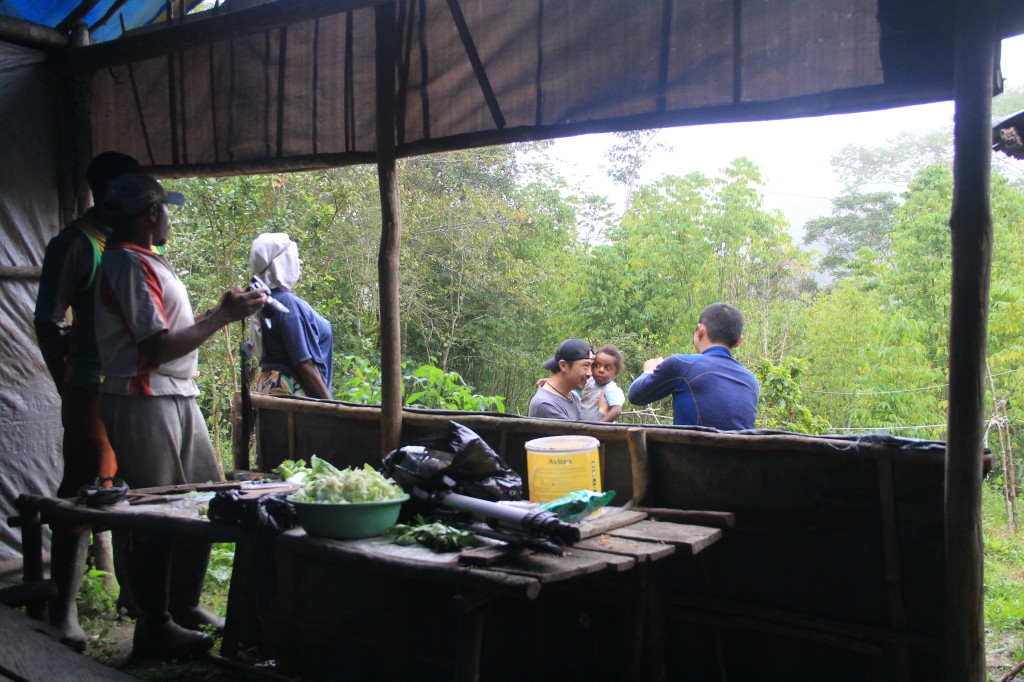
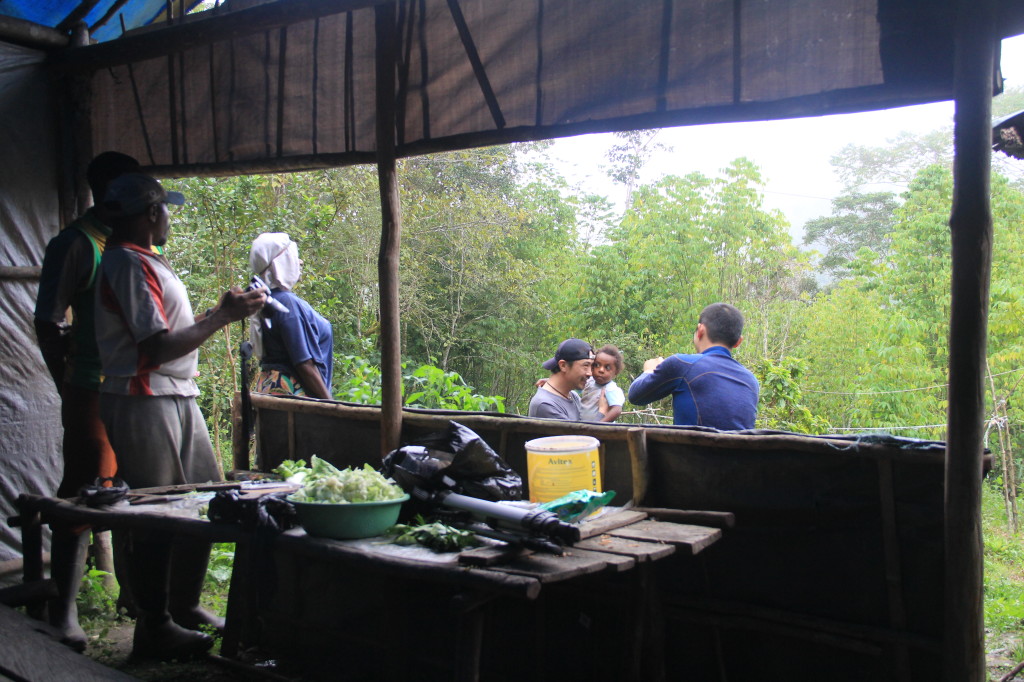
Kitchen table
Kitchen table

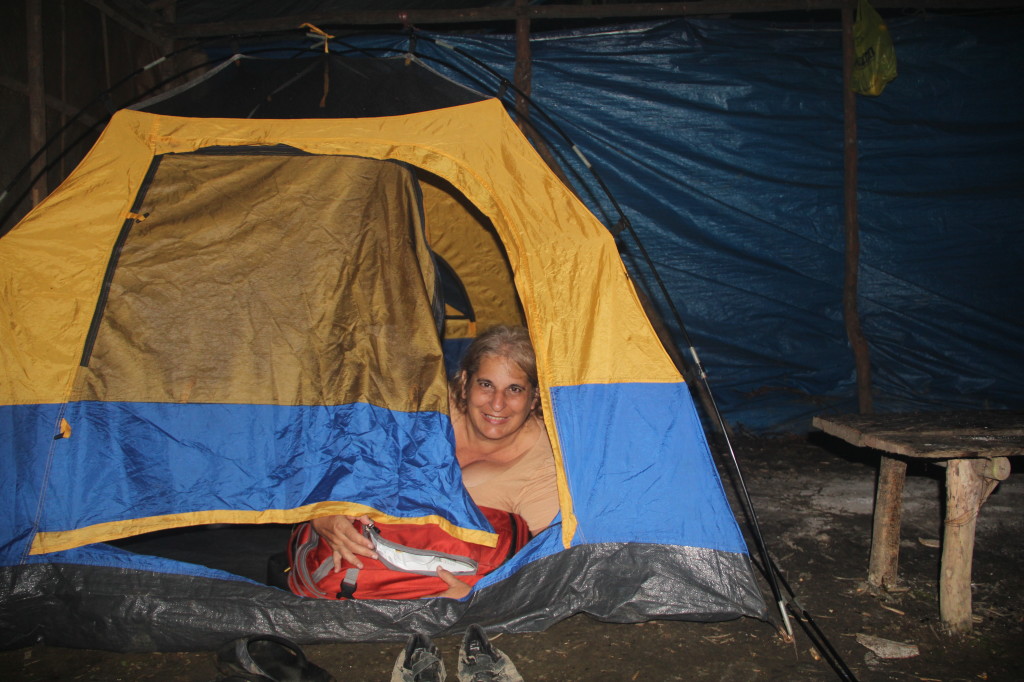
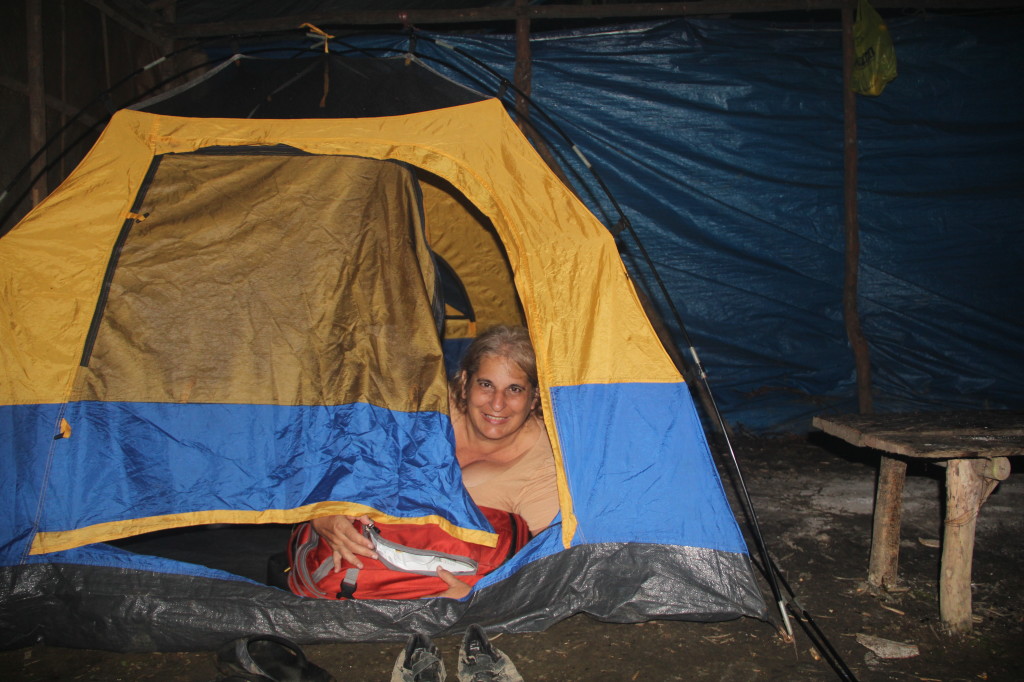
The first night, we had to sleep in a tent they set up in the kitchen since the guesthouse was full.
The first night, we had to sleep in a tent they set up in the kitchen since the guesthouse was full.

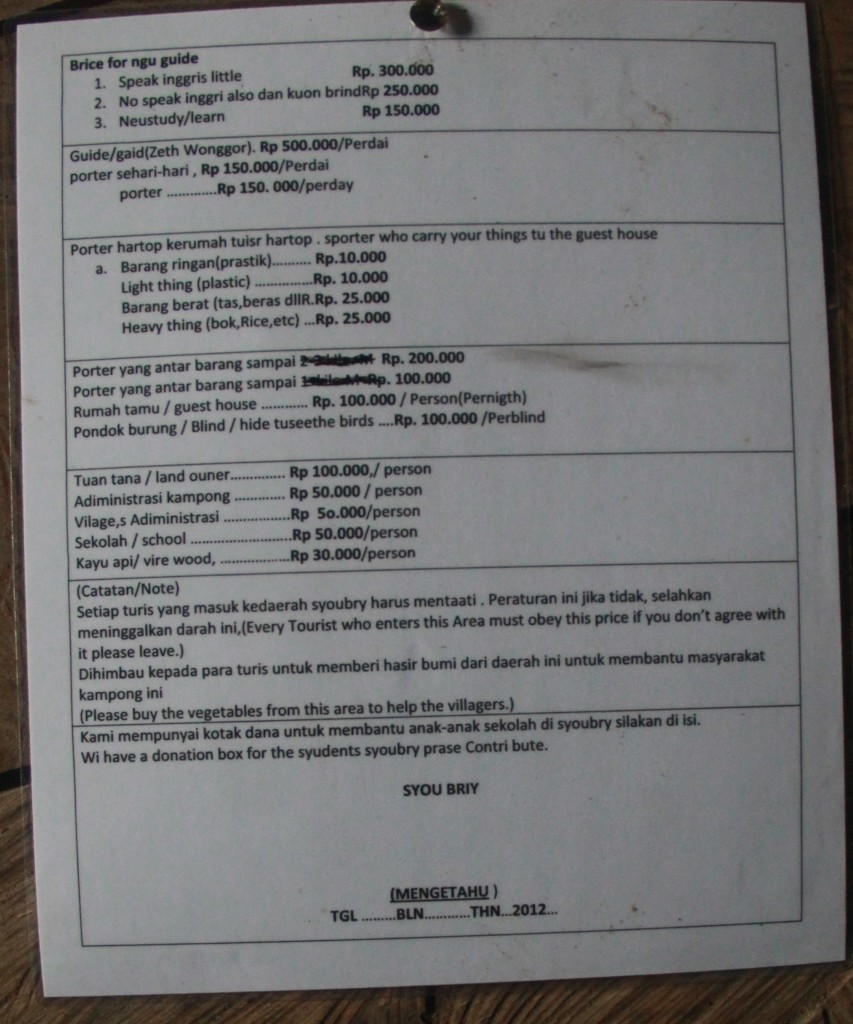
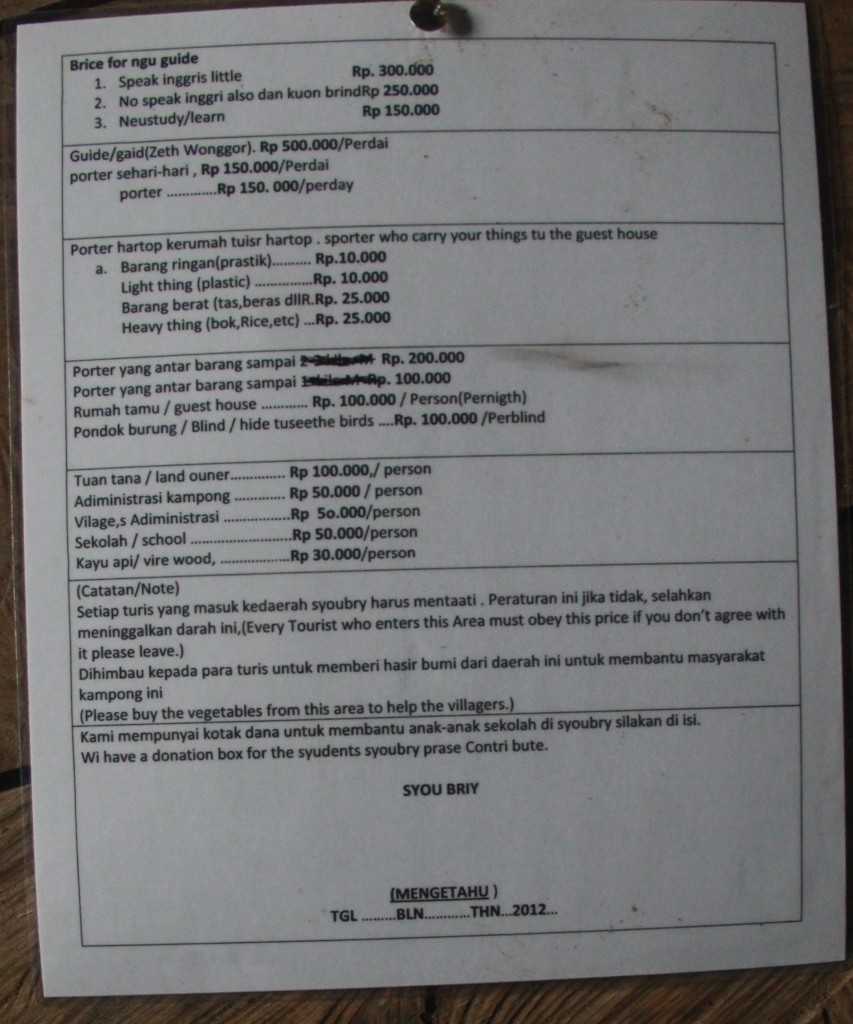
Official price list for guiding, accommodation and fees payable to the village.

Official price list for guiding, accommodation and fees payable to the village.

CAMPING UP THE MOUNTAIN

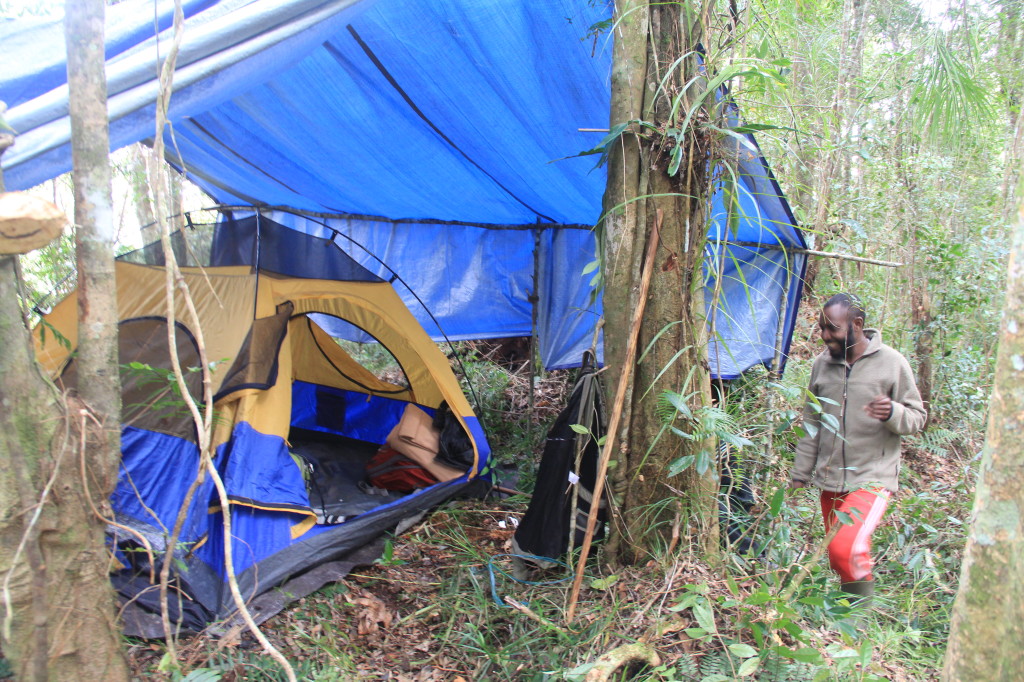
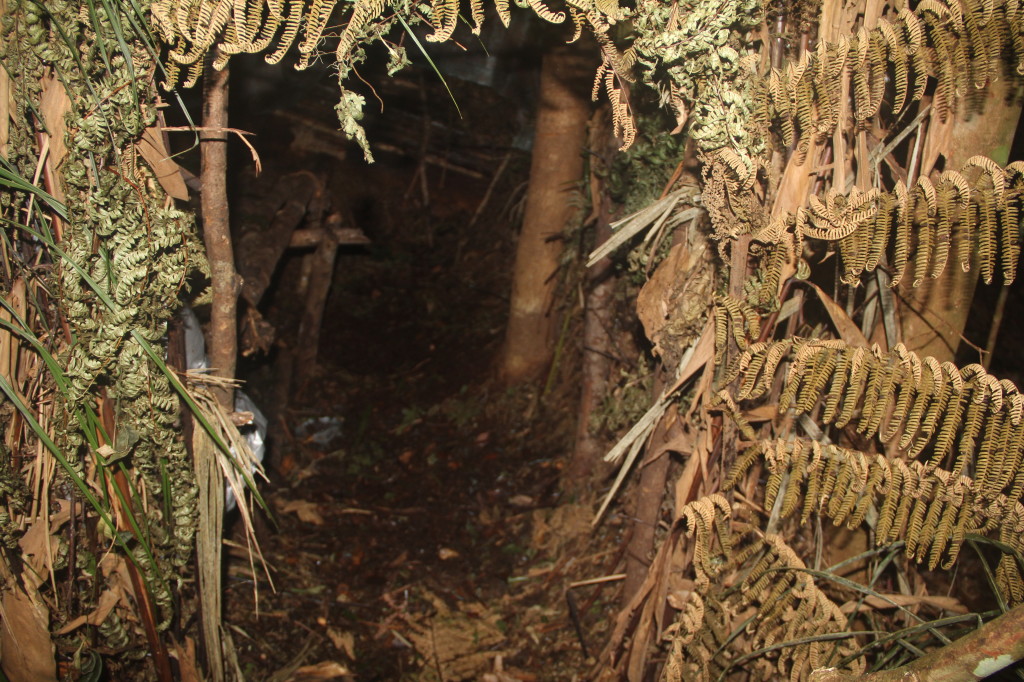
There are several camps as you go up the mountain, each with it’s own specialty birds.  The most famous birds are the Western Parotia and Vogelkop Bowerbird.  Their respective display grounds are just below the “Garden Hut” so that was where our entourage pitched our tent so we could easily get to the hides in the early morning.  They did a great job of setting up camp, large tarp over the area, pitched the tent under it, dug a pit toilet a short distance away so we wouldn’t get lost and building a campfire.  I actually taught them how to do an old-fashioned weenie roast!  It brought me back to my girl scout days as a child and was fun!  I couldn’t believe they had never had a weenie roast before, I just wish I had brought some marshmallows!
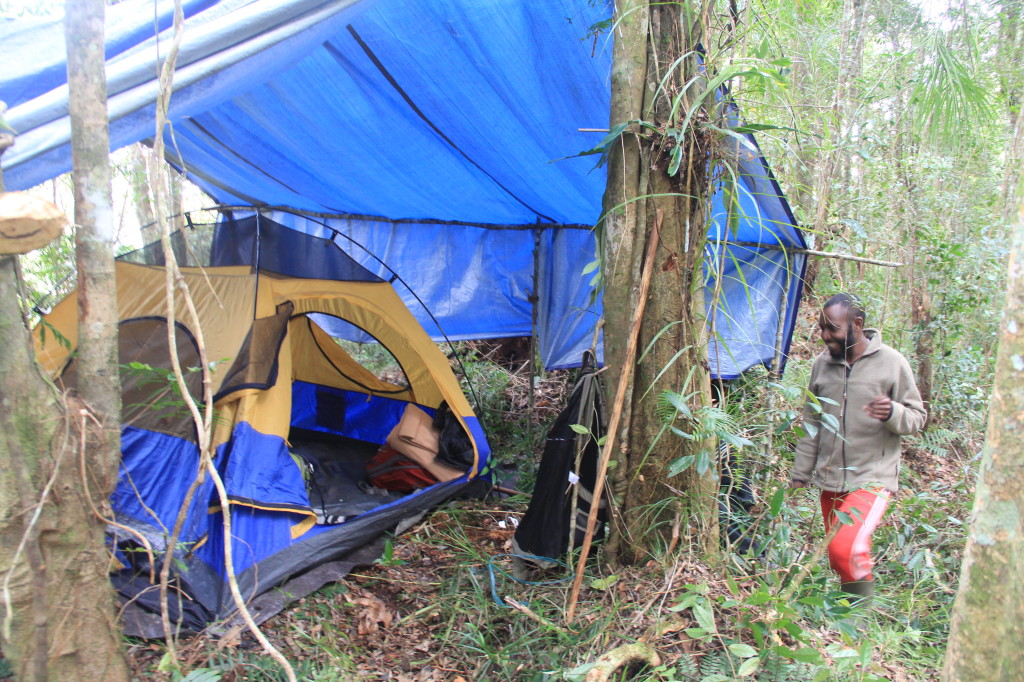
Mountain camp
Mountain camp

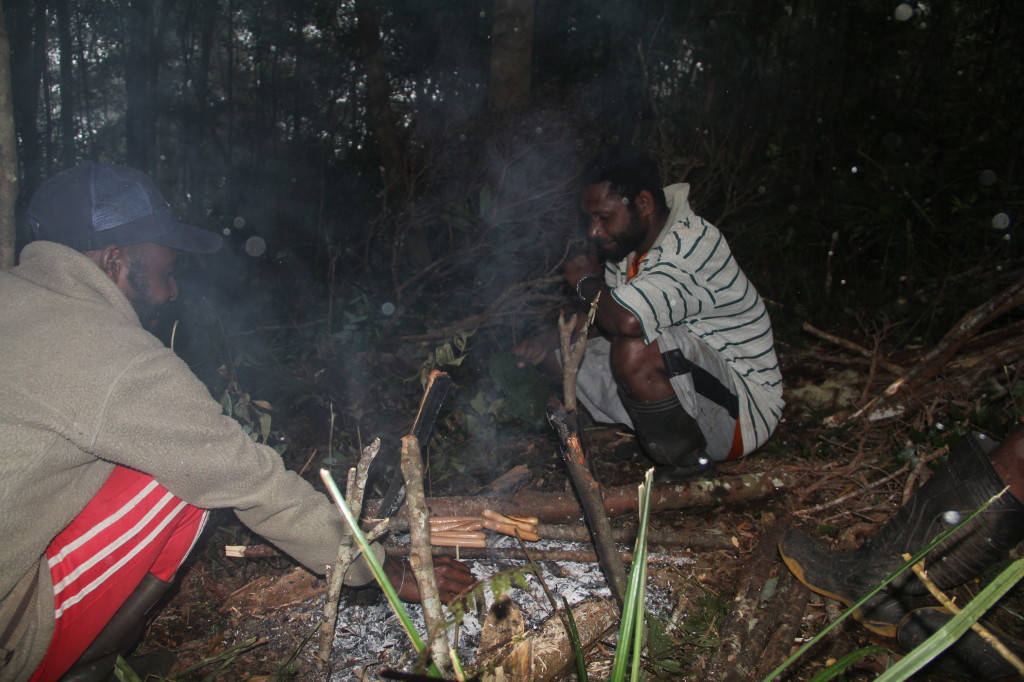
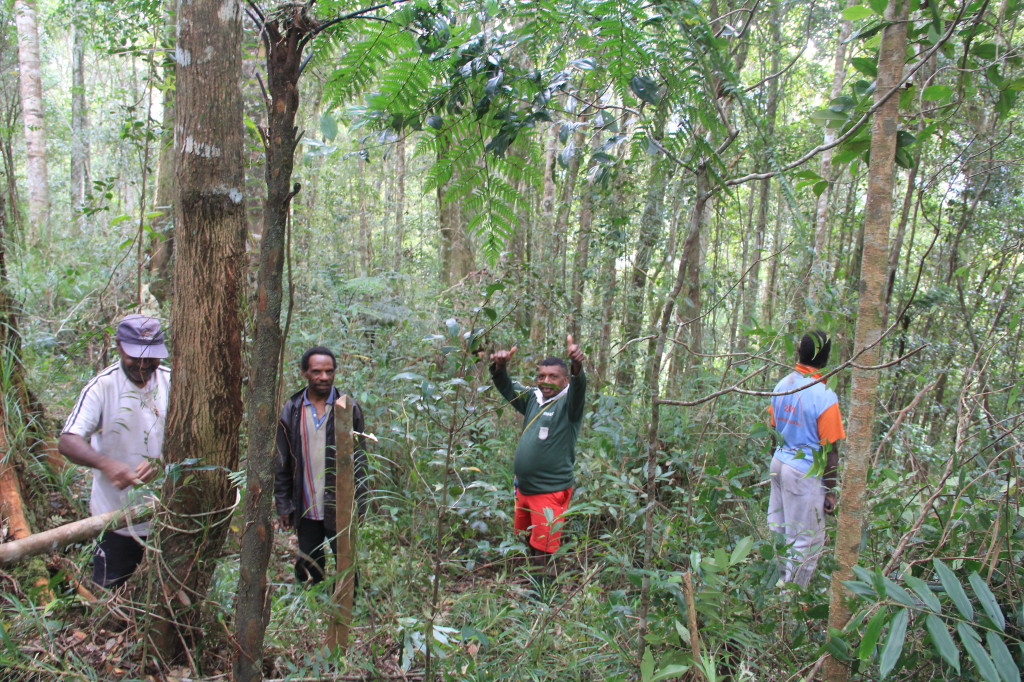
The giudes preparing the campfire and cooking area.
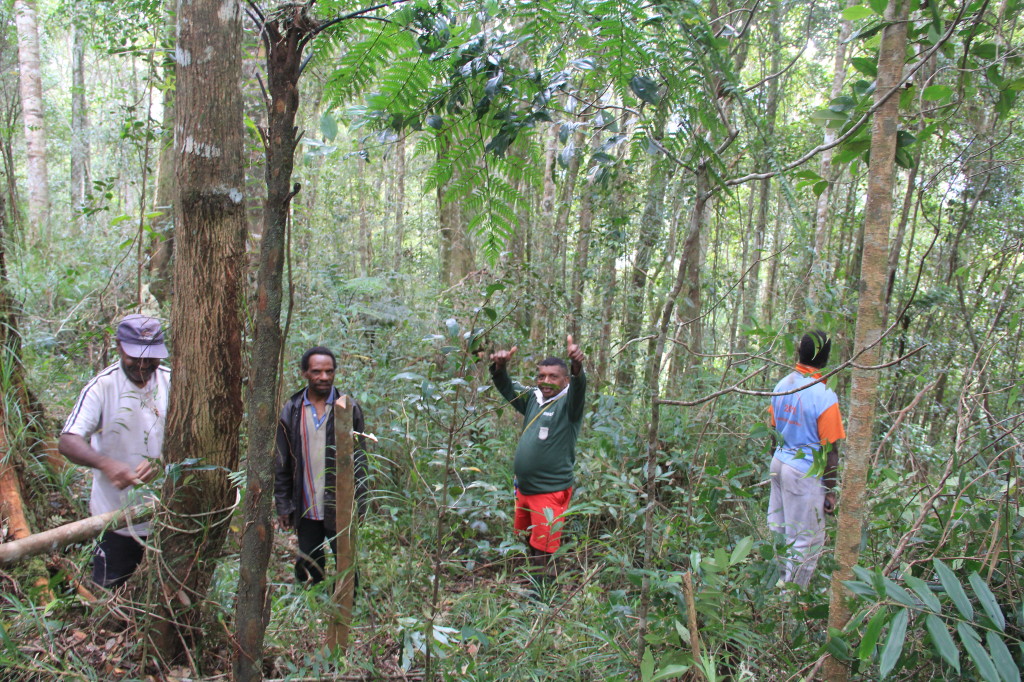
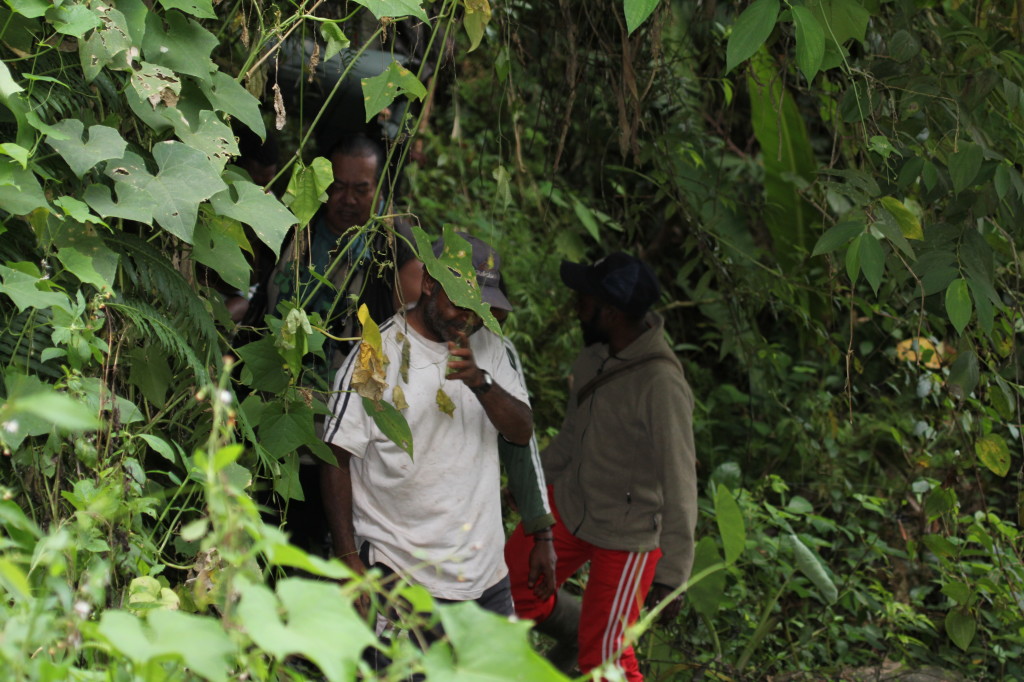
The guides and porters preparing the campfire and cooking area.

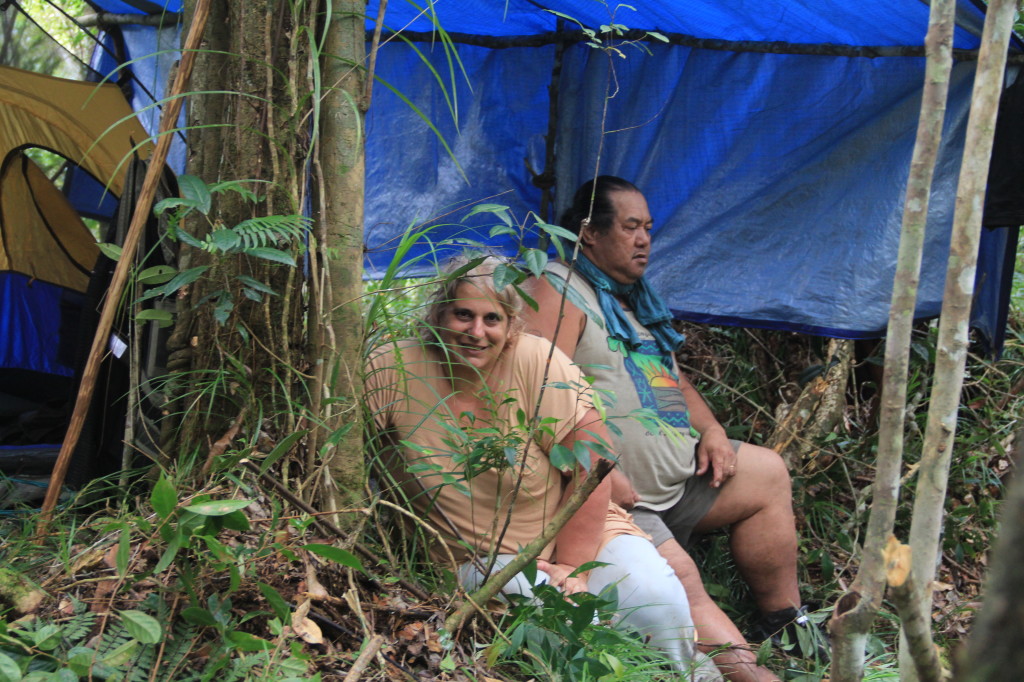
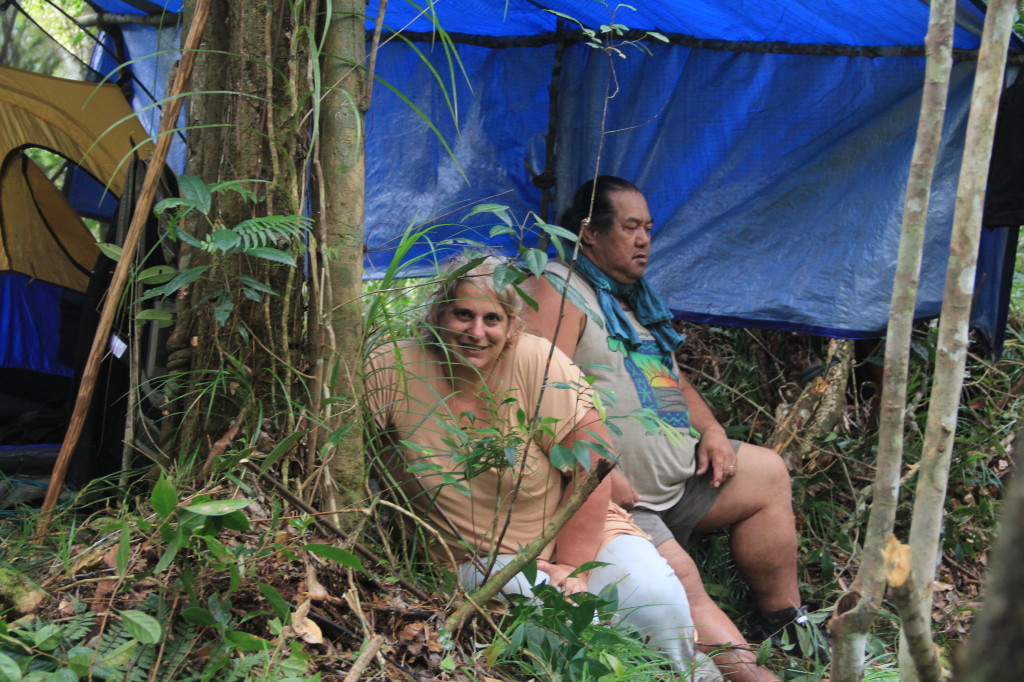
Ina and I collapsing with exhaustion after the long walk uphill.
Ina and I collapsing with exhaustion after the long walk uphill.

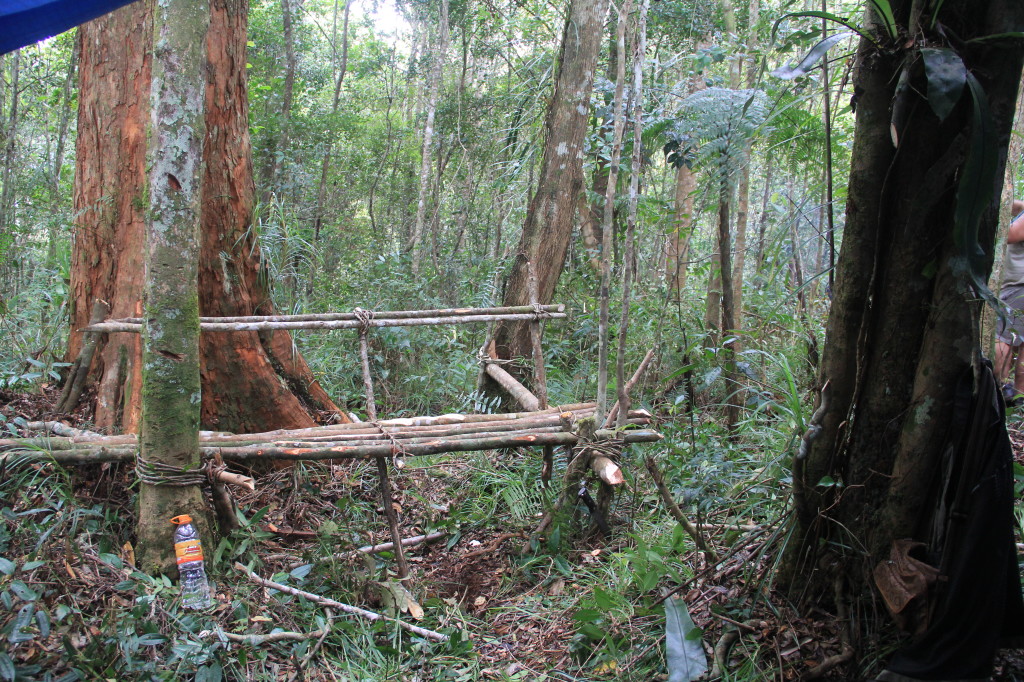
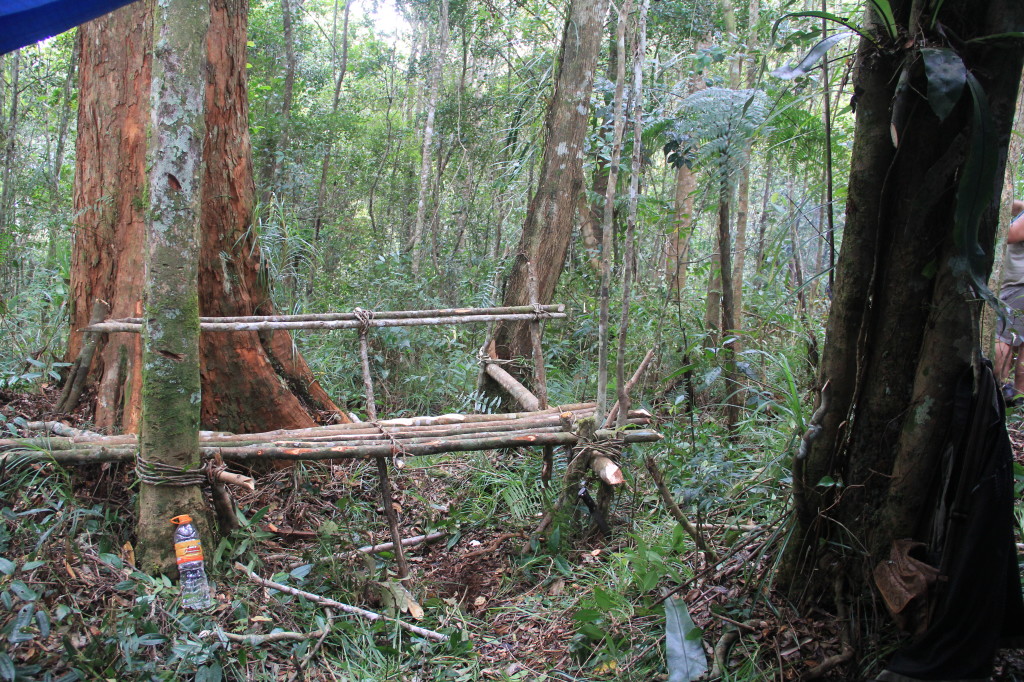
They were originally going to make a bench but turned it into a table
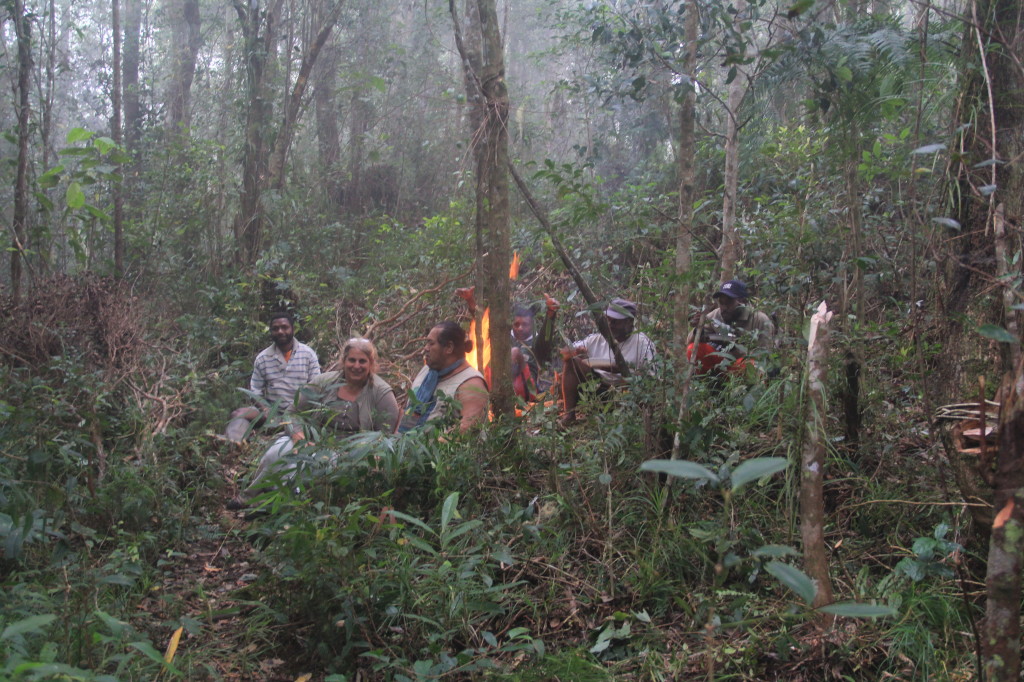
They were originally going to make a bench but turned it into a table

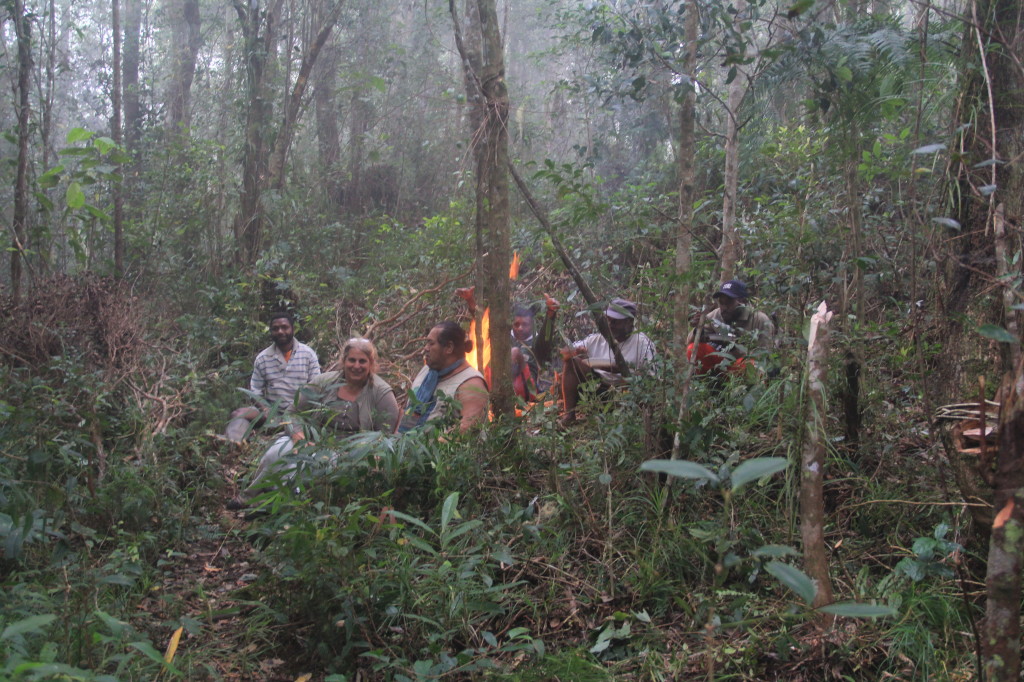
Everyone gathered around the campfire, it got pretty chilly at night.
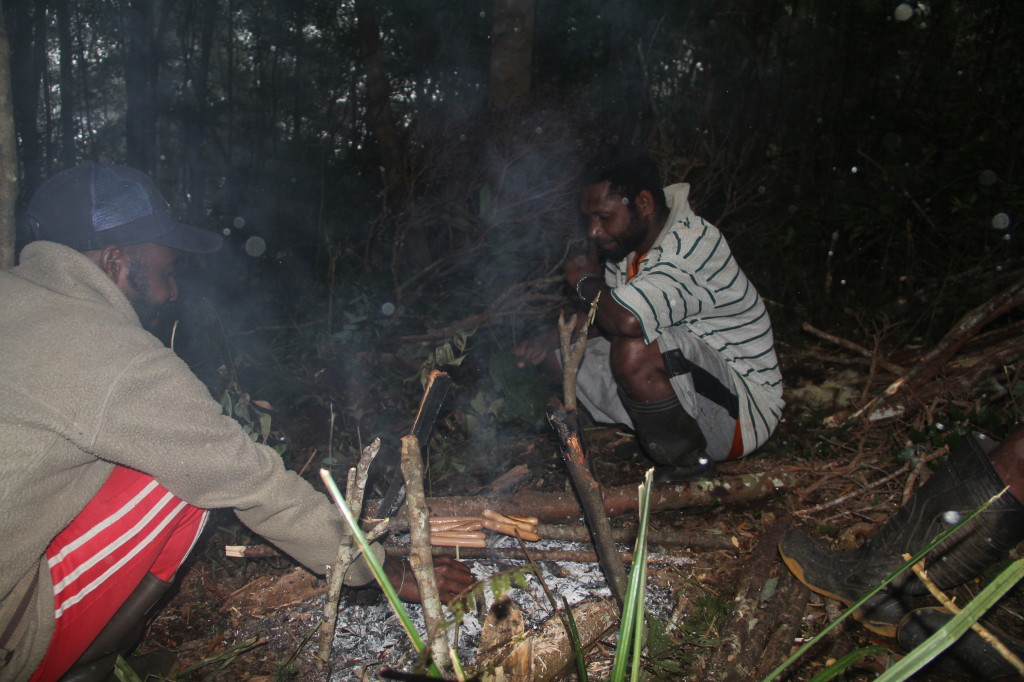
Everyone gathered around the campfire, it got pretty chilly at night.

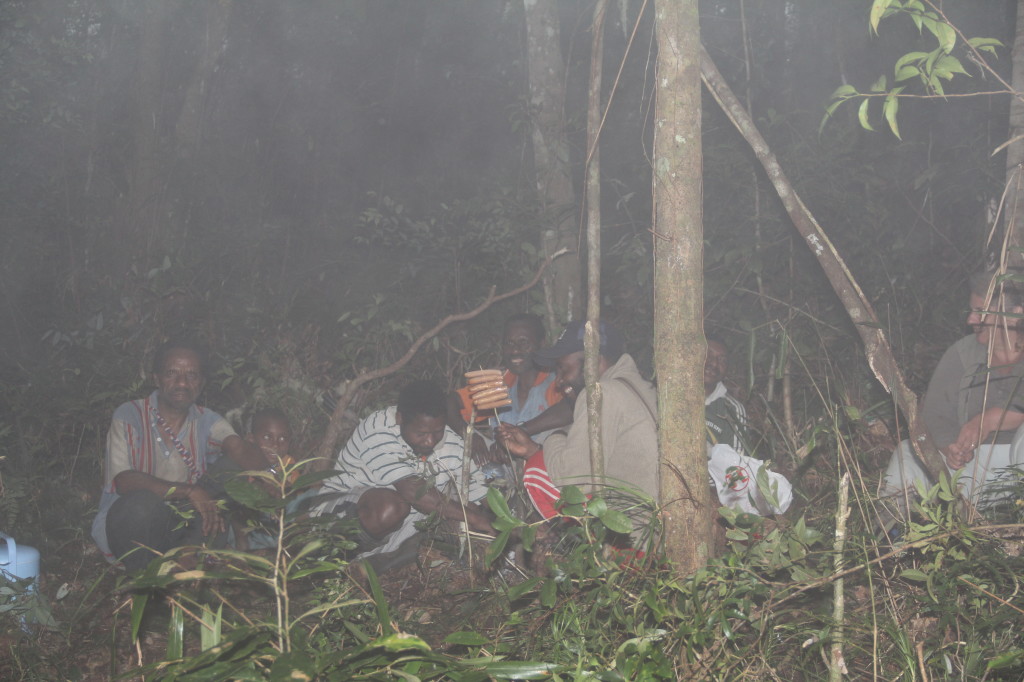
The first ever Arfak Mountain Weenie Roast!
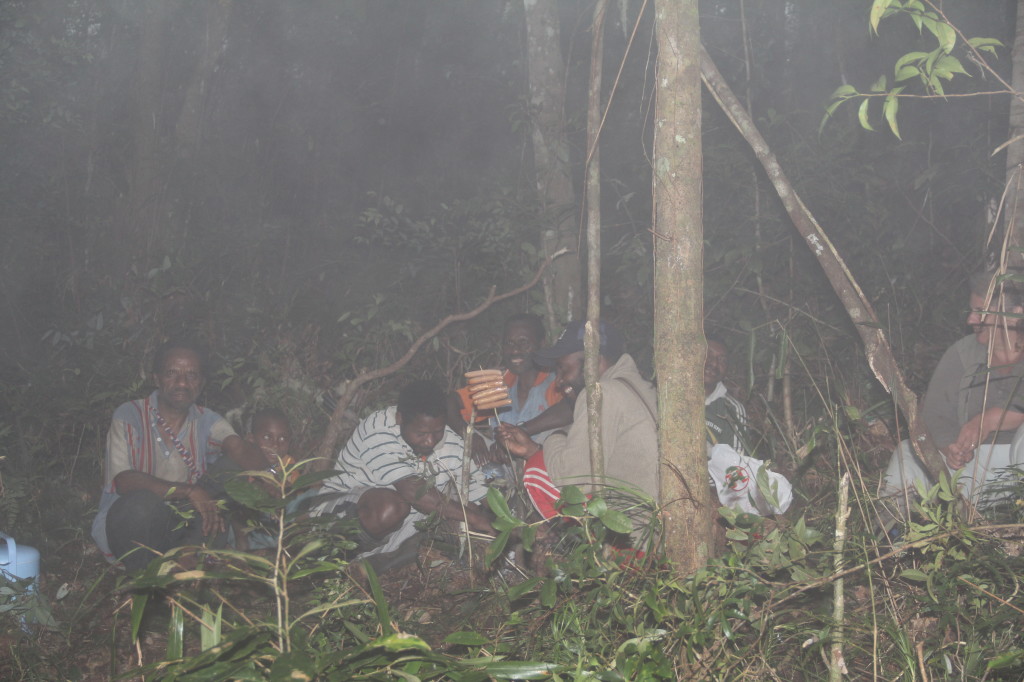
The first ever Arfak Mountain Weenie Roast!

The roasted hot dogs tasted really good and I bet this is not the last time the locals do this!

The roasted hot dogs tasted really good and I bet this is not the last time the locals do this!

KEY BIRD SPECIES

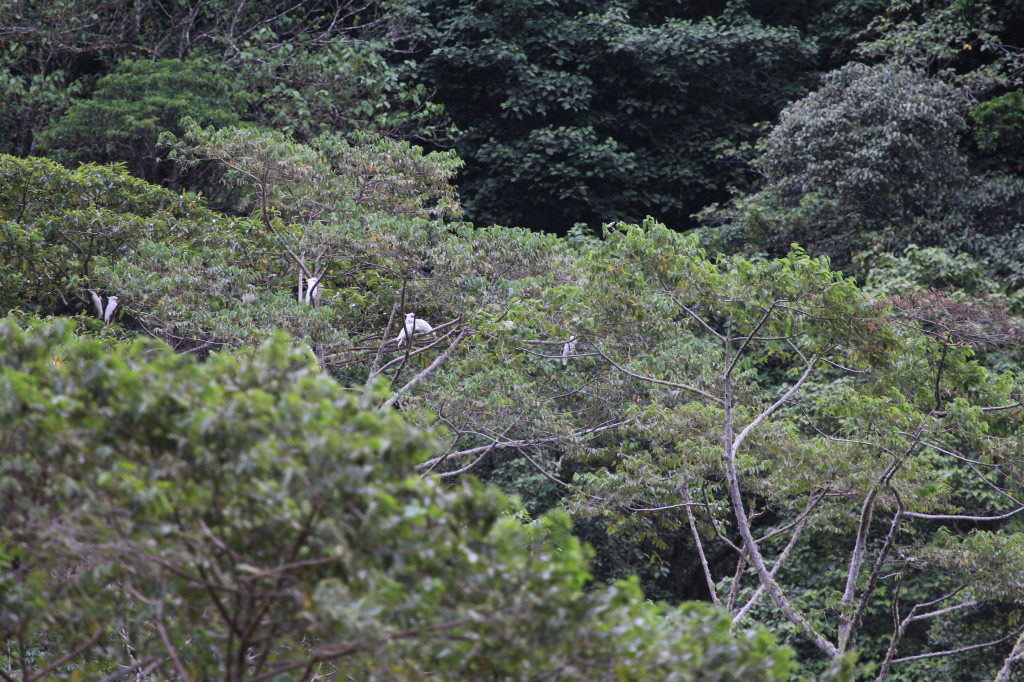
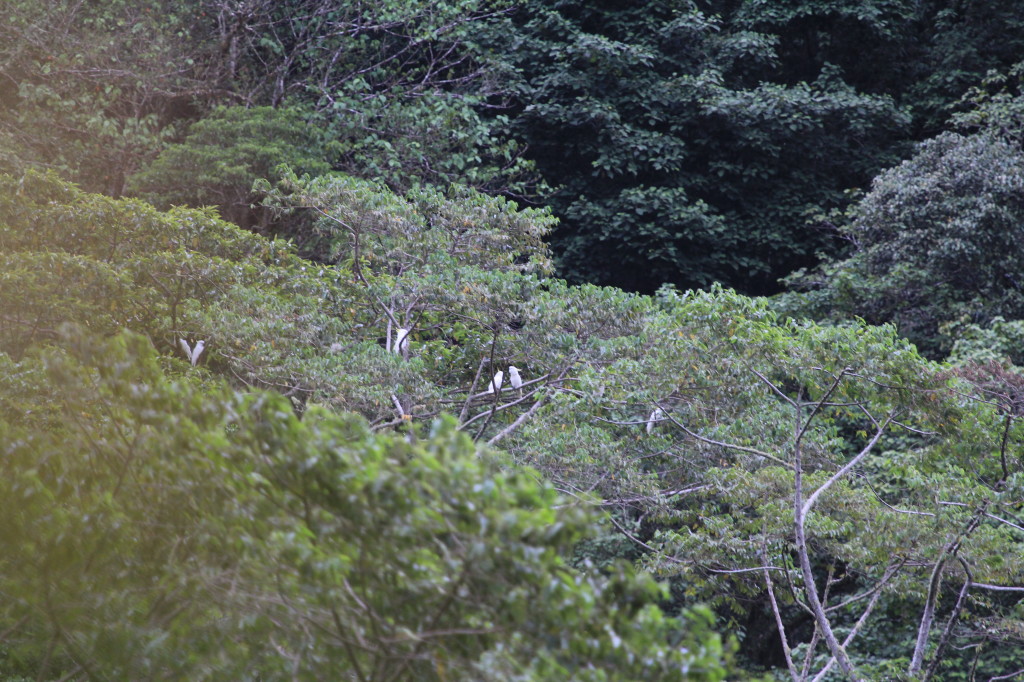
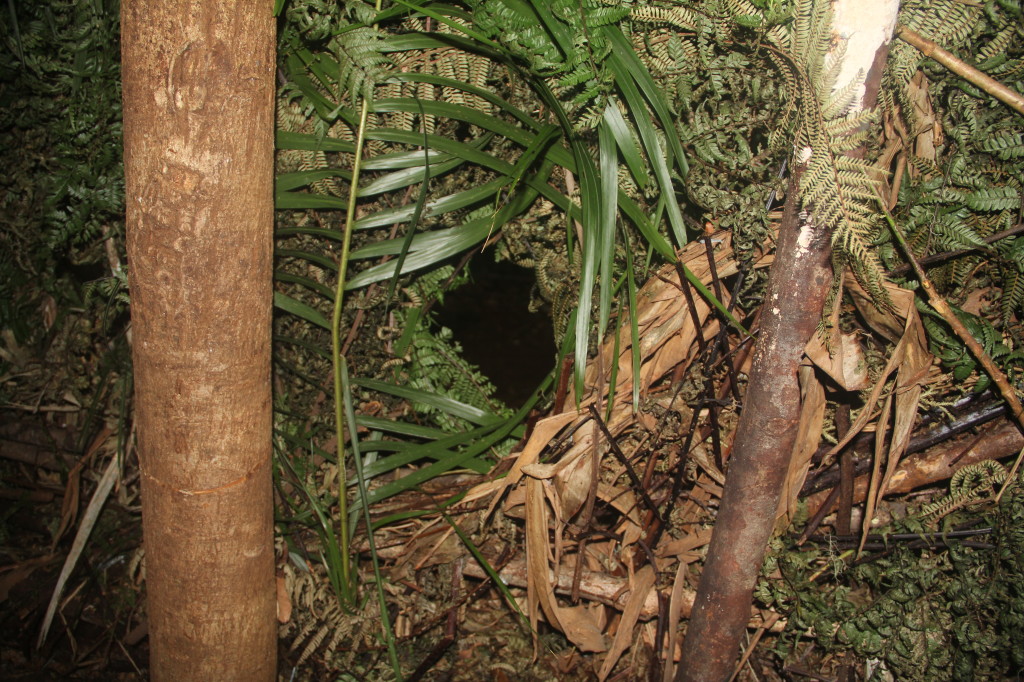
Magnificent Bird-or-Paradise; Black Sicklebill; Western Parotia, Long-tailed Paradigalla; Arfak Astrapia; Arfak Bowerbird; Lesser Bird-of-Paradise; Superb Bird-of-Paradise; New Guinea Eagle; Feline Owlet-Nightjar; Mountain Owlet-Nightjar; Spotted Jewel-Babbler; Chestnut-backed Jewel-Babbler Spotted Catbird; Flame Bowerbird; Magnificent Riflebird; Buff-tailed Sicklebill.  There are also some parrot species up here.  The white Triton Cockatoos (subspecies of Cacatua galerita) were pretty common and we saw them in trees across the river as we climbed up the mountain.  Lorikeets were seen flying overhead several times – Plum-faced Lorikeet (Oreopsittacus arfaki), Yellow-billed Lorikeet Neopsittacus musschenbroekii and Fairy Lorikeet Charmosyna pulchella.   We were hoping to see the long-tailed Papuan Lorikeet (Charmosyna papou) but no luck.  Other parrots we were hoping for but didn’t see were Brehm’s Tiger-Parrot Psittacella brehmii and Pesquet’s Parrot (Psittrichas fulgidus).  We saw a nest belonging to Red-breasted Pygmy Parrots (Micropsitta bruijnii) but unfortunately they weren’t home.
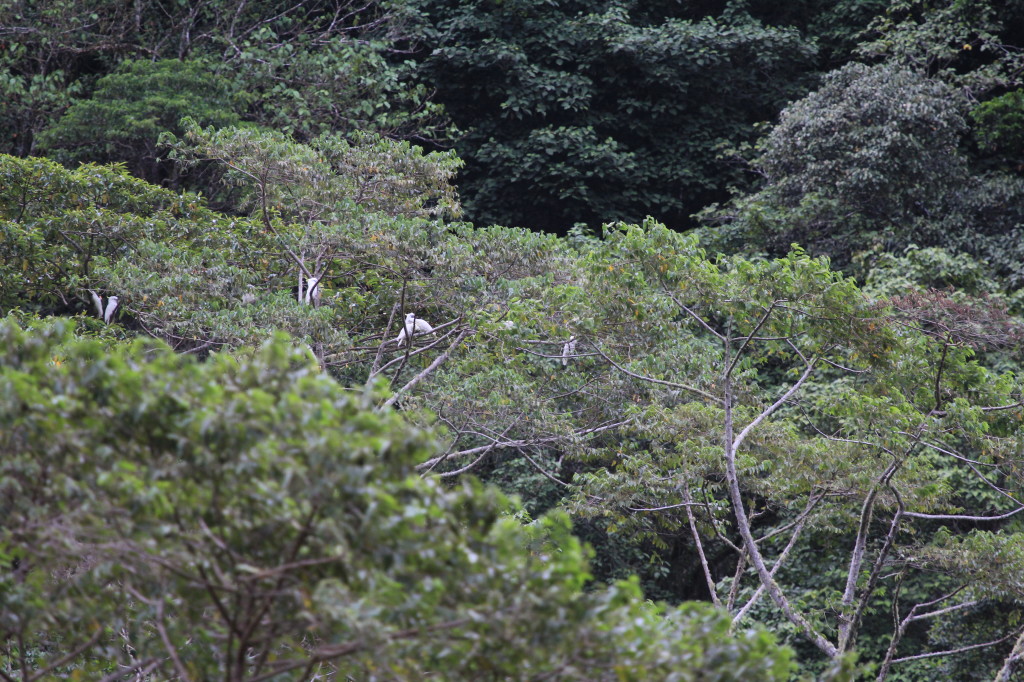
Sulphur-crested Cockatoos (Triton subspecies)
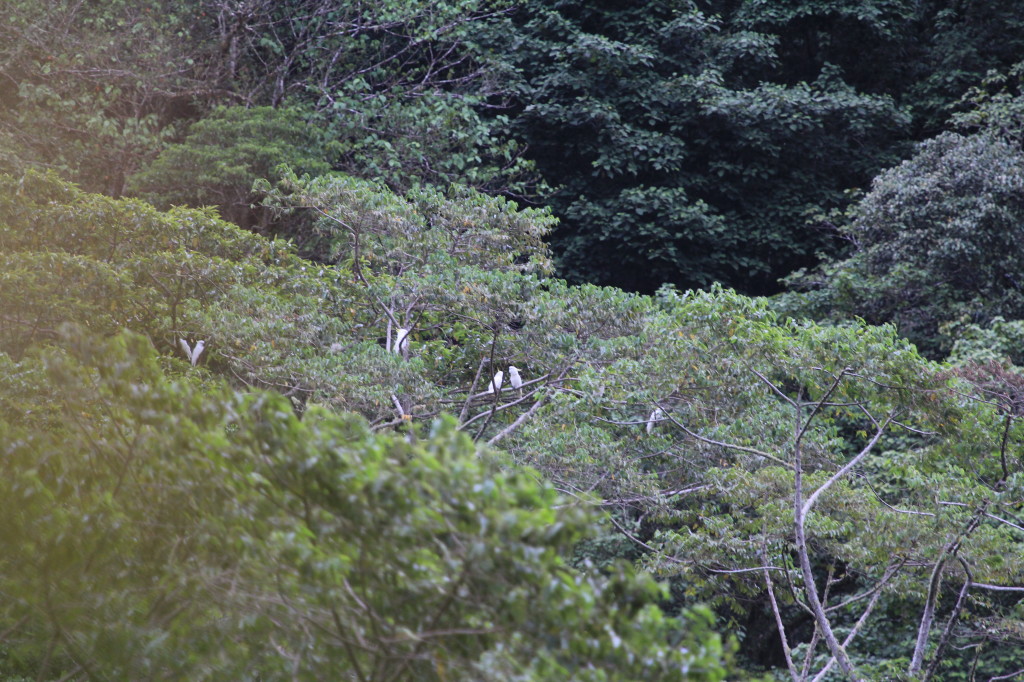
Sulphur-crested Cockatoos (Triton subspecies)

Sulphur-crested Cockatoos (Triton subspecies)

Sulphur-crested Cockatoos (Triton subspecies)

See the links on this page to other trip reports to the Arfak Mountains to get an idea of which birds other people saw.

HIKING UP THE MOUNTAIN

This was the most difficult hike I have ever done in my life and I really wish I had done it when I was younger and somewhat fitter.  The locals can get from the village to the Japanese camp at the top in about half an hour which they frequently do if they have to prepare the meals in the village and bring them up the mountain.  No, they do not get tired.  Typical tourists will get to the Bowerbird/Parotia area where we camped in about an hour.  Ina and I took about 3 hours to get up the mountain with very frequent rest stops (at least we saw lorikeets flying overhead)!  It was extremely steep and involved crossing a small river, clambering up rocks and walking through mud.  There are 3 camps up the mountain -the Garden House, Camp Attenborough and Japanese Camp (Black Sicklebill and Arfak Astrapia). Theoretically, the camps are about 90 minutes apart, at least that’s what the locals say!  We gave up at the Garden Hut but if you have more energy, you should try to make it all the way up to the Japanese Camp.
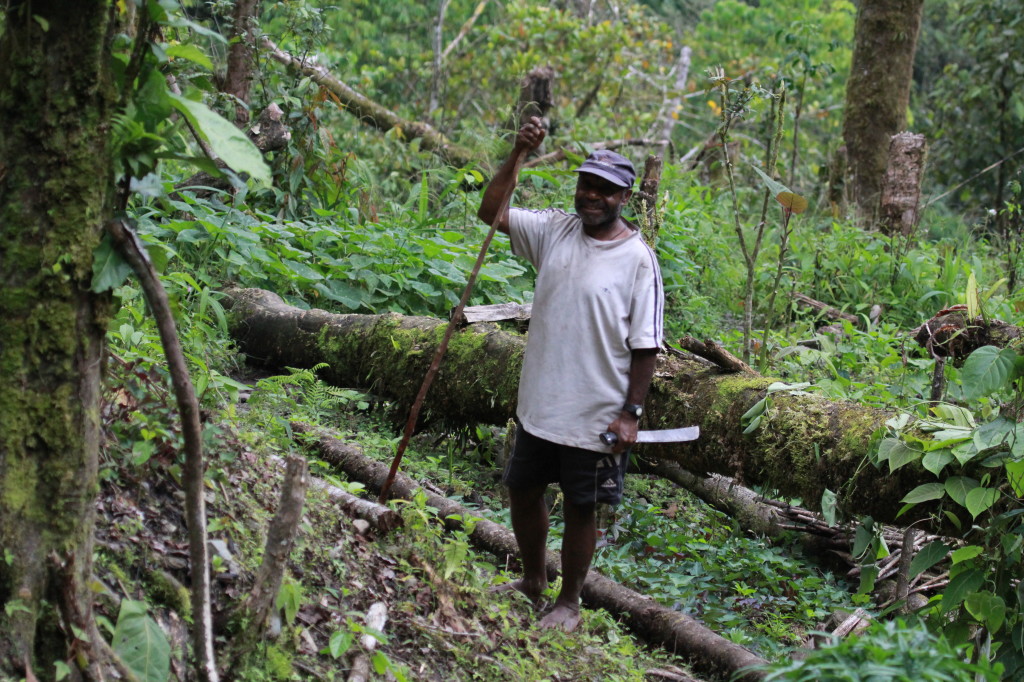
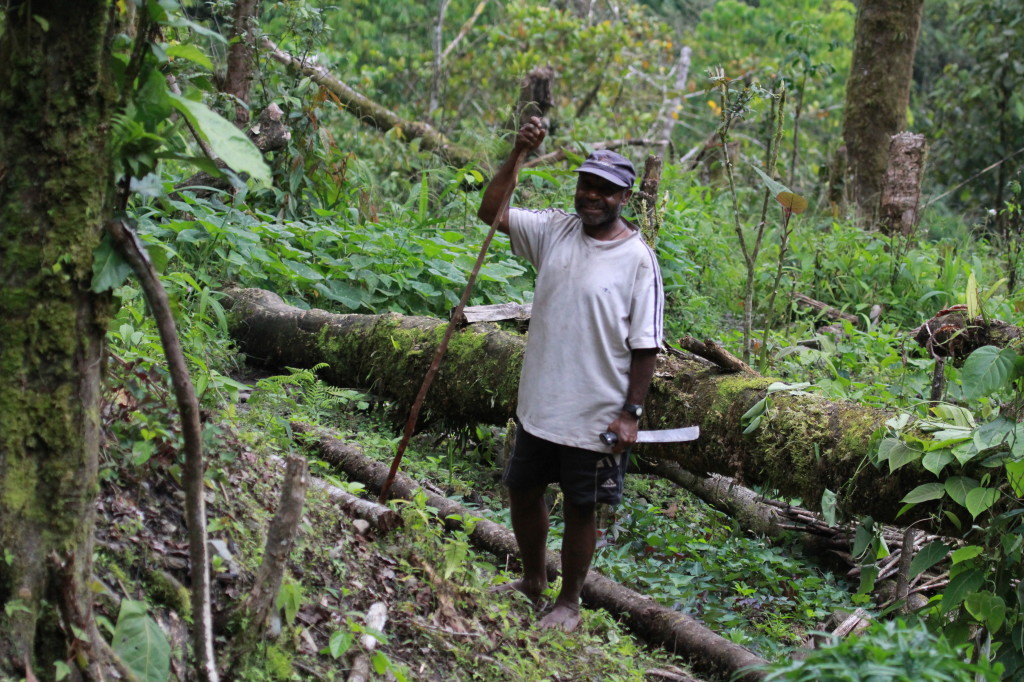
Eliakim leads the way up the mountain
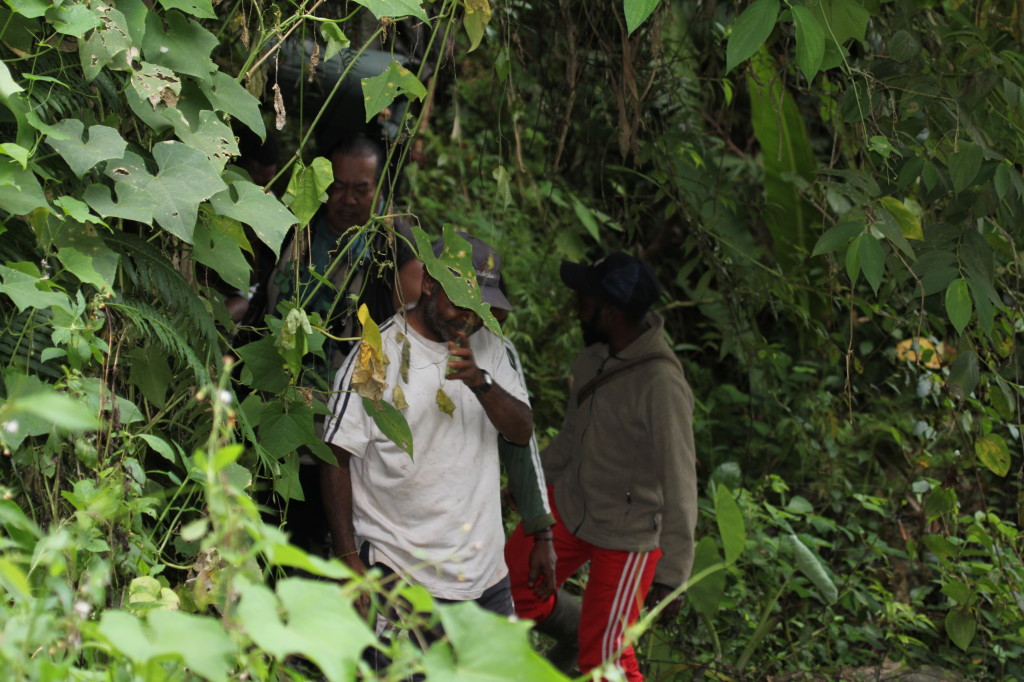
Eliakim leads the way up the mountain

Hacking through the bush

Hacking through the bush

BIRD HIDES

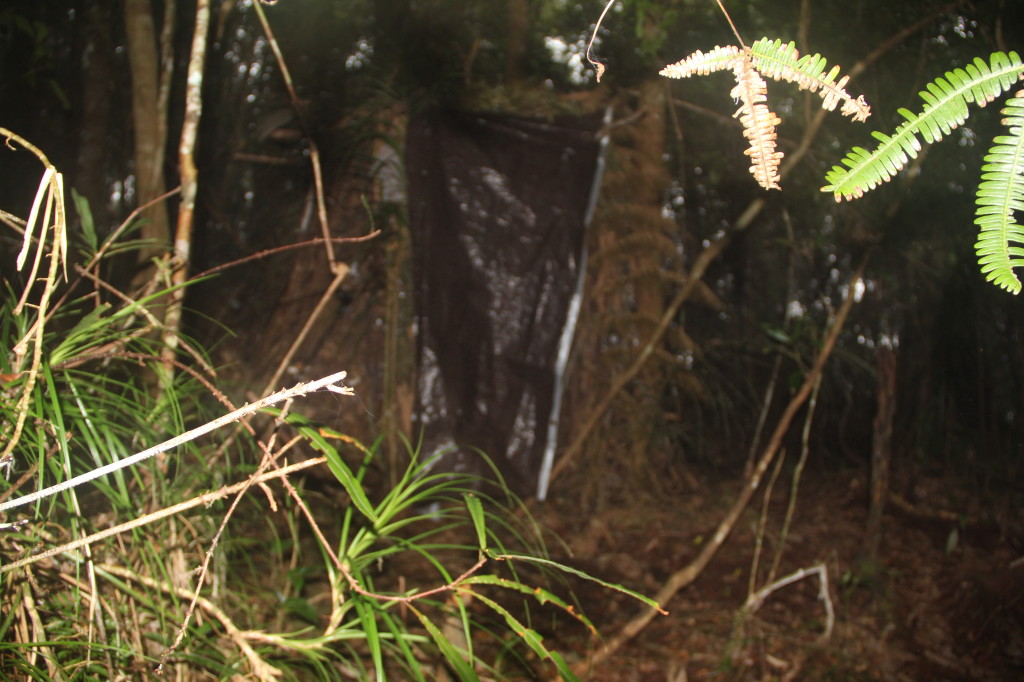
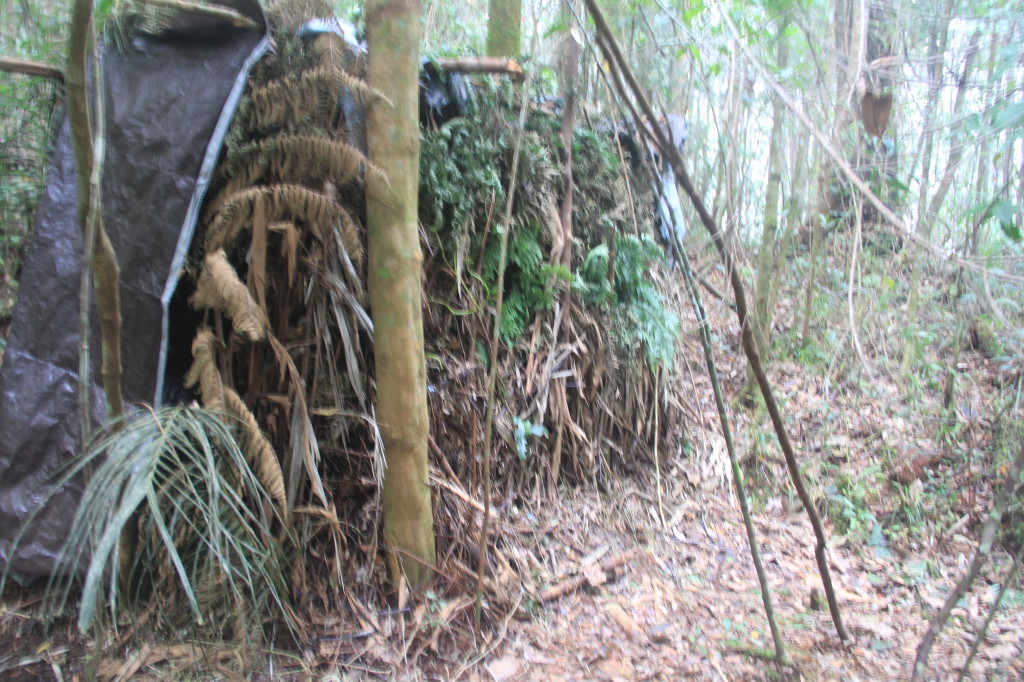
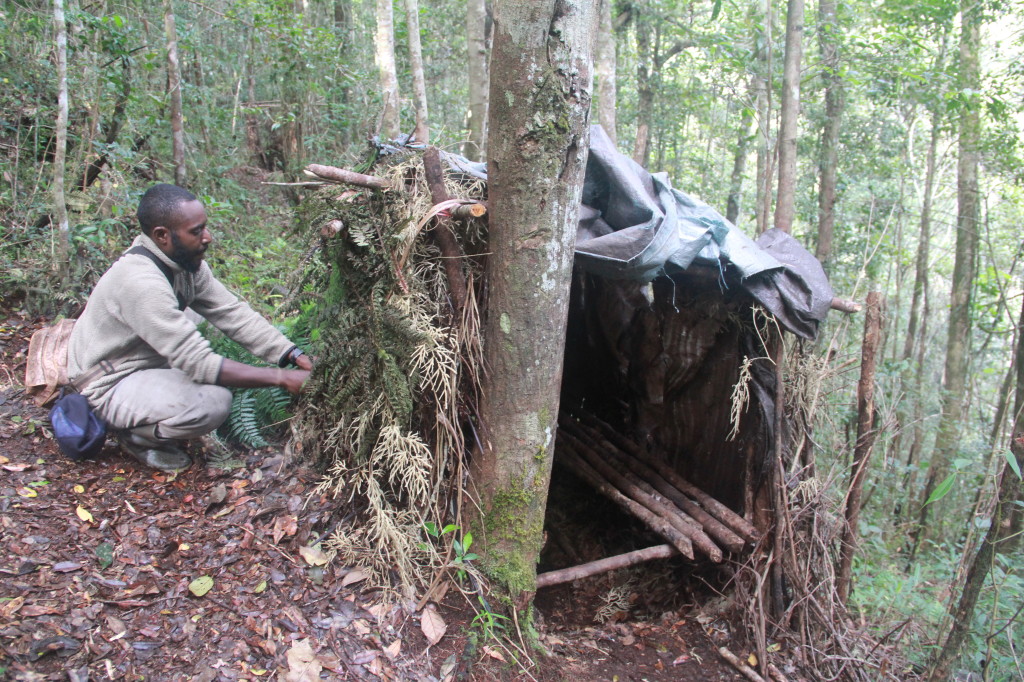
It’s very clever how they made these hides at the display grounds of the Western Parotia and Vogelkop Bowerbird.  The benches are pretty comfortable but only 3 people can fit in a hide at a time and there are only 2 peepholes to watch the birds though.  Be prepared to get up at dawn and be positioned in the hide so the birds don’t know you are there.  Avoid talking or whisper if you have to.  The guides will probably gather up some spare branches to maintain the hides.
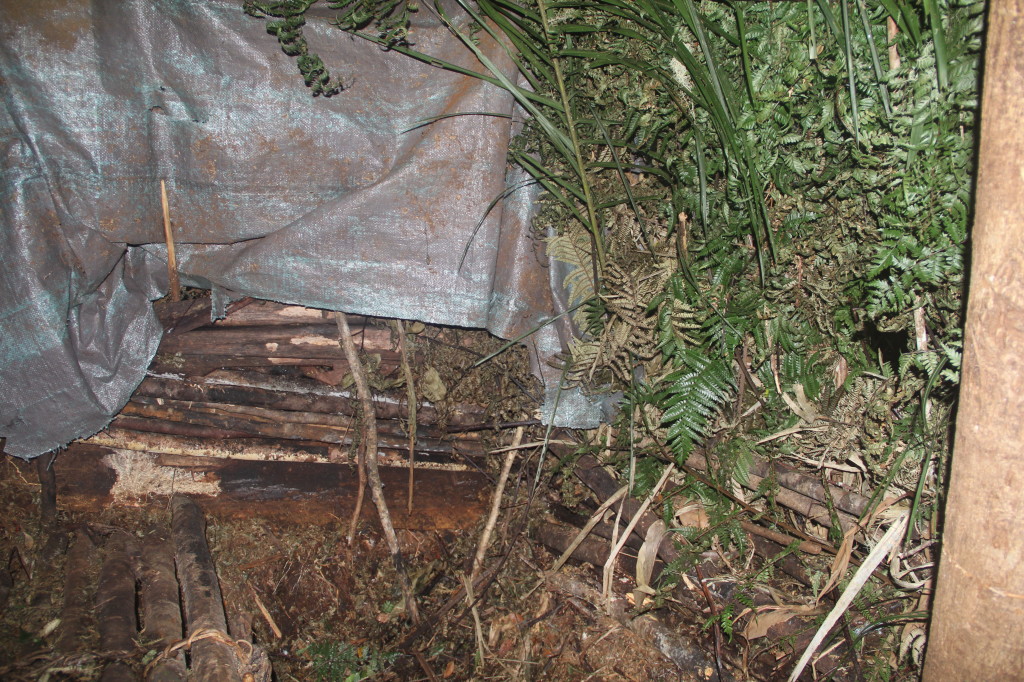
Western Parotia hide
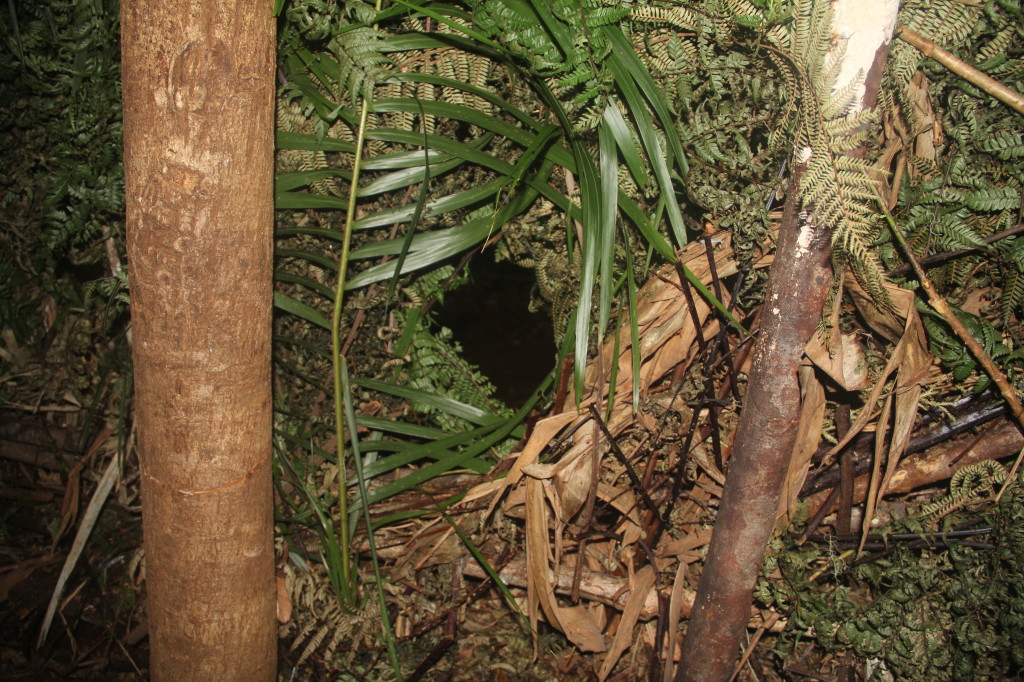
Western Parotia hide

Peek through this hole at the Western Parotia
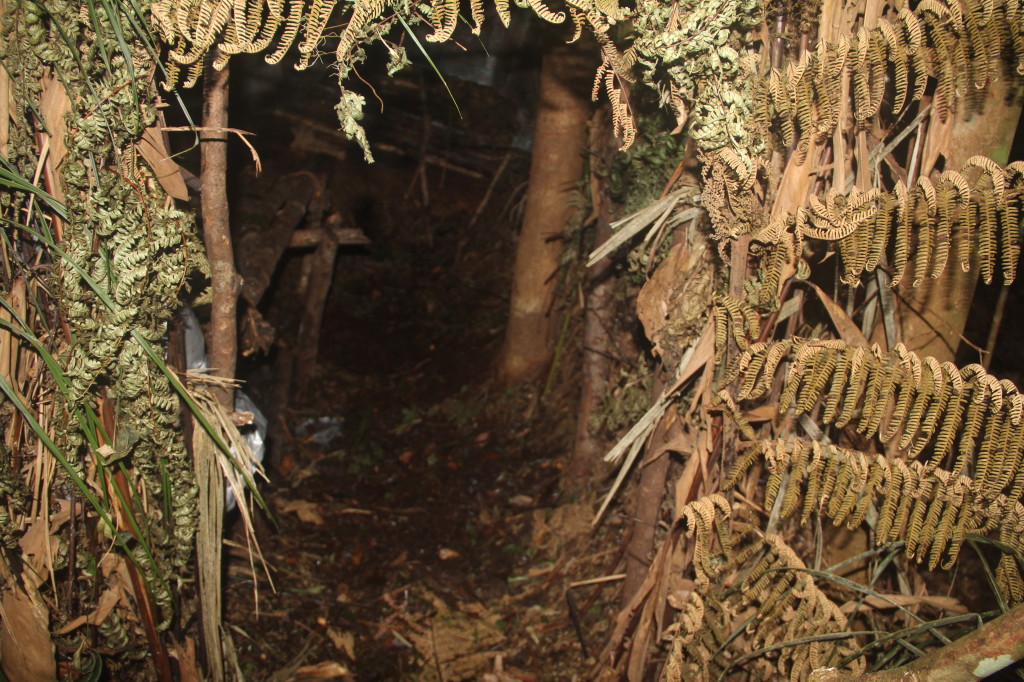
Peek through this hole at the Western Parotia

Western Parotia hide
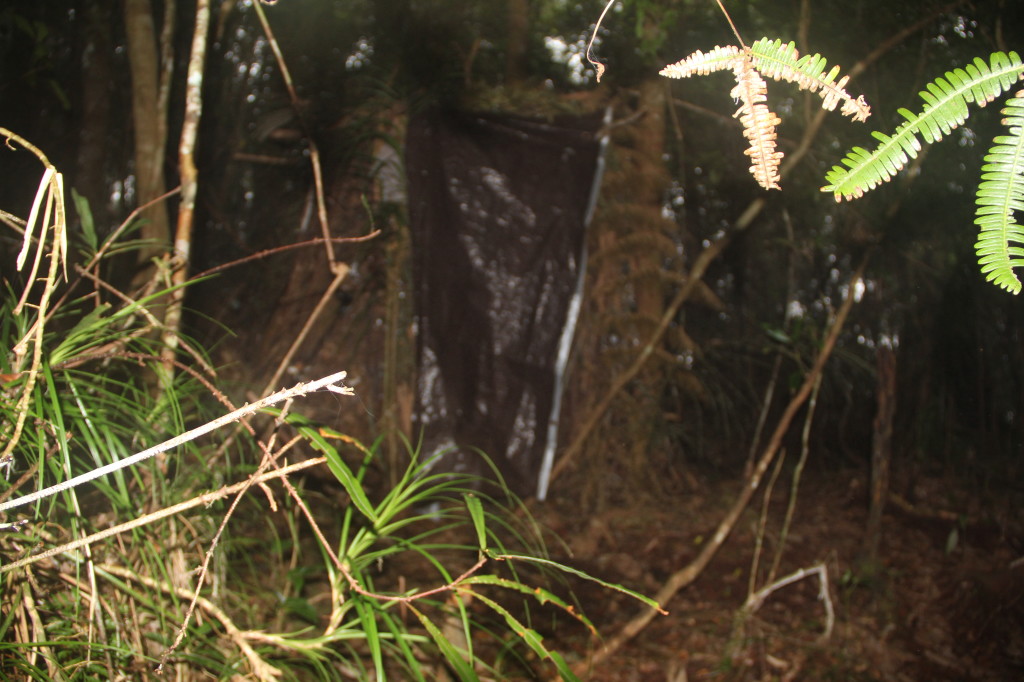
Western Parotia hide
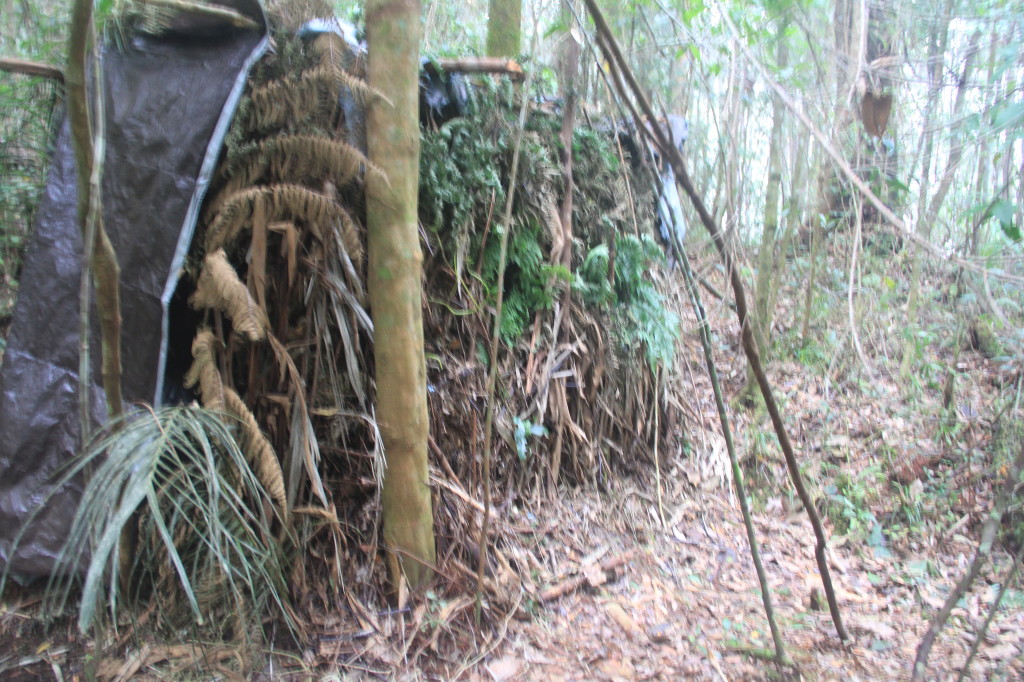
Western Parotia hide

Western Parotia hide

Western Parotia hide-from the bird's side

Western Parotia hide-from the bird’s side
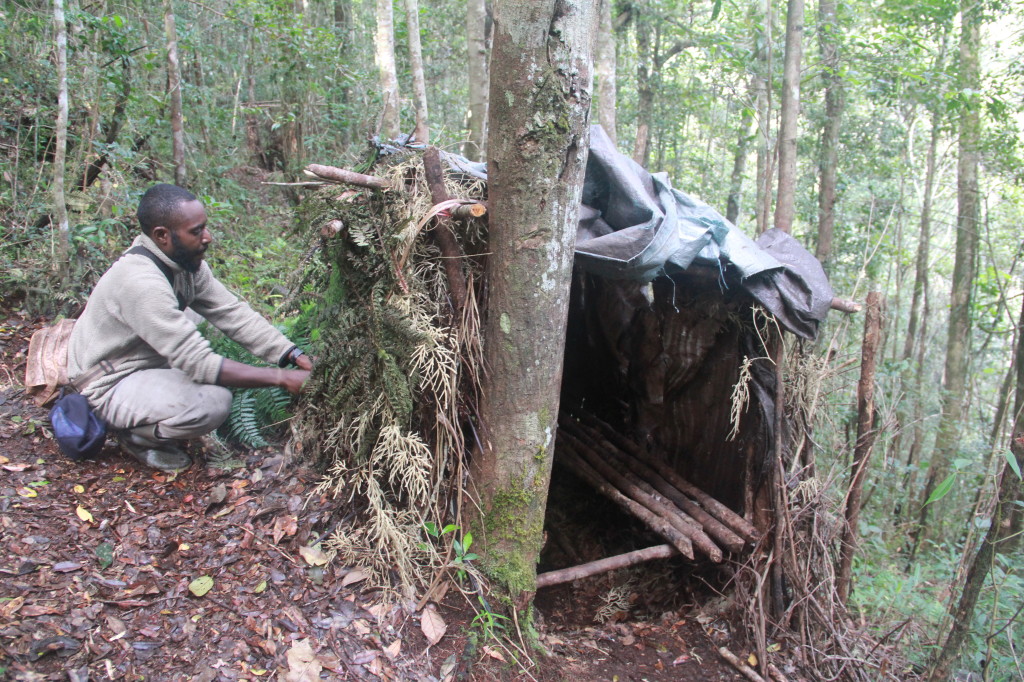
Bowerbird hide

Bowerbird hide

WHAT TO BRING

The Arfaks is unique in its remoteness and also altitude which can make the nights very chilly.  I suggest you bring the following if you have the room in your bags:

  • Sleeping bag
  • Air mattress
  • Blanket
  • Clothes to ear for the duration and discarded such as old jacket, long pants, long sleeved shirts, gumboots, warm socks
  • Mosquito repellant
  • Food for you and your expected guides and porters.  Bring extra as you will probably end up with more porters than you expect.  Rice, tinned meat (no fridges up there), eggs, frozen hot dogs to roast the first night, bottled water, noodles, cookies, coffee, tea, sugar.  Some people will bring live chickens from the market in Manokwari, the guides will prepare them but I couldn’t do it.  I am not a vegetarian but I don’t want to “meet” my dinner either!
  • Torch (flashlight)
  • Batteries for anything you have that use them.  Pre-charge your batteries the day before you fly to Manokwari
  • Malaria pills (more about that later)

UNFORGETTABLE EXPERIENCE

It may be challenging, but a visit to the Arfaks for birding will give you a lot of new birds you can’t see anywhere else and you will meet some amazing people!  All the guides and porters were very friendly and went out of their way to make us as comfortable as possible and give us a hand up slippery rocks and muddy trails.

I suggested to Zeth that he arrange for a few of the village women to learn massage as we came down the mountain exhausted and aching all over!  It would also be nice to have handicrafts for sale.  If you have any questions, please ask in the comments.
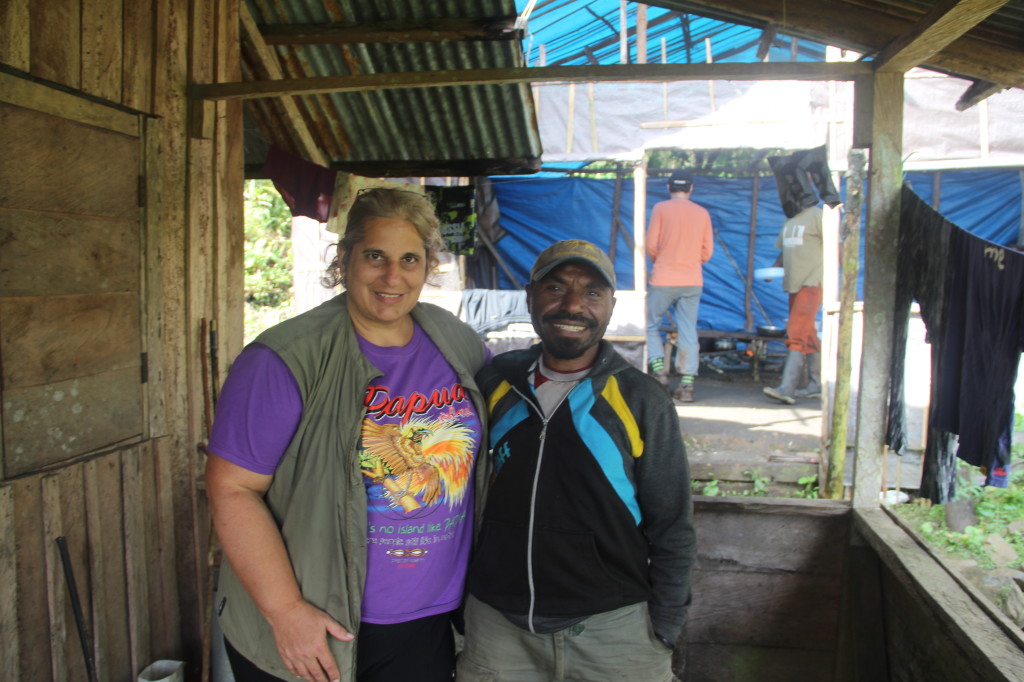
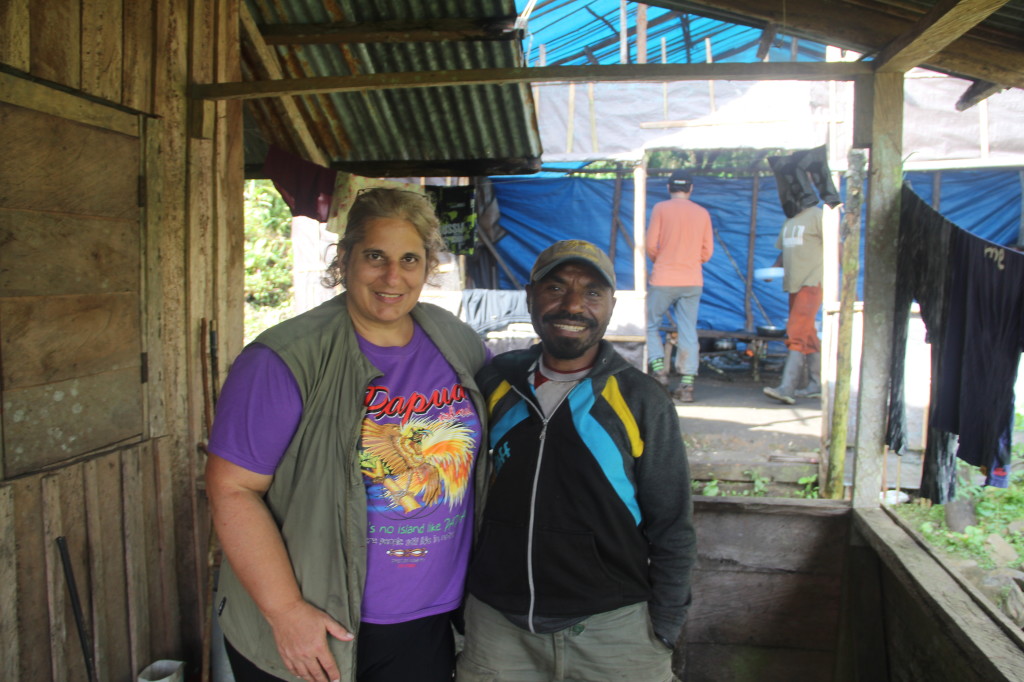
Tara and Zeth
Tara and Zeth
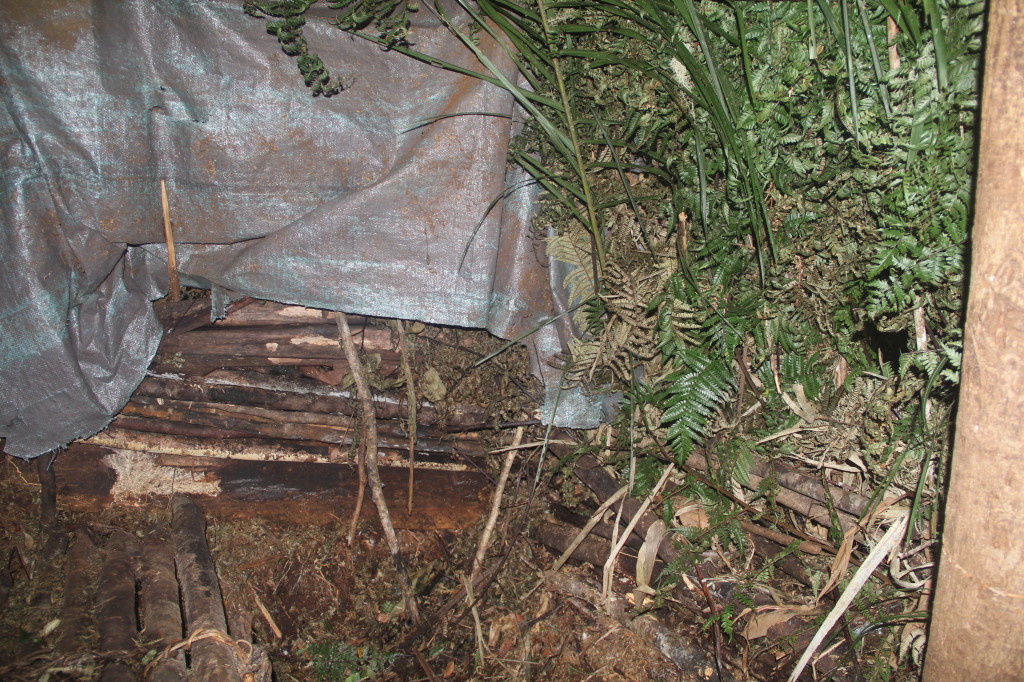


Home Decor With The Vogelkop Bowerbird

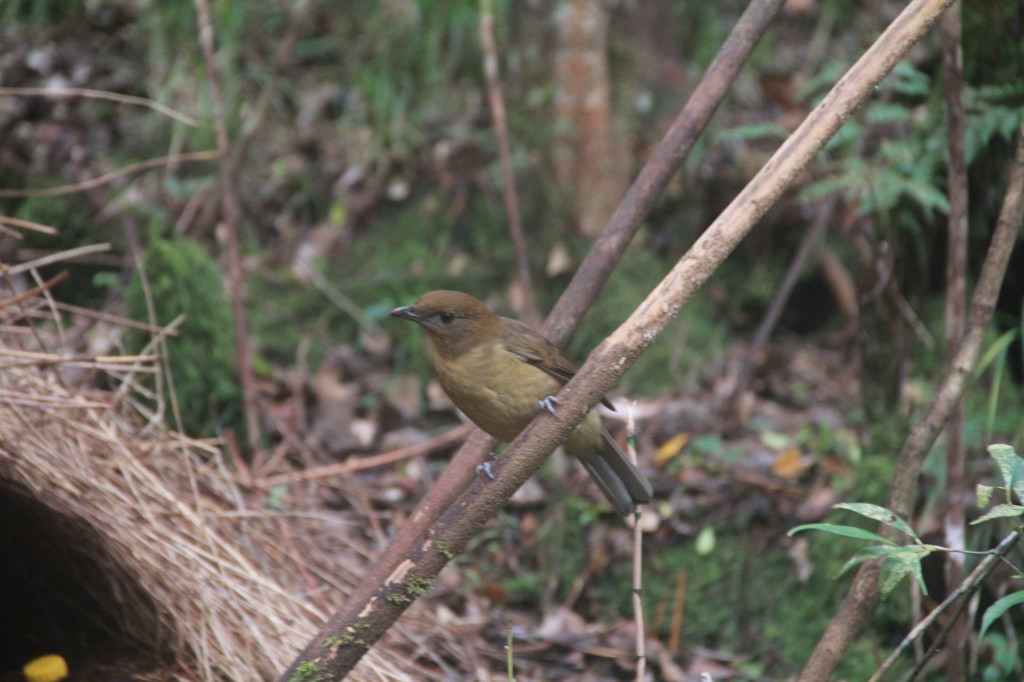
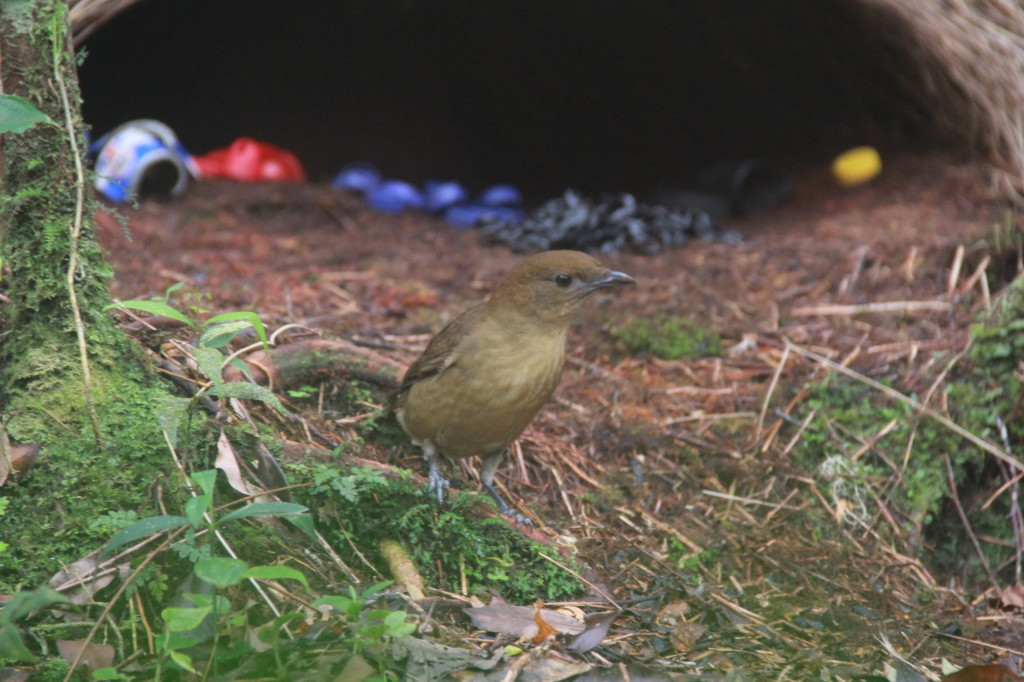
The Vogelkop Bowerbird (Amblyornis inornata), also known as the Vogelkop Gardener Bowerbird, is a medium-sized, bowerbird of the mountains of the Vogelkop Peninsula at West  Papua, Indonesia.

By far, the easiest place to see them is in the Arfaks where Zeth Wonggar has built hides at their display grounds.  Like other Birds of Paradise, they stay at the same display grounds year round so that makes them predictable.  Good for eco-tourists but not good if they are being stalked by trappers.
Vogelkop Bowerbird Range

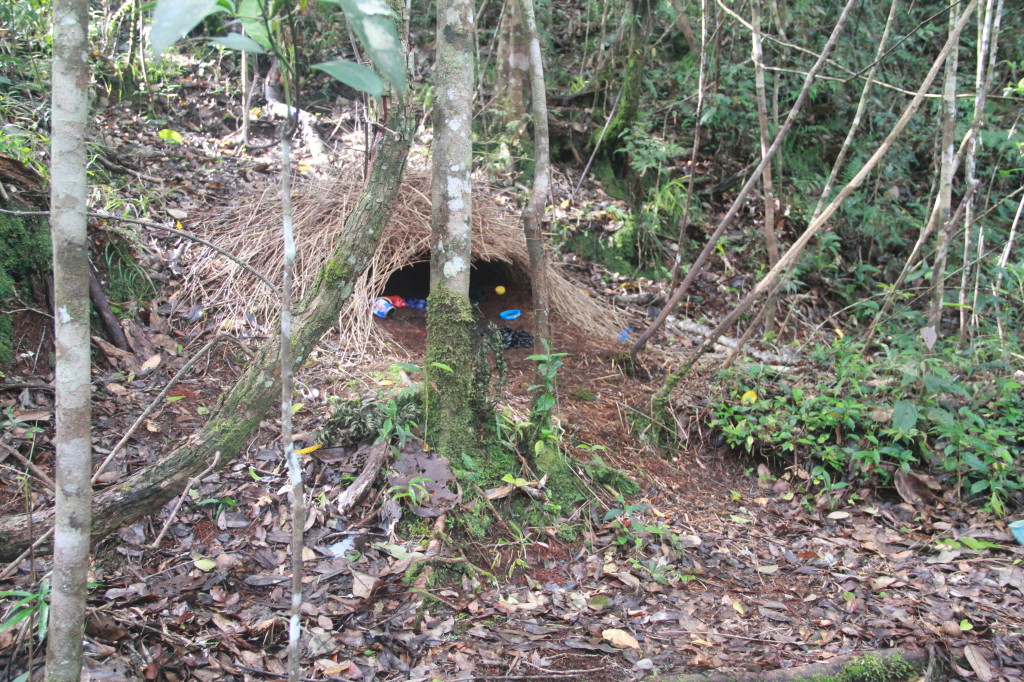
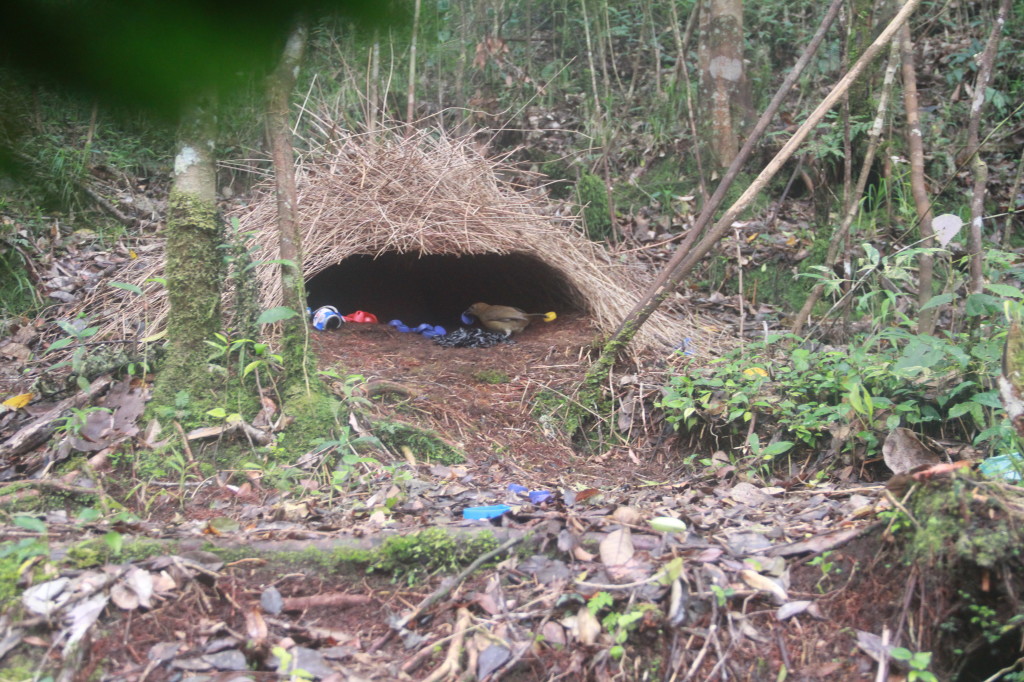
The bower is a cone-shaped hut-like structure some 100 cm high and 160 cm in diameter, with an entrance usually propped up by two column-like sticks. A front “lawn” of some square meters area is cleaned of debris and laid out with moss. On this, and in the entrance of the bower, decorations such as colourful flowers or fruit, shining beetle elytra, dead leaves and other conspicuous objects are collected and artistically arranged.

Males go to great lengths to ensure that their displays are in prime condition, replacing old items as needed, as well as trying to outdo their neighbours by finding more spectacular decorations, and arranging them appropriately.

Vogelkop Bowerbird's Bower at Arfak

Vogelkop Bowerbird’s Bower at Arfak

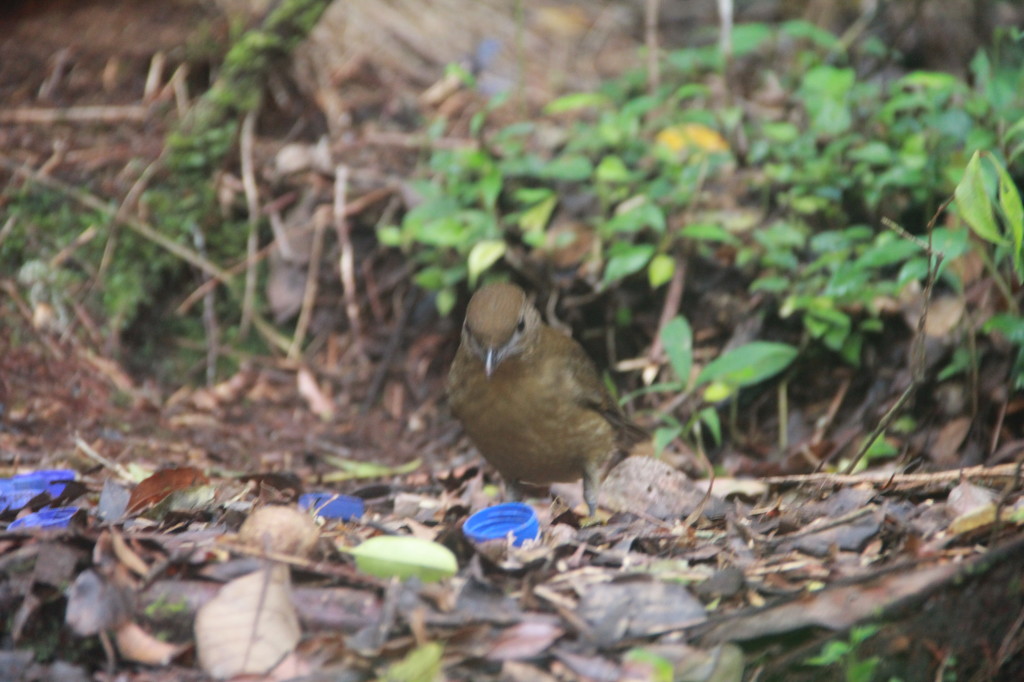
Vogelkop Bowerbird arrives and is not happy his decor has been messed up.

Vogelkop Bowerbird arrives and is not happy his decor has been messed up.

Eeek!  Who made this mess?

Eeek! Who made this mess?

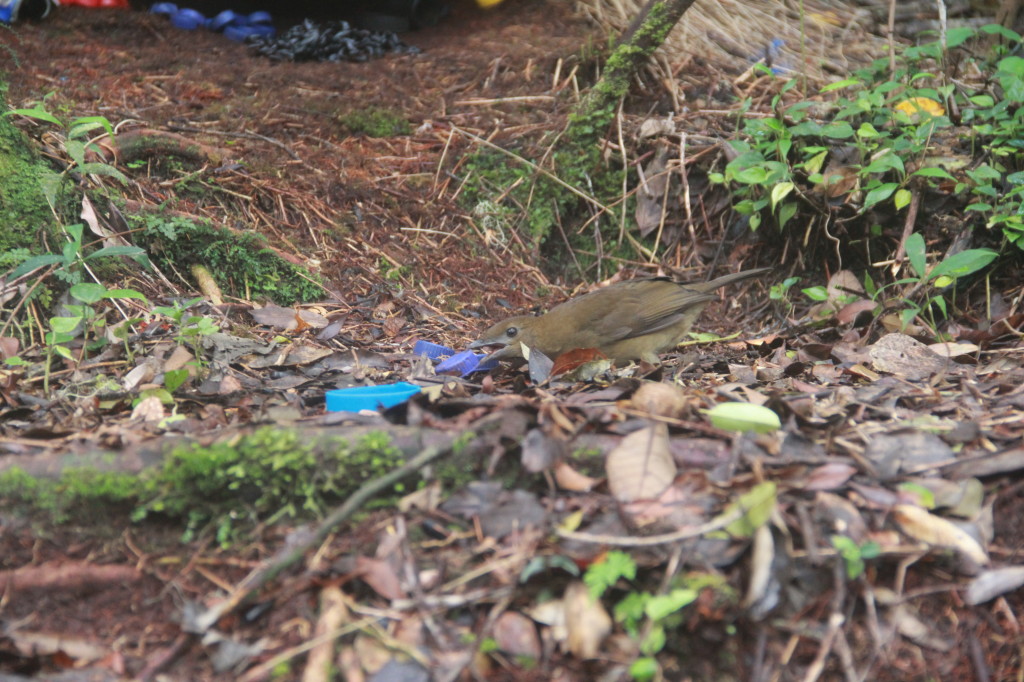
Everything must be in it's proper place!

Everything must be in it’s proper place!

Gathering up his decor!

Gathering up his decor!

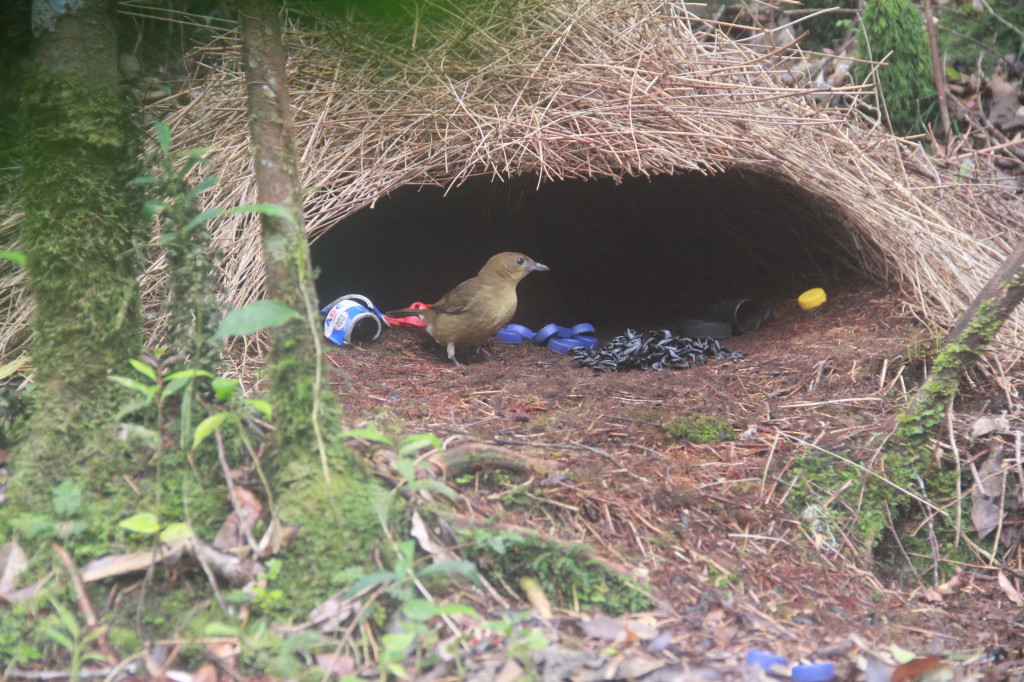
One final check-everything looks good.  Bring on the paparazzi!

One final check-everything looks good. Bring on the paparazzi!

OK lady Bowerbirds, come and check out my awesome bower!

OK lady Bowerbirds, come and check out my awesome bower!

Surely this is worthy of Better Homes and Gardens!


Australian Government’s Tourist Refund Scheme (TRS) Changes For The Better

I always time the purchase of any cameras, lenses or small electronics to happen within 30 days of a trip so I can get the refund.  This can take the sting out of the higher prices Aussies pay as opposed to the USA or Hong Kong.  The good news is that now you can have a longer time to get to know your new camera or lens before your trip!  The text below is taken from the Australia Customs website.

.

As of 17 April 2013 changes to the requirements for making a claim under the Australian Government’s Tourist Refund Scheme (TRS) will come into effect.

The key changes are:

  1. Travellers can claim through the tourist refund scheme on purchases made up to 60 days before leaving Australia (under old regulations they had 30 days). This will apply to sales made on or after 17 April 2013.
  2. Travellers can submit more than one tax invoice to make their claim, as long as each is a valid tax invoice from the one Australian Business Number retailer and the total value of goods purchased is $300 or more (including GST).

About the Tourist Refund Scheme

The TRS enables you to claim a refund, subject to certain conditions, of the goods and services tax (GST) and wine equalisation tax (WET) that you pay on goods you buy in Australia.

To claim a refund you must:

  • Spend $300 (GST inclusive) or more in the one store and retain your invoices.
  • Have purchased the goods no more than 60 days before your departure from Australia.
  • Wear or carry the goods on board the aircraft or ship and present them along with your original tax invoice, passport and international boarding pass to a Customs and Border Protection Officer at a TRS facility.

The refund only applies to goods you take with you as hand luggage or wear (unless aviation security measures, in regard to liquids, aerosols and gels prevent you from doing so) onto the aircraft or ship when you leave Australia. It does not apply to services or goods consumed or partly consumed in Australia, such as wine, chocolate or perfume. However, unlike other tourist shopping schemes, most of the goods, such as clothing and cameras, can be used in Australia before departure.

The TRS is open to all overseas visitors and Australian residents, except operating air and sea crew.

The GST refund is calculated by dividing the total amount of the purchase by 11. The WET refund is 14.5 percent of the price paid for wine. For example, if you buy goods for a GST-inclusive price of $660 you will receive a refund of $60. If the $660 is made up of a camera ($460) and wine ($200), you will receive a total refund of $89 (total GST refund of $60 plus $29 WET refund on the wine).

The aviation security measures, introduced on 31 March 2007, affect the amount of liquids, aerosols and gels (LAGs) that can be taken as hand luggage on flights into and out of Australia. Further information in regard to the new measures is available from the Department of Infrastructure and Transport.

In case of air departures, goods that cannot be taken on board as hand luggage due to liquid, aerosol and gel restrictions, should be packed in your hold luggage. However, if those goods are oversized, for example a case of wine, they must be sighted prior to check-in at the Customs and Border Protection Client Services counter.

15% Bonus When You Transfer Credit Card Points To Virgin Velocity

If you have a credit card from any of the banks below, you have 2 more weeks to take advantage of this promo.  They do these bonuses once a year, maybe twice if you are lucky.  Since I am an advance planner, I wait for them when I have a trip planned to a Velocity destination like Rarotonga, Tasmania or anywhere else they fly.

Velocity Promo

If you do not have an Amex card, I can get you up to 40,000 sign-up bonus points if I refer you.  Please post below in the comments and include your real email (which won’t be published) and I will email you a referral.  I can refer for several different Amex cards.  Although some of the cards have a high annual fee, it can be offset by the free airline ticket that comes with the card.

Amex Referral

Western Parotia – The Feathered Lord Of The Dance

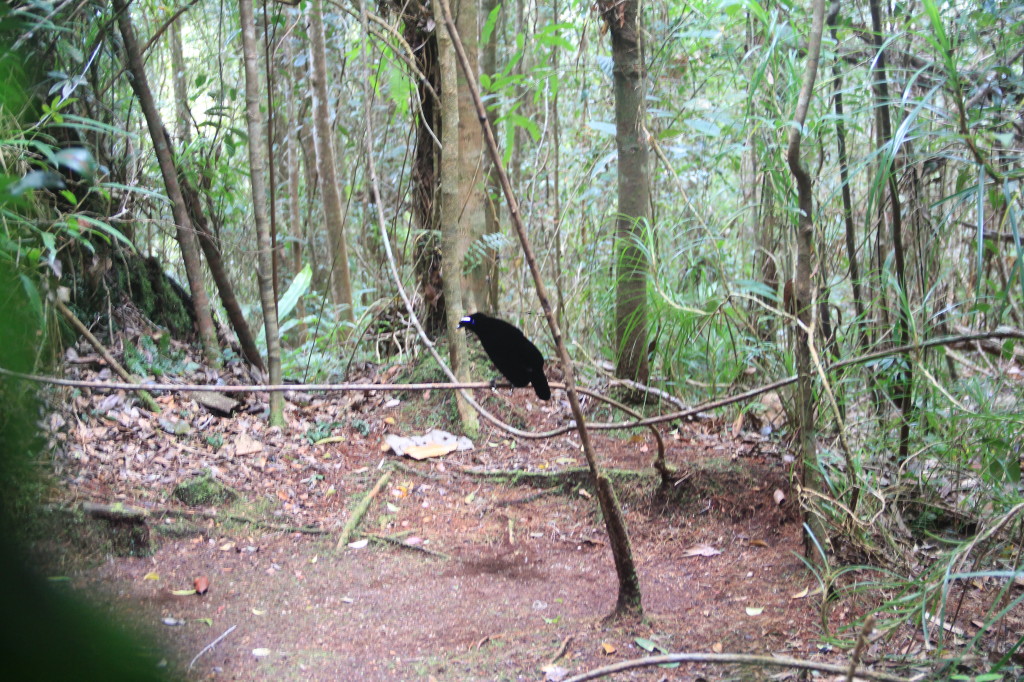
The Western or Arfak Parotia, Parotia sefilata, is a medium-sized, approximately 33 cm long, bird of paradise with a medium-length tail.   Although their range is geographically limited, they are widespread in their range and not considered to be endangered.  By far, the easiest place to see them is in the Arfaks where Zeth Wonggar has built hides at their display grounds.  Like other Birds of Paradise, they stay at the same display grounds year round so that makes them predictable.  Good for eco-tourists but not good if they are being stalked by trappers.
Western Parotia Range

The first visit in the afternoon saw the bird unsuccessfully trying to call in some females so he could strut his stuff.

Western Parotia calling for females so he can dance for them

Western Parotia calling for females so he can dance for them

We were up at dawn and back in the hide and this time our feathered friend managed to lure a few females in closer.

Western Parotias gather in the trees at dawn

Western Parotias gather in the trees at dawn

Western Parotia sees females overhead and prepares to dance

Western Parotia sees females overhead and prepares to dance

One female Western Parotia comes in for a closer look while the male shows his best moves.  There were a couple other females higher up in the branches.

One female Western Parotia comes in for a closer look while the male shows his best moves. There were a couple other females higher up in the branches.


You can’t blog about the “Feathered Lord of the Dance” (my nickname for this bird) without showing his moves, so here’s a compilation of clips taken the afternoon before and the morning we saw him dance.  This little guy tried so hard to entice the females, I was so hoping he would “get lucky” but although he got some feminine interest he wasn’t able to “seal the deal”.


If you are curious about how Parotias use the iridescent patches on their heads, see my post on Extreme Photography where a Nat Geo crew shows the lengths they went to to get the same angle the female Parotia sees.


Glitch With Photos On Manokwari Post

There’s some kind of problem with the photos not showing up in the Manokwari post.  Photos are appearing in other posts, just not that one.  I will give it some time to see if it resolves on its own.  I have tried to upload it twice now.  If one of them is working tomorrow, I will delete the duplicate post.

Update- I fixed the Manokwari post and deleted the duplicate.

Manokwari, The Gateway To Your Adventure In The Arfak Mountains

This is part of a series covering my birding trip to West Papua in March 2013.   You will need to fly into the airport of Manokwari to access the Arfaks and the village of Mokwam.  In this post, I will discuss the logistics of visiting Mokwam and the gateway of Manokwari.  The birding report will be on a separate post.

Location of Manokwari

GETTING THERE

As of this writing, you can fly into the Rendani airport of Manokwari (MKW) with Sriwijaya (Jakarta-Soekarno-Hatta, Surabaya, Makassar, Sorong); Express Air (Jakarta-Soekarno-Hatta, Jayapura, Sorong, Surabaya, Makassar, Yogyakarta); Merpati (Jayapura, Sorong); Wings Abadi/Lion Air (Ambon) and Susi Air (Biak).  None of these airlines currently offer online booking and payment with a non-Indonesian credit card except possibly Merpati.  In my article about Sriwijaya, I describe how to use an Indonesian travel agent to book the tickets.  The good news is that Garuda will be starting service to Manokwari and Sorong in July 2013 so in the future you will be able to book these flights online.  Garuda is due to join SkyTeam later this year so you will be able to use miles to redeem tickets all the way from your home airport to Manokwari!

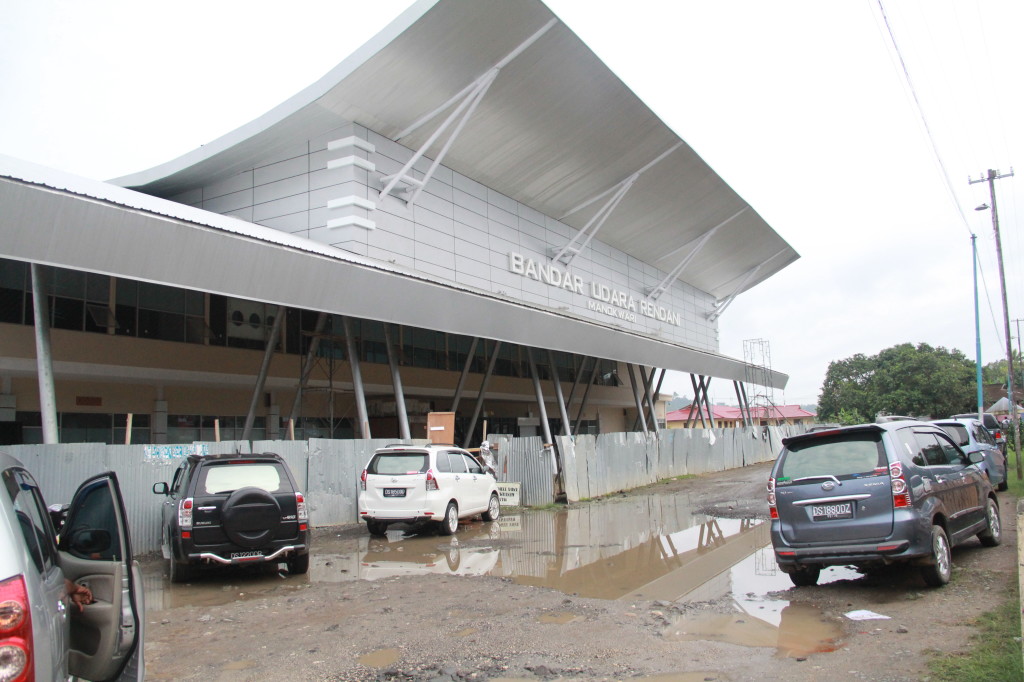
Manokwari Airport

Manokwari Airport

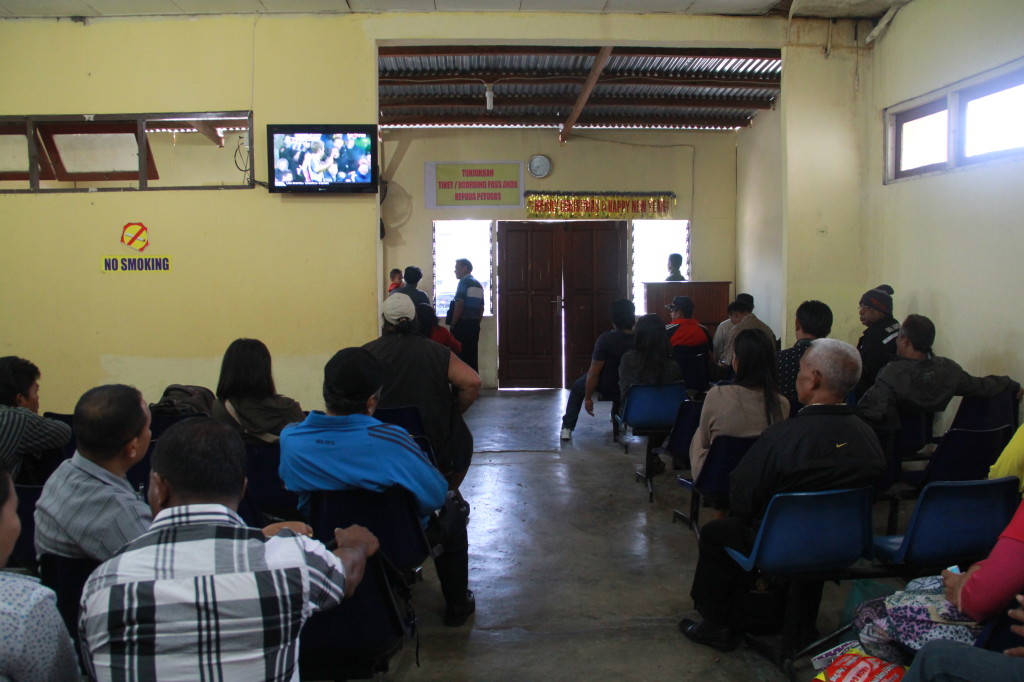
Manokwari Airport Waiting Room

Manokwari Airport Waiting Room


Most flights will arrive in Manokwari before noon so you will have plenty of time to organize a Surat Jalan (scroll down for details), buy groceries to bring to Mokwam and organize your transport to and from Mokwam.  The Papua Bird Club can do this for you and also book your stay with Zeth Wonggar since he doesn’t have mobile phone access.  You can contact them by email and if you are going during high season (May-Aug) you definitely need to book ahead to ensure you don’t clash with another birding tour group.  Shita, the owner of Papua Bird Club can be difficult to contact so keep trying if she doesn’t reply promptly.  If you go in the off-season, you would probably be OK just hiring a 4WD and going there.  If Zeth is otherwise occupied, he does have other guides such as Eliakim who can guide you and know all the birds.
GETTING TO MOKWAM

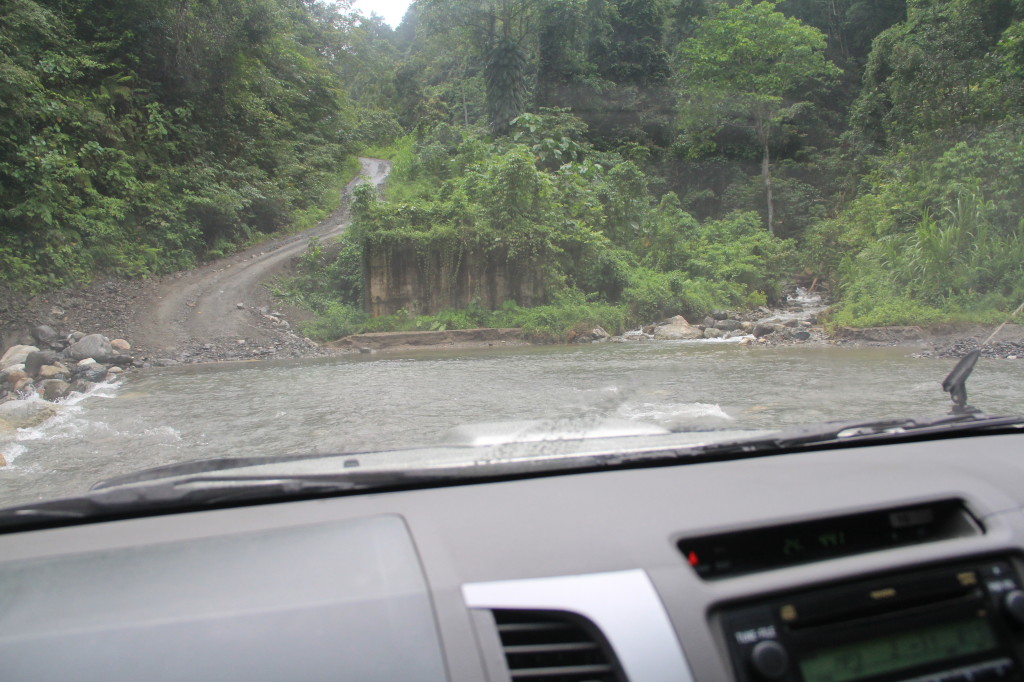
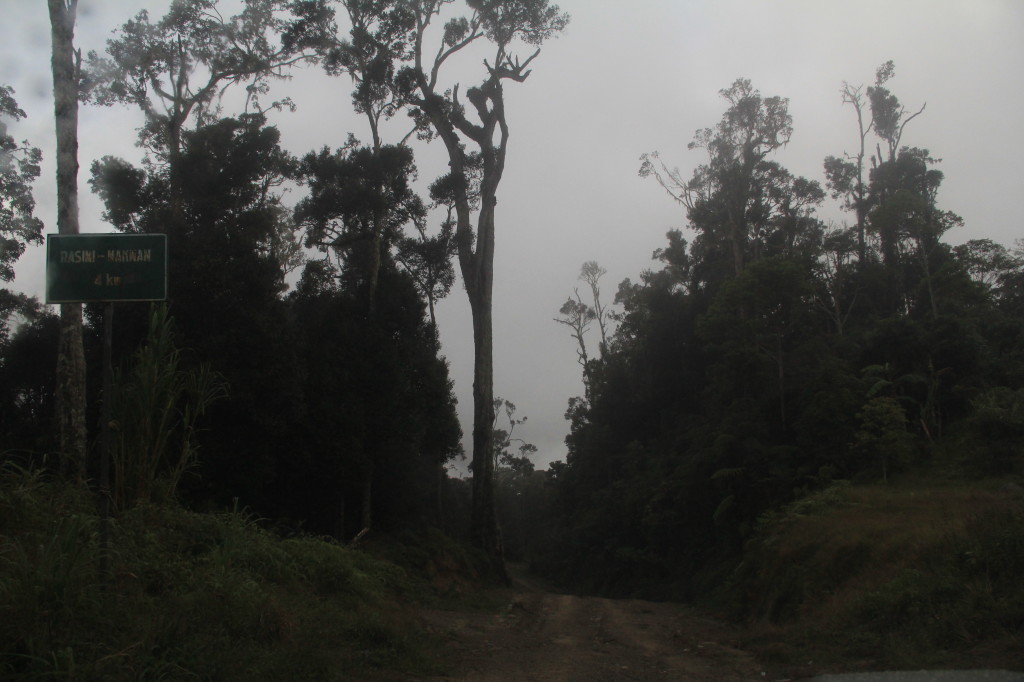
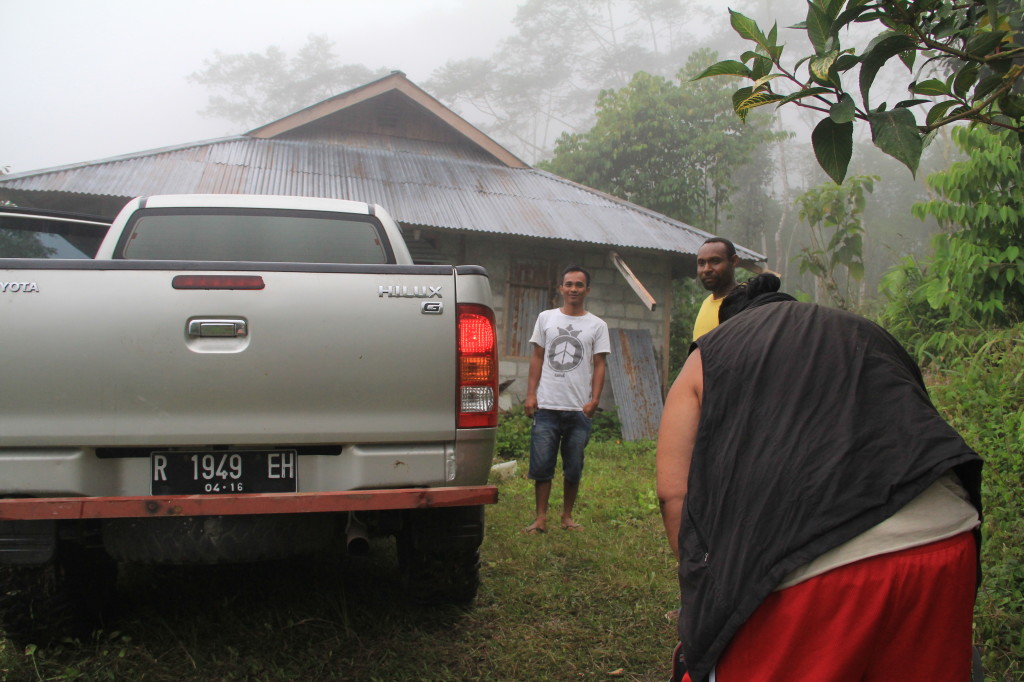
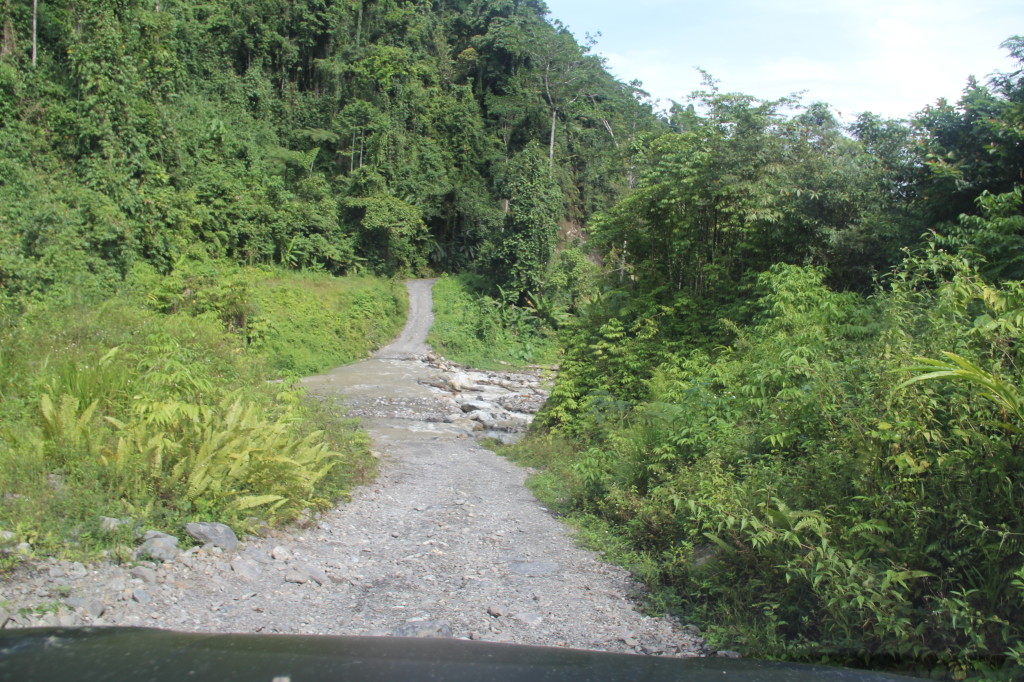
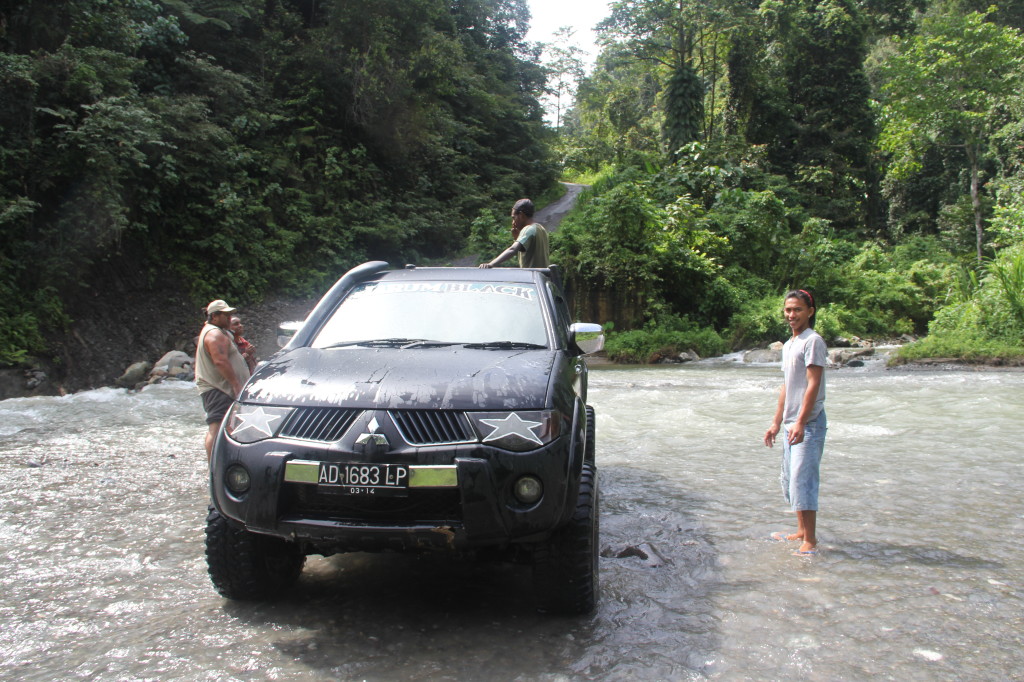
This is an adventure in itself and you can only do it in a 4WD truck.  If you are an independant traveler, you can find these for hire at the main bus and bemo station called Terminal Wosi.  You will have to get a taxi or “ojek” motorcycle taxi out there and they will probably drop you at the gate with a security guard.  To find the 4WD vehicles, don’t go through this gate but turn left and walk past the market and you will see some trucks parked by the shops.  The drivers probably won’t speak English.  I struggled quite a bit here but luckily for me, my friend Mehd Halaouate who works with conservation projects in Indonesia is fluent in Bahasa Indonesia and helped me negotiate by text message.  The going rate is 1,500,000 rupiah (around $150) each way for a 4WD truck that has seating for 4-5 in the cab and more in the back.  It takes around 2 hours to get there, more if you stop for birding along the way which we didn’t as we left Manokwari around 3pm.  If you don’t use the back, various locals will probably hitch a ride.  Be sure to organize your return trip with the driver because you won’t be able to contact him once you are in Mokwam.  When you arrive in Mokwam, Zeth will be happy to do this for you if you have trouble communicating.

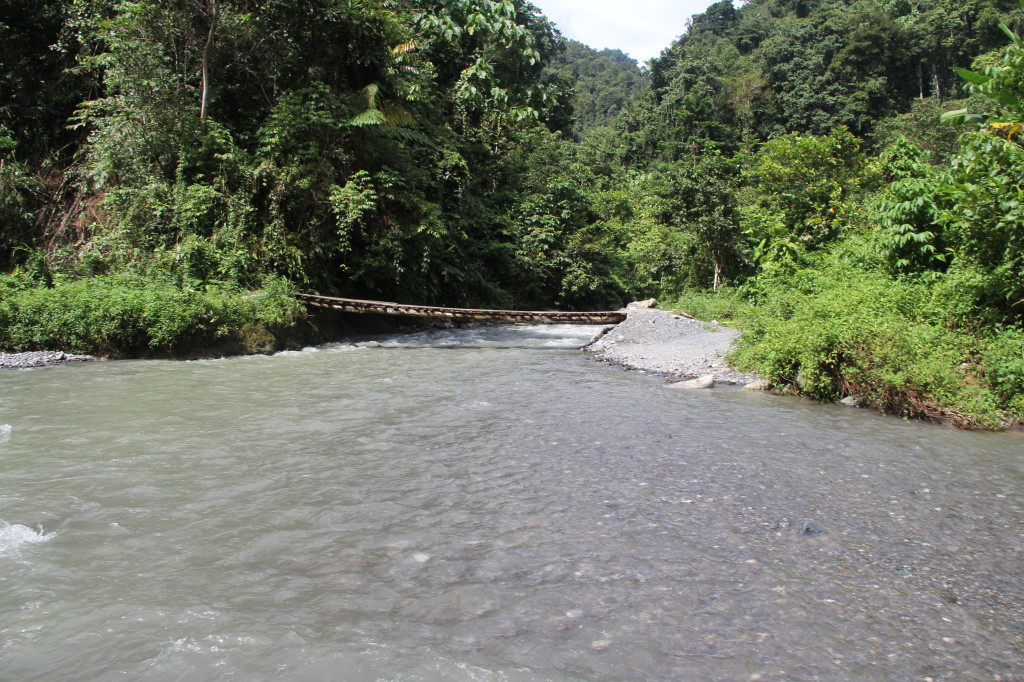
The road to Mokwam - river crossing

The road to Mokwam – river crossing

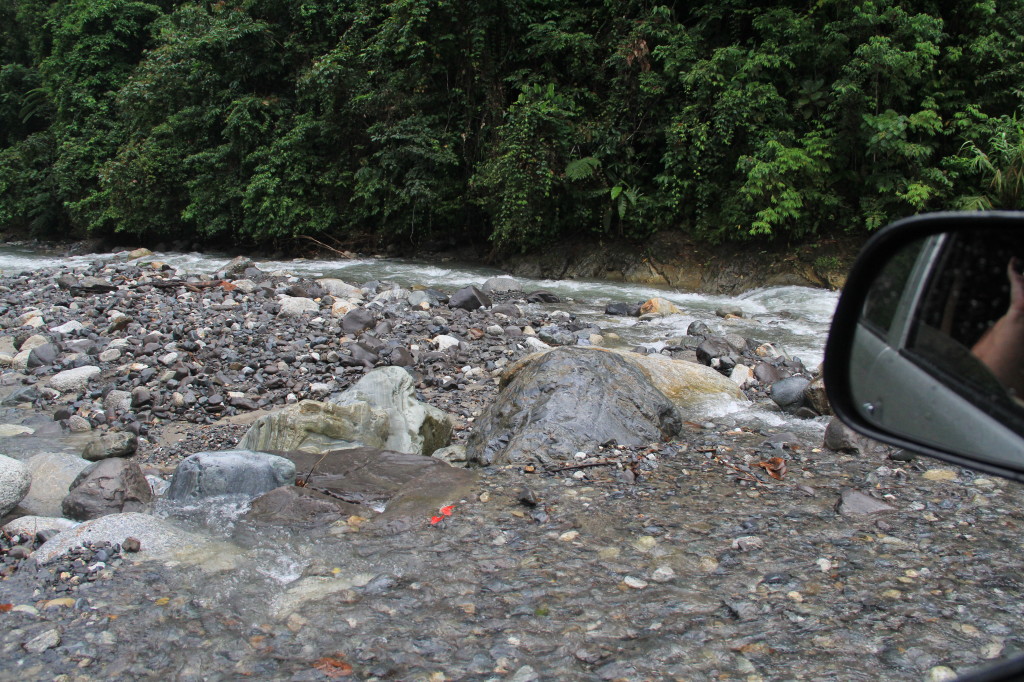
The road to Mokwam - river crossing

The road to Mokwam – river crossing

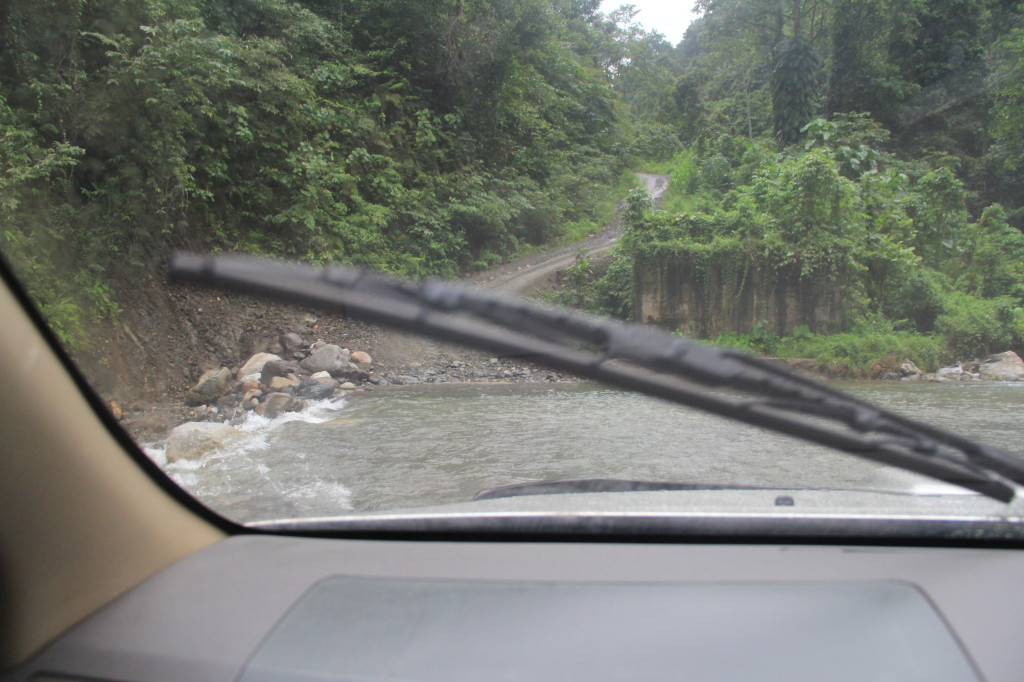
The road to Mokwam - river crossing

The road to Mokwam – river crossing

The road to Mokwam - almost there

The road to Mokwam – almost there

The road to Mokwam - entering the village

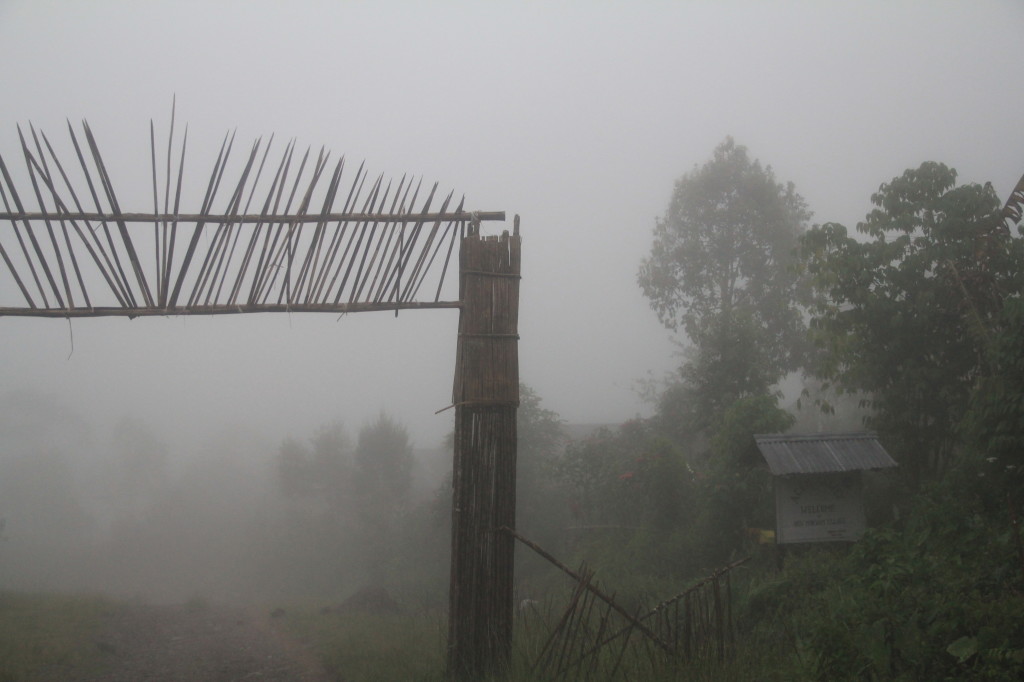
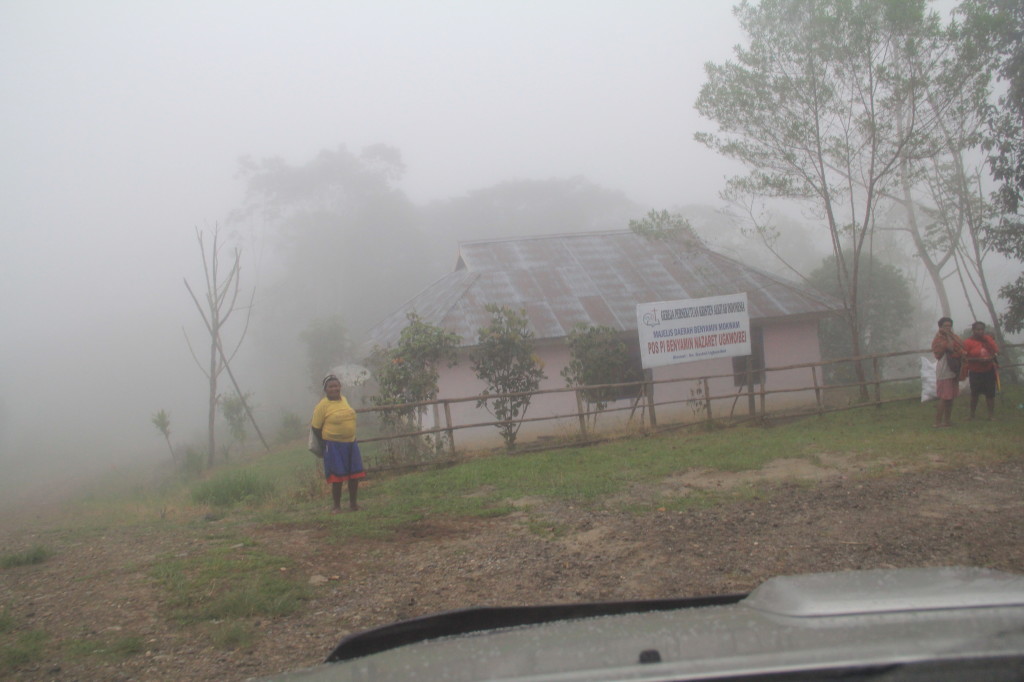
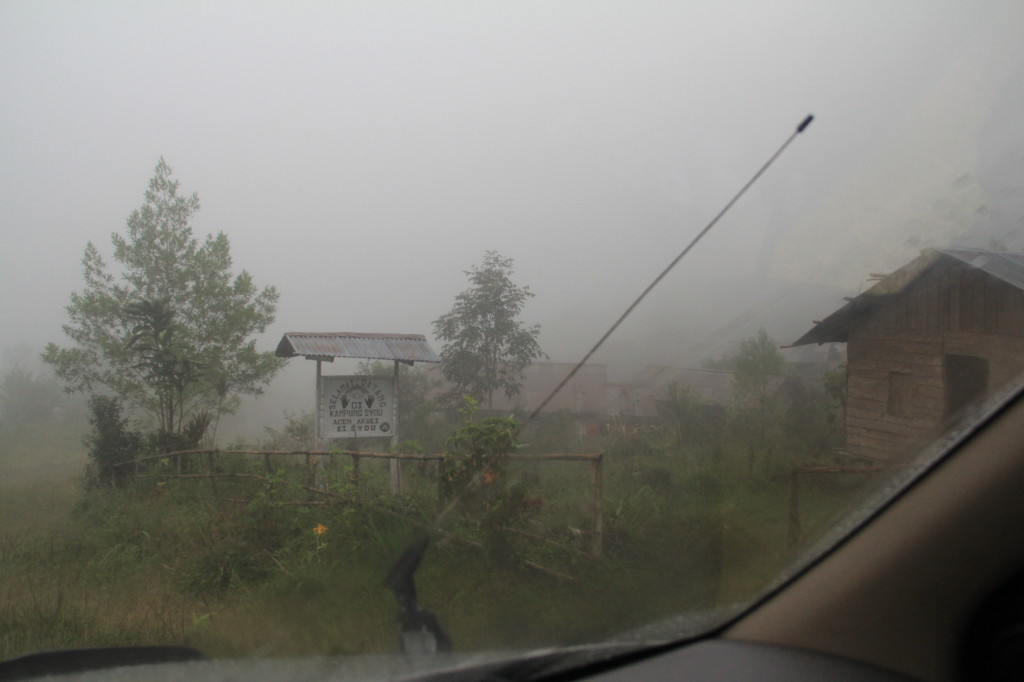
The road to Mokwam – entering the village

The road to Mokwam - entering the village

The road to Mokwam – entering the village

The road to Mokwam - entering the village

The road to Mokwam – entering the village

If you see this truck and driver at Terminal Wosi, hire him!

If you see this truck and driver at Terminal Wosi, hire him!

Heading back to Manokwari

Heading back to Manokwari

Heading back to Manokwari

Heading back to Manokwari

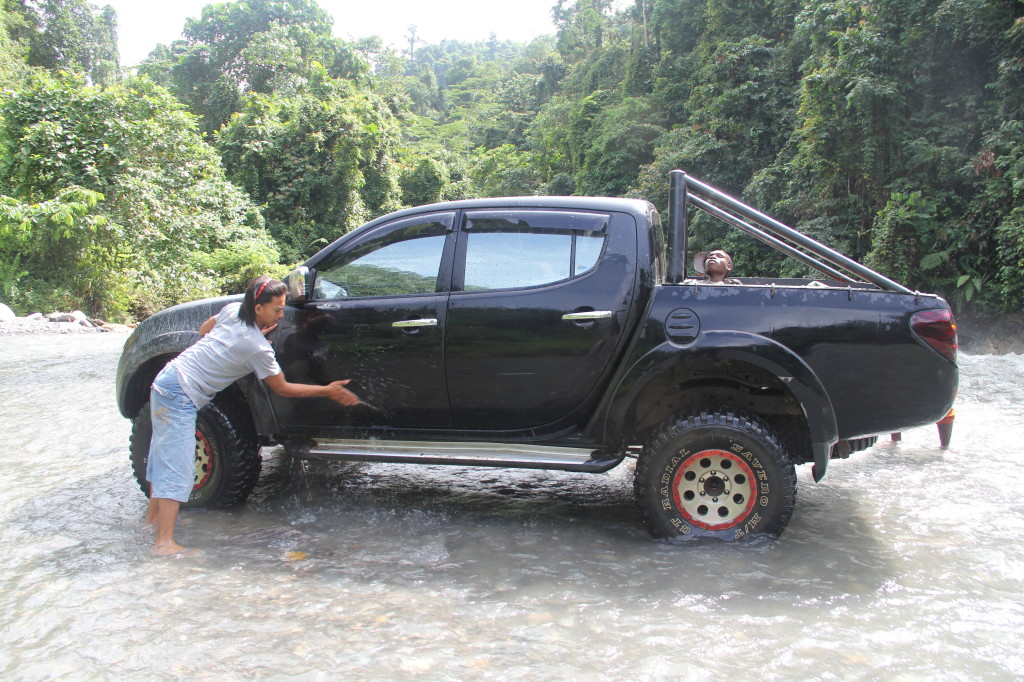
Cleaning the truck in the river

Cleaning the truck in the river

Cleaning the truck in the river

Cleaning the truck in the river, also take note that this is also a reliable driver


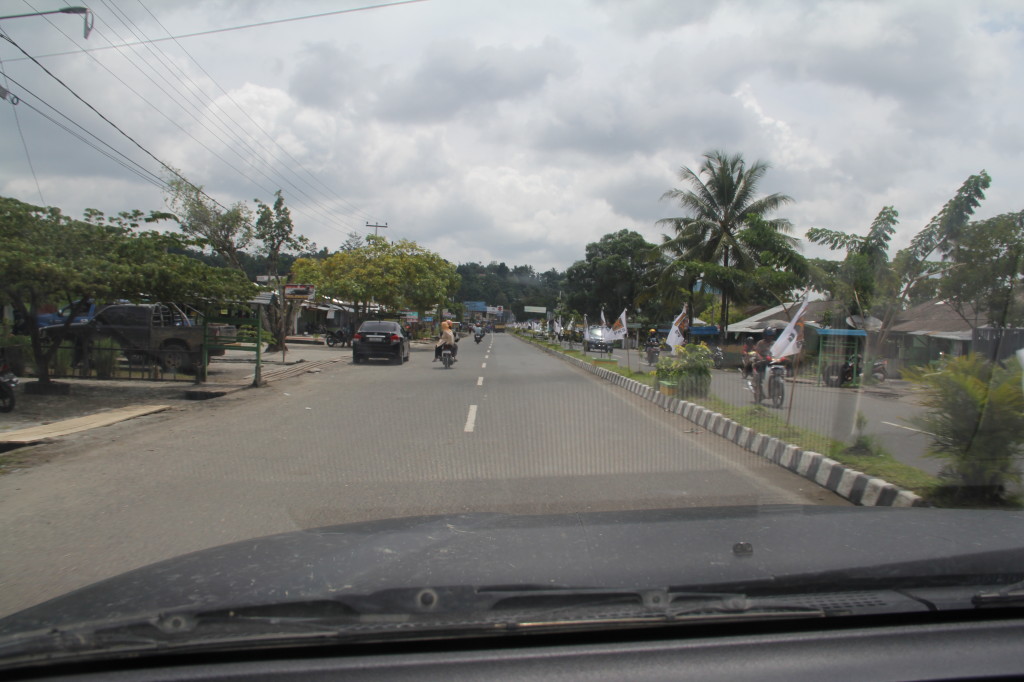
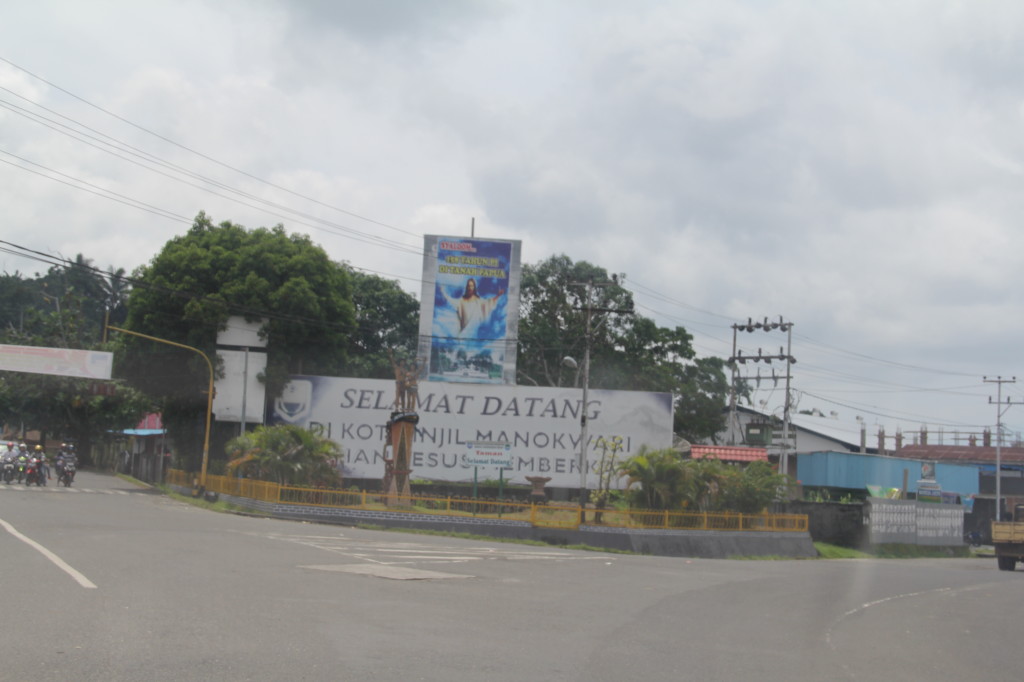
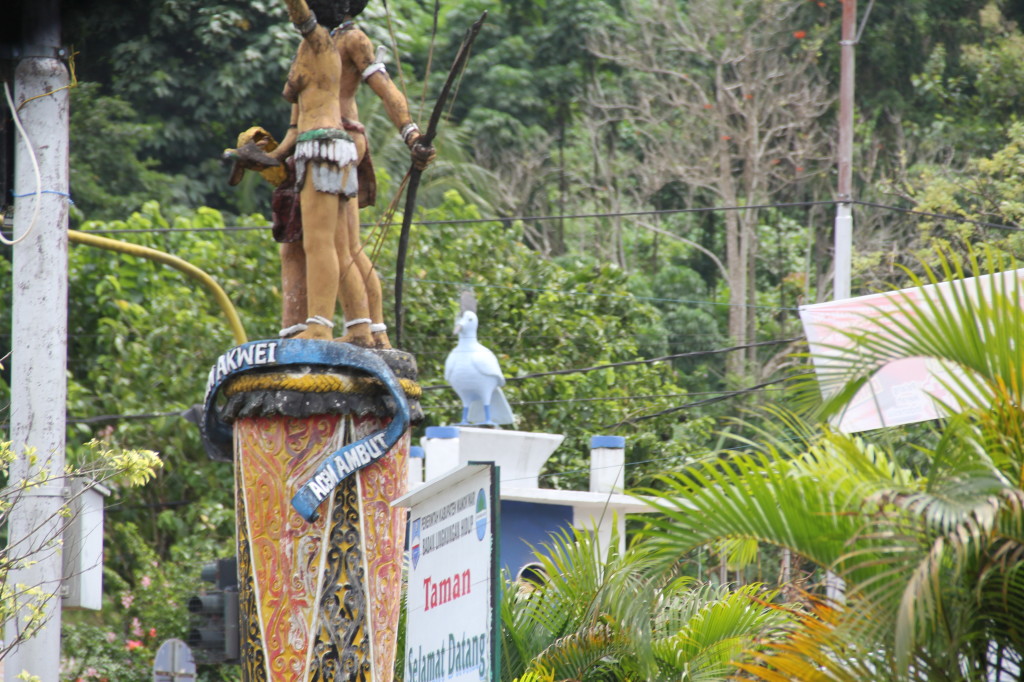
Back in Manokwari

Back in Manokwari

Manokwari

Manokwari

Manokwari

Manokwari

WHERE TO STAY IN MANOKWARI

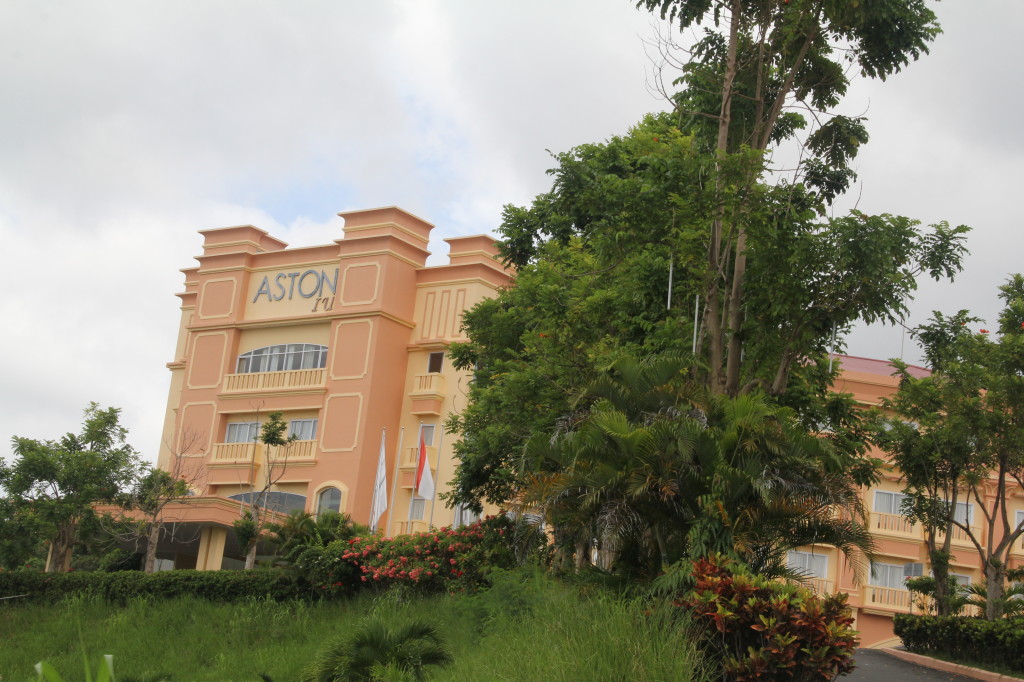
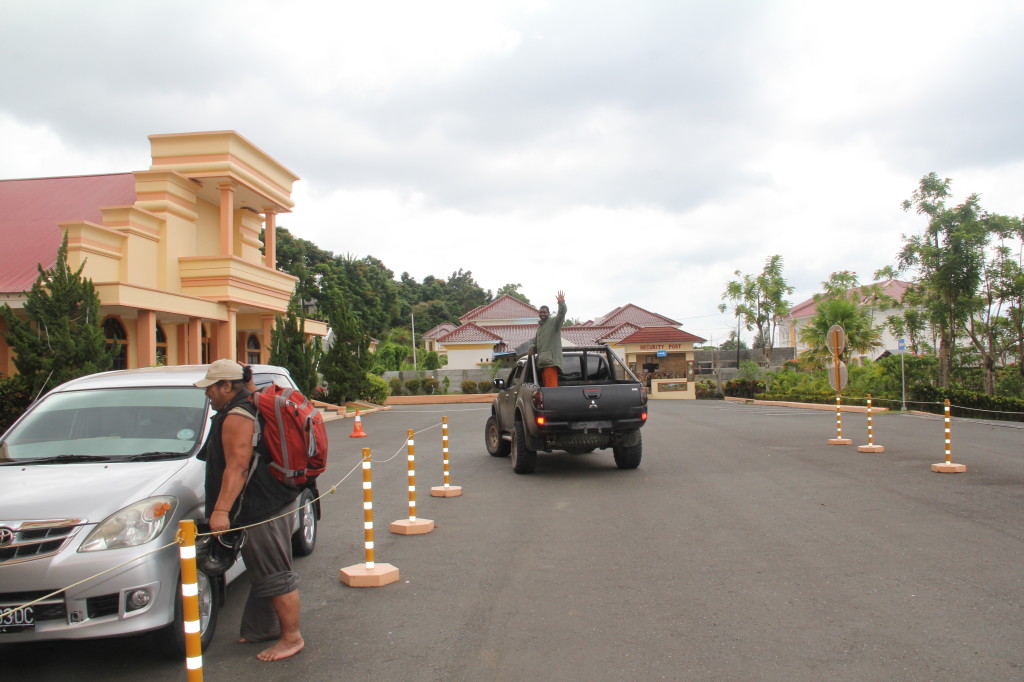
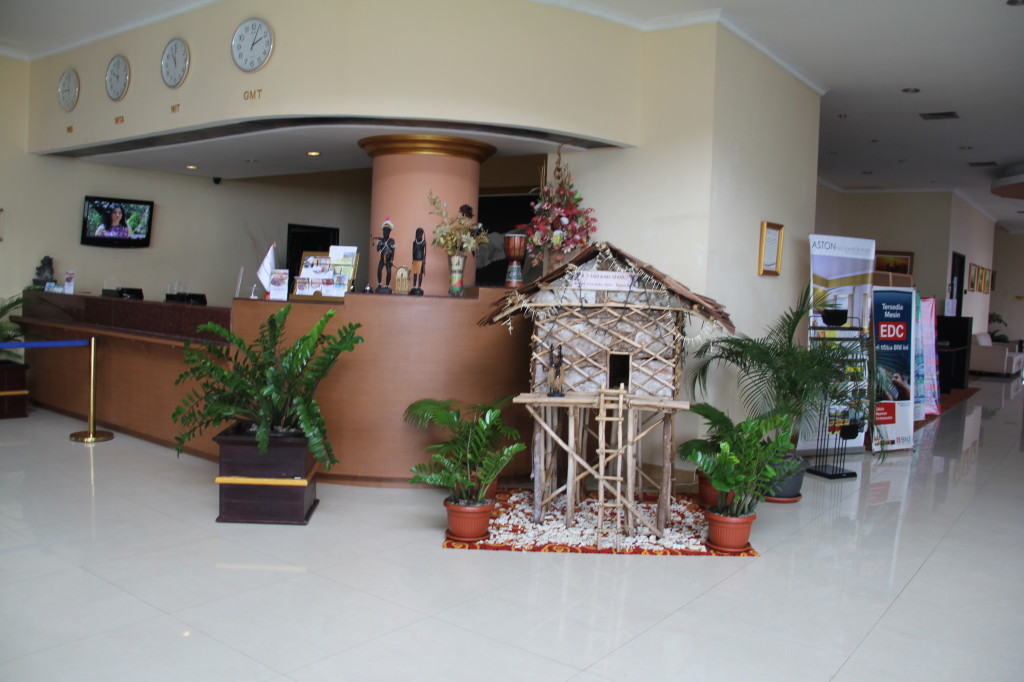
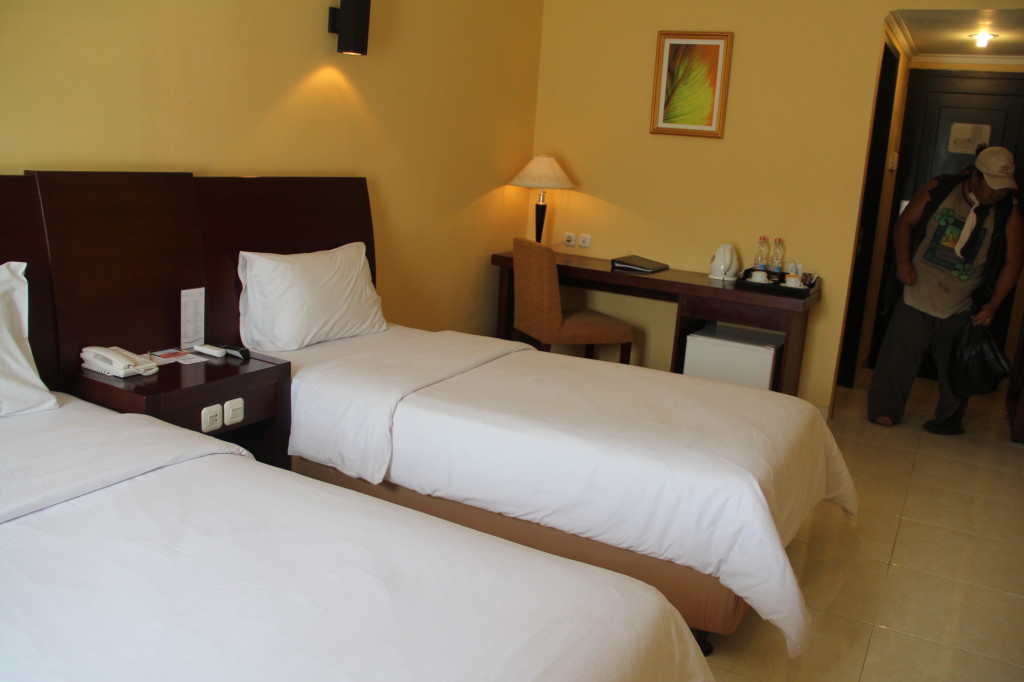
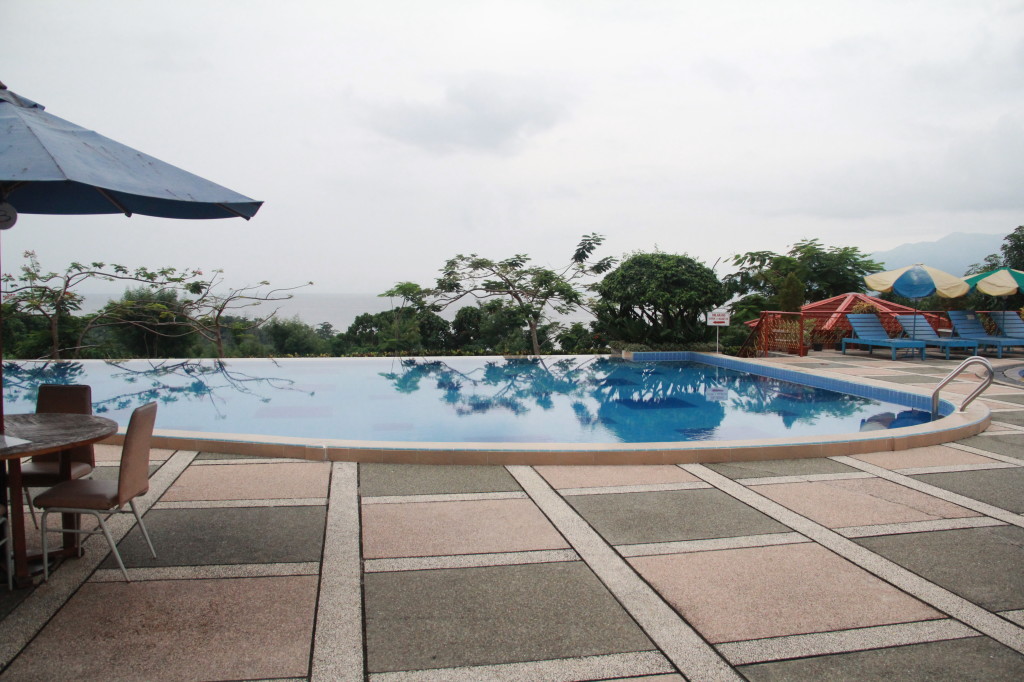
Since there are so many photos, I will only discuss the gateway of Manokwari here and discuss where to stay in Mokwam in the next post.  You will only need an overnight on your flight out of Manokwari since you will arrive early enough to get to Mokwam on the same day.  However flights out are also mostly in the morning and as you can see by the journey to and from Mokwam, there is no way to leave Mokwam the same day and make a flight.  After looking at all the options and knowing that the birding would be extremely challenging in the Arfaks, I knew we would need major R&R when we got back to town.  The Aston Niu Manokwari was perfect for this, they have a beautiful infinity pool and great setting on a hill overlooking the town and sea, plus I could book and pay online and avoid having to carry more cash around.  They do take credit cards for settling your bill.  We were so exhausted after birding the Arfaks, we spent the whole day at the pool.  It was a Sunday so nothing would have been open anyways.

Before you head to Mokwam, if you need to buy groceries, there is a fairly large supermarket in the same mall that has the KFC outlet.   Be aware that you will probably see people selling wild-caught parrots in front of this mall.  I saw a lady selling 3 Eclectus that were tied to small perches with a string around their feet for about 300,000 rupiah each ($30).  Unfortunately, their wings were clipped so buying them to set them free was not an option.

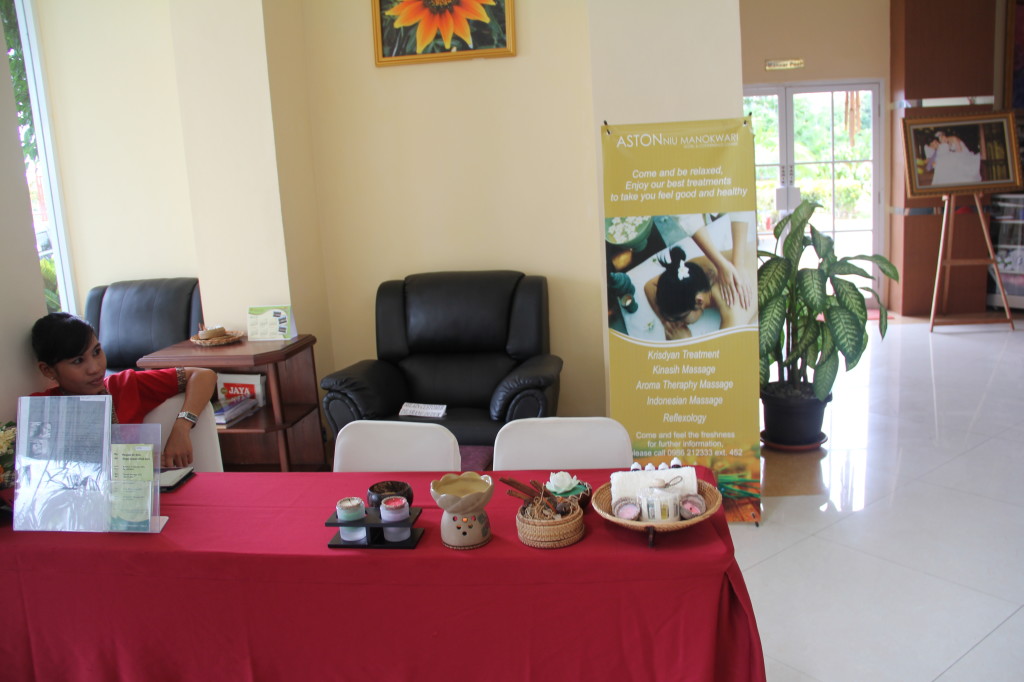
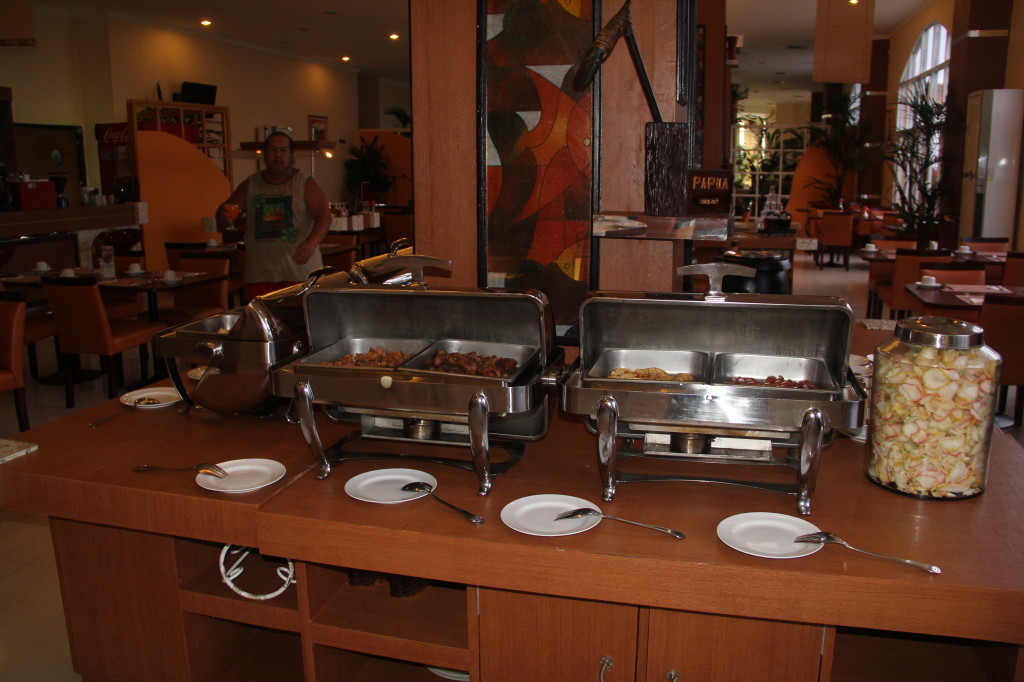
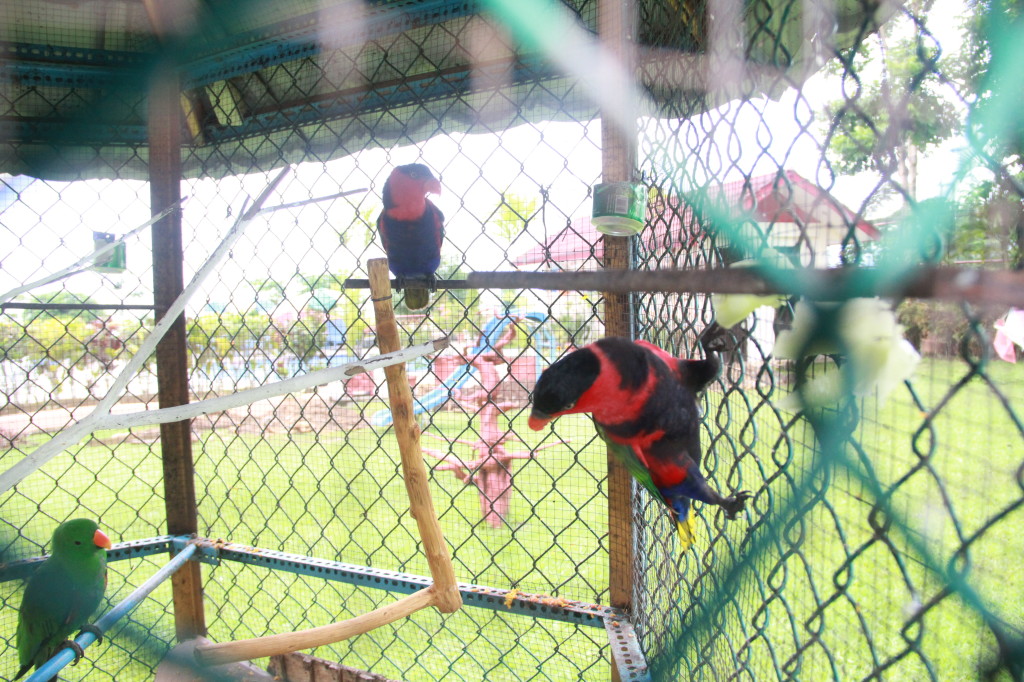
The Aston Niu Manokwari includes the breakfast buffet in the rate and other meals are available and reasonably priced.  There is a massage stall in the lobby but when I went there after the swim, they were closed, not sure if this was because it was Sunday or the masseuse was booked.  There is an aviary with some Eclectus Parrots and Black-capped Lories, probably wild-caught.  Their diet leaves a lot to be desired (only pellets) and they really appreciated me giving them some fruit I stole from the breakfast buffet.  They gobbled it up so quickly, I went back for more which was also quickly eaten.  I encouraged the staff to give them fruit every day.  If you stay here, please check on the birds!

Aston Niu Manokwari

Aston Niu Manokwari

IMG_7762 IMG_7763 IMG_7764 IMG_7765 IMG_7768

Swimming Pool Aston Niu Manokwari

Swimming Pool Aston Niu Manokwari

Aston Niu Manokwari breakfast buffet

Aston Niu Manokwari breakfast buffet

Aston Niu Manokwari breakfast buffet

Aston Niu Manokwari breakfast buffet

Eclectus and Black-capped Lories in the aviary

Eclectus and Black-capped Lories in the aviary

SURAT JALAN

This is a travel permit issued by the regional police and you will need one to go off the beaten track in West Papua to such places as Mokwam/Arfak.  The police station in Manokwari will give you one if you haven’t gotten one in Jayapura, in which case they will merely stamp the back of it.   It takes about an hour to issue and you will need 2 passport photos and photocopies of your passport and Indonesian visa page.  Try to avoid arriving on a Sunday as the officer who issues them will probably be off duty.   It will cost about 50,000 rupiah or $5.   It’s a good idea to bring extra passport photocopies and passport photos in case other village chiefs or police ask for them.  We weren’t asked for it when we were there in Mokwam but we traveled in low season so don’t count on this.  It’s only a minor inconvenience to get it and I would hate to spend $150 on a 4WD only to be turned away at the village for not having a permit.


A Photographic Guide To The Birds Of Indonesia

This is the book I wish I had known about BEFORE my trip!  It was only just published in Dec 2012 and we left on 28 Feb so had stopped looking around by then.  It’s well laid out with photos of all the birds you can expect to see in Indonesia with the bird’s habitat highlighted on a map.  Great planning tool, can also help with communicating with guides who don’t speak English.  I found it in a book shop in the Surabaya airport on my way back to Bali for around $35 but you can order it on Amazon (affiliate link) for $23 and have it to study in advance.

Lion Air Passenger Plane Crashes Into Sea Off Coast Of Bali

Since I am currently blogging about how to visit West Papua for a birding adventure, it seems appropriate to post about this Lion Air crash since Lion Air is one of the few airlines that serve the main airports in West Papua.  Full article and video.

.

A plane with more than 100 people on board has overshot a runway on the island of Bali and plunged into the sea.

Despite dramatic pictures showing the Lion Air jet with a broken fuselage, officials said everyone on board had survived.

The brand new Boeing 737-800 came to rest in shallow water and bright yellow life jackets could be seen littering the shore.

Passengers spoke of screaming in terror it hit the water and “chaos” erupting amid fears they would drown before escaping.