Birding In Wamena/Lake Habema

Although we didn’t go there, you can also use Jayapura/Sentani as a gateway to Wamena and Lake Habema.  This does add quite a bit to your budget as there doesn’t seem to be any cheap way to do it which is the reason we didn’t go there.

Location of Wamena

Trigana Air flies there several times a day but they only show schedules on their website, you can’t book online.  From what I could see online, you will need to have a local travel agency arrange your guide, porters and transport.  Burung Nusantara has some information and recommendations for guides and travel agencies.  Since I didn’t go there, I can’t speak as to the quality of the services but there are links to birding trip reports on their website.  You will need to have this area mentioned on your Surat Jalan along with Nimbokrang and anywhere else in West Papua you plan to visit.

If you do make it there, the birds are amazing!   Burung Nusantara shows the highlights as:  Salvadori’s Teal; Snow Mountain Quail; Chestnut Forest-Rail; Dusky Woodcock; Goldie’s Lorikeet; Mountain Kingfisher; Macgregor’s Honeyeater; Crested Satinbird; Papuan Grassbird; Greater Ground-Robin; Lesser Ground-Robin; Alpine Robin; Wattled Ploughbill; Northern Logrunner; Papuan Whipbird; Blue-capped Ifrita; Torrent-Lark; Splendid Astrapia; King-of-Saxony Bird-of-paradise; Superb Bird-of-Paradise; Brown Sicklebill; Lesser Melampitta; Archbold’s Bowerbird; Alpine Pipit; Mountain Firetail; Snow Mountain Munia.

I would add the Tiger Parrots to that list!

Cool New Product From Scottevest – Tropiformer Jacket

I am a big fan of the Scottevest products and this time they have really outdone themselves!  The Tropiformer has been redesigned with various pockets to suit everything.  The video explains it all.  Click on the photo below to be taken to the website if you want to order one.  It is my affiliate link and I earn a small commission which I appreciate if you use it.


Scottevest Tropiformer

Nimbokrang Has Easy Birding Too

After braving the planks in the swamp forest of Nimbokrang, I was ready for something less strenuous the next day.  Fortunately Jamil knew just the place, a small mountain about 40 minutes from town by motorcycle (100,000 rupiahs extra).  It was only me this time, my husband wanted to look around town.  We set out at the crack of dawn and made it up the mountain in time to watch the sunrise.

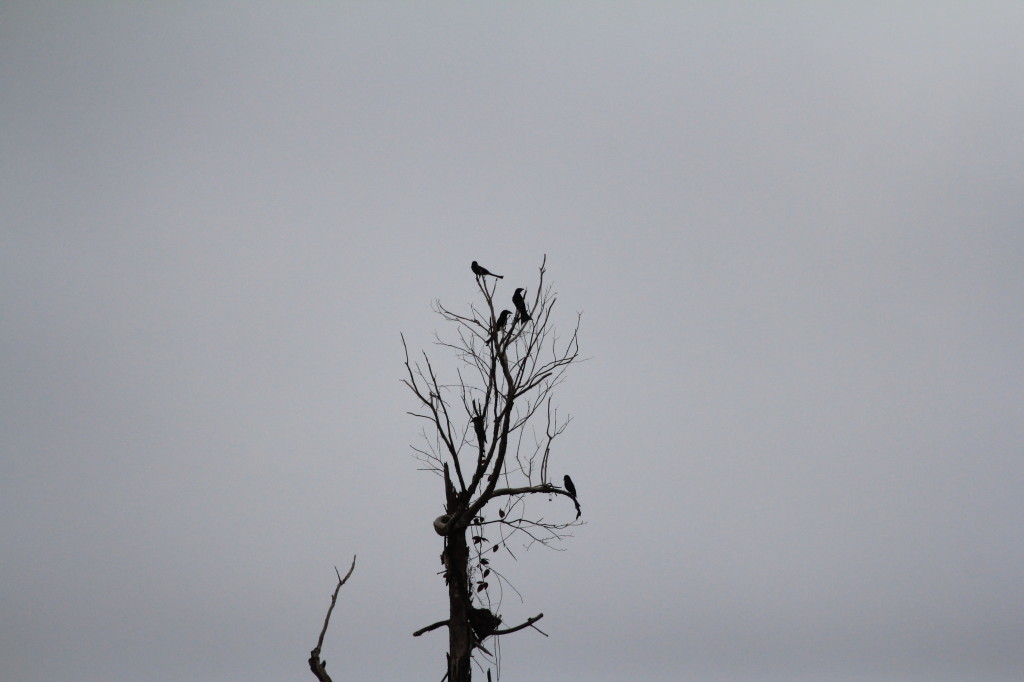
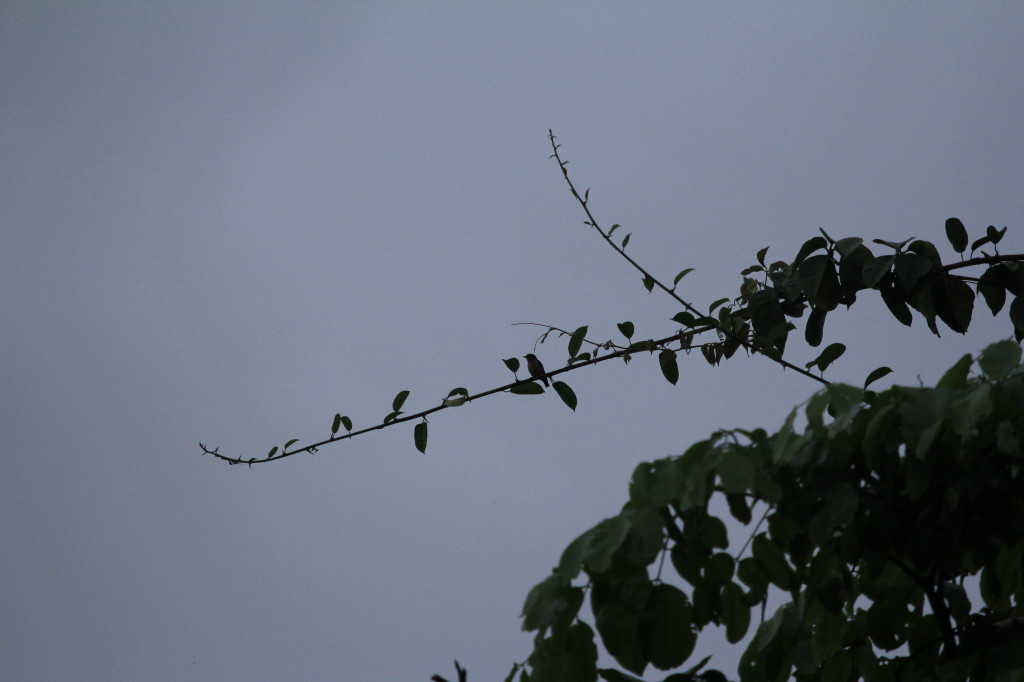
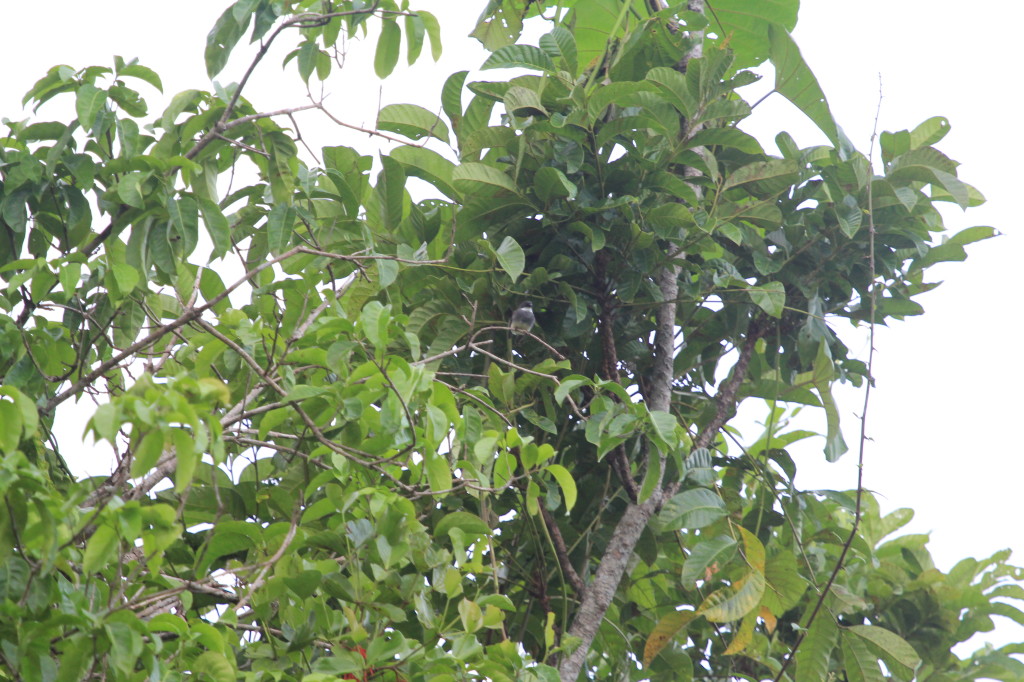
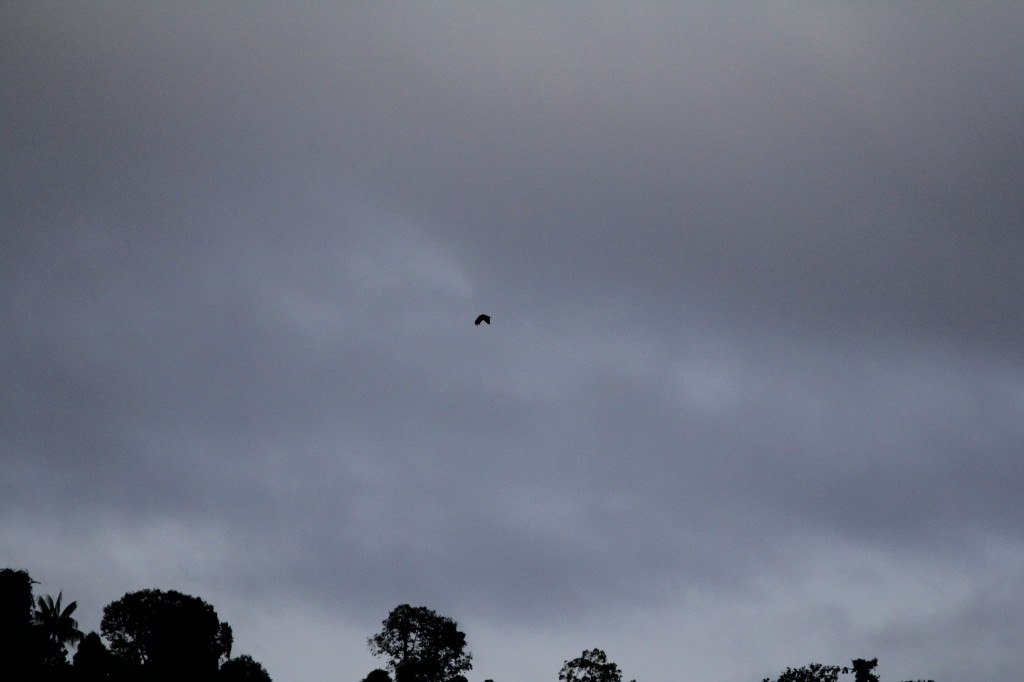
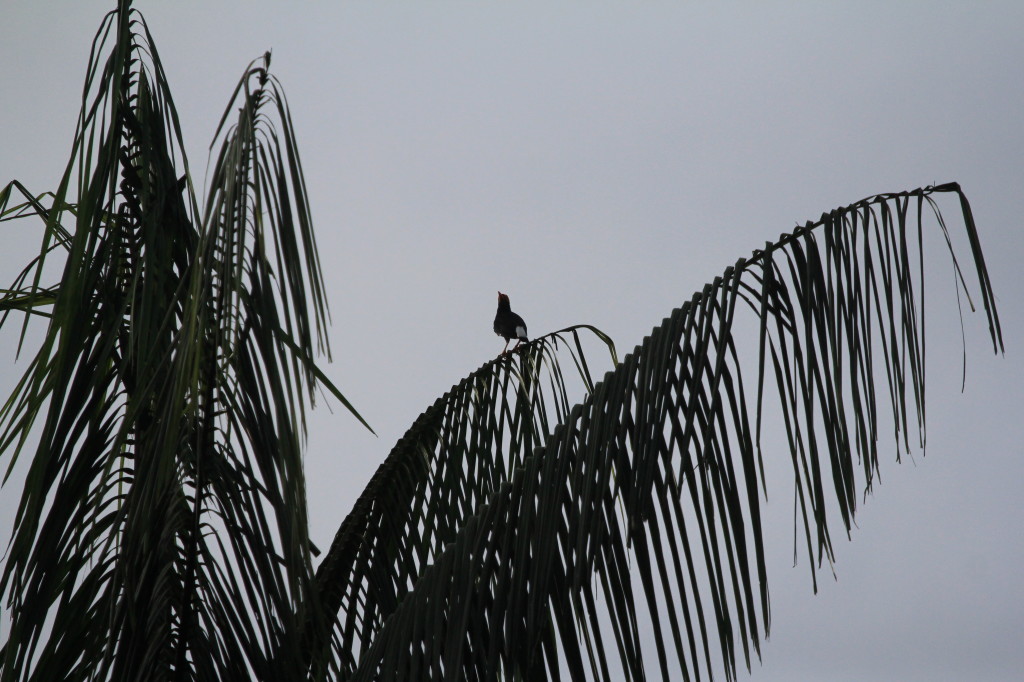
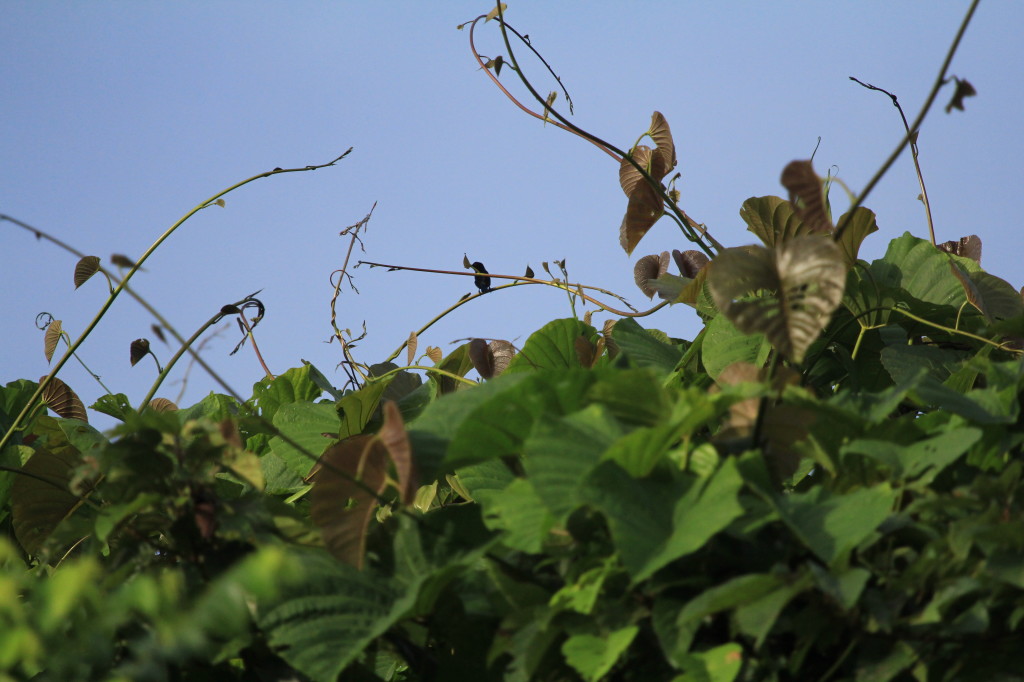
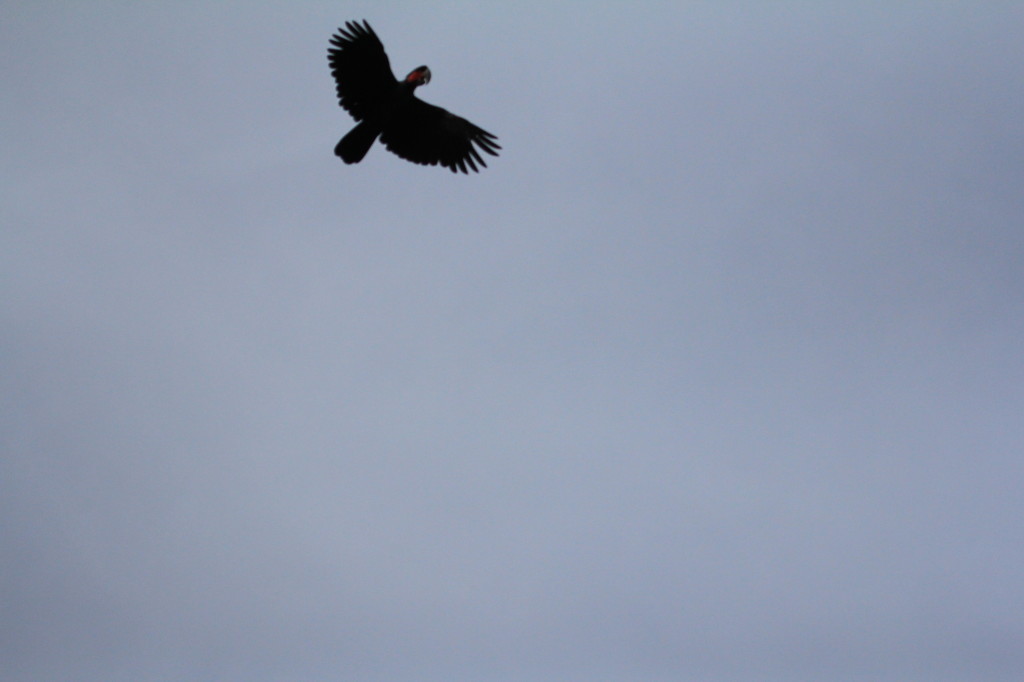
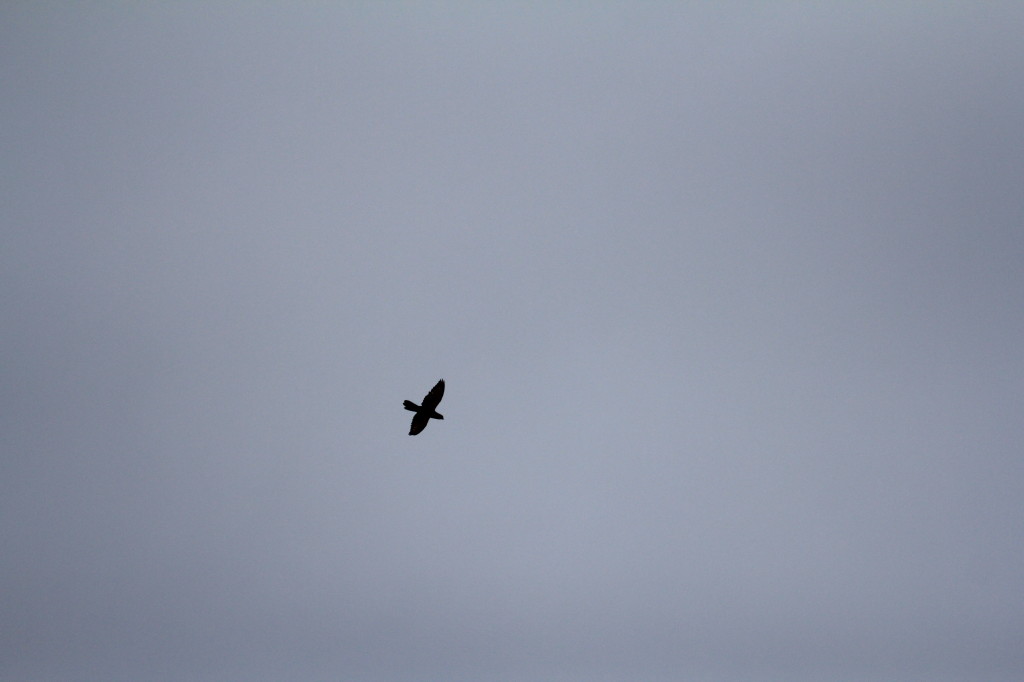
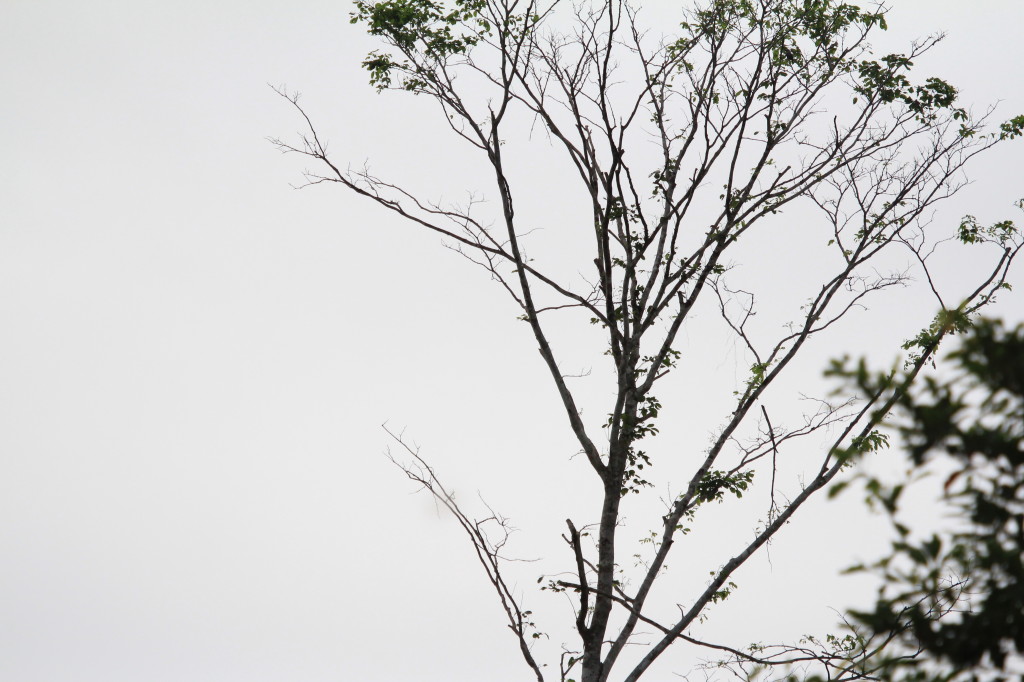
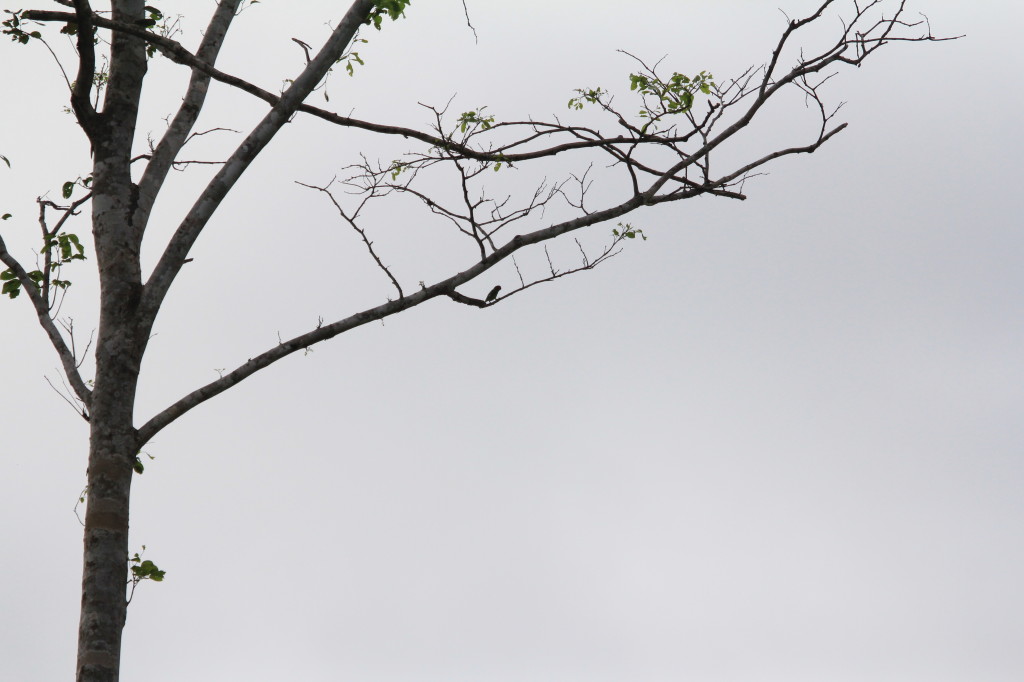
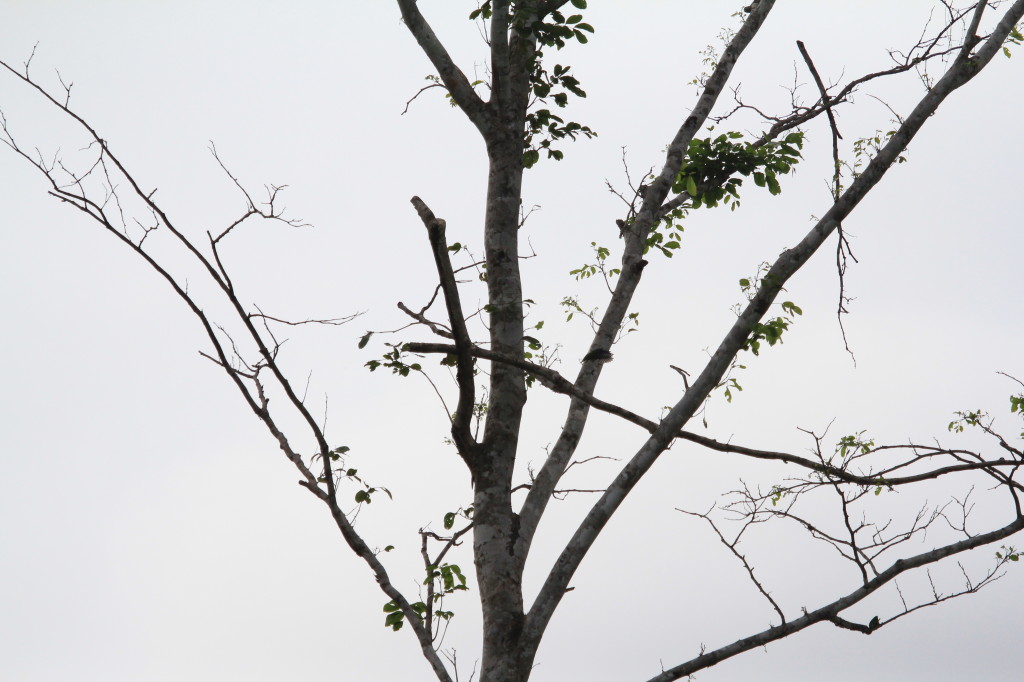
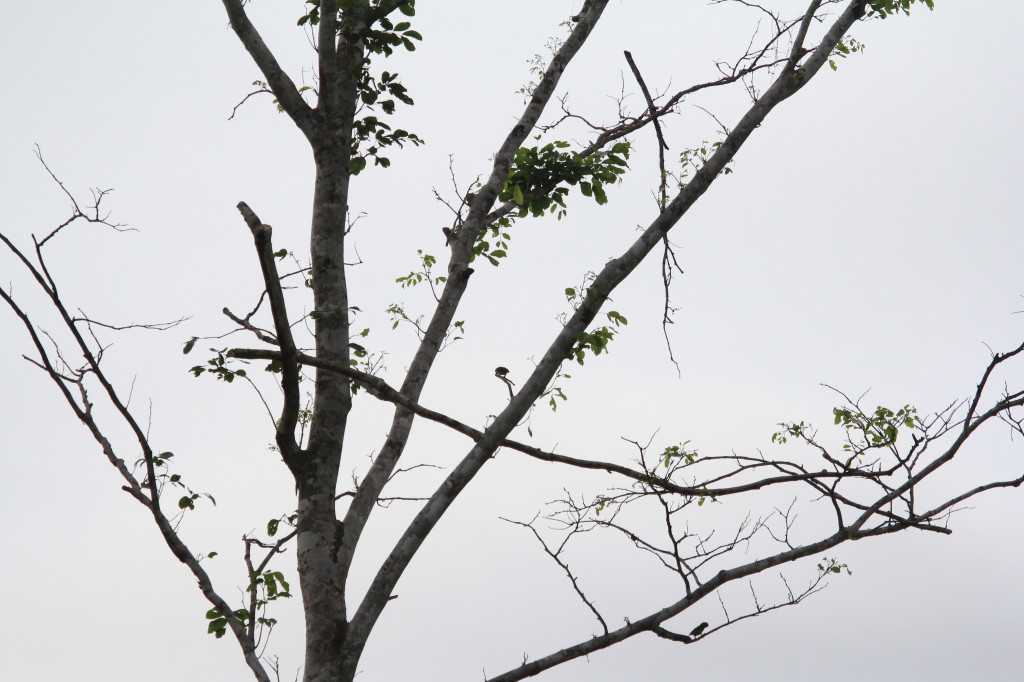
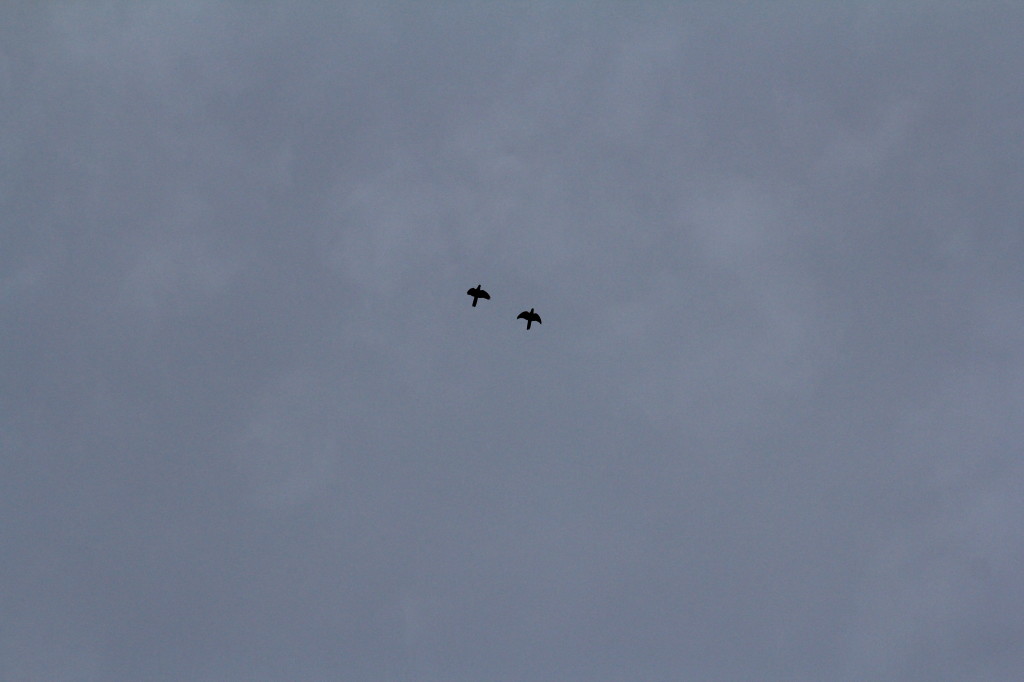
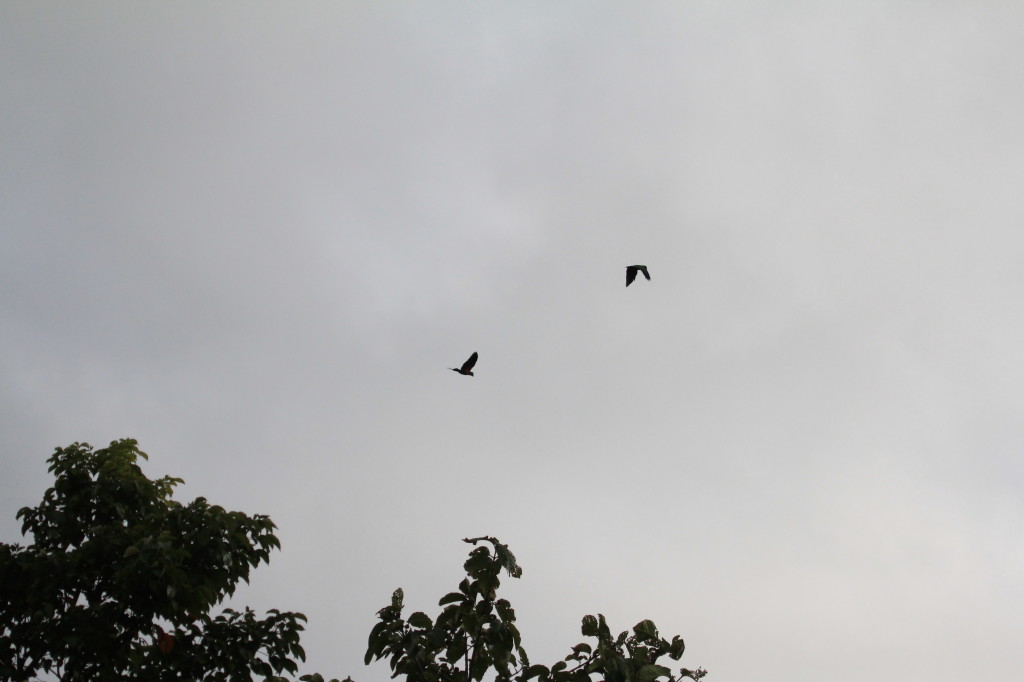
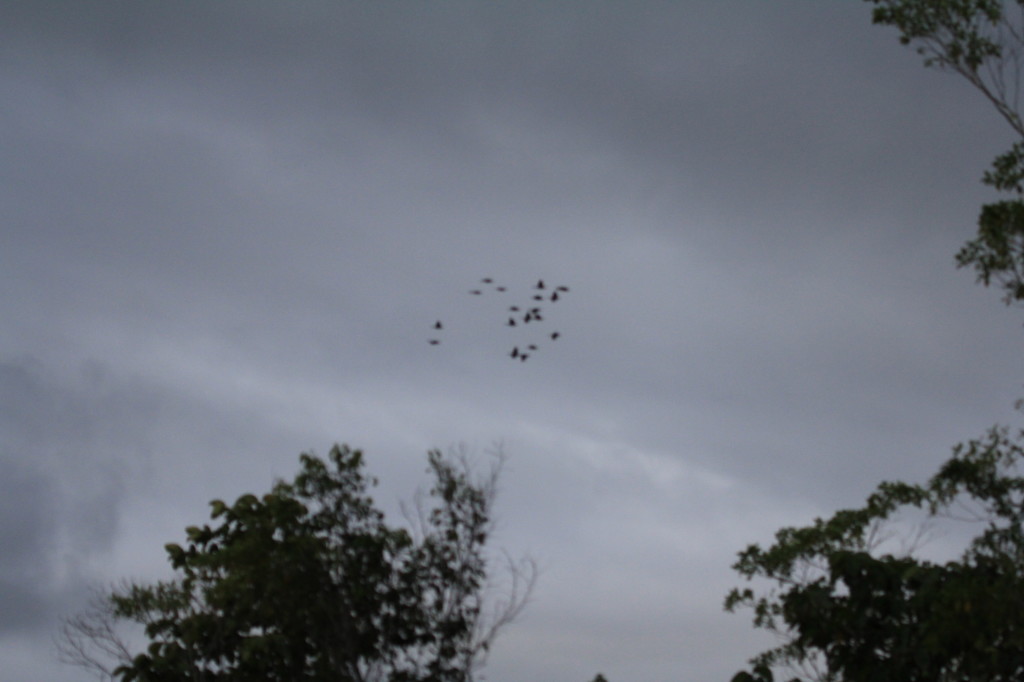
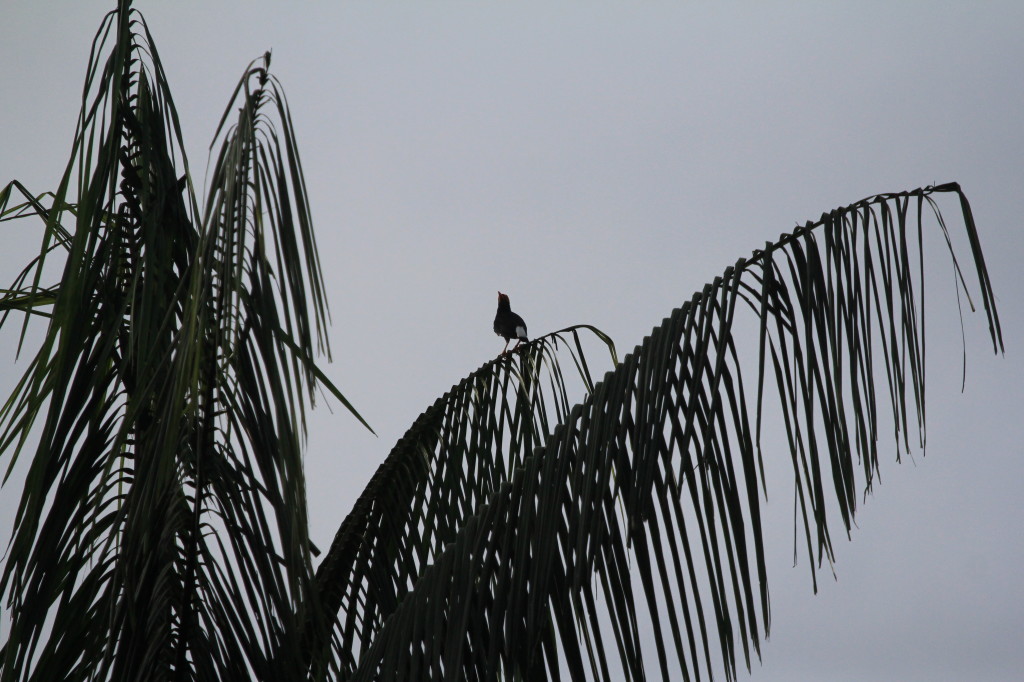
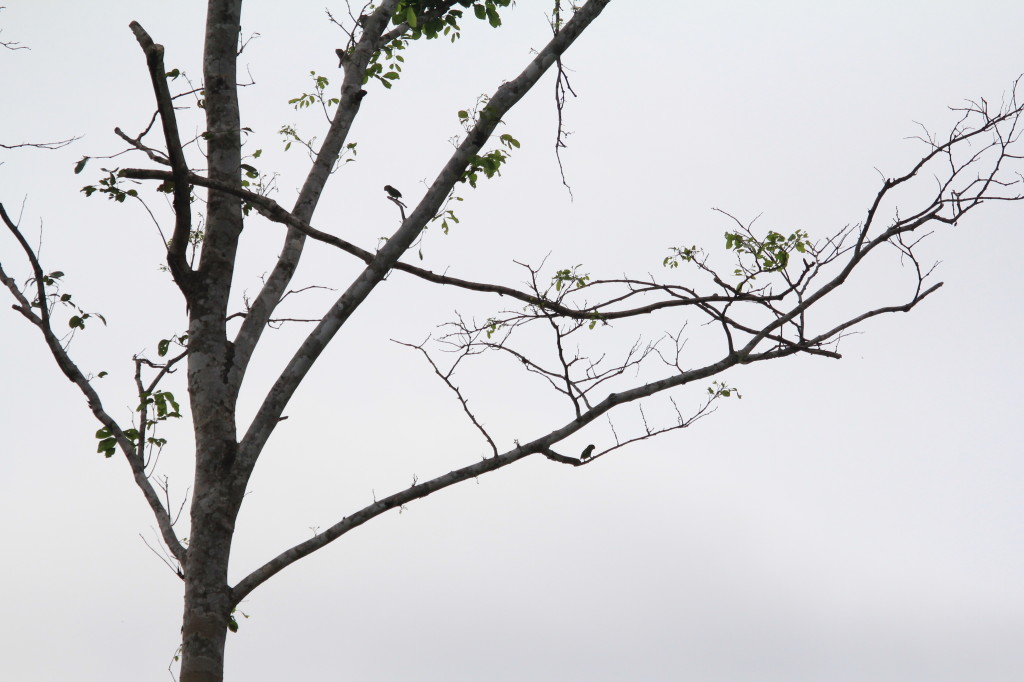
(Don’t expect Nat Geo style professional photos, the birds were usually far away, in flight and many shots are blurry.  I have not edited them since this is a travel blog and I want you to see the exact conditions you will be taking photos in when you go there).

Sunrise over Nimbokrang from the mountain

Sunrise over Nimbokrang from the mountain

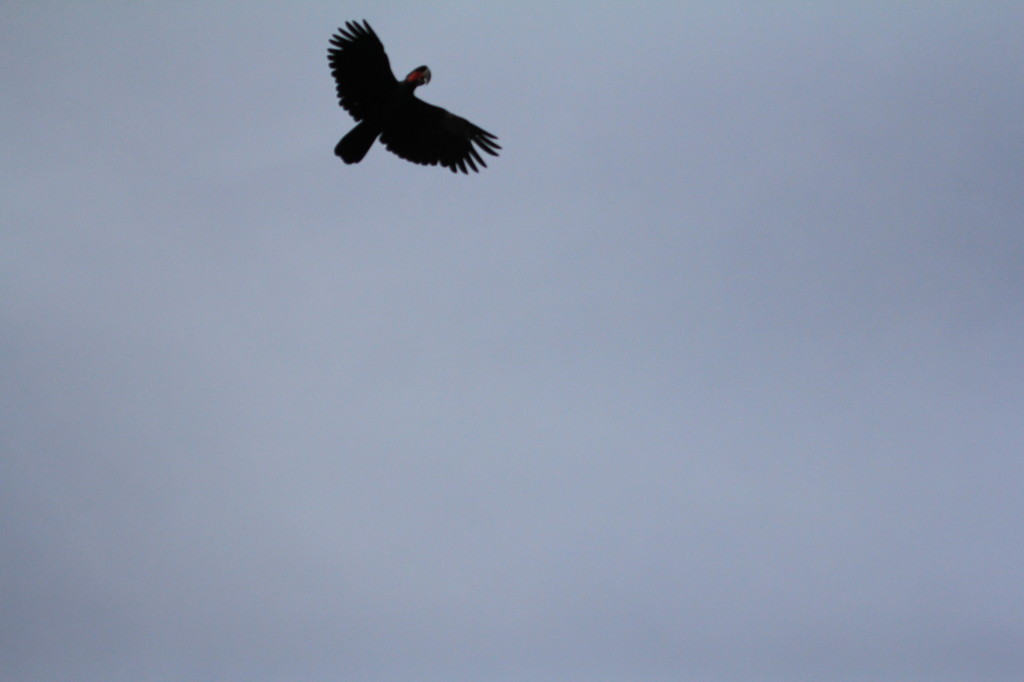
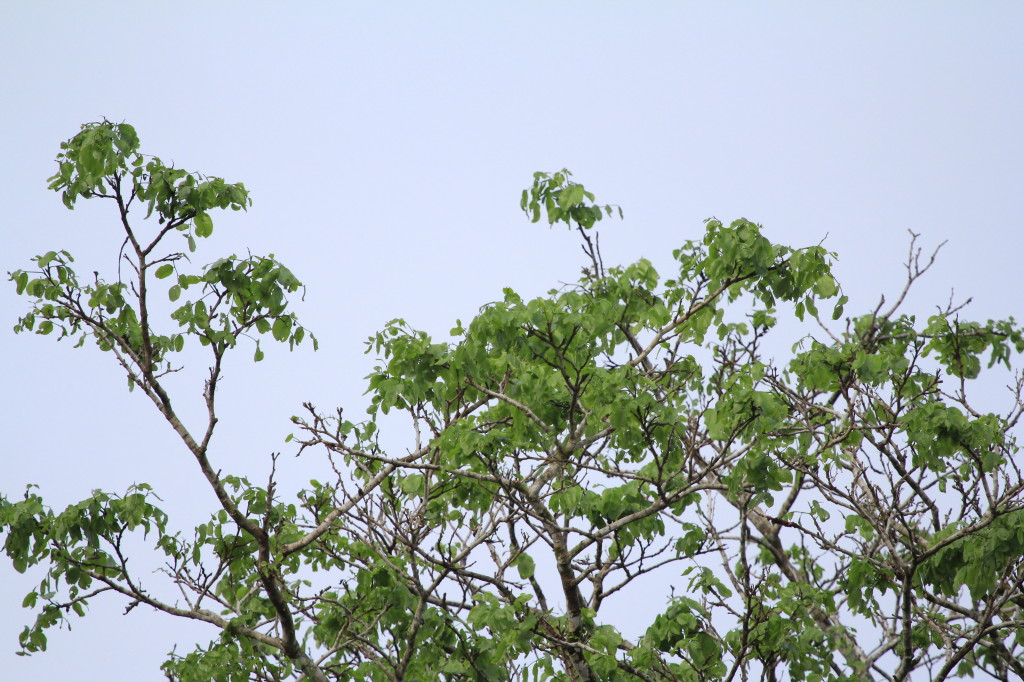
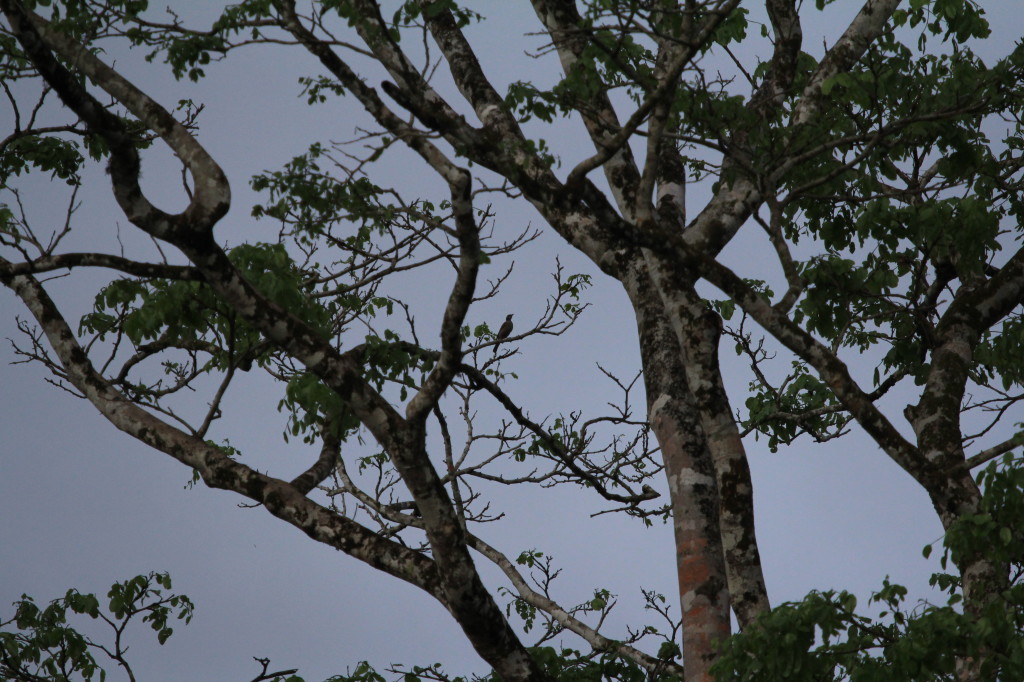
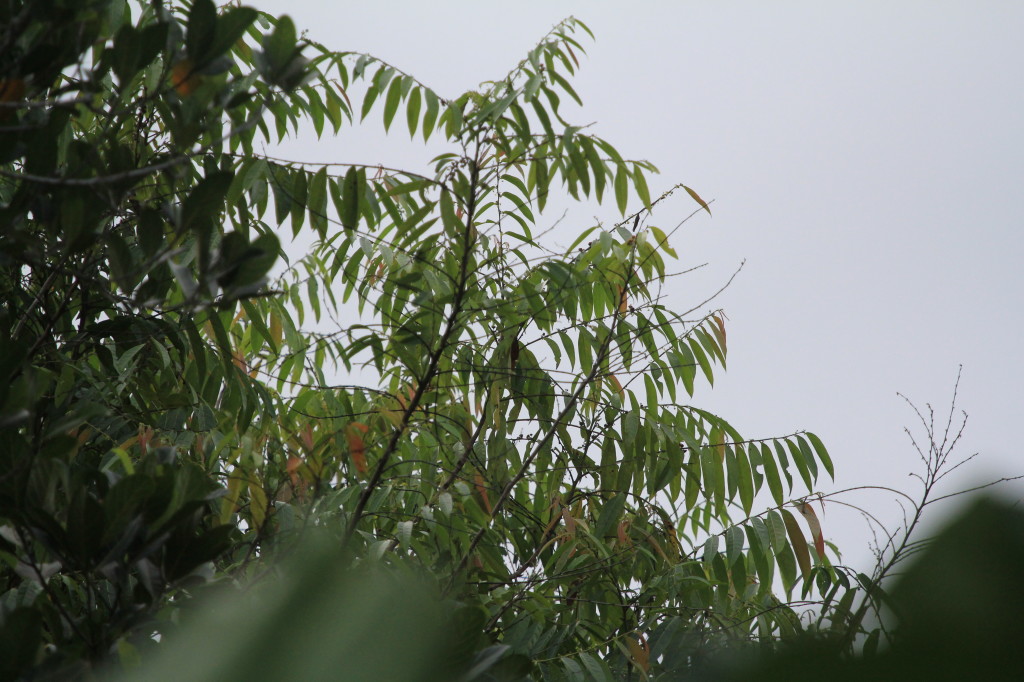
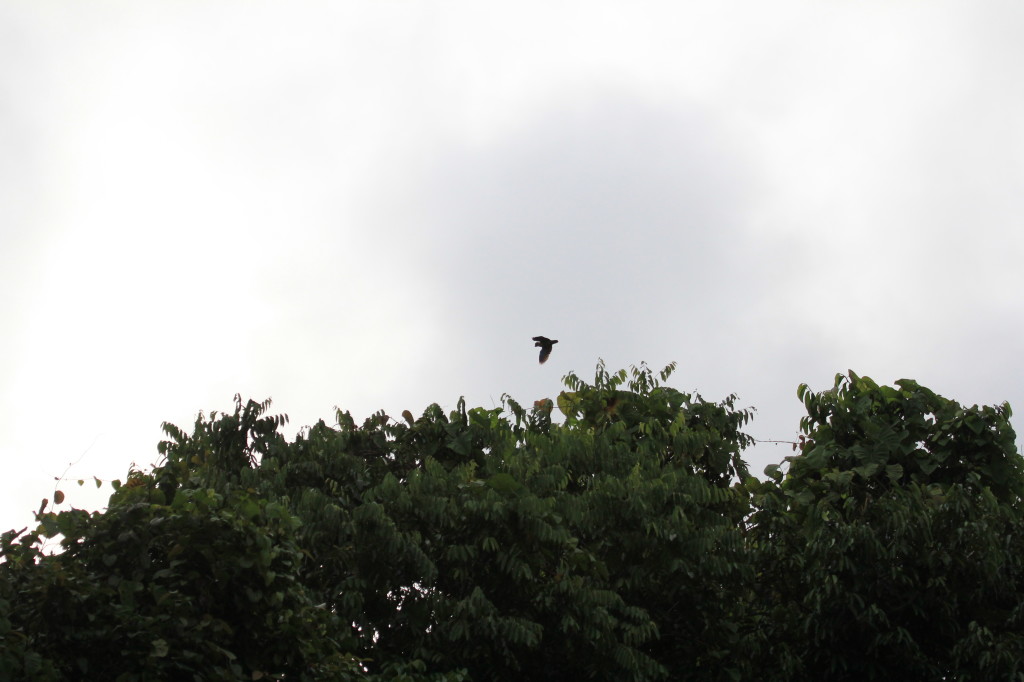
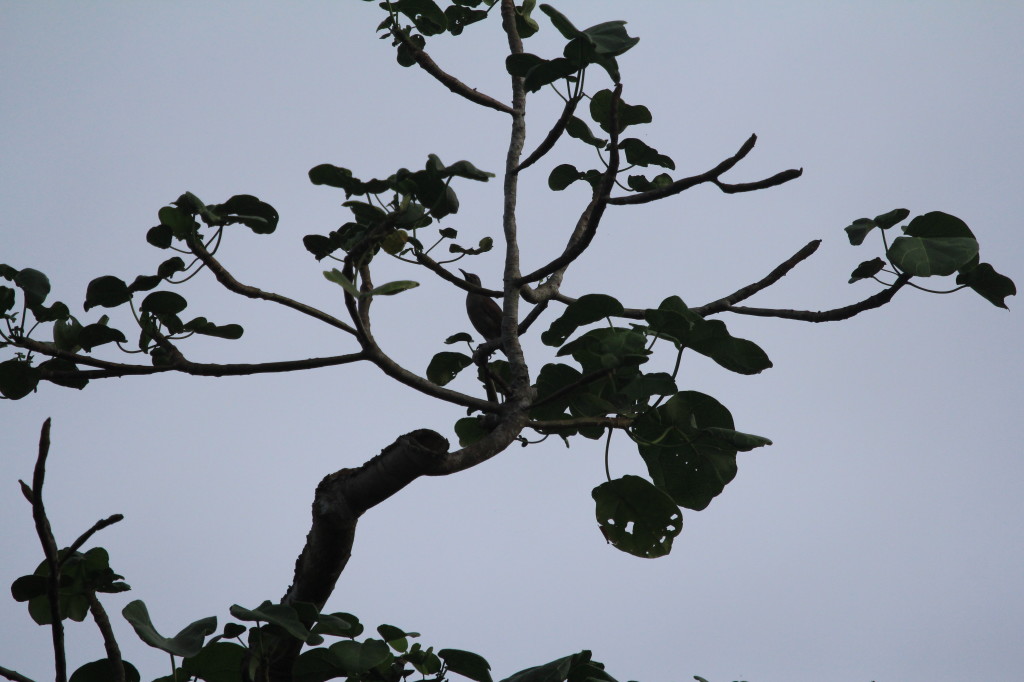
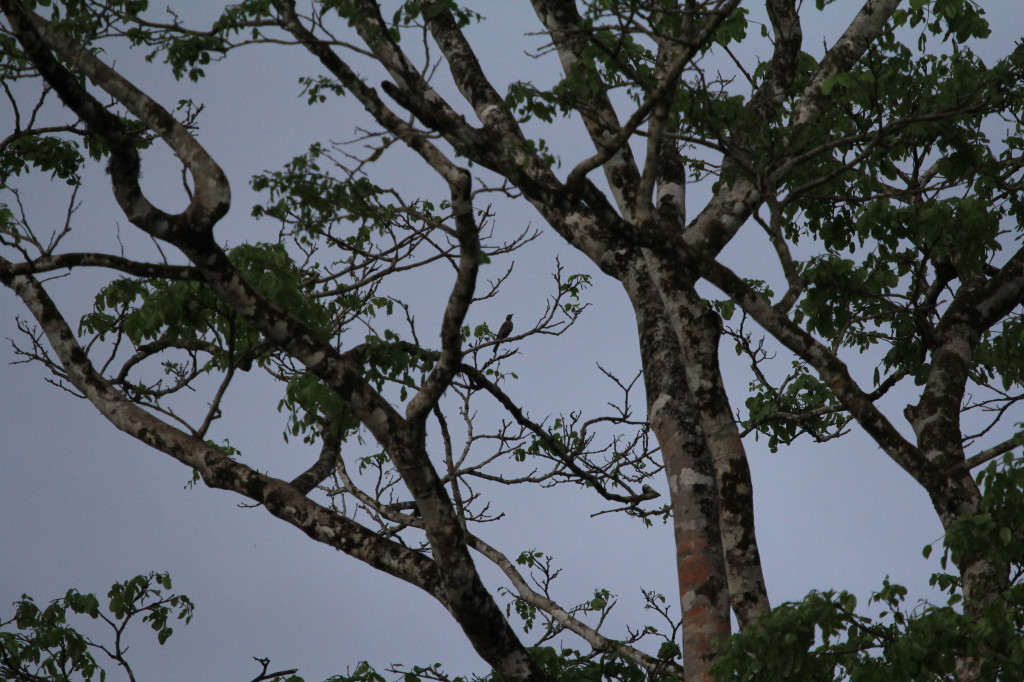
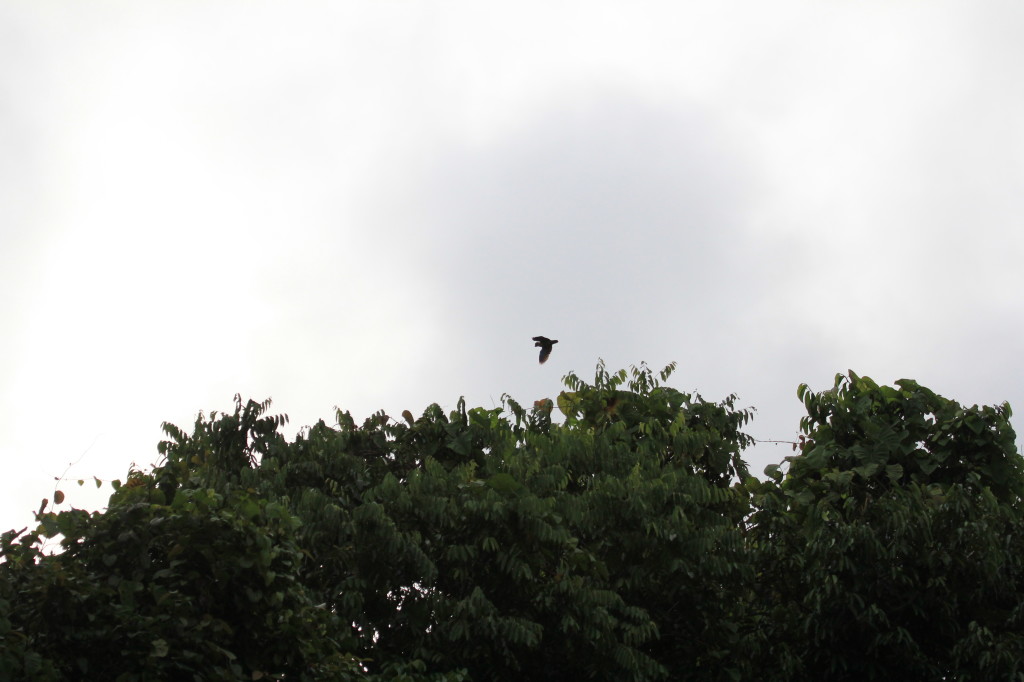
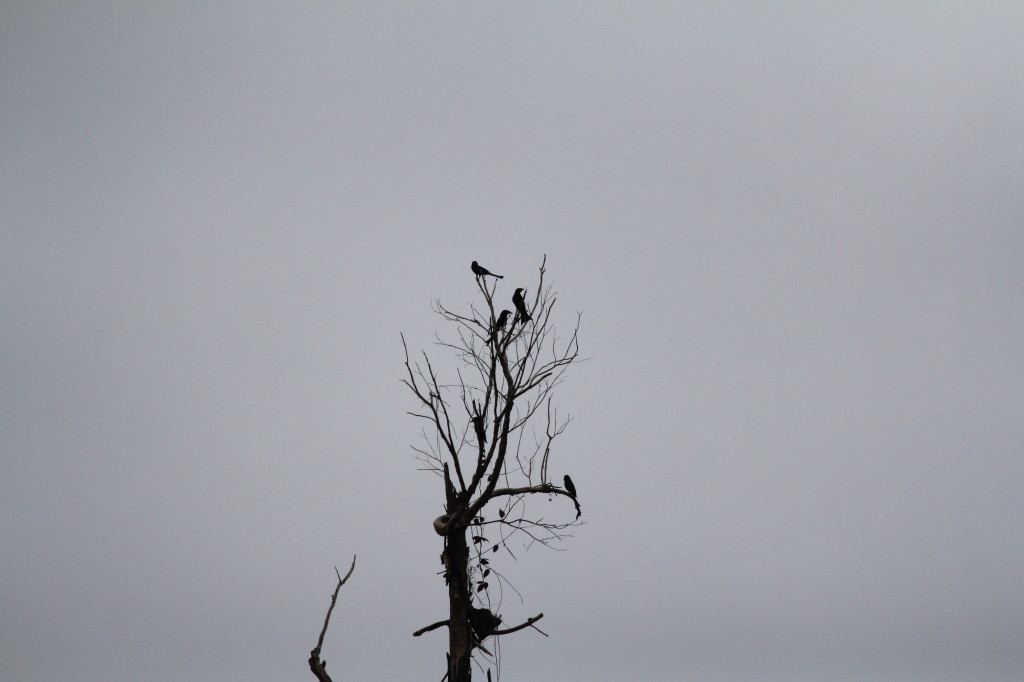
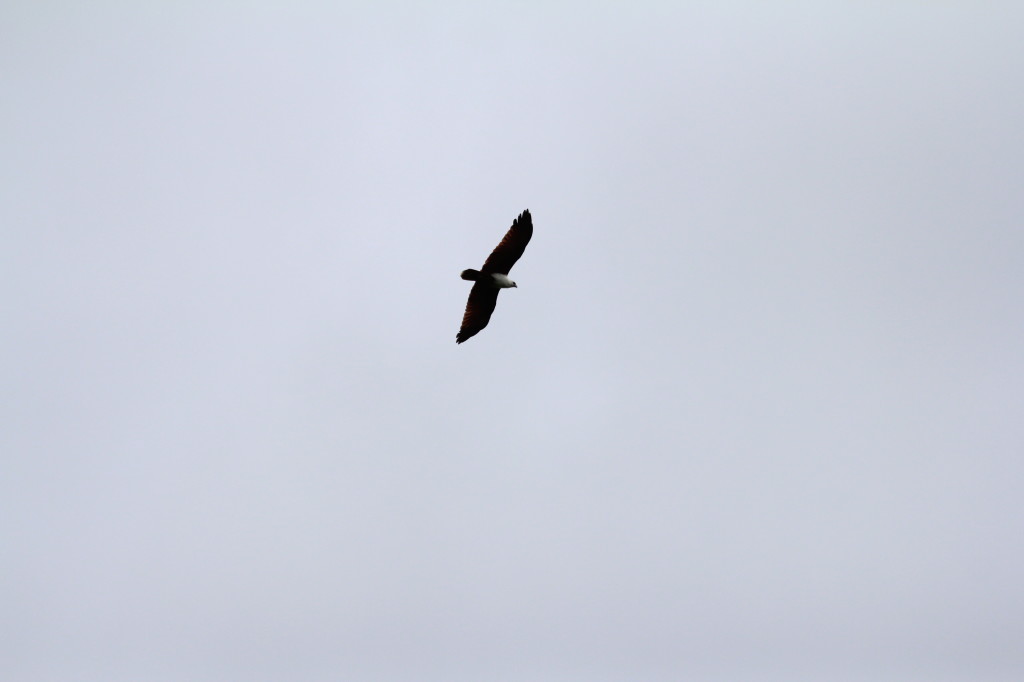
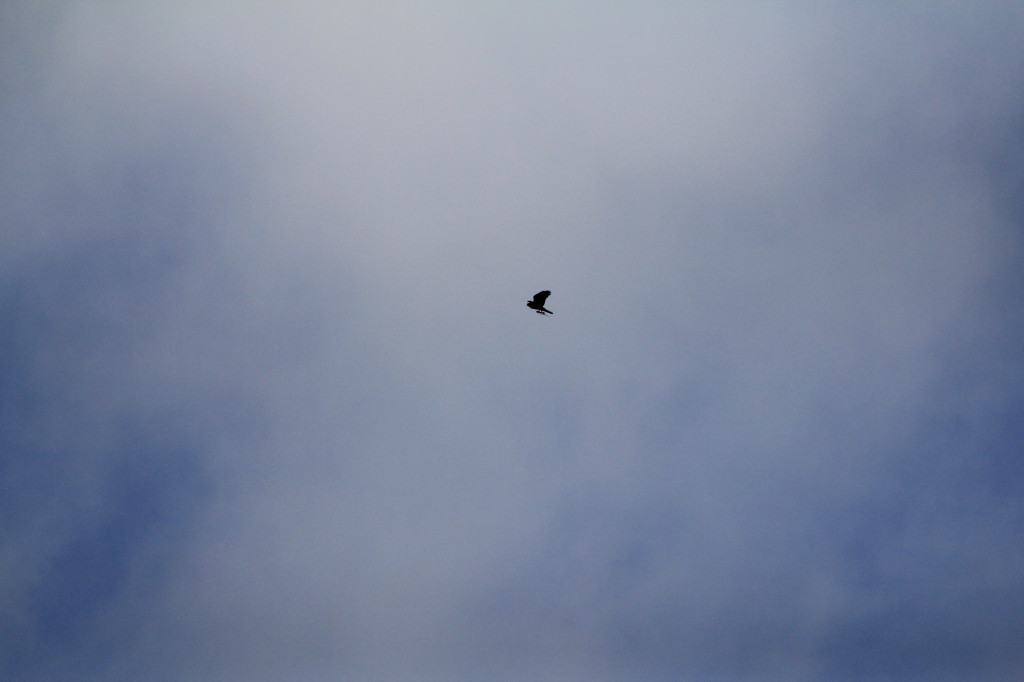
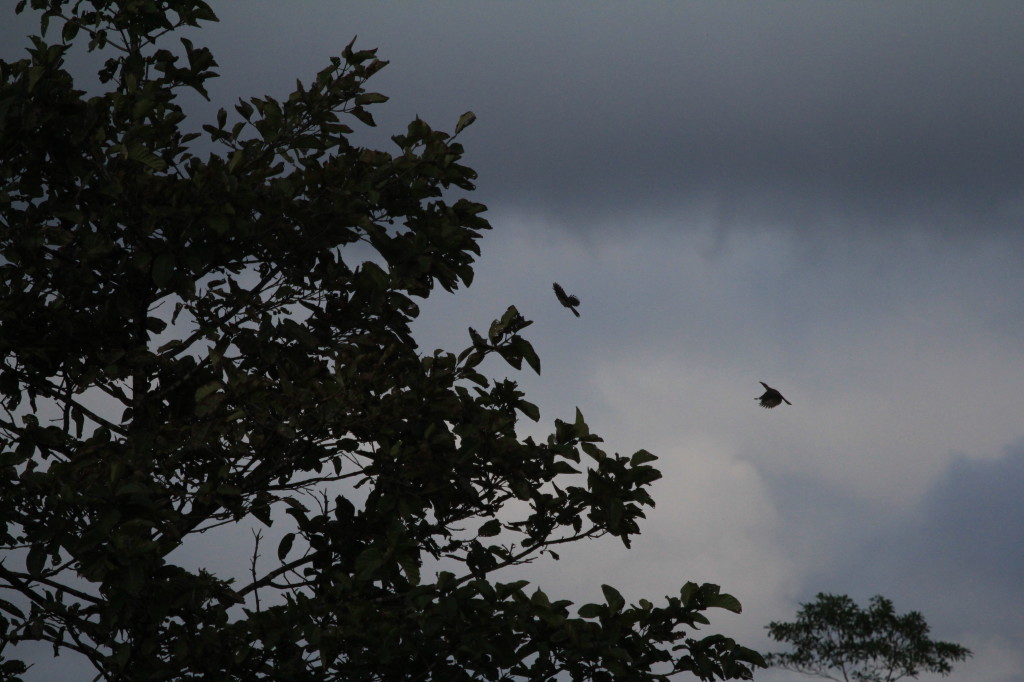
The birds didn’t take long to show up.  Although I still had to view them from a distance (attempting to get photos) at least they did fly through open skies a bit more as opposed to dense foliage in trees.  Jamil identified several Brown Lories, Eclectus Parrots, Red-Cheeked Parrots and a solitary Rainbow Lorikeet which I thought was strange as I am used to seeing them in large flocks in Brisbane.  I did have a go at “find the hidden bird” shots, pointing the camera at trees where birds were flitting about, hoping to catch them.  Sometimes I got lucky, sometimes I didn’t!  Brahminy Kites were easier to photograph as they are larger and fly slower.  The highlight of this excursion was a stunning Palm Cockatoo!
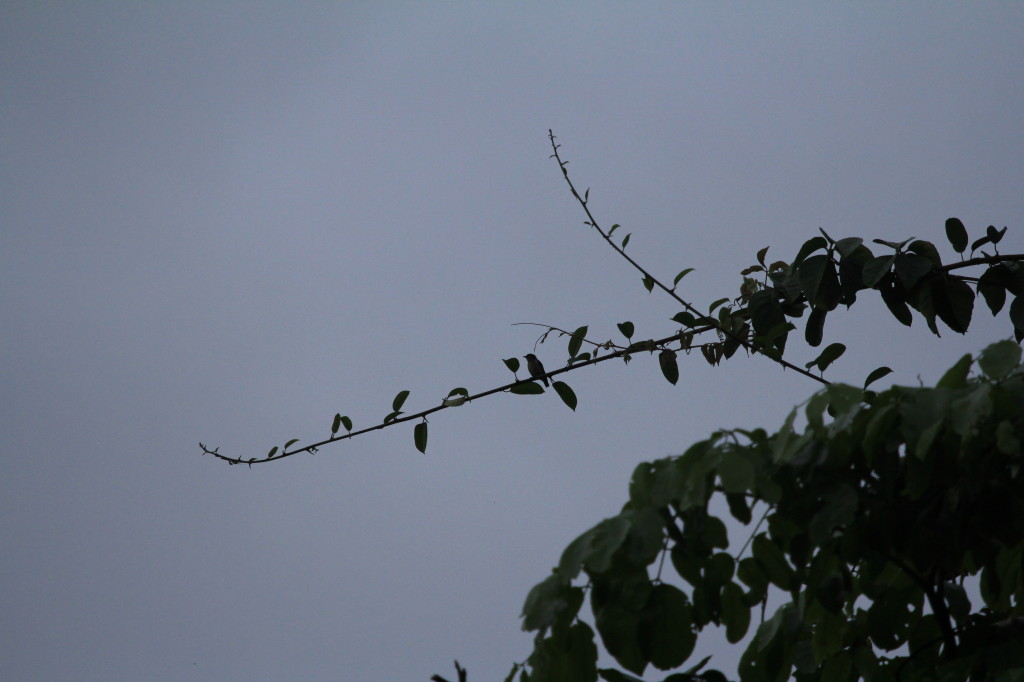
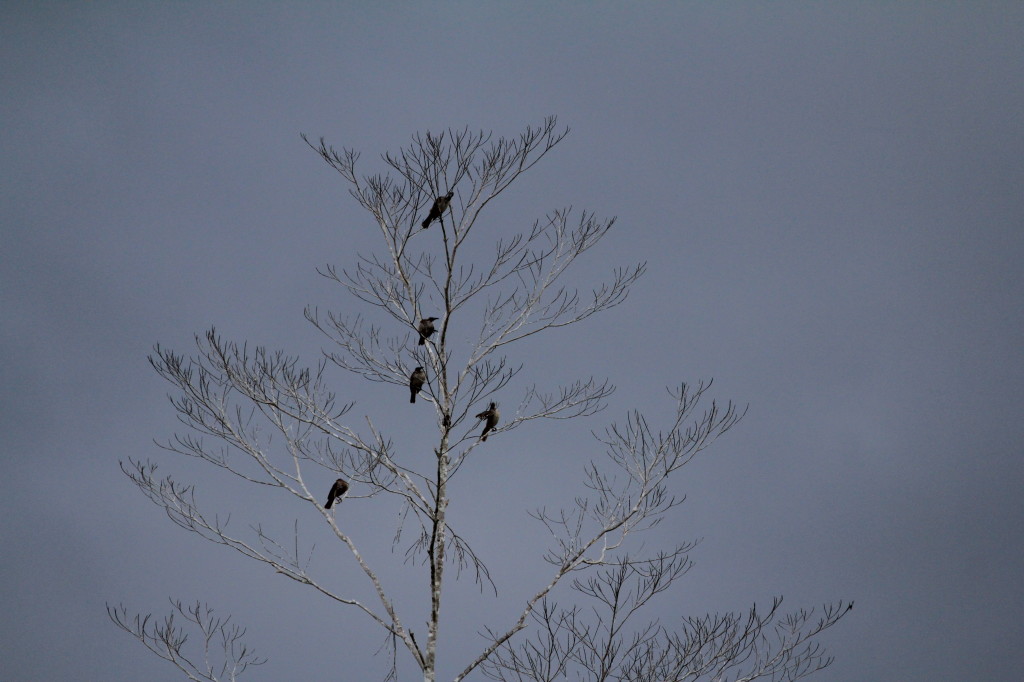
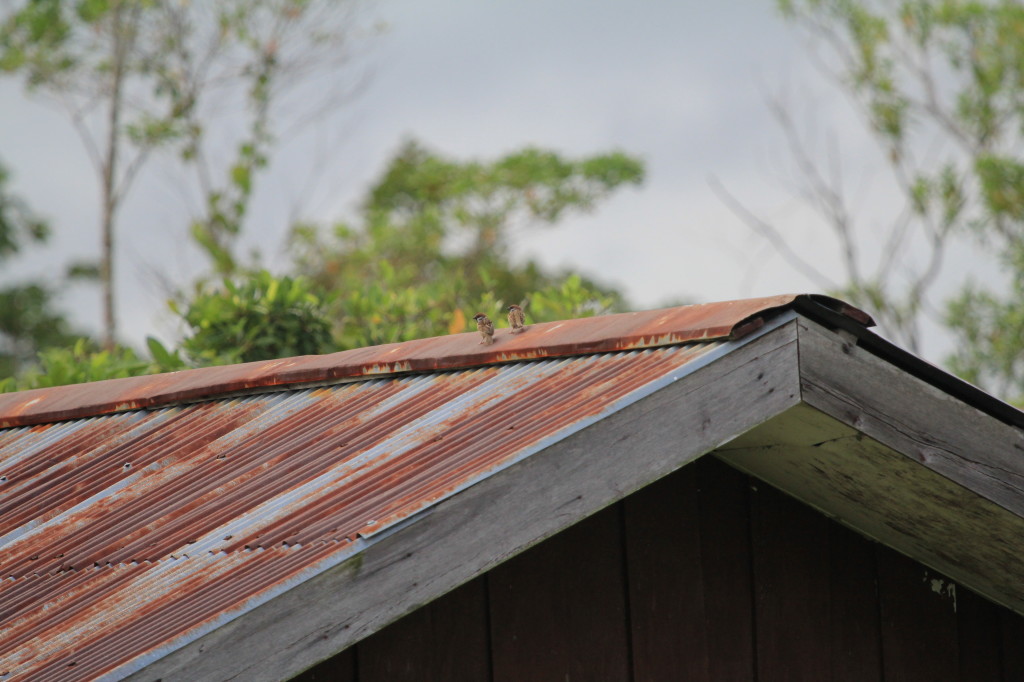
Find the hidden bird!
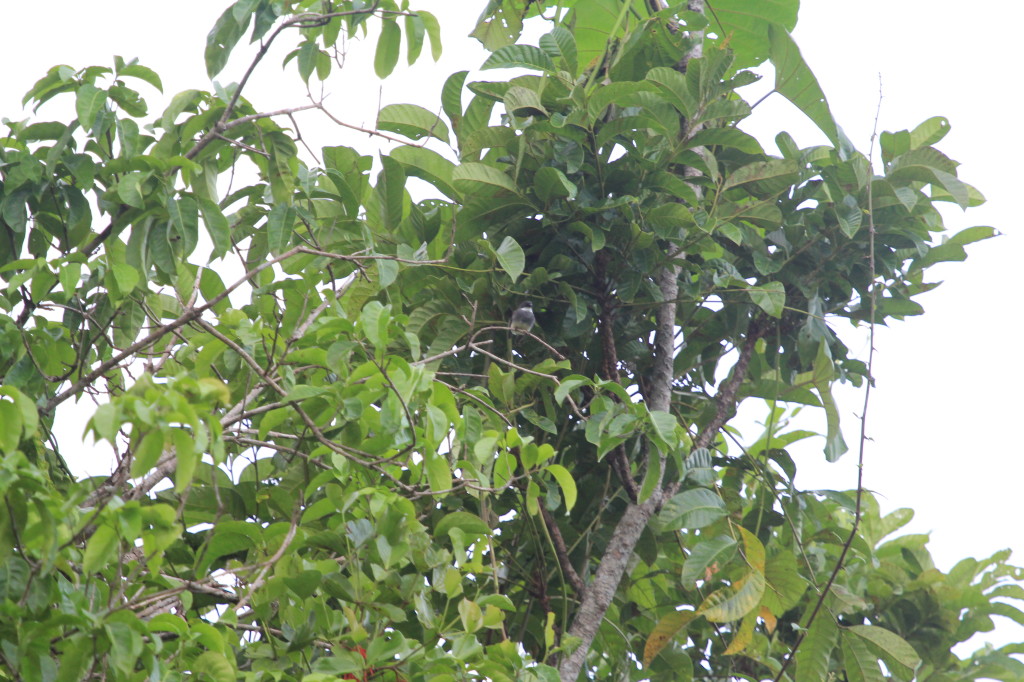
Find the hidden bird!
Find the hidden bird!

Find the hidden bird!

Brahminy Kite, Nimbokrang
Brahminy Kite, Nimbokrang

IMG_7445

Red-cheeked Parrot, Nimbokrang

Red-cheeked Parrot, Nimbokrang
IMG_7449

IMG_7451

IMG_7453

Palm Cockatoo, Nimbokrang

Palm Cockatoo, Nimbokrang

Brown Lory

Brown Lory

Find the hidden bird!

Find the hidden bird!

IMG_7480

Find the hidden bird!

Find the hidden bird!

Brown Lory, Nimbokrang

Brown Lory, Nimbokrang

IMG_7489

Red-cheeked Parrot, Nimbokrang

Red-cheeked Parrot, Nimbokrang
These next photos are of a pair of Double-eyed Fig Parrots who were perching in a tree on a property belonging to Jamil’s friend.  It was a bit muddy and I didn’t trust myself to get close enough without slipping and scaring them off so I asked Jamil to get some shots for me and he did!
Double-eyed Fig Parrot, Nimbokrang
Double-eyed Fig Parrot, Nimbokrang
Double-eyed Fig Parrot, Nimbokrang
Double-eyed Fig Parrot, Nimbokrang
Double-eyed Fig Parrot, Nimbokrang

Double-eyed Fig Parrot, Nimbokrang

Double-eyed Fig Parrot, Nimbokrang

Double-eyed Fig Parrot, Nimbokrang

Double-eyed Fig Parrots, Nimbokrang
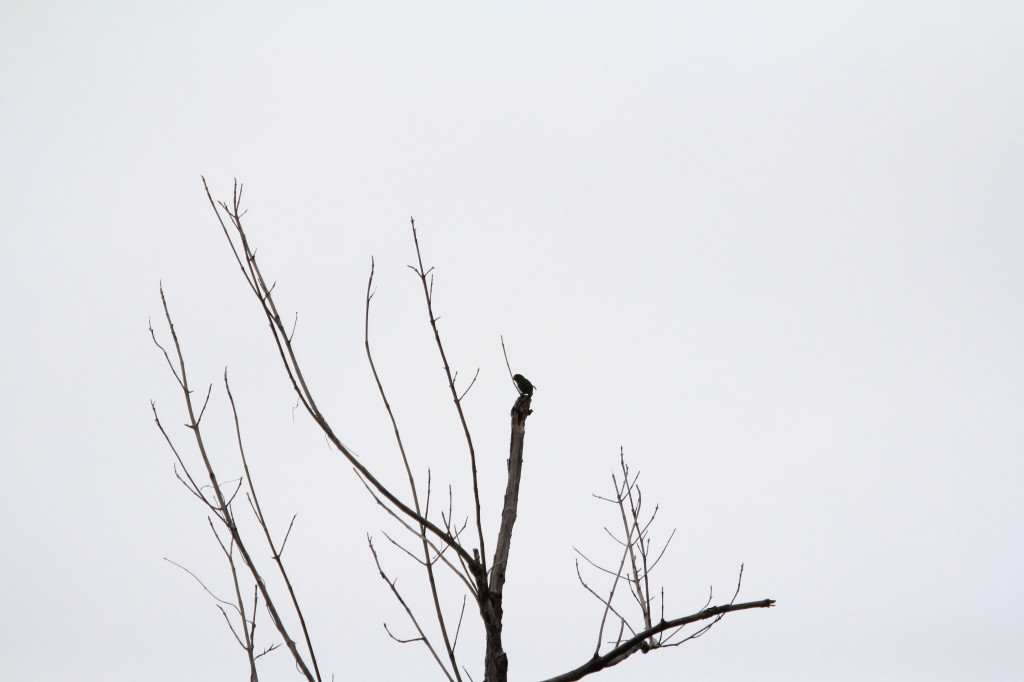
Double-eyed Fig Parrots, Nimbokrang

Double-eyed Fig Parrot, Nimbokrang

Double-eyed Fig Parrot, Nimbokrang

Another Brahminy Kite swooping lazily around.
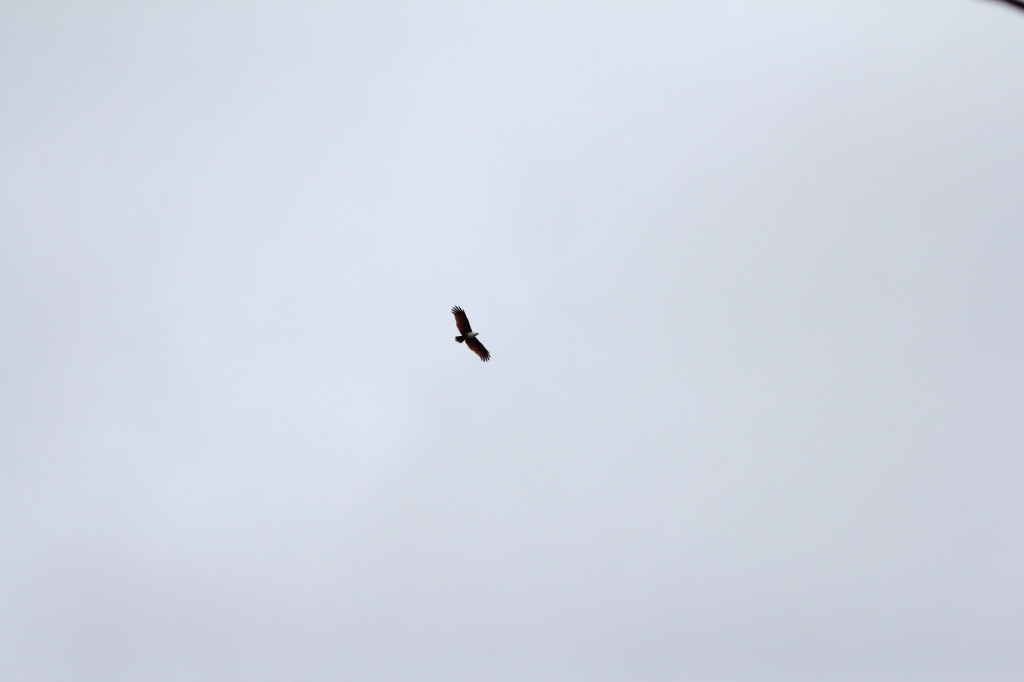
Brahminy Kite, Nimbokrang
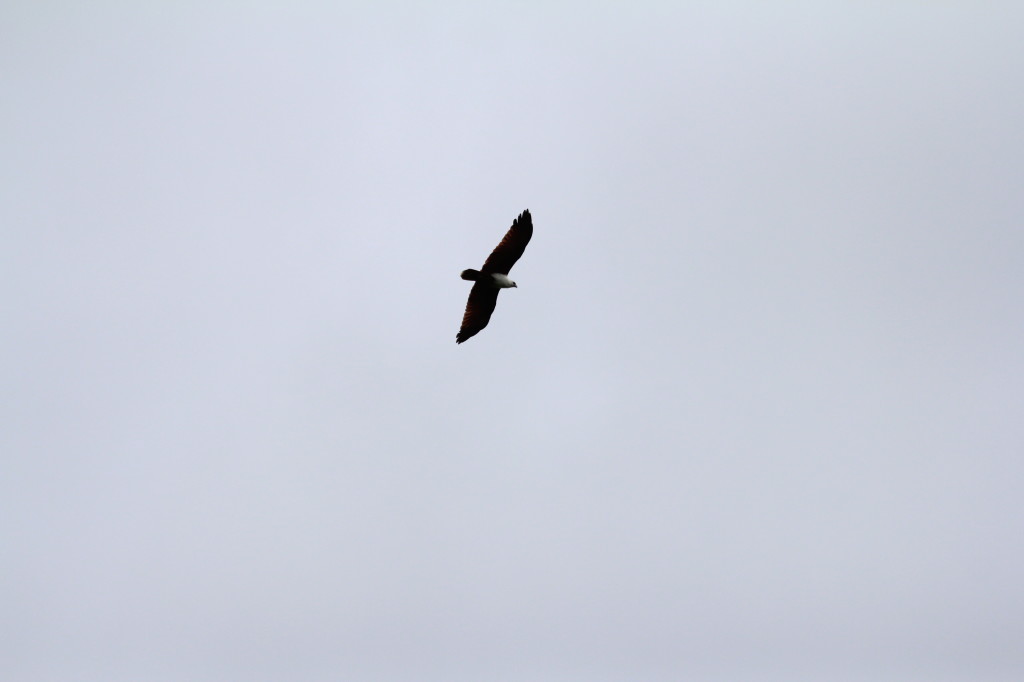
Brahminy Kite, Nimbokrang

Brahminy Kite, Nimbokrang

Brahminy Kite, Nimbokrang

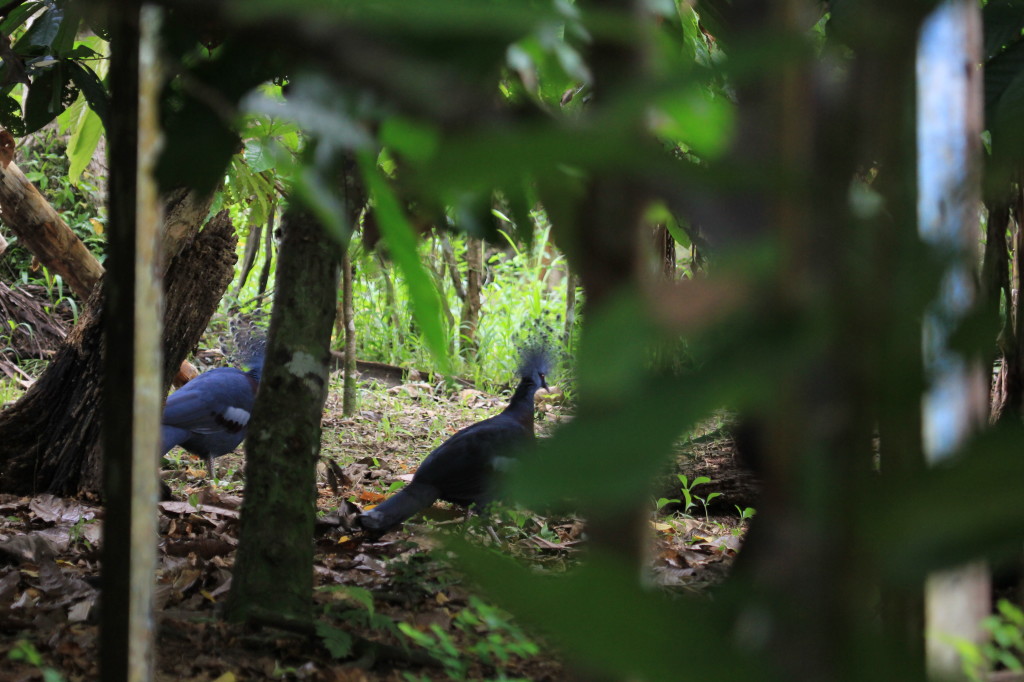
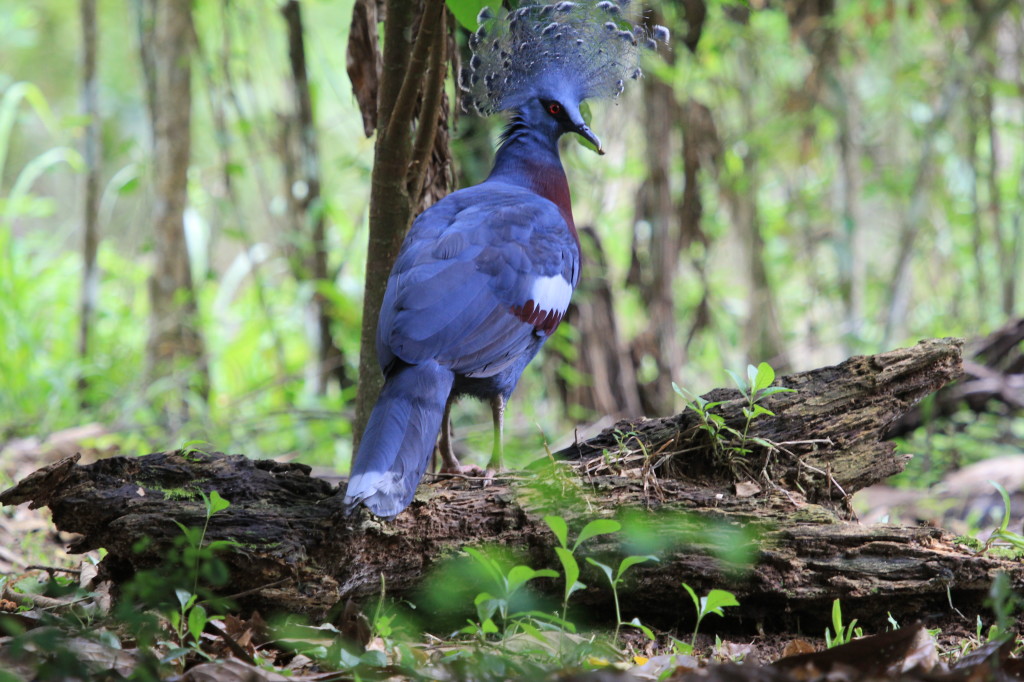
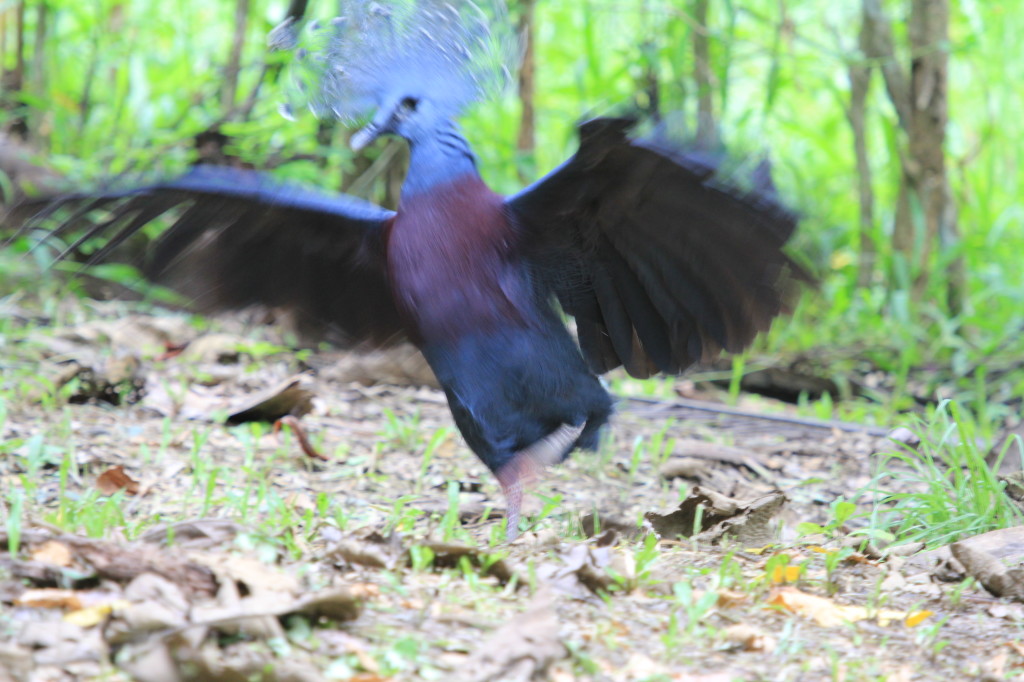
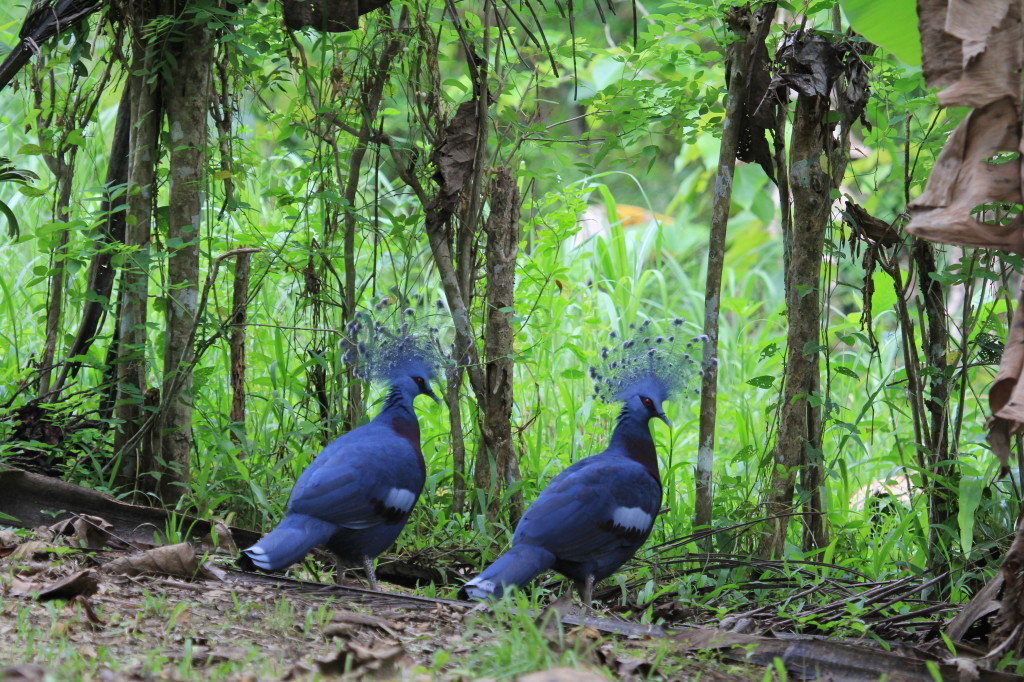
These Victoria Crowned Pigeons sometimes come into Jamil’s backyard so that’s why I was lucky enough to get close-ups!
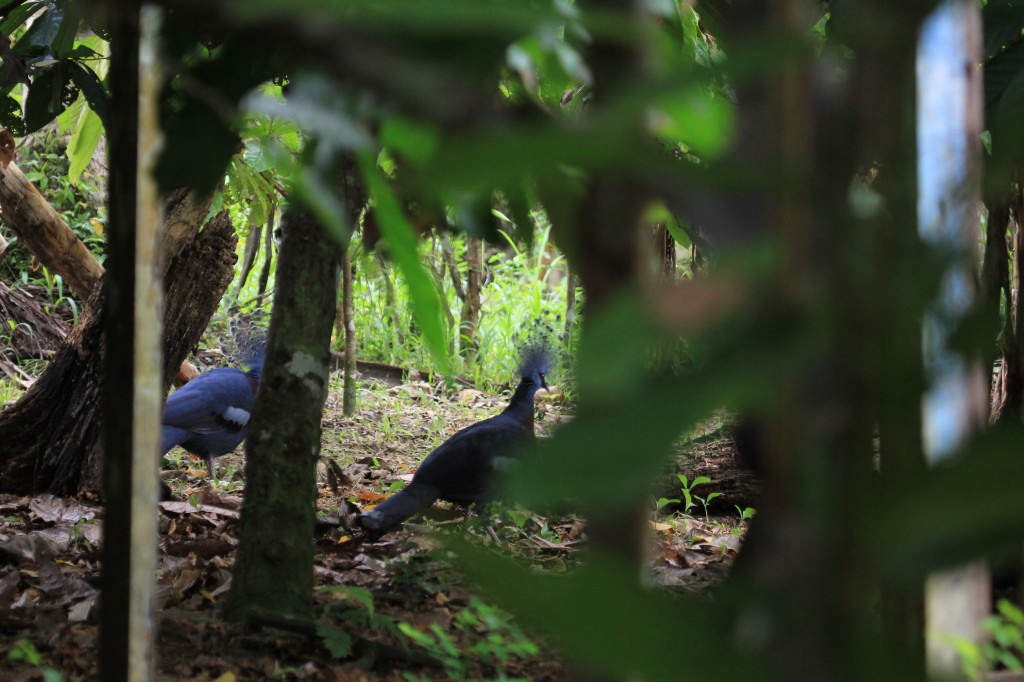
Victoria Crowned Pigeon, Nimbokrang
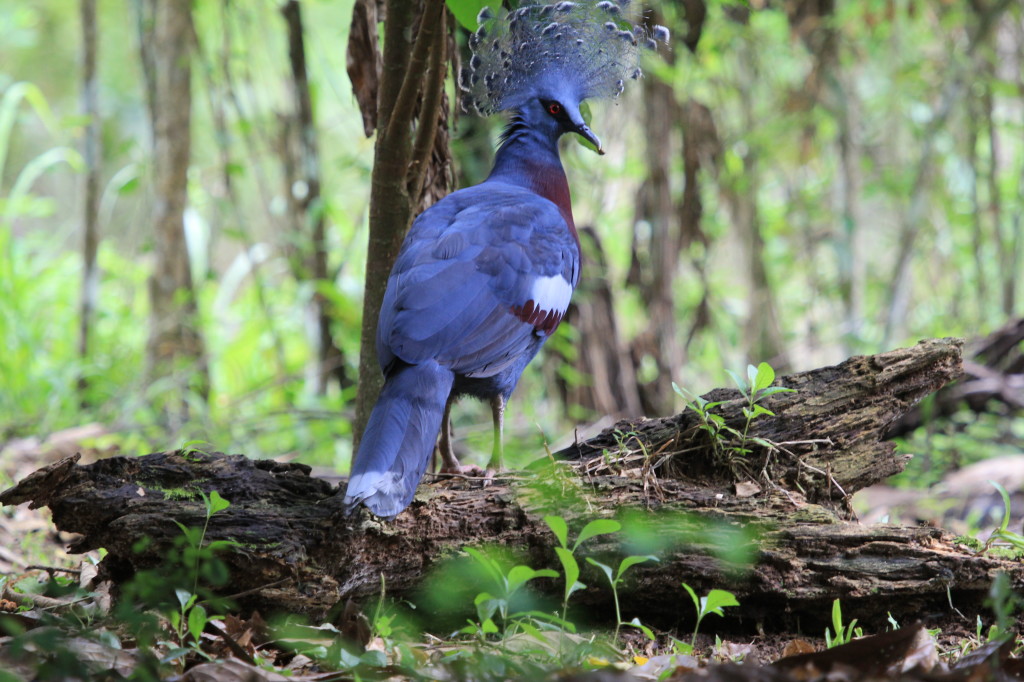
Victoria Crowned Pigeon, Nimbokrang
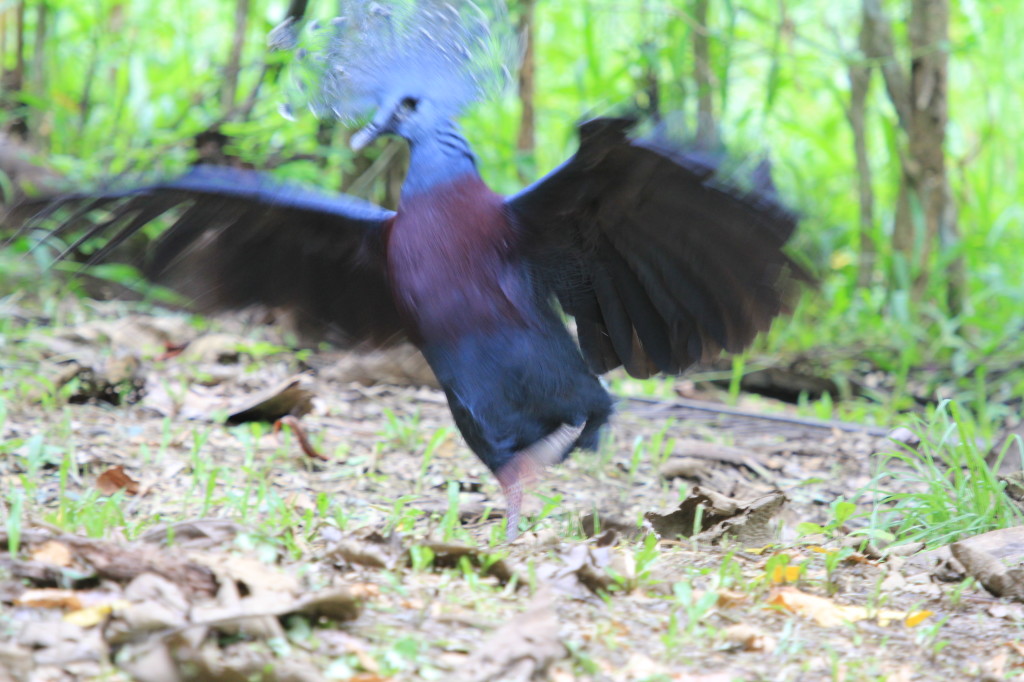
Victoria Crowned Pigeon, Nimbokrang
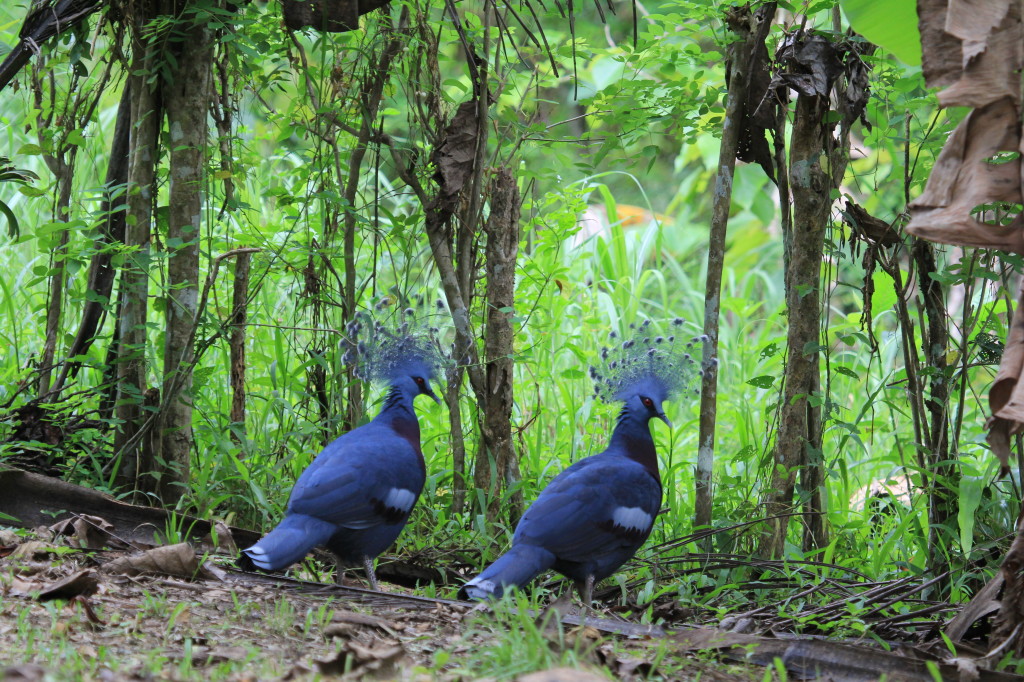
Victoria Crowned Pigeon, Nimbokrang

Victoria Crowned Pigeon, Nimbokrang

Victoria Crowned Pigeon, Nimbokrang

Victoria Crowned Pigeons, Nimbokrang

Victoria Crowned Pigeons, Nimbokrang

Jamil knew I was anxious to see Buff-faced Pygmy Parrots.  They sometimes also visit his backyard but not today.  In the afternoon, we staked out a nest hoping they would come back at roosting time but they didn’t.
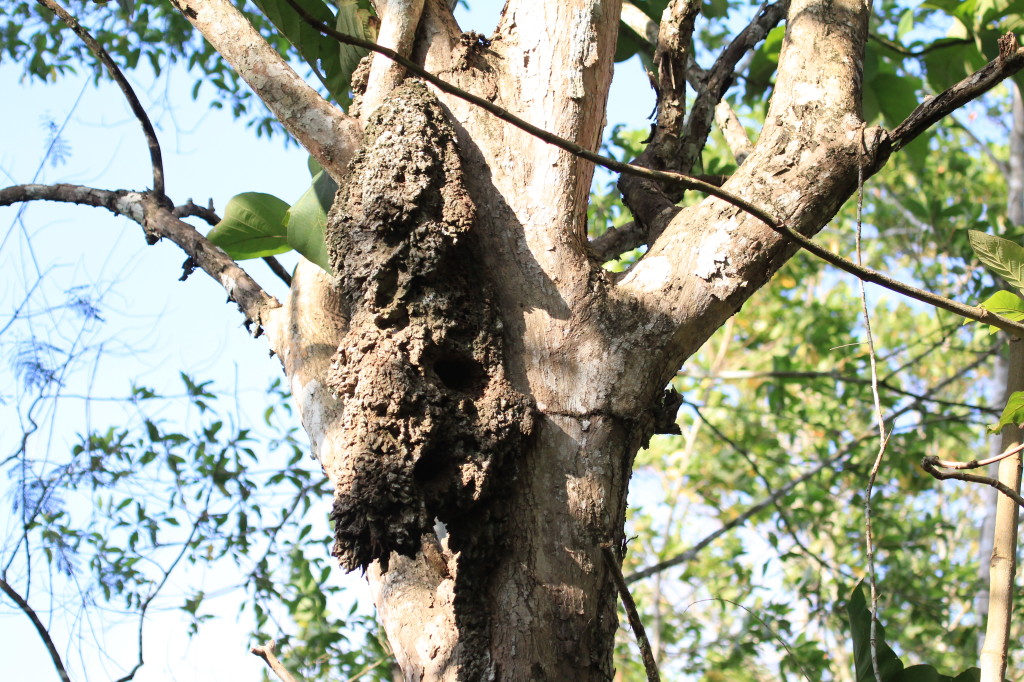
Buff-faced Pygmy Parrot Nest, Nimbokrang

Buff-faced Pygmy Parrot Nest, Nimbokrang

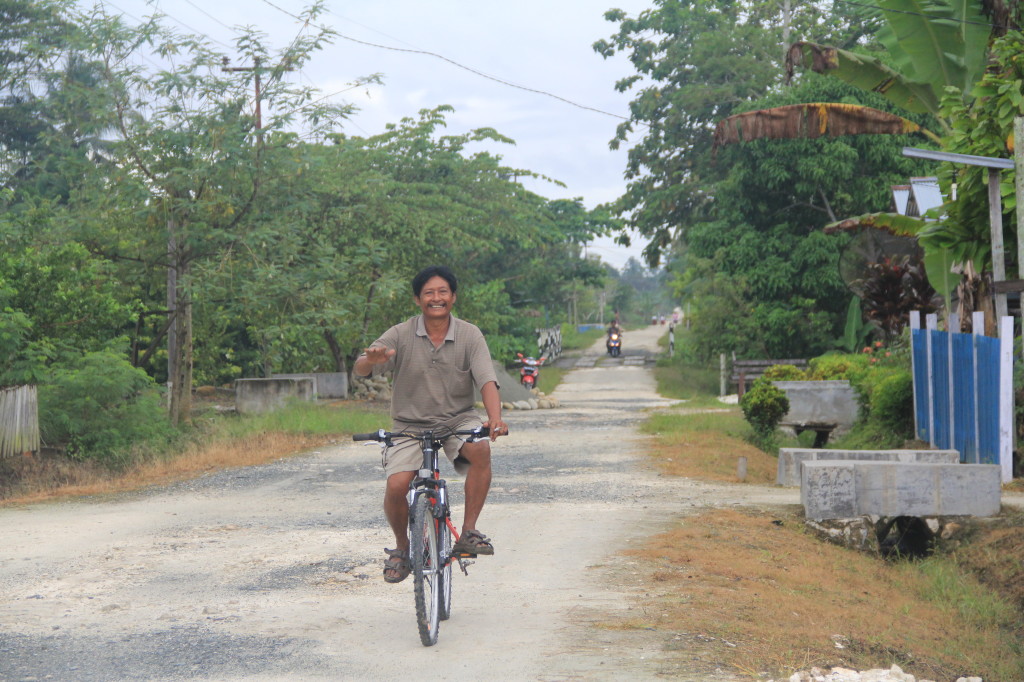
The next morning, Jamil hopped on his bike and went looking for them.
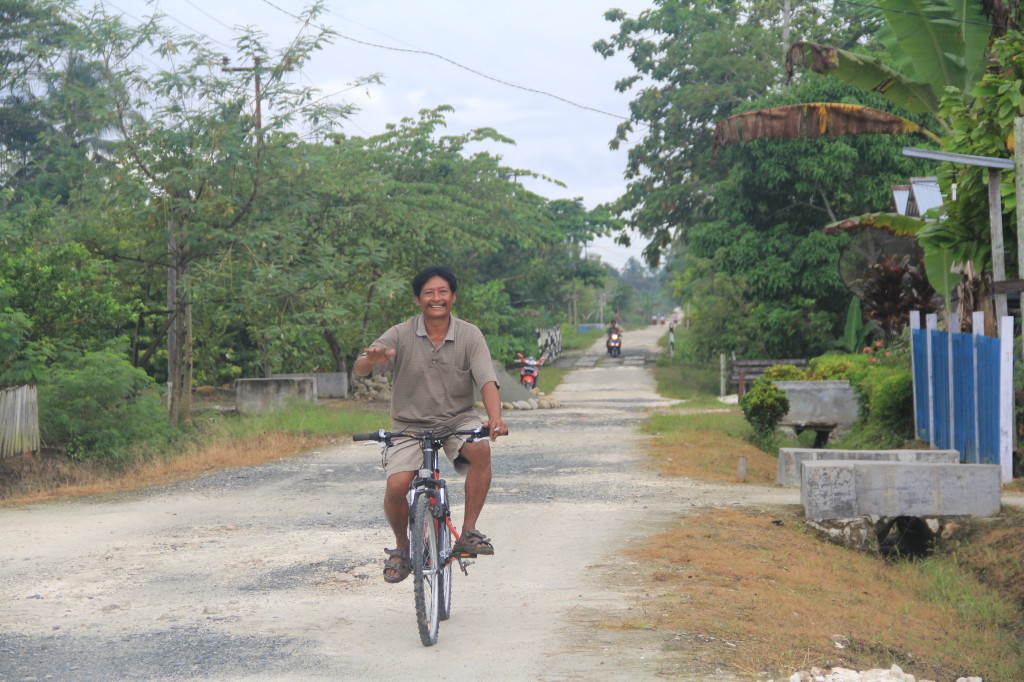
Pak Jamil, Nimbokrang

Pak Jamil, Nimbokrang

He found a pair in a neighbor’s tree and took me down there.  I could see them furtively darting about in the branches but they were so tiny I never did get a clear look………….and they are fast too!  I watched them for a few minutes, then they took off into the distance.   This is the mark of an excellent guide, Jamil took the time to make sure I saw the birds I wanted to see (Birds of Paradise and Parrots) and really cared that I was happy and got to see all the birds possible.  We didn’t get ALL the targeted birds, there were no Pesquet’s Parrots or Salvadori Fig Parrots.  He can’t conjure birds out of thin air (though sometimes it did seem like he could)!   We devoted an afternoon and a morning just to the Buff-faced Pygmy Parrot whereas other birders may have had other priorities and he would have gone elsewhere.

According to Burung Nusuantara, these are the most sought-after birds for a Nimbokrang trip.  The linked page also has links to trip reports by other birders that may be of interest.

Northern Cassowary; Pale-billed Sicklebill; Blue-and-Black Kingfisher; Brown Lory; Twelve-wired Bird-of-Paradise; Shovel-billed Kingfisher; Victoria Crowned Pigeon; King Bird-of-Paradise; Blue Jewel Babbler; Brown-necked Crow; Hook-billed Kingfisher; Vulturine Parrot; Papuan Hawk-owl; Lesser Bird-of-Paradise; Brown-collared Brush-turkey; Greater Black Coucal; Papuan Nightjar; Grey Crow; Black-sided Robin; Lowland Peltops; White-eared Catbird; Wompoo Fruit-Dove; Coroneted Fruit-Dove.

This brought an end to my birding adventure in Nimbokrang.  Jamil called the bemo to pick us up and it was back to Sentani for an overnight stay since we had an early flight to Manokwari the next day.


Extreme Birding 1 – Planking In Nimbokrang

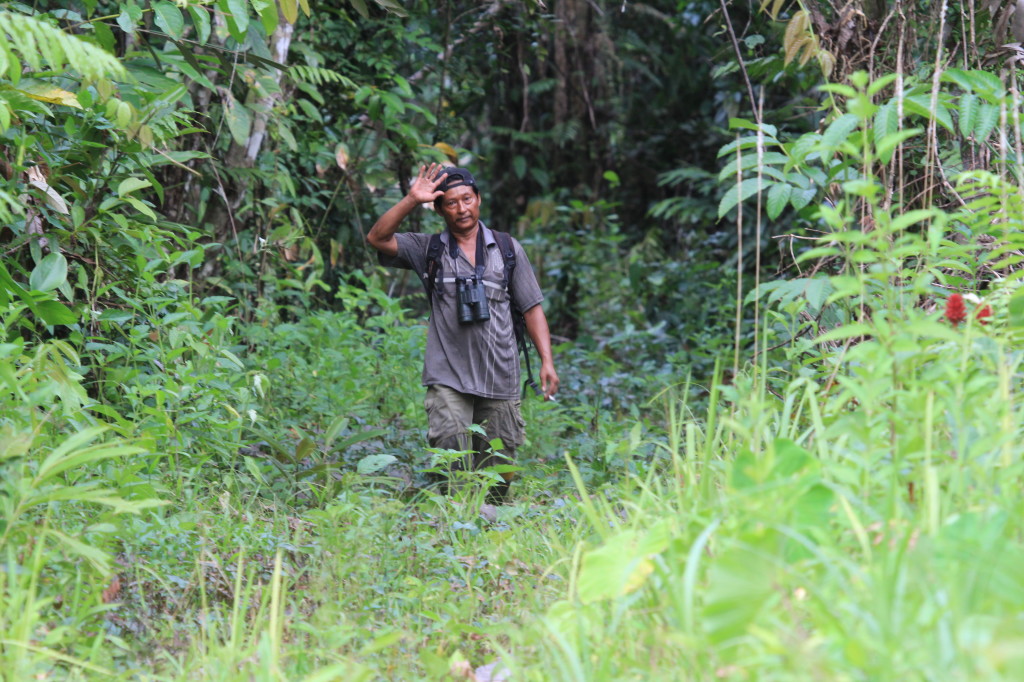
As I mentioned in the post about getting to Nimbokrang, Pak Jamil is the must-have birding guide in Nimbokrang.  A prime example of the success of eco-tourism, Jamil was formerly a bird trapper who discovered it was much more rewarding to keep the birds in the wild and help tourists see them.  He is a marvel, can identify birds that are barely tiny dots in the sky and knows all bird calls and can name them in English.  You can contact him by text message at +62-852-5433-2796.  Keep it simple, give him the dates first and ask if he can accommodate you in his spare room.  He speaks English reasonably well.  As of March 2013, he charges 500,000 per day for guiding and worth every rupiah!

There are a few other fees to land-owners and the police so budget an extra $50-60 of rupiah.  If you need a motorbike to get to a birding location it’s an extra 100,000 rupiah ($10).

PLANKING NIMBOKRANG STYLE

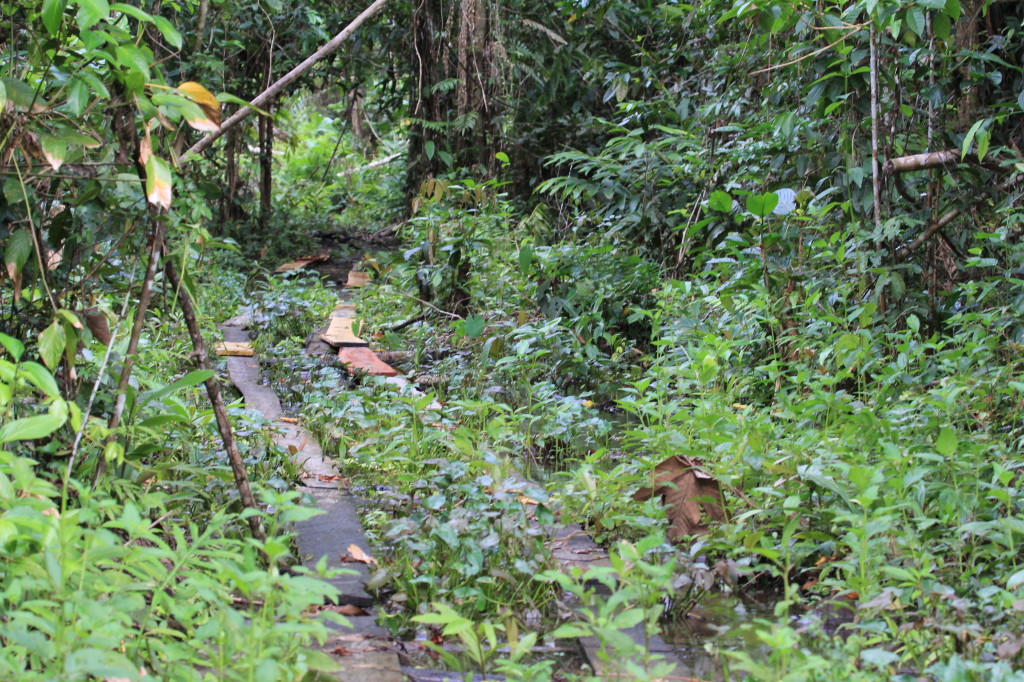
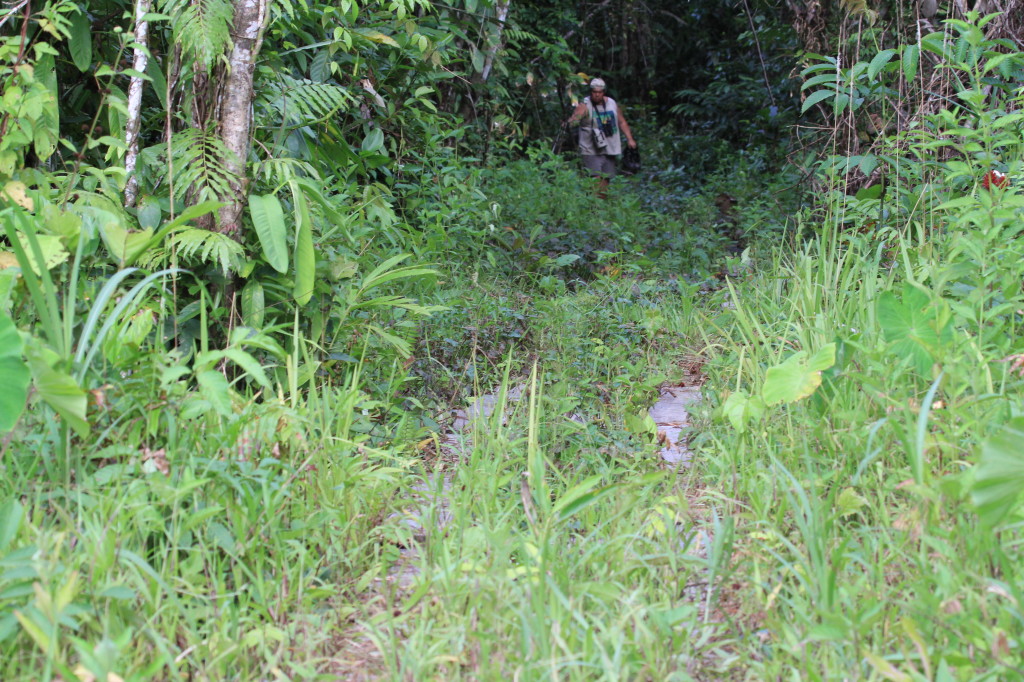
We arrived in the early afternoon and after a siesta, Jamil took us to the swamp forest outside the village of Nimbokrang.   He wore gumboots and loaned me a pair of boots left behind by a friend as my walking shoes were inadequate for the swampy conditions.  Have a look at the trail!

Planking in Nimbokrang Swamp Forest

Planking in Nimbokrang Swamp Forest

IMG_7373

Planking in Nimbokrang Swamp Forest

IMG_7365

My husband struggles with the slippery planks and takes off his shoes – big mistake!

IMG_7381

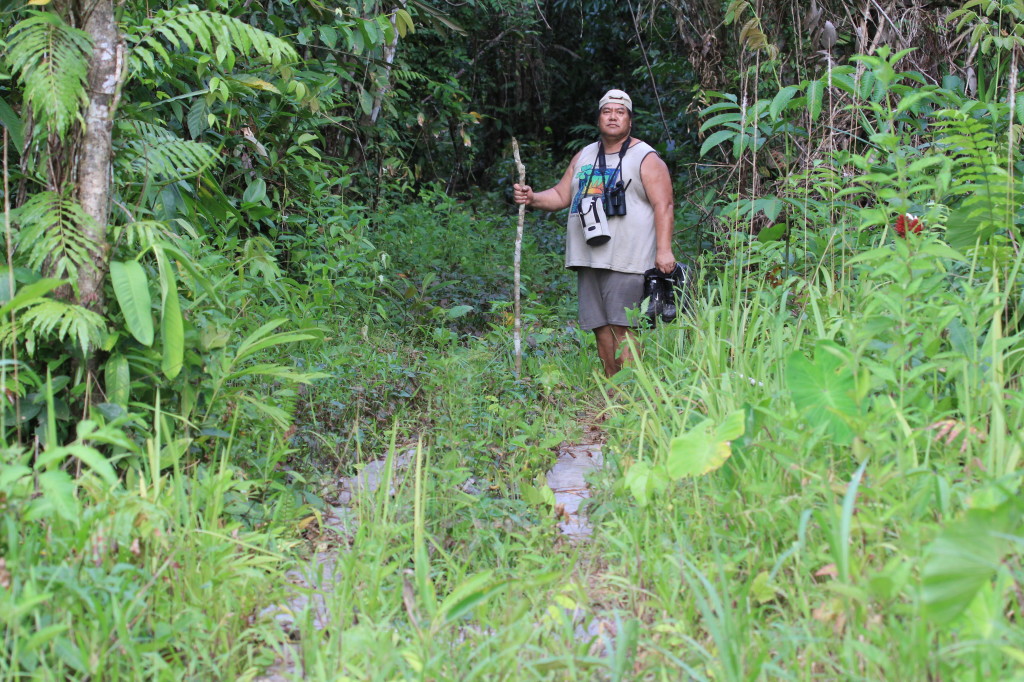
Jamil strolls through the swamp with the same ease that I stroll though a shopping mall!

IMG_7379

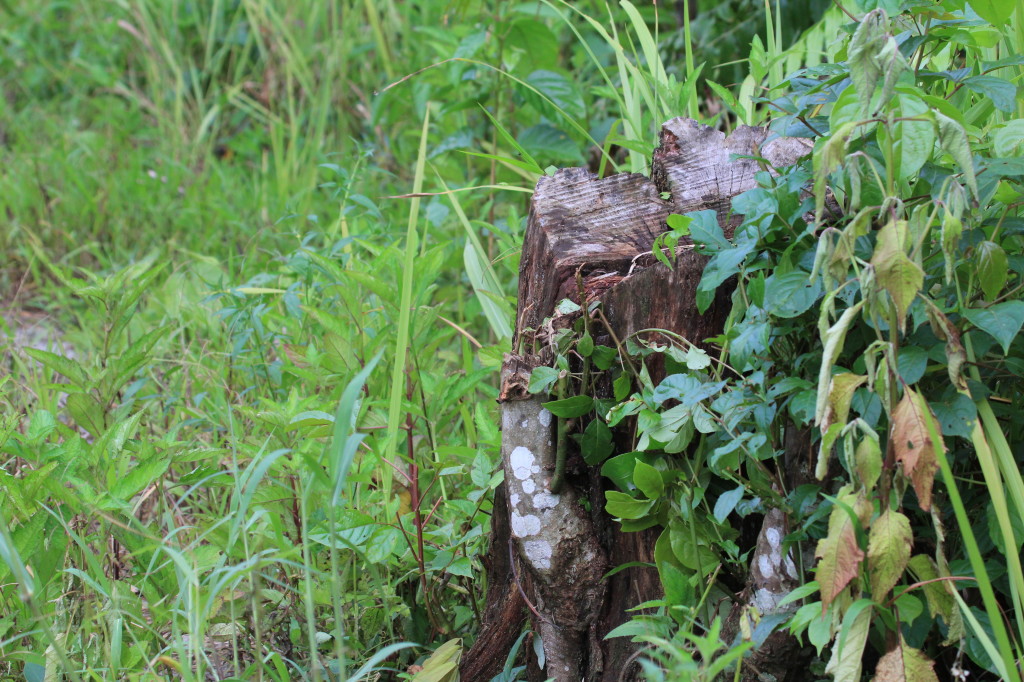
I sit on this tree stump trying to capture birds with my camera

Catch up, Ina!

Catch up, Ina!

We saw some really amazing birds and Jamil gave me the list once we got back to the house.  Sorry, I am just not agile enough to nail them with that tiny red dot when they fly so fast!  I did try and will post a few pics but there won’t be any Nat Geo quality shots.   We visited the swamp forest twice – in the afternoon on the first day and the early morning on the second day to see the two endemic Birds of Paradise.   I had a problem with my camera after it fell in the mud and I somehow discharged the battery while cleaning it and missed out on getting a good shot of the Twelve-Wired Bird of Paradise who was perched atop a tree for several minutes.  The Lesser Bird of Paradise was more elusive, darting around trees and calling enticingly so we knew he was there but not coming out for a good view.

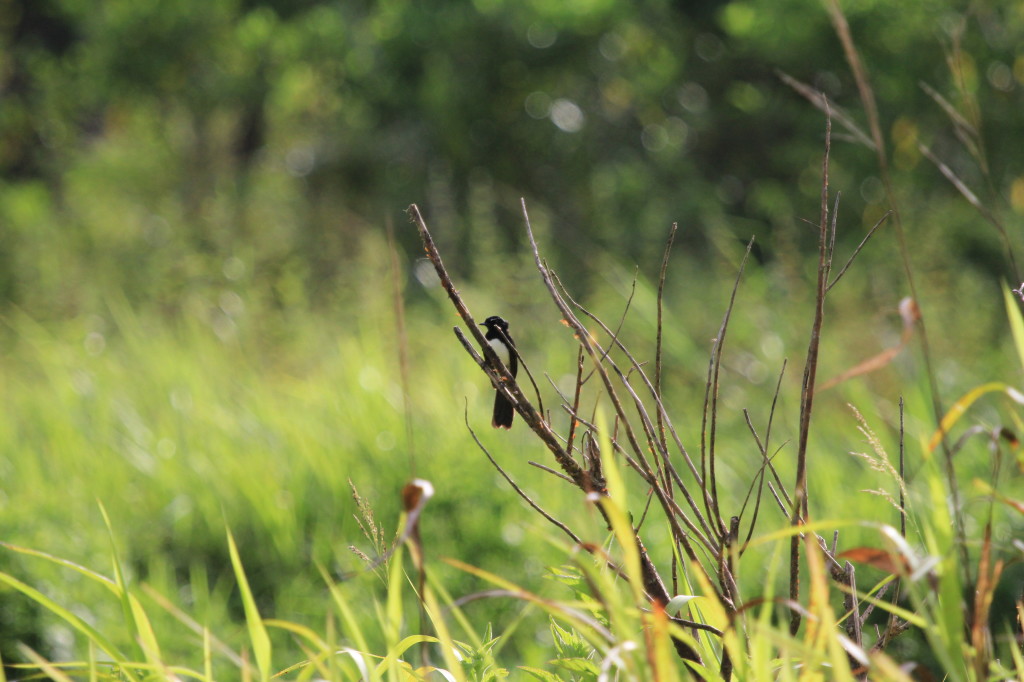
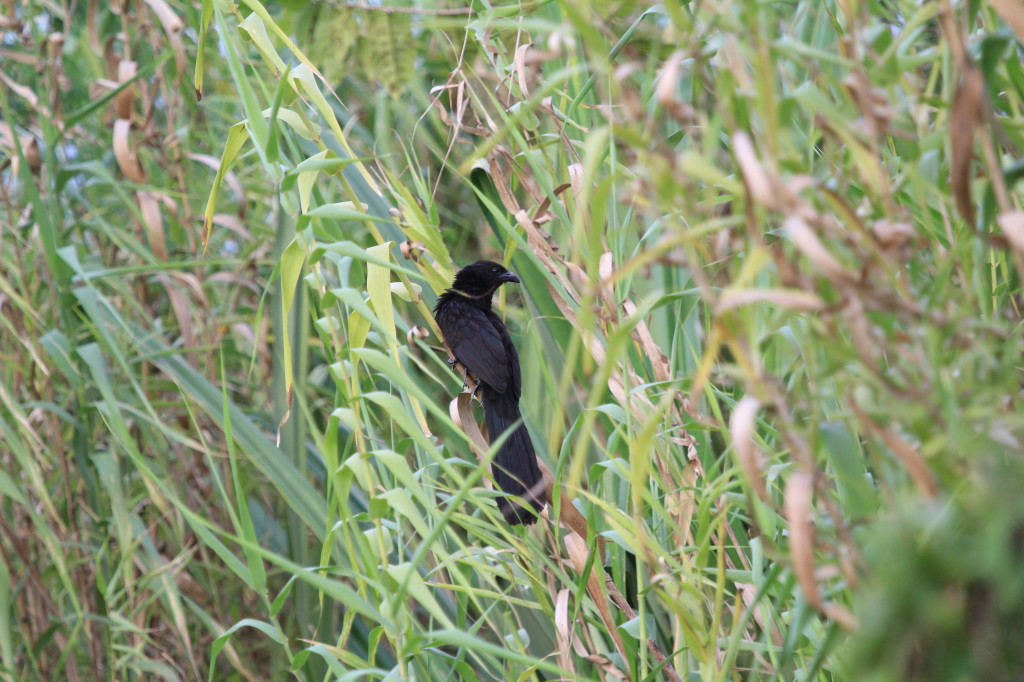
We saw lots of parrots here but the few pics I took were backlit and I can’t make out the colours well enough to identify them.  Jamil was pointing them out – Brown Lories, Dusky Lories, Black-capped Lories, Red-fronted Lorikeets, Red-flanked Lorikeets and Eclectus Parrots.  Non-parrot birds include:  Orange-bellied Fruit Dove, Black-browed Triller, Streak-headed Munia, Singing Starling, Green-backed Honey-eater, Brahminy Kite, Fawn-breasted Bowerbird, Lesser Black Coucal, Rainbow Bee-eater, Blue-tailed Bee-eater, Dollarbird, Helmeted Friarbird, Red-capped Flowerpecker, Yellow-faced Myna, Willy Wagtail, Spangled Drongo, Golden-headed Cisticola and Brown Cuckoo Dove.

IMG_7376

Eclectus

Eclectus

IMG_7403

IMG_7406

IMG_7408

IMG_7386

Willy Wagtail

Lesser Black Coucal

Lesser Black Coucal

IMG_7411

IMG_7415

IMG_7424

IMG_7425

Golden-headed Cisticola


Nimbokrang – A Must For Birders In West Papua

As I posted in my “Preparing to visit West Papua” blog, there are several gateways to enter West Papua.   You will need to fly into the airport of Jayapura to access Nimbokrang.  In this post, I will discuss the logisitics of visiting Nimbokrang and the gateway of Sentani/Jayapura.  The birding report will be on a separate post.

Red X Marks Location Of Nimbokrang

GETTING THERE

Jayapura  (DJJ) is served by Garuda Airlines (Jakarta, Makassar, Biak);  Sriwijaya (Jakarta, Makassar, Manokwari); Merpati (Jakarta, Makassar, Manokwari, Manado); and Lion Air/Wings (Jakarta, Makassar).  Of these airlines, Garuda is the only one you are likely to be able to book online with a non-Indonesian credit card and the only one you can reach with frequent flyer miles once they join SkyTeam.  Also see my post on Sriwijaya Airlines to learn how to book with a local Indonesian travel agency.  I found that by booking Garuda more than 6 months in advance I saved a substantial amount over the basic fares which can be pretty expensive.
IMG_7575

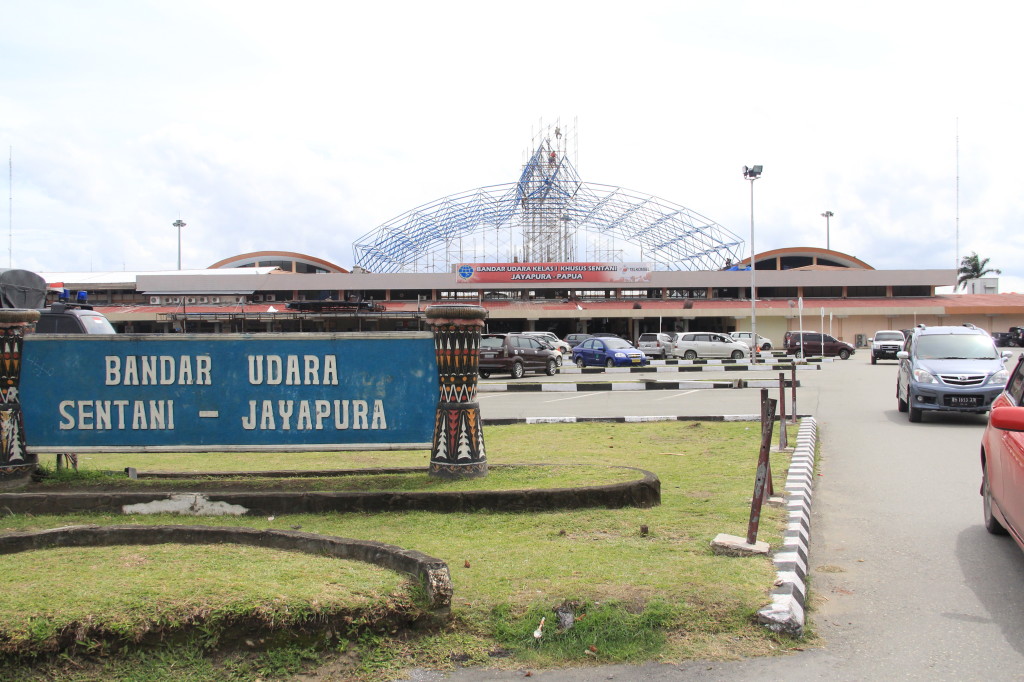
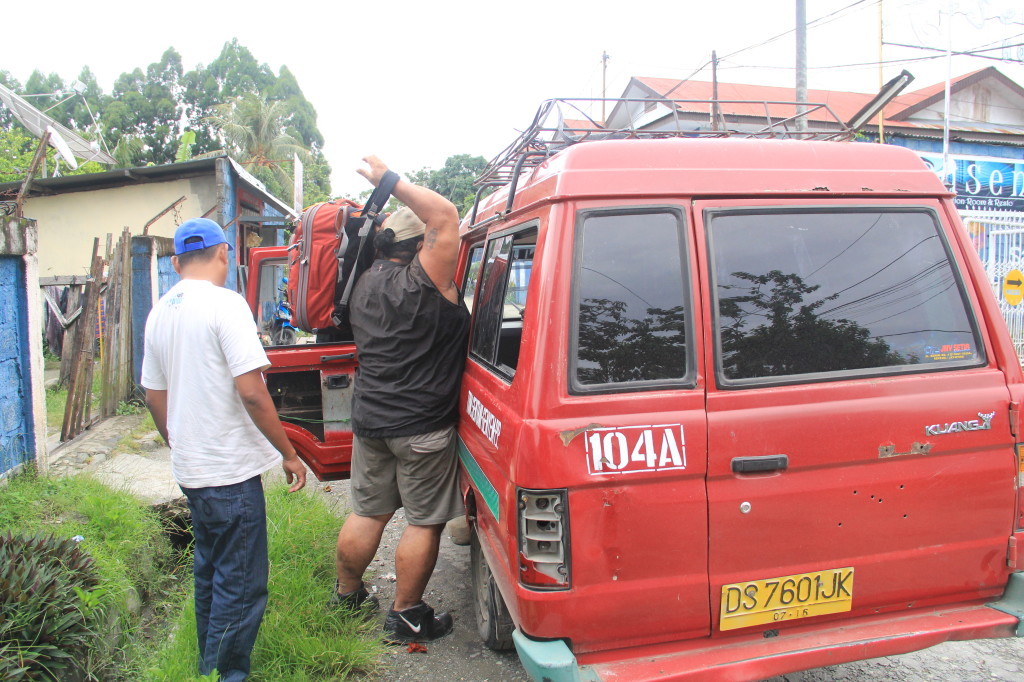
Once you reach the Jayapura airport (which is actually in the town of Sentani), you will still need to get to the village of Nimbokrang.  Pak Jamil, the birding guide extraordinaire can send a driver to pick you up at the airport.  Although this costs 500,000 rupiahs, I recommend using his driver to get there as you will also need a Surat Jalan (travel permit) and the driver will bring you to the police station, wait while it is issued, then take you to Jamil’s house in Nimbokrang.  To return to Senatani, Jamil can call a regular bemo to pick you up at his house which is around $5 per person.  The bemo will drop you off at your hotel in Sentani which you will probably need as most flights leave early in the morning.

IMG_7561

SURAT JALAN

This is a travel permit issued by the regional police and you will need one to go off the beaten track in West Papua to such places as Nimbokrang, Wamena and Arfak.  The police station in Sentani will give you one permit for all the places you request.  It takes about an hour to issue and you will need 2 passport photos and photocopies of your passport and Indonesian visa page.  Try to avoid arriving on a Sunday as the officer who issues them will probably be off duty.  Luckily Jamil’s granddaughter was with us and she explained everything to the guard on duty and the officer came in special to issue the permit but we could have been left until Monday to get the permit.  It cost about 50,000 rupiah or $5.   It’s a good idea to bring extra passport photocopies and passport photos in case other village chiefs or police ask for them.

WHERE TO STAY

In the village of Nimbokrang, Jamil can currently accommodate a few people in his spare room, I would say no more than 3 or 4 tops for 200,000 rupiahs per person per day which includes delicious meals cooked by his lovely wife Suri.  There are fans in the room and I advise burning mosquito coils as they are everywhere in this village.  If you are with a large birding group, you will probably be camping in tents provided by the tour organizer.  Jamil is in the process of building a guest house next door to his home and then he will be able to accommodate more people.

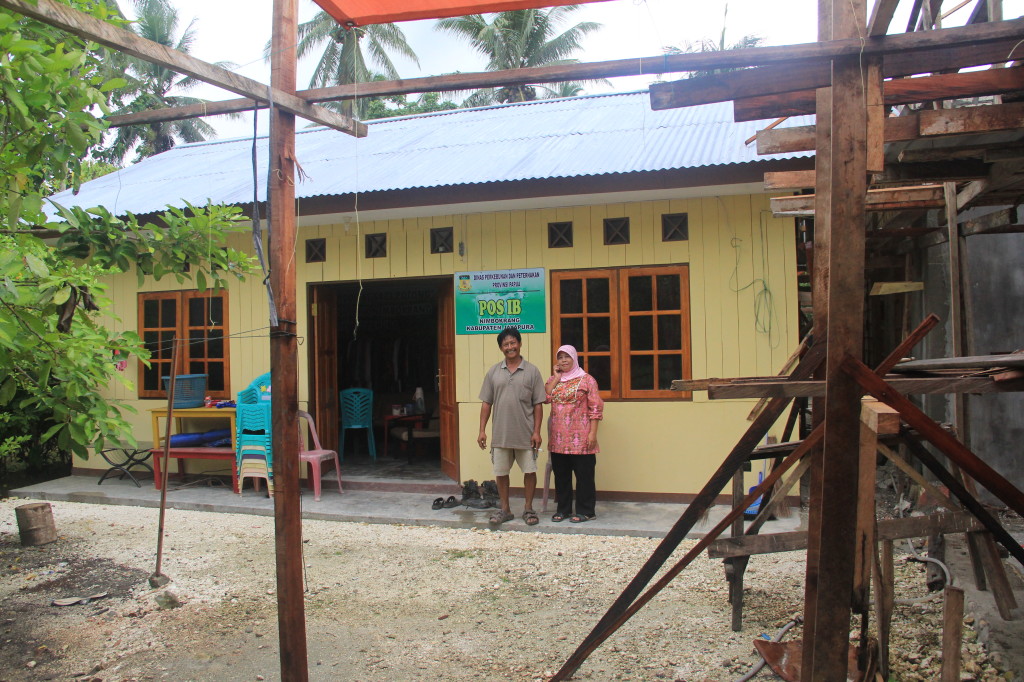
Jamil and Suri in front of their home with new guest house in progress next door

Jamil and Suri in front of their home with new guest house in progress next door


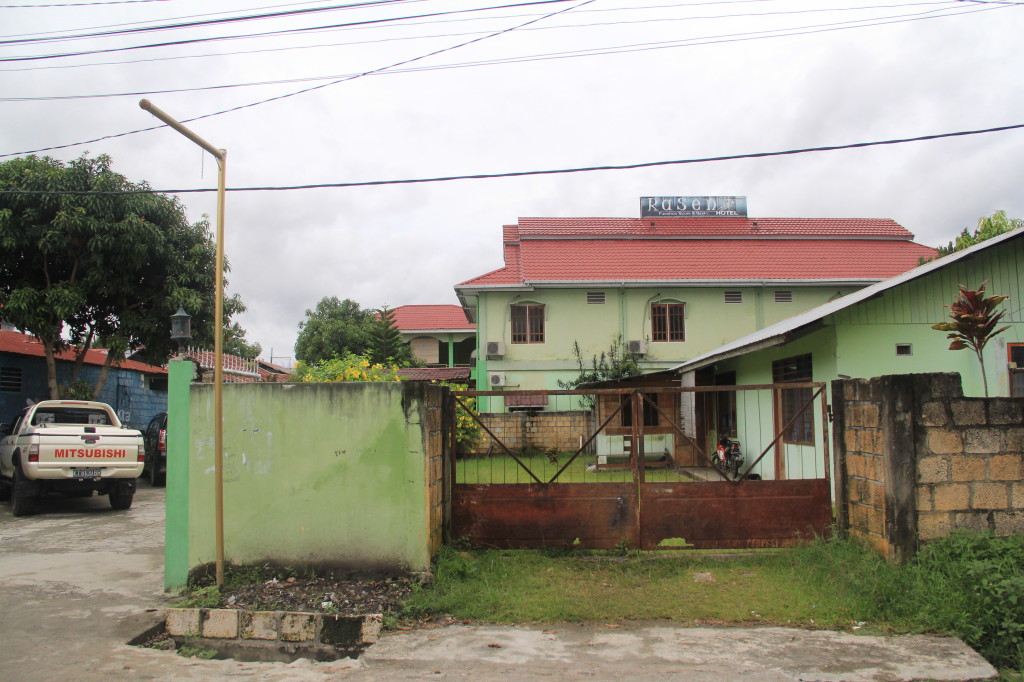
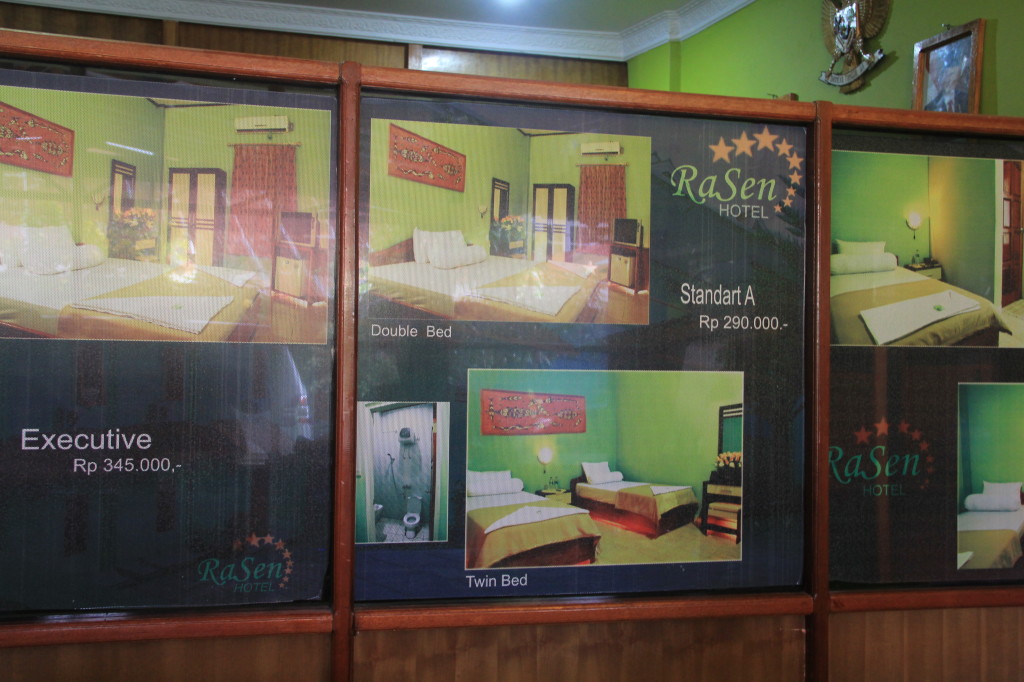
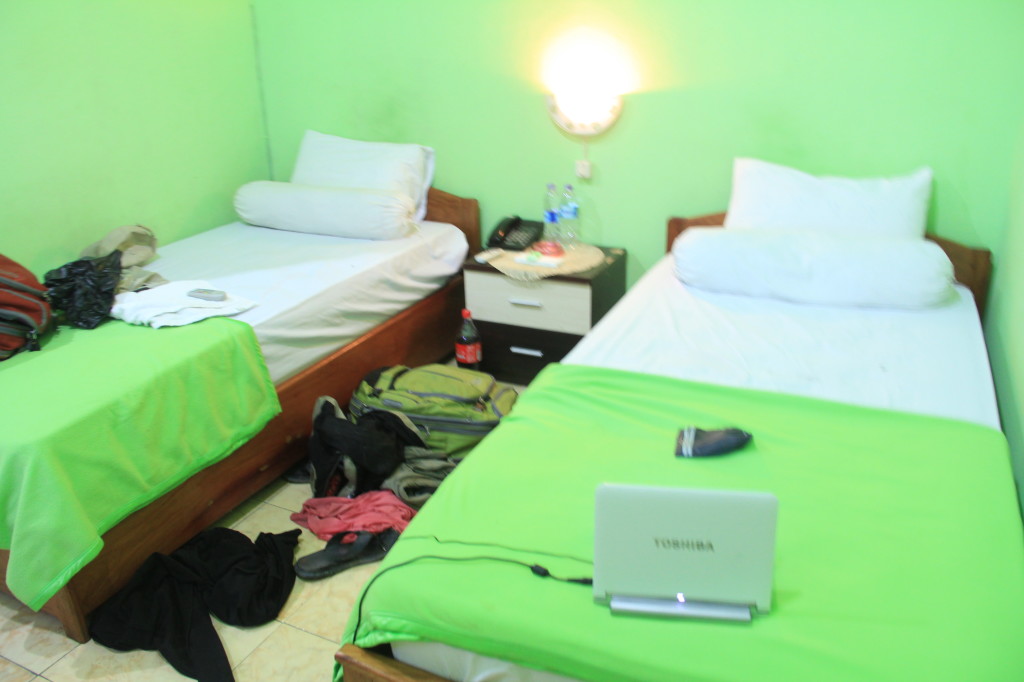
As I mentioned above, you will probably need an overnight stay in Sentani as most flights leave in the morning.  We stayed at the Rasen Hotel which is a cheap and cheerful place about 5 minutes walk from the airport.  The room cost 290,000 rupiah (around $30) and included breakfast. Wifi is free but very slow!  There is a restaurant onsite or you can walk 10 minutes to Rumah Makan Mickey which has pretty good food.

IMG_7562

IMG_7563

IMG_7577

 KILLING TIME IN SENTANI

Grocery store near Rasen hotel-has sandwiches, snacks and drinks amongst usual groceries.

IMG_7564

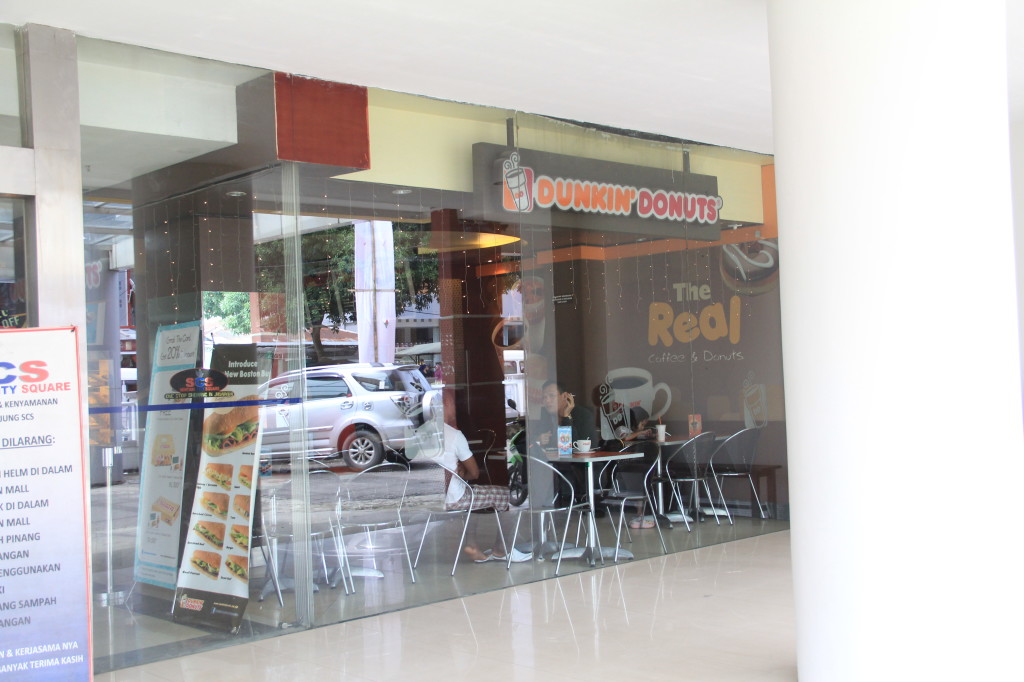
There’s a small mall which has a Dunkin Donuts (chocolate-peanut butter highly recommended) and a department store.

IMG_7565

IMG_7566Warning, t-shirts here run small so buy a size or 2 larger than usual.  Great designs for bird lovers!  They were on sale for around $5 or 6ish.

IMG_7567

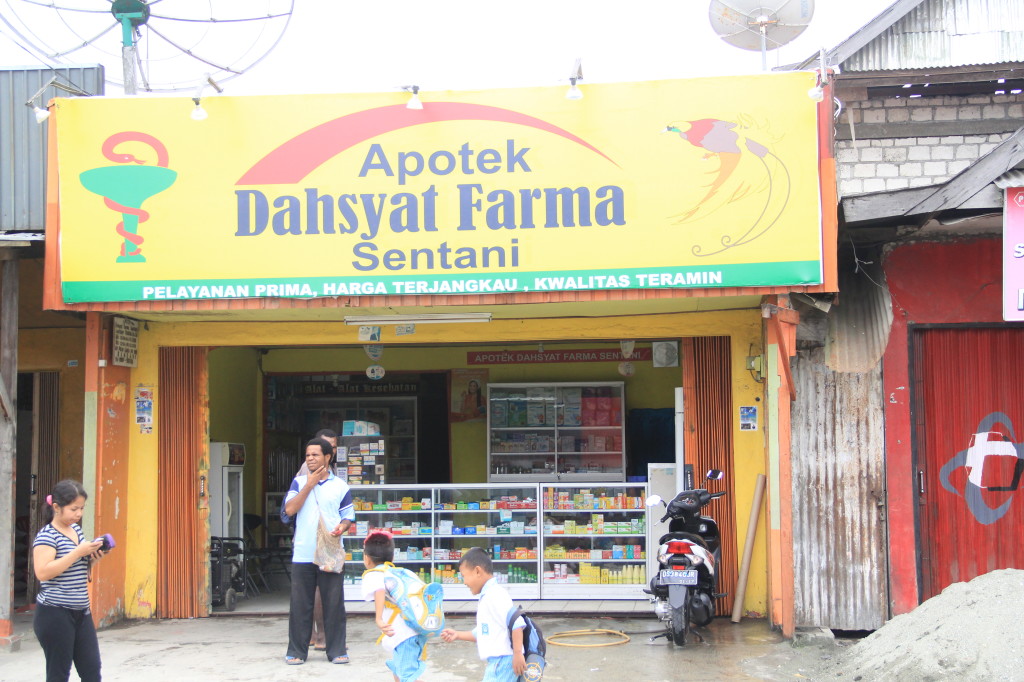
Typical Indonesian pharmacy

IMG_7573

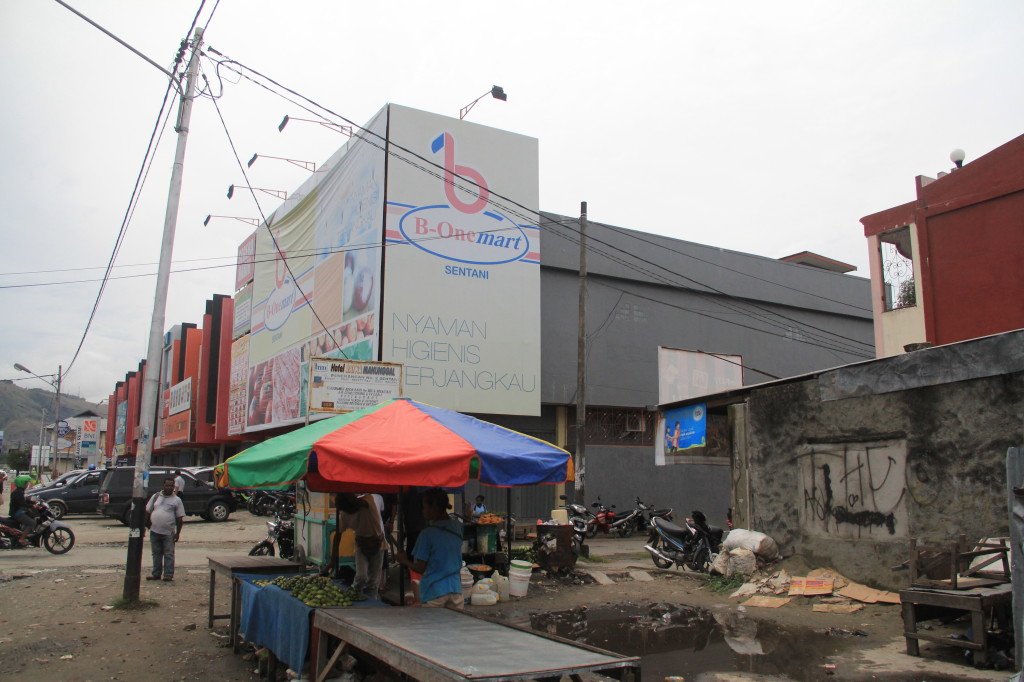
Sentani Market

IMG_7569

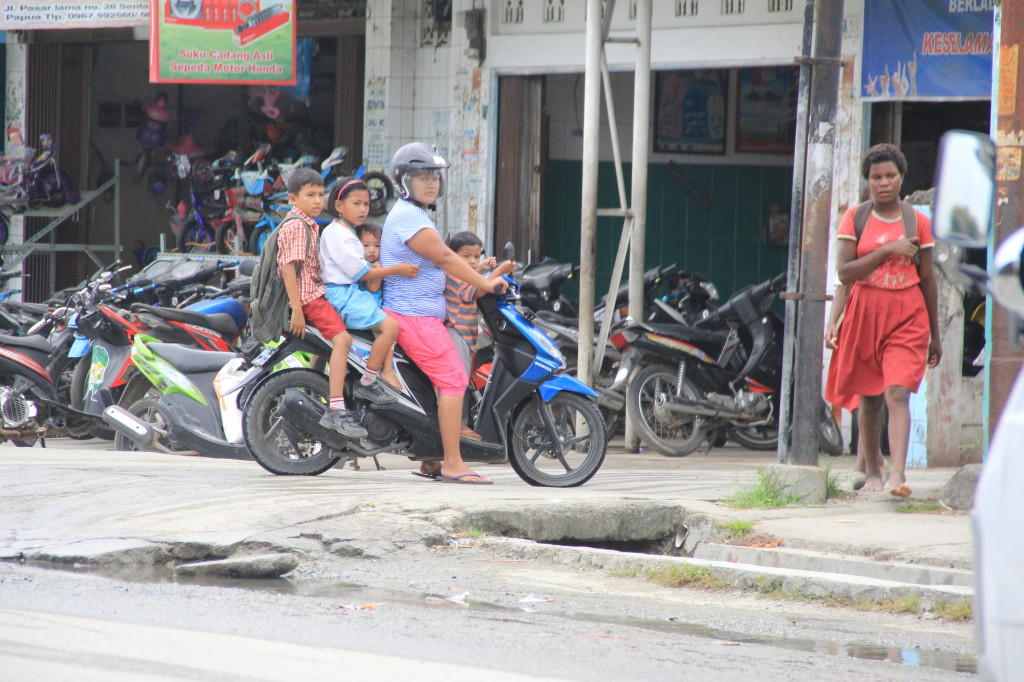
How many people can you get on 1 motorbike?  Do we really want to know?

IMG_7572

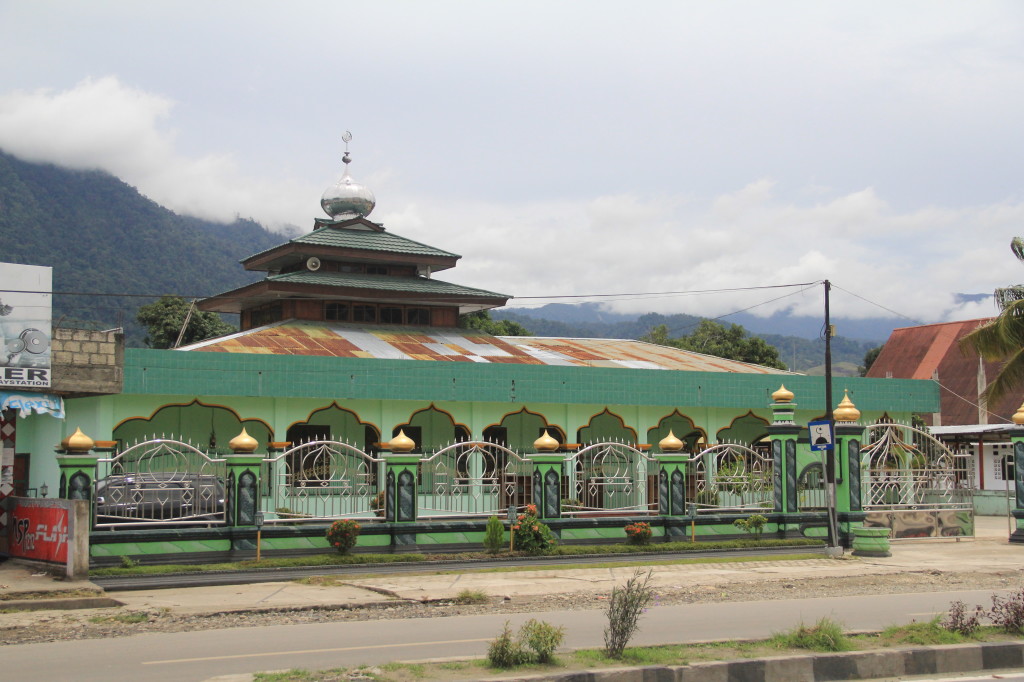
Mosque in Sentani

IMG_7568


Avianca-Taca LifeMiles 100% Bonus On Buying Miles 8-30 April

One of the best buy miles promos is back!  Hopefully you all took my advice and joined LifeMiles when I first blogged about its benefits for eco-tourists.   One of the catches with these promos is that you must have joined before the promo is announced.  If you are new to MTTW, here is a complete list of all the airline programs I recommend you join to get started.

If you read other travel blogs, you will see most bloggers recommend using LifeMiles for Star Alliance awards, but it is much easier to use them on Avianca-Taca flights and you can save quite a bit since flights within Central America and Peru can be costly.  When you buy miles, you should always have a plan to use them within the next year or so as you never know when they may be devalued.  Also, be sure to check the cost of buying a ticket for cash (which may earn you miles depending on fare class) and compare to the cost of buying enough miles for an award.  You will be able to check availability on the LifeMiles site before you spend any money.  Star Alliance awards can be a bit tricky to get so if you have a destination in mind, please ask in the comments and I will tell you more info.  Awards on Avianca-Taca can be great bargains, I used them for our upcoming trip to Central America and saved over $1000 for 2 people!  Here’s the rules of the current promo:

Buy miles 2×1

Buy miles and get twice as much!

We want you to enjoy life twice as much, therefore, for each package of 1,000 miles you buy, LifeMiles will give you a bonus of 100 % more that can be redeemed to fly on routes operated by Avianca, TACA, AeroGal, partner airlines or Star Alliance member airlines. Also, you can enjoy your LifeMiles with the programs’ vast partner network or through our LifeMiles Catalog where you get the best products from different categories like technology, personal use items, home appliances and toys among others.

You can access this promotion through our Call Center, LifeMiles.com or at Avianca and TACA’s Information Centers.

Terms and conditions

  • This promotion is available through Avianca and TACA’s Call Centers, LifeMiles.com and Avianca and TACA’s Information Centers, except Colombia where is available only through the Call Center and LifeMiles.com
  • This promotion is available between April 8th, and April 30th, 2013, as the last date of purchase
  • Maximum miles to buy per transaction: LM75,000
  • Minimum of miles to buy per transaction: LM1,000
  • Maximum miles to buy during a calendar year: LM150,000
  • Miles must be purchased in multiples of 1,000
  • Maximum number of transactions: 1 transaction
  • At LifeMiles.com, the purchase can only be done through Earn/Buy LifeMiles. Does not apply to the Flexible Redemption (miles + money) during the payment process of air ticket redemption
  • The amount for purchase of miles is not refundable
  • Each package of 1,000 miles costs USD 35,40, including all taxes applicable to each country*
  • For Venezuela residents: each package of 1,000 miles costs USD 40,oo plus local taxes of 12% IVA, for a total cost of USD 44,8o. The values are settled at the current exchange rate to Bolivares Fuertes.
  • Form of payment through Call Center and LifeMiles.com: International credit or debit card. Cash payments are only allowed at Avianca or TACA’s Information Centers
  • The cost per block of 1,000 miles may vary according to the country or channel of purchase

Other conditions:

  • Applies only to members enrolled in the program prior to April 8th, 2013
  • The miles purchase transaction receipt will show the total of miles credited to the customer’s account, including bonus, and the total amount charged for the transaction
  • The miles bought and earned with this promotion do not apply to achieve Elite status
  • The amount paid for the miles’ purchase is not refundable
  • The miles are not endorsable
  • Miles purchased, once accrued, can be redeemed in accordance with the conditions specified in the LifeMiles’ Program Terms and Conditions and the portfolio of products and services available for redemption.
  • LifeMiles Terms and Conditions apply
  • * The price may be lower depending on the country of residence registered in the members account in the database


Greater Bird-Of-Paradise, (Paradisaea apoda)

The spectacular Greater Bird-Of-Paradise, (Paradisaea apoda) was not in the range of our trip but since I posted about Lesser Birds of Paradise, I thought I should show you the difference.  The colouring is very similar but they are the largest member in the genus Paradisaea, with males measuring up to 43 cm (17 in) (excluding the long twin tail wires). The female is smaller, at only 35 cm (14 in).

Greater Bird-Of-Paradise, (Paradisaea apoda)

It is much harder to find them in the wild as their range isn’t in any of the main birding hotspots of West Papua which is generally the easiest place to get to for Birds of Paradise.  Some organized birding groups do go to Papua New Guinea but they are not cheap!

Distribution

This clip of the mating ritual of Greater Birds of Paradise was filmed on the Aru Islands.  In the image above, this is the smaller island with the green highlighting south of New Guinea to the left side.

Lesser Bird-of-paradise, (Paradisaea minor)

The official name of this exquisite bird just seems wrong!  How can anything so beautiful be “lesser” to anything?

Lesser Bird-of-paradise, (Paradisaea minor)

They are found exclusively on the island in New Guinea in the northern half of the island.  The similar looking larger Greater Bird of Paradise is in the southern part of the island.  For the eco-tourist, your best chance of seeing one is going with a highly skilled guide such as Pak Jamil in Nimbokrang.  I didn’t get a good look at one as during our visit they stayed deep in the trees but we could hear them calling.   Birding is never a sure thing, sometimes you get lucky, sometimes you don’t.  They do stay in their display area but sometimes the trees block your view and I didn’t have the gear to slosh through the mud to get a better view.

Distribution


This video shows their beauty up close!

Twelve-wired Bird-of-paradise (Seleucidis melanoleucus)

The intriguing Twelve-wired Bird-of-paradise (Seleucidis melanoleucus) is widely distributed throughout New Guinea and Salawati Island of Indonesia.  I caught a glimpse of one in the swamp forest of Nimbokrang while birding with Jamil.  Much to my frustration, my camera battery had somehow gone flat overnight so I wasn’t able to get a pic of my own so have to rely on this one from Wikipedia.

Twelve-wired Bird-of-paradise

The best place to see the Twelve-wired Bird-of-paradise in in West Papua and visiting Nimbokrang you have the advantage of one of the top birding guides in Indonesia – Pak Jamil.  I will be doing a separate blog on how to organize this.

Distribution

There’s a lot of great information about them in this video with David Attenborough.


Parrots International’s Symposium 2013

There are a number of parrot focused conventions held around the world every year.  This is one I would have loved to go to if I had had more advance notice.  No way I would get award seats in high season between Australia and LAX.  People based in the USA have a chance though and if you are interested in parrot conservation it looks like a great program!  For details, head over to Parrots International’s Symposium site. The Symposium creates a forum for parrot conservation, in situ field research, and companion parrots. We gather renowned experts and upcoming, dedicated, parrot researchers from around the globe, as well as students, donors and supporters, and conservation organizations.

Join us at our the eighth annual Symposium 2013 taking place at the

Queen Mary Hotel, Los Angeles (Long Beach), California

June 20-22, 2013

Queen_Mary_touched

A Magical Journey Awaits You

Welcome to the Queen Mary!

Once a world-class ocean liner, the Queen Mary Hotel offers guests unique accommodations and a wide array of attractions that simply cannot be found anywhere else.

Unique Long Beach Hotel Accommodations

Whether it’s the authentic polished wood paneling, the original 1930s artwork, the Art Deco style or the operable portholes, there’s no question that the Queen Mary Hotel is unlike any other Southern California hotel. Each stateroom is unique with its own personality and offers a real glimpse into what transatlantic travel was like during the 30’s, 40’s and 50’s. With an impressive history and tradition of excellence, the Queen Mary Hotel is more than a place to rest one’s head – it’s an entire experience.

The Queen Mary Experience

From historic tours, to paranormal attractions, shops, spa and various events, there are a wide variety of things to do and see while aboard the ship. We hope you enjoy your stay aboard the Queen Mary and take advantage of all the wonderful sites, sounds and tastes, the ship has to offer.