Northern Kruger Park’s Mahonie Loop

The Mahonie Loop is right next to the Punda Maria Rest Camp in northern Kruger Park and is a treasure trove of wildlife.

Mahonie Loop

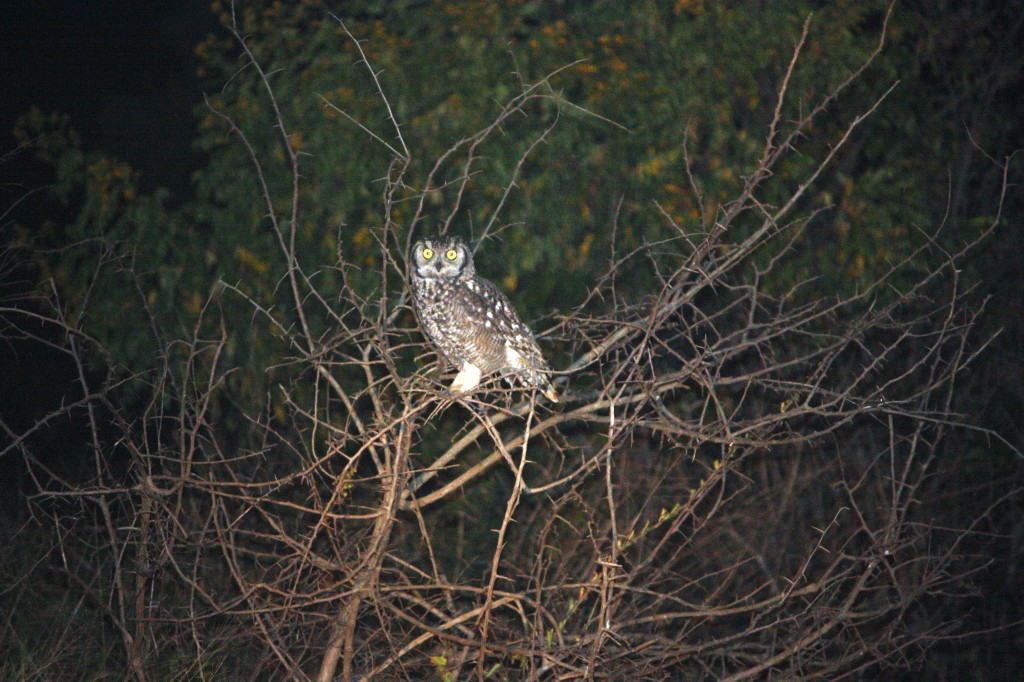
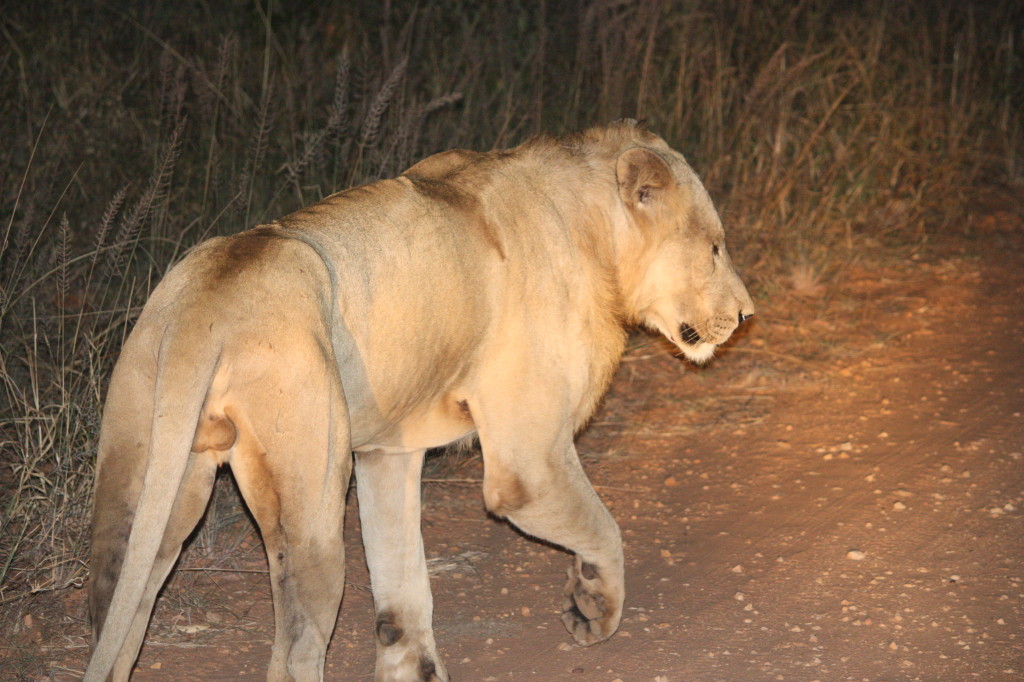
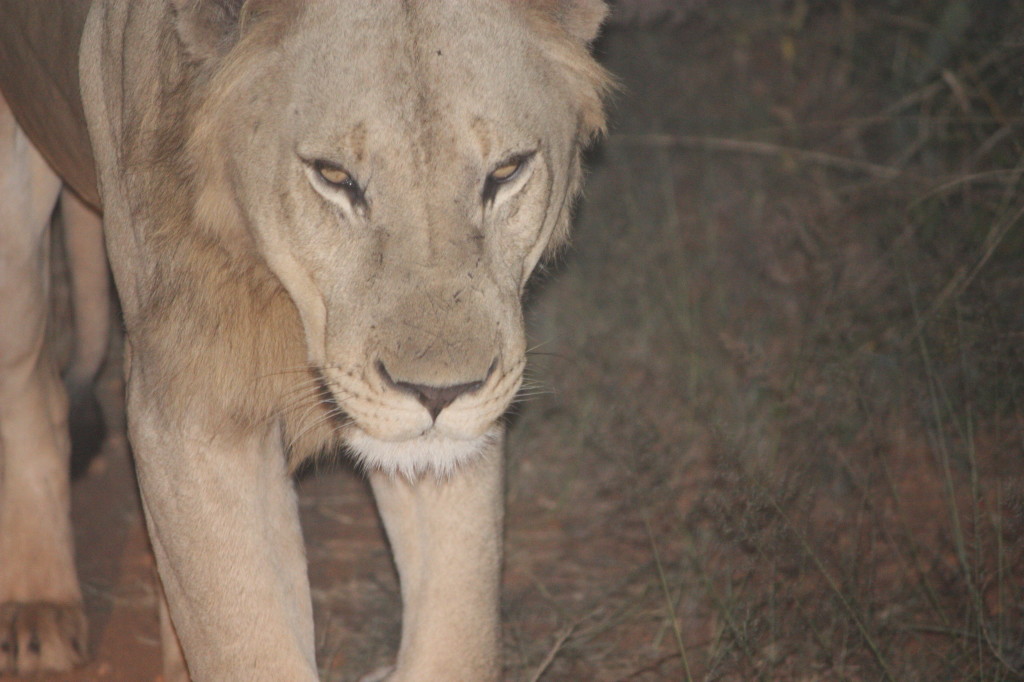
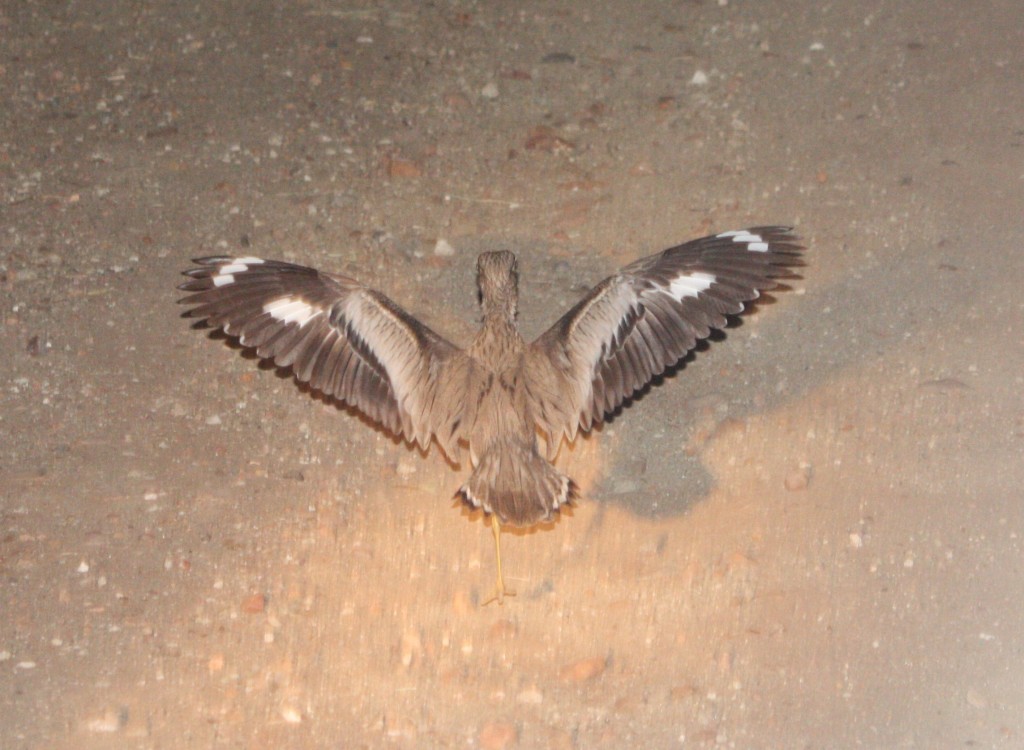
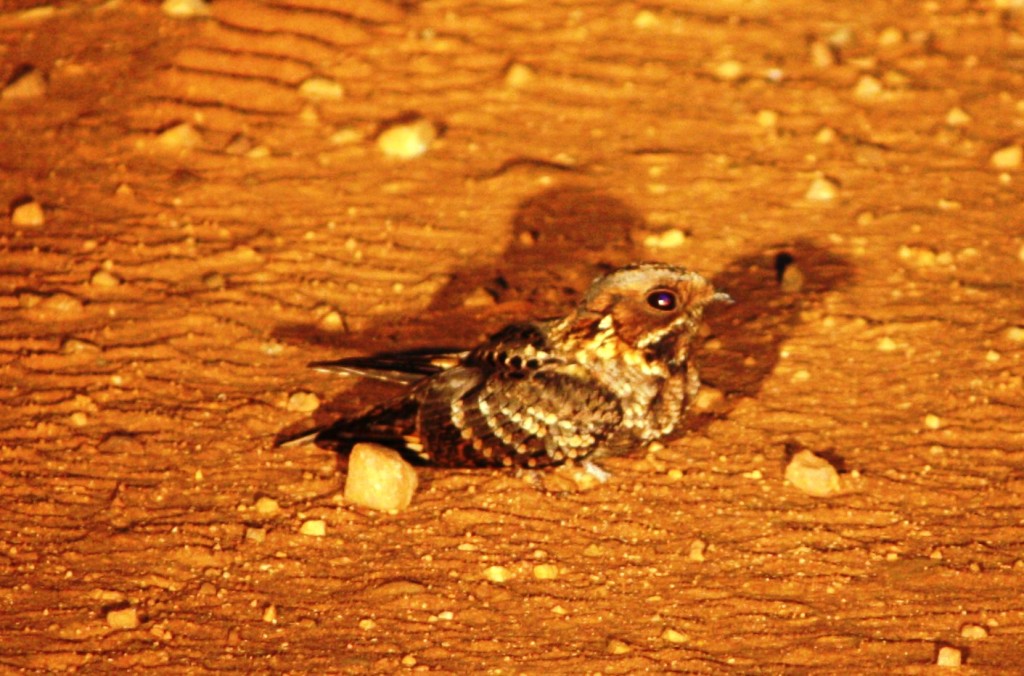
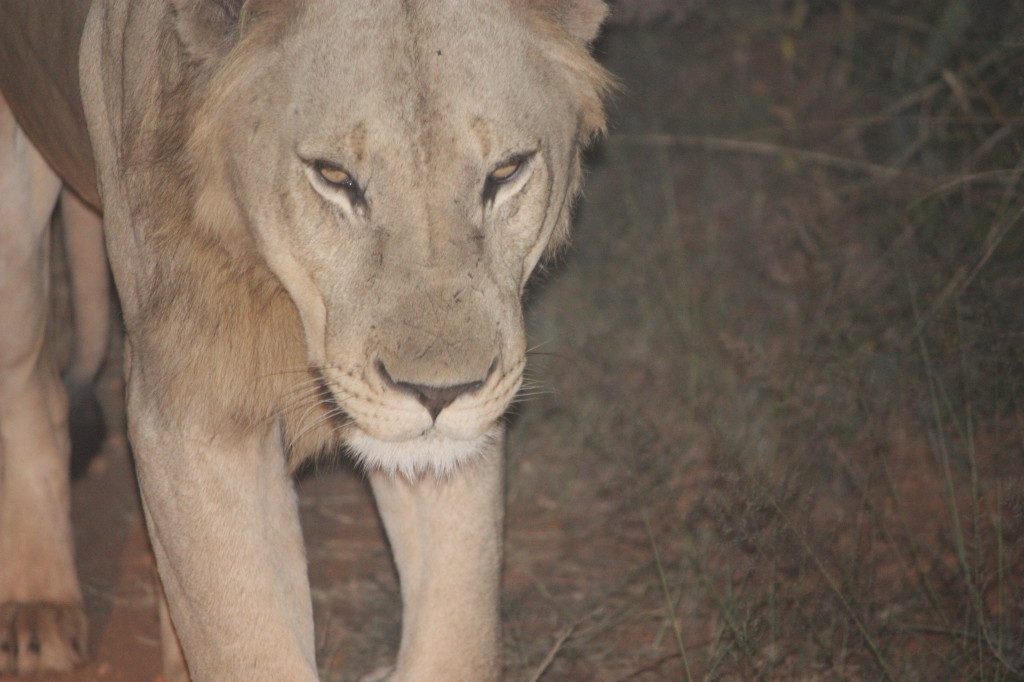
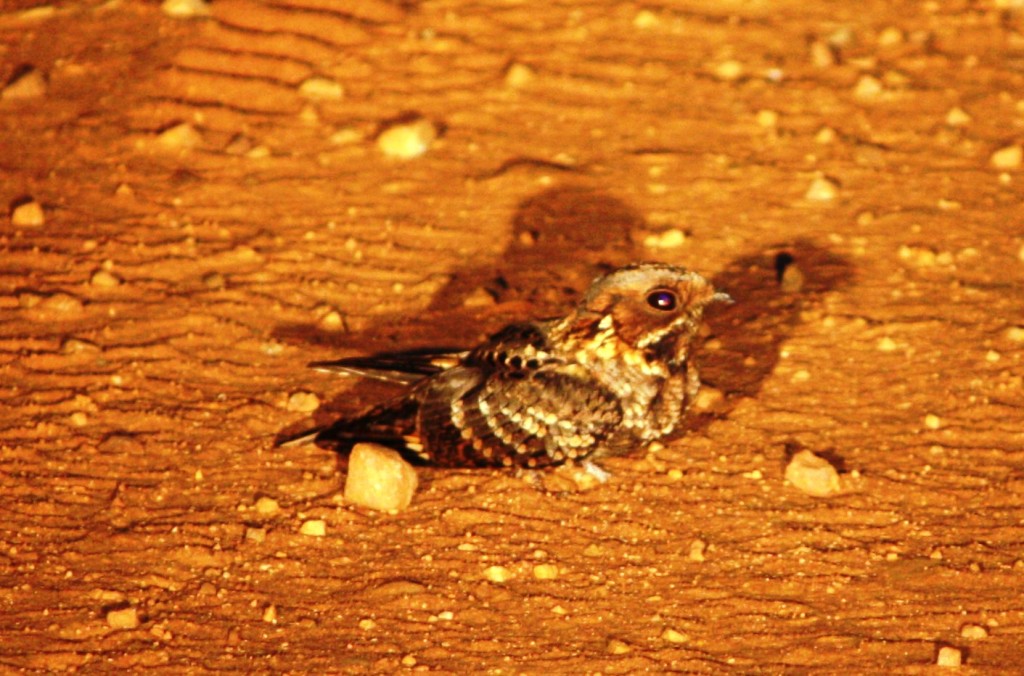
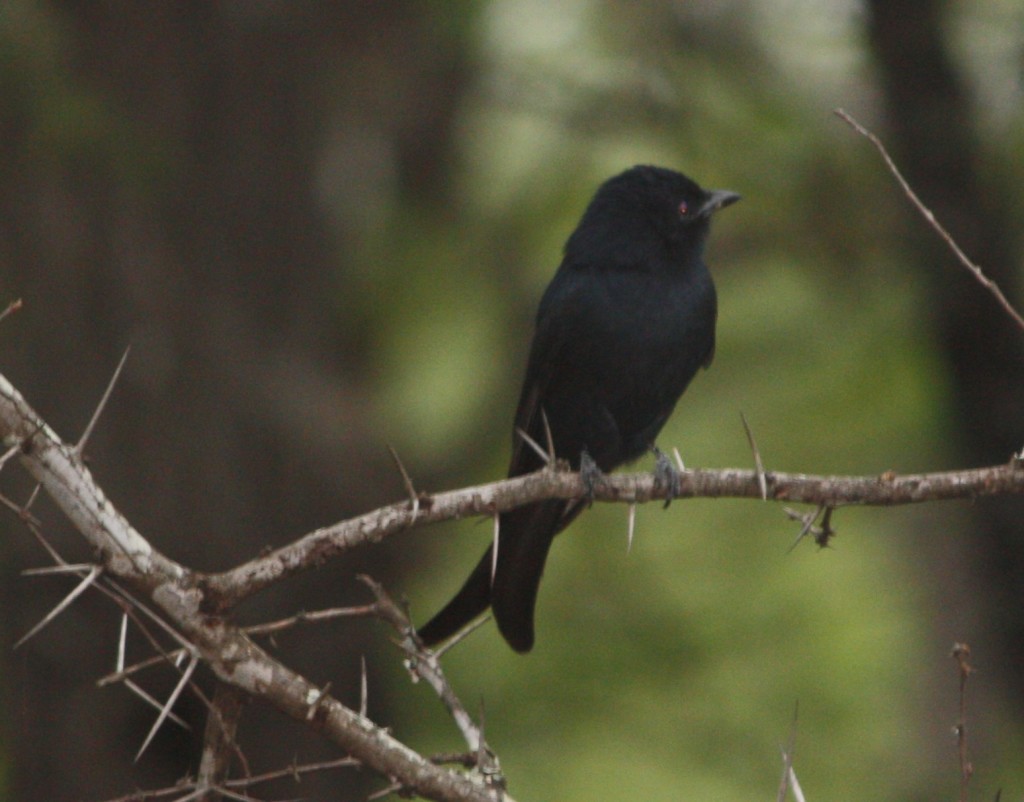
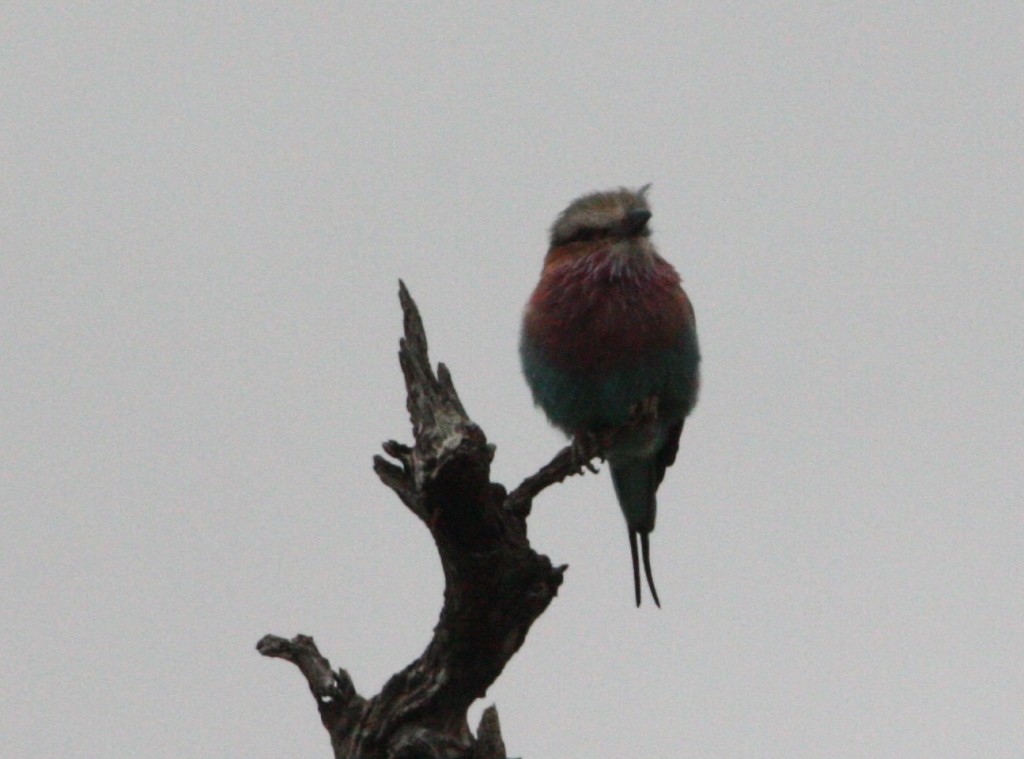
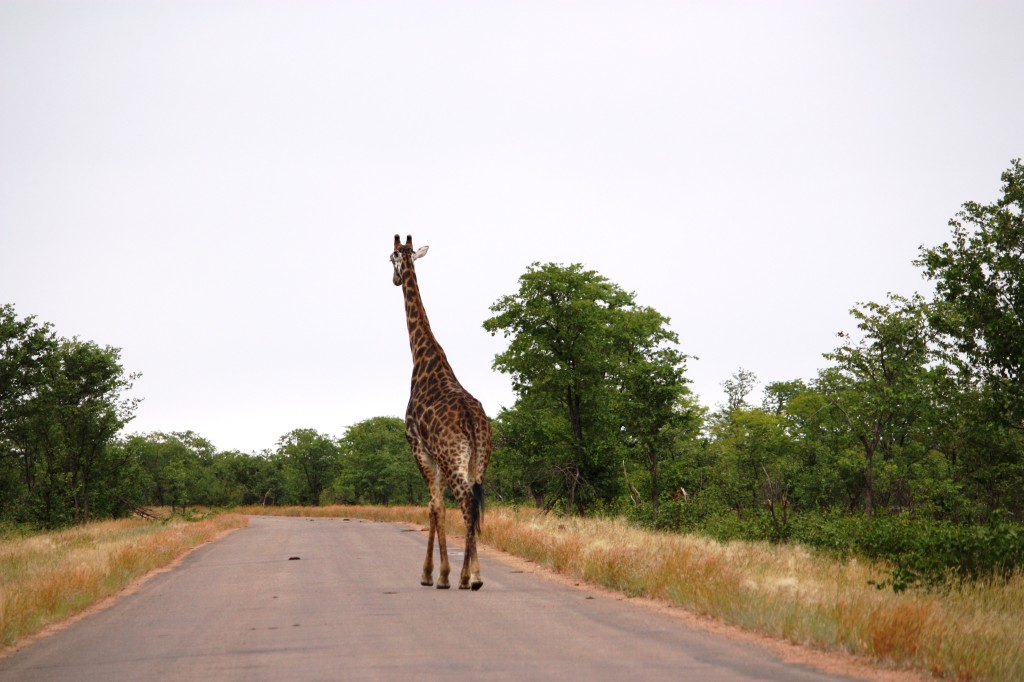
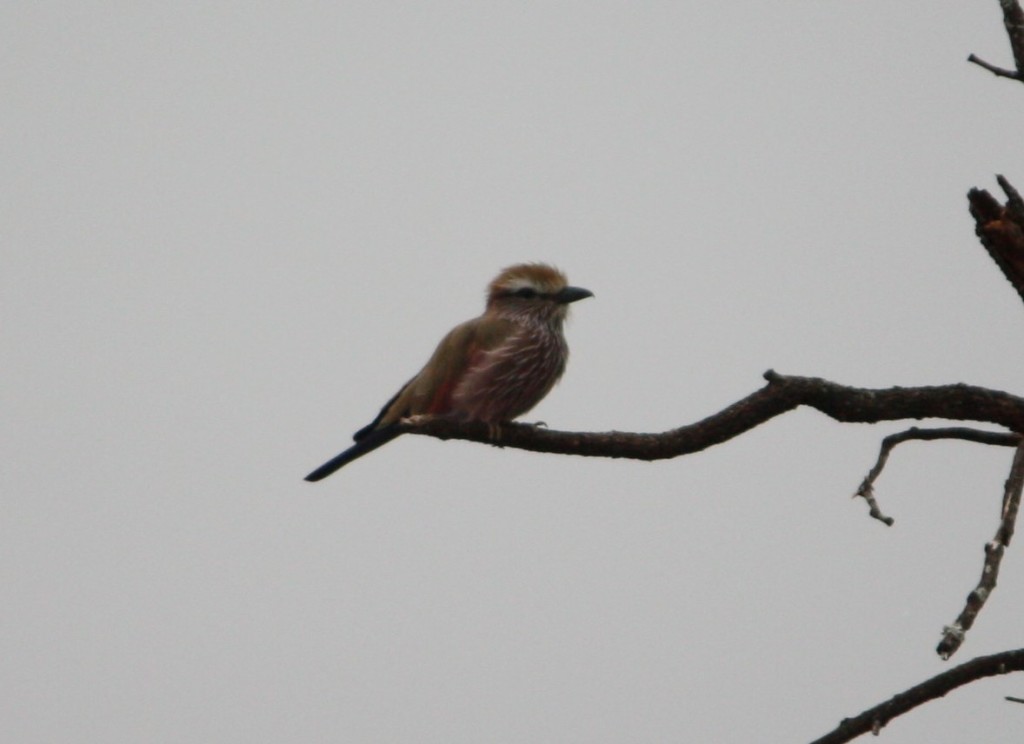
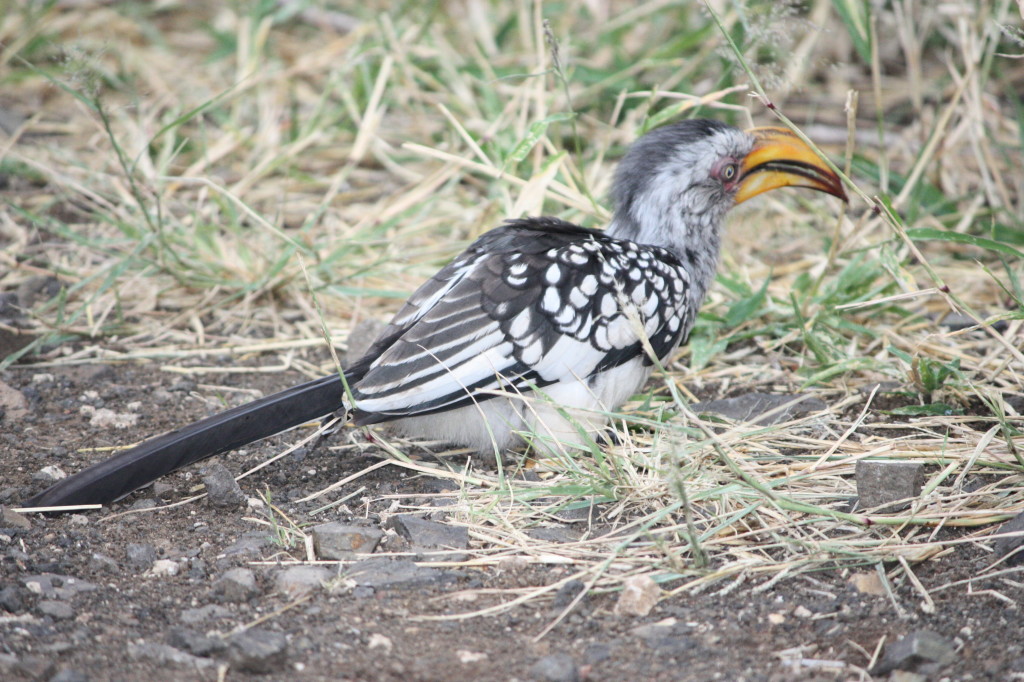
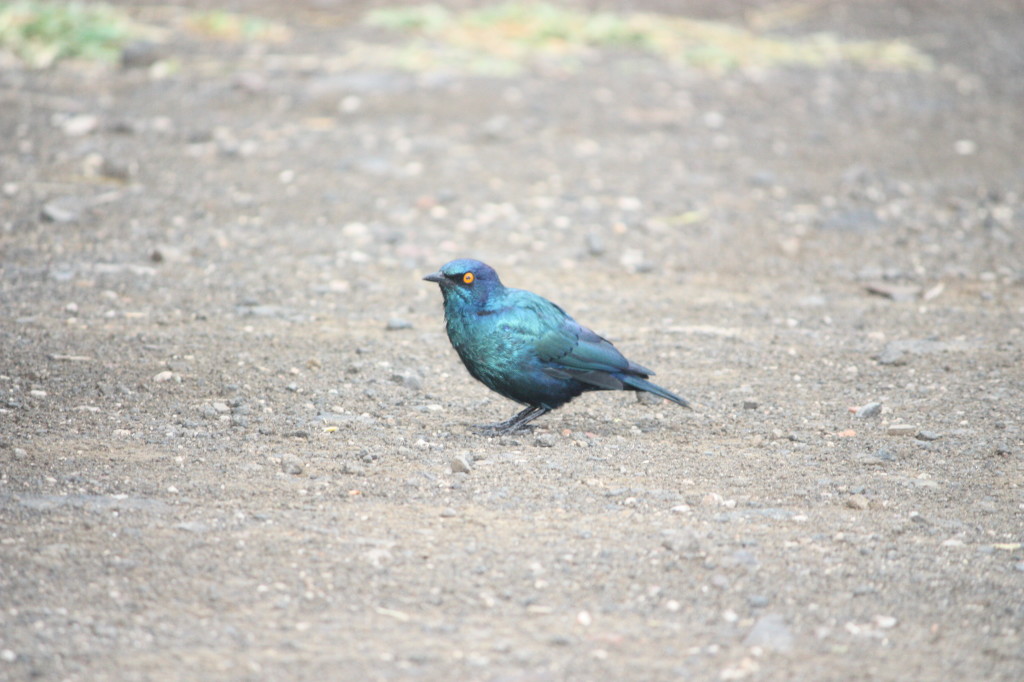
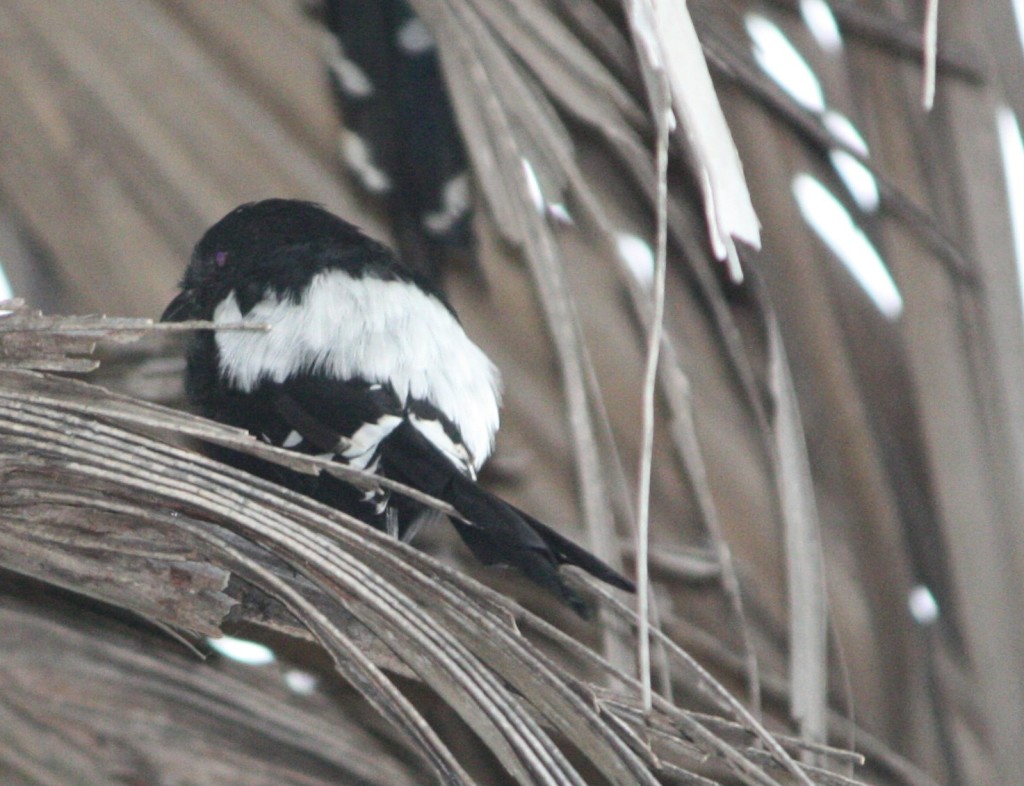
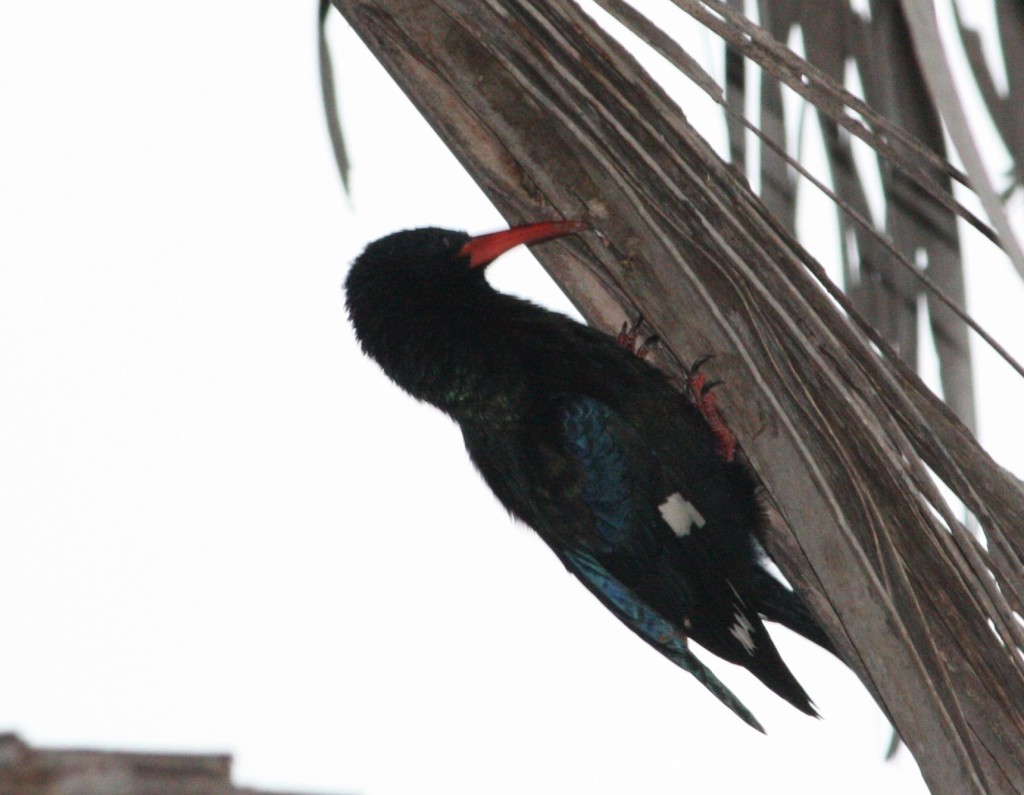
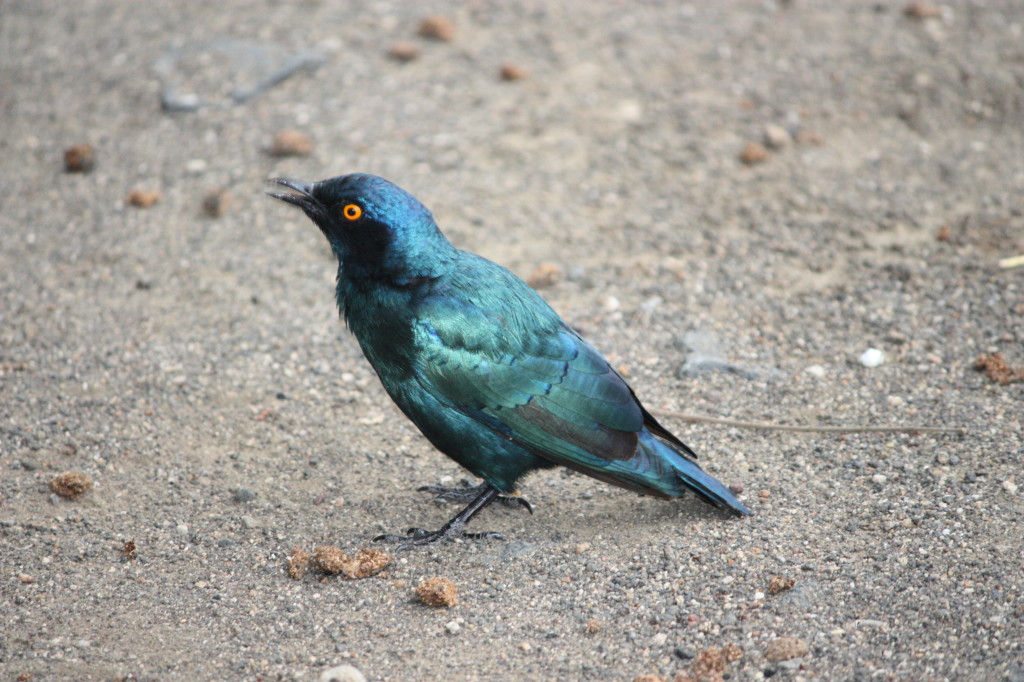
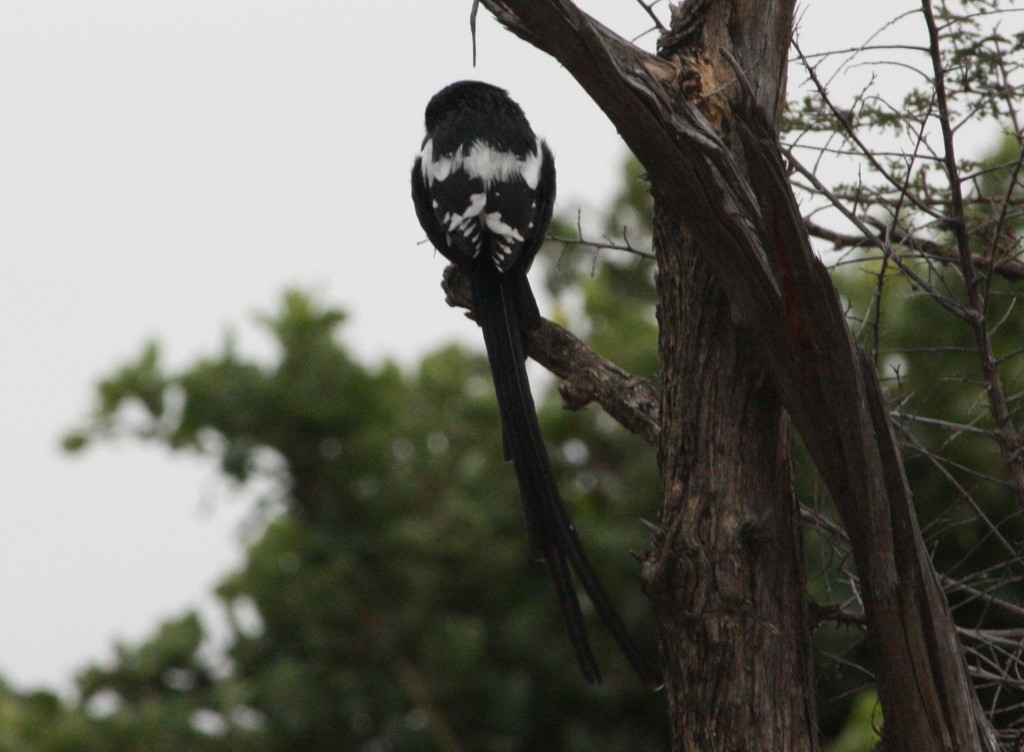
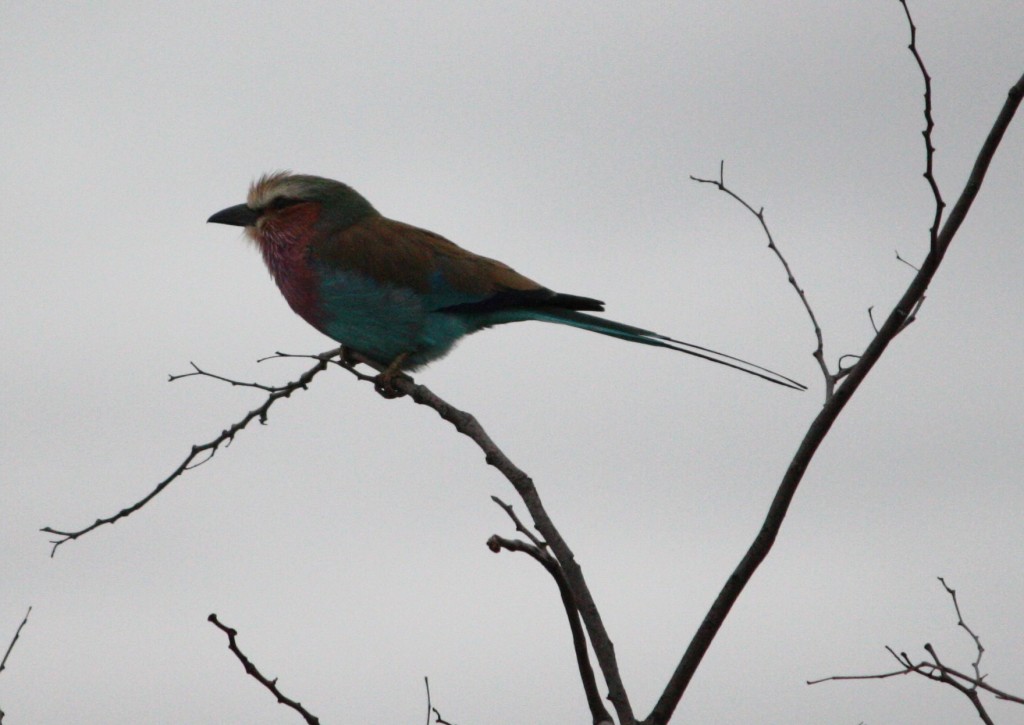
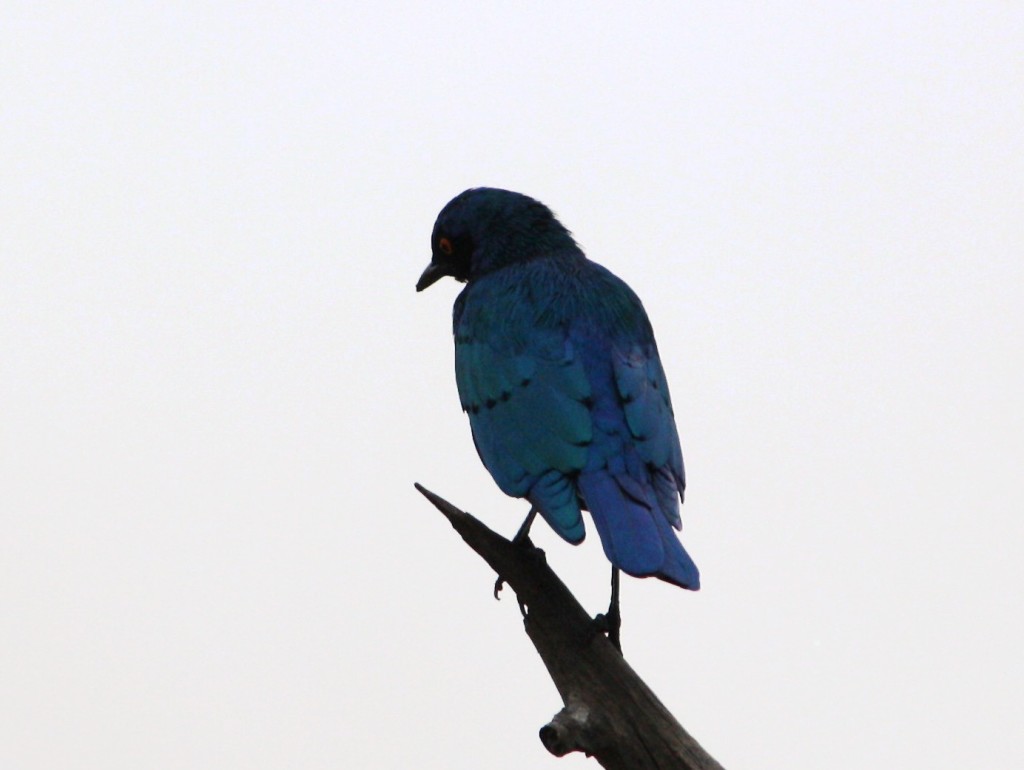
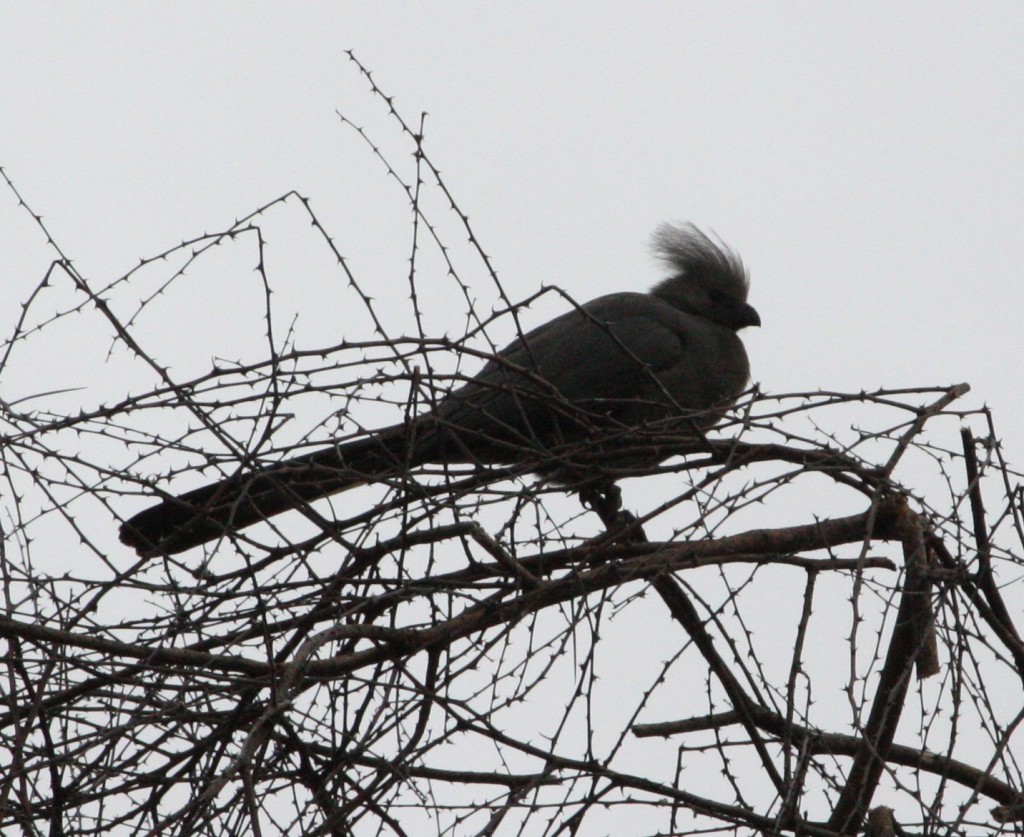
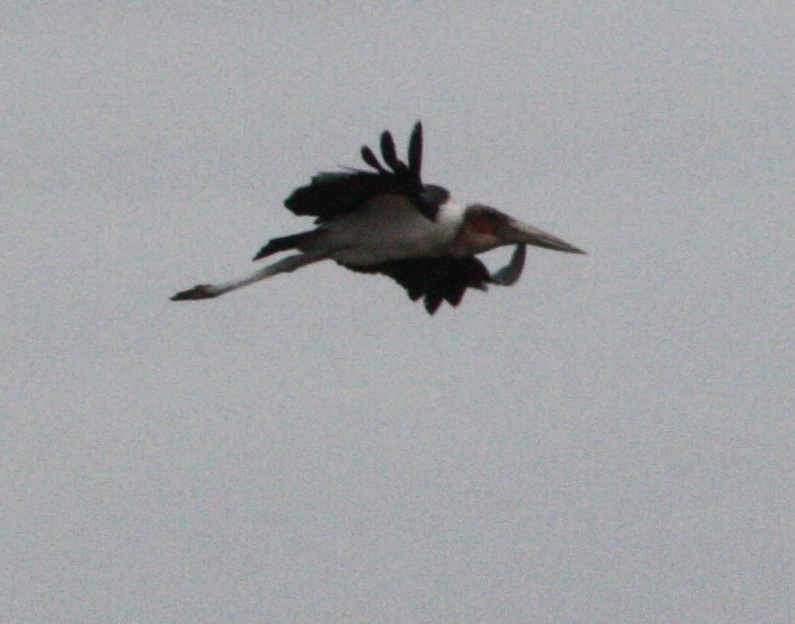
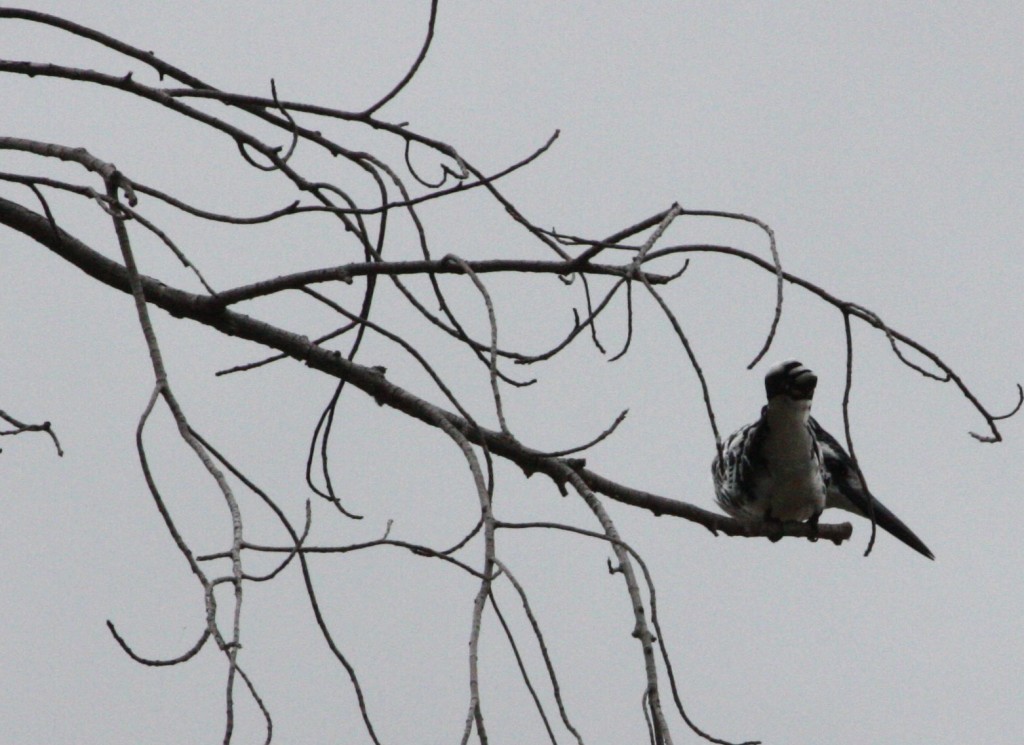
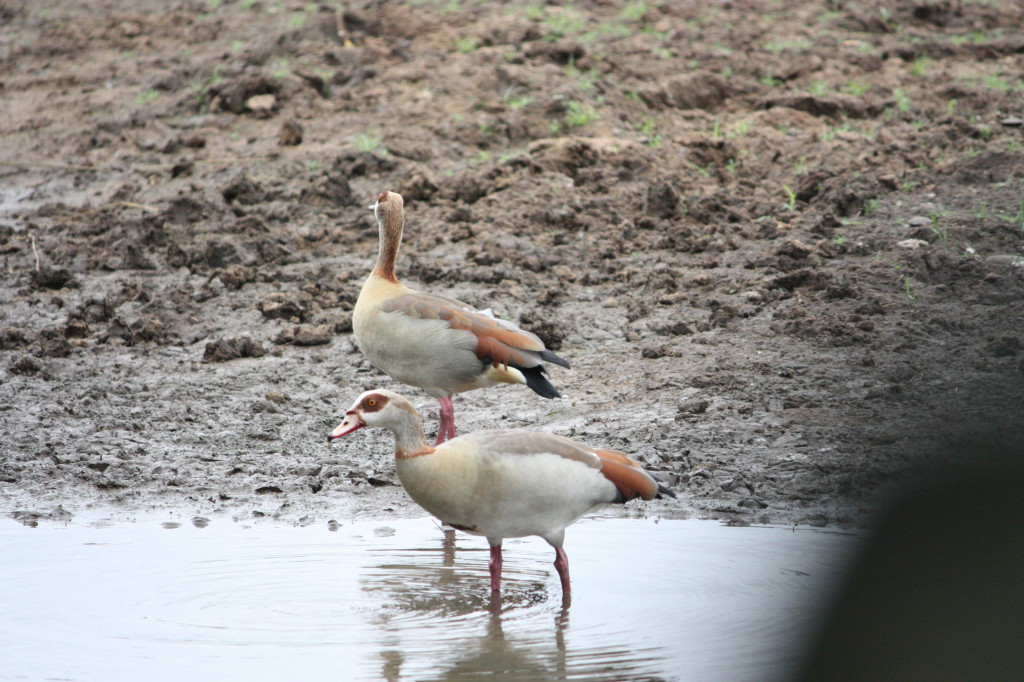
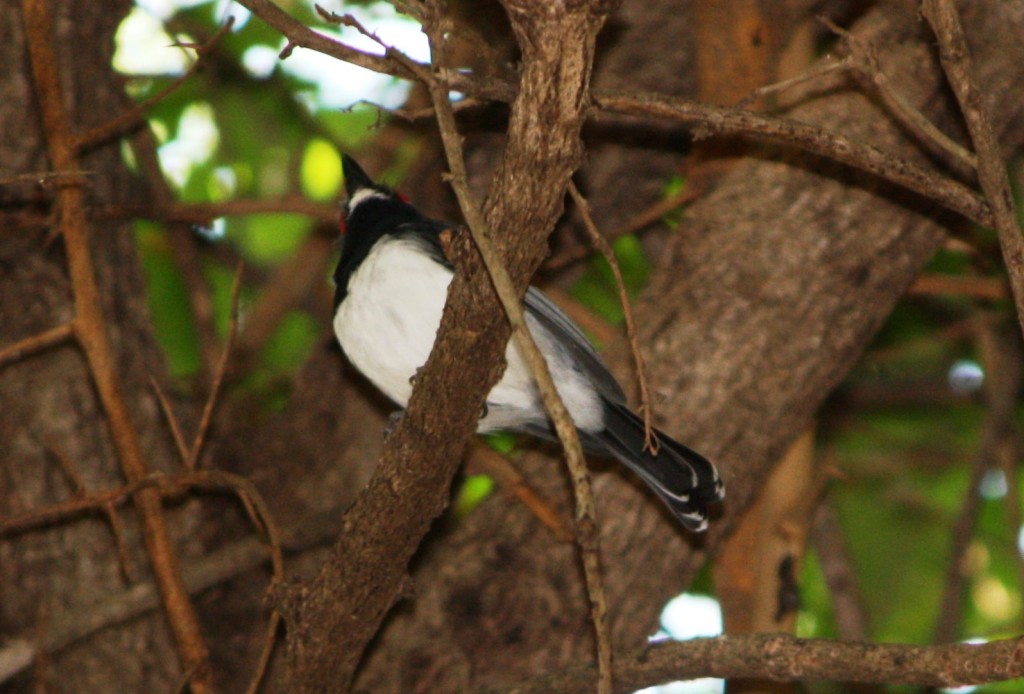
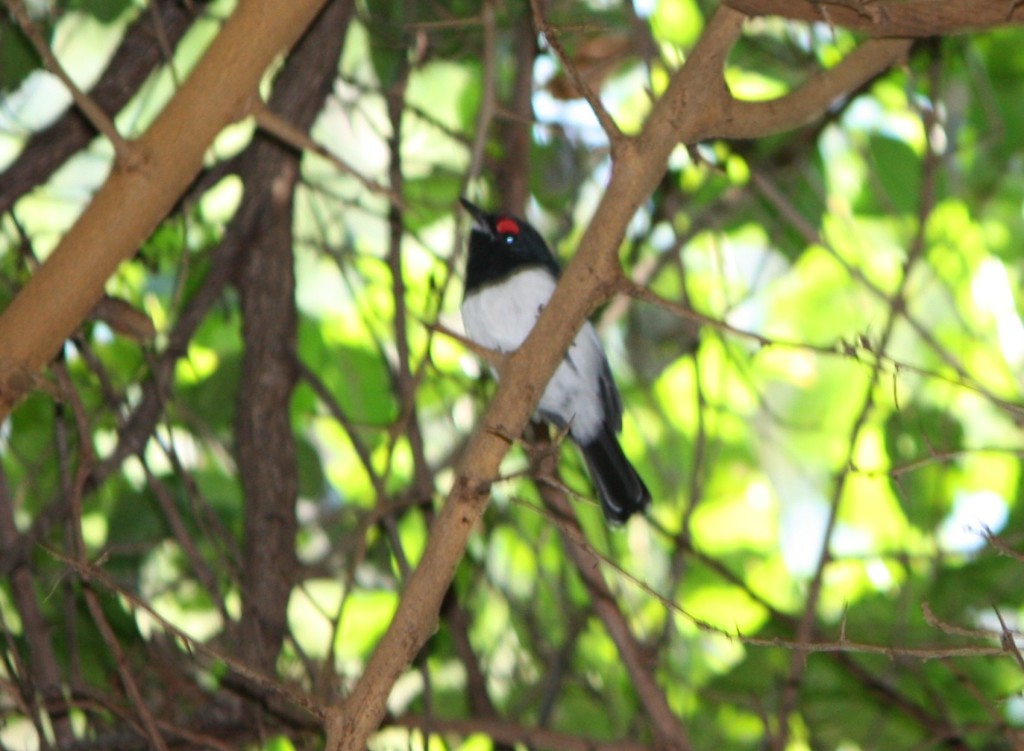
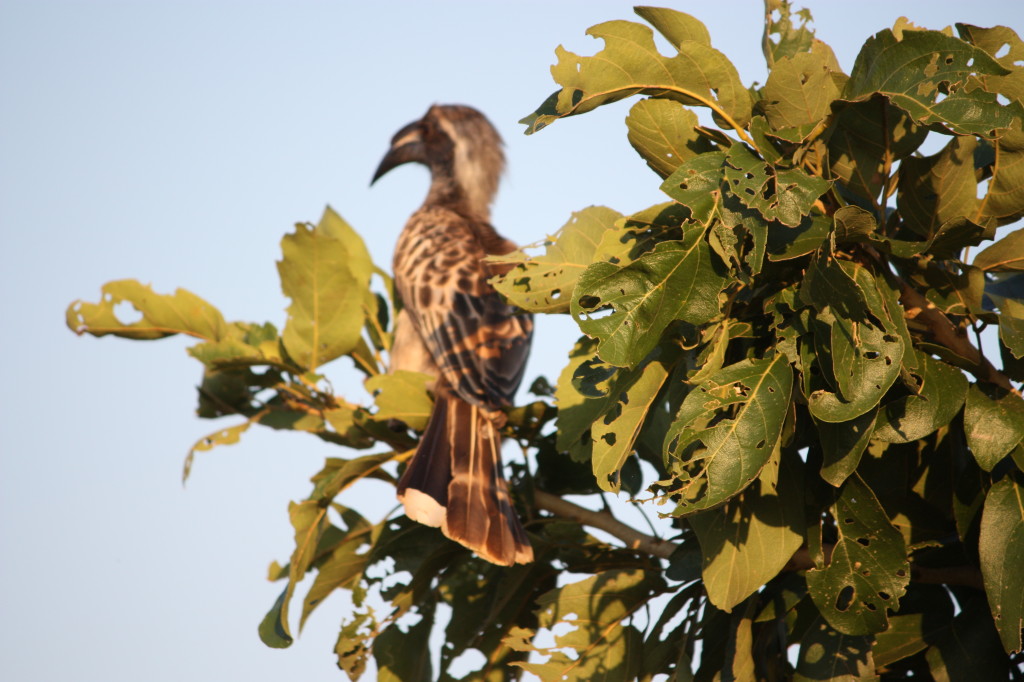
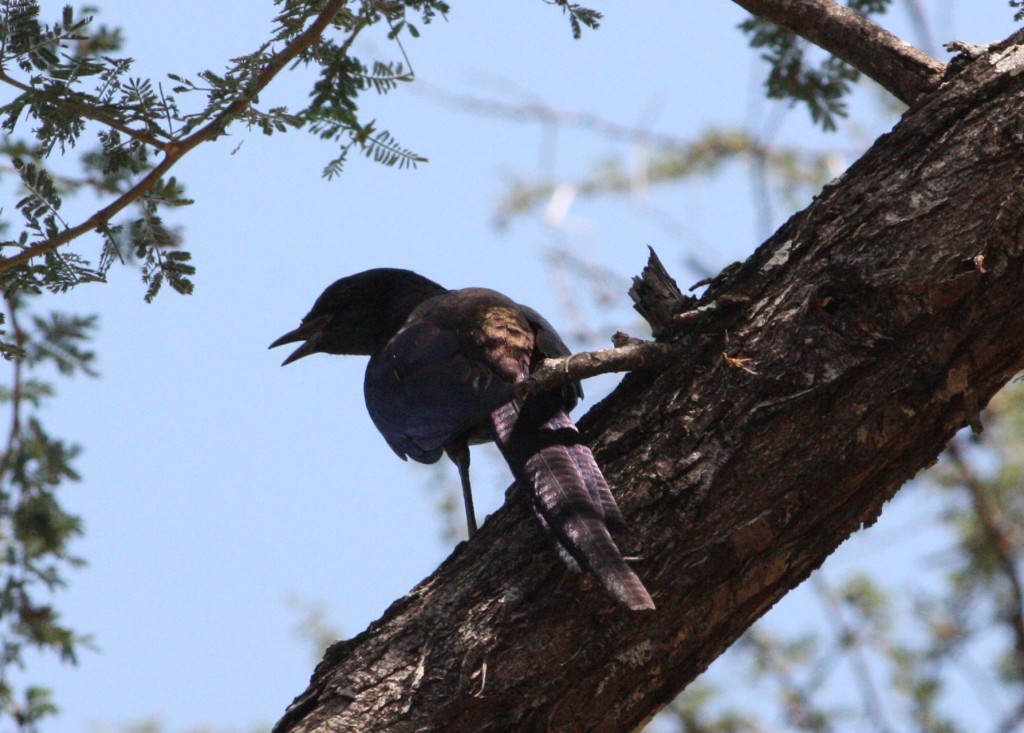
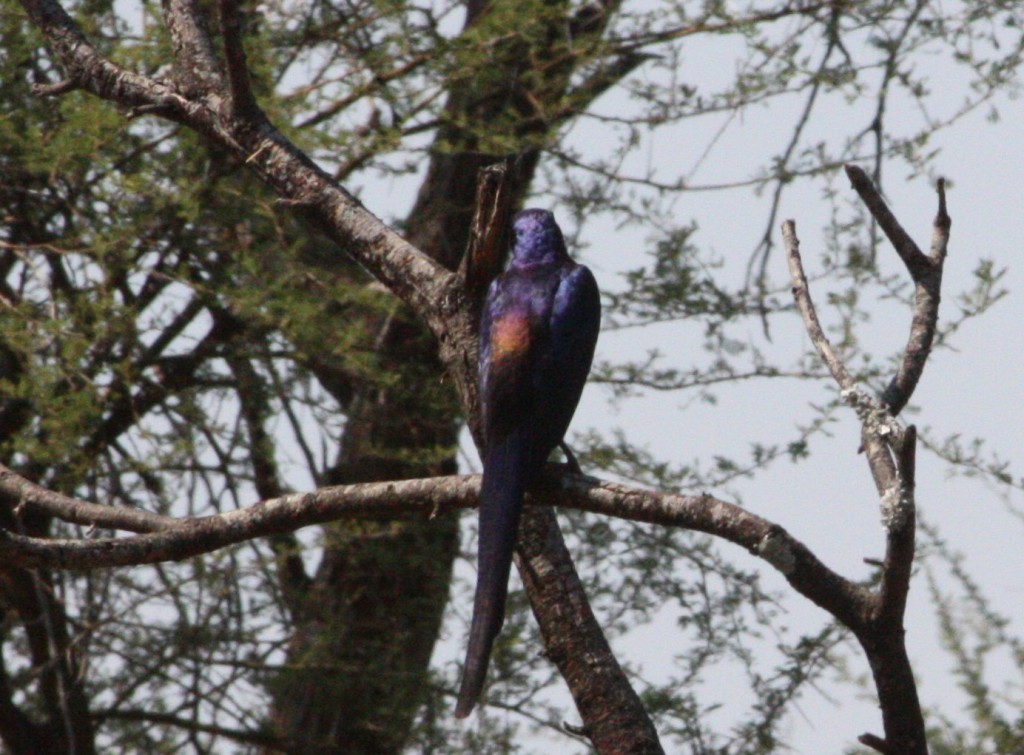
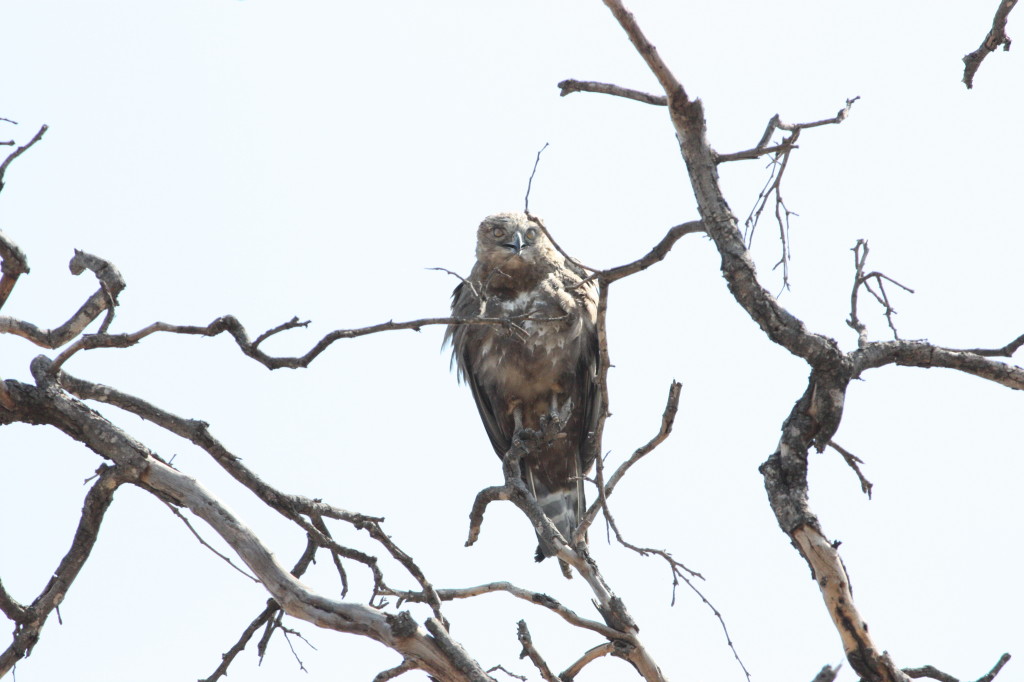
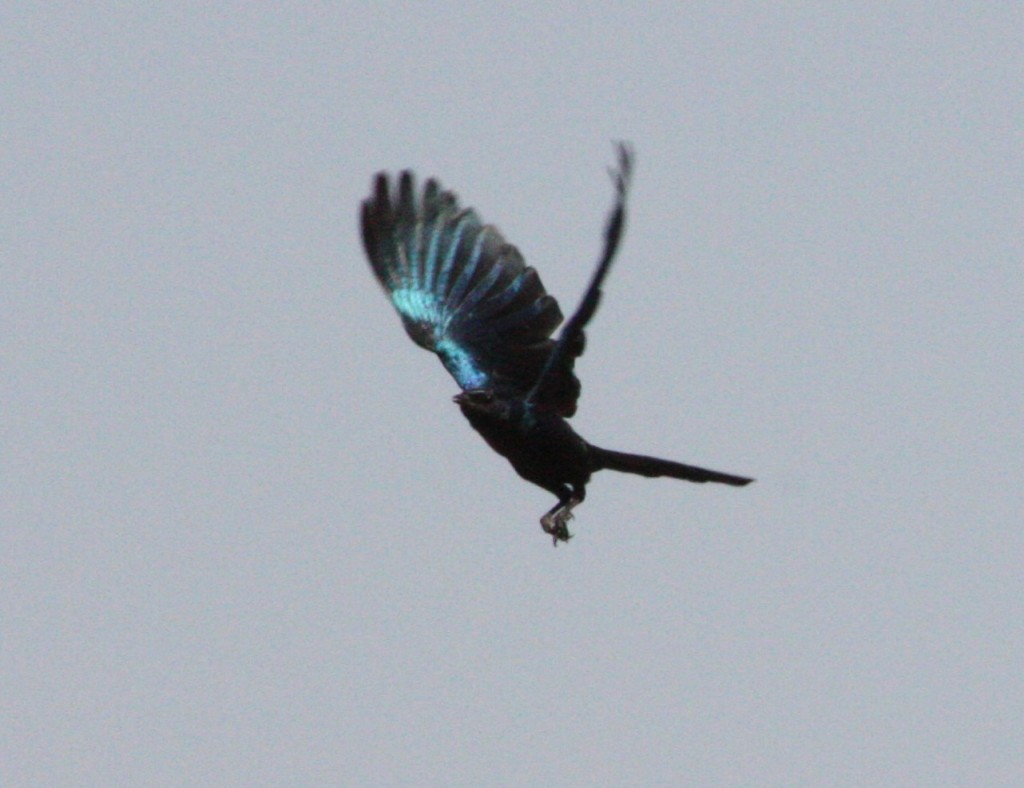
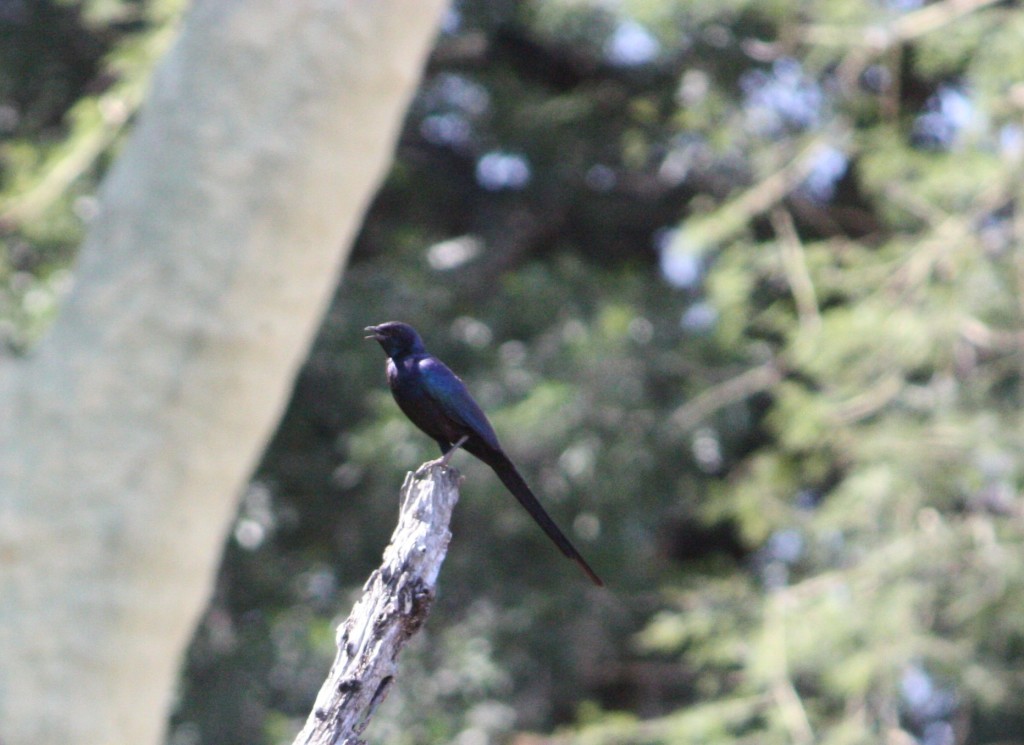
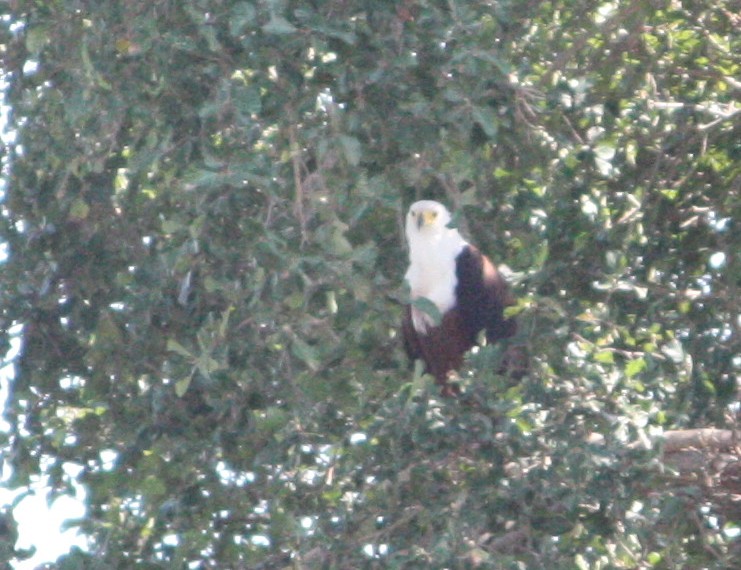
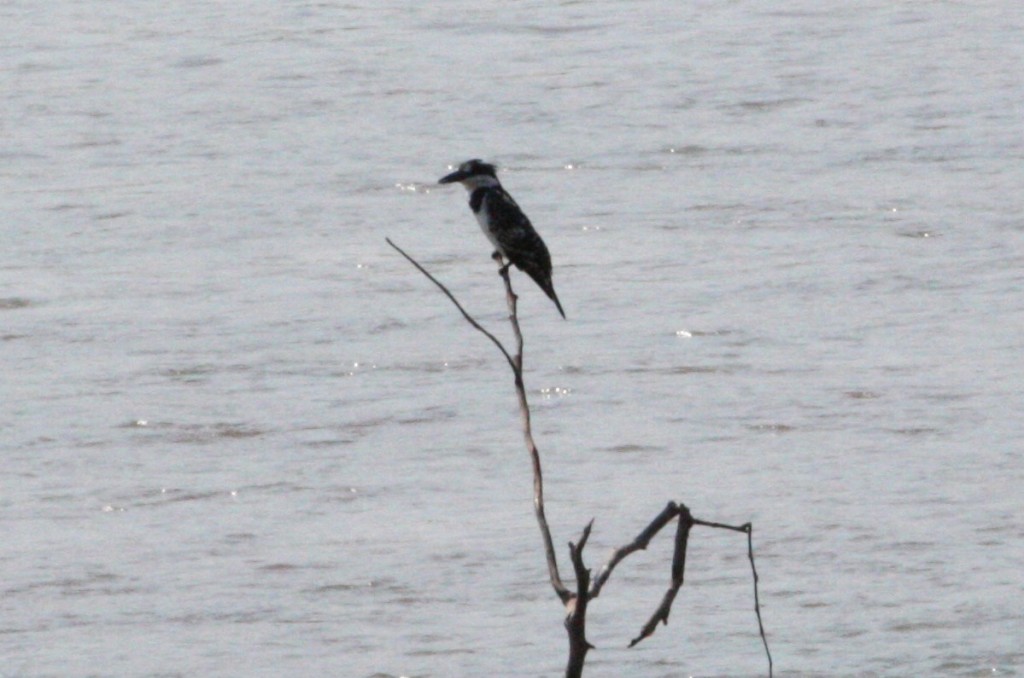
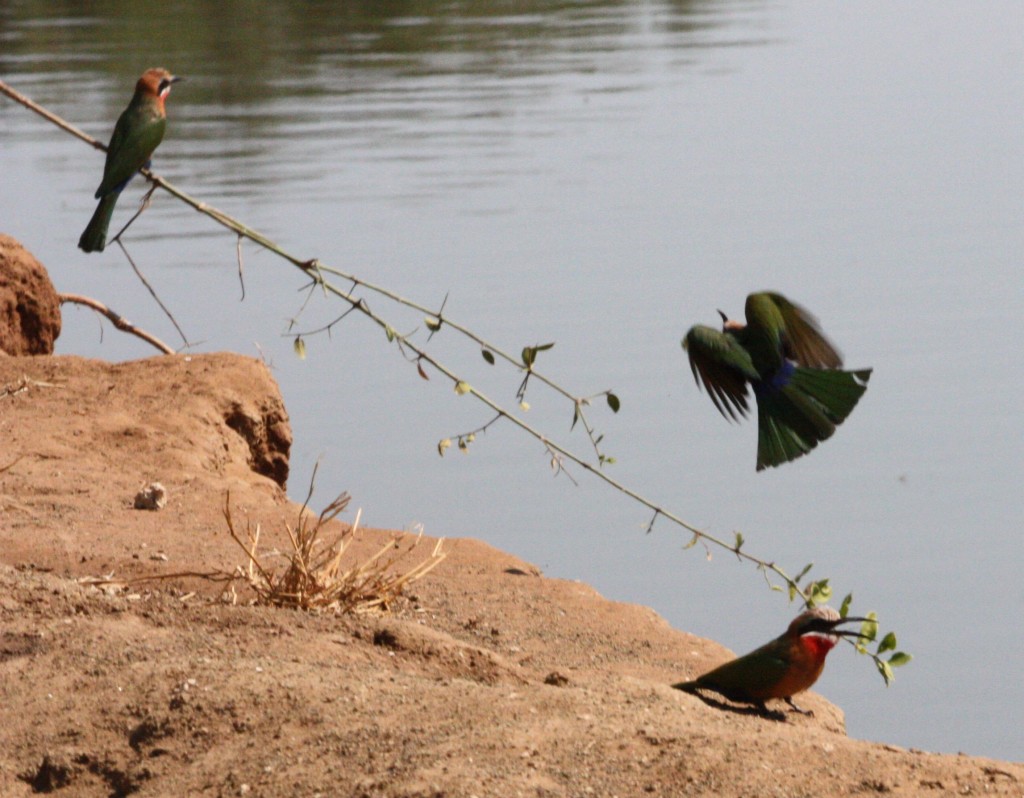
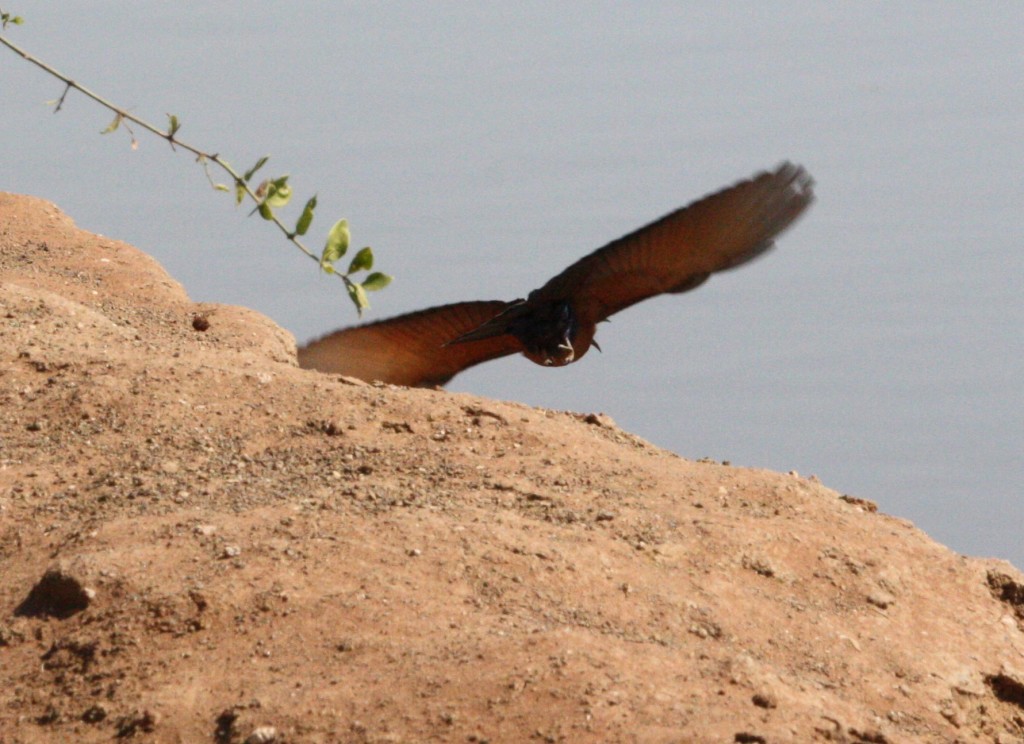
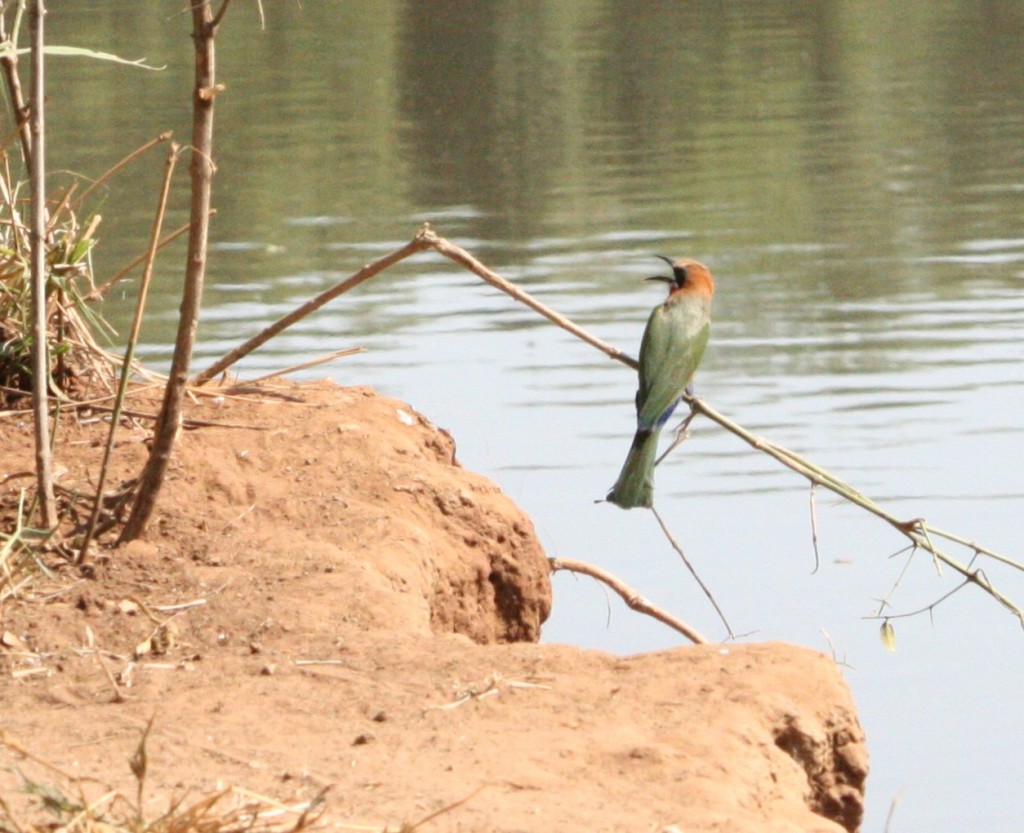
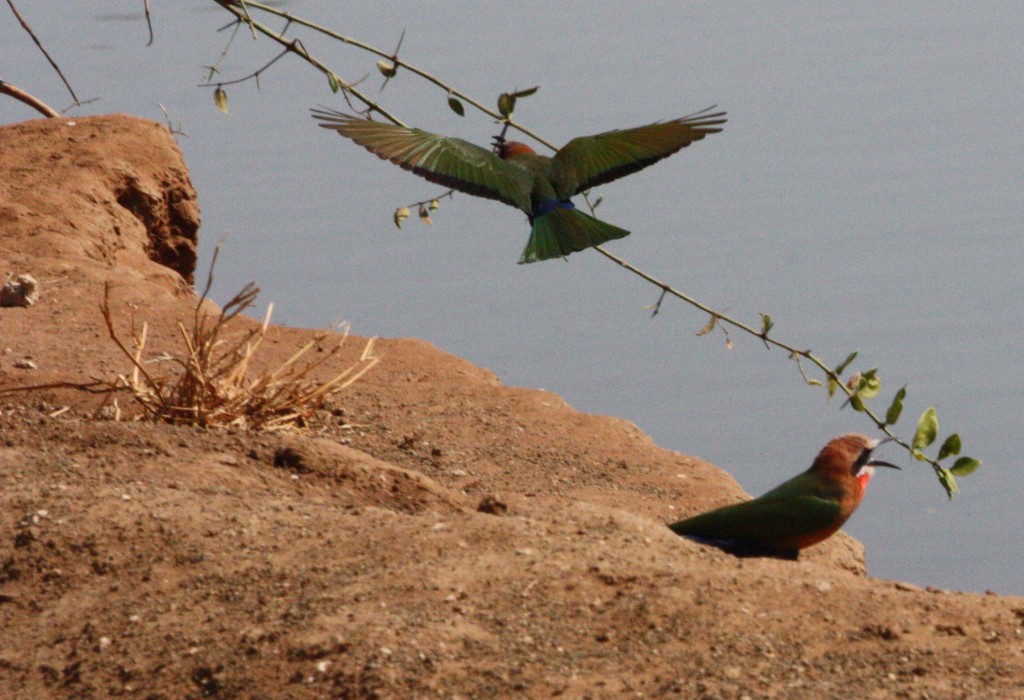
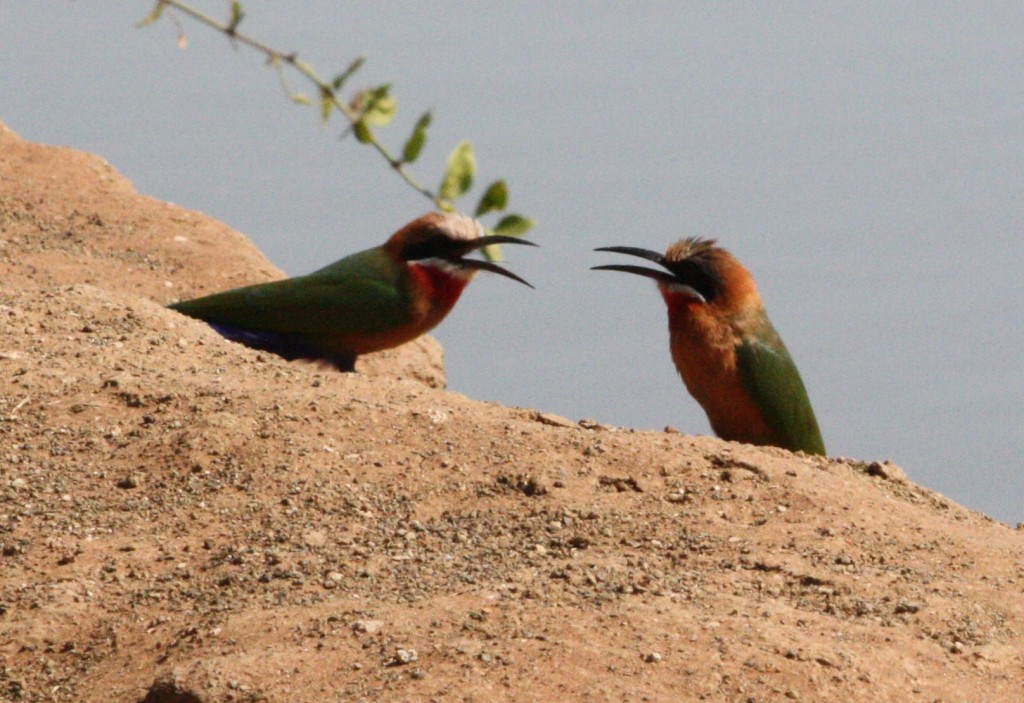
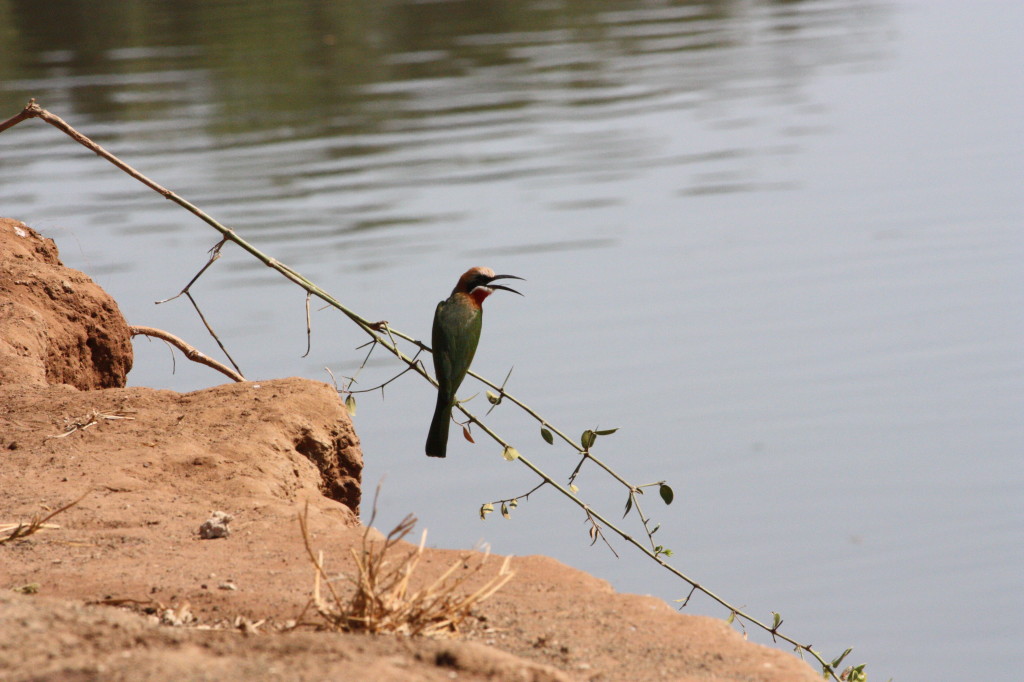
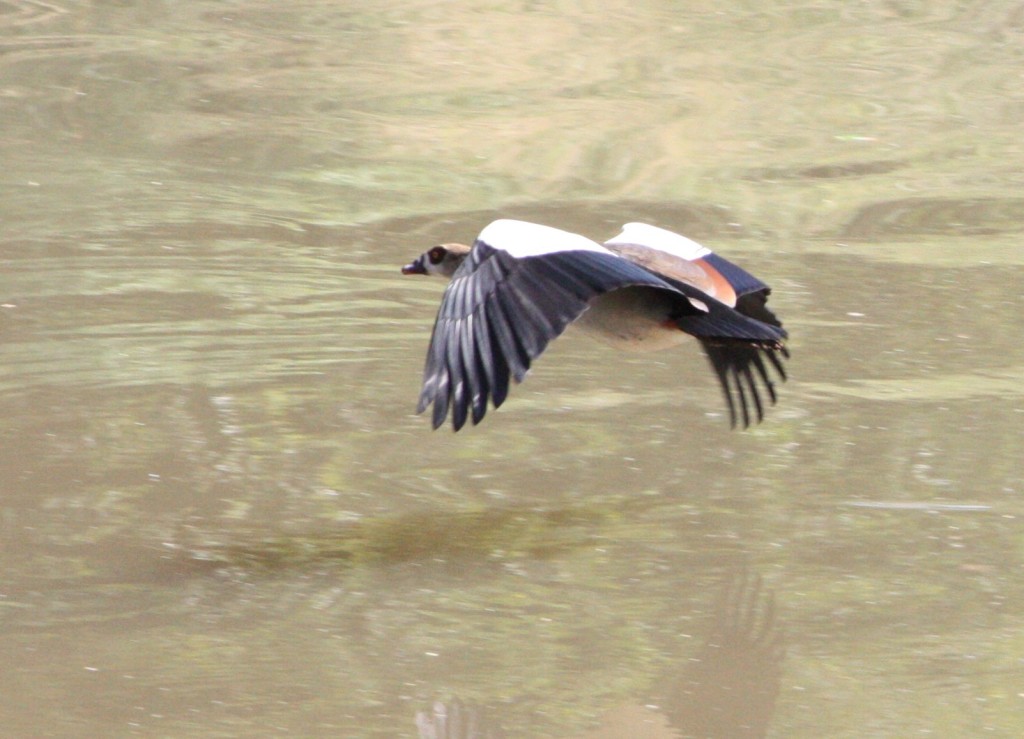
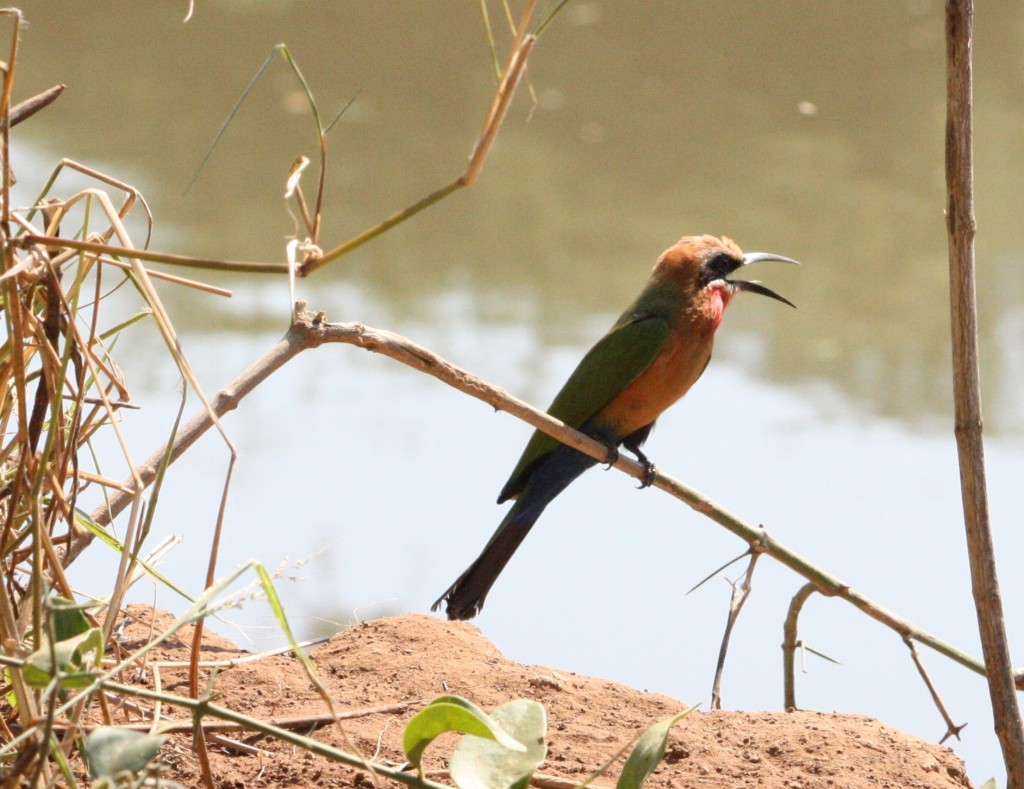
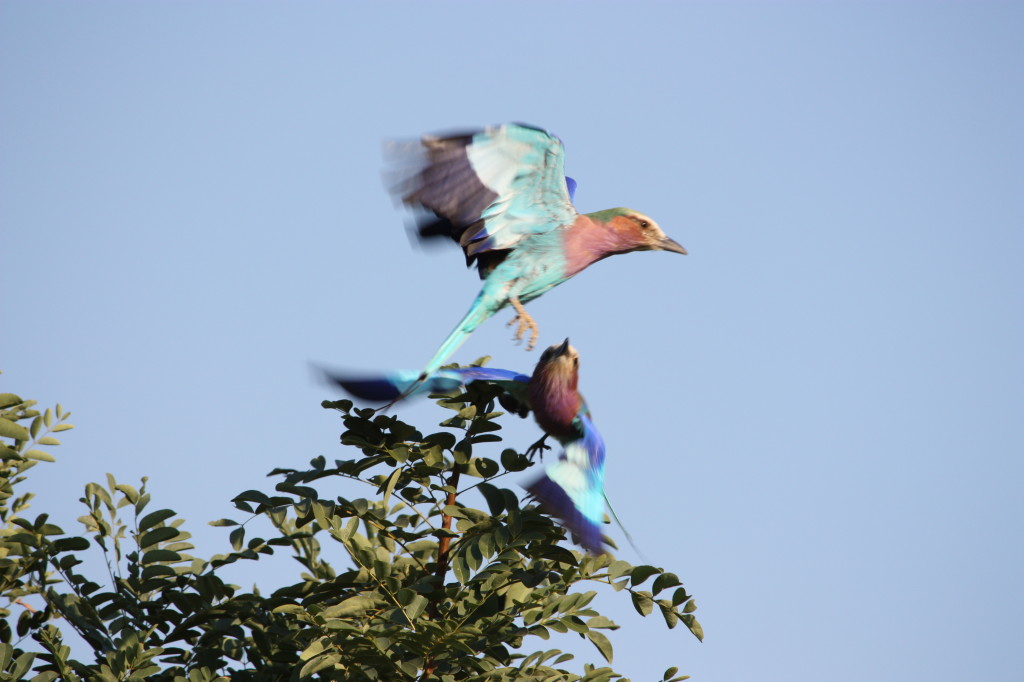
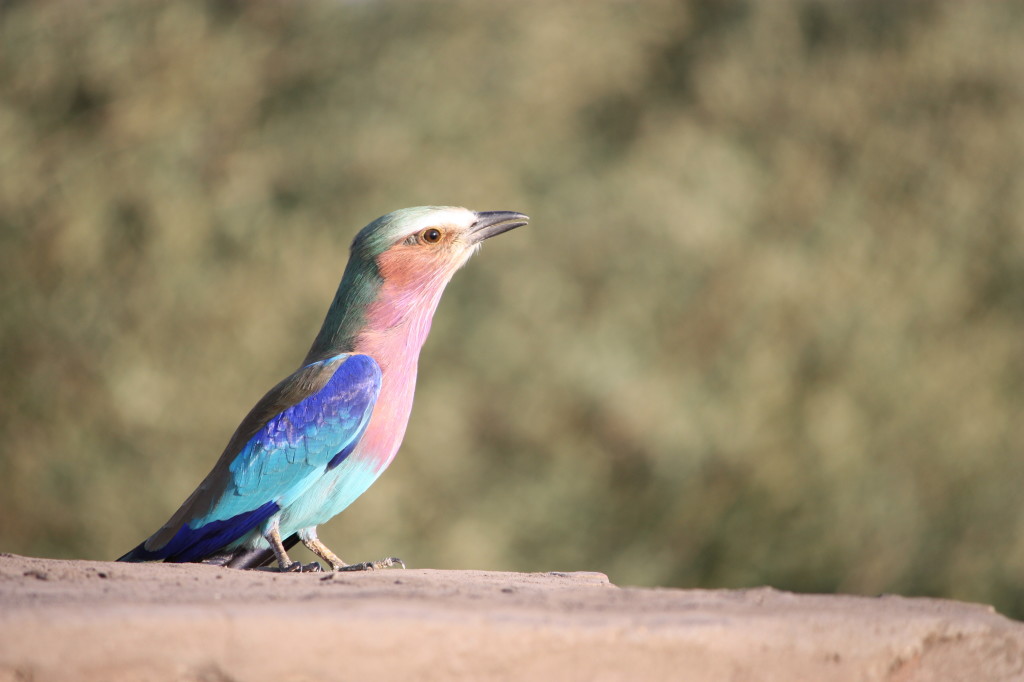
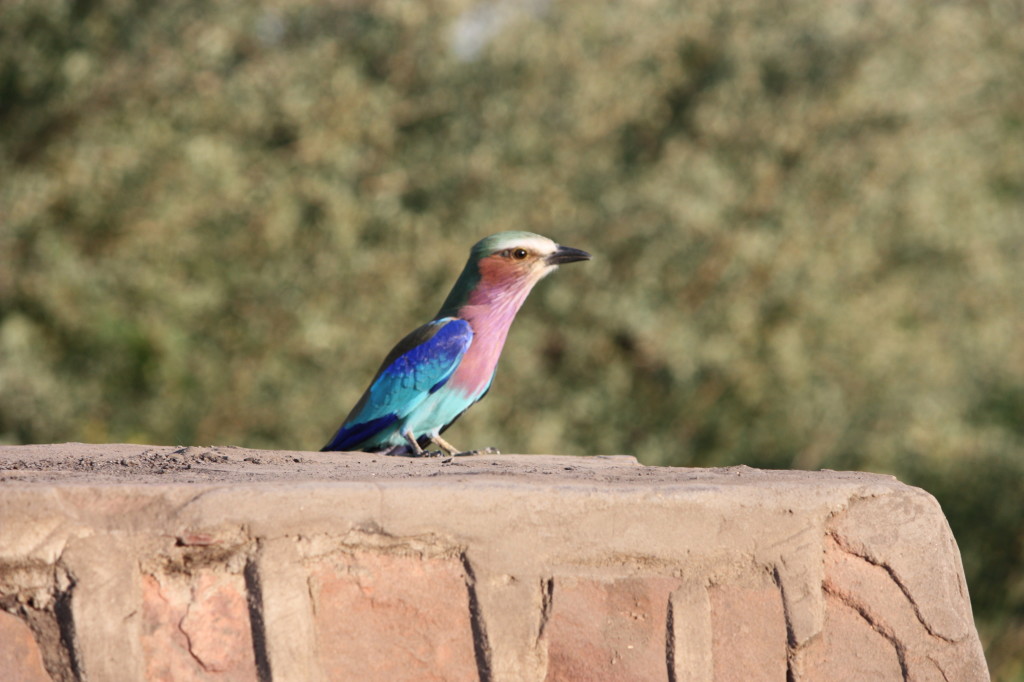
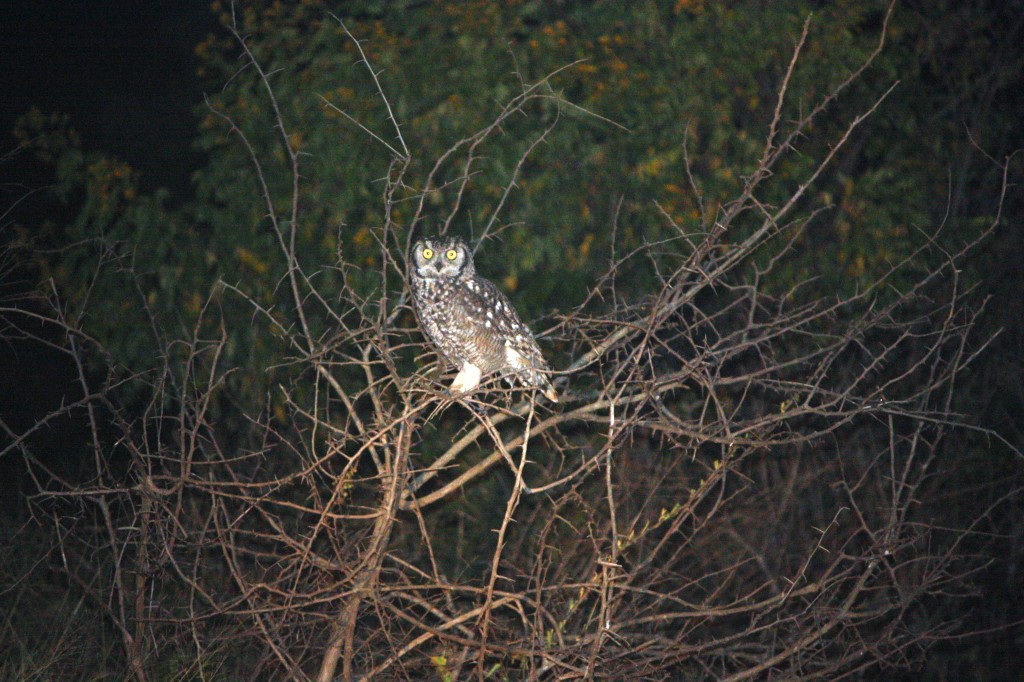
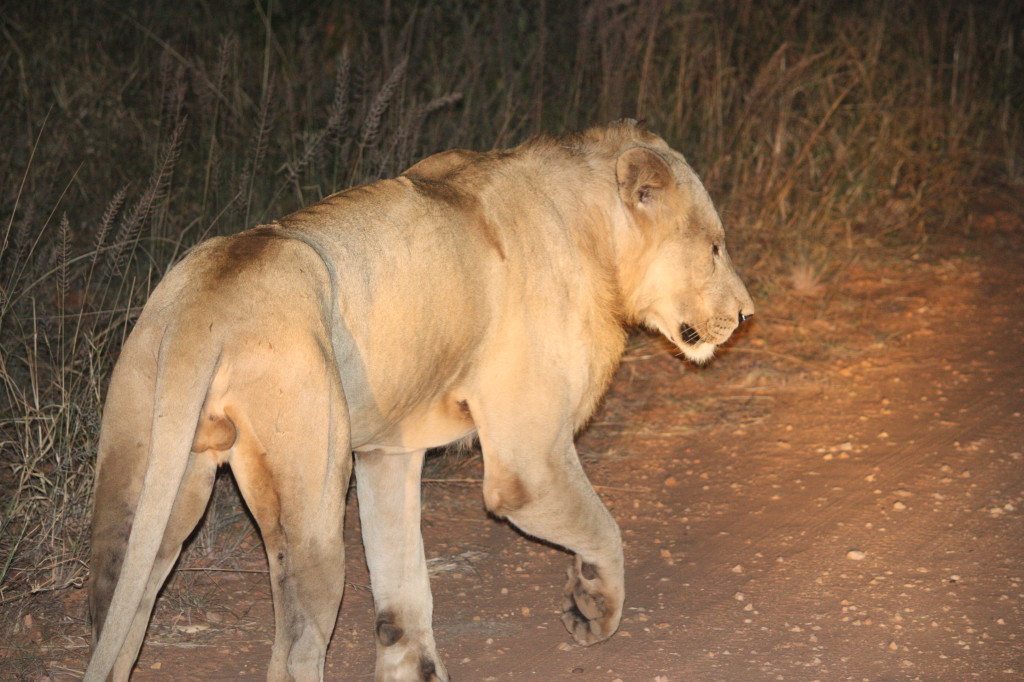
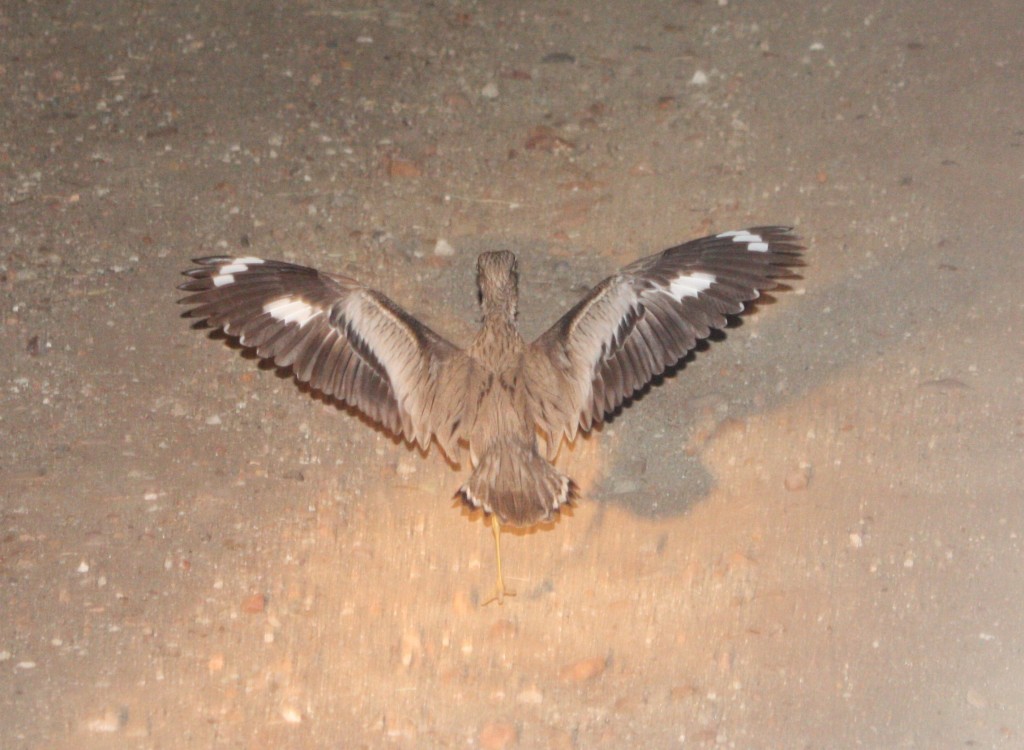
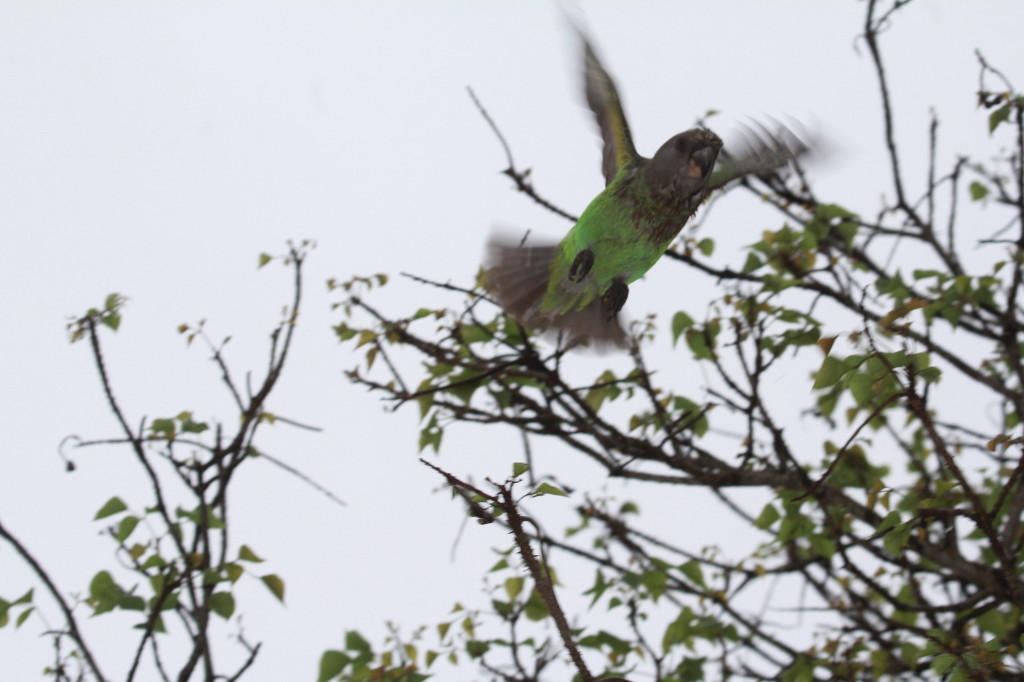
We did this drive twice during our trip, once with the ranger guides from Punda Maria and once on our own the following day.  Although I am primarily a birder, there are plenty of animals in this area so traditional safari goers won’t be disappointed.  You can see photos of our night drive on the Punda Maria post.  Below, these photos are of birds we saw during our afternoon drive.  We had been hoping for Brown-headed Parrots which are regularly seen here but couldn’t find them.

The Mahonie Loop is listed as one of Siyabona’s Top Ten Birding Drives in Kruger National Park.

Here’s a few photos from our trip in April 2009.

IMG_1175

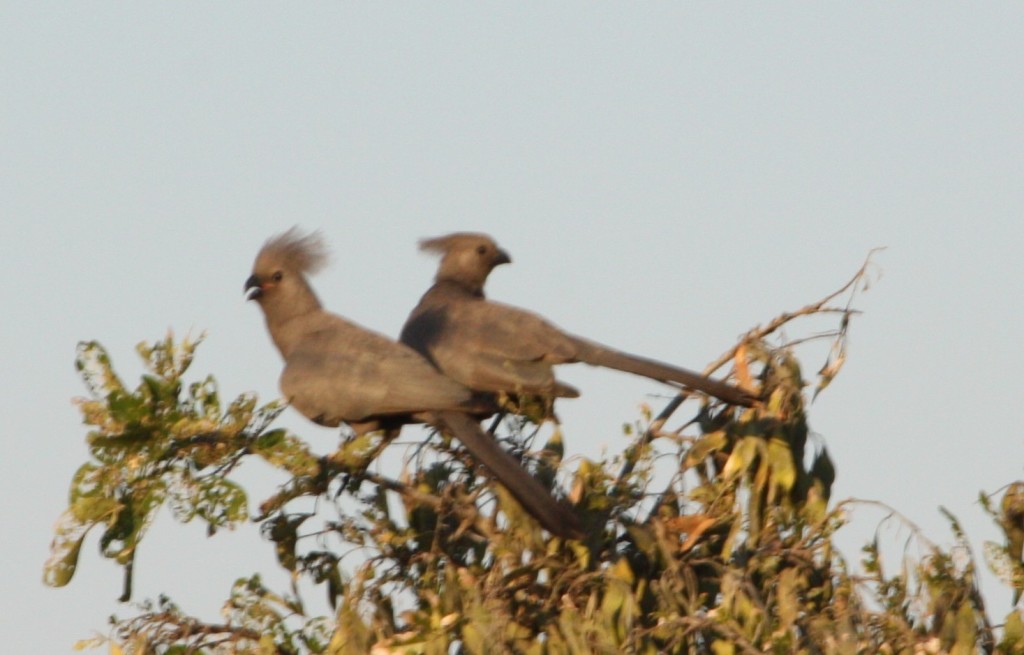
Mousebirds froom Kruger Park

Mousebirds froom Kruger Park

IMG_1211 IMG_1195 IMG_1379 IMG_1381 IMG_1386 IMG_1387 IMG_1388 IMG_1392 IMG_1401 IMG_1402 IMG_1403 IMG_1405 IMG_1411 IMG_1413 IMG_1423 IMG_1424 IMG_1429 IMG_1436 IMG_1442 IMG_1464 IMG_1443 IMG_1444 IMG_1449

Pafuri – A Kruger Birding Hotspot


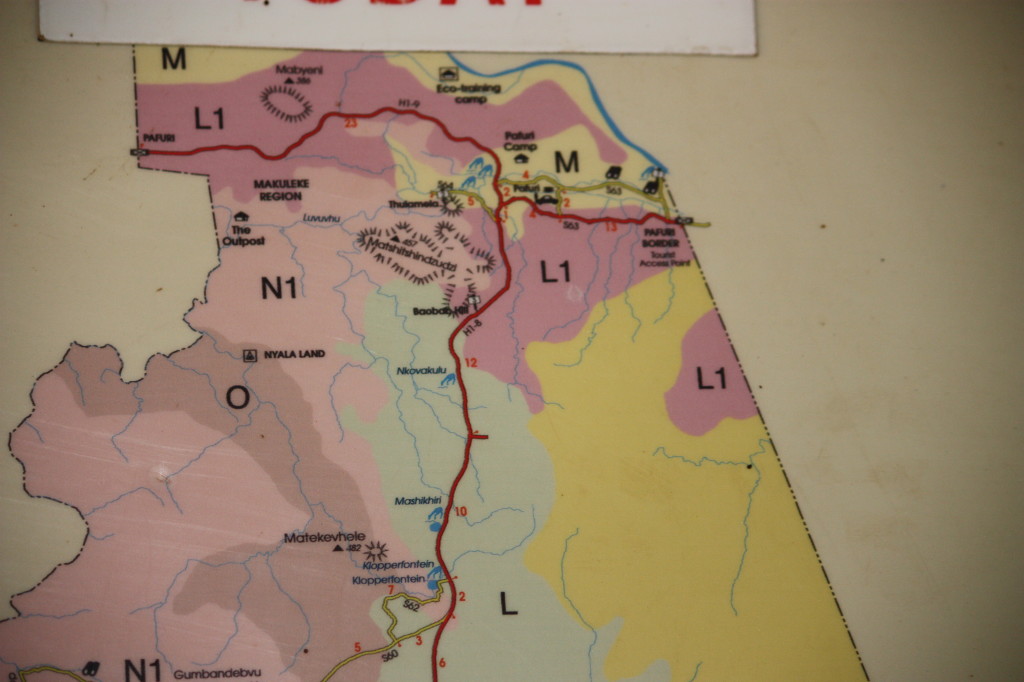
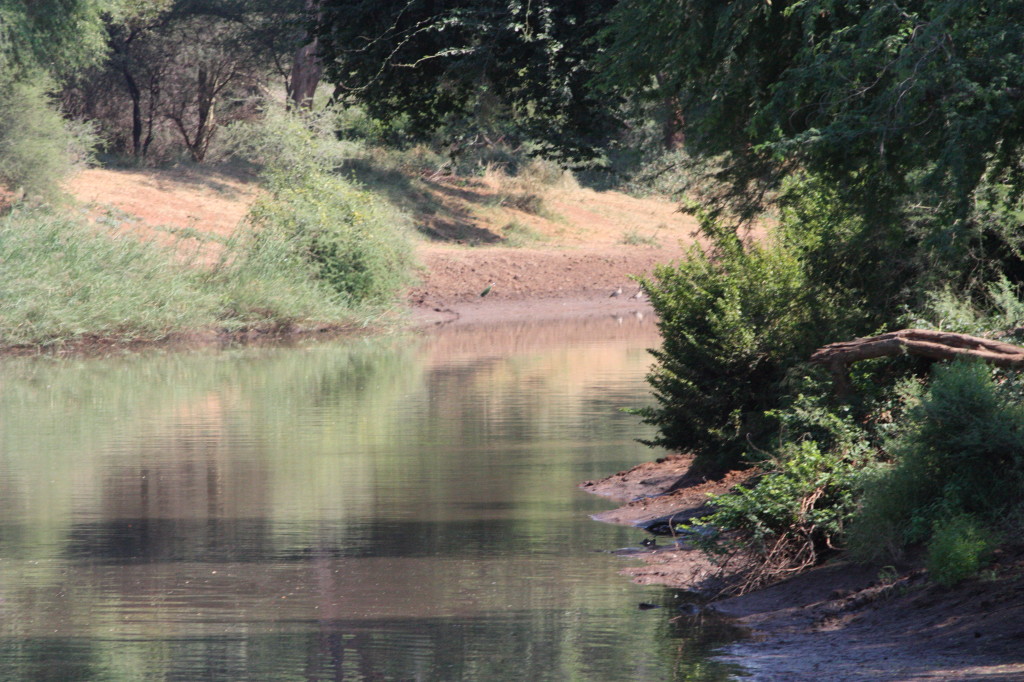
Pafuri is situated on the Luvuvu River at the northern tip of the Kruger Park. It is an exciting birding spot with a high concentration and variety of birds. Birding Big Day teams have recorded 24-hour lists of over 260 species for the area. The prime habitat is riverine forest, and this is backed up by the sandy river bed itself, patches of acacia woodland, cliffs, and all surrounded by dry mopane and baobab woodland. The nearest camp is Punda Maria, although there is a very attractive picnic site on the river. Birding is best if you leave Punda Maria when the gates open, and drive straight down to Pafuri (about 60 km).  There’s more information here about specific birds in this area.

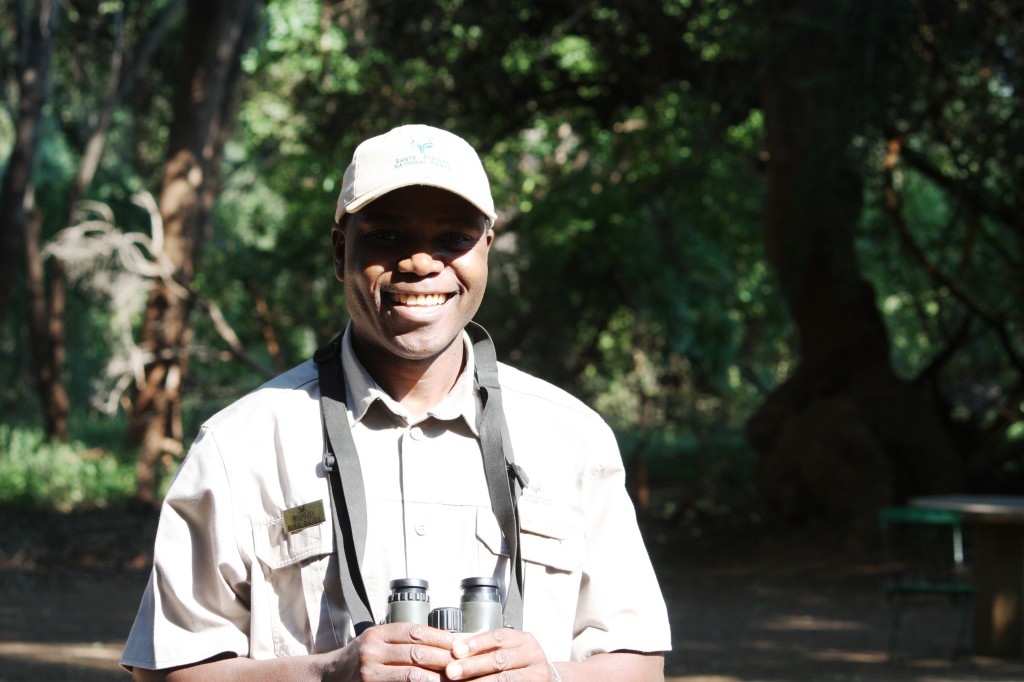
IMG_1284There is an amazing ranger based at Pafuri named Frank.  He knows all the local birds and is happy to help you identify what you see there or point you in the right direction if you are seeking any particular species.

IMG_1300In my case, I was seeking Brown-headed parrots.  They are frequently seen in this area and Frank did his best to help me find some but no luck.  At one point he thought he heard some across the river but they refused to come any closer.

IMG_1299 IMG_1317 IMG_1303 IMG_1301 IMG_1265 IMG_1258

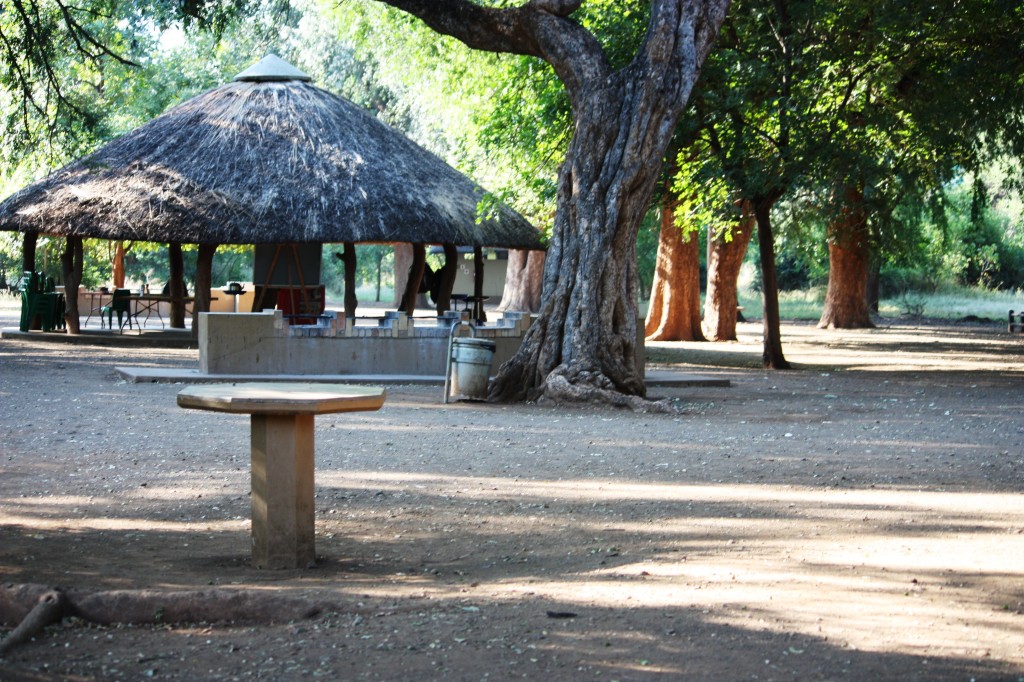
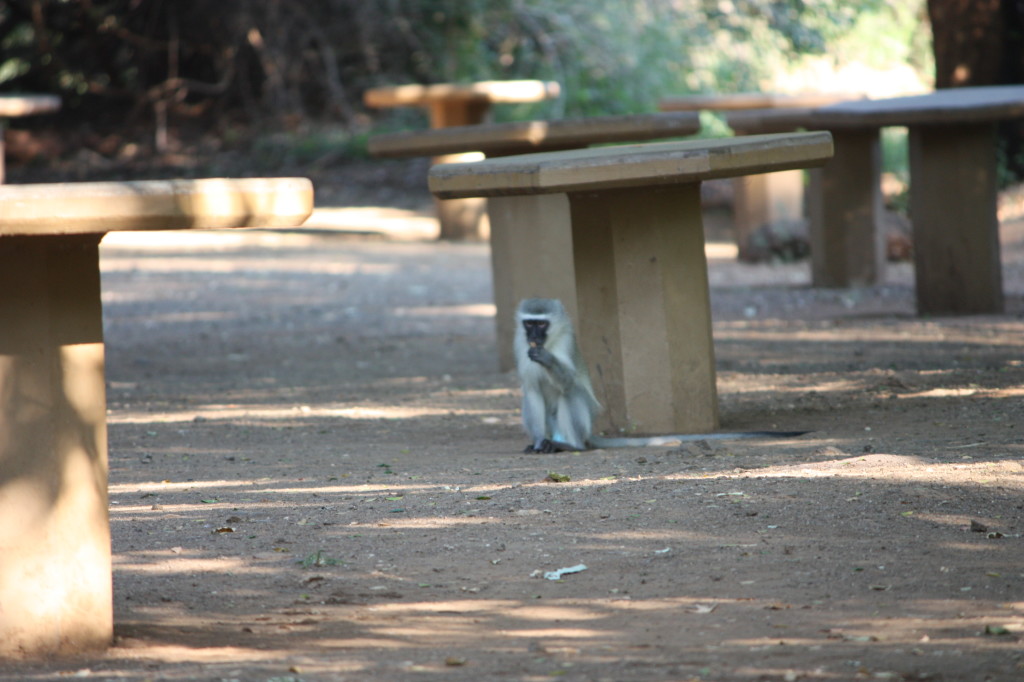
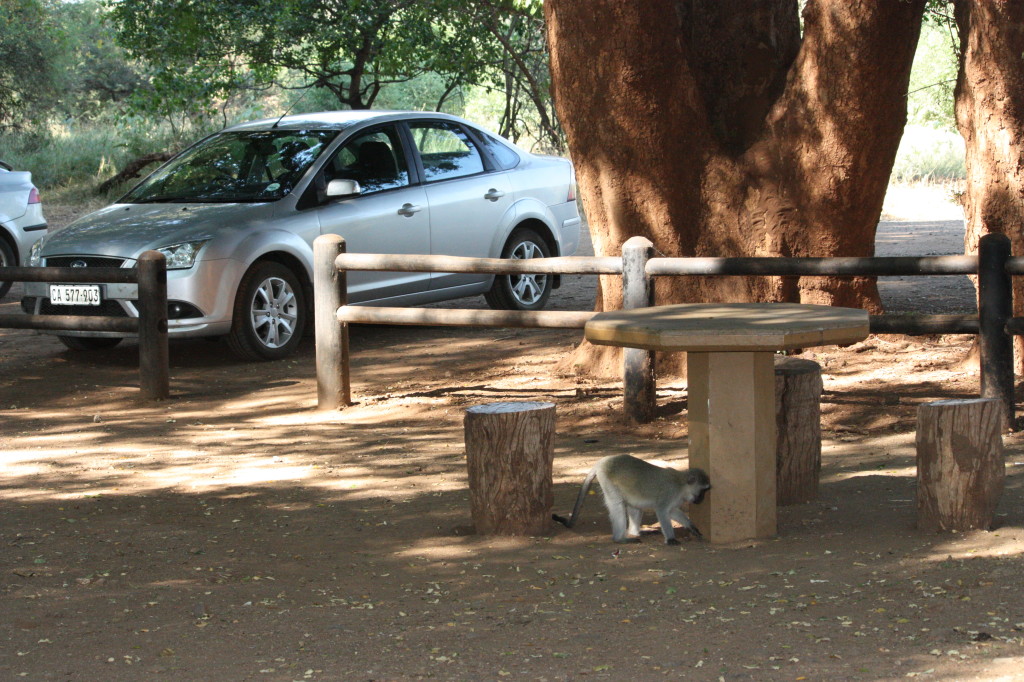
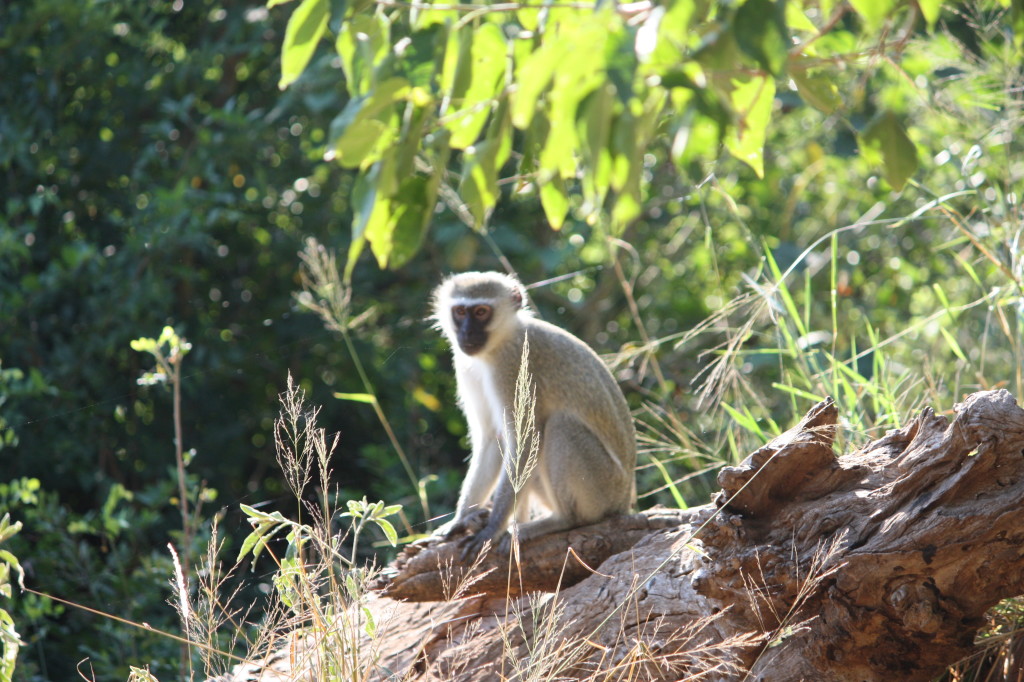
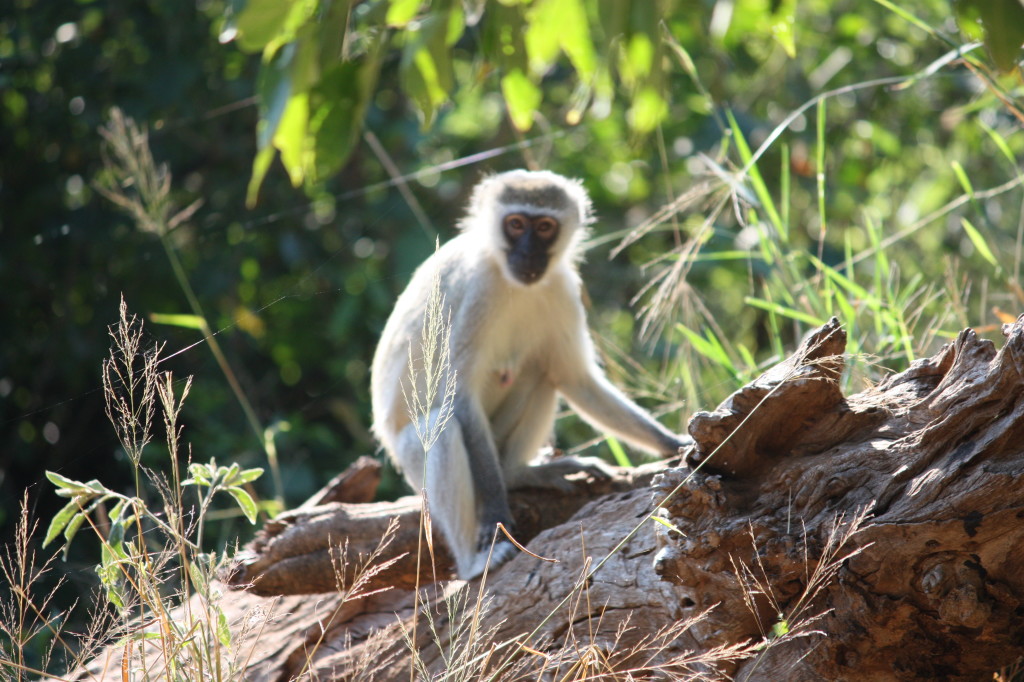
The picnic area is really nice and if you got up early to leave Punda Maria for the drive here, it’s a great place for breakfast.  But beware of theiving monkeys!

IMG_1283 IMG_1285 IMG_1288 IMG_1290 IMG_1305

The drive to and from Pafuri can be very birdy and you may get lucky with some animal sightings too.

IMG_1353 IMG_1349 IMG_1348 IMG_1344 IMG_1341 IMG_1340 IMG_1338 IMG_1334 IMG_1333 IMG_1331 IMG_1330 IMG_1329 IMG_1324 IMG_1321 IMG_1312 IMG_1265 IMG_1258

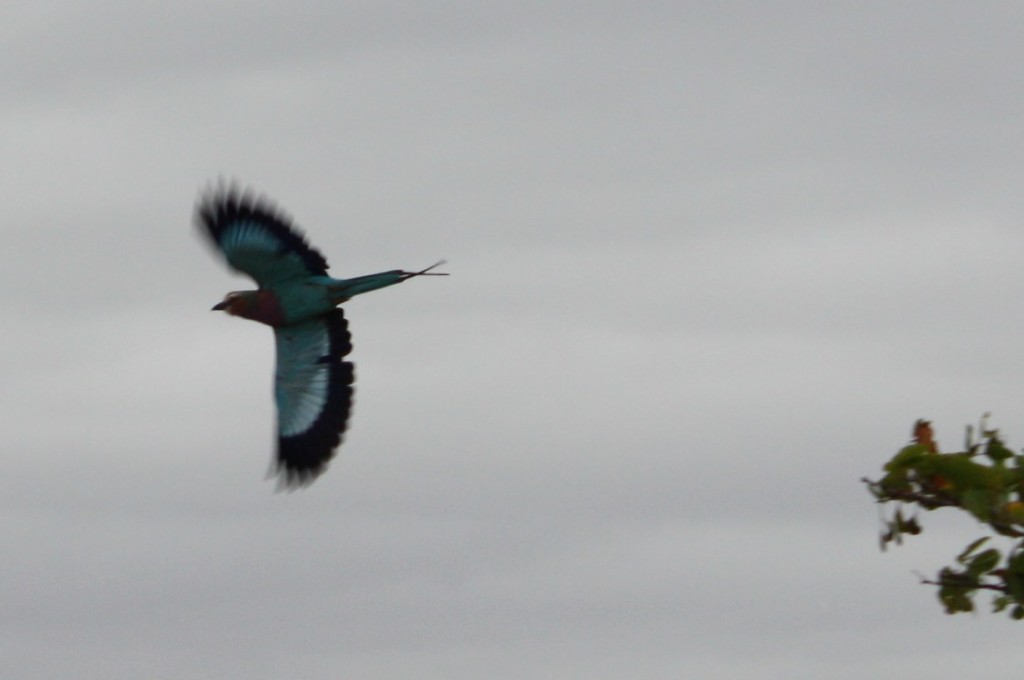
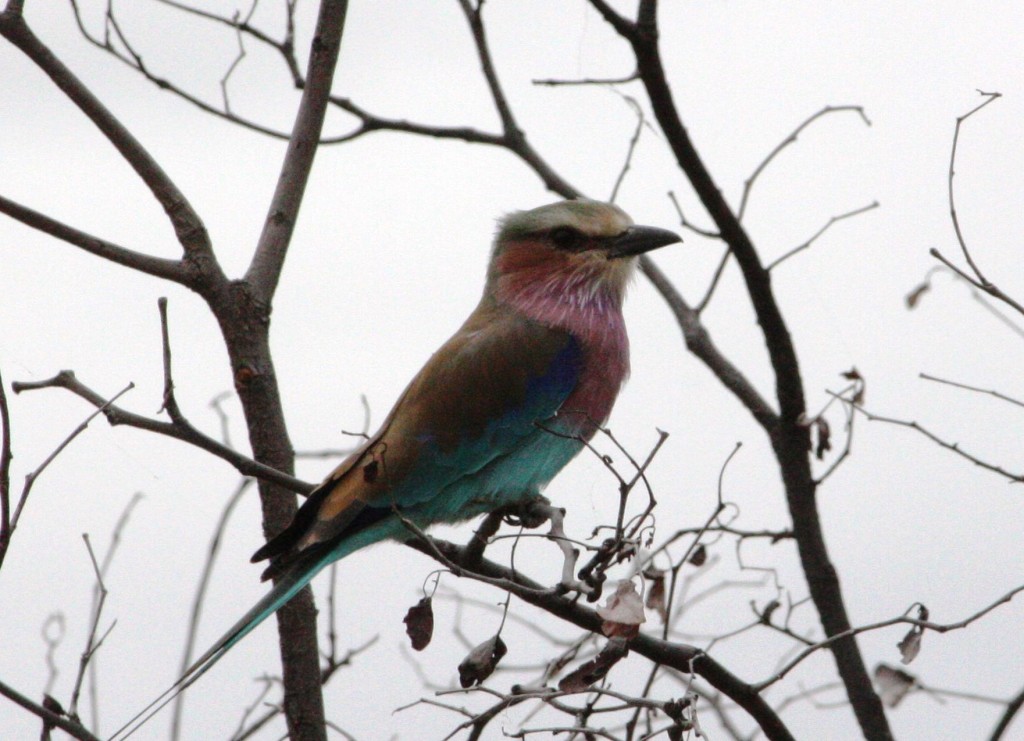
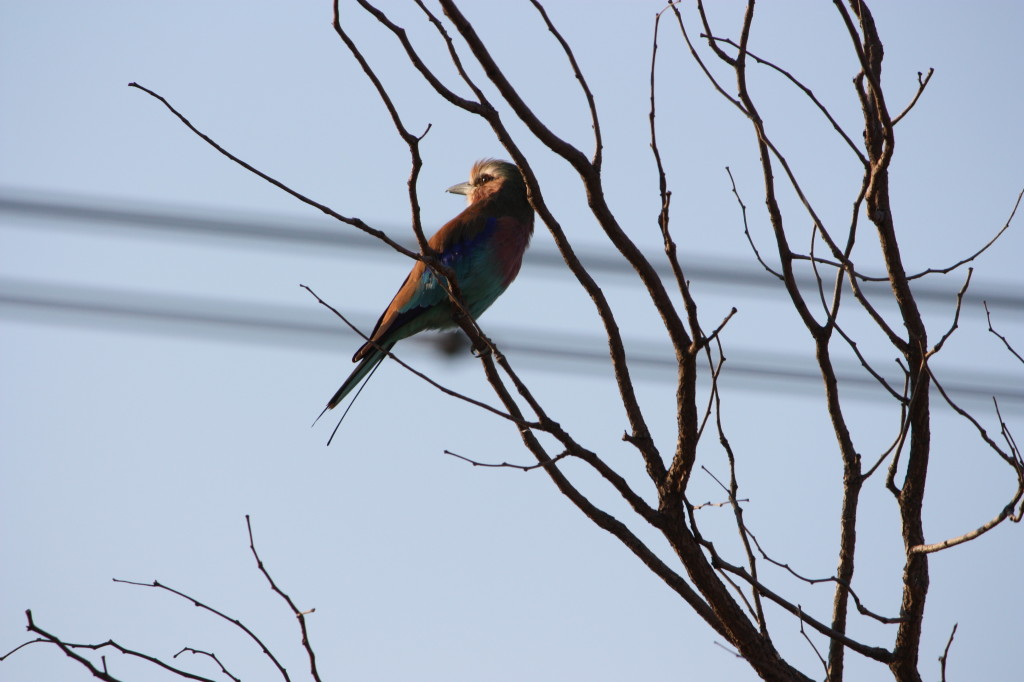
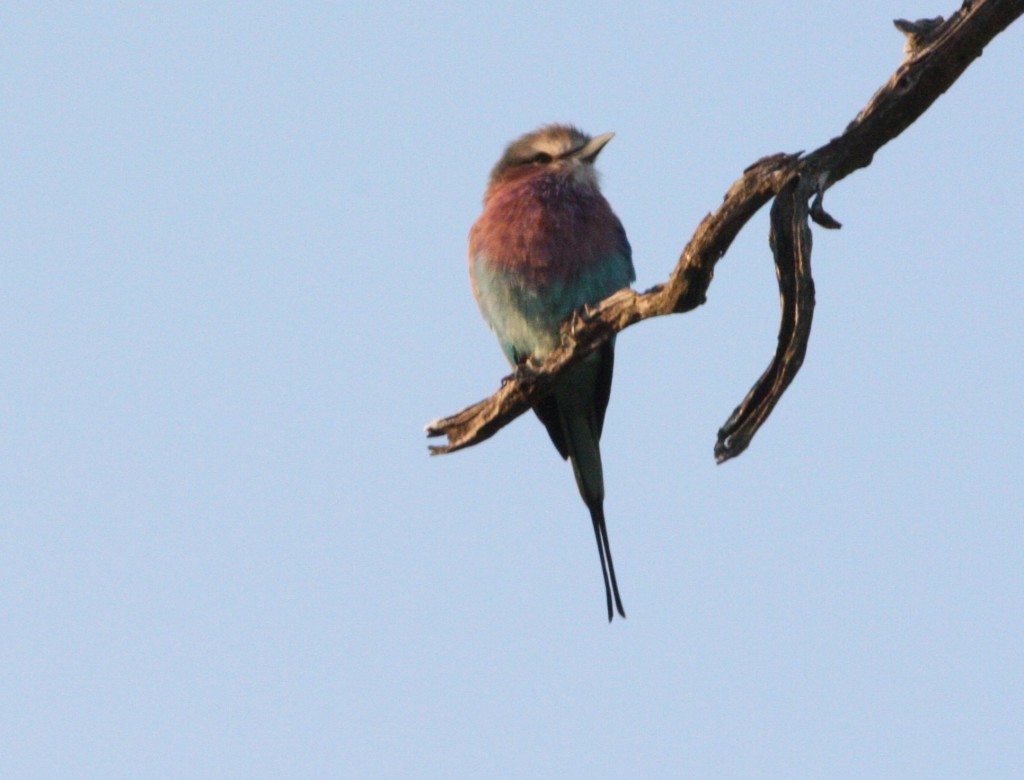
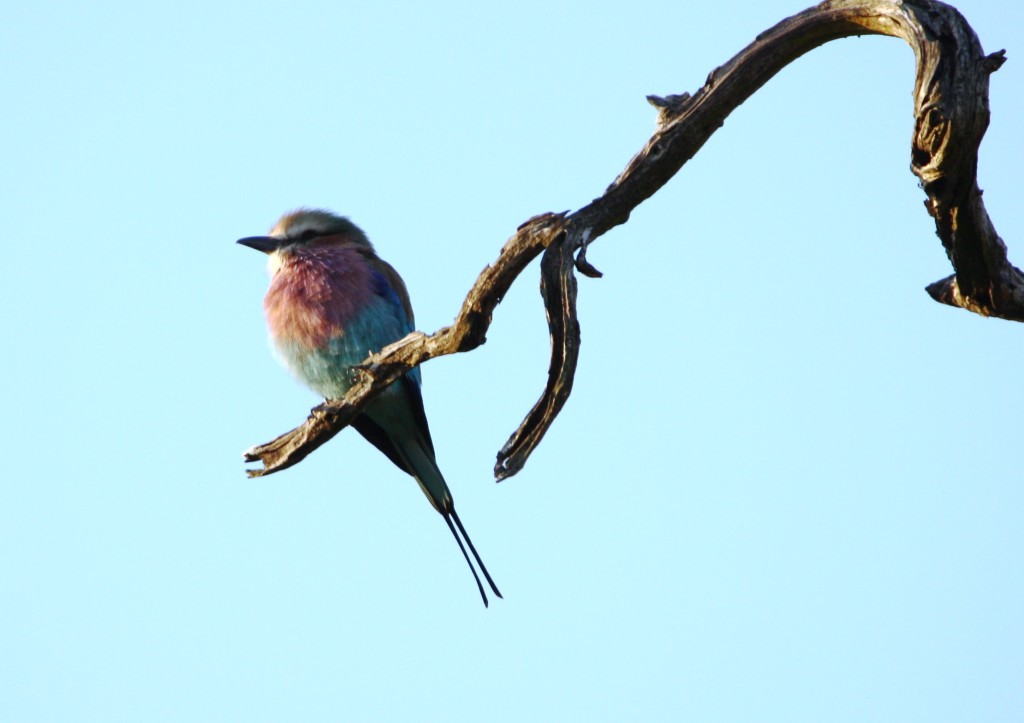
Lilac-breasted Rollers are some of my favourite birds and are easily seen in Kruger.

IMG_1275 IMG_1274 IMG_1272 IMG_1256 IMG_1253

Punda Maria Rest Camp, Kruger National Park

Punda Maria is the northernmost of SANParks rest camps and is in a great position for bird watchers.  It is supposed to be a 6 hour drive from JNB airport but add on an hour or so to allow for traffic and getting lost.  It’s best to start in the morning so if your flight arrives late, plan on staying near the airport and pick up your rental car in the morning so you can inspect it properly.

JNB to Punda Maria Rest Camp

Over the last 20 years, I have stayed at several of the Kruger NP rest camps and Punda Maria is by far my favourite.  Even if it wasn’t in prime birding territory, it has such a beautiful, restful setting and feels more remote and wild than some of the larger camps such as Pretoriuskop.  Going by Trip Advisor, I am not the only one who likes this place!  Siyabona Africa also has a great review.

Punda Maria Camp lies in an area of fascinating history and unsurpassed bird watching. It also recognized as the best region inside the Park for Kruger National Park safari accommodation in which to spot the often shy Nyala Antelope.

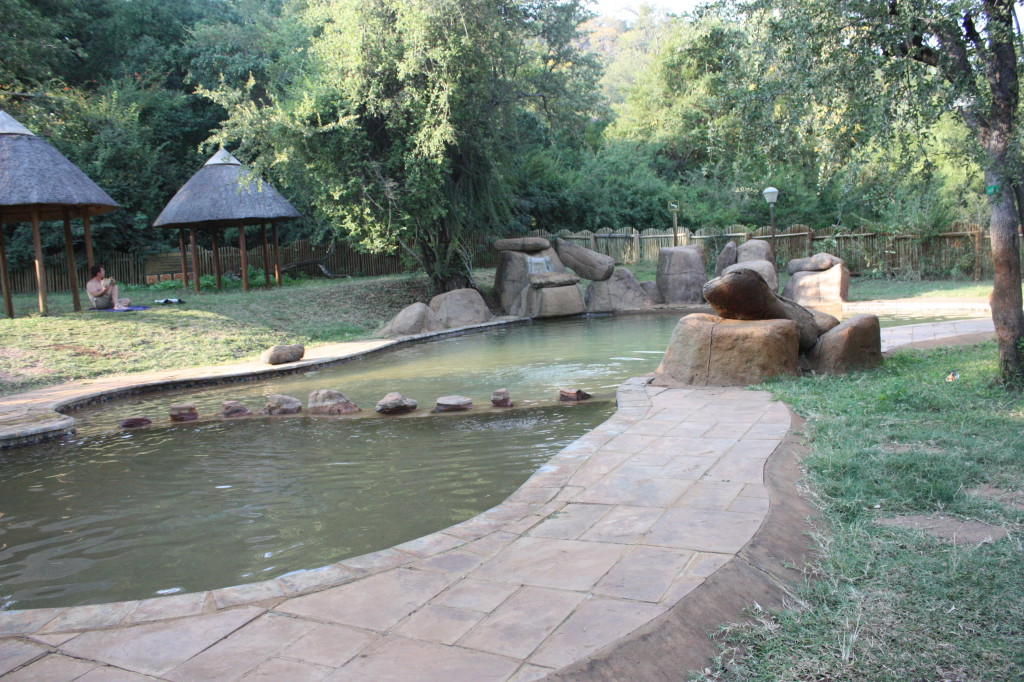
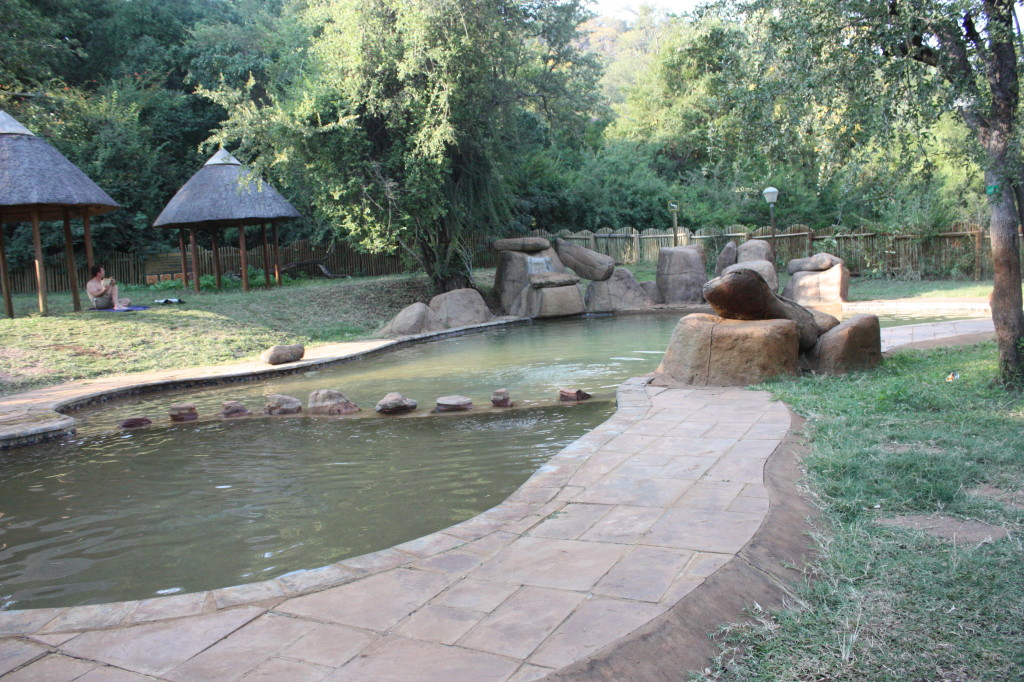
Punda Maria boasts 7 luxury safari tents and a swimming pool. Punda Maria Gate has received a new building, reception area and ablution blocks; providing trouble free Kruger National Park lodging.

It’s easy to book in advance on the SANParks website and you definitely want to do this, especially if your visit coincides with South African school holidays, though this camp won’t be nearly as crowded as the ones further south.

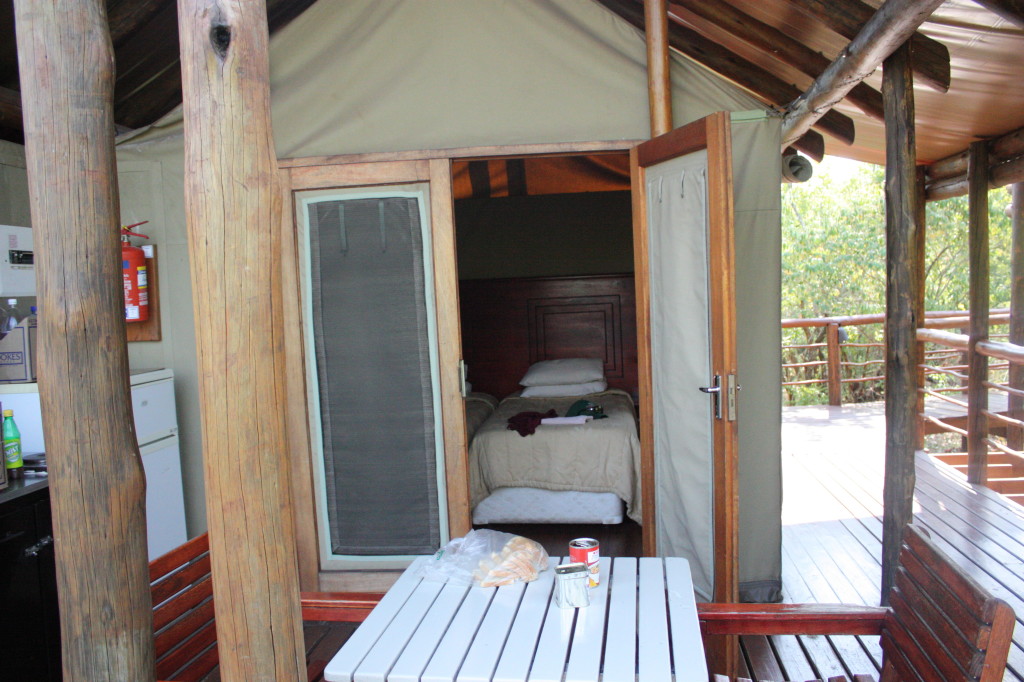
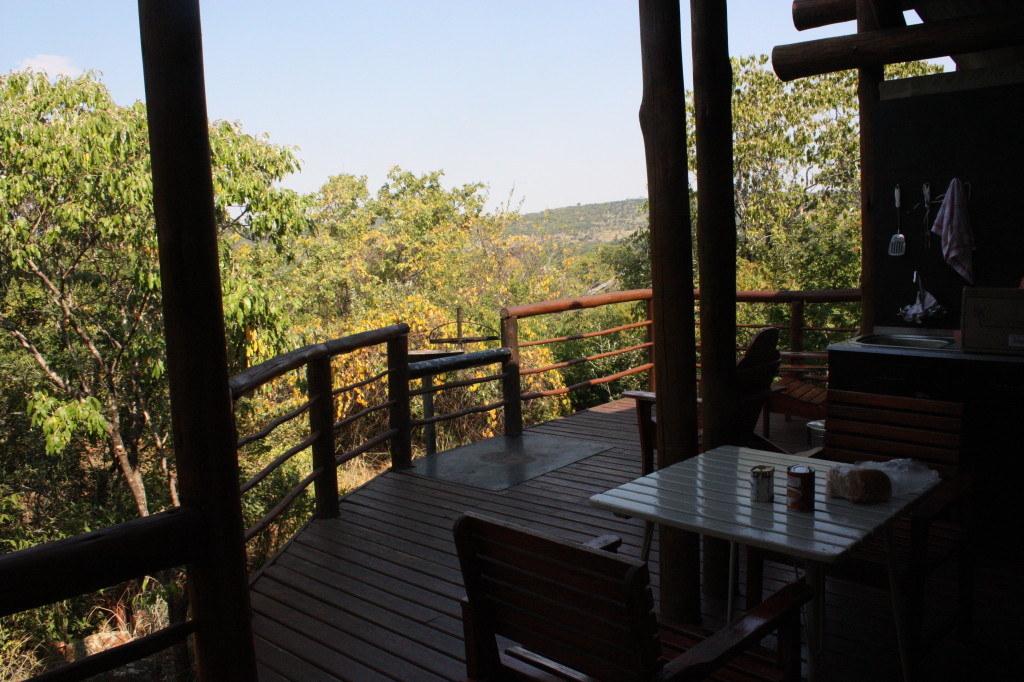
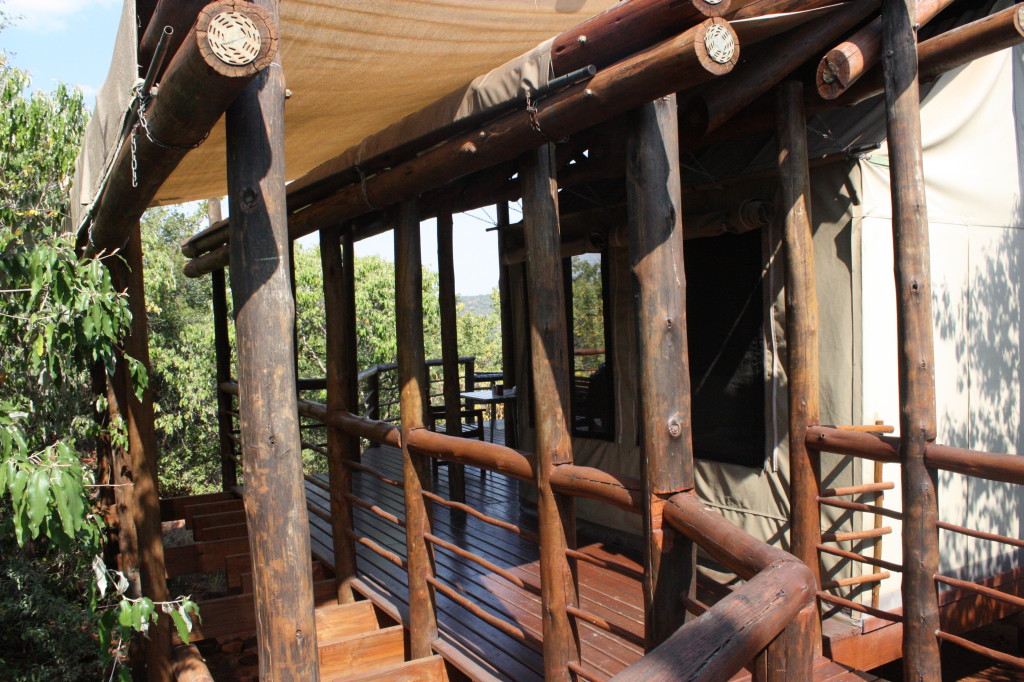
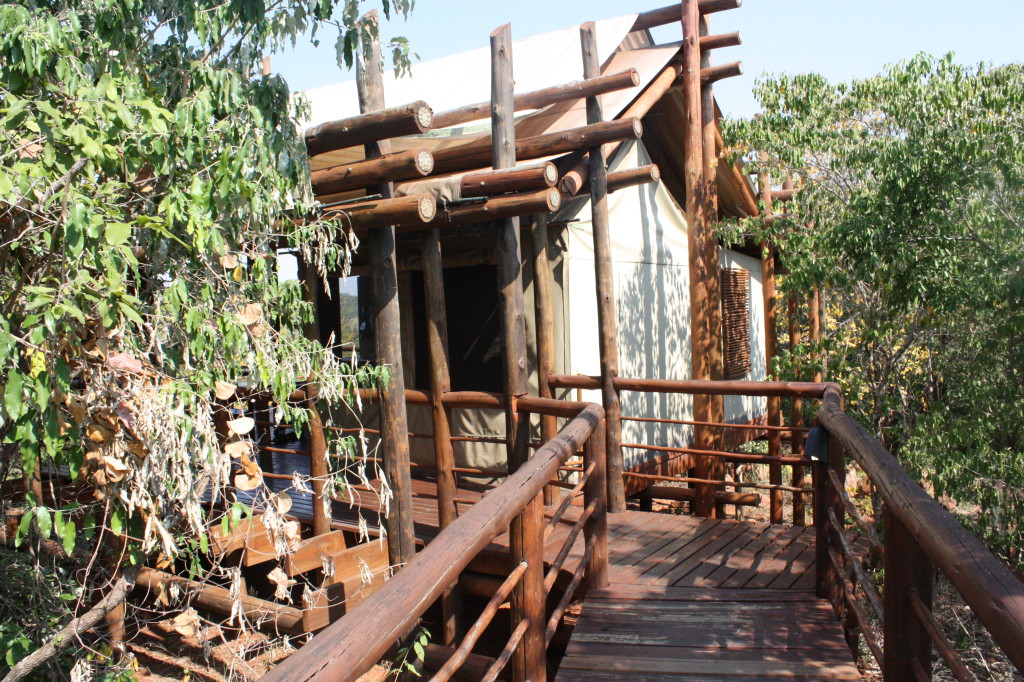
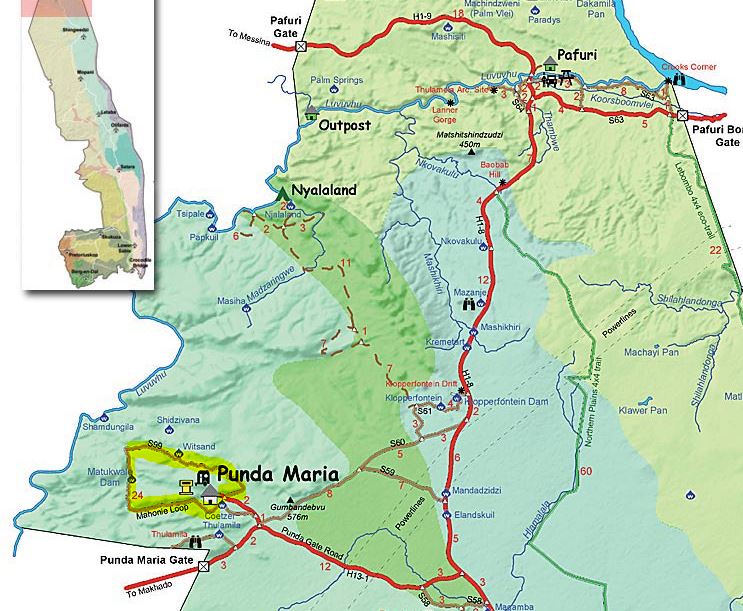
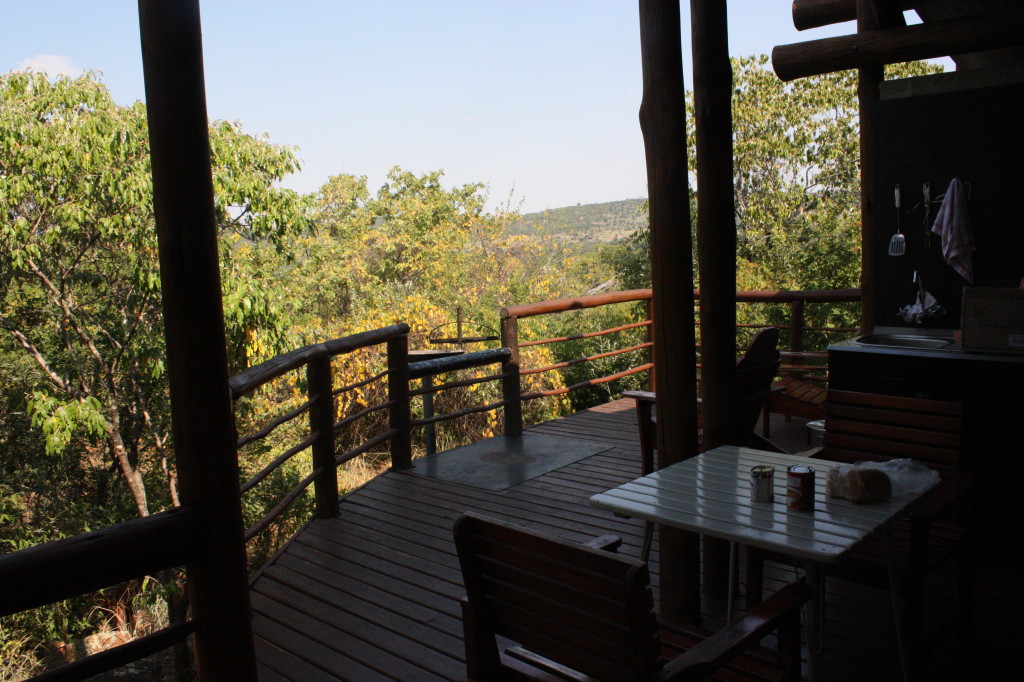
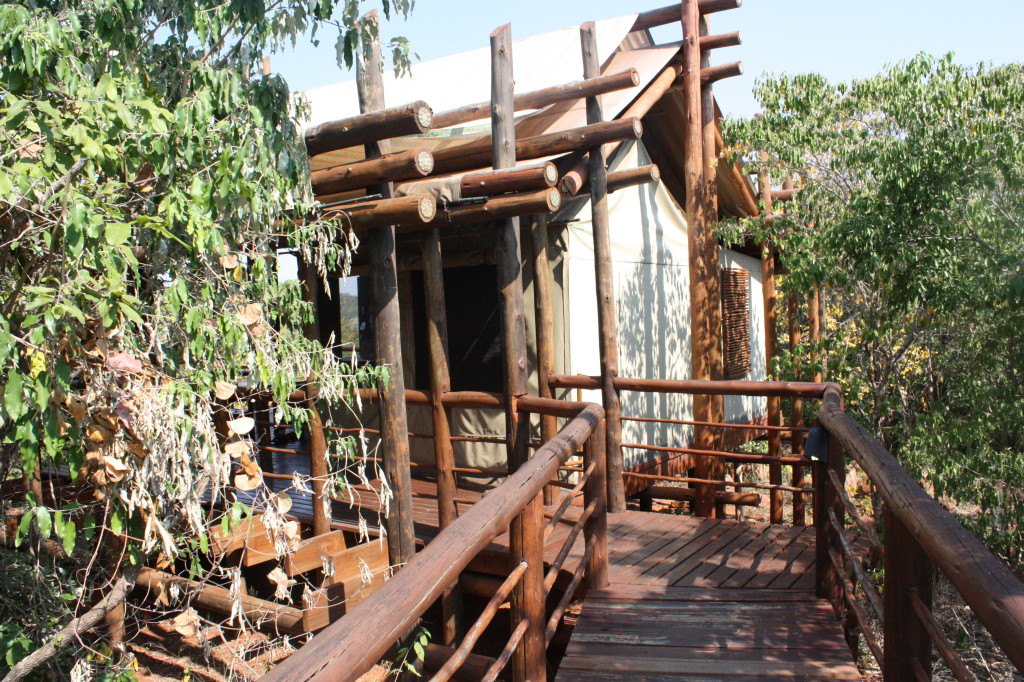
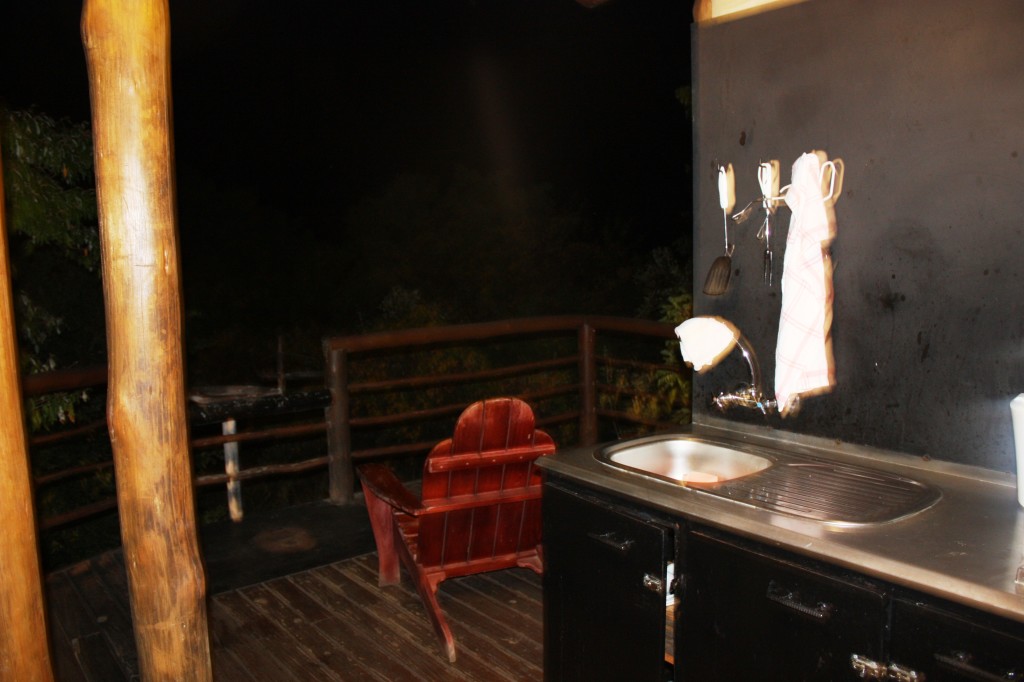
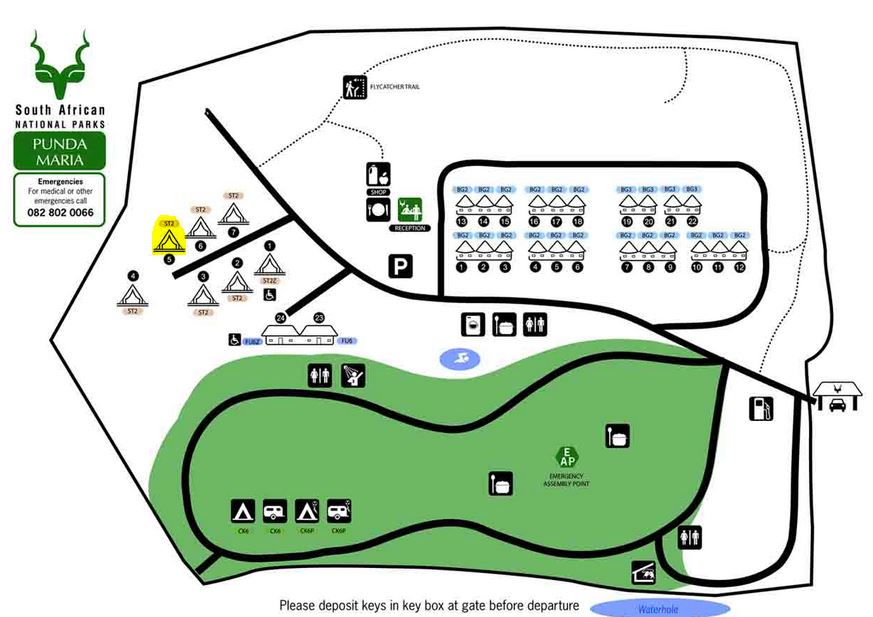
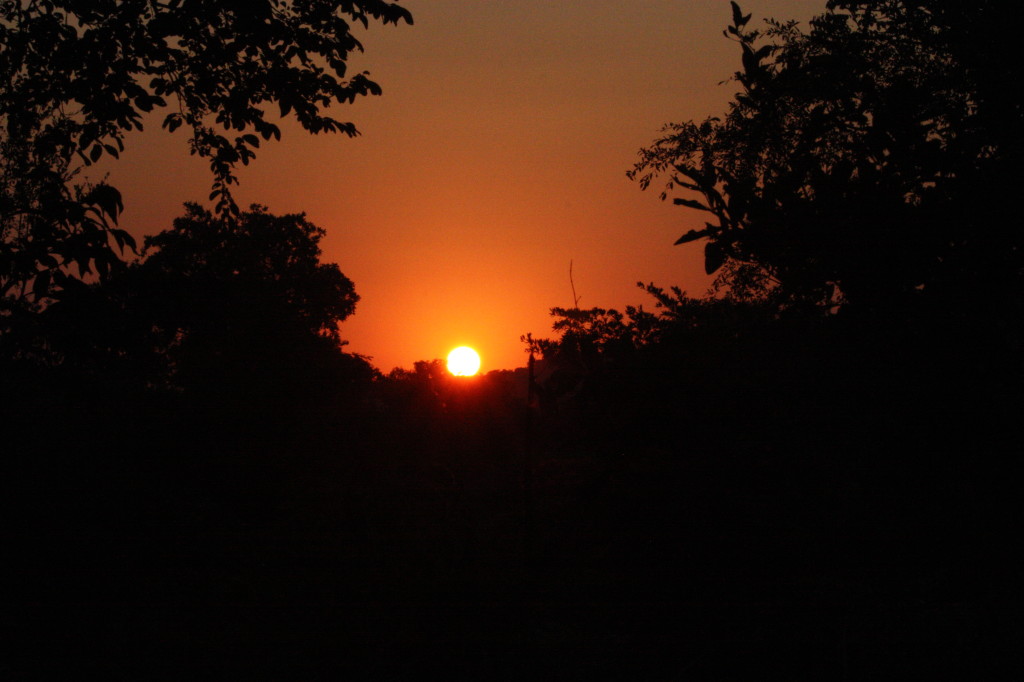
This is a map of the camp.  I highlighted in yellow the safari tent we had in 2009.  we absolutely loved it!  The deck is a great place to relax and watch birds fly by while you are cooking dinner and also watch the sunrise!
Punda Maria

Notice the bird hide just in front of the pond at the bottom of the map?  If you are lucky, you may see Brown-headed Parrots there.

HOW TO BOOK

Bookings are easily done on SANParks website.  Prices are very reasonable.  Here is a sample of prices for Punda Maria and availability for a non-school holiday period.  As a rough guide 10 Rand is around 1 USD.

Punda Maria rates as of July 2013

Here is a sample of availability 2 months from now.  As you can see, there are only a few bookings left for safari tents which is why you need to book early.

Availability Sept 2013

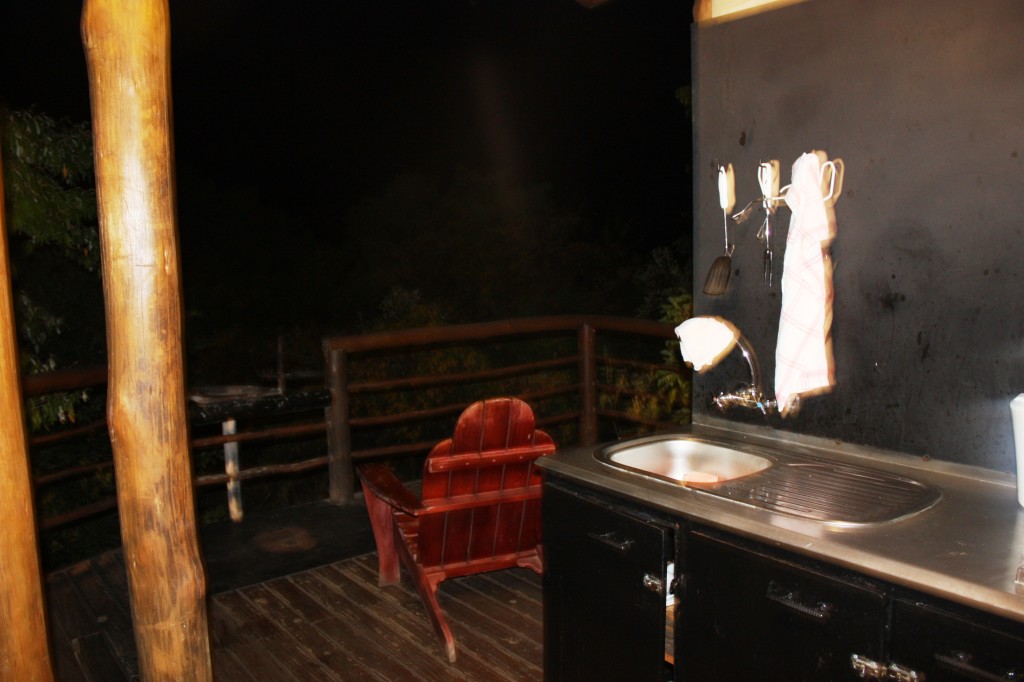
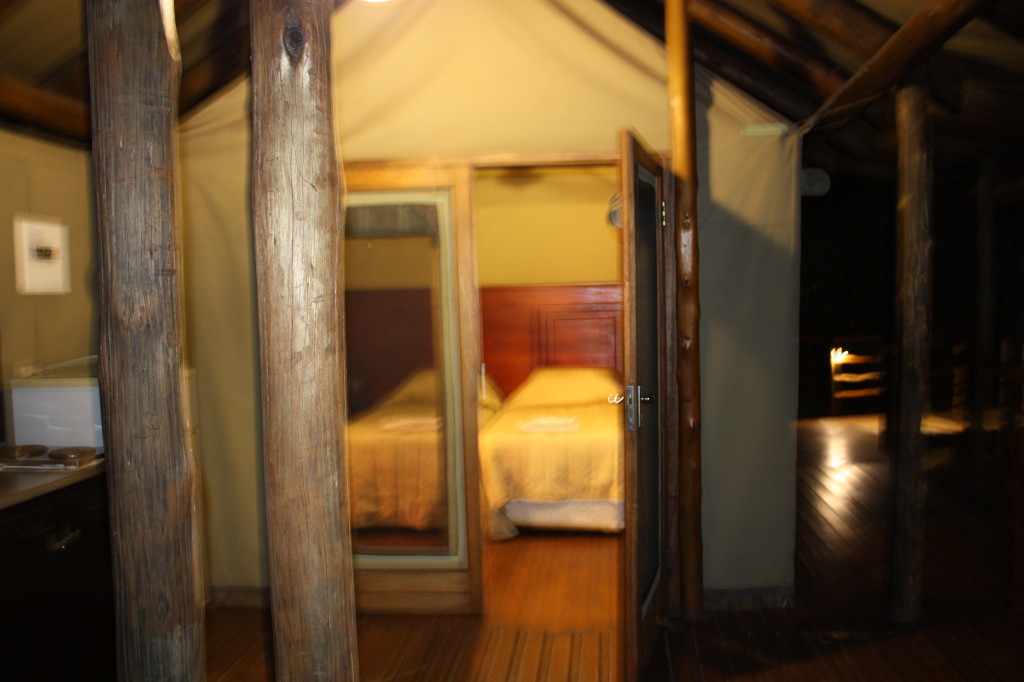
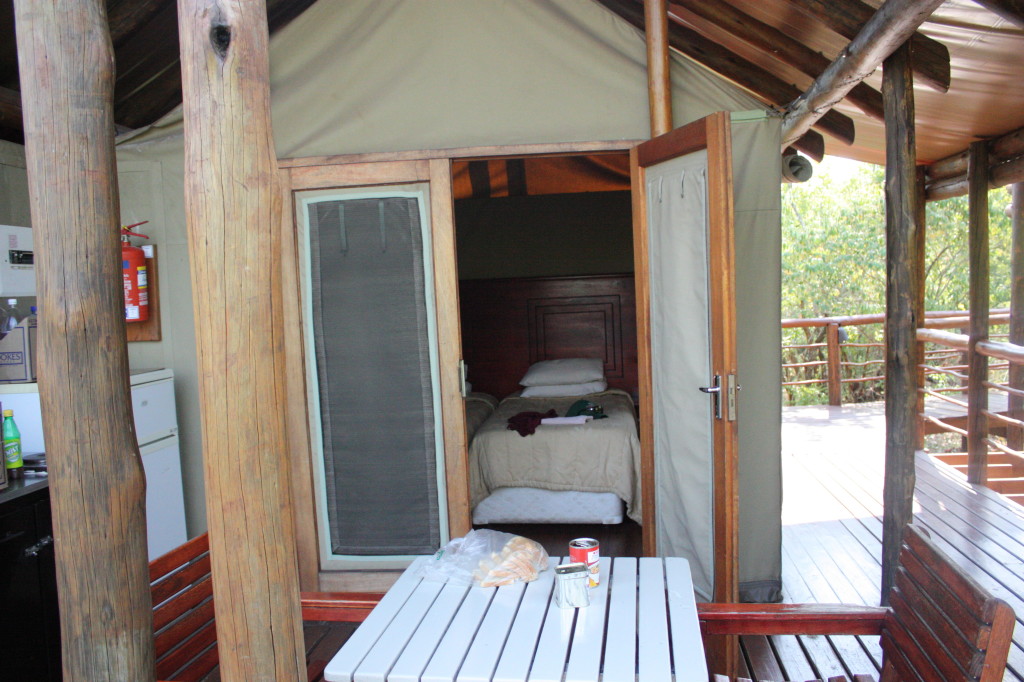
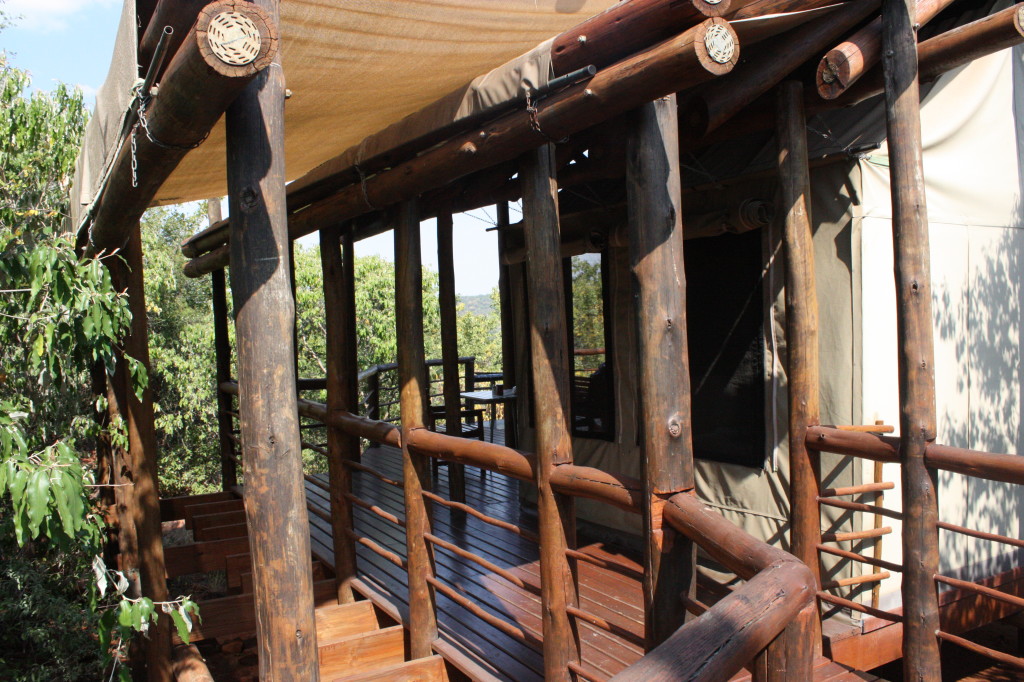
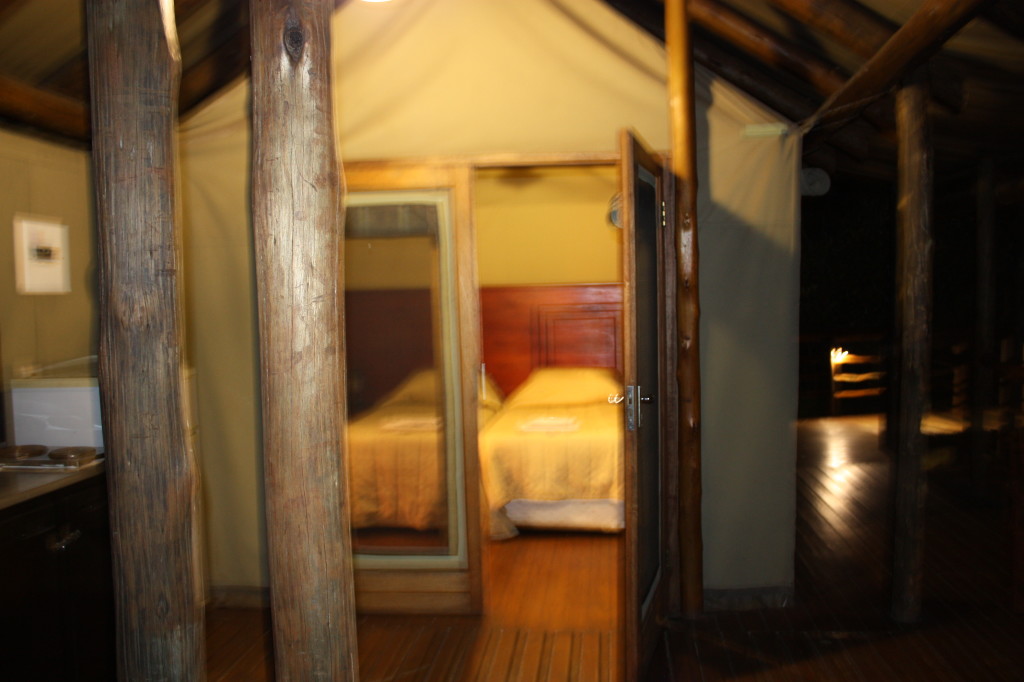
This is our safari tent.  They do cost a bit more but worth every penny!
IMG_1374 IMG_1373 IMG_1360 IMG_1359 IMG_1358 IMG_1357 IMG_1356 IMG_1231 IMG_1230

RANGER GUIDED SAFARI DRIVES

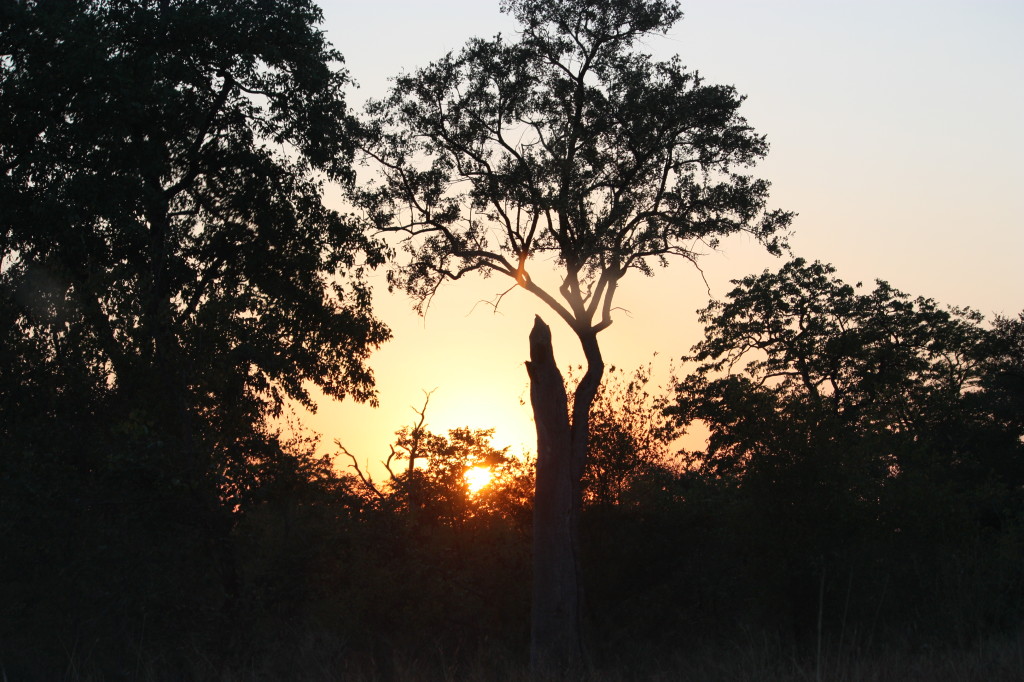
Don’t miss out on these!  They give you the best of both worlds-the independence of your own car during the day and a chance to see the surrounding area with an experienced ranger-guide.  They generally do them at sunrise, sunset and/or night and are very reasonably priced.  We did one that left in the late afternoon and stayed out around 4 hours if I remember correctly.  It was awesome, here’s a few pics.
IMG_1233 IMG_1228 IMG_1227 IMG_1220 IMG_1211 IMG_1205 IMG_1195

BIRDING IN PUNDA MARIA

In the camp (particularly on the Paradise Flycatcher Trail) Yellowbellied Greenbul and Terrestrial Brownbul (Bulbul), Bearded Scrub Robin should be looked for. Birding throughout the camp is excellent. Birds of prey are common overhead. Verreaux’s (Black) Eagle is sometimes seen, while in winter the White-necked Raven is a regular visitor. The Mahonie Loop, (the 25km circular drive around the camp) is undoubtedly one of the most rewarding birding drives in the Park. One should give oneself plenty of time to cover the distance, and travel with windows down and stop frequently, particularly for calls.

On a good day one could record several of the following ‘specials’: White-breasted Cuckoo-shrike, Arnot’s Chat, Crowned Hornbill, Grey-headed (Chestnut-bellied) Kingfisher, Crested Guineafowl, Gorgeous Bush Shrike, Grey-headed Parrot, African and European Golden Oriole (both summer), Eastern (Yellow-spotted) Nicator, Stierling’s Wren-Warbler (Barred Warbler) and Dickinson’s Kestrel. Narina Trogon has also been recorded on the loop, but is shy and elusive. On the drive from Punda Maria to Pafuri via the Klopperfontein Dam, Racket-tailed Roller and Southern (Mashona) Hyliota have been recorded. This is also one of the best areas to search for Yellow-billed Oxpecker. This species was absent in the park for many years, but returned in the 1980s and their numbers are still increasing. Buffalo are the preferred hosts.

This video was shown on a South African travel show and gives an orientation of the camp.
Brief Overview Of Kruger National Park

It’s unthinkable to come all the way to South Africa and not visit Kruger National Park.  It is one of the largest game reserves in Africa. It covers an area of 19,633 square kilometres (7,580 sq mi) in the provinces of Limpopo and Mpumalanga in northeastern South Africa, and extends 360 kilometres (220 mi) from north to south and 65 kilometres (40 mi) from east to west.  You can easily drive yourself there in a rental car from Johannesburg or you can join an organized safari.  With such a huge area and wide variety of habitats to choose from you may be wondering how you can chose at all?

OVERVIEW

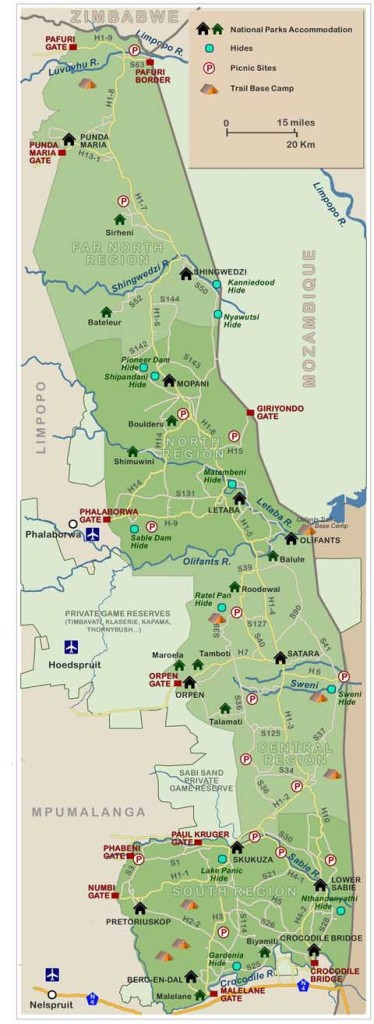
First you need to decide on which part of the park you want to see.  It’s way too big to try to cover it all in one visit so best to figure out which species you want to see, research the best possible places to see them, then decide if you want a private safari camp or one of SAN-Parks rest camps.  Here is a map to show where they are located.

map-kruger-national-park-smallAll the Big Five game animals are found at Kruger National Park, which has more species of large mammals than any other African Game Reserve (at 147 species).  Out of the 517 species of birds found at Kruger, 253 are residents, 117 non-breeding migrants, and 147 nomads.   You won’t be able to see everything so choose a few species an concentrate on finding them and just enjoy everything else that comes along.  There are numerous blogs and forums about African safaris so I am not going to try to compete with them but rather write from a birder’s perspective.  Siyabona Africa has a great introduction to birding in Kruger NP.

BIRD LISTS FOR KRUGER NATIONAL PARK

Kruger NP Bird Guide

SANParks Bird List

Avibase


HOW I DECIDE ON MY TARGET SPECIES

Parrots are my all-time favourite types of birds so I tend to seek them out first and choose my safari location accordingly.  There are 2 species of parrots found in Kruger – Brown-headed Parrot (Poicephalus cryptoxanthus) and a sub-species of Cape Parrot (Poicephalus fuscicollis).  There is an easier place to find Cape Parrots, the Woodbush Forest in Magoebaskloof so I base myself at the northernmost SANPark rest camp-Punda Maria.  The best place to see Brown-headed Parrots is near Pafuri which  is best accessed from Punda Maria Camp.  I will be doing a full review in the next post.

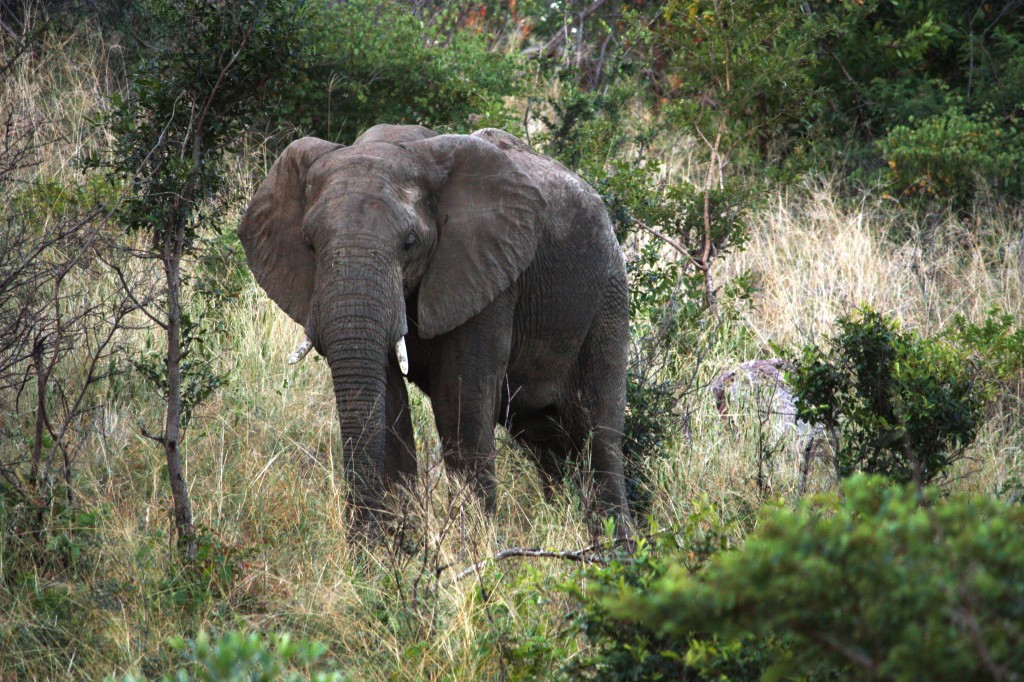
You won’t miss out on the Big 5 by targeting a bird species.  We saw lions and elephants even on a short visit to nothern Kruger.  You can also visit several rest camps and target different species.


Eco-Lodges Amongst The Top 50 Hotels In The World

Travel and Leisure magazine has released their list of the world’s best hotels for 2013.  What I find very interesting is that 5 out of the top 10, including #1 are ecolodges!  4 of them are safari lodges in Africa and one is in Costa Rica and appears to be frequented by Scarlet Macaws.  You have to scroll through one of those slide-shows to see all 50 of them  but it’s pretty interesting if you are looking for “aspirational” hotels to stay at.  Unfortunately, very few on the list are available on hotel points.

No. 1 Mombo Camp and Little Mombo Camp, Moremi Game Reserve, Botswana

No. 4 Nayara Hotel, Spa & Gardens, La Fortuna, Costa Rica


Mousebirds

These birds are way too pretty to be named after rodents!   Although they are a plain, soft grey color, they have elegant crests and long, graceful tails.  The Mousebirds are a small group of (possibly near passerine) birds, which have no known close affinities to other groups, though might be close to trogons and owls.The Mousebirds are therefore given order status as Coliiformes. This group is confined to sub-Saharan Africa, and is the only bird order confined entirely to that continent. They had a wider range in prehistoric times and apparently evolved in Europe.  You can see the differences between varies species of Mousebird on this website.

.

They are widely spread in Africa so you are very likely to see them no matter where you are going on safari. Kruger Park, easily accessed from Johannesburg is a great place to start.


Mousebird Range

We saw them easily in northern Kruger Park in April 2009.   We saw them in other areas of Kruger too.  I’ve seen a few good videos of them at Pete’s Pond in Botswana too.

Video of Mousebirds at Pete’s Pond, Botswana.

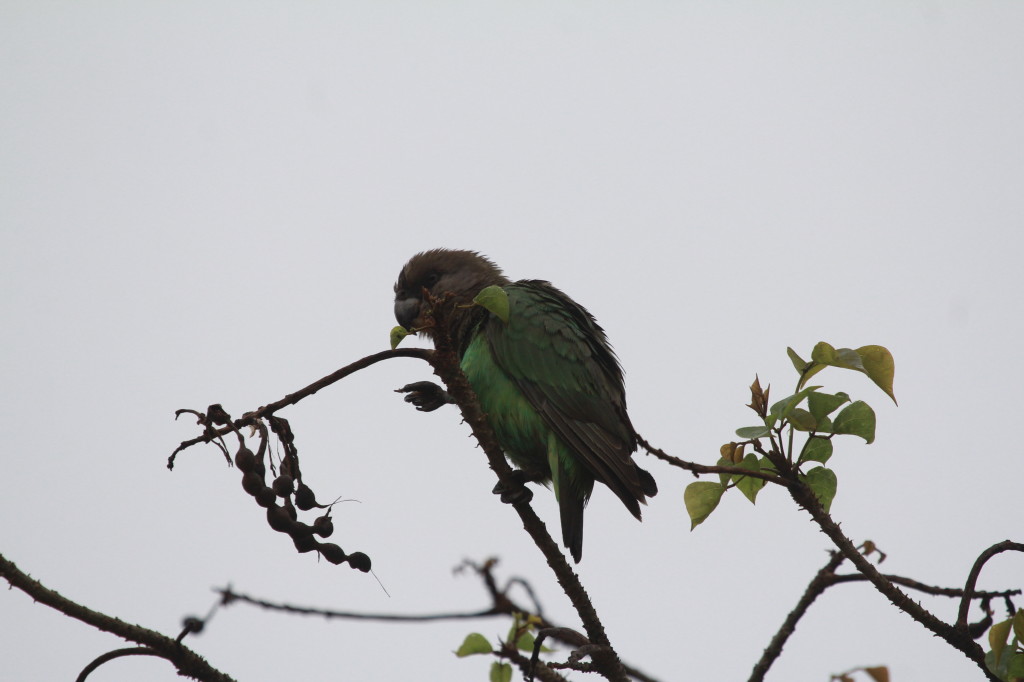
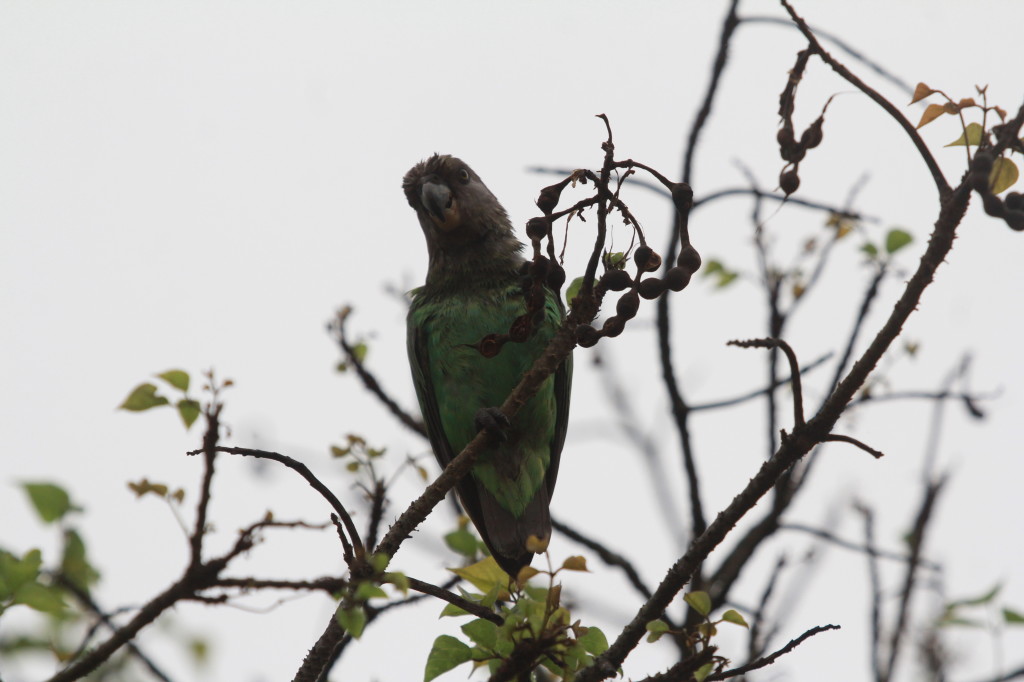
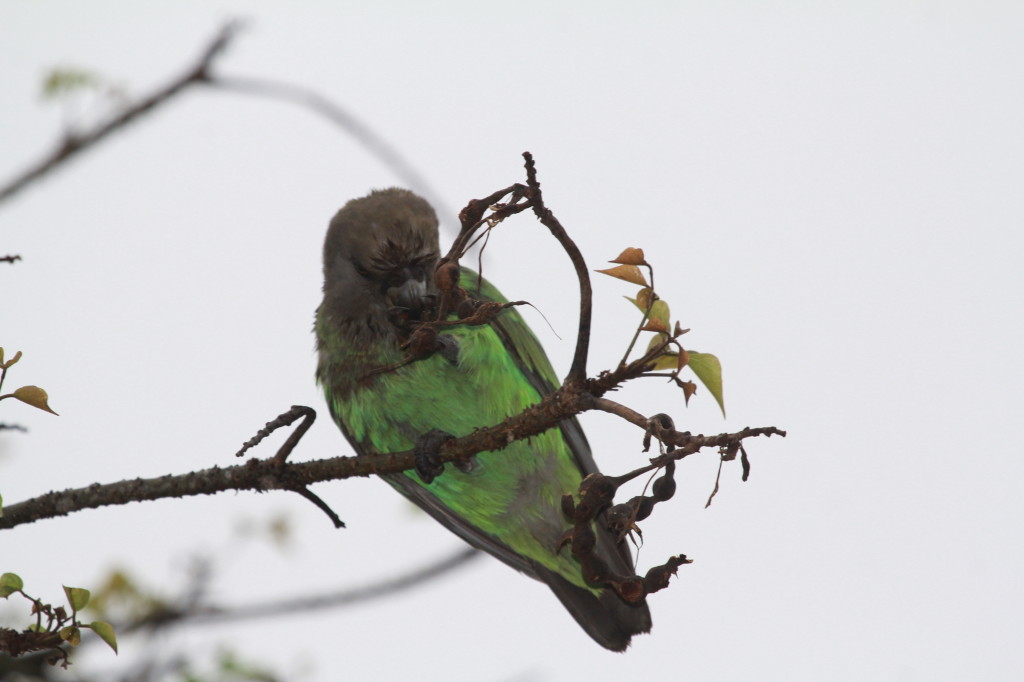
Brown-Headed Parrot (Poicephalus cryptoxanthus)

The Brown-headed Parrot (Poicephalus cryptoxanthus) is a South-eastern African parrot.

I took these shots watching a small flock in Pretoriuskop Restcamp.

IMG_4162 IMG_4171 IMG_4198 IMG_4214 IMG_4215From Wikipedia-close up.

.

They are found along the south-eastern coast of Africa from  Kenya through Tanzania, Malawi, Mozambique, Zimbabwe into the northern part of South Africa.  There are 2 subspecies:
P.c. cryptoxanthus: E Kwazulu, E Swaziland and E Transvaal, NE Republic of South Africa, to S Mozambique and SE Zimbabwe.
P.c. tanganyikae: Mozambique, north from Save River and S Malawi to E Tanzania including Zanzibar and Pemba Islands and coastal Kenya

Brown-headed Parrot range

The easiest place to see them would be in Kruger Park, South Africa which is easily accessible to tourists and has a population of around 1500-2000.  You can fly into Johannesburg, hire a car and drive up there in about 6 hours.  I recommend the Punda Maria camp which is beautifully situated in the northern part of Kruger and sometimes has the birds coming into the camp.
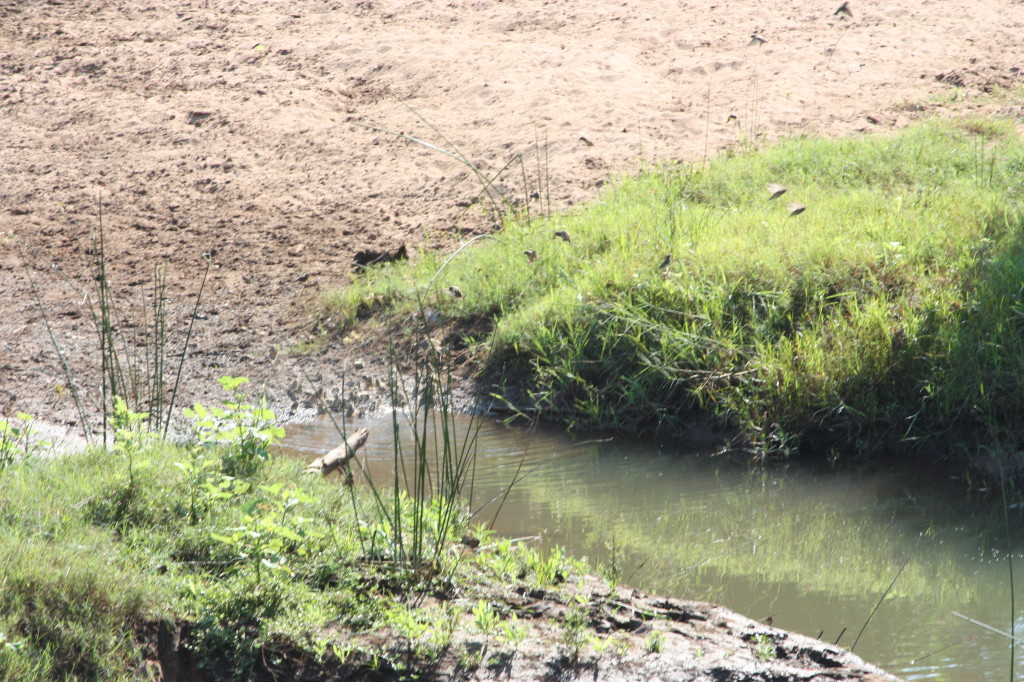
2015 Update:  I saw one in flight at Satara Restcamp and lots of them in Pretoriuskop.  If you want to be pretty much guaranteed to see them, go to Pretoriuskop.
IMG_3914a

LEARN MORE ABOUT BROWN-HEADED PARROTS

Wikipedia

World Parrot Trust

Birdlife

Siyabona Africa

VIDEO

This little guy seems to be thirsty but too wary to go take a drink

I can’t embed this video but if you go HERE you can see one feeding in a tree.

Loyalty Applauded. Awarded. Rewarded………………….Or Not?

A couple days ago, I got this email from Club Carlson on 2 July to be exact.  On first glance, it looks like a standard “look what a great program we are” email.

Redeem Your Points for Rich Rewards

Club CarlsonSM is proud to offer you first-class redemption options, including faster Free Award Nights at more than 1,000 participating Carlson Rezidor hotels worldwide.

As a member, you can redeem your Gold Points® for:

  • Free Award Nights starting at just 9,000 points with no blackout dates on standard rooms
  • Award Nights using Points+Cash starting at 5,000 points
  • Donations to World Childhood Foundation and redemptions for Carbon Footprint
  • Express Rewards for in-hotel awards such as room upgrades, food and beverage credits, laundry credits (where available)
  • Airline miles at more than 20 airlines at a rate of 10 Gold Points per one airline mile; please note, our airline mileage redemption options have changed effective July 1, 2013

Learn more about all of your exclusive Club Carlson benefits.Club Carlson. Loyalty Applauded. Awarded. Rewarded.

Date of email 2 July.  Date of devaluation 1 July. 

People on FlyerTalk saw it first and the news quickly spread to other travel blogs.  No one was THAT upset over the increase in airline miles redemptions.  What we were upset about is the lack of advance notice so we could redeem at the rates we signed up for if we so desired.  Messages to Club Carlson on Facebook and Twitter have only met with a canned reply copy/pasted to everyone.

Now in most cases, transferring to airline miles isn’t always the best use of hotel points but if you need to top up for a special award they can be very useful.  I had earmarked 100k Club Carlson points for 18k United to top up what I need for the trip to Africa in 2015.  I did however note that around Nov/Dec last year, United had a partner bonus promo so I was anticipating they would have one again this year so I had not transferred the Club Carlson points yet.  If I had know about the devaluation, I would have done my transfer beforehand.  I have enough points to easily cover the chain hotels I need for the next couple years at least and can spare the 100k for miles.

For many of us, it takes time to save up for rewards, especially when there is a tier structure with a higher amount gaining a better transfer rate.

This is what it was before.

  • 2,000 points = 250 miles
  • 50,000 points = 8,000 miles
  • 100,000 points = 18,000 miles

This is what it is now:

  • 2,000 points = 200 miles
  • 50,000 points = 5,000 miles
  • 100,000 points = 10,000 miles

While hotel points are of limited value to eco-tourists, they still have value whether for free hotel nights or airline miles and if you spend most of your time in eco-lodges you will probably have more use for airline miles.  There are some good redemptions for eco-travelers such as this one in Panama.

Bottom line is I don’t feel very “applauded, awarded, rewarded” right now.  I did go to a lot of trouble to acquire those points and even bought some during  a flash sale a couple week ago to top off my needs for both airline miles and hotels for the next couple years.  Loyalty is a two-way street and Club Carlson needs to learn that.  They do have some nice hotels but we don’t HAVE to be loyal to Club Carlson to book them.  We can use Pointshound (my referral link), Expedia, Hotels.com or dozens of other booking sites.

I challenge Club Carlson to do the right thing and give a grace period of at least 72 hours for people to redeem at the old rates.  True, their hotel rewards are still a good deal but who can say they won’t do the same thing with them in the future.  For now, don’t sit on your points, if you have them, use them up.  Then be loyal to yourself.  Use the credit cards if you get a free or super-cheap night out of them but do your bookings wherever you get the best benefit.

Dire Message About Why We Need To Conserve Wild Birds

Trafficking of wild-caught birds is devastating no matter how you look at it.  The birds lose their freedom at best, their lives at worst.  The eco-system loses valuable members.  Everyone loses the joy of seeing and hearing wild birds flying free in their native homes.  Trafficking happens because there are people who need to earn money to feed their families and people who are willing to pay them to capture wild birds.  To stop it, we need to offer these people other alternatives for gainful, honest employment so they leave the wild birds alone.  This is where eco-tourism can help.  When we spend our tourist $$ by supporting local communities, they no longer need to capture these birds.  The birds become more valuable left in the wild so they attract eco-tourists.

Let’s have a look at just how damaging the wild-caught bird trade is with this video found on the World Parrot Trust’s Fly Free page.

The fight to end rare-animal trafficking in Brazil
Biologist Juliana Machado Ferreira, a TED Senior Fellow, talks about her work helping to save birds and other animals stolen from the wild in Brazil. Once these animals are seized from smugglers, she asks, then what? – See more at: http://www.parrots.org/flyfree/about-the-wild-bird-trade.html#sthash.KrtmN54x.dpuf
If you are doing an eco-tour this year, thank you for doing your part to help save wild birds.  Please try to spend as much cash as possible within the local communities of the nature preserve you are visiting so they stay motivated to leave the birds flying free.
If you are not traveling or doing a city or resort type trip, please consider helping the World Parrot Trust with a donation so they may continue their work.