Airports With Free Wifi

Getting to those exotic destinations may require long layovers and connecting flights, especially if you are using miles for a free flight and have limited options.  Sometimes your layover is too short to go out and explore the city and long enough that you  get bored after a quick walk-through the Duty Free.  Free Wifi is your best friend.  You can surf the net, read blogs and forums, catch up on emails and check the weather at your destination.   You can watch YouTube, Hulu or the online versions of tv channels.  If you have elite status or membership in a lounge club you will always find free Wifi in the business and first class lounges.  If you can’t access the lounges, you are not necessarily out of luck.

There are several options to find out if an airport has free Wifi.

Wifi Free Spot

FoxNomad (very creative options)

Check the airport’s website.  Here’s an example:  Vancouver (YVR).  Simply do a search on “free wifi”.

.

There’s your answer!

.

Knowing which airports have free Wifi in advance can be very useful if you have only a couple lounge passes from a credit card and you need to decide which airport to use them in.


Carnaby’s Black-Cockatoo (Calyptorhynchus latirostris)

The Short-billed Black Cockatoo (Calyptorhynchus latirostris), also known as Carnaby’s Cockatoo or Carnaby’s Black Cockatoo, is a large black cockatoo endemic to south-western Australia.

.

The endangered Carnaby’s black cockatoo (Calyptorhynchus latirostris) is one of just two species of white-tailed black cockatoo on Earth. The other is the Baudin’s black cockatoo, and they are both found only in the Southwest Australia Ecoregion.

.


How many are there?

It is difficult to know how many Carnaby’s Black-Cockatoos are left, but it is known that their populations have declined by over 50% in the past 45 years, and that they no longer breed in up to a third of their former breeding sites in the Wheatbelt.

They are gregarious birds and live in pairs or small flocks during the breeding season. After fledging, the young move with their parents from breeding areas to feeding areas where other family groups join the flock.

The cockatoos live for 40-50 years in the wild. A large proportion of the remaining population now is past breeding age. When these older birds die, there will be very few younger birds to take their place.

What is threatening them?

There are a number of threats facing Carnaby’s Black-Cockatoo:

  • Habitat fragmentation, particularly in the northern and eastern areas of the Wheatbelt. Most habitat suitable for breeding and feeding in the Wheatbelt has been cleared entirely or fragmented. In addition, clearing of heathland surrounding breeding sites has reduced the survival rate of fledglings by decreasing the available food sources for the young
  • Removal of nest hollows for use as firewood or just to make properties look ‘tidy’. Much woodland lacks hollows, and it takes over 100 years for woodland seedlings to mature and form hollows suitable for nesting
  • Competition for hollows from other species
  • Loss of native food sources caused by urban development on the Swan coastal plain
  • Poaching: illegal poaching is still a threat – trees are often cut down or the hollow severely damaged when young and eggs are taken, removing breeding sites
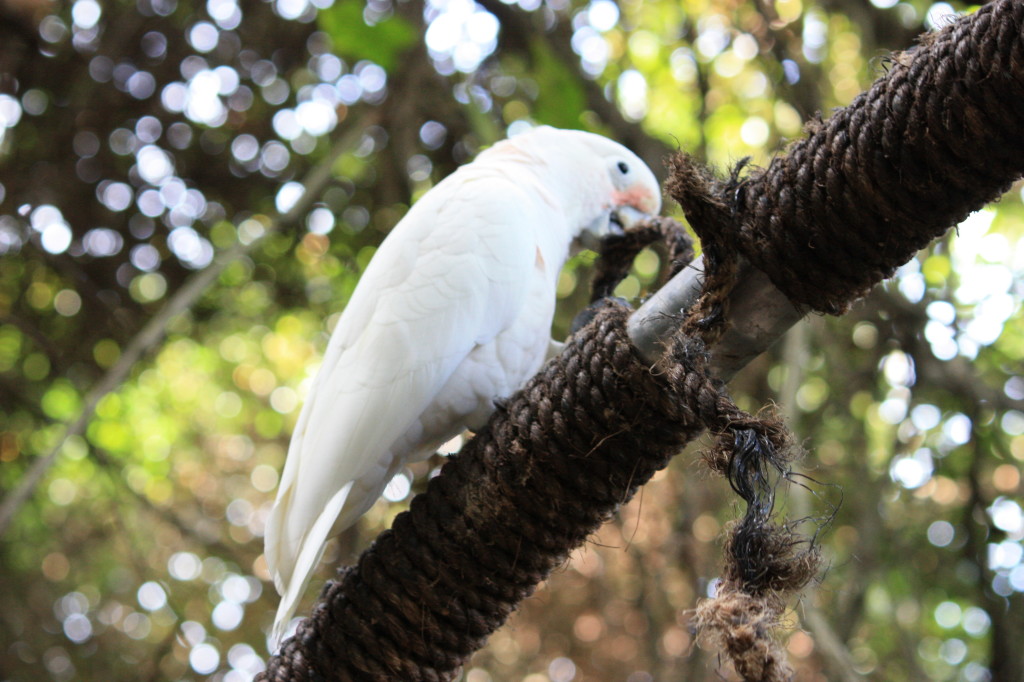
  • Invasive species: other bird species such as the Galah and the Western Long-billed Corella are extending their range in the Wheatbelt and are competing with and excluding Carnaby’s Black-Cockatoos from traditional nest hollows.

Carnaby’s Cockatoo Range

Carnaby’s Black Cockatoos can be seen in Western Australia, even in some parks in the city of Perth!  Another easily reached place to see them is Yanchep National Park just north of Perth.  You can get to Australia using airline miles and get to the national parks via rented car.

LEARN MORE ABOUT THIS PARROT

World Parrot Trust

Birdlife

WWF

Wikipedia

Australian Government Sustainability

Bird-O

ABC Australia

Bushland Perth

VIDEOS

On A Wing And A Prayer Trailer.  Check here to see if you can view the entire documentary (could be IP blocked).

City dwelling Carnaby’s Cockatoos in a Perth park

Birding In Hogsback, South Africa

Hogsback is one of the top birding destinations in South Africa and can easily be reached with a domestic flight to Port Elizabeth, then a 3 hour drive.

.

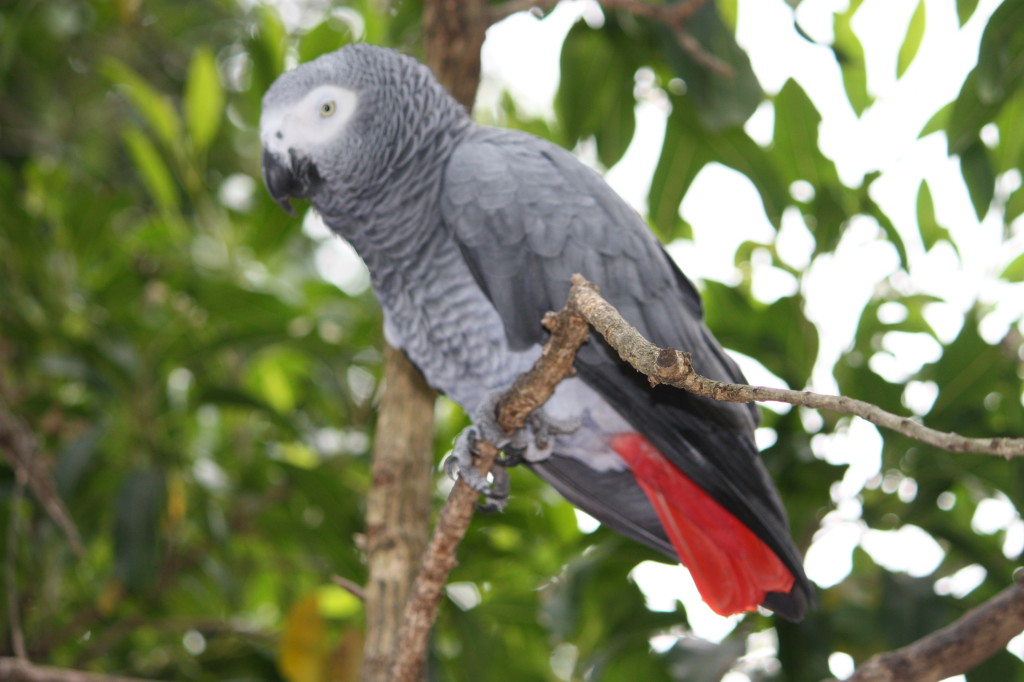
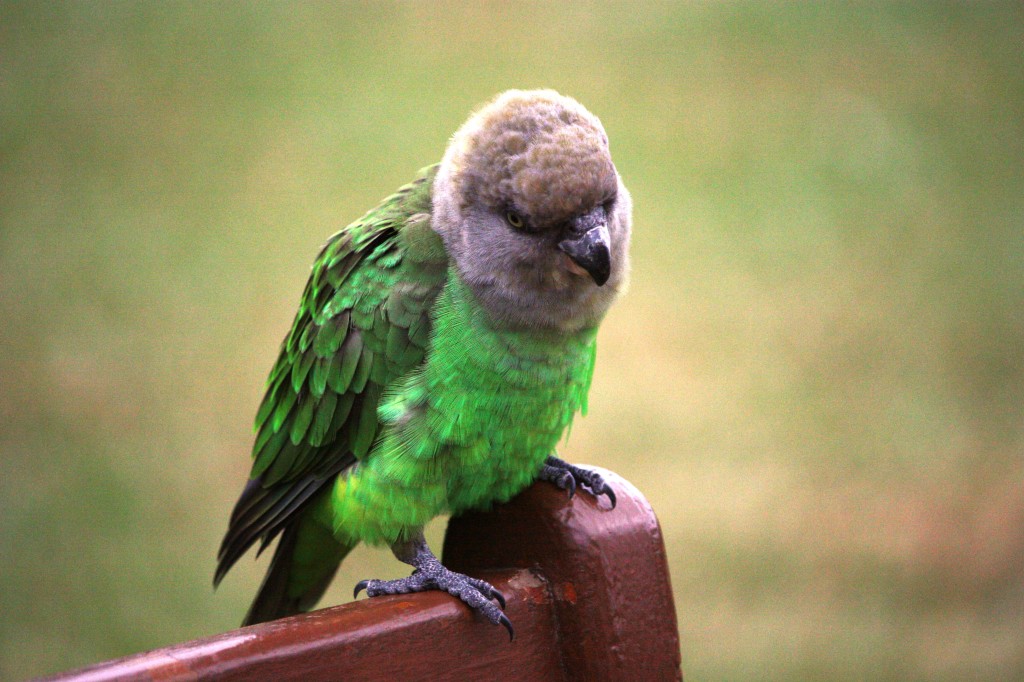
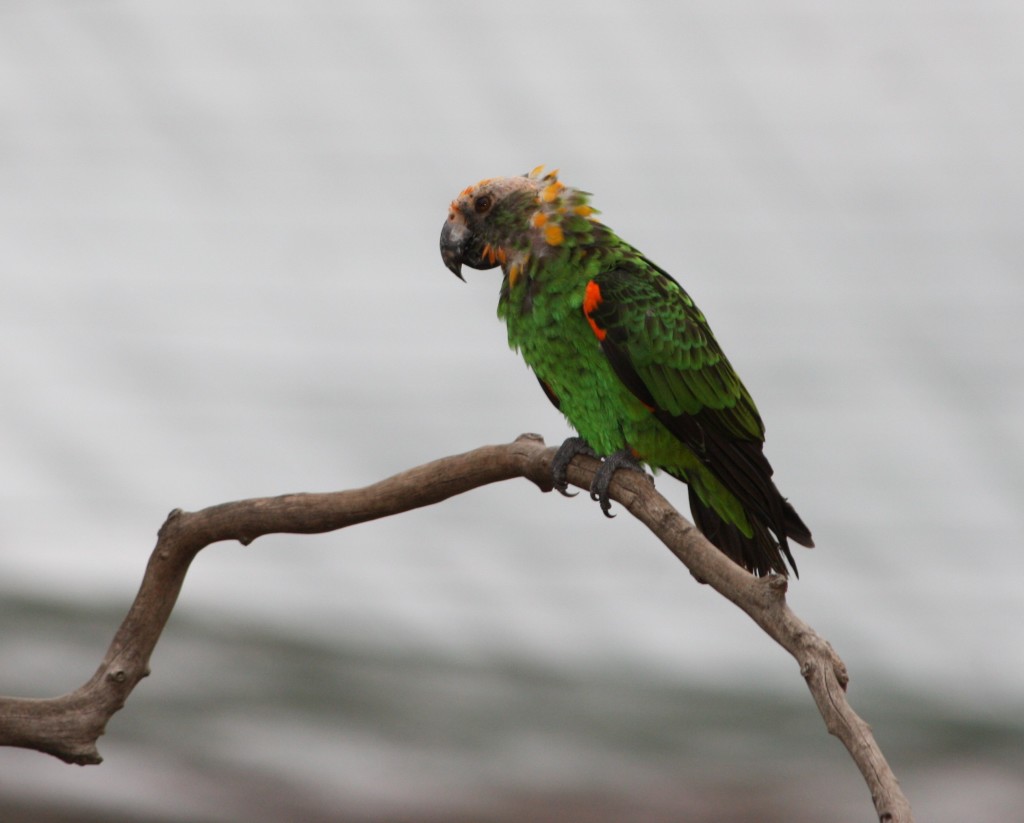
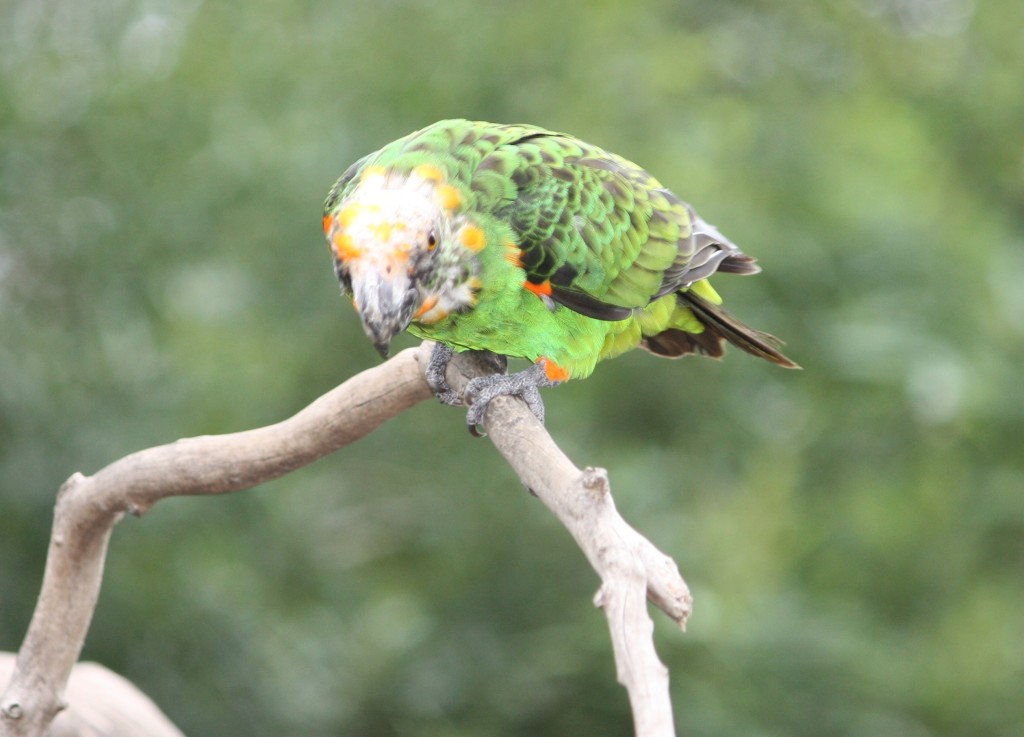
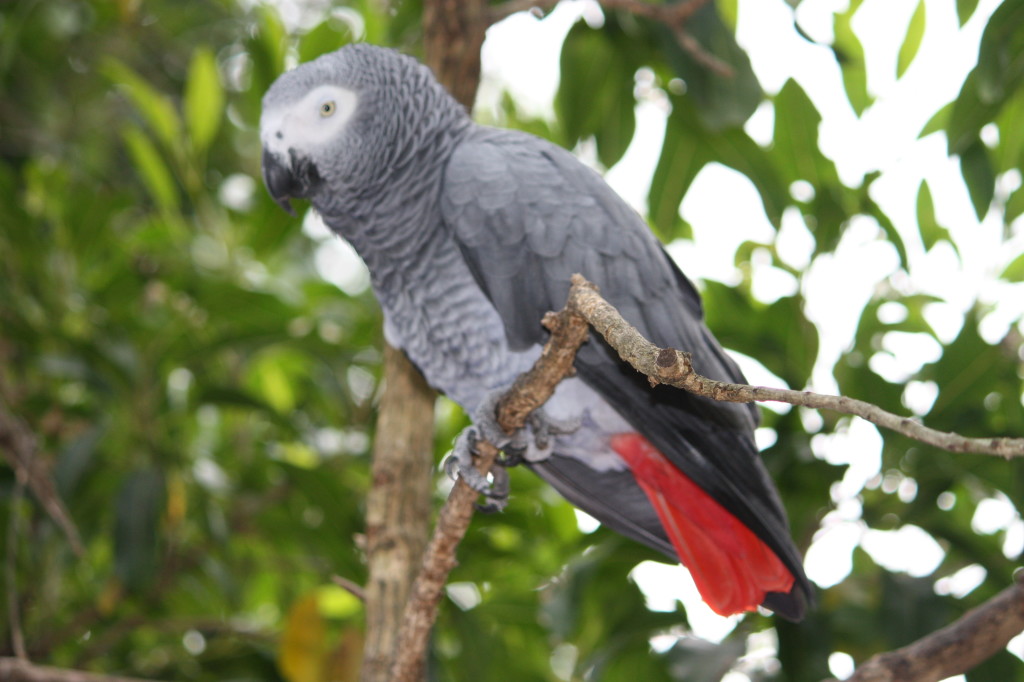
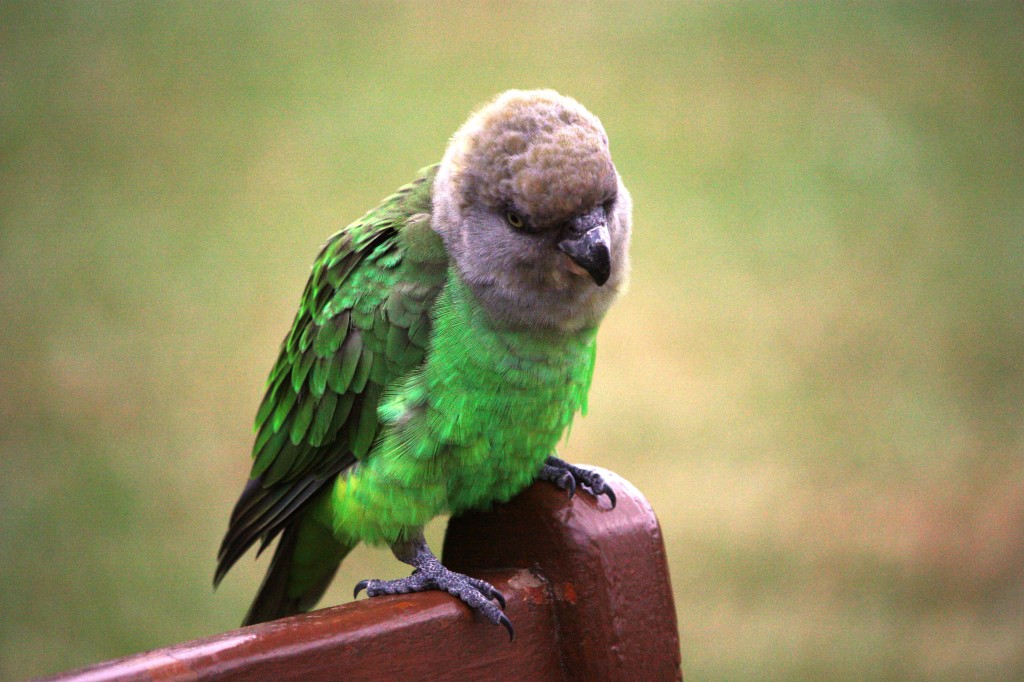
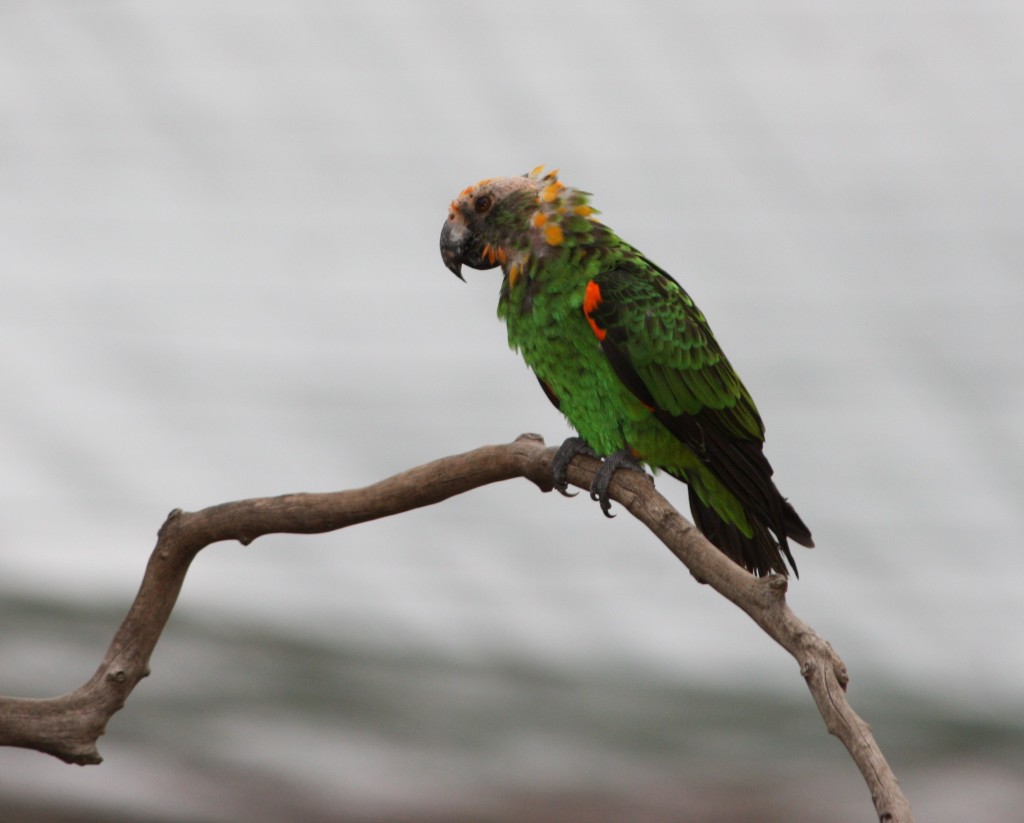
The most sought after bird here is the Cape Parrot (Poicephalus robustus) one of two subspecies of Cape Parrot.  The other subspecies, (Poicephalus fuscicollis) can be found in the Magoebaskloof area.  Cape Parrots are highly endangered and there are several people working hard in this area to try to save them.  Cape Parrot Project, World Parrot Trust.

.

Hogsback has accommodation to suit every budget.  Since I have not yet been here (it’s on my 2015 Africa trip) I can’t recommend any particular eco-lodge but there is a good selection on this website.

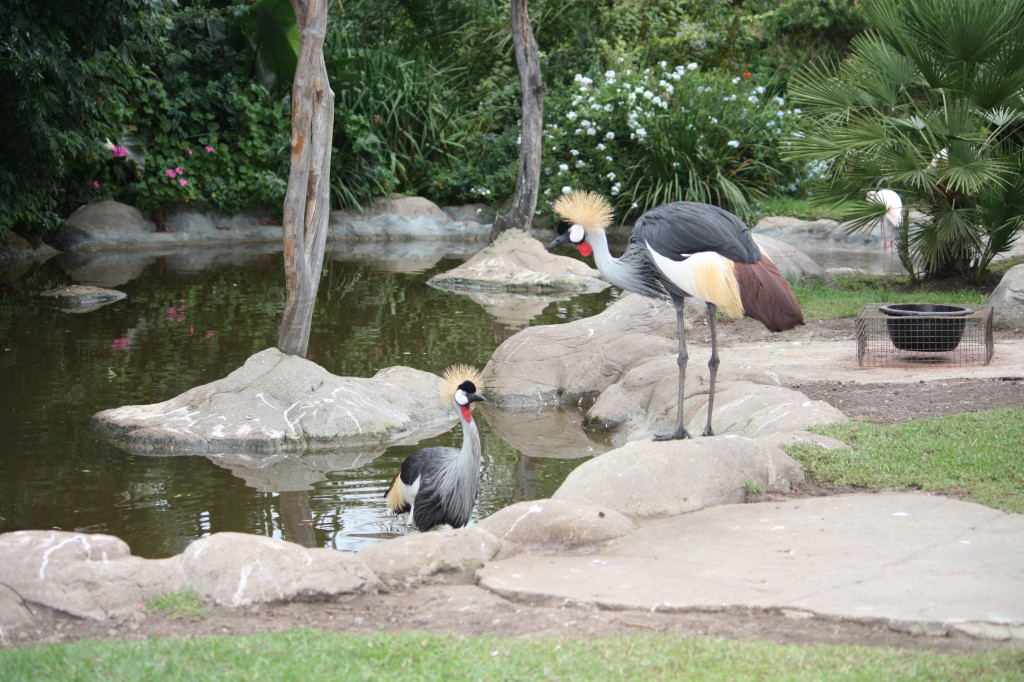
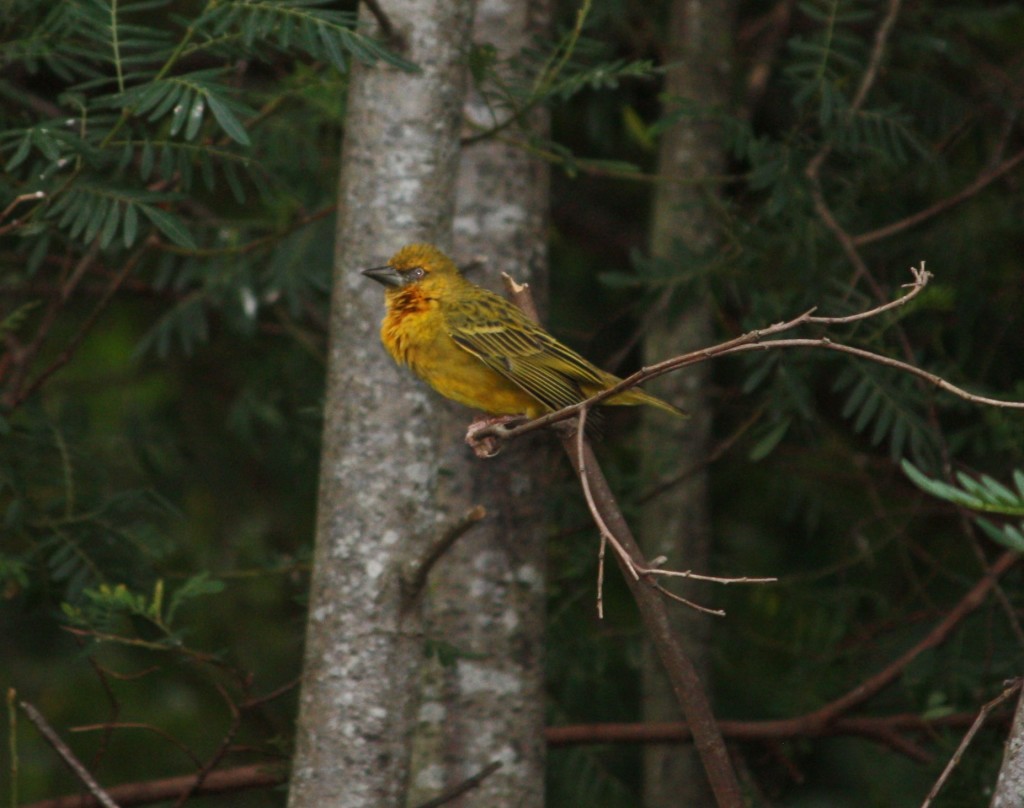
There are several birding tour operators in the area and links can be found on Fat Birder.  You could try Aves or Graham Russell.  The whole area is rich in birdlife and species you will want to look for include:  Cape Parrot, Orange Ground Thrush, Bush Blackcap, Narina Trogon, Knysna Woodpecker, White Starred Robin, Olive Woodpecker, Chorister Robin-Chat, Blue-mantled Crested Flycatcher, Yellow-throated Woodland-warbler, Olive Bush-shrike, Cape Batis, African Emerald Cuckoo, Klaas’ Cuckoo, African Olive Pigeon, Red Chested Cuckoo, Brown Scrub Robin, Dark Backed Weaver,Drakensberg Prinia, Barrats Warbler, Dark Capped Yellow Warbler, Common Quail, Lazy Cisticola, Yellow Bishop, Red-necked Spurfowl, Thick-billed Weaver, Blue Crane, Grey Crowned Crane, Secretary Bird, Ground Woodpecker, Jackal Buzzard, Steppe Buzzard, Forest Buzzard, Long Crested Eagle, African Crowned Eagle, Martial Eagle, Rufous Chested, Black and Little Sparrowhawks , Rock Kestrels, Amur Kestrels as well as Yellow Billed Kites,and more.

Birding guides in the Hogsback area are welcome to leave their contact details in the comments section of this post.

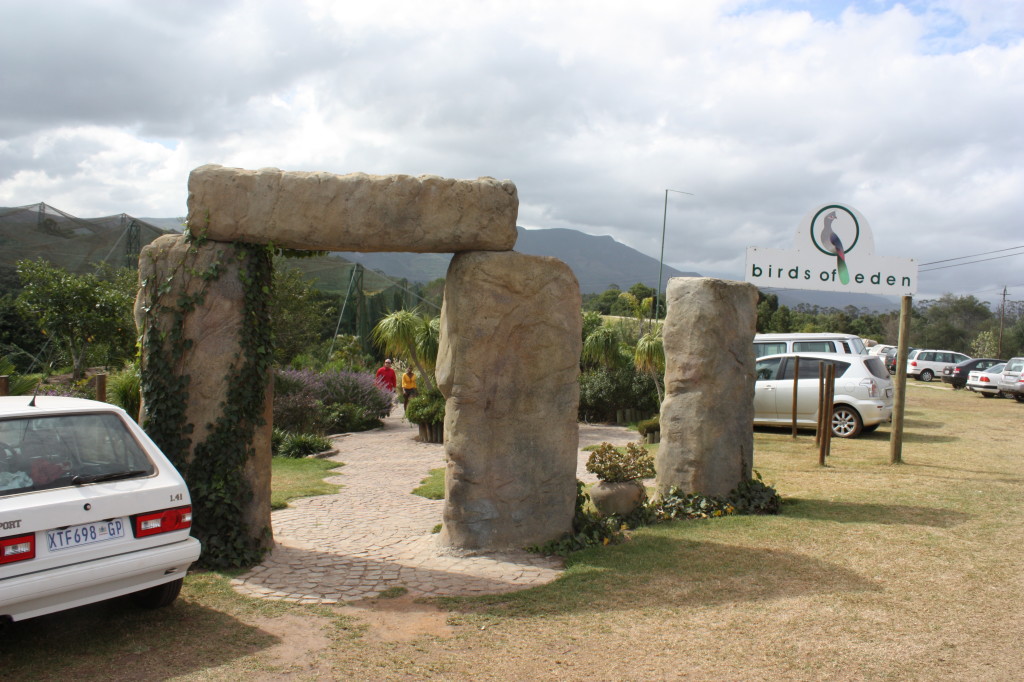
Eco-Lite: Birds Of Eden, South Africa

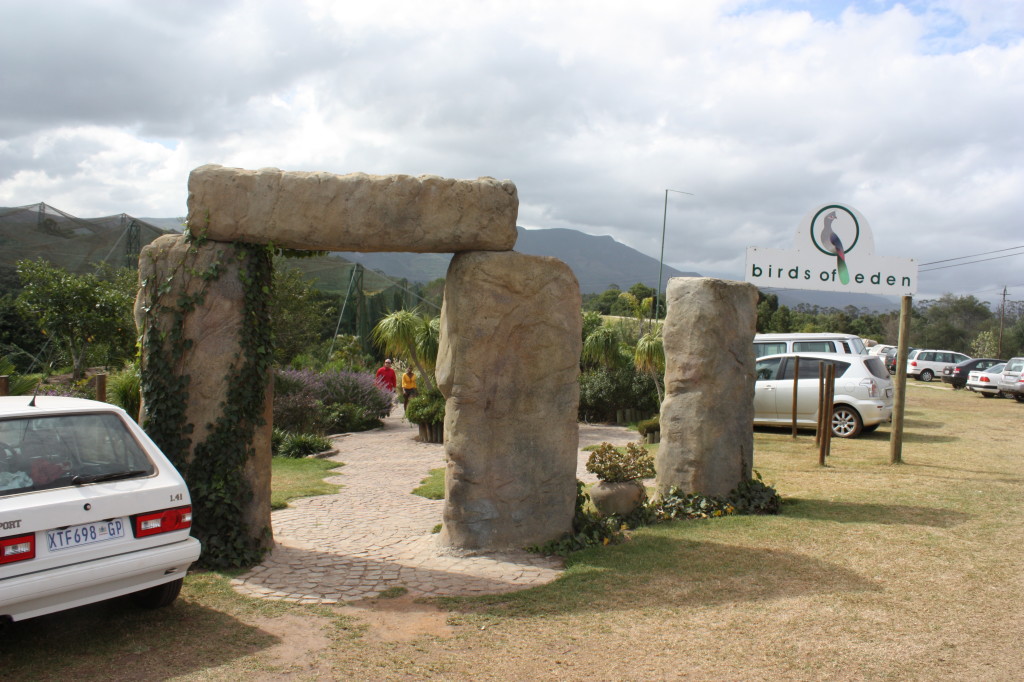
BIRDS OF EDEN IS THE GARDEN ROUTE’S VERY OWN WORLD CLASS FREE FLIGHT BIRD SANCTUARY *

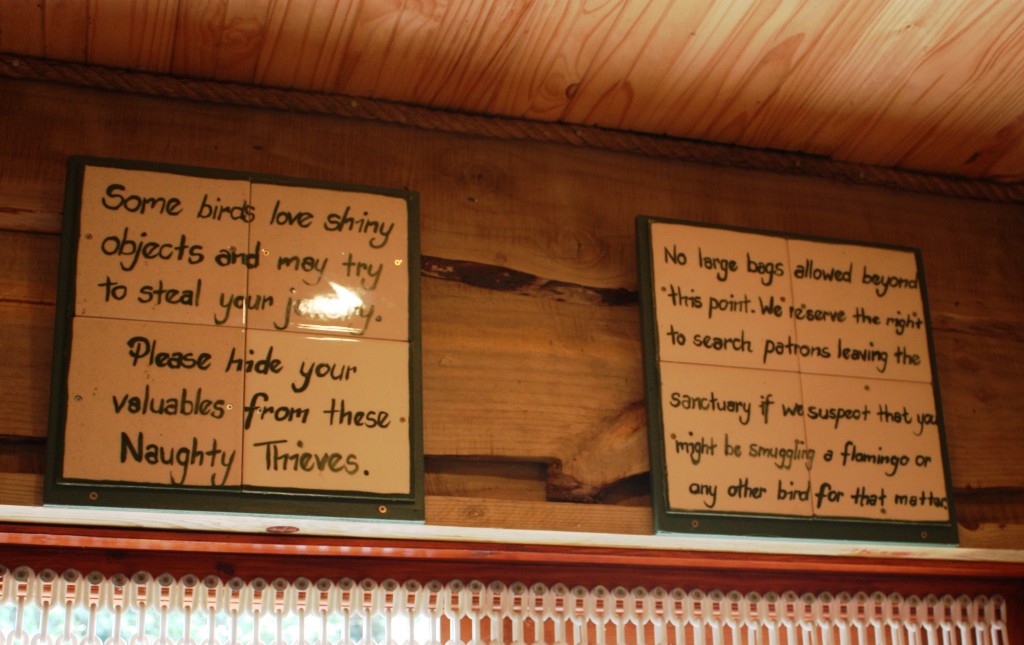
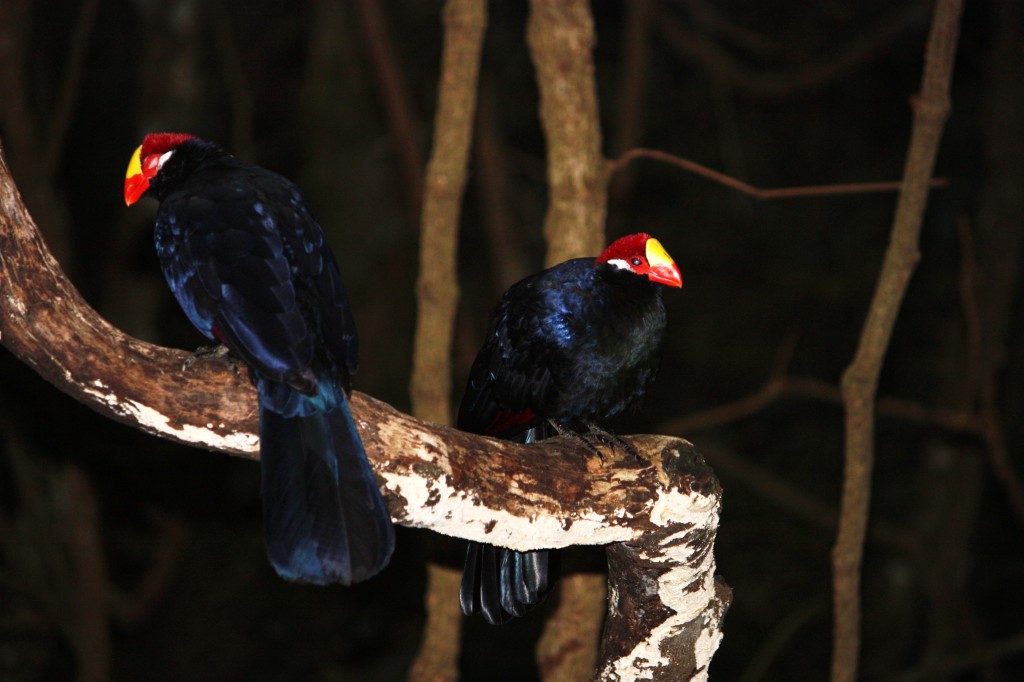
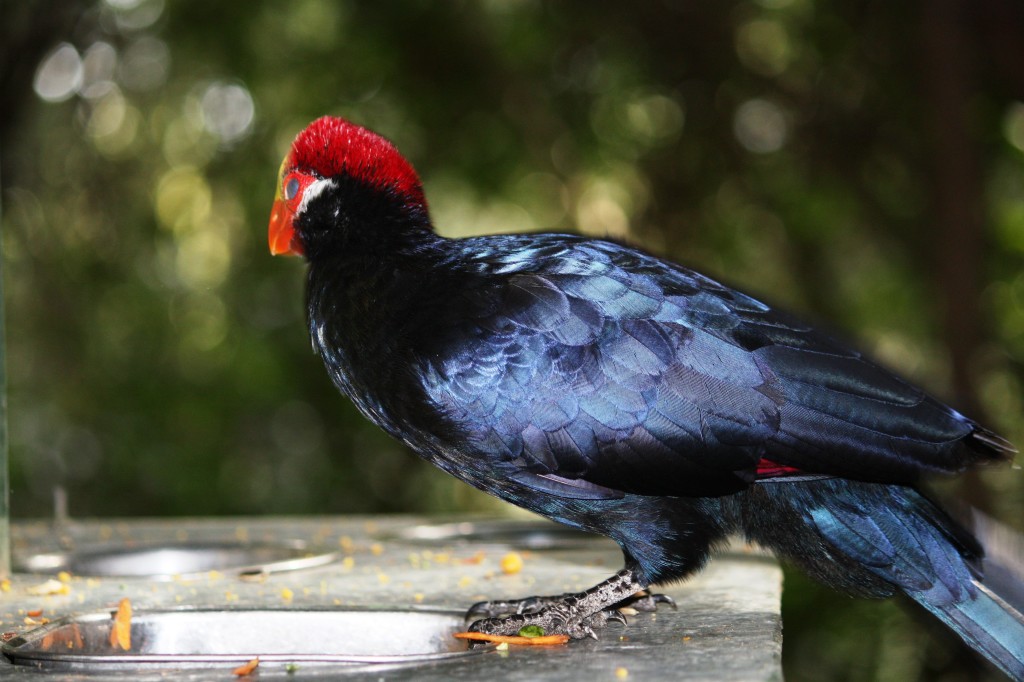
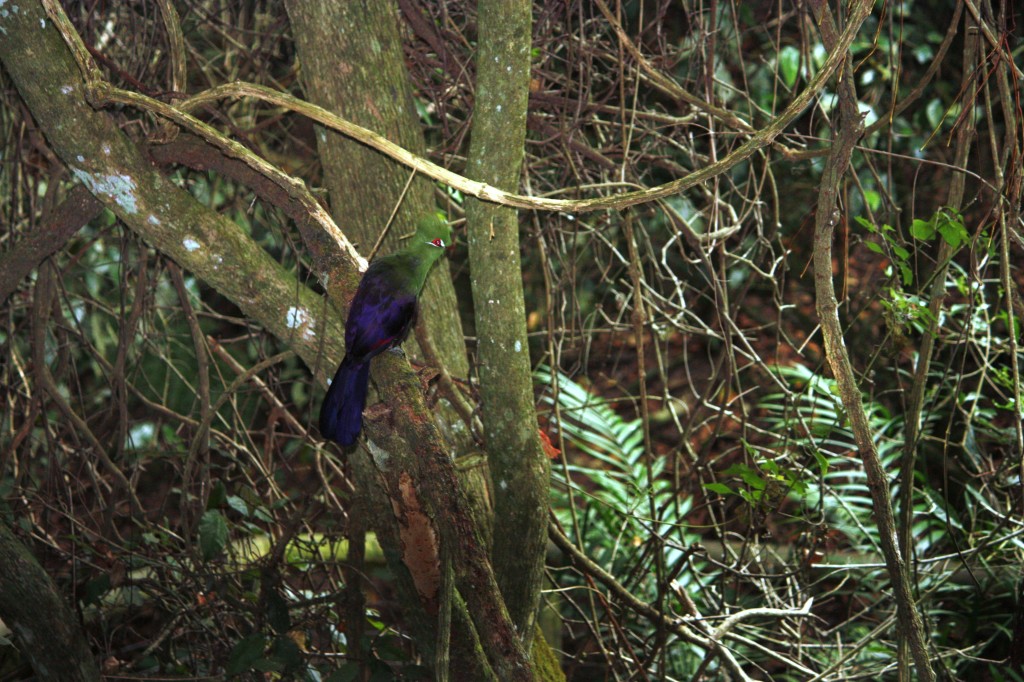
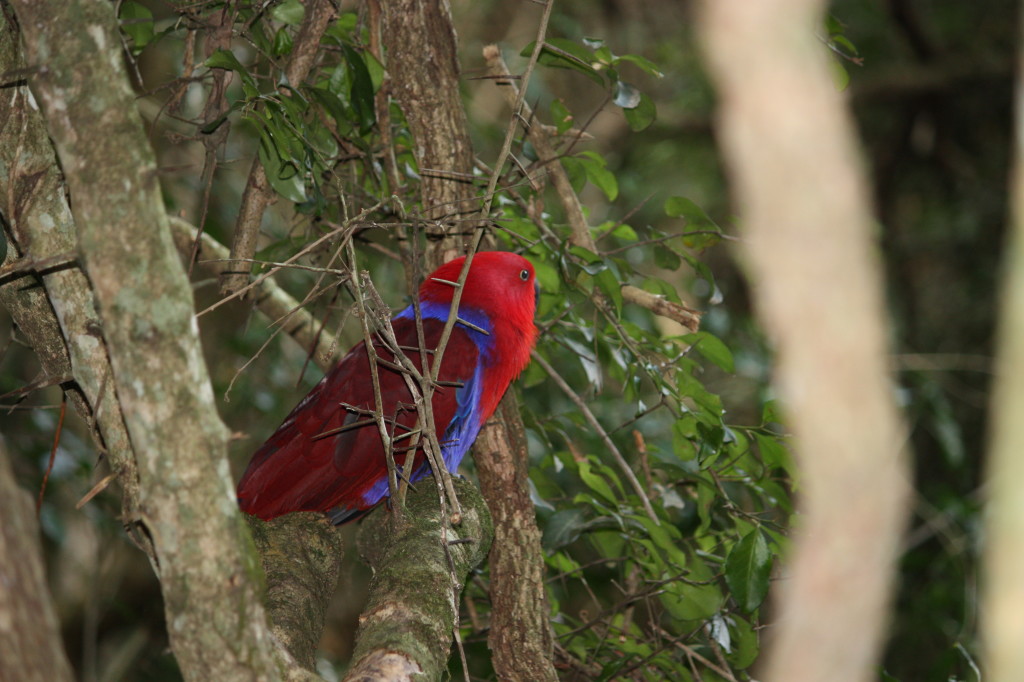
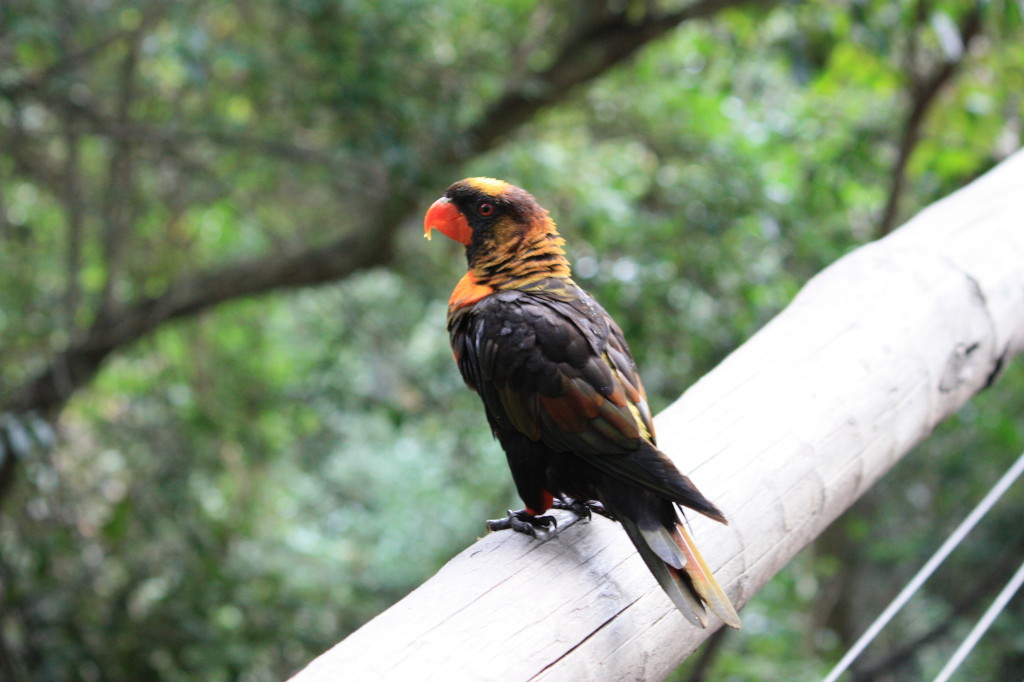
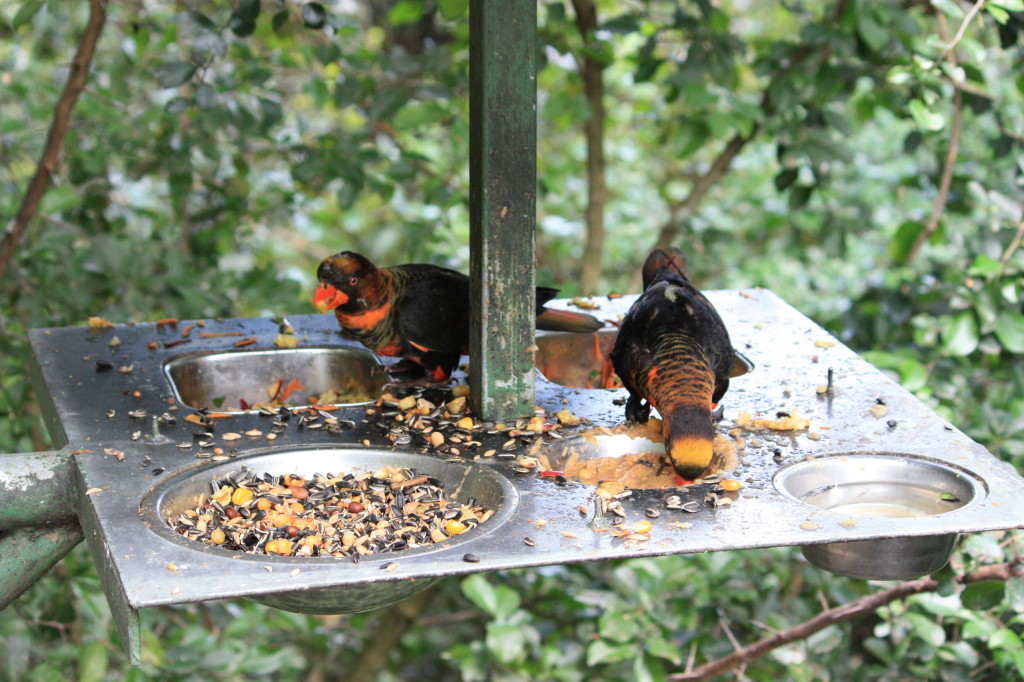
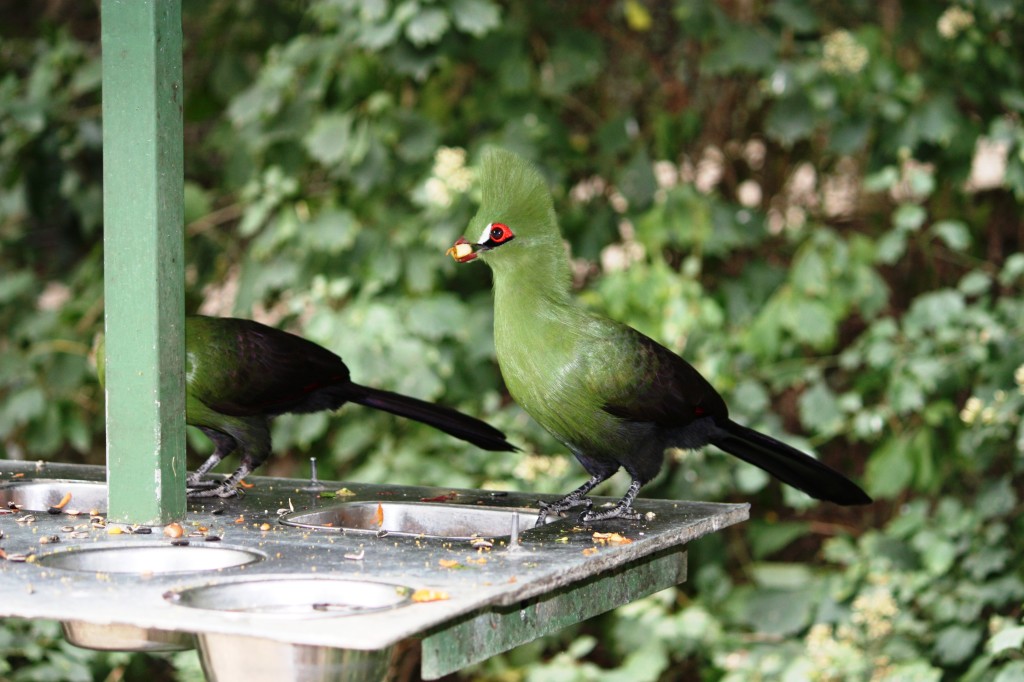
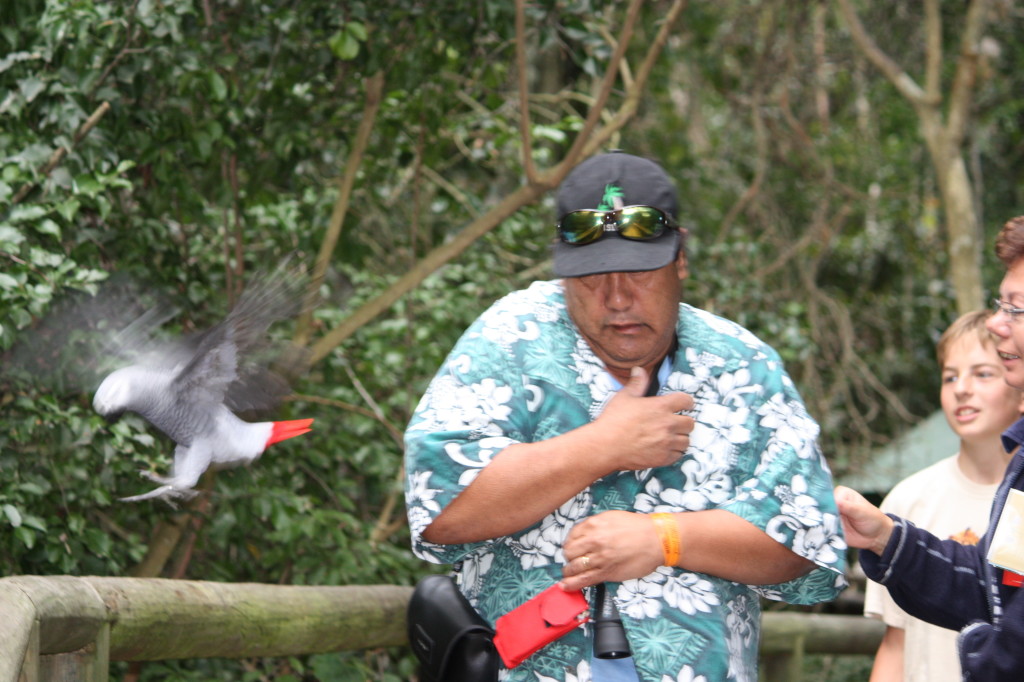
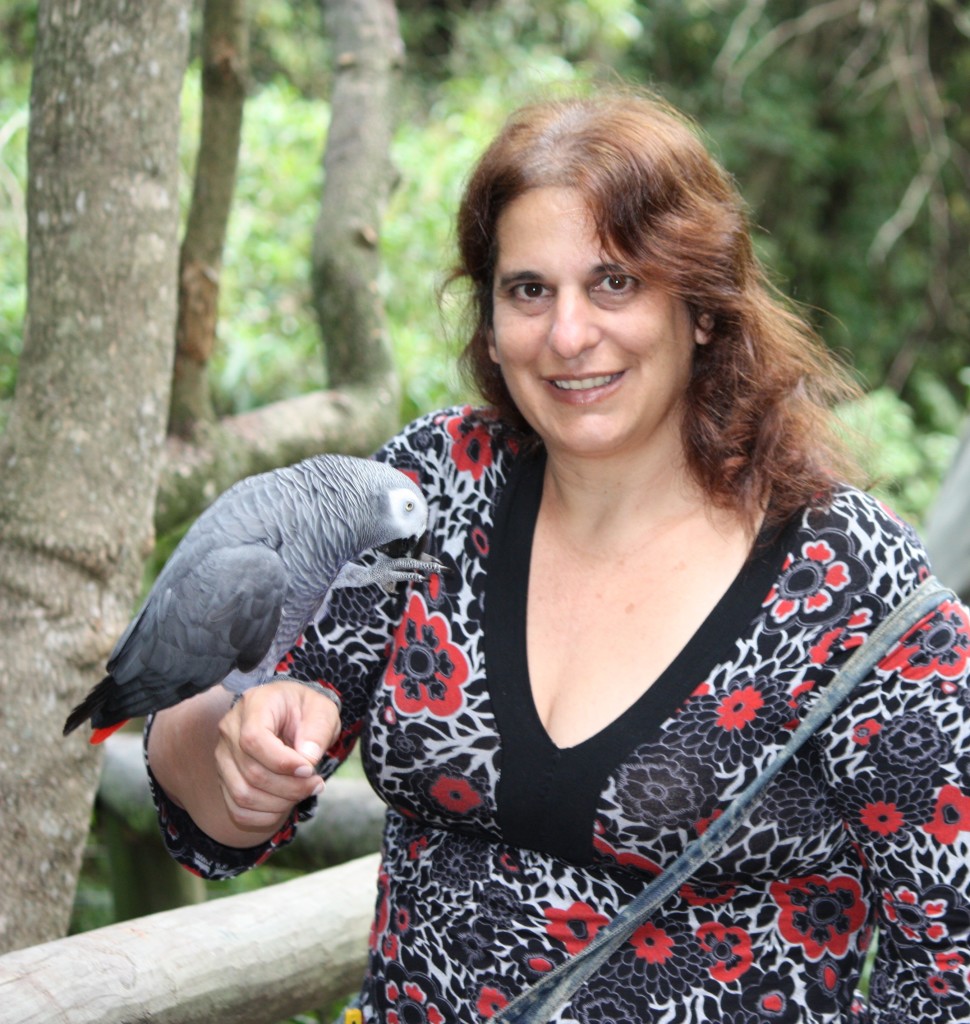
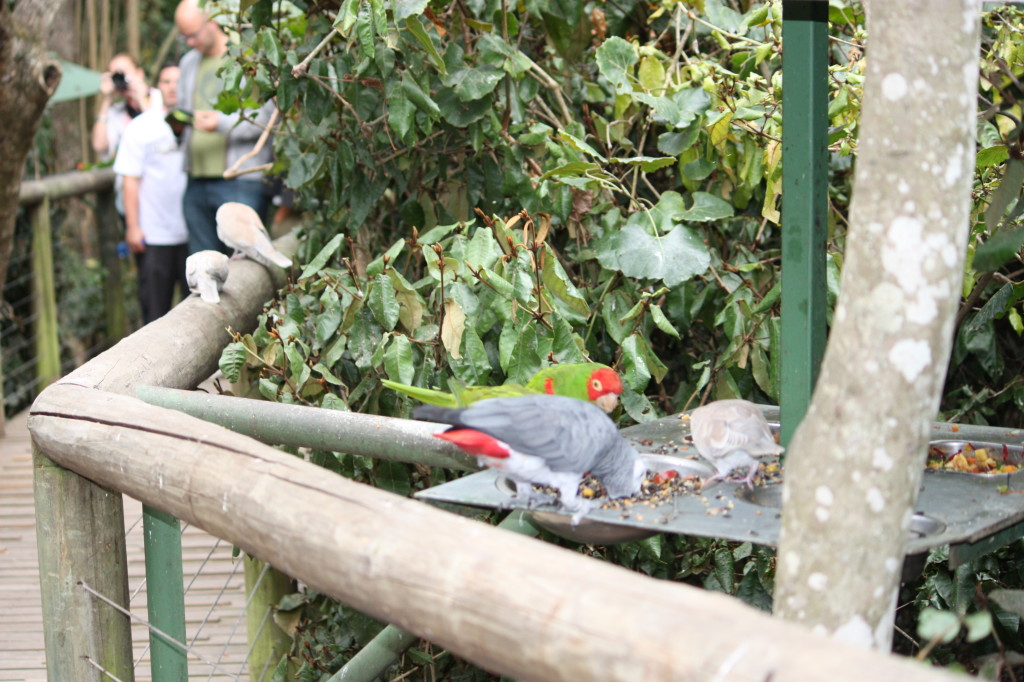
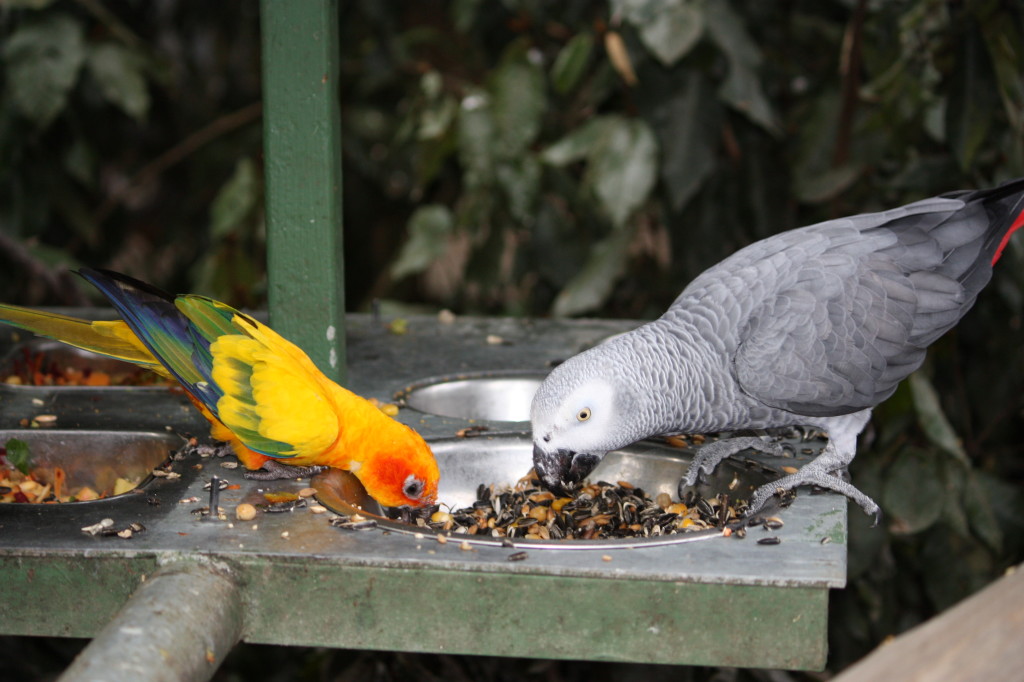
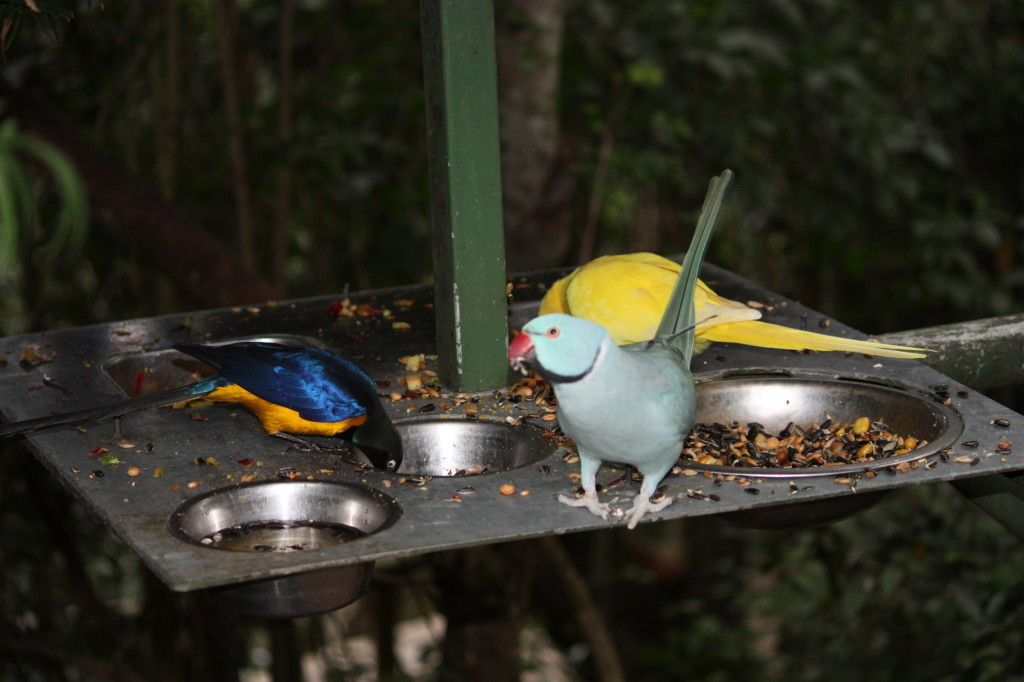
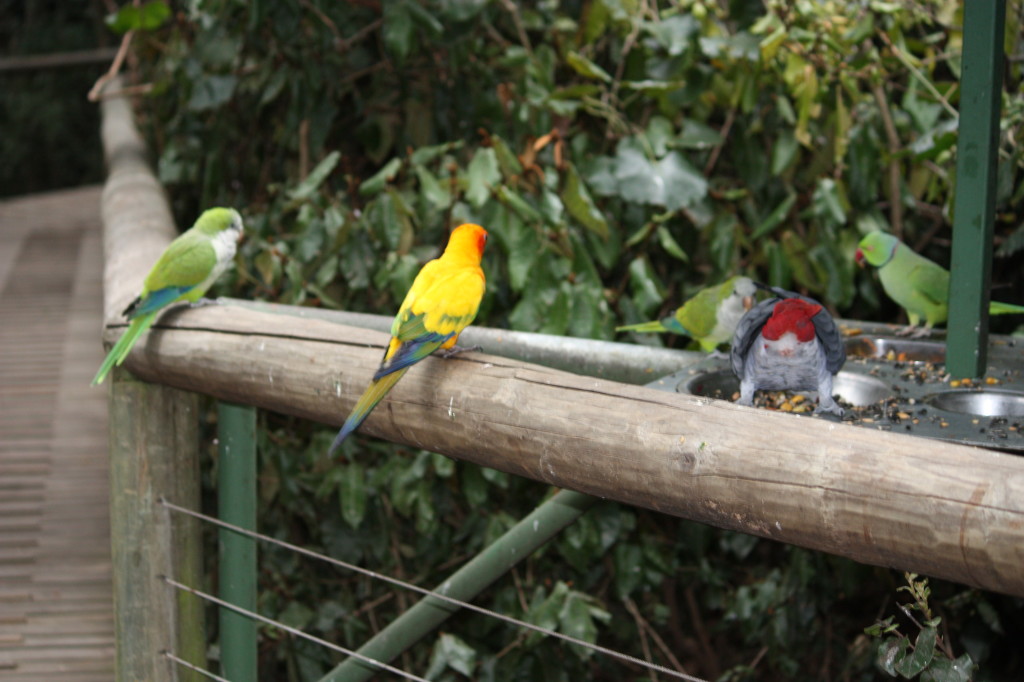
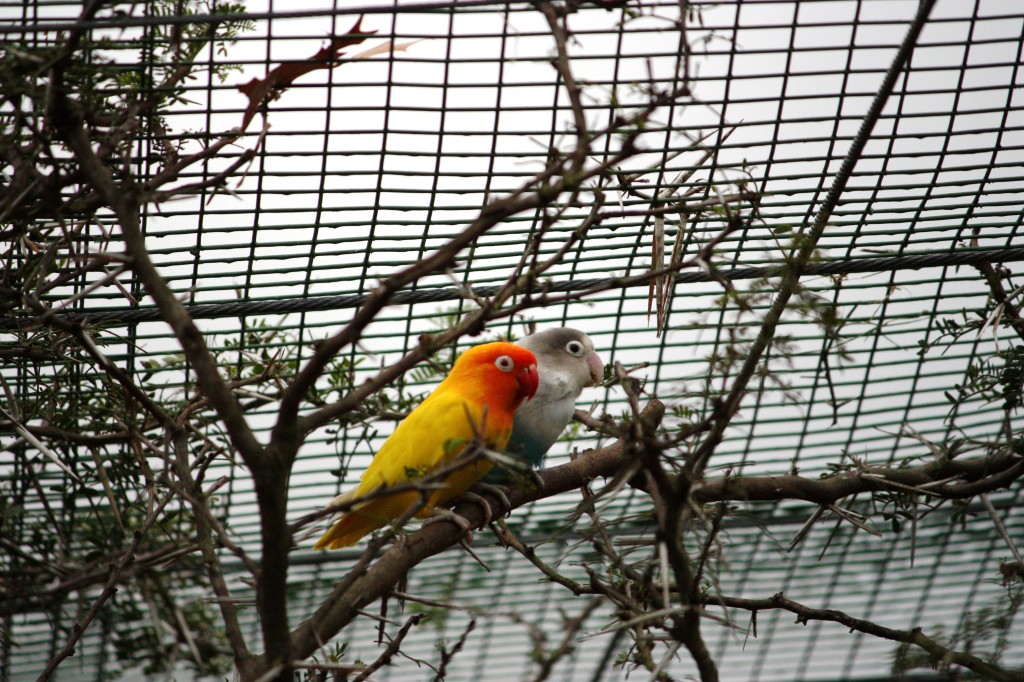
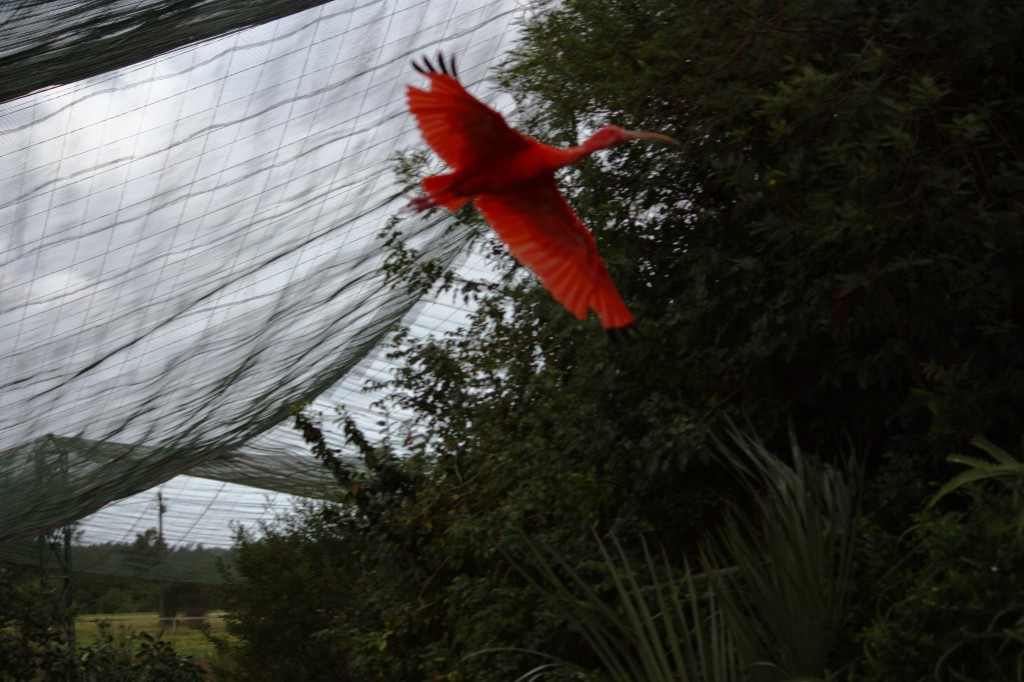
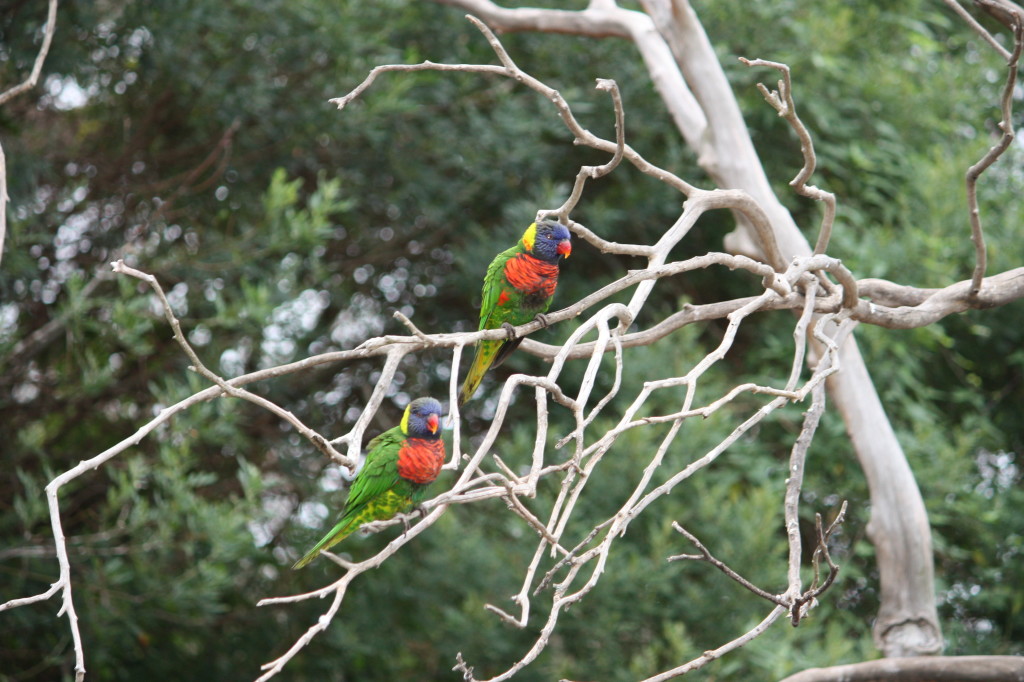
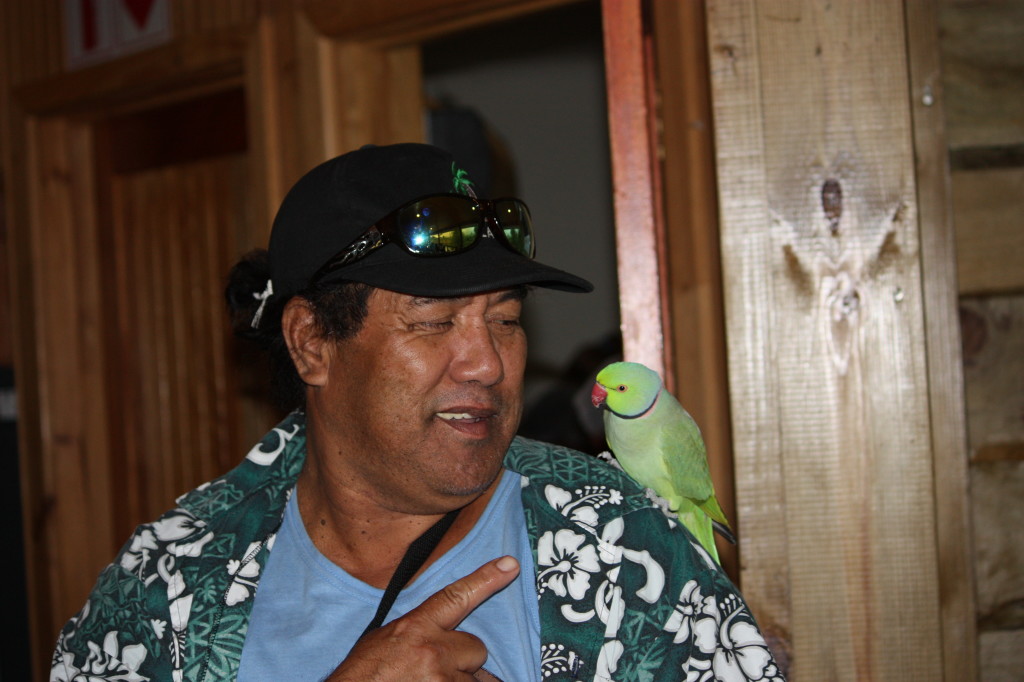
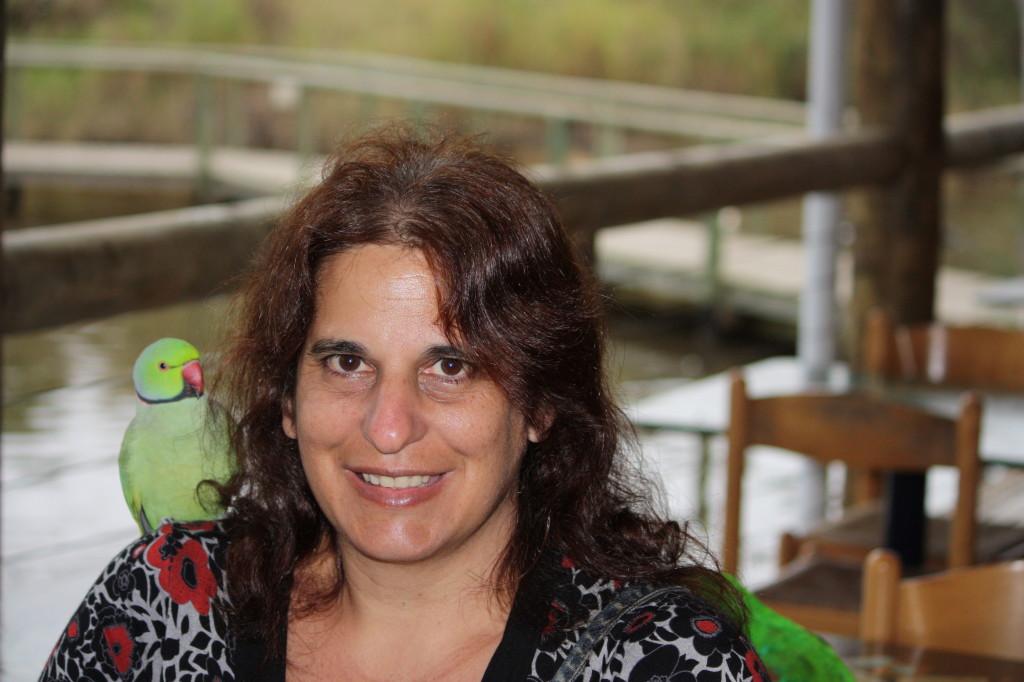
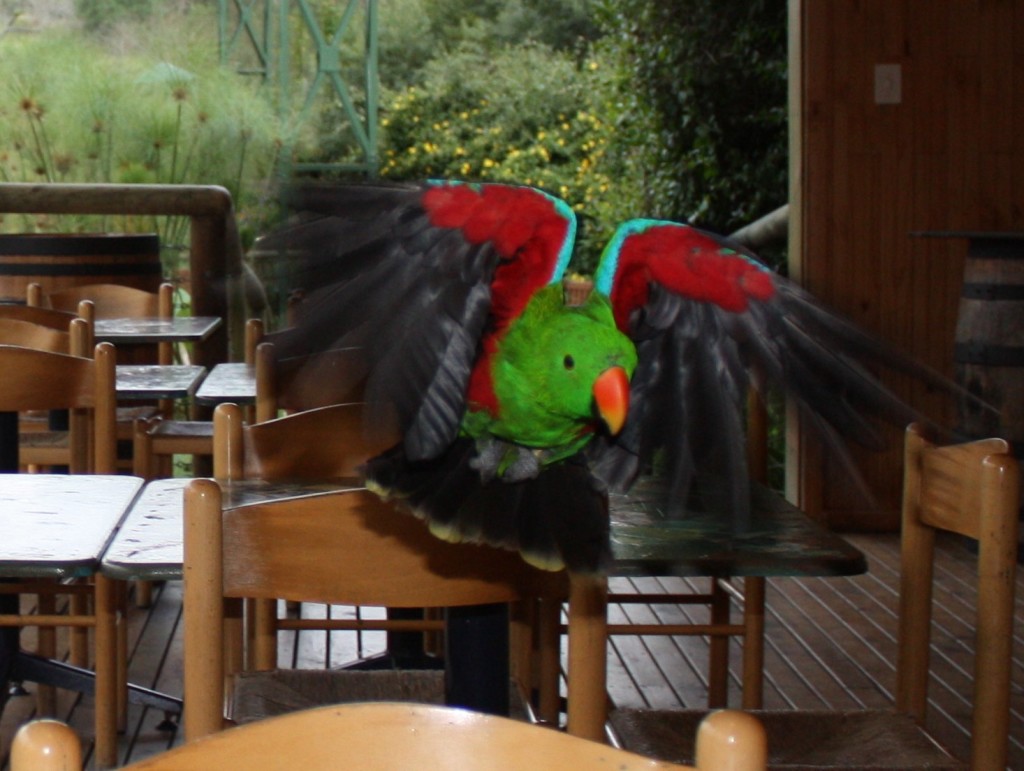
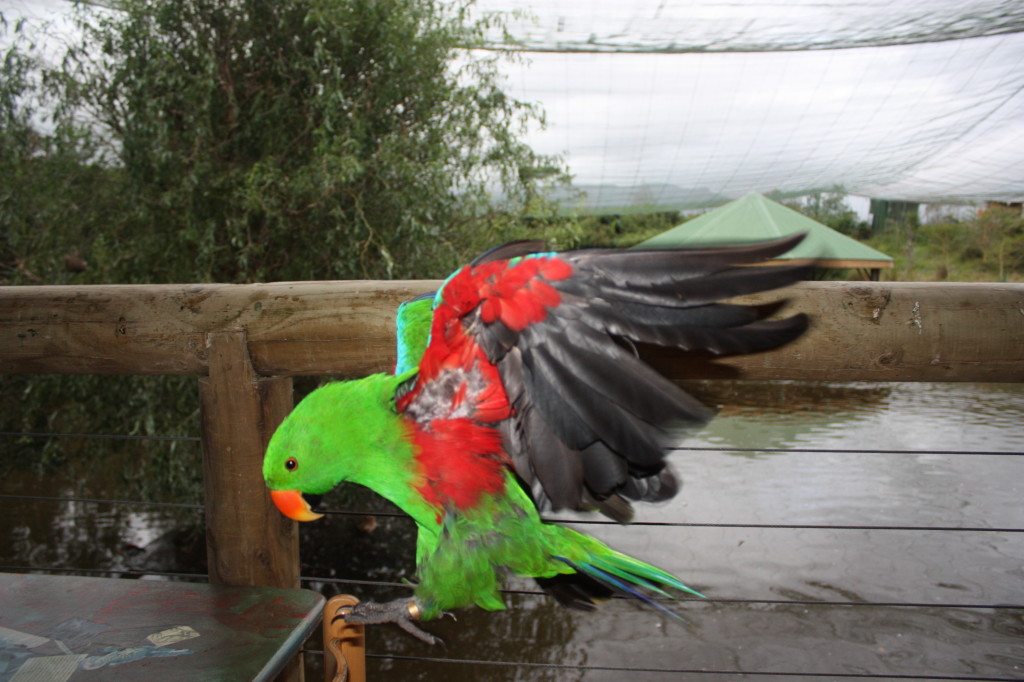
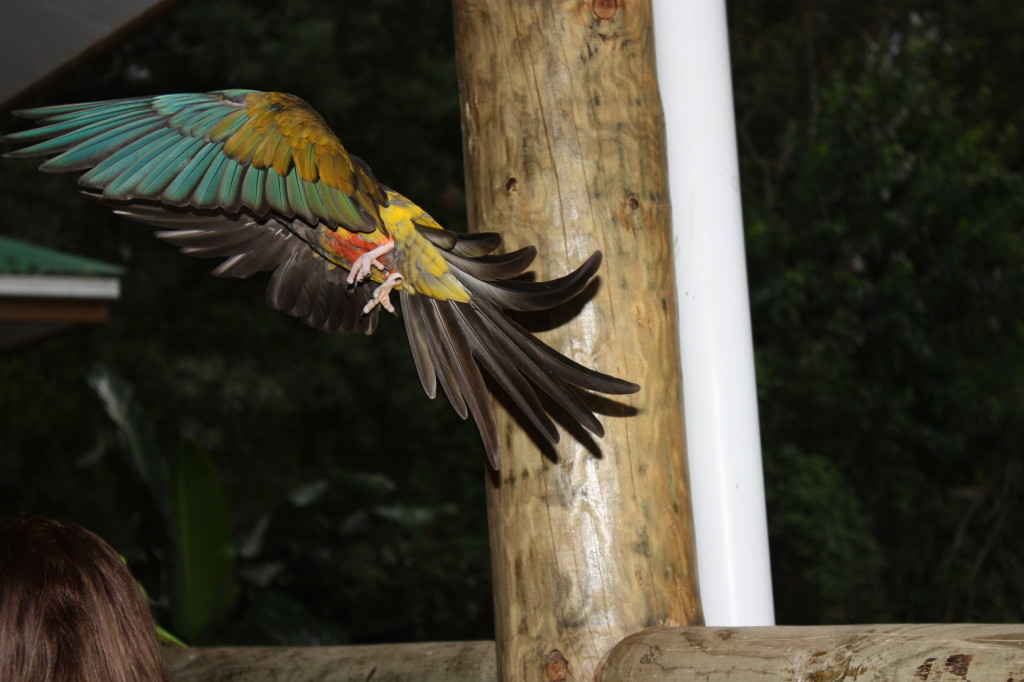
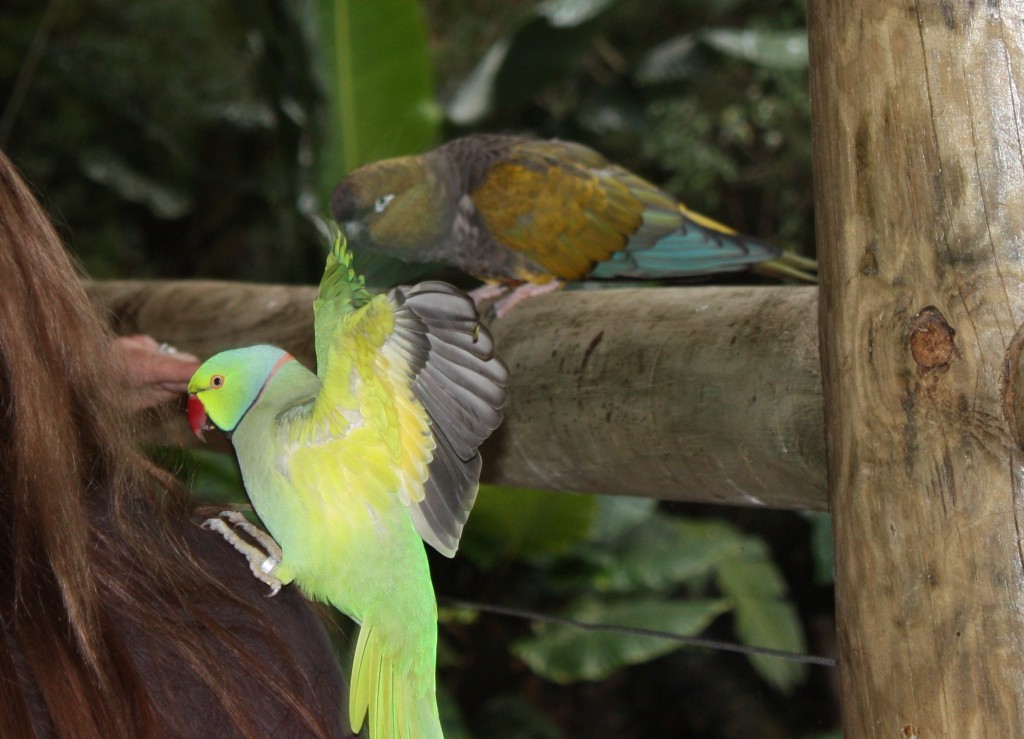
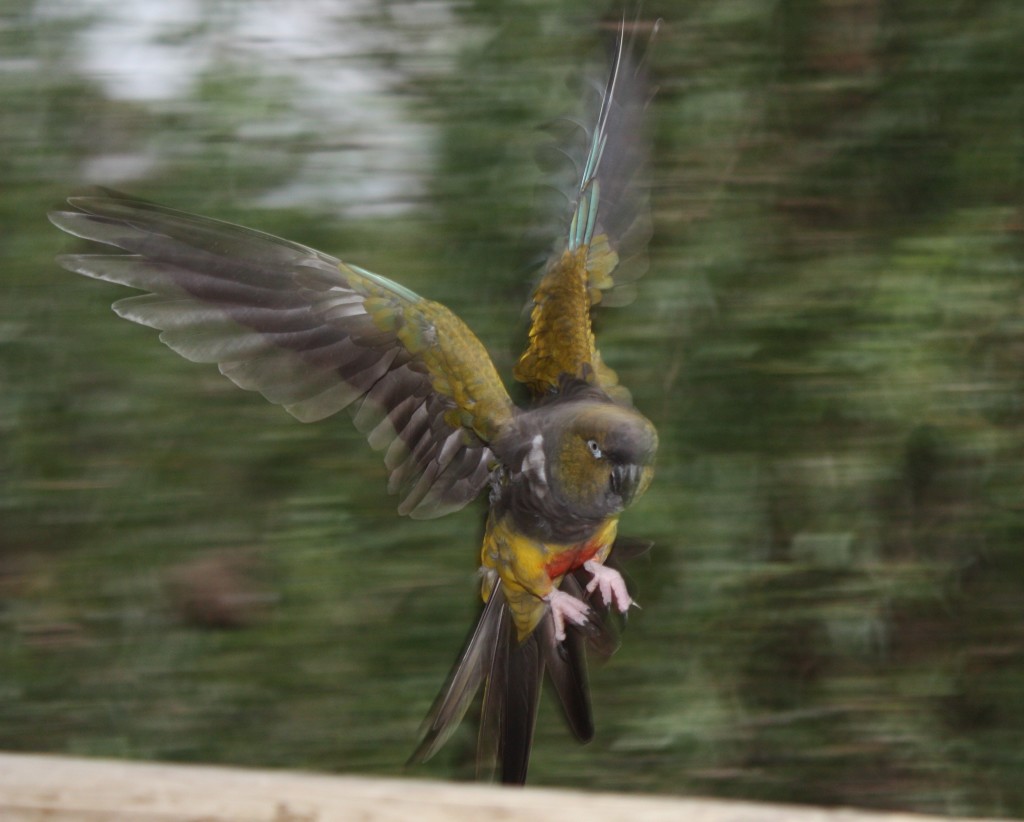
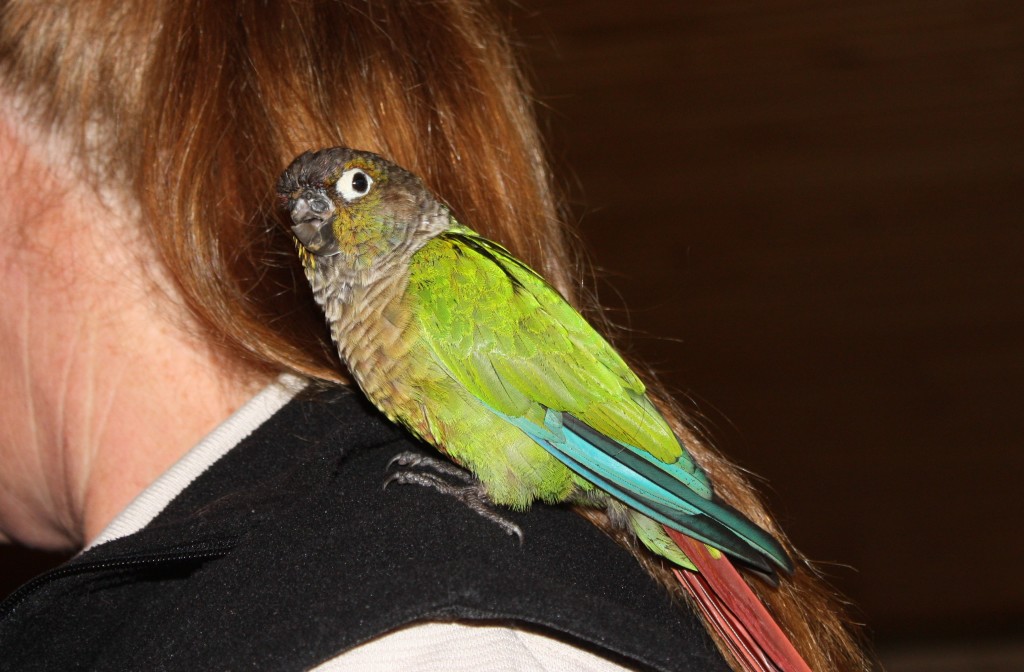
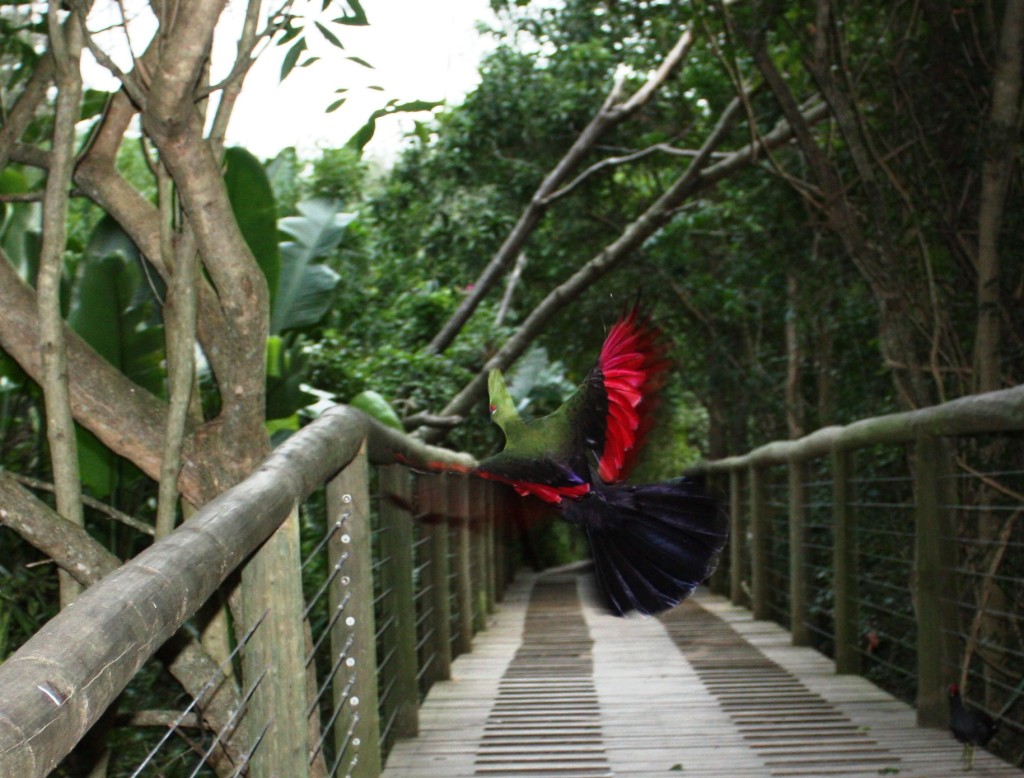
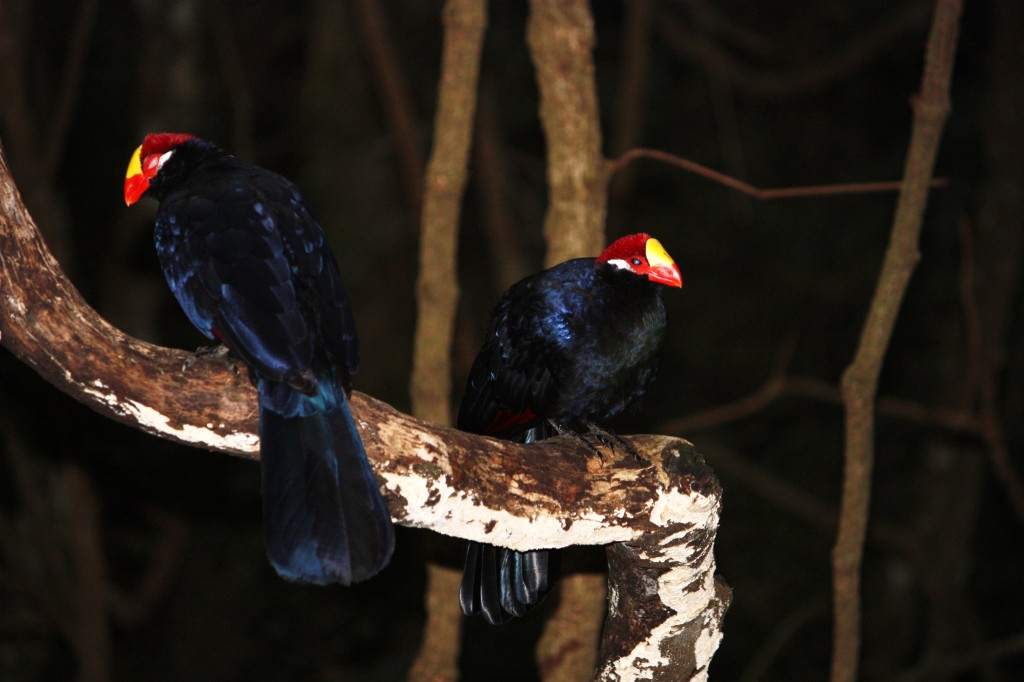
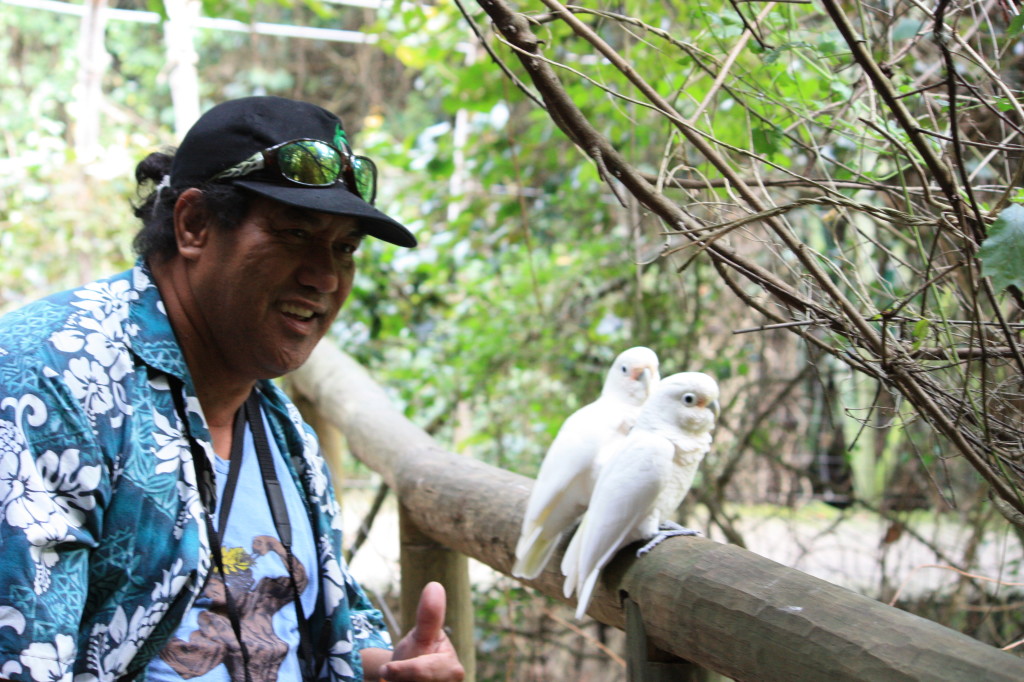
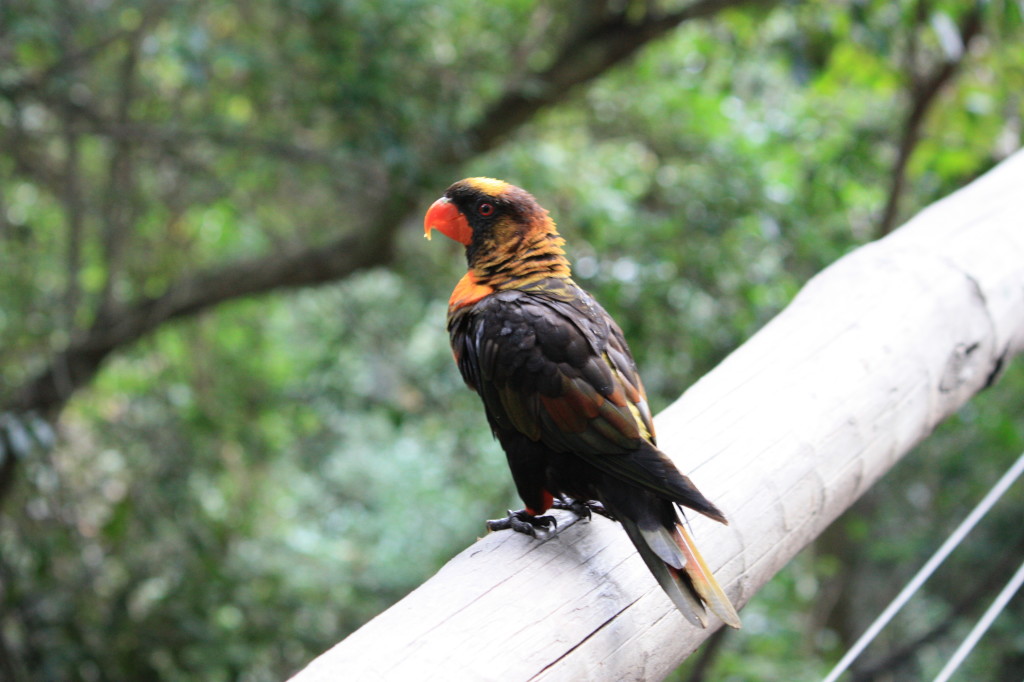
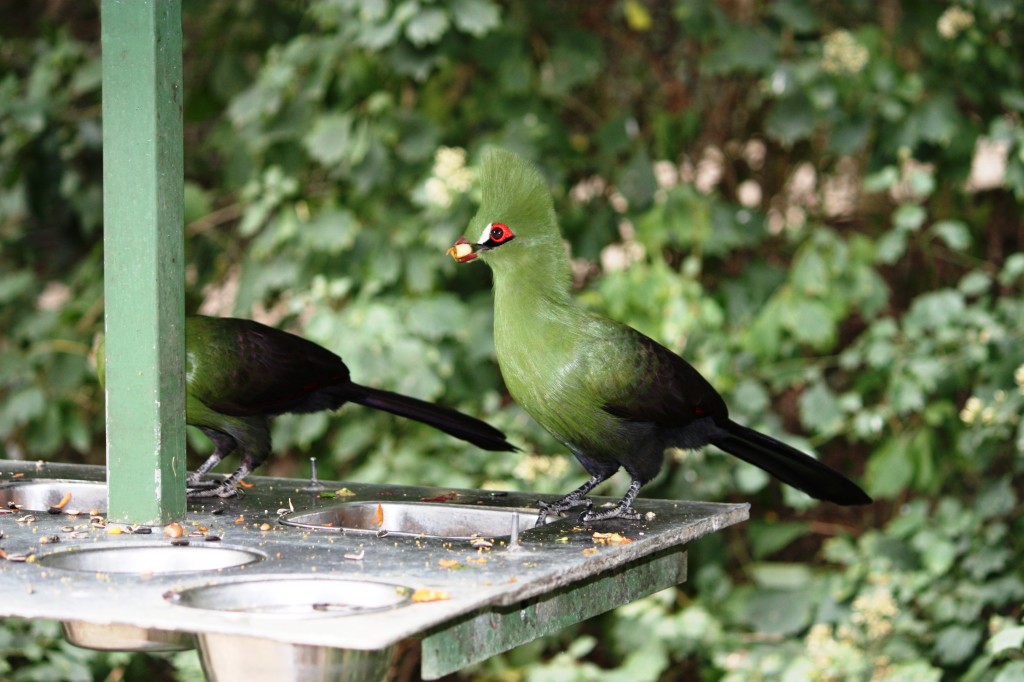
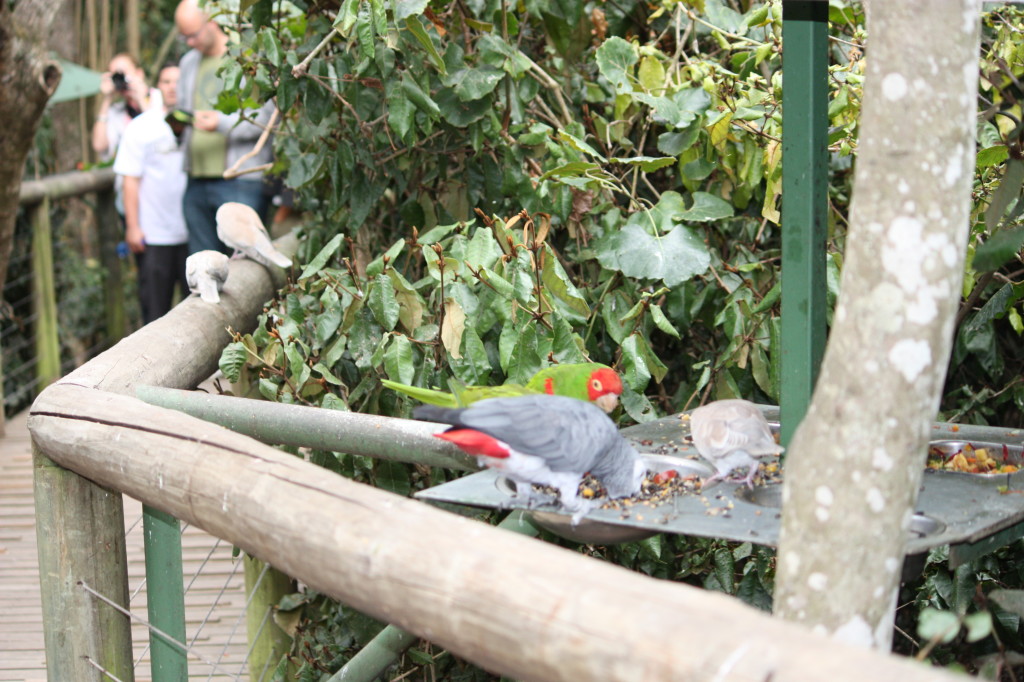
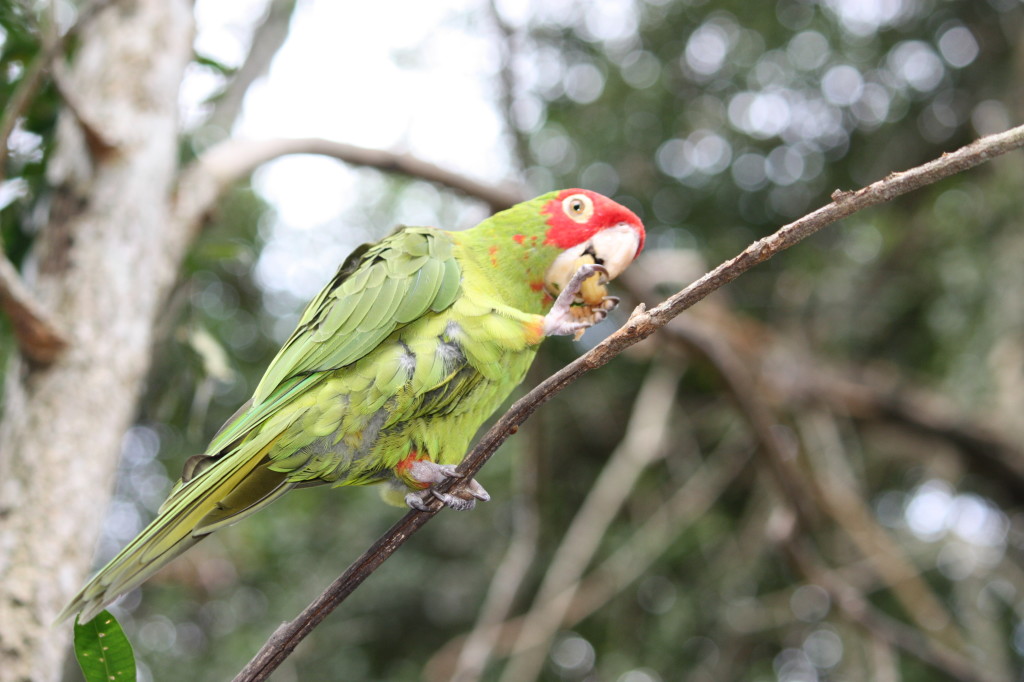
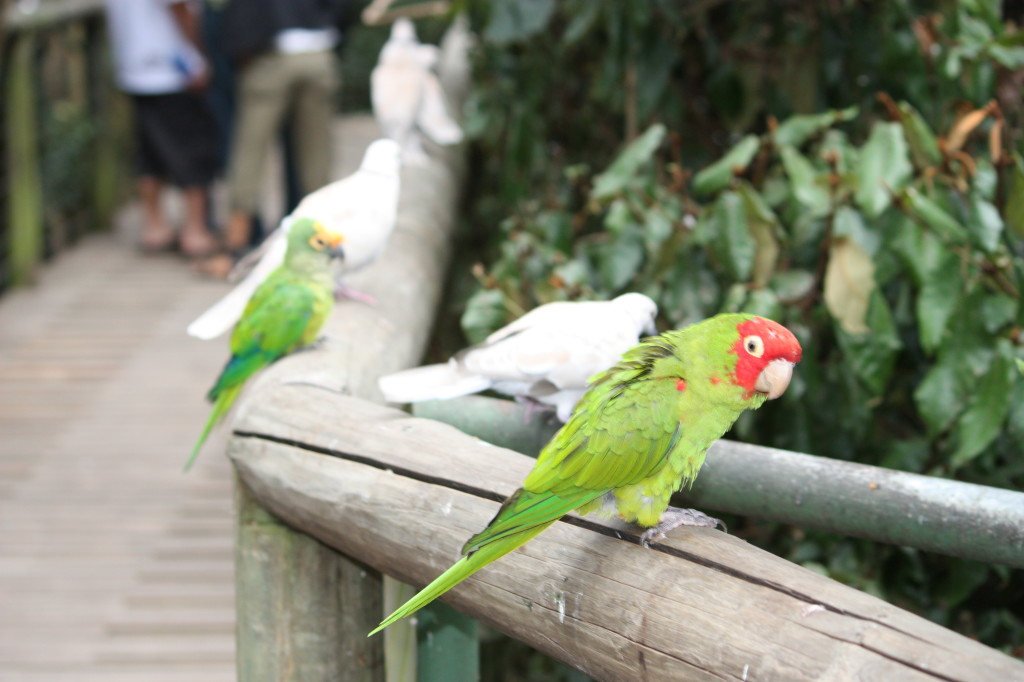
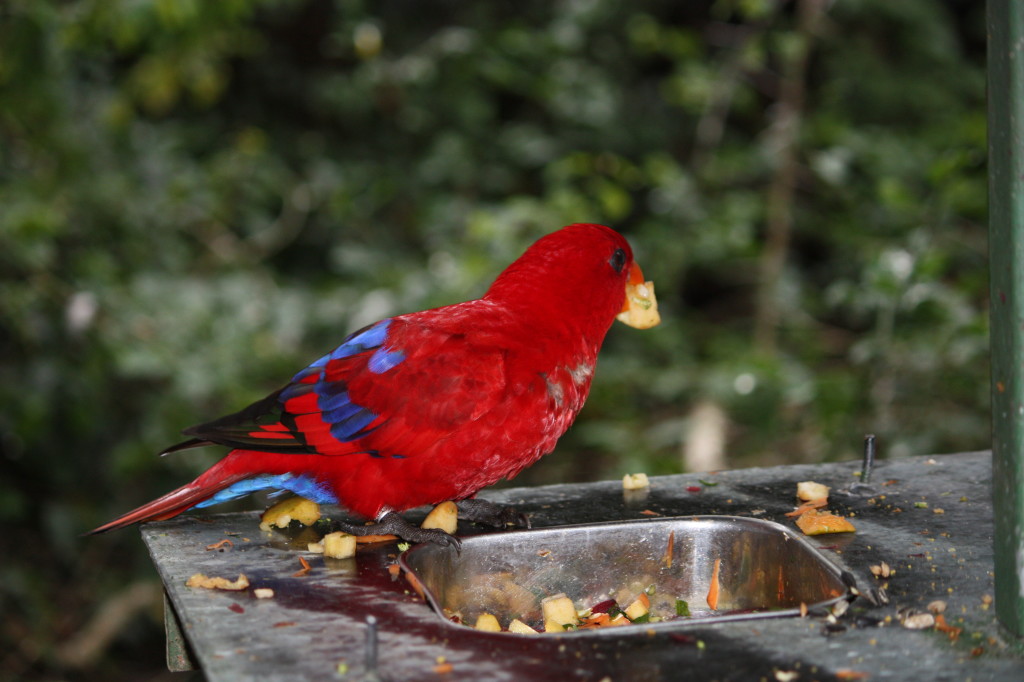
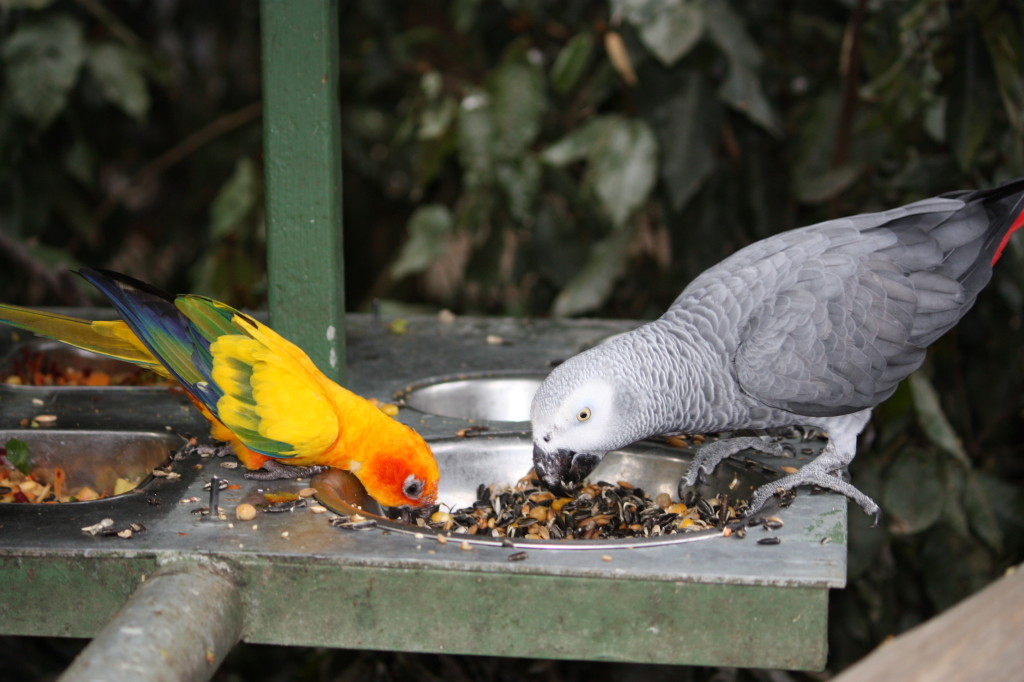
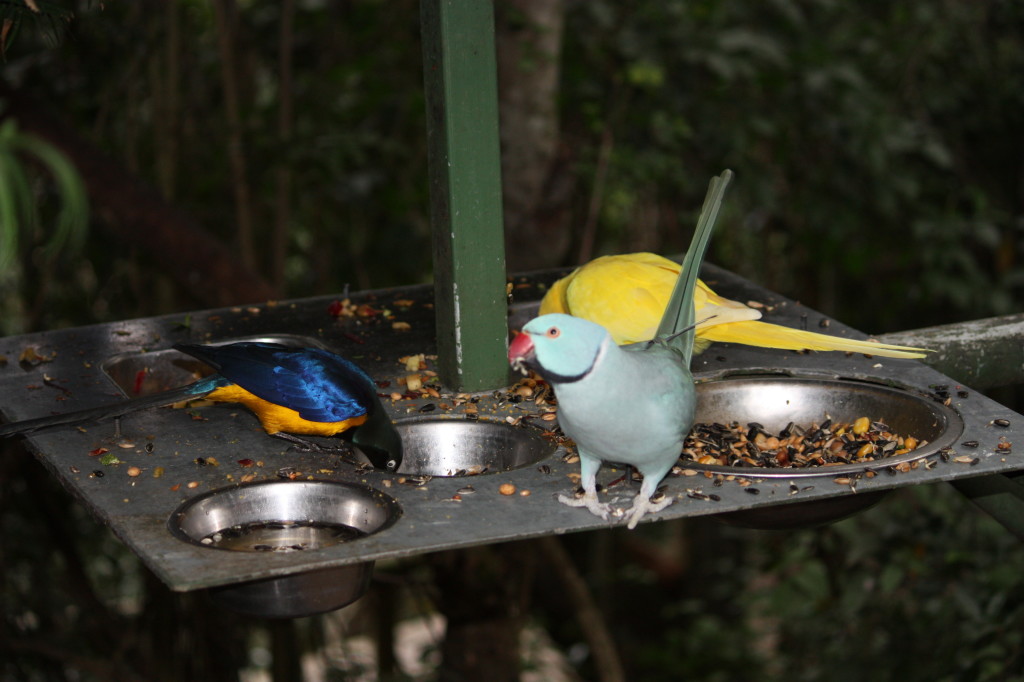
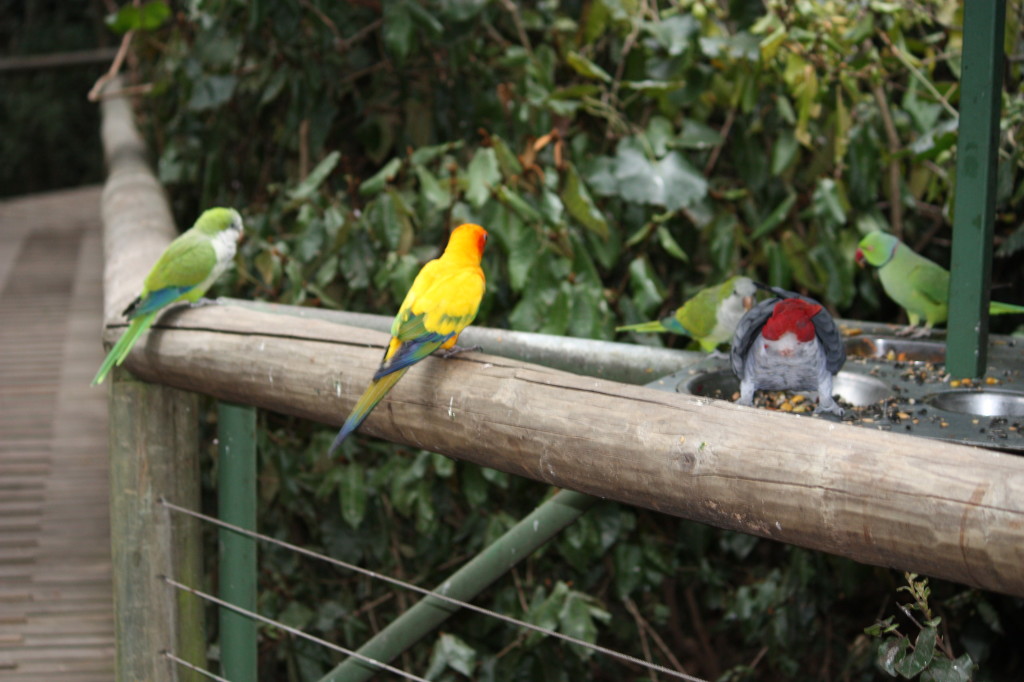
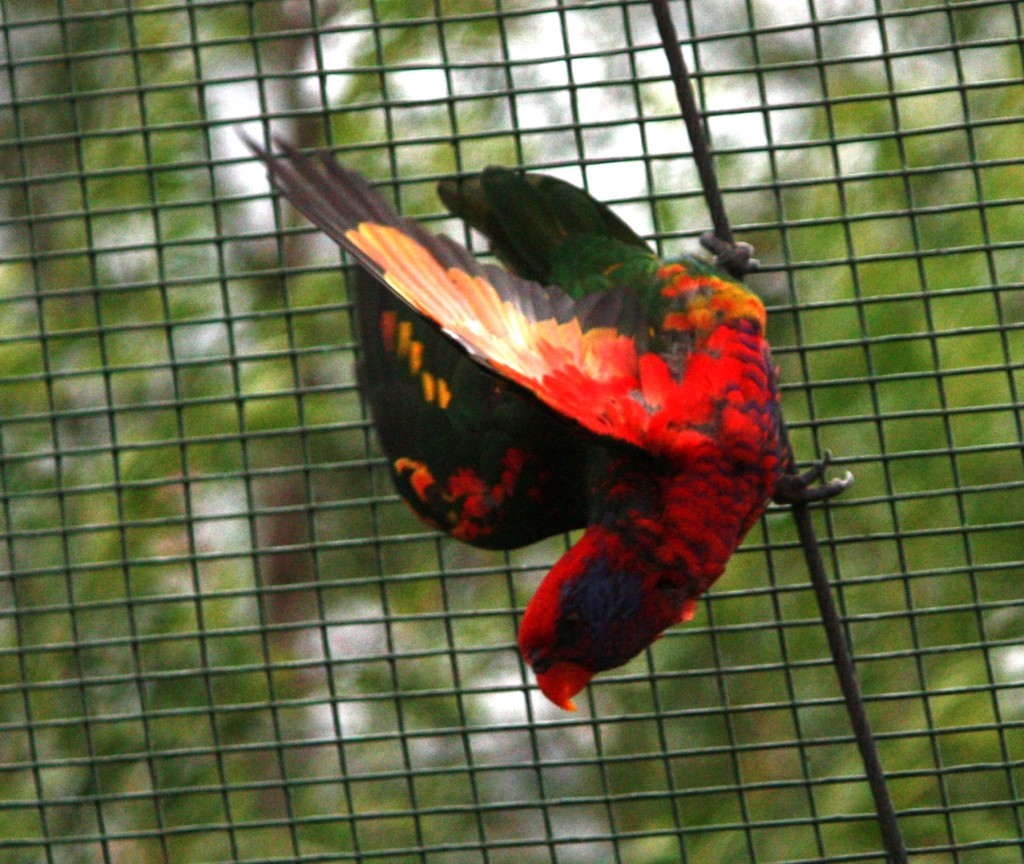
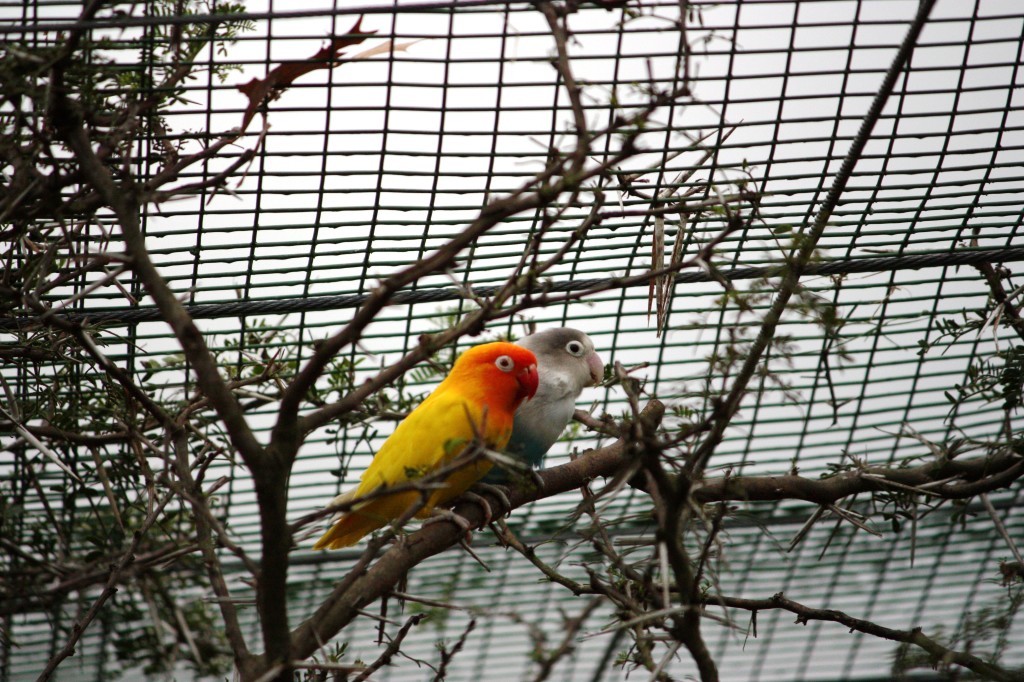
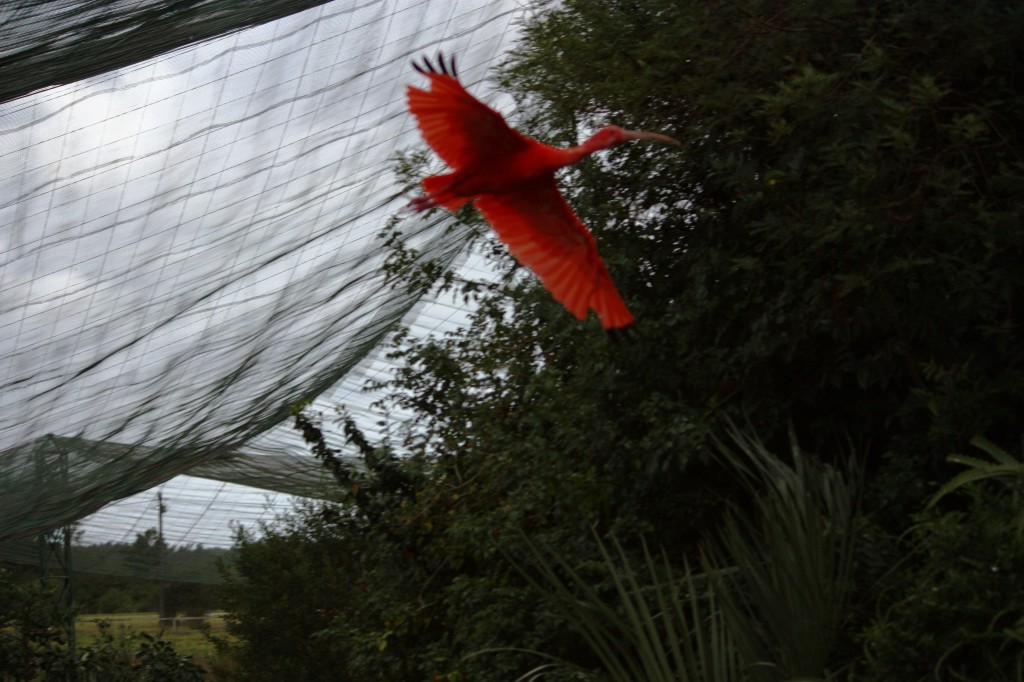
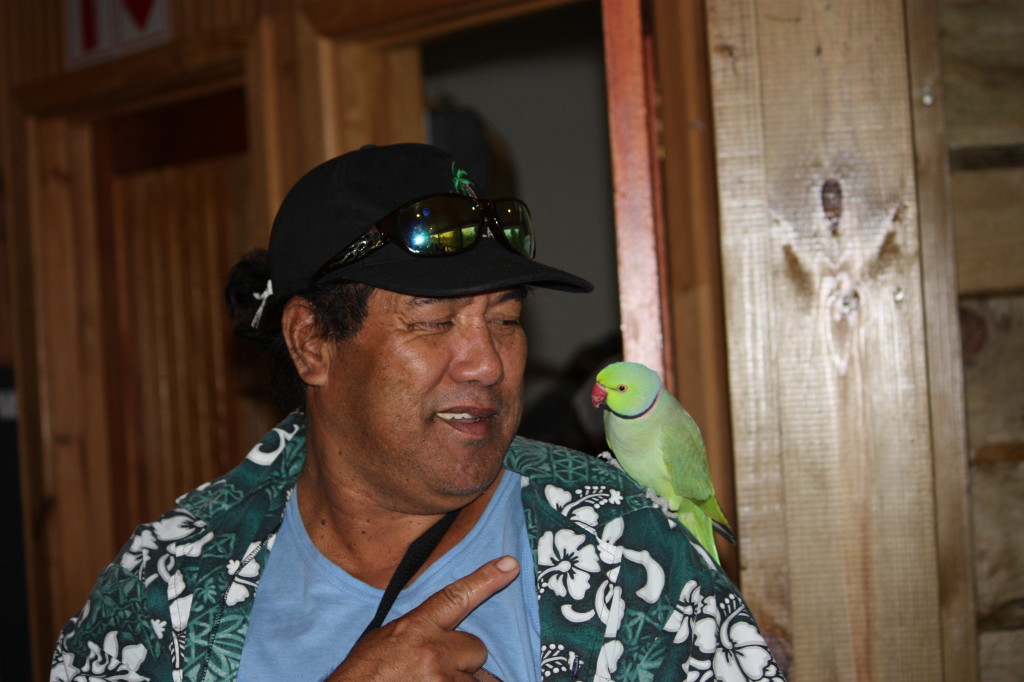
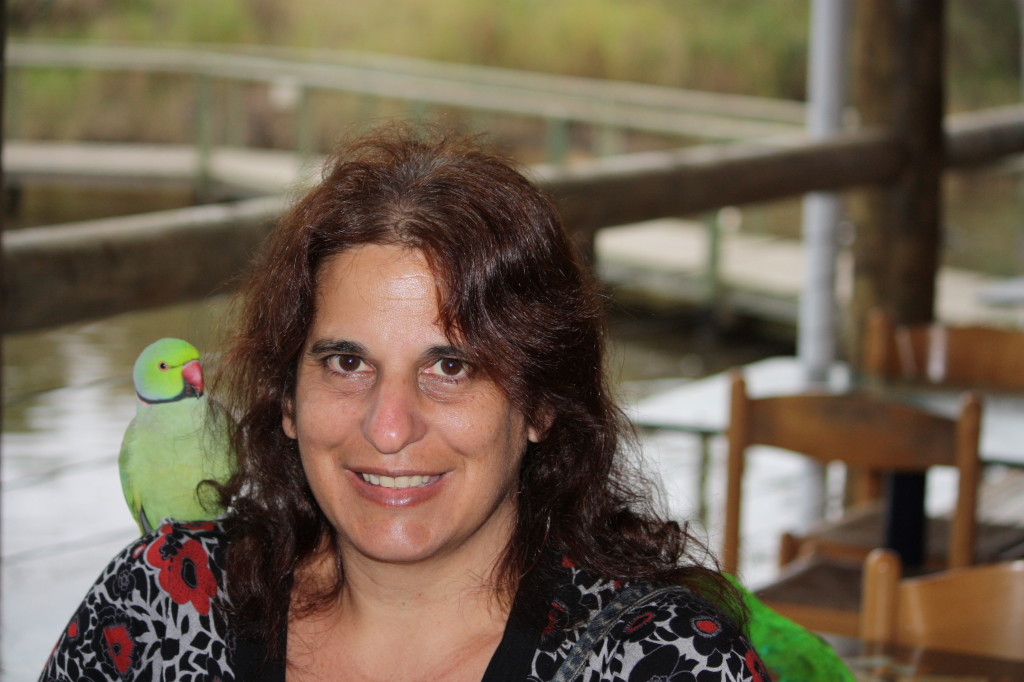
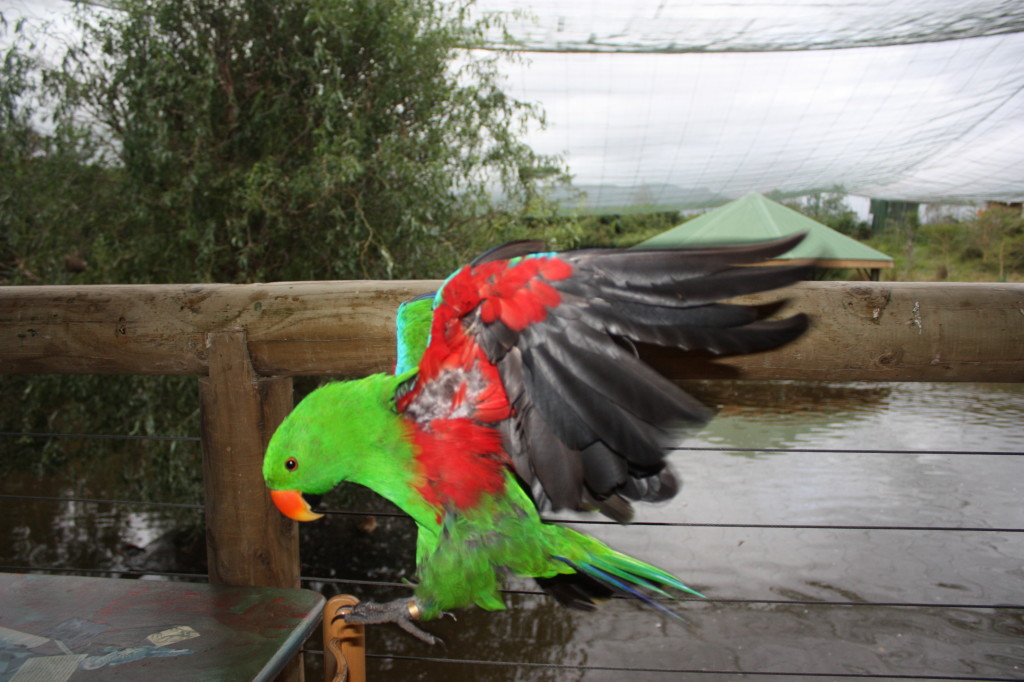
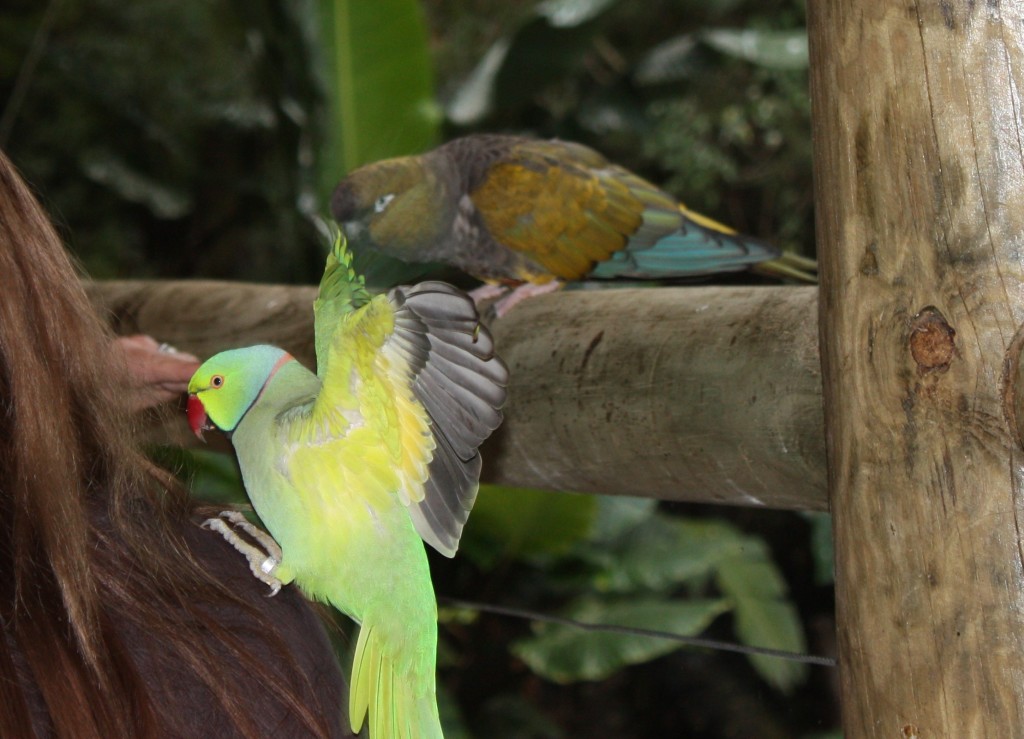
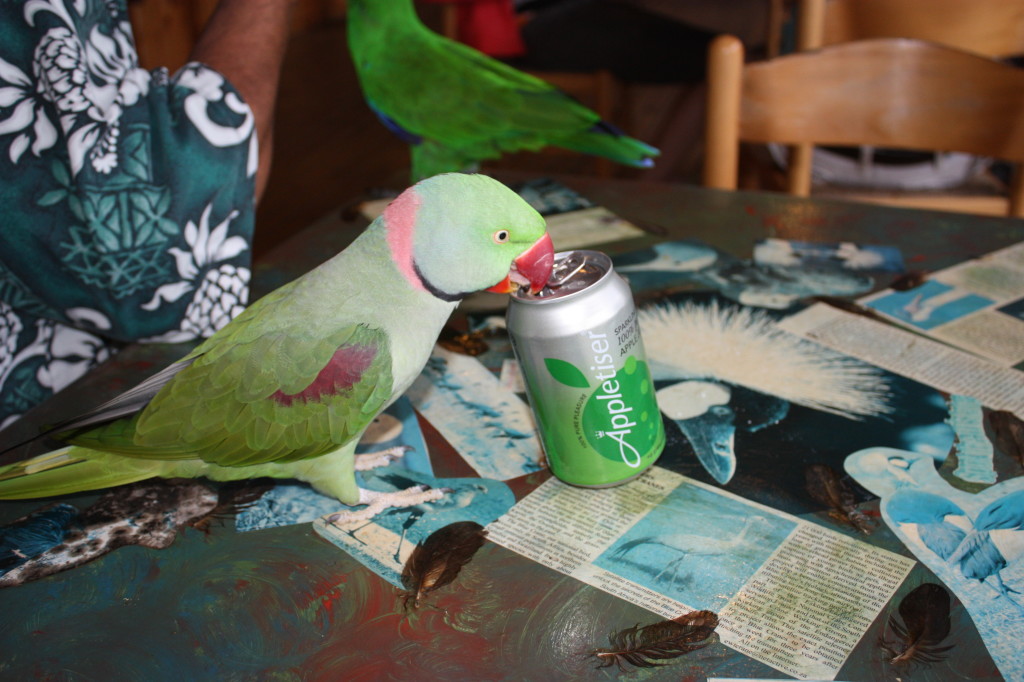
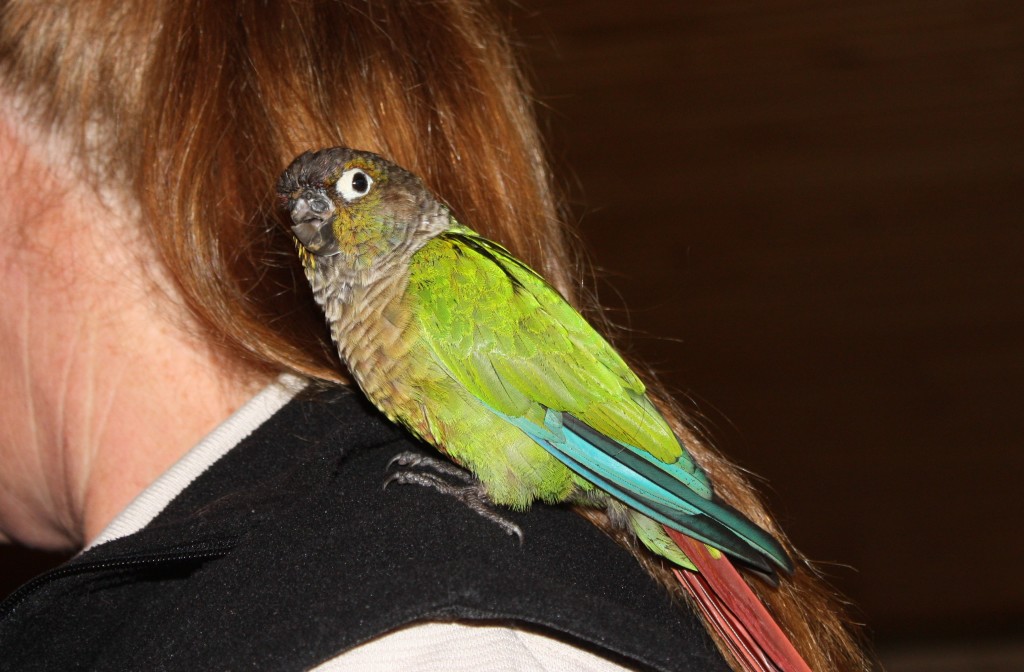
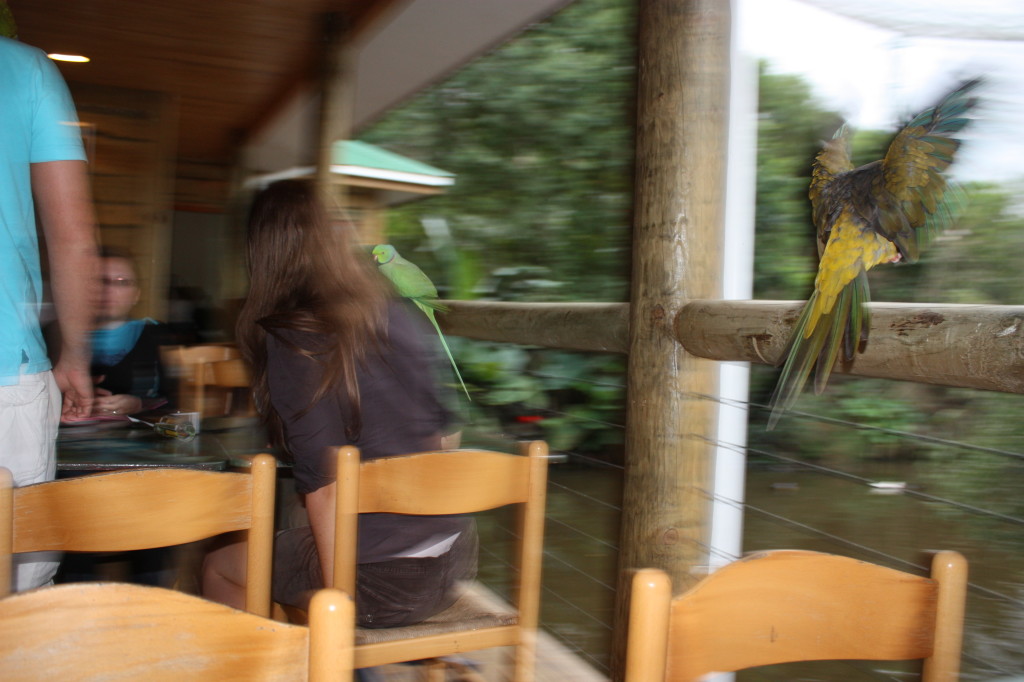
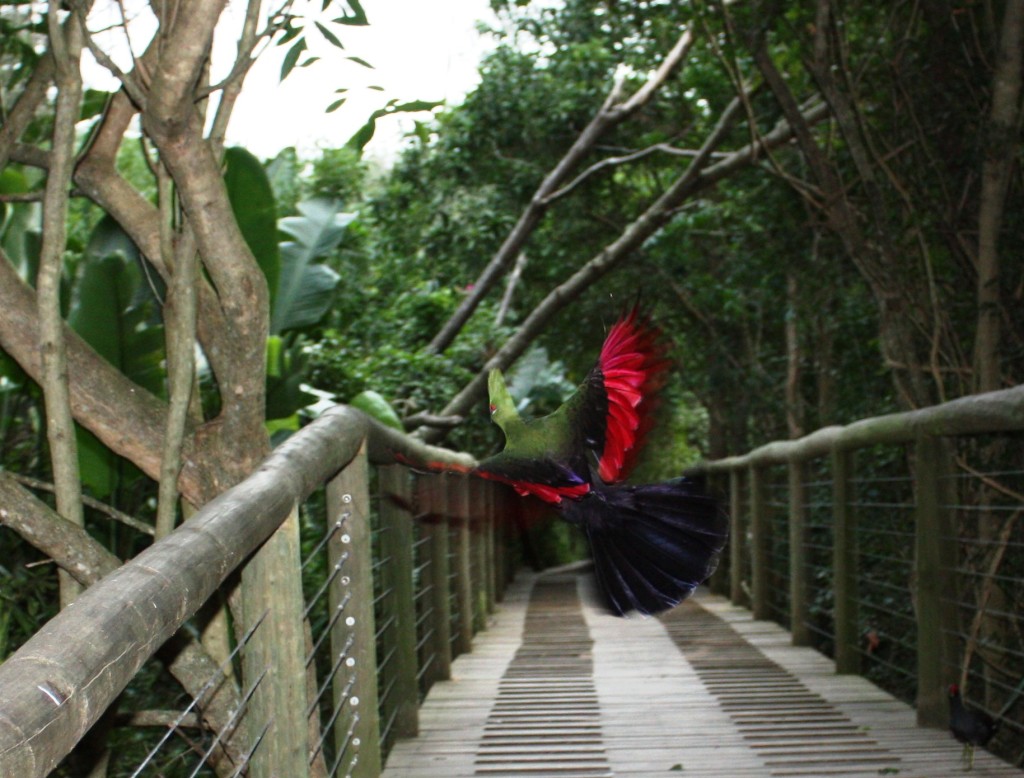
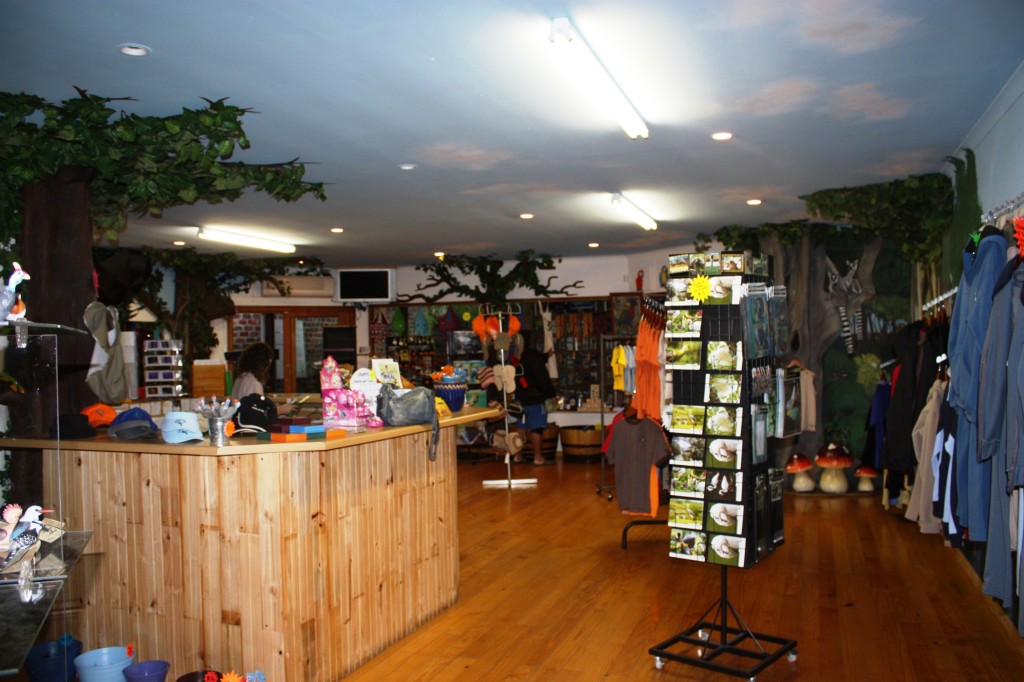
This is the most amazing walk-in aviary I have ever seen, I can’t even find the words to describe it!  Heaven on earth doesn’t do it justice.  I could have easily moved in here and pitched a tent!  Hundreds of birds fly freely in this man-made rainforest environment free from predators and fear of any kind.  What struck me most was how well the various species get along and I watched in amazement as turacos and conures shared fruit side by side.

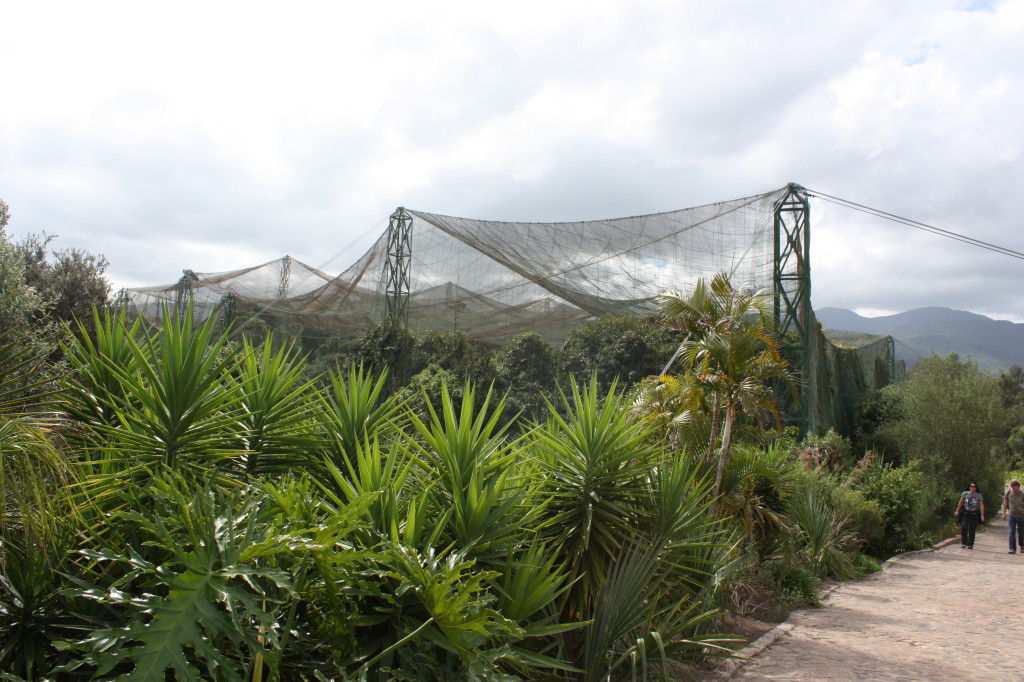
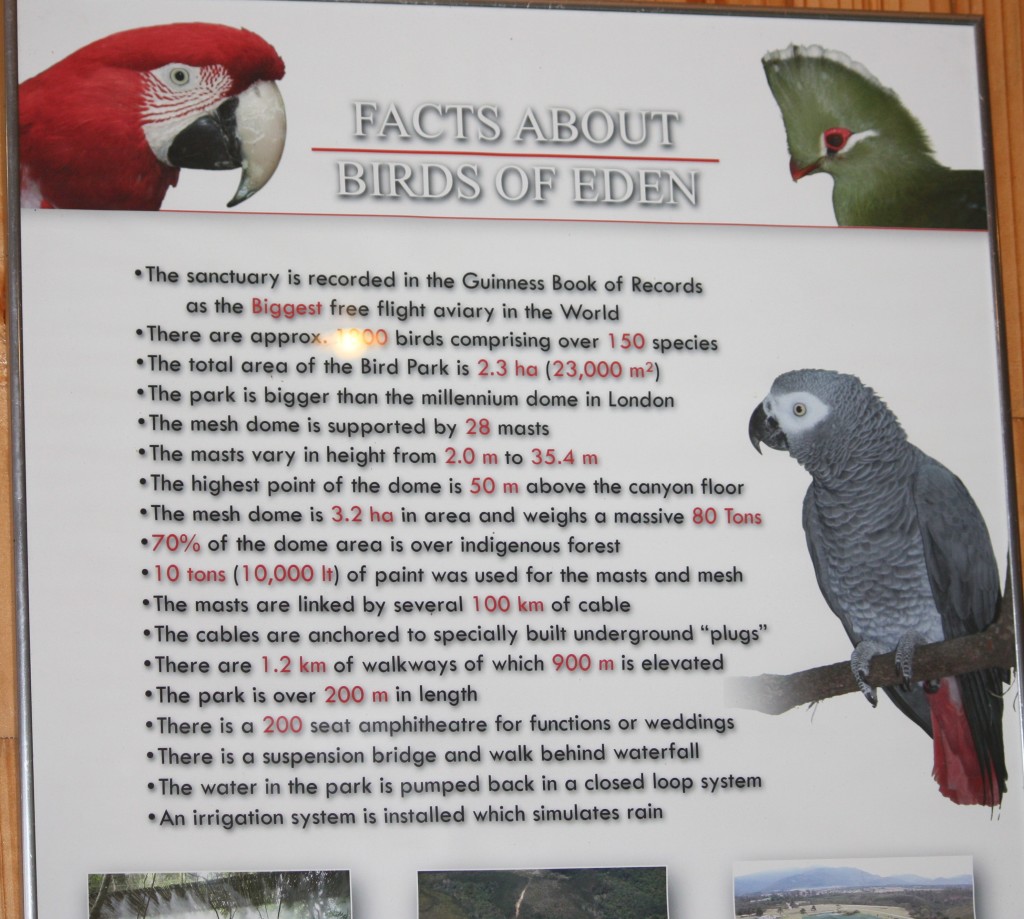
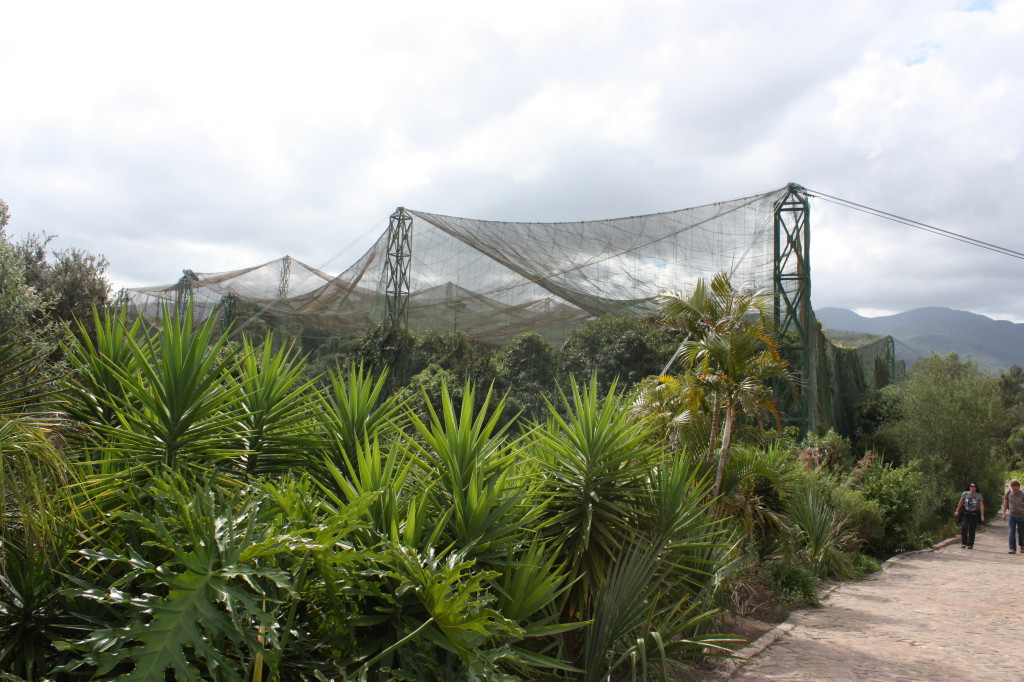
The unique two hectare dome (the World’s largest) spans over a gorge of indigenous forest. The sanctuary has its own mysterious ruin, which incorporates a walk-behind waterfall. Another feature is its amphitheatre, which has the ability to seat over 200 visitors. Like Monkeyland, the popular primate sanctuary next-door, Birds of Eden boasts its own canopy walk, while shorter than the 128m bridge at Monkeyland, it hangs above the clouds. The decision to develop Birds of Eden stems from the need to create a safe environment in which to release a large collection of free-flight African birds, miniature monkeys and the sanctuary also enables bird owners to apply to release their pet birds into the sanctuary, after undergoing rehabilitation.

Birds of Eden can be reached by car from either Cape Town (long drive) or Port Elizabeth.  You can get to South Africa using airline miles.

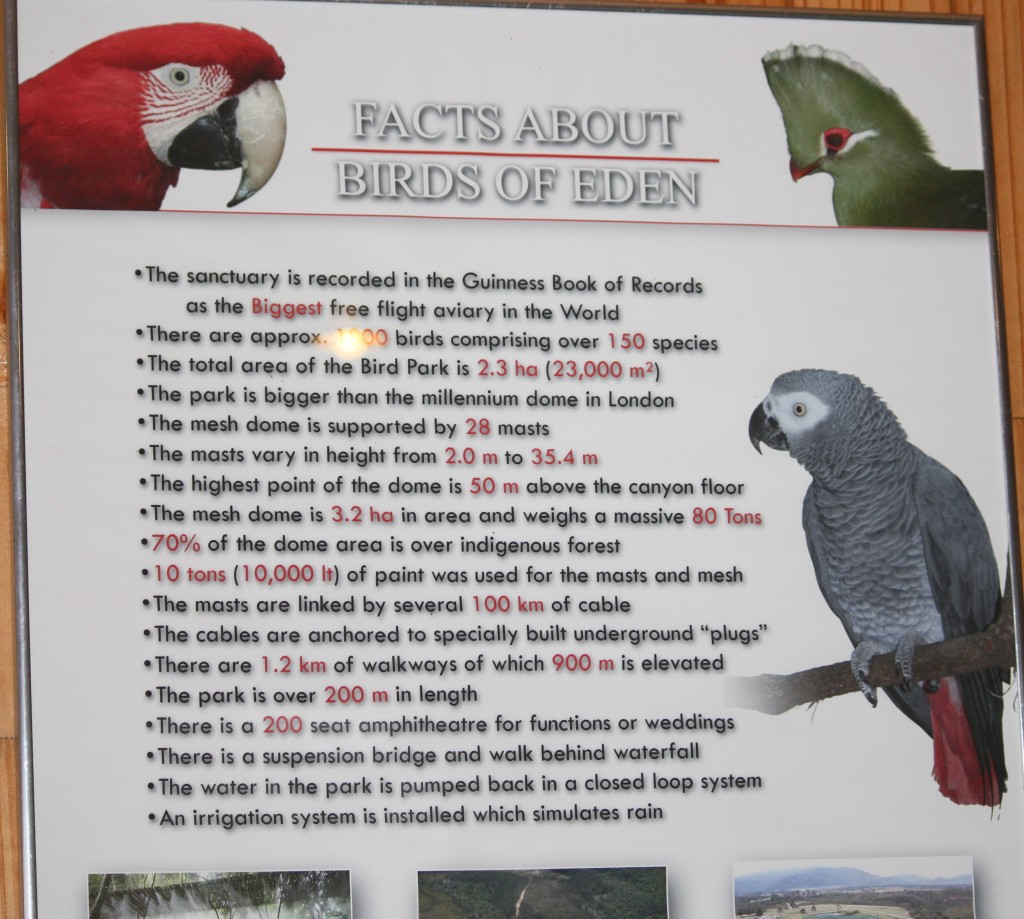
BIRDS OF EDEN FACT SHEET

1. The area of the bird park is 2,3 hectare (23,000sq meters).

2. The structure comprises 27 masts of varying heights, between 34 meters and 2 meters.

3. While the tallest mast is only 34 meters high, the highest point of the dome above the ground is
50m as the canyon breaks away.

4. The masts are linked by a series of cables which are anchored to specially constructed
underground “plugs”, there are several 100 kilometres of cable used to create a grid of cable onto which, the bird mesh will rest.

5. The bird mesh has an area of 3,2 hectares and weighs 80 tonnes.

6 The sanctuary is the biggest single free flight aviary in the World.

7. Birds of Eden opened the 15th of December 2005 and can be contacted on info@birdsofeden.co.za

8. There are several special features about Birds of Eden;

• There is a walk behind waterfall

• The birds are in free flight – there are no cages.

• There is an amphitheatre, which can seat 200 people.

• The sanctuary is wheelchair friendly.

• There are 1,2kms of walkways of which 900m is elevated.

• 70% of the area of the dome encapsulates pristine indigenous forest.

• The main dam is bustling with koi fish.

• Birds of Eden incorporates several dams, the largest has an island lunch-deck with plenty of seating – light meals are served here.

• The snack bar and restaurant in Birds of Eden are both outsourced and comprises of 4 options for seating,

1) in the forest at the snack bar,
2) outside the forest near the snack bar
3) On the lunch-deck at the main dam
4) on the bank of the main dam.

• There are approximately 3,000 birds in the aviary, comprising over 220 species, note that these numbers increase constantly.

• The masts is made of wire mesh. It is painted green for a more natural ‘look’. 10 tons of paint (10,000 litres) was required to complete this paint job.

• The river running over the waterfall and through the length of the bird park (200m) is pumped back in a closed system. There is therefore no pollution of any water sources in the sanctuary.

For more information about Birds of Eden and details on how to get there, please visit their website.

* Originally published on our parent website Feathered And Free.

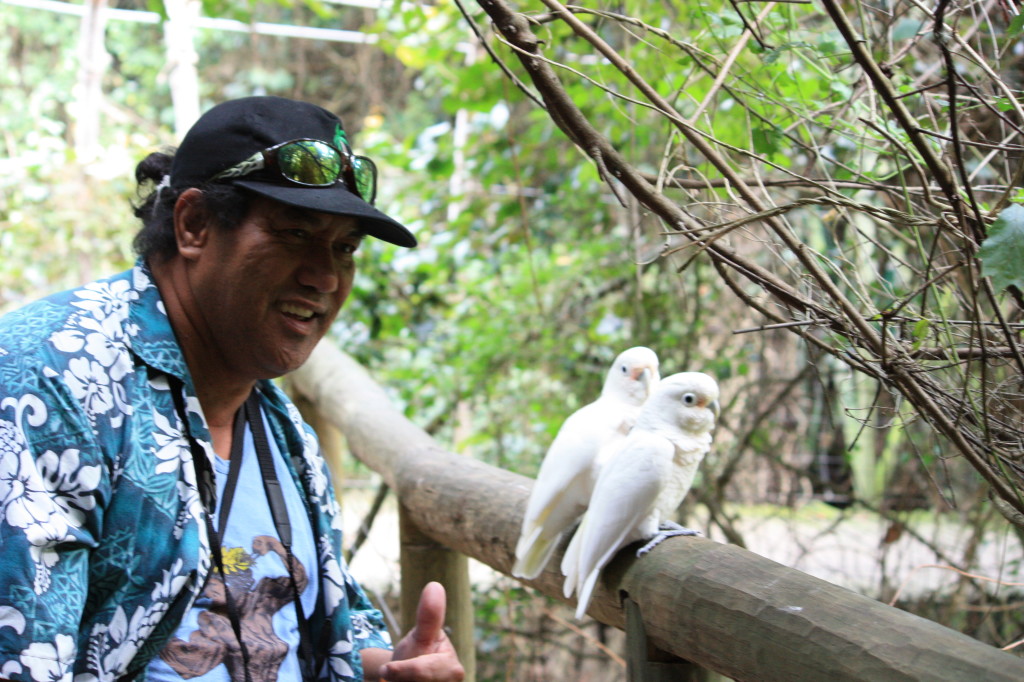
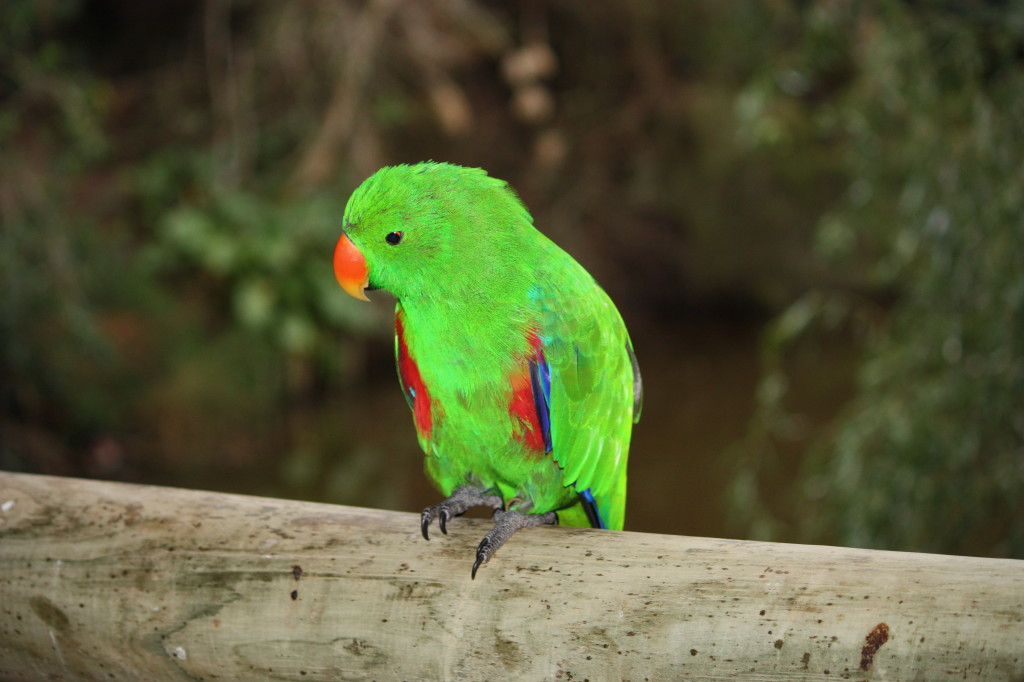
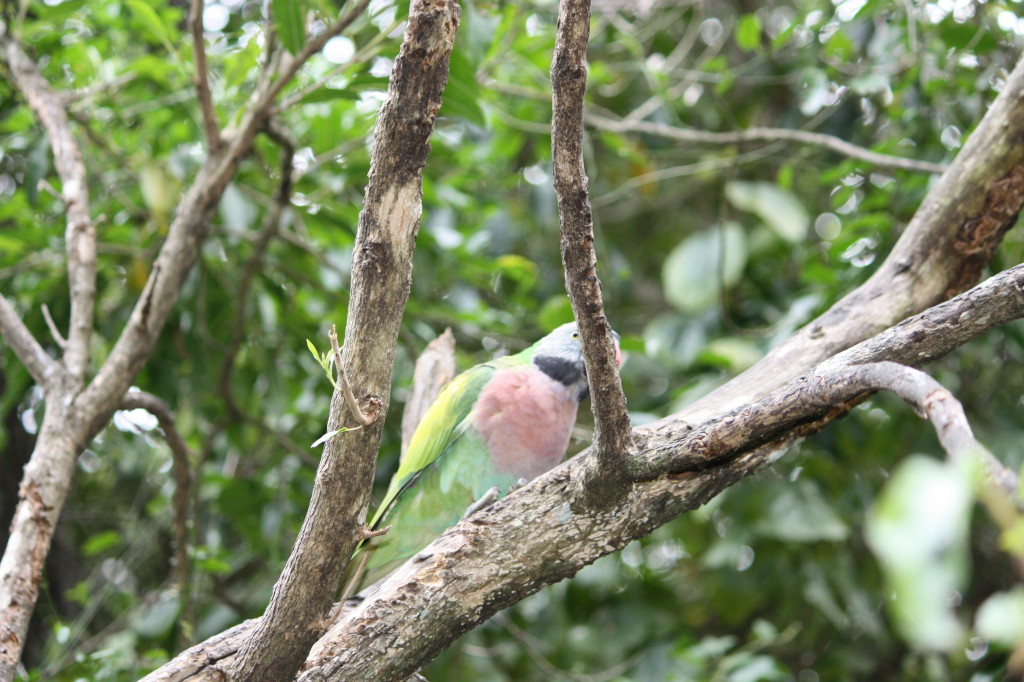
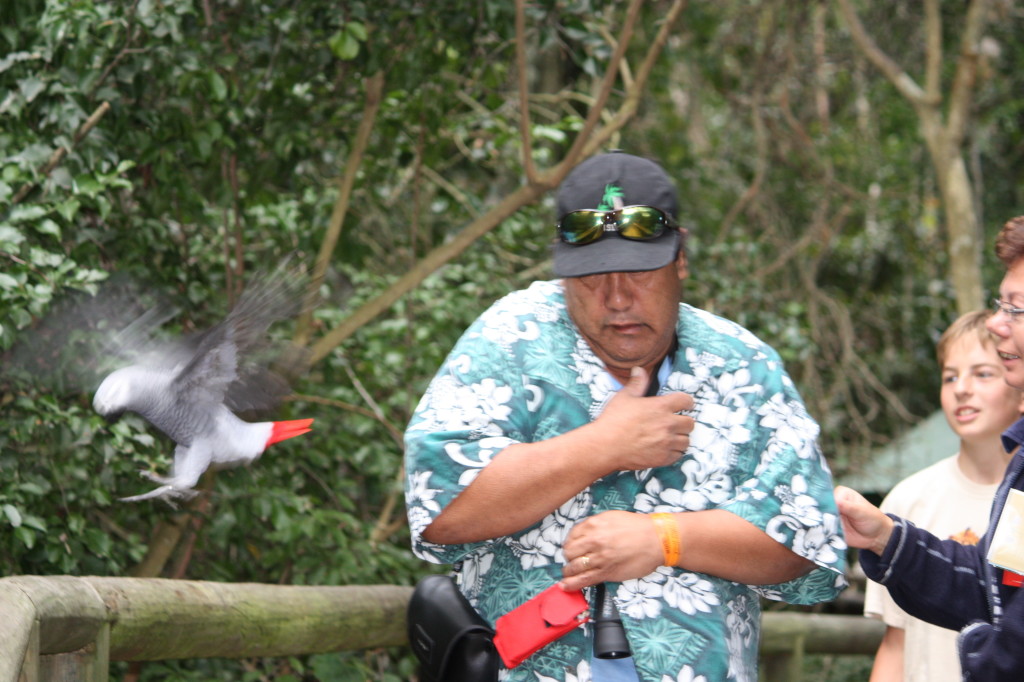
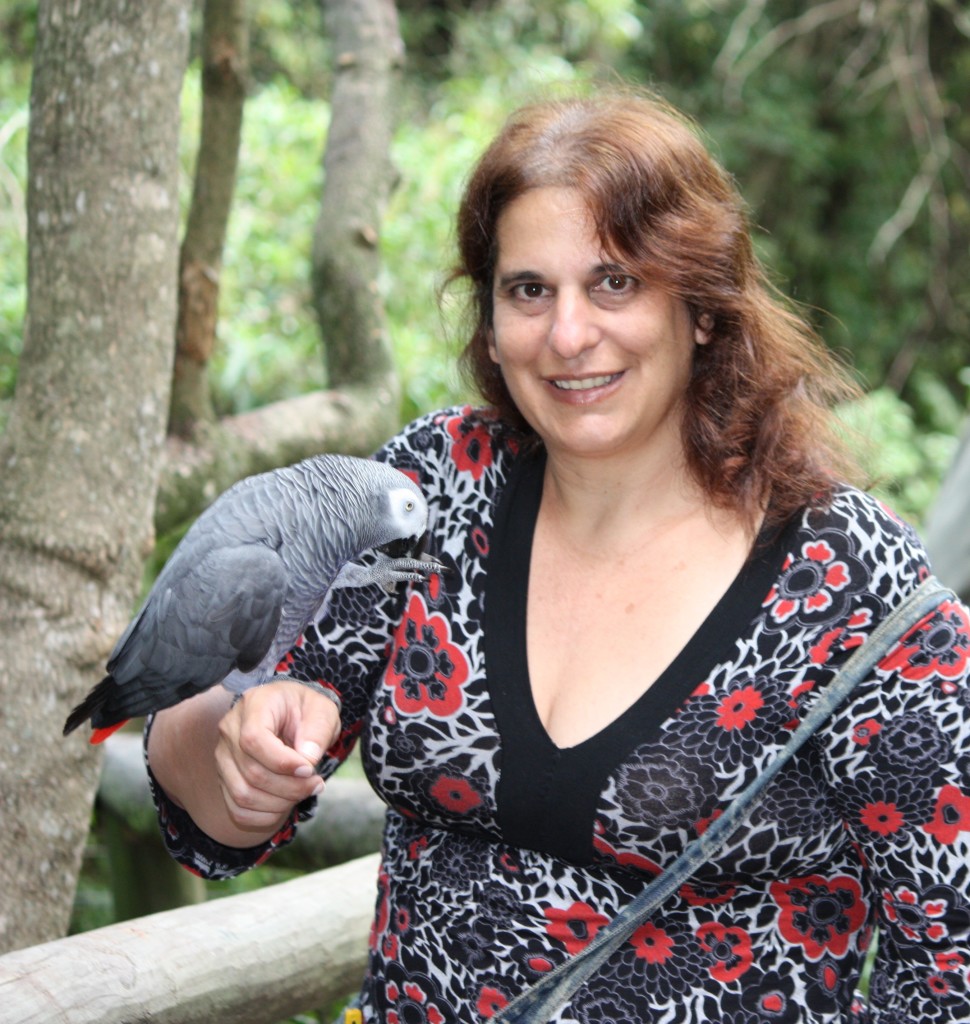
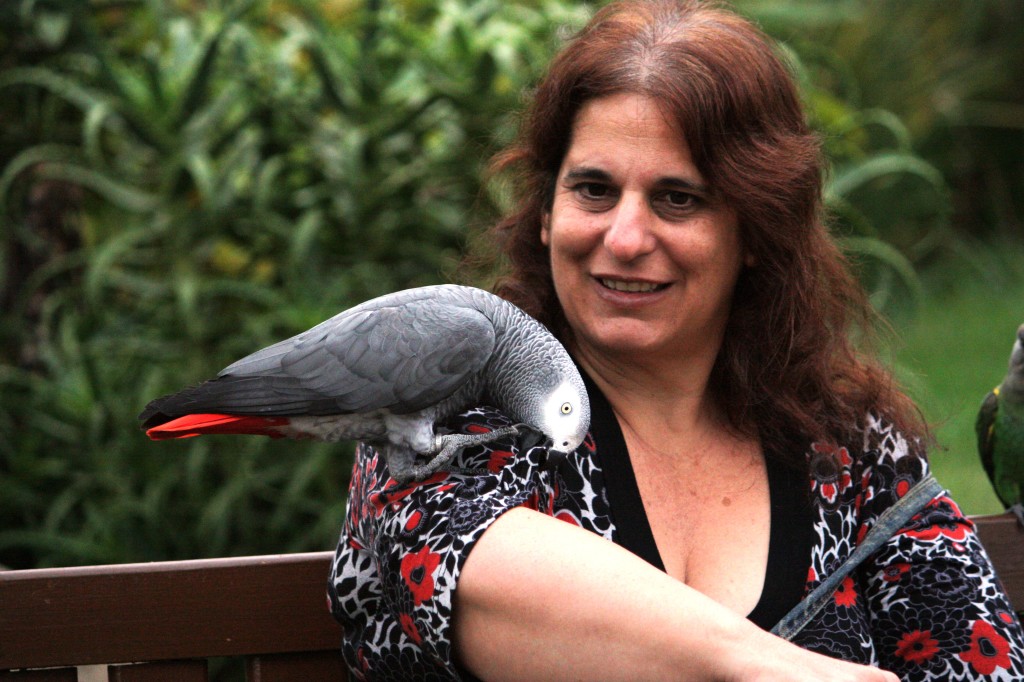
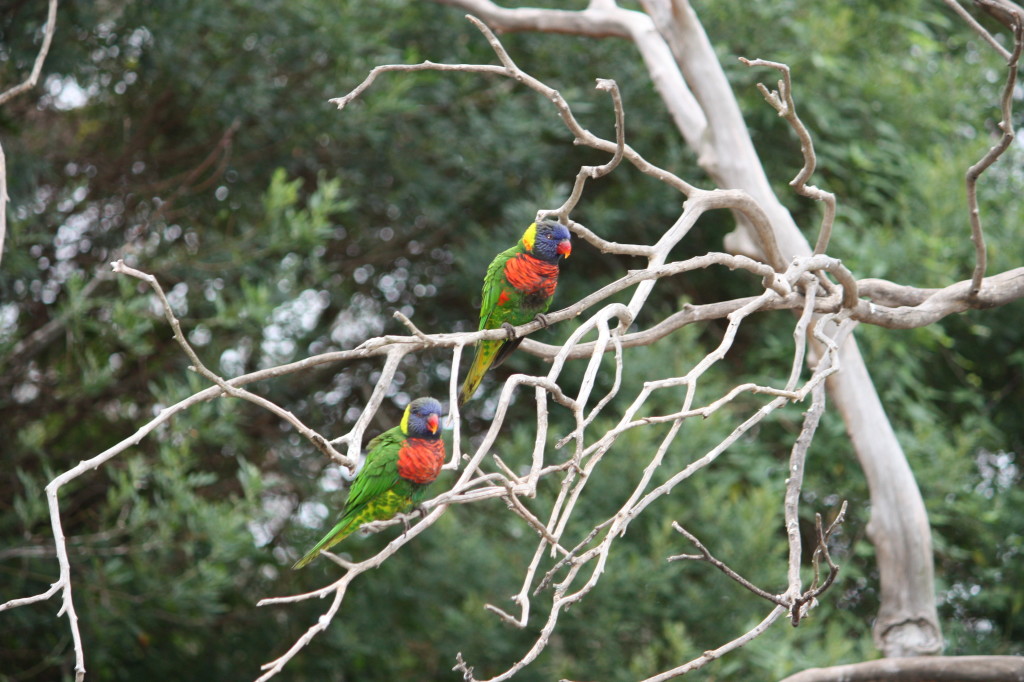
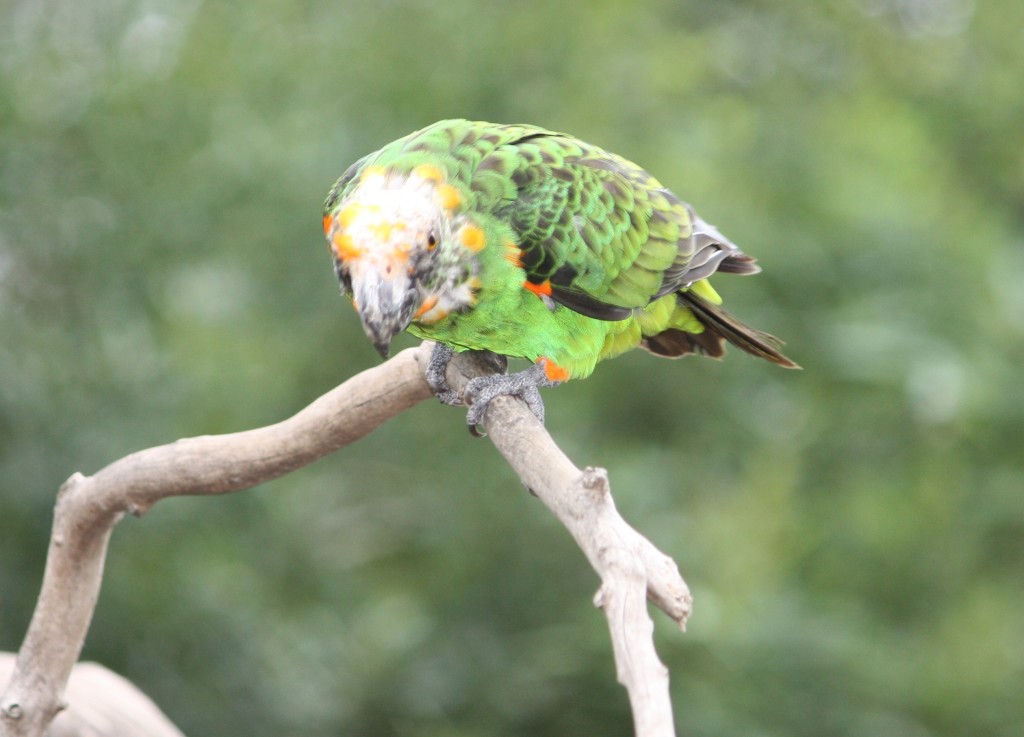
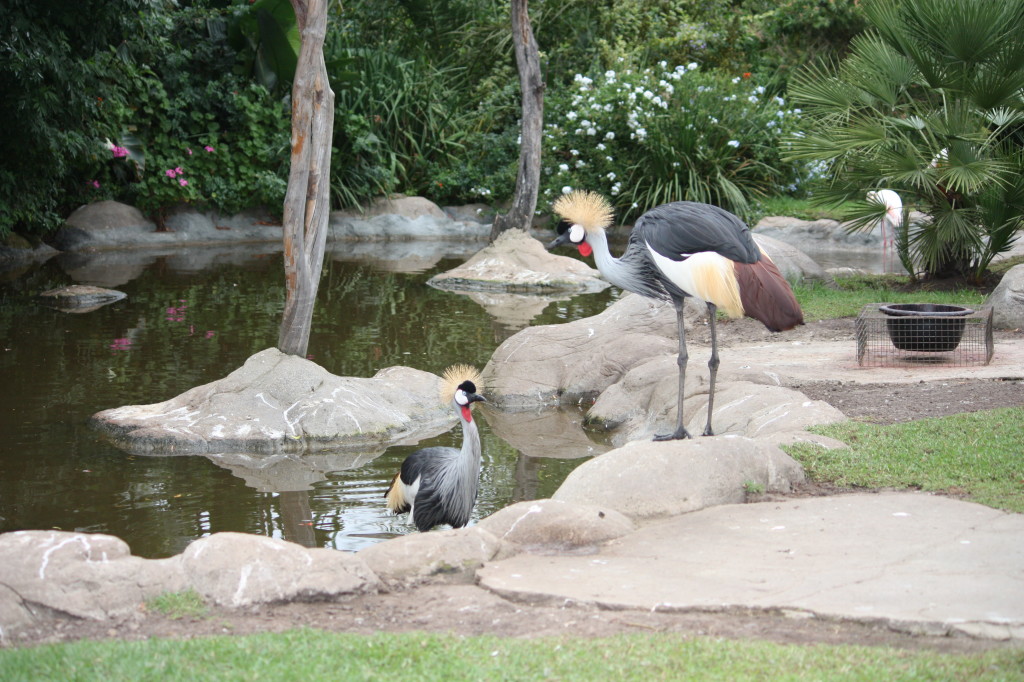
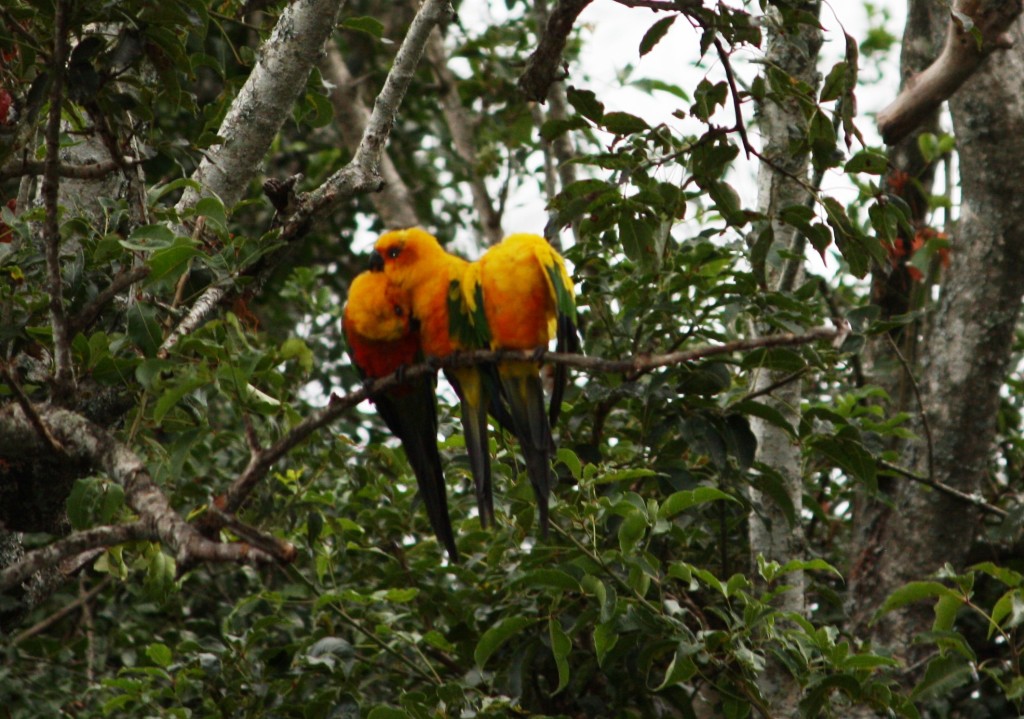
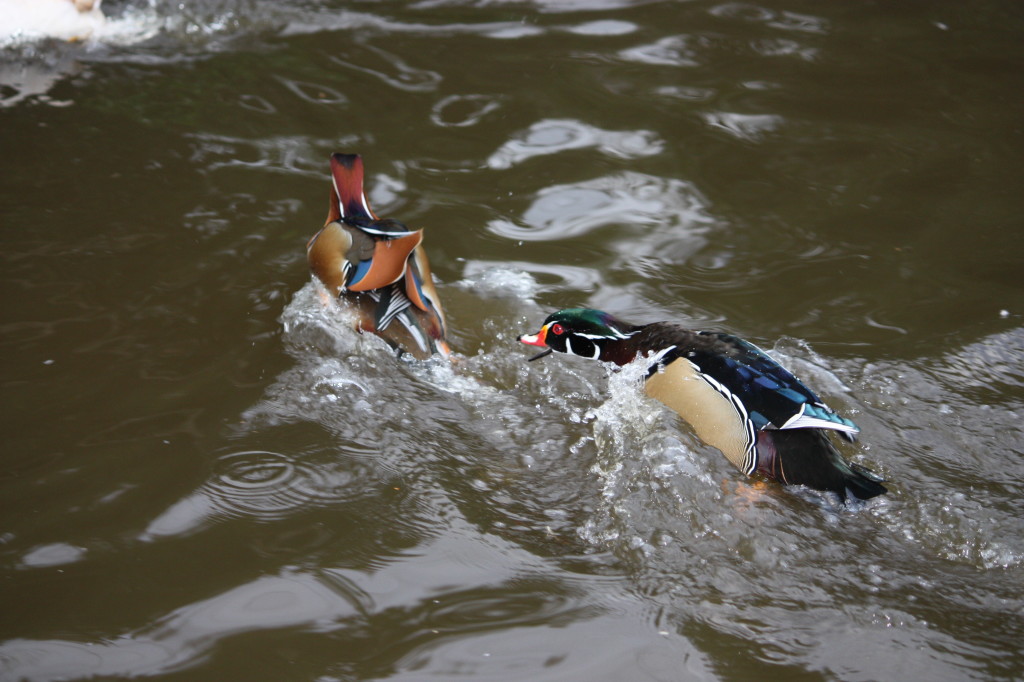
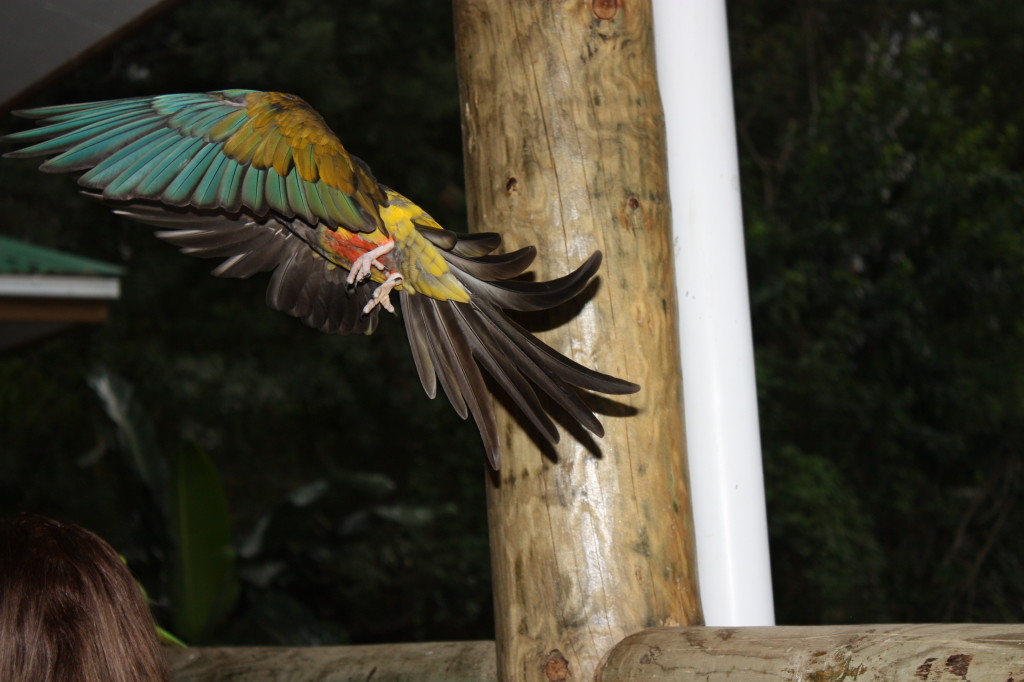
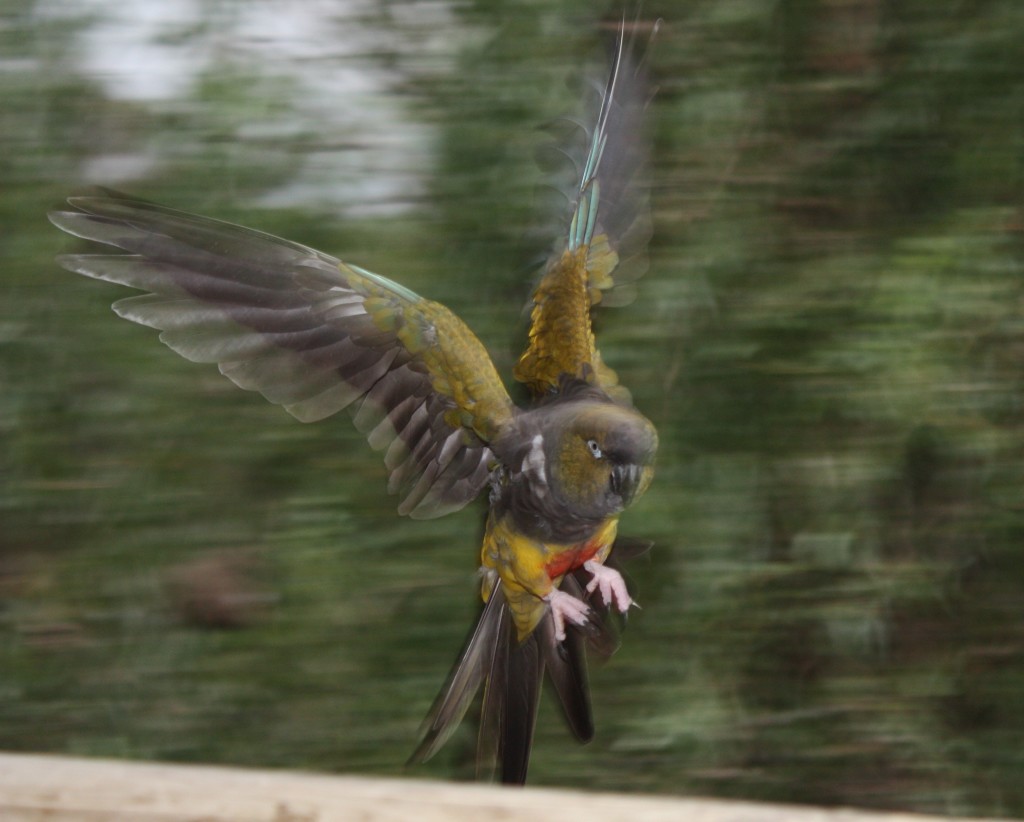
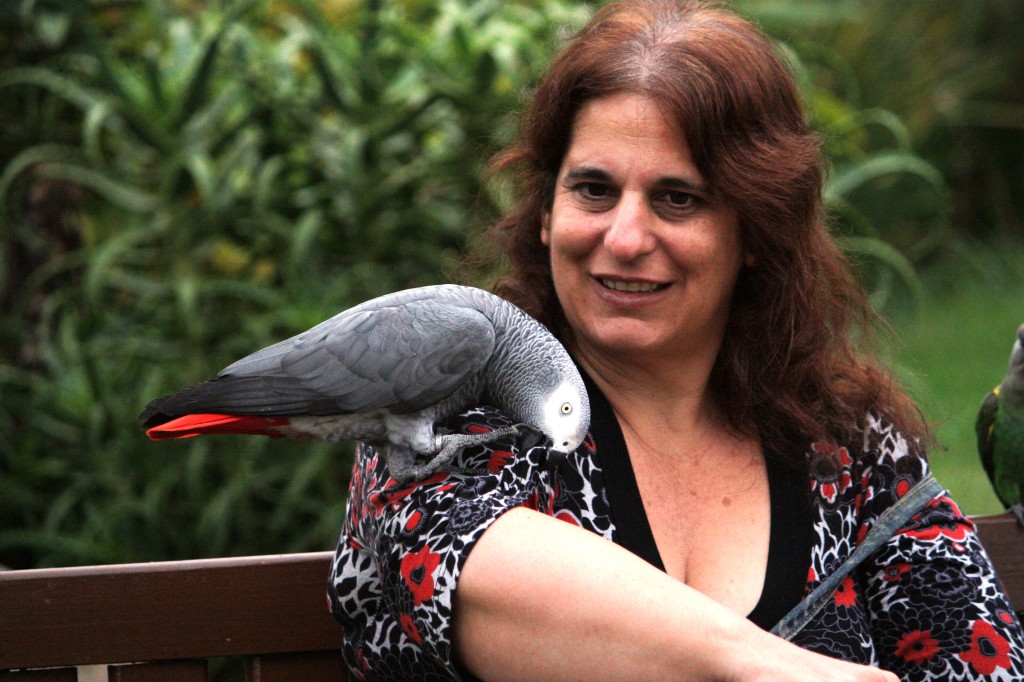
Join me on a wander through the magnificent Birds of Eden and enjoy my photos of these wonderful birds!
IMG_0289 IMG_0290 IMG_0291 IMG_0297 IMG_0302 IMG_0315 IMG_0326 IMG_0329 IMG_0339 IMG_0349 IMG_0352 IMG_0354 IMG_0355 IMG_0360 IMG_0364 IMG_0383 IMG_0390 IMG_0403 IMG_0404 IMG_0405 IMG_0407 IMG_0415 IMG_0416 IMG_0419 IMG_0423 IMG_0428 IMG_0442 IMG_0443 IMG_0444 IMG_0454 IMG_0455 IMG_0456 IMG_0458 IMG_0466 IMG_0469 IMG_0470 IMG_0471 IMG_0478 IMG_0490 IMG_0491 IMG_0501 IMG_0502 IMG_0504 IMG_0507 IMG_0511 IMG_0513 IMG_0518

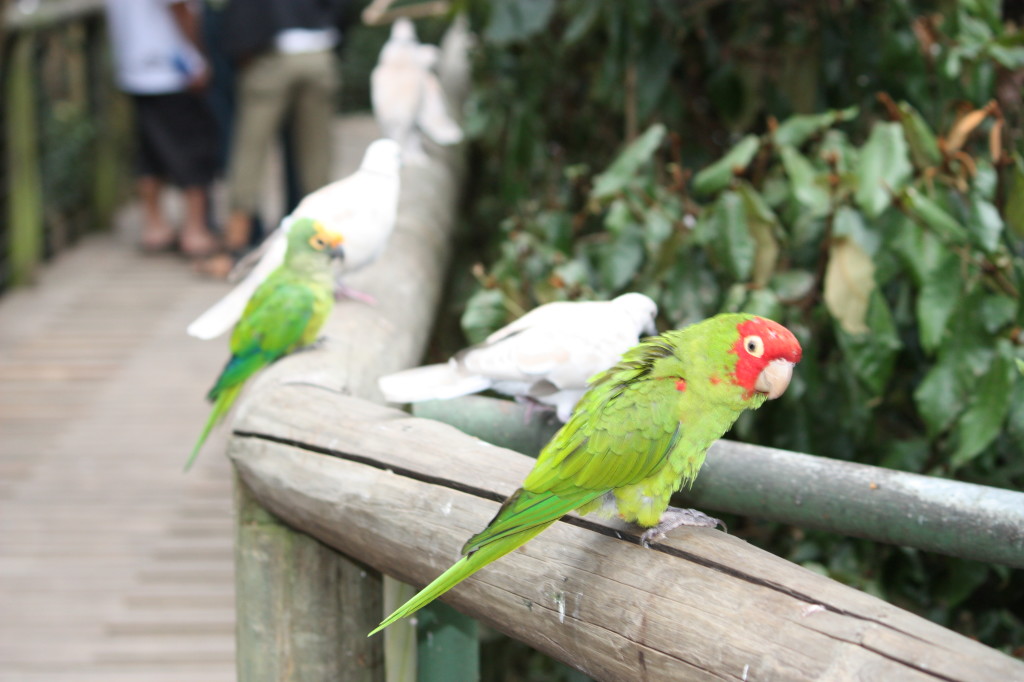
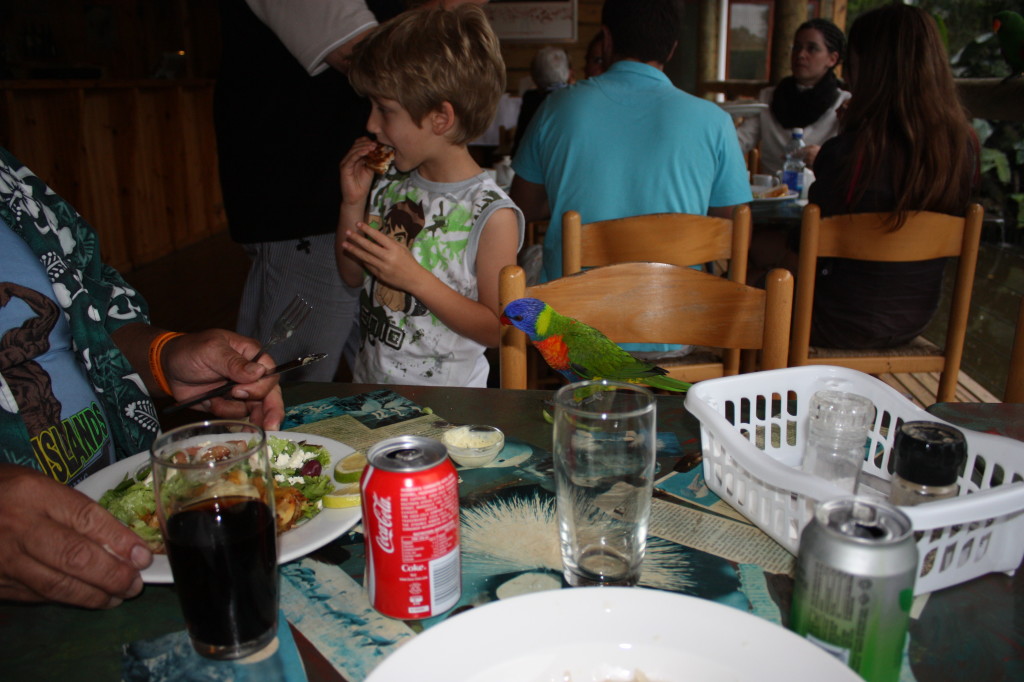
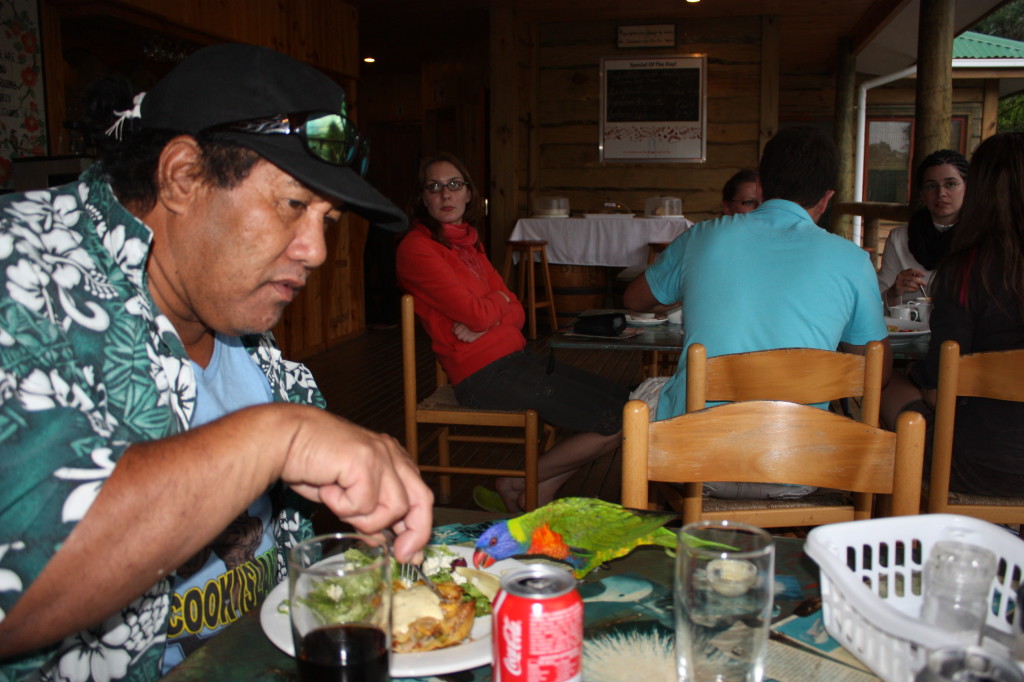
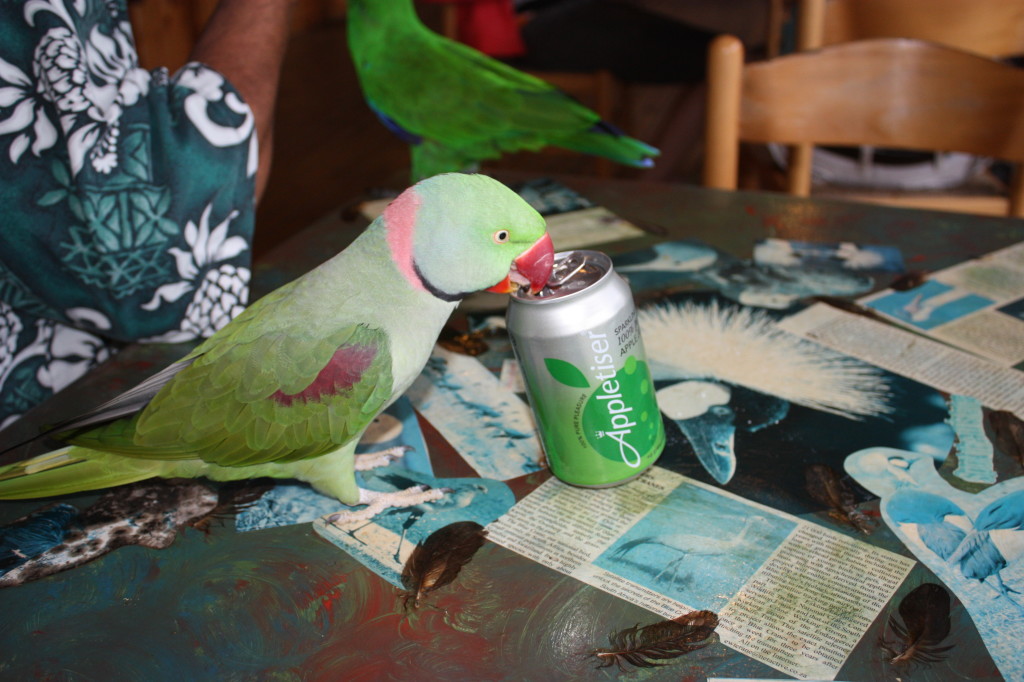
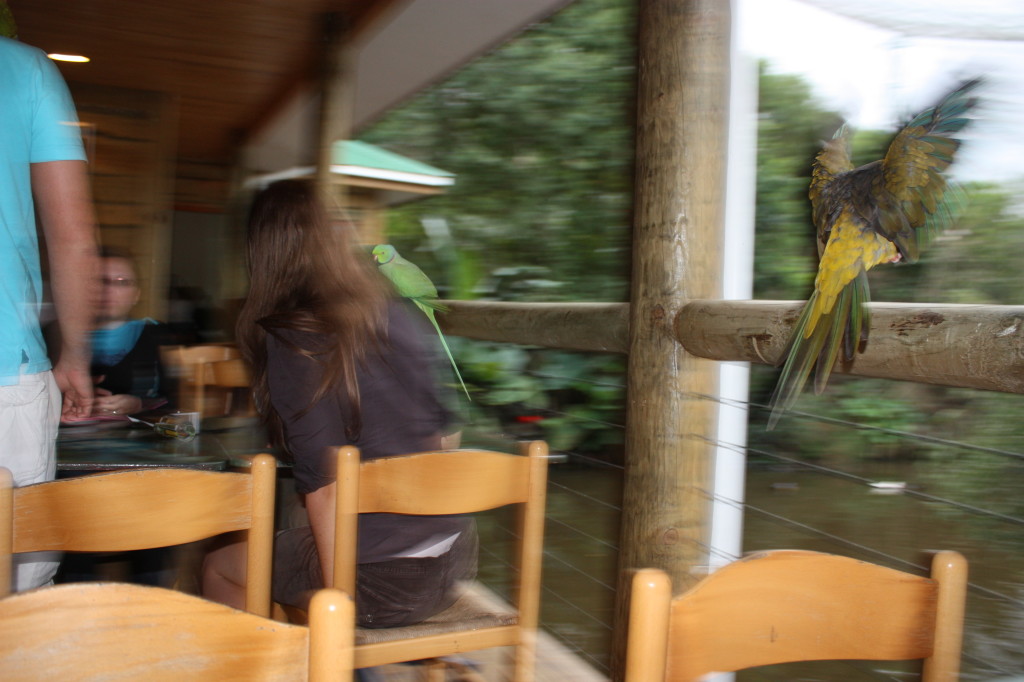
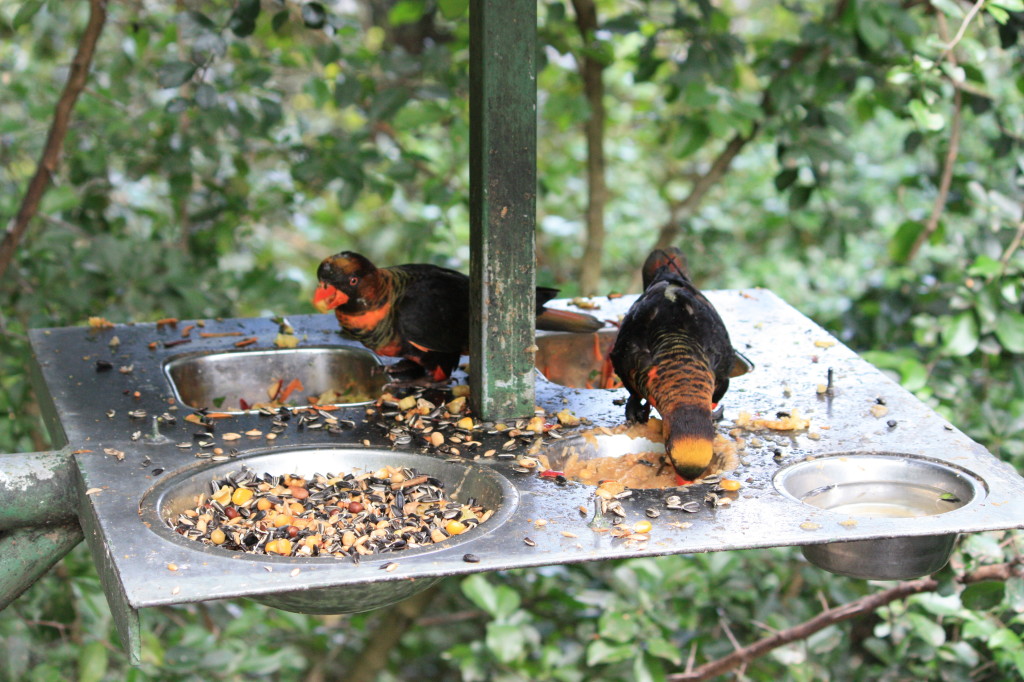
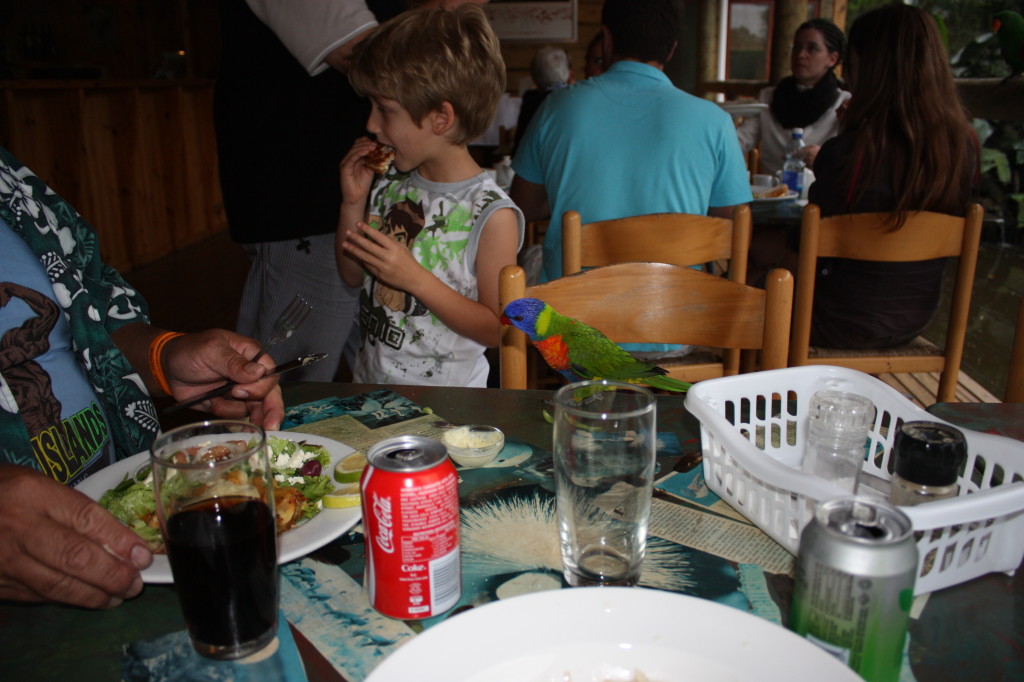
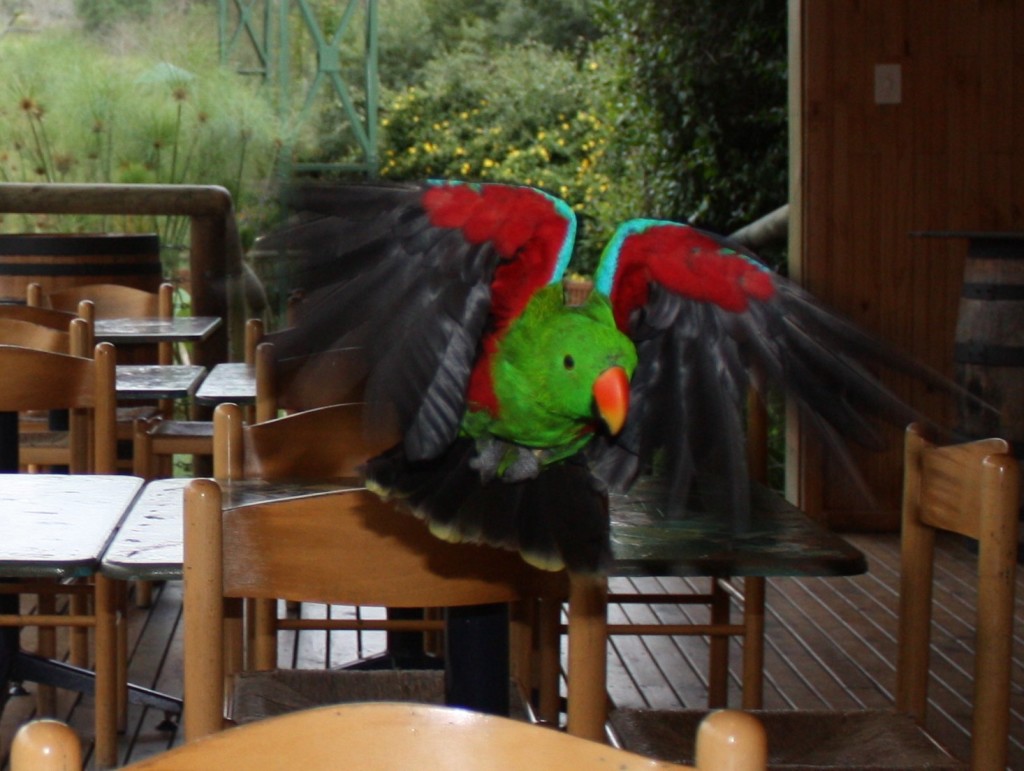
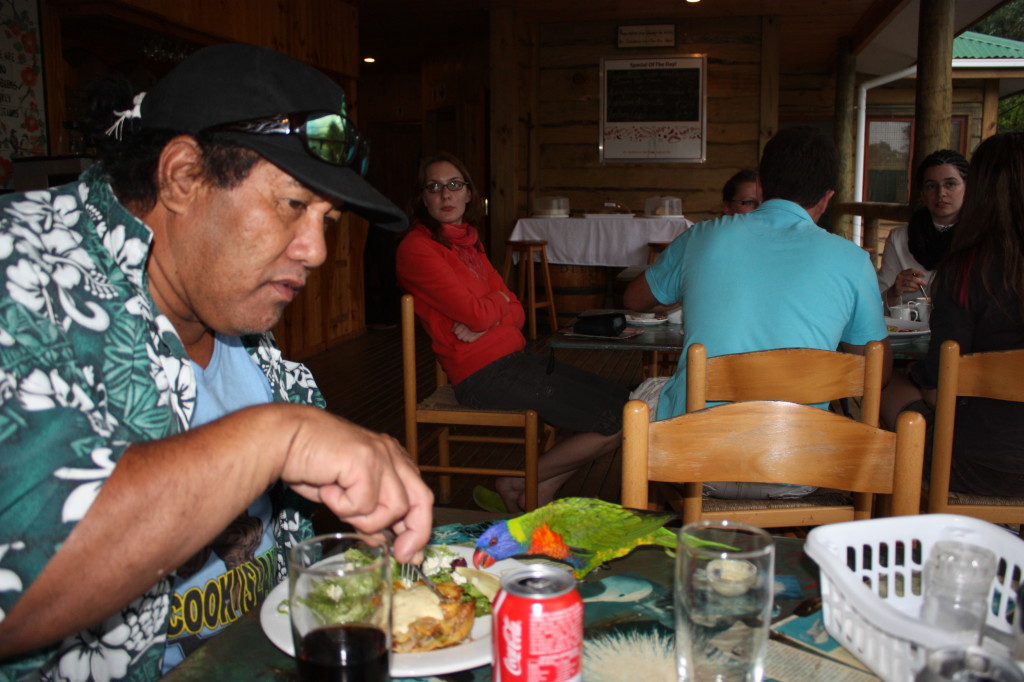
Do plan on having a meal here but don’t be surprised if the birds invite themselves to your lunch!  It’s all part of the fun!

IMG_0519 IMG_0523 IMG_0524 IMG_0529 IMG_0533 IMG_0535 IMG_0537 IMG_0542 IMG_0545 IMG_0547 IMG_0548 IMG_0549 IMG_0551 IMG_0553 IMG_0558 IMG_0560


Gateway: Port Elizabeth, South Africa

GETTING THERE

Port Elizabeth  is South Africa’s fifth largest city and is located on the Indian Ocean coast half-way between Cape Town and Durban, in the Eastern Cape, about 260 km from Knysna.  It can be easily reached using Star Alliance miles on South African Airways or One World miles on British Airways. Using Avios is a good deal here as the JNB-PLZ route is 564 miles so only costs 4500 Avios one way.  Using United Mileage Plus would require 12,500 miles for the same route.  You may be able to get a good price using an online travel agent such as Expedia too.

WHERE TO STAY ON POINTS

Port Elizabeth is a pleasant city at the end of the Garden Route but for eco-tourists it will just be a jumping off point to nearby game reserves and the Hogsback region further east which has one of the subspecies of Cape Parrot which I will cover in a separate post.  You won’t want to stay here long, maybe a day or two if you make the day trip to Birds of Eden (separate blog post) in Plettenburg Bay.

Club Carlson:  Radisson Blu Port Elizabeth costs 38,000 points per night, with a BOGO if you have the credit card.

I wouldn’t worry too much about hotel points here as there are plenty of guest houses and hotels under $75 including these two.

.

If your flight lands early enough, you may just want to pick up a rental car and head off straight away.  Warning, automatic cars are quite a bit more expensive than manuals.  In my example, there were manual cars starting from $46 a day.

.

WHAT TO SEE

Port Elizabeth is well placed to see several game parks.

  • African Dawn (Wildlife Sanctuary), Thornhill, 042 2860 710,  9am-5pm. African Dawn Bird and Wildlife Sanctuary offers a selection of birds and wildlife to view including Cheetahs, Servals and much more. Braai and picnic places available.
  • Kragga Kamma Game Park, (Follow the M15 west from the city center for about 15 minutes), +27 (0)41 379-4195 (cantor@worldonline.co.za). Gates are open from 8AM to 5PM. You can either sleep in the camp or take self drives during the Day. White Rhino, Buffalo, Cheetah, Giraffe, Zebra and others. Excellent value small park. R30 entrance fee.
  • Roseate Tern hiking trial, Next to Pine Lodge Resort off Marine Drive, Summerstrand, +27 (0)41 585-9711. 9 km circular trail.
  • Pumba Private Game Reserve, +27466032000.   Day guests can experience the Day Safaris, which are conducted all year round. Each package is tailored to the needs and wants of the individual group, but individual safari times will depend on the season. Visitors can look forward to seeing cheetahs, rhinos, elephants, hippos, lions, buffaloes, White Lions, leopards and a host of other exciting animals.
  • Visit Addo Elephant National Park.
  • Kariega Game Reserve, (90 minutes outside PE), +27 (0)46 636-7904.
  • Shamwari Game Reserve, (45 minutes outside PE), +27 (0)42 203-1111 (fax: +27 (0)42 235-1224).
  • Visit Mountain Zebra National Park.
  • Visit Tsitsikamma National Park.

Banded Cotinga (Cotinga maculata)

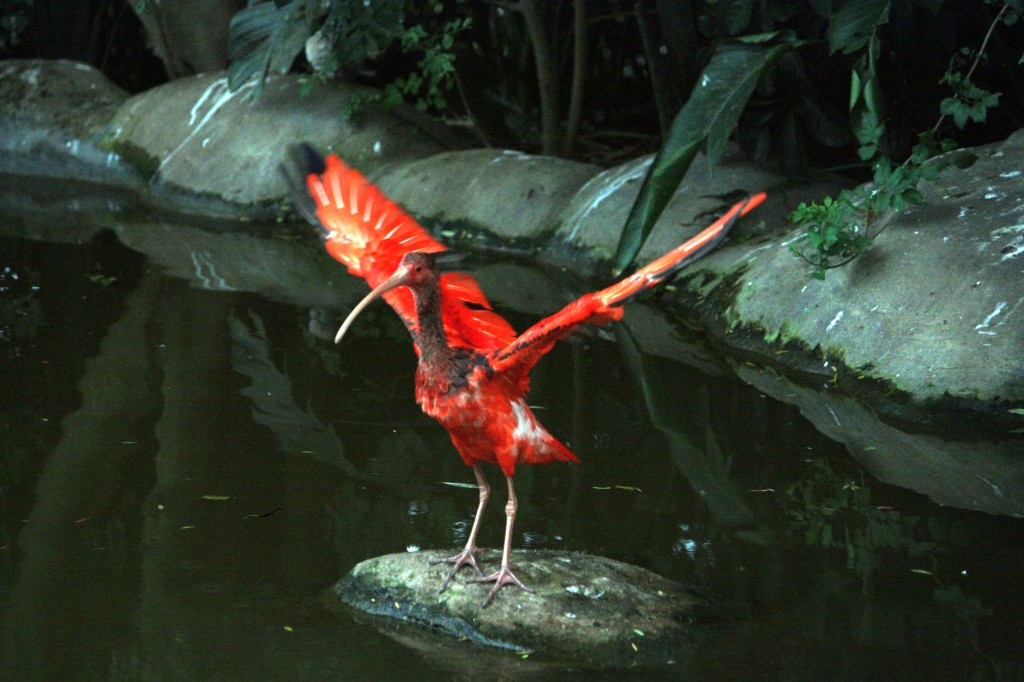
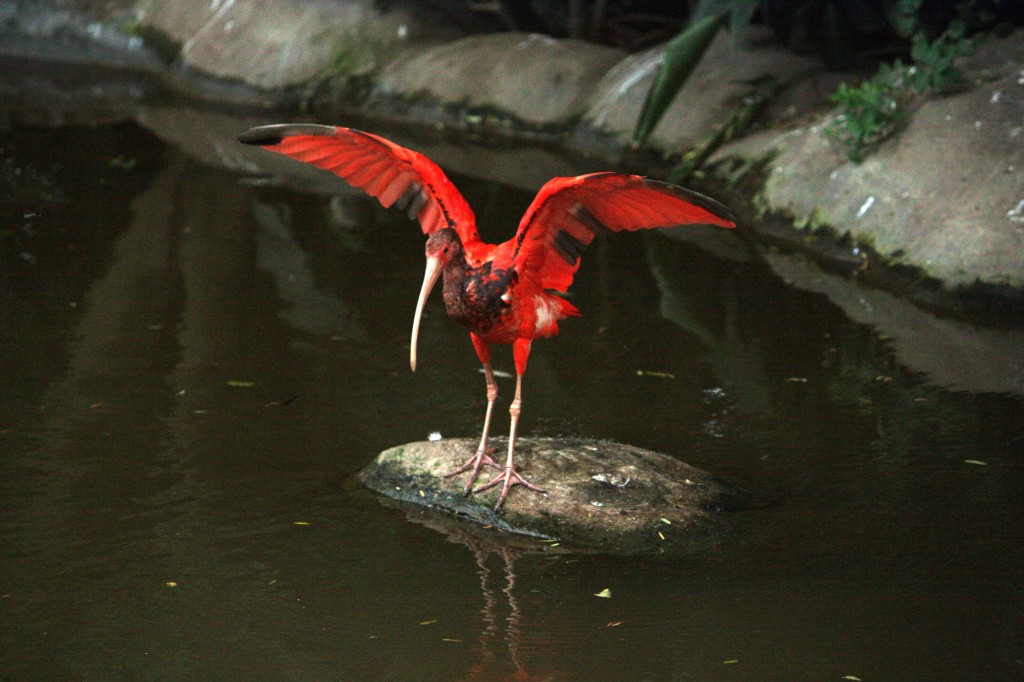
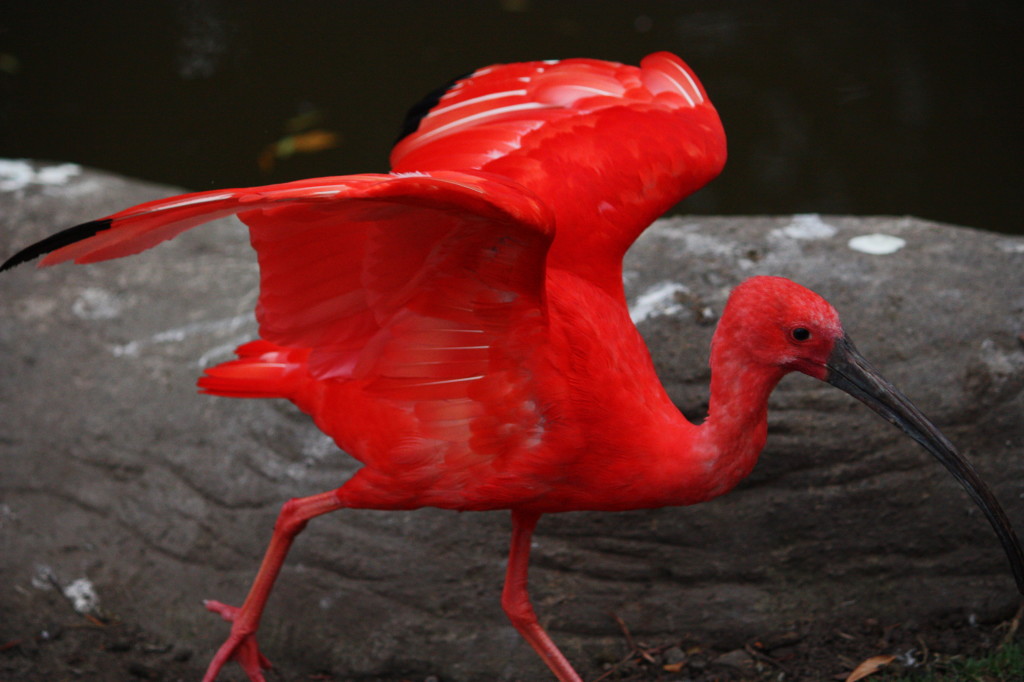
Some birds just have so much “wow” factor you wonder how they can even be real!  The stunning Banded Cotinga is one of these “wow” birds.

.

If you are from Australia, especially Queensland or New South Wales you could be forgiven for thinking this bird would be a perfect mascot for State of Origin.

.

Unfortunately for us Aussies, this beautiful bird is not found in our country but in Brazil.  They are known locally as “Crejoa”.

.

Cotinga maculata occurs in south-east Bahia and north Espírito Santo, with two recent records from northeast Minas Gerais (Santa Maria do Salto and Bandeira municipalities) (Ribon et al. 2004, Ribon et al. 2005) and none since the 19th century in Rio de Janeiro, south-east Brazil. It has declined significantly in abundance and distribution and is confined to a few protected areas, notably Sooretama, RPPN Estação Veracruz (formerly Porto Seguro) and Linhares Forest Reserve. It was not common even in the early 20th century and, given its fragmented distribution, overall numbers cannot be high.

Brazil is very easy to get to with frequent flyer miles.  I would suggest you fly to Rio De Janeiro or Sao Paulo, then get a connecting flight to Vitoria, rent a car and drive to Sooretama or Linhares.  We were there in Sept 2012 but weren’t lucky enough to see this stunning bird.  Maybe next time!

LEARN MORE ABOUT THIS BIRD

American Bird Conservancy

Birdlife

Cornell Lab of Ornithology

VIDEO


New Survival Packs From Scottevest

I’ve posted several times about the fantastic Scottevest jackets with the multi-pockets to carry your gear on the plane with you.  Now they have some cool new items that anyone venturing off into the wilderness (as eco-tourists tend to do) could use.  We can’t all be Bear Grylls and every little bit helps!
Scottevest Survival Kit

To find this item on their website, please click on either of these 2 images. The survival kit is on the accessories page as highlighted in yellow.  While you are on the website, don’t forget to check out the daily sale items and the wonderful travel clothing for both men and women!
Scottevest Navigation

Please note that these are affiliate links and I do get a small commission from your purchases when you click through my link.  If you choose to use it, thank you for your support!
 

US Airways Has 100% Bonus Promo Through 31 August

This seems to be a regular monthly event.  I normally don’t advise buying miles unless you need to top off an account for a redemption within the next year or so.  Here are the details of the promo in case anyone is interested.  I won’t be buying but if you need to top off your AA account, these US miles will become AA miles sometime next year when the programs merge.  These promos can be a good deal if you are not an American and don’t have access to credit card sign-ups.

.

Avianca-Taca Lifemiles Bonus Promo Back 1-31 August

See my review of LifeMiles to learn how to best use this program.

Buy miles and get twice as much!

.

At LifeMiles we give you more because we want you to live your miles to the fullest. Therefore, until August 30th, 2013, for each package of 1,000 miles you buy, we will give you a bonus of 100 % more that can be redeemed to fly to more than 1.300 destinations around the world with Avianca, AeroGal or Star Alliance member airlines. Also, at LifeMiles.com we offer you the redemption platforms “Hotels Around the World” and “Hilton HHonors™” for you to enjoy your miles at more than 100.000 hotels in 90 countries.

And there are many more ways to enjoy your miles! Visit EarnandEnjoy.com to discover our vast air and commercial network and everything you can do with your LifeMiles.

You can access this promotion through our Call Center, LifeMiles.com or at Avianca’s Information Centers.

Terms and Conditions

  • This promotion is available through Avianca Call Centers, LifeMiles.com and Avianca Information Centers, except Colombia where is available only through the Call Center and LifeMiles.com.
  • This promotion is available between August 1st, and August 30th, 2013, as the last date of purchase.
  • Maximum miles to buy per transaction: LM75,000.
  • Minimum of miles to buy per transaction: LM1,000.
  • Maximum miles to buy during a calendar year: LM150,000.
  • Miles must be purchased in multiples of 1,000.
  • Maximum number of transactions: 1 transaction.
  • At LifeMiles.com, the purchase can only be done through Earn/Buy LifeMiles. Does not apply to the Flexible Redemption (miles + money) during the payment process of air ticket redemption.
  • The amount for purchase of miles is not refundable.
  • Each package of 1,000 miles  costs USD 35, 40, including all taxes applicable to each country *.
  • For Venezuela residents: each package of 1,000 miles costs USD 50,oo plus local taxes of 12% IVA, for a total cost of USD 56,oo. The values are settled at the current exchange rate to Bolivares Fuertes.
  • Form of payment through Call Center and LifeMiles.com: International credit or debit card. Cash payments are only allowed at Avianca Information Centers.
  • The cost per block of 1,000 miles may vary according to the country or channel of purchase.

Other conditions

  • Applies only to members enrolled in the program prior to August 1st, 2013.
  • The miles purchase transaction receipt will show the total of miles credited to the customer’s account, including bonus, and the total amount charged for the transaction.
  • The miles bought and earned with this promotion do not apply to achieve Elite status
  • The amount paid for the miles’ purchase is not refundable.
  • The miles are not endorsable.
  • Miles purchased, once accrued, can be redeemed in accordance with the conditions specified in the LifeMiles’ Program Terms and Conditions and the portfolio of products and services available for redemption.
  • LifeMiles Terms and Conditions apply.

* The price may be lower depending on the country of residence registered in the members account in the database.

Yellow-eared Parrot (Ognorhynchus icterotis)

The Yellow-eared Parrot nests and lives among wax palms in a few areas of Western and Central Cordillera of Colombia, where it inhabits cloud forests about 1800–3000 meters above sea level. It nests in the hollow trunks of the palms, usually 25–30 meters over the floor level. It also occurred very locally in northern Ecuador where wax palm grows. Their numbers had been greatly reduced, and only 81 individuals were recorded in the Colombian census of 1999. Their populations have been impacted by hunting and habitat destruction, particularly the harvesting of wax palm, which was traditionally cut down and used each year on Palm Sunday. There has been no confirmed records of this parrot from Ecuador since the mid-90s.

.

This colorful, green and yellow parrot was believed to be extinct until April 1999, when a group of researchers, sponsored by Fundación Loro Parque and ABC, discovered a small population of just 81 individuals in the Colombian Andes.  Fundación ProAves, which was formed as a result of this discovery, has been working on recovering the species ever since.

The Yellow-eared Parrot has suffered greatly from habitat loss and fragmentation – over 90% of montane forests in Colombia have been cleared for agriculture or settlement, and Quindio wax palms, on which the parrot depends, have been decimated by logging and disease. Wax palms were also being unsustainably exploited for use in Palm Sunday celebrations within the parrot’s range.

Getting to Colombia is easy with airline miles.  Since Colombia is in the northern South America region with Peru, please see this post for details on how many miles you would need.  The main airport, Bogota is well served by both Star Alliance (Avianca, Copa, United, Lufthansa, Air Canada) and One World (American, LAN, Iberia).

.

LEARN MORE ABOUT THIS BIRD

American Bird Conservancy

American Bird Conservancy Update

Birdlife

Wikipedia

World Parrot Trust

Parrots International

ECO-TOUR OPERATORS

Colombia Birding

Birding Colombia

Colibri del Sol Bird Reserve

MINI-DOCUMENTARY VIDEO