The emu (Dromaius novaehollandiae) is the second-largest living bird in the world by height, after its ratite relative, the ostrich. It is endemic to Australia where it is the largest native bird and the only extant member of the genus Dromaius. The emu is an important cultural icon of Australia, appearing on the coat of arms and various coins. The bird features prominently in Indigenous Australian mythology.
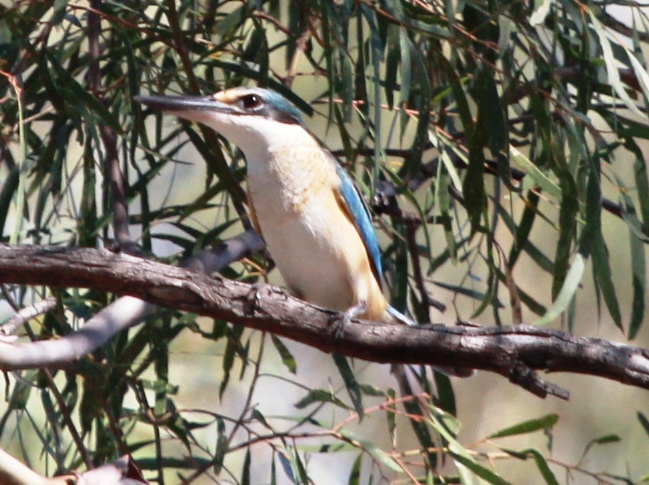
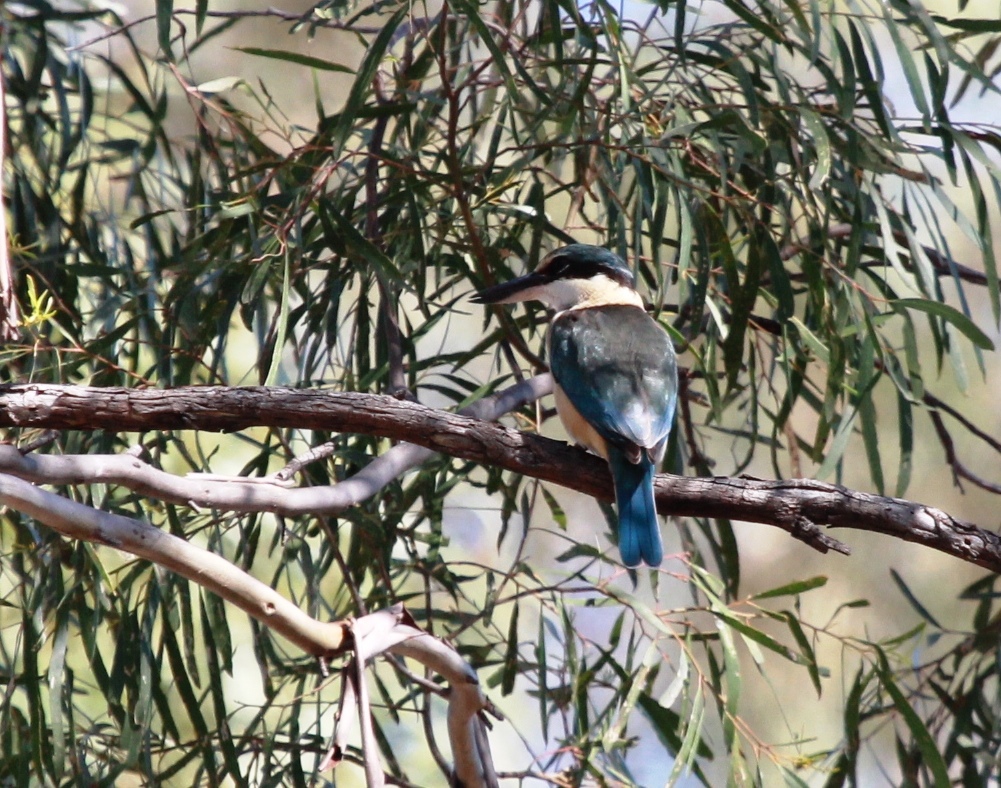
The Sacred Kingfisher (Todiramphus sanctus) is a medium-sized woodland kingfisher that occurs in mangroves, woodlands, forests, and river valleys in Australia, New Zealand, and other parts of the western Pacific. In New Zealand the species is also known by its Māori name kōtare.
It is called “sacred” for it was said to be a holy bird for Polynesians, who believed it to have control over the waves. Likewise, the local subspecies of collared kingfisher and other kingfishers in the southwestern Pacific were ascribed venerable power over the ocean.
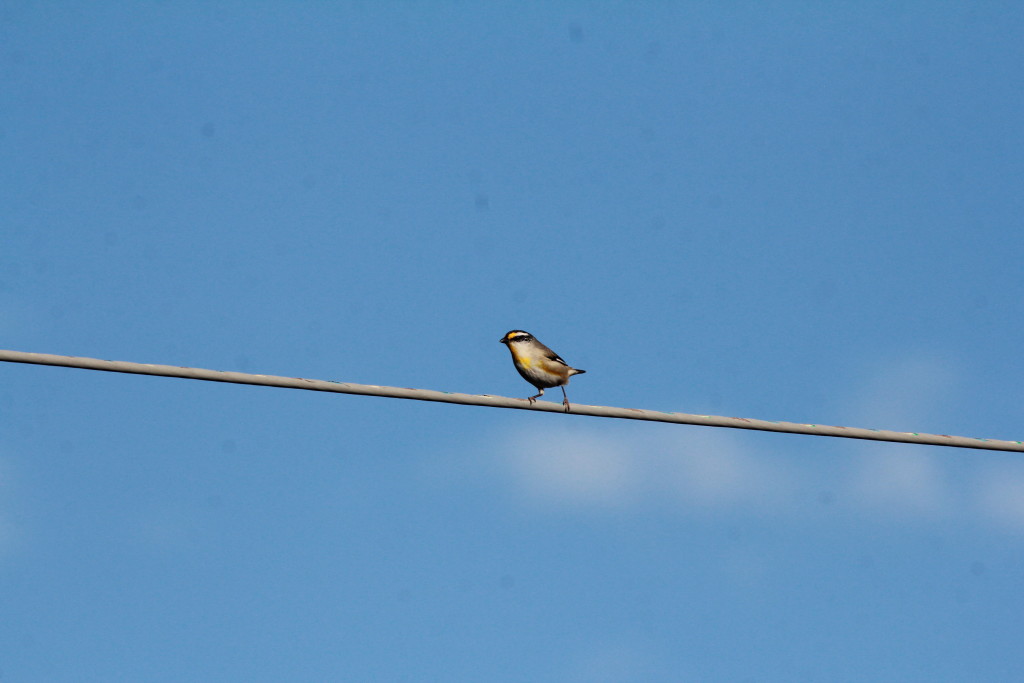
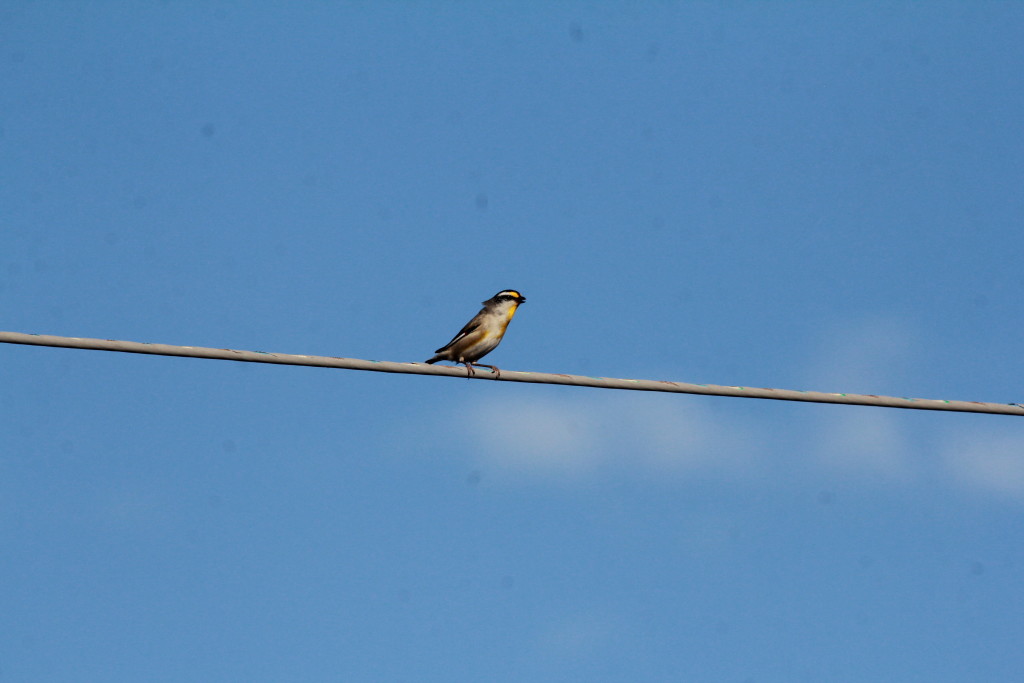
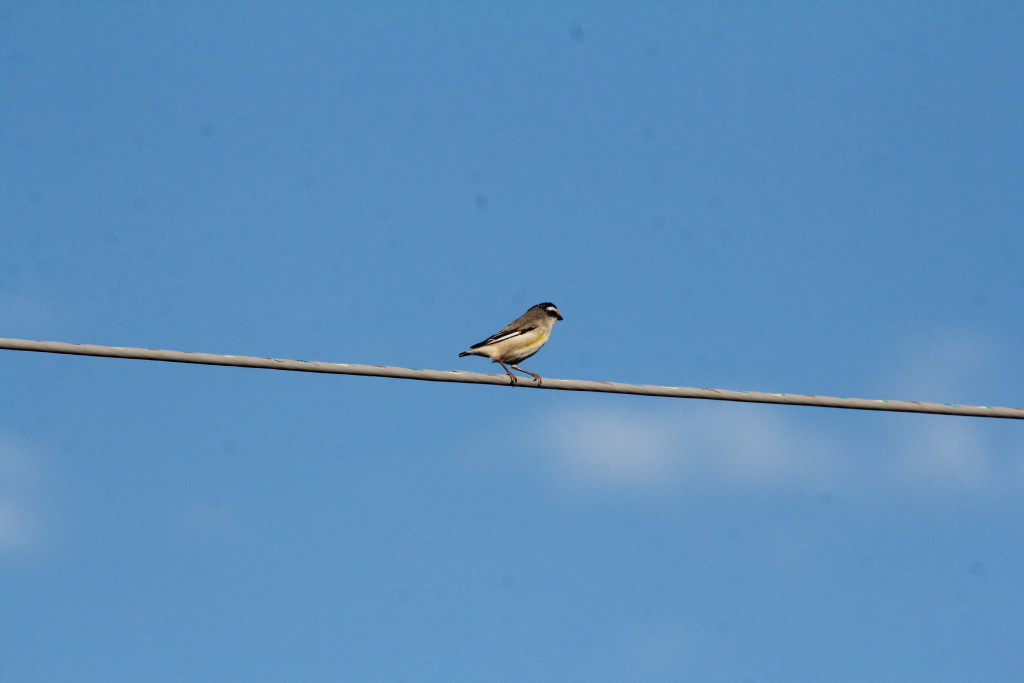
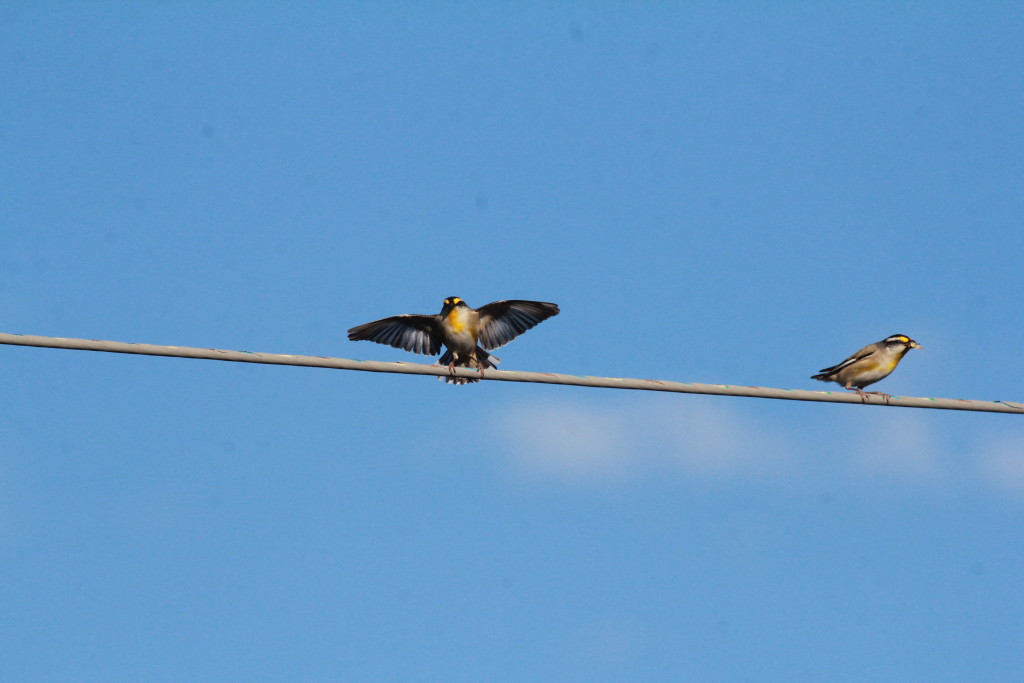
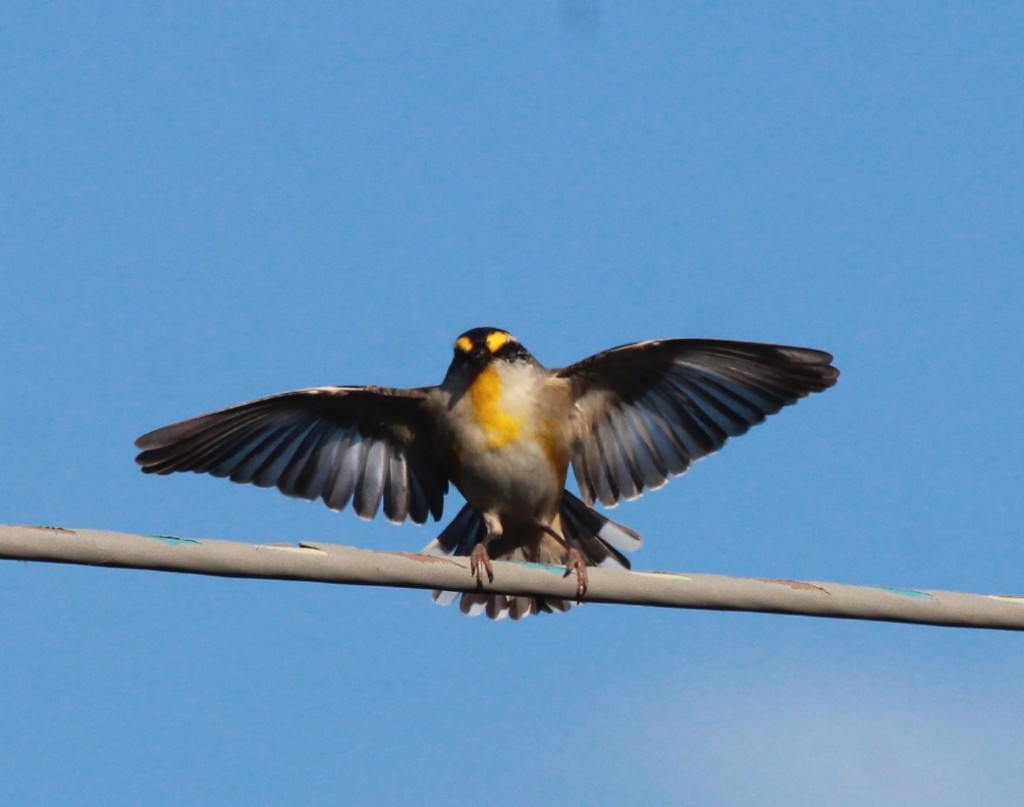
The Striated Pardalote (Pardalotus striatus) is the least colourful and most common of the four pardalote species. This little guy from Karara sure knew how to show himself off to good advantage – like a supermodel he showed his best profile, both sides and his gorgeous wings up!
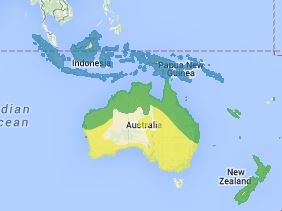
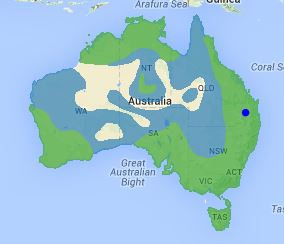
They have a very large range throughout Australia. I saw them in Karara and around Lake Coolmunda which is represented by the blue dot.
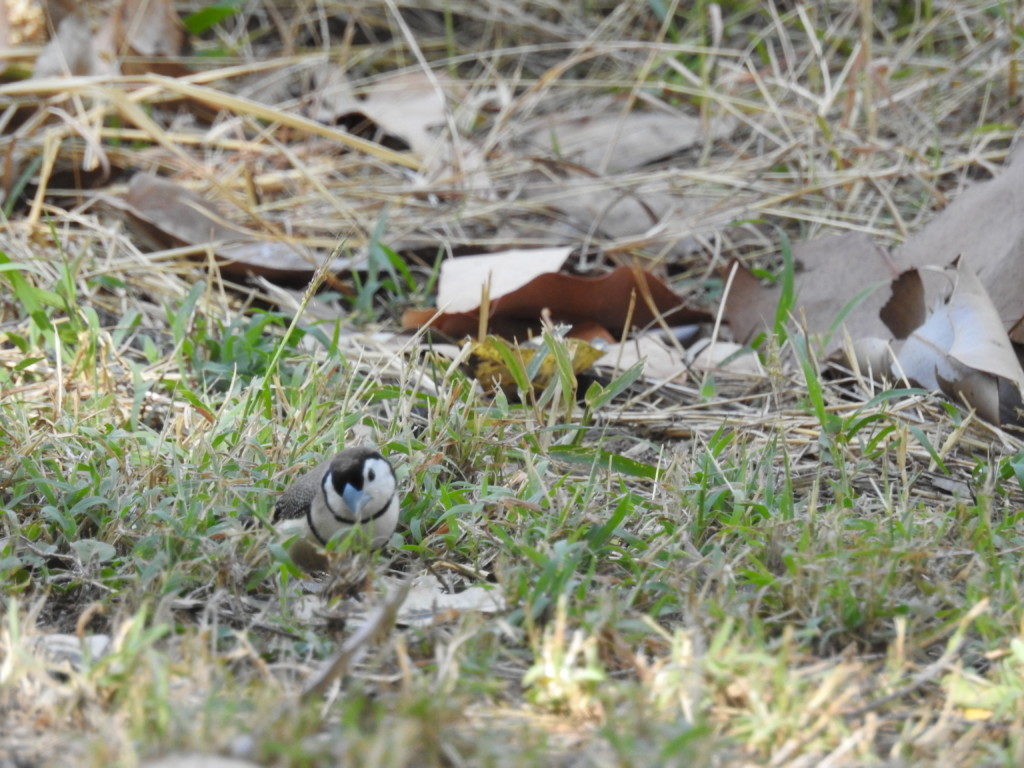
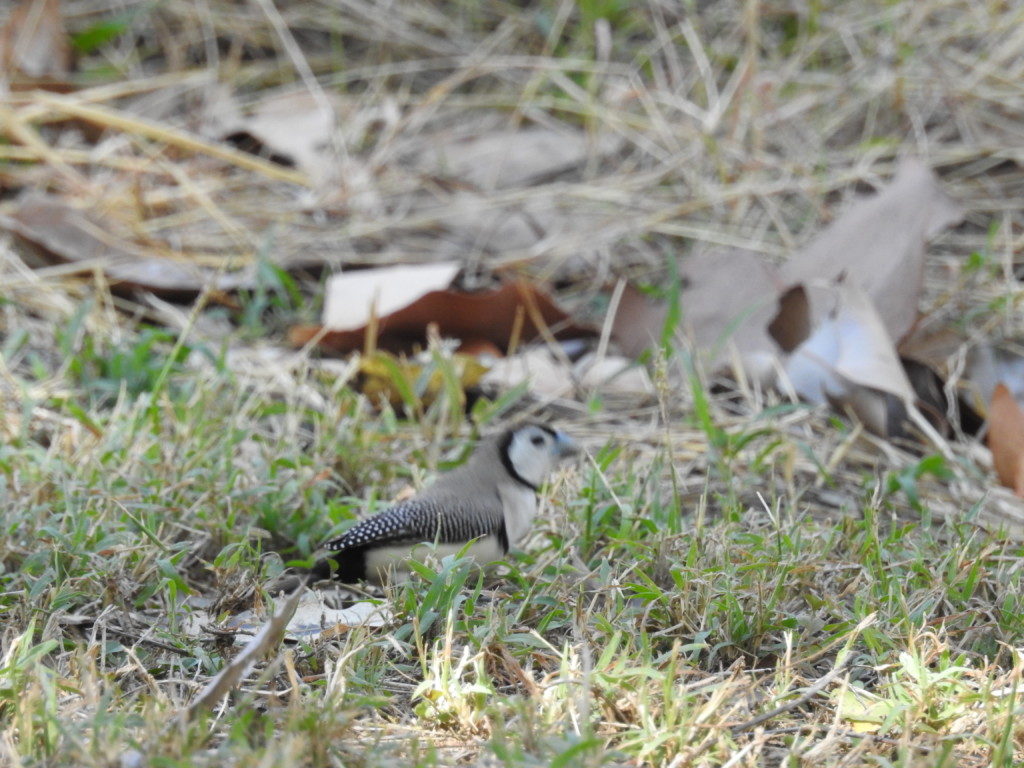
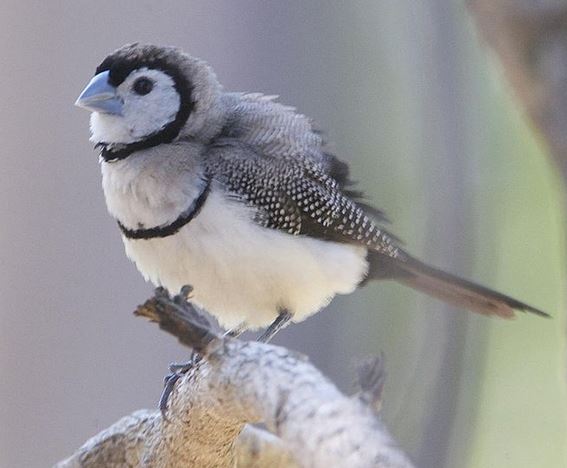
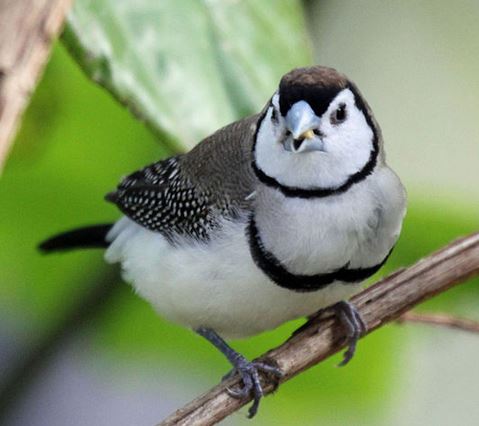
The Double-barred Finch (Taeniopygia bichenovii) is an estrildid finch found in dry savannah, tropical (lowland) dry grassland and shrubland habitats in northern and eastern Australia. They are sometimes referred to as Bicheno’s finch; and also as owl finch, owing to the dark ring of feathers around their faces.
The name of the species commemorates James Ebenezer Bicheno, a colonial secretary of Van Diemen’s Land appointed in September 1842.
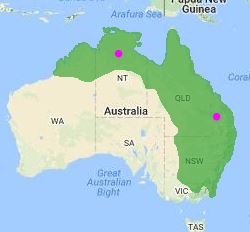
I saw these guys at the Edith Falls Campground in the Northern Territory.
And these are from Wikipedia
They have a good sized range in Australia but to date the only places I have seen them is Mosquito Creek Road near Lake Coolmunda and Edith Falls in the Northern Territory.
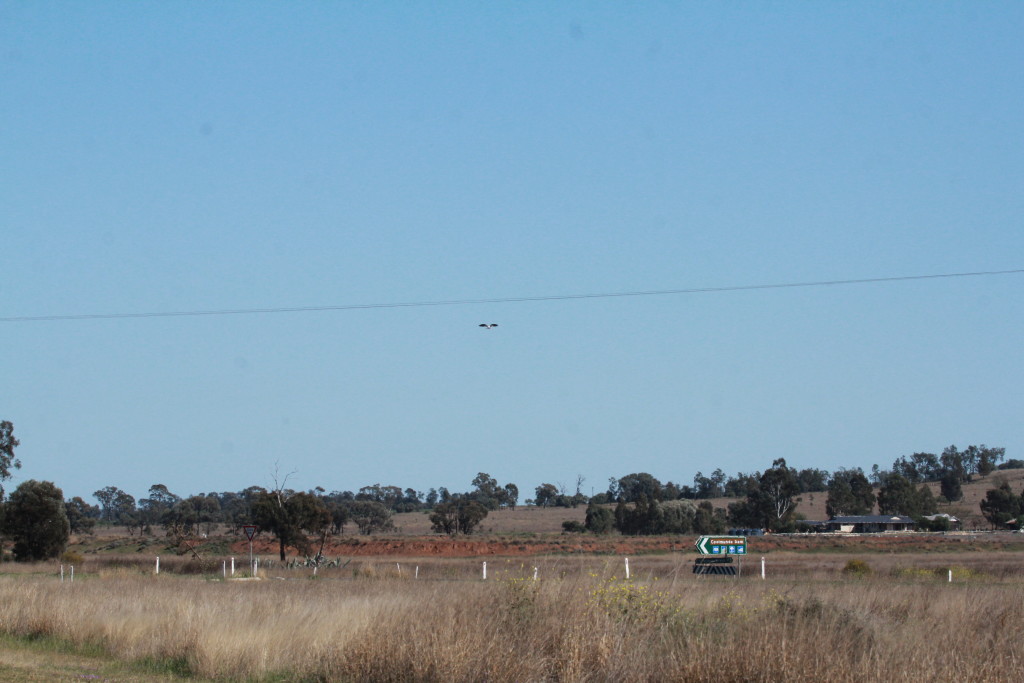
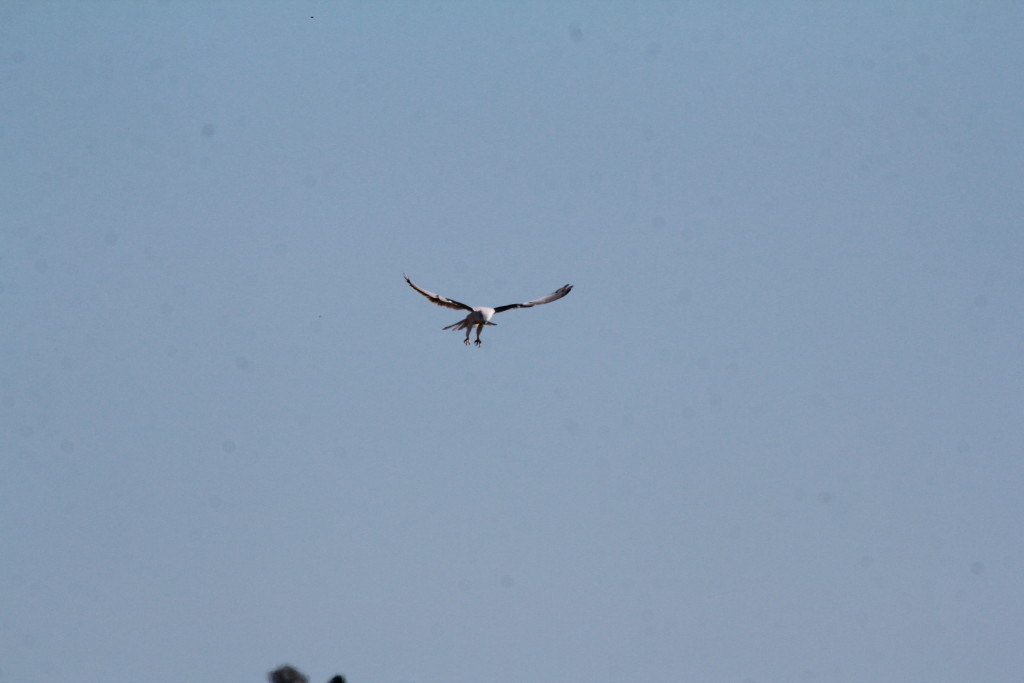
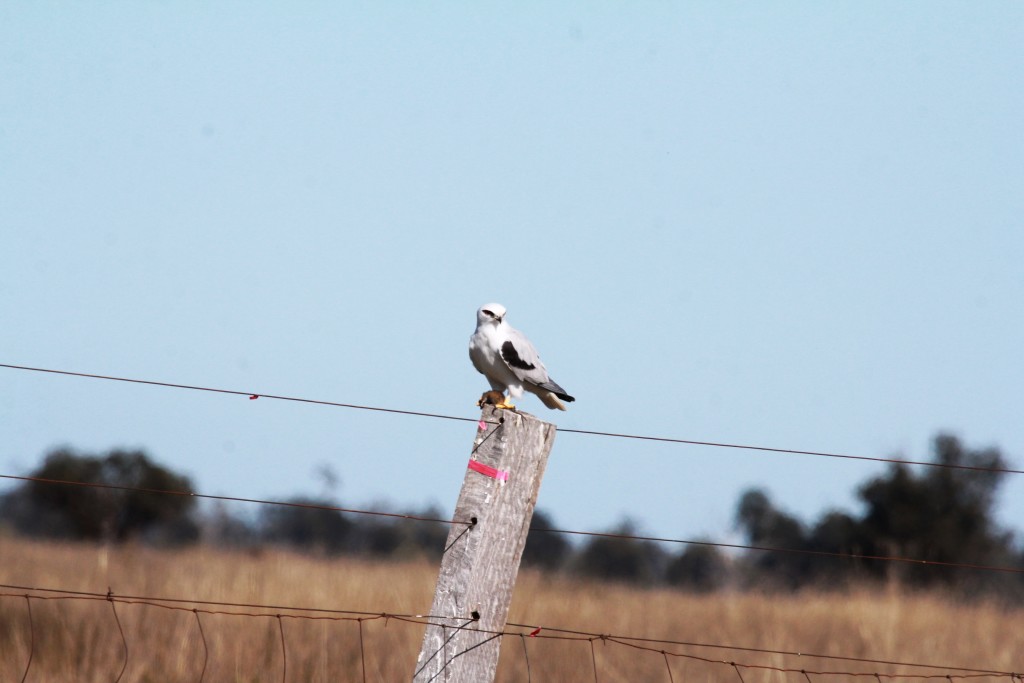
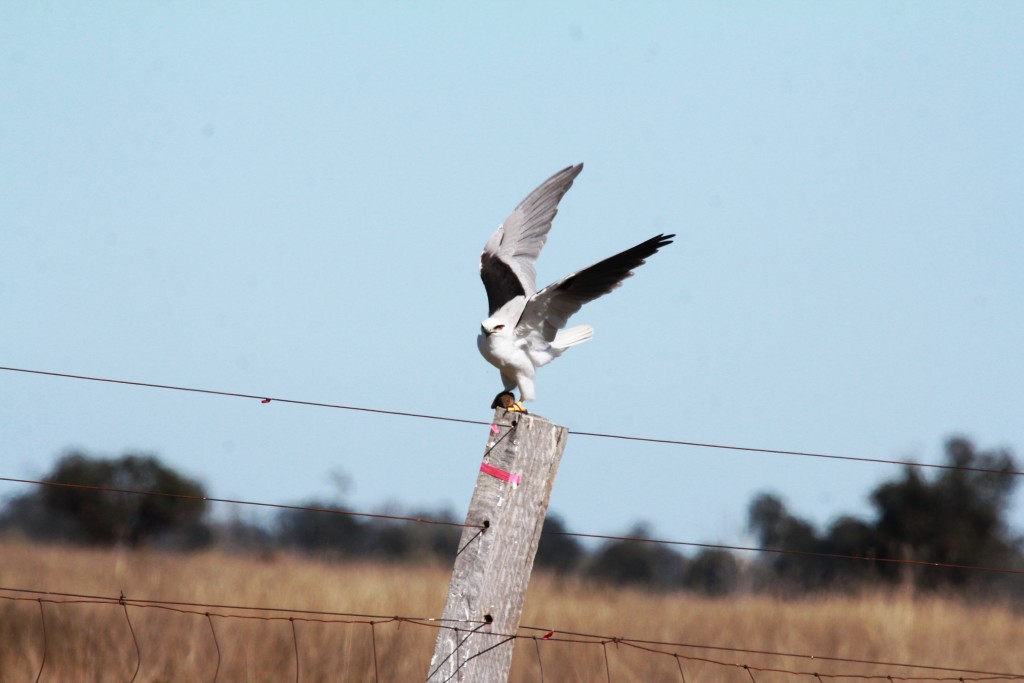
The Black-shouldered Kite (Elanus axillaris) or Australian black-shouldered kite is a small raptor found in open habitat throughout Australia. Although I am not a raptor person, this one really caught my eye at Lake Coolmunda because he really was hovering just like a kite. He then swooped down quickly and flew to a fence pole where I could see he had caught a rat. I was so impressed, I was ready to offer him a job keeping my house free from rodents!
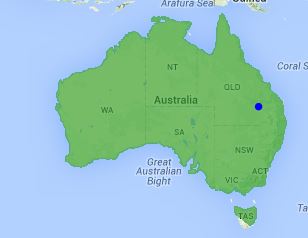
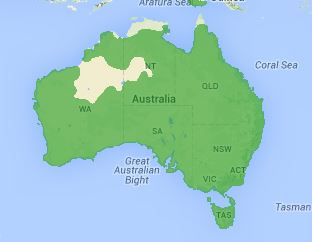
Their range is basically all of Australia. They seem to be territorial as I saw this one (at least I think it was the same one) on all 3 days we were at Lake Coolmunda in the same area.
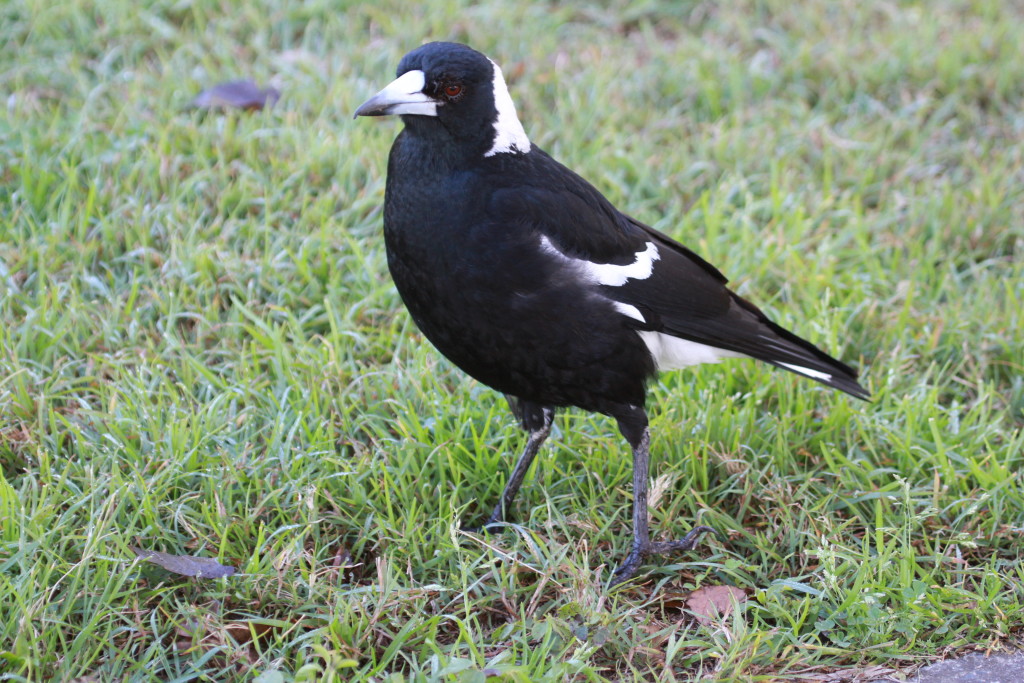
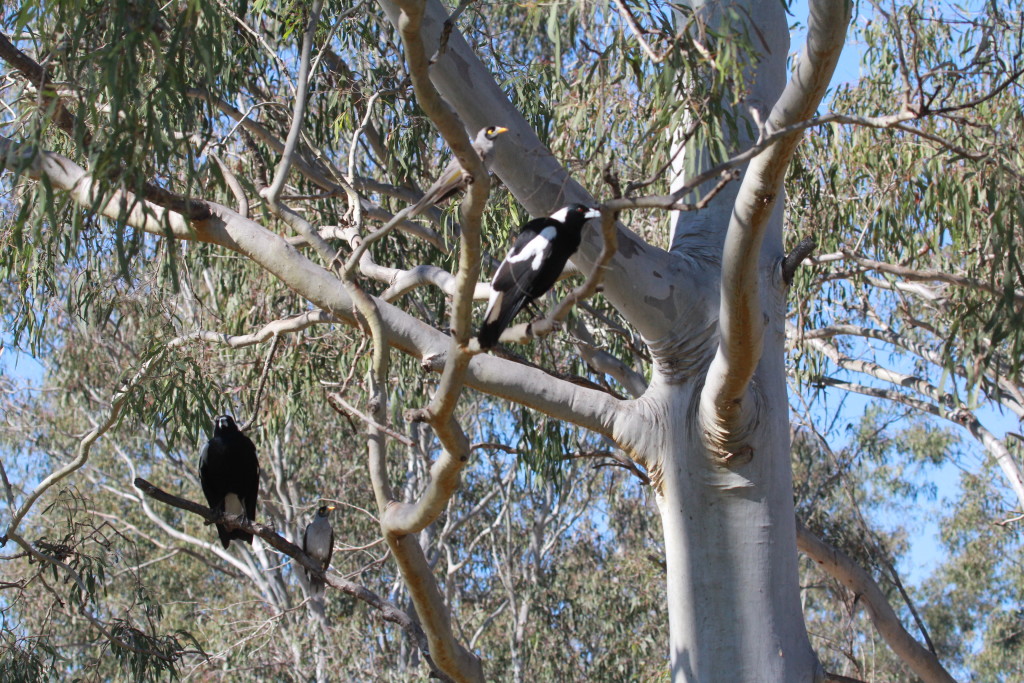
The Australian magpie (Cracticus tibicen) is a medium-sized black and white passerine bird native to Australia and southern New Guinea. It’s virtually impossible to visit Australia and NOT see a magpie or “Maggie” as we call them. They are literally everywhere, especially in the major cities. They await you at picnic sites hoping to steal your food. They will swoop on you in breeding season if they think you are a threat to their chicks. They can be annoying if you are trying to photograph other birds and the maggies are scaring them off. But they do have a beautiful melodious warbling sound, it’s one of the first sounds I hear when I wake up in the morning though it is not loud enough to actually WAKE me up!
Don’t worry about trying to find Australian Magpies. In most places in Australia, they will find you!
Magpie Alert – good map showing swooping hotspots! I can see reports in a few streets near me – mostly attacking cyclists. My husband says he was swooped once while on a walk.
Trust me, this is only a small bit of their song, it really is beautiful!
Amazing footage of a swoop on a cyclist from the cyclist himself!
He later appeared on the local news.
And here is a swoop from a spectator point of view, the guy’s Mom really freaks out!
This maggie clearly doesn’t like the postman, maybe he got too many bills that day?
Maybe it’s better to make friends with them!
I don’t approve of allowing cats outdoors where they can kill wild birds. Magpies are extremely clever and seem well in control of this situation but other small song birds wouldn’t have been so lucky.
And I’ll leave you with this adorable clip of a juvenile maggie singing to some rainbow lorikeets!
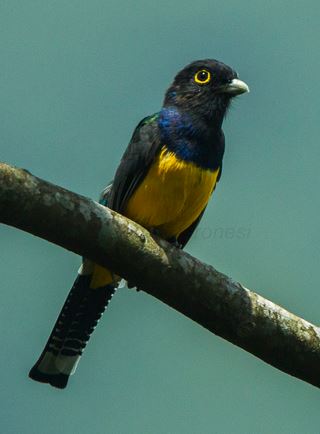
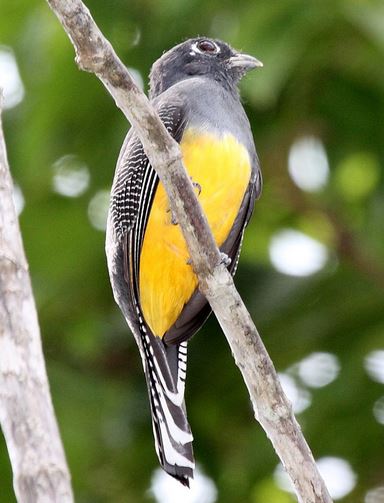
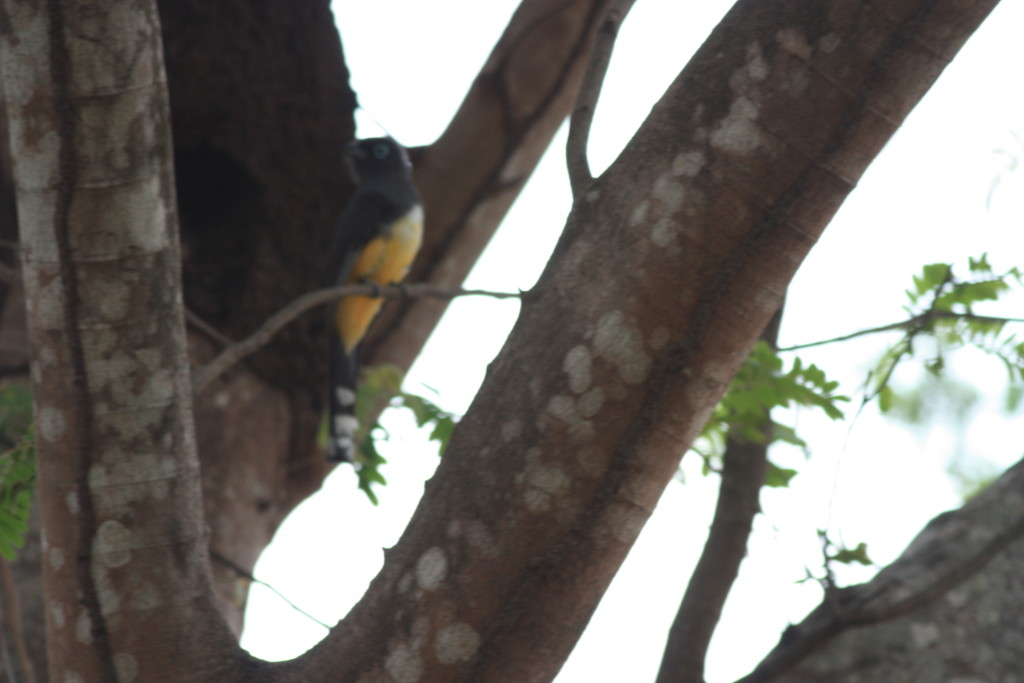
The Gartered Trogon (Trogon caligatus), also known as the northern violaceous trogon, is a near passerine bird in the trogon family, Trogonidae. It is found in forests in east-central Mexico, south through Central America, to north-western South America (west or north of the Andes in Colombia, Ecuador and Venezuela). It was formerly treated as a subspecies of the otherwise exclusively South American violaceous trogon (T. violaceus).
When I saw this bird during the shore excursion on my cruise in 2011, it was still being called a Violaceous Trogon. The split came sometime in 2012 and field guides published before then will use the old name. It gets confusing as I remember my guide calling it a Violaceous Trogon in Selva Verde in 2013!
My photo is blurry so I added shots of a male (1st pic) and female from Wikipedia to show the bird’s beautiful colours to advantage.
Just for fun, lets have a look at some YouTube videos showing just how smart and sometimes devious birds can be!
This guy really wants to scam the man, it’s hilarious! I think he earned that frying pan, not sure what he was going to do with it.
Sometimes wild birds need our help in unusual ways. Check out these thirsty birds!
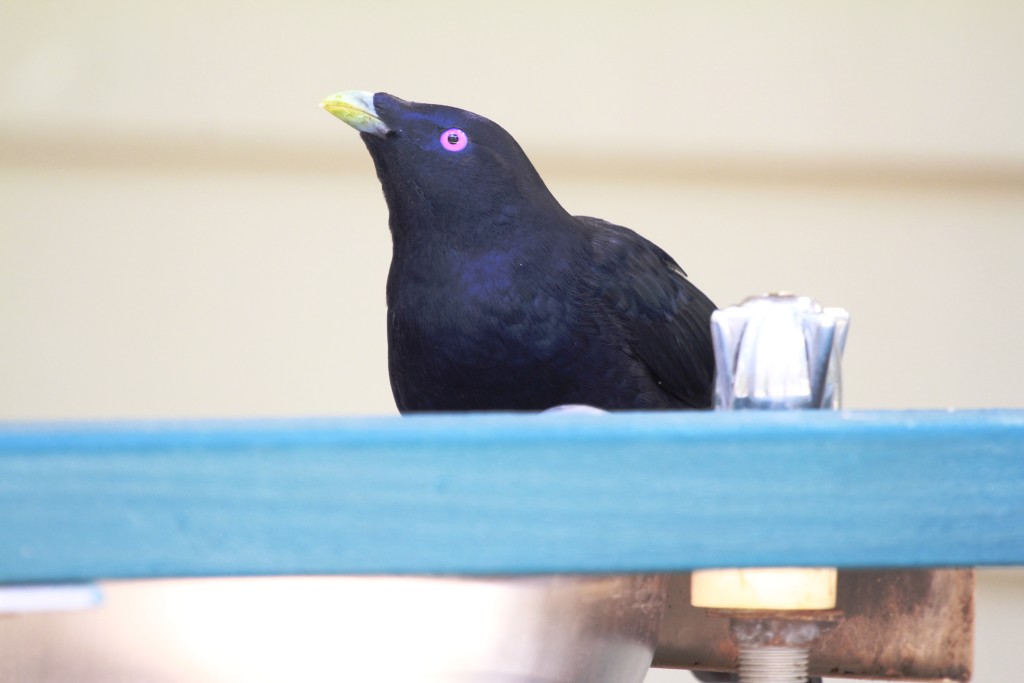
I once had a thirsty Satin Bowerbird “ask” me to turn on the water fountain at Girraween NP so he could get a drink. He didn’t want to be too close to me so I filled the bowl and went away a bit so he would feel comfortable to drink. At least he was more polite than the Kookaburra who STOLE a croissant right out of my hand!
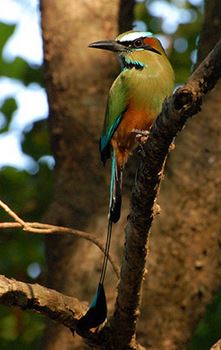
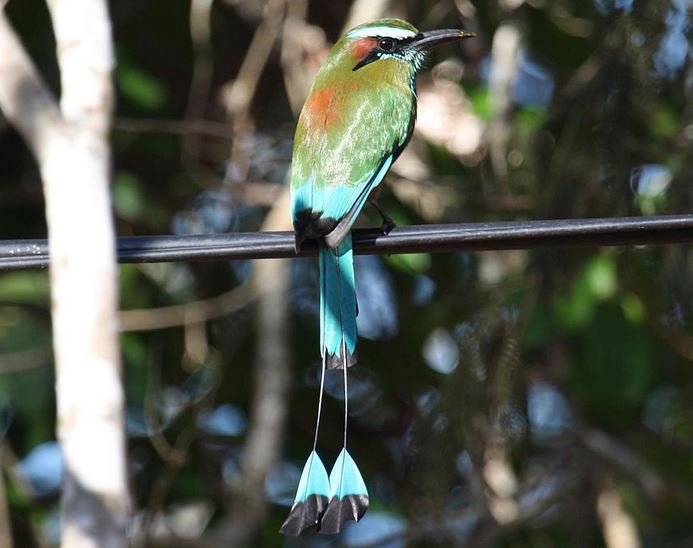
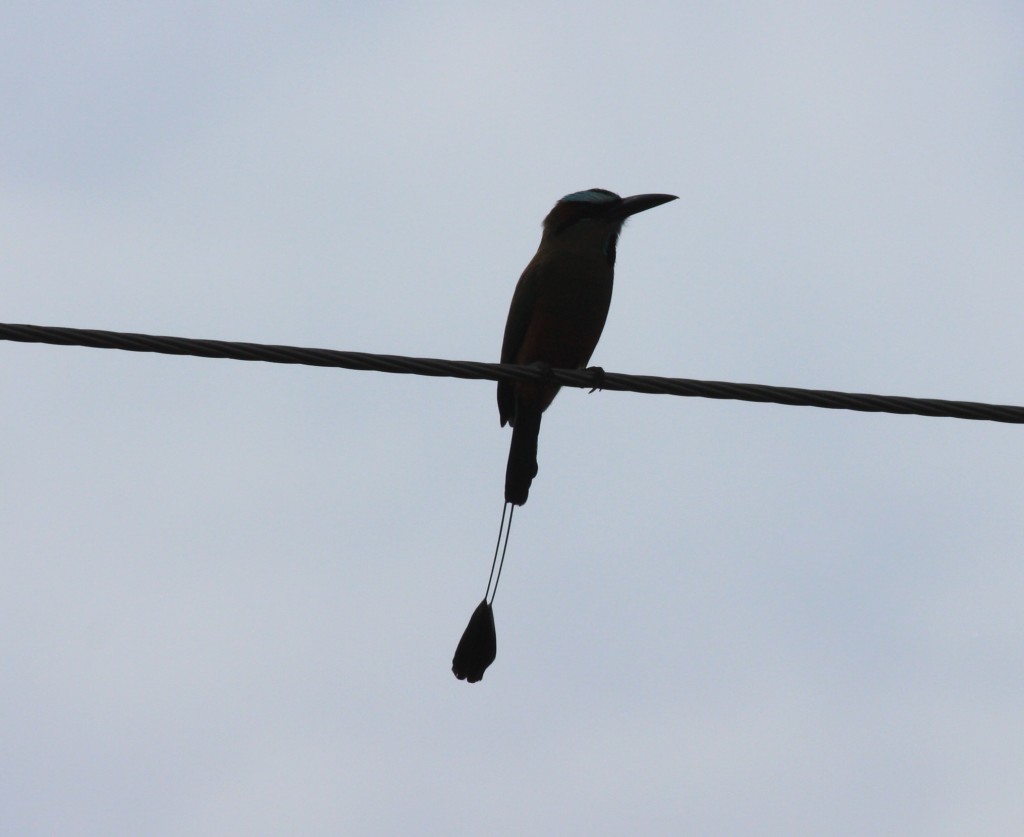
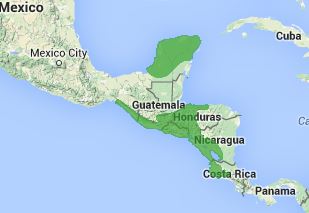
The Turquoise-browed Motmot (Eumomota superciliosa) is a colourful, medium-sized bird of the motmot family, Momotidae. It inhabits Central America from south-east Mexico (mostly the Yucatán Peninsula), to Costa Rica, where it is common and not considered threatened. It lives in fairly open habitats such as forest edge, gallery forest and scrubland. It is more conspicuous than other motmots, often perching in the open on wires and fences. From these perches it scans for prey, such as insects and small reptiles.
My photos of this stunning little bird were backlit so didn’t do justice to it’s beauty. Looks like I have to rely on Wikipedia for close-up shots.
Sometimes it just blows me away when I see how beautiful a bird really is after I saw one in bad light (usually backlit by the sun) and see photos and videos posted by others who were lucky enough to see the bird in good light. Check out these videos!
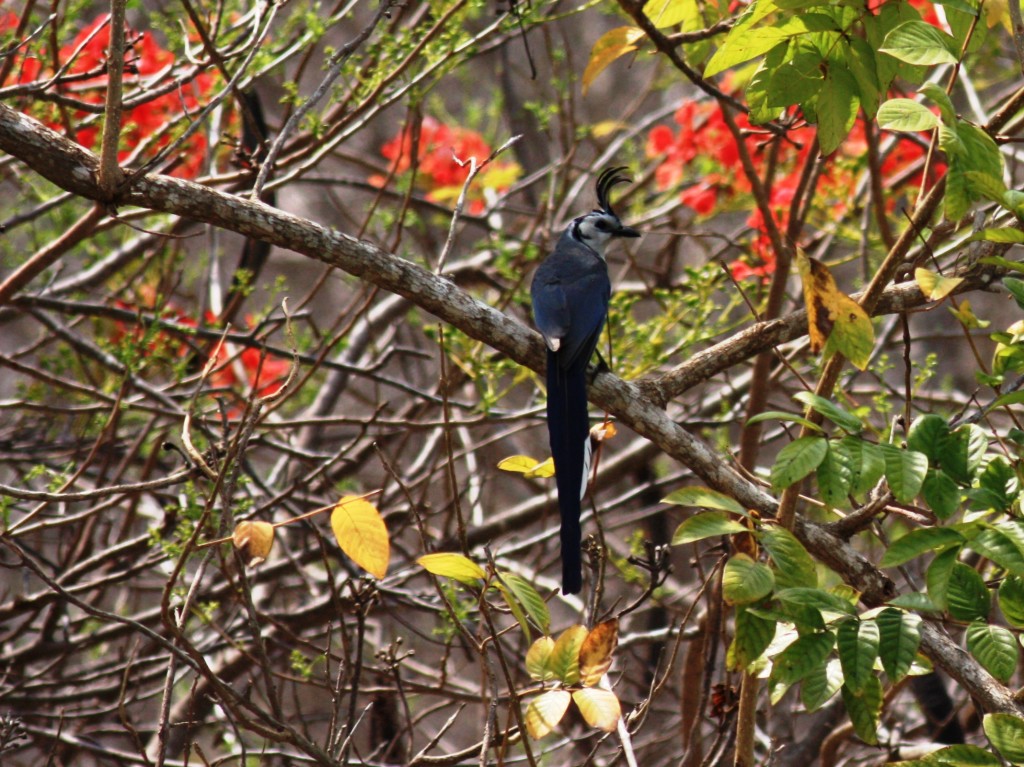
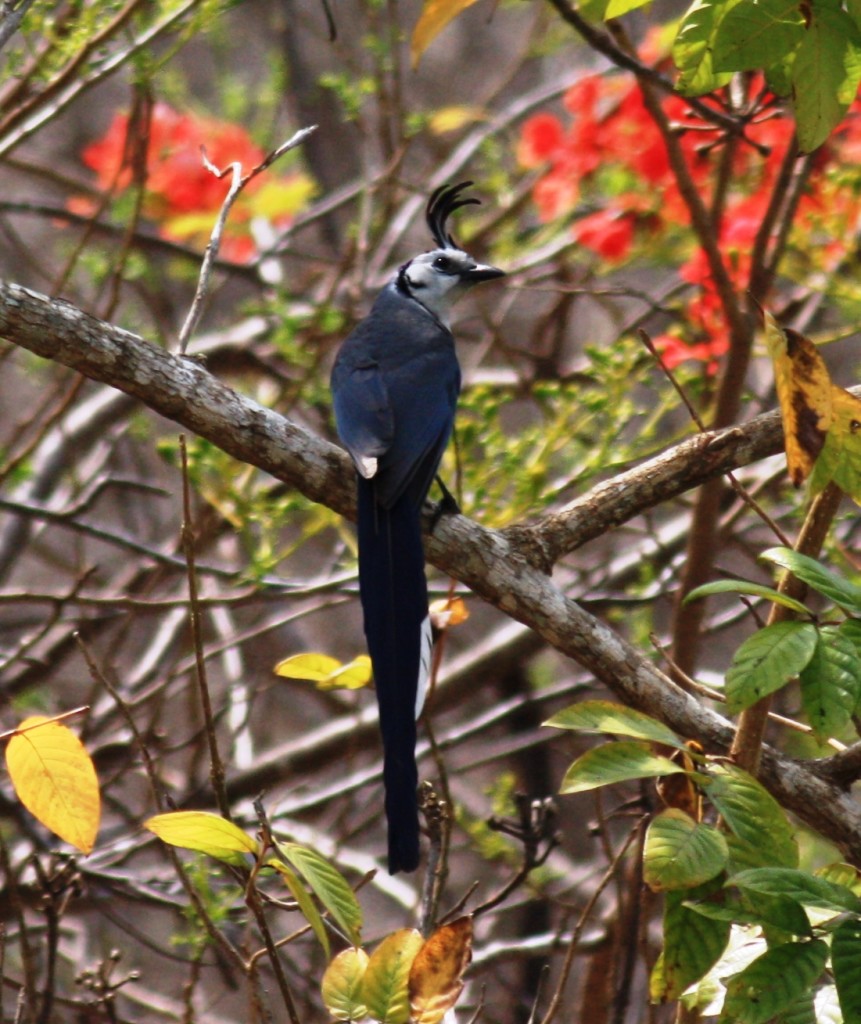
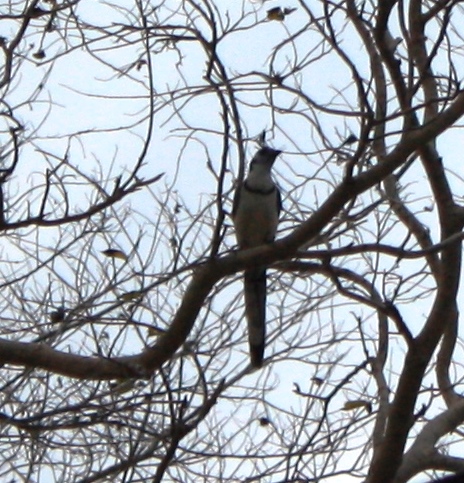
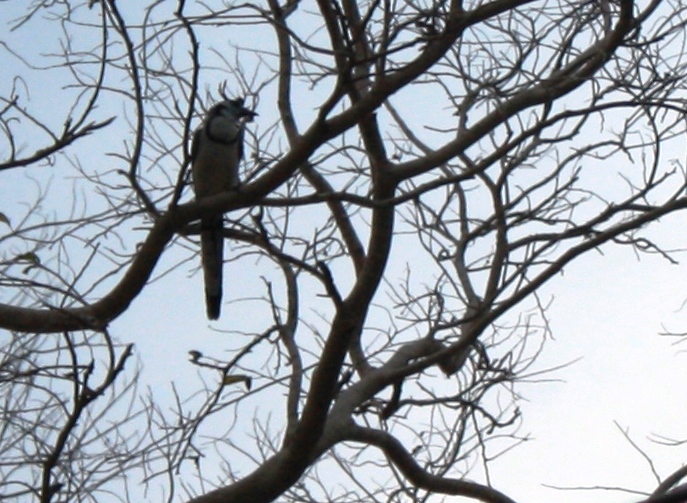
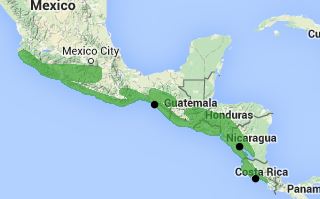
The White-throated Magpie-jay (Calocitta formosa) is a large Central American species of magpie-jay. It ranges in Pacific-slope thorn forest from Jalisco, Mexico to Guanacaste, Costa Rica. Magpie-jays are noisy, gregarious birds, often traveling in easy-to-find flocks, mobbing their observers.
Given their large range from southern Mexico to mid Costa Rica, the chances are good to see these beauties. On our cruise, we saw them in Huatulco and Granada, near San Juan del Sur. In some resorts in Costa Rica, apparently they seek out tourists for free food (see video below).
Cookies aren’t the best thing to be offering to wild birds but I was really surprised at how aggressive this guy was after seeing the shy birds in Huatulco and Nicaragua.
Nice close up of a more wild bird, you also hear the call.
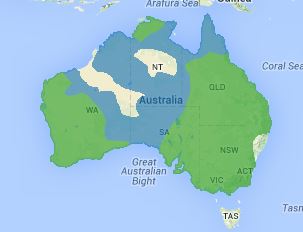
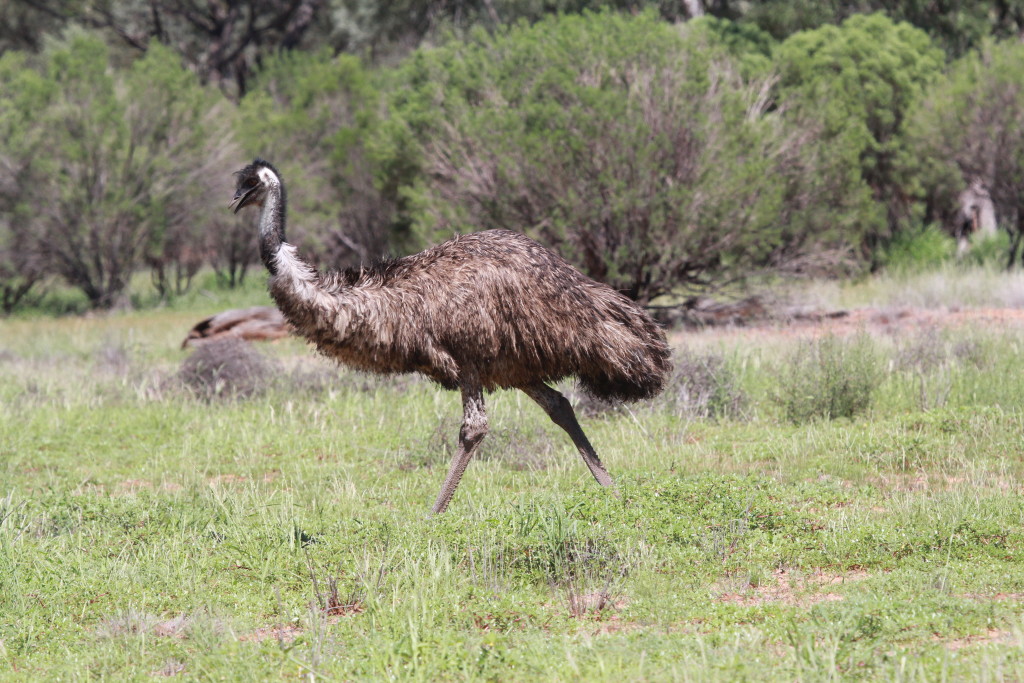 Emus are pretty easy to find whether you are driving through the Outback or visiting national reserves throughout most of Australia. I’ve seen them all over Western Australia, Queensland, down the Mosquito Creek Road and on Bowra Station to name a few.
 LEARN MORE ABOUT EMUS