Wyndham Rewards – Best Uses for Eco-Travelers

WHICH HOTELS DO THEY HAVE?

Wyndham Rewards is the frequent guest program of several different hotel chains.

Wyndham Hotels

The largest presence is in the USA with over 6500 hotels.  This can come in handy if you are connecting to an overseas flights and want a budget hotel for the night near the airport.  The odds are great that Wyndham will have several hotels near most major airports with free shuttles.

They also have a number of hotels overseas, some of which are in countries that will attract eco-travelers and birders.  I have highlighted these in yellow.

Wyndham Overseas Hotels

HOW MANY POINTS DO YOU NEED?

It varies widely depending on the chain.  Hotels overseas tend to be more expensive than those in the USA.

Wyndham Awards

For example, LAX has several hotels all ranging between 14,000 to 16,000 redemption.

Wyndham LAX Awards

Same hotels if you pay cash/credit – notice that they are not expensive!  Not a good use of points!

Wyndham LAX $$$

Now let’s look at Brazil as an example.  Most people will use Sao Paulo as an entry or exit point for Brazil and I do recommend spending your last night here to make sure you don’t miss your connection home.  Linhares is prime birding country but there are better options to stay which I will be blogging about later.  The Parana property is near Curitiba which also has good birding in the area.

Wyndham Brazil

HOW DO YOU EARN POINTS?

1.  Stay at Wyndham chain hotels.

Wyndham T&Cs

Wyndham T&Cs

2.  Get the credit card.

Wyndham Credit Cards


3.  Rent a car.

Wyndham Car Rentals

4.  Use their other partners.  Out of these 3, the rate for flowers is pretty bad compared to other programs.  The Energy one doesn’t look very good either.  The Liberty Mutual quote can get you 500 points within a month if you are trying to top up to another level.

Wyndham Other Partners

WHAT IS THE BEST USE OF WYNDHAM REWARDS POINTS?

The best use, especially for eco-travelers is transferring them to an airline.  Why?  Because in most countries, the Wyndham properties aren’t too expensive and Wyndham often has bonus promos going on.  You can acquire a lot of points very quickly.  I will blog about any promos that come up.   Here is the list of redemption to airline miles partners.  3 of our top 8 frequent flyer programs are available as transfer partners – American, United and US Airways.

Airline mileage transfer rates
8,000 Wyndham Rewards points = 3200 airline miles
17,500 Wyndham Rewards points = 7000 airline miles
30,000 Wyndham Rewards points = 12,000 airline miles

Wyndham Airline Mile Transfers

WYNDHAM’S SECRET WEAPON

This is not a hack or a trick, it is in the T&Cs of the Wyndham hotel program.  What this means, is when there is a very lucrative promo running and you don’t live near any Wyndham hotels, you can simply book ANY hotel participating in the promo, give your credit card to pay for it and then simply not show up!  I have seen some really good promos in the past such as one where you get 16,000 bonus points for staying at specified hotels that could be booked for around $60.  This gives a huge discount to buying airline miles if you maximize such a promo and transfer as I said above!  I will let you know when such promos are running.

Wyndham T&Cs

IN SUMMARY

I recommend that eco-tourists pay cash (credit card) if they are staying at a Wyndham hotel, accumulate the points and transfer to an airline.  The hotels that we would be using are generally not expensive so the airline miles are a much better value.



Guest Post: Angela’s Adventures in Seram

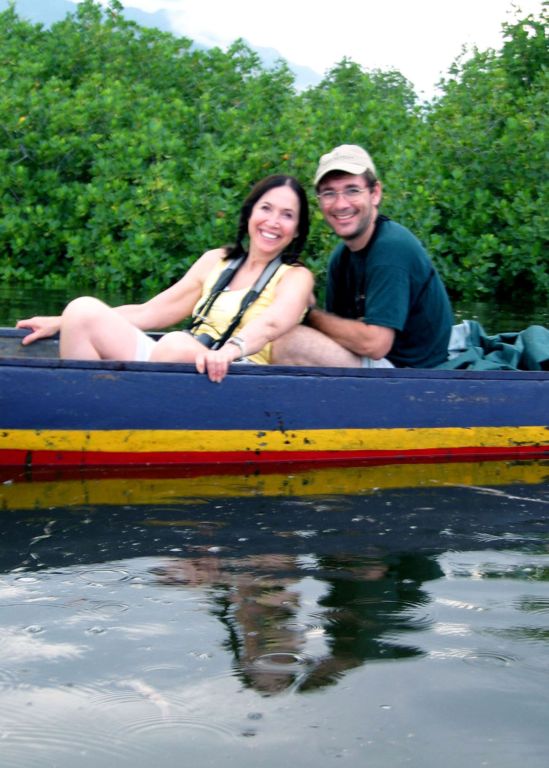
The following was written by my friend Angela Cancilla Herschel about her trip to Seram in 2005 where she volunteered with Kembali Bebas.  I’ve copied it completely as she wrote it (with her permission of course).  She was also kind enough to provide the photos.

******************************************************************************************************************
October 30th, 2005
I should sleep but I must write of this life changing experience … OK so where do I begin, and with my internal clock 16 hours ahead of Los Angeles time – some serious jet lag!

Seram island, which is also called “Nusa Ina or Mother Island”, I learned that it is the only home of the Seram ( Moluccan) cockatoo, and that no other cockatoos are on this island. The island is the ancestral homeland of the pink cockatoo and is an unbelievably gorgeous mountainous rainforest island.

Sawai Village

Sawai Village


Prior to my trip with Indonesian Parrot Project, when I had the pleasure of visiting the Tambopata Macaw Project in southeastern Peru. There with Dr. Don Brightsmith I learned that when releasing hand fed babies ( from second laid chicks who would have not survived) . The success rate was very successful when releasing them all together instead of one or a few at a time. Groups make a big difference. The chicks in Tambopata were never caged and always together and started fledging and would come back for feedings on their own while fledging. Years later all lived but one and have mates of their own and many are wild mates ..

Angela & Don Brightsmith Boat Seram Island

                                              Angela & Don Brightsmith Boat Seram Island                                         (Photo by Mandy Andrea)


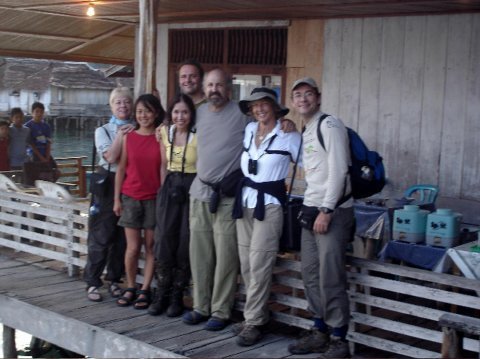
Team Bonnie Mandy Angela Andrew Stew Lorraine Don

Team Bonnie Mandy Angela Andrew Stew Lorraine Don


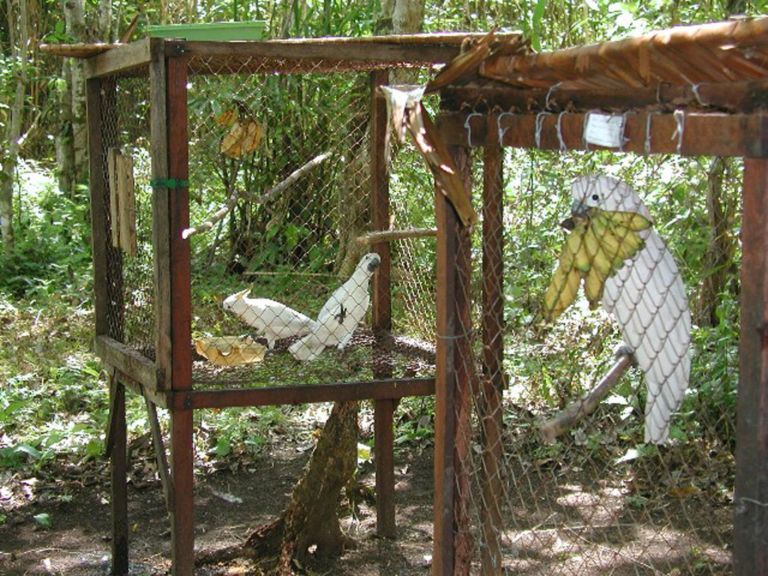
In Seram Indonesia, the birds at Kembali Bebas ( Indonesian for Return to Freedom ) Rehabilitation Center are cared for until perhaps someday a carefully selected few will meet the rigid criteria so that they can be released back into the rainforest once more. Others will be maintained in permanent Sanctuary in a natural forest setting to teach conservation to the local villagers and school children. Prior to the collaboration of Project Bird Watch, Yayasan Wallacea and the Officers of Manusela National Park on Seram, they used to confiscate poached birds and just release some of them directly, (but only birds that were not on CITES I) so it was mostly the small lorikeets which is called a “hard” release. Indonesian Parrot Project does not support or suggest that hard release is a good idea for most species.

Kambali Bebas Rehab

Kambali Bebas Rehab


According to Dr. Donald Brightsmith, a group release usually is more successful. At Kembali Bebas Rehabilitation Center all the birds are tested for occult transmissible diseases. Project Bird Watch insists that such tests results must be “clean” before any bird is released. To date no birds have been released.

Cockatoo Seram Sick Kambali Bebas

Cockatoo Seram Sick Kambali Bebas


How I can remember those birds still at Kembali Bebas… their faces and stories haunt me every day. For example, a very scared (and young) Palm cockatoo who had been trapped and then put in a small cage which was placed in a boat next to the engine. Between the horrible noise and heat he was so frightened. We placed a palm leaf blind over a side of his enclosure for so he could have his corner for privacy and peace.

And then there were the black capped lories who (when ready) might be returned to the area to which they are endemic (the West Papuan islands of Raja Ampat). …Oh what hysterical clowns they are, everyone fell in love with them …they are an absolute riot … rolling around on the floor of their enclosure with each other they are a hilarious! I also saw the most gorgeous Grand Eclectus I have ever seen endemic to Seram island at Kembali Bebas.

I learned that rainforest birds on Seram do not ever naturally go on the ground (even drinking water in trees) and the ex – trappers told me only sick ones would go on the ground. Birds that come from Aru in arid dry areas are more grain/grass seed eaters and thus do go on the ground and are an exception to this. Palm cockatoos in the Northern tip of Australia are another exception.
The birds at Pusat Penyelamatan Satwa (PPS)- Bali (the Wild Animal Rescue Center in Bali), are eventually taken to Kembali Bebas They are fed well with fresh papaya, “kenari nuts (the fruits of the Canarium indicum tree, which PBW now sells in the U.S. as ‘MoluccaNuts)’and other fruits in the AM and again in the early PM. The birds are fed a great deal of natural forest foods that are gathered every day by the staff. It was so heartwarming and fun sharing our knowledge of birds with the staff at the rehabilitation center. Once trappers themselves they understood many things about the birds, but didn’t really know that parrots needed lots of leaves from banana-, palm-, and ginger trees and safe tree branches to play and chew up to keep their intelligent minds busy.

A factor to take into consideration is that a bird once captured and confined might begin picking it’s feathers…and said this strange behavior is mystifying to the local ex-trappers. We worked directly with the staff to put lots of things in the cages for the birds to play with and to chew in the enclosures to help keep these intelligent minds busy ( especially the poor new quarantined ones). We taught them how very smart birds are and that if they themselves were locked up in a jail they might start pulling their own hair out…..LOL!

When visiting the canopy platform at Masihulan it was astounding. We were literally up in the clouds in the giant tall Masilhulan ironwood tree canopy (trees grow incredibly huge here.. !) …we saw Great bills and Grand Eclectus and lories flying by us. Such wonderful and great flyers they are.
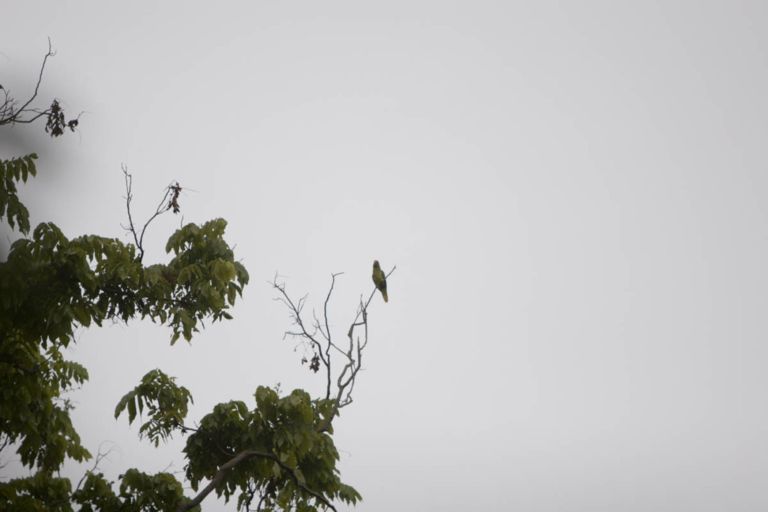
But nothing prepared me for when I finally saw my first wild Seram Cockatoo at last… is was a moment I will never forget. They have this unique flying pattern.. flap.. flap..glide,.
flap..flap…glide.

Wild Moluccan Cockatoos

Wild Moluccan Cockatoos

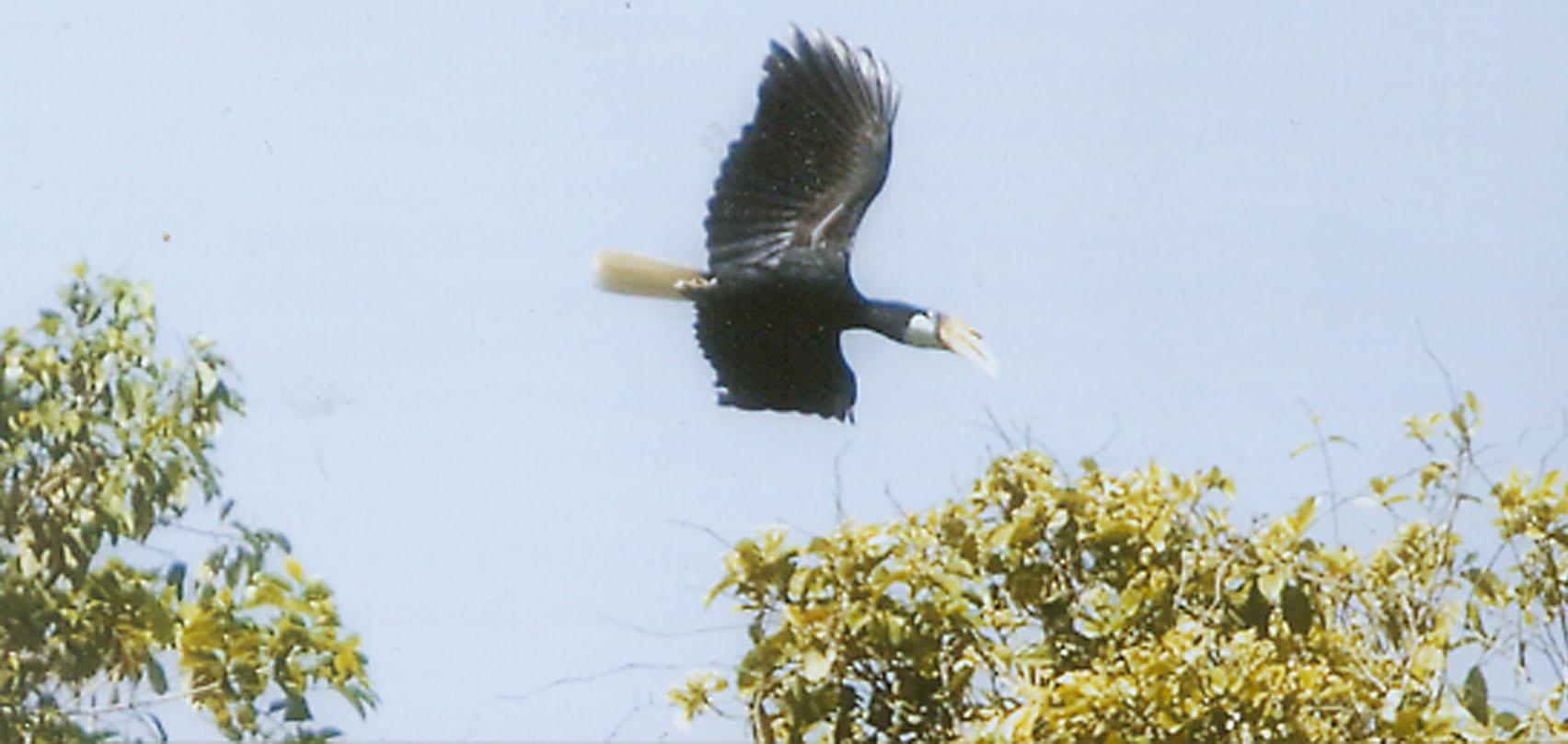
Blyths Hornbill FLying Overhead On Seram Island

Blyths Hornbill Flying Overhead On Seram Island


While I was in tears watching the Seram cockatoo …. all of a sudden a two huge Blythes hornbills flew right over my head and the drumming sound from their huge wing beats was so loud it was incredible!

Indonesian Parrot Project with partial funding from Seacology) built two medical clinics with non polluting solar powered generator systems for power and clean water, in 370 Hectare rainforest Heritage zone on Seram which will be available for future generations. And PBW soon will be distributing a coloring book with drawings of a Seram cockatoo “talking” and teaching to the children all about hygiene. Alas no one knows very much about hygiene and germs and I observed from the community spring a hanging drinking cup that everyone in the village shared.

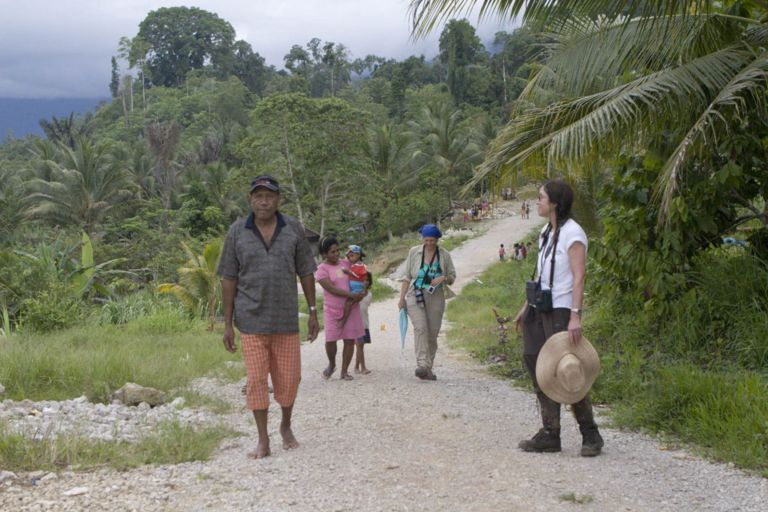
Masihulani Chief with Angela And Hat

Masihulani Chief with Angela And Hat


The people are wonderful…and the day before we were to leave the villages of Sawai, and Masihulan we gave farewell gifts for the l children. It was painfully obvious that only a few were teenagers….. so many just never make it past their very early years. Hopefully, this will change with the new clinics.

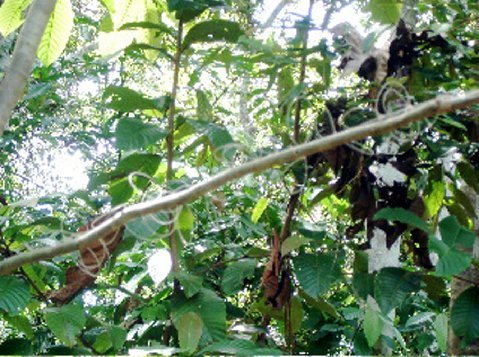
Trapping Shows Traps Of Fishing Line On Branch

Trapping Shows Traps Of Fishing Line On Branch


Helping teach the people that animals are indeed sentient and intelligent beings ( a concept new and not fully understood before) was to me my greatest joy of all …and .. to see the “light go off “ in their heads ….was magic!

Indonesian Parrot Project is everything I thought it was and much more …. giving hope to indigenous peoples and providing an income they never before had , and so much more than smuggling birds ever would give…. if there is only one organization you want to help … think Project Bird Watch….think of the dirty smuggled confiscated birds found stuck in PVC pipes , some with broken wings , saved because of IPP .. now at Kembali Bebas … waiting for some time in the future when they might be freed and returned to their rainforest homes . They are the faces who forever haunt me….and why I will always be there to help IPP in their work to save them!

IPP even has educated them so well that some of the guards at one of the Entry Gates to Manusela National Forest were wearing T-shirts they had made up all by themselves and the T-shirts had cockatoos on them that said in Indonesian ” Better in the wild”……and seeing those made our hearts sing.

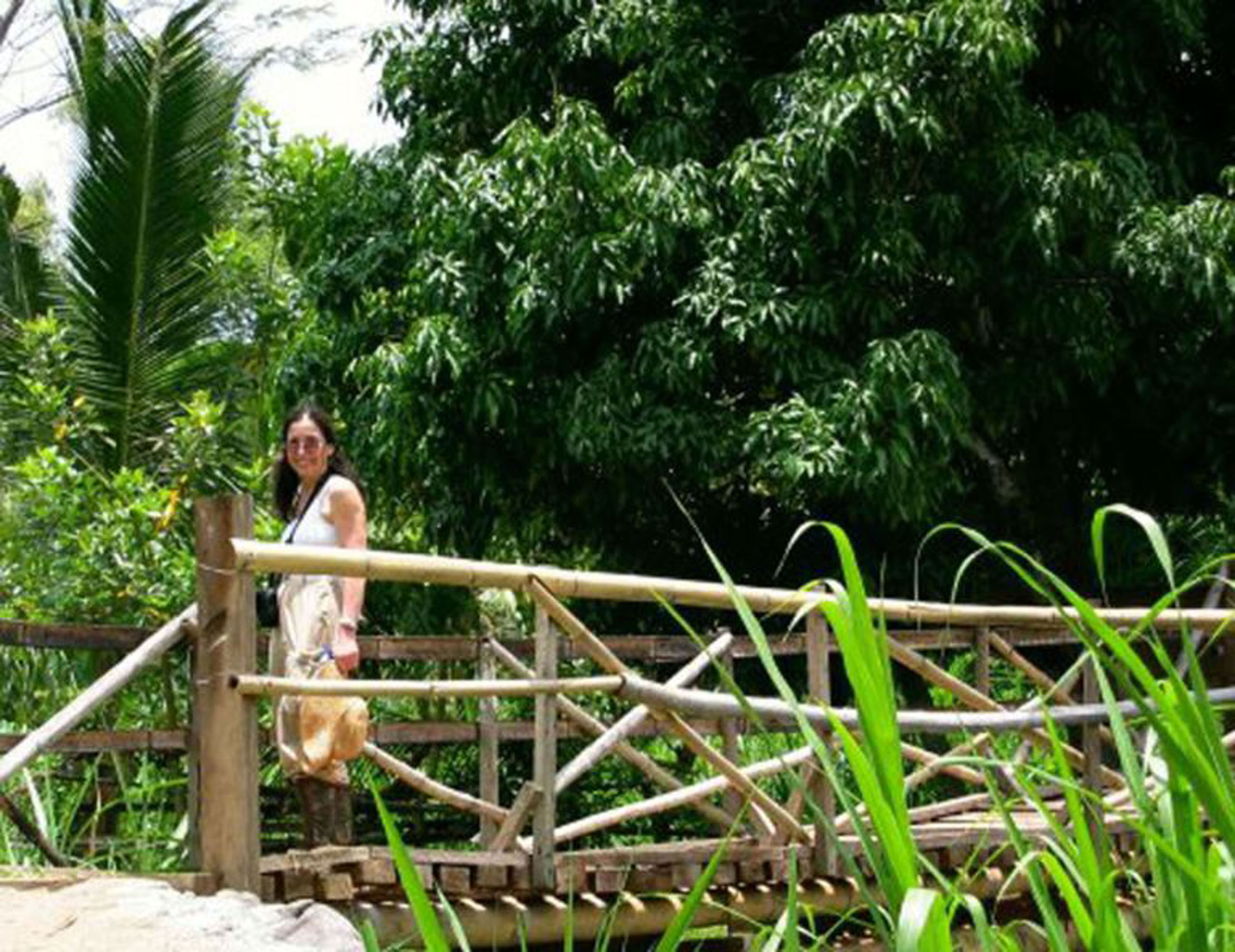
Angela Bali Bridge

Angela Bali Bridge

*******************************************************************************************************************

I hope everyone has enjoyed reading Angela’s story.  If you are inspired to visit Seram and see it for yourself, please check my destination guide.

Seram and Manusela National Park

With a dazzling list of birds, including 12 species of parrots, Seram is one of the top birding destinations in Asia.

WHERE IS IT?

Seram is in Indonesia between Sulawesi and West Papua.

Seram

HOW DO YOU GET THERE?

Seram is served by Ambon (AMQ) Pattimura Airport.  The only possibility to get there with miles is on Garuda which is due to join the SkyTeam later in 2013.  Garuda connects in Makassar (UPG) to other destinations in Indonesia or overseas.   Most other airlines also use Makassar as a staging point to get to Ambon such as Lion Air, and Sriwijaya.  Other useful flights especially to birders are Wings Abadi (Lion Air partner) to Sorong and Manokwai and the Batavia and Lion Air flights to Jakarta and Surabaya from where you can connect to Bali.

Buying tickets on Garuda and even more so the smaller airlines can be tricky as they are finicky about which credit cards from which country they accept.  Garuda usually takes Australian and some Asian countries credit cards but not USA credit cards.  Batavia takes Paypal.  Sriwijaya and Lion advertise Visa and Mastercard but not everyone will be able to buy a ticket online.  Garuda can be booked on Expedia but at a premium.  I’ve read good things about a couple of Indonesian travel agencies which can  book domestic tickets though have not used them myself.  Try Ticket Indonesia, which also has a nice booking engine or Travelindo.

Once in Ambon, you need to take a ferry across to Seram.  The cheapest and most popular option is the car-ferry from Liang on Ambon to Kairatu on Seram, which is also used by the direct buses connecting the two islands.  Those in a hurry to get to Masohi can opt for speedboats, or even a daily hydrofoil from Tulehu.

WHERE TO STAY IN SERAM

There’s a nice introduction to Seram and Manusela on this forum.  Seram has some small losmen (guesthouses) in Sawai that you don’t need to book, just show up.  I would suggest first contacting Indonesian Parrot Project and asking them to recommend a guide and place to stay.   This is a taste of what to expect.

Birdquest has organized tours to Seram if you prefer to travel with a group.  If you are more independent, this trip report gives you a good idea of what to expect even though it is a few years old.

WHAT BIRDS CAN YOU SEE?

The complete birdlist is here, but just take a look at the parrots!  Of course Moluccan Cockatoos are top of the list, but there are also beautiful non-parrots such as Lazuli Kingfishers to see as well and if you are lucky, you may see a shy Seram Bandicoot running off into the bush.

You will need a good bird guide and I recommend you read this birding page by the local group Burung Nusantara as they have several recommended guides if you can’t get one from Indonesian Parrot Project.

Heading north on the cross-island road brings you eventually to the turn-off to Sawai (2-3 hours from Masohi), or you can continue a couple of hours more to Wahai. In Sawai there is a nice guesthouse, Penginapan Lisar Bahari, owned by Pak Ali. He can also arrange a longboat to visit the offshore islands nearby. The road from the turn-off to Sawai can be a bit of a mess, so another option you could explore is to stay at the Parrot Rehabilitation Centre nearer the turn-off. Accommodation here would be very basic, and may not be possible at all depending on what is going on at the time. From Sawai you can access the forest all the way to the high pass by car or ojek (motorbike taxi), and the 5-6km from the turn off to Sawai village is easy enough on foot. Continuing along the road as far as Wahai brings you to more accommodation options, but takes you further from the montane birding action of the passes.

To help with logistic arrangements, cars, guides, finding accommodation and dealing with the national park, the best bet is hook up with one of the Ambon-based agents that know Seram very well (such as Pak Ceisar, Vino and gang, see listings below). These guys are also pretty passionate about nature conservation and have been involved with the Parrot Rehabilitation Project for many years. Alternatively you can make your way to the National Park offices in Wahai by public transport (occasional buses from Masohi), and fix things up that way, or even just make your own way to Sawai and let Pak Ali take care of arrangements. Whatever option to go for you will probably find yourself hooked up with the same local guides anyway, as there are not so many people living in this part of Seram and they all seem to know each other! At time of writing the National Park is pretty relaxed about formalities, so none of the heavy-handed pressure for useless guides or obscure payments yet!

To get to Boano there are four daily ferries from Liang (in Ambon) to Kairatu (in Seram), the latest leaving at around 18:00. From Kairatu it is easy to get an public minibus (angkot) to Piru (1½ hours, Rp. 25,000) or to charter a car/minibus (maybe Rp. 200,000). From Piru it is then best to head to the closet town to Boano; the village of Masika (a further 45 minutes by motorbike taxi/ojek; Rp. 50,000). Masika does not have any accommodation though it is possible to stay with the boatman, Hamza (+6281945089177). Hamza is easy to contact him beforehand (though he only speaks Indonesian) and can arrange a charter to Pulau Boano (45 minutes, Rp. 400,000). He can also pick you up from Boano easily for the same cost and knows exactly where to take birders now.

You should ideally head to the main village on Boano first, to report your presence. Head for the village head’s house at the top of the village (the one with the bright yellow steps!). An option for a local guide is a guy named Pak Ade (+6287847079134). He speaks some English and can be contacted in advance to meet you in Boano Town (‘Boano Utara’). In this way he could help with the required formalities. Expect to pay Pak Ade around Rp 2-300,000 per day. Having reported to the village head, and equipped yourself with a guide, your next move is to get across the island to the village of Huhua. Options are to walk or get a boat (as mentioned above). In Huhua you can arrange accommodation at the house of Pak Ibrahim (one of the few locals in Huhua that speaks Indonesian – yes, we mean Indonesia – not English!!). Sleeping here will be pretty basic, so bring a sleeping bag liner or even a hammock.

Seram is not the easiest place to get to for birding but it’s well worth the effort!

Moluccan Cockatoo (Cacatua Moluccensis)

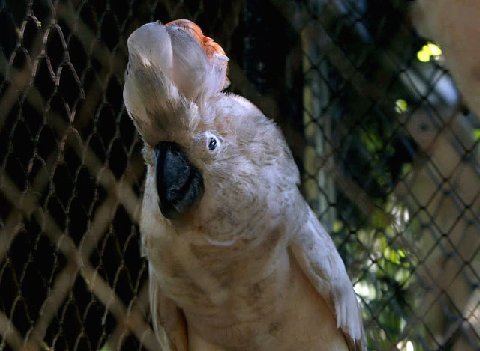
The Salmon-crested Cockatoo, Cacatua moluccensis also known as Moluccan Cockatoo is a cockatoo endemic to south Moluccas in eastern Indonesia. At 46–52 cm and 850 g, it is among the largest of the white cockatoos.

The best place to see them in the wild is Manusela National Park on the island of Seram, Indonesia.

One of the biggest problems facing this beautiful cockatoo is trapping.  It is not only cruel to the bird, it is causing the rapid decline of the species in the wild.

Lazuli Kingfisher (Todiramphus Lazuli)

Todiramphus lazuli occurs in Indonesia, where it is restricted to the island of Seram, as well as small adjacent islands of Ambon and Haruku (BirdLife International 2001). Although it is common in some areas, it is sparsely distributed and absent from many sites with apparently suitable habitat (Poulsen 2004). It occurs largely on the coast, and is apparently absent from much of the interior of Seram.

This species is recorded from forest edges, secondary growth and cleared areas with scattered trees (habitat that is gradually increasing in extent). Many recent records also come from open farmland, and there are apparently no records from the interior of primary forest (Poulsen 2004). It nests in arboreal termite nests, many of which are now found in coconut plantations (Poulsen 2004).

You can hear some sound recordings of this beautiful bird here.

Animal Of The Week – Seram Bandicoot

The Seram Bandicoot (Rhynchomeles prattorum), also known as the Seram Island long-nosed bandicoot, is a member of the order Peramelemorphia. It is the only species in the genus Rhynchomeles The species was described from a collection of seven specimens, made in 1920 at the Indonesian island of Seram, the only record of its existence. It is classified as an endangered species on the Red List of the IUCN, due to its narrow distribution range and noted as data deficient. Conservation of the species, if extant, is threatened by clearing of lower altitude forests near its type locality. The introduction of pigs, dogs, and other feral animals could cause a decline in population.

You are most likely to encounter this animal if you visit Seram in search of Moluccan Cockatoos and other endemic birds.  Not a very dramatic or exciting animal but one of the few endemic species to be found on Seram.  This species was recorded from upper montane tropical forest. Little more is known about the species natural history.

Do You Need A Visa?

I don’t mean the kind you carry in your wallet, I mean the kind that some countries stamp on your passport.  Birders travel to very exotic destinations and visa requirements vary widely from one country to another depending on your nationality.  Here’s a tool you can use to check if you need a visa.

Let’s check some random destinations for birders and eco-tourists.

1.  American traveling to Brazil

You can see the complete result of the query here, but this is it in a nutshell – yes Americans need a visa to travel to Brazil.

2.  Australian traveling to Indonesia

Yes, Australians DO need a visa but check this out – they can get it on arrival at most major airports.  The Brazlian query above didn’t have that so that means they need to get the visa at a consulate.

3.  British traveling to Costa Rica

This is where it really gets interesting!  UK citizens do not require a visa to enter Costa Rica for 9o days but they DO need a visa to transit the USA even if they are only making a flight connection without leaving the airport.  Fortunately, this is very easy to get online and it’s called an ESTA, but it does cost around $15.


If the British traveler finds a direct flight to Costa Rica without transiting the USA, they won’t need the ESTA, nor do they need a visa for Costa Rica in any case as long as the trip is less than 30 days.  Note that they also require you have sufficient funds to support yourself while in Costa Rica but they will accept credit cards as proof.  In real life, you are unlikely to be questioned unless you look really down and out, pretty hard for a birder to do with all the camera gear we carry!


OK, I need a visa, so where do I get one?

Best place to start is by Googling “Country name visa” in either the capital city of your country or the largest city near you.

Avianca-Taca LifeMiles & Best Uses For Eco-Travelers

Avianca-Taca’s frequent flyer program is one of the newest to the Star Alliance but given that it’s hubs are in countries rich with birdlife, it’s a program that all eco-travelers should get to know.

BASICS OF AVIANCA-TACA LIFEMILES

1.  First thing to do is join the program if you haven’t already.  LifeMiles has frequent buy/share bonus miles promos and they always restrict them to people who are already members as of the day the promo begins.  It’s free to join so no reason not to!

2.  You only need to have 40% of the miles required to redeem an award.  Then you can buy the remaining miles at $15 per 1000 miles.  For example in this flight from LAX to San Jose, Costa Rica; the normal price is 12,000 miles but if you are willing to pay $90, you can get away with only using 5000 miles.  You have effectively bought 7000 miles for $90 at a cost of $15.00 per 1000 miles.  (The price has increased to $15.00 per 1000 miles since July 2013.)  The technique remains the same is pictured.

3.  The normal price to buy miles is $30 per block of 1000 miles.  If LifeMiles is running a 100% bonus, this becomes $15 per block of 1000 miles.  You will only need to buy enough to get you to the 40% redemption level, then use the “More money” button to buy the miles even cheaper.

4.  The normal price to share miles is $15 per block of 1000 miles.  If LifeMiles is running a 100% bonus, this becoomes $7.50 per block of 1000 miles.  Bear in mind that the miles come out of your account and go into your friend’s account.  There is a maximum of 50,000 miles transferred per calendar year.

So let’s say you have 20,000 miles because you got the LifeMiles Visa card.  You transfer these miles during a 100% share miles promo to your spouse.  You pay $300 for the transfer of 20,000 miles and your spouse gets 40,000 miles in his/her account.  You have basically paid $300 to create 20,000 new miles (since you already had 20,000) so you bought those miles at $15 per block of 1000 miles.  Now your spouse transfers the whole lot of 40,000 miles back to you.  He/she pays $600 for the transfer.  Now he/she has 0 miles and you have 80,000 miles, so again you bought the miles at a cost of $15 per block of 1000 miles.

4.  You can kickstart your LifeMiles by getting the LifeMiles Visa (US Bank) with a bonus of up to 20,000 miles with first purchase.


SAMPLE BARGAIN ROUTES WITH LIFEMILES

For eco-tourists, the best uses of LifeMiles are to get you between airports in the birding hotspots of Central America and South America, or from the USA to Central/South America preferably on an Avianca or Taca flight.  Here are some examples, please note the difference in base price and the price when you spend 40% of required miles and add cash.

SAN JOSE, COSTA RICA TO PANAMA CITY

There is a special on business class which makes this the cheapest way from A to B if you are paying cash.

Now if you don’t really care which class you are in, let’s compare with the price of the flight in miles and cash.

Depending on how many miles you have in your account, you can spend as little as 3000 miles plus $62 cash.  If you used the bonus promo above, these 3000 miles would have cost $45, so your total out-of-pocket is $107, rather than $307.

LIMA TO SANTA CRUZ, BOLIVIA

If you are enchanted by the blue-throated macaws at Barba Azul, here’s how you can get there.  First, the cash price-economy.

Now let’s see what it costs in miles.  The normal price is 9000 miles which during the promo would be $135 to buy the miles.   Or you can buy 4000 miles during the promo for $60 and another $66 for the remaining 5000 miles you need for a total of $126.  Nice savings over the cash price of $435!

PANAMA CITY TO LAS VEGAS (STAR ALLIANCE AWARD ON COPA

$510 for the one way ticket using cash.

Now let’s see how much it costs with miles!  Normal price is 15,000 miles.  Using the 40% minimum to pay with 6000 miles plus $114 cash and $25 redemption fee we have paid (using a 100% buy/share bonus) $90 for the minimum miles plus $114 plus $25 plus $28 tax for a total of $257, about half the cash price!

GETTING LIFEMILES IN EVERYDAY LIFE

It’s a fairly new program so there aren’t too many opportunities yet, though this may grow.

1.  Get the credit card and use it for purchases, get 1 mile per $.

2.  LifeMiles shopping portal.  They are having some problems with this and miles haven’t been posting while they work out the bugs.  Hopefully they will and this will become a nice source of LifeMiles.  Don’t buy things you don’t need just to get miles, but if you do need something, start at the portal and get free miles!

3.  Buy flowers or a gift at FTD.com.

4.  Transfer hotel points.  These are not the best use of hotel points but if you have some orphaned points you need to get rid of, it’s one option.

  • HiltonHonors: 10,000 HHonor Points for 1000 LifeMiles.
  • Best Western:  5000 Best Western points for 1000 LifeMiles.
  • Marriott:  10,000 Marriott Rewards points for 1500 LifeMiles.


IN SUMMARY

1.  Best uses of LifeMiles for eco-tourists are on Avianca or Taca flights, or some partner flights like Copa.

2.  Credit card can kickstart your miles account.

3.  Wait for Buy/Share bonuses to buy miles at a discount.

4.  Only buy enough to get you to 40% of your desired award, then use the miles plus cash tool to buy the remainder at $12-13 per block of 1000 miles.

Anymore questions, please ask in the comments?  Does anyone have plans to travel to Central or South America and planning to use LifeMiles for a cheap ticket?

Why You Shouldn’t Go Birding In The Amazon Without A Guide

The Amazon jungle is a dream destination for most birders, full of stunning exotic birds and animals!  Nowhere else on earth can you have such amazing adventures, even on a low budget.  Just don’t practice the false economy of going there without a guide.  It may be tempting to take a bus to a village on the Amazon, think you can hire a boat and go off in search of that one endemic on your “Lifer List” but don’t do it without a LOCAL guide, even if you are strong, fit and think you know what you are doing like Kevin Gale!  Their biggest mistake was ignoring the advice of the locals and heading off anyway and trusting Karl to know what he was doing when he was basically full of hot air.  Who survives?  Who doesn’t?  Here’s what happened to these young adventurers in Bolivia!

Don’t Fall Prey To A Pickpocket On Your Big Adventure!

No matter how humble your income and lifestyle may be considered back home;  in many countries we travel to as eco-tourists we look like rich people.  You may be safe from worry about thieves (other than parrots and monkeys) once you reach your lodge, but you still have to get from the airport to the train/bus station and maybe visit a market before heading out.  This is where you need to be on your guard against pickpockets.  Watch this video to see just how easy it is for pickpockets to get your wallet without you even realizing!


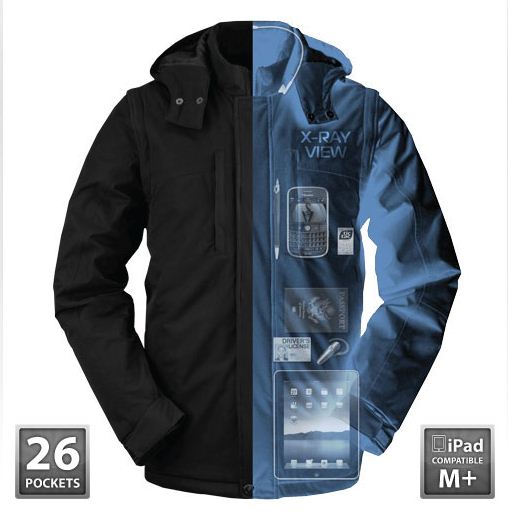
The obvious solution is don’t put your wallet in your back pocket!  So where do you put it?  We use Scottevests and carry our money and valuable in one of the inside pockets.  Of course that wouldn’t help if you are attacked with a knife or gun but the majority of thieves in cities will be sneaky pickpockets and bag snatchers.  If you keep the Scottevest zipped up until you need your wallet, it is practically impossible for anyone to reach your wallet.  It’s always best to leave your valuables in a hotel safe bust sometimes you can’t if you are enroute from your gateway city to the nature reserve.  Since we usually travel to warm climates, I like to bring the lightweight jacket with zip-off sleeves for added comfort.

Scottevest


Disclosure:  These are affiliate links and I get a small commission if you use my link to buy something.  If you do, thank you so much for supporting this blog!