Cargo Pants From Scottevest

Check out the Fiesta Waistband feature on the Scottevest cargo pants!  What a clever idea!


If you like this product, you can buy them direct from Scottevest.   Please click on the graphic below, you will find the cargo pants under the men’s section.

Scottevest Cargo Pants


Disclosure: These are affiliate links and I get a small commission if you use my link to buy something. If you do, thank you so much for supporting this blog!

Cape Parrots (Poicephalus robustus) Of South Africa

The Cape Parrot (Poicephalus robustus) or Levaillant’s Parrot is a large, temperate forest dwelling Poicephalus parrot endemic to South Africa. It has 2 subspecies which may be considered distinct species, the savanna dwelling Brown-necked Parrot (ssp. fuscicollis) and Grey-headed Parrot (ssp. suahelicus).One of the most endangered parrots species in the world, the Cape Parrot can be seen in a few places with the help of local guides.

Cape Parrot

You will have to look closely to find the green shading that represents their natural habitat.

Cape Parrot Range

I was lucky enough to see them in 2009.  I wrote an article for my main website, Feathered and Free.  The Magoebaskloof region in the Limpopo region which is an easy half day’s drive from Johannesburg.  I will be going into greater detail on this area later.

Let’s learn more about them with this video.  I found it originally on this article about Cape Parrots which has lots of information and more videos.

Southern Double-Collared Sunbird (Cinnyris chalbeus)

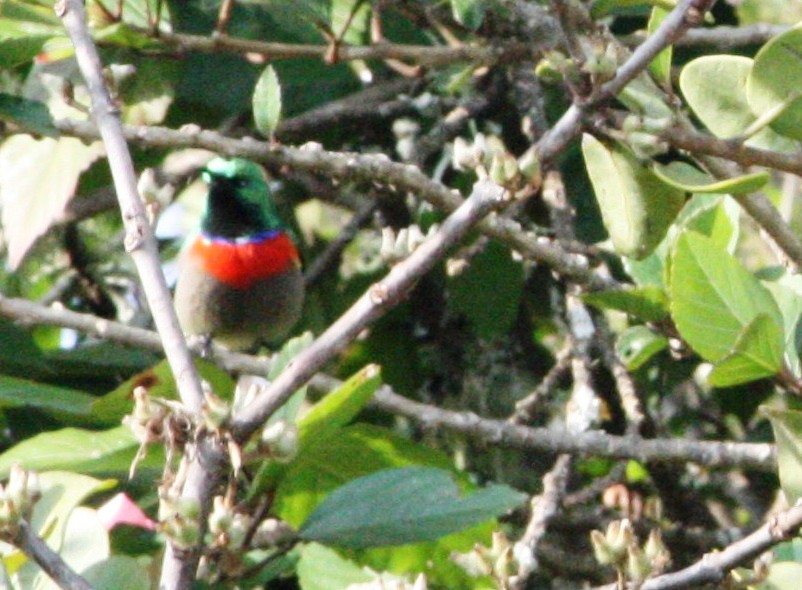
Not my greatest shot but this pic of a Southern Double-collared Sunbird Cinnyris chalbeus was taken on the grounds of Kurisa Moya during our expedition to see the Cape Parrots in Magoebaskloof.  It was back in 2009, before I got my Canon 60D.

Southern Double-collared Sunbird Cinnyris chalbeus

Southern Double-collared Sunbird Cinnyris chalbeus

This is what they are supposed to look like!

Southern Double-collared Sunbird

The Southern Double-collared Sunbird is usually seen singly or in small groups. Its flight is fast and direct on short wings. It lives mainly on nectar from flowers, but takes some fruit, and, especially when feeding young, insects and spiders. It can take nectar by hovering like a hummingbird, but usually perches to feed most of the time.

They are widespread over South Africa and thankfully not endangered.

Southern Double-collared Sunbird

They do enjoy the birdbaths that many people put out in their backyards!


Yellow-Chevroned Parakeet (Brotogeris chiriri)

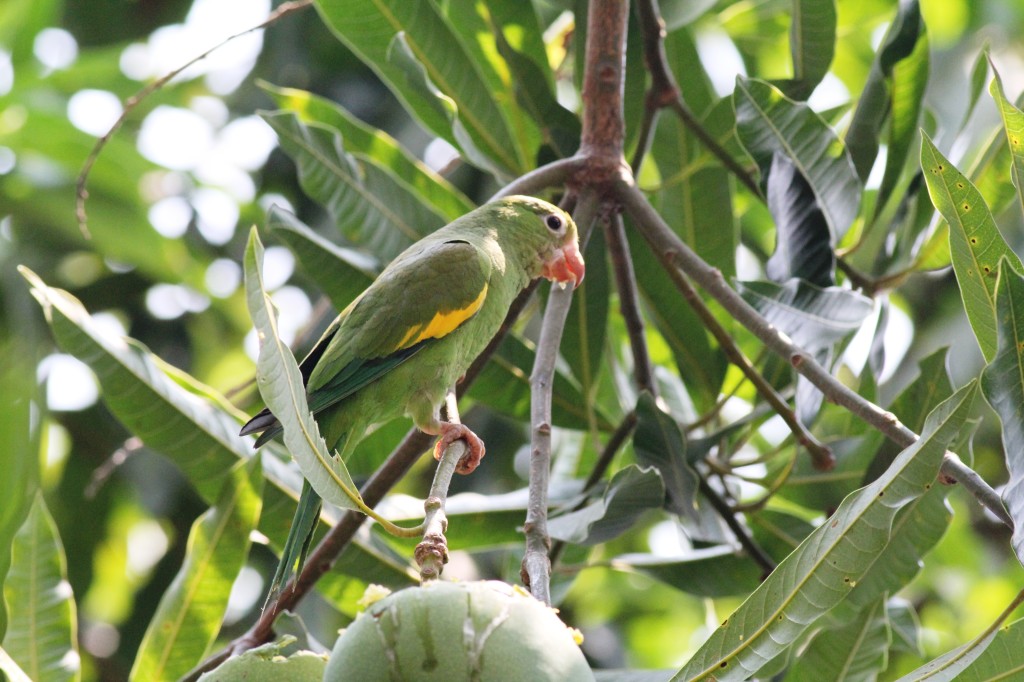
The Yellow-chevroned Parakeet (Brotogeris chiriri) is native to tropical South America south of the Amazon River basin from central Brazil to southern Bolivia, Paraguay and northern Argentina.

Yellow-chevroned Parakeet (Brotogeris chiriri)

Yellow-chevroned Parakeet (Brotogeris chiriri)

This map shows their range.  They are very easily found in the Pantanal.  The photo above was taken in the grounds of Pousada Piuval last September.  Yellow-chevroned Parakeets usually find holes in trees to nest in. They will also form nesting tunnels in dead palm fronds. It lays 4-5 eggs. After raising its young, all birds will form rather large communal roosts until the next breeding season.

Yellow-Chevroned Parakeet Range

This video shows what a pleasant chirp they have!

Indonesia Guide Books

Here’s some suggestions for guidebooks to help you get the most from your trip to Indonesia.  If you click through to the Amazon page, you will see reader reviews and also other suggestions for similar books.  They come in both Kindle and Paper versions.  Please note that these are my affiliate links and you do not pay any more using my links than if you went direct to Amazon.  Thank you for your support!

Photographer Of The Week – Octavio Salles

Octavio Salles operates photo tours in Brazil and has some stunning images of birds on his blog.  He also has an updated blog which appears to be down at the moment so I will link his original blog.   He also writes trip reports and has nice details on the birds and where he saw them so well worth checking out.  As always with this feature I can’t copy his images here so in order to protect his copyright will link to one of the pages on his blog that has some of the best images.  Enjoy!

Surveys For Miles – E-Rewards

For people who have time on their hands, surveys can offer an easy way to free airline miles.  The largest survey company is E-Rewards.


For some airline sponsors, you need to have an invitation to join.  These invitations are usually forthcoming if you have opted in to receive partner marketing promos.  For some airlines, they have a link on their website so you can join whenever you want.  Here are the ones from my Top 8 Programs for Eco-Travelers.  Other airlines also have E-Rewards so please check with your frequent flyer program to see which ones are included.

1.  American Airlines   Earn 250 AAdvantage bonus miles* for enrolling in the e-Rewards® Opinion Panel. Earn even more miles for taking surveys that have been selected to match your interests. To enroll, visit www.e-rewards.com.

2.  United Airlines   As a MileagePlus member, you are invited to earn award miles by sharing your opinions with the e-Rewards® Opinion Panel. As a member of e-Rewards, you’ll receive e-Rewards Currency for participating in market research surveys that have been selected to match your interests. e-Rewards Currency can then be redeemed for MileagePlus award miles.  Enroll today and you’ll receive 250 bonus award miles when you complete your first survey within three months of enrolling.*

* Bonus miles are available to newly enrolled e-Rewards members only.

3.  US Airways   By invitation only. Update your Dividend Miles profile and opt in to our ‘news and offers’ email for an invitation to join e-Rewards!

  • As a Dividend Miles member, you may qualify to receive an invitation to join the e-Rewards® Opinion Panel.
  • As a member of e-Rewards, you’ll accrue e-Rewards earnings for participating in market research surveys that have been selected to match your interests. These earnings can be redeemed for miles

Redemption rates for AA, UA and US

4.  Iberia Avios (can transfer to/from British Airways Avios)  As an Iberia Plus member, you may qualify to receive an invitation to join the e-Rewards® Opinion Panel. As a Member of e-Rewards, you´ll accrue e-Rewards earnings for participating in market research surveys selected to match your unique lifestyle and interests.  e-Rewards earnings can be redeemed for Avios once every 30 days, with no limit to the number of Avios you can earn.   Membership is by invitation only. There is no cost to participate, and your privacy is guaranteed. Update your communication preferences to receive e-mail communications for special partner offers, and you could receive an invitation to join the e-Rewards® Opinion Panel.

Redemption rate for Avios

For Aussies:

5.  Virgin Velocity   As a Velocity member, you’re invited to enrol in the e-Rewards Opinion Panel and earn Opinion PointsTM for participating in market research surveys that are selected to match your interests. You can then redeem your Opinion Points for Velocity Points. Your opinions will influence the marketing decisions of leading companies.   To enrol, simply tell us about your interests by completing the online profile to follow. The more information you provide, the more relevant and interesting the surveys you receive from us will be.  You’ll receive 750 Velocity Points when you complete your first survey within three months of enrolling.

Velocity

The other 3 of my recommended programs do not partner with E-Rewards – Avianca/Taca, Qantas, Singapore Airlines.

HOTEL LOYALTY PROGRAMS

The nice thing about joining through a hotel program is that they will give you access to redemptions on all of E-Reward’s airline partners.  When you join via an airline partner, you will only be able to redeem for that one airline plus all the hotel partners so if you get an invitation from a hotel partner to join E-Rewards, jump on it!  Hotel programs currently participating with E-Rewards are Club Carlson, Hilton HHonors, Choice Rewards, Priority Club and La Quinta.

Remember you are limited to one E-Rewards membership per person (email account) so choose your partner wisely!
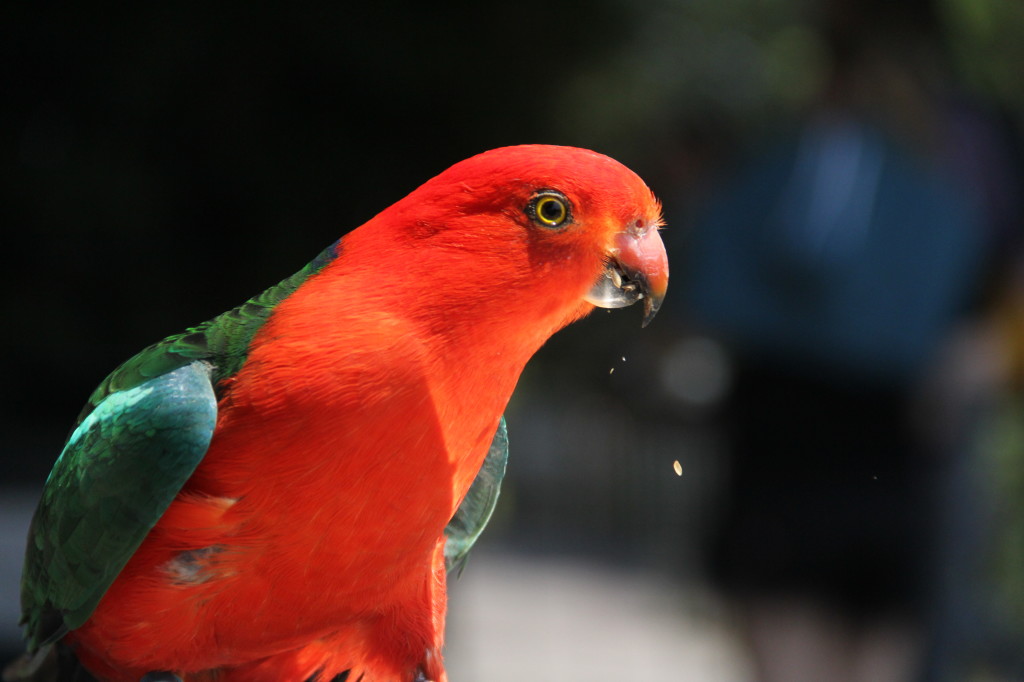
Australian King Parrot (Alisterus scapularis)

Australian King Parrot (Alisterus scapularis)

Australian King Parrot (Alisterus scapularis)

The Australian King Parrot (Alisterus scapularis) is endemic to eastern Australia. It is found in humid and heavily forested upland regions of the eastern portion of the continent, including eucalyptus wooded areas in and directly adjacent to subtropical and temperate rainforest. They feed on fruits, seeds or small insects.  If you would like to see them in the wild, check out my series on how to get to Australia.  With their brilliant red-orange and green colouring, they are easily spotted and there are several places such as O’Reilly’s in Queensland where they come in close and even land on people to get some free food.

Australian King Parrot Range


Here’s a nice video of them in their native habitat.

Sri Lankan Frogmouth (Batrachostomus moniliger)

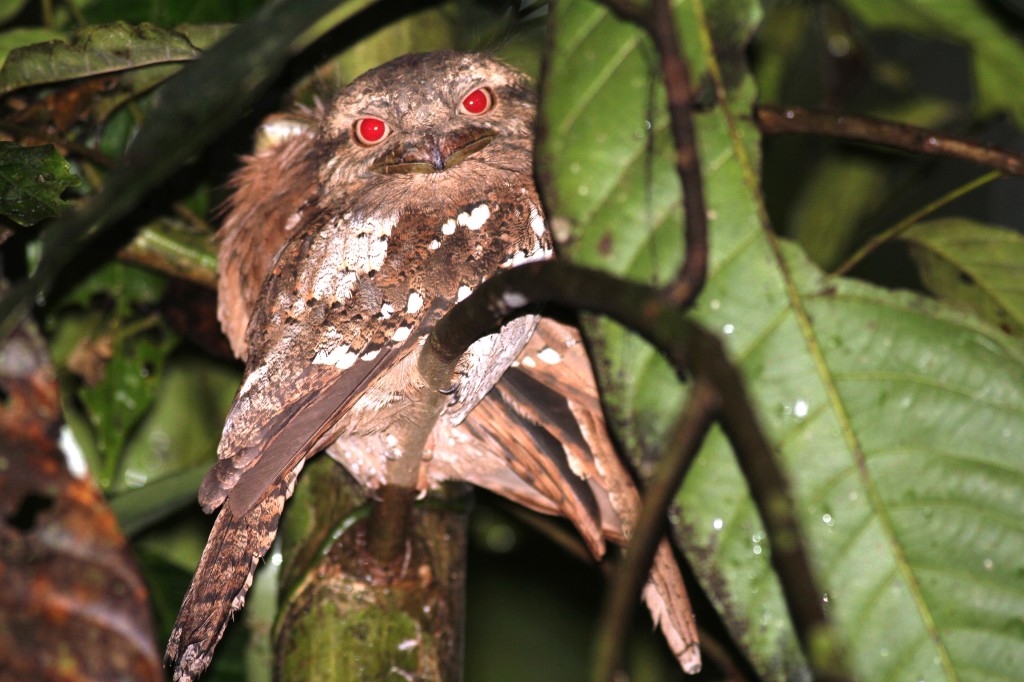
The Sri Lanka Frogmouth, Sri Lankan Frogmouth or Ceylon Frogmouth (Batrachostomus moniliger) is a small frogmouth found in the Western Ghats of south India and Sri Lanka. Related to the nightjars, they are nocturnal and are found in forest habitats. The plumage resembles that of dried leaves and the birds roost on branches, sitting still and appearing like a dry branch, making them extremely difficult to locate. They however have favourite roosts that they use regularly unless disturbed. They have a distinctive call that is usually heard at dawn and dusk. The sexes differ slightly in plumage.

Sri Lankan Frogmouth

Sri Lankan Frogmouth

You can see how well camouflaged they can be but luckily my guide at Thattekad knew where these two (one is behind) normally roost.  They weren’t the least bit bothered about our presence.

Sri Lankan Frogmouth Range

This species is found in the Western Ghats of southwest India and Sri Lanka. Its habitat is dense tropical forest usually with dense undergrowthbut sometimes found in more disturbed habitats including plantations.  Use my guide to Getting to Central Asia to plan your trip there to see them and many other birds.

This bird has very interesing brooding behaviour, I’ll let the video speak for itself!